Diary: playing house and going out

Suzanne Gale finds independent living is anything but, staff get squeamish over sexual relationships and caring needs to be made more interesting

I’ve been on the road a lot recently delivering training on supported living. It’s been quite depressing.

I think back to 2003 – those early days of the Supporting People programme– when providers, encouraged by social services, started deregistering care homes. The intention was that it would give people with a disability their own tenancy, increased rights, more freedom and a better quality of life.

I loved the Supporting People programme – I even worked with a Supporting People team because I loved it so much. So it makes me sad to say that, except for some small pockets of greatness, it feels as though we have achieved nothing even resembling independence.

There’s still a general lack of understanding and acknowledgement that a tenancy is a legal document, not just a token piece of paper. We’re not “playing house” – we’re supporting people to manage a formal arrangement between a tenant and landlord.

Same sex, no sex

My “incredulous face” got the better of me when I heard a support worker declare that “someone with a learning disability probably wouldn’t know if they were gay”. Another support worker shamelessly announced that she had made one of her service users split up with her boyfriend as “they just kept kissing all of the time” which was, apparently, embarrassing.

I can preach the Equalities Act, Mental Capacity Act and Deprivation of Liberty Safeguards until I completely lose my voice (and I have) but these incidents just consider people with a learning disability to be “normal” in terms of their feelings, preferences and urges.

Clubbing or cleaning?

Why do so many well-trained, experienced support workers spend their days cleaning?

Local authorities pay a premium for staff to, allegedly, cover their training and support.

One such experienced employee told me: “I wouldn’t want to stop cleaning as I’d get bored. I’d have to watch Tipping Point with the residents.”

In response to the Stay Up Late campaign, I asked a group of 18-year-olds if they would consider being a part-time support worker for people with learning disabilities to earn money while they were at university. None had or would consider it “because it sounds so boring”.

And they’re right – it probably would be in the current climate. But what if we started actively recruiting young (or young at heart) people to specifically work later in the evening to take people to band practice, to gigs, to the pub (and not just the 6pm curry and pint for a fiver night), to an all-night horror movie marathon at the cinema, or to a friend’s house to watch Love Island and the programme after Love Island that talks about Love Island?

Residential care in disguise

A lot of the sector is set in its ways. Staff don’t seek out articles, watch documentaries or read news relevant to their job, online or otherwise, and they rely on employer-led training to keep up to date.

Only a small minority of people with learning disabilities living in council-funded placements have a job or a relationship, or understand their legal rights. We just don’t expect it of people.

One of the great positives about people having their own tenancy is that, if they earn some money, it’s theirs to keep and, once the bills have been paid, spend it on whatever (or whoever) they want. Instead, we leave them all on benefits, have their money managed by the local authority and give them an allowance. Remind you of anything? Have we re-made residential care in disguise?

Directors of adult social services so often announce proudly that they no longer use residential care but few seem to fully understand the legal implications, creative commissioning requirements and additional risks of moving people into a tenancy. They do not train their social workers adequately, have quality checks in place or really let families know what this means.

There is no doubt that supported living is a no-brainer for many people and that it should be considered an option for all but, the more I understand the complexities of the law and the challenges facing the sector, the more I worry about the ad hoc, gung-ho approach to the whole thing.

Payback time over unlawful breaches of the Care Act

The Court of Appeal has said that, if a council breaches the Care Act – by not stating a personal budget or giving a breakdown of figures – it is acting unlawfully, and people may get payments back, says Belinda Schwehr.

In CP v NE Lincolnshire (Court of Appeal, 3 October 2019), public law proceedings were used to challenge the sufficiency of the funding for a 22-year-old woman, CP, who has complex and multiple disabilities requiring round-the-clock care. JP, her father, acted as her litigation friend.

The council had asserted that the day provision she had benefited from for some years was being provided “for free” by her father from choice, because he had started the charity that operated the service.

The council was described as having “a visceral resistance” to funding the package because they saw JP as profiting. However, the council provided nothing else in lieu, and paid for the transport and the support worker to be there with CP.

By the time of the judicial review hearing, everyone was satisfied that the service counted as education for the purposes of the education, health and care plan, and agreed as to what should be paid going forwards. The agreed budget to pay for her overall needs had doubled from its original level to £720.67 per week.

However, some of the earlier social care plans from the council had failed to state a personal budget at all, and none had set out any breakdown of the figure being offered at any given point.

Therefore, there was a period – before the day service was agreed to be educational – when the fees for the day service had not been covered. So, despite agreement on other fronts, the case continued to a hearing.

The lower court accepted that no payment should be ordered for the early period of unpaid placement fees.

However, the Court of Appeal held that if a council breaches the Care Act 2014, it is acting unlawfully. In this case, it had to pay back what it would have paid towards the person’s care plan had it acted lawfully.

The court characterised the council’s behaviour as “a fruitless rear-guard action” that had lasted 18 months.

This excerpt from LJ Haddon-Cave’s judgment reasserts the seriousness of the matter, concisely and trenchantly:

“A local authority’s statutory duty under s26 of the Care Act 2014 to provide a personal budget to meet a person’s care and support needs is fundamental to the operation of the care and support scheme which the Care Act 2014 underpins.

“In the present case, having found the council in breach of its statutory duties, [the judge in the High Court] should have gone on to hold that the council had acted unlawfully and, accordingly, was liable in principle to compensate CP in respect of any monetary shortfall, in accordance with normal public law principles of legal accountability of public bodies.”

What was argued

The guidance (at paragraph 10.26) deals with the division of responsibilities between a local authority and a carer or parent:

“Local authorities are not under a duty to meet any needs that are being met by a carer. The local authority must identify, during the assessment process, those needs which are being met by a carer at that time and determine whether those needs would be eligible. But any eligible needs met by a carer are not required to be met by the local authority, for so long as the carer continues to do so. The local authority should record in the care and support plan which needs are being met by a carer, and should consider putting in place plans to respond to any breakdown in the caring relationship.”

Where a local authority is required to meet needs, it must prepare a care and support plan.

Under s25(1), a care and support plan:

“(a) specifies the needs identified by the needs assessment or carer’s assessment

“…

“(c) specifies the needs that the local authority is going to meet and how it is going to meet them

“…

“(e) includes the personal budget for the adult concerned.”


The Court of Appeal rejected all of the following arguments by the council:

  • It was not social care – it was just a community asset that was provided voluntarily by the family, despite the service provider being an arm’s-length registered charity.
  • It was not commissioned by the council and not worth it. The council said it was “little more than empty rooms and a gym”, despite acknowledging internally that it was legally liable to pay for CP’s attendance at the service and two experts saying that CP was benefiting educationally from attendance.
  • There was a conflict of interest. CP’s father and litigation friend was “the ‘real claimant’, using the proceedings inappropriately to profit from the claim” since the charity was organised and controlled by him.
  • Alternative remedies should have been attempted. The council said CP should have used the complaint system or called for a management or s27 review.
  • It was an inappropriate claim for damages for a breach of statutory duty. The council argued this was a misconceived claim for damages to compensate CP for non-provision of funding.

The judgment

CP’s lawyers submitted that the council’s mid-hearing acceptance of the principle of paying for the future did not make the unlawfulness of earlier plans irrelevant.

The court agreed that the judge should have determined the legality of the Care Act plans, starting with the 2016 plan first challenged.

“The council’s failure when drawing up CP’s support plan dated 11th April 2016 to ensure that CP’s personal budget included adequate payment for her needs, including her weekly attendance at the placement, represented a failure by the Council ab initio to comply with its statutory duties under s26 of the Care Act 2014 … read in the light of the statutory guidance.

“The council had acted unlawfully in failing to comply with its statutory obligations properly to fund CP’s care and needs between 11th April 2016 and 17th November 2017; and, as a result, CP has remained out of pocket ever since.

“The council’s unlawful failure has, therefore, had a continuing effect on CP since her financial position has remained less than it should have been. Accordingly, CP is entitled to compensation to reimburse her.”


Cases for compensation

It will not be in every case where a person who needs services or a third party spends money to make up for the Care Act wrongs on the part of a council.

Sometimes, a person will just go without care and have a worse life. In other cases, relatives will step up, whatever the consequences for themselves, for want of legal awareness.

That choice cannot be said to give rise to a remedy involving restitution of funds without a successful public law challenge as far as we are concerned.

But here is what made this a strong claim – the care plan referred explicitly to the placement, which was therefore knowingly being taken advantage of by the council:

“CP is usually supported by her PA to attend [the service] 9am-3pm 5 days per week … During ‘classroom activities’

… she spends one-to-one time with her PA in a classroom practising previously learned skills and developing new skills, with support. CP is fully supported by her PA at all times whilst she attends … and spends some of the time accessing the community.”

Of course, all assets and strengths- based care planning that includes willing, informal care could be said to give a council knowledge that it is being provided, and is enabling a saving against the real cost of a plan covering total care needs. Where that person making the contribution becomes unwilling and it is not continued, but no challenge to a failure to increase provision under the care plan is even intimated, the service user will be left in need and cannot claim restitution, in our view.

We think that when an informal carer has just “sighed and carried on” providing the care, without realising that they did not have to, there will not be a clear-cut case for restitution either, even if the service user succeeds in a challenge or a complaint later on.

But where a person or their family has paid out money for something that was missing and the necessity for which has long been clearly asserted in writing and the council is shown to have known that, such that it can fairly be said it has been taking the benefit of that provision despite the paying person’s objection or unwillingness, there could be a claim for restitution.

Sometimes, the people who are manoeuvred into stepping up will be close relatives in the same household who could not normally be paid through a direct payment without a further discretionary decision as to necessity for permission. This raises interesting questions of procedure regarding the right remedy to pursue, even if they did make it clear that they were not willing to do it for free.

Where a third party has actually been paid, the claim will be strongest. But, even if the service user has only incurred a liability to pay and no money has changed hands, a reasonable sum for the service is the measure of what the council would have to reimburse, as a matter of both public and private law principle, because of the law of unjust enrichment.

We think that this sort of “quantum merit” claim – a reasonable sum of money to be paid for services rendered or work done when the amount due is not stipulated in a legally enforceable contract – is much better evidenced and determined in private law proceedings where the judges are used to that sort of question, rather than in judicial review.

We think that people in similar situations should refer the council to paragraph 10.86 of the statutory guidance and demand the benefit of the management review that is recommended there. The council can then put right any noncompliance with the legislation without further ado.

That will be especially important in any council where they are running the Care Act process on “three conversations” lines, unless they are documenting the conversations compliantly with the Care Act itself.

What is clear to us is that where expenditure has been the only way a person has coped, there will have to be a challenge or at least a referral to the monitoring officer before a private law claim for the missing funding can be made.

If a rush of public law litigation is to be contained, likely funded on a no-win no-fee basis, monitoring officers will need to engage properly with referrals that identify breaches of the Care Act or they will have to answer, in one arena or another, for failure to discharge their own duties under their own governing legislation.


CP, R (on the Application of) v North East Lincolnshire Council [2019] (EWCA) Civ (EWCA) Civ 1614

Belinda Schwehr is chief executive of legal advice charity CASCAIDr (www.CASCAIDr.org.uk) and owner of the Care & Health Law consultancy. She has been a barrister, solicitor advocate and university law lecturer

The rough realities of austerity

‘Harsh and uncaring’ is how a United Nations research report describes nearly a decade of government cuts. Charlie Callanan looks at their effects on those least able to cope

In 2010, the Conservative-Liberal Democrat coalition government started a series of cost-cutting measures to government budgets. The public were told these measures were essential to bring the budget deficit under control.

This austerity programme hit the groups in our society who are least able to bear the brunt of cuts to their incomes and the services they rely on.

A series of slashes to the welfare benefits budget has undermined a system that was originally designed as a safety net for many different people in wide-ranging circumstances. These include people with disabilities, those in low-paid and insecure employment, lone parents and unemployed people who depend on benefits to survive.

Some studies into the impact of austerity suggest that people with disabilities, women and those from black and minority ethic backgrounds have been disproportionately affected by the cuts.

Here are some “highlights” of the austerity measures affecting benefits:

  • The “bedroom tax” (a reduction in benefits if a claimant’s rented property is deemed to have more bedrooms than necessary), which led to housing benefit claims being cut by 14% or 25%
  • Rates of some benefits for people of working age being frozen for four years – when they will be unfrozen is uncertain
  • Work allowances – the amount claimants can earn before their benefit starts to be tapered away – were reduced in universal credit
  • A cap on the total overall amount of benefit for working-age people
  • Removal of the limited capability for work component from employment and support allowance and universal credit
  • Two-child limit in claims for universal credit and child tax credit, so benefit is not paid for additional children born from April 2017.

A theme that runs through the system of benefits for people of working age is the increased use of “conditionality”. This is the policy that claimants must carry out tasks and activities as directed by job centre staff or risk being sanctioned and seeing their benefit cut.

Shockingly, until changes were made in November 2019, a claimant could receive a sanction that lasted as long as three years. This maximum period has been reduced to six months.


UN finds destitution

Probably the starkest report into the impact of austerity across the UK was that written and researched by the United Nations’s special rapporteur on extreme poverty and human rights, Philip Alston (2019).

He found that 14 million people live in poverty in the UK. Four million are more than 50% below the poverty line, and 1.5 million citizens are destitute, unable to afford the essentials of life. This is despite the fact that the UK is the fifth largest economy in the world.

“Much of the glue that has held British society together since the Second World War has been deliberately removed and replaced with a harsh and uncaring ethos,” Alston wrote.

People with disabilities have been saved from some specific policy changes. For example, the benefit cap does not apply where the claimant or their partner or child gets a disability benefit, such as a personal independence payment (PIP) or has limited capability for work- related activity.

In addition, disability benefits such as PIP and disability living allowance have not been frozen but uprated annually.

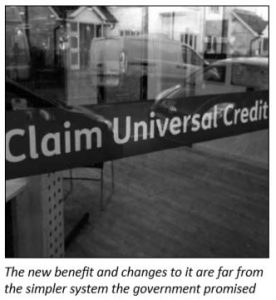
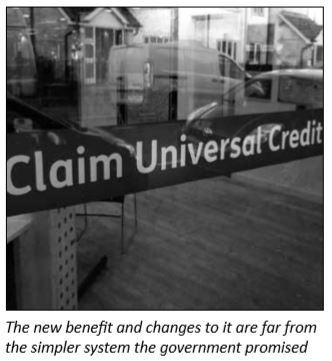
However, the introduction of universal credit has brought further financial misery for disabled benefit claimants.

The biggest loss for claimants with disabilities has been caused by the failure to include within universal credit the disability, severe disability and enhanced disability premiums that are available in the old, legacy means-tested benefits.

A 2018 research report commissioned by the Equality and Human Rights Commission projects a substantial loss in income to households with a disabled adult or child as a result of recent changes to the benefits and tax systems.

There have been successful challenges to some of the welfare changes. Following wins in the High Court by disabled universal credit claimants, the government has been forced to delay its full roll-out of the benefit to existing claimants. It has had to begin paying compensation to disabled claimants who have lost out as a result of being moved from legacy benefits, which included disability premiums, to the less generous universal credit.

There are many disturbing developments that policy researchers point to that have resulted from austerity. These include a large increase in the demand for food banks, shocking reports of mothers entering prostitution in order to feed and clothe their children (“survival sex”), and teachers in many regions reporting that children are unable to concentrate as they come to school so hungry.

It is such developments that led Alston to liken the welfare benefit system to “a digital and sanitised version of the nineteenth-century workhouse, made infamous by Charles Dickens”.

When you consider the many swingeing cuts and damaging changes that government has made to various welfare benefits, it is difficult not to regard the austerity measures as an attack

–          whether by accident or by design

–          on the poorest and most vulnerable in our society. n

Charlie Callanan is an adviser and writer on welfare rights


Reference

Philip Alston (2019) Report of the Special Rapporteur on Extreme Poverty and Human Rights on his Visit to the United Kingdom of Great Britain and Northern Ireland. United Nations General Assembly. https://undocs. org/A/HRC/41/39/Add.1

Letters

Oliver McGowan’s legacy: mandatory training to end preventable deaths

My teenage son Oliver was a bright, healthy, fit young person. He represented England at football, was a registered athlete training to become a Paralympian and ranked third best in the country for 200 metres. He passed his GCSEs and was a school prefect. Oliver loved life and life seemed to love Oliver.

As a result of bacterial meningitis as a baby, Oliver had suffered a stroke that resulted in him having high-functioning autism, a mild learning disability and focal partial epilepsy.

Shockingly, Oliver died aged 18 in Southmead hospital in Bristol in 2016, after being prescribed olanzapine, an antipsychotic medication.

We had repeatedly told doctors he should not be given olanzapine because he was intolerant and sensitive to all antipsychotics.

More importantly, it had been confirmed in writing from previous doctors that Oliver did not have a mental health diagnosis.

Nevertheless, he was given the medication against his and our wishes and died as a result. The drug caused Oliver’s brain to swell so badly it was coming out the base of his skull.

At the inquiry into his death, when the doctor was asked why no reasonable adjustments had been made for Oliver’s treatment in the light of his autism, it became evident that he had no idea what this meant. This information struck me like a sledgehammer – he clearly had little understanding of autism and learning disability and, from research, it became evident that many doctors and nurses were similarly untrained.

I resolved to do something to ensure others would not suffer the same fate. I was determined to try to prevent people with learning disabilities dying prematurely because their most basic needs were not understood.

There have been more than 1,200 premature and preventable deaths of people with learning disabilities in England because their healthcare needs were not met – a diabolical example of health inequality.

Over the last year, I have been working with the Department of Health and Social Care, sometimes for more than 13 hours a day, to establish training in learning disability and autism for all health and social care workers, including doctors and nurses. This followed a petition to parliament signed by 52,000 people demanding compulsory training, which received cross-party support.

In November 2019, it was announced that mandatory training would be introduced, with £1.4 million to develop and test it. I was determined that the training would be mandatory and include a standard quality framework for all staff. It will be based on case studies showing exactly why such training is needed.

Caroline Dinenage, minister of state at the department, has been as passionate as myself about this training and has been a constant support.

On a personal level, it is very important to me that the training will be named after Oliver. Everybody who does it will see his face and name, which personalises and adds real meaning to it. I hope his legacy will be to challenge subconscious bias and ensure real change.

No training is perfect but my hope is that it will be impactful, prompting professionals to take ownership when things go wrong and to treat people with learning disabilities and people with autism as equal humans.

Paula McGowan Activist and winner of Bloody Awesome Parents and Autism Hero Awards, by email

Whose term is it anyway?

Does terminology matter? I think it does. Community Living has adopted “learning disability” rather than “learning difficulty”, and “Down syndrome” rather than “Down’s syndrome”.
In the early days of deliberation over “disability” or “difficulty”, research by Jeannie Sutcliffe, a pioneer supporter of self-advocacy, into the views of people themselves showed that the great majority favoured difficulty. The rationale was that disability implies you cannot do things, whereas difficulty implies you can with sufficient help. A few people preferred disability because it linked with the wider disability movement, but this was very much a minority view.

However, the term learning disability was strongly promoted by the government in its publications and pronouncements, and this eventually defeated the original wishes of the people themselves, who have now been made to accept the term.

I think that Down rather than Down’s syndrome is also misguided. Other conditions are referred to with an apostrophe – Alzheimer’s, Parkinson’s and Asperger’s, for example – so is there any reason for change?

The move to Down has been led by a section of the medical profession, especially in the US, but have any of the people themselves or their families expressed a preference for Down?

The word down is often used negatively, as is demonstrated by terms such as down and out, downhearted and down in the dumps. Sometimes a negative word can be rehabilitated by the people themselves, but I know of no efforts to do this by people with Down’s syndrome or their families. The Down’s Syndrome Association in the UK still uses the apostrophe.

What do other readers of Community Living think?

Paul Williams

Trowbridge, Wiltshire

A book for those with a child like mine

Pearl S Buck, determined to do the best for her daughter, researched institutions and wrote a memoir-cum-parents’ manual. Susanna Shapland tells the story of a crucial book

Nobel laureate Pearl S Buck was already well known for her Pulitzer-prize winning novel The Good Earth by the time she published The Child Who Never Grew in 1950.

First appearing that year as an article in the Ladies Home Journal, the slim volume revealed that Buck’s celebrated literary output was chiefly a means of raising funds to pay for the care of her learning- disabled daughter Carol.

Unnamed in the book itself, Carol was born some 30 years earlier. When, by the age of three, Carol was still unable to speak, a worried Buck left their home in China to seek expert help in her native America.

She eventually found this at the Mayo Clinic in Minnesota, where doctors told her Carol’s “mind was severely retarded”. It is now believed that Carol had phenylketonuria, a genetic disorder that can lead to problems including learning disability, which can be avoided through early screening and dietary intervention.

Buck was determined that her mission must be to “seek and find [Carol’s] world and put her in it” – that is, to have Carol placed in an institution to ensure she would be protected and cared for her entire life.

The year Buck spent touring the institutions of the US is described in the book, which both provides practical advice for parents on where best to place a learning-disabled child and is a damning indictment of most state-run establishments.

Although institutions differed greatly from state to state, they were mostly overcrowded and had painfully long waiting lists.

Buck believed the private institutions were generally of a higher standard but, again, staff often failed to prioritise the needs of the children. One of the exceptions was the Vineland Training School in New Jersey, which had a motto of “happiness first and all else follows”. It was to their care that she entrusted Carol.

Buck chose to publish The Child Who Never Grew – part memoir, part manual for other parents of learning-disabled children – not only in response to the “many letters” she had received over the years from parents “with a child like mine” but also to highlight what she called “a great new movement to help all children like her”.

This was the surge in research into the cause of all varieties of learning disability. It was by contributing to this research that Buck believed Carol’s life could be “of use in her generation”.


A useful life

Buck’s fixation on the obligation to live a “useful” life deepened her distress at Carol’s condition, but it also provided her with the means to bear it.

She became a long-term member of the board of directors of the Vineland Training School and the extensive research undertaken at the school is discussed in The Child Who Never Grew.

Publishing the book was another way of ensuring Carol lived a “useful” life: by sharing their experiences, Buck hoped to educate and support others.

While her faith in institutionalisation may now look somewhat uncaring, her forthright, practical advice to parents to do everything possible to secure the happiness and security of their children, whether through frequent visits or assessment of their child’s attendants, shows the reverse is true.

Although Buck may not have celebrated Carol in the same way as Hollywood stars Dale and Roy Rogers – in very different circumstances – welcomed their daughter into their lives (Shapland, 2019), she was firm in her belief that children with learning disabilities must be protected, provided for and never abandoned.

“It was my child who taught me to understand so clearly that all people are equal in their humanity and that all have the same human rights. None is to be considered less, as a human being, than any other, and each must be given his place and his safety in the world,” she wrote.


Shame and secrecy

When the book was republished in 1992, it was with a new introduction by author Martha M Jablow, herself a parent of a learning-disabled child.

Jablow cast the book as a crucial point in the history of understanding learning disability in the US, suggesting that “Buck was the first prominent person to acknowledge publicly a child with mental retardation”.

By doing so, as a 1993 article in the American Journal of Human Genetics suggested, Buck not only “contributed much to the education of the [American] public on a topic that was not generally discussed”, but also provided practical help for parents who were struggling to raise a learning-disabled child in a society that still fostered shame and secrecy around this.

In 1950s Britain, the book also met a need and was “eagerly read by parents of mentally defective children” thanks to its serialisation in Woman’s Own.

It is no wonder that, despite Buck’s prize-winning novels, many consider The Child Who Never Grew to be her greatest work.


References and further reading

Buck PS (1950) The Child Who Never Grew.

New York: The John Day Company

Buck PS (1951) The child who never grew.

Mental Health. 10(2): 53

Buck PS (1992) The Child Who Never Grew. Introduction by Martha Jablow. Bethesda: Woodbine House

Centerwall SA, Centerwall WR (2000) The discovery of phenylketonuria: the story of a young couple, two retarded children, and a scientist. Pediatrics. 105(1) 89-103.

Lee KM, Lee RE (1993) The child who never grew. American Journal of Human Genetics. 53(6): 1370–1371

Shapland S (2019) When a screen star shone a spotlight. Community LIving 33(1):30

When inclusion does the opposite

Understanding Profound Intellectual and Multiple Disabilities in Adults

Dreenagh Lyle

Routledge, Abingdon, 2019, 184pp, hardback £115; ebook from £21


In this book, Dreenagh Lyle launches a strong critique of what she sees as the marginalisation of people with profound intellectual and multiple disabilities (PIMD) in learning disability policy and practice.

She criticises the Valuing People strategy which, in its drive to ensure its central principles of inclusion, choice and independence, she believes ignored the lifelong specialist care and medical needs of those with the most profound disabilities.

To fit the PIMD group inside an all-embracing policy, we have constructed a fantasy “as if” world in which non-verbal and often sensory-impaired people with very high levels of developmental deficit are deemed capable of expressing an opinion, getting a job, joining communities and achieving independence  as those with mild impairments at the other end of the spectrum.

In attempting to be inclusive, this approach becomes exclusionary in denying those with PIMD their own unique personhood, and withholds the specialist support they need to become included people.

The book makes uncomfortable reading for supporters of the social model of disability and for advocates of an all-embracing inclusion model.

Valuing People was inspirational, Lyle agrees, but only for those who could fit its model of what a person with a learning disability should be like. Her argument is an important and convincing challenge to widely held orthodox opinions about social inclusion.

The opening chapters dissect the trajectory of learning disability theory and policy from normalisation to personalisation, leading to what she calls the illusions of Valuing People.

Lyle then uses her experiences as mother of Odyssey, who has PIMD, to outline an approach that places the person.


Simon Jarrett


From ‘nice to have’ to life saver

Despite some difficult times, self-advocacy is still going strong. Jan Walmsley reflects on what has been achieved, how it has changed and where to go next

Hand-wringing about the state of self-advocacy is common.

However, despite funding cuts, groups closing and the demise of the National Forum, there is plenty to celebrate.

Why celebrate? Self-advocacy has survived in these islands since the 1980s. It is weathering austerity. In 2018, there were more than 100 groups in England.

Contact with people in countries where it has yet to make inroads – specifically Japan and Norway – prompted me to reflect on what we’ve got.

At many events, it now is simply unacceptable to exclude people with learning disabilities. Self-advocates regularly stand up in front of large audiences, speak with confidence and answer questions. A market for things self-advocacy produces – easy-read information, experts by experience, user-led training – makes it possible for agile groups to earn money and migrate from reliance on grants.

Colleagues from Japan have asked how this has been made possible. It is something we must seek to answer – I’m not there yet. However, as an observer of self-advocacy for more than three decades, what I can do is reflect on some questions it throws up.


What has changed?

First, what is self-advocacy? I think it has changed recently and is now less about learning skills and claiming rights.

Speaking Up, Standing Up For Myself and other campaigns are still important. But, as the state backs off providing security and safety, self-advocacy groups are taking on some of that.

In particular, groups that incorporate elements of advocacy appear to be massively significant in just keeping people going – reading doctors’ letters, supporting people to claim universal credit online and providing somewhere to go when you’re in trouble.

I met a woman who had joined after leaving an abusive relationship; another had come after a suicide attempt; a third had managed to stay away from a man who was robbing her because her group gave her support. No longer is it a “nice to have” – for some it is literally a life saver.

The social side is massively important. It always has been one of the great attractions. Now so many people are living alone with little or no support, this aspect has become more significant. Research I did with Barod (a community training and information company) found that having fun and meeting new people were seen as being of equal importance as changing the world when it came to reasons for doing self- advocacy projects (Armstrong et al, 2019).

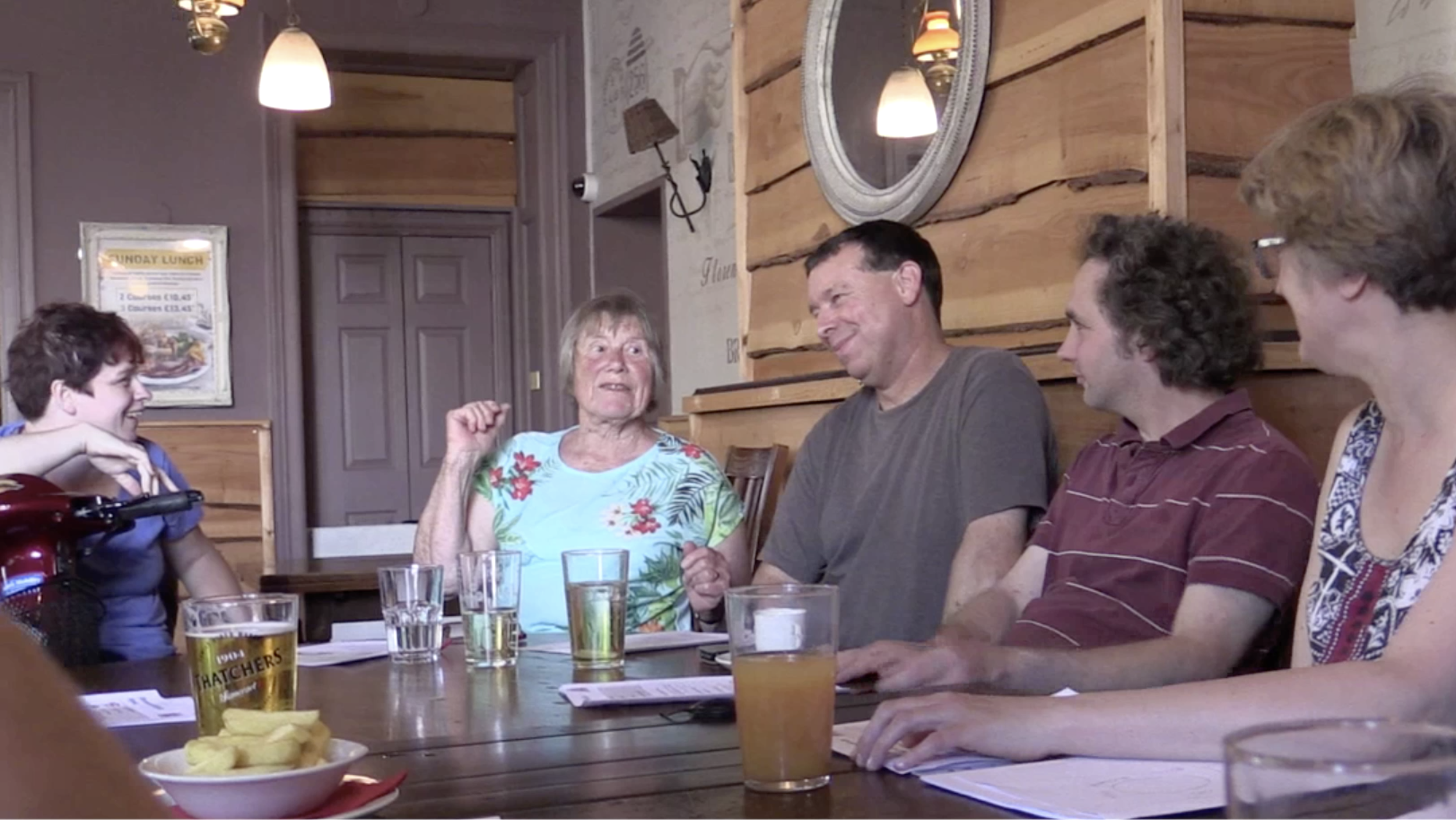
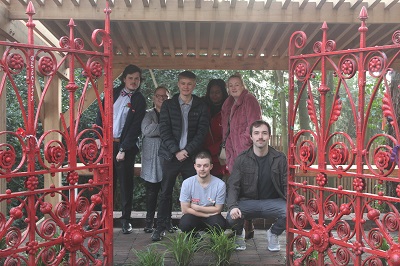
In addition, self-advocacy is a route to paid work. Employment by the organisation itself is one obvious example (see My Life My Choice’s Walk It Like you Talk It, http://tinyurl.com/ydr83nsf) but it goes wider. Phyllis Smith* led healthy eating groups in her group. She’s now tutoring in a college. Graham Brown* cooked lunches for his group. He’s now working in a care home as a cook.


Inclusion and profound disability

A second question is about who is included. It’s difficult to be certain, but I have visited 12 groups and attended two national self-advocacy conferences in two years, and observed that people with severe and profound learning disabilities were notably absent.

The very language of “speaking up” excludes those who do not use the spoken word, as Jackie Downer, a veteran self-advocate, acknowledges.

“I’m so used to saying ‘my needs’, tough luck about the others. They’re somewhere else. It can work but it takes time, and we, as people with learning difficulties, we got no time,” she says (Walmsley and Downer, 1997: 44).

Does this matter? I think so. There is a danger that, in promoting the idea that with the right support people can do great things, we just redraw the boundaries.

There remain people who are excluded, for whom positive thinking and imagery do not work. Successful self-advocates can unwittingly contribute to this, though it is harsh to criticise self-advocacy for something few manage to do well.

How could we include people with profound learning disabilities? In the UK, self-advocates have tended to exclude families. If we are going to genuinely include people with more significant impairments, maybe this needs to be reconsidered.

Finally, paid support. Some look to a future where the need for support by people who do not have learning disabilities will wither away and self- advocates can run their own organisations. In 30 years, I have seen no progress towards this goal. It’s time to abandon it, and accept that skilled paid support is necessary to run a complex organisation.

So, what next? Self-advocacy matters. Its benefits need to be available across the country. Here are some ideas:

  • Include people with severe and profound learning disabilities, perhaps with the help of families
  • Link groups so they can learn from each other, which supports Learning Disability England’s work
  • Finally, a decent history is urgently needed – to understand where we are going, we need to know how we got here.

*Not their real names

Jan Walmsley is an independent researcher


References and further reading

Armstrong A, Cansdale M, Collis A, Collis B, Rice R, Walmsley L (2019) What makes a good self advocacy project: the added value of

co-production. Disability and Society. 34(7-8): 1289-1311

Barod and Jan Walmsley Associates (2019). Making Sense of Self Advocacy Today. https:// tinyurl.com/ygor7psm

Walmsley J, Downer J (1997) Shouting the loudest: self advocacy, power and diversity. In: Ramcharan P et al (eds) Empowerment in Everyday Life. London: Jessica Kingsley: 35-47

Aiming for the highest of standards

Professionals and parents came together at the UK’s only national event focusing on people with profound and multiple learning disabilities. Jo Grace was there

The Great Exhibition Hall at Birmingham University buzzed with excitement, as 200-plus exceptionally passionate people flooded it with one mission in mind: to raise the bar with regards to what best practice looks like for people with profound and multiple learning disabilities (PMLD).

The Raising the Bar National PMLD Conference is the only national UK event focusing on the support of this group of people. It brought together speakers, exhibitors and delegates from across the UK and beyond to inspire and promote good practice.

Their tool for this bar raising? A document written by a dedicated group of people that describes in 13 bullet points what this care might look like – Supporting People with Profound and Multiple Learning Disabilities: Core and Essential Service Standards – which was first issued in 2017.

The hope is that services and settings that host people with PMLD will use the document as a tool to guide their provision and that those inspecting such settings might use it to judge how they are doing.

Unlike other events, this was not just professionals talking to professionals or parents to parents, it was not just education, just adult care, just the medical world – it was everyone working together for a common goal.


Seeing the whole person

On the main stage, Andrea Sutcliffe, outgoing head of the Care Quality Commission and newly appointed chief executive of the Royal College of Nursing and Midwifery, began the day calling for more learning disability nurses and underlining how much people matter.

She was followed by family carer Jeanne Carlin who told delegates: “Consultants saw my daughter organ by organ – it was only when they began to see her as a whole person that her life was saved.” She spoke about developing a holistic approach to care for her daughter Erica.

From Australia, Sheridan Forster, a researcher and speech pathologist, challenged the room with the notion of subtle ableism hidden in presumed competence. Forster was closely followed by Professor Melanie Nind (pages 20-21), famous in the PMLD world for her role in the development of intensive interaction, talking about the importance of belonging.

By this point you would be forgiven for thinking the full content of the day had been covered, but that was just the first hour of an extraordinarily packed programme of keynote speeches and interactive workshops.

Like the organisers of the event themselves, the speakers worked in a voluntary capacity and the whole day operates on a not-for-profit basis. It is not a job for anyone and it is not for making money – it is solely for Raising the Bar.

Everyone there and the many people following the event through social media – its hashtag #RtB3 trended in the top 100 hashtags in the UK on the day – are working towards a common goal of a better future for people with profound and multiple learning disabilities.

Creative powers, strong stories

In the afternoon, delegates were joined by actress and comedian Sally Phillips, who lent her celebrity status to raise the profile of the standards.

Inspirational presentations were given by Frozen Light, who discussed how they created high-quality immersive theatre, and Rachel Wright from Camp JoJo, who talked about the lengths they go to enable people with complex disabilities to enjoy a camping trip. I told delegates about my award- winning Sensory-being Project, which sees people with profound disabilities meaningfully co-designing sensory resources with designers.

All gave us glimpses of how high the bar could be. Parent Emma Murphy and adult care professional Erren Wheatland showed how rich the lives of people with profound disabilities could be if they were provided for correctly. As Murphy showed us photo after photo of her son, “happy little Hugh”, she reminded us that she has had to repeatedly argue for his right to life and justify that his was a life worth living.

The images of adventure, joy, engagement, connection and community stood in stark contrast to Alison Pettit’s presentation about her son Timmy.

Failings in provision for Timmy meant that when he developed a rare disease, his daily cries of agony went unheard for two and a half years, dismissed as “behaviour”.

Pettit and her wife fought desperately to be heard but lost the right to care for Timmy, were reported to social services for talking to him about his impending death and were, ultimately, unable to protect him from a painful feeding regime that authorities at the time insisted was in his best interest.

Pettit stood alone at the lectern, her voice was clear, brave and unwavering, while those listening struggled to keep their emotions under control.

The bar must be raised. Together we will raise it.

  • Supporting People with Profound and Multiple Learning Disabilities: Core and Essential Service Standards is free from www.pmldlink.org.uk

t @PMLDlink, #RtB3

f www.facebook.com/ groups/138188023527963/


Jo Grace, is founder of The Sensory Projects (www.thesensoryprojects.co.uk) and a sensory engagement and inclusion specialist, trainer, author and TEDx speaker

How can people with profound and multiple learning disabilities belong?

‘Belonging’ is the new yardstick by which we measure whether people are full members of the societies they live in. In our rush to adopt this, have we given sufficient thought to those with the most profound learning disabilities? ask Melanie Nind and Iva Strnadová in their book

In all the debates and campaigns for the rights of people with learning disabilities, there are always groups who remain relatively invisible and under-served.

One such group is people with profound and multiple learning disabilities (PMLD) or, to use the more mainstream term, people with profound intellectual and multiple disabilities.

This group’s support needs are highest and most pervasive, and they are likely to have physical and sensory impairments and poor health interacting with their profound cognitive impairment. They are still likely to have segregated school and adult provision.

In reflecting on the UK situation, Rob Greig (2005) observed that these people have not benefited equally or sufficiently from policy changes such as Valuing People, and Jim Mansell (2010) noted that parents reported that their children were often seen as just too impaired to be catered for.


A book about belonging

So where and how do people with PMLD belong today when interest in and the realities of belonging are gaining ground?

As governments have claimed, then diluted and even sullied the concept of inclusion, interest in the idea of belonging has grown. Frustration over what inclusion movements have achieved for people with learning disabilities has left ample space for getting behind a new idea such as with the Belong Manifesto, Catherine de Haas with daughter Johanna launched in March 2018 by two UK organisations, Books Beyond Words and Access All Areas. They advocate pledging simple and practical things we can each do to help people with learning disabilities belong.

Their simple proposal – to get people talking about what it means to belong – got us thinking about whether the concept is expansive enough to include everyone, including people whose learning disabilities are profound.

The Belong Manifesto was one of the inspirations for our new book. Another was the involvement of Johanna de Haas with her mother, Catherine de Haas, in the Social History of Learning Disabilities conferences at the Open University.

Presenting together at what has been an increasingly inclusive event, they demonstrated powerfully how Johanna, who has PMLD, belonged in the line-up of presenters. They were pushing the boundaries of what is possible with open minds and excellent support.

The book idea also took hold during a time when a new generation of doctoral researchers were showing how people with profound and multiple learning disabilities could be participants in their research as well as more generally in the domains of study and practice from which that research came, such as education, life story work, art workshops and everyday communities.


What does it mean to belong?

Working on the book has given all the contributors space to reflect on what it means to belong and the growing literature on this.

Geographers such as Ed Hall and Andrew Power have highlighted the sense of belonging in welcoming spaces, which links the concept to social inclusion and connectedness.

Inclusion, however, implies being on the inside of something, usually mainstream in nature. Connectedness is associated with the number and quality of connections we have with other people and with places. Belonging has links with community and it also overlaps with citizenship – our rights, responsibilities and freedoms as part of society – which is why there is particular interest in belonging in work with refugees.

Belonging, though, carries with it ideas about feelings and identity. It is understood to be a “fundamental human desire” (O’Donohue, 1998) and a basic human need (Antonsich, 2010) central to wellbeing. If we are lucky, we can enjoy a sense of feeling at home, knowing “I belong here” among familiar rituals, perhaps developing shared stories and spending time communicating with people that matter to us (Block, 2018).

Some studies have addressed belonging for people with learning disabilities by seeking their views and experiences.

These have highlighted the importance of having friends with similar experiences, including experiences of having a disability (Renwick et al, 2019; Strnadová et al, 2018). This might mean spending time together in segregated or safe spaces (Robinson et al, 2014). Being able to contribute to society in a meaningful way was also seen as part of belonging (Strnadová et al, 2018).

In the book, we have addressed belonging for people who cannot discuss belonging with us but who might be able to show us in other ways.


Pushing the boundaries

The chapters are organised into three sections: Belonging in Education; Belonging in Research; and Belonging in Communities. Each part includes chapters that show how people are pushing the boundaries of inclusion so children or adults with profound and multiple learning disabilities are enabled to belong.

Each section has a short account from a family member, which poignantly illustrates the human desire to belong and the forces working against this for families. Through this, we come to understand belonging and its counterpart for people for whom basic belonging is difficult.

We see that belonging is sometimes experienced in segregated settings; people do not have to be in a mainstream setting to belong.

Not all learning disability bodies have got to grips with belonging; self-advocacy organisations often do not include people with PMLD.


New forms of belonging

Without repeating all the arguments in the book, we can illustrate some of what belonging might look and feel like if you have PMLD, according to some of the contributors.

Ben Simmons shows children involving Emma, their peer with PMLD, in their play routines. Emma engages visually and with heightened attention and excitement.

Catherine de Haas relays how a young friend of the family and her daughter shared the fun of swapping shoes.

Mutuality is critical to belonging, but finding ways to simply be together can be hard for adults. This can involve non- disabled people grappling with all their uncertainties about how to relate to the person with profound disabilities in ways that are welcoming and respectful.

Sheridan Forster shares her personal learning journey with this. She tells how she helps care staff to spend short periods of time just being with and focusing their attention on a person. They reflect on that, ultimately learning to become attuned to the other person. Relational belonging here is being attuned together. Jill Goodwin shows how an art installation may help this along.

For Melaneia Warwick, it was seeing the world through the perspective of someone with profound disabilities. In her study, a participant in an inclusive arts project used a body-worn video camera to contribute to the research.

Repeatedly in the book, we see people finding and experiencing their common humanity, being playful together, being focused together or just being together.

In terms of community living, belonging may be more than just finding a place in the hearts and minds of others. It can be about having a rightful presence. In the book, we see people with profound and multiple learning disabilities being a part of research projects and community groups, contributing in unique ways.

Importantly, we see how the people advocating for them negotiate the ethics of their involvement and the practicalities of finding ways to hear their stories.

While training, supervision, creativity and leadership play important roles, the main ingredients here are empathy, will or desire, and time. Without these, people with PMLD will continue to be missing from our playgrounds, our choirs, our conversations and our communities. It is about time they belonged and that we talked more about making this happen.

  • Belonging for People with Profound Intellectual and Multiple Disabilities: Pushing the Boundaries of Inclusion will be published by Routledge in spring 2020. It is dedicated to the memory of Johanna de Haas. The contributors are Shoshana Dreyfus, Ben Simmons, Bea Maes, Anneleen Penne, Katrijn Vastmans, Michael Arthur-Kelly, Jill Goodwin, Hilra Gondim Vinha, Debby Watson, Noelle McCormack, Melaneia Warwick, Clare Palmer, Jan Walmsley, Sheridan Forster, Catherine de Haas, Liz Tilley, Sue Ledger, Melanie Nind and Iva Strnadová

Melanie Nind is professor of education at University of Southampton, director of the Centre for Research in Inclusion and co-director of the ESRC National Centre for Research Methods

Iva Strnadová is professor of special education and disability studies and academic lead research at the Disability Innovation Institute at the University of New South Wales, Sydney

References

Antonsich M (2010) Searching for belonging – an analytical framework. Geography Compass. 4(6): 644–659

Block P (2018) Community: the Structure of Belonging. 2nd edn. Oakland, CA: Berrett- Koehler

Greig R (2005) The Story So Far … London: Department of Health

Mansell J (2010) Raising our sights: Services for Adults with Profound Intellectual and Multiple Disabilities. London: Department of Health O’Donohue J (1998) Eternal echoes: Exploring our Hunger to Belong. London: Bantam Renwick R et al (2019) Voices of youths on engagement in community life: a theoretical framework of belonging. Disability & Society. 34(6): 945-971

Robinson S et al (2014) In the Picture: Understanding Belonging and Connection for Young People with Cognitive Disability in Regional Communities Through Photo-Rich Research. Final Report. Lismore, New South Wales: Centre for Children and Young People, Southern Cross University

Strnadová I et al (2018) “… but if you’re afraid of things, how are you meant to belong?” What belonging means to people with intellectual disabilities. Journal of Applied Research in Intellectual Disabilities. 31(6): 1091-1102

Naked injustice

Leo Andrade was joined by hundreds of people to protest over how people with learning disabilities were being treated in assessment and treatment units. Seán Kelly interviewed her

We should strip naked and chain ourselves to the railings at Westminster.” Leo Andrade was talking to a friend who, like her, was a mother of an adult detained in an assessment and treatment unit (ATU).

Both felt stripped of their voices and also that their children had been stripped of their rights. The question was how to bring the issue to public attention.

The friend said she would chain herself at Westminster but, not unreasonably, she drew the line at being naked. Eventually, another friend persuaded Andrade that she would be in danger of being arrested and locked up. Not a great situation for a single mother of three children.

So Andrade developed the idea of a week of protests using posters which showed her metaphorically “stripped” of her voice and her rights. I first met her after being asked to take the photos. My wife Mary came with me to Andrade’s house and, together, the three of us made photos of her being physically restrained, looking frightened and with a hand or tape across her mouth.

Designer Henry Iles then did some great work to turn them into posters and fliers and Alicia Wood, the co-founder of Learning Disability England, added some strong text. As Andrade says, the results were powerful.

Recently, I met her again to reflect on the campaign and to hear more about her son Stephen and his life in ATUs.

Andrade describes the years Stephen spent at St Andrew’s Hospital and later at the Priory. No one would deny that Stephen needs care and support.

Andrade says he is autistic with mild learning disabilities. He has limited speech but he can read and he has a very funny sense of humour, she says, along with “a gorgeous smile with dimples”.

However, he does sometimes harm himself by banging his head onto hard surfaces, which can be difficult to deal with.

At one point, her local authority was paying £14,000 a week to the ATU for three-to-one support for him. Despite this, he suffered numerous injuries and visits to hospital A&E departments.

At home, Stephen liked to have a shower every morning and a bath at night to settle him before bed. At St Andrew’s, this didn’t happen as it was not part of the institutional regime. However, in Andrade’s opinion, he had not had a bath or shower for six months. She says his hair was matted, his underwear was stuck to him and he smelled terrible.

When she asked staff about it, they said that they were not allowed to touch Stephen or lead him to the bath. They said Andrade could not give him a shower as she was not insured.

So she took matters into her own hands. On the next visit, she and her then husband brought large water containers. After paying £2 to the café in the grounds for heated water, they hung a sheet from a tree to create a private space and gave Stephen an outdoor shower. She says: “He was shivering. But you should have seen the happiness of that young man.”

She is still angry. “They call this a hospital? It is worse than a prison. Even prisoners have rights – they get showers.”


Finding others

Andrade was in despair. With help from a friend, she contacted Dan Scorer at Mencap. Scorer listened to her and enabled her to join a Mencap parents’ group set up after the Winterbourne View scandal.

She says the support was crucial to her own wellbeing. “I can categorically say now that Dan saved my life,” she reflects.

By the time Stephen was at the Priory, he was on eight antipsychotics. Andrade says at this point his tongue was swollen and he no longer spoke at all. On one visit, he just managed to walk over and sit next to her before falling asleep.

He continued to self-harm despite the high level of supervision he was meant to have. On one occasion, he hit his head on a hard surface, causing a gash from forehead to scalp that needed 80 stitches. It seems he was also injured by others. His arm, wrist and fingers were all broken.

Andrade says that, in addition to the medication, he was sometimes kept in a straitjacket all day. Staff said the straitjacket was better than being in complete isolation.

One day, on a visit at the Priory, Stephen took her to the toilet and showed her serious injuries in between his legs.

Andrade says that, within the bruised and bloody damage, she could clearly see what appeared to her to be the print of a boot.

“I felt that Stephen was going to die. My son is coming home in a box,” she says.

However, she was unable to get him discharged. She says that discharge dates were promised but they came and went. With the help of friends, she kept fighting for Stephen’s release.

Mencap helped her to take Stephen’s story to the local paper and onto radio and TV. She met MPs and eventually spoke with three successive ministers with responsibility for health and social care

– Sir Norman Lamb, Alastair Burt and Matt Hancock. She says that Lamb really helped to move things on for Stephen.

When she asked Burt if he would continue that work, he said he could not issue instructions to local authorities. “Then what the fuck is the point of having a minister?” she asked. Apparently, he told her that was “a good question”.

One day Andrade was contacted by staff who said Stephen had a lump on his chest. It turned out that his collarbone had been fractured in three places.

Andrade says staff sent her to the wrong A&E department while Stephen was being x-rayed elsewhere at a private hospital.

Hours later, Stephen was brought to the general hospital. The consultant was concerned because he said such an injury was usually caused by a car crash or falling downstairs.

Stephen had not been in a car and there were no stairs. Therefore, the consultant said, it must have been some other excessive force. He also said the injury had happened almost two weeks earlier than staff had noticed it.

Andrade reported all this to the police. She says the police reviewed CCTV tapes and saw Stephen being restrained with significant force and being thrown across a room, either of which could have caused the injury.

When interviewed by police, one staff member accepted that he might have caused the injury while restraining Stephen. Andrade says this employee was actually one of the best and that she understood the difficulties they experienced including being understaffed, undertrained and underpaid. She eventually wrote a letter to the man forgiving him.

By then, Stephen had moved to a community setting. Andrade is thankful Stephen survived. “He could have been one of the statistics,” she reflects.

Andrade knew that she had to campaign for an end to the ATUs as “all my friends were going through this too”.

Her campaign was called #Stripped of Human Rights. The plan was to protest outside NHS England’s offices in Victoria Street and at the NHS England headquarters at Elephant and Castle, both in London.

On social media, the plans grew and people across the country joined in.

Andrade says that more than 1,200 people

came to protest in London. In Newcastle, 500 people demonstrated. In Birmingham, the protest was supported by the local Mencap and attended by 200 people.

But the impact on policy was disappointing. Andrade received a letter from NHS chief executive Simon Stevens via Ray James, his national learning disability director, but says it was just

a courtesy. “It told us nothing that we didn’t know,” she says.

As for Stephen, he is much happier living in a community service. Andrade says: “He has good people with him now. They like Stephen. I can see care and respect.” It is the very least someone should have.

In the future, Andrade hopes to get Stephen home properly. And she has not given up protesting. She has gone back to the idea of chaining herself up – this will happen next year at an ATU. After all, she says: “They need a rude awakening.”

Seán Kelly was chief executive of the Elfrida Society from 2001 to 2012 and is now a writer and photographer

We must be honest about including people with profound disability

In this issue, several articles focus on profound and multiple learning disability (PMLD). Melanie Nind and Iva Strnadová (pages 20-21) ask whether we realistically include people with the most complex disabilities in our vision of a society in which everyone

belongs. Jo Grace (page 22) reports from the Raising the Bar conference, a national event that aims to develop and apply good practice for this group. And Jan Walmsley (page 23) asks whether, despite the undoubted achievements of the self-advocacy movement, those who are most profoundly disabled have ever had a space within it.

These articles raise important questions that all of us – professionals, campaigners, policymakers, self-advocates and advocates – must attempt to answer honestly.

Dreenagh Lyle’s book (review, page 27) about those who occupy the most complex end of the range of conditions we call learning disability raises some of these questions.

Does the widely accepted social model of disability – which argues that the problems of living with disability are caused by society and its barriers rather than any organic condition – fall short when it comes to PMLD? Does the social model ignore the lifelong, intensive medical and care needs of this group?

When we say everyone can be independent, work, make their own decisions and choices and be active participants in their communities, are we unconsciously excluding complex needs from our category of “everybody”? To use Lyle’s language, have we created a spurious “as if” world, where we try to minimise people’s needs to make them to belong and, in the process, make belonging impossible?

There is a growing movement to challenge this “as if” thinking and to promote belonging in more sophisticated ways, attuned to the complexities of this group and including parents and family networks. The very people who often dedicate their lives to ensuring their sons and daughters belong in some way have too often been seen as an obstacle to independence rather than a critical cog in the wheel of belonging.

A rethink is needed, and the work of academics in alliance with carers and the dynamic parent/professional partnership of the Raising the Bar movement are good starting points.

‘Enough is enough’ – motto for the new year

We could all be forgiven for ending 2019 in a state of profound gloom, and looking ahead to 2020 with equally deep trepidation.

The last year has been characterised by scandal after scandal emerging from assessment and treatment units, hospitals and specialist residential homes. The shocking and utterly tragic cycle of preventable deaths and ruined lives continues unabated. The Transforming Care programme, which was designed to bring all this to an end, has been proved hopelessly unequal to its task.

As young people have their lives destroyed, some kept in solitary confinement, fed through hatches, straitjacketed and chemically coshed, it is difficult to see a way ahead that is in any way good. The gains of the last two decades can seem to be in full-scale retreat.

But, as we have shown repeatedly over the past year, a fightback has begun, led by an alliance of formidable, courageous parents who have endured the suffering, ill-treatment and sometimes even deaths of their sons and daughters under appalling regimes.

Our interview with Leo Andrade, one of these parents (pages 12-13), shows just why this alliance will, in the end, win. Demonstrations outside the Department of Health and Social Care, shocking publicity in national newspapers and on television, powerful movements like #HumanToo and Rightful Lives (covered in our summer 2019 issue) are shaming authorities into facing up at last to their responsibility to end this abuse.

Community Living will be right behind these campaigns in 2020 – enough is enough.

Simon Jarrett

Editor

Learning Disability England Conference 13th February Manchester

Including Everyone – What next?

How do we build on what is working now?

Our 2020 conference on 13th February 2020 11 am – 5pm will focus on the progress we have, as a community made to inclusion.

Our members and partners will share examples of how people and organisations are working in inclusive ways so people with learning disabilities are

  • Making decisions that affect their and their peers’ lives in organisations, policy development or wider community
  • Living in the community with the same choices as others
  • Active members of their community in paid and unpaid roles
  • Getting the same opportunities to live a good life as everyone else

About the conference

We are back in Manchester, at the Friends’ Meeting House. To download complete venue information click here

Networking and coffee from 10am or up to 5.30pm. We hope this helps reduce peak hour travel costs for everyone and makes it possible for more people to join us.


Our Speakers and Agenda

The day will be co chaired by Scott Watkin BEM and Jordan Smith, Representative Body organisation and self advocate reps

The full agenda and workshops are available here

Booking Places – contact the team on info@LDEngland.org.uk 

Conference places for LDE members are: All LDE full or basic member organisations have one free ticket.

Additional tickets for member organisations, members or small group members: £100

For unwaged members or those on low incomes including individual members who are people with learning disabilities, or family carers there are places available at £45

All non member places costs £220

There are at least 15 free places for people through a lottery that is only open to people with learning disabilities and family carers


National Commissioning and Contracting Conference 12-13 November 2020

The Best Conference for anyone interested in Health & Adult Social Care Commissioning, organised by commissioners for commissioners & providers.

Community Living magazine has been covering the conference for the past few years and our Spring (April) issue will have a report on the 2019 conference. 

Next Adult conference 12-13 November 2020 – booking forms on the website https://www.ncctc.co.uk/bookings

PUBLIC SECTOR: Early Booking (before 31st JULY) Rate £175.00 plus VAT. Bookings made after 31st July  will be £225.00 plus VAT.
Day places are £125.00 plus VAT for both days.

NON PUBLIC SECTOR: Early Booking (before 31st July) Rate £250.00 plus VAT. Bookings made after 31st JULY will be £299.00 plus VAT.
Day places are £150.00 plus VAT for EACH day or £199 plus VAT for both Days.

The fee is inclusive of en-suite accommodation and you will be invoiced upon receipt of the booking form.

Their conference venue is the Hayes Conference Centre in Swanwick, Derbyshire www.ncct.org.uk/thehayes . The event continues to be organised by representatives from Local Authorities, Health, DfES and in collaboration with academic leaders in the field of social care policy. Details once confirmed will be on the website – sponsorship to contact  martin@ncctc.co.uk

The nccTc was started in 1994 by members of the ADSS Commissioning and Contracting Regional Groups bringing together staff to share and develop good practice in commissioning and contracting. The original conference was generic and covered both adults and children’s services but since 2003, there have been 2 conferences – one for adults and the other children (plus other specialist events and seminars all offering best practice at value for money prices).The conference helps to encourage networking and multi agency working to help commission and deliver better services for users. The events also look to engage with the independent sector to help develop better working relationships and service development.


.

When Inclusion does the opposite


Dreenagh Lyle’s strong critique of the marginalization of people with profound learning disabilities is a wake-up call, says Simon Jarrett


Understanding profound intellectual and multiple disabilities in adults


Author:


Dreenagh Lyle


Publisher:


Routledge, Abingdon, 2019


Price:


Hardback: £115
e-book from £21


ISBN:


——-


Dreenagh Lyle’s book launches a strong critique of what she sees as the marginalisation of people with profound intellectual and multiple disabilities (PIMD) in learning disability policy and practice. She criticises the Valuing People strategy which, in its drive to ensure its central principles of inclusion, choice and independence, she believes ignored the lifelong specialist care and medical needs of people with the most profound disabilities. To fit the PIMD group inside an all embracing policy, we have constructed a fantasy ‘as if’ world in which non-verbal, often sensory-impaired people with very high levels of developmental deficit are seen as just as capable of expressing an opinion, getting a job, joining communities and achieving independence as people with mild impairments at the other end of the spectrum. In attempting to be inclusive, this approach becomes exclusionary in denying PIMD people their own unique personhood, and denies them the specialist support they need to become included people.

The book makes uncomfortable reading for supporters of the social model of disability, and for advocates of an all-embracing inclusion model. Valuing People was inspirational, Lyle agrees, but only for those who could fit its model of what a person with a learning disability should be like. Her argument represents an important and convincing challenge to widely-held orthodox opinion about social inclusion.

The opening chapters dissect the trajectory of learning disability theory and policy from normalization to personalisation, leading to what she calls the illusions of Valuing People. Lyle then uses her experiences as mother of Odyssey, who has PIMD, to outline an approach which places the person at the centre, achieves real communication and offers respect and understanding, without ignoring what she calls the ‘brute facts of genetics.’ The book ends with an outline of Jim Mansell’s 2010 ‘Raising the sights’ report which sought to recognize the flaws in policy towards PIMD people, and the recent ‘Raising the Bar’ campaign (see page 22 of this issue) which seeks to move the support of people with PIMD towards genuine inclusion beyond the too-easy assumptions of Valuing People.

This book deserves to be widely read (although its price suggests this will be more in organisations and libraries than at home) and used as tool for change in support for this group.


CASCAIDr – Keep up-to-date with community care law with webinars and packages

Centre for Adults’ Social Care – Advice, Information and Dispute Resolution

CASCAIDr – Free Advice for upholding Adult Health and Care Act Rights

Note: Community Living magazine’s 9th legal seminar in November 2019 with Belinda Schwehr LLM on current adult social care law will be reporting in Community Living magazine’s Spring issue (April 2020) which covered both ensuring charges are fair and legal, but also on legal and illegal cuts to budgets or services. She also covered Supported Housing developments and  charging law and disability related expenditure (DRE) as well as looking to the future developments and changes.

For adult service users, families, carers, care providers and professionals  CASCAIDr’s £15 webinars

  To book your session(s), please click here

Info about the Webinars in general  – last series into 2020 – check/email for updates into 2020

CASCAIDr’s 2019 Care Act Webinars focus on  the trickier bits of the legal framework regarding assessment, advocacy, eligibility, care planning, sufficient budgets, due process rights, direct payments, choice and charges, plus lots more.


Our Purpose

Helping you understand how law works in this field – it’s within your reach, with CASCAIDr’s Care Act Webinars, each one 1hr max, including 15 minutes for live questions and answers.

For care providers and care professionals 

CASCAIDr’s webinars will enhance your legal understanding and if you work in the sector, they’ll help you build up your own professional development record -even if your employer isn’t willing to pay to keep you competent.

Participation certificates can be created for your portfolio.

Useful techno information

The webinars run on smart phones as well as laptops. Your joining link is generated after you’ve paid and registered with your email address (click on the link below to get to the Webinars page on our site). The joining link will work on one device only.  

The registration fee includes a recording playback link and we’re fine with you replaying and listening with others via the account you’ll be invited to make on the CASCAIDr website.

How much do they cost?

Each Webinar costs £15.

You can save nearly over 15% on the series of 12 by opting in to CASCAIDr’s annual BASIC membership for £155 – at any time up to your third Webinar (any fees already paid will be credited against your membership fee).  Basic Membership offers other advantages too, including access to the Q&A part of CASCAIDr’s health and care law database for a whole year. Contact zoeparsons@cascaidr.org.uk

For those who can’t afford £15.00, we have donation tickets for whatever you CAN afford. Again, contact zoeparsons@cascaidr.org.uk 

Any organisation wanting to buy a 1/2hr bespoke private webinar on any of the topics listed need only ask on belinda@cascaidr.org.uk – our private webinar fees start at £200 depending on your status.

How do I pay and register?

Attendee registration is via a dedicated page on our site and there will be further opportunities via social media.  See ‘To Book’, below. Any registration, invoicing or admin queries to zoeparsons@cascaidr.org.uk

Registered participants can also send short on-topic questions to belinda@cascaidr.org.uk, prior to each live event – let’s get loads of people going up that legal literacy learning curve!

To book your session(s), please click here

CASCAIDr won’t bombard you, and we will never sell or share your email address. We have a compliant GDPR policy. You can always unsubscribe at any time.


If you’ve got this far, please note that CASCAIDr itself needs

  • a new type of volunteer – to focus on making grant applications and other admin – see Volunteer
  • willing forwarders to other like minded people!


Paradigm’s workshops and training

Paradigm’s workshops and training

Every year Paradigm host a range of workshops across the country.   The workshops are designed to encourage shared learning across the country.  Participants value the content and facilitation BUT just as importantly people value the opportunity to link with colleague from other organisations.

The workshops are designed to be challenging, informative and practical.

Paradigms commitment to only hiring community venues or hosting workshops in provider agencies (in return for free places) keeps our workshops financially accessible.

In challenging times we must keep learning and connected!  If you have ideas for workshops in your area please do get in touch with Sally (sallyw@paradigm-uk.org)

See current training and resources – Intensive Interaction, REACH standards, Supported Loving and more here: Paradigm’s workshops and info’ 

When a screen star shone a spotlight

When a Hollywood and TV actor wrote a book about the life of her young child with Down syndrome in the 1950s, parents felt they no longer had to hide their children away. Susanna Shapland describes how a story of a short life became a turning point for parent advocacy

Robin Elizabeth Rogers, the daughter of ‘singing cowboy’ Roy Rogers and ‘queen of the West’ Dale Evans, was born with Down syndrome in August 1950. She died just two days short of her second birthday.

After her death, Robin was immortalised in Angel Unaware, Evans’ account of her daughter’s life.

Written from the point of view of Robin as she reports back to God about her mission on earth, the book describes how everything – from her traumatic birth to her untimely death to her mother’s decision to return to work – is part of God’s plan (both parents were devout Christians).

This plan was apparently to use Robin’s disability to destroy the Rogers’ pride and give them an appreciation for Christ’s suffering, and thus bring them closer to God – ‘transforming the lives of the Roy Rogers family’ through her ‘appalling handicap’.

The impact her short life had on the lives and wellbeing of not only the Rogers family but also children with learning disabilities and their families throughout the US would be evident for decades to come.

‘Take her home and love her’

When Robin was born, there was still much stigma attached to having a child with learning disabilities.

Although the influence of America’s eugenics movement had sharply declined after the Second World War, the shame it had created by linking learning disability with various forms of social deviance had persisted, and learning disabled children were still seen as something families had to keep secret.

This stigma was fuelled by an increased focus on the family in this period, to which children with learning disabilities were seen as posing a threat.

Parents (especially mothers) were told that their desire to keep a learning-disabled child at home was selfish and misguided, as it would inevitably mean husbands and any ‘normal’ children would be neglected, leading to family breakup. They were urged to place children in institutions to avoid this – the earlier the better to avoid attachment forming between parents and child. For all their wealth and stardom, the Rogers’ experience was no different.

Angel Unaware recounts the reluctance of embarrassed nurses to tell Evans and Rogers about Robin’s condition at her birth, and the awkward silences that followed any proud parental boasting.

Subsequently, they endured a barrage of unfeeling advice from doctors telling them to place Robin in an institution for the sake of other family members.

The one striking exception was the doctor who attended the birth, who urged them to ‘take her home and love her. Love will help more than anything else in a situation like this – more than all the hospitals and all the medical science in the world.’

So Robin was taken home, and loved.

Roaring rodeo success

Believing it to be her mission to tell Robin’s story, Evans got Angel Unaware to press in 1953, despite rejections from several publishers. It became a bestseller, with all royalties going to the National Association for Retarded Children (NARC). Its simple message resonated strongly with ordinary American families, as shown by the thousands of letters Evans received.

Moreover, at their autumn 1953 rodeo, Evans and Rogers were delighted to see that among the hordes of cheering children in the audience were ‘hundreds of boys and girls with Down syndrome, all kinds of kids with disabilities and handicaps’, an unusual sight at a time when these children were more likely to be kept hidden.

These families kept coming to the safe space the Rogers had created, buoyed by the experience of meeting other families in the same position.

That is not to say that Angel Unaware single-handedly destigmatised having a learning-disabled child in 1950s America. Change was already afoot, and the book was published during an upsurge in parental advocacy groups, such as NARC. Another high-profile person with a learning-disabled child, novelist Pearl S Buck, had written about her experience in The Child Who Never Grew, published in 1950.

The Rogers family were also privileged in a way some found exclusive. When they decided not to institutionalise Robin, they built a house for her and her nurse on their ranch, an option not open to most people.

Similarly, their belief that Robin was a gift from God and they were blessed to be part of his plan could be too abstract for those dealing with day-to-day reality.

Nevertheless, the impact of this short, heartfelt book cannot be overestimated. Angel Unaware showed that anyone, no matter how privileged, could have a learning-disabled child and that child could be celebrated, without shame, at the heart of family life.

Further reading

Evans Rogers D (1953) Angel Unaware. London: Marshall, Morgan and Scott

Rogers R, Evans E (1994) Happy Trails: Our Life Story. New York: Fireside

Garrison M (1956) The Angel Spreads Her Wings. The Inspiration of Angel Unaware and the Influence of the Roy Rogers Family on the American Home. Westwood: Revell

Noll S, Trent Jr JW (eds) (2004) Mental Retardation in America: a Historical Reader. New York and London: New York University Press

A different coming of age

A sell-out play starring Sarah Gordy tells the story of a young woman breaking free of the social and family constraints imposed by her disability. Tracey Harding takes a seat

Theatre for people with learning disabilities is a rarity and usually confined to small arts theatres. This is certainly not the case with Jellyfish by Ben Weatherill.

Jellyfish sold out at the Bush Theatre where it premiered in 2018. Having received widespread acclaim, it transferred to the National Theatre in July this year.

Part of its success can be attributed to actor Sarah Gordy recreating the main role of Kelly. Weatherill, who won the Pitch Your Play Award for young playwrights run by London’s Theatre Royal Haymarket and Curve Theatre Leicester’s Playwriting competition, wrote the part for her.

He was familiar with her work on TV and theatre, and Gordy was involved in the development of the play from the outset.

Jellyfish is the story of Kelly, a young woman with Down syndrome who lives in the seaside town of Skegness with her mother Agnes (Penny Layden). They have walked the same stretch of beach every day for 15 years, eating ice cream and hunting for crabs.

Their close relationship becomes strained when Kelly meets her boyfriend Neil (Ian Bonar), who does not have a learning disability. Kelly’s mum questions why Neil would be interested in her daughter; she worries about exploitation and Kelly’s abilities to deal with the emotional complexity of a relationship.

What Agnes is really struggling with are the ways that her daughter is maturing, and the realisation that Kelly does not need her in the same way as before. Weatherill cleverly shows her emotions are felt by all parents, regardless of the child’s ability or disability.

Some scenes highlight Agnes’s role as the mother of someone with Down syndrome. She has spent years caring for her daughter and understands that, while she has always seen Kelly as an individual, the rest of society makes assumptions and judgments on how she is expected to behave.

Sex and stereotypes

Exploring areas for people with learning disabilities that are often considered difficult or inappropriate is a thread that runs through the play.

Kelly defies the stereotypes of how people expect her to be as a woman with Down syndrome. She is extremely self-confident, and it is she who pushes the relationship with Neil forward, particularly the sexual side. Kelly seems determined to resist the social assumptions that people with learning disabilities are vulnerable, and brazenly asserts her sexual autonomy.

She swears like a trooper – she tells hilarious dirty jokes that make the shy, insecure Neil seem immature. When Neil is concerned about having sex in Kelly’s mother’s house, Kelly pipes up: ‘Do you hear that? It’s my virginity screaming ‘shut the fuck up!”

In an interview with Metro this summer, Gordy said how much she enjoyed playing the character of Kelly: ‘There is one thing that Kelly and I have in common, which is our sense of humour, but our lives are different because in mine there are more opportunities, which Kelly has not had.’

Showing further that he does not define his characters by their disability, Weatherill includes Dominic, who delivers the funniest lines but who also happens to have Asperger syndrome. He is played by Nicky Priest, who is himself on the autistic spectrum.

Kelly’s mother sets him up on a blind date with her daughter, but they end up as friends who openly discuss their disabilities and the way they shape how others judge them.

More challenging discussions arise in later scenes when Kelly falls pregnant, raising ethical questions about whether Kelly is capable of keeping the baby.

When interviewed at the Bush Theatre premiere, Weatherill said he wrote the play ‘because I’m really interested in putting voices and narratives in plays that we don’t usually see, and I want to be part of that conversation’. In Jellyfish, he has achieved an engaging, entertaining way of presenting those voices to a wider audience.

Jellyfish is on at the Leeds Playhouse on 28-30 November 2019

Call for choice and security in homes

Deciding on where and how you live and rights to stay in your home were concerns raised by Preston Learning Disability Forum. Rose Trustam was there

Demands to give people more of a say in the type of home they had and for stronger rights to stay put were made at Preston Learning Disability Forum’s first Housing Forum.

The event took place more than three decades after the north-west of England was at the forefront of developing supported housing for people resettled from long-stay hospitals.

The late David Brandon – Community Living’s first editor – was director of North West MIND in the early 1980s. He and Tom McClean, director of nursing services at Calderstones Hospital, a long-term institution, challenged a replacement hospital unit in Preston. They suggested a dispersed supported housing system, run by newly formed charity Integrate. Against the odds, the North West Regional Health Authority opted for this.

The authority went on to develop a model district service for resettlement, which was adopted by the region and later more widely (NWRHA, 1983).

Funding was transferred from health to social care for people moving into the community but only if they were moving into mainstream housing as secure tenants.

This policy, with the funding following the individual and giving people secure tenancies, transformed the whole way people thought about hospital resettlement.

Today: less choice, fewer rights

More than 35 years later, Preston’s Learning Disability Forum became concerned that tenancy rights as well as choices (if any) in housing had been reduced. It therefore opened up its regular meeting to some 60 people involved in housing and support to hear their views and about their experiences. This event was independently chaired by learning disability self-advocate Simon Cramp.

The forum’s original housing task group, which included the commissioner, intended to develop a database of supported housing vacancies. However, the database was open only to commissioning staff and it failed because people were not then aware of the range of vacancies included.

There was a feeling at this year’s event that choice had become more limited, with people being made only one offer of long-term housing.

In some cases, rents and shared support costs were underwritten by the local authority so people might, understandably, be steered towards these homes – even if they were not the most appropriate.

New supported homes

Recently, Lancashire County Council approved its Housing with Care and Support Strategy 2018 -2025 (2018). This proposed schemes of flats for 6-12 younger people within estate developments.

Housing people in supported flats on one site could save significant support costs but would tend to separate people from the community and, potentially, limit their ability to be part of it. It would also lend itself to more institutional practices.

There was concern that, without neighbours nearby and the scrutiny of the Care Quality Commission (which does not inspect tenancies), problems would be missed. It was feared that commissioners would decide to make savings by using these flats only for people with the highest needs who would also have the greatest vulnerabilities and risks.

Making more homes available

Preston City Council was willing to consider adding supported housing to Select Move, a choice-based allocations scheme covering Preston, South Ribble and Chorley.

Housing associations list vacancies on Select Move and people can register and view homes that are available. Clearly, while identities are kept confidential, care providers/supported housing landlords should be able to consider any applications with current tenants in shared housing.

Less security, higher rents

Many attendees were concerned about Lancashire’s strategy, which seemed to suggest people might have to move.

The local commissioner who attended said no one would have to move if they did not want to, and a representative from Advocacy Focus said people had rights under the Care Act to have someone to support their case.

However, only a month before the forum took place, the Lancashire Evening Post had reported that two men who had shared a house for nine years were being evicted with less than a week’s notice because care provider United Response was withdrawing from its contract with the council. Because tenure was separate from the contracted care service, the two men did not have to move.

What this incident and the forum meeting raise is the question of how far people’s rights have been eroded, and how these men risked their homes and support being totally disrupted.

It does seem to be the case that tenancy rights have been weakened and it is rare now for people to have assured tenancies. This can make them vulnerable.

Grant funding used to be available to support the extra costs of supported schemes, which kept rents reasonable. Today, supported housing schemes are often significantly more expensive with much less security of tenure – and rarely offer assured tenancies. Some supported housing landlords offer personalised support, but not all.

One of the most important findings on the day was that tenants were generally unaware of their rights around tenure, so a major follow-up will be the development of some easy-to-read guidance, thanks to Advocacy Focus’s development worker.

For a summary of the report from Preston Learning Disability Forum, see Community Living’s website at: https://www.cl-initiatives.co.uk

References

Lancashire County Council (2018) Housing with Care and Support Strategy 2018 -2025. http://council.lancashire.gov.uk/documents/s138807/

North West Regional Health Authority (1983) Services for People who are Mentally Handicapped: a Model District Service. Manchester: NWRHA

Staying local: stories of how it worked

Life stories and life journey maps can enable people to stay close to home. Making local support happen – even in crisis – means people can remain in their communities. Sue Ledger and Lindy Shufflebotham tell three stories of making local support work

Making local support happen for all who need it is a long-standing aspiration for people with learning disabilities and their friends and families.

Reliance on out-of-area provision leaves people cut off from others and increasingly vulnerable to abuse, as vividly exemplified in the recent Panorama report on Whorlton Hall.

This is the last in a series of three articles. The previous two looked at how life stories and life journey maps can enable people, including those with high support needs, to stay close to home (see box) (Ledger, 2019;  Ledger and Shufflebotham, 2019). This final article recounts three stories from the project; they are about people who found themselves in crisis and were able to remain in their local area rather than being placed far from home.

Stephan: staying in his home

Stephan is a sociable man who loves train travel and conversation. He has complex health and mobility needs and requires 24-hour health and social care support.

Iglika, his older sister, had been his sole carer since the death of their parents. They were very close and saw their long-term future together. They had lived in rented homes at various addresses in the same street, Peel Crescent, over many years.

While Iglika was at work, Stephan went to Oseney House, which provides short break services. Over several years, a pattern of regular, trusted support built up.

Sadly, when Stephan was 45, his sister was diagnosed with a terminal illness. They informed David, the Oseney House service manager, who met with both of them to ask how he could help. They agreed a plan of support.

Stephan recalls how he and his sister came to rely on the staff at Oseney House as her illness progressed: ‘I went more [to Oseney House] so Iglika could rest. David said he would make sure that I didn’t have to leave Peel Crescent. He came to see us and sorted out for me to have the flat.

‘Oseney House staff helped Iglika when she started to forget things.’

As Iglika’s health deteriorated, the short breaks team helped her to continue for as long as possible in her caring role.

When she became so unwell that Stephan could no longer remain in their home, the short break service swiftly responded to provide full-time care.

David says: ‘I remember Iglika rang and said she was being admitted to hospital that day. She was so worried about Stephan. I said leave it with me and we will pick him up from the day centre.

‘In my head I thought: ‘What am I going to do?’ We have no spaces but I knew we had to respond. Having built up relationships with carers, I rang the father of a person who was due to come in for a planned stay and explained [the situation]. He was fine.

‘I think I encouraged people to see that it might be them needing that kind of flexibility sometime. It took a lot of juggling but we got there in the end.’

After Iglika’s death, David worked with local agencies to support Stephan to succeed to his sister’s tenancy and arranged adaptations to the home. Stephan returned to his home with 24-hour support.

David explains his thinking: ‘Stephan and Iglika were a unit. The way I saw it, it would have been artificial to split up their support. By supporting Iglika to carry on at home, we were supporting him too.

‘In the same way, I saw it as our role to make sure he kept his tenancy. We worked with a local supported living service to enable him to move back to his home when his sister was no longer there.’

In 2018, Stephan was still at the same address, attending church and clubs.

Billy: complex needs

‘Billy should have the chance to try out going home – the last thing he needed was an out-of-area challenging behaviour service in a new place with more new people,’ a senior local authority manager told the Staying Local project.

Billy came to the attention of social services when his mother died suddenly. He was admitted on an emergency basis to Oseney House.

He had no surviving family nor circle of support. He had shared a housing association flat with his mother who had had minimal contact with services. Billy was blind and did not use words. No local service had a vacancy able to support Billy. Twelve months later, he was still living in the short breaks service while the local authority tried to find

a placement.

Christine, a challenging behaviour specialist, recounts the complexity of Billy’s needs:  ‘He had suffered a terrible loss. He was still distressed, and the environment was very hard for him at Oseney House. People were always coming and going. He was blind and clearly unsettled.

‘His behaviour was getting worse and causing problems. Other people using short breaks service were at risk as Billy was hitting out and pushing. Sometimes they would try to hit back.

‘Staff intervened frequently and 3:1 staffing was introduced to keep Billy and others safe.’

Ralph, a senior clinician, recalls the turning point in Billy’s story: ‘Billy would have gone out of area. His case came to the attention of a senior manager who questioned why he had been living at Oseney House for so long.

‘There was much concern about his aggressive behaviour. I think people just thought it wasn’t realistic for him to go home or that the 3:1 staffing he needed would be too costly.

‘This manager had previous experience of supported living for people with complex needs. He set up a planning meeting for Billy, co-chaired by Stephan [whose story appears above], a person with learning disabilities with high support needs who already held his own tenancy and was a member of the local learning disability partnership board. Stephan was supported by the head of the group at the meeting.

‘Also at the meeting was an independent advocate for Billy, the local authority day services manager, the community team manager, the learning disability commissioner and Oseney House staff.

‘Together, they went through the budget and came up with a plan that allowed each agency to contribute what they could to make the plan more cost effective; this made providing support at home affordable to the council. Billy was supported to return home for a four-month trial with the recommended staffing. These staffing levels were reduced after a short period.’

Sixteen years later, Billy is still in his own flat. He has 1:1 support; 3:1 support was not needed after this transition. He enjoys cooking and has joined a local cafe project. He gardens, plays drums and is a member of a local choir.

Sally: a safe, permanent home

For some people, local solutions did not involve short break services. Sally’s story shows how active commissioning enabled her to remain in her area, despite having very severe epilepsy as well as learning disabilities.

Sally has lived in the area all her life and has close family who live nearby and are in regular contact.

She has a genetic syndrome, mobility difficulties and severe epilepsy. She can experience as many as 20 seizures a day and has experienced numerous falls and fractures.

Her brother describes the prompt action taken in response to the rapid deterioration in his sister’s mobility as a result of epilepsy: ‘Jo, the social worker, was onto it straight away.

‘She was worried about Sally having further falls and knew she needed somewhere with no stairs and 24-hour care.

‘She worked with the local housing associations asking for help in finding a flat for Sally very near the group home where she was living, so she could keep daily contact with her friends and her family.

‘She met with us to keep us in the picture and we all tried to help. Within a year, a new flat had been organised round the corner. Sally loves it – it is all level access and there is a garden too.’

Sally says: ‘Jo knew me long time.

She came to see me at [the group home]. She knew my sister and my brother.

She came to hospital when I hurt myself – neck here [points], when I  fell downstairs.

‘Jo and Francis [the housing manager] found me my flat. Lovely, no stairs. Near my best mate Tony. My brother and sister. My favourite place to be.’

Sally is still in her home 17 years later.

Local solutions to crisis

These detailed accounts provided by people with learning disabilities and other under-researched groups,

including families, frontline staff and managers, provide insight into how crisis periods in people’s lives were resolved locally.

The stories show how, when difficult situations arose, support was provided by skilled, committed staff, working closely and sensitively with people with learning disabilities and their families. Often this involved crossing multiple service boundaries to develop creative interim followed by long-term, local solutions.

All names, dates and places have been changed to protect confidentiality.

References

Ledger S (2019) Stories show the way to stay home. Community Living. 32(3): 12-13

Ledger S, Shufflebotham L (2019) We were here: sharing stories of local support. Community Living. 32(4): 16-17

BBC (2019) Panorama. Undercover Hospital Abuse Scandal. http://tinyurl.com/y3gloo4d

Diary: swimming not sinking

Simon Jarrett is baffled by a furious response to a lido visit, finds the dull aspects of being a trustee worthwhile and sees some awe-inspiring  presentations and performances

The day after the Panorama programme on the abuse of people at Whorlton Hall, an organisation I know took a group of children with learning disabilities to the local lido. It was a warm summer’s day and they had a great time splashing around in the water.

Later, an irate member of the public rang the head office. She was disgusted, she told them, that we had allowed these children to get cold and made them do things they could not possibly understand. She had seen the programme the night before and was amazed that we would allow this to happen the very next day. Sigh. You never can predict public reaction.

The ghost of history

Two days at the Social History of Learning Disability Conference at the Open University in Milton Keynes. It’s been going for 25 years, and is always an amazing event.

Its co-founders, Jan Walmsley and Dorothy Atkinson, who were both present, made from the beginning an uncompromising stand on inclusion which has never wavered, and many of the presentations were, as always, by people with learning disabilities, often with colleagues who were not learning disabled.

Not all the presentations were about history, but the ghost of history always hovers when people talk about issues such as employment, media, community safety and belonging – problems from the past are at the root of problems today.

Extraordinary activity is going on around the UK, and we hear stories from some extraordinary people. I make a beeline for some of them, and their stories will appear in Community Living.

In praise of the everyday stuff

On a Tuesday evening, I’m at a trustees’ meeting of Corali Dance Company. They develop the skills and careers of talented young dancers who happen to have learning disabilities.

Corali’s office is opposite the Oval Cricket Ground in London and, while we review the accounts and examine risk frameworks, a sell-out cricket match is in progress.

Every few minutes, huge, drunken cheers and bursts of music erupt as someone hits a boundary or a wicket falls. A bit of me feels envious and wishes I was on the other side of the road.

Then I recall being at Sadler’s Wells Theatre the week before watching an amazing performance by the National Youth Dance Theatre, which included one of Corali’s exceptionally talented dancers and choreographers, Paul Davidson. Without Corali, he might not have had the chance to realise all the talent he has.

And, without trustees doing all the routine stuff, Corali would not have been able to support him to do it. That’s worth missing the occasional good night out for any time.

Stunning drumming

Talking about talent, I recently saw a performance by the Percussion Orchestra. It is a collaboration between musicians with learning disabilities from the City Lit, an adult education college in central London and young musicians from the Royal Academy of Music.

All their music is original composition. I found them stunning. Check them out and, if you like them as much as I did, try and get to see them if they come and play down your way.

www.citylit.ac.uk/percussion-orchestra-royal-academy-music

What gets in the way of relationships?

House rules, taboo, a lack of support or money, and overprotective carers are among the many issues that prevent people with learning disabilities from forming and maintaining intimate relationships. A group of researchers, including Agnes Turnpenny, looked into this.

Key messages

l Institutional barriers and attitudes prevent many people with learning disabilities from exercising and enjoying their fundamental human right to intimate relationships

l Commissioners, care managers, providers and families need to understand how to support people with learning disabilities to achieve their aspirations and start and stay in a relationship

l People with learning disabilities need to know and understand their rights around intimate relationships.

Background

People with learning disabilities want to develop and sustain intimate relationships – romantic and sexual – like everyone else, but often face barriers to exercising this fundamental human right.

Existing research shows that relationships, including positive, intimate relationships, are good for us, and that social isolation and loneliness, often experienced when people lack such relationships, are bad for us.

The right to a relationship: addressing the barriers that people with learning disabilities face in developing and sustaining intimate and sexual relationships

Researchers Pam Bebbington, Jackie Scarrott, Dawn Wiltshire (self-advocates);Lisa Davidson and Jess Tilling (supporters) from My Life My Choice (www.mylifemychoice.org.uk); Vicky Mason-Angelow, Agnes Turnpenny and Anna Marriott (co-researchers) from the National Development Team for Inclusion.

Aims The study aimed to find out about the barriers resulting from the way support services are commissioned and delivered that prevent people with learning disabilities from having intimate relationships, how common they are and what needs to happen to promote supportive practices.

Methods Data was collected in Oxfordshire between May 2018 and January 2019 using: focus groups with 53 people with learning disabilities; interviews with seven people with learning disabilities; an online survey with 87 respondents – 40 people with learning disabilities, 17 family carers, 22 support staff and eight commissioners; and interviews with three local authority managers and two service providers.

Read the report The Right to a Relationship: Addressing the Barriers that People with Learning Disabilities Face in Developing and Sustaining Intimate and Sexual Relationships. National Development Team for Inclusion. The full report and an easy read version plus further resources are at www.ndti.org.uk/resources/publications/the-right-to-a-relationship

Findings

Our research found that people with learning disabilities experience many barriers to developing and sustaining intimate relationships.

Sometimes this happens on purpose but sometimes it is not intended. We identified many reasons for this:

  • Rules on what is and is not allowed. Not all services have clear policies about how to support people’s relationships and, even if they do, these are rarely written with people with learning disabilities
  • People have few opportunities to meet potential partners. Clubs and social events are organised by and for those with learning disabilities, but they often lack the support to get to them
  • Those already in a relationship often lack support to go out, go on dates or visit girlfriends/boyfriends
  • People with learning disabilities are sometimes not treated as adults who have the right to relationships by people around them; sexuality is still taboo and many staff and parents are overprotective
  • Lack of knowledge and skills. Some services do not give staff training on how to support people regarding intimate relationships
  • People with learning disabilities have limited knowledge about sexuality and keeping safe. Although accessible resources and services exist, providers, families and people with learning disabilities are often not aware of them
  • Unsupportive friends and housemates can make it difficult for people to be in a relationship
  • Lack of money and transport to go out, visit partners and go on dates
  • Commissioners and care managers do not see intimate relationships as a priority unless there are concerns about risks and safeguarding.

We also found things that helped people to be in an intimate relationship:

  • Being recognised and respected as adults with rights like everyone else
  • Having supportive social and community networks – family, staff, advocates and friends
  • Having knowledge about relationships and sexuality and the confidence to meet new people
  • Having a life with lots of opportunities to meet people and form relationships.

Sometimes providers struggle with supporting people to have intimate and sexual relationships because:

  • Austerity and cuts to services mean people do not get the support they need
  • The difference between a bad decision or mistake and risky behaviour is not always clear. Providers have a duty to protect people from harm and worry about getting this right
  • Care providers and staff do not fully understand the law on capacity and consent, and want to avoid taking risks.

Recommendations

  • Based on the research, we put together some recommendations and identified areas for future activities and research:
  • People need to know and understand their rights. They also need to learn what to do when providers or carers say they are not allowed to do something that, in fact, they are
  • Adults of any age should have access to sex education and relationship training. Schools and colleges should also do more on sex and relationship education.
  • Intimate relationships should be clearly addressed in person-centred support plans, be part of individual outcomes and reviewed regularly. This would also help make sure that enough funding and support are available
  • Intimate relationships should also be included in education, health and care plans to help young people prepare for what they aspire to in the future
  • Sexual health and family planning services should be accessible for people with learning disabilities and offer information they can understand
  • Providers and staff need to take the time to get to know people and build trust. This can help with potentially sensitive and personal conversations about relationships
  • Staff should have regular training in supporting people with intimate relationships. There should be a network to help to co-produce, organise and deliver this training and allow good practice to be shared
  • Getting the right staff with the right attitude is important. Supporting relationships should be seen as part of a support worker’s role
  • There should be a more coordinated approach in supporting couples to ensure the support provided meets their needs both as individuals and as a couple
  • Local offers should be extended to personal and intimate relationships and refer people with learning disabilities, families and services to social events, activities and organisations, such as clubs or dating agencies. This would also highlight where gaps are and help local authorities and other bodies to target funding and activities.

The researchers are working with the Tizard Centre at the University of Kent and Mencap to develop a charter about people with learning disabilities’ rights to sexual relationships.

The research was funded by Disability Research on Independent Living and Learning (DRILL)

Living a life well, not just well cared for

Rich relationships can develop between people with disabilities and their personal assistants under a cooperative model of care, which makes life enjoyable and work rewarding. John Roberts describes the genesis of a new model of user-led care

I would like someone who is good fun to be around,’ says Sam Cooper.

Seventeen months into the life of North West Care Cooperative, it is this phrase that sticks in my mind.

Cooper* is 20, has a learning disability and is a user member of our pilot cooperative in Chester. He was describing what he wanted from a personal assistant (PA) and he and his mother Julie* (his suitable person) captured it when explaining why they joined the cooperative.

I find this profound as it reflects a choice to live a life not well cared for, but rather a life well lived.

The skills and qualifications required by anyone applying to be his PA are not only a level 2 care certificate and DBS clearance but also an ability to help him enjoy his life, with fun, positive experiences and a rich relationship.

It was with that thought in mind that our journey started around a year and a half ago.

Piloting a different model of care

A consortium of organisations in the north-west led by disabled people secured funding to support North West Care Cooperative (NWCC), a two-year project to test, develop and gather research on cooperative models of care for disabled people.

These organisations identified that people with disabilities who wanted the choice of a life well lived had no option but to become a direct employer, which many of them did not feel ready for.

The alternative they had was to yield choice and control for a life well cared for, which would mean using mainstream care agencies or the unthinkable – a return to residential care.

Our hope is that this research project can pump prime a sustainable model for care.

A small company

Seventeen months in, and we have now formed ourselves into a not-for-profit company.

The purpose of NWCC is to provide services to small, user-led care cooperatives that bring together disabled people whose care is provided in their own homes via direct payments or personal health budgets.

NWCC deals with the day-to-day care administration while cooperative members (the disabled people) control and direct their care as NWCC directors.

The people with disabilities do not profit financially from their role as cooperative directors (and cannot as they are using public money), but benefit from having a voice in directing their care.

With our cooperatives deliberately kept small, this voice is significant, and members take out only whatever they put in, so the cooperatives can handle individual care packages of different financial sizes.

And, by bringing disabled people with similar needs together, NWCC offers peer support, kinship and even friendship.

The PAs in each cooperative work as a self-managing team for NWCC and likewise enjoy peer support, kinship and friendship. As members of a small team, they are known by all the people with disabilities and provide cover and resilience for each other, seamlessly and without affecting care quality or person/carer relationships.

As personal assistants are employed by NWCC rather than by individuals, we are able to offer good employment conditions and rates of pay and therefore wellbeing.

Our organisational structure is flatter and less costly than that of a traditional care provider. This means we can pay PAs relatively well and provide a competitive alternative model of care for disabled people that is attractive to commissioners.

Passing on our learning

As a research project, we are working to develop care cooperatives in various parts of the north-west with different demographics and client groups from those of our pilot.

We are also beginning to collate our learning in the form of a project evaluation so we can create a toolkit that can be passed to others. This learning is substantial.

As care cooperatives are potentially a sustainable means of providing high-quality care, our focus is on increasing their number and for each cooperative member to reach the 3,500 or so care-hours per month needed to achieve long term sustainability.

While this increase could be achieved relatively quickly by engaging a small number of clients with significant care packages, it seems likely that this growth will not be complete before the project funding ceases. We are therefore putting more focus on how we can bridge the likely gap between the end of the project and the point where we become sustainable.

* Names have been changed

The North West Care Cooperative is a consortium of Cheshire Centre for Independent Living (project host), Breakthrough UK (Manchester), Disability Equality North West (Lancashire) and Disability Association Carlisle and Eden. It is funded by Disability Research into Independent Living  Learning (DRILL) and the Big Lottery.

@ nwcarecoop@gmail.com f @carecooperatives t @NWcareCoop

John Roberts is registered manager at the North West Care Cooperative

Citizen Fest. Glasgow Scotland : August 2019

‘We are one’: the only way to be – inclusive citizenship

Amanda Topps attends a festival of performance, wellbeing and debate that urged people to act like citizens rather than just talking about doing the right thing

A magnificent celebration of ‘inclusive citizenship in a world where everyone matters – without exception’ was the rallying call to attend Glasgow’s inaugural CitizenFest. People from across Scotland and the rest of Great Britain came to the summer event.

Focusing on concepts of life, freedom, purpose, love, money and home, the festival got off to a roaring start with Stay Up Late Scotland (see pages 14-15) hosting a huge night of live music, bands and DJs.

The sounds of The Outsiders from Leeds, Ayawara African fusion percussion and the fresh, colourful Well Happy Band filled the packed Strathclyde Student Union with dancing and conversation – a great way to start networking and making new friends as the festival kicked off.

Call to come together

Amazing and provocative talks, debates, workshops, music, films, art, comedy and music were peppered throughout the ancient halls and cultural venues of Merchant City in the heart of Glasgow.

The skirl of the Scottish bagpipes welcomed festivalgoers with traditional tunes, followed by the Every Voice Choir, a dementia-friendly choir entertaining an audience keen to join in with popular tunes from the Beatles to Abba and the Flying Pickets to the Proclaimers.

A provocation formally launched events as organisers introduced Dr Simon Duffy, director of the Centre for Welfare Reform, who challenged us to celebrate human diversity saying: ‘Too often, we each end up trapped in our little boxes and in our own special groups, each trying to fight for justice and inclusion.

‘But if we really want to see a better world, where everyone is treated as an equal citizen, then we must come together. We have to remember that we are one. We need to act like citizens – not just talk about it.’

Jackie Baillie MSP, who convenes the Scottish Parliament cross-party group on learning disability, addressed the gathering with a keynote speech, then the day’s workshops and activities unfolded along with excitement and expectation.

The packed programme was organised by Frances Brown and John Dalrymple, who are members of both Radical Visions and Citizen Network.

There were well over 50 events over the weekend including a performance by Fionnathan. This father and son duo from Ireland brought their Edinburgh Fringe show, a thought-provoking mix of comment, comedy and Irish music about living with Down’s syndrome, to CitizenFest. They want to have fun and change the world and certainly helped us to join in doing so. (Fionnathan featured in Community Living: The Phenomenon that is Fionnathan, summer 2017, page 14).

Activities included: caring for your mental health and wellbeing; Grow and Go, a planting workshop; massage; a safe space for women; and film and literature celebrating LGBTQIA+ people. There were also chances for attendees to graphically record their views about the important topics of the day, courtesy of Imagineer.

Talent and achievement

Festivalgoers included Sam Sly from Enough is Enough and Time4Change, who said: ‘CitizenFest to me was a celebration of all that is great about both diversity and togetherness. I had such a great weekend and a smile never left my face.

‘Hearing about talent, achievement, good music, spending time with good friends, making new ones and staying up late – I couldn’t have had a better time. I have always believed in citizenship and this weekend strengthened my desire to push forward on ensuring everyone gets what is their right.’

These sentiments were shared by many festivalgoers as the hot topics of citizenship, democracy, inclusion, autonomy and choice were discussed in seminars.

Bob Rhodes from Lives through Friends said: ‘The fundamental question boils down to: why – when services can’t possibly do those things that matter most to people, because those things derive from their relationships within reciprocal families and communities – does the government persist in investing in services that actively compromise and weaken communities, substituting a money-based, market economy for the love-based, core relational economy and attenuating democracy? I guess the answer has to be ignorance.’

The seminar gathered international guests to debate and imagine a better future and way of being to encourage positive change in politics and social care.

The presentations and discussions, the new language and ideas were challenging and stimulating; it was exciting to meet people who shared the same values and cared passionately about making a difference to see a more equal society and build community for all.

I left CitizenFest hopeful that by networking and supporting one another we can turn the tide for a more positive future through engaging, listening and interacting with each other to determine a more humane, person-centred culture and politics with policies rooted in rights and a deep understanding of one another.

‘We Are One’ echoed down the streets of Glasgow long after the last band had played at the Mono cafe and the conversations had faded, following each of us home and strengthening us with new vigour to cherish diversity and fight for equality.

join the Citizen Network for free:  https://citizen-network.org

Amanda Topps is an researcher, evaluator, and community engagement consultant who has worked in adult social care for 29 years