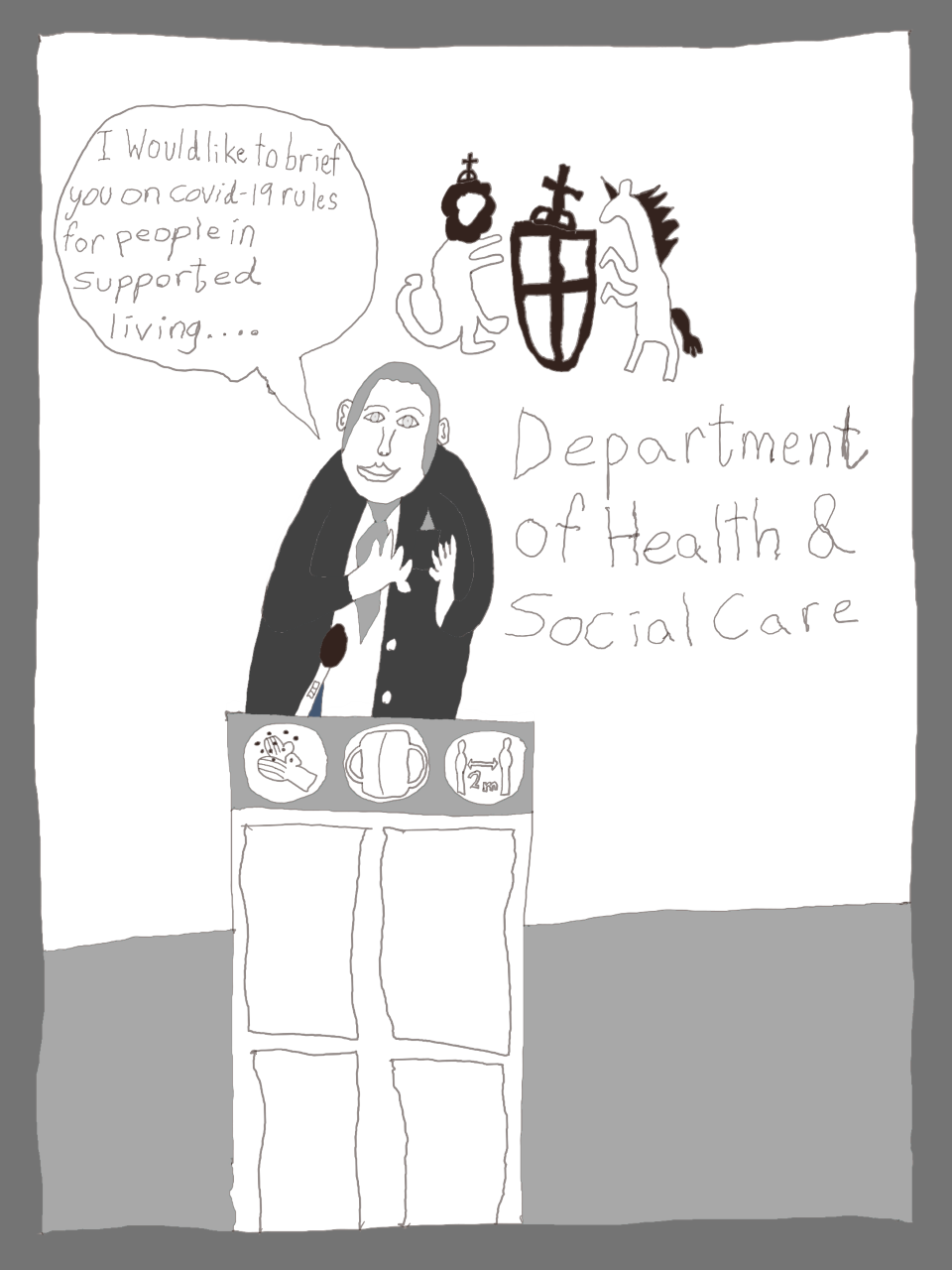
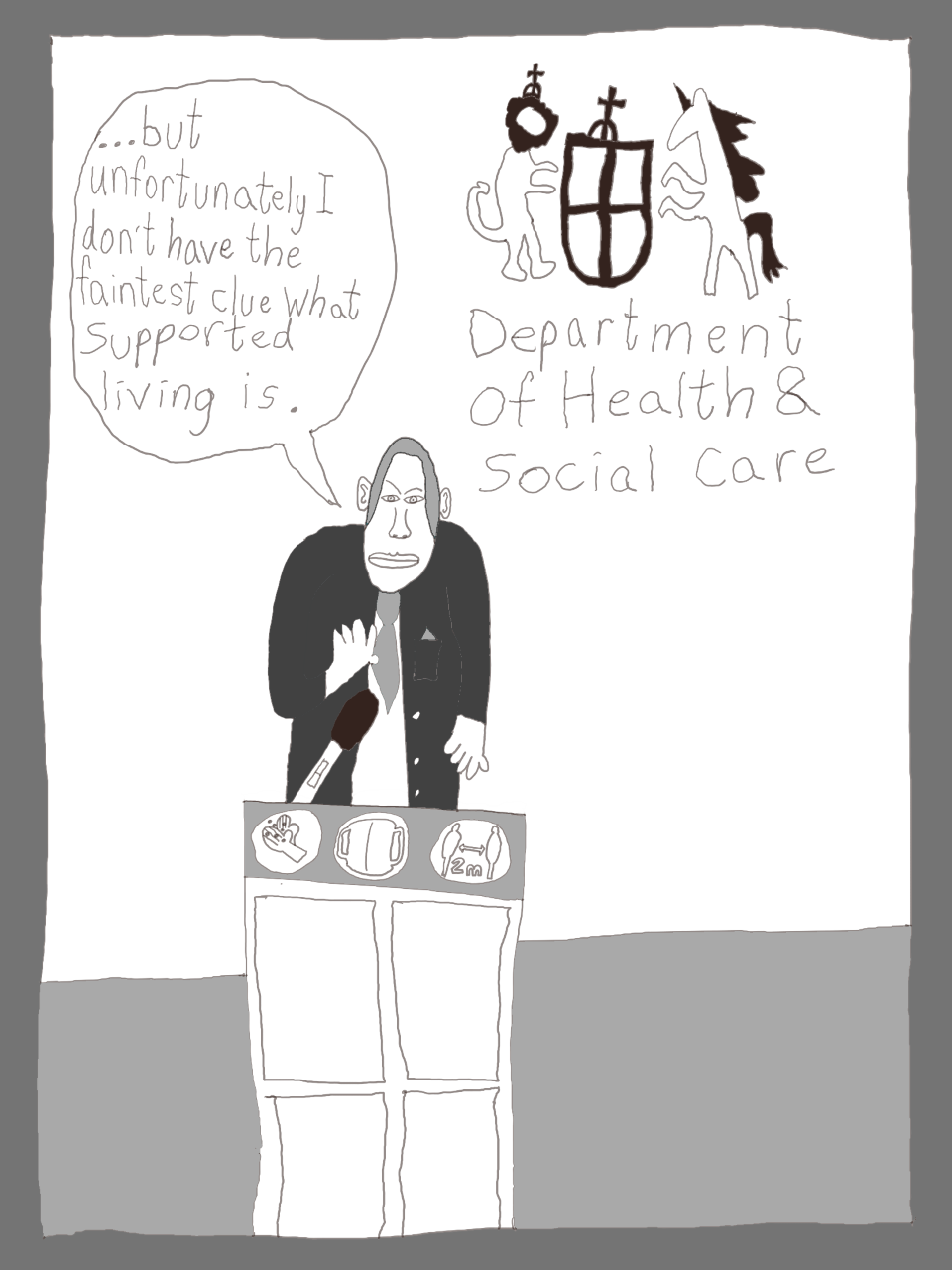
Suzanne Gale sees a young man surprise everyone except himself, finds herself on the other side of a care negotiation and discovers that service providers can be way behind those they care for when it comes to technology
My favourite lockdown story is that of a young man in his 20s. He was living in a shared home with 24-hour support, and his two flatmates went to stay with their families for the duration. His family invited him to stay with them but he declined.
When asked if he’d get lonely, he reported that he’d enjoy the peace. When told he may not always be able to get support with housework, he reported that he wouldn’t make much mess on his own anyway. When told he may not get support to cook, he said: “Can you send me some microwave meals and some bread rolls?” They agreed on pre-cooked meal deliveries and a weekly supermarket delivery for essentials. With regular wellbeing calls, it’s worked, bar a slightly grubby bathroom (which doesn’t bother him at all).
He hasn’t broken lockdown rules once – in fact he seems to like them. He is due to move into his own flat with a weekly three-hour support package for general house admin, support to attend appointments when required and to complete an online shop. It’s a shame that it took a pandemic for us all to realise his potential but here’s hoping he’ll be a trailblazer.
A taste of my own medicine
During lockdown, I’ve had the painful job of persuading my own relatives to move out of their home into a supported environment. They’ve been slightly reluctant but have, through small-steps discussion, admitted that it’s necessary for their own wellbeing.
It’s made me really think about how much anguish families of people with a learning disability can face relentlessly. This is the first time I’ve sat on this side of the table, arguing about money, weighing up the risks and dealing with overworked social workers and housing officers, all of whom have too many cases and not enough housing options for their clients.
Worst of all, I’ve been trying to get power of attorney during lockdown with social distancing, and they are hard of hearing. It’s certainly been a wake-up call and has led to some serious reflection on my approach to working with families. I’ll now sigh less when the emails from a so-called “difficult family” pop into my inbox – and I’ll always take the call.
Playing catch-up
One small silver lining about the whole lockdown business is that some of our less tech-minded service providers are finally catching up with the rest of the world when it comes to using IT.
People with a learning disability have been using their own phones and tablets for years to communicate with family and friends
I had a rather painful conversation with one home manager who was explaining how great tablets are: “It means families can talk to each other face to face whenever they like without having to travel.” I nodded and politely declined his request for the local authority to foot the bill to give each resident one of their own.
He seemed rather surprised when I explained that many people with a learning disability have been owning and using their phones and tablets for years to communicate with their family and friends and that they, like anyone else, bought them with their own money, through saving up, or were given one for their birthday or Christmas.
“Seems a bit harsh,” said my institutionalised home manager. I didn’t think that was the time to suggest using Alexa.
Shortly afterwards, I saw a family friend was Facebook streaming live on her own computer from her front room in a similar shared service, showing off the meal she had just cooked. She regularly uploads news on her successes, videos of her dance routines and embarrassing pictures of her friends at parties.
The expectations of people around her have been far higher than those around people with comparable needs who live in more institutionalised settings.
Funny face
My musing regarding the potential catch-up for people using IT in the disability world led me to think about the different status of nonverbal communication in online calls.
A friendly colleague sent me an offline message during a meeting the other day to “watch my face” as I was, apparently, raising my eyebrows frequently and, at times, pulling a confused or horrified face. I forget that if I can see you on the screen, you can see me too. I also assume no one’s watching me if I’m not speaking. That’s the thing with video calls – you can’t pick up vibes.
That made me think about how using IT to communicate with many of the people we support would put us on a more equal footing. No need to worry about personal space or eye contact, difficulties in reading body language or facial expressions – a simple backwards and forwards transaction.
I’m looking forward to the outcome of enforced Zoom/Teams reviews with people and their families. Surely, if someone can log into a call to speak to their mum, they could join in an online review. They won’t have to sit still or stay in one room and could engage as little or as much as they want. Watch this space.
Research shows just how much self-advocacy groups have stepped in during the coronavirus crisis, says Jan Walmsley, who also finds moving support online surprisingly successful
A year ago, I argued here that self-advocacy was changing from a “nice to have” to an essential contributor to wellbeing for many. Since then, coronavirus has wrought dramatic change – and few people have been as seriously affected by this as those with learning disabilities.
It is time to look again at the role of self-advocacy groups during the pandemic and, thanks to All Wales People First, Learning Disability England and research by the Open University, we know much about how they have been filling the gaps.
As many readers know, people with learning disabilities are particularly vulnerable to having their lives damaged by pandemic restrictions through reduced staff contact, sudden changes and limits to routines and activities and difficulty in understanding and adapting to measures such as self-isolation and social distancing. Wellbeing is at risk from loss of contact with family and friends, day services and voluntary roles, and the reduction or withdrawal of care packages. Some people have been unable to go out because they live with shielded residents.
The Open University interviewed people from 11 self-advocacy groups in England during July 2020. It found they were going to great lengths to fill the gaps to provide support at a distance. One interviewee said: “What we were doing is picking up things that people are saying that aren’t being picked up by the providers and the council.” The outstanding message was the need to keep people connected, inform, protect mental health and give them a reason to get up in the morning.
Several organisations set up phone buddy rotas for weekly chats. The buddies were supported by dedicated staff and had access to resources so if someone was, for example, lacking food or medication, the buddy could help to set up local support.
Happy to be proved wrong
Stories were collected to show the Welsh government the effects of lockdown
Much support to keep connected has migrated online in ways that had been unimaginable and unimagined before. I was not alone in believing that it was not possible to connect remotely with people with learning disabilities – even though roughly half of my Facebook friends are self-advocates. How wrong we were.
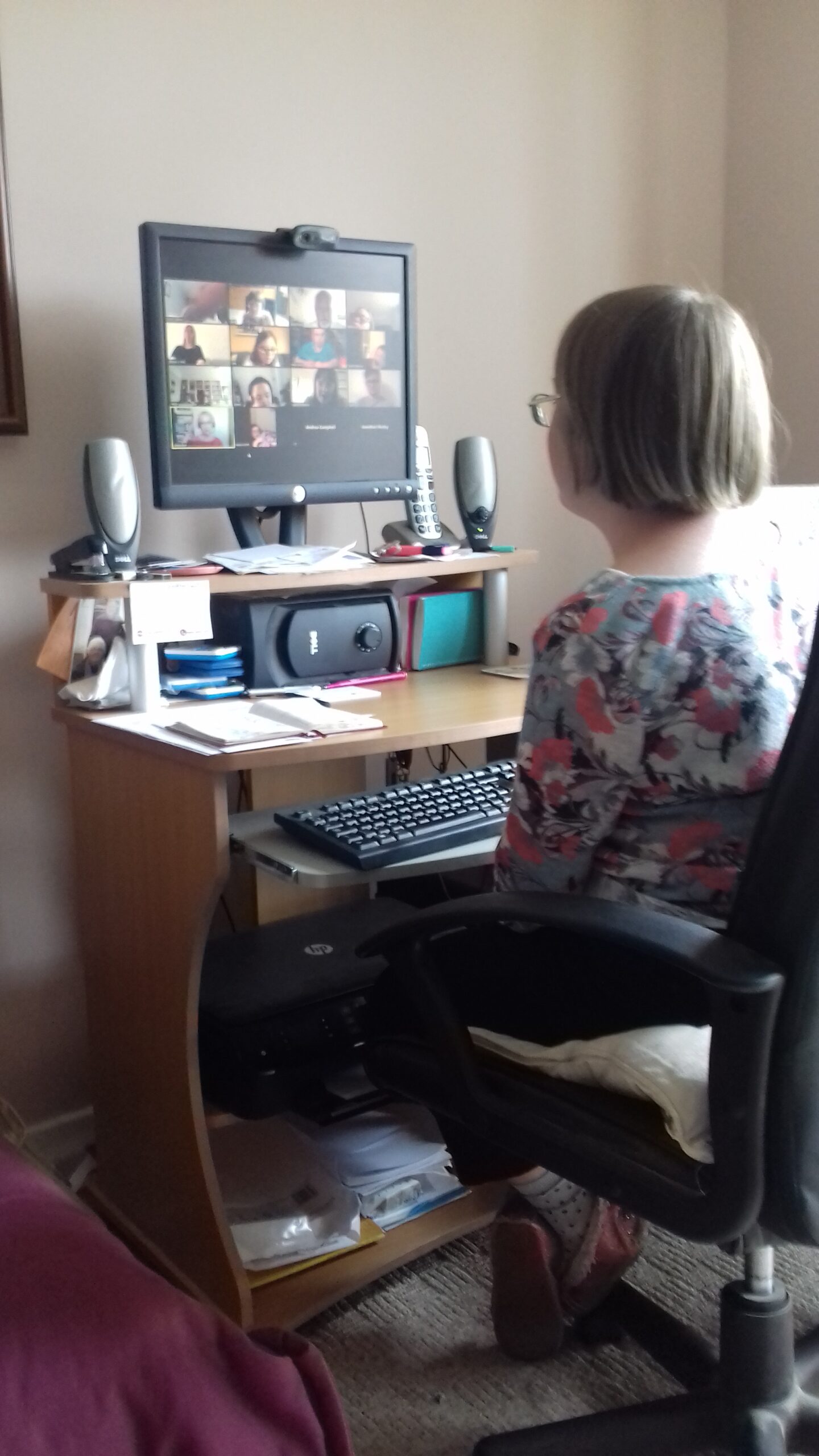
Efforts by self-advocacy groups to acquire laptops through donations and to assist people to get online have really paid off. There have been chats, coffee mornings, discos, parties, quizzes, exercise classes… not to mention online committee meetings. One self-advocate who chairs board meetings commented how being in control of the mute button made his job much easier.
Most also used online meetings to discuss the latest Covid-19 guidance. One group arranged for a nurse to join a call to explain how health activity had migrated online, how to make appointments and what to expect from doctors. Staff and self-advocates were able to help with booking appointments online, welfare benefits assessments and emotional issues. Self-advocates and staff said sharing experiences was helpful. It was important not to trivialise what was happening and for everyone to know “it’s OK to not be OK”.
Learning Disability England hosted regular friends and family get-togethers. English self-advocacy groups made contact with one another, opening the possibility of recreating the English network that died when the National Forum folded in 2017.
One group enjoyed online chats with self-advocates in other countries, while another started a much-requested Sunday social. In exceptional cases, staff delivered food parcels and medication. More saw their role as showing people where they could get help.
Formal guidance, fun ideas
Most groups produced regular newsletters, with the latest guidance in an easy-read format (not something the authorities took seriously), as well as ideas for activities, such as local walks. This work is mostly unfunded and often meant redirecting money from elsewhere with funders’ agreement. In Wales, self-advocacy opened up ways of communicating with the government.
All Wales People First collected members’ stories and used these to inform the Welsh government about the impact of lockdown and to lobby for change, including for more consistency among service providers whose (mis)interpretation of the rules was making life unnecessarily restricted for some. However, it is important not to paint too rosy a picture. Many people are on the wrong side of the digital divide, and not just for financial reasons.
For some, it is a matter of confidence in the absence of someone sitting next to them. Some support staff were discouraging, fearing online abuse or simply not willing to share home facilities. Some families lack confidence so are not able to help. People also say digital does not make up for the loss of face-to-face contact, activities, holidays and other things that make life worth living for everyone.
Finally, the biggest question: if self-advocacy groups have filled so many gaps, what happens where there is no group? Who is providing the connectivity, support and advice? I do not have the answer but this question needs to be addressed urgently.
The rules for getting government help with legal expenses have become increasingly complex, but it is still available for some cases, explain Belinda Schwehr and Kaylee Lindsey
Legal aid has hit the headlines again recently, with journalists often jumping on the “profiteering fat cat lawyers” bandwagon.
This is far from the reality in community care, education, housing, mental health and public law matters. The advice sector in these areas has survived only because of the willingness of legal aid lawyers to go above and beyond the call of duty, effectively donating thousands of hours of labour to prop up a failing system.
Law firms, law centres and some charities hold Legal Aid Agency contracts to provide publicly funded advice and representation regarding decisions made by public bodies such as the NHS or a local authority. A person experiencing a care package cut or problem may need advice about a decision or action taken or a failure to respond, and may need legal representation.
Community care problems
Regarding community care, legal aid funding is designed to pay for advice and representation where there has been a failure to assess needs, an inadequate needs assessment or care plan, a care charging problem, a review-related issue such as a cut to services, an unsuitable placement and so on.
It also covers problems with section 117 mental health aftercare funding, NHS continuing healthcare funding and services for looked-after and disabled children. If issues cannot be resolved through correspondence, judicial review proceedings in the administrative court may be required.
If there is a dispute about whether someone has capacity to consent to decisions about their care and support (particularly in relation to deprivation of liberty) or whether an existing or proposed package is in a person’s best interests, court of protection proceedings may be necessary.
If you cannot afford to pay for legal services, you need to find an organisation with a legal aid contract that can make an application for legal help or legal aid funding. Depending on the urgency of the problem and the type of work needed, different processes are involved.
To qualify for either on the basis of funding, you must pass a means test. The basic rules are that you must:
● Be on an income-related “passporting” benefit or have a gross income of less than £2,657 per month
● Have disposable income of less than £733 per month (after allowances)
● Hold savings under £8,000; if your savings exceed this, you are not even entitled to preliminary advice.
If your savings are in the £3,000-£8,000, range, it is likely you will have to pay a contribution towards certain types of legal work, although not for legal help. These contributions do not need to be paid up front and can be spread out.
Your home counts towards the valuation of your savings. This stops many people from qualifying, as only the first £100,000 of the equity and a £100,000 mortgage are ignored against the valuation. Some people can access non meanstested legal aid. This is available where the dispute concerns section 21a proceedings, which are challenges to Deprivation of Liberty Safeguards authorisations – on any footing. However, the court of protection does not have the powers of the administrative court with respect to declaring care packages to be unlawful.
There are three types of legal aid and these are best thought of as stages.
Stage 1. Legal help
The legal aid provider completes a form with the person and collects evidence of their financial circumstances for the means test.
The criteria for whether a provider should take on the case are vague. For legal help, they are simply that:
● A person has an issue within the scope of the relevant legal aid contract and
● It is appropriate, having thought about the circumstances of the issues, to provide early legal advice.
A legal aid solicitor should be able to say what type of funding is best suited to your circumstances
An important point is that this includes advice to establish if a case is not worth pursuing.
If practicable, the legal aid practitioner can try to negotiate a better outcome with the public body or compose a complaint. If the public body has breached any of its statutory duties, the practitioner can write a pre-action protocol letter. This sets out the person’s position and what the public body must do to resolve the breach. The public body has 14 days to respond unless the matter is urgent and requires immediate action.
If a public body does not respond by the deadline or sends a response that does not resolve the breach, the practitioner will need to consider whether there is “merit” in making an application for judicial review. Legal help does not cover preparation for such proceedings.
Stage 2. Investigative representation
This is for when investigative work is needed to determine the prospects of success in bringing judicial review proceedings.
An example is where there seems to have been a breach of a statutory duty or a public law issue, but the chance of a judge agreeing with this cannot be known until certain work has been carried out. The Legal Aid Agency deems investigative representation appropriate if six hours of casework are likely to be required, or if advice from a barrister or an independent social worker assessment or other professional input is required because facts are disputed.
Casework can include further client appointments, taking witness statements, correspondence or researching a complex legal point. The legal aid provider will need to make this application on a system called CCMS, completing both a means and a merits assessment with similar financial scrutiny as at the legal help stage.
The merits test is more complex and the practitioner must explain why the case meets the criteria for investigative representation. The Legal Aid Agency usually takes around 12 days to decide unless the legal advice provider flags it as an urgent application. If the agency grants the funding, then the provider will be given a certificate to proceed.
Stage 3. Full representation
This is for people who are actively contemplating judicial review proceedings – the issue has not been resolved and all avenues for sorting it out have been exhausted.
It must involve clear statutory breaches or public law grounds for challenge. A competent appraisal that there is a 50% or greater prospect of success is required; the 50% success possibility criterion is not necessary if the threat is to the person’s life, liberty or home. This funding is also claimed via the CCMS system. The merits assessment is for deciding whether a case can be dealt with through this route if it is proportionate to the circumstances.
The provider can apply on an urgent or emergency basis, which is decided within 48 hours, while non-urgent applications usually take around 12 days. Once funding is granted, a certificate outlining the type of work that can be carried out is issued.
This is usually limited to obtaining advice from counsel and preparatory work for proceedings, such as putting together a court bundle, gathering witness statements and other evidence and a statement of facts and grounds setting out one’s case.
Once this has been filed with the court, a judge will then consider whether to grant permission for a hearing – all judicial reviews require permission as a first hurdle. If a permission hearing is necessary rather than a purely paper application, additional funding needs to be requested to cover the costs of any extra work and representation in court.
When legal aid funding at the investigative or full representation stage is granted, there is a rule that if one recovers “property” (including damages), there is a statutory charge; this means that the money is recouped to cover the costs that the Legal Aid Agency has paid.
A waiver can be requested at the time of the application in public interest cases. Alternatively, you can wait until the end of the case when costs are decided and request the waiver then, but it may be more difficult to secure at this time.
Where to start
As complicated as all this might seem, if you need advice about a community care matter, the best thing to do is to approach legal aid providers who have a contract and explain what the issue is about, why you think there is a problem and what you want to achieve.
Do you just need advice or do you need someone to investigate and put the case forward for you? The provider should identify what type of funding is best suited to your circumstances. Some people have complicated finances and providers will check whether you are eligible.
It can be hard to find a solicitor with capacity to do community care cases as there are not many of them. Contact a local firm first but, if none are available, you can use any firm elsewhere.
A few organisations provide assistance to get cases started for those who need it, ensuring access to justice until a law firm can be found to issue proceedings. CASCAIDr cannot take your matter all the way through to court and we do not do legal aid advice at all, but we do offer up to three hours for free and some further free advice for some clients. We are working on ways to ensure we can pass people on to good legal aid firms that have the capacity to take work on.
● To check whether you are eligible for legal aid and what you will need as proof see: https://www.gov.uk/check-legal-aid
● You can find a legal aid solicitor via https://find-legal-advice.justice.gov.uk
Belinda Schwehr is chief executive of legal advice charity CASCAIDr (www.CASCAIDr. org.uk) and owner of Care and Health Law, a consultancy. She has been a barrister, solicitor advocate, presenter, writer and university law lecturer; Kaylee Lindsey is a senior caseworker specialising in community care and public law, and a CASCAIDr consultant. She represents both adults and children in disputes with local authorities and the NHS, including issuing judicial review proceedings
Assessments for disability benefits are now based on paper records or carried out on the phone rather than being done face to face. Charlie Callanan sets out what you need to know
Medical assessments are required in certain benefit claims, including for personal independence payments (PIPs). They are also used for the work capability assessment (WCA), which assesses claims for employment and support allowance, and in universal credit where the claimant may have “limited capability for work”.
During the coronavirus crisis, assessments are being carried out only via telephone, with none being done face to face. Video assessments are being trialled. Assessments can also be completed by medical assessors using paperwork alone, such as a claimant’s PIP2 application form or limited capability for work questionnaire, and any medical or other relevant evidence available. It is therefore recommended when starting the written assessment process for PIP or a WCA that clients give the Department of Work and Pensions (DWP) as much information as possible about their disability and its impact, as well as any written evidence.
This may help to avoid the need for a telephone assessment because the medical assessor can make a recommendation to the DWP based on that information and evidence alone.
Limits to work capability assessment
There is an important current feature to note about WCAs. After a claimant has had a telephone or paper-based WCA, the only recommendation that the assessment provider can make is that the claimant is not fit for work and has “limited capability for work-related activity” (LCWRA).
The assessor will not make a recommendation to DWP that the claimant is fit enough to work or that they have “limited capability for work” (ie they are not currently fit for work but should
Some people will find telephone assessments less daunting but still need to prepare for them
be able to look to going back to work in the future). If the DWP cannot grant a client LCWRA status, they will get a letter telling them it has not been possible “to complete their assessment” at this time. The client will then have to wait for a face-to-face assessment until such time when these are reintroduced.
If this is the claimant’s first assessment, they will continue to receive the basic assessment rate or, if they are undergoing a review, their award remains unchanged. This does mean clients losing out in the short term if they are likely to see their benefit increased following a face-to-face assessment, although any increase will eventually be backdated.
Some tips for telephone assessments
Many people will welcome and prefer a telephone medical assessment and find this less daunting than attending an assessment centre. However, claimants still need to prepare. Below are some tips for clients on matters to consider before and during a telephone medical assessment. Before:
● Read and review the relevant claim or assessment form (eg PIP2 form or ESA50/UC50 questionnaire) to remind you of points that you may wish to talk about in the assessment
● List all aids and appliances you use, such as modified cutlery, grab rails, a shower seat, incontinence pads, a walking stick or wheelchair, a long cane and low vision aids.
● List all the medication you take or any other treatments you have
● Arrange for a companion to be with you if you want this (see below).
During:
● Make sure you are seated somewhere quiet and comfortable
● Have to hand the application form and any notes you have made
● Note the name of the assessor, the time they called and the call duration
● You can have a companion with you, such as a friend, relative, carer or support worker. They can take part in discussions and take notes for you. Remember to introduce the companion to the assessor. The DWP’s PIP Assessment Guide for Assessment Providers states a claimant has a right to have a companion with them during a PIP assessment. The online WCA assessment provider guidance also acknowledges this right.
● Do not feel rushed to answer questions; take time to consider both the question and your reply
● Do not exaggerate your condition but do not downplay it or minimise its impact on your life
● Do not give “yes” or “no” answers: describe how doing something makes you feel both during and after completing it, what assistance you need, how long it takes and what aids you use
● Talk about how your condition affects you and the kind of things you have difficulty with or cannot do at all without guidance or assistance. This could include difficulties the assessor should but might not raise with you; note that they may assume there are certain things you have no difficulty doing such as mixing with other people.
The pandemic means there will be no face-to-face assessments until it is safe and operationally feasible for providers to reintroduce them. Therefore, we can assume people will have to take part in telephone assessments to determine their disability benefit claims for the foreseeable future and, accordingly, will need support, advice and guidance.
There has been widespread criticism, not least in Community Living, of the continuing housing of people with learning disabilities by the NHS in institutional settings far from their families and communities, with the accompanying risk of abuse.
The government’s response has been the NHS Transforming Care policy. This envisages reducing places at these establishments by up to 50%, and replacing outdated facilities with “state of the art units”. This second part is very worrying. Recently, I was shocked to learn that approval has been given for a unit of 40 places next to Ashworth Hospital, a maximum security hospital, on Merseyside, costing £33 million.
It is described as being for “low security” need; there is already a larger, medium-secure facility on site. We have a build-up of facilities on one site, next to a maximum security psychiatric hospital, based on treatment through congregating people together, special architect designed buildings and use of technology. That is what is meant by state of the art. I call it institutional.
My idea of state of the art would be housing people in their own homes in their local community close to their families, with whatever support they require. This was the recommendation of the 2007 Mansell report on care of people with difficult behaviour. This report, and the direction of policy and philosophy in learning disability services for the last 50 years, has been totally ignored in the planning of this sort of service.
Capital expenditure of £33 million for 40 people works out at £825,000 per person. What fantastic community resources could be bought for that. I’m afraid institutional thinking is still with us, with large sums of money being thrown at it. My predictions are continuing isolation of people, distress to families and possible recurring incidents of abuse.
Paul Williams
Trowbridge, Wiltshire
Pandemic mental health support
Learning Disability England has been bringing our members and partners together during the pandemic to help people stay safe, well and connected.
More than 40% of people with learning disabilities have had issues with their mental health during the pandemic and we have been working with the Foundation for People with Learning Disabilities to deliver Pass-it-Online mental health training, funded through the government’s £750 million charity support package.
Trainers with learning disabilities have been paid to deliver workshops around the country as part of the Pass It On project, which is for people with learning disabilities. The sessions look at what mental health is, the five ways to wellbeing and making plans. They focus on all of the practical things people can do to stay happy and healthy.
You can find out more about this project at https://tinyurl.com/y2st635f
Lisa Watchorn
Communications Lead, Learning Disability
England, Birmingham
Covid truths need public attention
A number of recent reports are starting to describe the full impact of coronavirus on people with learning disabilities in the UK.
Public Health England published Deaths of People Identified as Having Learning Disabilities with Covid-19 in England in the Spring of 2020 in November (https://tinyurl. com/y2lj93p9). This suggests that the death rates of adults with learning disabilities rose by a higher margin than those of adults in all age groups. Their death rates are estimated to be 6.3 times higher than those of the general population.
In October, the Equality and Human Rights Commission published parliamentary briefings on the impact of Covid-19 on equality and human rights in residential care in both England and Wales (https://tinyurl.com/y22tuttv). These reports cover all types of residential care, including settings for people with learning disabilities, and draw attention to issues in admissions and testing, PPE, withdrawal of care and restrictions on visits.
Finally, Professor Chris Hatton of Manchester Metropolitan University has drawn attention in his excellent blog to the problems posed to those with learning disabilities as a result of priority for the proposed vaccination roll-out being given by age (https://tinyurl.com/y42r6mha). Each of these reports suggests that the needs of people with learning disabilities have gone unrecognised because of either a failure to see them as a priority group or a focus on the needs of the older population at the expense of others.
Self-advocates, advocates, professionals, families and any other supporters should do everything they can to get this information into the public domain by contacting their MP and local councillors, making representation to their local health representatives and spreading the word to friends and contacts.
Men with learning disabilities were exploited for decades while working in an Iowa slaughterhouse. Only now are they starting to get justice. Susanna Shapland tells their story
In the early 1970s, Texas ranchers TH Johnson and Kenneth Henry set up a work programme. It took young men with learning disabilities from Texas “institutions for the developmentally disabled” and trained them to process turkeys. Groups of these men were then sent around the country to work in various turkey-processing plants on behalf of Johnson’s and Henry’s company, Henry’s Turkey Service (HTS).
In 1974, about a dozen of the men were taken by truck from Goldthwaite, Texas, to live in an old schoolhouse in Atalissa, Iowa. They would be joined by around 20 others. Every morning at 3am, the men rose to be driven to the turkey-processing plant in nearby West Liberty. Here they would do some of the most unpleasant and arduous jobs in the plant: extracting live turkeys from crates, hanging them by their feet to be slaughtered, then rehanging the carcasses and eviscerating them.
Overall, Atalissans welcomed the men they referred to as the “boys”. They regularly attended the local church, kept the minimart going with their frequent custom and participated in the annual Atalissa Day parade. At the plant, they were generally respected for their skill and work ethic.
There were some early signs that all was not well: Albert Busby ran away from the schoolhouse in heavy snow, his body only discovered months later; and a 1979 investigation by the Des Moines Register accused HTS of exploiting the men. However, Atalissans observed that the “boys” always appeared clean and well dressed and never once complained.
Abusive new managers
No one employed to supervise the men received any specialised training in working with people with learning disabilities.
This included local couple Randy and Dru Neubauer, who were appointed in the mid-1990s. Although Randy Neubauer exhibited physically and verbally abusive behaviour towards the men – actions that got him banned from the plant itself by owner West Liberty Foods – HTS later made the Neubauers sole onsite managers at the schoolhouse.
The Des Moines Register said the story raised ‘thorny questions’ over pay for ‘the handicapped’
Their regime of coercion and control involved punishments such as being denied television or trips to the local food market, or physical penalties such as being made to walk around carrying heavy weights. One man was handcuffed to his bed overnight. After decades of slaving in the turkey plant, many of the “boys” were in their 60s. A phased retirement began. Before leaving, they had to train up their nondisabled replacements at the plant.
HTS had always been paid directly for the men’s services. Using a loophole in the 1938 Fair Standards Act that enabled employers to pay below the minimum wage to staff with a disability, HTS siphoned off money from the men’s earnings and social security benefits for room and board, and in kind services such as meals out or annual trips. This left the men with a wage of $65 a month, a figure that did not change in all the decades they worked for HTS, despite the advances in disability rights in the world outside Atalissa.
When Sherri Brown discovered that the life savings of her brother Keith totalled $80 despite decades of intense physical work for HTS, she called various state departments and eventually a journalist at the Des Moines Register. In 2009, the schoolhouse was raided and found to be awash with cockroaches, rodent faeces and mould. It was immediately declared uninhabitable by the state fire marshal.
The men themselves were in physically poor health, with malformed hands from their gruesome, repetitive work, dental woes, uncut toenails that curved back into their feet and long fingernails stained with turkey blood. They were taken to a nearby motel, assigned social workers and eventually put in the hands of Exceptional Persons Inc, a non-profit body that supports people with disabilities, who would help them start afresh.
Profound injustice
Robert Canino from the Dallas office of the Equal Employment Opportunity Commission took on the case. The jury were so moved by the profound injustice and the emotional harm they felt the men had suffered that they awarded them $7.5 million each, a total of $240 million.
Although this was swiftly reduced to $1.6 million due to a federal cap on penalties for small businesses, the case had a far-reaching impact. It raised awareness at every level of government of the potential abuse of learning-disabled people within employment institutions, and of the need to stay vigilant.
Nevertheless, in 2016 the brother of one of the “boys” was tracked to Newberry, South Carolina, working for ex-HTS employee Joseph Paul Byrd in an identical operation. Byrd was found to be charging his learning-disabled staff far more in rent than their non-disabled counterparts, cashing their pay cheques but passing on only a small weekly allowance, and subjecting them to verbal abuse.
As for the men of Atalissa, Henry refused to pay their compensation, claiming they had “conned” people. At the time of his death in 2016, Henry was facing $5.9 millions worth of court judgments and administrative penalties. It is only in very recent years that money is finally being redistributed to former employees.
Read and watch
The Men of Atalissa. Documentary. New York Times. 8 March 2014. https://tinyurl.com/ yyu4pcu2
Barry C. The “boys” in the bunkhouse: toil, abuse and endurance in the heartland. New York Times. 9 March 2014. https://tinyurl.com/yaw3e7fu
Kauffman C. Echoes of Atalissa: federal agency sues bunkhouse owner for exploiting mentally disabled workers. Des Moines Register. 12 November 2017. https://tinyurl.com/yy6mosh6
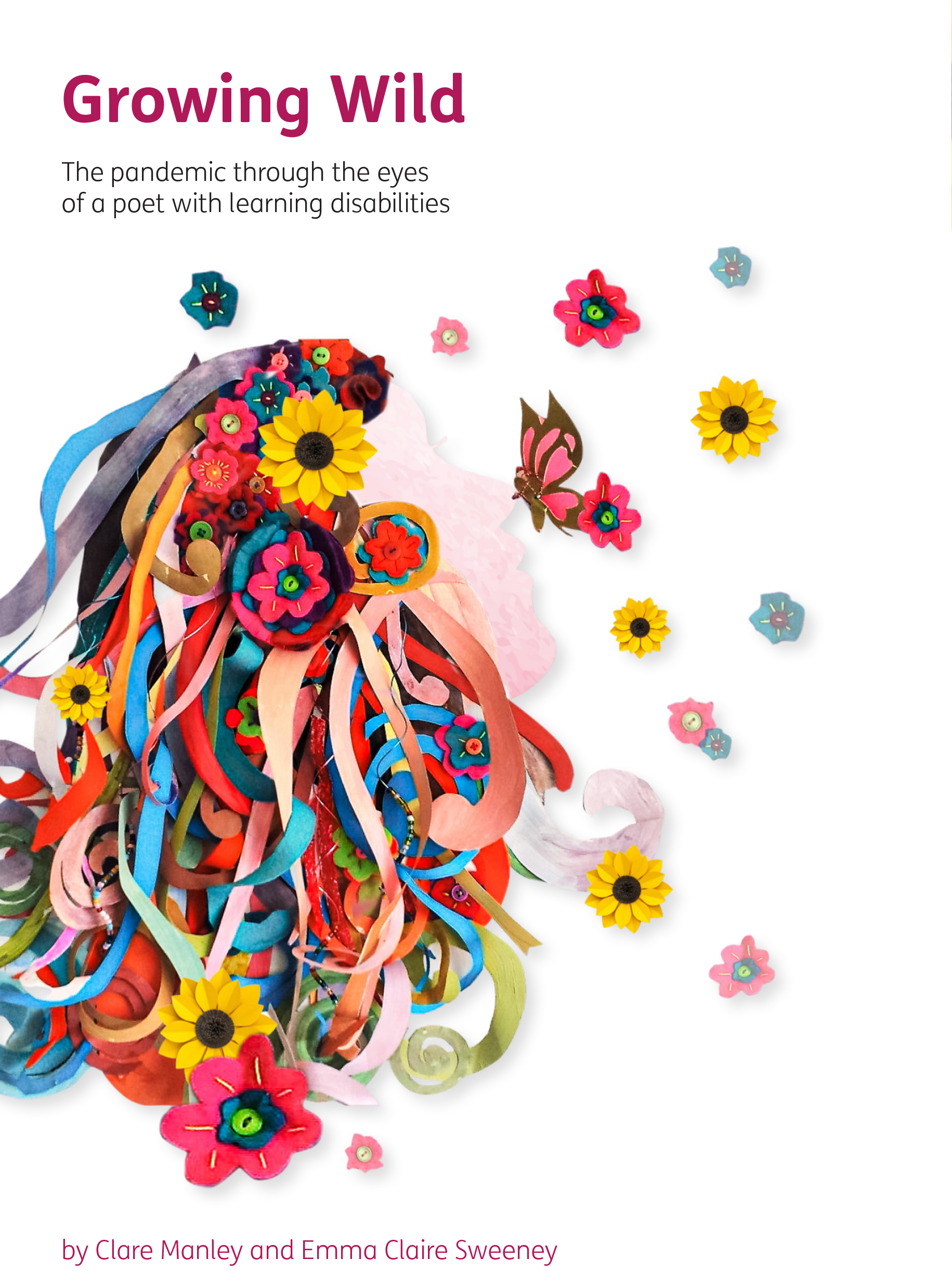
Writer and novelist Emma Claire Sweeney and poet Clare Manley collaborated during lockdown to produce a poetry collection, Growing Wild. Artwork by Robin Meader
Back in March, we were in the middle of an Arts Council-funded poetry project for Mencap, capitalising on its status as the official charity of the 2020 Virgin Money London Marathon.
We were looking forward to interviewing members of Team Mencap about how runners with learning disabilities pushed through the 19th mile – notoriously the point in a marathon where people feel most tempted to give up. And we had planned to broaden out to learn about other moments in their lives when they had almost admitted defeat, and how they’d picked themselves up, dusted themselves down and taken that crucial next step.
We could never have predicted that we were about to face our own 19th miles. When lockdown hit, Emma had to face down the difficulties of separation from her sister, Louise, who has profound and multiple learning disabilities and lives with their elderly parents. They devised a care plan in case their parents caught the virus and became too poorly to support Louise. Emma sourced PPE and kept a packed suitcase in the boot of her car, ready to make the long journey to her family home.
In the meantime, it was crucial that they didn’t all fall ill at the same time. So Emma had to accept that the best way she could help was to stay away. Clare’s parents, on the other hand, live close by. When she was advised to shield because of her severe asthma, she faced her own 19th mile. As a woman with learning disabilities in her mid-40s, should she self-isolate alone in her flat or give up her hard-won independence? It felt like an impossible choice.
During the long months of Clare’s shielding, we kept in touch and collaborated over video call on poems documenting Clare’s experiences of the pandemic. We would explore possible topics and Clare would often go off to write a first draft alone. On the next call, we’d bat around ideas for developing the draft, digging for detail by exploring sensory appeals, and discussing the best form for expressing Clare’s ideas.
We are pleased to share a selection of these poems, which feature in Growing Wild, a collection charting a varied experience from Clare’s claustrophobia during weeks alone to her joy at returning to an allotment abundant with fruit. In these poems, we dared ourselves to venture to the darkest chasms of isolation while always taking in our sight brilliant vistas of hope.
About the Authors
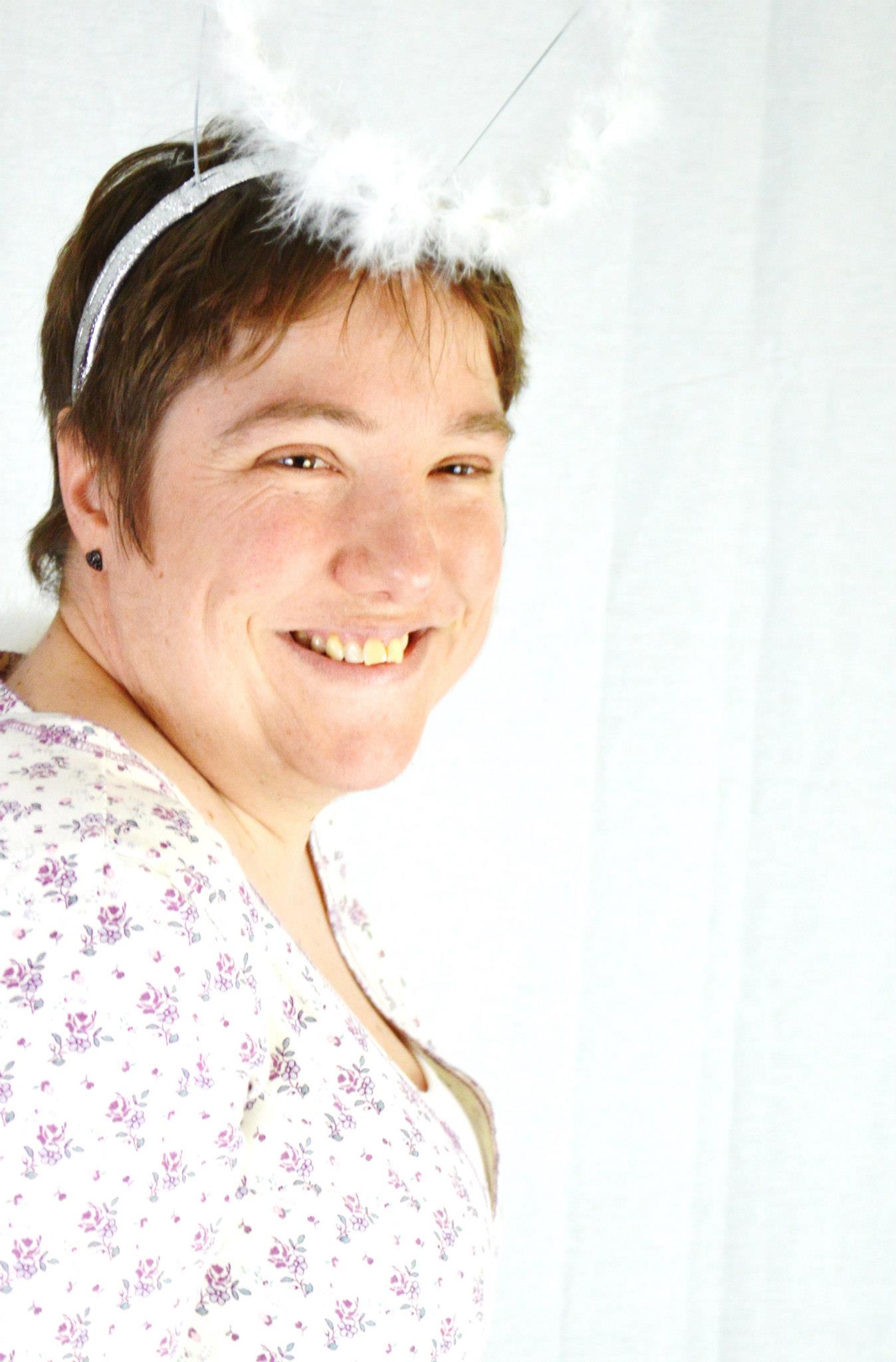
Clare Manley works for the NHS as an access health champion, advocating for the needs of patients with learning disabilities. She is also a trainee at a social enterprise that prepares adults with learning disabilities to work in horticulture and hospitality. She is a founder member of their poetry club, and one of her poems is published in The Memoir Garden: Poems from the Words of Adults with Learning Disabilities (Two Roads, 2013). Since the beginning of lockdown, Manley has been documenting her experiences as an adult with learning disabilities by writing poems about the pandemic.
Emma Claire Sweeney is the author of Owl Song at Dawn (Legend, 2016), a novel inspired by her sister who has cerebral palsy and autism, which won the Nudge Literary Book of the Year award. Sweeney’s debut non-fiction book, A Secret Sisterhood: the Hidden Friendships of Austen, Brontë, Eliot and Woolf (2017) was written with her friend Emily Midorikawa and has a foreword by Margaret Atwood, who described the work as a “great service to literary history”. She has won Royal Literary Fund and Society of Authors’ awards, and her work has appeared in Time magazine, The Washington Post and The Paris Review.
Grow Your Own
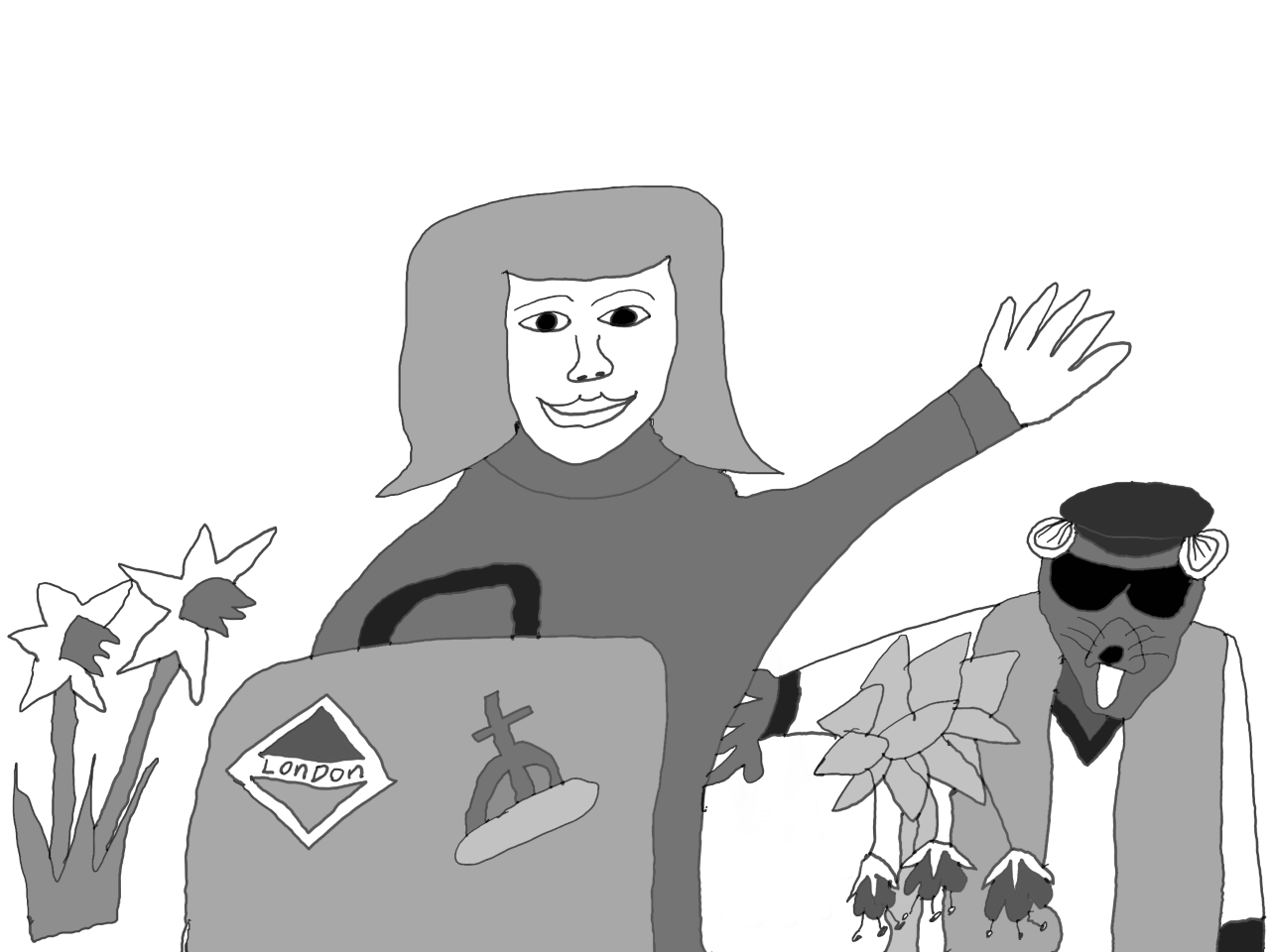
I filled a huge suitcase
with joggers and jumpers and loose cotton dresses,
a mixed-berry bath bomb,
and wireless earphones.
I left behind
Roland Rat and my teddies.
No need, my mum said,
for children’s toys.
From Mum and Dad’s tub,
I looked out over their neighbour’s overgrown garden.
No bath in my flat.
For years, I’d fought for a walk-in shower.
Dad needed space alone to feed the dog.
Mum fed us fish and chips and Sunday roasts.
I should help with the cooking, she said.
But I thought of myself as their guest.
And yet, I couldn’t stay still,
cleaning the loos,
dusting and polishing the lounge.
No good for my lungs.
I weeded their borders,
sowed broad beans, sweetcorn, sunflowers.
They took months to grow,
and flowered for only two or three weeks.
From April to August,
my neighbour watered my garden,
tending the daffodils and fuchsia I’d planted before.
Lull
I descend hillsides and emerge from woodlands before the August sky burns blue, the air becomes woollen damp.
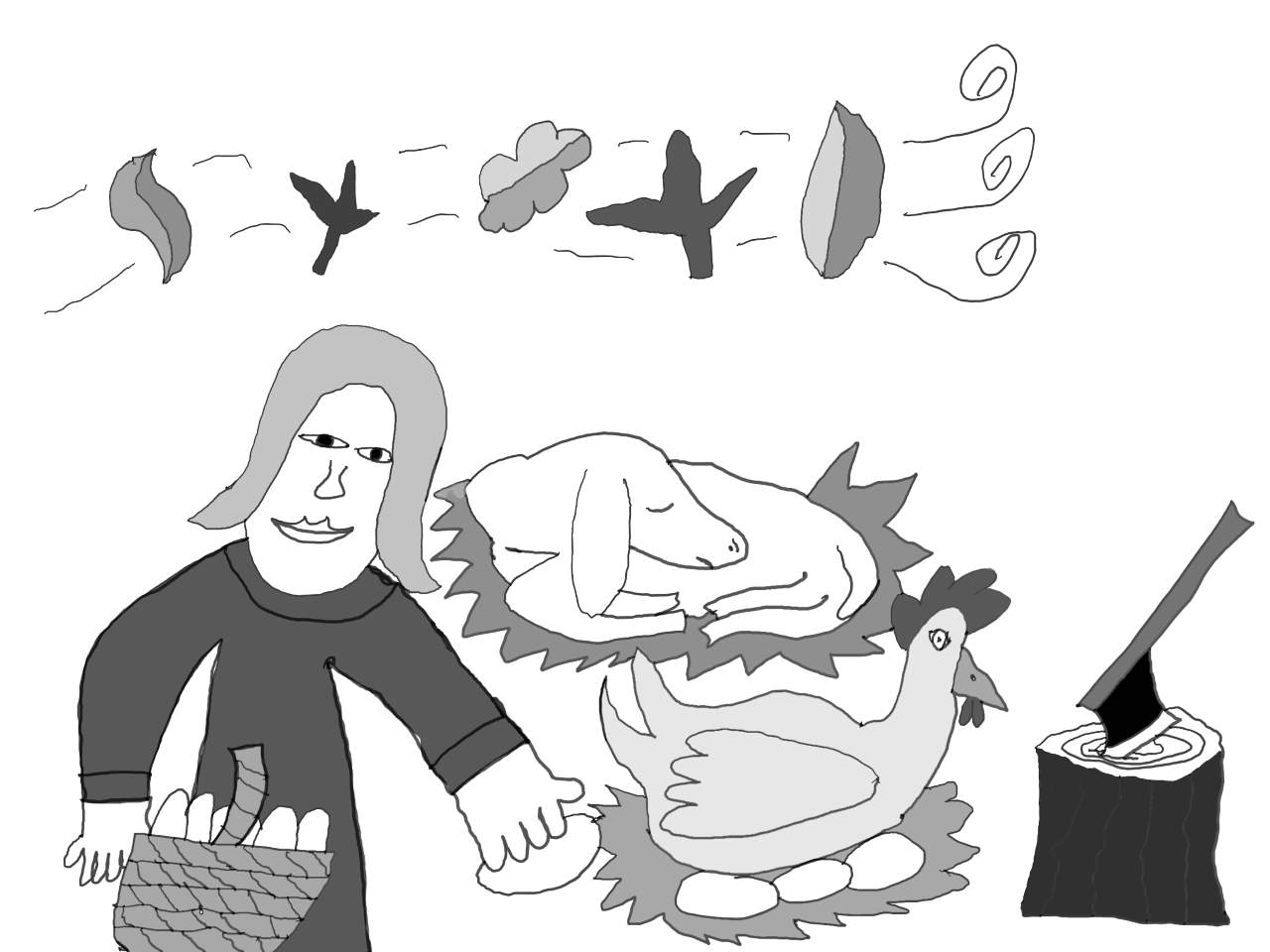
My sister’s chickens cluck on their warm clutches, as I fetch their blue eggs from behind.
When the day moults to dusk, the sheep bleat for their evening feed before curling quietly in the hay. Hints of autumn spike the air – the slaughterhouse still a month away.
The Lockdown
Bins of tissues,
every cough, sneeze and tear.
Empty packets,
chocolate buttons, lemon drizzle, custard creams.
Oh, for lungfuls of air,
allotment fresh.
Oh, to sow
Swiss chard and hug my friends.
But the gatekeeper
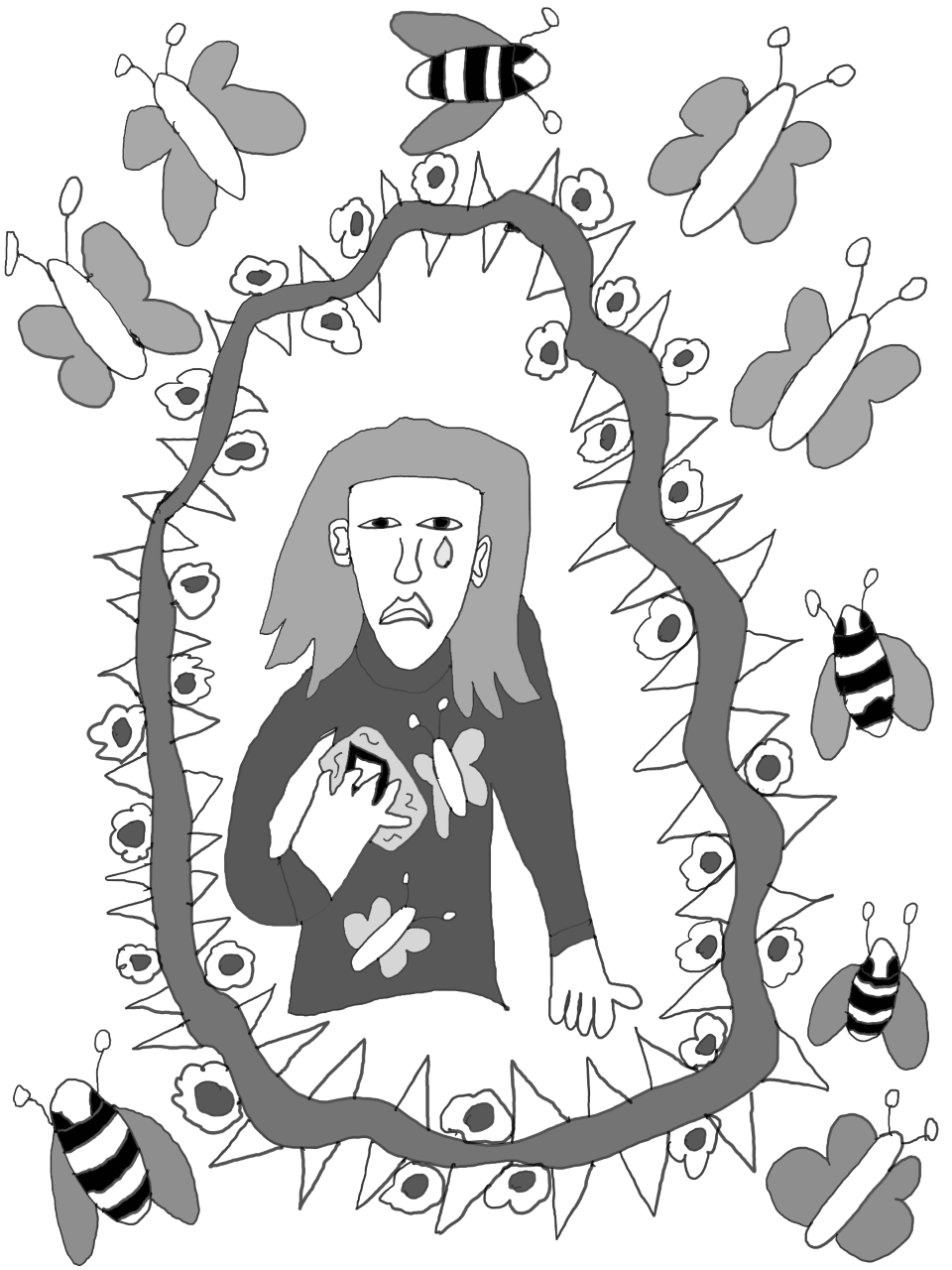
butterflies
have flit from the brambles
to my belly.
I only let certain people get close,
But how will I endure isolation all summer long?
Picnics in the Rain
When the sun is out, our conversations shine brighter.
Autumn creeping close, we climb Cornish cliffs,
our limbs hard-worked, lungs sea-air tired, our last gasps before the seasons shift.
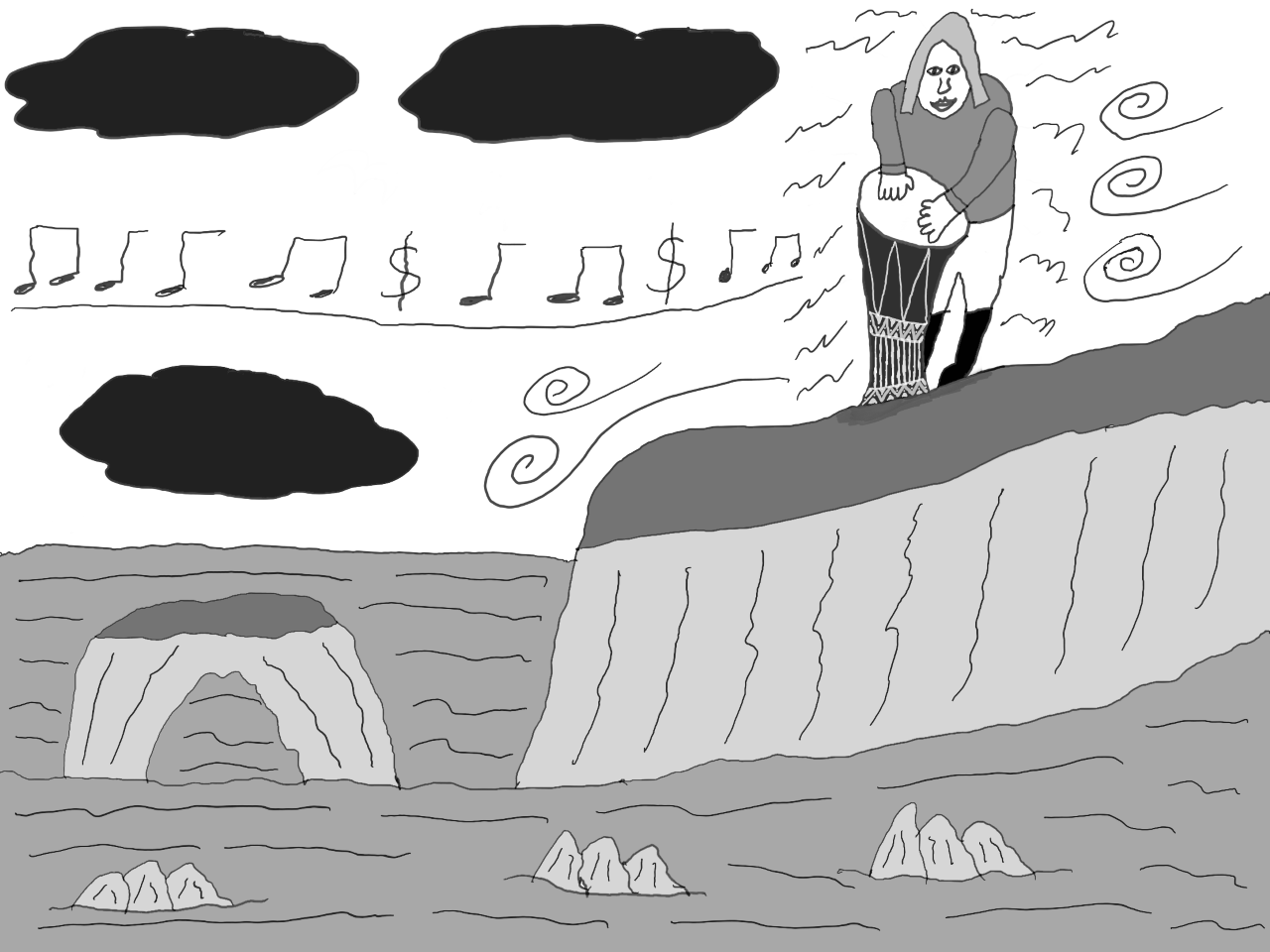
Virtual discos, my song grows wild, yet the canal’s edge grips tightly.
For beneath black clouds my breath labours quietly.
In chill
air, though,
my drum speaks,
my muffled taps edging
towards a far heavier beat.
At picnic tables, they open umbrellas, the people who gather to the beat of my drum,
pensioners, toddlers, addicts and couples long wed,
beneath the hush of the willow, they hear my life thrum.
One Hundred and Two Days Away
The grass colour-sapped and head-height,
hiding trailing hawthorn and broken glass.
I’m stiff-limbed from strimming and raking,
my hair’s untrimmed.
Picking red currants with friends,
our laughter reaching across the spade lengths between us.
Pete, a walking scarecrow,
moustache and beard dyed green for the NHS.
The eye sting of onion and runner-bean chutney,
the bitter-sweet smell of loganberry jam.
Sterilised jars to stock the pantry before the return of wintry days.
The Right Time
Time to move,
I told them.
It was time, Dad agreed.
Months to find a social worker; years to find a flat.
Full of lads, it was,
and a waterlogged cellar.
Rising spores that clogged my lungs.
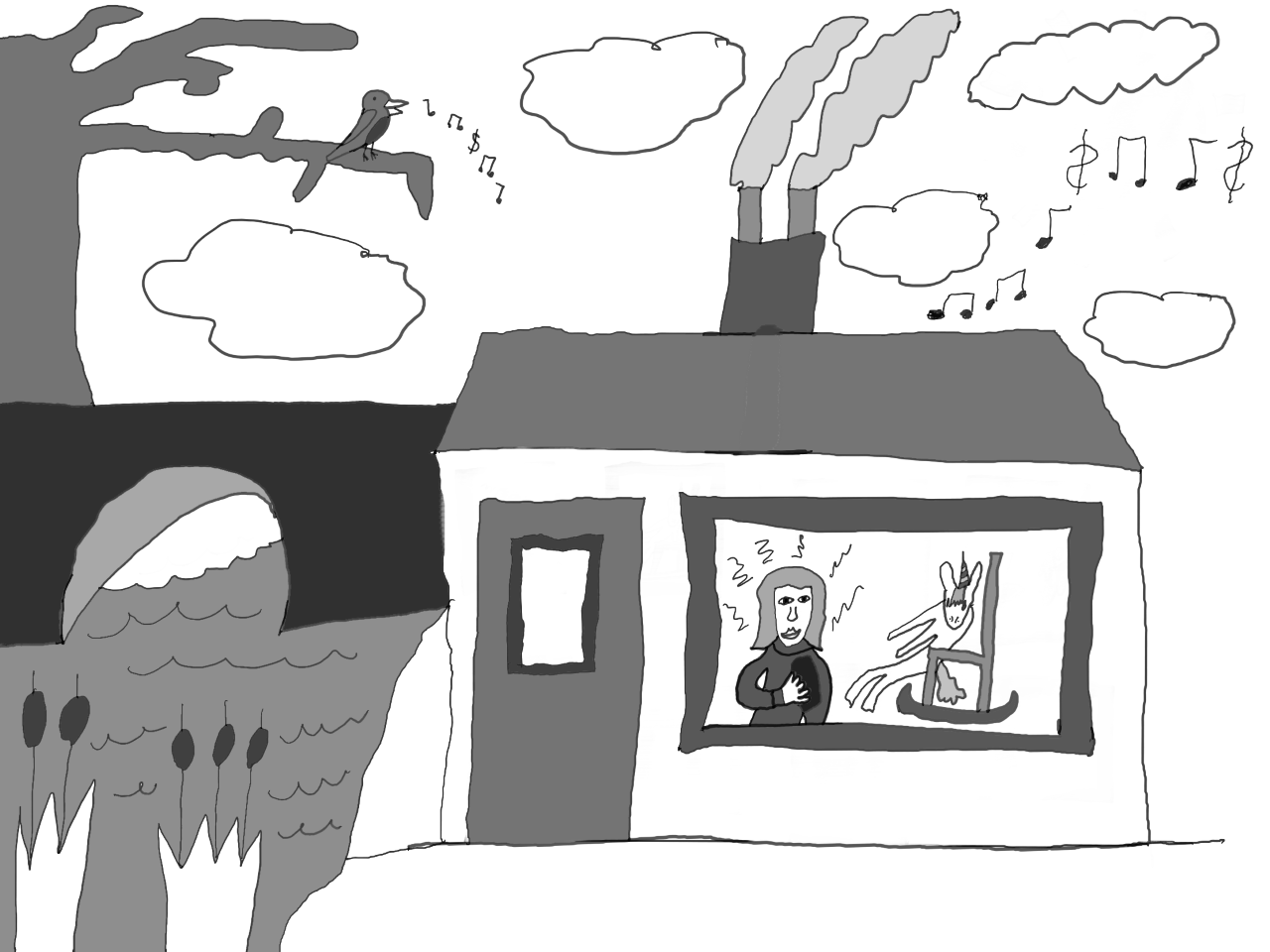
Finally, I moved to a house by the canal.
Seven years, I’ve lived here.
Own front door, own back door,
own rocking chair and cushions,
own unicorn handwarmer and unicorn toys.
In March, I turned over the soil, planted daffodils and fuchsia.
I was looking out the window when my boss called. We’re closing the office,
she told me. How long, I don’t know.
Weeks I spent, alone: No support staff, no friends.
Still, I rose early,
fried bacon and eggs on Mondays though I couldn’t work at the allotment.
Still I spooned porridge with golden syrup, though I couldn’t take the 500 bus to work.
Child trust funds were designed to provide a nest egg when teenagers reached adulthood. However, young people with learning disabilities are being denied access to their own funds, writes Ed Davey MP
Since September, the first generation of 18-year-olds have started to be able to access the money in their child trust funds. These are savings accounts that the government set up back in 2005, into which parents were encouraged to pay to provide a nest egg for their children when they turned 18. However, many disabled young people find themselves locked out of their accounts, unable to access their own money.
I was first alerted to this problem by the father of Mikey, a young man who is severely disabled due to a neurodegenerative condition. Mikey turned 18 in September 2020, so he should have been among the very first young people to have access to their child trust fund. His parents and grandparents had paid into his account over the years to give him a modest sum of money that would be his own.
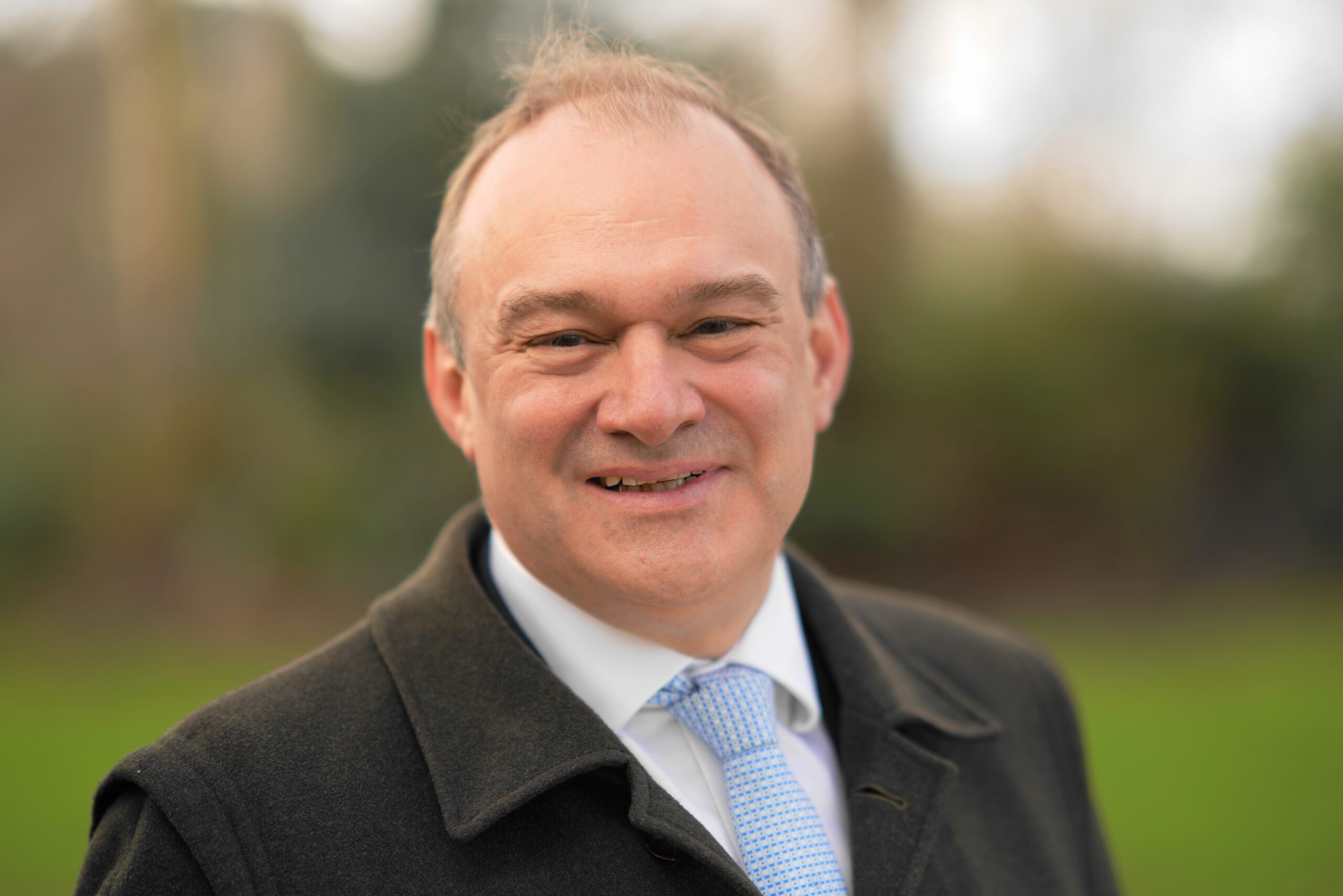
Ed Davey: a small change to the law would resolve the problem at no cost to taxpayers
Mikey wants to use that money to buy a specially adapted tricycle. But, because of an unfair bureaucratic hurdle that should be easy for the government to fix, he cannot. Because his disabilities prevent him from managing his own finances, Mikey is not able to access that money himself. Of course, his parents should be able to do it on his behalf – but the rules governing child trust funds mean that they cannot.
There are tens of thousands of disabled young people with child trust funds who will find themselves in the same position as Mikey when they turn 18 – possibly as many as 150,000. Thousands more will face exactly the same problem when it comes to accessing their junior ISAs – the newer saving vehicles that replaced child trust funds.
Prohibitive costs
Under the current rules, parents can gain access to the funds only if they apply to the court of protection to be granted the legal power to manage their child’s finances.
The problem is cost – just making an application costs several hundred pounds. Add any legal fees, and the value of the child trust fund (an average of around £2,100) can quickly be swallowed up by what are, in effect, unfair exit penalties that apply only to disabled young people. And it is not just the financial penalty that disabled young people like Mikey and their families are facing. The court of protection process is slow; cases can drag on for more than six months and sometimes even a year until parents are given access to the accounts. For Mikey, his neurodegenerative condition means that every moment is precious.
His parents worry that by the time they have gone through the whole process, it will be too late for Mikey to buy that tricycle and enjoy it. Simply put, the court of protection route is not a good enough solution to allow disabled young people like Mikey to access their child trust funds.
First, it is clearly discriminatory: why should disabled young people have an extra fence and extra cost, compared to their peers? Second, all it does is add to the stress, hassle and bureaucracy that are sadly an all too common features of life as a carer.
Firsthand caring experience
I understand carers’ challenges very well. I have been a carer for much of my life. First as a teenager, nursing my mum during her long battle against bone cancer. Later for my nanna, organising her care and trying to make her last few years as comfortable as we could. And now, as a father, as Emily and I care for our disabled son John.
So I understand the challenges that millions of carers face every single day. I know that being a carer – whether for a disabled child, a terminally ill parent, or an elderly relative – can be rewarding and full of love. But I also know that it is far from a glamorous life. It can be relentless and exhausting.
That is why, when I became leader of the Liberal Democrats, I promised to be the voice of the nine million carers in our country. Because carers do a remarkable and important job but they are too often forgotten by those in power. Struggles like the one Mikey’s parents are going through are too often ignored or met with bureaucratic indifference – the “computer says no” attitude that is blind to people’s everyday lives.
I know how incredibly frustrating that can be as a carer, with the unnecessary bureaucracy, the endless battles and the feeling that you’re just not being listened to. As a carer, you accept some of that as an inevitable part of life. You grin and bear it. But, sometimes, it does wear you down. Sometimes, it feels almost designed to.
That’s how this one feels. None of this was intentional or anyone’s fault actually. Indeed, the Labour government that introduced child trust funds specifically encouraged parents of disabled children to set them up by giving them additional payments. But nobody told those parents about hurdles they would face – including these exit penalties.
Two solutions ignored
The really frustrating part is what happened when Mikey’s parents tried to get it fixed.
With the help of a specialist lawyer, they have tried to get the government to consider two proposals that would enable parents of severely disabled young people to access their child trust funds, without the need to go through the court of protection.
The first, put forward by industry bodies, involves giving the firms who manage the funds the discretion to release money to parents up to a certain amount, with safeguards in place so that it happens only where the child lacks the mental capacity to access the money themselves.
The second proposal is to extend the existing law that allows parents whose child is terminally ill to withdraw from child trust fund accounts on their behalf before they turn 18 so it covers mental capacity as well.
Together, these changes could make an enormous difference to tens of thousands of young disabled children and their carers. They don’t require much on the part of the government – a relatively small piece of secondary legislation and some guidance for providers. It should have been a quick fix – an easy win. Instead, as happens all too often, Mikey’s dad found himself passed back and forth between HMRC and the Ministry of Justice, with no one seemingly willing to give his problem – or his solutions – a genuine hearing.
That was when he came to me. I listened, then I took the issue straight to the top to the prime minister. At a prime minister’s questions session in October, I told Boris Johnson about Mikey, and urged him to consider his father’s proposals. He promised to look at them, so I am following this up with him and with ministers in the Treasury.
This is not a party political issue. It is an injustice affecting tens of thousands of disabled children, and one that should be relatively simple to put right. At no cost to the taxpayer.
All it needs is for ministers to listen to carers. And that’s why I’m determined to campaign for all carers.
Sir Ed Davey MP is the leader of the Liberal Democrat Party
In the first of a two-part series, Simon Jarrett considers how and why ethical practice within healthcare always poses a problem for people with learning disabilities
Medical ethics are, at heart, simple. The duty of a doctor is to try to prevent death, make people who are ill better, treat patients well and do no harm.
British doctors are legally bound by an ethical code devised by their professional regulator, the General Medical Council (GMC), in which the basic commands of “do good” and “cause no harm” loom large. It all appears straightforward. Yet we know that complex medical issues often arise, and what constitutes “good” and what constitutes “harm” can be contentious areas. The area of medical ethics applied to people with learning disabilities is no exception.
Readers of this magazine will know there have been a series of tragedies involving people with learning disabilities in the UK health system. At heart, most of these have arisen not from systemic organisational problems, accidents or incompetence but from ethical failings. The list is long and includes preventable deaths arising from inappropriate treatment, “do not resuscitate” notices routinely applied to young patients with learning disabilities, neglect on wards and harmful use of medication.
We can add to these a series of recent and current abuse scandals in assessment and treatment units (provided by the NHS or by private or charitable bodies) and decades of neglect and abuse of people with learning disabilities in long-stay hospitals managed by the NHS after its formation in 1948 through to the 1990s. However much of a boon the universal, free-to-use NHS has been for the population as a whole, for those with learning disabilities it has too often been an ethical disaster zone.
Why is this so, and why have many people with learning disabilities not been subject to the simple dictum that doctors should seek to do them good and strive to do them no harm?
Silent about learning disability
The GMC’s current Good Medical Practice guidelines, published in 2013, are reticent regarding disability as a whole, and silent about learning disability altogether. Their only specific reference to disability (note 60) states: “You must consider and respond to the needs of disabled patients and make reasonable adjustments … so they can receive care to meet their needs.”
The British Medical Association says disability is not a consideration in decisions about treatment
They note these are not just physical adjustments but also relate to a person’s communication and other needs. From here, doctors are then referred to a rather vague section (25b) of the guidelines, which states: “If patients are put at risk because of inadequate resources… you should put it right if possible.”
Ethical training for doctors in relation to learning disability is also lacking, although battling parents whose sons died prematurely in NHS care are working incredibly hard to change this. A leading 2020 textbook used in UK medical schools, Medical Ethics and Law: a Curriculum for the 21st Century, contains only one reference of any significance to learning disability in its 357 pages.
This refers to the impact of cognitive impairment on decision-making capacity and states “most healthy people without learning disability have the capacity to make decisions about their own healthcare and to understand the main points at issue” (page 103). The assumption appears to be that healthy people with a learning disability do not have the capacity to make decisions about or understand their own healthcare.
There is no other reference to learning disability in this entire book. An ethical guidance vacuum of this sort leaves doctors in a position where they make their own decisions based on their instincts, beleifs or unconscious biases.
The absence of specific ethical guidance about learning disability, a general paucity of guidance about disability as a whole and a poor track record of safe healthcare for people with learning disabilities all came to a head in the early days of the coronavirus pandemic health crisis in 2020.
Who is first in line for care?
News items showed exhausted Italian and Spanish doctors having to make heart-breaking decisions about who should receive treatment and who not as coronavirus surged through their countries. If two people required critical care, and there was only one ventilator, who should live and who should be left to die? As the virus entered the UK and threatened to overwhelm the NHS, the medical profession prepared itself for the horrendous task of making similar decisions.
The NHS stated that, in cases of excess demand, critical life-saving treatment would be prioritised for those most likely to survive. This involved a cluster of factors including age and pre-existing conditions. It implied that, in the event of a treatment decision having to be made, a young person with no pre-existing health conditions would be given priority over a young person with such a problem. This was enough to cause concern among people with disabilities as a whole and for people with learning disabilities in particular, given the chequered history of the NHS in its treatment of disabled people.
Disability Rights UK issued a statement in April signed by hundreds of disability organisations and their allies, including many learning disability bodies. The concern was that the simple fact of being designated disabled would be sufficient grounds for withholding treatment, irrespective of an individual’s general health and survival chances.
The statement called for all NHS staff to be guided by certain principles: that treatment decisions should not be influenced by how disabled people are valued by wider society; existing health conditions unrelated to survival chances should not figure in treatment decisions; and being in receipt of social care and having support needs should not make health staff think that an individual would not benefit from treatment.
The statement also called for people with disabilities and their advocates to be involved in their own treatment decisions.
Doctors on the defence
This alarmed doctors’ trade union the British Medical Association (BMA) enough to rush out a statement that emphasised “neither age nor disability are in themselves relevant criteria for making decisions about treatment”.
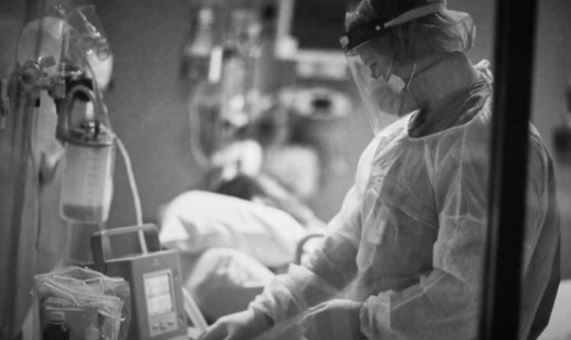
Attending to a patient on a ventilator: the British Medical Association says disability is relevant if it means a patient is significantly less likely to survive complex, demanding treatment
The statement acknowledged that at some point demand for lifesaving treatment might outstrip the supply of available resources, in which case very difficult decisions would have to be made. Nonetheless, the BMA emphasised that its Covid-19 – Ethical Issues. A Guidance Note states “someone with a disability should not have that disability used by itself as a reason to withhold treatments”.
However, it added: “Where the consequences of… a pre-existing disability… mean that the patient is significantly less likely to survive this complex and demanding treatment, then it becomes a relevant factor.”
The original ethics guidance note itself, which the BMA had felt compelled to clarify, emphasises that some health professionals may, during this crisis, be obliged to withdraw treatment from some patients to enable treatment of others who are more likely to survive, and that it is lawful and ethical for doctors to refuse potentially life-saving treatment in such situations.
The presence of “comorbidities” (more than one illness or condition occurring in one person at the same time) “may exclude individuals from eligibility”, even if treatment for Covid-19 had already started.
The overall aim of the medical profession throughout the crisis, the BMA guidance document stated, would be on “delivering the greatest medical benefit to the greatest number of people”.
No explanation for rise in deaths
We are yet to know the full health impact of the pandemic and of medical practice during it on people with learning disabilities. It may be some time before we have a clear picture.
A report from Public Health England in November found that, between February and June, the overall number of deaths of people with learning disabilities were 2.3 times higher than they had been a year previously. As yet, there is no detailed explanation of what caused that spike.
The Care Quality Commission was recently asked to review the use of “do not attempt cardiopulmonary resuscitation” decisions within all groups during the pandemic. It will be some time before that report is published.
However, whatever the CQC finds, the alarm that the BMA guidance raised among people with learning disabilities and their families and supporters was not something that suddenly erupted in 2020 because of the pandemic.
It was deeply rooted in years of mistrust of the value that the medical establishment places on the lives of people with learning disabilities. Both the law and ethical practice within medicine afford numerous examples of a lower value being placed on the life of a learning-disabled person than on the lives of others.
UK abortion law allows termination of an abnormal foetus, such as one with Down syndrome, until the last day of pregnancy. The ongoing scandal of unjust long-term incarceration of more than 2,000 people with learning disabilities in assessment and treatment institutions, often with abusive consequences, is a medically led scandal and it is the Department of Health and Social Care and its previous incarnations that have manifestly failed to tackle the situation.
The litany of ongoing and historical scandals demonstrate why there is such a deficit of trust in the medical profession on the part of people with learning disabilities and their families. Of course there are many first-rate, supportive and empathetic clinicians. But there are also those who are not and, as an entity, the medical profession has always had and still has an uneasy relationship with the learning-disable d community.
These ethical failings by the medical profession, which have disturbing and sometimes devastating real-life consequences for people with learning disabilities and their families, have to be addressed and rectified. This is not a simple matter of rewriting some guidelines. It will involve a cultural attitude change across the profession and the NHS at every level.
To achieve this, we will first need to understand why people with learning disabilities so often disappear into an ethical black hole when they encounter the world of medicine.
To find the origins of this ethical problem, we will need to search the past and understand how it still forms and drives the opinions of thinkers who shape ethical policy and practice today. That will be the subject of the second article in this series in the next issue.
Seán Kelly talks to Alexis Quinn, author of Unbroken, about her determined spirit and extraordinary life – including a daring escape from a UK institution to friends in West Africa
Alexis Quinn and the National Autistic Society delivered a 20,000-signature petition to prime minister Boris Johnson last year calling for an end to institutional abuse
Alexis Quinn is an autistic woman who escaped the British mental health system. This is no metaphor: she literally escaped.
On a sunny Monday morning in May 2016, Quinn walked from the garden of the mental health facility where she was detained, picked up the bag of clothes she had previously hidden by the bins, and climbed into the car of two friends who drove her straight to Dover. From Dover they went to Paris where she caught a flight to Dubai then a further flight to Lagos in Nigeria. Once in Nigeria, Quinn set about rebuilding her life, far out of the reach of the UK’s Mental Health Act. Quinn has written a book, Unbroken, about her experiences and, when we spoke recently, was happy to tell me what happened in detail.
Things first went wrong for Quinn as a young adult when her brother died unexpectedly. This highly distressing event happened around the same time as her daughter was born. As if that was not enough, Quinn had also changed jobs and returned to the UK after living in Asia.
“It was far too much change for somebody who was autistic,” she reflects. In order to cope, she turned to her usual strategies – lots of physical exercise, especially swimming (in her youth she was on the English team) and focusing intensely on her special interests.
The problem was that after her brother died, Quinn became extremely interested in death. Initially, she researched how the body decays after death but then she moved on to subjects such as the most painless method of suicide. She could not understand why her focus and passion, which had always won her praise in the past, was now causing “deep worry and deep scrutiny”.
Asking for help: a major mistake
She decided to go to her GP for help: “And that was the biggest mistake of my life.”
Quinn says that she could have used some help – “maybe £5,000 worth of psychology, some occupational therapy, some speech and language therapy”. Instead, she went into an inpatient unit. “As soon as the door closed, everything was so overwhelming. My routine was gone, my familiarity was gone. I wanted to leave. They said no.”
This was the beginning of three and a half years in 12 different hospitals and institutions, which Quinn estimates cost the NHS about £2.5 million: “All that money wasted on traumatising me and trying to fix something that a) isn’t broken and b) can’t be treated.”
Quinn tried to free herself from entanglement in what she calls the “Velcro system”. She became calmly and rationally convinced that, as she was autistic, it was the environments in each of these noisy, chaotic and scary institutions that were causing her challenging behaviour and autistic meltdowns.
She entered “a trauma cycle” – overload, meltdown, restraint, forced druggings, seclusion and long-term segregation, then overload again.
In her book, Quinn graphically describes how any action on her part that was perceived as non-compliant or aggressive would cause noisy alarms to be set off and six or more staff members gathering to prepare to restrain her.
As an autistic person, the chaos and sensory overload was the exact opposite of what she really needed. Feeling that the endless trauma cycle meant she would never leave, she finally took matters into her own hands.
Lagos magic
In Lagos, she stayed with a friend until she could find herself a home and a job and her parents could bring her young daughter out to join her (which they did six weeks later).
As soon as she arrived in Lagos, she felt better “as if by magic. Except it wasn’t magic at all. It was common sense.” She created her own personalised care plan to meet her needs using routine and structure. The trauma, needless interventions and detention ended. Reflecting on the treatment of those with autism and/or learning disabilities, she says we all need “to stop confusing trauma and difference for madness”.
In a recently published open letter to the Care Quality Commission (CQC), Quinn castigates the organisation for “bollox reporting” including promoting the “dangerous lie” that the system is committed to community-based psychiatric care.
Instead, she wrote, “these hospitals exist and house people against all government guidance, human rights law and medical recommendations. They unnecessarily restrain, forcibly medicate and deprive people of their most basic liberties all the time and not only in ‘extreme’ cases.”
Quinn suggests that the CQC views the scandals at Winterbourne View, Whorlton Hall and Yew Trees hospital as rarities when they are simply examples of a prison-like system: “I don’t think the CQC are turning a blind eye – they just don’t know what to look for.”
However, she says they are improving: “Just this month the CQC have reported ‘Inadequate’ ratings rising from 5% to 22% for independent autism and learning disability services. This is great news.”
Quinn has done a lot of work for the CQC on their expert advisory panels, but she continues to challenge them: “I am not going to sit there and say it is all fine. It’s not fine. I am happy to be a conscience.”
Silence on subtle abuse
Finally free: Quinn out with her two children
She tells me that, while the world is often shocked by examples of more extreme abuse such as people being assaulted, low-key abuse can be just as damaging.
“The subtle words dripped in ears. And that stuff doesn’t get seen,” she recalls. She adds that her crucial, calming half-hour of outdoor leave could be taken away by staff saying: “I can’t be bothered to go out for a walk today, you are not having your half-hour.”
She says: “Just being in hospital is torture. The closed doors deny our right to express ourselves and remove our right to a family life. “The system is abusive. If we need help, it should be in single-occupancy crisis housing that is homely and tailored to our specific needs.”
On top of all this is the amount of medication used: “All the drugs that you are forced to take – I was on 14 tablets a day. That is abuse.”
Quinn was expected to practise everyday living activities such as washing and folding clothes, which she found difficult. It went further: “We have to pretend to be neurotypical to earn rewards like going outside. We have to pretend to be something that we are not. These systems are draconian and have no place in our society.”
She does think that there is a growing swell of opinion against the use of restrictive practice and behaviourist methods of control.
“Back then, it wasn’t seen as a human rights violation. I was saying this stuff and people were laughing. Things are changing very slowly but, first of all, people’s mindsets have to change.”
She is very aware, however, that nearly a decade after the Winterbourne View scandal, thousands of people are still stuck in the system.
Stuck in one story
Quinn was inspired by a talk given by Chimamanda Ngozi Adichie (the Nigerian author of Half Of A Yellow Sun) about the danger of “a single story”. Adichie said that if you show a person as simply one thing over and over again, that is what they become.
For Quinn, this helped to explain how the continually repeated “story” that she was mentally ill had prevented her from understanding sooner that she was simply an autistic person in a completely unsuitable environment.
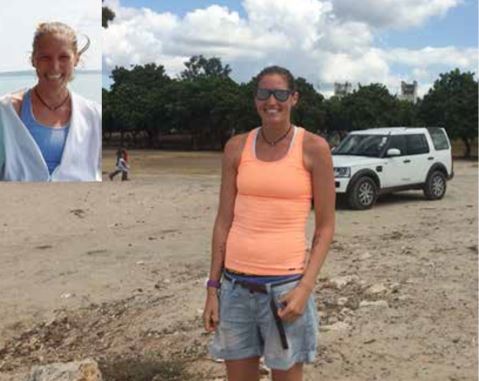
Getting her life back in Nigeria, where she felt better “as if by magic”; inset: on the run on the ferry to France
Quinn is writing a second book, this time about autism and pregnancy. She tells me that when she googled “autism and pregnancy”, nothing came up.
“Autistic women have no role models for pregnancy. I think it’s really sad. When I had my daughter, I didn’t know what to expect,” she says.
With her second child, Quinn hired a solicitor to fight for reasonable adjustments during childbirth. Quinn wants autistic women to know the options that are available and that they have a right to family life. “It is totally fine that we procreate,” she says.
When she was pregnant with her son, she joined an online parent forum. The experience showed how much parents feared having a child with autism.
She says: “Parents are petrified that their children might have autism. But, you know, each of us have a life worth living. We are human too! Let’s stop marginalising difference.”
She now believes that people with autism need a Pride movement of their own: “What I mean is that we accept ourselves for who we are, and we are proud of ourselves, and we are proud of the way we socialise autistically, we are proud of the way we communicate, and we are proud enough to advocate for ourselves and not hide away.”
Quinn says that she does understand that autism can be difficult “but it is difficult because what we value in society and the way we organise our environment makes it difficult. The environment I was forced to live in nearly killed me – more than once.”
So, Quinn has now settled happily overseas. She feels lucky to have got out of the system and is working to help make changes happen so others do not remain trapped. She has a good job and can afford support staff to take care of the things she struggles with.
“I still can’t fold up clothes, cook dinner or clean. I can put on a nappy but I still can’t fold up clothes. And that’s fine,” she laughs. “I’ll survive.”
● Alexis Quinn’s open letter to CQC is on the Rightful Lives blog at https://tinyurl. com/y29mgocj
● Unbroken: Learning to Live Beyond Diagnosis is published by Trigger Publishing (2018)
Coronavirus has affected people with learning disabilities, their friends and families and those who support them around the world. How are they managing?
Australia
The pandemic has highlighted global systematic inequities and failures related to the rights of people with learning disabilities to equitable treatment. Australia is no exception to this.
Health inequities experienced by people with learning disabilities were highlighted at the Royal Commission into Violence, Abuse, Neglect and Exploitation of People with Disability early in 2020. These included barriers faced when accessing and receiving healthcare and services, delayed diagnoses and misdiagnoses, as well as limited life expectancy.
These inequities have become particularly concerning during the pandemic, and were combined with the risk of prejudice and attitudinal biases, which can lead to people having a lower priority for prevention, testing and treatment for Covid-19.
These concerns led to the release of a national position statement signed by numerous groups and individuals, calling for equitable access to Covid-19 prevention, screening and treatment for people with intellectual or developmental disability in March 2020; the statement can be downloaded from https://www.3dn.unsw.edu.au/covid-19.
Another inequity that became strikingly apparent during Covid-19 is that many people with learning disabilities have limited access to the internet and to smart technology, often the result of poverty.
Numerous stakeholders, including self-advocacy groups, have made an enormous effort to move their services and support for people from face-to-face to online space in practically no time. However, they could offer online support only to those with access to the internet.
Indeed, the Covid-19 pandemic highlighted to us that easy and, ideally, free access to the internet should be a basic right for all citizens.
Iva Strnadová is a professor in the School of Education at the University of New South Wales, Sydney
Ghana
There were concerns that poor health infrastructure in West Africa would mean worse outcomes here than in the rest of the world.
So far, for reasons not fully understood, Ghana has had lower rates of infection and less severity than Europe. Life for many after some initial local lockdowns has continued fairly normally – although with restrictions on the usually large gatherings at funerals and weddings.
Posters and health promotions advising “Don’t shake hands, wear nose masks and wash hands” have been the main means of combating the spread.
Adults at a residential centre in the capital Accra had differing experiences. Education facilities were closed, and the centre went into quarantine in March. Some went home to families, and told us they were bored and missing their friends.
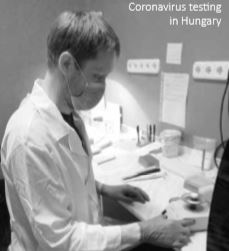
Virus testing in Ghana
Those left were allowed to go out only occasionally with face masks and close supervision. There were no visitors, so there was little activity apart from cooking, washing and personal care. For those with the highest support needs, there was no mixing between dormitories and no going out. This has now been relaxed to allow walks and activities in the grounds. The centre has remained Covid free.
Some have taken up opportunities to work in the kitchen or lead the worship, as the more able members who usually did these have gone home.
Supplying Veronica buckets (to provide running water) and occasional visits by social workers to check that the advice is understood appear to be the only specific government support.
Jane Abraham is an involvement worker at Lambeth Learning Disabilities Assembly who now mainly supports selfadvocates in Ghana
Canada
Health and social services are both provincial responsibilities so it is difficult to speak of a Canadian response. I will outline some key responses and issues.
A federal disability advisory group was formed early on and was involved in key policy decisions, notably on triage. The federal government created a one-time Can$600 (£350) grant for Canadians with disabilities. In addition, the National Statistics Agency has tracked how disabled people have been coping with the pandemic.
British Columbia had one of the better responses both to the virus and with regards to disability. A ministerial disability advisory group was formed, which met the minister and his staff monthly.
Hospital visits were a major issue. Initially, no visitors were allowed, which left people with intellectual disabilities isolated and vulnerable. Through strong advocacy efforts, an exemption for people with intellectual disabilities was established so family or others could be with them. British Columbia also immediately raised the monthly disability benefit by Can$300 (£175).
Other concerns included how to support families with children at home when programmes shut down and support workers were not able to visit them. Access to personal protective equipment was also an issue.
While neither of these were fully or quickly addressed, programme modifications and extra funding for families and different types of residential accommodation provided some relief.
Here, as in many jurisdictions, Covid-19 has exposed the precarity and vulnerability of people with disabilities. However, it also provided a platform to call for major systemic reform well beyond the pandemic.
Tim Stainton is director of the Centre for Inclusion and Citizenship at the University of British Columbia, Vancouver
Czech Republic
One family’s story illustrates the pandemic’s impact here. The mother (who gave the account) is a teaching assistant at her daughter’s school, her husband a laser programmer. Their daughter has learning disabilities and epilepsy, and they have a teenage son.
“Our daughter has no idea about the concept of time and lives in the present. This has made the Covid pandemic easier for us.
“I am used to being at home. We spend a lot of time together without any problems. Paradoxically, an advantage for us is that we do not have many social activities.
“We did not particularly emphasise the existence of Covid to our daughter. Through constant warning and supervision, I taught her to observe hygiene in stores. “We found a procedure for washing hands in a fun way online. My daughter always asks if she will have to wear a mask at a specific place or event, and will put it on herself once told.
“We encountered challenges. The care of our daughter lies primarily with us. We waited a long time for our Covid tests.
“When both of us were sick, we were most worried about what would happen with the children in the event of our hospitalisation. We could find no information and nor could our GP or paediatrician. What really scared us was the lack of information for patients. Without the internet, we would have been lost.
“We are used to taking care of ourselves, but this has alerted us to the need to prepare for such a situation.”
Monika Mužáková is an associate professor in the Faculty of Education, Charles University, Prague. Translation by Iva Strnadová
England
People with learning disabilities have told us they feel forgotten by the government. While a lot has been said about older people and the support they need, we know many disabled adults feel excluded from plans or guidance.
People with learning disabilities are confused as rules and guidelines have changed so often. There is a lack of support from the government and easy-to-understand official and media information. Families and paid supporters feel they have been ignored too.
We have heard a lot of stories, though, of how self-advocacy and community groups have helped their members and each other.
At the beginning of the outbreak, some people with learning disabilities in England had “do not resuscitate” notices put on them without them knowing or just
because they had a learning disability. We know this has made some people feel their lives are not valued and afraid of needing medical help.
People with learning disabilities have been affected by coronavirus more. Information has not yet been properly published by the government in an accessible format even though we know people with learning disabilities died at a rate 4-5 times more than other people.
People, families and paid supporters all want better information so they can understand what will help people be safe and live a good life as coronavirus carries on. They want good support too.
Samantha Clark is chief executive and Gary Bourlet is membership and engagement lead and self-advocacy spokesperson at Learning Disability England
Austria
A survey on Covid-19 mortality in care homes for senior citizens was published in Austria in 2020 but findings regarding any kind of accommodation for persons with disabilities were absent.
This illustrates the low significance of persons with disabilities during the lockdown. They were overlooked – their situation was not a public issue. No one asked how disabled adults or children and their families coped with the unpredicted breakdown of support services.
Recently, some non-governmental organisations went public to talk about the problems experienced by people with high support needs or families providing 24-hour care for those with profound disabilities with no support from outside.
Later, it became obvious that most people living in institutions had been subjected to much harsher restrictions than others. Some had been locked in for months, such as a six-year-old girl whose case was reported in the press, who suffered tremendously because her relatives were not allowed to meet her for weeks.
In July, the Austrian self-advocates’ network published a statement confirming this and demanding that people with disabilities were considered and involved in all future efforts to fight the pandemic.
Petra Flieger is an independent researcher in Vienna and Tyrol
United States of America
In the US, the impact of the pandemic crisis on individuals with intellectual disabilities and their families can be seen in many ways as simply a specialised version of the critical difficulties faced by other people.
The problems experienced by people with disabilities are the problems of the isolated, the unemployed, the chronically ill and the undereducated – stuck at home, unclear about the rules, deprived of contact with friends and family and with no end in sight for the daily disruption.
However, reports and experiences from within the disability community show that, while they are similar to other groups in many ways, people with intellectual disabilities are dealing with particularly troubling circumstances.
As one advocate put it to me, the “one thing we deeply felt was that, as turmoil and changes hit, policy went straight to ableism”. Reports emerged of doctors and hospitals using the label of intellectual disability, in itself, as a justification to end or never begin intensive care protocols.
Some schools asked for waivers from legal obligations to provide education programmes for children with complex
learning and behavioural needs. Some large care facilities severely limited contact with family or outside support professionals.
However, in the midst of this discrimination and excessive risk, glimmers of hope have started to shine. It took a pandemic to learn that online technology opens up ever greater possibilities for independence and communication. The advantages of smaller living arrangements over large, congregate facilities have become even clearer. In the midst of pandemic, community persists.
Philip Ferguson is professor emeritus at Chapman University in Orange, California
Hungary
In Hungary, more than 20,000 disabled people live in institutions because of a lack of community services. The pandemic has increased their segregation and reinforced the urgency of deinstitutionalisation.
By August, of the 614 people who died as a result of Covid-19, 142 lived in social care settings and figures have continued to rise. There are no figures yet on deaths of people with learning disabilities. Residents of institutions have been banned from going out or receiving visitors yet some of these have still become Covid-19 hotspots.
People with learning disabilities have paid a very high price. Lockdown and isolation have harmed mental health, and keeping in touch with family and friends has become very difficult. Support for the mental wellbeing of residents and staff has received no government help or attention.
Many institutions have turned to external partners for support. Advocacy body ÉFOÉSZ has been organising virtual events for their residents, and providing free equipment for those who need it. Temporary support or care has not been made available for people living with families if a family carer is hospitalised. Some people with learning disabilities and autism find it difficult to wear a mask, which is compulsory on public transport and in shops. People not wearing a mask are fined – we have asked the authorities for exemptions from fines in these cases.
We have been regularly creating and sharing easy-read and accessible news and information about the pandemic on our website and social media.
Tibor Czakó is self-advocacy coordinator and Ilona Sallai is a self-advocate and advocacy consultant at ÉFOÉSZ, the Hungarian Association for Persons with Intellectual Disability. Translated by Agnes Turnpenny
Taiwan
By early 2020, the Taiwanese government had quickly established measures to control the spread of Covid-19, having learned vital lessons from the outbreak of severe acute respiratory syndrome (SARS) in 2003. There had been only 550 infections and seven confirmed deaths by late October, and no new cases since early April.
So far, no people with learning disabilities are known to have been infected. Until September, users of different services were not allowed to contact one another to prevent infection from spreading between groups. Some local authorities have issued easy-read manuals so people can learn how to protect themselves and avoid infection.
Coronavirus precautions at Taiwan National University
If a person is confirmed as infected, they will be hospitalised for treatment and the residential setting will be locked down. Staff and volunteers who have received specialist training are the only care staff who can work for people asked to stay in quarantine.
Since January, local authorities have delivered masks daily to service users and staff in residential and day care settings. All service users and staff are required to measure their temperature daily. People have learned to wash their hands using “the seven easy steps”. All visitors must measure their temperature, clean their hands and leave their phone number.
Despite Taiwan being hailed for its coronavirus prevention strategy, generally Taiwanese disabled people are not satisfied with the government, as many prevention and support measures were not initially included and the government started to pay attention to disabled people’s needs only after campaigns by them between March and May.
Yueh-Ching Chou is a professor in the Institute of Health and Welfare Policy, National Yang-Ming University, Taipei; Bau-Ju Chen is a retired learning disability day/residential care service centre manager and is now a freelance supervisor
Hong Kong
When Hong Kong people were enjoying their Chinese New Year holidays in late January 2020, the government suddenly announced that special schools and almost all community, vocational and residential services would be suspended after the holidays.
Tens of thousands of people with learning disabilities and their families suffered from this unexpected measure, as they were forced to stay at home without help.
Unfortunately, service providers were unable to make timely contingency arrangements for maintaining support to service users, as they had not received any messages from the government before the holidays regarding social distancing measures.
The scarcity of living space in Hong Kong has made the lives of people with learning disabilities even harder during the pandemic. While services were suspended, caregivers reported that round-the-clock caring and management of behaviour in small flats caused them and their children to “fight like cornered beasts”.
A comparison of two studies conducted by a local policy-maker in February and August showed that family conflicts and emotional outbursts were more frequent in August
Service providers created opportunities to address this unprecedented reduction in support for people with learning disabilities. Lacking additional resources from the government, some NGOs successfully procured donations of surgical masks and hand sanitiser for service users, as well as smartphones that staff could use to keep in contact with them.
Besides sending tips and information on Covid-19 via messaging applications, practitioners also produced tailor-made videos coaching people on exercises and reminding them about personal hygiene.
Phyllis King Shui Wong is an assistant professor in the Department of Social Work at the Chinese University of Hong Kong
Simon Jarrett, editor of Community Living, suggests three great reads for the coming months
Looking for some good books to help tide you over winter, lockdown, Christmas and anything else that’s making you stay at home? Well, if you have an interest in the world of people with learning disabilities, look no further. Here are, in my opinion, three compelling reads.
Possibilities
Saba Salman’s excellent collection Made possible: stories of success by people with learning disabilities is a genuinely uplifting, challenging and ground-breaking work. In fact it’s so good I read it twice.
We live in a society in which people with learning disabilities are often written off, from a very early age, as people who cannot achieve and who cannot even cope with the sort of ordinary lives most of us live.
This book smashes that myth. A beautifully balanced collection of stories from high-achieving people with learning disabilities, ranging from professional singers and actors to film makers and politicians.
Their stories are at times utterly jaw-dropping, and often laced with humour and insight. You learn how each of these highly talented people has had to work twice as hard as anyone else to get to where they are. But work they have – each is a terrific fighter, and has forced the world to see and acknowledge their talent, even when the odds seem completely stacked against them.
Each person tells their own story, in a series of short essays. I am full of admiration for this wonderful book, and I hope it has the impact it deserves.
Pockets of brilliance
Sara Ryan has a new book out, Love, learning disabilities and pockets of brilliance: how practitioners can make a difference to the lives of children, families and adults.
She was the author of Justice forLaughing boy; Connor Sparrowhawk – a death by indifference which recounted how her son Connor drowned, aged 18, in a bath at an assessment and treatment centre while staff placed a Tesco online food order eight feet away. In that book she described the subsequent gruelling fight for justice for Connor in the face of official cover up, hostility and indifference.
Her new offering is something she felt driven to write to follow on from Laughing Boy – in her words ‘I wanted to write a book that generates further insight and understanding into the lives of learning-disabled people and their families’. This she achieves brilliantly, in a sparkling, highly readable jargon-free gallop that covers the early impact of the birth of a learning-disabled baby, childhood, adulthood, old age and parenting.
It’s often amusing, and has a light touch, but is also deadly serious. I shall be reviewing this book fully in the spring Issue of Community Living but, spoiler alert…… I think everyone should read it, it’s terrific.
Escape from hospital
Finally, I have only just come to Alexis Quinn’s remarkable 2018 book Unbroken: learning to live beyond diagnosis. We have an amazing interview with Alexis coming up in the January 2021 issue of Community Living. A young woman with autism, she was caught up in the Assessment and Treatment hospital system after the death of a close relative – doctors completely misread her reaction and detained her under the Mental Health Act.
The book describes the casual cruelty and unthinking brutality of this system and its utter unsuitability for people with autism and people with learning disabilities. In a story that reads like something out of a thriller film, she describes how she literally escaped, aided by friends, from a British hospital and jumped on a ferry to France, subsequently fleeing to Nigeria, where she found peace and started to rebuild her life.
There could not be a more chilling, or better written. indictment of the Mental Health Act and the system of detention in UK Assessment and Treatment units.
‘Those They Called Idiots’ by Simon Jarett our Community Living editor. Its normal price is £25 BUT supporters and subscribers of Community Living magazine are discounted at £20 by Simon as it is now opened.
‘The Idea of the Disabled Mind from 1700 to the Present Day.’
Those They Called Idiots traces the little-known lives of people with learning disabilities from the communities of eighteenth-century England to the nineteenth-century asylum and care in today’s society. Using evidence from civil and criminal court-rooms, joke books, slang dictionaries, novels, art and caricature, it explores the explosive intermingling of ideas about intelligence and race, while bringing into sharp focus the lives of people often seen as the most marginalized in society.
The publishers have offered a discount for the book for supporters and readers of Community Living. The book is now on sale http://www.reaktionbooks.co.uk/display.asp?ISB=9781789143010 .Don’t miss the chance now and enjoy just how far it covers and how enjoyable it is to cover and read.
People should use code COMMUNITY20 at the checkout – this reduces the price from £25 to £20. The offer is open to next April, and they’re happy to extend if necessary.
The history of learning disability was long neglected, with firsthand accounts of those affected missing. Susanna Shapland describes the movement that changed this
From Sidelined to Expert Story-tellers
For decades, the history of learning disability was not given the recognition it deserved. It was subsumed into related topics such as the history of eugenics or of mental health, and historians tended to rely solely on documentary evidence to write histories of policies or institutions.
Those with experience of living with a learning disability were sidelined and silenced or, at best, portrayed as merely victims of an uncaring or cruel system.
This reflected how people with learning disabilities were perceived – as people who were unable to articulate their experiences or to understand them, and who needed to be spoken for rather than listened to.
This began to change in the 1970s with the burgeoning disability rights movement. Speaking Up events gave people with learning disabilities the chance to speak for themselves and tell their life histories.
This was followed in the 1980s with the formation of self-advocacy groups such as People First, run for and by people with learning disabilities.
These self-advocacy groups gave people the chance to share own experiences. In doing so, they began to reclaim their life stories and challenge the portrayal of themselves as victims or faceless case studies. They revealed themselves to be survivors – actively resisting the policies and institutions that had dominated their lives.
Shocked
In 1994, two Open University academics founded the Social History of Learning Disability Research Group (SHLD).
Shocked by the lack of research into the history of learning disability services (for example day centres) and the absence of stories from learning-disabled people themselves, Jan Walmsley and Dorothy Atkinson set up the SHLD to provide a forum where people could come together and share research and stories.
People with learning disabilities were invited to all SHLD conferences, where they chaired panels and gave papers about their research and life histories, alongside a growing number of academics working on this strand of history.
Most importantly, they challenged other delegates if they believed something had been misrepresented, thus cementing their identity as the true experts in their history.
In the same year as she co-founded the SHLD, Atkinson met Mabel Cooper, a former patient of St Lawrence’s Hospital in Surrey, who was then chair of People First London. Cooper had a strong desire to tell her life history.
Using official records to fill in any gaps, they worked together to bring Cooper’s story to a wider audience. It was published in Forgotten Lives: Exploring the History of Learning Disability in 1997 – an experience that was both emotional and empowering. Cooper inspired many others to tell their stories, and shared hers with other groups to promote empathy and understanding.
Other books have followed, mostly published by BILD (as was Forgotten Lives), each redrawing the relationship between the researcher and researched in a quest to facilitate emancipatory rather than participatory research.
Equal collaboration
Collaboration between academic historians and people with learning disabilities on an increasingly equal footing is both fruitful and important. People bring their own experiences to stand alongside the historical documentary evidence, often from official sources such as councils and institutions and, in so doing, challenge and disrupt these accepted narratives, revealing something far more nuanced and complex.
Their stories also serve as a corrective to excessive claims of progress that were particularly prominent with the closing of the long-stay institutions, reminding historians and policy-makers alike that, while much has changed, much has stayed the same and things still need to change.
In this way, people with learning disabilities and historians are working cooperatively as historian activists, coming together to tell their stories and influence policy. The lives of people with learning disabilities as told by them are, quite rightly, central to these works, and historians have learnt how to adapt their practices to accommodate these experts so their stories are properly told.
The next step, as seen by people such as Atkinson and Walmsley, is to include more accounts from other groups with a role in the history of learning disabilities.
Witness to Change: Families, Learning Difficulties and History (2005) highlighted how much could be learnt from families, particularly in moving away from a history dominated by the long-stay institution.
The voices of social workers, nurses and other practitioners also need to be heard to give justice to the rich, complex nature of the history of learning disabilities.
Atkinson, D. and Williams, F. (1990) Know Me As I Am: An Anthology of Prose, Poetry and Art by People with Learning Difficulties. London, Hodder and Stoughton
Atkinson, D and Walmsley, J (1999) Using Autobiographical Approaches with People with Learning Difficulties. Disability and Society 14(2): 203-216.
Atkinson, D and Walmsley, J (2010) History from the Inside: Towards an Inclusive History of Intellectual Disability. Scandinavian Journal of Disability Research 12(4): 273-86.
Atkinson, D, Jackson, M and Walmsley, J, eds. (1997) Forgotten Lives: Exploring the History of Learning Disability. Kidderminster: BILD.
Atkinson, D, McCarthy, M, Walmsley, J, Cooper, M, Rolph, S, Aspis, S, Barette, P, Coventry, M and Ferris, G, eds. (2000) Good Times, Bad Times: Women with Learning Difficulties Telling Their Stories. Kidderminster: BILD.
Brigham, L, Atkinson, D, Jackson, M, Rolph, S and Walmsley, J, eds. (2000) Crossing Boundaries: Change and Continuity in the History of Learning Disability. Kidderminster: BILD.
Rolph, S, Atkinson, D, Nind, M, Welshman, J, eds. (2005) Witness to Change: Families, Learning Difficulties and History. Kidderminster: BILD.
Zarb, G. (1992) On the Road to Damascus: First Steps Towards Changing the Relations of Disability
Forgotten Lives pioneered the use of firsthand accounts in learning
Parents with learning disabilities, unaware of pandemic rules and finding support hard to get, have been deemed neglectful and even had children taken into care. Ali F Jabeen reports
Parents with learning disabilities have found life during lockdown particularly difficult, as the Elfrida Society Parents Project has seen. The need for specialist advocacy has become acute and child safety has been at the forefront.
Vulnerable parents labelled “not high-risk enough” have felt the effects of a deficit in sufficient and accessible support. During a time where this should have been recognised if not prioritised, we have seen parents labelled “neglectful” simply because they were unaware of the pandemic emergency provisions. Some have had children taken into care. For those with children in care, the untimely paradox of “contact” being non-sensory is imposing significant restrictions. This is especially traumatising for children with disabilities who rely on a sensory relationship with their parent.
In one case, a parent with two children (one with autism and one with asthma) had to shield but was insufficiently equipped. Without access to information on how to cope during the pandemic, the parent was unaware of simple
provisions such as food parcels and medication deliveries. A judge concluded that because of the difficulties the parent faced during the pandemic, the children were at risk of harm or neglect and temporary foster care was vital.
A consistent theme throughout our work is the lack of reasonable adjustments for parents, even when they need to be supported remotely.
Digital disadvantage
Pandemic shielding and lockdown requirements have brought to the forefront not only digital inequalities but also how disproportionately disadvantaged vulnerable sections of the community are, particularly people with learning disabilities. Socially and culturally, the effect of the pandemic will leave parents with disabilities at a significant disadvantage, with children left unsupported and parents pushed into crisis.
Their lack of access and ability to use technology to remain engaged with service providers, social networks and community support is damaging their social engagement and interactions. This is likely to result in mental and physical health problems, including agoraphobia symptoms as well as worsening emotional and physical wellbeing and anxieties.
This is extremely visible in our beneficiaries and employees with learning disabilities, and makes things very difficult for Elfrida, like-minded organisations and the communities we support. This is particularly so during this crisis and unprecedented challenges with regard to sustaining and facilitating remote service provision, active participation and social inclusion. We have had to maintain technological and financial sustainability as well as deal with crisis management pressures.
We do not know when the government will lift the lockdown, though some government officials and professionals are suggesting we may have to adapt to remote working for much longer.
Whatever happens, access to timely, accessible and appropriate advocacy, guidance and support will be crucial to level the playing field for people with disabilities across life spheres including education, independent living, employment, health, wellbeing, social inclusion and civic participation. It is clear we have a long way to go.
Ali F Jabeen is specialist advocate for the Elfrida Society Parents Project: www. elfrida.com/Parents_services.html
As more people with learning disabilities live longer, additional pressures arise for both them and their ageing carers. Researchers Aoife Mahon, Jitka Vseteckova and Liz Tilley carried out three systematic literature reviews of the research
Despite the ongoing health inequalities experienced by people with learning disabilities in the UK (Heslop et al, 2015), a significant number of them are now living longer (Walker and Ward, 2013). Most individuals with learning disabilities continue to be cared for by a family member, usually a parent, despite the challenges their relative may be experiencing because of advancing age. It is estimated that, in the UK, approximately 29,000 people with learning disabilities live with a member of their family who is over the age of 70 (Mencap, 2002).
Over the past decade, government strategies and numerous white papers, including Caring for our Future: Reforming Care and Support (Department of Health, 2012), have discussed the need to support people with learning disabilities and their carers, including older carers. The early policy emphasis on older families of people with learning disabilities has since waned, particularly following the loss of Department of Health funding for the National Valuing Families Forum in 2017. As the number of older carers is anticipated to rise, it remains unclear what support older families need and what interventions, if any, are available to meet their requirements across the UK.
Three reviews of the literature were conducted to better understand the needs and care support of both older adults with learning disabilities and ageing carers in the UK. Each review had a different research question. The main findings from each review are discussed below.
Findings
Older carers need more support to plan for the future
Our review shows that:
● Older carers are aware they cannot care indefinitely
● Few carers have made long-term plans about how the person they care for will be looked after in future
● Carers report living with fear about the future, feeling ignored and not having enough information
● Professionals require more training to rebuild trust and to be more proactive.
“Well, from the day he was born until the day I die, I have that worry on my head when I put my head on the pillow until I rise in the morning. If I die, what is going to happen to X or will anybody be good to him?” (Taggart et al, 2012: 226).
Greater recognition of mutual caring relationships is needed
Research tells us that:
● Many adults with learning disabilities support their ageing carer(s)
● Frequently, mutual caring relationships are identified only when a crisis occurs
● These relationships may be a barrier to future care planning
● Professionals need to better recognise these relationships and support those involved
● “Care” and “carer” are problematic terms, especially in mutually supportive relationships
● For parents to feel safe to identify their child as a carer, a support net is vital.
“My mummy looks after me, and I look after her.” (Bowey and McGlaughlin, 2005: 1383)
Care crises are frequent
● Crises most commonly occur when a carer becomes ill, can no longer cope or dies
● Many mutual care relationships are only identified at times of crisis
● Planning for the future reduces crisis situations
● Individuals with learning disabilities report fears about the future and need more choice and information in planning their future housing.
“When the time comes, I’ll think about it, but I don’t know about it yet. The time might come if I have to move, ’cause of since my dad died, but I’m not ready yet. Let’s just see what happens.” (Bowey and McGlaughlin, 2005: 1386).
Impact and implications
Older carers and individuals with learning disabilities require more support to plan ahead. It is critical that their needs are acknowledged and met by commissioners, services and professionals to reduce crises in care.
More research is needed to understand the future care preferences of older families, and the resources and interventions that would support them.
Aoife Mahon is at Adelphi Values, and Jitka Vseteckova and Liz Tilley are at the Open University
Identifying the needs, support and future care plans for older people with learning disabilities and their ageing carers in the UK: three systematic reviews of the literature
Aims – The aim guiding our three literature reviews was to better understand: the needs of older people with learning disabilities and ageing family carers; the interventions available in the UK to meet these needs; and any support available to address future care needs, including crisis care and mutual care relationships
Methods – The research team had three separate topics of interest: the physical and emotional needs of ageing carers; what happens when future care is not planned (crisis care); and to better understand the dynamics of and support for mutual care relationships, which occur when people with learning disabilities care for their family carer. Many articles were read to find out what is known about these topics. We will discuss the findings of the three reviews. Protocols were published when not enough papers were generated for a full review.
Read the reviews:
● Mahon A, Tilley E, Randhawa G, Pappas Y, Vseteckova J (2019) Ageing carers and intellectual disability: a scoping review. Quality in Ageing and Older Adults 20(4):162-178
● Mahon A, Vseteckova J, Tilley, E, Pappas Y, Randhawa G (2019) Protocol: a systematic scoping review of the interventions available during care crises for people with learning or intellectual disabilities (LD) who are cared for by an ageing carer within the United Kingdom. Biomedical Journal of Scientific and Technical Research 20(5): 15389–15393. https://doi.org/10.26717/ BJSTR.2019.20.003512
● Mahon A, Vseteckova J, Tilley E, Pappas Y, Randhawa G (2019) A systematic scoping review protocol of the impact of mutual care on individuals with learning disabilities and their ageing carers in the United Kingdom. Biomedical Journal of Scientific and Technical Research. https://doi.org/10.26717/BJSTR.2019.21.003621
Key points
● More support is needed to encourage planning for older families to reduce care crises
● Mutual care relationships among older families of people with learning disabilities in the UK are increasing. Commissioners and services need to acknowledge and respond to this change
● Future research must examine what care options and support networks are most suitable to meet the needs of these families
References
Bowey L, McGlaughlin A (2005) Adults with a learning disability living with elderly carers talk about planning for the future: aspirations and concerns. British Journal of Social Work 35(8):1377-1392.
Department of Health (2012) Caring for our Future: Reforming Care and Support. London: Mencap
Heslop P, Lauer E, Hoghton M (2015) Mortality in people with intellectual disabilities. Journal of Applied Research in Intellectual Disabilities 28(5):367-372.
Mencap (2002) The Housing Timebomb: the Housing Crisis Facing People with a Learning Disability and their Older Parents. London: Mencap
Taggart L, Truesdale-Kennedy M, Ryan A, McConkey R (2012) Examining the support needs of ageing family carers in developing future plans for a relative with an intellectual disability. Journal of Intellectual Disabilities
16(3):217-234. Walker C, Ward C (2013) Growing older together: ageing and people with learning disabilities and their family carers. Tizard Learning Disability Review 18(3): 112-119
During the Covid-19 crisis, people with learning disabilities are being shown in the media as victims and do not get to tell their own stories. Nicola Grove reports on a group changing this.
People with learning disabilities are among the most at-risk groups for contracting Covid-19 and experiencing the knock-on effects of lockdown. Charities and disability organisations are raising the alarm that many people with learning disabilities are not faring well in the crisis, as our social order consistently fails our most vulnerable citizens. The impression given in the media is overwhelmingly one of people with learning disabilities as passive victims.
We put people in media silos, where only some are ever credited as narrators. Even on sites targeting the learning disability sector, stories are surprisingly absent, with an overwhelming focus on information. Telling us how to wash our hands and maintain social distance do not teach and nourish us in the way that stories do, told authentically by people themselves in their own unique ways.
Surviving Through Story is a partnership between the Open University, Generate UK and the Three Ways School in Bath that seeks to change this perception. Our Facebook page reached 219,000 people in 10 weeks and our ongoing training has been attended by up to 90 people at a time. Our website features stories, artwork, films, photos and tributes to friends and loved ones. The 1940s were a previous time of major crisis; but how many people know about the role played by people with learning disabilities in the war effort? The evidence is sparse, but research has unearthed references to army volunteers, engagement in rebuilding and taking on the roles of workers (Paddle, 1946; Grove et al, 2010)
How are people with learning disabilities responding to the coronavirus emergency? Is there anything we can learn from them about how to build resilience? Here are a few examples. Young people with learning disabilities, supported by the charity Generate UK, have been working on food box deliveries to support the community. Robin Meader, artist and member of Openstorytellers, a Somerset-based storytelling performance group, carried on sturdily at his local supermarket, and was named a frontline Sainsbury’s hero.
Some families say that, while some doors were closing, others were opening. Louisa Smith* started enjoying long bike rides and exploring changes to her artwork. Nem Brown* from L’Arche Manchester reports members have embraced Zoom, learning skills, maintaining friendships and social contacts, and having signed conversations. One message is that people with learning disabilities are like everyone else. Another is about compassion, thoughtfulness and kindness. Take Sharon Green*, writing about the unexpected death of her husband and reaching out to others:
“Before he died, the lockdown started and that meant we couldn’t go out any more together. He found it hard because, before he was ill, we couldn’t go out to celebrate his birthday. It was very hard for me that he passed away because I really did love him and he was my soulmate. I just wish he was still here with me… To help other people, I would say that, even though your husband has gone, try to think of all the good memories and good times you had and the good life you had. Desmond was the best husband in the world and I will always have that.”
It is rare to see real experiences in the media although, in the Guardian, Rory Kinnear’s (2020) account of the life of his sister Karina, who died of Covid-19, and Shaun Webster’s testimony, featured in Saba Salman’s book (pages 16-17) and the Guardian (2020), are exceptions. Neither the BBC (Covid Chronicles) nor ITV (Get Britain Talking) responded to a request to feature the voices of people with learning disabilities, and omitted them altogether.
It is vital we recognise people’s achievements, experiences and contributions, rather than allowing these to disappear into the mists of time. As Pat Charlesworth of the Foundation for People with Learning Disabilities puts it: “There are ways of finding out things through storytelling you can’t find in other ways. This website can go on when Covid is over because people have stories right through their life, right through toddler years and teenage years and adults.”
*Not their real names
● Surviving Through Story: www.survivingthroughstory.com; f www.facebook.com/ survivingthroughstory/
Additional material by: Liz Tilley, Sue Ledger, Open University; Beverley Dawkins, Generate UK; Flo Hopwood and Katrina Arab, Three Ways School (Bath)
References
Grove S, Grove N, Myerscough T (2010) Intellectual disabilities and war: issues for consideration. Journal on Developmental Disabilities 16(1):82-90
Paddle KC (1946) Botleys Park Mental Deficiency Colony, Chertsey, Surrey, England, during the war, 1939–1945. American Journal of Mental Deficiency 51(2): 306–313
Kinnear R (2020) ‘My sister died of coronavirus. She needed care, but her life was not disposable.’ Guardian https://tinyurl.com/ycctsc5u
Webster W (2020) “My learning disability is a bit of me, but it doesn’t define me.” Guardian https://tinyurl.com/y2abbvql
When lockdown came, a group of people strengthened their friendships through a cinema club, online discos, a pen pal scheme and art displays, says Amanda Topps
Ten years ago, I established a group called Friends and Relationships Out and About (FAR OUT), a group of people with and without learning disabilities who have a passion for community connecting in north Lancashire.
Our aim is to provide sustainable co-produced events in the community for adults with learning disabilities where they can meet and make friends. These are established through “champions”, using strength-based approaches to create a wide range of activities including the Really Enjoyable Dining Society (eating out), an open mic night, a sensory story group and multi-sports sessions, among various other opportunities. The people I have the privilege of working alongside never cease to amaze me with their ideas, kindness and generosity, using their skills, resources and time for others. We are not a charity, nor do we have a budget. We work on friendship and people power alone.
When lockdown started, we had to change what we do and rethink ways of keeping connected. Regular online groups were set up, including our legendary cinema club and a new Big Quiz night; we continued our bereavement support group. We threw birthday parties, and this led to us to discovering how to host Zoom discos.
Through moving activities online, the group has grown not only in numbers but also in friendship, care and love as we discovered more about people’s gifts, skills and knowledge. As we found out more about each other, peer support took on a life of its own, firm friendships were made, and people looked out for each other more.
As James Hughes, team leader at React Self Advocacy in Lancashire, says: “People are appreciating each other more during lockdown.” He reflects that loneliness was common and people were unable to see their families. Lockdown has been a roller-coaster of a journey with highs and lows for most people. We started to identify a trend in declining mental wellbeing among group members a month or so into the pandemic. People were saying, “It really hurts me not to see my friends” and “It feels like I am in prison”. On the video group calls, it was hard not to visibly acknowledge a decline in wellbeing alongside people telling me their mental health issues were becoming exacerbated.
It deeply upset me, so I actively promoted the Action for Happiness monthly calendars (daily actions helping people to be kinder to others and themselves) and regularly posted ideas of things to do on our Facebook page, including a range of online activities.
Pen pals and postcards
Sarah McDermott – a friends and relationships champion who had started writing to friends – and I discussed how we could help people not connected online. We decided to start a pen pal scheme.
Keeping Connected was born and we advertised it as a way of linking people together by writing or phoning each other. In the space of one month, we had more than 60 pairs of people connecting from not only Lancashire but also as far as Kent, Cumbria, Yorkshire and Birmingham, with individuals, friends and social workers enquiring about a pen or phone pal. People started phoning or writing and sending postcards, letters and cards, sometimes including wonderful photographs or beautiful examples of their art and craft. This included handmade cards, friendship bracelets and encouraging messages using pebble art.
We discovered, as Shaun Webster says in Saba Salman’s anthology Made Possible (pages 16-17): “Lots of people with learning disabilities have hidden skills.” We also rediscovered the joy and excitement of expecting something in the post.
Through the weeks of isolation, I have felt really supported and loved by my pen pal, who has written week in week out and sent me photographs of friends from our group to cheer me up. I have unexpectedly gained a new friend. The connection we have grown is significant. What is even more significant is that a wonderful, kind person who happens to have a learning disability has helped me through the toughest days. Many people would not expect this. As Sarah Gordy says, also in Made Possible: “It’s time to see people with a learning disability for all they are and all they can be.”
Being involved in the FAR OUT group has supported people’s relationships, helped improve their self-care and enabled others to “take their mind off everything”. Friends from the group have said that writing to others “kept them going” during lockdown. New friends have been made and communication skills gained demonstrating the massive life-changing potential of a group of people whom many in society would undermine, write off or, as per recent government pandemic policy, ignore.
There has been a burgeoning of kindness and the use of gifts and skills in an unprecedented way during lockdown. The friends in the group have created ways of keeping connected which have delighted and surprised me.
I am a better person and have grown through knowing this group. I have also learnt more about building community and friendships through their setting amazing examples, especially during lockdown.
● Action for Happiness monthly calendars: www.actionforhappiness.org/calendars
Targeted daily support for adults at risk of admission to assessment and treatment units not only keeps them at home but also enables them to live as they wish. Support worker Paulo Pestana describes the work of his specialist service
Over the past year, I have been a support worker at the National Autistic Society Cymru Centre in Cardiff. We provide specialist support for people with autism, some of whom also have learning disabilities. I’ve seen first hand how supporting people in the community can transform lives; it’s clear to me that there should be more of this provision.
Reading shocking stories in recent years about people with autism being stuck in mental health hospitals and assessment and treatment units prompted me to find out more about them. Though they may benefit some people in the short term, they are inherently not equipped for long-term stays. Despite this, many people live in them for years.
Alternatives must be found to this systemic institutionalisation of people with autism. Here is a story of my journey and the importance of supporting people in the community, near their family and friends.
Need and potential
When we talk about quality of life, we are referring to the health, happiness and comfort of an individual. A core aim of social care is to enhance the quality of life of the people we support – but this is not a one size fits all issue. Meeting the varying needs of those benefiting from support demands a compassionate, person-centred and empowering approach. It is vital to consider what quality of life looks like for each individual and what measures must be put in place to achieve this.
During my induction, we discussed the social model of disability – that an individual is not inherently disabled but society disables them by failing to enable their inclusion. Adopting this perspective sets the tone for recognising potential in those we support, and taking responsibility for creating a welcoming society for all groups of people. It equips support workers with the capability to understand the individuals receiving support which, in turn, leads to more effective and compassionate care.
Each person we support has a thorough plan which is reviewed and amended regularly. This plan helps staff to understand individual needs, recognise mounting anxiety and provide support accordingly. Preferred activities, dreams and aspirations and early indicators of stress are all encompassed in this plan, which helps each person live the life they want.
Preventing crisis
It is our responsibility to ensure we respond appropriately and develop more effective communication and coping strategies to prevent people falling into crisis. Throughout the service, it is recognised that all behaviour, including that arising from distress, is a form of communication, indicating what an individual wants and needs.
A culture of person-centred, compassionate care prevails throughout our centre. As a staff member, I have felt valued and been given opportunities to develop. We are encouraged to share our opinions and team meetings are regularly held. This allows each support worker to propose their own ideas, working together to find creative solutions to any issues. This maintains good morale and creates an environment conducive to the growth and development of the people we support.
This understanding and training does not mean everything always goes to plan. When this happens – for instance where staff misunderstand the intention behind a particular behaviour – it is reflected on with senior members of staff.
We are encouraged to consider how we might deal with a similar situation in future and develop from our own experiences. I believe this open dialogue and discussion go a long way towards ensuring that the people we support are protected and staff are the best they can be. Each of these aspects helps to foster a shared ethos among those working in our services: that the people we support are at the forefront of everything we do.
All progress is celebrated by the support team. A well-run service is able to change the lives of many people and their families. We need more of these services around the country so we can avoid people becoming stuck in institutions.
I know a lot of people and organisations, including the National Autistic Society, are campaigning to make this a reality. This can only happen if UK governments invest in the social care and community mental health services that autistic people need.
Psychiatrist, campaigner, mother, publisher and activist – Baroness Sheila Hollins is an influential political voice and ally for people with learning disabilities. She talks to Seán Kelly
Baroness Hollins
Baroness Sheila Hollins is chairing an independent government panel that will oversee case reviews of people with learning disabilities detained in mental health hospitals and assessment and treatment units. This is to support their speedier discharge back into the community.
Before discussing her current work, we looked back over her life and achievements. When Hollins was two years old, her family moved from Wimbledon to Sheffield. She says wryly that her family always sounded “too posh” for Sheffield but they never had quite the right accent for other family members down south. She feels that in her youth she developed a bit of “Yorkshire grit” and resilience which sustained her in later times of adversity.
An early plan to be a nurse was overturned by her biology teacher who suggested she became a doctor instead. “I thought ‘that’s a bit over the top’,” she laughs. Nevertheless, at the age of 16, she applied to St Thomas’ Hospital Medical School in London, which back then in the mid 1960s had a maximum quota of just 12% for women students. The general expectation was that female doctors would soon marry (usually to a male doctor from St Thomas’) then work part time in general practice, she says. She told the interviewers that was her plan – and it must have been the right answer. Despite needing to resit physics – “Science teaching at girls’ schools was appalling. My whole year failed physics. I still hate it!” – she was offered an unconditional place.
But first she took a year out with Voluntary Services Overseas (VSO). She had invited a former Sheffield schoolboy to talk to the Sixth Form Society about his year with VSO in Asia and was inspired: “It just sounded magical.” So Hollins went to work for a year in South Eastern Nigeria in a village in the middle of the rainforest, in what was to become Biafra. Despite being only 18 years old, she became head of science in a girls’ secondary school. And she loved it.
On her return, she went to St Thomas’. But, instead of marrying a GP, she married Martin Hollins, another returned VSO volunteer. Hollins worked 108 hours a week as a house officer after qualifying until two days before her first daughter was born. She then took a part-time GP trainee position in south London for a year.
Routine mental ill-health
It was there she became clearer about the importance of psychiatry. “I was working in Balham and Tooting and about 70% of my patients had social or emotional problems. Patients had 5-minute appointments. The notion that you could actually try and get to the bottom of what somebody is feeling was ridiculous.”
So, after three years, she began training in psychiatry: “I intended to just do it for a bit and go back to general practice, but I loved it.”
Then, she had a son who has learning disabilities and autism. As a medical student, she had learnt nothing about learning disabilities; however, she had some limited personal knowledge from her childhood. The matron of the local mental handicap hospital was a family friend and, as a child, she had often visited the hospital.
She trained in child psychiatry and discovered that child guidance clinic staff would not see a family with a disabled child “because you couldn’t cure the disability so what was the point?” We shake our heads in disbelief. Hollins decided to specialise in families that had a child with a disability, and began consultation sessions with local clinics, schools and hospitals. She was then headhunted by Joan Bicknell (Britain’s first female psychiatry professor and the first professor in psychiatry of mental handicap), who wanted to employ a senior lecturer at St George’s Hospital Medical School to help set up community services.
To attract Hollins, the job included one day a week of child psychiatry. It also included responsibility for 350 patients in two hospitals, a community clinic and undergraduate medical education, plus the university wanted research as well. It was hardly, she says, a “doable job”. Of her child psychiatry day, she says: “I ran a transitions service for the 13-plus group before people really used that word.”
She also involved theatre groups with actors with learning disabilities to teach communication skills. “It led to some nice things like the actors saying about the medical students during feedback: ‘Well, they are quite like normal people, aren’t they?’ And the student group were saying the same about the actors.”
One day, she was asked to see a man who she calls John. John was about 40 years old and had Down’s syndrome. He had no speech. Staff were worried because he had stayed in bed for a month and was not eating. They wanted medication for him. Hollins said: “Oh, poor John. I wonder what’s happened?” It turned out that John’s father, who used to visit every week, had died. We did not need medication for him – we needed to be able to explain to John that his father had died.
Books about death for children were clearly inappropriate. “There were a lot of words, and butterflies and stuff, and they weren’t quite direct enough,” she says. So she got an artist friend to help create a book of pictures. It was called When Dad Died and was the first of more than 60 Books Beyond Words now published by the charity of that name she founded. The books now include a text section to guide staff or others who may be helping someone. “The point about the pictures is that you can invite the person to co-create the story with you,” she explains.
Books Beyond Words has published resources related to Covid-19, many of which can be downloaded freely. They include one about abuse during lockdown called When It’s Not Safe to Stay at Home. Hollins is delighted that Generate in south London and Gr8 Support workers have been using the resources to prompt discussions, for example about death and dying, when calling people with learning disabilities on Zoom during the pandemic.
In 2005, Hollins was appointed as president of the Royal College of Psychiatrists in which role she attended parliament to advise on the Mental Health Act 2007. Then her daughter was stabbed by a stranger in an attack that left her paralysed. The incident was made significantly worse by the behaviour of the tabloid press. “The most appalling things happened,” says Hollins. Extremely intrusive personal details were published, along with completely fabricated stories. The family suspected that phone calls and emails were being intercepted. Photographers camped in shifts outside her daughter’s home for weeks. “What right have they got to do that?” she asks. Hollins gave powerful evidence to the Leveson Inquiry on the practices and ethics of the British press.
House of Lords
In 2010, she was invited to join the House of Lords as a crossbench peer, a baroness. She has become known by many people with learning disabilities, as well as organisations and campaigners, as our friend in the House of Lords. In 2014, she became an adviser to Pope Francis for four years, advising on child protection in the Catholic Church.
Then, in November 2019, she was asked by the government to lead a one-year review of the cases of about 100 people who are detained in long-term segregation in mental health hospitals, including assessment and treatment units (ATUs). “The aim is to stop the use of long-term segregation by making recommendations that will actually improve the care of everybody who goes into an ATU. “If people are autistic, that must be recognised and they must have a sensory plan. If they have any trauma, that must be recognised. They should have the very best treatment possible.”
And their stay should be as short as possible with discharge planned at the start: “If you go in for a foot operation, you think about how you are going to get home again. You don’t go in with an open ticket”. A significant change is the introduction of independent chairs for the independent care, education and treatment reviews (ICETRs) for anybody who is being detained in long-term segregation.
A month after each review, she writes to the local commissioner to find out what has changed: “Did the ICETR lead to a change in momentum or a change in action? Has it galvanised those responsible for admitting someone and for helping that person to be discharged to do anything differently?”
A thematic review of the findings of each review has drawn out common themes and lessons. One early lesson was that not everyone “knew what good looked like”. A “good stories” workshop with self-advocates and others provided great content for a booklet called Helping People Thrive, which was published online by Learning Disability England and BILD, a practical guide on how to transform the lives of people who have been detained for too long.
Once the reviews were complete, Hollins brought the oversight panel together to review the work and, hopefully, by the time this piece is published, they will be close to making some very practical recommendations. She says: “I really hope that the work we are doing will give hope to families.” Focusing on the individual person is paramount: “As soon as you start seeing people as numbers, it becomes problematic. I think we only really understand people by seeing them as individuals.”
Our time is up and Sheila has to go. She offers a summary: “My life has just been one long response to experience and opportunity.” To which I can only say: “That’s far too modest, Baroness Hollins!”
Seán Kelly was chief executive of the Elfrida Society from 2001 to 2012 and is now a writer and photographer
A coalition of campaigners has come together to put pressure on the government to end assessment and treatment scandals once and for all. Isabelle Garnett reports
Ten years have passed since BBC Panorama shed light on horrific human rights abuses at Winterbourne View. This documentary prompted the government’s promise to “make homes not hospitals” happen for people with learning disability, autism or both living in inpatient units.
In May last year, Panorama yet again exposed mistreatment and abuse in an inpatient unit, this time at Whorlton Hall. Sadly, these revelations are not isolated incidents. They are echoed in numerous cases covered in the media, including in Community Living (see box, opposite page). In a decade, what has changed? The answer, appallingly, is not enough. NHS England’s Transforming Care programme, which aimed to make homes not hospitals a reality for people with learning disability and/or autism, came to an end in March 2019, missing the targets it had set itself.
As you read this, there are still more than 2,000 people with autism locked up in mental health units, with an average length of stay of more than five years. Ten years on from Winterbourne View, children, young people and adults with learning disability and/or autism continue to be denied their rights to a home and family life. These are basic rights that are vital to any human being’s physical and mental health. The coronavirus-related restrictions have increased the risk of people reaching crisis point and going into secure care. It has caused further delays to people moving out from institutions into homes of their own. Inside these institutions, people are more isolated than ever from their family, friends and advocates.
In June this year, the parliamentary Joint Committee on Human Rights (2020) raised concerns about restrictions on people living in institutional care and their families. The chair of the committee, Harriet Harman MP, said: “Even in normal circumstances, there is not sufficient protection against abuse of young people with autism and/or who have learning disabilities who are at risk of abuse.
“But the risk is even greater under lockdown with parental visits banned in some institutions and without routine inspections… There’s always a danger to vulnerable people in closed institutions. The Covid-19 lockdown increases that danger and the government must recognise it and take action.”
Self-advocates aim for change
In the wake of these events, a group of concerned self-advocates got together and discussed what they could do to bring about change. As self-advocate Aisha Edwards explains: “Stuff like this shouldn’t have happened in the first place and we don’t want it to happen again. Imagine if it was you. You wouldn’t be happy.”
The group of self-advocates reached out to other organisations and campaigners. Edwards explains how it was important for her “to get everyone’s opinion on it and how they feel about it… so that everyone’s voices are heard”. And so, the #right2home campaign began, bringing together self-advocates from across the country (Bemix, Lewisham Speaking Up, Pathways Associates and Sunderland People First), organisations (Learning Disability England) and individual campaigners, including Mark Brown of #RightfulLives, Leo Andrade of #StrippedOfHumanRights and myself of #HumanToo
Five days of action
#right2home’s first action was to run a five-day social media campaign in the week beginning 18 May, illustrated with memes showing photographs of people saying what #right2home means to them.
Each day had a different theme:
● Day 1. We must remember In the middle of everything that is going on, it’s easy to forget what happened at Whorlton Hall
● Day 2. It’s about human rights People with autism and/or a learning disability have the same rights as everyone else but they are denied them. That is not right in our society
● Day 3. It’s about homes People shouldn’t live in hospitals – what they need are homes
● Day 4. It’s about what people want Change the system so that people can have ordinary lives and contribute to their communities
● Day 5. What can we do? Don’t forget those people still locked away – don’t forget their families.
The five days culminated in the #right2home self-advocates meeting with NHS England head of learning disability Ray James and his colleagues. The aim was to keep the pressure on the authorities to move people from secure units into safer environments in the community where they can receive the right support and care. Marsh Stitchman, self-advocacy coordinator at Lewisham Speaking Up, stressed the urgency of this: “These places actually do people damage. They come out worse than when they went in. People are traumatised… it just draws people into further crisis and feeling like they’re cut off from [others].”
At the meeting, self-advocates outlined their concerns that people continue to be at risk of abuse because providers of secure care have too much power over residents, being with them day and night. They welcomed NHS England requesting commissioners to visit secure hospitals every six weeks (for under 18s) and eight weeks (for adults) but said more was needed to protect those in secure units, specifically the following:
● Peer advocacy in addition to independent advocacy – it is well recognised that people can relate more easily to someone with lived experience like theirs
● Safeguarding training for people in secure units so they understand if they are being abused or neglected and what they can do about it
● Self-advocacy training so people are more confident to speak up if they are being abused or neglected.
The #right2home self-advocates stressed that people who have moved on from secure care should be involved in delivering this support and training, not only because of their lived experience but also to help with their own recovery and wellbeing.
Still waiting
After the meeting, Edwards said: “I hope that people will listen to us and that we get our point across in the best and most efficient way possible.” Edwards acknowledges that “some important points were made”. However, at the time of writing, the self-advocates are still waiting to find out what, if any, of their proposals NHS England will commit to.
On the same day, other #right2home self-advocates met with Lewisham MP and shadow minister for disabled people Vicky Foxcroft to explain their concerns and recommendations for positive change. They sought her support for the #right2home pledge and she was the first MP to sign it. The #right2home campaign continues until, as Edwards puts it “everyone is out in the community, living where they are supposed to be living and not stuck in one of those institutions”.
#right2home wants to link up with other campaigners and needs your support. As Edwards explains: “Change isn’t going to happen overnight as we all know but it just needs drumming in more to the bigger bosses about what we want to see”.
● https://right2home.uk/
Twitter @right2homeUK
Facebook @ right2homeUK
Isabelle Garnett is a parent and campaigner for ‘homes not hospitals’ for those with autism and learning disabilities#
The #right2home campaigners
● Pathways Associates – community interest company: www. pathwaysassociates.co.uk
● Lewisham Speaking Up – self-advocacy group: www.lsup.org.uk
● Sunderland People First: http:// sunderlandpeoplefirst.com
● Bemix – self-advocacy group in Kent: www.bemix.org/self-advocacy
● Learning Disability England: www. learningdisabilityengland.org.uk
● Stripped of Human Rights – campaign group: www.facebook.com/ strippedofhumanrights
● Rightful Lives – campaign group:
● https://rightfullives.net
● Human Too – campaign group
● https://humantoo.net
References
Joint Committee on Human Rights Report (2020) Coronavirus has left young people in detention facilities highly vulnerable to Human Rights abuses. https://tinyurl.com/y7fqs9bw
When we emerge from the coronavirus crisis, we should learn from its often difficult lessons. Simon Duffy finds not only some unpalatable truths but also hope in new economic models and stronger communities
The Covid-19 crisis has been a great teacher but many of its lessons have been very harsh indeed. First, we learned that some governments are now prepared to treat a global pandemic as a serious public health threat and take drastic action to safeguard their people. This is quite a new phenomenon, and may signal an important development in our understanding of ourselves and the global community. Suddenly, we are a lot more aware we are all connected with each other – for good and ill.
The UK government was less willing to act quickly, but was eventually shamed into action. Its slow response has caused a high death rate and a severe economic depression. After 10 years of austerity, with the slowest economic recovery on record, the UK is poorly equipped to deal with this economic shock. However, it is possible that the world will not respond to this crisis as badly as it did the last.
Economic rethink
More people can see that the traditional economic model, which assumes everyone should be in work (however unproductive, badly paid or harmful), simply does not work. The treadmill of work and consumption is killing the planet and it is killing us. When painter David Hockney said that crisis shows us that “the only things that matter in life are love and food”, this struck a chord. Many people have welcomed the chance to stay home, get involved in their community, cook more and take more care of the family.
The second lesson might be that we need to build a different economy, where everyone has enough to live on and how we work is good for the planet and each other. There is a growing interest in universal basic income (UBI) – a system where everyone gets enough income to live on. At the beginning of the crisis, there were four UBI labs (pilot schemes testing its potential) in the UBI Lab Network; there are now 23 (see www.ubilabnetwork.org). Public awareness and support for UBI keep growing.
Whose lives matter?
The third lesson is perhaps the most painful – that the lives of disabled people are not valued by our government. The intrinsic risks of institutional living mean care homes are likely to be dangerous places to live. At the start of the crisis, the government assured us care home residents would be “shielded” but, in practice, one of its first actions was to discharge people from hospital – with no testing – straight into those care homes. The high death toll was inevitable.
On top of this, many people were encouraged to sign do not resuscitate forms to limit pressure on intensive care units. Clearly, not all lives matter. More positively, most people who organise their own support have been able to stay safe. Some authorities relaxed the stupid rules that prevented people from using their personal budgets flexibly.
Some organisations in Europe are seeing this as the moment to push back against institutional and large-scale congregate living. Perhaps this will be the moment when we reignite the movement for community living.
Power downwards
The fourth lesson has been that many people have discovered their own citizenship. They found they could connect with neighbours, offer and get support, and do things in the community – all at a safe distance. Streets and neighbourhoods found their voice and many are now seeking to build on this.
This does feel like the start of something new. Over the past 10 years, the Centre for Welfare Reform has published numerous articles and reports describing innovations that would work best at a neighbourhood level: local area coordination, peer support, individual service funds, self managing teams, Small Sparks (a small grants programme) and many more. Often, it feels that central and local government are blind to the value of citizenship and community. Power always seems to stay stuck at the wrong level. But now we are starting to see people come together to ask how to establish people power at a local neighbourhood level.
With Citizen Network (https://citizennetwork.org), we have launched the Neighbourhood Democracy Project and are connecting with people all around the world who want to create a long-lasting shift in power towards local communities. Whether we remember these lessons in the coming months and years will depend on what we choose to do now. It is possible we’ll forget all this; there are certainly those who are threatened by a new way of doing things. There will be a lot of pressure to go back to the old normal.
In the brain, memory works by creating connections, so perhaps the same will be true for us. If we make and maintain new links, we can perhaps use this crisis to build a better world that works for everyone.
Simon Duffy is director of the Centre for Welfare Reform and secretary to Citizen Network
Sara Pickard was enjoying theatre rehearsals and getting to grips with her new job – then the pandemic struck. How did she adapt to the restrictions and find new interests?
On 23 January 2020, before we were aware of coronavirus, I wrote my last article for Community Living and submitted it for the spring issue. At the time, I had decided to write about what I felt had been my achievements over the past 10 years. Near the end, I wrote: “And so to the future! Well, who knows?”
None of us could have predicted, then, what a strange year 2020 was going to be. I was very excited to be starting a new job on 1 March with Mencap Cymru as the external affairs officer. I had a great first couple of weeks… then, on 17 March, I was furloughed and lockdown started. So, how have I coped? I feel I have been proactive and having a routine has helped me to get on with things. Every morning, I have caught up with my emails and done some reading around my work, especially Community Living articles.
I have also enjoyed spending time on some new interests. I have really enjoyed walking in our local area every day and discovering new paths and places that we never knew about, even though I have lived in this village nearly all my life. At home, I have spent time enjoying playing word games with my family, such as Double Quick and Scrabble. I have found Zen Colouring a very relaxing and therapeutic way of spending a little time as well as my passion for listening to music.
Like most people, I have found online video calls a great way of keeping in touch. I have been able to keep up with my duties as a community councillor through online meetings. I really enjoy my weekly Odyssey Theatre sessions online. Even though our next show has had to be cancelled, we love working on new ideas and being creative.
I have also discovered the Our Voice – Weekly Check-In run by the Down’s Syndrome Association, which I find really inspiring. On the first call I did, I didn’t know many of the young people involved but, now I have been on more of the calls, I am getting to know them even more, and I always look forward to the calls each week.
Missed
What have I missed most?
In the early days of the lockdown, I know that I missed the face-to-face contact, especially with family, even though doing regular video calls helped. I’ve missed being in my work setting and seeing my colleagues who I get along with really well and rehearsing with Odyssey Theatre Company in our regular way.
Now and looking ahead
So, how do I feel I have coped, and what am I looking forward to most? Overall, I feel that I have coped really well, keeping myself busy and having a routine, while at the same time doing things that make me feel relaxed when I am doing them. So, yes, I feel that I am happy and coping just fine.
I am really looking forward to be able to see my boyfriend, Simon, as I have only been able to see him on our Odyssey video calls up to now. Actually spending time with him and my best friend Becky is also something I am looking forward to.
Most of all, I look forward to being able to return to normal life when all of the pandemic is eventually over.
The courts are changing their approach to how councils interpret the Care Act. Family carers need to know how to assert themselves in light of two court cases concerning overnight support, says Belinda Schwehr.
The Administrative Court has signalled a shift in its approach to councils’ approach to the Care Act. Two recent cases related to night-time care given by family carers show that family carers will benefit if they make a good case for themselves.
Support for urgent interim care
The recent Ali Raja v Redbridge case involved two adult men with severe physical and learning disabilities who lived with their mother, H.
They had extensive night-time care needs, including having to be repositioned numerous times to avoid pressure damage. Back in 2017, H was not unwilling to do this single-handedly. In July 2019, the men sought urgent interim night-time care as their mother’s health had declined and she said she could no longer cope with caring for her two sons without support. Reassessment was started but was interminably drawn out and not concluded. After an application for judicial review was issued, the court ordered 10 hours per day funded night-time care.
At the final hearing, the judge emphasised that “section 19(3) [of the Care Act] empowers the local authority to ‘meet an adult’s needs for care and support which appear to it to be urgent… without having yet (a) carried out a needs assessment or a financial assessment, or (b) made [an eligibility] determination under section 13(1)’ ”.
The statutory guidance states that “urgent” must take its everyday meaning, and “where an individual with urgent needs approaches or is referred to the local authority, the local authority should provide an immediate response and meet the individual’s care and support needs… Following this initial response, the individual should be informed that a more detailed needs assessment, and any subsequent processes, will follow.” The judge stated that the continuing and consistent central issue was whether an urgent night-time care need had arisen, because the mother could no longer reasonably be expected to do this, with the sole justifiable response being the urgent interim care provision to allow for night-time carers. If it was urgent, its refusal was unreasonable in a public law sense.
Redbridge argued that “section 19(3) is only applicable before an initial statutory needs assessment has been conducted” and that what was needed was a review under section 27 and, “until that review has been completed, the obligation on the defendant is to meet the claimants’ needs as already assessed”.
The local authority suggested that since the claimants had, throughout, nailed their colours to the mast of section 19(3), the claim must fail for identifying the wrong power. It argued that was the case, even if it was acting unreasonably in failing to provide urgent interim care provision.
Mr Justice Fordham disagreed, saying: “The fact that there is an existing care and support plan, to which the section 27 function of review and revision is applicable, does not exclude any application of section 19(3)… Urgent needs, pending assessment, would be met not by urgent revision of the plans but by urgent meeting of needs by way of provision of care and support.” He added, however, that local authorities also had the power to take urgent action pursuant to section 27: “An urgent revision to a care plan could be made, and that could have been done in the present case. That could, moreover, be especially important if there is a situation where there is something temporary and urgent but where everyone agrees that there is no question of carrying out a further section 9(1) assessment.”
He stated: “In my judgment, the expert reports put forward could not reasonably be regarded as failing to ‘stipulate’ that the additional night-time care and support was ‘required’ or ‘urgent’. The key reason given in legal services’ letter focused on the use of the language: ‘would benefit from…’. However, a full and fair reading of the reports show that they went far beyond recommending a course as being beneficial or optimal.
“Nothing in the documents provides reasonable support for any conclusion that the mother could reasonably be expected to reposition the sons at night, single-handedly. “Indeed, I have been able to find no evidence that the defendant – and certainly anyone with decision-making responsibility – asked itself that question and, if they did, as to how they answered that question. It follows that I do not accept [the council’s] submission that there was no unlawfulness as at the date when proceedings were commenced.”
Redbridge also argued that night-time care was not urgent because documents showed that the mother continued to reposition her sons herself at night-time, even with two carers in the house. It said H had reported that she was “always present at night, and offers additional support”, and “she often sleeps next to [the second claimant], in order to offer him night-time support”.
“Before we had overnight carers, I would be solely responsible for providing any support, apart from during periods of respite. However, I still choose to assist the workers when they provide physical support,” H had said. The council argued that this supported their view that H could meet her sons’ night-time needs. However, she explained to the court (using evidence from her GP)
why she could no longer be expected to cope with the physical demands, saying: “I cannot physically do it any more.”
H never said she was unwilling but the judge was underlining that there was evidence that she could not reasonably be regarded as able, even if she was willing. The court was shown no document that addressed the question of whether the mother could reasonably be expected to reposition her sons at night singlehandedly; however, the council had concluded that she could.
Failure to consider expert evidence
In the case of JG v Southwark, a mother represented her daughter on a challenge to removing eight hours of interim night care, having obtained copious amounts of privately funded expert evidence to support the stance that it was needed.
Southwark Council’s assessor/care planner, described as undoubtedly conscientious, did a thorough job, disagreeing with the experts’ views, and hinting politely that the family were perhaps holding the client back, rather than focusing on what non-adherence to a positive support behaviour plan could be doing in terms of generating or at least habituating challenging behaviour. Southwark ultimately lost this case, however, because the assessor/care planner repeatedly omitted to address credible assertions altogether.
It is true that courts are reluctant to subject social workers’ analyses to over-zealous textual scrutiny. Here, though, the irrationality challenge succeeded because there was not merely disagreement but omission to address obviously relevant and credibly asserted considerations about the woman’s needs.
Allen J said: “He failed wholly to take account of central evidence from behaviour experts as to the limited scope for any improved behavioural management. He added that “describing her as being ‘far from being described as an insomniac’ goes entirely against the view of Professor S, and I do not consider that criticising a view so directly opposite to that of an expert can be described as ‘overzealous textual analysis’. It amounts in my view to a failure to factor in and give consideration to a material piece of evidence.
“The assessment under challenge does not identify any evidence upon which the assessor relied in considering that the matter could be resolved simply by the claimant being encouraged to go back to sleep rather than being brought downstairs until she settled again.” He concluded: “Limitation of additional funding for two hours a day is irrational… the claimant suffers from both urinary and faecal incontinence. She therefore requires showering not only at regular times in the morning but at unpredictable times in the day and night… that need is not answered by a provision limited to two hours a day.
“I have no doubt that Mr C carried out a conscientious evaluation of the claimant’s circumstances but there were material pieces of evidence which he did not take into account in coming to the conclusions that he did and… the assessment is as a consequence unlawful.”
Courts seeing lawlessness
Family carers should take note of the important principles emerging from these cases.
We think that local authorities’ legal teams may be overlooking the fact that the courts will have been taking note of increasing lawlessness in Care Act decision-making: witness the upturn in upheld complaints to the Local Government and Social Care Ombudsman (68% now succeeding in the adult social care field) and the number of those in which the council is simply said to have been acting outside the Care Act, or unlawfully, in light of clearly established principles of public law.
Belinda Schwehr is chief executive of legal advice charity CASCAIDr (www.CASCAIDr. org.uk) and owner of Care and Health Law, a consultancy. She has been a barrister, solicitor advocate, presenter, writer and university law lecturer
When it’s hard to continue: what family carers need to know
● If you are unwilling to carry on with any specific aspect of care, for whatever reason, you must say so. However painful this may be, it is the answer when a council pressurises you to do more and more
● The consequence may well be that the cost of the care package at home is pushed above what a council wants to pay. However, the council can only move a person out if that is lawful in Care Act terms; that is a public law question, which is not quite the same as the best interests one under the Mental Capacity Act 2005
● If you cannot bear to say you are unwilling, a carer can say they can no longer reasonably be regarded as being physically or psychologically able, given the evidence available about deterioration
● If you are getting close to being unable to carry on, but still not willing to say a flat “no”, you must get independent expert evidence – it will be worth it. You are entitled to ask for the opinions from experts to be addressed
properly by the social worker doing the assessing or care planning; outsiders’ views are not determinative but must be properly considered and factored in as relevant considerations
● Detailed reasons for a council’s disagreement will not always be required but there must be an evidence basis upon which they could be seen to rely and which could objectively justify this disagreement
● Family carers have to have evidence as much as the council does – it is not always enough to say that “x always happens” or “if we did x, then y would inevitably occur”
● Unpredictable needs cannot often be met with a set number of hours a day; generally, this means it may be necessary to pay a family carer in the same household out of a direct payment
● Pending the conclusion of a reassessment or review, urgent needs can be provided for and sometimes must be if there is no other way to meet them
References
Ali Raja and Anor, R (on the application of) v London Borough of Redbridge [2020] EWHC 1456 (Admin). https://tinyurl.com/y26fqo43 JG, R (on the application of) v London Borough of Southwark [2020] EWHC 1989 (Admin) https://tinyurl.com/yxzhytd2