Support under Covid-19: an update

Financial assistance to help those affected by coronavirus is still available but there have been changes, including to reviews and reassessments for disability benefits, reports Charlie Callanan
At the start of the Covid-19 lockdown in March, measures were introduced to provide financial support to both those in employment and those who were out of work and claiming welfare benefits. At the time of writing, several of the measures were still in place, and some of these have been modified.

The job retention scheme provides a grant to employers to enable them to pay the wages of staff who remain on the payroll but who are temporarily furloughed during the outbreak. The scheme is due to close on 31 October. For self-employed people who have been adversely affected by the crisis, the self-employed income support scheme is still in place. However, they must apply for this by 19 October, and applications for the first grant can no longer be made.


Illness and sick pay

As before, people who are off work and ill with Covid-19 may be entitled to claim statutory sick pay (SSP). If they are not entitled to SSP, or have already been paid it for 28 weeks, they may be able to claim employment and support allowance (ESA). A client may be able to claim universal credit (UC) as their main income or to top up other income, whether during or outside of the Covid-19 crisis. However, if the claimant gets a “legacy” benefit (such as income-related ESA), they should always seek advice before doing so.

For Covid-19 related claims made before 10 July, medical evidence was not required. Now, all new claims for contributory ESA have to be supported by medical evidence. The Department for Work and Pensions (DWP) is contacting affected claimants to advise the date from which they are required to provide evidence.
When claiming UC, people with an illness or disability that limits their capability to work should provide evidence of this (usually via a fit note) when making their claim or as soon as possible thereafter.


Sanctions and reviews

Conditionality and benefit sanctions have been reintroduced from July following their temporary suspension.

The “claimant commitment” for those already claiming UC, ESA and jobseeker’s allowance will be reviewed and updated as capacity allows. The DWP has said that claimants who are, for example, shielding or have childcare responsibilities because of Covid-19 restrictions will have their claimant commitment tailored to reflect their circumstances “and will not be asked to do anything unreasonable”.

Sanctions will be imposed only where a claimant has not provided good reason for meeting the agreed requirements in the claimant commitment. Requirements to attend appointments at job centres in person were suspended in March. Claimant commitments for both new and existing claimants are likely to be dealt with over the telephone. It is expected to be some time before all job centres are open and operating as usual. Face-to-face appointments are the exception rather than the rule and are usually for claimants who cannot get the help they want online or over the phone.

The suspension of all face-to-face medical assessments continues for UC, ESA and personal independence payments (PIPs). Assessment providers are continuing to carry out telephone as well as “paperbased” assessments where possible. The DWP has restarted reviews and reassessments for PIP and disability  living allowance (DLA), initially in the following circumstances:

● Reviews and reassessments of PIP that were under way but were suspended in March

● Inviting people whose PIP award is coming to an end to reclaim PIP

● Inviting children who get DLA and are turning 16 to apply for PIP

● Accepting renewal applications for other child DLA claimants

● Invitations to claim PIP for existing adult DLA claimants are on hold and DLA payments will continue.

As all face-to-face assessments remain suspended, assessments will be via telephone or possibly paper based. The DWP is prioritising clients who experience a relevant change of circumstance. So, if a client has a change that means their PIP award could be increased or decreased, they should report this to the DWP as soon as possible.


Care and support

Carers continue to get carer’s allowance if they have a temporary break in caring as a result of isolation because they or the person they care for is infected with or at risk of contamination with Covid-19. This is expected to last until mid November.  Providing “emotional support” remotely, for example over the telephone, can count towards the 35 hours needed to claim carer’s allowance.

As per the government’s stated intentions, it is expected that the financial support described here is not for the long term, and the benefit rules that have been relaxed will be tightened up again. However, we know a government can change its mind, so please seek the most up-to-date news and information.

● DWP. Coronavirus Support for Employees, Benefit Claimants and Businesses. https://tinyurl.com/wvykjtq

Charlie Callanan is an adviser and writer on welfare rights

Letters

Old letters

The perilous cult of charisma

I was interested to read Noelle Blackman and Lynne Tooze’s excellent article on Jean Vanier, the disgraced founder of L’Arche (Accusing saints: when no on listens, summer 2020).

As the Vanier story tells us, we make a cult out of charismatic leaders at our peril. Vanier had all the makings of a saint – apparently humble, deeply religious, devoted to the poor and vulnerable and self-sacrificing. Except beneath all of this lurked a sexual abuser. It was this humble charisma that gave him his cover and his protection.

As one of his victims who courageously gave testimony to the inquiry reported:  “I was like frozen. I realised that Jean Vanier was adored by hundreds of people, like a living saint, that he talked about how he helped victims of sexual abuse. It appeared like a camouflage and I found it difficult to raise the issue.”

Of course, not all charismatic people are abusers. The lesson is that, however much we might feel we admire someone, we should never put a leader above the led, and never raise anyone to a level where criticism of them is seen as a wrong in itself. The adoration of Vanier and his cult-like status silenced his victims until after his death. We are yet to find out how many more silenced victims will come forward, and we will never know how many will always remain silent.

People are more important than ideas, and we must never let beliefs override what we see happening before our eyes. When cults develop in organisations, in societies, in politics or in communities, it generally means only one thing – the victimisation and exploitation of the vulnerable.

JS

Birmingham


Needs pushed aside by budgets

Have we lost social workers who are willing to stand by their assessments and challenge commissioning managers who seem more concerned to cut services and save money?

Too many social workers are in a system where they do not know their service users for the long term. They have to close cases as soon as they have done their assessments, and will not necessarily then be allocated them for the next review. People are then assessed with records that may not show their long-term history. We saw what can result from this in Jane Lloyd’s story about what happened to her sister when the authorities, with the provider, decided she no longer needed sleep-in support (summer 2019; www. cl-initiatives.co.uk/crisis-long-journey-back).

No one is saying some people cannot manage differently. However, this means knowing the person and their past responses to stress, and having a plan to test changes with them, not just apply them. Someone may be managing well because of the support they have. Maybe social work teams in Lancashire have failed to override needs and wishes or have found no good reason to move people from where they are happy, even if their home has vacancies. Vacancies incur costs to the local authority.

Now, the council is to spend just over £1 million a year for two years on a housing team to save more than £2 million annually; this will move people out of homes with vacancies. It proposes “decommissioning” places that have had a vacancy for over a year. However, the council does not have the right to move people from their home as it is not the landlord – people have tenancy rights. People may not understand that housing and care support rights are separate. Advocacy can be sidestepped by encouraging families to act in this role even when they do not understand the laws.

Jane Lloyd’s story may also be repeated if people are moved when there is no awareness of the consequences this may have on their lives and wellbeing.

RT

Lancashire


Commissioners are weak and cowardly

Commissioners don’t take responsibility for their actions and don’t challenge themselves and their teams. They appear to be cowards in the main. There are plenty of people having great lives in the community after escaping institutions but commissioners don’t understand how to commission the right and best support much of the time.

Amanda Katie Louise, via Facebook


Private hospitals see us as cash cows

Our family members are just treated as an “income stream” for so many private hospitals. It’s appalling and must end now.

Gail Rainford, via Facebook


CQC doesn’t listen to us

Odd isn’t it, how reports of the experienced differ so much to Care Quality Commission reports, who just happen to be part-funded by the providers. The CQC business model and how they “regulate” is strikingly similar to big pharma and how the World Health Organization operates.

@whileincare, via Twitter


… unless it suits the providers

If CQC inspectors hear a patient say something “nice”, it is included almost verbatim. If anyone tries to raise a concern, they’re told it is a “complaint” and can’t be handled by the CQC. If you do an FOI for what information it uses for inputs, the CQC can’t tell you.

@Garmisch69, via Twitter

From sidelined to expert storytellers

The history of learning disability was long neglected, with firsthand accounts of those affected missing. Susanna Shapland describes the movement that changed this

For decades, the history of learning disability was not given the recognition it deserved. It was subsumed into related topics such as the history of eugenics or of mental health, and historians tended to rely solely on documentary evidence to write histories of policies or institutions.

Those with experience of living with a learning disability were sidelined and silenced or, at best, portrayed as merely victims of an uncaring or cruel system. This reflected how those with learning disabilities were perceived – as people who were unable to articulate their experiences or to understand them, and who needed to be spoken for rather than listened to. This began to change in the 1970s with the burgeoning disability rights movement. Speaking Up events gave people with learning disabilities the chance to speak for themselves and tell their life histories. This was followed in the 1980s with the formation of self-advocacy groups such as People First, run for and by people with learning disabilities.

These self-advocacy groups gave people the chance to share own experiences. In doing so, they began to reclaim their life stories and challenge the portrayal of themselves as victims or faceless case studies. They revealed themselves to be survivors – actively resisting the policies and institutions that had dominated their lives.


Evidence seeks experience

In 1994, two Open University academics founded the Social History of Learning Disability Research Group (SHLD). Shocked by the lack of research into the history of learning disability services (for example day centres) and the absence of stories from learning-disabled people themselves, Jan Walmsley and Dorothy Atkinson set up the SHLD to provide a forum where people could come together and share research and stories.

People with learning disabilities were invited to all SHLD conferences, where they chaired panels and gave papers about their research and life histories, alongside a growing number of academics working on this strand of history.
Most importantly, they challenged other delegates if they believed something had been misrepresented, thus cementing their identity as the true experts in their history.

In the same year as she co-founded the SHLD, Atkinson met Mabel Cooper, a former patient of St Lawrence’s Hospital in Surrey, who was then chair of People First London. Cooper had a strong desire to tell her life history. Using official records to fill in any gaps, they worked together to bring Cooper’s story to a wider audience. It was published in Forgotten Lives: Exploring the History of Learning Disability in 1997 – an experience that was both emotional and empowering. Cooper inspired many others to tell their stories, and shared hers with other groups to promote empathy and understanding.

Other books have followed, mostly published by BILD (as was Forgotten Lives), each redrawing the relationship between the researcher and researched in a quest to facilitate emancipatory rather than participatory research. Collaboration between academic historians and people with learning disabilities on an increasingly equal footing is both fruitful and important. People bring their own experiences to stand alongside the historical documentary evidence, often from official sources such as councils and institutions and, in so doing, challenge and disrupt these accepted narratives, revealing something far more nuanced and complex.

Their stories also serve as a corrective to excessive claims of progress that were particularly prominent with the closing of the long-stay institutions, reminding historians and policy-makers alike that, while much has changed, much has stayed the same and things still need to change. In this way, people with learning disabilities and historians are working cooperatively as historian activists, coming together to tell their stories and influence policy. The lives of people with learning disabilities as told by them are, quite rightly, central to these works, and historians have learnt how to adapt their practices to accommodate these experts so their stories are properly told.

The next step, as seen by people such as Atkinson and Walmsley, is to include more accounts from other groups with a role in the history of learning disabilities. Witness to Change: Families, Learning Difficulties and History (2005) highlighted how much could be learnt from families, particularly in moving away from a history dominated by the long-stay institution.

The voices of social workers, nurses and other practitioners also need to be heard to give justice to the rich, complex nature of the history of learning disabilities.


Further reading

Open University Social History of Learning Disability (SHLD) Research Group. https:// tinyurl.com/y4jw7qny

Open University. Mabel’s Story. https://tinyurl. com/yyhakr32

Atkinson D, Jackson M, Walmsley J, eds (1997) Forgotten Lives: Exploring the History of Learning Disability. Kidderminster: BILD

Atkinson D, McCarthy M, Walmsley J et al, eds. (2000) Good Times, Bad Times: Women with Learning Difficulties Telling Their Stories. Kidderminster: BILD

Brigham L, Atkinson D, Jackson M, Rolph S, Walmsley J, eds (2000) Crossing Boundaries: Change and Continuity in the History of Learning Disability. Kidderminster: BILD.

Rolph S, Atkinson, D, Nind M, Welshman J, eds (2005) Witness to Change: Families, Learning Difficulties and History. Kidderminster: BILD

• Links to more on learning disability history can be found at www.cl-initiatives.co.uk/?p=6494


A killer role

A care worker falls to his death – was it an accident or deliberate? Tracey Harding watches eerie crime thriller Innocence and meets the star, Tommy Jessop

What a pleasure it is to see a film released with the major character played by an actor with a learning disability. For people with learning disabilities, the small windows of opportunity they may have had to gain experience and make progress in a difficult industry will undoubtedly be more difficult as a result of coronavirus, with cinemas and arts venues closed.

This 20-minute film is written and directed by Ben Reid, whose younger brother has Down’s syndrome. Frustrated by the lack of films featuring relatable characters with learning disabilities, he wrote the script with a learning disabled protagonist who shapes and drives the film narrative.

Innocence has garnered awards at festivals and may be developed into a full-length feature film in the future. The film is a crime story that tells the story of Dylan, a young man with Down’s syndrome who lives in a care home for adults with learning disabilities. Dylan is played by Jessop, who has already given a number of outstanding performances, most recently in Line of Duty. In Innocence he gives another poignant, sensitive performance.

The film opens with the death of a worker at the care home. The worker has fallen to his death and, in true crime drama mode, we are left wondering whether this is an accident or murder. When the police begin to investigate, some ugly truths begin to unfold concerning the ‘care’ the residents are receiving.


Dark tension

The film is beautifully shot, giving a dark and threatening undertone, which keeps the audience in suspense and maintains the tension right until the end. One scene in particular, when the residents are being given their medication which they don’t want or don’t need,  has overtones of One Flew Over the Cuckoo’s Nest.

The film uniquely puts the character  of Dylan in situations where often we cannot tell if he is the hero or the villain, and challenges the stereotypes of the usual presentation of people with  learning disabilities.

I had the opportunity to ask Tommy Jessop some questions about the film. This began with Jessop saying that Reid wrote the story because his brother has Down’s syndrome. He was really proud to play the role.


Interview: making the film

Tracey Harding: How long did the film take to shoot? What was it like working with the rest of the cast?

Tommy Jessop: Working with the rest of the cast was really good fun. It was a three-day shoot but I had to learn lines beforehand.

TH: Dylan is a hero figure in the film, which is sadly not usual when the character has Down’s syndrome. Do you think the opportunities for actors with learning disabilities are improving?

TJ: I actually reckon it could be improving and I really want to play someone who might want to save the world in a sci-fi fantasy really.

TH: The film has been extremely successful in the festivals it has been shown at.

TJ: I won the Don Quixote award in Krakow, Poland, and some other awards at different festivals, which is wicked.

TH: You have been involved in some extremely successful films and TV programmes. Personally, I loved your  role as Terry Boyle in Line of Duty. Could you tell me a little about how you came  to be involved in acting and the benefits you think drama has for people with learning disabilities?

TJ: Well. I first started acting in theatre and I also reckon there are really loads  of benefits that drama has for people  with learning disabilities actually. You  can learn new acting skills and make  new friends and it truly is good fun putting on a play. I have noticed that people get scared and nervous before  a play and now they are getting more confident.

TH: What advice would you give to anyone with learning disabilities who think they may want to pursue a career in film?

TJ: I would say follow your dreams and perhaps one day you will be in your dream film.

TH: I want to ask about lockdown. How did you find the experience, and how has this affected the publicising and screening of Innocence?

TJ: Quite annoying because we can’t go to the festivals or award ceremonies. The screenings have been online. But I am also enjoying it at the same time because of being able to go online and watch the results come in!

TH: What is the next step for you? Are there any new projects in the pipeline?

TJ: Well there are a couple of films in the pipeline, but they are all top secret! And I am also in the middle of yet another film, which is also top secret.

TH: Would you be interested in writing or directing?

TJ: Yes, I would. I am in the middle of writing a story right now.

TH: Is there a role you would like to perform either on stage or screen?

TJ: Well I would like to play Romeo in Romeo and Juliet on stage and James Bond in a film.

TH: Lastly, was the experience of working with Ben the director something that you would like to repeat?

TJ: Yes, I really would and hope to again.

● www.innocencethefilm.com

‘Don’t ever call us unskilled again!’

Workers have battled, often unrecognised, to get the best for those they supported during the pandemic. A hidden workforce speaks out in a report by Sally Warren and Jo Giles

"Don't ever call us unskilled again" report cover

For many years, social care has lacked investment, and been undervalued and invisible to many. People are often unaware of the importance of social care and how it is a lifeline to millions of people across the UK from the moment of birth to the moment of death.

This invisibility of social care to the general public has meant that horrific cuts to services and budgets have gone largely unnoticed and unchallenged. During the pandemic, most media and news coverage focused on the NHS and care workers supporting older people in care homes – support workers in the community remained a hidden workforce.

In August, Paradigm published a report, Don’t Ever Call Us Unskilled Again! The title is a direct quote from one support worker in response to home secretary Priti Patel MP calling care workers “unskilled” in February this year. The report brings out the voices, experiences, ideas and learning of 118 support workers (who work with people with a learning disability and/or autism) from across the UK during the early days of the pandemic.

The publication has been well received.

“It is really refreshing to read something that actually reflects how I feel. The fact it is being published gives me a small amount of hope that someone may take notice of us.” Sam Harrison, support worker, Integrate Preston

“A visceral report which doesn’t pull any punches. A hidden workforce speaks out. Support workers, we salute you.” Sue Livett, chief executive, Aldingbourne Trust

“This report highlights the values and humanity that are at the core of the support worker role. Without fuss or fanfare, support workers carried on with their jobs to ensure people’s lives were protected. I am humbled by their resilience and commitment and outraged that anyone could describe their work as ‘unskilled’.” Sarah Maguire, chief executive, Choice Support

The voices in the report highlight:

● How workers responded during the pandemic with thoughtfulness, creativity and dedication

● Key messages and “must haves” for moving forward beyond the pandemic (see box)

● Their plea to be valued and recognised as essential and highly skilled members of the social care workforce, not just now but as society moves forward.

The voices and stories in the report are a moving expression of what good support should always look and feel like.

We have learnt extensively from engaging with and listening to these support workers. We are holding up their words as a powerful testament to what is possible and should be done as we emerge from the world’s first major pandemic for a century.

With severe cuts to funding for more than a decade, social care is on its knees. Many families who are supporting their loved ones are exhausted. At its worst, social care has become little more than a threadbare safety net. It is time to reframe the image of social care to value its importance. Millions of citizens in the UK need support to live their lives.

Most of these support workers quoted in the report are members of The Gr8 Support Movement, which was founded by Paradigm three years ago to raise the voice of support workers across the UK and share, learn, grow, debate and celebrate the work they do. It recognises the essential characteristics of a great worker: adventurous; friendly; encouraging; supportive of “my loving”; connecting; advocating; respectful; and resourceful.

We have hope, we have each other, we have skilled people working in social care – let us build on this together to keep doing what works, embed the newly discovered ways of working and getting rid of what doesn’t work.

● Read or listen to the narrated version of the report on Paradigm’s website at https://tinyurl.com/y4p42qwj

Sally Warren is managing director of Paradigm; Jo Giles is a Paradigm associate


Students stand up for rights

Student learning disability nurses wrote about a time they promoted the rights of a person they worked with for a competition jointly sponsored by Community Living in memory of Ivy Angerer. Here are the winning entry and the runner-up

Gracie’s plea

Winner: Theresa Parker


I first met Gracie last year and wanted to help from the word “go”. Gracie is 13 years old and experiences high levels of anxiety and low mood. She is also autistic coupled with pathological demand avoidance (PDA).

Gracie has a loving family, who struggle with her “spirited” and (at times) demanding behaviour. Although Gracie has been seen by CAMHS [child and adult mental health services], GPs and counsellors, she continues to be in turmoil and feels “abandoned” by the education system as well as by much-needed support from health and social care. Gracie’s behaviour and fluctuating moods have had a huge impact on her education and lack of attending school. Gracie and her parents have been threatened with the possibility of fines,  as well as the possibility of being prosecuted. Her autism diagnosis has been overlooked and brushed aside as “lots of people have autism and still attend school… and manage fine throughout life” ethos.

It is this attitude that led Gracie to attempt suicide last year, leading to some CAMHS intervention. It left the family devastated, confused and not knowing how to help Gracie move forward in terms of living her life to the full. In the months that followed, Gracie’s personal care and hygiene were compromised as was her relationship with her mum especially. She became very angry and reacted in a physical manner as her mum struggled to encourage her to get up each day, sleep and settle at night, attend to personal hygiene as well as leave her bedroom. Gracie appeared “lost” and was struggling with all aspects of life.

I first heard about Gracie and her situation when I attended a workshop for parents and carers regarding autism and PDA.


Given up on

I wanted to be able to support Gracie, offer some hope for this lovely teenage girl who somehow seemed to be left and “given up on” by various groups that the family and herself had thought might be able to help and assist in getting Gracie back into school.

With Gracie’s consent, I approached the school that she had been absent from for many months and arranged a meeting for Gracie, her parents, pastoral leader and year head. Before the meeting, I met with Gracie several times to ensure that she could express her views and feelings. I encouraged her to keep a diary and to attempt to do at least one activity per day.

I wanted to make Gracie see that she would be listened to and that options were available to her. She had choices  to ensure that her life was valuable and precious and she had rights to entitle  her to the life that she wanted to live – even if it did not always appear to conform with what was expected of her from others.


Given a voice at last

During the meeting, Gracie was given the opportunity to “voice” her fears, concerns and hopes. At the end of the meeting, it was decided that Gracie could go back to school on a phased return. Gracie and I discussed that it was not going to be easy to return – but, with her CBT [cognitive behaviour therapy] strategies, it would be a start.

It has taken many months for Gracie to attempt to get back into school and this is a “work in progress”. Gracie still has days where she struggles to get out of bed, attend school and be with her family but she also has days where she goes into school and participates in drama where she said “I lose myself by reinventing myself”. I have learned a lot from my involvement with Gracie – it has shown me that Gracie has willpower, determination and inner strength in the face of much adversity. She has been dismissed by many as being awkward, difficult, challenging, disruptive and lazy.

Having the privilege of being involved with Gracie and her family has highlighted for me the importance of being able to support vulnerable youngsters in a positive way, providing them with a “voice” when they feel unable to articulate their feelings, emotions and frustrations. I am proud of the profession that I will be joining once qualified – a learning disability nurse. For Gracie, the support has enabled her to know her life is important and worth living.

It is a reminder to her that she does matter, that she can achieve and know that she can seek out my help when needed. I know Gracie will make a difference to this world – and those  who meet her will be moved by her wonderful smile.

Theresa Parker is just completing her final year of training as a learning disability nurse at Coventry University. During the Covid-19 crisis she opted in to assist


A rescue from isolation

Runner-up: Evan Howle

Imagine your life if it was void of any emotional connection to another individual. If your life suddenly became absent of friends, family or loved ones.

You existed in isolation from the rest of society. Every interaction with another was clinical, and governed by a set of written rules which separated you from the group of people around you. Every interaction was predetermined and its appropriateness questioned. For so many individuals in care, this is the life that they have been forced to live.

Regardless of profession, professional boundaries are an essential part of the toolkit. They ensure care is appropriate, safe and protects people from harm. Unfortunately, They also create risk-averse interaction and the danger of isolating people through the very care we are supposed to provide.


Solitude and boundaries

I had the privilege of meeting a man who had been in different care systems for the majority of his life.

He struggled with voicing his thoughts and feelings, and this manifested itself quickly in aggressive behaviour towards others or his environment. He would isolate himself, and showed difficulty in communicating with others; this led to the staff team around him having a fear of his potential behaviour, which would limit the interaction he received, due to a fear for their own safety or wanting to limit the distress it would cause. Those professional boundaries became much more rigorously enforced.

I recognised that it was a cycle of behaviour from everyone. He had become used to the isolation, and utilised his behaviour to communicate his needs, which had led to him becoming isolated further. I felt the pattern needed to be broken.

It was important to reiterate to others that his behaviour was not challenging, and instead it was just communicating behaviour expressing his confusion, fear or needs to the situation. That was the first major step in presenting any realistic change – advocating for him to encourage the staff to take the time to really observe and listen to why he presented with the communicating behaviours so they would understand his needs.

It was evident that he had not experienced “care” and, most importantly, friendship. How much of a struggle it must be if when you’re sad, lonely and in need of comfort you feel that nobody is there to provide it to you.

I would lead by example in the team, spending extra time to interact with  him, learning his likes and dislikes over time, and sharing my own. To me, this was important. How is it possible to understand someone’s world without being willing to share your own? It is by allowing the merger of both that we can truly provide care which is individual, and full of empathy and understanding.

But the biggest changes were a result of advocating for changes to those professional boundaries, making changes to care plans to give him the option to ask his staff for a hug when he was sad. Staff who over time had become part of his world rather then existing outside of it. It allowed him to express his emotions, and feel safe about doing so. It did not undo all of his past experiences, but sought to change his future experiences.

Over time, he developed positive relationships with his peers, which resulted in beneficial friendships. He slowly moved away from seeking emotional support from the staff team, as he had given himself a wider network of support which he felt he could receive it from. One which he now viewed as his family.

Evan Howle is a second-year applied nursing (learning disabilities) and generic social work student at Sheffield Hallam University

Potential into reality

Inspired by her sister, Saba Salman created an anthology of first-person stories by trailblazers who define and achieve success on their own terms and challenge stereotypes

Saba Salman and siste Raana

Is anybody noticing?” These words from my sister Raana are quoted at the start of my anthology, Made Possible, and they permeate through the entire book. Raana, who has fragile X syndrome, is the reason for my non-fiction collection of stories of success by people with learning disabilities.

The idea for a book came from seeing my sister grow up and become more independent. I wanted to write about Raana’s potential and personality to challenge society’s negative attitudes towards learning-disabled people. More widely, the book is driven by my frustration that society fails to recognise the potential of people with learning disabilities. And this makes our communities all the poorer.

Success, as I write in the introductory chapter, is a crucial part of being human. But what if society doesn’t think success and aspiration apply to you? We do not hear people with learning disabilities talk about talents; when Raana was a child, she would not have been asked, “What do you want to be when you grow up?” The book also challenges stereotypes about learning disability, arguing that we should embrace and encourage the contributions of learning disabled people, instead of pitying or patronising them or seeing them in simple terms of either triumph or tragedy.

As fine artist Laura Broughton explains in her essay, “society treats you a  little bit like a child” if you have a  learning disability.

Made Possible reflects the rise in campaigning, grassroots activism and self-advocacy across the learning disability movement. A critical aspect is that the stories are written in the first person, so each contributor takes control of the narrative and we hear from them directly – a rare occurrence in the mainstream media. “Success,” as Made Possible contributor and human rights campaigner Shaun Webster says, “is about believing in yourself and making your own decisions”. The fact that the stories are told in the first person also reflects the sense of unease I felt when writing articles about learning disability issues. I felt my reporting did not give people’s stories enough room to breathe and, as much as a neat, punchy case study can humanise a piece of journalism, it can never convey the full measure of a person.

Another reason for the book is that I wanted to explore how today’s negative perceptions about learning disability are a hangover from the past – from the days when people used to be even more segregated and hidden away.

The long-stay hospitals may have been closed decades ago, but their institutional approach lingers on in many care settings today. People in supported living are routinely encouraged to go to bed at 8.30pm, for example, and more than 2,000 people with learning disabilities and/or autism are still stuck in assessment and treatment units, which are modernday institutions (James et al, 2017; NHS Digital, 2020).

Learning disabled people experience worse healthcare than the rest of the population. This shocking fact was clear in the latest annual Learning Disabilities Mortality Review, which provided yet more evidence of preventable early deaths (University of Bristol, 2019). In employment too, there is a stark equality gap, with fewer than six per cent of learning-disabled people in work (Hatton, 2017). The backdrop to this is years of austerity that have further undermined life chances and involved public sector spending cuts to special needs education or social care.

Now with Covid-19, these inequalities are intensifying. Death rates of learning disabled people have doubled during the pandemic in the UK and the social isolation many already experience has worsened under lockdown. Daily routines and activities have vanished and there have been serious issues with supply of equipment such as gloves and masks as well as with coronavirus tests.

This makes it all the more important that we hear stories about what is possible directly from those with lived experience. The contributors to this book are a diverse range of trailblazers who have excelled in competitive fields such as film, theatre, music, art, campaigning, politics and sport. The eight remarkable people who share their life stories include veteran civil rights campaigner Gary Bourlet. In an inspiring essay, the co-founder of Learning Disability England reflects how far we have come with equality – and how far is left to go.

There is a beautiful chapter about the art of acting and a powerful argument for wider representation of learning disability on stage and screen from Sarah Gordy, who was recently seen in BBC drama The A Word. Filmmaker Matthew Hellett, lead programmer of Oska Bright, the biennial learning disability film festival, makes an equally passionate plea for this in his essay. Also reflecting success in the arts sector is artist Laura Broughton, the first learningdisabled woman to have a work accepted for the Royal Academy’s summer exhibition. She movingly describes the challenges of being in “Laura’s world”, where people fail to make the reasonable adjustments that would make communication easier. Another arts professional, singersongwriter Lizzie Emeh, explains how her potential was unlocked by the right support and outlines her ambitions to help more learning disabled people achieve their dreams.

Other contributors include Gavin Harding, the UK’s first mayor with a learning disability. He recalls his rise in local politics and harrowing years spent in institutions. Paralympic swimmer Dan Pepper describes his competitive career as well as the strong network of family and friends that enabled him to succeed. Each story is unique; each storyteller’s voice is different. But what unites the chapters is their determination, singleminded vision and belief that everyone has value and can contribute to society – with the right support.

For those with experience of learning disability, I would like Made Possible to leave them feeling inspired, motivated and positive about the future. For readers with no knowledge of the issues, it should encourage them to think twice about a group of people too often regarded as second-class citizens.

Another aspect of the book is vital. Made Possible highlights the grand achievements of groundbreaking people, achievements that would be remarkable regardless of any disability. It also argues that everyone should be able to define their own success, and that this comes in many forms. My sister might not have won any medals, performed on national TV or made speeches to a packed auditorium but her “everyday success” is just as significant. It is worth not only acknowledging but also celebrating. Raana has moved to a more independent life in supported living and, before lockdown, was doing her own shopping and using local buses.

Raana’s story of success will be familiar to many families and carers. My family fought for the right support, navigating the revolving door of professionals including, to name a few, health visitors, GPs, paediatricians, special educational needs coordinators, social workers, care managers and speech and language therapists. Raana’s success is also down to the dedicated, enlightened individuals who have supported her over the years. She thrived at her mainstream secondary mainstream school, Angmering in Sussex, leaving with one GCSE (a grade C in art and design), a commendation award and a letter of achievement from the head teacher “for setting such a positive example to other students”.

Of course, Raana’s achievements are also down to her own determination, resilience and engaging personality. With the right support, she feels more confident and she thrives. I hope that Made Possible will encourage us all to be more honest about what support we all need to reach our goals, and how this unites us.

In an early editorial discussion about what help he had to fulfil his ambitions, champion swimmer Dan Pepper rightly turned the tables on me and asked: “Who’s helped you to be here today?” We all need support of some kind.

This ultimately uplifting book shows that everyone has value, everyone can contribute to society and, as my sister says, we just need to notice that. Society should be as aware of the rights of learning-disabled people as it is of debates on gender, race and sexuality.

Sir Norman Lamb, chair of South London and Maudsley NHS Foundation Trust and former health minister, has said the book must act as “a call to arms to confront continued discrimination. It shows what’s possible. Made Possible must become the reality for all those with a learning disability.”

For contributors such as Harding, it is equally important that their stories inspire others to keep challenge the status quo: “I’ve broken barriers, and I’m proud of what I’ve done, but the most important thing is that what I’ve done inspires other people. I was the first councillor with learning disabilities and then the first mayor. I was the first, and I shouldn’t be the last.”

● Review, page 29

Saba Salman is a journalist and author, and the editor of Made Possible: Stories of Success by People with Learning Disabilities – in their Own Words. Unbound, 2020, £9.99 paperback; £4.31 Kindle


References

Hatton C (2017) Employment Statistics: Quick Update (November 2017). Blog. https://tinyurl. com/yyu3a7p4

James E, Harvey M, Mitchell R (2017) An Inquiry by Social Workers into Evening Routines in Community Living Settings for Adults with Learning Disabilities. University of Lancaster. https://tinyurl.com/yy9engsl

NHS Digital (2020) Learning Disability Services Monthly Statistics (AT: June 2020, MHSDS: April 2020 Final). https://tinyurl.com/y2cqcwq2

University of Bristol (2019) Learning Disabilities Mortality Review(LeDeR) Programme. Annual Report 2019. https://tinyurl.com/y6sotjgm

Photo Credits

Felipe Pagani: Lizzie Emeh on stage;

Rob Gould: Sarah Gordy, Rob Gould: Saba and Raana Salman;

Carousel: Matthew Hellett

Part of the family

As Covid-19 restrictions threatened social care, Liz Callaghan feared for her adult son, who needed regular support. Then her daughter’s family – with four children – stepped in

Liz Callaghan and son Jon

Coronavirus was beginning to take a stronger grip on Scottish communities and our day-to-day life was changing in ways we had not experienced before. Panic buying went through the roof amid uncertainty on so many levels about the future.

As a mum of a 38-year-old man with learning and physical disabilities, I was beginning to feel tremors within the social care sector. What would this mean for Mark’s* support in the immediate future – and could it be sustained in the long term? Coronavirus was having a huge impact on the support people relied on daily and generally within the care sector; it was beginning to take its toll.

For some people who relied on their support workers for all aspects of daily living, life was beginning to be shaped on a day-to-day basis by the latest government advice and recommendations. Planning for lockdown for people with learning disabilities and/or autism who depend on their teams for support creates so many uncertainties and disruptions to daily routines. For some, this disruption can  have catastrophic consequences and lead to behaviour that stems from their lack of understanding of the restrictive situation we all found ourselves in.


Daily uncertainty

Mark has his own tenancy and receives 24/7 support. The organisation that supports him was doing its very best to put in place safe practice for everyone’s benefit, keeping teams of support workers and my son safe. They were learning every day – like the rest of the world – with the uncertainty of what tomorrow might bring. New rules, legislation, parliamentary bills, isolation and lockdown led to protocols never before considered. These were drawn up urgently and became new, mandatory practice.

The ‘what if?’ talk

The impact on our family gave us  great cause for concern, and we had  to think about how my son might continue to be supported in ways  we had hoped we would never have to think about.

Like many other families, we stay in regular contact, and this was particularly so during this uncertain time. My daughter Susan* and I had been in regular contact with the care organisation and, over recent weeks, had  started to consider the “what if?” conversation about Mark’s support. What if Mark gets sick? Who would care for him? What if his team gets sick? Who would take over his support? What if his support organisation has to use other people to support him – could they be infected and risk infecting him? What if I needed to take over his support? Would I be safe from infection? What if I, mum, have the virus? Would I be putting him at greater risk? What if we rotated his care and support with his family members – would that be safe for him? What if…?

There were so many what ifs.


Safe solution

The week before lockdown, we bit the bullet and decided on what we thought was the best possible solution for everyone to keep Mark safe. Susan and her family had already been isolating for more than two weeks since coming back from their holiday. It was obvious they did not have the virus and had been talking as a family about the possibility of Mark going to stay with them until this crisis was over. They felt he could be safe there.

I was speaking with my daughter just after a conversation with a colleague who had informed me that other people with learning disabilities who had been admitted to hospital with Covid-19 were taking second place behind other people admitted to intensive care who were displaying less serious symptoms. This shook me. The NHS has always had the authority to play God, deciding who was most worthy of life. When critical situations arise and choices have got be made, they have to make those decisions. When there is only one liver but two people are in desperate need, how do you choose? I really don’t know. I only know I couldn’t do that job.

Susan said: “Mam, let’s just do it. Let’s get him packed up and he is coming to live with us. It makes sense and the best thing to do for everyone.”

I remember my thoughts.

“I’m the only one that can do that. I should look after him. I know him best.”

“I need to protect Susan.”

“This is too much for her to take on.”

“How will they cope with their four kids and Mark?”

This was a huge thing they were committing to do.


Letting go

I realised I had to let go of locking others out, particularly around my son. I had to trust that they could do this. I had to allow my daughter and her husband to do what they felt was the right thing. They had committed to this as a family to look after Mark and offer him their home for as long as it took.

I have always tried to shield my daughter from the expectation that she would someday take over my watchful eye and be the voice for her brother. I don’t want that burden for her; I have never wanted that, even though I have many fears what the future might hold for him when I’m no longer here. I imagine every parent who has kids, no matter how old they are, will always worry about them. If you have kids with additional needs who rely on others for help and support, I can honestly say the magnitude of that worry seems far greater, and never goes away.

Who will make sure he has a good life? Who will make sure he is healthy and safe? Who will make sure he has good support from people who want to spend time with him, take good care of him, look out for him and love him?

This is the heaviest load I carry around and those thoughts sit in the forefront of my mind, fuelled with fear and turbulent tides of emotions.


Settling in

Mark reached his first milestone of a week staying with his sister and family. It took some settling in and everyone began to learn new things about each other. New bonds were being made and new play pals established. Routines were disrupted and new ones tested.

None of this is easy, totally the opposite – it’s exhausting. However, they are embracing it, rediscovering each other and have been sharing with me those gems of moments that would never have happened before. The day Mark moved to live with his sister, I asked the local authority for a small part of his budget to pay his sister for the continuation of his care and support. She was not looking for any payment, but I felt it was the right and just thing to do.

Mark has option 2 through self-directed support which is supposed to offer a little more flexibility. In Scotland, the Covid-19 guidance on self-directed support clearly shows local authorities how they should support the continuation of support packages, offering flexibility with as little bureaucracy as possible during this exceptional time. Really.

It took more than three months  after many letters to the local authority and finally the Scottish Government  to come to some sort of agreement. We were offered a direct payment of 25 hours a week for the month of  July only.

Over the summer, the pressures of returning to work started to build on  my daughter and her husband, and I  could see the effect the added stress  of caring for Mark was having on them  all as a family. It was time for Mark to  go home. In early July, we reached week 14, and Mark was still living with his sister and her family while we were making the plans for him to move back home. Mark has adapted well to family  life and has had to learn to cope with  not always being at the centre of attention and decision making. I am  now worried about how he will cope moving back to his own home, living  alone with just his support. A mother’s worry continues.

Undoubtedly, everyone in the family will feel a loss of some sort as life settles back into a different “new” normal but the bonds that have been made during this time of lockdown are now stronger than ever and will live on. Mark will move back home and life will never quite be the same again for all of us. What I do know is that this close family will continue to love, grow and develop as one, and Mark will always have a place at its heart.

I genuinely cannot put into words the gratitude I have for my daughter, her husband and each of the four grandkids for doing this selfless task. Each of them in their own way connected with Mark and contributed without complaint towards supporting him during his stay selflessly and allowing him to take over part of their life and their home. I am and will continue to be eternally grateful and so very proud of them all.

* Names have been changed

Liz Callaghan is quality control coordinator at Values Into Action Scotland


Simon Jarrett: Editor’s Blog October 2020

Our editor Simon Jarrett suggests that the restrictions we have all had to face in recent months give us an insight into the type of lives that many people with learning disabilities are forced to live all the time.

Covid-19 limits on liberty give a taste of institutional life

People with learning disabilities and their allies have been engaged for some years now in a serious struggle to bring an end to inhumane treatment and long-term incarceration in Assessment and Treatment units. The long-standing pattern of abuse, scandal, ruined lives and inhumanity that continually taints these institutions – whether run by private organisations, charities or the NHS – is only too well known to readers of this magazine.

In our current issue of Community living magazine we report on two positive developments after years of failure by government to bring this scandal to an end. In our interview (Hollins Interview) with Baroness Sheila Hollins regarded by many as the most reliable and effective ally of people with learning disabilities in the UK, she talks about her appointment to lead a review of the most serious long-term cases. This has already resulted in independent chairs to improve the review process and pressure on commissioners to ensure that reviews are followed by action.

The new #right2home movement (Right to a real home) shows how a coalition of campaigners, led by self-advocates, are putting serious pressure on government and the NHS to end long term detention and to introduce peer-advocacy, improved safeguarding training and self-advocacy to put the brakes on the shameful litany of abuse.


Two struggles

Another enormous struggle has now opened up as Covid-19 dominates our lives. This carries a lethal threat to all, but a particular threat to people with learning disabilities.

There are risks related not only to the disease but also to equitable treatment in hospitals, prioritisation of social care against competing demands on public funds, and the effects of enforced social isolation and breakdown of some forms of community support. Our features on connecting under lockdown (Closer while distanced) and lockdown story telling (Personal stories must be heard) are just two of many great examples of how people are rising magnificently to these challenges, but the threats remain daunting.

It seems we are having to engage simultaneously in two serious battles, facing in two directions. Yet perhaps the two are more closely related than we may realise – consequences of the pandemic may help the public to understand the enormity of the assessment and treatment scandal.

Everyone, since March, has had to endure unpleasant restrictions on their lives. We have had to separate from family and friends, deny our basic human instinct to engage in close physical contact with those close to us, remain in unwanted confinement, and deny ourselves the social and leisure activities that enrich our lives.

For most people, in an open democratic society, these are taken as fundamental rights, and it is a shock to lose them, even for a time-limited period. For a significant section of the learning-disabled community, these are very familiar and lifelong deprivations.

We need to get the message across to both government and the public that the restrictions we all face currently should not be the permanent default position in some people’s lives. We have all taken a hit on our rights to protect each other in the face of a lethal threat. But we must all now understand that no one should be expected to live their whole lives with their rights ignored or trampled upon, simply because they were born with a learning disability.


People make things possible

In this issue (Potential into reality) Saba Salman writes about her excellent new anthology ‘Made Possible’, in which people with learning disabilities who have achieved distinction in sport, politics, music, acting, campaigning and other fields talk about their lives. (Stepping into the LIght).

As a further demonstration of the power of people with learning disabilities to achieve, we have an interview with the actor Tommy Jessop about his latest film (A Killer Role).

As Salman says, it is important to remember that it is not all about such grand achievements, awesome as they are. For many it is simply about living your own lives, in your own way, and overcoming the barriers that are so often put in the way.

We must all remember this – whenever we see what a person with a learning disability has made possible, they will have had to work twice as hard as anyone else to get to where they are, and show a resilience and determination way beyond most people.

Stepping into the light

Saba Salman’s collection of the stories of high-achieving people with learning disabilities is an essential and humbling read, says Michael Baron.


Made Possible: Stories of Success by People with Learning Disabilities – in their own words


Edited by:


Saba Salman


Publisher:


Unbound


Price:


222 pp, £9.99 rrp


ISBN:


9781783528264


There is no question that this is an essential, invaluable new book. The social affairs journalist and campaigner Saba Salman invited nine people with learning disabilities to tell their own stories for Made Possible. They describe how they overcame the prejudices and obstacles that have for too long barred the way to the world of work.  The odds were stacked against these authors, but they have found their vocations and their place and this inspiring book is a testimony to their achievement.

Salman has edited together nine autobiographical accounts and at times the stories are both sad and shaming. Generations of men and women and women with learning disabilities have been mistreated or ignored. Too long regarded as second-class citizens, their lives have been lived in the shadows of society, but here they step forward into the light. Saba Salman, herself the sibling of Rana, a woman with learning disabilities, reminds us all of the fact that we must never leave disabled people on the outskirts again.

A study commissioned by the NHS found that ‘28 per cent of people with learning disabilities die before they reach fifty, compared with 5 per cent of the general population ‘. That study was published in May 2018 – only two years ago. It is a sorry feature of the numerous commissions and enquiries into institutions catering for people with learning disabilities, that they repeat the same disgraceful stories; physical restraint, excessive medication dependency, confinement, abuse from inadequately trained staff,  social exclusion, and the spurning of parents and siblings in decision making processes,

All too often the authorities good intentions to provide meaningful work are sacrificed because of cost. It’s a reason why the personal stories gathered here which tell how determined individuals have gamed the system and won, are so very valuable.  ‘Made Possible’ is not another account of the role played by loving relatives and well-meaning agencies, but what people with learning disabilities have achieved for themselves.

Praise should go to Gary Bourlet who set up ‘Learning Disability England’ and reminds us that it is essential to involve people like him if we are to have ‘a multi-cultural, multi-ability society’. The life stories here relayed to Salman, demonstrate ambitions and sheer determination to overcome countless obstacles. We meet Lizzie Emeh, the singer-songwriter whose music has enchanted audiences via YouTube and the BBC. Emeh’s work with the creative arts organisation Heart ‘n Soul is inspirational.

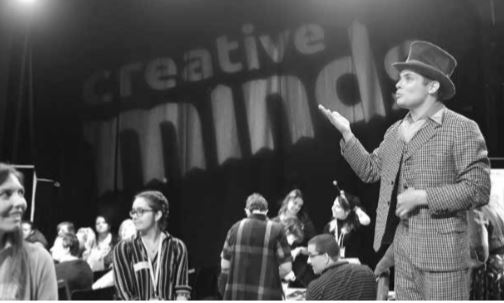
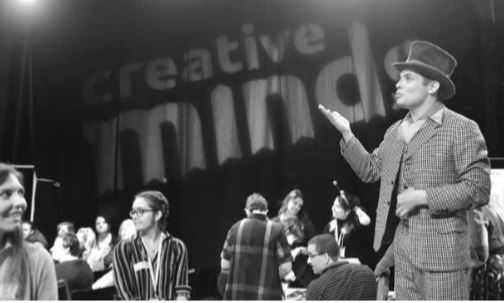
We also hear the life story of Shaun Webster, now an international project worker at Change but who grew up with a father who was ‘embarrassed that I went to a special school’. Sarah Gordy, one of the stars of Call the Midwife and Downton Abbey, provides a fascinating account of how she became an award-winning actor despite having Down syndrome. ‘That’s not all I am’ she writes, ‘there is so much more to me than my disability’.  ‘No one should be afraid of achieving their goals’ says Mathew Hellett  from Brighton who has made award winning films, performs as a drag artist and also runs the campaign group, ‘Creative Minds’.

Many struggle with literacy and numeracy but are superb sportspeople, like Dan Pepper, a Paralympic athlete and award-winning élite swimmer.  Laura Broughton was born with hydrocephalus and knows that led to learning difficulties at school. She writes ‘ I struggle to keep up with conversations or follow directions’, but none of those challenges have stopped her from becoming an artist, social care consultant and trainer.

Three of the eight authors here have been awarded MBE’s for their ground-breaking work and their stories are humbling. The book provides us a glimpse into a world of achievement that neuro-typical  people rarely see. Over the course of reading ‘Made Possible’, we become vividly aware of the battles behind every individual achievement.


CASCAIDr – the specialist legal advice charity – needs your support!

CAN YOU HELP CASCAIDR – the specialist legal advice charity by supporting their walk for legal help

The annual London Legal Support Trust Walk raises much needed funds for charities that provide life-changing legal advice and representation to those in need. Due to the ongoing restrictions in place, regarding mass participation events, the Walk has turned virtual for 2020, giving people the opportunity to participate in any way and any place they like.

Belinda and others supporting CASCAIDr’s work are participating to ensure that those who need funding for social care services advice and back-up, actually get it – enforcing legal rights that are fast disappearing, in the current culture.

The Charity runs on a shoe-string, sticks to its model, and gets fantastic feedback for its output. Here’s the link to some of the outcomes CASCAIDr has achieved, in the short time it’s been operating, if you have time to look: https://www.cascaidr.org.uk/2020/02/10/cascaidrs-year-two-highs/

Please join Community Living magazine in helping this invaluable organisation to continue with its mission, during Covid-19? Any one of us might need social care services, in the future, for our friends and relatives, even if we don’t feel the effect of Covid directly ourselves. Society has never needed a social care safety net more than now, as furlough comes to an end, and people’s informal networks of support necessarily withdraw.

Belinda is still going to be walking, taking on 10k before October 5th, walking individually, whilst CASCAIDr focuses on its own 10x challenge. Between 28 Sept – 9 October, CASCAIDr will be answering 10 difficult legal questions and answers per day, all about community care law – not just the law in ordinary times, but with a special focus on Covid-19 implications too.

The link for posing any social services related or CHC legal question you might have is here: https://www.cascaidr.org.uk/2020/09/22/cascaidrs-2020-q-and-a-fund-raising-campaign/ and the answers will be posted on CASCAIDr’s LinkedIn, Facebook and Twitter pages.

How can you help with donations?

If you’re working from home and saving costs, you could maybe self-sponsor? You could donate your daily coffee allowance, your weekly commuting cost or monthly lunch-out budget. Got a birthday coming up? Why not nominate us, as your Facebook birthday fundraiser?

Please pass this email on to people who might share these interests and values? Consider encouraging your friends, family and colleagues to support your efforts by doing any of these things, CASCAIDr will reach its target.

CASCAIDr  hopes to use the money to become a full service but exempt charitable legal entity, able to issue public law legal proceedings for judicial review – when literally nothing else has worked, to get a person their legal rights!

Belinda Schwehr CASCAIDr writes a regular legal article on up-to-date Care Act matters with no charge – if you enjoy this please give – every donation, however small helps.

CASCAIDr’s Virgin Money Giving fundraising page link is:https://uk.virginmoneygiving.com/CASCAIDr20


Don’t ever call us unskilled again!


Learning from the experience of Support Workers during Covid-19

Authors:        Sally Warren and Jo Giles (Paradigm)

“People who offer their time, energy and attention to help … others are an asset to society and should be valued as such.
Let’s see a shift away from viewing Social Care as a tiresome drain of resources to viewing it as a valued and essential part of society.” (Survey respondent)

“Don’t ever call us ‘unskilled’ again” brings you the voices of 118 Support Workers (supporting people with a learning disability and/or autism) from across the UK. The majority of the respondents are members of the Gr8 Support Movement.

The report captures their experiences, thoughts, ideas and learning during the pandemic and shares them with the nation.
It highlights:

  • how support workers responded during the pandemic with thoughtfulness, creativity and dedication.
  • some key messages and ‘must haves’ for moving forward beyond the pandemic.

the plea of Support Workers to be valued and recognised as essential and highly skilled members of the Social Care workforce, not just now but as society moves forward.

Please click below for the “Don’t ever call us unskilled again!” press release and the summary and full narrated report on their website report Don’t ever call us unskilled again

This is such a good look at the quality of how support workers feel about their jobs and highlights how they have adjusted to the Covid19. Certainly NOT unskilled but how they’ve helped people understand what’s happening, knowing what will work for the different people they know and how important it is for people to be in small community-based support where we can see far less people catching the virus.

Simon Jarrett: Editor’s blog

Our editor Simon Jarrett reflects on the effect of the pandemic on people with learning disabilities and those who support them, and highlights our coverage in the current issue.

Responses to Covid-19 run from magnificence to startling ignorance

When societies are under threat as they are today, their resilience, tolerance and unity are tested to the utmost. Those who already occupy a precarious social position, such as people with learning disabilities, face a double threat. They are not only at risk from the virus that threatens everyone – they are also at risk of being left behind, cast aside as resources tighten and ideas of social solidarity are put under strain.

What can we say about the experience of people with learning disabilities so far under the extreme circumstances of Covid-19? The balance sheet is mixed.

There has been much that is good. The coalition of organisations and individuals who comprise the learning disability community have largely responded magnificently. As our reports in this issue demonstrate (pages 10-12 ‘Care in the crisis’ and pages 14-15 ‘Creative in the crisis’) we are seeing everywhere ingenuity, adaptability, flexibility and most of all total commitment. From online dance sessions run by performers who have learning disabilities, to staff putting themselves voluntarily into lockdown with people who require support while shielding, we can justifiably applaud the extraordinary achievements of people in extraordinary times. They have ensured that people with learning disabilities have not been forgotten.

Changes, mainly relaxations, of rules around universal credit and other benefits, as well as furlough support for people in work, have by and large worked well. They show a flexibility and responsiveness that governments would be well advised to follow outside times of crisis, and which have long been called for by this magazine and others.


Medical guidance fears

When new medical treatment guidance was issued in response to the virus there were fears that its definition of ‘frailty’ might lead to withholding of treatment for any person with a learning disability. These fears have been somewhat alleviated by stories of people with learning disabilities receiving excellent hospital treatment and surviving (pages 10-12 Care in the Crisis). However, so far these are anecdotal. It will be some time before the true picture emerges, and we have seen enough ‘do not resuscitate’ and neglect scandals to prevent us feeling over-confident. The CQC has reported a large spike in mortality rates of people with learning disabilities during the pandemic, but has so far given no context or clarification.


Not hospital overspill

Our account of the Westminster Society’s battle to keep support going to over 300 people in inner London (‘care in the crisis’ pages 10-12) shows all of these fine qualities – ingenuity, flexibilty, utter commitment – in the most demanding circumstances. And yet we see here also some of the problems. There has been extreme pressure from the NHS and local authorities to accommodate people moving from hospitals without them having had a Covid-19 test. This presents extreme risk to those around them.

There has been a failure by the health sector to understand the ethos, values and even the structures of social care. Supported living has been a mystery to them. While the performance of NHS front line staff and the teams backing them has been superb, the health service as a whole has shown an alarmingly neglectful disregard and incomprehension towards social care. This may well have led to unnecessary and tragic deaths.

Around one in four Covid-19 deaths in England and Wales, and around one half in Scotland, have occurred in ‘care homes’ (the government’s generic term for accommodation with social care). Emerging social care death scandals in France, Sweden, Italy, Spain, Canada and The United States suggest this is a global problem.

If the world really is to change after this terrible virus has gone, as so many of us hope, it must begin to see people with learning disabilities, and others who have vulnerabilities, not as patients needing treatment and speedy discharge to low-cost support, but as citizens to whom society has a duty to adapt itself and accommodate.

We cannot simply revert to where we were before. Society’s newly-found respect for those who work in social care and those who are supported by them must continue. That will mean decent, not minimum, wages, an end to brutal medical confinement, and a new spirit of acceptance and inclusion across our communities.

Our friends across the Pacific

What is life like for people with learning disabilities in Japan and how do they experience ‘belonging’? A visit allowed people to swap stories and find out, says Jan Sunman

Three jet-lagged academics, a self-advocate and a family carer sped bleary-eyed down a highway from Kansai airport into Osaka. Our impressions on arriving in Japan were of a densely populated country, every scrap of land used and small flats cheek by jowl with businesses and industry.

We observed how unfailingly polite and helpful Japanese people were. The young man deployed to support our self-advocate colleague as part of the airport’s disability assistance programme looked after us all, guiding us and helping us buy bus tickets. Our visit was part of a research project to explore experiences of “belonging” for people with le arning disabilities and their families in the UK and Japan, led by the Open University and funded by the Economic and Social Research Council.

It came about after Hiromi Moriguchi, a researcher at Tenri University, gave a presentation on self-advocacy in Japan at the Open University’s 2018 Social History of Learning Disability Conference. A few weeks later, the Economic and Social Research Council called for projects to support the establishment of UK/Japan research networks.

Our project addressed three questions:

● What does “belonging” mean to people with learning disabilities and their families in Japan and the UK?

● How can family and self-advocates work together in the two countries?

● How are services organised in both countries, and what good practice can be shared?

We wanted to learn how cultural differences affected these issues. Our Japanese colleagues were keen to explore inclusive research as there is no tradition of involving people with learning disabilities as co-researchers in Japan, so we set up inclusive teams of academics, family advocates and self-advocates in both countries within this project.

The UK team were: Liz Tilley, an Open University researcher; Sara Ryan, a parent activist and University of Oxford academic; myself, a parent activist from Oxfordshire Family Support Network; Ian Davies, founder of Northamptonshire People First and the National Forum of People with Learning Disabilities veteran, who has a learning disability; independent researcher Jan Walmsley; and Liz Ellis, a researcher at the University of Highlands and Islands.

Moriguchi’s team included: Japanese social policy expert Hiromi Tanaka; Chie Kasahara, associate professor at the University of Sophia in Tokyo; Marin Fujino, a PhD student whose brother has learning disabilities; and Azusa Omori and her 18-year-old son, Shun, who has a learning disability, who are together campaigning to improve self-advocacy and further education.

Each exchange lasted five days and was built around visits to organisations and services, research presentations, workshops – and lots of eating and drinking. The UK visit, the first, prompted Japanese colleagues to reflect upon the complexity of translating the term “belonging” into Japanese and difficulties in building capacity for self-advocacy and inclusive research in Japan.

This exchange indicated some differences between the two countries that we were keen to explore when we visited Japan, notably employment rates for people with learning disabilities and how welfare is organised. We had a full agenda in Japan. We visited three universities, a “work centre” (that provided training and some work), a group home, a social club for people with learning disabilities and their families and day services, including one in a rural area. We met people with learning disabilities, their support workers and family carers. We gave presentations at seminars and workshops with our Japanese colleagues. Our working relationships were cemented during conversations over wonderful meals and visits to shrines.

As a family carer, I was keen to learn whether Japanese social policy has lessons for us. How do people’s daily lives compare with ours? Do people with learning disabilities and their families have a strong voice in developing social and healthcare policy in Japan? How does Japan support the human rights of disabled people?

A lot in common

As family carers, we have a great deal in common. We are united by the same fears about the future of loved ones when we pass away. I met an older carer who had battled to get her son moved from a group home far away to one closer to her home. She did this with the support of a group that met in Tokyo, comprising social care workers, advocates and family carers. Younger families I met were beginning to press for greater inclusion in education and much more personalised support, although there was still reticence about advocacy. Culturally, pressing for the rights of the individual went against the grain.

I saw inspirational work by family members, such as Azusa Omori’s i-LDK Super-College, set up to help young people gain life skills, which plans to train businesses about diversity, deploying their young self-advocates. Sibling advocacy was gaining momentum too, with people using social media to share stories and support. Arts-based initiatives such as Tanpopo No Ye and The Good Job! Centre Kashiba provided high-quality, creative work opportunities.

I met a representative of PandA-J, an organisation that provides information and training on human rights and abuse prevention to professionals and parents. Japanese families we met were shocked to learn about the human rights abuses of people with learning disabilities in secure assessment and treatment units (ATUs) and the effects of austerity on disabled people and their families in the UK.

Health inequalities exist in Japan as in the UK. Families shared similar concerns about the abuse of people with learning disabilities, particularly after the massacre of 19 disabled people at a specialist facility in 2016 (the 26-year-old perpetrator said afterwards that “it is better the disabled disappear”).


Stigmas and safety nets

Fujino had carried out research on the impact of having a disabled relative, and referred to the “family burden”, suggesting that there was still a stigma attached to being disabled. This concept of a burden harks back to attitudes in UK in 1980s. It felt uncomfortable to me. One impressive aspect of Japanese provision was that the government provides a safety net of financial and social care support (subject to eligibility) without the constant battles we have in the UK. There is an extensive network of day services and group homes in place, although Japan does not have a model of supported living.

Families had developed service provision and advocacy before the state stepped in. This struck me as a similar path to the UK’s, although self-advocacy has yet to gain momentum in Japan. In contrast, we are witnessing state supported services being rolled back in the UK, with some advocacy groups and families stepping into the gaps.

I returned from Japan believing more than ever that we need to challenge the destructive impact of austerity on the lives of people with learning disabilities and their families. The UK benefits system should exercise the same level of flexibility afforded in Japan, allowing people to retain benefits while being paid to gain skills. We can learn to be ambitious about creating jobs and partnerships with businesses and the public sector. We can save money and stress on endless reassessments when we all know learning disability is not something that is cured. And we need to value people again.

Highlights for me included watching Shun Omori gain confidence from meeting Ian Davies and being a member of the team. His mother said this research experience had encouraged him to start making more choices about his life. Telling his story about his work at the i-LDK Super College and showing us how to travel around Japan using Google maps on his smartphone had helped Shun to feel like he geniunely “belonged” in our team. One of the most valuable parts of the project was the power of being able to  tell your own story. Davies shared his  life story with the theme of belonging and not belonging to several audiences, including 60 trainee social workers. Many students said that hearing this enabled them to understand the meaning of belonging for the first time. Other people with learning disabilities in Japan have since requested that they too be supported to tell their life story, inspired by his account.

Our Anglo-Japanese partnership is looking to build on the exchange visits through further work on life stories. Japanese colleagues are hoping to start work on this for the first time. In the UK, life stories have been collected since the 1960s, but what is less well established is their use within services. As a result of the impact of telling Davies’s life story in Japan, we want to find ways to embed them as a foundation for genuine personalisation.

We feel privileged to have had this opportunity to gain an insight into Japanese advocacy and social policy. It has given us new ways to look at what’s going on at home. Altogether, it was an immensely rich learning experience.

Jan Sunman is a family carer and advocate who is passionate about rights and services for people with learning disabilities and families. Additional reporting by Liz Tilley and Jan Walmsley

Shedding light on shameful practice: case studies

The Local Government and Social Care Ombudsman addresses errors tinged with legal faults as well as maladministration, and highlights poor practice in social care, says Belinda Schwehr in the second of a two-part series.

Three recent cases examined by the Local Government and Social Care Ombudsman (LGSCO) highlight poor practice and the recompense achieved.

Ample warning, long delay

In a case concerning the London Borough of Merton (LGSCO, 2019a), a mother complained that the council had made inexcusable delays in finding her son suitable care, causing distress to both him and her. The mother had phoned the council “hundreds of times” and written “countless” emails. She was severely frustrated by its approach. The council was found to be at fault for causing unnecessary delays in finding her son appropriate care – the process took more than eight months.

The council knew that Mr C’s case was complex from the outset and had had ample warning that his placement was going to end. The authority had a duty to meet his needs but did not do so. His old care home even had to give notice to spur the council into action. The council effectively forced the mother to agree to have her son come home to stay with her – for what was supposed to be two weeks but ended up being six. Given the man’s physique, his poor self-control and the home environment, he posed a risk to himself and his mother.

His care plan stated he required one-to-one care in an environment where others were on call, but the council left him at his mother’s house, in her care, for a lengthy period with little support. It paid her £400 a week through direct payments but this was quite inadequate. She was awarded £3,000 and the son £2,000 to acknowledge the distress caused and the loss of non-monetary benefit. This was consistent with a right to reimbursement of the money saved by the council during the period of failing to meet the son’s needs.

It is not the law that just because some sort of necessary care is hard to procure, it does not need to be bought. The price is irrelevant if it is the only means of meeting need because that is the corollary of an absolute duty to meet need.


‘Excessive’ time before assessment

The Care Act guidance provides that assessments should be carried out over an appropriate and reasonable timescale. In the next case, Somerset County Council took 21 months – described as an excessive delay by the LGSCO (2019b).

Additionally, the council had removed respite care, which had already been allocated, without explaining why or considering how the woman being cared for (Ms Y) would manage if her parent carers took breaks or whether she had an eligible need for holidays or short breaks. A council officer had suggested funding any care during a break out of her existing direct payments. However, this had not been addressed in Ms Y’s care plan. A secondary issue was the council’s consideration of a carer’s request to be paid for managing Ms Y’s direct payments.

The council was aware that the father had been managing her account, and he requested payment for this in a meeting with an officer early in the process. The council ignored that request for several months, even though an officer had said they would consider this.

The authority’s policy was not to allow paid carers to administer the direct payment account because of the potential conflict of interest and safeguarding issues. The ombudsman said the council must consider individual circumstances and whether there are good reasons to depart from its policy or rein in its discretion. The council never considered how Ms Y would administer the payments without the carer’s help. The council’s record of July 2018 even showed it had agreed to pay the carer for administering the direct payment account, so it was only right that the council should actually do so.

The ombudsman thought the woman’s direct payments would have been increased in September 2016 had the council properly assessed her. Therefore, the carers had provided unpaid, additional care and social support and the father had done unpaid management. It recommended backdating direct payments for the period when Ms Y had become eligible for NHS Continuing Health Care (CHC) funding and increasing her direct payments over the three-year period before she became eligible for CHC funding to allow her to pay him for managing her direct payment account.

A “standard” offer of respite cannot ever become a rule. Respite is a need, arising from the absence of a carer, as well as a need to get away from one’s home or usual carers for a while. If one’s carer is paid, holidays must be allowed for, so extra money is needed to pay for holiday pay and cover in the meantime. If a person’s carer is not paid, all the carer needs to do to get a break is decline to be available. The absence of free care generates a need for respite cover – ie money to pay for what is normally provided for free so needs are still met.

A person can be a paid carer for some of the time and unpaid for the rest. When they go on holiday, the cared-for person needs to pay for paid cover, and to replace what would normally be free. Regarding carers being paid to administer a direct payment, there is an explicit discretion. The same rules apply to close relatives being paid for the actual care but only if the care is regarded as “necessary”.

A person who has capacity to have a direct payment at all can nominate someone to help them manage it, and the direct payment holder would be the employer in legal terms. Therefore, the manager is not both the employer and the employee at the same time. The manager is just helping the real employer discharge his or her duties towards the employee.

A person who cannot understand the basics of a direct payment cannot nominate a person to help them manage it, and needs an authorised person instead. In such cases, the authorised person is the principal who makes decisions on care, not merely an agent who implements such decisions. That means if that same person wishes to be employed to care, the authorised person would be both the employee (for the care) and the employer. That is potentially a problematic position to take up voluntarily, even if HMRC could understand the purpose of such an arrangement.

Anyone, however, can now be paid up to £1,000 a year for self-employed work without registering with HMRC, reflecting the reality of the gig economy. The payments administration part of the Care Act regulations on direct payments hints at this being the better way to go about it – a small set sum per week or month, perhaps.


‘Manifestly unacceptable’ wait

In a case involving the London Borough of Croydon (LGSCO, 2019c), which went back for more than three years, the LGSCO took the matter on despite the time lapse.

This was because a man’s current issues could not be logically separated from the older ones, and as his mother had been told that he had been “added to the council’s waiting list for an assessment”. Councils must carry out assessments within a suitable and reasonable timescale. In this case, both a transition and an adult’s assessment had been long overdue. The ombudsman found the authority at fault for failing to properly assess the man’s situation from as early as August 2015 when he became 18, and also at fault for failing to properly review his education, health and care plan (these plans should be reviewed at least annually).

Case law shows that the legitimacy of a wait for anything due under a statutory duty depends on the facts, the urgency and the wording of the specific duty. There is no such thing as a waiting list for assessment that is based on a shortage of staff – not one that is legal, anyway. The R v Bristol ex p Penfold (1998) case scotched the suggestion that assessment can be rationed; this is because it is a duty, and not a duty where the availability of resources can be a lawful consideration.

There is already a duty to ensure that all social services authorities have sufficient staff to discharge their functions, which is still in force under section 6 of the Local Authorities and Social Services Act 1970. This duty shores up the fundamental principle that, if there is only one way to meet a need, then it must be paid for. The duty to meet needs may have to be discharged through direct provision if no provider wishes to sell its services to a council – and that duty is a statutory function which must, in turn, be staffed.

The LGSCO said that the wait of approximately three years and nine months was “manifestly unacceptable”. The LGSCO concluded that the man had missed out on significant support provision since 2015, simply because the council had failed to assess him sooner. The council was persuaded to pay: the man £3,000, in recognition of that; his mother £1,000, for her frustration at its failure to act on her requests to assess; and a further £500 to her, in recognition of the significant time and trouble to which she had been put.


Reflecting legal decisions

As my previous article noted, the LGSCO is clearly becoming less coy about finding fault relating to ignorance of the law. The LGSCO is not a court, and has no jurisdiction to decide whether something is unlawful but, where case law says that something is “required”, “fundamental”, “essential”, “mandatory” etc for compliance with the Care Act, the LGSCO is bound, it seems, to reflect binding legal developments in its own consideration of what amounts to maladministration.

We think that the statistics about increasing numbers and levels of fault indicate that things have gone very badly wrong with oversight of the way in which the Care Act has been implemented.

The newly reformed all-party parliamentary group on social care should factor a lack of legal literacy into the analytical mix, for the sake of the green paper that has been so long in gestation. n ● This article is the second in a series of two on the ombudsman. The previous issue gave an overview of the service and its benefits


Belinda Schwehr is chief executive of legal advice charity CASCAIDr (www.CASCAIDr. org.uk) and owner of Care and Health Law, a consultancy. She has been a barrister, solicitor advocate, presenter, writer and university law lecturer

References

R v Bristol CC ex p Penfold (1998) 1 CCLR 315, QBD Local Government and Social Care Ombudsman (2019a) London Borough of Merton (18 011 437). https://tinyurl.com/wgtqqqr Local Government and Social Care Ombudsman (2019b) Somerset County Council (16 016 755). https://tinyurl.com/yyuhsuay Local Government and Social Care Ombudsman (2019c) London Borough of Croydon (18 016 105). https://tinyurl.com/yxazgwct

Financial help at a time of Covid-19

In response to the coronavirus crisis, the government has relaxed rules around claiming benefits and is offering financial support to people in work, says Charlie Callanan

If a person has a job but is too sick to work or has to self-isolate, they may be able to claim welfare benefits or other types of financial relief to help them through the ongoing crisis. Two main schemes to help employers and people in work were set up in  March, and have since been amended  and extended.

The job retention scheme provides a grant to employers so they can pay the wages of staff on their payroll who are temporarily not working – known as being furloughed – during the coronavirus outbreak. For self-employed people, the government introduced the Self-Employed Income Support Scheme, which pays a taxable grant to those eligible that depends on their taxable profits.

People who are off work because they are ill or have to self-isolate should be eligible for statutory sick pay (SSP). Staff commonly get sick pay as part of their employment contract, and this will include SSP. People employed through an agency count as an employee so can get SSP, but those with self-employed status cannot get it.


Employment and support allowance

People who do not qualify for SSP or who have already claimed for the maximum 28 weeks for which it can be paid may be able to get employment and support allowance (ESA). This is usually awarded to claimants who have “limited capability for work”.

Any person who has coronavirus symptoms or is self-isolating is deemed to have limited capability for work, so does not need to provide a fit note from a doctor. If a client has Covid-19 or is self-isolating and needs to provide an “isolation note” (for their employer, for example), one can be obtained at https://111.nhs.uk/isolation-note/. Normally, there are “waiting days” before a person can be paid SSP or ESA. These have been suspended where the claim is related to Covid-19.

Normally, there are “waiting days” before a person can be paid SSP or ESA. These have been suspended where the claim is related to Covid-19.

A client may be able to claim universal credit (UC) even if they get SSP or ESA. The basic allowances in UC (and working tax credit) were increased in April by
approximately £20 a week (around £1,000 a year). It is important that any client who is already receiving a pre-UC, meanstested benefit (such as income-related ESA or housing benefit) gets advice from an experienced welfare rights adviser before claiming UC.


Claiming at a distance

Measures to protect the health of both Department for Work and Pensions (DWP) staff and clients have been introduced. Job centres were closed in late March to all but the most vulnerable claimants, such as homeless people, who were to be seen by appointment only. The usual work availability and work search requirements have been suspended for claimants who have to look for work. Having to attend appointments at job centres in person was suspended from 19 March.

The application process for UC involves verifying the claimant’s identity. People can now verify who they are over the phone as job centres are closed. Since the crisis, the DWP has made the welcome change of allowing people to claim ESA and pension credits online.

All face-to-face medical assessments for UC, ESA and personal independence payments (PIPs) had been suspended at the time of writing and this is likely to continue for a while. Assessments with the claimant can now be done over the phone. Health assessors can still make paper-based PIP assessments using application forms and documents such as medical reports, letters and care plans.

For clients whose PIP award is about to end, their award may be extended at its current level during the crisis. Any person in this position should contact the PIP unit to confirm this. Carers remain entitled to carer’s allowance if they have a temporary break in caring because either they or the people they care for have to isolate because of Covid-19 infection.

A £500 million hardship fund has been established to provide additional relief for households in England that are struggling to pay their council tax bills. In Scotland, the council tax support fund has been increased by £50 million. Clients should contact their local authority about applying for this.

The DWP has dealt with a huge increase in benefit claims and demands on its services because of the coronavirus crisis. As always, clients should get advice and make a claim for benefits or other financial support as early as possible.

As Community Living was going to press, the picture was changing, with some financial support provided for a fixed period and other forms of support and relaxation of the rules, such as those around benefit claims, expected to last for longer periods. Readers should always seek the most up-to-date information and advice available.


Charlie Callanan is an adviser and writer on welfare rights

Further information and advice

Department for Work and Pensions. Coronavirus support for employees, benefit claimants and businesses. Press release. 19 March. https://tinyurl.com/wvykjtq Citizens Advice. www.citizensadvice.org.uk

Letters

Write to Community Living at simonjarrett1@outlook.com. Note: all letters may be edited

Supported living: the next Covid-19 scandal after care homes?

I am the chief executive of a London-based charity that provides support services to people with learning disabilities in Westminster and neighbouring boroughs. I have raised serious concerns about the lack of Covid-19 testing for people with learning disabilities and the staff who support them. I believe that this is discriminatory and resulting in preventable deaths.

More than 2,400 excess deaths of people with learning disabilities and autism were reported between April and May. I believe this is partly due to a lack of testing in learning disability services. It has been our experience that when trying to access testing, we consistently face bureaucracy and a lack of understanding. People with learning disabilities are not viewed as having the same level of vulnerability as older people. As a result, a whole cohort of the community is being discriminated against.

This is of huge concern given the well known health inequalities in the learning disability and autism population, with higher rates of diabetes, obesity, heart disease and other conditions. There are some extremely clinically vulnerable people with profound and multiple learning disabilities. Then there are others who find distancing and hand hygiene rules hard to follow.

Despite all this, we have been repeatedly informed that our service users do not meet the criteria for testing. This may be in part because of confusion and ignorance over their accommodation. People living in small, shared supported living services or their own flats do not qualify for testing in the same way as those in registered care homes. People living in supported housing are therefore being denied accessed to testing. This is grossly unfair, discriminatory and exceptionally dangerous. For all these reasons, supported living and domiciliary care for people with learning disabilities will be the next scandal after care homes.

We have also been asked by the NHS and others to admit people who have not been tested. Despite our considerable efforts to protect vulnerable tenants and prevent any outbreak arising from the admission of untested people, we have been largely unsuccessful in obtaining tests. Testing is needed in all care settings, including supported living, as a prophylactic measure.

We have continually met barriers, bureaucracy and bewilderment. It is frankly neglectful that, without urgent action, we will be lamenting the deaths of more people with learning disabilities and of those who support them.

Gabby Machell

Chief executive, Westminster Society for People with Learning Disabilities, London

● Care in the crisis, page 10


Jean Vanier: a great betrayal

I first heard of Jean Vanier when I was  a teenager and he inspired me to join  a L’Arche community for a while.  After university, I returned to the neighbourhood and remained a  close friend.

Over time, my admiration for Vanier was tempered by a growing awareness  of his fallibilities. Despite encouraging others to live with adults with learning disabilities, he lived alone. He was homophobic. And his view that all L’Arche members should channel their sexuality into celebration because people with learning disabilities could not have sexual relationships was downright weird.

Nonetheless, I believed Vanier to be a good and humble man, and continued to value L’Arche. I was pleased to see his work being recognised in the UK in recent years, and mourned his death last year. When the news story broke that Vanier, alongside his co-founder Père Thomas, had been engaged in abusive relationships
with female assistants, I was sadly not that surprised. After #metoo and other scandals involving charismatic leaders, the story was all too familiar.

I was also angry that the man who had lied to the Père Thomas inquiry and spoken so beautifully about the dignity and respect of human beings was all the time an abuser himself. And I was devastated for my friends in L’Arche for whom this was such a great betrayal.

Which is why L’Arche’s response  has been extraordinary. Most organisations cover up wrongdoings by their founders. L’Arche chose instead to undertake the painful task of open and honest investigation that respected and elevated the victims.

After that, communities were provided with a helpful framework to share the news and support each other (movingly described by Dr Irene Tuffrey-Wijne in her blog: http://www.tuffrey-wijne. com/?p=767). It is an exemplar of good practice, and worth learning from.

Was Vanier a good man who did bad things, or a bad one who did good things? I’m not sure.

What I am sure of is that L’Arche has shown in its worst moment that it is far, far greater than the founders who disgraced it. And I take comfort from that.


Virginia Moffatt

Oxford

● Accusing saints: when no one listens, page 22

The words of the voiceless preserved

In 1991, clinical psychologist Maggie Potts and researcher Rebecca Fido published a pioneering work of oral history told by people living in an institution. Susanna Shapland reports

A Fit Person to be Removed: Personal Accounts of Life in a Mental Deficiency Institution was the result of a three-year project interviewing eight men and nine women who had spent most of their lives in Meanwood Park Hospital (the Park) near Leeds, a long-stay institution established as a “mentaldeficiency colony” in 1920.

The authors, clinical psychologist Maggie Potts and researcher Rebecca Fido, believed that academic studies of learning disability had until then been preoccupied with institutions and legislation, meaning that the erstwhile residents of these places were being excluded from their own histories when they had valuable contributions to make and a desire to share their experiences.

The closure of long-stay hospitals, including the Park, gave an added impetus to gather the oral histories of its residents while this was still possible. These reminiscences form the basis of A Fit Person to be Removed, a study that sought to contribute to the history of the Park through the memories and experiences of its residents.

Those who contributed had spent between 25 and 63 years there – on average 47 years. Five of the group were described as having “severe physical handicaps”, and three required interpretive help from friends during the interviews.


A different story

Through their recollections, an alternative history of the Park unfolds. It reveals the arbitrary and callous reality of the certification process that brought 16 of them to the institution then prevented them from leaving. Reasons for certification ranged from social transgression (having a child out of wedlock) to communication skills (especially for those with physical disabilities) to displaying a lack of general knowledge. Those whose families could not support them because of the death of a carer or financial hardship were also more likely to find themselves going through the certification process.

The reality of their experience stands in contrast to the narrative of the official documents. Through their testimony, the boredom and loneliness of those branded “lower grade” and largely confined to their “villa” (ward) were laid bare, as well as the injustice felt at the strict segregation of the sexes.


Reality and the rat-catcher

The contrast is highlighted between the official guidance that staff should build trust with patients and parents and the reality that, for instance, the executive officer who rounded up likely candidates for certification was widely feared and referred to as “the rat-catcher”.

The annual reports also boasted of the many entertainments available at the Park, but did not record that the showing of films on site actually curtailed the independence of the more trusted residents, preventing them from going off site to the local cinema, nor that the films selected were often old and unpopular, nor that some of the more physically disabled residents were left out of these entertainments altogether.

More disturbingly, the annual reports did not say the withdrawal of these entertainments was part of a punishment system that included withholding money and leave, hard physical labour in humiliating conditions, beatings, prolonged solitary confinement and medication with laxatives or sedatives. 

Some of these strictures were presented as inducements to favourable conduct but were part of an arbitrary informal system of punishment that contributors revealed could be meted out for anything from swearing to incontinence to feeling too depressed to eat.


Taken seriously at last

As the book progressed, Potts and Fido shared regular readings of their work with the contributors.

The whole process of being listened to and having what they had to say taken seriously proved cathartic and empowering for the interviewees, with some expressing greater emotion as the interviews and readings went on, and increasing confidence in the importance of sharing their stories. Although at times these memories provoked distress, there was a sense that: “I just like people to know so they can realise what it was we’ve had to go through. It’s not true what was written down! They did it just to keep us locked up, so that people would think we’re mental!” (page 139).

From the authors’ point of view, the exercise emphasised not only the importance of hearing about institutional life from those who had actually lived it, but also the necessity of using their testimony to shape the future.

Written at a time of huge change in the care system, A Fit Person to Be Removed showed what life was like in the Park – and, indeed, after the Park – for these individuals, with both good experiences and bad. and stressed the need to acknowledge the continuities in systems and attitudes rather than just dismissing them as belonging to another era. By doing so, they hoped to avoid the mistakes of the past.


Further reading

Meanwood Park. Digital archive. www. meanwoodpark.co.uk Fido R, Potts M (1989) “It’s not true what  was written down!” Experiences of life in a mental handicap institution. Oral History. 17(2):31-34 Potts M, Fido R (1991) “A Fit Person to be Removed”: Personal Accounts of Life in a Mental Deficiency Institution. Plymouth: Northcote House Publishers

Small screen gems

Sitting comfortably? Tracey Harding recommends five excellent feature films, a BAFTA-winning TV series and a radio drama that you can access online or on DVD from your sofa

Coming Down the Mountain (2007)

Available on Amazon Prime

This television film was written by Mark Haddon, author of The Curious Incident of the Dog in the Night-Time, and was first shown on the BBC. A drama about the relationship between two brothers – David, who is 15 years old (Nicholas Hoult) and his slightly older brother Ben (Tommy Jessup) who has Down’s syndrome. David resents the attention his parents give to his older brother and, when the family moves from London to Derbyshire so Ben can attend a special school, David’s resentment becomes all consuming, with potentially dangerous consequences.


Peanut Butter Falcon (2019)

Amazon Prime, Google Play Movies, YouTube

After running away from a residential home to pursue his dream of becoming  a wrestler, Zak, a man with learning disabilities, befriends ex-criminal Tyler (Shia LeBeouf) who becomes his ally. A feelgood adventure with outstanding performances from all, especially Zack Gottsagen as Zak.


Sanctuary (2016)

Available on Amazon Prime, Google Play Movies, YouTube

A story of two people with learning disabilities who want to be together, which explores with humour and sensitivity the difficulties they face in their attempts to form a relationship. The film highlights the injustice of a now overturned Irish law banning premarital sex for people with learning disabilities. Lighthearted and funny, with a range of fine performances, it is definitely worth a watch.


My Feral Heart (2016)

Available on YouTube, Google Play Movies, Amazon Prime

When his mother dies, Luke, a young man with Down’s syndrome, is forced to move into a care home. After sneaking out to explore the countryside, he meets a young woman who changes the way he thinks about his life. Starring Steven Brandon, who gives a magnetic performance as Luke, this is a thoughtful portrait of disability.


Le Huitième Jour (The 8th Day) (1996)

Available on DVD

This subtitled Belgian film is a comedy drama that tells the story of the friendship between Harry (Daniel Auteuil), a divorced businessman, and George (Pascal Duquenne), who he meets when he nearly runs over him. George, who has Down’s syndrome, has escaped from an institution. The chemistry between the two leads is wonderful and the film is both funny and heartfelt.


The A Word. Series 3 (2020)

Available on BBC iPlayer

The third series of this BAFTA-winning programme has been praised for its scripts and performances centred around 10-year-old Joe who has autism, and the family and extended family that support him. The series, however, is not just about autism; it is equally about the complicated family relationships of the people around Joe, with the emotion and traumas entailed. There are six episodes in series 3 and the first two series are also available on BBC iPlayer.


Assisted Loving (2019)

Available on BBC Sounds

Finally, a recommendation for a radio show, originally broadcast on Radio 4. Assisted Loving follows Sui-Ling Tang navigating her way through the difficulties that society has with the concept of relationships between people with learning disabilities. She sets out to discover why love, sexual relationships and romance are still so taboo for these people. With the help of author Kathy Lette, she looks at the laws that can decide whether someone has the capacity to consent to sex.


Summertime reading

With some lazy days in the sun ahead, Simon Jarrett suggests eight novels that entertain, engross and tell us something about attitudes to learning disability

Walter

David Cook (1978)

This is a beautifully observed account of the life of Walter, a young man left alone after his mother’s death, who is moved into the local long-stay “mental handicap” hospital in the north of England. The 1979 sequel Winter Doves is also excellent.


Brave New World

Aldous Huxley (1932)

A grim portrayal of a future where people are bred to suit the purposes of society. An elite alpha-grade intelligent class rule, while grinning epsilon-grade “semimorons” carry out the menial jobs.


The Secret Agent

Joseph Conrad (1907)

The full title of this novel written at the height of the eugenics era is The Secret Agent: A Simple Tale. It  tells the story of a young
“defective” man duped by a group of international anarchists into attempting to place a bomb at the Greenwich Observatory.


Tasting the Wind

Allan Mayer (2008)

Mayer’s murder mystery is based on a group of ex-hospital patients who have moved into a group home in London. It is both brilliantly funny and very, very serious, often at the same time, and is intelligently insightful about that whole 1980s era of the “great return” from hospitals to the community.


The Fifth Child

Doris Lessing (1988)

Ben, the unlucky fifth child of the hitherto charmed Lovatt family, exerts a strange and disturbing influence on all those around him, and the family begins to fall apart. The learning disabled youth is understood only by those who are also outsiders. The sequel, Ben, in the World (2000), follows him into adulthood.


The Sound and the Fury

William Faulkner (1929)

A difficult but rewarding read, this extraordinary novel tells the story of  the dysfunctional Compson family in the deep south of Mississippi, a fading white family surrounded by a retinue of black servants and labourers. The story is told from four perspectives, one of them  the profoundly disabled and voiceless Benjamin “Benjy” Compson, in a stream of consciousness style.


Barnaby Rudge

Charles Dickens (1841)

Although written in the 1840s, this  is Dickens’ imagining of London in  1780, when it was convulsed by the anti-Catholic Gordon Riots. Young Barnaby, a half-loveable, half-frightening “idiot”, gets caught up in the riots with calamitous consequences.


Of Mice and Men

John Steinbeck (1937)

Many of us read this short novel at school, perhaps not registering that one of the two central characters, Lennie, is a man with a learning disability. His friendship with the non-learning-disabled George, as they seek work in great-depression America, is a story of both love and tragedy

Accusing saints: when no one listens

After L’Arche founder Jean Vanier died, an inquiry found he had sexually abused six women. Could women with learning disabilities also have been victims? Noelle Blackman and Lynne Tooze report, and discuss why the odds are stacked against  vulnerable people who speak up

Allegations of sexual abuse against Jean Vanier, the charismatic founder of the L’Arche communities, emerged in February 2020, shortly after his death in 2019. They were made public following an independent investigation commissioned by the charity.

Vanier set up the first L’Arche community in 1964 in a small house in Trosly-Breuil in France. He invited two men who were living in institutions to move in. The community was a response to the plight of people with a learning disability institutionalised in France. He wrote books, was nominated for the Nobel Peace prize, received several awards and was admired by many. His vision was for people with a learning disability to be able to contribute to society and live equally alongside people without a learning disability, The investigation concerned mainly the relationship Jean Vanier had with his mentor and teacher Father Thomas Philippe, but also considered specific allegations against Vanier himself.

The news that then emerged – that Vanier sexually abused six women from 1970 to 2005 – is a real blow. It is similarly distressing to discover that Father Thomas Philippe was also known to have sexually abused women. At Respond, we were dismayed about what had happened and wanted to try to make sense of it. Sadly, however, we were not entirely shocked.

Respond is an organisation that offers therapy, advocacy and support to children, young people and adults with a learning disability, autism or both, who have experienced trauma. We work with people who have experienced abuse as well as those who abuse others. This helps us to understand that the world is not full of people who are wholly good and those who are wholly bad – everyone is capable of being both. It is unhelpful to hold such closed views about people, because it can lead to blind spots that are dangerous.

When we work with people who have sexually abused others, we take a lot of time understanding their life histories up to the point we meet them. We often find they have experienced a lot of trauma and may have been sexually abused by others.

Understanding the person in the context of their lived experience enables us to see them as a person first and foremost, to develop a therapeutic relationship with them and to hold a belief that they can change.


Power weakens others

Vanier was seen as a wholly good person, a saint – indeed, he was in line to be canonised. This would have made it difficult for people accept any concerns they might have felt, to discuss these with others or even to have been believed. It would also have made it extremely difficult for the people abused by him to make sense of what happened to them and to tell others.

The abuse was carried out through a relationship that had an extreme power imbalance. Vanier was a man of God and couched his abuse within a spiritual context. It was a complete abuse of his power and this disabled these able women. It may have been difficult for them even to conceptualise what was happening to them. In this context, it is easy to see why  the disabling effect of power would have been even stronger over women with learning disabilities.

We are very aware of the separation in our society between people with and without a learning disability. L’Arche is well known for its aim, within its communities, to create what it calls a “culture of shared lives between people with and without intellectual disabilities, from which… to build a more human society” (L’Arche International, 2020a). It seems difficult to understand why women with a learning disability were not included in the investigation, or at least why the concept that there could have been a risk of inappropriate sexual behaviour towards them was not addressed.

L’Arche’s initial comment regarding whether any disabled women were sexually abused by the founder was equivocal. Their statement says: “There is nothing in the investigation to suggest that Jean Vanier harmed people with disabilities” (L’Arche International, 2020b).

This does not fit well with what we know from research and what we hear from women with a learning disability, which is that they are more likely to experience sexual abuse (End the Fear, 2015). Anyone who works with survivors is likely to say that the abuse uncovered so far is probably the tip of the iceberg.

Sexual abuse of people with a learning disability remains a mostly invisible issue. There are many barriers to disclosing. These include an inequality of power with others involved in their lives, not being listened to and a failure by others to note changes in how they are communicating. There are also often strong reactions of repulsion, disbelief or shock that such a thing could really have happened. Sometimes, investigations are quickly closed through denial.

Sexual abuse has its own impacts – blame, shame, fear, desperation, guilt, suffering – which make disclosure difficult, sometimes impossible. Only some of the many people referred to Respond’s survivors’ service have been able to let someone know about such abuse.

But there are others who are referred because someone has noticed a change in their behaviour and understood this to be connected to something that has happened to them. These people have decided to speak up and say that they believe something traumatic has happened.


Behaviour: challenging – or cry for help?

It is rare for people with learning disabilities to be described simply through the things they can do, what they are interested in or how it feels to be in a friendship. More often, they are seen and understood through a fairly narrow and rather specific lens. It is likely that this is focused on their behaviour.

The framework currently being used to understand this is positive behaviour support (PBS). While it has its uses, it can be limited and, in our experience, often does not address how traumatic life events may affect the way a person responds to the world. That is why we hear so much about people being labelled as having behaviour that challenges.

In our experience, this behaviour is often a form of communication – it can be an expression that something unspeakable happened to them. How invisible are the symptoms of sexual abuse? It can be easy to interpret a person’s behaviour as meaning something else because that is more palatable. Because of this, people can be frightened to speak up about any concerns they have in relation to a person’s behaviour. One of the general reactions found in society is dismissal or disbelief. At Respond, through our survivor services, we see this type of denial response regularly in many different types of organisations.

Sexual abuse of this group of women elicits the most illogical and prejudicial responses within statutory and voluntary agencies alike. There is often a reaction of repulsion or denial. This can feel like an ignorant denial of shocking and traumatic disclosures, particularly when the perpetrator is seen with affection, admired or respected.

However, the responses in the L’Arche case are complicated. Its statement seems to deny the possibility that women with learning disabilities in its communities could have been sexually abused by its founder. Even communities and organisations set up with equality and integration at their very core can lose touch with those values when faced with having to think about the unthinkable. But this is not altogether a surprise because it is hard to come to terms with such a shocking violation of trust.

To have to reframe a saint as a perpetrator is bad enough, but to have to believe that the dream that this man had built – a man who had inspired so many others to work with him on this vision – has been violated is just too difficult to bear to think about. To think about something so painful, support is often needed in the form of supervision or reflective practice. In too many services, this is not prioritised, yet the damage done to people’s lives when this investment is not made is huge.


Most heinous act

Sexual abuse of a person with learning disabilities is one of the most heinous acts – a physical, sexual, psychological and spiritual attack on the most vulnerable – those who are only too often unable to receive justice and are unprotected. There are always difficulties around disclosures – fear and the knowledge of being undervalued in society. Sexual abuse has its own impacts – blame, guilt, fear and desperation. How then do women with a learning disability, autism or both express and disclose in such potentially hostile and dismissive environments?

Denial is the response experienced too frequently. Given how difficult it is for these women to disclose, how can they speak to anyone or receive the response they need? They need to depend on the strengths of those around them to be prepared to walk a difficult path together.

Towards the end of February, Irene Tuffrey Wijne was that person. She is a good friend of Respond and had been inspired directly by Jean Vanier early in her career to work with people with learning disabilities. She lived and worked in one of his communities. She, like so many others, was shocked and distressed to hear the breaking news and, after taking a short time to reflect, recognised what was most needed.

The people in her community needed to take time together to think about what had happened, to support each other with their feelings about this and to know that, together, they could support each other to think about how best to move forward. All support and care organisations – L’Arche among them – have safeguarding and conduct policies that indicate an open culture where disclosures of abuse or suspicions of it are welcomed. This is clearly positive. But such policies must be accessible to people with a learning disability, with a guarantee of being heard if they speak up.

Here at Respond, we are ready to offer support to anyone, anywhere, who wishes to speak up and reaches out to us.

● Summary Report. L’Arche International. 2020. ttps://tinyurl.com/tbupobc

● Respond: https://respond.org.uk/


Noelle Blackman is chief ex ecutive and Lynne Tooze is independent sexual violence adviser co-ordinator at Respond

References

L’Arche International. 2020a. What We Do. https://www.larche.org/what-we-do End the Fear. 2015. Disabled Women 2 To 5 Times are more Likely to Experience Sexual Violence than Non-Disabled Women.  https://tinyurl.com/y7qsdyba L’Arche International. 2020b. L’Arche International Inquiry into Historic Sexual Abuse by Jean Vanier. www.larche.org.uk/news/ inquiry-statement

A young life cut short

Sheila Handley tells the story of the death of her 33-year-old son Richard, why it should never have happened and her fight for others in his memory

This is a journey… a journey through a life lived, a death that could have been prevented and the many lessons yet to be learned.

It all began when I was 28. Motherhood beckoned. Richard, my first child, was born, followed fairly closely by my two girls. Richard, who had Down’s syndrome, thoroughly enjoyed all the usual activities of family life. I have so many fond memories of his path through childhood. Constipation was the only stumbling block. From birth, he was diagnosed with probable Hirschsprung’s disease. His daily routine needed exercise, laxatives, a high-fibre diet, plenty of fluids and stretching games every evening to help him empty his bowels.

When he turned 18, the road became rockier. Richard suffered mental health problems. The friendly, cheerful side of his nature faded and he lost interest in things he had previously enjoyed. He was eventually diagnosed with a schizoaffective disorder. There were times when he was very withdrawn and he was sometimes aggressive. This was very worrying because he was suffering.

There followed a very bumpy period when Richard was in respite care. Regular manual evacuations were needed for constipation. He moved to an assessment and treatment unit (ATU) to have his needs monitored and assessed. The downside? it was about 30 miles from home. A comprehensive statement of health needs produced by the unit detailed the care needed to keep him safe and well and a residential placement was proposed. I was tortured by the anguish of Richard leaving home and by worry about handing his care to others. However, it seemed to be the only route. The accommodation was  in a six-place, purpose-built bungalow, only five minutes from home. This was beyond my wildest dreams.

The road became smoother. Staff worked with us, learning from our 18 years’ experience and carefully following the constipation care needed. He had the right diet and exercise and bowel charts were kept. Practice and communication were good. The medication regimen kept him on an even keel most of the time. Richard began to enjoy life again.

In 2010, the care home changed to supported living. Richard signed a tenancy agreement despite having no proper understanding of what it meant. Families were reassured that, while changes would affect administrative and financial matters, care would remain the same. However, unbeknown to me, changes were made to his care; bowel charts ceased and bowel monitoring became haphazard. I raised concerns about aspects of the care and was told: “Richard has the same right as everyone else to make unwise choices.”


Making unsafe choices

Richard quickly learned he could say “no” to a variety of things – cleaning teeth, bathing, cutting toenails, eating a high fibre diet, being monitored when pooing… The road had become a quagmire, making the journey unsafe. From Easter 2012, Richard slipped away. He withdrew from most activities and was very unwell. It was viewed entirely through the lens of mental health. The GP and psychiatrist did not consider a physical cause despite the known link between constipation and poor mental health and even though his medications had constipating side-effects.

In November 2012, the psychiatrist raised concerns about the hardness and distension of Richard’s abdomen. A trainee GP prescribed a concentrated dose of laxatives. Richard moved to an ATU to monitor his mental health. He was already on a collision course with disaster. He was taken immediately to A&E, admitted and, the next day, 10kg of faeces was removed from his bowel. However, his abdomen remained huge despite passing further vast quantities of faeces.

Junior doctors did not follow the protocol based on the MEWS score (an early warning scoring tool used to help clinicians identify deteriorating patients) derived from vital signs. Senior staff were not called; Richard did not receive the level of care needed. The interventions that could have saved his life were not provided. When the alarm call eventually went out, it was too late for Richard. He went into cardiac arrest and died. Yes, in 21st century Britain, a 33-year-old man died from constipation. He received poor care from every single agency involved and lost his life. His journey had ended.

I shall never forget that moment when, in the early hours, standing in a hospital ward, I was told my son was dead. I couldn’t take it in. I wailed like a wounded animal. A nurse repeatedly told me that I had to “accept that Richard’s time had come”. What? From constipation? He had died. The calling of an inquest filled me with hope that the many questions surrounding Richard’s death would be answered. Five months later, a meeting was held to discuss the outcome of the hospital investigation, before an inquest being timetabled.

The investigation was limited and the conclusions and actions based on it weak. The apparent aim was to minimise the part the hospital played in Richard’s death. It did not answer our questions. Little did I realise but a whole new journey was beginning – a journey both arduous and draining. Comprehensive complaints were submitted to five agencies involved in Richard’s care. I naively thought we would sit with them, explore what went wrong, agree potential changes and so gain the comfort of knowing that others would not suffer as Richard did.

A serious case review (SCR) was initiated a year after Richard’s death. Complaints were put on hold. The SCR dragged slowly on, eventually reporting in October 2015, nearly three years after his death. There was no meaningful family involvement despite our overarching knowledge of events; agencies could cherry-pick from the information submitted. Fortunately, we successfully argued for a sight of the draft report and were able to push things that would not otherwise have surfaced.

Finally, in early 2018, a lengthy inquest was held. Surely the journey’s end was in sight? I listened to barristers and a QC crafting a case to show that the care given had not caused problems. It did not seem to matter that the SCR report and the complaint responses produced by the agencies had seemed to say otherwise.

The scope was wide but, despite the gross failings and missed opportunities, the final conclusion was not neglect;  this was because it was not known what the outcome would have been had the failings not happened and opportunities not been missed.

I shall never understand this. If at least one agency had done a better job, Richard would not have ended up in hospital receiving care that fell below the level that the hospital chief executive expected his hospital to provide.


Action, not more research

So my own journey continues. I remain passionate about turning the so-called “lessons learned” from Richard’s death into actions that make death from poorly monitored and managed constipation a thing of the past.

Since May 2018, I’ve been able to campaign on a number of fronts:

● Telling “Richard’s Story” at eight conferences; several more are in the pipeline but are now on hold. The audiences are care providers, GPs, mental health nurses, carers, LeDeR (Learning Disability Mortality Review) programme managers and reviewers, social workers… I present a powerful story in the hope that those who hear will be galvanised into making change happen. It doesn’t need rocket science or more research; all the lessons are there. It just needs the will to turn them into action to prevent suffering and save lives

● Working with a small group of bereaved parents, guided and led by Noelle Blackman, chief executive of Respond (https://respond.org.uk) to produce resources for NHS England for LeDeR reviewers and families

● Being a member of an NHS England and RightCare Pathways working group to produce resources about constipation care for GPs and families

● Advising on the content of an easy-read My Poo record booklet to help people and their carers understand, monitor and manage bowels to avoid constipation.

Where has this journey taken me? I know Richard’s Story has reverberated across the land and that many have taken action to improve constipation care. Resources have been produced, people have received training and “poo” is far more widely spoken about.

I’ve been lucky to meet many wonderful people who are committed to bringing about change – people who genuinely care about the lives of people with a learning disability. However, the journey is not yet complete because premature deaths from poorly managed constipation still occur. A widely publicised recommendation from Richard’s SCR was for adults with a learning disability and complex needs to have a named care coordinator to review health needs and ensure that information is shared between professionals and services.

The coroner concluded that having someone to oversee and coordinate care might have prevented the development of the extreme situation that led to Richard’s hospitalisation. This is not a new idea. It was proposed in the CIPOLD (Confidential Inquiry into Premature Deaths of People with Learning Disabilities) report in 2013 and included locally in the Suffolk Joint Learning Disability Strategy 2015-20.

In February this year, the government response to the third annual LeDeR Programme annual report in May 2019 “recognises the importance of care coordination and information sharing to improve outcomes”. An evidence review of care coordination will report in summer 2020. It will inform guidance on how care coordination is delivered across health and social care settings. Nearly eight years after Richard died, a journey is being made – but at snail’s pace.

It is widely known that people with a learning disability have a life expectancy significantly shorter than those in the general population. Richard died aged 33; I could name many others. I hear of “lessons learned” after every premature death; this is nonsense – the deaths continue. It takes too long for lessons to  become actions that will save lives. Recommendations must be acted upon far more quickly. The roll-out of care coordinators could turn things on their head, making lives healthier and happier, preventing premature deaths and making investigations redundant.

How marvellous if this particular journey could end.

Creative in the crisis

Support providers, dance companies, employment projects and counsellors have all had to work differently and adapt to life in lockdown over Covid-19 – rapidly and radically

As the country went into lockdown, organisations supporting people with learning disabilities had to respond fast, and show imagination, flexibility and boldness.

Creative amid chaos

Jo Adshead, chief executive of Linkability, a care and support provider, Lancashire

We’ve come a long way since the extent of our advice was to wash your hands. We wondered at first if coronavirus would hit Greater Manchester and Lancashire’s market towns where we work in the same way as it had other places.

Then we began to help anxious families debating how over-70s self-isolation would work alongside supporting sons and daughters. Staff teams were also making plans for their own vulnerable relatives, work and their own health, and worrying about loved ones elsewhere. Yes, we’ve had PPE issues but, so far, we’ve overcome them – our reception area is now a warehouse with distribution through the side window. Our staff at all levels are truly amazing; they’ve worked many, many additional hours, complied with social distancing and kept this terrible virus out of our organisation (fingers crossed and crossed again).

There has been little or no staff absence other than those who have been shielding or have had symptoms, and, even then, people have been fighting to get back. One employee made her lorry driver husband stay in an empty flat she knew of so she could get back quicker.

Another took up residence with the three women she supports for two weeks while two of them had symptoms, leaving her two young children with her husband. The rest of the team made rainbows for the women to wake up to on their front lawn and delivered pizzas to the doorstep.

Teams have thought up creative ways to occupy and comfort people and establish reassuring routines, including afternoon tea and activities in the sunshine. What has been striking is a real sense that we are all in this together and no one is unaffected. We’ve laughed and cried. We’re in chaos but then we’ve always thrived in ever-changing situations. It’s how we are, and we quite like that.

But we do wish this awful virus would go away.


Virtually interactive

Peter Rainford, volunteer at Strawberry Field Steps to Work programme, Salvation Army, Liverpool

We have all had to change how we work and be more creative. The Strawberry Field Steps to Work scheme has responded by creating Steps from Home. Steps to Work reaches out to adults aged 18-25 with learning difficulties or other barriers to employment through a training hub at the Strawberry Field centre, and arranges work placements in Liverpool.

Keeping trainees motivated and supported has been key. Our virtual activities include exercises, reflective quotes and sharing happy memories. Technology has allowed an informal way of “keeping in touch” to evolve into Steps from Home. Each day, trainees spend up to an hour interacting with each other online and the Steps to Work team. Sessions include wellbeing activities, quizzes, Strawberry Field‘s Got Talent and messages of hope and reflection. Trainees have made “self-soothing boxes” containing items that make them feel better and taken part in online lessons on how to draw cartoons.

Our trainees say Steps from Home offers opportunities to socialise as well as providing encouragement and support.


‘We shocked ourselves’

Noelle Blackman, chief executive of Respond, which works with people with learning disabilities who have experienced abuse or trauma

The core of our work is psychotherapy and our other services are informed by this. The pandemic and the notion of social distancing have challenged our key ethos of basing our work around personal relationships and being connected to the people that we support.

It would be so much better to refer to “physical” rather than “social” distancing. During such a time of crisis, we need to be in social contact to support one another. With this in mind, we shocked ourselves as an organisation by managing to move 90% of the people in therapy or receiving advocacy support to video platforms or telephone sessions within the first week or so of lockdown.

Most of our team would have thought this impossible a few months ago and been against working this way. However, wanting to stay connected has made the transition relatively smooth and successful. It is not as good as being in the room with someone but it is good enough and we are pleased that we have been able to keep these important connections going.

Next, we want to redesign some of  our training so it can be delivered online. This is difficult as much of it is based on experience and observation, but we are excited to see what we can create.


Practical help and legal advocacy

Dolly Galvis, chief executive officer of the Elfrida Society, advocacy and support provider, London Borough of Islington

Our advocacy team quickly changed working practices to ensure Islington’s Covid-19 response teams and resources were accessible to people with learning disabilities.

We are working with Islington Learning Disability Partnership to ensure those most at risk are assessed and support is in place. As well as social services, we work alongside We Are Islington (the council’s helpline), mutual aid teams, mental health support services, health professionals and others to ensure access to food, medicine, therapy, social support, legal advice and emergency repairs.

We continually keep up to date and share policy changes to ensure individuals understand their rights. Our specialist parent advocacy service continues to work with parents with learning disabilities to attend remote emergency court hearings, understand their rights, navigate the legal system, communicate with schools and ensure reasonable adjustments are in place.

Covid-19 has made our work even harder. We will continue to explore emergency funding and make use of government initiatives to remain resilient and respond effectively to increased demand.


Inventive ideas

Sue Pemberton, chief executive of Integrate, community-based support provider, Lancashire and Greater Manchester

There has been a big change in how we operate – we have gone from being a friendly, open office welcoming people in to having many people working at home and senior teams being quite dispersed. We have been lucky in that no one we support has had the virus so far, but have had lots of offers from staff to stay with people for the duration should that be necessary. Staff teams changed working patterns and have been amazing.

A lot of the people we support are struggling with isolation. Staff are being inventive regarding support. People we work with have been taking up gardening and cooking for the first time. One has decorated their hallway; another has built decking in their garden. People have made model cars and one a Lego Volkswagen camper van, which took 12 hours. One
person has become fitter and healthier through cooking healthier meals and eating less junk food. One man, determined to stay fit, bought a rolling road for his bike. All these people would normally be out and about, and staying in has been quite productive and positive for them.

We have adapted well to home working and Zoom meetings. I don’t think we have been hit as hard as those in London, although finding PPE is not without problems, and there are constant changes to legislation and guidance. We decided to look at the positives, and it’s been good to see the staff so upbeat.


Dancing together at a distance

Sarah Calderbank, project coordinator, at DanceSyndrome, inclusive dance charity, Lancashire

Everyone at DanceSyndrome was disappointed when they were forced to cancel regular community dance sessions
due to the coronavirus outbreak. Regular participants missed seeing friends and dancing together.

Knowing how important face-to-face interaction is to wellbeing, the company’s dancers put together a programme of online dance sessions to do at home.

They have been offering live, interactive Zoom sessions, with a small charge to help the charity to cover costs. There are also free sessions on YouTube, with new sessions released four days a week. All of these are jointly led by people with learning disabilities, are fully inclusive and can be adapted to meet individual needs.

The show goes on – on the BBC

Sarah Archdeacon, artistic director at Corali, a company where dance is created by people with learning disabilities, London

We thought carefully about the best ways to stay connected to our performers, some of whom had not been online before.

Our first idea was for dancers to make YouTube films so we could all keep dancing at home. Corali dancers DJ, Paul and Bethan created sessions. We know everyone misses seeing each other so have been testing out Zoom classes too. In addition, we are running “sign of the week” to help people learn sign language, and a monthly Corali creative challenge.

The BBC included a film we made last year with the Tate in its Culture Under Quarantine initiative. The response has been incredibly positive, proving the quality of dancers with learning disabilities and how they capture the nation’s imagination. It is not the same as being in the studio together, but it has certainly encouraged us to think creatively in new ways.

Care law changes under coronavirus

The emergency Coronavirus Act effectively downgrades councils’ legal duties to powers. Belinda Schwehr outlines ‘easement’ of care law, how authorities can apply it and the implications.

The emergency Coronavirus Act 2020 came into force on 25 March 2020. It introduced wide-ranging governmental powers and changes to legislation in response to the pandemic. The new law allows the mandatory, enforceable duty to meet a person’s needs in the Care Act to be suspended. This has effectively downgraded the duty to a power only, with the one exception where meeting these needs is necessary to prevent a breach of human rights. This covers all assessment, eligibility and review duties for service users and carers.

The Department of Health and Social Care has issued guidance to the law, saying councils can individually choose whether to adopt this easement but have to follow a process of very thorough consideration before doing so.

As of late May, only six councils were known to have easements in place. Asking your council where it stands is essential if you are undergoing a review or are new to adult social care. Despite the lack of parliamentary opposition to amendments to the law, there is genuine political concern over the implications of this move, which sweeps away 25 years of progress towards a rights-based approach. The fear is that carers, already weighed down with the stress of the crisis, will feel they have no practicable way of saying “no” to requests for even more help – on top of that squeezed from an already-underfunded social care system.

Some protection from legal liability  for breach of statutory duty is provided for, retrospectively, for an unspecified period, and also going forwards (even when the worst is over) given the time  it will take to catch up and resume  normal service.

A shortage of money is not thought behind this law but issues such as staff shortages, access to buildings and social distancing. However, the act – by removing the bottom-line legal duty on councils to meet needs –  means care providers will have no leverage at all in relation to protecting their legitimate business interests by setting fees that properly compensate them for the risk they take, even after a period of intense contribution in the national interest.

Several local authorities, including Coventry City Council, have used the law to ‘ease’ Care Act duties

What will happen after the crisis?

The act stipulates that, in any future proceedings to determine whether a local authority has complied with its duty to carry out a relevant assessment within a reasonable period, a court must take into account (among other matters): the length of time for which the new provisions had effect; and the number of relevant assessments that need to be carried out by the local authority following the end of this period.

We interpret this to mean that the downgrading of duties into discretions and the unlikelihood of any court feeling able to say findings of unlawfulness or restitution must follow breach of Care Act duties will last for a lot longer than two years.

Courts are specially obliged to look at the difficulty of a return to normal before declaring a breach of statutory du

ty. The difficulty, of course, depends on what becomes of social services and funding in the longer term.


Public interest

We do understand that the Care Act has had to “give” a bit during the crisis. We do not actually envisage issuing proceedings against any councils where there are gaps in services due to coronavirus but where best endeavours are genuinely being made.

Any sane person who is remotely switched on to what is happening right now would likely have understood these are difficult times – and have better things to do than seek redress for its own sake. The British public is not unreasonable or money-grubbing in our experience.

So, for now, all bets are off. To us, these measures look like opportunistic power grabbing to suspend vital legislation that has been extremely hard won; we were relieved the Commons and Lords debates made the enormity of what could happen under this law clear to MPs and peers on all sides.

CASCAIDr believes these measures could operate against the public interest and are not necessary in a democratic society. However, we want to support councils to do the best they can and to do it as lawfully as possible, and trust them to at least try to operate ethically.

It remains to be seen whether the vision for coping in this act will constitute a decent stab by the government at doing whatever it takes to support vulnerable people though this crisis. Efforts do not seem to have worked so far for care home residents, whichever client group one considers.

● Download CASCAIDr’s full guide to the new law at: https://tinyurl.com/wb772gj

● To see the full act: https://tinyurl.com/ y7wrwt6r

Belinda Schwehr is chief executive of legal advice charity CASCAIDr (www.CASCAIDr. org.uk)