Tackling unfair charging policies

Although it is notoriously hard to challenge policies on financial tests, a judicial review has found against a council regarding how it assessed a person with severe disabilities, says Belinda Schwehr

The use by local authorities of “affordability” as a principle in financial assessment and charging policies is misleading and disingenuous. Appeals processes are wholly a matter of preference in each council. Most local authority officers are ill equipped to bring public law expertise to bear upon challenges to financial assessment outcomes that can have such a stultifying effect on people’s lives or even their willingness to accept services.

Discrimination against severe disability

In SH v Norfolk Council, the council’s charging policy was found to have discriminated against severely disabled people contrary to article 14 (protection from discrimination) of the Human Rights Act, in taking the whole of a person’s income above the minimum income guarantee into account when calculating charges for social care.
SH, the young woman with Down syndrome pursuing the challenge, was in receipt of both employment support allowance (ESA) in the higher level support group category and personal independence payment (PIP) in the enhanced daily living and enhanced mobility category. She also had a package of care including day services, overnight respite and some community support, via a direct payment under the Care Act. Her lawyers used the idea of discrimination in the context of another human right. They said her status and the way that Norfolk’s charging policy treated her impacted on her life disproportionately, with no objective justification for the differential treatment.
SH’s income from benefits was “property”, which put her interest in that income into the category of an article 1 first protocol right under the European Convention on Human Rights (protection of property). The council argued that “severely disabled” was not a sufficiently specific status to qualify for protection from discrimination under article 14.

However, the judge concluded that this status could be defined precisely in terms of eligibility for ESA support and PIP in the enhanced daily living category. He added that it would be best if, for charging purposes, it was compulsory to compare the result with that for less disabled people to see if there was an unjustified difference in treatment. The discrimination was that the proportion of earnings that she and other severely disabled people with high care needs and significant barriers to work had to pay under the charging policy was greater than the proportion of earnings that people who were disabled but not severely so were required to pay.

Less disabled people will have lower levels of assessable benefit (they will not be paid daily living PIP at the enhanced rate) and may have earnings from employment or self-employment that will be entirely disregarded from their assessments. The council’s position was that because the policy was the same for everyone, there was no difference in treatment. This was quickly dismissed by the judge on the grounds that it is well established that a difference in impact can result in indirect discrimination, despite the same rules being applied.

The council also argued that people subject to the charging policy earning income from employment were not in an analogous position to severely disabled individuals such as SH and were treated differently because they varied in other ways. The judge disagreed. The council argued that, as SH’s higher level of needs would result in higher disability-related expenses (DREs) and these would be disregarded when her charges were assessed, then this flexibility was the equivalent to the disregard of earnings for those able to work.

The judge identified that the definition of DREs under the charging policy was “not at all coterminous with the higher rate of PIP” and, furthermore, that DRE was “harder to prove and claim than the blanket disregard of outside earnings for those able to get them”.

Consequently, he took the view:
“Neither the evidence nor the charging policy suggests to me that the DRE regime reduces to any significant extent, let alone eliminates, what would otherwise be differential treatment.”
The test of objective justification for different treatment involves considerations as to whether, first, the difference is “a proportionate means of achieving a legitimate aim” and, second, the justification for the adverse effect of the rules is “manifestly without reasonable foundation”.

The council’s evidence focused on austerity and demonstrated a conscientious process of consultation and phased introduction of a less favourable charging policy that included measures intended to mitigate the impact on those affected. However, the judge identified that these mitigation strategies were primarily focused on supporting access to employment for affected individuals, a mitigation that was not available to SH.

The council’s consultation and consideration process had not identified or discussed the differential impact between severely disabled individuals unable to access employment and others affected by the charging policy.


Alternative not considered

The council did not evidence ever having considered the alternative approach specifically suggested by the Care Act guidance of setting a maximum percentage of disposable income (over and above the minimum income guarantee) that may be taken into account in charges for everyone or for severely disabled people. The judge highlighted that paragraph 8.47 of the Care Act guidance said councils “should” consider this approach. There has to be a very good reason for departing from guidance, and the exhortation had been entirely overlooked, it seems.

been entirely overlooked, it seems. He was sympathetic to the difficult position facing the council, but quoted from caselaw: “Saving public expenditure can be a legitimate aim but will not of itself provide justification for differential treatment unless there is, in the case in hand, a reasonable relationship of proportionality between the aim sought to be achieved, and the means chosen to pursue it (i.e. the measure under challenge).

“The objectives identified are not sufficiently important to justify discriminating against the most severely disabled as compared with the less severely disabled in order to advance it. The discriminatory impact is not rationally connected to the objective at all.

“A less intrusive measure was suggested by the guidance but was not considered. Balancing the severity of the measure’s effects on the rights of the persons to whom it applies against the importance of the objectives, the discriminatory effect is irrational, unnecessary and wholly out of proportion.”


Implications

Norfolk has already resolved to make an initial amendment to the charging policy for non-residential care for people of working age, setting a minimum income guarantee of £165 per week, and using discretion to disregard the enhanced daily living allowance element of PIP.

The Department of Health and Social Care and the Association of Directors of Adult Social Services are also taking legal advice as to what to do about this case. The obvious aspects of the case that require attention are these:

● If a council does not take the full amount of PIP-enhanced daily living into account as income for assessing adult social care charges, will that be a way of mitigating discrimination?
● Will higher standard levels of DRE for those who get the benefits that put them into the category of severely disabled do the job?
● Can a council focus on a special local buffer for the severely disabled, and take the statutory minimum income guarantee for the rest?
● Can a good decision-making process before changes are made to charging policies ever justify differential treatment – so other councils’ similar policies are presumptively invalid?
● How will a retrospective correction of these policies affect people’s current charges?

Protest against cuts at Norfolk County Council in 2017; the judge was sympathetic about the council’s finances but said the effects of its policy were “irrational, unnecessary and wholly out of proportion”


Could you claim?

We think that people who have been charged over the past year or two on the basis of a Norfolk-style policy could claim restitution of unlawful charges. We normally require fees for all charging challenges at CASCAIDr but we will be offering a special discounted service to those who do not know whether their council’s policy is like Norfolk’s in the sense required to make it worth taking further advice. We are going to go to the barristers who won the case to see what they think about the implications of the case and publicise the results.

Our enquiries will cover typical charging policy approaches, their discriminatory effect, the precedent effect of the Norfolk case and the most effective approach to further litigation, since the Local Government and Social Care Ombudsman’s office cannot possibly deal with every single charging complaint that will be made.

We are interested in the notion of family members’ contributions to the lifestyles of their loved ones counting as DRE, as used to be the case, because of the concept that the contribution was a loan for necessaries. We suspect that policies that have one standard DRE allowance for all could be discriminatory because, while they allow for evidencing of higher amounts, that is going to be all the harder for those with severe disabilities.

A council’s approach that an activity or purchase is a “lifestyle choice” as opposed to a necessary cost reasonably related to their disability is in our sights. We’ll be looking at the typical rejection of DRE costs without consideration of human rights jurisprudence that refers to the concept that leisure and recreational activities can sometimes be the only way in which a disabled person is able to develop their personality within society, as provided for by the scope of article 8 convention rights. This is because the more seriously disabled the person, the more likely that will be the case.

Our crowdfunding page for the advice described is on Crowdjustice (www.crowdjustice.com/case/disabled-and-done-over), and we hope that the community of people interested in disability will support our campaign to inform and enforce better engagement with these issues.

SH v Norfolk Council: www.bailii.org/RogerBlackwell/Flickrew/cases/EWHC/Admin/2020/3436.html

Deductions made from benefits

People claiming welfare benefits may get a nasty surprise when they are told money is going to be deducted from the amount they receive. Charlie Callanan explains how this happens

People can have money deducted from their benefits for various reasons. These include to pay off fuel arrears, to meet a continuing essential bill such as housing costs or to repay a benefit advance or loan.

A survey regarding deductions by debt advice charity Step Change in 2017 found that deductions caused hardship to 71% of respondents and their families. However, they may still be made even if a claimant is already struggling to maintain basic living standards on a limited income. There are limits to the number of deductions that can be taken, as well as caps on the amounts and the proportion of benefit that clients must pay. However, if a client is liable for a debt, they have limited control over how much of their income is taken or for what purpose it is being taken.

A “third-party deduction” is a common type of deduction that may be made from certain benefits. It can be made for the following:
● Rent and service charge arrears
● Council tax arrears
● Gas and electricity arrears
● Water and sewerage payments and arrears
● Court fines and compensation payments.

The Department of Work and Pensions (DWP) may also seek to take money from benefits in addition to any third-party deductions. These could be to repay a benefit advance or a budgeting loan, pay a benefit sanction or return an overpayment of benefit.


Which benefits are affected?

Deductions can be made from some of the older means-tested “legacy” benefits that are being replaced by universal credit, including income-related employment and support allowance (ESA), income support and income-based jobseeker’s allowance (JSA). Universal credit and pension credit can also be subject to deductions.

Where a claimant is not getting one of the above benefits but is receiving contributory ESA or contribution-based JSA, payments may be taken from these, but only for certain things, specifically council tax arrears, fines and child support maintenance arrears. For benefits other than universal credit, the amount that can be deducted for arrears, such as for rent or fuel, is £3.75 per week. The amount that can be deducted for continuing costs varies depending on the item involved.

The rules about universal credit deductions are different – most importantly, higher amounts can be taken from them than from legacy benefits. Deductions can be made for three third-party deductions at any one time and money can also be taken at the same time for child support payments or Department for Work and Pensions debts, including benefit overpayments, hardship payments and advance payments.

A lot of universal credit claimants have had a deduction made to their award from the first payment. That is because many must apply for an advance payment as, after making a claim, they have to wait five weeks before they can get their first regular monthly payment.


Overall maximum

In universal credit, an overall maximum of 30% of the standard allowance can be deducted. An exception when the overall maximum may be higher is where the claimant has to pay a “last resort deduction”. This is a deduction paid directly to a landlord or utilities provider to help prevent the claimant from being evicted or having their utilities cut off.

evicted or having their utilities cut off. Note there is some good news as, from October this year, the normal overall maximum that can be deducted from a claimant’s universal credit will be reduced from 30% to 25% of their standard allowance. A third-party deduction in universal credit is usually made at a fixed rate of 5% of the claimant’s standard allowance (the basic allowance before elements such as the work capability amount and housing costs are added). That is worth over £17 per month for a single person and about £20.50 for joint claimants.

However, rent arrears can be recovered at a higher rate of 10%-20% of the standard allowance. There are separate rules and rates for the repayment of DWP debts. For example, the repayment of a universal credit budgeting advance must usually be made over 12 months, while budgeting loans, available in legacy benefits, can be repaid within 104 weeks.

If a client is having difficulty with repaying a DWP debt or in paying it off within the expected timescale, they should contact DWP Debt Management to ask for the repayment schedule to be revised. While people are unlikely to welcome deductions being made from benefits, for many it might be the best option to pay off debts and keep landlords or creditors happy.

There is some protection for clients in the limits placed on the proportion of their benefit that can be taken. If your client is facing hardship due to deductions, it is worth asking a welfare benefits adviser to check whether there is scope to negotiate for lower amounts to be taken.

Letters

Our chance to improve inspections and make services open

The Restraint Reduction Network Closed Cultures Steering Group is helping the Care Quality Commission (CQC) to improve how it inspects assessment and treatment units and inpatient, residential and other services, based on lived experience of them.

The CQC has asked the Restraint Reduction Network to make a specific contribution to improving its inspection process. It wants to find out which places that deliver care are not doing their jobs properly and respecting people’s human rights.

The commission wants to find out about “closed cultures” and put a stop to them. A closed culture is one that is characterised by secrecy and hostility. The CQC says it is a “poor culture in health and social care that increases the risk of harm through abuse and human rights breaches”.

The only way the CQC can improve its process is by speaking to the people it serves. This is our chance to improve how CQC inspections are carried out. We need to hear from you and it is very important that your voice is heard.

Getting involved is easy. You can add your voice by filling out the survey at https://www.surveymonkey.co.uk/r/ Closed-cultures.
Anyone can fill out the survey as long as they have experienced a closed culture. You might have experienced this personally or you might be a parent of someone who has experienced a closed culture.

You may be an advocate or member of staff who has worked in a closed culture. Your voice matters.

Alexis Quinn and Jo Clare
Co-chairs, Restraint Reduction Network
Closed Cultures Steering Group


Terry Smith – a sad loss

Terry Smith, an actor with the Impact Theatre Company who played a role in the long-stay hospital scenes in Netflix series The Crown, died recently.

Terry had the best time filming the Crown and made a great impression on both cast members and crew. It was one of his ambitions to act on TV and we are so grateful that he got to achieve it. Another ambition of Terry’s was to go to Buckingham Palace and meet the Queen. When Impact won the Queen’s Award in 2018, he attended a garden party at the palace (pictured) and, although he didn’t meet the Queen herself, he was absolutely thrilled to be in her house and to see both Charles and Camilla. Terry was one of the first members of
Impact Theatre. He joined in 1999, the year the company started.

I had the privilege of knowing Terry throughout his school and college days and later as a member of Impact Theatre. He grew from a wonderful, cheeky and fun-loving boy into a wonderful, cheeky and fun-loving man – an exceptional artist, dancer, all-round performer and human being. Impact will not be the same without him.

Dance on Terry.
We miss you.

Kim Mughan
Artistic director,
Impact Theatre
Company, London


Vaccine victory…

We are so pleased that everyone with a learning disability who is on a GP register will now be offered the Covid-19 vaccine.

Everyone has worked so hard to make this change happen.

Learning Disability England
@LearningDisEng, via Twitter


… was won by speaking up

It’s often frustrating but, when we have the courage and energy to speak up, sometimes we achieve great things. Well done to all involved!

David Towell
Via Facebook


Easy-read lockdown guides

Mencap have created some easy-read guides about the lockdown in England, shielding and the vaccine. You can download easy-read Covid information at https://tinyurl.com/y9s2x3hp.
Community Living Facebook admins

Children lose out in lockdown

Disabled children deserve better. Our The Longest Lockdown report exposes a huge gap in support, as most disabled children are still missing out on health and therapy appointments.

See: http://bit.ly/DCPLeftinL.

Disabled Children’s Partnership
@DCPcampaign, via Twitter


Farewell, Rose, Community Living founder…

I will miss this lady who in our conversations showed humour, spirit, grace, intelligence and fierce care for those with vulnerabilities of all ages who she fought for even in her own poor health. A light has gone out in the world.

Lou Booth
Via Facebook


… whose wisdom helped families …

’m so shocked and saddened – she was a great help to our family with her wise advice and support. We will miss her greatly.

Eve Smith
Via Facebook


… and who was a lifelong inspiration

Rose was truly inspirational. She was committed to helping people with learning disabilities right up to the very end of her life.

Gill Levy
Via Facebook

From people last to People First

A documentary shows how neglect and abuse in an Oregon institution led to changes to support and a self-advocacy movement that went global, says Susanna Shapland

The Fairview Training Center, which opened in 1908, aimed to take the learning-disabled citizens of Oregon out of the asylums where they were then housed and into a specialist institution.

By the time it finally closed in 2000, roughly 10,000 people had passed through its doors. They stayed for anything from a few years to their whole lives. Residents were segregated by age, sex and ability, and placed in cottages on more than 700 acres of farmland. The men and boys were put to work on the land and the women and girls did the laundry and mended clothes.

As it was a state institution, the government paid for residents’ care, with families contributing what they could. Some residents were placed there by families who could not afford to care for them but, in the 1930s, press reports suggested forced commitment occurred, where children of poor immigrant families were targeted by social workers who equated poverty with likely “feeble-mindedness”.

This desire to purge society of supposed “undesirables” was symptomatic of the burgeoning eugenics movement. In 1923, Oregon – like many US states around this time – passed a eugenics bill that allowed for the compulsory sterilisation of various categories of people, which included the “feeble-minded”.

As a result, residents of state hospitals and prisons were reviewed by staff who would then recommend candidates for sterilisation to the State Eugenics Board.


Sterilisation needed before release

For decades, inmates had to be sterilised before they were released, a practice that continued into the 1970s. The law itself was only repealed in 1983 and, in 2002, governor John Kitzhaber issued a formal apology for these human rights violations. By that time, more than 2,600 forced sterilisations had taken place at Fairview.

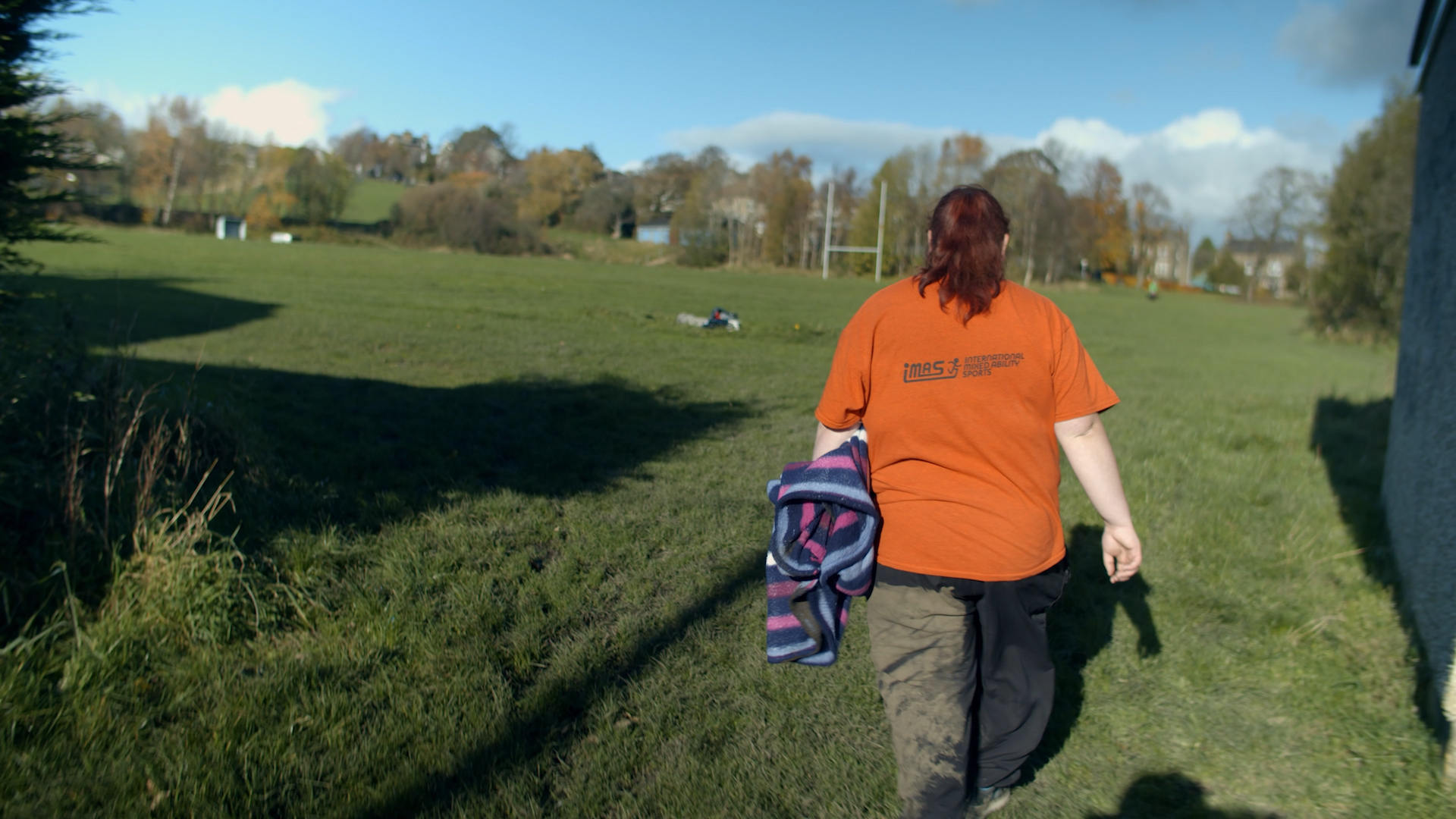
At work: a still from In the Shadow of Fairview

Kitzhaber also acknowledged that, until the mid-1980s, staff “commonly used inhumane devices to restrain or control patients, including leather cuffs and helmets and straitjackets and inappropriately high dosages of sedatives or psychotropic medications” (Gelser, 2010). This was corroborated by survivors, who recalled punishments such as being hit with shoes, scalded with hot water and being caged and medicated into submission.

From its early days, Fairview was dogged by accusations of abuse and neglect. Stories in the local press claimed that the institution was overcrowded and understaffed, sometimes having only one worker to care for 85 residents. Insanitary conditions led to outbreaks of dysentery and meningitis. A flurry of news stories in the 1970s reported accidents, injuries and rapes of residents by both fellow residents and their supposed caregivers.

One academic investigation found that, between 1963 and 1987, inmates at Fairview were more than twice as likely to die from unnatural causes as people in the surrounding Marion County who were not institutionalised. Change came thanks to advocacy groups and lawsuits. The 1970s saw Fairview resident Linda Gheer co-found self-advocacy group People First. They campaigned to help people leave institutions such as Fairview.

Oregon was the first state to have a People First group and, by 1984, it was an international movement. Arguing that they were people first and labels second, those in the group did much to change public opinion.


Mothers from Hell

Around the same time, a group known as Mothers from Hell, formed of parents of children with learning disabilities, lobbied the state for better resources and support. As a result, lawmakers asked the federal government for greater flexibility over how they spent Medicaid. Oregon was the first state to apply for a waiver permitting them to redeploy the funds they received from institutional care to supporting learning-disabled people to live in the community instead, allowing them more choice over how and where they lived.

how and where they lived. In the 1980s, a lobby group that had been fighting for the rights of learning-disabled adults and children since its establishment in the 1950s, now known as the Arc of Oregon, filed a number of lawsuits regarding Fairview, including one against the Department of Justice. When representatives from the Department of Justice went to Fairview to investigate, they were shocked to find “conditions that were very abusive”, and certified it, withdrawing millions of dollars in funding. The courts ordered Fairview to implement a rigorous plan to improve conditions, which included hiring hundreds of staff and getting rid of restraints.

However, despite significant improvements, problems persisted and Fairview finally closed in 2000. Today, many of its former residents are self-advocates, intent on sharing their experiences to ensure the story of Fairview is not repeated, and Oregon is one of the few states with no long-stay institutions for learning-disabled residents.

Thanks to Philip Ferguson who was involved in the video


Videos

In the Shadow of Fairview. 2020. https://tinyurl.com/yzlg6lmc
Breaking Barriers to Inclusion. 2018. A visit to Fairview before it was torn down. https://www.youtube.com/watch?v=5xwaQY–m74.
Voices from Fairview. 2004. Accounts from Fairview residents. https://www.youtube.com/watch?v=GP85pIcBQQ8
In Our Care. 1959. Public education film about Fairview. https://vimeo.com/365508.


Bibliography

Gelser S (2010) Erasing Fairview’s horrors. 10 January. https://tinyurl.com/yc323f2f
Oregon Self Advocacy Coalition. Our history. http://www.askosac.org/history/.
Ferguson PM, Ferguson DL, Brodsky MM (2008) “Away from the Public Gaze”. A History
of the Fairview Training Center and the Institutionalization of People with Developmental Disabilities in Oregon. Western Oregon University. https://tinyurl.com/yacxygdx

How Emmerdale got it so very wrong

A storyline in ITV soap opera Emmerdale has caused outrage in the Down syndrome community and raised some disturbing ethical issues. Máire Lea-Wilson explains why

I was 34 weeks pregnant when I learned that it was likely that my second child would have Down syndrome. had spent an hour lying on an uncomfortable bed, being scanned by two strangers who made it clear that the baby was not developing as expected and they were about to give us “bad news”. We decided against invasive diagnostic testing and instead to have noninvasive prenatal testing to give us a better idea of what lay ahead.

We were given no information about the lived experience of Down syndrome, just a long list of possible medical problems. We were told our “options” repeatedly, in cold medical terms – continue the pregnancy or abort. We were told that abortion is what most couples choose to do. Two weeks later, Aidan was born. He was such a beautiful little baby, with big blue almond-shaped eyes, a tiny button nose and a tuft of dark hair. He was perfect but we were still sad about that extra chromosome, which we were told would make our lives so much more challenging.

As we got to know Aidan and saw more of his wonderful personality, we realised he was not actually very different from any other baby. Aidan and his older brother Tom have become our best teachers. To them, Aidan is just Aidan, with no labels. Aidan is not different in any remarkable way – he is just different in the same way that every person is a unique individual. They have not learned to discriminate.

The fear and uncertainty I felt in those early days lies in such stark contrast from our lived reality. I have often wondered how I was so certain of the difficult and challenging future I imagined, when I had never actually known anyone with Down syndrome. The reality is that we lead a perfectly normal life, full of the usual chaos that comes with having two young children. Where had this unconscious bias come from? The source of the unconscious bias, which is pervasive in society, became abundantly clear during the recent storyline in Emmerdale, where Laurel and Jai choose to terminate their pregnancy following a diagnosis of Down syndrome.

The producers claim that the scripting had been done in a fair and balanced way, drawing on research done with medical professionals, the charity Antenatal Results and Choices and those with lived experience. What they left out was that they had failed to perform research, in any meaningful way, with those with lived experience of Down syndrome. What followed was both extraordinary and devastating to members of the Down syndrome community, as an openly public debate commenced on the very validity of the existence of people with Down syndrome. It became clear that, in the court of public opinion, people with Down syndrome are viewed as burdensome and to be coped with.

People with Down syndrome who spoke out were told they did not understand the storyline. Parents of people with Down syndrome who spoke out were, at best, framed as pro-lifers and, at worst, described as selfish for knowingly bringing such a life into the world. We were told to watch the episodes before we judged. The scripting of the Emmerdale storyline was accurate in some ways, because it did depict some of the turbulent and intense emotions that a couple may feel when a couple receive a prenatal diagnosis. I know this because my husband and I went through the very same thing.

However, that is where the accuracies ended. The storyline drew out many inaccurate old tropes and stereotypes about the syndrome, without any context, that will serve only to perpetuate fear and stigma around it. While the producers of Emmerdale may have had honourable intentions in covering an “emotive topic”, their failure to engage meaningfully with the Down syndrome community meant they skirted over a complex and nuanced debate in a deeply problematic, irresponsible and dangerous way. Their storyline was heavily biased by presenting the reality for expectant parents while failing to represent the reality of people with Down syndrome who live rich, happy, and fulfilled lives.

This begs the question: how have we found ourselves in a position where an entire community can stand up and say this is wrong, this is hurtful and this is discrimination and find themselves at odds with broader society who view the Emmerdale storyline as completely acceptable and perhaps even “brave”? Maybe the answer lies right at the start of life, in our maternity services. When you are pregnant in the UK, you get offered two routine scans during your pregnancy. These are an exciting opportunity to take a sneak peek at the
tiny human growing inside you, a moment that can bring you to tears. During the first scan, at 12 weeks, you will be asked: “Are we doing the combined screening today?”

Around 80% of women in the UK choose to have screening. Screening gives you your chance of having a child with one of three trisomies – Down syndrome, Edward’s syndrome and Patau’s syndrome. If a woman receives a high chance result, she is offered amniocentesis or chorionic villus sampling (CVS), which are diagnostic tests that tell you definitively. Then you are given a choice: do you want to continue the pregnancy or terminate? Our best estimates show us that 90% of pregnancies with a prenatal diagnosis of Down syndrome end in termination. If this diagnosis is made, you can terminate that pregnancy right up to birth whereas the time limit for a typical child is 24 weeks.

These statistics are going only in one direction. With the advent of non-invasive prenatal testing, the number of foetuses detected with Down syndrome will increase and so will the termination rate. Figures released by 26 hospital trusts in England under freedom of information laws show that the number of babies being born with Down syndrome has fallen by 30% in NHS hospitals that have introduced prenatal screening. In 2017, Iceland hit the headlines when it was claimed that through a “successful” screening programme, it had managed to “eradicate” Down syndrome. Eradicate. Think about that word. We aren’t talking about curing a disease here. We are talking about the systematic elimination of a type of a person.

From the moment of conception, women are being subtly – and sometimes overtly – conditioned to view Down syndrome as something to fear and to be avoided. It is demonstrated in the language used – “risk”, “abnormality” and “problems”. It is demonstrated in our laws, which differentiate the time limit for abortion based on genetic difference. It is demonstrated through our media, where a storyline that normalises termination of pregnancy following a Down syndrome diagnosis is perceived as completely
acceptable – regardless of the hurt and offence it has caused a minority community with protected characteristics.

Women are not being given the correct information to make an informed decision. There are websites and support groups out there who can give you the balanced view. But when you are experiencing anguish, resentment, and a sense of loss for the baby you thought you were having, it is so very hard to find this all out for yourself.


Screening: who benefits?

This raises the question; who is really benefiting in this scenario? It certainly is not people with Down syndrome. As fewer people with Down syndrome are born, it will surely decrease their opportunities, in terms of both social acceptance and funding and research into improving their medical, educational, and social prospects.

Does it benefit expectant parents? I shudder to think what could have been had I made a different choice. Instead of having my beautiful, funny and loving boy, what would I have been left with? Does it benefit society at large? As we make further progress in the science of genomics, we will be able to “predict” the future of more and more individuals before they are even born. Screening for other genetic conditions is no longer within the realm of science fiction. The science is outpacing the ethics, and we desperately need a public debate on this, for the benefit of everyone.

We proclaim that as a society we believe that everyone deserves a fair and equal chance at life, regardless of their background – but is this true? As a society, are we comfortable with prenatally deciding what type of a life is a life not worth living?

Educating Emmerdale, the Down syndrome community response, is on Facebook at https://tinyurl.com/y8h7f29q

Máire Lea-Wilson is mother to four year old Tom and 20 month old Aidan, who has Down syndrome

The royals’ shameful secrecy

The Crown reveals feelings of stigma about ‘mental deficiency’ within the royal family, says Tracey Harding, and a radio series follows a young couple living an ordinary life

The Crown: the Hereditary Principle
Netflix

The Pursuits of Darleen Fyles
BBC Radio 4/BBC Sounds

As long winter days stretched on, we turned to TV, radio and film to provide relief and distraction from the monotony of lockdown life. Thankfully, two programmes featuring actors with learning disabilities reminded us of the potential and talent that is increasingly being recognised and is waiting in the wings.

The first is an episode of Netflix series The Crown, and the other is the 10th series of award-winning Radio 4 drama The Pursuits of Darleen Fyles. First, The Crown: the fourth season of the fictionalised drama that reimagines some of the key events from the Queen’s reign. The series has garnered accolades for performances and writing. Episode 7, The Hereditary Principle, includes actors with learning disabilities telling a little-known story about the royal family and their history.

The programme sees Princess Margaret attending a therapy session where she admits to depression, and the therapist discusses the Windsor family’s mental health history. She informs Margaret that the princess has two cousins on her mother’s side who were institutionalised, and this sets in motion Margaret’s determination to find out more about the cousins who she had not realised existed.

Katherine and Nerissa Bowes-Lyon were Margaret’s first cousins on her mother’s side and the two sisters, both with learning disabilities, were sent in secret to the Royal Earlswood Institution for Mental Defectives in 1941. Recorded in Burke’s Peerage as having died, the sisters spent all their lives ignored and rejected in the institution.

Although they had been born into the wealth of royalty, Nerissa and Katherine, like many people with learning disabilities during this era, were abandoned. The writer and creator of the series, Peter Morgan, portrays the reason for the secrecy and covering up of their existence as the Queen Mother’s desire to protect the monarchy from her own personal shame.

King George VI and Queen Elizabeth with Poland’s prime minister on a visit in 1941 – the year her nieces were locked away from public view

In the drama, the Queen Mother argues that once she became queen, her family had a bloodline to the monarchy, and the integrity of future heirs to the throne would be jeopardised if people knew about the mental disorder in her family. The shame and stigma attached to this meant that her nieces were never discussed or acknowledged within the royal family.

Key to the success of this episode were the actors with learning disabilities, who gave poignant and moving performances that enhanced the storyline and highlighted the sense of isolation and abandonment that these women and their fellow residents endured. The sisters were played beautifully by Pauline Hendrikson and Trudy Emery, who took the lead roles as Nerissa and Katherine Bowes-Lyon. In a supporting role, Tina Byrne, who had lived at Royal Earlswood, played one of their friends.

Other residents were played by actors from the Impact Theatre Company, based in Ealing. The company offers performing and creative arts activities to adults with learning disabilities, and several of their performers were in this episode – a wonderful opportunity for all of those who were involved.

The episode reaffirmed the importance of continued visibility of people with learning disabilities on screen, which will, hopefully, continue when film and TV production returns.


Funny, warming, everyday life

Another highlight, this time on radio, was the return of The Pursuits of Darleen Fyles on Radio 4. Written by Esther Wilson, this 15-minute drama started life on Woman’s Hour in 2009, and was so successful it was given its own billing.

Actor Terry Smith of the Impact Theatre Company in the green room for the filming of the Crown

The series has followed the tribulations of a couple with learning disabilities who cope with falling in love, paying the bills and all the other normalities of everyday life that we take for granted. This current series, the 10th, follows the couple as their daughter Frankie starts school. The first episode reflects the current climate as Darleen experiences nervousness over leaving the home and using a face mask without her glasses steaming up.

The performances of the two lead characters, played by Donna Lavin and Edmund Davies, who themselves have physical and learning disabilities, are the main reasons why this drama has been so successful.

The programme is funny, heart-warming and life affirming – just what we need in these times.


Power and prejudice: the deep roots of failure in medical ethics

In the last issue, Simon Jarrett examined how Covid exposed the medical profession’s antipathy towards learning disability. Now, he asks, where did these attitudes come from – and why?

The medical profession’s endemic ethical problems in relation to learning disability have continued to be starkly demonstrated as the coronavirus pandemic continues. As I argued in my last article, these issues are not new – they have been around the profession for more than two centuries and across the NHS since its inception in 1948.

The pandemic, however, has shone a light on these problems and brought them more to public attention than before. As feared, the use of do not resuscitate (DNR) notices against people with learning disabilities has persisted in hospitals throughout the pandemic, as will be confirmed in a forthcoming report from the Care Quality Commission. These orders, formally known as do not attempt cardiopulmonary resuscitation notices, are intended for people who are too frail to benefit from this form of resuscitation. However, they are often imposed on people with learning disabilities simply on the grounds that they have a learning disability, leading to unnecessary and avoidable deaths.

Utilitarian thinker John Stuart Mill was in favour of segregating “fools” from the rest of society

The issue was raised well before coronavirus, and the Department of Health and Social Care has explicitly condemned the blanket imposition of DNR notices against groups of people. Nevertheless, NHS clinicians have continued with the practice throughout the pandemic. Unless a lasting power of attorney for health or an advance directive (also called an advance decision) has been made stating otherwise, any decision to withhold life-sustaining treatment is effectively made on the spot by the lead clinician in charge of a person’s care, once they are deemed to lack mental capacity. The problem is therefore not only an institutional one within the NHS in allowing such practice to occur, but also an individual problem emanating from the clinicians who choose to impose such orders.

A further ethical problem has arisen in the battle to prioritise all people with learning disabilities in the UK Covid vaccination programme. At the time of writing, this programme has been enormously successful and an outstanding example of first-rate public health practice applied to an entire population. It has sought to prioritise those thought to be the most at risk because of age and underlying health conditions. However, people with learning disabilities, despite dying at six times the rate of the rest of the population from Covid (and at 30 times the rate in younger age groups), were not included en masse in the initial prioritisation list. After lobbying from the Down’s Syndrome Association, people with Down syndrome were included from the outset.

After further campaigning, people categorised as having severe or profound disabilities were added to the list. The medical establishment finally caved in on 25 February – three months after the roll-out began – and added the rest of the learning-disabled population to the priority list (around 150,000 people). This happened only after intensive, high-profile lobbying from well-known public figures who have learning-disabled relatives, such as BBC radio DJ Jo Whiley, and campaigning organisations.

It is important to note that, while government ministers are ultimately responsible for the decisions made on their watch, the initial decision to exclude many people with learning disabilities from the top prioritisation categories was made by senior doctors on the Joint Committee on Vaccination and Immunisation (JCVI).

It was not the case in England that Matt Hancock, the health minister, was given a prioritisation list and asked for people with learning disabilities to be removed. The JCVI doctors did not include them on the list in the first place despite the evidence of their own statistics. There is a disturbing parallel between the DNR notices and the initial non-prioritisation in the vaccine programme – in both cases, potential life-saving interventions were withheld from people with learning disabilities.

The irony is that, in the case of DNR notices, treatment is withheld because the learning disability is seen as a vulnerability that makes the person unfit for treatment while, in the case of vaccination, underlying vulnerability is denied.


The shadow of the past

In my previous article, I described how the past casts a long shadow over medical practice in relation to people with learning disabilities today. It was from the time that medical practitioners began to take an interest in learning disability, or idiocy as it was then called in the 19th century, that the exclusion of this previously assimilated group of people began to take place. Medical men – and they were all men – led the asylum system that condemned people to a life behind institutional walls, separated from family and neighbourhoods. There then followed a long line of medically inspired moves to eradicate people with learning disabilities from society altogether. These included the eugenics movement, the Mental Deficiency Act of 1913, campaigns for euthanasia (successful in Nazi Germany), sterilisation and a litany of neglect, abuse and dehumanisation in medically run institutions, which persisted until the end of the 20th century.

Our current medical abuses and exclusions – detention and mistreatment in assessment and treatment units, DNR notices, preventable hospital deaths – are all rooted in this dubious medical heritage. Why does this happen? First, medical practitioners are singularly ill suited to be the arbiters and controllers of the lives of people with learning disabilities. Learning disability is not an illness or a disease, and it cannot be cured or treated. People with learning disabilities are who they are, and no amount of medical intervention will make them into someone different.

This is why, before the 19th century, medical practitioners steered well clear of idiocy. They were paid for curing people and they were not interested in spending time on an incurable, unchanging condition. When medical men were looking for new areas of control and authority in the 19th century, they had to invent a story that “idiots” were a danger to either themselves or others, and that somehow only the medical profession could recognise, control and “treat” these dangers within high-walled asylums. Their choice of language to describe their new patients was revealing – they called them “mental defectives”. If something is defective it is broken. It lacks something. “Defectives” could not be mended; instead, they had to be eased first out of society and then out of existence. Confinement, sterilisation and- eventual institutional death would start to rid society of this group.

The medical profession’s role never was to make people with learning disabilities “better”. It was to remove them from society somehow and to prevent their future existence. The aim was, in short, their extinction. This medical outlook tied in with wider currents of thought. Utilitarian thought dominated 19th century public policy-making and ethics.

It was very much a practical philosophy, applied to everyday life and, by its nature, always loaded heavily against people with learning disabilities, as we shall see.


A seductive, bad idea

We know utilitarianism best by the maxim “the greatest happiness of the greatest number”. Actions are judged by the amount of satisfaction, happiness, improvement or benefits they bring to the greatest number of people possible. Faced with two difficult choices, we choose the one that brings the most benefit or causes the least harm. Like many bad ideas, it is at first sight very seductive and seems to make a lot of sense.

This way: all people with learning disabilities became a priority for Covid vaccination only after campaigning by public figures such as BBC radio DJ Jo Whiley

Modern utilitarian thinkers have used what has become known as the “trolley problem” to think though ethical problems. Here, you are standing by a railway line and see a train hurtling towards five people who are tied to the track. You are in a position to change the
points, and can divert the train off on to a spur. However, there is one person tied to the track on the spur, who will die if you switch the points. What do you do? In its basic form for a utilitarian, this dilemma is a no-brainer. You switch the points, even though you are effectively making a decision to kill somebody, because in doing so you are saving five lives while sacrificing one. The numbers tell you this is the right action to take, and you must put aside any squeamishness or moral hesitancy that might cloud your rational judgment.

The trolley problem can be put through all sorts of permutations to tease out the solutions to complex ethical dilemmas. What if the five people were all elderly, with terminal health conditions, while the one person tied to the other track was young and healthy with their whole life ahead of them? Would you switch the trolley then? Or would you not intervene because the one other life was of more utility than or at least equal to the other five put together?

You do not have to jump very far from here to see how utilitarianism is used in current medical ethical thinking. Who gets the ventilator in a Covid ward – the young person more likely to respond or the old person less likely to benefit? Then, what if it is a young person with no health problems against someone of the same age with an underlying health problem? To go back to the trolley problem, what if it is a person without a learning disability tied to the track ahead of you, and a person with a learning disability tied to the spur – do you switch the points? What might the average doctor respond to that?

Utilitarian thinking continues to exert a great influence on medical ethics. The British Medical Association stated in its guidance on ethical issues published shortly after the pandemic began that the aim of the medical profession throughout the crisis would be “delivering the greatest medical benefit to the greatest number of people”. This is a deeply utilitarian statement.

Of course, in medicine there are many terrible dilemmas, and no one would deny that there has to be some sort of framework to assist medical practitioners in such difficult decisions. Most people would probably agree that if you must make a choice between saving an elderly person with a terminal illness and a younger person who is not terminally ill, then you would choose to save the younger person.

Although utilitarianism can appear cold in its rationality, it can be argued that coldness and logic in decision making can be better than raw emotion – do we want a situation where we save people we like and sacrifice people we don’t? disabilities – or “defectives” – as less than full humans who are incapable of true happiness.

In the utilitarian world, where only happiness (or satisfaction or improvement) of as many people as possible matters, this effectively makes you a non-person. John Stuart Mill, the leading utilitarian of the 19th century, famously argued that “it is better to be Socrates dissatisfied than a fool satisfied”. In other words, “fools” did not experience genuine satisfaction or happiness like intelligent people – just mindless pleasure in the stimulation of their senses.

Mill was an advocate of the asylum for the “idiots” of his time. People who could not be properly be made happy or improved through education did not really belong in society and were a drag on the happiness of the majority.

Building distance: medical interest in Learning disability led to exclusion from mainstream society


Persistent prejudice

Such thinking persists today, in its most extreme form in the modern utilitarian philosopher Peter Singer. Singer is a leading advocate of animal rights who argues that we should not accord greater privileges to the human species than we accord to non-human species. He calls the practice of human dominance over other species – killing animals for food and clothing, keeping them in farms and zoos – “speciesism”.

To support this idea, he argues that what he calls “retarded infants” have lower abilities and are less capable of happiness than many non-human animals. He calls such infants “human vegetables” and argues that:

“Adult chimpanzees, dogs, pigs, and members of many other species far surpass the brain damaged infant in their ability to relate to others, act independently, be self-aware, and any other capacity that could reasonably be said to give value to life. With the most intensive care possible, some severely retarded infants can never achieve the intelligence level of a dog.” (Animal Liberation, 1975: 18)

Peter Singer, who supports euthanasia of severely disabled newborns, has taught ethics to healthcare professionals

Singer calls for the active euthanasia of such infants, and has written extensively throughout his academic career in support of euthanasia against those he calls the “retarded”. Although controversial in the disability world, he remains highly regarded in the world of philosophy and is still considered a guru of the animal liberation movement.

More disturbingly, in a recent article in Prospect magazine, he boasted: “I taught intensive bio-ethics courses for healthcare professionals, including intensive care unit directors and many senior people.” It is difficult to contemplate what might have been taught about people with learning disabilities in such courses. Singer is just one more extremist in a line of intellectuals and distinguished medical practitioners who have waged war over the years against people with learning disabilities (see “The persistent stupidity of intellectuals”, pages 12-13). Nevertheless, he is the very visible crest of a profound wave of thought that dehumanises people with learning disabilities, values them less than other types of human and sees their lives as a tragedy and a burden, best relieved by death.

It is this thinking that sadly, in more subtle forms, stalks the wards of our hospitals and the minds of many who work in medicine. This is not just idle thinking – it results in needless DNR notices, Down syndrome foetuses being aborted at term, people missing out on vaccinations and people being fed through hatches in solitary confinement in assessment and treatment units. We know that, despite all this, there are many good people who work in the healthcare professions – doctors, nurses, psychiatrists and many more – who do not sign up to these assumptions, and who place value on the lives of people with learning disabilities.

It is time for them to come together, to join forces inside and outside their professions, to challenge this dehumanisation and oust it from medicine once and for all. The greatest happiness must belong to us all.

Impossible to improve: institutions must go

Assessment and treatment units have long been the antithesis of a place of safety, with a high incidence of injury, restraint, abuse and neglect of basic healthcare. Their very model of care  is actively harmful and creates the conditions for human rights abuses, says Jo Clare

The findings of an investigation into assessment and treatment units (ATUs) were shocking, damning – and completely unsurprising.

The research – Less Than the Sum of its Parts – was carried out by support organisation Three Cs for health commissioning groups in London. The findings mirrored exactly the evidence – which is already out there and has been out there for more than 20 years – of perilous and fatal health inequalities. These were highlighted in Mencap’s Treat Me Right in 2004 and Death by Indifference three years later, the review by Mazars into deaths in hospital of people with mental health problems and learning disabilities and the Learning Disabilities Mortality Review (LeDer) reports.

Harrowing individual stories have been relived in Sara Ryan’s Justice for Laughing Boy published in 2015, the Rightfullives exhibition held in 2018 and Alexis Quinn’s Unbroken, published last year. Disturbing stories have been shared daily, with deep anguish and fury, on social media for years. Our study, like the stories out there, was also compelling about how different the lives of adults and children with learning disabilities and/or autism can be if only we do the right things at the right time in the right, personalised way for each individual child or adult and their families.


Controlled, risky culture

The now infamous “closed culture” – a characteristic of abusive settings that is now being targeted by Care Quality Commission inspectors after it learned its lessons from Whorlton Hall – made itself felt from the start. None of the 59 ATUs or inpatient services approached responded to our request to enable patients to take part in the study. This was a stark reminder that providers control patient access and patient evidence.

There was evidence that the system is retaliatory and bullying made it imperative to conceal identities. Speaking out against mistreatment put people at risk of being sectioned again; if families complained about the treatment of a loved one, the psychiatrist might threaten to send the person to a unit hundreds of miles away. And, if you write a research report that names the worst and most litigious offenders, you risk that it will not see the light of day.


Whole system fails

In a nutshell, we concluded that the clinical and moral incoherence of the ATU model actively creates the conditions for human rights abuses.

Paving the way to the ATU door is a whole-system deficit in timely and appropriate support for children and adults with learning disabilities and/or autism – especially at points of life transition and crisis. Underpinning this failure is an outmoded Mental Health Act, an incompetent medical model of care and a hierarchy of expertise in which those with learning disabilities and/or autism – and their families – are firmly at the bottom.

Some former inpatients were already enjoying good, ordinary lives with personalised support and community-based interventions and treatment, giving the lie to the pernicious notion that there was “nowhere else” for them to go. The most populous theme arising from the interviews, and thence the biggest chapter, was “system culture and human rights”. There was significant evidence of breach or risk of breach of six articles under the Human Rights Act.

This included the right to life (article 1) with near misses on overdose, infection and dangerous neglect of known underlying health conditions, including allergy. The precept of no torture, inhumane or degrading treatment (article 2) was challenged with injurious use of physical restraint, resulting in injuries including a broken arm and broken clavicle, solitary confinement in small cells for long periods, disrespect for people’s clothes and possessions, no support for personal care, no privacy when using the toilet, caged transport for a child and concerns about starvation.

A harmful model of care is an inarguable paradox, makes no clinical sense and is unethical. Many ATUs are the antithesis of a place of safety, with an untenably high incidence of distress, injury caused by a combination of detention, seclusion, physical and chemical restraint, abuse and neglect of basic healthcare, the last leading to deaths from manageable conditions such as epilepsy and constipation. Short periods of assessment turn into an average of 5.4 years detention, according to Mencap; for our research cohort, this was an average of two years and nine months.

It is hard to imagine how such a calamitous intervention passes the NHS threshold for funding evidence-based treatment.


Treatment of no therapeutic value

While ATUs are intended to assess and treat people, their primary methods – detention, segregation, seclusion and restraint – have no therapeutic value whatsoever. As well as being liable to cause injury and distress, they deprive patients of the psychosocial aspects of existence (sleeping well, eating well, meaningful activity, exercising and spending time with friends and family) that are known to keep children and adults healthy and mentally well.

Since psychosocial deprivation is known to be among the primary triggers for so-called “challenging behaviour”, it is not surprising that ATUs can cause or intensify the mental health conditions and behaviour they are intended to assess and treat. If communication and understanding patient needs are at the heart of the inpatient experience, then understanding an individual’s experience of autism and their highly persona style of communication is critical.

If this is largely absent, as it was in our study, it explains why patients receive inferior physical healthcare and are at risk of dying from treatable conditions. It also calls into question how mental illness can ever be accurately diagnosed or excluded in this group of patients. Detention with open-ended assessment and no effective treatment was experienced as punishment akin to imprisonment, with seclusion and segregation the equivalent of solitary confinement. This was compounded in some institutions with small prison-like cells, dark airless wards and a complete absence of personalisation and home comforts.

Placing people hundreds of miles away from their friends and families, regularly cancelling family visits and section 17 leave all compromise article 8 – the right to a private and family life.

If people with learning disabilities and/or autism are subjected to detention in such places when they have no treatable mental health conditions, when assessment is obscured by behaviours of concern, when treatment has no therapeutic value, this is surely a state-sponsored subversion of not only article 5 (the right to liberty) but also article 6 (the right to a fair hearing) and article 7 (no punishment without law).

Matthew Garnett, “Liverpool’s best fan ever,” as he says, was restrained and forcibly medicated – “treatment” he does not need back in the community


Financial incentives

The second big paradox is economic. The study found cost shunting and funding battles between health and social care were frequently implicated in delays that caused or exacerbated crises, defeated successful discharge and delayed resettlement.

Yet money and repeat funding appear to be no object when someone is in the system. If an ATU charges £13,500 per week, as was the case for one of our witnesses, it is set to bring in £3.8 million per person over the average 5.4 years’ detention. This is money that could so obviously be spent on an ordinary life and more effective treatment in the community, instantly ending the “nowhere else to go” argument.

On this basis, this is potentially a guaranteed £1.4 billion per annum industry for detaining 2,000 people still stranded in inpatient settings at the end of the failed Transforming Care programme. While my back-of-an-envelope financial assumptions may be challenged, the business model is clear: serial sectioning is effectively repeat business and there is a perverse, pecuniary incentive to detain people – and to keep detaining them.

Next time there is a scandal in the private or not-for-profit sector, instead of focusing just on the reprehensible actions of criminal staff, look towards the top of the food chain, at the business model and structure that holds this culture of abuse in place and at a government that appears happy to aid and abet it by its inaction. Better surveillance? Better training? Safer methods of restraint? Such continuous improvement fixes are a shoal of dazzling red herrings, distracting us from the wreck of this model, obscuring the sharks lurking in the murky, mendacious depths below.

Instead, let us shine a light on vested interests like dividends to shareholders, remuneration of executives and non-executives, fees of consultant psychiatrists, lawyers, lobbyists and the whole panoply of defensive and offensive tactics that some providers use to defend their share of this lucrative market.

If ATUs trash the rights and trade in the lives and liberty of children and adults with learning disabilities and/or autism, they must surely be stopped, not improved.

Less than the Sum of its Parts is available at https://tinyurl.com/y42t875y;
the easy read version is at https://tinyurl.com/yawbjcyv

We should be proud of who we are

Baroness Jane Campbell is one of the UK’s foremost disability rights campaigners. She talks to Seán Kelly about her struggles, the exclusion of people with learning disabilities from the early disability rights movement and matters that need attention today

Baroness Jane Campbell

Disabled people have had a really rough deal this last year and I just want to say how proud I am of our collective resilience and what disabled people have done for other disabled people to keep us safe.

“That is a testament to our strength and our reasons not only for being here but also for being at the centre of policy in this country. And for all those who lost their lives, not nearly enough was done. It wasn’t because we didn’t try – it was because the state failed us.”

While Baroness Jane Campbell of Surbiton is now a crossbench peer in the House of Lords, it is clear that the passion that fuelled her early years as a campaigner still burns. She believes that the government sees disabled people as a blanket group – “the vulnerables” – and wonders if it is not fast becoming “the expendables”. Campbell cites the problems disabled people have faced such as a lack of personal protective equipment, difficulties in accessing sufficient food and being a low priority for vaccination.

She also refers to the social care easement powers in 2020, which lessened the legal duties of local authorities: “I just thought they were a disgrace. They run completely counter to the Equality Act.” A little before we spoke, Campbell had called in the House of Lords for minister Matt Hancock to raise the vaccine priority for people with learning disabilities; they have been dying at about six times the rate of the general population.

She says: “I think Covid has really shone a light on how we treat our disabled citizens in this country. And who has had it the worst? Of course, it’s always people with mental health challenges and learning disabilities.”


Roadblock radicals

I am glad to see the fires of outrage still burning within her. I recall that she and other disabled protesters made history by blocking Westminster Bridge. Campbell memorably describes the police officers, apparently faced for the first time with protesters in wheelchairs, as seeming to be unsure whether to arrest them or pat them on the head and give them ice-creams. So I was keen to hear more about her remarkable journey from lawbreaker to lawmaker. As a young child, Campbell was found to have spinal muscular atrophy. Her parents were told she would not live past the age of two years.

“When I didn’t die by two, they said I’d be dead by 10. When I didn’t die by 10, they said I’d be dead by the time I was 20 and my end date continued to be rescheduled until they gave in,” she says.

Baroness Jane Campbell: “I had to go and get angry. I had to understand the true nature of social oppression as it affects disabled people”

Her parents rejected the medical predictions and continued to expect the same behaviour and achievements from Campbell as they did from her older sister. School, however, was not the great springboard for those achievements. Like so many disabled children in the 1960s,Campbell attended a segregated school where she tells me she was “bored out of my mind”. The teaching was basic. “I know a lot about dinosaurs,” she says wryly, “and pottery and weaving.”

She resented having to learn at the same pace as children who could not read and write: “I wasn’t very nice to them. Instead of understanding that it was the system, I blamed the other kids, many of whom had learning disabilities.” In her final year, a new headmistress gave her one-to-one time and, crucially, helped her secure a place at Hereward College in Coventry.

Hereward was committed to giving disabled students the best chance to achieve in life. Many of Campbell’s peers there went on to become the first disabled people to enter the professions, becoming, for example lawyers, scientists and teachers – “basically the first disabled people to get proper jobs”, she says. Campbell made enduring friendships from among the students and one, Graham, became her first husband: “Life went from black and white to colour.”

Hereward also provided on-campus personal assistants. “That’s when I understood the liberation of having somebody under your direction rather than somebody caring for you,” she recalls. Campbell left the college with seven O levels and three A levels. “Not bad,” she accepts “from merely being able to read and write when I arrived.” She went on to study at Hatfield Polytechnic, not because of its special facilities for disabled students
– almost nowhere had those at the time
– but because of its can-do attitude.

After Hatfield, Campbell went to the University of Sussex to complete a master’s degree in feminist politics. She was inspired by Sylvia Pankhurst and joined other feminists calling for equality for women.

“I was actually fighting for equal rights for women and equal pay before I ever became involved in fighting for disabled people’s rights,” she says.

Objections to a personal assistant in the House of Lords included a 1725 rule and her PA’s chair not matching the benches


Employer ignorance

Leaving Sussex with a first in her master’s degree, she assumed employment would not be a problem. She applied for about 90 jobs. All the replies said “sorry we don’t employ disabled people” or “sorry we couldn’t cater for your needs”. “Not that they knew my needs of course,” she says. “I began to realise that there was something radically wrong.” Then, she secured a job with a well-known, well-funded national disability charity. Almost unbelievably, they sacked her three months later because her disability prevented her from operating a
manual typewriter.

“I started my life absolutely hating disabled people and hating me. And now I absolutely love disabled people. And I totally love me”

Then, in 1981, a woman who was setting up the British Council of Disabled People (BCODP) invited Campbell to its second meeting. She did not really want to join a disability group, saying: “I have spent half my life trying to get away from segregation, not to rejoin it.” The woman explained that the council had been set up to challenge that very exclusion, and also suggested that Campbell should examine her prejudices about disabled people and herself. “She said if you deny disabled people, then you are denying yourself. You should be proud of who you are.”

Reluctantly, Campbell went to the meeting. The main event was Mike Oliver speaking about the social model of disability. It was, says Campbell, an extraordinary lecture.

“I could feel the little hairs on the back of my neck going up and I tingled all over. Suddenly, everything fell into place. It was a semi-religious experience because I left that room a different person than I went in. From that day onwards, I became a freedom fighter for disabled people.”

Campbell became the chair of the BCODP as the disability movement was achieving a serious public profile.


Apology for exclusion

Years later in 2016, I was at the launch of Learning Disability England and heard Campbell give a speech in which she apologised to people with learning disabilities that they had been excluded from the early disability movement.

She says now: “I think it was very important to apologise. It took me a while to recognise that we were being exclusive. We were far too academic. We weren’t accessible enough. We all spoke middle-class, well-educated language. “And we weren’t very kind to each other. We had spent years fighting each other in private as we worked out our personal and collective identities. I think when we came up with the slogan ‘Nothing about us without us’, as an organisation we had to abide by that or we would become what we had been oppressed by.”

Campbell’s further career is on the public record. She co-founded and chaired the National Council for Independent Living. She was the founding chair of the Social Care Institute for Excellence and, in 2001, she was made a dame commander of the British Empire. She was a commissioner of the Disability Rights Commission and, in 2007, was appointed a crossbench peer in the House of Lords. She was surprised at the peerage because of her history of vociferous campaigning, not to mention the occasional lawbreaking.

Of those earlier days, she says: “I had to go and get angry somewhere. I had to find out who I was. I had to understand the true nature of social oppression as it affects disabled people.” A friend told her that her experience was exactly the reason the House of Lords needed her. The House of Lords may seem an unlikely place for a campaigner but it is clear Campbell genuinely has an impact.

“I am there to revise and influence legislation,” she says, “I have always abided by the rules of the house because they are there for a reason. I do very little campaigning – I just use persuasion and argument and hope that other people are influenced by it.”

Campbell’s most recent work is seeking to amend the Domestic Abuse Bill to include disabled people who are abused by their carers.


Archaic rules

The House of Lords has changed a little just because she is there. When she asked if a personal assistant (PA) could sit with her in the chamber, she was told: “Oh no, that’s a 1725 rule that must never be broken. No commoner goes on the floor of the House of Lords except for doorkeepers and staff.” Campbell says that it took 18 months before it was accepted that the whole place was not going to crumble because she had brought her PA into the chamber.

However, some members still complained that the PA had brought in a little green chair to sit on. The chair was re-covered in red (to match the benches) and everyone was happy. She laughs: “If that was all that was going to bother them, I thought, well, OK, we can give them a reasonable accommodation.” In closing, Campbell reaffirms the crucial change of consciousness that began for her during that lecture by Mike Oliver.

“I started my life absolutely hating disabled people, and hating me,” she says. “And now I absolutely love disabled people. And I totally love me! It’s important to be proud of who we are.”

When epidemics bring too many deaths

People with learning disabilities have been dying at high rates in this pandemic, as they did during the Spanish flu epidemic, as Jan Walmsley, Stuart Todd, Jane Bernal and David O’Driscoll found

A worldwide pandemic strikes the UK. People with learning disabilities die in large numbers. This comes on top of death rates that were already high.

What can the flu pandemic of 1918 teach us about today’s pandemic and the histories of people with learning disabilities? Looking at death registers from Leavesden Hospital for the years 1918-20 raises some interesting questions. Death rates for people with learning disabilities during the Covid pandemic of 2020-21 were, according to Public Health England (PHE, 2000), six times as high as those in the general population.

Furthermore, PHE found that deaths were more widely spread across age groups, with disproportionately higher mortality rates in younger adults. People with learning disabilities aged 18-34 were 30 times more likely to die with the virus than their counterparts in the general population. To some extent, this reflects the greater prevalence of health problems such as diabetes, obesity and respiratory vulnerability in people with learning disabilities. However, the well-documented failure to protect their health was also undoubtedly a factor.

Deaths 1918-20 in Leavesden Hospital

Our concerns about this prompted us to look back at a previous pandemic. The Spanish flu epidemic of 1918-19 killed between 50 and 100 million people worldwide, around 2-5% of the global population (Spinney, 2018: 1296). The records we could access allowed us to look at the impact of this epidemic on the population of a large asylum. Leavesden Hospital in Hertfordshire was one of the largest institutions, serving a diverse range of pauper patients from the northern half of London, including people with learning disabilities and those with mental health issues.

It opened to patients in 1870. It was initially planned to accommodate 1500 people in 11 blocks, each designed to hold 160 beds. The ground floor of each block was a day room and the upper floor sleeping quarters, with four toilets and two washrooms. The asylum also had its own cemetery.

Overcrowding was an issue from the start. As early as 1871, barely a year after he hospital opened, there were 1,638 patients and, in 1914, more than 2,000. Because of staff shortages during the First World War and the need to billet troops at the asylum, some patients were discharged. What Monica Diplock, who wrote the 1990 history of the hospital that is the source of this information, did not mention was that the population of the hospital declined for other reasons during the war, with extraordinarily high death rates from causes including the Spanish flu and other infectious diseases.

The graph below shows the number of deaths for three years: 1918, 1919 and 1920. Three features are striking. The first is that there was some seasonal variation in the number of deaths, with fewer deaths being reported for summer months generally.

The second and most obvious is the spike in deaths in November 1918. There were 131 deaths – the greatest number of deaths reported for any month in the three years. There were more than 30 deaths a week, almost eight times as many deaths  than reported in November of 1919 or 1920. There were 96 burials that month. On 11 November 1918, Armistice Day, there were 10 burials – more than the total for the whole of November the following year.

The impact of the 1918 influenza epidemic is undeniable. The asylum that month was marked by death and dying. The third feature of this graph is that the number of deaths in 1918 was already elevated. In the 10 months before November 1918, there had been 345 deaths. That was almost as many deaths as in the 24 months after December 1918. Although the impact of the influenza epidemic was considerable, it does not in itself explain why deaths in 1918 were already so high. If the death rate to October 1918 had continued without the pandemic, we might have expected there to be about 434 deaths in that year, a number still several times higher than seen in 1919 and 1920.

It was not until the spring of 1919, some four months after the last recorded influenza death, that the number of deaths seems to fall appreciably below any month of 1918. However we look at it, the influenza epidemic killed many residents yet it explains only partly why the number of deaths in 1918 was so high.


Casualties of war

The records we have access to give a complete account of death and dying in Leavesden only from August 1917. Gwendolen M Ayers’ book England’s First State Hospital and the Metropolitan Asylums Board 1867-1930, published in 1971, shows that for every year of World War One, the number and proportion of deaths in asylums run by the board was increasing.

In 1914, 11.2% of people living in asylums died in them. In 1918, this figures had risen to 27.0% – more than one in four residents. The average proportion of deaths in the four years before 1914 was 9.4% of the asylum population and, in the four years after 1918, it was 13.1%. In most years, tuberculosis (TB) was the leading cause of death, accounting for more than 40% of deaths in 1919 and 1920 but only 30% of deaths in 1918.

Memorial dated 1917; a sign warns of the dangers of flu; a history of the asylum, by Monica Diplock, head of male occupational therapy 1962-84,
shows the extent of the site

The 1918 influenza epidemic took root within a setting where the health status of many was already compromised. In those years, there may have been food shortages. There were certainly fewer staff since some had been conscripted into the armed services. Some wards were closed and this probably led to more than the usual overcrowding in others. These were ideal conditions not just for the influenza virus to spread but also for the ravages of TB to take most effect. The daily burial toll on Armistice Day 1918 is perhaps a symbolic reminder that the higher profile of death in the asylum in 1918 was as related to the effects of the First World War as it was to a virus – these were victims of war.

Finally, the decline seen in deaths from 1918 suggests that the end of the war and the epidemic brought about a return to lower levels of deaths in the asylum. However, it was a return to a death rate that was still high. Few may have asked at that time whether around one in 10 people in the asylum dying every year was acceptable.

As we say above, the risk of death for people with learning disabilities is elevated in the UK during the current pandemic. It was high even before this. We ask ourselves: do we find it acceptable for mortality to return to pre-Covid levels in the 21st century?


References

Ayers G (1971) England’s First State Hospitals and the Metropolitan Asylums Board 1867-1930. University of California Press Diplock M (1990) The History of Leavesden
Hospital. http://www.leavesdenhospital.org/document-archives/

Public Health England (2020) Deaths of People Identified as Having Learning Disabilities with COVID 19 in the Spring of 2020. London: PHE.
https://tinyurl.com/y2lj93p9

Spinney L (2018) Pale Rider: the Spanish Flu of 2018 and how it Changed the World. Penguin Random House

Weaver M (2020) Covid deaths for people with learning disability in England six times average. The Guardian. 12 November. https://tinyurl.com/y39ecuxg

The persistent stupidity of clever people

Why have the apparently intelligent and well educated for so long held the unintelligent or the disabled in such contempt? Why does eugenics refuse to die? asks Stephen Unwin

The last year has been quite a year for eugenics.

First there was the news that Andrew Sabinsky, one of Dominic Cummings’ new intake of “weirdos and misfits” to act as government advisers, had claimed that eugenics was about “selecting for good things” and that intelligence is largely inherited”. Then Richard Dawkins, evolutionary biologist and author, popped up on Twitter claiming that since eugenics “works for cows, horses, pigs, dogs and roses”, there was no reason to think it would not “work for humans”.

He conceded there might be grounds for rejecting the practice before claiming, absurdly, that “facts ignore ideology”. It was the distinguished English scientist Francis Galton who, fascinated by his half cousin Charles Darwin’s On the Origin of Species, asked: “Could not the race of men be similarly improved? Could not the undesirables be got rid of and the desirables multiplied?”

The relation of eugenics to other sciences: image based on a 1932 conference paper

In 1883, he coined the term “eugenics” and set out to improve the human race by “better breeding”. His supporters soon linked “undesirables” to a range of social problems and called for government action to improve “biological quality”. In 1907, Galton co-founded the Eugenics Society and, in 1908, Sir James Crichton Brown, in evidence to the Royal Commission on the Care and Control of the Feebleminded, recommended the compulsory sterilisation of the “feeble-minded”, describing them as “social rubbish” who should be “swept up and garnered and utilised as far as possible”.

Darwin’s son Leonard presided over the first eugenics conference in 1912 and lobbied the government to establish squads of scientists, with the power of arrest, who would travel around the country identifying the “unfit” and segregate those so classified in special colonies or have them sterilised. Political supporters included socialist firebrand Will Crooks, who described “mentally defective children” as “absolutely useless”, comparing them to “human vermin” who do “absolutely nothing, except polluting and corrupting everything they touch”.

Meanwhile, Julian Huxley asked plaintively: “What are we going to do? Every defective is an extra body for the nation to feed and clothe but produces little or nothing in return.” A bill for the compulsory sterilisation of certain categories of “mental patient” was proposed, with Labour MP Archibald Church wanting to stop the reproduction of those “who are in every way a burden to their parents, a misery to themselves and in my opinion a menace to the social life of the community”.

Soon, a government committee recommended legislation to ensure the “voluntary” sterilisation of “mentally defective women” – a move welcomed by the Manchester Guardian but, thankfully, never passed into law. Confronted by a “long line of imbeciles”, novelist Virginia Woolf insisted that they should “certainly be killed”. Birth control champions Margaret Sanger and Marie Stopes were both confirmed eugenicists – championing not just contraception but, as Sanger put it, sterilisation for “that grade of population whose progeny is already tainted, or whose inheritance is such that objectionable traits may be transmitted to offspring”.

Some of British socialism’s most celebrated names agreed, including the founders of the Fabian Society, Sidney and Beatrice Webb, along with Harold Laski, later Labour Party chair, who predicted that the time was coming “when society will look upon the production of a weakling as a crime against itself”

These views were echoed by economist John Maynard Keynes and, in 1931, the left-wing New Statesman magazine asserted that “the legitimate claims of eugenics are not inherently incompatible with the outlook of the collectivist movement”.


Lethal suggestion

Philosopher Bertrand Russell proposed colour-coded “procreation tickets” to prevent the elite’s gene pool from being diluted by inferior stock, while George Bernard Shaw insisted that “the only fundamental and possible socialism is the socialisation of the selective breeding of man”, suggesting that defectives could be dealt with in a “lethal chamber”.

Using the same haunting phrase, author writer DH Lawrence declared: “If I had my way, I would build a lethal chamber as big as the Crystal Palace, with a military band playing softly, and a cinematograph working brightly; then I’d go out into the back streets and the main streets and bring them all in, the sick, the halt and the maimed: I would lead them gently, and they would smile me a weary thanks; and the brass band would softly bubble out the Hallelujah Chorus.” He could have been describing a suburban English Treblinka.

It took Nazi Germany and the murder of 250,000 people deemed to be living “lives unworthy of life” to put these fantasies into action. But the unhappy truth is that even after the Second World War, the eugenics agenda in Britain was still current.


Nazi ideas survive the war

On the day in 1943 when his famous report was being debated, William Beveridge, the creator of the welfare state, slipped out of the gallery of the House of Commons to reassure a meeting of the Eugenics Society of his continued support.

Sir Francis Galton, who coined the term “eugenics”; Fabians Beatrice and Sidney Webb supported eugenics; Richard Dawkins said
eugenics would work in humans as it did in
“cows, horses, pigs, dogs and roses”

AF Tredgold concluded that: “Many of the defectives are utterly helpless, repulsive in appearance and revolting in their manners. Their existence is a perpetual source of sorrow and unhappiness to their parents. In my opinion, it would be an economical and humane procedure were their very existence to be painlessly terminated.

existence to be painlessly terminated.” The Nazis had been defeated but, for a moment, it seemed possible that one of their most repulsive policies might survive. Such views are thankfully rarer today, but a double standard is still in evidence in the way that abusive language is used, with racist and sexist terms being strictly taboo but their learning disabled equivalents – “idiot”, “cretin”, “imbecile” and “retarded” – are all too common, even in supposedly progressive circles.

Representations in drama and art are infrequent and often misguided, emphasising individual tragedy, not the broader social experience. And scholarship is hardly exempt, with moral philosopher Peter Singer dismissing our protection of the profoundly disabled on the grounds of “speciesism” – declaring that their intellectual capacity is less than that of many animals.

One of his followers Jeffrie G Murphy even wrote an article in 1984 entitled Do the Mentally Retarded Have a Right to be Eaten? He insisted this was a philosophical exploration, intended to “raise the issue of rights for the retarded in its hardest context”, adding sternly that “too much well-meaning sentimentality is allowed to pass for thought in the discussion of the retarded, and I want to shock my way through this”.

Dawkins, in response to an enquiry from a woman about what to do if she discovered she was pregnant with a foetus with Down syndrome, replied “abort it and try again. It would be immoral to bring it into the world if you have the choice”.

He denied that he was a “eugenicist” but it is hard to understand what he meant by the word “immoral” in such a context. |His comments that eugenics would work neglect the fact that eugenics has been tried and it failed abysmally: despite the Nazi programme of murder and sterilisation, Germany’s population of disabled people is entirely in line with other countries. It takes an intellectual to come up with such poisonous guff.

Protecting the rights and opportunities of the learning disabled is hard enough; what’s striking is the way that so many otherwise clever people fail to get it.

This article was published in Byline Times in 2020 and is reproduced with permission

Stephen Unwin is a theatre and opera director, founder of the English Touring Theatre and the Rose Theatre, Kingston, author of the play All our Children, which is about the Nazi genocide of disabled people, and father of Joey, a young man with severe learning disabilities


Simon Jarrett: Editors Blog

Our editor Simon Jarrett calls for an alliance of medical and health professionals to combat the moral crisis in the NHS that has had such devastating effects on people with learning disabilities during the pandemic.

The coronavirus pandemic has brought to public attention the longstanding health inequalities and injustices faced by people with learning disabilities in the UK. These injustices have always existed: arbitrary application of Do Not Resuscitate notices, preventable deaths in hospitals, high mortality and morbidity rates, greater vulnerability to epidemic and other disease, arbitrary institutional detention. Our article comparing the Spanish Flu and Coronavirus epidemics demonstrates just how enduring these problems are (When epidemics bring too many deaths).  This pandemic, however, has drawn back the curtain on this situation and focused a harsh and unblinking light on it.

Just as the public have become more aware of the essential nature of previously undervalued, underpaid, invisible members of the workforce such as refuse collectors, supermarket workers, care workers and cleaners, so they have become aware of those at the sharpest end of society’s injustices and neglect.

People with learning disabilities have occupied the headlines of mainstream newspapers and television in a way that we have rarely seen before. These headlines have ranged from the particular effects that they have suffered from lockdown, to their frighteningly high death rates from Covid-19, to their initial exclusion, or partial exclusion, from vaccine prioritisation. All of this was predictable to people with learning disabilities, their families and supporters, but has come as a shock to many in the wider population. Stephen Unwin’s indictment of the many intellectuals who have waged a war against people with learning disabilities, both in the past and today (The persistent stupidity of intellectuals) explains why such otherwise inexplicable injustices persist.

We have reached therefore what we might call ‘a moment’. Our article on medical ethics (Power and prejudice: the deep roots of failure in medical ethics) calls on those within the medical profession who oppose these injustices to come together, and to form a coalition with like-minded people outside medicine, to challenge these injustices. We know that hundreds of nurses, doctors and other clinicians wrote in to challenge the exclusion of people with learning disabilities from vaccine prioritisation. Their support and commitment is now needed to continue to challenge health inequalities for this group – they cannot be quietly forgotten once the day we all long for, when the fight against the pandemic is finally won, arrives at last.

We need a campaign where members of the medical and health professions ally with people with learning disabilities to bring about irrevocable change in the NHS, where DNR notices are no longer applied, admission to abusive Assessment and Treatment Units is banned, and people with learning disabilities receive their medical treatment on a fair and equitable basis with the rest of the population.


2             Editor’s blog April 9 2021


Farewell to Rose Trustam

In December we said farewell to our publisher Rose Trustam, who died after a long illness. Her obituary is in our current issue Rosemary Trustham: a remarkable, driven advocate)

In the history of this magazine Rose is a giant figure. She rescued it from a looming financial collapse some years ago and then applied her unique combination of energy, devotion and sheer doggedness to ensure its growth as an important voice in the campaign for equal citizenship for people with learning disabilities.

Her contribution was always bigger, however, than this magazine. A relentless campaigner both at home in Lancashire and across the UK, Rose took no prisoners in her battle against injustice. She rightly perceived the marginalisation of people with learning disabilities in their society and their communities as a shameful affront to human rights and human dignity, and would never back down against any person or organisation who perpetuated this exclusion.

Her fighting spirit inspired us all at this magazine and, we know, many people beyond the magazine. Her numerous friends, colleagues and acquaintances with learning disabilities, and their families, always knew that in Rose they had an unconditional backer who would always fight their corner. We will honour that legacy of hers, and intend to continue fighting fight just as hard as she did.

Our new publisher is Jo Adshead, the Chief Executive of Linkability.  Jo, a colleague and acquaintance of Rose for many years, brings the same unequivocal commitment to the protection and enhancement of the rights of people with learning disabilities as Rose. We welcome her, and thank her for the enormous effort she has put in to ensure the smooth continuation of the magazine since Rose’s sad loss, enabling us to continue to focus on our primary purpose – the fight for equality.

The learning disabled heroes of World War I

An inclusive research team has uncovered the unrecognised heroics of ‘mentally defective’ soldiers in World War One. Lee Humber tells the story

There were two central aims of this research project. Begun in 2015 when the efforts of all of those who contributed, in whatever way, to the war effort of England and the Allies during World War One (WWI) were being remembered and celebrated, this inclusive research project explored whether and how people with learning disabilities also contributed. The research teams wanted to commemorate this history as a legitimate part of the efforts of others in society, to bring a hidden part of learning disability history into the light.

The second, and equally as important, aim of the project, was to have people considered to have learning disabilities today, research and record this themselves. The project documents the fact that people with learning disabilities have always played a part in shaping the society in which we all live, whether that be through fighting in wars alongside their comrades, or by building and extending our knowledge of what happened in history. In this sense the project is a dual commemoration, of the skills, abilities and inputs of people with learning disabilities in history and in the here and now.

Readers will know, the year before war began, 1913, is a date of specific significance in the history of learning disabilities since that year marks the passing of the Mental Deficiency Act. The new act established the Board of Control for Lunacy and Mental Deficiency, giving this body sweeping powers to oversee the ‘care and management’ of four categories of ‘mentally deficient’ people then known as idiots, imbeciles, feeble-minded and moral imbeciles.

Tens of thousands of people deemed mentally deficient were incarcerated, on grounds that they could not care for themselves nor learn to care for themselves. This is the backdrop to our investigation of mentally deficient people who came to be recruited into the army between 1914 and 1918.

As this research project has conclusively shown, people with learning disabilities did contribute to the war effort, in a wide variety of ways. This fact asks searching questions of the adequacy of the categories developed by the 1913 Act, categories which shaped the lives of hundreds of thousands of people with learning disabilities throughout most of the 20th century. Our research shines a searchlight on the nature of the tests which claimed to be diagnosing people with learning disabilities, and on the underlying belief systems and claimed knowledge of the medical and political leaders overseeing the ‘management’ of people with learning disabilities.

Inclusive Research

Inclusive research teams, drawn from the membership of My Life My Choice (MLMC), an Oxford-based learning disability organisation, shaped the project from the very beginning, both in a range of roles as frontline researchers and ‘back-room’ advisors. The initial research directions were agreed upon collectively and shared with advisory committees made up of MLMC members. All data gathering was co-researched and often and throughout how we developed our findings into new research directions was decided on by MLMC members.

The team used a range of research methods including interviews, field trips in the UK and abroad and archival research. Each element was set up with an introductory meeting to discuss methods, with research groups free to contribute, criticise and guide in various ways. This stage was followed by the research activity itself and final, reflective group meetings to consider key learning, mistakes we’d made and discussion of future activities.

These stages did not always involve all of the research group together but all of the team worked hard throughout both the first and second phase of the research to make sure experiences and learning was shared as widely as possible within and beyond MLMC. For example, at the end of the first phase of research a number of dissemination events were held, presented by MLMC members. This included a presentation in south London to a dance group, Magpie Dance, and their patrons and supporters.

This event resulted in further collaboration between the two groups out of which Magpie Dance produced a dance work commemorating people with learning disabilities’ contributions during WWI exhibited in various venues including the Royal Opera House.

From day one, finding appropriate data was a huge challenge. With war beginning in 1914, one year after the 1913 Mental Deficiency Act, knowledge of a specific set of disabilities to do with intelligence was very sparse. The term ‘mental deficiency’ itself is likely to have been known to only a small number of army medics.

It is unlikely that any of the army personnel responsible for recruiting, training, assigning and otherwise managing soldiers will have been familiar even with the term, let alone the set of symptoms perceived to indicate intellectual problems. The tests for mental deficiency were themselves disputed.

There was no consistent test for intelligence levels in the British army recruiting system. As Steven Gelb shows, in the US, where a contested system was used in an experimental way, the results were disastrous, suggesting an average mental age of US soldiers in the entire US army of just 13. Fully a quarter of US soldiers were shown to have a mental age as low as 11 using these tests. All of these problems and more made data gathering challenging, but also hugely enjoyable. We were detectives searching for clues under every mattrass.

THE BRITISH ARMY ON THE WESTERN FRONT, 1914-1918 (Q 3364) Captain A W L Paget MC and Second Lieutenant P R J Barry MC of the 1st Battalion Irish Guards reading news of the Armistice to their men at Maubeuge, 12 November 1918. Copyright: © IWM. Original Source: http://www.iwm.org.uk/collections/item/object/205235907

Profound effects

A key focus for the first phase of the project was for the team to visit, become familiar wit h and develop confidence in dealing with historical archives and historical artefacts. This task was strongly supported from the beginning by the impressive nature of the two archives we first visited – The Oxfordshire History Archive in Cowley, and the Soldiers of Oxford Museum in Woodstock – and by the tremendously helpful response and guidance from the archive staff.

This is one of the major finding of the whole project, in fact. The response from staff in all of the archives and facilities we visited, through both phases of the research, was at all times to approach this as an important research project and to deal with the research teams in professional, accommodating but serious ways. At no time did the teams report feeling patronised or talked down to in any way, reinforcing their belief in themselves and in the value of the project.

A trip to the battlefields in France and Belgium in the winter of early 2017 was, perhaps, the crowning glory of this first phase. It is not possible to capture the profound effect this incredibly moving trip had on the MLMC research team. Suffice to say, those that went experienced the history of WWI at deeper levels than any number of classroom- or archive-based sessions possibly could. By the end of that trip, wonderfully facilitated by local historians in the region who gave privileged access to many artefacts and important documents to the team, we firmly believed that people with learning disabilities had fought in the war. We were confident it was a matter of persisting in order to find the evidence so that the lists of the dead, the destruction of human life the French and Belgium commemorations express, included the history of people with learning disabilities.

Building on leads we had established in the first phase of this project, early on in the second phase we began to find the evidence we’d been looking for. These we got, primarily, from two sources.

Plaque held in the Kings Own Royal Regiment Museum in Lancaster commemorating the patients from the Royal Albert Hospital who joined the army and fought during WWI. Below is the full plaque, with at the bottom the names of patients as above.

One resulted from a field trip to Lancaster in the north of England where we visited the Royal Albert Hospital, one of the oldest long-stay institutions for people with learning disabilities in the UK, now repurposed as a residential school. For many years, a Roll of Honour was displayed in the entrance hall to the main building listing sixteen former residents who enlisted in Lancaster’s Kings Own Regiment and fought in France.

The plaque has now been moved to the Regimental museum in Lancaster itself. The research team are now in the process of attempting to fill in some of the missing details for this list of names, using MyHeritage. Com and other online heritage software. It’s a painstaking, detailed and on-going task.

A second major data source were the National Archives at Kew Gardens, London. Earlier on in the project we discovered soldiers suffering from injuries related to mental wellbeing had been sent from various field hospitals in France back to the Royal Victoria Hospital in Netley, Southampton, and specifically to ‘D Block’ there. Having been able to focus our efforts to this one source we began to uncover a growing number of individuals we could identify as soldiers regarded by army medics as people with learning disabilities.

This list so far includes the likes of Arthur Pew, 19th Kings Royal Rifles Corps, described as having come into the army from an asylum where he ‘was considered to be a mental deficient’; Charles Adams, 25, 9th Rifle Brigade, described as ‘This patient is obviously feeble-minded’; Robert Douglas, 19, Durham Light Infantry, ‘Imbecility. He is dull and listless’; John Shaw, 22, Royal Warwick Regiment, ‘Unintelligent. Dull in understanding’; Robert Shackleton, 20, Royal North Lancs. ‘Dull, confused, incoherent, rambling’; Samuel Moore, 22, ‘Stupid looking’.

There are around 30 other examples of similarly diagnosed individuals. As this short excerpt from the fuller list shows and as we discussed in the Methodology section above, the terms and language used to describe soldiers presenting with a range of intellectual conditions is itself wide-ranging and inconsistent. Whilst terms like ‘imbecility’ and ‘feeble-minded’ adhere more closely to the medical terms then in use, terms like ‘dull’ and ‘stupid-looking’ are ones which were also routinely used throughout the years following WWI to describe a learning disability cohort.

Many questions

The discovery that people with learning disabilities served at the front during WWI Raises many, many questions, lots to do with recruitment procedures and lots more to do with the nature of learning disability itself. Research has recognised that recruitment approaches during the war were often lax, with a documented history of under-age, in effect ‘boy’ soldiers being taken on and sent to fight. Research suggests their number increased and procedures grew increasingly lax as the war continued and the need for infantrymen increased.

It is likely this context, and the total absence of intelligence testing in the recruitment process, supported access to local regiments, even, as the records from Lancaster show, when recruits with a ‘mental deficiency’ were recruited directly from institutions. Learning disabled soldiers may also suggest that a distinct, known and knowable ‘mentally deficient’ identity had not developed by wartime. Recruiting and medical officers simply didn’t know what they were supposed to be looking for and were supposed to expect from someone deemed mentally deficient.

I would also argue that this research shows that identities are not fixed, that there is not a stable and unchanging mentally deficient (or learning disabled) identity at all, but that identities are context driven. In a workhouse or long-stay institution someone regarded as mentally deficient might be expected to adopt certain behaviours, recognised by doctors as consistent with cognitive deficiency in that specific closed and institutional space.

The Royal Albert Hospital, built in 1863 and originally named ‘”Royal Albert Asylum for idiots and imbeciles of the seven northern counti

But in the context of an army corps, on the front line in the trenches such consistent identity-driven behaviour was simply not tenable. In changed circumstances people – all people – change. In survival situations people change in order to survive. Of the sixteen Royal Albert residents who enlisted, fifteen returned, having learnt how to survive in the hell that was WWI.

One of the records we found at Kew was of a soldier released from the army on the basis of what one medical officer regarded as a mental deficiency symptom after having attained the rank of corporal in a rifle corps. He had learnt to fire a deadly weapon and gave orders to subordinates from a position of responsibility. In these circumstances, what on earth does mental deficiency, or learning disability mean?

It has been recognised, quite rightly and still not to a sufficient degree, that women played an essential role in both military and industrial capacities during war. Also, it is acknowledged, again on the fringes of research but significantly, that Chinese and Indian soldiers played important combat and support roles during WWI. To this point, the contribution of people with learning disabilities during war had not been acknowledged at all.

Still, their role as part of the munitions and other non-military workforce has not been unearthed, a key missing part of our research so far which it remains important to address. Our research does, however, conclusively show that during WWI numbers of people with learning disabilities signed up, fought and suffered injury, alongside others of their class, in the fields of France in the 1914-18 war.

Photo credits:

Italian Army in trench: Italian Army – https://www.corriere.it/cultura/14_ottobre_07/tanti-eroi-senza-fanfare-prova-trincee-4e91135a-4e06-11e4-b38c-5070a4632162.shtml

Ministry of Information First World War Miscellaneous Collection Q33704.jpg

Irish Guards: Lieutenant Ernest Brooks – https://www.iwm.org.uk/collections/item/object/205235907

A history of changing fortunes for people with learning disabilities

Jo Clare reads an exceptionally well written book, which warns of the stupidity of the ‘clever’ in their hostility towards people with learning disabilities.


Those they called Idiots: the idea of the disabled mind from 1700 to the present day


Author:


Simon Jarrett


Publisher:


Reaktion Books, 2020


Price:


£25.00 – (352pp)


ISBN:


978-1-78914-301-0


This is a history of those they called idiots, from being fully in the community in the eighteenth century, through 130 years of wilderness and worse, then back into the community at the end of the twentieth century.

In an exceptionally well-written book, Jarrett leads us on a journey of changing fortunes as people moved from a sometimes insulted, laughed at, but tolerated position in 18th century society – supported by families and neighbours, sometimes treated leniently by the courts – through a darkening Enlightenment. The dehumanizing gaze of new philosophy, science and medicine, the toxic anxieties and moralising proclivities of the upper classes, and the radical and reactionary responses to revolution on both sides of the Atlantic, laid the foundations for state-sponsored mass exclusion through institutionalisation, sterilisation, eugenics and, in Nazi Germany, genocide.

Whilst there were still decades of institutionalisation, abuse and neglect after the Second World War, eugenics waned, advocacy by families and support from celebrities and the public on both sides of the Atlantic grew, and positive social theories like those of Wolfensberger and O’Brien took hold.  This led to ‘care in the community’, a successful ‘great return’ which Jarrett rightly says we should celebrate. The medical model is dead, long live the social model, although, as Jarrett points out, there is still a ‘ghost of institutions past’ in the form of Assessment and Treatment Units

Books which are academically driven and fuelled by evidence, analysis, and inference from multiple historical sources, as this book surely is, are sometimes impenetrably dense, even dull. Not so with Jarrett, who pieces together the actual and likely lives of idiots from such a rich and compelling panoply of sources and genres, that, despite the sobering nature of the subject, the book is richly colourful and, frequently, a joy to read.

Jarrett exposes and explores dozens of enlightening themes, not least amongst them how colonialism was built and justified on ideas of idiocy and race, and notions of mental incapacity used to dispossess indigenous people of their land, possessions, and self-governance. The vision of white male explorers arriving in their ships with their wondrous scientific instruments on other people’s shores, only to be ignored by those who live there, is grimly comic, though less so when it is clear that their egoistical indignation leads them to confuse indifference with ignorance and feeds their erstwhile stupid ideas about racial idiocy.

Paradoxical gems

Jarrett also reveals paradoxical gems, like the delay in the implementation of the incarcerating Mental Deficiency Act 1913, caused by the First World War, and during which thousands of those deemed mentally deficient, ‘dangerous, unproductive, and parasitical’ actually filled key labour shortages and were an important part of the war effort.

The book’s narrative is compelling and a central thesis, that the journey to inclusion is historically circular, not linear, is richly proven, as is a subtext throughout that the clever, and allegedly intellectually able, are the real idiots of the story.  In their bid for ascendancy, allegedly enlightened men of medical science rehashed popular stereotypes and caricatures of idiots and imbeciles from the early 18th century and rebadged it as unique medical knowledge.

Whilst Jarrett finishes his book on a note of optimism, I was left with the distinct impression that our future is being stalked by pernicious ideas from past centuries and we must be on our guard. I worry that the damage done by a hierarchy of intelligence and IQ as a determinant of human value still courses through 21st century veins. Beware those they call clever, for, as Jarrett has proven, they are stupid, and extremely dangerous.


Is there a future for intentional communities?

Robin Jackson considers a history of the Camphill movement that demonstrates an important truth about the positive side of intentional communities.


Camphill and the Future: Spirituality and Disability in an Evolving Communal Movement


Author:


Dan McKanan


Publisher:


University of California Press; 2020.


Price:


£29 – (250pp)


ISBN:


978-0-52097-535-4


Dan McKanan, a divinity professor at Harvard University, has regularly taken groups of students to visit different Camphill communities in the USA. For this book he visited many such communities throughout Europe and North America. Its publication is timely because 2020 marked the 80th anniversary of the founding of the Camphill Movement. There are, however, other reasons why its publication is opportune. Camphill Communities are facing serious and sustained challenges to their existence because of a range of financial, political, ideological, and professional pressures.

The content of this book necessarily reflects the views of those Camphillers who engaged with McKanan’s research. As someone familiar with Camphill over the same twenty-year period as McKanan, I recognise the many facets of Camphill life that he faithfully portrays. Like McKanan, I have never encountered starry-eyed utopians in Camphill who are convinced that they have discovered the true path for all humanity, nor have I found passive residents whose individuality has been stolen by an institution.

I recognise the four generations that McKanan identifies in Camphill: the founding generation comprising the circle of friends who fled from Vienna to Scotland in 1938; the second generation made up of those who came later, including children who had enrolled in the early Camphill schools and those co-workers who had joined the fledgling enterprise in 1940s and 1950s; the third Camphill generation made up of students, villagers and co-workers that he terms the baby boomers; and fourthly, those born in the 1960s and 1970s who made no long-term commitment to Camphill who he describes as the millennials.

McKanan rightly highlights the fact that two decades before the disability rights movement formulated the ‘social model of disability’ in the 1970s and 1980s, Dr Koenig – co-founder of the Camphill Movement – was already challenging the social dimensions of disablement theory. Indeed, at an early stage in the development of Camphill Koenig was holding public meetings throughout Scotland at which he was vigorously proclaiming the revolutionary notion that ‘no child is ineducable’.

As someone who shares McKanan’s keen interest in the history of the Camphill Movement, I wonder if sufficient recognition has been given to the role of women in the early years of the Movement. As a result of the men’s internment on the Isle of Man at the beginning of WW2 it was left to the women to establish Camphill. Indeed, a powerful argument can be advanced that these pioneering women were the true founders of Camphill. Whilst the men may have been deeply engaged in deliberating about the meaning of Camphill community life, the women were quietly and effectively giving practical expression to it.

It is a pity that this book does not include any photographic illustrations of the extraordinary variety of Camphill settings that exist throughout the world. I believe that this would have added a powerful dimension to this book; however, I appreciate that commercial considerations may have precluded their inclusion.

McKanan concludes his book by indicating that whatever the future may hold, Camphill has already demonstrated an important truth about intentional community, namely, that it is possible to create a cooperative alternative to mainstream society without cutting off one’s community from the developmental processes active in the larger society. Over the past eighty years Camphill has acquired considerable knowledge and expertise with different forms of community living. It is to be hoped that the content of this book will spur Camphillers to share their practical experience with those external to the Camphill Movement.


Last words – moving tributes to Rose Trustam

There were moving eulogies for Rose Trustam, the publisher of Community Living, from Jo Adshead and Sue Pemberton, two prominent members of the Editorial Board, at her funeral in January.

Jo Adshead, Chief Executive of Link-Ability and now taking over as publisher of Community Living following Rose’s sad death, remembered a dedicated and remarkable person:

‘When the people from Link-Ability and those connected with Community Living Magazine learned of Rose’s death what struck me was that they were deeply moved enough to take the trouble to email me and say some remarkable words.

There were a number of themes and words that were used over and over again. We often hear these platitudes and we have become immune to them as many are very overused.

In Rose’s case what struck me was that they were all true.

People said that she was selfless – and she was – she continued her work on behalf of vulnerable adults until the very end – she was emailing and telephoning and worrying about her campaigning work beyond her really being capable to doing so. This meant even then when was she was so ill she was still not thinking about herself.

They said she was an unstoppable force – she was – no amount of telling her things were under control and she should just look after herself achieved anything. She didn’t stop – she was truly unstoppable and she carried on and on. Rose never took no for an answer.

People said she was strong – she was – she never for one moment gave up on the things that mattered most to her – the rights and good lives of vulnerable others. She seemed to gain her strength to continue even especially when she was so unwell and clearly at the very end of her life. She knew her time was short and finishing her work was important.

Others said she was savvy and knowledgeable – she was I have been known to say more than once that she had forgotten more than what any of us who worked alongside her know about the sector. If you had a difficult problem and you needed advice you always knew to go to Rose.

‘Remarkable… I’ve never known anyone like her’

They said she was dedicated and she was. The cause was what she seemed to live for – it was truly what gave Rose the meaning to her life so consistently and for so long in her life.

They said she was remarkable – she was I’ve certainly never known anyone like her and doubt I ever will again.

They said she was a good listener and she was – she certainly listened and acted upon what was said to her. She listened to me on many an occasion and I was not disappointed with her response, her wise words or even her silence.

People said she was/is a great loss – I would agree – she is but even though she is a loss there is something else that was said too – that she left a legacy – she left so much good behind her and she left the means in which we will all be able to carry on her work.

And that’s because she engaged and captured the imaginations of so many of us including me. She engaged us all from her networks and friendships, people who need support, professionals, parents and family members – all of us with different motivations, skills, knowledges and passions all for different reasons. Her enthusiasm was infectious – you couldn’t say no to her if she asked you to do something even if you wanted to. She demanded of you – to do what you knew to be right. She engaged us not just to campaign or to shine a light on inequality but she left us with clear and tangible ideas, answers and solutions to how we will be stronger together than the sum of our parts, to continue the work that mattered so much. She taught us how inequalities should be and could be put right and how people’s lives can and must be made better.

Rest easily Rose – your work is done.’


Sue Pemberton, Chief Executive of Integrate remembered an indomitable fighter, a selfless woman of will and tenacity… and a passionate disbeliever in sell-by dates.

‘There aren’t enough accolades to describe Rose, an indomitable and determined fighter for the rights of people with Learning Disabilities, a force to be reckoned with and a real hero of the Learning Disability Community, who will be missed.

These are not just the sentiments of people from Integrate, but across the whole sector, from all who knew her.

Colleagues from Local Authorities, Commissioners of Services both of Health and Social Care, who she worked with over the years and may not have always seen eye to eye with, admired her greatly for her push for better lives for people with Learning Disabilities and ensuring they held their rightful place in society. Even in an adversarial role her dedication was recognised.

The values of Integrate are Roses legacy. She was present from the beginning with her determination and beliefs that there could be, indeed there was, something better for people with Learning Disabilities than institutional living – their own homes in ordinary streets, their own front door, the key to their own home and the same life opportunities as other members of the community, playing active roles in their local neighbourhoods.

And , led by Rose, all these things were accomplished for a great many people, not only those supported by Integrate but if there was anything that could be done to help or there was a request from anyone in need, she was always there to help. Always looking for a way ‘to do’ things with her can-do attitude, which she instilled in so many of us who knew and worked with her.

She was a great leader and mentor for many within Integrate and in the sector, ensuring with the sharing of her tremendous knowledge, her links to the university and her Practice Educating of so many Social Work students that her personal values and the values of Social Work were passed down, instilled in many and live on.

‘If Rose wasn’t involved, it wasn’t happening’

Always very involved and leading the way in lots of joint working and partnerships in Preston and the surrounding area, it was once said in the early days of supported living, if Rose wasn’t involved, it wasn’t happening. The development of community groups, People First, the LLDC, the Insight Network, Preston Learning Disability Forum and many other consortiums benefited from input and time from Rose to help get them off the ground and keep them running.

She could also be quite scary and many of us at Integrate will remember sitting in meetings with her, questioning her and she would just put her glasses further down her nose and repeat what she said slower and louder, just in case we didn’t understand. A passionate disbeliever of sell-by dates on food, it was standing practice in the office to check sell by dates on anything Rose had in the fridge or cupboard before consuming it.

Rose had a good sense of humour, a caring nature and an infectious laugh, she cared deeply and passionately for the organisation, the sector and for positive lives for people with Learning Disabilities and she was selfless in her quest, as none of it was for personal gain or recognition, it was because of her beliefs. She will be remembered with admiration for her strength of character and will, her temerity, tenacity and determination, her passing is a great loss to many and she will be sadly missed.

Simon Jarrett: Remembering Rose Trustam

The publisher of Community Living, Rose Trustam, died just before Christmas. Our full obituary of Rose will appear in our next issue, but here our editor Simon Jarrett recalls some of his memories of a formidable campaigner.

I first met Rose Trustam three years ago when I took over as editor of Community Living magazine. Before then, as the arts correspondent, I had heard a lot about her – something of a mythical figure who had rescued the magazine from potential bankruptcy, taken on the role of publisher and had even, I was told, used some of her own money to save it.

She lived up to expectations. A relentless, unstoppable campaigner for the rights of people with learning disabilities, she saw the magazine as an important part of the mission to achieve equality and inclusion. Words came out of her in a torrent, always about some injustice that was occurring and how it needed to be, and could be, fixed. She was irresistible, and utterly focused on the cause.

Rose was incredibly kind, and one of the most selfless people I have ever met. She always had time for individuals or families who came to her for advice, or help or support, or just encouragement. She retained all the best traditions of the involved, concerned social worker, a type now sadly in short supply.


No sympathy acceptedRosemary Trustam

She told me about her illness when I first took over as editor, as she thought I should know, but would brook no sympathy or concern.

After our quarterly editorial board meetings in London Rose and I would go for a coffee near Euston station before she took her train back to Lancashire (ticket paid from her own money of course). She once told me that they were trying a new drug regime which they hoped would hold back her cancer, and then swiftly moved on to talking about the learning disability housing forum she was involved in. I felt that I had not responded sufficiently so I interrupted her to say, ‘I do hope the new drug regime works well for you Rose.’ She peered back at me over her glasses and said – ‘Yes, so do I’ – before resuming the housing forum conversation.


Supportive and tough

She was a very supportive boss to work for. When I made it clear that I didn’t want to be responsible for the design and layout of the magazine (not my skill set), but only for writing and commissioning the content, she went off to solve the problem. She rang me a few days later, to say ‘Please ring this person and see what you think – I think you’ll like her.’ She had found Christy Lawrence, our brilliant production editor. Not only had Rose tracked down somebody very skilled for the job, she had sensed that Christy and I would work well together as a team.

She was supportive but also tough. She was once unhappy with one of my early covers for the magazine. I tried to defend myself over a coffee with her. In her usual fashion she moved her glasses to the end of her nose, stared me down, and said – ‘Well don’t worry. You won’t do it again.’

When the inevitable finally happened and she began to succumb to her illness Rose never stopped being Rose. She was sending out emails, sharing information, checking on things about the magazine, until two days before she was admitted to hospital. It was sometimes difficult to watch, as her emails became incoherent and she was clearly struggling, but it was never going to be any different for her – selfless to the end, far more worried about everyone else than herself, and absolutely focused on the rights of people with learning disabilities, the abiding passion of her life.

I shall miss Rose very much, and so will many others. If you met her once you would never forget her. She was an utterly dedicated campaigner, a force to be reckoned with, and someone who devoted her life to the cause. She is a huge loss to the community of people with learning disabilities and their families.

How to open your arts venue to all

Changes in attitude and working with people who find it hard to attend performances can improve access to the arts. Trish Hodson describes how it can be done

The arts venues with the best access for their deaf and disabled visitors are those that consider access in its broadest possible sense, in my experience. At all costs, they avoid doing things in a particular way just because “that’s how we’ve always done it”.

They have rooted access in customer service, embedded it in staff training, and recognise it is not something affecting only wheelchair users. During my 20-plus years as an access officer in a 2,000seat theatre, I was fortunate to witness many changes and improvements in accessibility. There were changes through technology and, more importantly perhaps, changes in attitude.

We started to look beyond ramps and stairs and think about which of our other visitors were disabled by the way we provided services and ran our facilities. In the early days, the phrase “hidden impairments” was not known and we did not know how to improve theatre-going for people who had learning disabilities or those on the autistic spectrum.


Attendance anxiety

In 2013, after learning more about the high levels of anxiety some individuals felt when attending or even thinking about seeing a performance, I decided to run a familiarisation event. This was specifically for people who had a learning disability or a sensory and communication condition who feared the venue would not be a safe space or might be too overwhelming.

We invited people to look around the auditorium and public spaces to get a feel for them. At spaced-out intervals, we tried to replicate how it would feel during a live show by turning off the house lights and playing music through the PA system, which indicated how loud a show could be and how the space changed in the dark. For one family, whose son has complex learning disabilities, it changed their li

Arts inclusion event Creative Minds brings together people from around the arts world; above: the Sunflower lanyard shows someone has a hidden disability

ves completely. Although an avid music lover, he had never attended a live event because of anxiety about doing this. After the familiarisation event, they gave it a try and have been to many, many shows since.

Afterwards, we promoted the fact that disabled people could come and visit us at any time to ensure we were accessible. One regular customer and her assistant would visit the empty auditorium a week before a performance. They would sit in the seats they would be using until everything felt relaxed. When they came for the show and it was loud and busy, some of that calm, safe feeling would remain.


First relaxed performance

In 2014, we held our first relaxed performance of a pantomime. Frontline staff had awareness training and we made small changes, including turning off background music and using symbols to make signs clearer. Changes were made to the show; the volume was reduced, pyrotechnics and loud bangs were removed and the house lights stayed partially on throughout. It was a great day and we had fantastic audience feedback.

These things take time to plan and implement. Unfortunately, time seems rarer than gold sometimes and twice as valuable, and is the best excuse in the world for not doing something. “Improving access” is often added to someone’s main job or taken on by a volunteer who may be passionate but not have the power to change anything.

Those who do it best make time for access. Being patient and looking again at how we do things is essential if venues are to be welcoming environments for some visitors with learning disabilities.

When I deliver accessibility training, I emphasise there are many simple ways to make improvements: identify chill-out spaces; create a visual story that shows what to expect when visiting the venue; use symbols to represent things such as the box office or toilets; provide sensory kits with ear defenders; and offer fidget toys to help reduce anxiety.

Relaxed performances, the Sunflower lanyard scheme (used to signify a hidden disability) and quiet hours (when noise and visual stimuli are as low as possible) are becoming more common, or at least awareness of them is improving. Increasingly, “relaxed buildings” are being talked about, thanks to excellent work by Jess Thom, co-founder of Touretteshero. The idea that we must conform and behave in certain ways to be welcome somewhere is, thankfully, falling out of fashion in some quarters.

After Covid-19, please let’s not go back to “normal”. Normal was exclusionary, elitist and, worst of all, ableist. Normal was a den of inequity. I don’t want a new normal but something braver and broader, without the limiting boundaries that excluded so many.

The arts are often where change happens first. Although the doors are shut to everyone now, when they open again let’s make sure they are open to all.


Life after lockdown

Creative people with learning disabilities face an uncertain future, professionally and personally, writes Tracey Harding. They must not fall behind when the arts open up again

Covid-19 and the lockdowns that have followed nationally and internationally have caused uncertainty for organisations and individuals in all areas of the arts. The full financial impact for many self-employed artists and freelancers is yet to be seen, and opportunities for creative development are undoubtedly stifled for the foreseeable future.

For those in the arts who have a learning disability and who are already used to a lack of opportunities within the arts industry, the coronavirus pandemic could have major consequences. In the extraordinary times that  we have experienced, the creative learning-disabled community has had to grasp an uncertain future, both professionally and personally.

Paul Christian, the artist who narrates the final stop of the “soundwalk”

The drastic impact on everyone’s social and cultural lives has led to a greater use and reliance on email, social media and video conferencing platforms such as Zoom, Facetime and Skype to connect with others and present new material. Theatre and dance classes that would normally be attended as part of a day service or college course have often been replaced by a weekly virtual class online that offers a lifeline for social communication and contact. Yet there are barriers when it comes to how accessible these platforms are for people with learning disabilities, even though many organisations adapted quickly to offer online opportunities.

For people with learning disabilities  – as with many in society – technology may not be readily available, and the isolation and motivation that online classes require are not suited to everyone. One east London theatre company set up a free 90-minute audio exhibition – Still, Here – which explored the challenges that the learning-disabled community were facing.

Access All Areas usually stages productions performed by learning disabled and autistic actors but, faced with the difficulties of closed theatres  and social distancing, it organised an innovative project, creating a “soundwalk” around the London borough of Hackney,
with eight stops, each lasting 5-10 minutes (www.accessallareastheatre.org/ stillhere). Audience members could use their smartphone to scan a QR code and access the audio recording.

Everything was recorded by the artists at home on their phones or tablets and included reflections on life for people living with a disability in London.

Helen Bryer and Adam Smith, who created the exhibition, told local newspaper Eastlondonlines that they had intended to create something that “reminded the local community that learning disabled and autistic people are literally still here; they are still being creative and still supporting each other”.


When venues reopen

While innovative ways of working within the performing arts and examples of new ways of creative working emerge, it is important that the future is inclusive for all those in the creative industries. With the likelihood of things returning to “normal” appearing to be further away than anyone imagined, a way forward that ensures that the needs of people with learning disabilities do not fall under the radar is essential.

In September, seven principles for the inclusion of disabled people in a postCovid arts world were issued. Launched by a coalition including deaf, neurodiverse and disabled arts organisations, the #7InclusivePrinciples guidance aims to ensure that people with disabilities are not discriminated against when venues began to reopen following the Covid lockdown.

Andrew Miller, the UK government disability champion for arts and culture, said to The Stage in May: “Coronavirus threatens not only the existence of our national culture as we’ve known it but also the health, creativity and civil rights of disabled people… it is essential we come together as one creative disabled community to ensure we are not left behind, but instead shape and reset the coming cultural recovery inclusively.”

It seemed that people with learning disabilities were beginning to make their mark on the film and TV industry early in 2020, with performances in mainstream film, theatre and TV. It is important that opportunities for them in these industries are not lost in 2021, and that nationwide initiatives continue to support and develop their skills.


Simon Jarrett: When talking takes the biscuit

Simon Jarrett discusses the perils of language and the stupidity of intellectuals, and is baffled by some moral juggling from within the House of Lords

Biscuits baking on a tray

As Pippa Bailey reminded us in a New Statesman article about the power of social media companies, the only industries that refer to their customers as “users” are tech and illegal drugs. She’s not quite right. People with learning disabilities who receive services are also referred to as users.

Bailey’s point is that when you are categorised as a user of something, the aim is to exploit you and extract as much value from you as possible. Which should give us pause for thought when we use the term “service user”.


Customers on the loose

Language is always problematic and, in seeking to overcome the problems, we sometimes make things worse. I was once involved with a local authority that decided to use the word “customer” instead of “service user”. The idea was that this would make staff realise that the people they worked with were just like any customer in a shop or elsewhere, and should be accorded similar respect and courtesy.

I got a phone call one day telling me  “a customer has escaped from the day centre”. I would guess that a real customer could just walk out any time they like  and buy a service from another day centre. I doubt if Waitrose managers  get worried calls to say that a customer has just escaped from the savoury biscuits section.


Big brains, small minds

I was recently asked to write something about how intellectuals have viewed people with learning disabilities. I wrote that on the whole, with a few honourable exceptions, intellectuals have always looked very badly on people with learning disabilities, and often express the wish they were not around at all.

The long roll call of shame includes writers Virginia Woolf and DH Lawrence, socialist reformers Sidney and Beatrice Webb and psychoanalyst Sigmund Freud. One of my explanations is that people who depend for their esteem on their brainpower to the exclusion of all else feel very threatened by people who can lead a good life without any apparent need for a massive intellect.


Outfoxed by morality

Talking of people with strange views about learning disability, Claire Fox has been in the news recently. Fox, a former member of the Revolutionary Communist Party who later became an MEP for the Brexit Party, was recently elevated to the House of Lords. This caused controversy because she is seemingly unrepentant about her past support for IRA bombing campaigns.

I heard her not so long ago on Radio 4’s Moral Maze discussing the morality of eliminating Down syndrome through antenatal testing. She said that she wanted to both celebrate the lives  of people with Down syndrome and see  the end of Down syndrome through prenatal testing. To wish simultaneously to celebrate a type of person and bring about their extinction is quite a moral juggling act.

Making the grown-up visible

Gill Levy recalls an awkward, imbalanced mother-and-daughter relationship that became more respectful through the power of self-advocacy

Mother and daughter walking in countryside

Reading research on the positive effects of self-advocacy on individuals made me think about  Izzy and her mother, who I met in the late 1980s. They were moving to the home counties from “up north” and Mrs Brian wanted information about organisations that might provide support.

Mrs Brian guided her 27-year-old daughter into my office, explaining that she was partially sighted and had learning difficulties. She doubted there were services “of any use for people like her”. Mrs Brian and I chatted, but Izzy remained silent despite all my efforts to include her in the conversation.

Just as I was despairing of Izzy ever talking, Mrs Brian announced that she would discuss things with me and then she would tell Izzy when it was her “turn to talk”. I felt shocked but Mrs Brian told me that she had agreed this with her daughter. Helped by Janet, a blind friend who lived in the village, I had listed local services and voluntary organisations, explaining briefly what each could provide. Mrs Brian was very pleased when I told her Janet wanted to meet them.


Who knows best?

The disapproval on Mrs Brian’s face was obvious when I began to talk about the local self-advocacy group. But Izzy jumped to her feet, firmly placing her hands on her hips, loudly announcing to me: “You can see why I need a self-advocacy group.” She then carefully explained what sort of life she hoped to lead. It was totally different from what her mother had in mind.

Janet invited mother and daughter to tea and gave them lots of useful advice, and put them in contact with the local authority team for the visually impaired. A few years later, I met Izzy at a conference. She looked well and  sounded cheerful although her hearing had deteriorated. She was delighted to have a social worker who understood her need for independence “and luckily she copes well with Mum too”.

Izzy had moved into a flat with a friend from her day centre and received extensive skills training from “my mate the rehab officer for the blind”. Attending the local self-advocacy group was the highlight of her week.

The next time I met Izzy, she was doing a full-time gardening course and intended to work at a local stately home. We laughed about her visit to my office. “Gill,” she said, “my mother believed that children should be seen and not heard. Unfortunately, she did not notice that I was no longer a child.”

“You see,” she went on. “I was one of those kids that my teachers described as ‘M&S’ – mothered and smothered. Mum and I get on really well now. We have learned a lot. It is different now I can speak for myself.”

● All names have been changed

Gill Levy worked with blind and partially sighted children and adults with learning difficulties for 25 years

In praise of the difficult parent

Parents are often labelled troublesome simply because they are taking on authorities to get the best for their children, says Liz Callaghan. They also need to recognise when their sons and daughters can express preferences in their lives

It must have been around 2010. I had asked for a review meeting with the provider of my son’s support and his care manager from social work. You see, after many months of planning, I had hoped my son’s support provider would have been actively engaging with my son in activities and meeting new people, and researching opportunities that would offer him his place in a community where he could belong.

In reality, his life was very different. You could pick any day in any week of his life – they were all the same. His life pretty much amounted to a walk around the park to see the ducks. At that time, my son was 28, and I was pretty sure that most 28-year-olds were not taking themselves off to the park each day to see the ducks. I complained to the provider and spoke with his care manager and asked for a meeting where we could address this.

On the day of the meeting, I remember being met by the care manager who escorted me to wait by the lift on our way to the meeting room.

The care manager was quite a pleasant woman with a fixed smile. During the short time we waited for the lift, she turned to me and said: “You are quite a challenging parent aren’t you?” and turned back away just as the lift door opened and we both got in. I remember not really knowing how to reply, only to utter an uncomfortable chuckle. That moment always stuck with me.

Was I really challenging?

Well, the reality is over the years I have really had to learn to challenge. At least 11 years on, my label of being a challenging parent has certainly stuck and followed me. That very same care manager still passes on my “certification” of being a challenging and troublesome parent to the local authority where my son now lives.

I guess if there were not so many hoops to jump through and barriers in the way, life might have been a little easier and less challenging.

Supporting your kids or any family member through the social care system is tough – you almost need to have a degree in legislation – and almost always you need to be prepared for a long haul. Why is this? If parents and carers get labelled challenging, well, good on them. They only want what is right – a good life for their family member.


Who are you speaking for?

I guess it was no real surprise that I’ve ended working in the field of social care for the last 30-plus years. I have campaigned and advocated for people with learning disabilities and autism to be supported to have their voices heard and to have choice, control and the right to live a good, ordinary life, just like the majority of us.

My son falls into the category of having complex needs, sometimes called profound and multiple learning disability (PMLD). I remember reading an article earlier this year in Community Living entitled ‘How inclusive is the learning disability community?’ (spring, page 12). It left me with some very conflicting thoughts and emotions.

As parents, we all believe that we know our sons and daughters best – I really do believe this to be true. Only the supporters who take the time to fully engage with our kids who cannot speak for themselves and who have difficulties communicating generally will ever learn to know what they are saying.

I’ll have this one: people can only make a choice when they are allowed to have experiences

I have also struggled over the years with some of the self-advocacy movement and, to a degree, other professionals who put people onto their podiums to speak about the right of people with learning disabilities to have their voices heard. This is not because I don’t believe it to be true – quite the opposite. I struggle only because far too often they leave a large group of people behind because they are harder to engage with.

The self-advocacy movement has always struggled with the very idea that someone else can ever voice what another person might want to say. And the idea that this other voice could misinterpret the individual is enough to justify segregating them from their group entirely. I guess some parents do much the same by not allowing their sons or daughters to be included, as they see them as vulnerable and different from the rest. Maybe it is because they believe they need something more to be truly understood or maybe they believe they can never contribute. But all these sons and daughters have rights too, don’t they? If we deny a person their rights, are we saying they are less of a person, less deserving, less needing or just less than the rest of us?


Our rights, your rights

I have always believed our human rights are part of what define us and play an integral part in what makes us human in the society and the world we live in. Generally, we don’t pay much attention to our rights even though we all enjoy them every single day. When I took on my role with Values Into Action Scotland in 2014 as quality and development manager, I became aware of the Reach standards.

I realised that these basic standards underpin the very rights we all take for granted on a daily basis without even thinking about them. They offer basic good life indicators that scrutinise the level of choice and control an individual has in their life, and this should not be different for anyone.

I believe a good test here is the mirror test. If someone’s life is very different from mine, I ask: is that through an informed choice they have made or has someone else made that choice for them? Everyone can make a choice. My son indicates his preference for one thing over another; he lets me know when he doesn’t like something. He also makes it very clear when he really likes a person. Its only when we are allowed to have experiences that we are then able to make a choice.

I recognise that a lot of people who will be reading this will totally disagree and others will have questions. The main thing to remember is that labels can be very powerful when applied to someone, have a tendency to stick and can often lead to dire consequences.


New words

Whether it’s about the people who are being supported or those who are advocating on their behalf, wouldn’t it  be so much more productive if the language changed from “troublesome  and challenging” to “passionate, invested and engaged”. Gosh, that might even be productive…

I guess that’s what makes me the troublesome parent I have become today.


Liz Callaghan is a mum, granny, evaluation and quality consultant with Values Into Action Scotland, community broker with Self Directed Support, fitness geek, and wine and gin lover

Let’s talk about sex and staying safe

Sue Sharples toured the US and Canada to find out about efforts there to support healthy sexuality and prevent sexual harm and look at alternatives to risk-averse safeguarding.

The words “travel” and “study” can make a harmonious combination, bringing together the benefits of stepping into another world along with the excitement of exploring different perspectives and practices.

This sentiment lies at the heart of the work of the Winston Churchill Memorial Trust, which bestows fellowship grants to UK residents to enable them to embark on international learning. The deal is that, having collected ideas and information, travellers will “return to inspire”, sharing the knowledge gained in their communities of interest to influence change.

As a proud and fortunate recipient of a Churchill fellowship, in September 2019, I started a six-week study tour taking in areas of New England in the US and travelling from the east to the west coast of Canada. I had arranged to visit people and organisations who could shine light on the question: “What can we do to reduce sexual harm to adults with a learning disability?”


High risk of abuse

This was motivated by the shocking reality that in the UK adults with a learning disability are four times more likely to be sexually abused than other citizens (Mencap, 2001) and by personal experience of a reactive, risk-averse safeguarding system.

One of the first comments I came across in relation to the sexual assault of people with learning disability was by Pennsylvania state official Nancy Thaler, who said: “If this were any other population, the world would be up in arms.” I knew then I was in the right place. Here I was going to find people

Sue Sharples meets puppets used in Saskatoon to help people discuss consent and abuse

who, despite differences from the UK regarding political, economic and service systems, were driven by similar outrage, with a thirst to address the statistics.My wider fellowship findings and recommendations are available in the Love Care:fully report (see end of article). Here, I focus on some of the inspiring individuals I met to illustrate the advocacy-related learning that might motivate others.

Some of you may have heard of Barb Goode, as she is internationally famous as one of the founders of the self-advocacy movement. She is also well known in Canada for her significant role in the 1986 “Eve case”, in which the supreme court of Canada ruled that neither Eve, a young woman with intellectual disability, nor anyone else should be sterilised without their consent, unless there was a medical reason. Goode told me this story in a humble, matter-of-fact manner, belying the impact her voice had had in the highest court in the land.

Responding to the inhumanity of losing control over what happens to one’s body and fertility paved the way for a lifetime of fighting against discrimination and for social justice on behalf of herself and her peers. In our conversation, she was keen to stress the importance of having accurate information, in plain English, so people could understand the benefits and risks of actions proposed, alongside having recourse to legal action if necessary. This message continued in discussions with other self-advocates, notably Max Barrows, who I met at his workplace – Green Mountain Self Advocates in Vermont in the US. Barrows is a national leader in the sexual self-advocacy movement, a concept I was keen to explore.

While some self-advocacy groups and individual self-advocates in the UK, with their allies, have worked hard to raise awareness of the importance of opportunities for intimate relationships, this has not been transformed into a joined-up national strategy.

Barrows explained that sexual selfadvocacy merges the principles of self-advocacy with a commitment to ensuring people’s sexual rights are upheld, through campaigning, training and debate. His group, with others, have become specialists in this area, feeding into and supported by Self-Advocates Becoming Empowered (SABE), a national organisation and their technical assistance projects. Sexual self-advocacy has a set of evidence-based principles (Sandman et al, 2014) and teaching practices related to choice, respect, rights, communication and knowledge.

In Barrows’ words, it means that “when someone is in a relationship, they can use the skills of speaking up, like being able to give consent and recognise abuse, but they can also speak out so that other people have the same opportunities”. With colleagues, Barrows has been involved in the design and delivery of training packs for self-advocates and staff. In his experience, fighting for sexual rights is the most difficult aspect of self-advocacy because of disproportionate opposition from support workers, family members and others.

In addition, he echoed the commonly held view that talking about sex and love in the same breath as learning disability is the last taboo in the world of service provision. There was also Thomas Caswell, another Vermont-based self-advocate, who eloquently described his experience of being gay and autistic as “coming out twice”; he has written informative and supportive guidance about this (https:// tinyurl.com/caswell-guide).

A couple who met at a Let’s Get Real event in Vancouver in Canada enjoy an evening out

Randy Lizotte in Vermont, employed by a provider organisation, demonstrated his skills in delivering a session on assertive communication and consent.

I met the Right2Love group in Calgary, who campaign for healthy sexuality and education for everyone who talked about how they had changed provincial policies. Like many of the groups I met, they were generally more militant than their UK counterparts, having taken to the streets with placards to raise awareness, relentlessly lobbying politicians and calling for approaches they referred to as “radical”.

In Vancouver, I learned about Real Talk, whose members were making and sharing video conversations about dating, love, relationships and sex and visited the Let’s Get Real community, who practise ordinary conversations about relationships in everyday settings of the type that you might have down the pub with your mates.

I was inspired by sexual self-advocacy ally Mandy Doyle in Boston. With antiabuse organisation Impact:Ability, she  has designed a self-defence programme that incorporates self-esteem, assertiveness and sexual awareness, and aims to enable people to recognise and address potential abuse.

I witnessed many examples of collaboration, sometimes across untraditional boundaries, such as between rape crisis and transport services. It was striking to find leaders in the statutory sector, such as Pat Carney in Massachusetts, who works with the state’s adult protection service to coordinate a whole-system approach to preventive education. Whether through individual or shared effort, these examples demonstrate a grassroots groundswell of commitment to changing perceptions and opportunities, with a supported, perceptible unity of purpose that makes it feel like a movement.

Many people spoke of the need to fight the continued prejudices and injustices associated with trying to have relationships, while being able to cite local and national groups or activities that were acting as vehicles for change. Arguably, sexual self-advocacy is nothing new – perhaps it is the younger cousin of the more academic concept of “intimate citizenship” (Ignagni et al, 2016).

There are certainly people in the UK from a wide range of backgrounds who are working tirelessly to raise awareness about the importance of love, sex and relationships and their impact on individual wellbeing, notably through organisations such as Supported Loving.

There are also a growing number of self-advocacy groups which have undertaken relationships and sexuality training and research, as well as providing useful and informative resources. Sexual self-advocacy benefits from its birth within the self -advocacy movement, its evidence base and an accessible framework.

Above: Sue Sharples with Thomas Caswell, who has written guidance about being gay and autistic; Max Barrows: sexual safety and empowerment are “the hardest of advocacy nuts to crack”

Bringing findings back home

So how might these pioneering North American practices translate to the UK?

Sexual self-advocacy perhaps names and frames an existing rumble of discontent among self-advocates and allies in this country, which might be enhanced and informed by the voices and experiences of our transatlantic colleagues.

Theirs are inspiring, practical actions designed to challenge and redress inequalities. They come from a place of shared injustice, which has developed into a subset of the self-advocacy movement working to champion sexual rights. Reflecting on what can be learned from the exceptionally generous people who welcomed me into their world for a short time, they have a strong commonality of purpose that transcends the vast spaces, different terrains and increasingly polarised political landscape in which they operate.

One of the binding forces seems to be a focus on proactive, preventive safeguarding measures, with shared value-based principles. I heard and saw more references to person-centred planning than I have for some time in the UK. I was heartened to listen to self-advocates explaining the relevance of trauma-informed support to service quality and, specifically, to teaching about sex and relationships.

So for sexual self-advocacy to thrive, there needs to be a continued focus on organisational culture, alongside provision of skills-based tools and practical resources. To test whether this resonates in the UK, I plan to work with already vociferous self-advocates in Lancashire to co-design a trauma-informed sexual rights information and training pack, which will be made available to champion and challenge nationally.

This may not result in a figurative call to arms but, hopefully, will contribute to a movement to address sexual safety and empowerment, areas that Max Barrows referred to wistfully as “the hardest of advocacy nuts to crack”.

● Love Care:fully. Sexual Safety for Adults with a Learning Disability. Lessons from Canada and the USA; https://tinyurl.com/ yyc6cq4b

Sue Sharples is a retired social worker and provider chief executive, and now works as a trainer, campaigner, advocacy ally and member of Supported Loving

References

Mencap, Respond, Voice UK (2001) Behind Closed Doors: Preventing Sexual Abuse Against Adults with a Learning Disability

Sandman L, Arnold K, Bolyanatz L, Friedman C, Saunders C, Wickey T (2014) In my Voice: Sexual Self-advocacy. Chicago: University of Illinois. https://tinyurl.com/yyzulfxj

Ignagni E, Fudge Schormans A, Liddard K, Runswick-Cole K (2016) “Some people are not allowed to love”: intimate citizenship in the lives of people labelled with intellectual disabilities. Disability and Society; 31(1): 131-5. https://tinyurl.com/y4fzabmo

Jo Clare: How far have we really come?

Jo Clare reflects back with fury and pride on several decades spent working with people who have learning disabilities – and looks forward to her ‘unrestrainedly vexatious’ future

I am gutted. Far from being able to look back and say with satisfaction “Look how far we have come”, I have just ended 37 years working alongside people with learning disabilities and autism amid a catastrophic national descent from progression and possibility to regression and reversal.

For the past 10 years, the UK has been pedalling backwards so fast on human rights and social inclusion that the strident hopefulness of Valuing People and Valuing People Now, which informed the start of my leadership at Three Cs and was the blueprint for transformational culture change, is now barely an echo. Fuelled by populism and rampant individualism, abetted by algorithms and big data analytics, progress has given way to a deficit of positive public policy and a surfeit of avoidable deaths and abuse scandals which, untackled, show high tolerance for systemic mistreatment of children, young people and adults with learning disabilities and autism.

To assuage my guilt at “how far we have not come”, I remind myself that culture is a deliberate act of leadership and the awfulness of the past decade was politically on purpose.


Subterfuge of austerity

Jo Clare: “Progress on human rights is neither linear nor inevitable, and always against the odds

If austerity was the strategic subterfuge for attacks on the most vulnerable, then 60% cuts to local authority funding and devastating welfare reform were its foot soldiers.

Inevitably, health and social inequalities were exposed and deepened by the Covid-19 crisis, leading to disproportionate deaths and erosion of rights under the Human Rights Act, the Care Act, the Mental Health Act and the Mental Capacity Act. At the terrifying height of the pandemic, we had no surgical masks and the NHS could not guarantee a service free from eugenics.

I cried when I wrote to paramedics warning them of legal action if they used the Clinical Frailty Scale or Down’s syndrome/autism labels to exclude people we supported from life-saving hospital treatment.

In contrast, my beginnings appear misleadingly rosy. I first worked alongside people with learning difficulties as a volunteer literacy tutor at Elfrida Rathbone in Islington back in the early 1980s. Speaking out and inclusion were in the organisation’s DNA – passion for equality and social justice were in mine. I took it for granted that people had a right to homes, relationships, skills, qualifications and jobs.

Elfrida sent me on a 12-week teaching course on computer-assisted learning. While most offices were still struggling with typewriters, Tipp-Ex and photocopiers, I was using a computer and a flatbed scanner to teach people with learning difficulties to read and write. It ignited a career-long interest in using innovation to push the boundaries for social inclusion. It was not all rosy, though – most people with learning disabilities were still institutionalised.

As my volunteering turned into paid work in schools, adult education and the voluntary and community sector, my personal life was being progressively battered by Thatcher’s Britain. My family was called “pretended” (the law at the time banned councils and schools from “promoting the teaching of the acceptability of homosexuality as a pretended family relationship”) and I was treated as an enemy of the state. Hatred was  not confined to vile political rhetoric. Finding the bodies of two decapitated cats in our shed was a low point, as was an unprovoked violent racist and homophobic attack on my women’s football team in a Hackney pub.

At primary school, my son – later to be diagnosed with ADHD – was at risk of statementing and exclusion. Like a prowling lioness, I worked there as a primary helper, determined to scare them off and keep him in the mainstream. I roared. It worked.

Nearly 40 years later, he has a home, a family and has just achieved his ideal job. His progress sounds linear and inevitable. It wasn’t, it isn’t and it won’t be. This is true for anyone who is not neurotypical or who has intellectual disabilities or mental health challenges.


Brilliant over brutish

It is telling that, on my last day as chief executive at Three Cs, we published Less Than the Sum of the Parts, an out-and-out condemnation of the assessment and treatment unit and inpatient system for endemic human rights abuses.

It is also telling that I left behind an organisation and a sector which, at its brilliant best, has ducked and dived its way through brutish and bruising times with its integrity intact, protecting people from the worst harm and promoting and celebrating good, ordinary lives.

On my last day, people from 24 households dialled in to my Zoom farewell party and enjoyed afternoon tea and cake, dancing spontaneously online. Such a simple, ordinary thing would not have happened a decade ago. So I can say, even in adversity, how far we have come. In the end, progress on human rights is neither linear nor inevitable, and always against the odds. My tenure as an organisational leader has ended but my tenure as a human being has not. My personal and professional experiences have made me unapologetically fierce  and combative.

Remember Desiderata’s “Avoid loud and aggressive persons, they are vexatious to the spirit”? Now, free to roar, I look forward to being unrestrainedly vexatious for some time to come.


Jo Clare retired as chief executive of support organisation Three Cs (www.threecs.co.uk) in 2020. She remains a member of the Community Living editorial board