The new government must bring in legislation with teeth, overseen by those most affected, to close the widening life expectancy gap between those with and without learning disabilities, says Jim Blair
Photo: Seán Kelly, seankellyphotos.com
If change for people with learning disabilities and their families is to happen, those who are directly impacted must be engaged in drawing up solutions. People who experience the difficulties and frustrations are best placed to guide plans to address inequalities.
We need a specific learning disability act that sets out enforceable policies to improve the lives of people with learning disabilities. This should be monitored by a new panel of experts – who have direct experience – as well as regulators.
People with a learning disability have a median age of death of 62, 21-24 years younger than other people, according to the 2022 NHS-funded report, Learning from Lives and Deaths of People with a Learning Disability and Autistic People.
Back in 2013, women with learning disabilities died on average 20 years earlier than those without, and men with learning disabilities 13 years younger than their counterparts who were not learning disabled. This is according to the NHS Confidential Inquiry into Premature Deaths of People with a Learning Disability 2013.
This shows that in the past decade things have been getting worse for people with a learning disability; a significant shift in the balance of power is needed.
This shift could happen if Labour established a quality improvement panel. Ideally, half the members would be people with a learning disability, one-third would be family members and the rest would be health and social care professionals.
Leader trio
In addition, the government could create three national co-directors for learning disabilities: one individual with learning-disabilities, one person with parental or family experiences and someone with a professional background. These directors would, with the panel, lead on the delivery of improvements, addressing health, education and care inequalities.
Such a panel would need to:
Have responsibility and accountability to deliver care evolution, health improvements and ensure quality of support
Deliver on the core areas: planning and developing health and care systems; staff training; monitoring outcomes; and improving quality and ensuring health and wellbeing
Address inequalities that are experienced by people from different ethnic backgrounds.
This is about ensuring people are engaged, involved and belong throughout life’s journey, and creating a society in which all can take part and all are valued.
Jim Blair is an independent nurse consultant in learning disabilities
Six policy actions for healthier, longer lives
Ensuring education health and care plans are acted on to enable a solid foundation for life, with appropriate diagnoses, interventions, support and opportunities as early as possible
A focus on people with learning disability who may or may not have autism, rather than autistic people who do not have a learning disability
Ensure adequate training of health, care and support staff to avoid issues such as diagnostic overshadowing (assuming illness is because of a person’s disability rather than fully exploring the cause of symptoms) and reduce restrictive practices such as restraint and seclusions
Making sure people with learning disabilities are registered with GPs and local hospitals, with more emphasis on prevention such as regular health checks and engagement with mental health services, rather than living in psychiatric units. This requires adequate support and staff skills to be developed in community
A focus on human rights, leading to a sense of belonging in communities – an ordinary life – and ensuring people with complex learning disabilities who do not use words are included and valued
An increase in the number of learning disability nurses. These professionals possess the fundamental clinical skills of a nurse with additional specialist skills, knowledge, attitudes and values. Their role includes reducing health inequalities through reasonable adjustments, increasing access to other health and support services, enabling and delivering health screenings and supporting people and their families to navigate health systems effectively
A call on social media to bring student learning disability nurses together has grown into a movement and a thriving community. Saba Salman talks to Positive Choices founder Helen Laverty
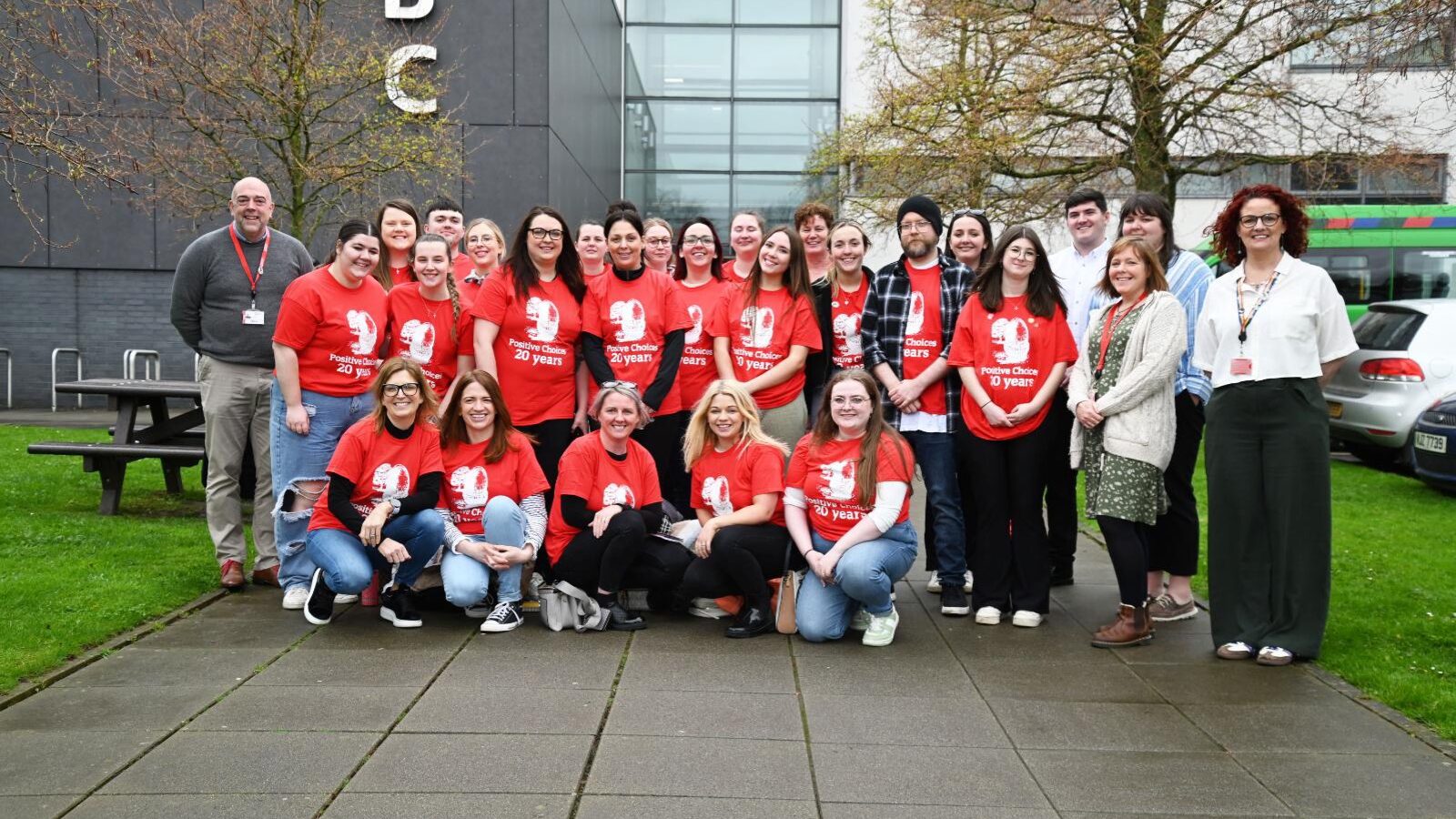
“At times, it feels like a festival”: delegates at this year’s Positive Choices Conference. Photo: Positive Choices
Saba Salman: What is Positive Choices?
Helen Laverty: Positive Choices is a network and information exchange, social forum, support mechanism and two-day conference that for 20 years has brought together student nurses from across the five nations; England, Eire, Northern Ireland, Scotland and Wales.
The movement includes academics, movers and shakers in the learning disability world, people who have a learning disability and those who love them.
Positive Choices started life as an annual conference for student learning disability nurses but has evolved into a big, co-produced social community.
To date, around 10,000 people have attended the conferences. The 20th one was in April this year at Queen’s University Belfast.
Students at a national healthcare event were told they should have done mental health and that no one’s really interested in learning disability nursing
SS: Why did you found it?
HL: In 2004, a group of my students went to a national healthcare event: they were asked questions like “Why did you bother with learning disability?” and “Is it too late for you to change branch?” They were told they should have done mental health and that no one’s really interested in learning disability nursing.
So I asked on social media if anyone would help me organise one conference that would give a chance for learning disability nursing students to get together, be part of the majority not the minority, and celebrate what they do and the positive choices they have made. From that acorn came a movement for social change.
SS: What’s the aim of the conference?
HL: The aim has evolved. We started off just wanting to bring students together but at times it feels like a festival.
The conference has now become an umbrella for Positive Commitments (a similar event for qualified nurses) and Positive Voices, an advocacy conference providing a platform for the quieter voices in a a busy, noisy self-advocacy arena – this is about to run for a third year.
Our aim is always “together we are better”.
SS: Tell us about a good practice project linked to Positive Choices
HL: Positive Choices, the Makaton Charity and Health Education England ran a competition last year for an innovative communication resource. The aim was for Makaton to become more widespread within healthcare within both adult and children’s services.
Ellie Sims, who is a learning disability nursing student from the University of Nottingham, won the competition. She uses Makaton to communicate with her 10-year-old sister, who has Down syndrome.
She developed a document with simple signs and symbols for use by anyone working in healthcare, to enable them to communicate directly with patients with learning disabilities or communication difficulties.
Phrases in the document include “Hello my name is” and “Do you feel pain?” and “Are you
taking medication?”
The Makaton Charity produced the resource, which was launched at the Positive Choices conference last year and is now being rolled out across the UK.
SS: What are the future challenges in learning disability nursing?
HL: Essentially, the main one is to ensure no one is left behind and that all people are valued equally and not just in wider society – but we need to start with health and social care.
Helen Laverty is a registered learning disability nurse and a nurse teacher at the University of Nottingham
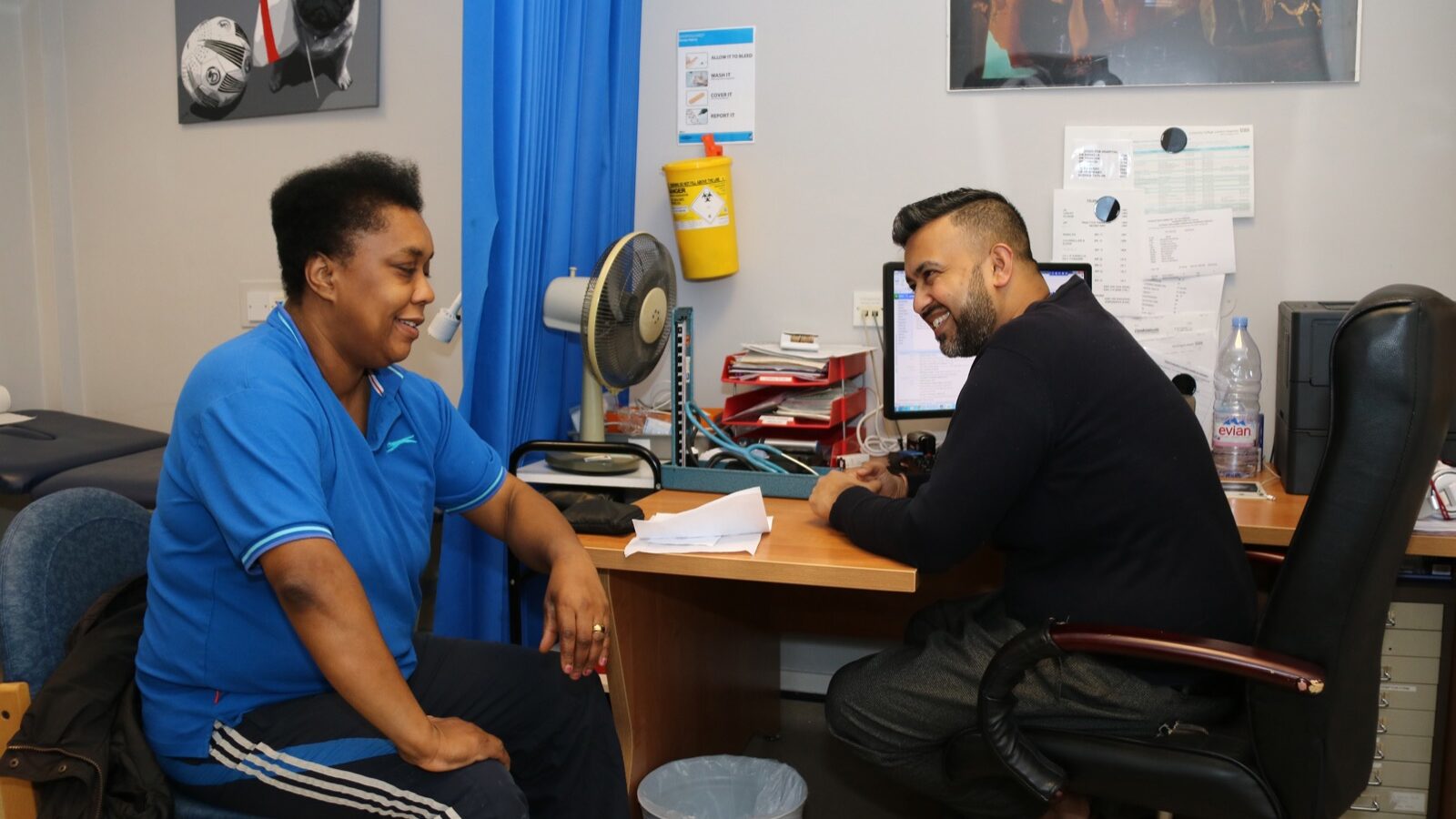
GPs are showing they are being learning disability friendly so they can improve patients’ wellbeing and take-up of health checks. Saba Salman reports
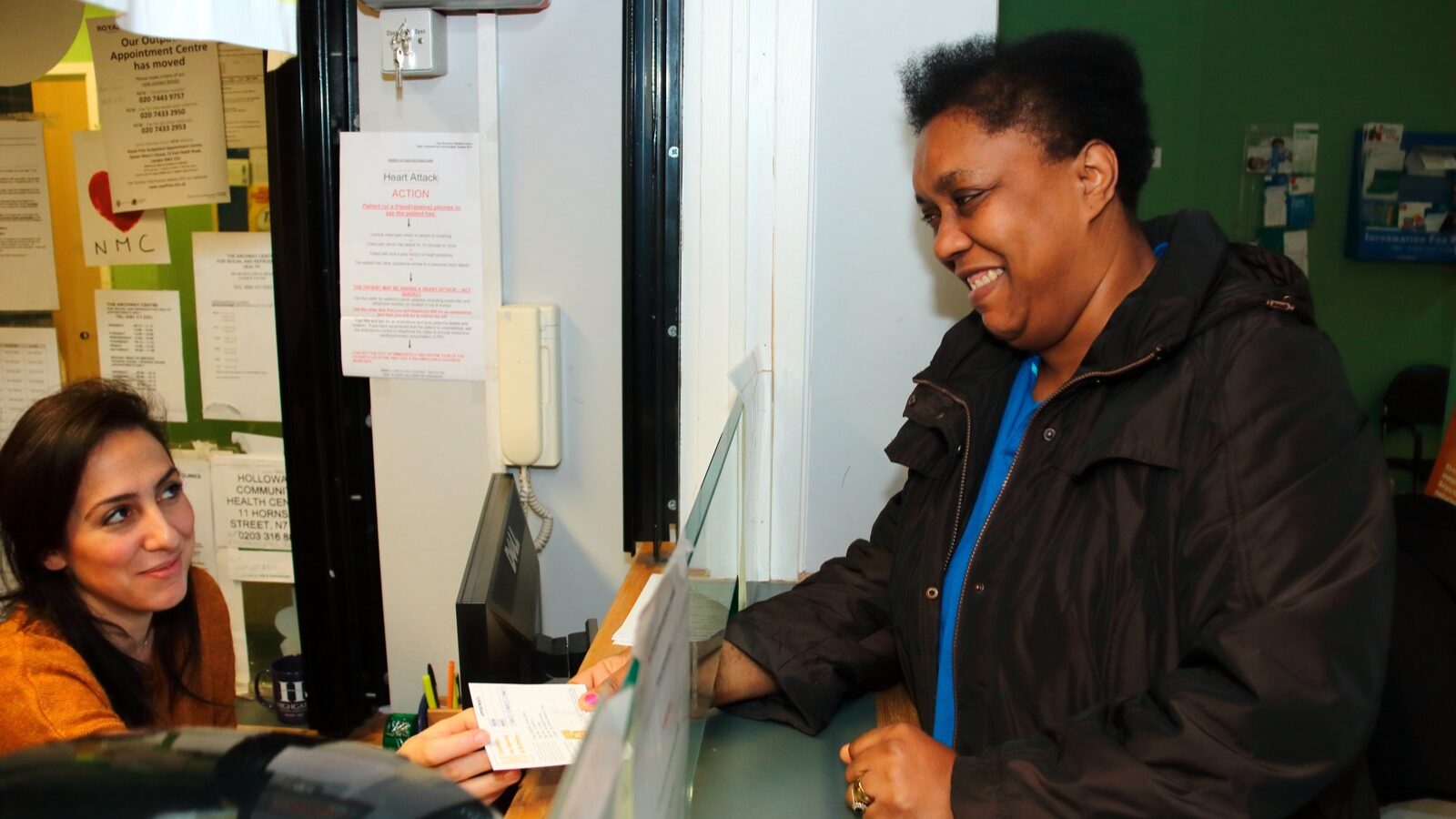
Welcome: the Learning Disability Friendly Practice scheme makes it easier for people to get in touch in the early stages of a health problem. Photo: Seán Kelly
A network of learning disability- friendly GP surgeries is taking shape, with West Midlands practices awarded a quality mark for delivering high-quality, personalised care.
Nationally, people with learning disabilities have an average life expectancy over 20 years less than that of the general population. The aim of the project is to identify and treat issues by boosting patients’ confidence when visiting the doctor.
The accreditation scheme is the brainchild of a partnership involving the ICB, community inclusion charity Grapevine and local GPs Dr Maisun Elftise and Dr Ayesha Mahmud.
Elftise explains that the badge “not only recognises the work of GPs but also works as a checklist of how good-quality learning disability care should be”.
Mahmud, whose involvement is partly influenced by her role as the parent of a young person with a learning disability, adds: “Our aim is to drive a cultural change in how people with learning disabilities are perceived and treated in healthcare.
“When we make the surgery a learning disability-friendly place, it allows us to understand our patients’ needs better. This makes it easier for them to present early which can prevent subsequent complications or worse outcomes.”
Surgeries apply for accreditation online and must meet certain criteria (see panel below). Applications are assessed by a Grapevine expert by experience, a Grapevine project worker, the ICB, the LeDeR service improvement programme and a member of the community learning disability team.
One aim of the scheme is to boost take-up of annual health checks for people with learning disabilities. Just 39% regionally were having the checks in 2020, but an awareness-raising campaign by health professionals and Grapevine drove the figure above 71% in 2021.
The badge name and logo were created with Grapevine. Starco (surname withheld), a Grapevine expert by experience, said at the badge launch: “It shows that you are a learning disability friendly space, which means if you need extra help, they can actually help you.”
Elftise and Mahmud were recognised for work on the project at the Royal College of General Practitioners Midland Faculty Awards and highly commended at the RGCP Inspire Awards.
A checklist for GP surgeries
To win a Learning Disability Friendly Practice badge, GPs must:
Have an identified learning disability champion to promote the scheme and take on related administrative duties
Make sure people receive personalised care
Ensure people receive high-quality annual health checks
Implement reasonable adjustments to make care easier to access and improve patients’ experiences
Personalised care
GPs must understand and document a patient’s unique needs and preferences to tailor their healthcare experience.
Personalised care might include:
Ensuring the patient is seen by the same health professional at every visit for familiarity and continuity
Scheduling appointments during less busy times or to suit the patient, minimising stress and sensory overload
Adjusting consultation environments to avoid sensory stimuli, such as ensuring printers and other noisy equipment are turned off or in a different room
Using straightforward and clear language, possibly with visual aids, to explain procedures and what to expect during visits
Customised appointment reminders via the preferred channels: calls, texts or emails
Being flexible with rules, such as not insisting on blood tests if they cause significant distress, thereby ensuring health checks can take place
Offering home visits if patients are unable to attend in person
Katie Smith became chief executive of Beyond Words after seeing how the picture books allowed people to make decisions and talk about what they wanted to discuss. Seán Kelly meets her
Katie Smith: “Most weeks, I am asked ‘Have you considered a book on this or that?’ ”. Photo: Beyond Words
“I am dyslexic. I think in pictures. I see patterns. I can’t always think of the right words to use. So I understood the premise behind the fact that you can tell a story with pictures.”
Katie Smith is explaining what drew her to the job as chief executive of Beyond Words, the charity that publishes wordless picture books to enable people with learning disabilities and others to understand and communicate their feelings and discuss their experiences.
Smith, who marked her first year in the role in September, describes another reason why the concept of wordless books resonates: “My late husband had been in an accident which left him completely paralysed and with a brain injury.
“I was very keen that he should be empowered to do what he could do. He could still make decisions for himself if the information was presented to him in the right way.”
She adds: “When I saw Beyond Words and those books, I could just see that they would empower people to make their own decisions and talk about what they wanted to talk about. And it wasn’t just for people with a learning disability. I could see how valuable it would be for so many people.”
Smith has a wide range of experience within and outside the voluntary sector. Her first job was as an assistant at a multimedia training company, before she became an ITV assistant producer. She then moved into the voluntary sector with roles including national project manager at the Multiple Sclerosis Society and operations and fundraising manager at the International League of Dermatological Societies.
She points out that all her jobs shared a focus on “training, picture-focused teaching and sharing information in different ways”.
She closed the book and ran off to get her support worker saying, ‘I read a book, I read a book!’
Over the past 35 years, Beyond Words has published 82 titles covering health, relationships and community life, including Going to Court, Having a Baby as well as Feeling Sad. Some early books were about bereavement – still the most in demand. The latest book, Getting Help With Gas, can be downloaded for free.
The books are co-produced with people with learning disabilities. The process begins with an initial storyboarding stage involving one or more people with lived experience of the issue.
Initial illustrations then go out to a group of about 50 people with learning disabilities for comment. After revisions, the book goes to another 50 people with learning disabilities for further feedback. The process takes about 18 months.
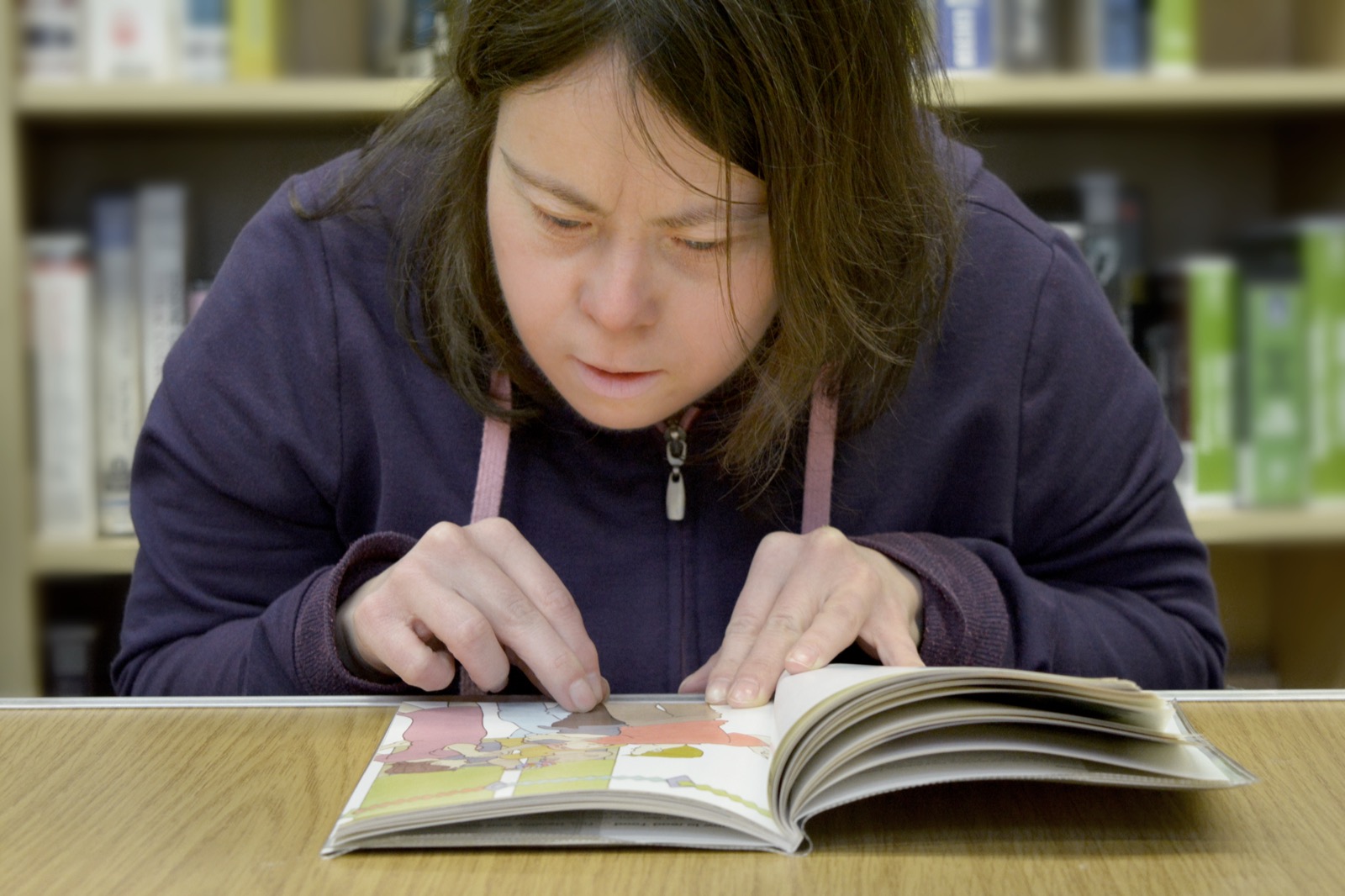
Getting lost in a book. Photo: Beyond Words
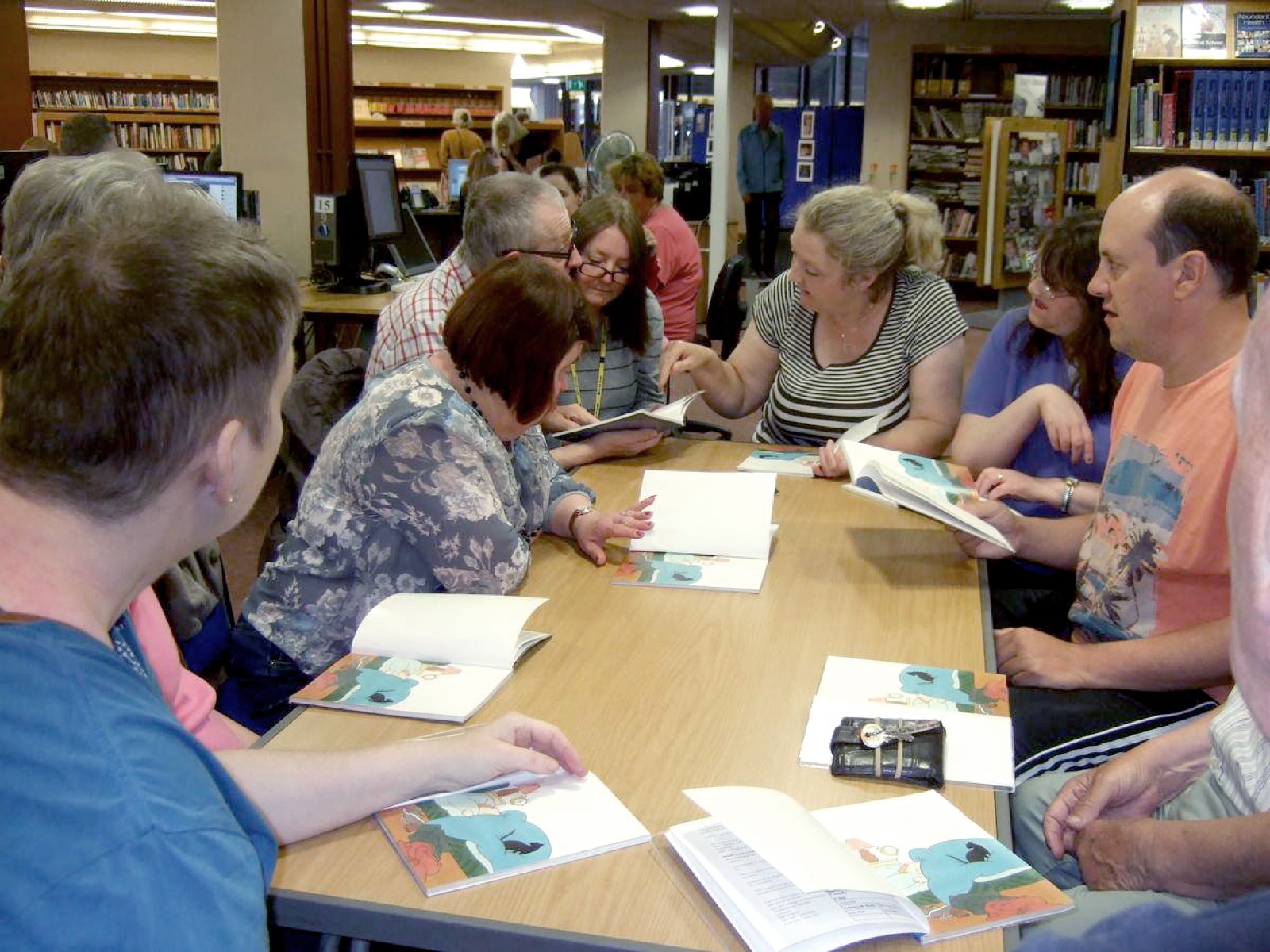
On the same page: taking part in a book club; Beyond Words intends to set up 300 book clubs in three years. Photo: Beyond Words
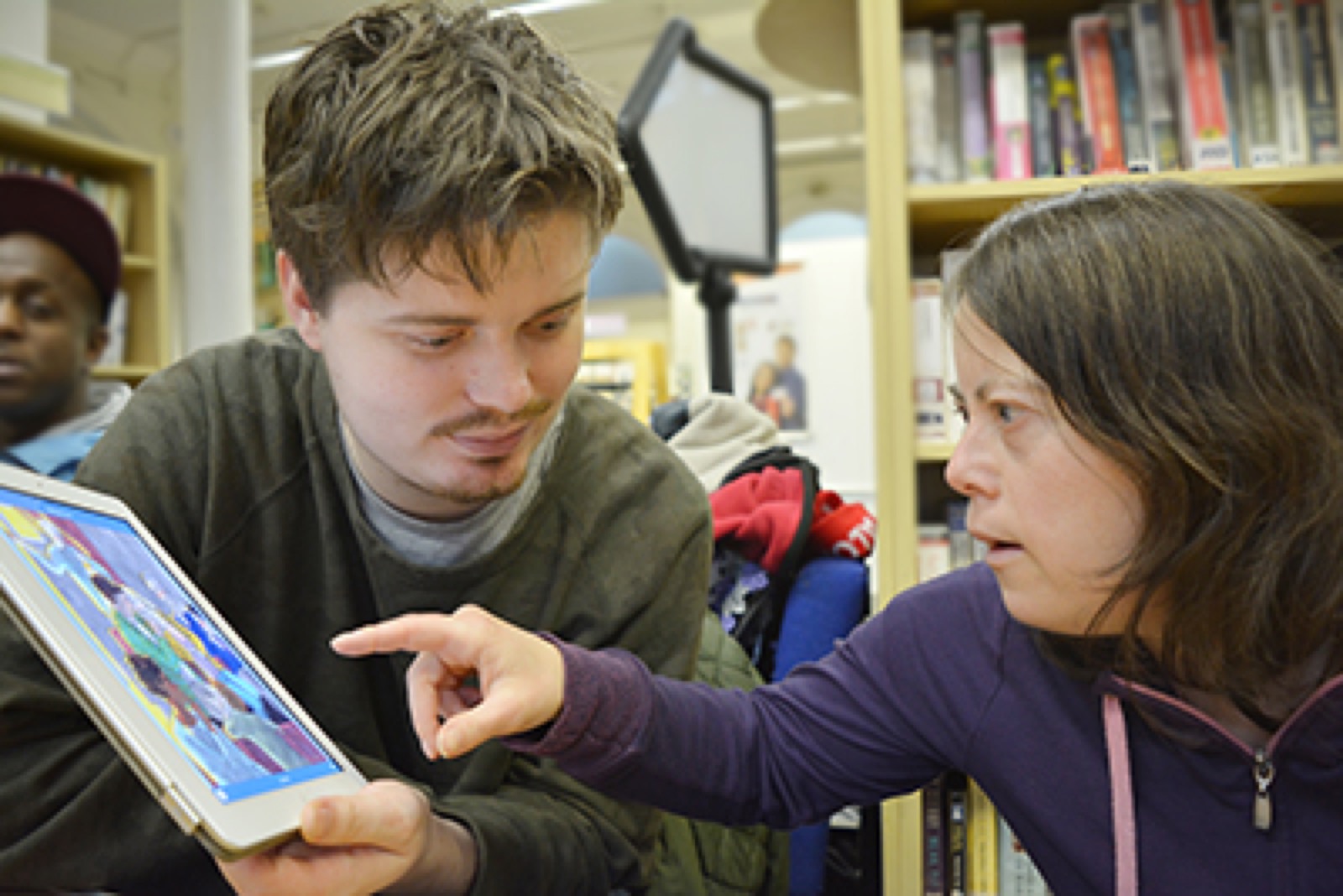
Interacting with
a story on a tablet. Photo: Beyond Words
“We could make the books a lot more quickly if I sketched out a storyboard and then an artist drew it but it’s not going to work for the readers,” Smith says. “The books are used in so many different ways that it’s got to work for so many different people.”
Smith works closely with Baroness Sheila Hollins, who founded and now chairs the charity.
Smith says: “Beyond Words wouldn’t exist and certainly wouldn’t keep going without Sheila and the connections and introductions she brings. Because she is a founder for family reasons [Hollins’ son Nigel has a learning disability], she doesn’t lose touch with what it is about.
“She is very passionate and very supportive. She is proud to see the books produced but she can also see how Nigel has really developed in his public speaking skills at the launches and his confidence leading on training. It’s lovely.”
Smith tells me about a young woman who found the books on a Beyond Words stall at a conference about relationships.
She said: “I have not read a book. I can’t read.” So Smith said “Well, let’s give this one a go,” and, together, quite quickly, they read through a book about a new relationship.
The young woman rightly identified issues of consent in the story. She closed the book and ran off to get her support worker saying, “I read a book, I read a book!” Smith says: “That was so powerful. It was for her to tell her story and read her book and understand it.”
Getting personal
Each reader develops their own version of the story. Smith describes a group reading a Beyond Words book about going into hospital.
“They went off on a huge long conversation about managing medication. But what a valuable conversation that was. About understanding that medication should have your name on it, and how many to take, and what the consequences might be if you take the wrong amount. Really powerful. All from one picture.”
There is a demand for new titles but Smith says this depends on funding, which comes largely from charitable trusts.
“Most weeks, I get an email from someone saying, ‘Have you considered doing a book on this or that?’ We get asked all the time for a menopause book and we can see how powerful that would be and there’s nothing out there.
“But we keep getting rejections because it is not something people want to fund. That is challenging because you know how important something like that could be. It’s not a ‘nice to have’ – it is essential.”
Future titles will include Being Safe Online. The books now better reflect diversity, for example, in terms of ethnicity, gender identity and same-sex relationships. This will continue and Smith says she would love to get funding to revise the illustrations in some of the older books.
The main strategic aim is to get the books used in the community – in healthcare and schools.
Beyond Words recently ran its Open Book project which set up a platform to record and evaluate the impact of using the books in schools. That work has now finished and a shareable toolkit based on the project is being produced. A recent report by independent educational assessors has shown the project has had positive effects on pupils’ emotional wellbeing.
Beyond Words recently won National Lottery funding for its Book Club in a Box project, set up earlier this year. It is the charity’s first nationwide initiative and it aims to start 300 book clubs over three years.
They had a huge long conversation about managing medication. What a valuable conversation that was. Really powerful. All from one picture
Beyond Words provides free boxes of 15 books, along with membership cards, posters, a guide on running a book club and evaluation materials. There is a newsletter and online networking with advice. Boxes have been distributed to libraries for new clubs as well as to existing groups at community and day centres.
Smith says Beyond Words “is still finding its personality and settling down. My ambition is to see it really mature as a charity.”
As Smith and I leave the cafe where we have been talking, we pass a man helping his young daughter navigate an escalator.
“No,” he says, “You have to hold my hand. Look!” He points at a sign with a picture of a child holding an adult’s hand. Smith smiles at me: “There you are – it’s all about pictures. Not words.”
Parents and carers of disabled children can experience trauma for any number of reasons and this can manifest in several ways. A working group is here to help, says Joanna Griffin
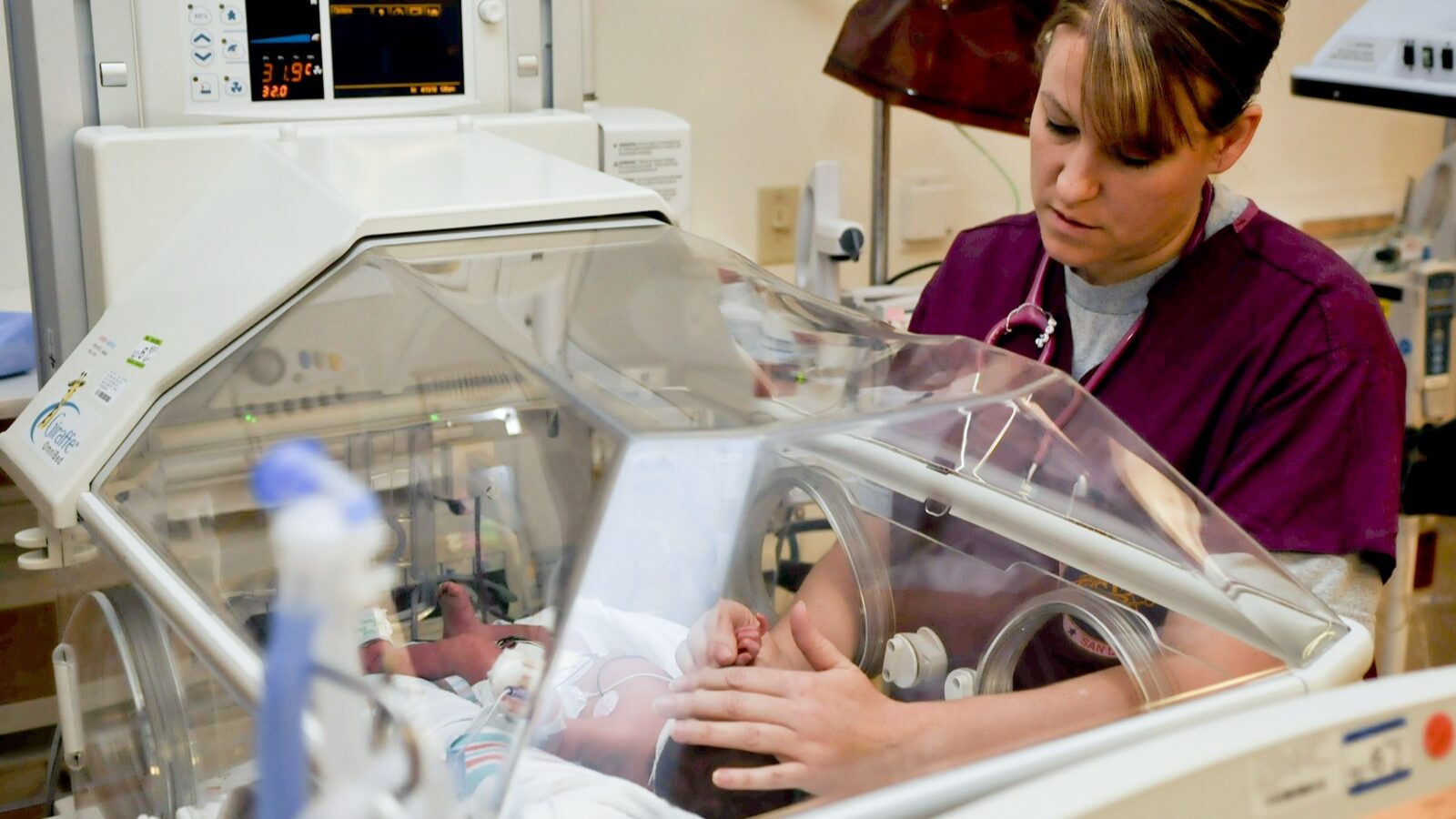
Parents may struggle to bond with a hospitalised newborn and feel ashamed that health professionals seem to have a closer bond. Photo: MC2 John O’Neill Herrera/US Navy/Wikimedia Commons/CC-BY-2.0
Parents and carers of disabled children can be at risk of poorer mental health due to the demands and stresses of their role. These run from fighting for services and a lack of sleep.
What is not always recognised is that some parents may also be experiencing trauma.
While there is no single definition of trauma, there are some common elements.
A parent may appear tearful or somewhat detached and it may not be obvious that this is a survival response
The government’s definition of trauma-informed practice draws on the internationally recognised definition developed by the US-based Substance Abuse and Mental Health Services Administration: “Trauma results from an event, series of events, or set of circumstances that is experienced by an individual as harmful or life threatening.
“While unique to the individual, generally the experience of trauma can cause lasting adverse effects, limiting the ability to function and achieve mental, physical, social, emotional or spiritual wellbeing.”
Research suggests that parent carers can experience traumatic events. These events may be:
Major events: big T trauma
An accumulation of smaller events: small t trauma
Ongoing events.
What causes trauma can vary between people.
Cumulative trauma can have a negative impact on day-to-day lives and how people feel about themselves. However, this is not always recognised, and parent carers do not always receive appropriate referrals for support.
Trauma might present in different ways. Signs include:
Hyperarousal: stress, anxiety and feeling on edge
Flashbacks: reliving aspects of the traumatic experience and feeling like it is happening in the present moment
Dissociation: feeling numb, spaced out or detached from things going on around you
Sleep problems: these include insomnia resulting from not being able to switch off or nightmares that wake a person up.
Experiences that can be traumatic for parent carers include:
Medical history: being asked to repeat a traumatic medical history at each new clinical appointment and having to give detailed information over and over again. The parent may appear tearful or somewhat detached and it may not be obvious to the listener that this behaviour is a survival response to repeated re-telling of past traumas
Managing services: many parents become battle weary due to the constant fight for services and respite, plus negotiating complex appeal systems and multiple agencies. Sometimes, a hard-fought-for service requires great effort to maintain on the part of an already exhausted parent. This can lead to despair, hopelessness and a sense of giving up
Abuse: parent carers whose son or daughter has been abused in an institution and who were not offered professional help or an opportunity to work with support staff regarding care and support
Bonding and detachment: some parents struggle to bond with a premature baby if the newborn needs to be in an incubator or hospitalised for long periods. Some feel emotionally and practically detached and ashamed that medical professionals seem to have a closer bond.
Building on their personal and professional experience, a number of parent carer professionals recently established a parent carer trauma working group to consider these issues further.
The group, in which I am involved, brings together professionals, many of whom are also parent carers with lived experience of trauma. We have considerable experience in discussing what parent carer trauma looks like and how we can best support those experiencing it.
The group published a discussion paper (available on affinityhub.uk) this year on trauma and parents of children with special educational needs and disabilities for professionals and parent carers.
Our network believes parent carer trauma is often unrecognised by both parents and professionals and it may be more nuanced in its presentation than realised.
This article was originally published by the WellChild charity
Dr Joanna Griffin is a parent carer, psychologist and Affinity Hub founder
Inquests are held in coroner’s courts and can look into the circumstances around a death. Our new court reporter, George Julian, discusses inquests and how she became involved in them
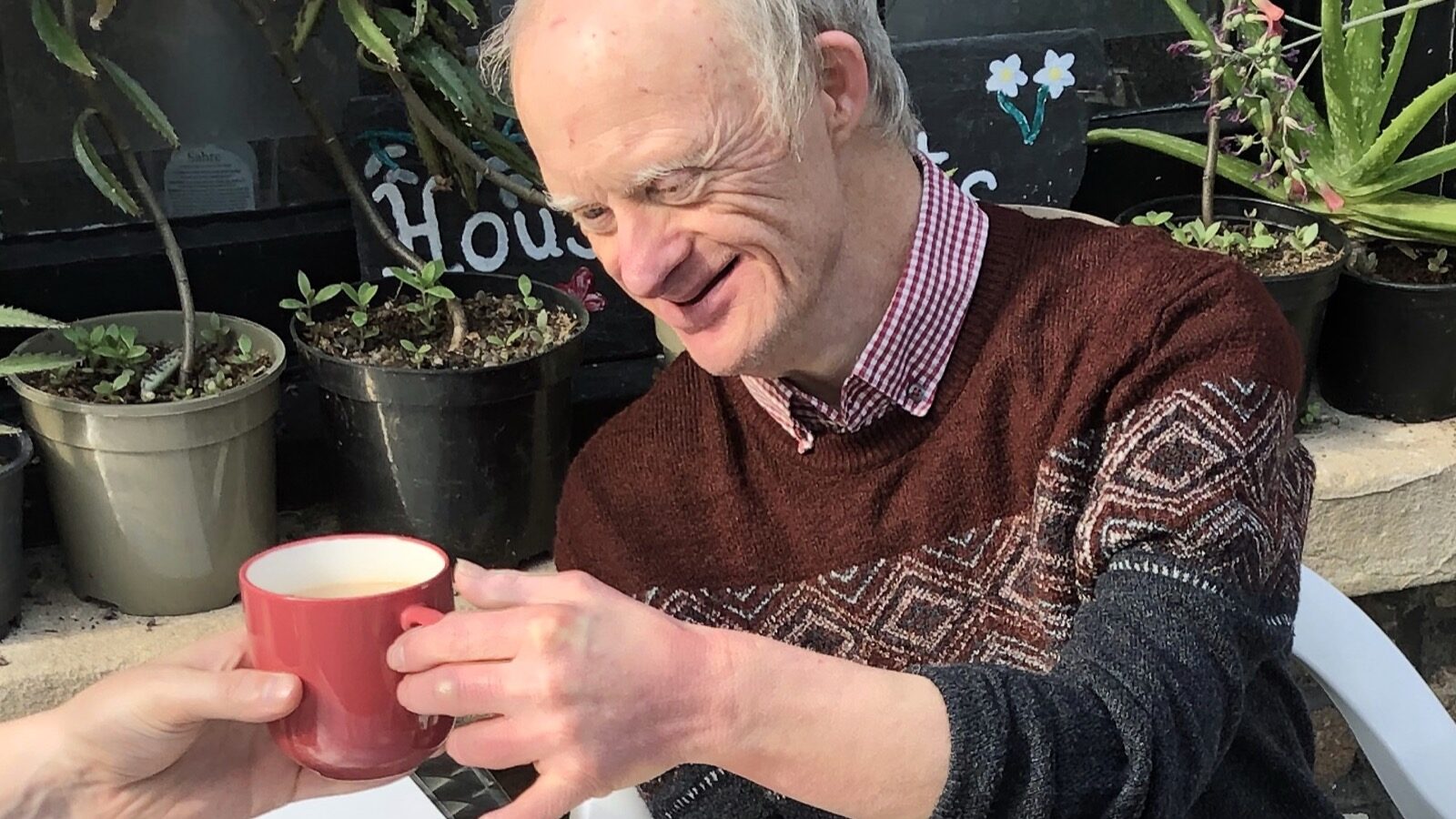
Marcus Hanlin, who died aged 57, loved being in the garden. Picture courtesy of family.
Nine years ago, I attended a coroner’s court for the first time.
I was there to support Connor Sparrowhawk’s family as they tried to find out why their 18-year-old son had died.
Connor’s barrister, Caoilfhionn Gallagher, suggested I tweeted what was happening in court. This was to share updates with supporters of #JusticeforLB, the campaign to improve care following Connor’s death.
I attended court every day and shared as much information as I could about what was said in court. At the end of Connor’s inquest, the jury found neglect had contributed towards his death.
The speech and language therapy plan said he should always be supervised around food
After Connor’s inquest finished, other families and lawyers started to get in touch with me. They asked if I would attend their relatives’ inquests and share what happened in court.
Since then, I have reported on another 27 inquests. I no longer live tweet; instead, I write blog posts and provide coverage on my website.
I have also reported on other court cases. Most of these, as previously featured in Community Living, relate to learning-disabled and autistic people, and the care and support they require or have been denied.
In this, my first article as Community Living’s court reporter, I hope to share what has been happening in courts and shine a spotlight on stories that are rarely heard.
The story of Marcus Hanlin
Marcus Hanlin died two years ago in October 2022. He was 57.
Hanlin liked swimming and floating in water, cycling, taking part in craft, drama and music sessions and loved to be outside in the garden. He lived at home with his family, in institutions and then for 30 years in an ordinary house in an ordinary street.
He had three long stays in institutions, as a child, a teenager and a young adult. At age of 24, he moved out of hospital into a house in Bristol. He lived with three other men who had been on his ward.
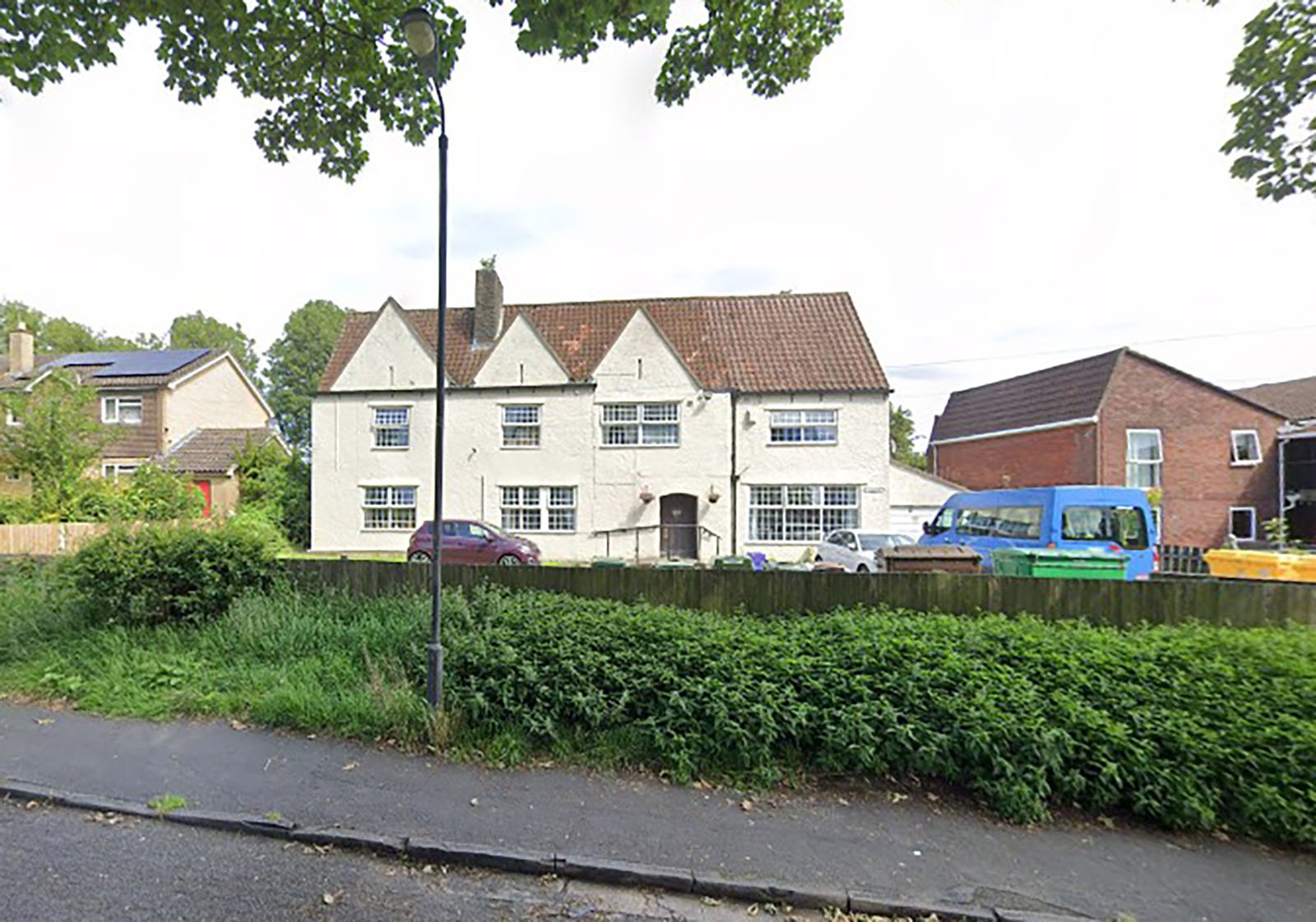
For almost 30 years, Hanlin had support from the Brandon Trust. His last home was a nursing home called Cheddar Grove, run by the trust, where he moved to in February 2021.
Hanlin had Down syndrome and autism and developed dementia as he got older. He did not use words to communicate; his mother, Anna, told the court that he could communicate with those who got to know him.
Hanlin’s inquest
The coroner’s court where Hanlin’s inquest took place is next door to the old Farleigh Hospital, a long-stay institution where Hanlin lived as a young man.
His inquest took place in court 1. The senior coroner, Maria Voisin, sat on a raised bench at the front, with the legal teams and interested persons on benches in front of her. To the left was an area where witnesses sat. I sat in the public gallery, in one of 10 rows of red chairs.
The five interested persons were:
Hanlin’s family
The Brandon Trust (which runs the nursing home in which Hanlin had lived)
University Hospitals Bristol and Weston NHS Foundation Trust (Hanlin died in Bristol Royal Infirmary after five days)
Laura Bolus, the staff member conducting the art activity
that led to Hanlin’s admission
to hospital
South West Ambulance Service NHS Foundation Trust.
The coroner heard from witnesses over four days. She heard legal submissions on day five, and summed up what she had heard and concluded on day six.
What the coroner found
In late September 2022, Hanlin was left alone in a room in his nursing home. A sensory activity was on a table in front of him. It involved a bowl of dyed rice with conkers hidden in it.
Hanlin had a speech and language therapy plan that said he should always be supervised around food (and anything made from food) due to his risk of choking.
The coroner found that when Hanlin was left alone with the bowl, he swallowed two conkers and ate some rice. When staff realised what had happened, they called an ambulance. He was taken to hospital, where he died five days later.
The coroner said support workers “should have realised” the risk of leaving the bowl where Hanlin could reach it. She said there was a clear failure to provide the care Hanlin needed.
One of the conkers Hanlin swallowed became lodged in his oesophagus. Hanlin also inhaled rice grains. This caused aspiration pneumonia (infection after material from the mouth or stomach enters the lungs) from which he did not recover.
The coroner concluded Hanlin’s death was an accident, contributed to by neglect.
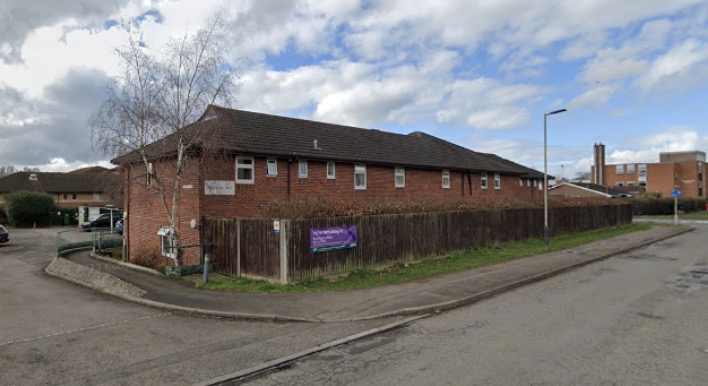
Cheddar Grove nursing home: the coroner said support staff should have realised the risks to Marcus Hanlin. Photo: Google Street View
Was this death a one-off?
Difficulty in swallowing or dysphagia was reported as being a long-term health condition for one in every five people with a learning disability who died in 2021, according to an LeDeR review (an NHS report that provides information about the deaths of people with a learning disability).
The Mazars review into the deaths of learning-disabled people at Southern Health NHS Foundation Trust found dysphagia and aspiration pneumonia were repeated themes in deaths. The review had particular concerns regarding dysphagia assessments and the management of swallowing and helping people to eat and
drink safely.
Charity admits being at fault
Following the inquest, the Brandon Trust admitted it was at fault and apologised.
It said: “The Brandon Trust acknowledges that a mistake was made on the day that Marcus consumed the contents of the sensory activity.
“The Brandon Trust has apologised, and continues to apologise, to Marcus’ family for the mistake. The Brandon Trust acknowledges the coroner’s conclusion that Marcus’s death was contributed to by neglect.
“Since Marcus’s death, the Brandon Trust has taken robust action to identify all lessons that can be learned to avoid anything like this happening again.
“This has included engaged training for all staff, a thorough review and audit of all risk assessments, policies and guidance, and changes to the staffing and management structure at Cheddar Grove.”
An avoidable death
Marcus Hanlin’s family commented that his death should never have been allowed to happen.
They said: “Marcus was a very dearly loved family member and loving man.
“Ineffective management at Brandon Trust meant that care was not provided as it should have been and, as a result, he lost his life. His death was completely avoidable.
“While we acknowledge the necessary changes by the Brandon Trust following Marcus’ death, we only wish that robust management had been in place before this incident, as Marcus would still be alive today.”
Introduction to inquests: how they work and what they can achieve
A coroner is a type of judge who investigates some deaths. They should look into:
Every death where no one knows why the person died
If they think a person did not die of natural causes; natural causes means something that was expected to cause a person to die, like a serious illness or old age
If there is any other reason to be worried about why a person died.
This investigation is called an inquest and it tries to answer four questions:
Who died
When did they die?
Where did they die?
What did they die of?
An interested person is what the people involved in a person’s life or support are called. This will always include their family. Interested persons can speak for themselves in court or use a lawyer or barrister to ask questions for them.
After evidence from witnesses has been heard, the coroner gives a summary of what has been said. They then give their conclusion and answer the four questions.
A coroner cannot blame anyone or say who was responsible for a person’s death; they can make suggestions to stop more deaths happening. These are made in a prevention of future deaths report.
We can celebrate anniversaries of equality legislation – but must never be complacent as these laws by themselves do not prevent discrimination or abuse
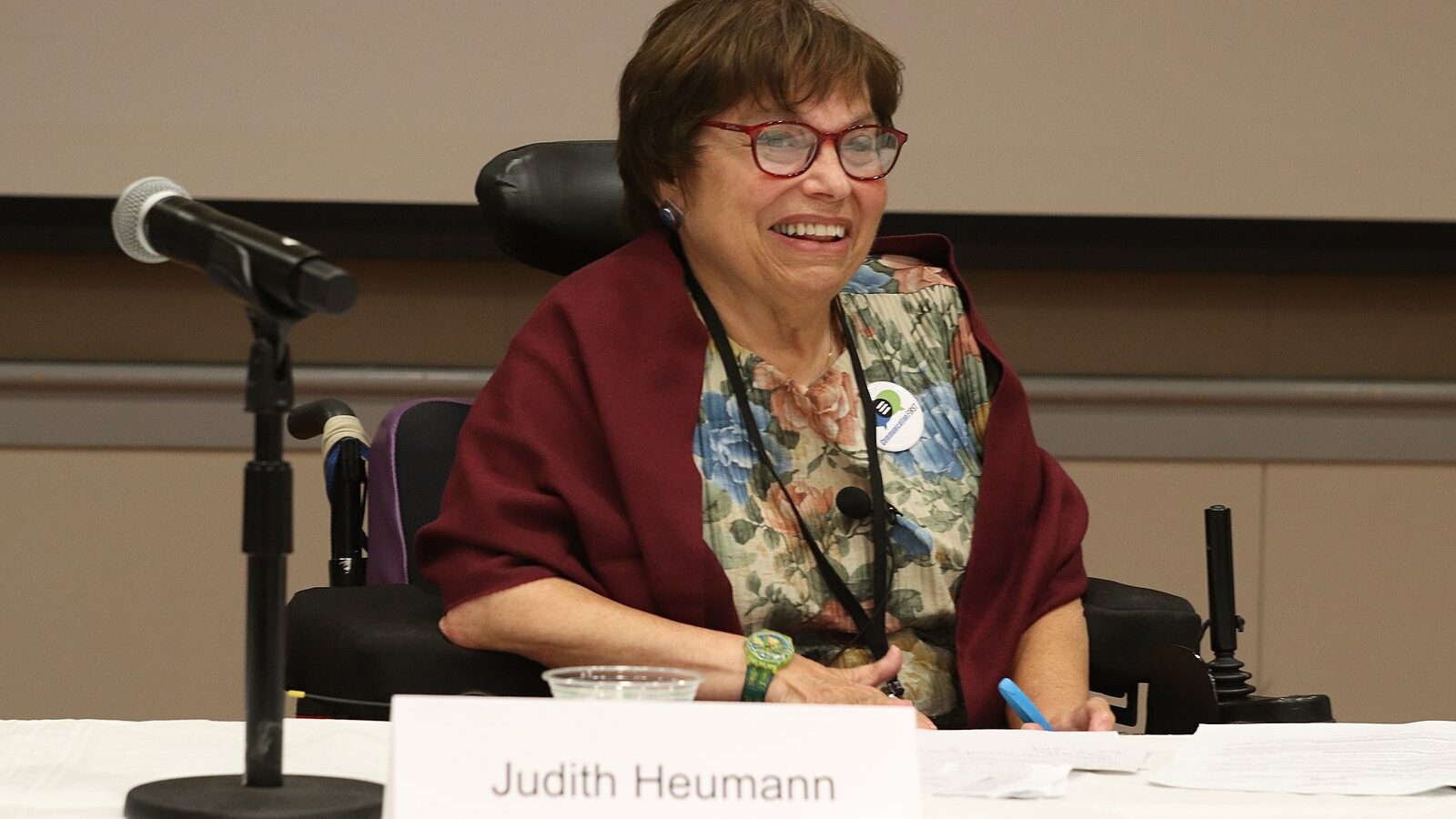
The late activist Judith Heumann "2019-Jul-25-TASH-OLDL-Judy-Heumann" by Taylordw is licensed under CC BY-SA 4.0.
“We will no longer allow the government to oppress disabled individuals. We want the law enforced.”
These words from the late, legendary American disability rights activist Judy Heumann, made in a speech at the age of just 29 in 1977, are as prescient today as they were back then – and not just in the US.
Heumann, who died aged 75 in 2023, was a trailblazer who spent years at the forefront of campaigns for the most significant piece of disability rights legislation in American history, the Americans with Disabilities Act (ADA) 1990.
July was not only Disability Pride Month in the US; the landmark ADA civil rights legislation prohibiting discrimination against disabled people had its 34th anniversary.
The law, which came almost two decades after civil rights laws were passed to protect other groups, including equal pay legislation for women, was a massive if imperfect step towards equal rights.
The ADA mattered greatly and, in a multitude of ways, altered the landscape and changed lives; Heumann herself went on to hold posts in both the Clinton and Obama administrations.
As Mia Ives-Rublee, director of the Disability Justice Initiative at the Center for American Progress explains, the ADA meant that “for the first time in history” there was in place “a broad spectrum” of protections for disabled people in America.
However, as she also stresses, having a law on the books does not always mean those protections are ensured. Neither proving nor eradicating discrimination is easy.
Next year, the UK will see the 30th anniversary of its own seminal legislation, the Disability Discrimination Act 1995.
This law, for the first time in British history, codified vital protections on a wide scale, including for employment, access to education and transport.
Its successor in England, Scotland and Wales, the Equality Act 2010, kept many of the same provisions and made disability one of nine protected characteristics. Along with the Human Rights Act 1998, these legal milestones represented ballasts against inequity in the UK.
However, just as in the US, for all the moves in the right direction, cumulatively the legislation has
not guaranteed full equality and certainly not freedom from abuse.
Had the Tories had their way, the Human Rights Act wouldn’t be around to offer any protection.
As for the Equality Act, it was only a year after it hit the statute books that Panorama exposed the horrific physical abuse of inpatients at Winterbourne View.
Despite the government pledging reform, scandal after scandal followed, including the avoidable death in 2015 of Connor Sparrowhawk in an NHS assessment and treatment unit.
Rights aren’t given – they must be fought for and won. There are still major battles to be fought institutionally, systemically and legislatively
Fast forward to 2020 and another abuse scandal was laid bare, this time related to Cygnet Healthcare’s Yew Trees unit for women with learning disabilities. Devastatingly, this came only a year after abuse at another of the private company’s units, Whorlton Hall, was exposed.
Law and reality
As campaigners in the US and UK have continually pointed out, while hugely significant, equality laws don’t mean that discrimination and abuse aren’t routinely taking place. Access to employment, education or health and social care is not a given.
For example, nearly three decades after the ADA was passed, people with intellectual disabilities in the US are less likely to be able to access the care they need. For older adults, this is even more pronounced.
The reality is that adults and children face ongoing discrimination across the public realm, in areas from criminal justice to work.
Commemorations of legislation give us an opportunity to take stock. Yes, celebrate the successes, but we must also understand which battles still need to be fought.
Rights aren’t given – they must be fought for and won. As we contemplate the milestones of landmark legislation, it is undeniable there are still major battles to be fought institutionally, systemically and legislatively.
As Ives-Rublee says, when it comes to protections and rights, existing laws are the floor, when “they should be the ceiling”.
Society is too risk averse so people may not get the choice to do what they want – whether this means feeling at home while doing your own ironing or going on holiday abroad
Because I was working on this column at the end of the summer, I was thinking about what I did in the holiday season when I was younger.
One of my best summers was when I was 11 and I went on a day trip to Brighton with my four older siblings – my three brothers and sister.
It was the first time I’d been out of London. We didn’t have much money (we’d lost our mum, and my four older siblings were supporting me a lot). We got the coach, walked on the pier, sat on deckchairs and we ate fish and chips and relaxed.
My most recent holiday was in June when I went to Tenerife with friends. We decided when and where to go. The six of us (two guys, four girls) stayed in a hotel near the beach and we didn’t have any support staff.
We’re all in our 30s and early 40s and we met through different social nights including some events like those at Heart n Soul, the arts charity where I learned to DJ.
I was grateful for that freedom.
Someone might be able to be independent but families don’t give them the chance to experience new things. There are always ifs and buts
It is different for people who live in care settings and may not have the choice to do what they want. If they have parents, their parents might leave support workers to find out their choices. But families should see if staff are asking people what people really want to do to be more independent on a regular basis.
Decisions, decisions…
I was a co-researcher with the Feeling at Home project by King’s College London, which took three years and ended last year. I found out from people in group homes what helps them feel at home and what doesn’t. We created a toolkit to help people feel at home (see box).
Some families can be overprotective so people might miss out on opportunities to experience new things. Someone might be able to be independent but they aren’t given the chance. There are always ifs and buts.
We live in a society that’s afraid of risk. As adults, we all make mistakes and you learn to deal with these and move on.
If my mum and dad were still alive, I might not have moved into adult life so quickly with things like basic household skills. My mum would have spoiled me but, because she wasn’t around, my brothers and I did chores together, like washing up and clearing up after dinner.
The first thing I had to do was learn to iron my clothes – at 15. I love ironing. I feel I’m privileged because I want to look presentable; it gives me personal confidence to feel more comfortable and look smart when I go to work meetings.
Thinking about future holidays, I want to go to Taiwan, Malaysia or the Philippines. I want to expand my knowledge and do new things.
Feeling at home: how to make choice a reality
The Feeling at Home toolkit contains ideas on how people in group homes, staff and supporters can work together to help people feel at home.
You can pick and choose bits of the toolkit to use, like this section on helping someone make a decision.
Stage 1. Setting the scene
It helps to find a quiet place and set aside time without distractions
The person needs to be sure the choice is theirs; they do not need to worry about what others think
The person might like a reminder that it is ok to change their mind before making a decision
Stage 2. Making a decision
People find this easier when there are not too many options
It helps if the person can see the options (for example, in a photo)
People can express their decision through words, through pointing or sorting into yes and no piles
Stage 3. After making the decision
Making a choice can be hard – the person deserves congratulations
The next step is to draw up a plan to make the choice into a reality
An archaeological discovery suggests a Neanderthal child with Down syndrome was cared for. But we must be wary of comparing ourselves to distant ancestors, says Simon Jarrett
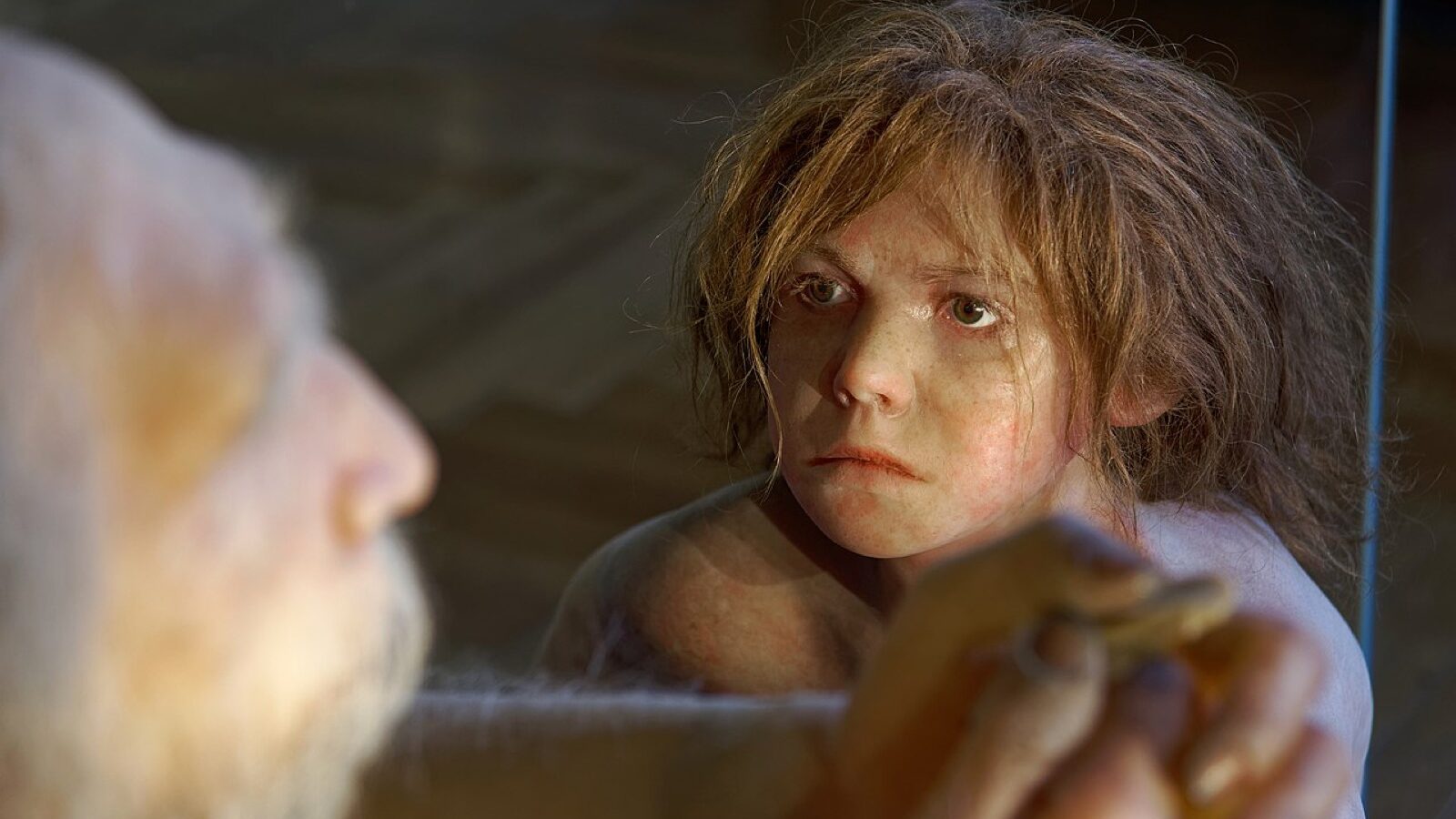
Neanderthal child: the discovery debunks the myth that disabled children were routinely rejected in early societies. Jakub Halun/WIkimedia Commons/CC-BY-SA-4.0
Neanderthal bones from 146,000 years ago were recently found in a Spanish cave, Cova Negra. They include the skull of a six-year-old child who seems highly likely to have had Down syndrome and been deaf.
Researchers believe the child would have had difficulty in walking because of balance issues. The implication is that they would not have survived to the age of six without care and support.
This suggests Neanderthals were prepared to raise this child despite their own struggles for survival in extremely harsh environments.
There has understandablybeen much trumpeting of the discovery, which seems to suggest that the earliest types of humans supported disabled people within their communities.
Let’s consider it a bit more closely.
Early humans: them and us
The Neanderthals (Homo neanderthalensis) were a group of early humans who died out about 40,000 years ago. They had been around for at least 430,000 years.
They are distinct from but related to other early humans – Homo sapiens, us. We’ve been around for about 300,000 years.
From what we know, they had quite sophisticated technology (such as stone tools), used hearths for cooking and warmth, made simple clothes and used medicinal plants.
Throughout the 19th and 20th centuries, Neanderthals were seen as primitive, violent and brutish and were a byword for stupidity.
However, as Angela Saini pointed out in her recent book Superior, they have undergone a remarkable rehabilitation in recent years, ever since it was discovered, partly through DNA testing, that they were far more assimilated with early humans than originally thought and the two species had interbred.
Immediately, the word went out that Neanderthals were much smarter, cooler and more sophisticated than we imagined.
Let’s therefore be careful.
We tend to project our personal beliefs and opinions onto the past. We can stamp ourselves most strongly onto the era of early humans because the evidence we have is so light.
In the 19th century, speculation about early humans was used to buttress contemporary racist beliefs and degeneration theories. We must not do the opposite now.
Were Neanderthals and early Homo sapiens gentle, caring, tolerant inclusionists? I doubt it.
We try to find the shadow of our best selves in our most distant ancestors, either by identifying with them or emphasising our superiority over them.
Nevertheless, let us take this new piece of knowledge as a useful contribution to our understanding of the place of people with learning disabilities in human history.
It gives a rebuff to the persistent myth that disabled children were cast off or killed in earlier societies. This belief feeds (and grows from) the idea that disability is a burden and investing resources in disabled people a luxury only indulged by modern wealthy societies.
Life of value
Satisfyingly, it is also a blow against those grotesque individuals who think it immoral for disabled children to exist.
Philosopher Peter Singer advocates the euthanasia of “retarded infants” on the grounds that they bring suffering into the world. Evolutionary biologist Richard Dawkins once said that a woman pregnant with a Down syndrome baby should “abort it and try again. It would be immoral to bring it into the world.”
The discovery that early members of the Homo genus, in extreme circumstances, worked to ensure the survival of a disabled child, should make such intellectuals reflect more deeply on what it means to be human. This might lead to them dropping their silly, God-like fantasies about who should live or die based on magical ideas about suffering and happiness. However, readers are advised not to hold their breath.
Near a Spanish cave 146,000 years ago roamed a small Neanderthal child with Down syndrome, able to do so because their family (probably in its widest sense) made it possible for them.
Can we super-sophisticated Homo sapiens manage to do the same?
Educator concerns and lack of knowledge may limit the use of technology in the classroom, and people ought to comprehend the theory behind issues that affect them, says Juliet Diener
Teachers give their views on technology, and self-advocates talk about theory.
There is limited research on using technology with learning-disabled people, which this study aims to rectify.
The researchers noted that technology poses risks as well as offering benefits to children and young people, especially students with learning disabilities.
Technology can enhance learning, although teachers lack confidence in its use and are concerned about the vulnerability of learning-disabled users. This leads to missed opportunities and misinformed attitudes towards the use of technology in education.
Since the pandemic, the use of portable devices has increased and more learning-disabled people are using technology for social connections. Therefore, educating teachers in this area is necessary.
This study involved an online survey of teachers from a variety of mainstream and special education needs schools in Spain on the internet’s risks and opportunities for learning-disabled users.
Findings included that “teachers perceived that the Internet was not a safe environment for students with intellectual disabilities and that the risks to which they may be exposed outweigh the potential benefits”. This perception limits teachers’ actions in making technologies available to students.
While teachers acknowledge that the online world increases social connection, they need training to feel confident about bringing more technology into their classrooms.
Theoretical understanding and reflections are not significantly shared with learning-disabled people, although the impact of theories (an idea or set of ideas designed to explain facts or events) on their lives can be significant.
The aim of this study was to offer learning-disabled people an experience of discussing theoretical concepts.
Three universities organised nine accessible workshops to explore influential theories in disability research.
Their objective was to share a theory that shed light on disability with self-advocates and discuss how it related to their experiences.
Aiming to simplify terminology, the study team sought to build on existing research, allowing self-advocates and activist researchers to respond to theoretical ideas and how they affected their experience.
As learning-disabled researchers are gaining prominence, it was timely for this project to explore inclusive ways of relating to theoretical concepts.
Before the workshops, accessible documents were disseminated and techniques explored to ensure the presentations were also accessible.
Themes included the experience of equal opportunities in learning and how the workshops strengthened participants’ confidence and skills.
The paper concluded that making theory accessible and easier to understand is both possible and valuable.
We know people should be involved in research that affects them and studies show there’s no good reason to exclude them. So why aren’t those funding and organising research taking note?
So far in this column, I’ve written about what recent research has to say about issues that are important for people with learning disabilities. But what about when these people are excluded from research altogether?
Being left out of research is a big problem – if you’re left out, then what study questions get asked, what research gets done and what comes out of this will not be designed with you in mind.
We have known for way too long that people with learning disabilities are more likely to have a great number of health problems from an earlier age than others but are less likely to get the health services they need, meaning that they are dying on average 20 years younger.
Designed out
The very language of the Equality Act 2010, which requires health organisations to make reasonable adjustments to their usual provision, shows that services are not routinely designed for people with learning disabilities.
We know that people with learning disabilities are excluded from health research.
In 2014, American professor Maurice Feldman and colleagues reviewed 300 clinical trials. They found only 2% of these studies clearly included people with learning disabilities, and more than 90% were designed in ways that would automatically exclude people with learning disabilities. The researcher estimated that at least 70% of the trials that had excluded people with learning disabilities could have included them with relatively small changes to how they did things.
In 2020, University of East Anglia researcher Samuel Spaul and colleagues reviewed over 25,000 research projects funded by the National Institute for Health and Care Research (NIHR), the major funder of health research in England. They found that 60% of projects excluded those with learning disabilities and/or autism.
Reasons for exclusion
Earlier this year, Ruth Bishop and her colleagues (including two self-advocacy groups) found that 78% of 180 NIHR research projects excluded people with learning disabilities.
They sent questionnaires to project researchers, who gave a wide range of reasons for not including them. These included:
Not having the resources and the funding needed to include people with learning disabilities
Many research teams having no one with any experience of working with people with learning disabilities, let alone having people with learning disabilities in the research team
Research ethics committees often demanding information sheets and consent forms that were overcomplicated and inaccessible, insisting on informed consent when getting assent was perfectly feasible, and insisting that people with learning disabilities should be excluded from research that discusses upsetting issues to protect them
The very design of research baking in exclusion, from using inaccessible methods to researchers arguing that the health intervention being tested would itself be inaccessible to people with learning disabilities.
Looking at these reasons given by project researchers, people in self-advocacy groups reflected that making research accessible to people with learning disabilities would also help a lot of other people to participate, and that research co-produced with people with learning disabilities would solve a lot of the problems.
Research by Dorothy Coe, Victoria Shepherd, Amy Russell (at Newcastle, Cardiff and Leeds universities respectively) and others reinforce these findings, giving ample evidence for how unwarranted this exclusion is and developing resources that researchers can use to make their work more inclusive.
To be fair to the NIHR, it has funded most of this research showing the exclusion of people with learning disabilities. The urgent question is when this will lead to the big changes needed in how the NIHR and other research funders, ethics committees, universities and health services operate.
‘I’ve never looked back,’ says a member of a friendship club. Hazel Morgan tells the social club’s story, how it has made people confident – and led to a newspaper column and a cat book
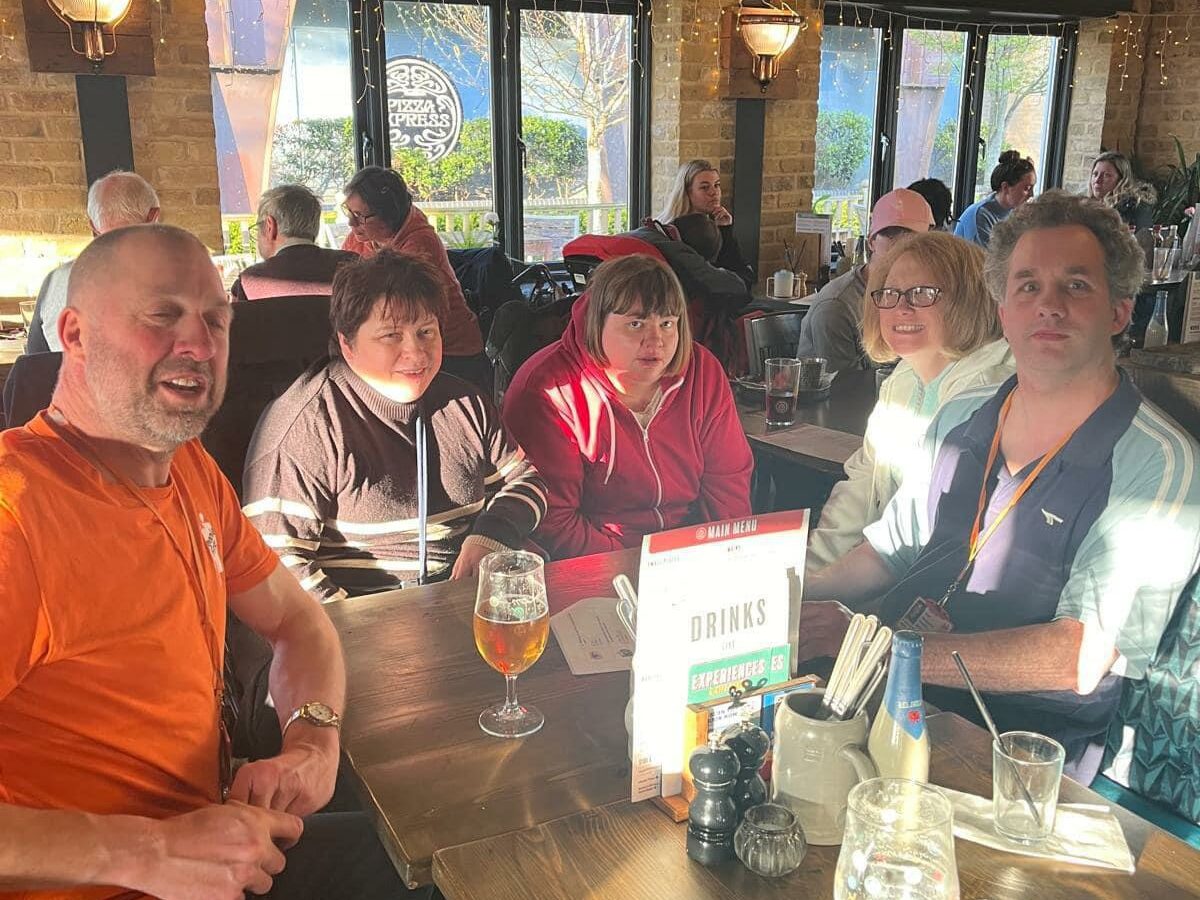
Drinking to friendship. Photo: People First Dorset
Fish and chips on the beach in Weymouth. A scavenger hunt in Borough Gardens, Dorchester. Learning to play tennis, kick-boxing, cricket and other sports in local clubs. A quiz and food in a pub.
These are among the events held by People First Dorset (PFD) Friendship Club this year. A previous highlight was a Glitter Ball at the National Sailing Academy in Weymouth.
PFD, where I am a trustee, started as a self-advocacy group in 2004. In 2008, the charity launched the Friendship Club, as it had become clear that many people with learning disabilities often felt isolated. People wanted friends to meet socially for a couple of hours and to do things that others take for granted.
Members are aged 18 and over, and numbers vary from 10 up to 90. Events are generally free and people can bring a carer. Club members grow in confidence; they can then join PFD’s Speaking Up groups and develop their self-advocacy skills.
William Parmiter joined the Friendship Club in 2008: “I used to go to the local bowling centre to drink beer and try to meet people, but just became lonelier because I didn’t know how to make friends.
“My community nurse suggested I try this new friendship club, and I have never looked back. I now have lots of friends. I meet up with them outside People First Dorset activities. I really feel I am part of the community.”
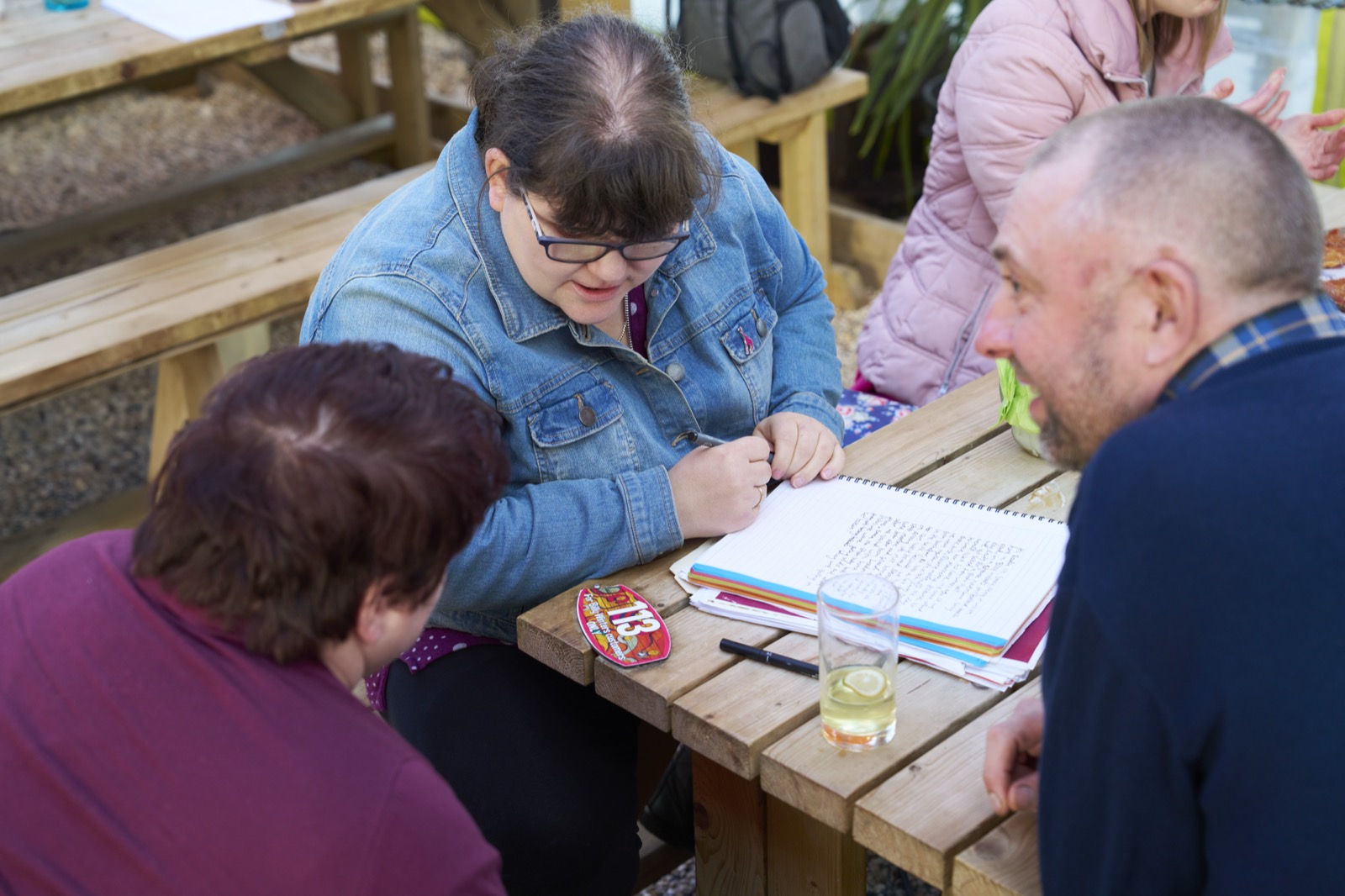
Since 2015, Parmiter has written a weekly column in the Dorset Echo with fellow PFD members Kerry Martin and Emily Burr (pictured right). All three are members of the PFD management committee.
Writing a newspaper column. Photo: People First Dorset
“I write the column each week about anything and everything,” he says. “Politics, Brexit, prison, accessible spaces, friendships during Covid, running the world and the environment to smelly jobs, kindness, lying, litter, losing things, designing a supermarket and sandwich fillings.”
Parmiter, Martin and Burr, along with a local illustrator, are writing the story of Susie, a cat who likes to travel around Dorchester. The aim is for the book to be out this year.
PFD has a four-strong staff team, one of whom has a learning disability. There is one full-time employee who does not have a learning disability; the other three are part time. PFD also has six regular volunteers who support the club’s events and activities.
The management committee meets bi-monthly; all eight members have a learning disability and they work alongside seven trustees, one of whom has a learning disability, to ensure the charity is user led.
My involvement began when I moved to Dorset in 2015. I contacted PFD after hearing of it while co-director of the Foundation for People with Learning Disabilities. I was chair until 2019, then became a trustee.
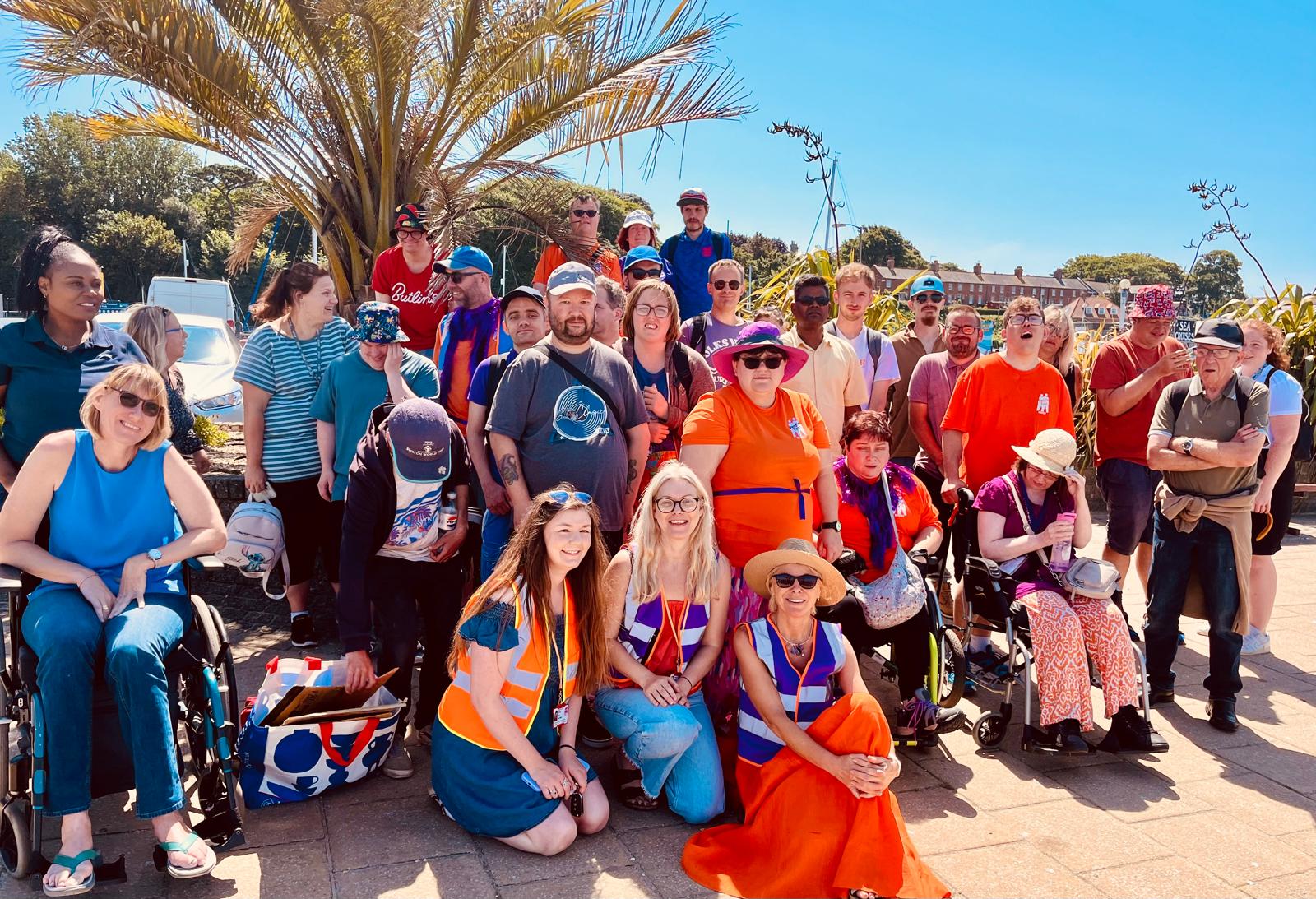
Together for a sponsored walk. Photo: People First Dorset
In the lifetime of our younger son, Pete, who had Down syndrome and never used words, we saw how friends were important to him. I describe this in my book, The Joy of Knowing Pete previously featured in Community Living (winter 2023).
Securing ongoing funding, as with other charities, is a big concern as PFD seeks to continue and develop its work and support members to address the inequalities they experience.
Charities like ours are crucial in promoting wellbeing, responding to concerns and often needing to signpost members to sources of help. Such benefits are difficult to quantify but are so important.
Anyone can feel free to dance and make friends at the Blue Camel Club, say Jason Eade and Dave Lavis
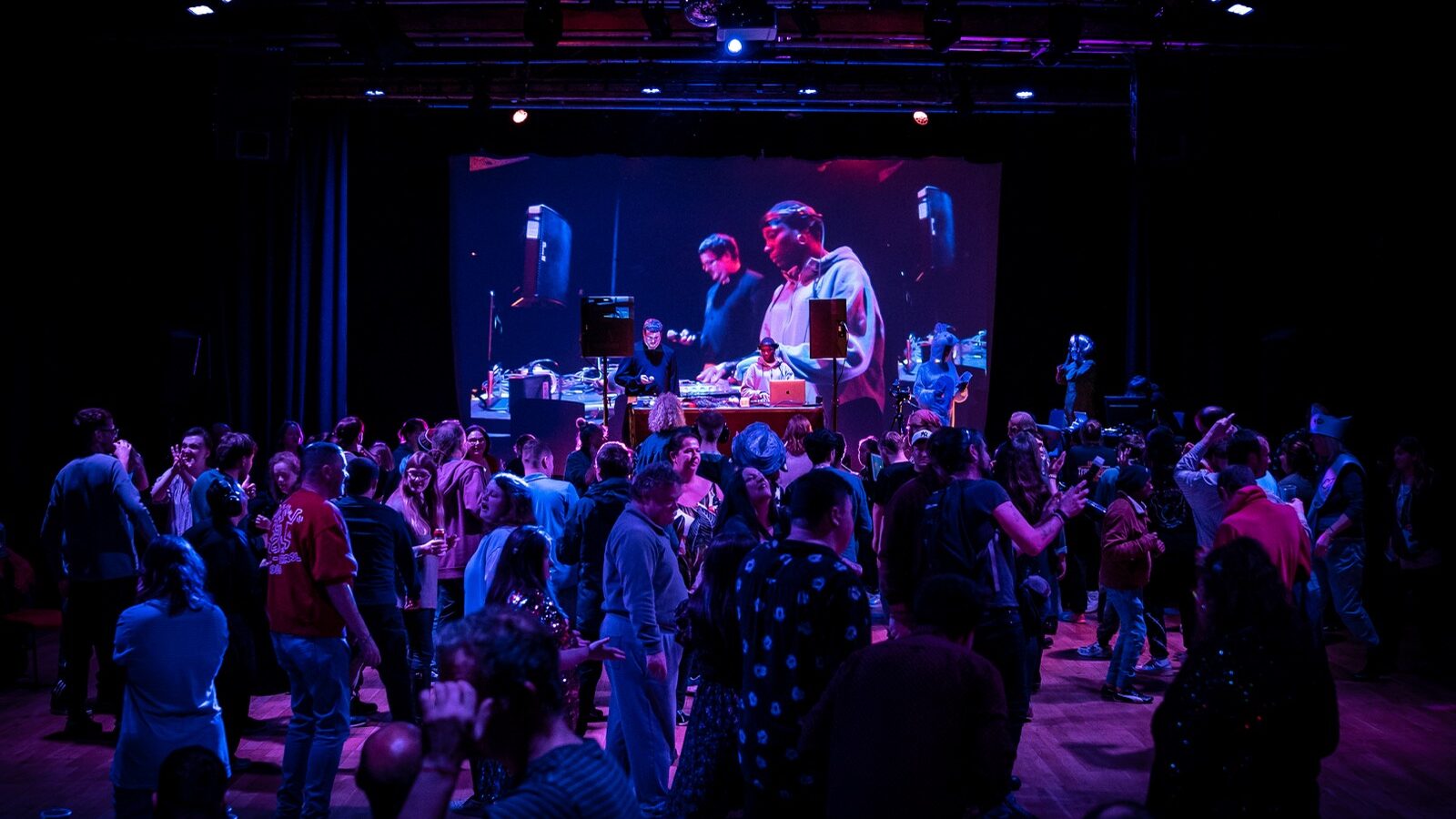
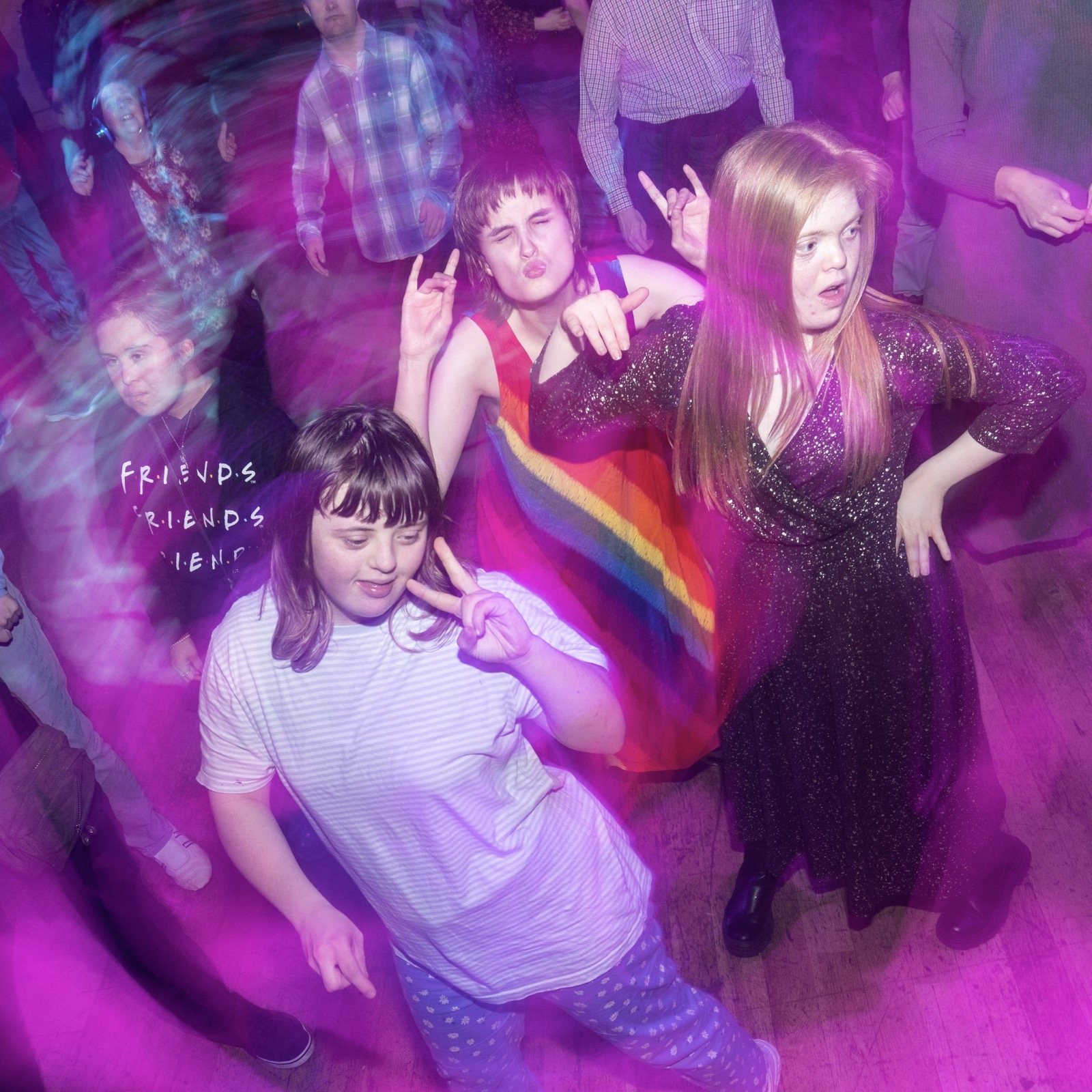
The Blue Camel Club. Photo: Ollie Denton
The Blue Camel Club in Brighton, designed to fill the gap in opportunities for learning-disabled clubbers to socialise, opened 25 years ago.
Today, it is the largest inclusive club on the south coast and, on Monday 7 October, will make its return to the newly renovated Corn Exchange in Brighton.
Around 250-350 people attend each club event – a welcoming environment where learning-disabled individuals and their friends enjoy a night out, a place where these clubbers can rave to good music by learning-disabled DJs and be safe while having fun.
Carousel, the arts charity that runs the night, has held more than 100 club events in total, welcomed over 33,000 clubgoers and given a stage to more than 2,500 learning-disabled performers, from musicians to DJs. Four DJs debuted at the November 2023 event.
Within a few years of being set up, the Blue Camel Club had expanded, setting up Blue Starfish in Worthing, Blue Wave at Bognor Regis, Blue Bird in Crawley and Blue Oasis in Horsham.
The camaraderie among clubbers, DJs, and Carousel’s staff and volunteers is a hallmark of the Blue Camel Club.
Organising Blue Camel Club events involves coordinating up to 50 staff, volunteers, committee members, artistes and guests.
VJ David Briggs enhances the experience with his visuals, perfectly complementing the music. Blue Camel Club’s DJs have honed their skills through Carousel’s workshops.
The club’s comperes such as Susannah (surname withheld) are skilled radio presenters and poets. The communication skills they have developed through Carousel’s radio and spoken word projects make them charismatic, welcoming hosts.
Our October club night will be space themed. New interactive activities will run alongside the usual experience. Plans include space decorations, a live green screen activity (so clubbers can see themselves against different backgrounds), a space game and more. Clubbers are encouraged to dress as aliens, astronauts or planets.
Music and lighting will be subdued to give a gentle start during a quiet hour before the clubbing atmosphere kicks in from 7pm. Within the quiet room, there will be space for everyone, no matter what your needs are. The chill-out space will offer a relaxing environment with space-themed music, coloured lighting, comfortable furniture and sensory activities, perfect for those needing a break from the busy club environment.
Recent feedback includes a comment from one clubgoer who described the Blue Camel Club as “so important to Brighton”.
“It is real. It is where people with a learning disability meet their friends,” the clubber says. “It’s where anyone can dance. It has brilliant bands and DJs.”
Another clubgoer, Ziggy (surname withheld) said: “It’s somewhere you can go to break free. I feel safe there. You don’t get judged and I feel less insecure. I’ve found new friends there too. It’s sort of a lifesaver.”
Jason Eade is a Carousel artiste and Blue Camel Club compere and Dave Lavis is the club’s producer
Tips for top nights out
The Blue Camel Club crew have a few key tips for organisations seeking to emulate their success:
First, find out in what ways the local night-time arts and leisure offer is not serving learning-disabled people
Next, talk to learning-disabled people themselves. Ask them, for example, are venues accessible? Are events too loud, busy or intimidating? Are their musical tastes catered for? Do events start or finish at inaccessible times?
Do learning-disabled artistes – musicians, performers, DJs – get opportunities to gain experience or work at mainstream venues? Design events that offer learning-disabled people what is not already being offered locally
Flo O’Mahony’s sister Rachel oversees an award-winning event, challenging who gets to define artistic taste
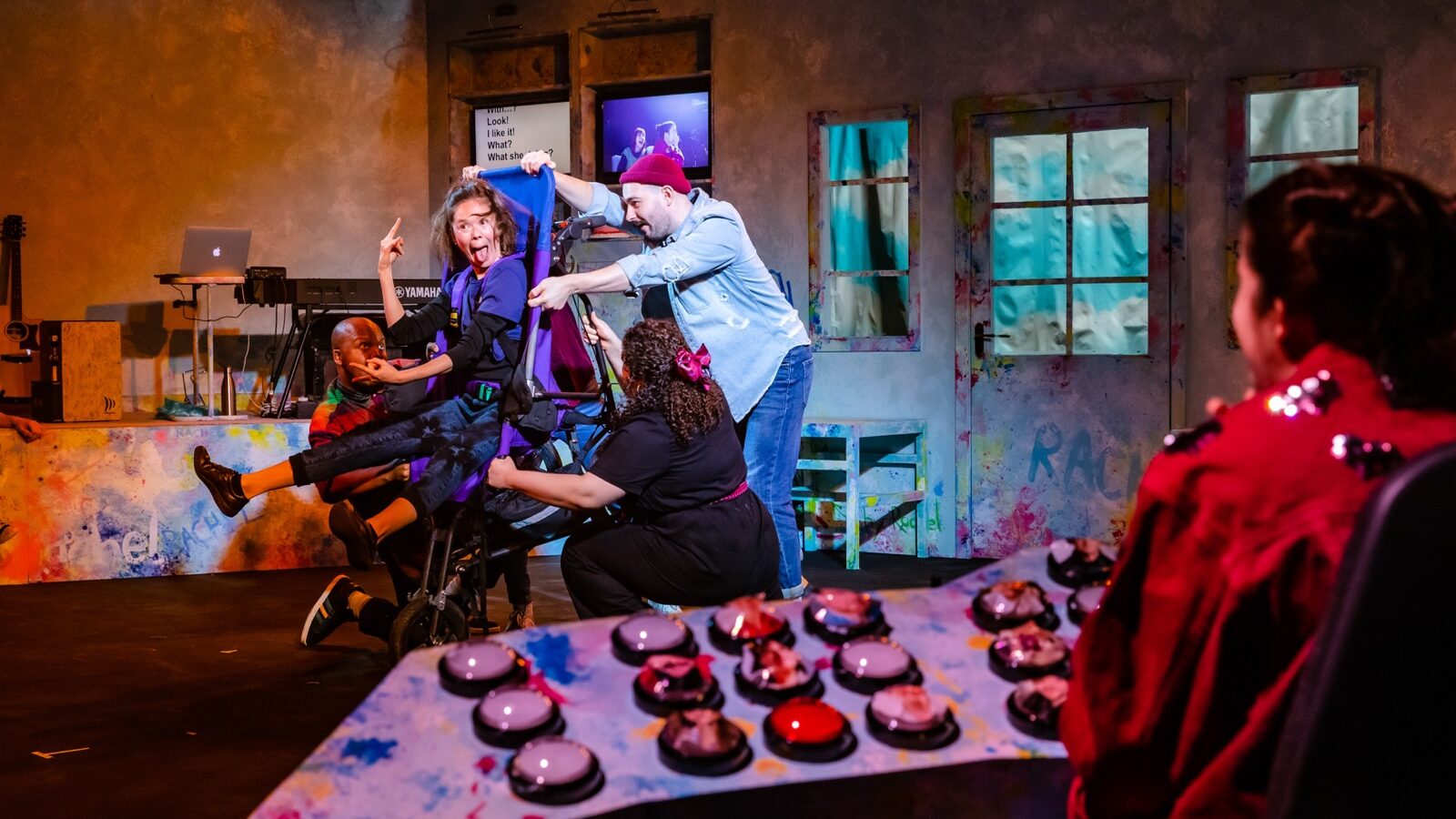
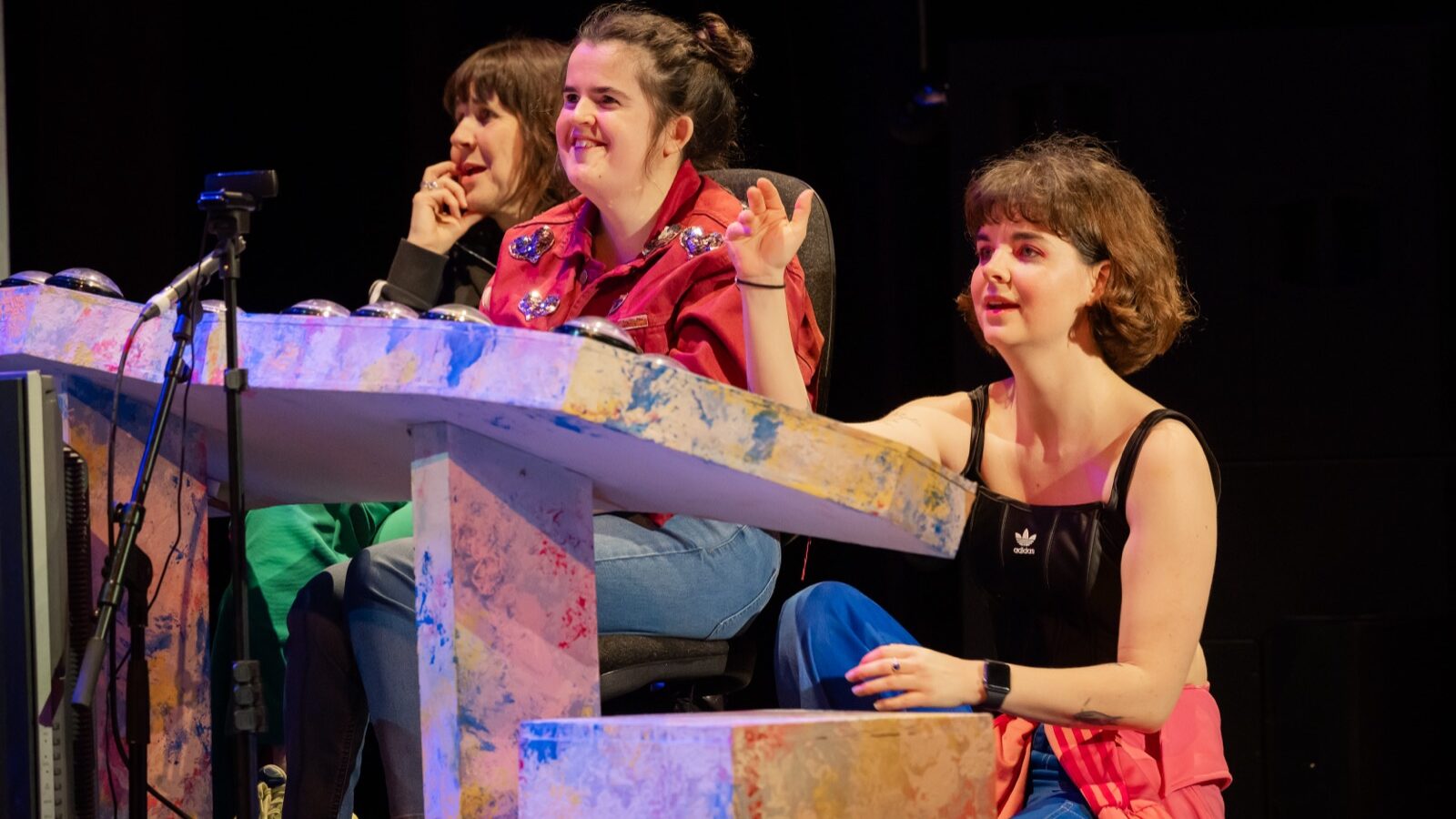
Rachel directs the show on stage from her custom-built desk; below: Flo with Rachel: “The world is not built with people like Rachel in mind”. Photos: Danny Kaan; Holly Revell Photography
Rachel, my big sister, is the director of Perfect Show for Rachel. She is learning disabled and lives in a care home.
Rachel directs the show live from her on-stage, custom-built tech desk. A touch of a button triggers music, lighting, scenes or choreography, brought to life by performers.
The award-winning show is produced by theatre companies Zoo Co and Improbable. The world premiere was staged in The Pit at London’s Barbican in 2022 and a new version returned earlier this year.
We developed a show with Rachel on her terms to explore who defines artistic taste and question who that excludes.
Developing it alongside Rachel has been moving, hilarious and challenging. I am usually a director rather than a performer, and handing over the reins to anyone would have been a challenge, never mind to my big sister.
Perfect Show For Rachel has made me a better artist, better director and – I hope – better person.
Rachel is a Kylie Minogue fan, a fart joke enthusiast and the driest comedian. She’s playful, inquisitive and brutally honest. She frequently checks if people are OK in both the company and the audience.
As director, she is sharp, witty, decisive and possesses wisdom about emotional beats, pauses, repetition and endings. Working with Rachel has challenged the cast to drop egos and grow as artistes.
Rachel loves talking about her show, tending to say “I like Rachel’s show”, “It’s funny” and “It’s clever”. She makes the audience say, “Well done, Rachel!” at the end.
Being Rachel’s younger sister was and still is a big part of my identity. I have never known a sense of family without her. Things could be challenging – Rachel really enjoyed pulling my hair and I found that hard to deal with as a kid. But she had a particular brand of hugging bordering on strangling that could melt away sibling resentment in moments.
There was a lot of car singing, outdoor adventures and giggling. My parents allowed me to just be a kid, not a carer, if I wanted to. I naturally wanted to be involved in Rachel’s care and decisions about her life.
Working on this show has shown me how much Rachel has to give and teach. I feel profound respect and adoration for her as an artist and as my sister.
I try to listen out for Rachel’s inherent wisdom, I assume more often that she can do things and make decisions, and have found it easier to share her brand of comedy and communication with people, so I no longer feel like her gatekeeper in social situations.
Shows relaxed as standard
Rachel is the reason Zoo Co makes all shows relaxed as standard. Whenever she came to our shows, she would heckle whether or not they were relaxed. We started to always make the shows Rachel came to relaxed.
Relaxed performance is about allowing theatre and the people experiencing it to behave in ways that are natural for them. We’ve accidentally built a colonialist, classist, racist, ableist expectation around audience behaviour that is not only exclusive but also asks audiences not to be human in response to the art they are experiencing. Theatre is better when we allow audiences to have live responses to our work.
The world is not built with people like Rachel in mind. I’ve always been ready to kick off at the first person who had a bad word to say about my sister. Now, I guess I can channel that into my work at Zoo Co. Rachel instigated that.
Being Rachel’s sister is one of the most profound, informative things about me. I wouldn’t change it for the world.
Flo O’Mahony is artistic director of Zoo Co, which is booking dates for touring Perfect Show for Rachel in summer and autumn 2025
Relaxed event recipe
Photos: Danny Kaan; Holly Revell Photography
No one size fits all. Zoo Co applies different rules to each show we do according to what the art and its audience might need. However, some of the ingredients for a brilliant relaxed performance include:
Clarity in what you are and are not doing at the point of booking and providing easy access information up front
Performers announcing it is a relaxed performance at the top of the show – a clear indication the artistes have really bought into the relaxed aspect
Not narrowing down types of work that can or should be relaxed; disabled audiences’ tastes are broad and multifaceted
The people and conditions around a disabled child affect almost everything and, while abuse has to be tackled, there is an ocean of goodwill out there, says Virginia Bovell
Here is Danny, sitting in the middle of the ball pond on his own and, until now, he has been happy. Suddenly, and with no discernible cause, he starts to weep.
I observed no trigger for this sudden distress, but it is palpable. My darling child is sitting alone and crying because of – as it seems to me – sudden overwhelm.
It is as if he is saying, “I am alone and I don’t understand this place. I have tried so hard but I have exhausted my reserves of curiosity and adaptability. This is all too much.”
I swept him up and the distress abated as we drove home. But it left a lasting impression.
God knows I have seen and heard Danny cry many times since. But there was something about his lonely weeping back then – such a small, innocent boy in the middle of a place that was supposed to be fun, in the middle of a world that had become alien to him – that broke my heart, as if I were glimpsing what might lie ahead.
The memory of these incidents has intensified over the years. I revisit them in technicolour, sound system pounding, emotions whirling around all over again. They have become almost allegorical, as reference points to guide my beliefs and actions, both as a mother who longs to protect her son and as an engaged citizen. They shed light on the ways in which other people can make such a difference to the disabled person, for good and bad.
Maybe no amount of social change can make everything better. But it is no exaggeration to suggest that the external conditions surrounding the disabled person can and do affect almost everything.
It is imperative to deal with the abuse that comes along, be this from individuals or institutions. Yet it is also imperative to be driven by the knowledge that adaptations – the reasonable adjustments of equality law – are not a utopian dream.
They occupy the realm of the practical and the possible. There is a kind of defeatism in believing that the lone kicker sums up all that is probable. It is not naive to keep believing in the kindness of strangers.
What Danny has brought with him is access to an ocean of goodwill.
For all the perpetrators of bullying and neglect, there are many, many more individuals whose everyday kindnesses and sense of decency win through
The shopkeepers who wanted to give him an extra bag of crisps free of charge, the fairground workers who would allow him to stay on the same ride time after time, the ladies in the cafe who told me not to apologise for him, not ever, when he screamed and banged and disturbed their lunch break. The nurses, the doctors, the teachers. The support workers who managed his periodic outbursts and attacks, who emptied his stoma bag, who washed his soiled laundry if it burst, who delighted in his pleasures and were thrilled when he learnt to run his own bath and wipe the table, who came back day after day to be with him and rub his feet as he went through hours of pain, and whose hearts sang when he greeted them with a look and a smile, a touch, a hug.
I have learned that most people are just waiting for a chance to be nice. For all the perpetrators of hate crimes, bullying, neglect and indifference, there are many, many more individuals whose everyday kindnesses and sense of decency win through. We don’t read about this much, it’s rarely on the news and it doesn’t make for dramatic TV series or interesting reality TV shows. But there it is.
And around every corner, in every child, there is the potential to be a human who isn’t tarnished and whose values aren’t distorted through commercial pressures and a toxic environment of competition and division.
It shines out in the way people catch Danny’s innocence and enjoy his freedom from all that trash. They want to help him to stay safe, to thrive in his way and on his terms. Kindness is everywhere, in and around us, just waiting to shine.
Scientific items have inspired Clifton Wright’s artworks in a heavenly exhibition. Simon Jarrett celebrates an up-and-coming artist – and finds out why his portraits can seem disturbing
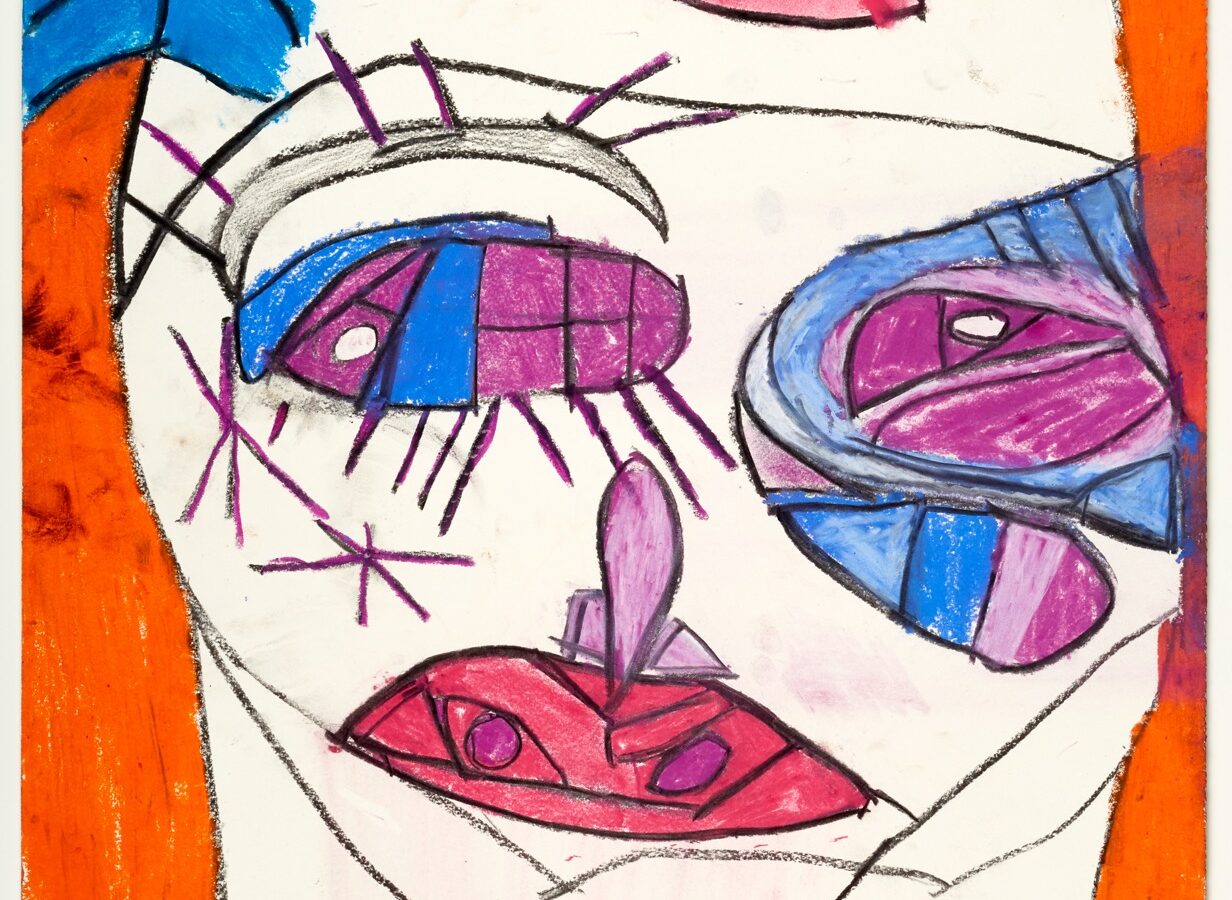
Eyelashes Galore by Clifton Wright, pastel on paper
Firstsite Gallery, Colchester, Essex
Until October 2024
Clifton Wright is an up-and-coming name in British art. His work has been acquired and exhibited by the Victoria and Albert Museum and collected by the Arts Council. It has toured the UK and Europe, shown in venues as venerable as Tate Modern and the Whitechapel Gallery.
Now we find Wright alongside big names such as Essex’s very own star potter Grayson Perry in a captivating exhibition, Lunar Lullabies, at the Firstsite Gallery in Colchester.
Most people know the poem Twinkle, Twinkle, Little Star. But how many know it was written by Colchester poet and novelist Jane Taylor in 1806? Well, we know now, and lucky us because it has inspired this beautiful gallery to put on an exhibition on all things outer space.
The show ranges from children’s toys, models, comics and other artefacts from the space-crazed 1960s and 1970s, though recreations of futurist fantasy space cities to all kinds of space art, sculptures and extra-terrestrial landscapes.
Wright contributes portraits inspired by his exploration of scientific and mathematical objects from London’s Science Museum, and he weaves in references to astronomy, ancient markings and films such as Independence Day.
And just to show us all how talented he is, he throws in a couple of pottery pieces as well.
His outer space portrait series includes some real gems.
Eyelashes Galore shows us Wright at his best as a talented colourist. A distorted, asymmetrical creamy face with blue and purple eyes, red lips, spiky black eyelashes and a smattering of blue hair disappearing off out of the picture sits on a gorgeous orange background.
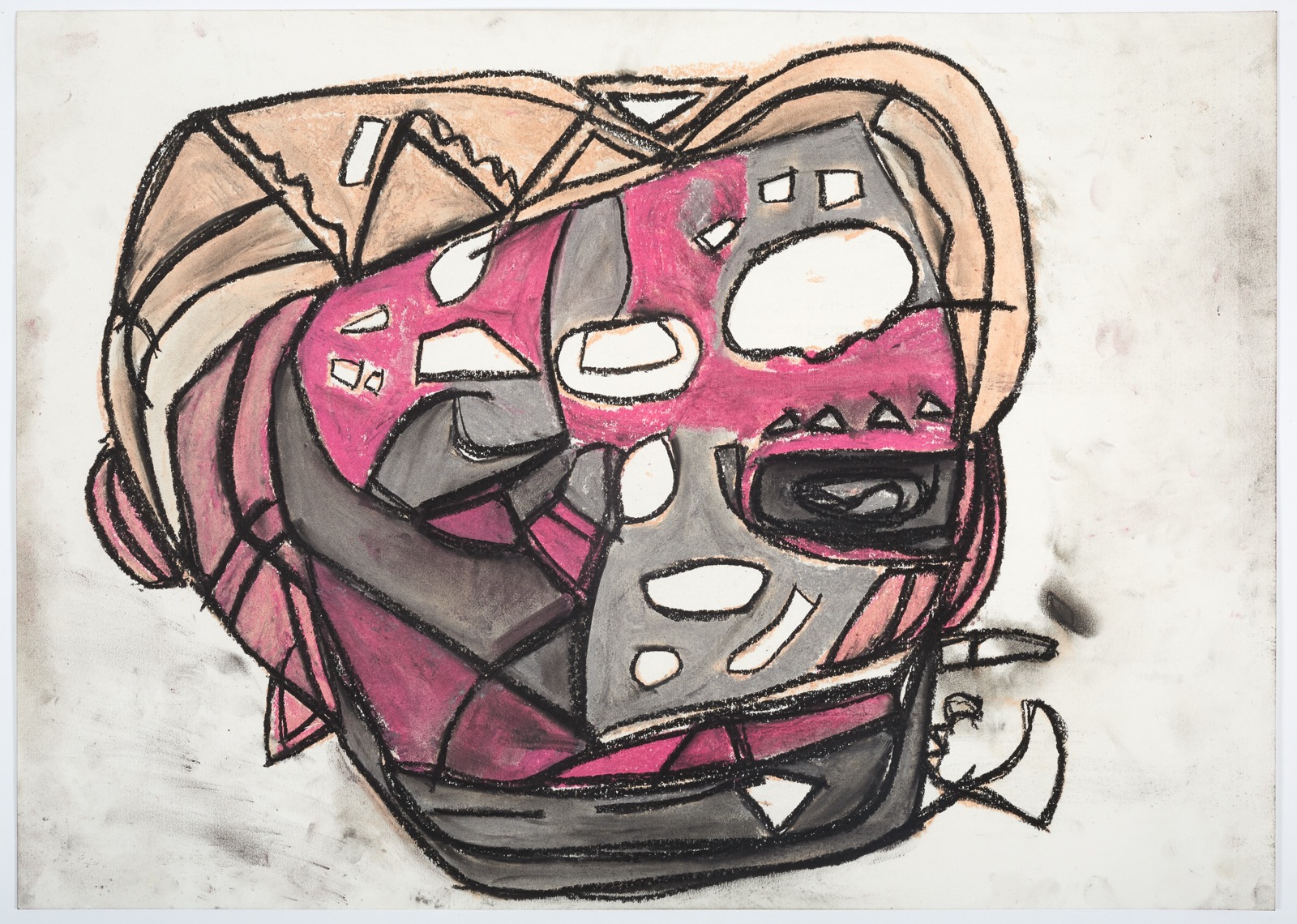
Cornet 67P is one of Wright’s trademark abstract yet recognisable faces. It could be a Star Wars-like stormtrooper but, through the mask-like facade, it stares right back at us, very much alive and a little bit threatening too.
Comet 67P by Clifton Wright, pastel on paper
Wright has spoken about how he creates his portraits and how he sees them as “more about that abstract stuff than who the person is”.
This is why we get that slightly disturbing blank look when we gaze at them – human enough for us to recognise but strange enough to make us worry about exactly what sort of human it is we have come face to face with.
This is perfect for an exhibition about outer space – our imaginings about space are often our darkest imaginings about life here on earth.
He uses a jigsaw metaphor to describe his effects, explaining “a face is the starting point, but the point is the picture. I use the structure of how things slot in the face, and continue it like a jigsaw puzzle across the rest of the picture.”
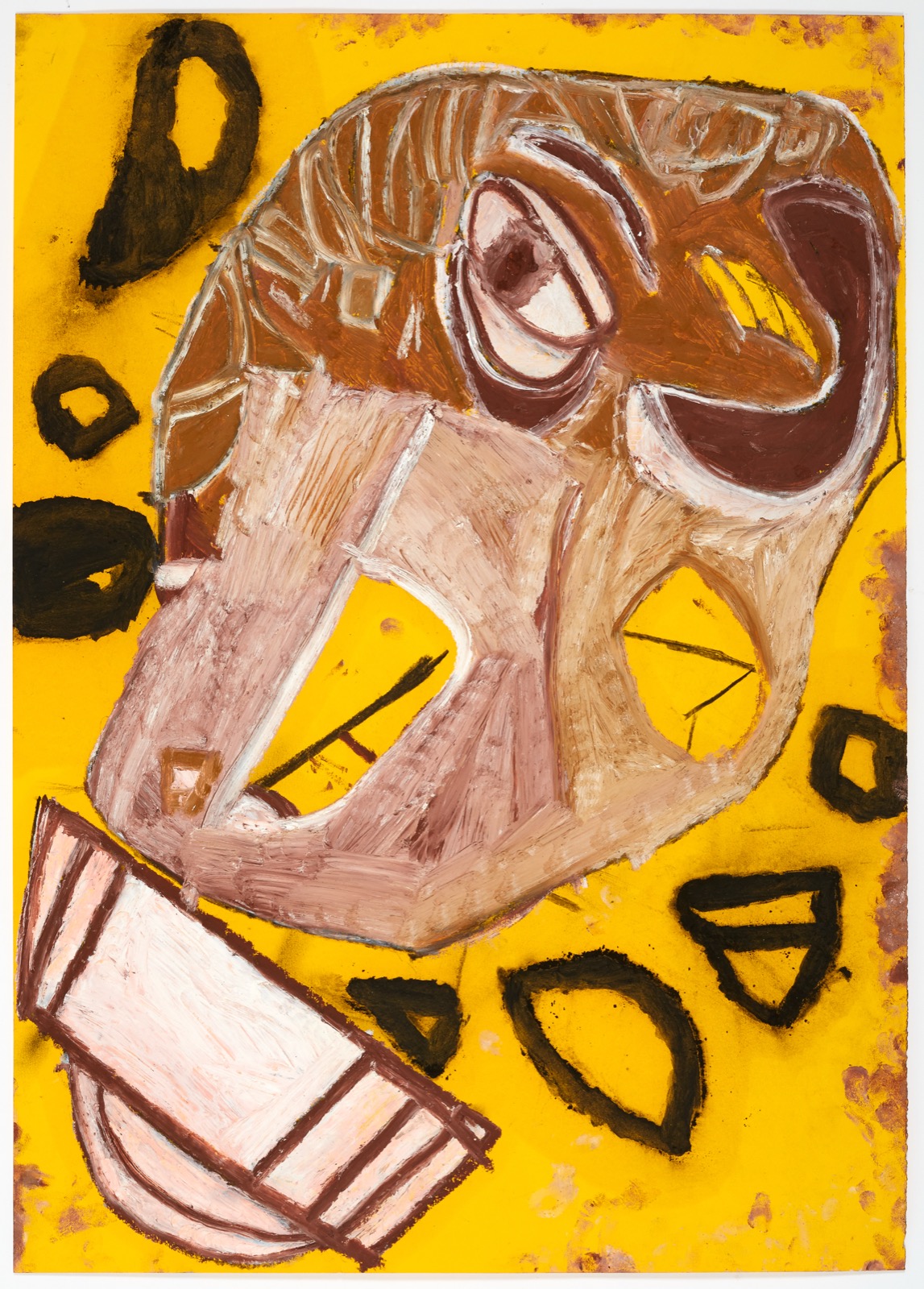
Jigsaw Space by Clifton Wright, pastel on paper
This is evident in the aptly named Jigsaw Space. As in a bad dream where familiar dimensions have fallen apart, we feel as if we should be able to put it all back together to make something recognisable, but have no idea where we might start.
Powerful stuff, and full of impact.
Wright is from the Intoart artist workshop in South London, which champions people with learning disabilities to be visible, equal and established creatives. Yet here, in his imagining of outer space, he has found himself – confident, powerful and producing images that quietly seep inside you and don’t go away.
He and his work belong here. The art world has found Clifton Wright, and he fits like a glove.
A variety show becomes something more complex and curious as paintings come alive, building sites inspire and flower power offers some light relief. Simon Jarrett is riveted by dramatic dancing
Dancers go back to 1960s hippy days. Photo: Impact Theatre
Impact Theatre
Gallery of Light
Perivale, London, May 2024
Impact Theatre Company, based in west London, has come up with an intriguing and technically highly accomplished play.
Set in an art gallery with well-known (and some less well-known) paintings projected onto the walls, in 10 scenes the production takes us into a world where the paintings become real and events unfold around them.
Each scene is prefaced by a guide bringing a group of visitors into a gallery room and discussing the painting in front of them.
The visitors ask questions and enter into discussions about the image they are viewing and then, as they leave the stage, the image becomes real and we are treated to a short drama that emerges from it.
As each of these pieces concludes and we await the return of the guides with their visitors to another room in the gallery and a fresh painting, a mysterious faceless figure, dressed from head to toe in black, appears on stage dancing then scurrying off just as the new scene begins.
Waiting in the wings. Photo: Impact Theatre
This innovation works supremely well. It keeps the production going and the audience interested as scene changes take place.
But what really stands out in these sections is the quality of the dance – whirling, exciting, confident and dramatic. And there is something about the anonymity that the costume gives that seems to bring out the best in the dancers.
The cast then has great fun with each individual scene as they become part of the themes of the painting in each room.
They begin with a compelling piece constructed around Edvard Munch’s famous, disturbing painting 1893 The Scream. (Incidentally, I visited the Munch Museum in Oslo recently and if you think The Scream is depressing you should try Angst, Death in the Sickroom and Despair for the full misery experience.)
This is followed by a piece constructed and developed by the actors around Belgian artist James Ensor’s rather scary 1890 painting The Intrigue, which features a wedding party of 11 masked figures, two of them holding hands.
Next up is a bar scene inspired by August Renoir’s Luncheon of the Boating Party (1881) in which a bunch of friends are some way in to a boozy get-together at a restaurant by the River Seine.
It’s all very clever and riveting stuff and moves into more modern times with a brilliant urban construction site-themed, hard-hatted dance and music piece, using brooms, dustbin lids and other building site objects as instruments.
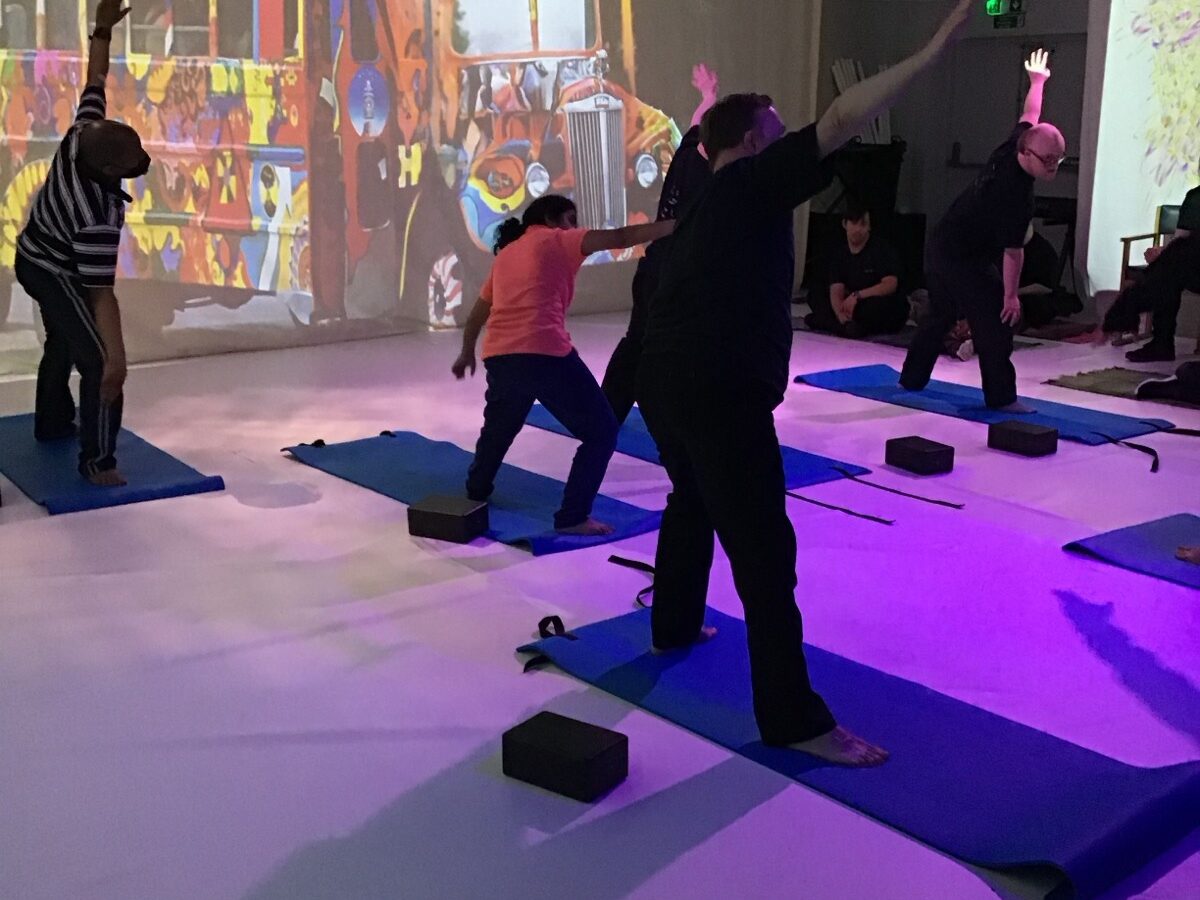
There is also a beautifully done – and very funny – evocation of the flower power era complete with yogis, the Woodstock festival, a 1960s soundtrack and other things that hippies used to take very seriously.
The whole evening felt very fresh, admirably ambitious, original and well paced. Impact is to be commended for a very technologically adept production, where the lighting and imagery really drew in the audience and made them believe.
The format of the production enabled a large cast of actors to take part as the tour groups trekked in and out with their guides and as each of the 10 scenes unfurled.
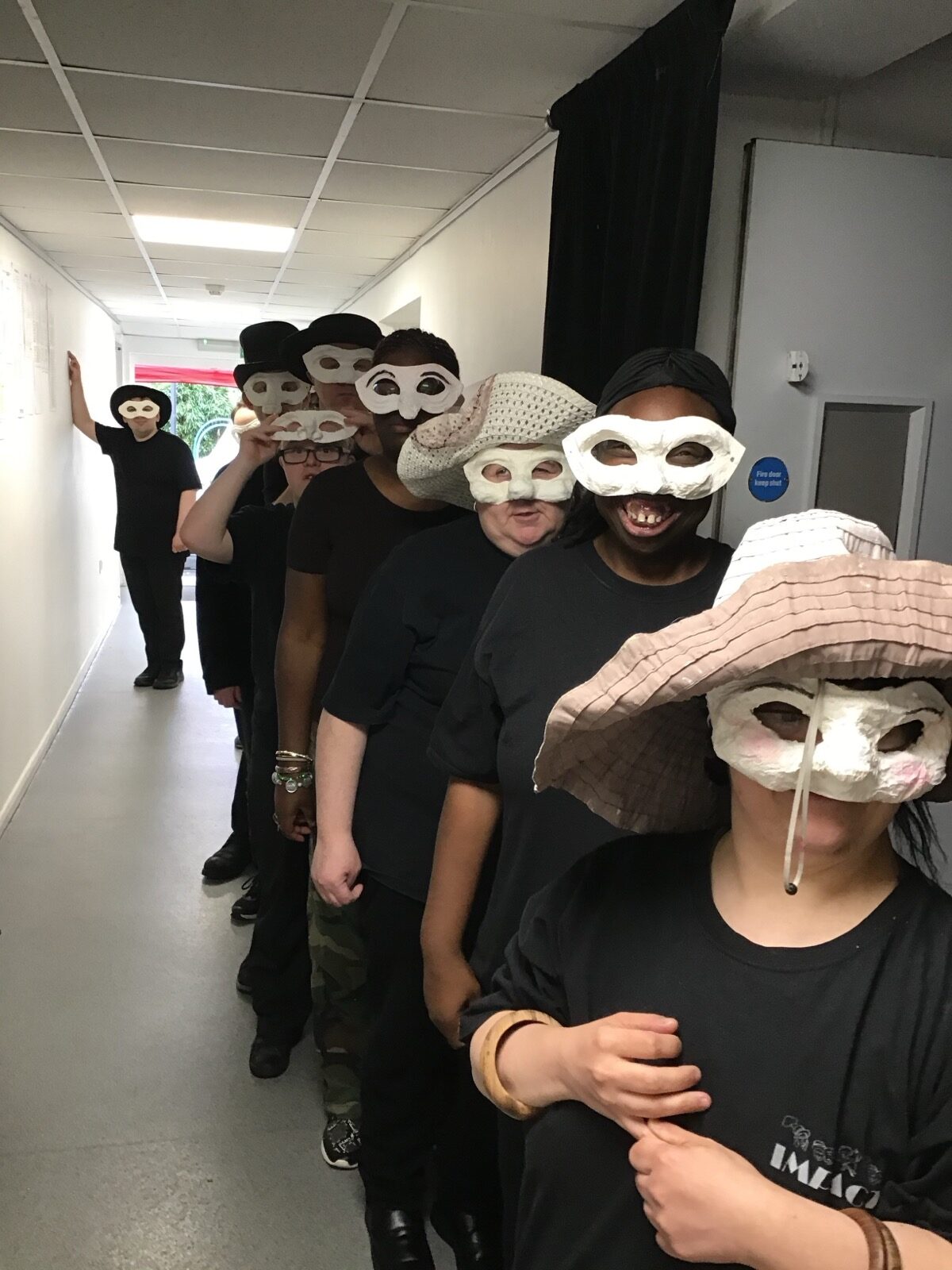
The play began apparently as a sort of variety show with the aim of keeping things simple but the performers developed it into something far more adventurous.
As so often happens when people with learning disabilities get involved in the arts, the performers clearly exceeded expectations and gave the audience something very complex and intriguing to chew on. The actors, singers and musicians – some a combination of all three – all excelled.
It was a great evening where the audience experienced something very ambitious realised smoothly and successfully.
US anthropologist Robert B Edgerton was struck by the lack of testimonies of people with learning disabilities who had become independent – so put this right. Susanna Shapland reports
In 1954, American anthropologist Robert B Edgerton started his research into the lives of people with learning disabilities who had left the Pacific State Hospital in Los Angeles to live in the community.
He celebrated the anthropologist’s “propensity to visit strange places where they study curious people and their still more curious customs” and wondered why this approach had not been taken in the “legitimate anthropological enterprise” of studying those with learning disabilities.
He struggled to find any study examining the everyday lives of people labelled “mentally retarded” but who lived independently of any sort of institution. He was struck by the total absence of testimonies from people themselves, although there were interviews with “parents, guardians, teachers, or employers”.
Edgerton recognised the value in understanding what the people themselves felt and thought and how they interpreted their experiences and interactions. He saw this attempt “to see these people in their own eyes and to hear them in their own words” as “the quintessence of the anthropological tradition”.
He was strongly critical of the then preferred option of internment in institutions, believing better options could be developed through understanding his subjects’ lived reality.
Former patients consciously worked to ‘pass’ in the outside world. To do so, they assumed a ‘cloak of competence’ to disguise any social shortcomings
He hoped this would increase knowledge of “mild retardation” in particular so that more appropriate, effective care and training could be devised.
Chosen for independence
The Pacific State Hospital ran a vocational training scheme that involved patients taking supervised work placements in the community, with a view to them eventually living independently.
Patients selected for this had higher IQs and were judged to possess greater “social competence” and emotional stability.
It was from this group that Edgerton and his team selected 48 subjects to interview and observe.
The outcome of what Edgerton called his “study of incompetence” was The Cloak of Competence, first published in 1967. At the time, his fellow anthropologist Walter Goldschmidt characterised it as a “most exotic journey” into the “land of the mentally retarded”.
More recently, Jan Walmsley and David O’Driscoll recognised it as “one of the most important books in the history of intellectual disability”.
The anthropological method of time-consuming, in-depth interviews meant that, for one of the first times, learning-disabled people told their own stories in their own words.
In these interviews, subjects had the opportunity to air their daily worries: how best to manage everything from sex and relationships to work and free time. They also allowed the 44 of the 48 subjects who had been sterilised before release the chance to reflect on how this had impacted their lives and relationships on the outside.
Edgerton found that the stigma of having spent time in an institution and been labelled “retarded” meant that the former patients consciously worked to “pass” in the outside world and hide their past lives and diagnoses.
To do so, they were forced to assume what he called a “cloak of competence” to disguise any social shortcomings, regardless of whether these were due to an actual learning disability or simply the result of years of institutionalisation and lack of education.
Edgerton’s work is not without its critics. His subjects’ words are still filtered through Edgerton’s analysis, and often framed in stigmatising language and concepts.
Similarly, while he appreciated “mental retardation” was a broad, vague label, he did not challenge its use and claimed attempts by subjects to push back against their diagnoses were a form of “denial”.
Nevertheless, giving these ex-patients a platform and offer a glimpse into the reality of their day-to-day lives was groundbreaking.
Edgerton told his subjects that he hoped the study would help people like them in the future. Ultimately, he wanted his readers to feel as they would after reading any ethnography – “how like us they are after all”.
A change in the highest level of public office can signal fresh hope.
The Good Lives manifesto was central to this year’s Learning Disability England conference; Aisha Edwards and Marsh Stitchman of Lewisham Speaking Up at the event. Photo: Seán Kelly seankellyphotos.com
The election dust has not settled so it’s hard to come to any conclusions about the new government. But a change in the highest level of public office can signal fresh hope.
One hope at Community Living, which for 35 years has supported the rights of people with learning disabilities and challenged assumptions about disability, is that the new incumbents finally act on the insights, needs and experiences of people too often overlooked.
From education to employment to housing and care, the injustices run deep. Councils face a £600 million funding gap in supporting children with special educational needs and disabilities. Fewer than one in 20 adults with learning disabilities in England are in paid work.
In addition, 2,045 people are still locked away – 13 years since horrific abuse at Winterbourne View sparked government promises to shut down such establishments.
Meanwhile, the evidence about shocking health inequalities regarding people with learning disabilities is irrefutable.
The backdrop? Our historically underfunded social care system, further eroded by austerity, Covid and Brexit, and the lack of any rights-based state strategy for learning disability.
It is half a century since the first white paper and 23 years since the second, Valuing People. This is still, surprisingly, the learning disability strategy for England. As my predecessor Simon Jarrett once wrote in Community Living, “this is only because no new strategy has been brought in to replace it. It has been allowed to wither on the vine”.
So we welcome Learning Disability England’s manifesto that sits alongside its 2021 framework Good Lives: Building Change Together. The manifesto, as Jan Walmsley writes, asks politicians to create positive change in health and social care as well as better (and more) employment and housing.
As Walmsley urges, it is also our responsibility as citizens to force these issues up the political agenda. People with learning disabilities should have the right to things everyone else takes for granted; this should not be an impossible request.
Rachel O’Mahoney works the desk to trigger music, light and action (full story below on Perfect Show for Rachel). Photo: Ikin Kim
Exhibition remembers British Nazi victims
A powerful exhibition reveals the stories of 13 British-born people killed in the Nazi Aktion T4 programme.
Finding Ivy, a Life Worthy of Life reflects how, between 1940 and 1941, 70,000 adults in Germany and Austria who were disabled or had mental health issues were deemed to have “lives unworthy of life”. Of these, 13 were British born.
At the launch at London’s City Lit college in May, Atherton said: “We want to raise awareness of attitudes and beliefs that deny people their right to life, their right to being.”
Born in Scotland to German and Austrian immigrants, Ivy Angerer was killed aged 29 because she had a learning disability.
Judges awarded US-based O’Hara the prize for best columnist in the foreign correspondent category, commending the journalist’s “strong voice when tackling important issues, such as arguing for maintaining health funding for the poor and disabled in the UK and the US”.
Mary’s powerful writing compares and contrasts support for people with learning disabilities in the UK and US, offering readers unique insight and analysis. Explore Mary’s work for Community Living.
Short film shifts views on talking about death
A new film involving people with learning disabilities addresses the issues of death, dying and bereavement.
Commissioned by NHS Somerset and produced by community interest company Biggerhouse Film, We Need To Talk About Death features six people aged 25-63 years supported by Taunton-based care provider My Day Care Services.
Health and care professionals and family members often assume people will not understand the concept of death or find it too upsetting. This undermines their ability to share thoughts about grieving or end-of-life care.
The 15-minute film aims to shift assumptions about who leads and is involved in conversations on death and bereavement.
The film – available in British Sign Language and audio-described versions – is on the NHS Somerset website.
Performer runs festival show on her own terms
The innovative Perfect Show for Rachel has been staged at this year’s Brighton Festival and at the Barbican in London (main photo).
The theatre performance from companies Zoo Co and Improbable had an original sell-out run at the Barbican in 2022. It was developed by Croydon-based company Zoo Co, whose artistic director is Flo O’Mahoney.
Flo’s sister Rachel has a learning disability and loves theatre.
With the aim of creating a show for Rachel “on her own terms”, it explores who is in control of the narrative. Rachel is on stage taking charge of the performance in real time, pushing different buttons on her desk to trigger music, lighting, theatrical scenes or choreography.
The scenes reflect her favourite music, memories and jokes and anecdotes.
The original production won the 2022 Oxford Samuel Beckett Theatre Trust Award and the Off West End Award for accessibility.
Zoo Co collaborates with deaf and disabled artists with all shows “relaxed as standard” with sign language, creative captioning and audio description.
News briefs
Board members step down
The Community Living team and editorial advisory board commend the exceptional contribution of two advisory board members who are leaving after a long voluntary commitment. Gill Levy, advocate for visually impaired people with learning disabilities, became involved shortly after the launch. Isabelle Garnett, parent campaigner, gave her time to bring the magazine to social media.
Home working: a good thing
Remote working is overwhelmingly positive for many disabled people, the work and pensions select committee has heard. Dr Christine Grant, associate professor at Coventry University, told MPs that people are more comfortable, less tired, more productive and better able to control their work environment. However, support is needed to prevent concerns such as isolation or loss of motivation.
First Camphill festival
Camphill Milton Keynes will host the first Festival of Camphill over 23-25 July. The event, open to residents, staff, volunteers and alumni, will focus on the work Camphill does to foster a sense of community. Information on the free event is on the Camphill Milton Keynes website.
Brothers tell their story
The Leaders’ List, run by Dimensions, My Vote My Voice and the Voluntary Organisations Disability Group, has recognised a host of talents. Lorraine Stanley, who is autistic and disabled, was recognised for her work on resources on disability and sex. Others include cyclist Ben Fai, who represented Great Britain at the 2023 Special Olympics in Berlin.
What’s on our radar
MPs may be influential but out of touch and there’s help to vote. Saba Salman reports:
In the run-up to the election as we were going to press, campaigners and charities doubled down on efforts to urge MPs to prioritise disability issues and to encourage voters with learning disabilities to exercise their democratic right.
A Scope survey of over 1,000 disabled adults in the UK found that 77% thought politicians were out of touch with their lives; more than 50% said politicians did not care about them. Yet 85% felt politicians have the power to improve disabled people’s lives.
The My Vote My Voice campaign from Dimensions, Mencap, United Response and Ambitious About Autism published a free, online step-by-step guide on how to vote. It also called on the political parties to commit to publishing easy read versions of their manifestos alongside the regular versions.
A white paper from the Local Government Association (LGA) urged a new government to embrace the potential of local authorities. The LGA paper championed their role as “the key to solving some of our biggest national challenges”, arguing that the LGA would work with the next government on a central-local partnership, a review of place-based public service reform and efforts to boost cost-effectiveness and innovation. Political parties were asked to commit to publishing easy read versions of their manifestos alongside the regular versions
The charity Kids published On The Cliff Edge, sharing the experience of young people with special educational needs and disabilities moving from childhood into adulthood. Criticising “an entirely broken support system”, the charity said the difficulties this group faces is exacerbated by a deeply inadequate system of support to do this. Problems include that information is hard to find and that the more complex the needs, the worse the transition experience.
In brief and What’s on our radar stories by Saba Salman
Many more people with complex disabilities are taking up new sports – sensory versions of badminton, snooker and rounders – at whatever level that suits them. Louis Wickett-Padgham reports
In the snooker club. All photos: Mike Pinches; Anastasia Jobson
The summer of sport is in full swing with the European Football Championship in its final stages and the Olympics and Paralympics about to begin.
This summer, lots more people with complex disabilities, including those with learning disabilities and autism, can play new sports, at whatever level best suits them.
National disability charity Sense, where my team supports disabled people to get active, has reimagined badminton, snooker and rounders so people with complex disabilities across England can meaningfully take part for the first time.
The disabled people we support chose these activities as the ones they most wanted to try but could not access.
We love the social opportunities each game offers. Recent research by Sense found that more than half (53%) of people with complex disabilities feel lonely (results gathered through combined online polling of 1,000 people with complex disabilities and a survey of 234 people with complex disabilities in 2023), compared to 25% of the general public.
Sensory snooker session
Sensory Snooker at the Elite Snooker Club
Ethan playing sensory rounders
Practising cue action for sensory snooker
Geordie playing sensory snooker
Potting balls into buckets in sensory snooker
Players bonding over sensory rounders
Jay playing sensory badminton. Photo: Mike Pinches
Badminton brings together people who want to play a racquet sport, snooker is traditionally played on nights out and rounders works so well alongside a sunny picnic.
Over the past few months, we have set up the first sessions of our new, simplified versions of these activities in sports, leisure and community venues in England.
Sensory badminton and sensory snooker are currently available in four regions of England, and sensory rounders in six. More groups will be starting across the whole country as we find the right venues and train coaches.
Eventually, we hope around 1,000 people with complex disabilities – by which we mean people with two or more of autism, sight loss, hearing loss or a learning disability – will take up at least one of the new sensory sports, which can be adjusted to suit the skills and abilities of each individual player.
For sensory snooker, this might mean some players sit on a felt mat on the floor and mirror potting balls by throwing beanbags into buckets. Others play on tables in a traditional snooker hall but maybe pot the balls by hand instead of using a cue.
Similarly, for sensory rounders, the ball might be balanced on a stand and hit with a small bat or be rolled along the floor for a player to hit it back with their hands.
In sensory badminton, players might mirror traditional badminton shots by hitting a balloon to one another using racquets and an overhead action. Others might use a net to catch balls thrown underarm.
In each case, players develop the key skills needed for the traditional sport and achieving the same goals in a more accessible way. Some might take on extra challenges as they score points and enjoy some healthy competition.
The games’ three official governing bodies (Rounders England, Badminton England and the World Professional Billiards and Snooker Association) helped Sense develop the sensory sports.
We tested our activity ideas over several months with people who use Sense services in groups of between six and 10 players. Most participants were aged 17-30, but the 10 snooker testers were aged up to 60.
The feedback from our first players has been fantastic.
Ethan, 21, from Bedfordshire, said after playing sensory rounders: “It was good and very fun. I liked hitting the balls and beanbags with the bat. I enjoyed exercising and stretching my muscles.”
Jay, 20, from Leicester, told us that he’d love to play sensory badminton again. And, from watching Geordie, 22, from Redditch, determinedly setting up the balls with the snooker triangle and potting them by hand, it is clear that he loves sensory snooker.
We are now working with the governing bodies to train coaches and run sessions. Sense will spend £60,000 over the next three years – funded by a Sport England grant – on equipment, venue hire and staffing.
Surnames have been withheld on request
To find out which sensory sports are available in your area or register interest, email sense.active@sense.org.uk or visit Sense
Louis Wickett-Padgham is deputy head of the Active team at Sense
Suddenly deciding to close a supported living scheme without consulting residents could amount to a breach of their human rights and of other legal duties. Kathryn Gooding reports
Ashley Smith, with his mother Nadia Smith de Nekludoff: “To be suddenly told you’ll have to find a new home out of the blue is just devastating”. Photo: Irwin Mitchell/families
Families fighting the closure of a Cheltenham supported living scheme without warning have welcomed a decision to keep it open for now following a legal challenge that referred to Human Rights Act duties.
Sanctuary Group, which operates Shaftesbury Place in Gloucestershire, had told residents, tenants and their loved ones during a meeting in January that it had decided to close the home at the end of April.
After the legal threat, the housing association agreed on 26 March that the home would remain open, pending a formal consultation being conducted and considering the impact of any proposed closure on residents and tenants before taking a fresh decision.
The home offers residential care and supported housing flats with care for 23 adults aged 18–65 years. Residents, some of whom have been living at the home for almost 10 years, have severe disabilities and complex needs.
No warning was given and no consultation or impact assessments with residents or family members took place.
Sanctuary claimed the decision to close was made as the home no longer met modern standards, even though the Care Quality Commission has consistently rated it as good, including at its last review in 2023.
We hope now there’s a chance to save the home for all the wonderful residents and staff who’ve made this a real home from home for so many
Four families and representatives of residents of Shaftesbury Place instructed specialist public law and human rights lawyers at Irwin Mitchell to challenge the decision.
Relatives and loved ones of Ashley Smith, 44, Robert Morgan, 40, Adrian Crossland, 49, and Clare Poulton, 49, said the closure would prove devastating for their families, who believed this was their home for life.
Lawyers at Irwin Mitchell wrote to Sanctuary in March, urging the housing association to reverse the decision to close or potentially face a judicial review in the high court.
Irwin Mitchell argued that the decision to close and lack of consultation were unlawful.
Its lawyers argued this was a breach of residents’ rights under article 8 of the Human Rights Act 1998 (this concerns rights to respect for private life, family life, home and correspondence) as well as of the Equality Act 2010, specifically a breach of the public sector equality duty.
Long-term tenant Robert Morgan. Photo: Irwin Mitchell/families
Clare Poulton and her mother Louise Bragg: “The residents are like family and to think of them being separated from their friends is heartbreaking”. Photo: Irwin Mitchell/families
They also said Sanctuary had failed to conduct a lawful consultation and to comply with the Tameside duty of inquiry (that a public body has a duty to carry out a sufficient inquiry before making a decision).
The Human Rights Act sets out fundamental rights and freedoms to which everyone in the UK is entitled. Public bodies such as the police, local authorities and schools all have a duty to make sure these rights are protected.
Ashley Smith has lived at Shaftesbury Place for 18 years. His mother, Nadia Smith de Nekludoff, said they were blindsided by the news of the closure.
She said: “Ashley has lived at Shaftesbury Place for nearly two decades now and he’s very happy there. It’s Ashley’s home for life and, while we welcome the change of heart by Sanctuary and news of a consultation, we remain very concerned at what will come of this and what closure would mean for Ashley and all the other residents.
“The initial news was sprung on us with no warning and it seems that the wonderful staff were as shocked as the rest of us. Some people have been there for 30 years and to be suddenly told you’ll have to find a new home out of the blue is just devastating.
“Ashley called us several times, angry and in tears at the news and while we’re all pleased at the outcome of the legal challenge, it feels like a stay of execution. We don’t know what will happen in the consultation but we’ll be doing all we can to make sure residents’ voices are heard.”
Catherine Morgan, mum of Robert Morgan, 40, who has been a tenant for 10 years, said: “For Robert to be forced to move would be a traumatic experience. It would take him not just from a much-loved home, but a place where he has been able to make friends and live a full and settled life.
“We hope now there’s a chance to save the home for all the wonderful residents and staff who’ve made this a real home from home for so many people. Residents feel loved, safe and valued and no one is under any illusion about how hard this would be to replicate somewhere else.”
This is yet another case showing how important it is for care home owners to take residents’ views and needs into account when making major decisions
Special place
Andrew Barrell, a close friend of Adrian Crossland, 49, who has lived at Shaftesbury Place for 29 years, said: “Adrian was devastated when he was told the home would be closing and he might have to leave. This is his home for life and has been his world for nearly 30 years now.
“It’s far more than bricks and mortar but a part of his life and it’s hard to see where he and other residents could go if it were to close. We’re now going to do everything we can to save this special place.”
Louise Bragg, the carer of Clare Poulton, 50, who has lived at Shaftesbury Place for 14 years, said: “Like so many other residents, Clare has made this place her home. The other residents are like family and to think of them being forced to move and be separated from their friends is heartbreaking. Their friendship groups must stay together.
“Everyone welcomes the change of heart on the decision to close. We owe it to the residents to speak for them and fight to ensure this home remains open, continues to serve its people and continues being such a valued place in the local community.”
The news that Sanctuary agreed to reverse its decision to close Shaftesbury Place for the time being is a victory for the residents and tenants who see this as their home, and also their loved ones.
This is yet another case where we can see how important it is for care home owners and operators to take the views and needs of their residents into account when making major decisions that will have such a profound impact on the lives of those in their care.
It is right that a full and proper consultation should always take place in these cases and our clients feel vindicated that the home will now remain open while this is undertaken.
We are pleased to have assisted the families in the fight to save what is their home, and will continue to support them throughout the forthcoming consultation process.
Kathryn Gooding is a solicitor in the public law and human rights department of Irwin Mitchell
Caselaw
Secretary of State for Education and Science v Metropolitan Borough of Tameside [1976] 3 All ER 665
Why care homes close
Shaftesbury Place. Photo: Google Images
Closing a care home at short notice is rare. Reasons for closing vary, including because facilities are outdated or for financial reasons. Most care home closures are planned and residents are consulted and informed in advance.
If a major provider goes out of business, this does not mean all its care homes will close. Sometimes its services will be taken over by another provider and there is little impact on the day-to-day care of the residents.
If a provider suddenly goes out of business, councils have a temporary duty to meet the needs of all residents, regardless of whether the individual or the council paying the fees.
A range of exercise and training opportunities are being designed around the desires of people who often cannot access or afford them. Dolly Galvis and Nikki Chivers report on a local success
Around 200 people take part in Elfrida’s annual sports day. Photo: Elfrida Society
Jo Smith (not her real name) wanted to learn how to play tennis, but was worried about meeting new people at unfamiliar sessions and reluctant to leave her residential home.
A few months ago, she joined free tennis sessions at the Islington Tennis Centre and Gym in north London run by the Elfrida Society charity. Initially, a support worker accompanied her as she found taking part a challenge, but the coach and fellow players helped build her confidence.
Smith is now a regular, walking independently to weekly sessions, and an enthusiastic player who is developing her tennis skills.
She is one of the 1,000 people with learning disabilities and/or autism who have participated in the Elfrida Society Sports Project since it was set up 10 years ago.
Exercise sessions include cricket and gym training; around 200 people take part in Elfrida’s annual sports day. Photo: Elfrida Society
The scheme responds to the lack of affordable, inclusive and accessible sporting options for this group. It is also based on feedback from individuals supported by the Elfrida Society about the gaps in this kind of provision.
The aim is to make sports more accessible, so everyone can enjoy the physical and social benefits, regardless of ability and financial constraints.
Plenty of evidence shows engaging in sports boosts physical and mental health. It provides opportunities for social interaction, fosters a sense of community belonging and can help develop skills such as teamwork, communication, coordination and problem-solving as well as independence.
More than 50 people aged 16-70 join weekly cricket, football, tennis and fitness training at three local venues, which offer free or affordable facilities. Project partners Middlesex Cricket Club and SportWorks provide qualified coaches. People can join directly or are referred by the council, learning disability services, schools, colleges or GPs.
Every June in Learning Disability Week, around 200 people take part in Elfrida’s sports day at Highbury Fields with partners including disability and sports bodies.
Negative stereotypes and attitudes towards people with learning disabilities perpetuate a belief that they cannot participate in sports. Inaccessible facilities, a lack of adaptive equipment and limited transport may prevent people from accessing such opportunities. The cost of sessions, equipment and transport can be prohibitive.
The charity is working on fundraising so it can expand activities to include swimming, yoga or dance, and also plans to engage more young people with learning disabilities.
Dolly Galvis is chief executive and Nikki Chivers is sports project co-ordinator at Elfrida Society