More than one in three pensioners are missing out on a benefit that pays extra for carers and those with severe disabilities. Charlie Callanan looks at the pros of pension credit
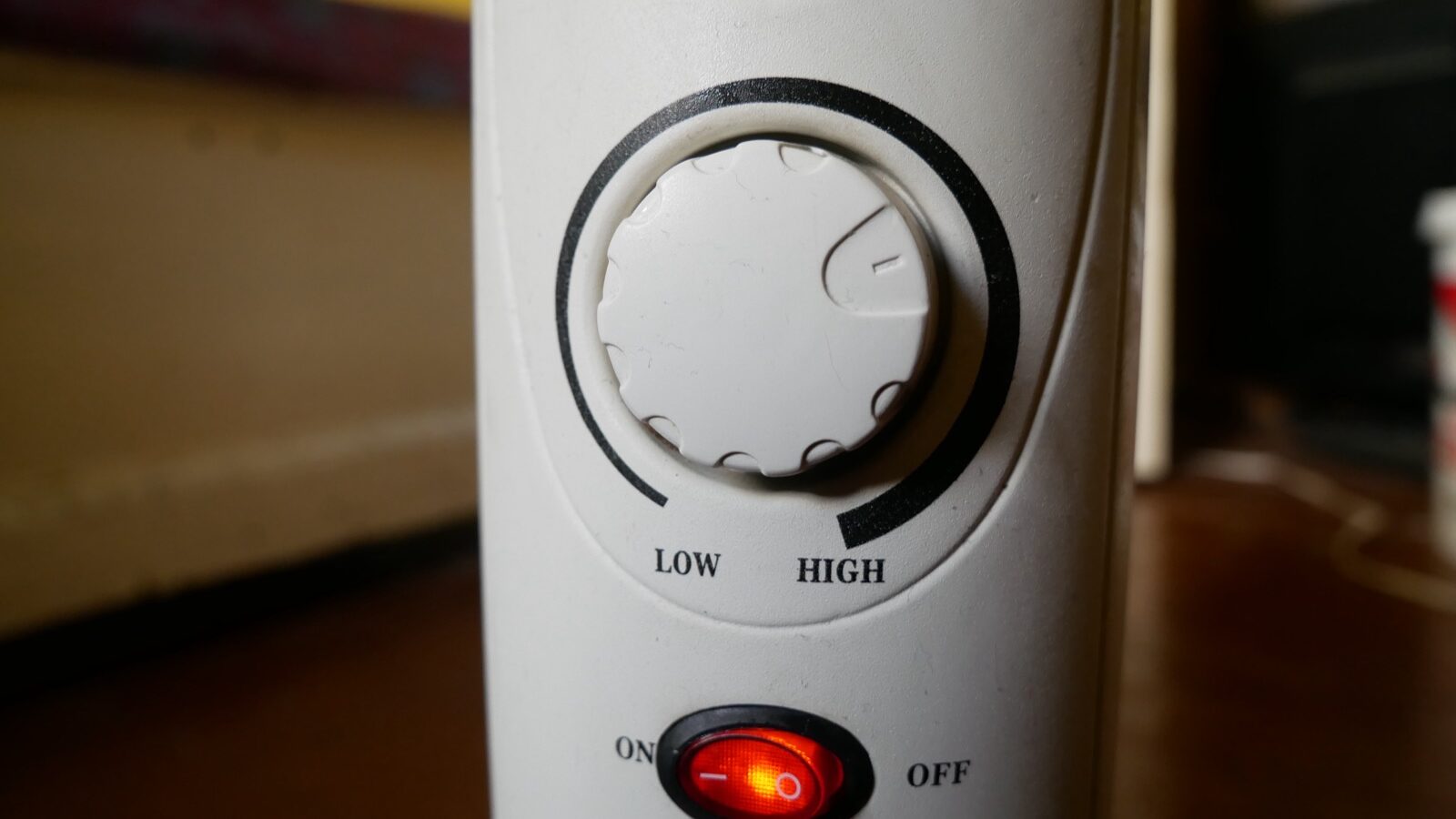
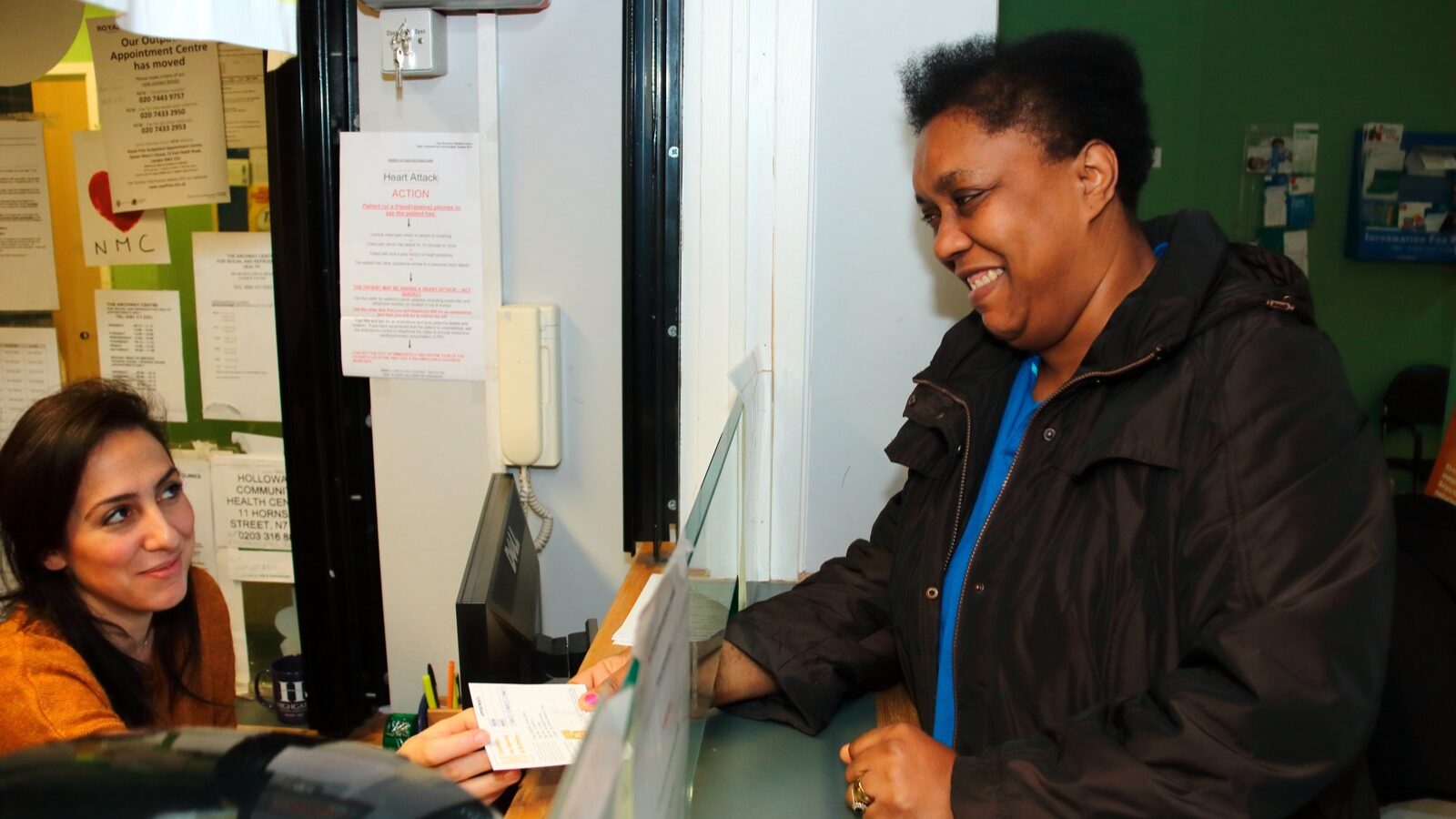
Turning up the heat: only those receiving pension credit can get winter fuel allowance now. Photo: Christy Lawrance
After the government announced in summer that only pensioners receiving pension credit or certain other means-tested benefits would be entitled to the winter fuel payment, there was a rush in claims.
Regardless of the imperative, it is important to encourage our older clients to claim this benefit.
Only 65% of those entitled to pension credit received it in the financial year ending 2023, the Department for Work and Pensions has estimated. Therefore, more than one-third of people of state pension age are missing out on this cash benefit, as well as the concessions it can bring, including the winter fuel payment and health benefits.
Pension credit is a means-tested benefit. It can be paid on top of other income such as the state pension and private or occupational pensions.
Meeting minimum income
People may be able to claim it if they do not receive the amount deemed necessary to live on. Benefits should provide a minimum income guarantee; this is £218.15 for a single pensioner and £332.95 for a couple. Those whose income is below these levels can claim pension credit.
In addition, pensioners who are severely disabled or are a carer may get pension credit even if they have money coming in above minimum income guarantee levels.
That is because their pension credit assessment could find they are entitled to extra amounts through the severe disability addition and the carer addition. If a claimant is responsible for a child or young person, an additional amount(s) is included in the benefit calculation to recognise this.
The severe disability addition may be included in the benefit calculation if the claimant (and/or their partner) gets: attendance allowance; the daily living component of personal independence payment (PIP); the care component of disability living allowance (middle/highest rate); or, in Scotland, the daily living component of the adult disability payment.
It is worth noting that the general rule is that the disabled pensioner must be living alone to be entitled to the severe disability addition. However, there are complex exceptions to this rule, so it is best to seek advice from a benefits adviser.
The carer addition can be included for a carer who gets carer’s allowance or carer support payment in Scotland, or who has claimed carer’s allowance but cannot be paid it because they get the state pension. This is called an underlying entitlement to carer’s allowance.
This rule is important because the carer element can be included in the pension credit calculation only if the pensioner has made a claim for carer’s allowance. Both partners in a couple claim may get the carer addition.
If a claimant lives with a partner, they have to make a joint pension credit application and the income and capital of both partners is included. If one partner in a couple is over state pension age and the other person is under, they cannot claim pension credit until they both reach pension age.
Most pension income and certain benefits such as carer’s allowance are considered in the calculation of pension credit. However, some types of income are ignored, including any disability benefit such as PIP or attendance allowance.
Certain benefits are considered in the calculation of pension credit. However, disability benefits such as PIP or attendance allowance are ignored
Capital such as savings may have an impact on whether a claimant is entitled to pension credit or the amount they are awarded.
If a single or couple claimant has £10,000 or less in capital, this will be ignored in the pension credit assessment. If they have more than £10,000, every £500 over £10,000 is counted as generating £1 in income per week.
The deadline for applying to this year’s winter’s fuel payment was 21 December 2024.
Coroners issue prevention of future deaths reports to inform organisations about risks they could manage to reduce needless fatalities. George Julian looks at how effective these are
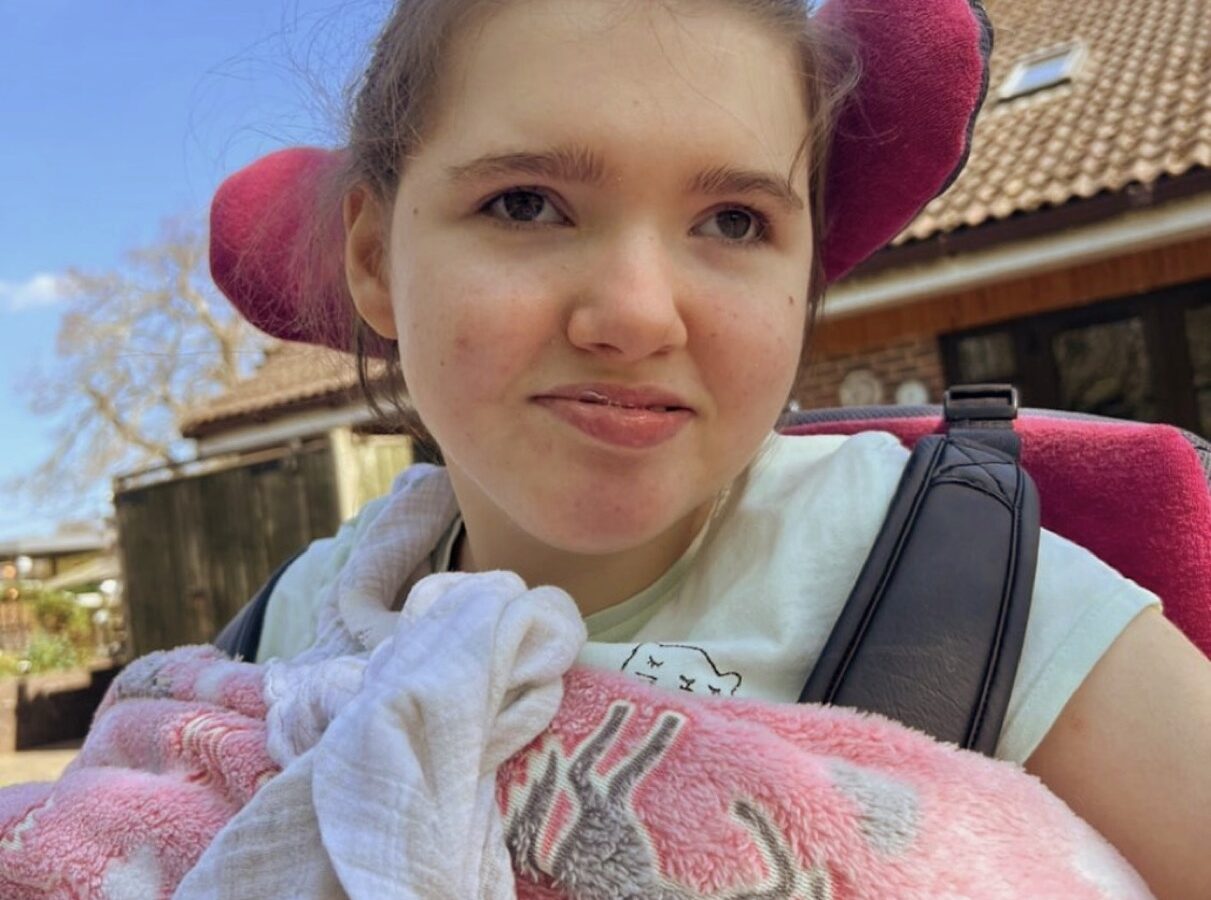
Mia Gauci-Lamport: issues highlighted by a coroner had been previously raised following a death in the care of the same provider. Photo: Gauci-Lamport family
When a coroner becomes aware of circumstances that put people at risk of people dying, they have a duty to take action.
They issue a prevention of future deaths (PFD) report, which means they report the matter to whoever they believe has power to take action to change things. This could be a person or organisation, such as a local authority, NHS trust or government department or agency.
It is up to the coroner to issue a PFD report. They consider what changes they have been told have happened since the person died or are being planned.
Even if changes have been made locally, if coroners believe deaths may happen elsewhere in the country, they may issue a PFD report to national organisations or bodies, such as the Department of Health and Social Care.
Each report includes details of who the person was, when their inquest took place and what the investigation found. There are sections in the report that look at the circumstances of the death and the matters of concern.
Anyone sent a report must respond to the coroner within 56 days to say what actions they have taken or will take. They have to include a timetable for action and, if they do not believe they need to act, they must explain why.
Reports and any responses received are uploaded onto the Courts and Tribunal Judiciary website.
Each year, about one in every 100 inquests that conclude leads to a coroner issuing a PFD report.
Not many relate to learning-disabled and/or autistic people. There may have been more but the system does not ask coroners to include whether someone had a disability.
Of the 569 PFD reports issued in 2023, 29 related to the deaths of learning disabled and/or autistic people.
Among these, five relate to learning-disabled people who had died after staff supporting them had not followed the advice in speech and language therapy plans, care plans and risk assessments.
The reports can be useful as a way to understand why people are dying and what changes can be made to stop that.
Before he retired, former chief coroner HHJ Thomas Teague KC said in his annual report: “PFDs are very important and can achieve a great deal when properly used, but the prevention of future deaths is not the primary function of a coroner’s investigation, which is to focus on the death of the deceased person. As judges, coroners cannot make changes to avoid future deaths; their role is simply to point out risks.”
It is hard to know whether these reports are leading to change. It is the job of coroners to investigate deaths and point out risks; they cannot make changes themselves to prevent future deaths. Once they issue a report, the coroner no longer has any power or role to play.
No one has the job of checking responses received to PFDs or the responsibilities to check that respondents have made the changes they have promised.
Inquest, a charity concerned with state-related deaths, is campaigning for a body to be established to collect PFD reports, note what they say and follow up on actions.
We know many of these reports issued concern the same problems so, even if they have led to some improvements, they have not stopped all of these deaths.
Mia Gauci-Lamport
Mia Gauci-Lamport was 16 when she died in September 2023. At her inquest, her family said she would give the “warmest of hugs, the cheekiest of smiles and the sloppiest of kisses”.
Gauci-Lamport had a learning disability and epilepsy. In July 2020, she had moved into the care of the Children’s Trust in Tadworth (TCT), where she lived and went to school.
The assistant coroner for Surrey, Dr Karen Henderson, held an inquest in July 2024 and issued a PFD in October. This listed three areas of concern:
Lack of appropriate monitoring of Gauci-Lamport during the night
Medical care provided to her
Senior management at the Children’s Trust, Tadworth.
The coroner said some of the concerns were identical to those she had issued following an inquest into another death at TCT.
“The lack of a robust and adhered-to care plan for night observations for Mia mirrors the same concern in the PFD report I issued following the Inquest touching on the death of Connor Wellsted at TCT in 2022,” she said.
“The independent investigator commissioned by TCT highlighted ongoing clinical governance limitations including the initial management and investigation of Mia’s death, delay in fulfilling duty of candour obligations, ongoing staff training, ensuring robust procedures were in place alongside regular audits of clinical practice. These are the same issues highlighted in the PFD report I issued touching on the death of Connor Wellsted two years previously.”
No one has the job of checking responses to these reports or that respondents have made the changes they have promised
After the inquest, the trust said it was “determined to understand any lessons we can draw from Gauci-Lamport’s sad death. We are working together with all relevant authorities to enhance our delivery of high quality, safe and effective care and learning for the children in our care.”
The PFD, which was dated 14 October 2024, was sent to NHS England, the Department of Health and Social Care, the TCT chief executive and medical director and care regulator the Care Quality Commission.
By the end of November, no responses had been received.
Peter Seaby
Peter Seaby: weak, “informal” practice continued at his care home, despite this having been criticised by a coroner. Photo: Seaby family
Peter Seaby was 63 when he died in 2018 at the Oaks and Woodcroft care home in Mattishall, Norfolk, run by the Priory Group.
His family got an earlier inquest ruling – that he had died of natural causes – overturned. His second inquest was in 2023.
Seaby had Down syndrome and had always lived happily with his family, with his sister Karen as care provider. He was moved into care for respite and became a permanent resident against his family’s wishes. Six months later, he died.
Jacqueline Lake, the senior coroner for Norfolk, found that inadequate preparation of his lunchtime meal and supervision possibly contributed to his death.
The coroner issued a PFD as she had concerns about the care provided to people still living in the care home.
“Evidence was heard at the inquest of the ‘informal approach’ taken with regard to arrangements as to who would provide supervision of residents, including on a one to one basis and who would cook and prepare their meals, including those residents who were subject to a specific speech and language therapy dietary plan,” she said.
Evidence was also heard of steps that had been take since the death to provide written staff rotas for such matters, prepared by team leaders and deputy managers.
His provider had still not undertaken an internal review into the unexpected death
However, despite this, evidence was also heard at the inquest from staff who continue to provide care the home, who referred to providing care on an “informal basis” and saying this “works”.
The coroner raised concerns about levels of staffing and the fact his care provider had still not undertaken an internal review into the unexpected death.
In their April 2023 response to the coroner, the Priory Group said: “In respect of taking this review forward, our operational management team are to now closely consider the findings of your Inquest and other information made available about the tragic incident involving Mr Seaby.”
No explanation was offered for why this had not taken place in the five years since Seaby had died.
In August 2023, the Care Quality Commission found the service required improvement. Regarding mealtime supervision, it said: “Incidents where people had become agitated around mealtimes put people at risk and these risks had not been sufficiently assessed and explored. For example, 1 person grabbed at other people’s food and was at risk of choking.
“A high number of incidents were recorded to have taken place in the dining room and it was unclear what strategies were in place to reduce the level of incidents.”
Festive magic is finally materialising. A child who once did not understand Christmas and withdrew now delights in garish lights, seasonal songs and eating unfamiliar food around others
Photo: Gary Spears, Pexels
My favourite childhood memories are all centred around Christmas: seeing family, playing silly games, gorging on mince pies.
Nothing transports me back to being a boy more than David Bowie narrating the opening of The Snowman, nor anything more likely to make me cry than the ending.
I dreamed of making Christmas the centrepiece of our family too – of making it a time of magic and joy for my own children.
Except our Christmases never really lived up to those childhood memories of Santa, stockings and snow.
Nowhere were the challenges of Elliott’s learning disabilities more pronounced than at Christmas.
There would be no Christmas carols for the boy who could not speak. There would be no nativity plays for the boy who could not tolerate the noise of an assembly. There would be no Christmas cards for the boy who could neither read nor write.
Over the decade that followed, our Christmases became a difficult balance between attempting normality for Elliott’s younger siblings and including him as much as possible.
Christmas started to creep in at the edges. It began with the festive lighting. Elliott began to notice the gaudy lights on many houses
This was easier said than done.
Elliott never grasped the concept of a present, let alone unwrapping it. If he isn’t already interested in something, no amount of shiny wrapping paper is going to make him excited.
Christmas became something that happened around Elliott. He couldn’t really understand what was happening, why the house was full, why the food was different and why the normal patterns of his life were on hold.
Family fracture
Elliott managed this by taking himself to his room, switching off the lights and retreating to a world of Mr Tumble.
Rather than a time for coming together, Christmas was a time where the fractures in our family felt more pronounced than ever.
We fell into a Christmas morning routine of getting up early with our two younger children and doing their presents before Elliott woke up.
It allowed them to be as excited as they wanted to be and meant that we could, literally, parcel Elliott’s presents throughout the day.
Except, one Christmas morning in 2021, Elliot didn’t wake up after the other children had opened their presents.
He couldn’t be roused.
His face was purple.
His eyes refused to open.
His breathing was shallow.
For Christmas that year, Santa had brought Elliott a seizure.
It took all day for Elliott to came round. Groggy and fragile, Elliott did not know it was Christmas time at all.
We felt cursed. There seemed to be no element of Christmas that our family could enjoy.
But something magical has started to happen over the 19 years of Elliott’s life – Christmas had started to creep in at the edges.
It began with Christmas lights. The first part of the festive season Elliott began to notice were the gaudy lights that festooned the outside of so many houses.
It became a December tradition to drive around the towns and villages of Hertfordshire in search of the brightest Christmas lights.
From there, it moved to Christmas songs. Elliott managed to find himself a Christmas playlist on YouTube. He’s never left it.
Mariah all August has never sounded so sweet in a house that used to be starved of Christmas songs.
Then, last Christmas – the greatest joy of all – Elliott joined us for Christmas dinner. Sat round the table with his brother and sister and grandparents. He tucked into the turkey with everyone else.
It was a level of inclusion that we could have only dreamed of in the years when Elliott couldn’t tolerate being in the same room as so many people, let alone enjoying the same food.
You can talk of Christmas miracles all you like but all my family being in that room, enjoying that meal, wearing those silly little crowns was the greatest Christmas gift of all.
Young people are learning heritage crafts at a charity inspired by a boy’s life and abilities. Sam Carlisle reports
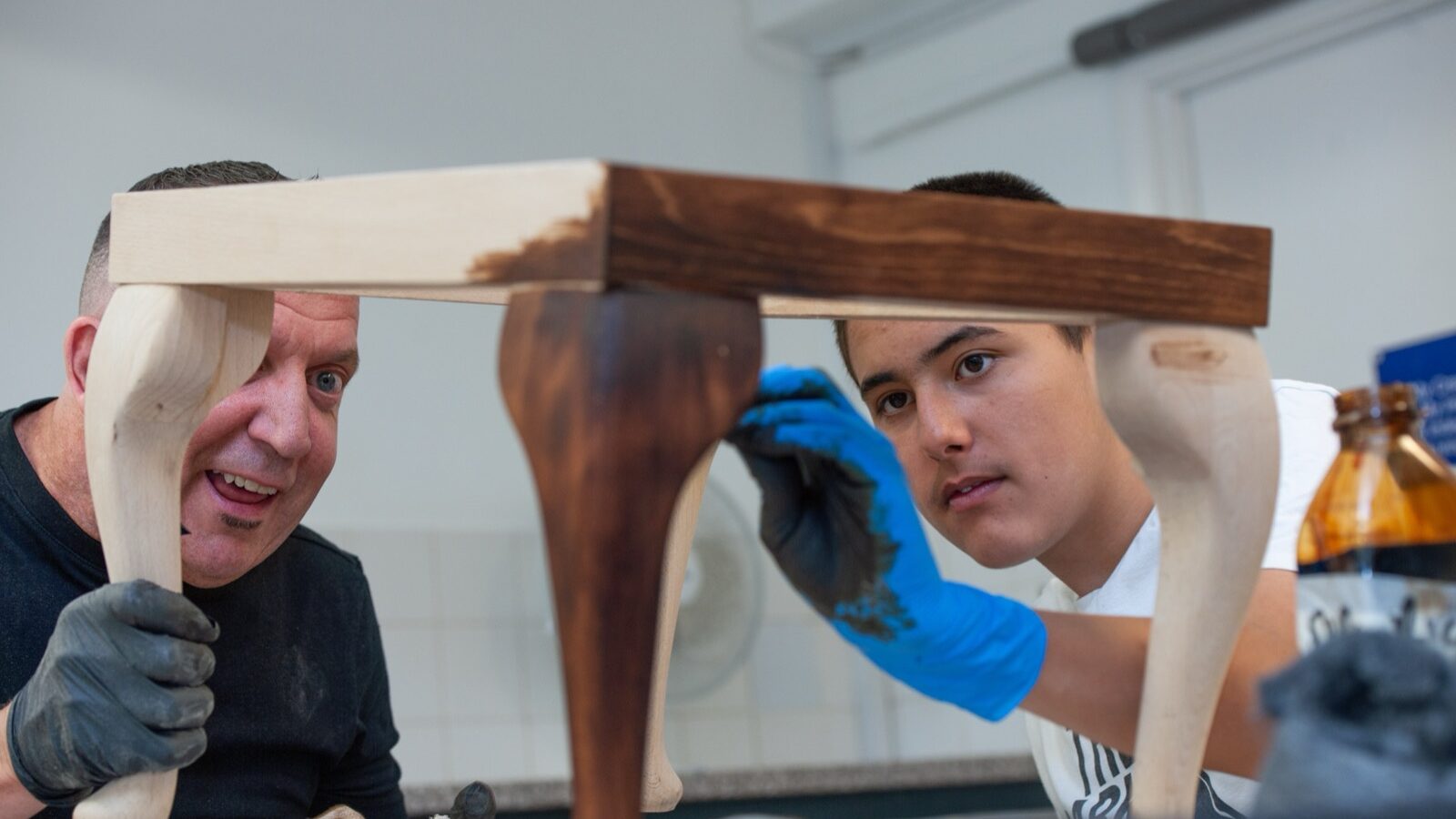
Concentration while creating. Photo: Sammy’s Foundation
The smell of wood stain fills the air in a classroom as a teenager with learning disabilities concentrates hard on polishing a bespoke library stool.
Across the room, his classmate is feeling the coil of an upholstery spring, marvelling at its bounciness and the fact it could support a person’s weight.
This is no ordinary lesson at a special school in Kent. This is the pilot project for a new national charity, Sammy’s Foundation, set up to teach heritage crafts to young people with complex neurological conditions.
It is also the first step in building a movement that charity founder and mother Patricia Alban hopes will bring meaning to the senseless death of her son by giving young disabled people “the chance Sammy never had”.
Alban, an upholsterer and mother of four, lost Sammy when he was 13 after he fell from a cliff in their home town of Ramsgate, Kent. The teenager died in hospital four days later from his injuries.
A coroner’s report attributed Sammy’s death in 2020 to failure by the local authorities in providing support for him and his family.
Sammy lived with Prader-Willi syndrome, a rare genetic condition that causes learning disabilities and behavioural problems. For Sammy, this included high-risk behaviour that would result in self-harm.
During the inquest into Sammy’s death, the coroner said there was a clear failure in what Kent County Council provided to Sammy’s family to help with his care.
She issued a prevention of future deaths report, warning more fatal incidents may occur “if children with complex neuro-developmental needs are excluded from accessing the care and treatment they require to keep them safe”.
Alban says: “Sammy loved watching and learning what I was doing with tools. He found working with his hands invigorating, satisfying, and calming. This particularly helped when he was without a school place for a year because the local authority wouldn’t fund the right support.”
She adds: “I know from his commitment that young people with complex neurological conditions can have the focus and dedication it takes to become master artisans. I believe it is critically important that they can develop purposeful lives and remain in their local communities with their families.
“My hope is that the foundation will help talented young people uncover skills and attributes that will help them to find a valuable and fulfilling place in a world which, sadly, does not welcome them with open arms. This isn’t just a way to keep them busy.
Sammy doing some carpenty. Photo: Patricia Alban
Concentration while creating. Photo: Sammy’s Foundation
Patricia Alban watches a young learner. Photo: Sammy’s Foundation
“We will deliver high-quality training in skills such as French polishing, button making, wood carving, canework and upholstery.
“We are also including arts that are in danger of extinction in the UK such as passementarie – creating elaborate edgings for furnishings.
“Our young people will craft quality, exclusive homeware for commissions by interior designers.”
People with complex conditions can have the focus and dedication it takes to be master artisans
Sammy’s Foundation will provide group sessions for younger children as well as one-to-one work with those primarily aged 16-25. It will also arrange the sale of their finished products.
Alban hopes the stepping stone courses will lead to an accredited programme that can be rolled out nationally.
Master craftspeople have donated time and support. French polisher Stewart Kemp, who has worked at Claridge’s hotel in Mayfair, London, gave bespoke training to a young man in how to skilfully apply polish to a piece of fine furniture.
Alban says: “These techniques are so specialised but we’ve seen from the early sessions how quickly young people with complex conditions can absorb complicated skills.
“There is no better way to show Sammy’s legacy and worth than by giving others the opportunities he would have excelled in.”
Sam Carlisle is a freelance journalist
Sammy: a family portrait
Sammy with sisters Poppy, Holly and Hazel. Photo: Sammy’s Foundation
Patricia Alban describes her son Sammy as “a sweet, kind soul who radiated purity”.
She says: “He was an energetic and lively child. He loved the beach and riding his bike and funfair rides. He would speak to anyone, especially members of the emergency services, and people loved him being around.”
Always good with his hands, Sammy would craft presents for his mum and sisters Hazel, Poppy and Holly. He would write and draw cards just saying how much he loved them.
His rare genetic condition, Prader-Willi syndrome, meant he had periods of distress and loss of control. As he grew older, these periods became more frequent.
His mother says: “While he was very capable, he was also very vulnerable.”
His sisters paid tribute to Sammy, saying: “It’s the early morning sawing and hammering that we miss most about Sammy. That and the cuddles.
“He would get up with the sun and go into our garden to finish bits of carpentry. He’d taught himself to make boxes. We’d wake to the sound of drilling and the smell of sawdust.
“It feels strange and sad that we will never experience that again.”
A short-term accommodation and support service – in an ordinary house in an ordinary street – is keeping people out of long-stay secure units if their care breaks down. Amanda Topps reports
Photo: Black Country Healthcare NHS Foundation Trust/Empowering U
“Crash Pad provides a calming environment. Hospital can be noisy and overcrowded, and for me, who has autistic spectrum disorder, this isn’t helpful, but I find Crash Pad calming.”
This is how someone described the help they recently received at the Crash Pad, a short-term housing and support service in the Black Country.
The purpose of the Crash Pad is to enable people to avoid inappropriate hospital admission, preventing adults with learning disabilities and autistic people from becoming institutionalised in long-stay secure units.
If someone’s care has broken down, whether in their own home or in residential care, a temporary stay at the Crash Pad can help them return home more quickly.
Photo: Black Country Healthcare NHS Foundation Trust/Empowering U
The Crash Pad is part of the local health and social care offer (the official range of support in the area) and it supports the aims of NHS England’s national Learning Disability and Autism Programme as it helps prevent inappropriate hospital admissions. The aim is to identify and address behavioural and mental health issues and enable individuals to retain their independence.
The Crash Pad: key points
Keeping the team small helps to build effective and supportive relationships, not only for the person using the service but also within the staff and clinical teams
The 24-hour on-call service helps prevent hospital admission
Having a fresh pair of eyes on a person’s situation – from a knowledgeable, experienced and trained team member – can help someone move forward in their life
Prevention is cost-effective because it promotes long-term savings by preventing someone being admitted into hospital
The service, an ordinary house on an ordinary street, can accommodate up to two people plus support staff at any one time and this is always risk assessed.
For example, if someone has complex behaviour, the service may decide not to offer a space to a second person.
Latest figures show that between its launch in June 2023 and July 2024, 27 people had used the service, helping avoid a total of 39 stays in hospital (some people have used the service more than once).
As for the time people spend at the house, 22 admissions were for one week or less, 11 were for 1-3 weeks and six admissions lasted for more than three weeks.
Individuals stay from few days to a few weeks depending on the support they need. Photo: Black Country Healthcare NHS Foundation Trust/Empowering U
The Crash Pad was set up by Nicola Protheroe-Jones, head of services at Empowering U, and Jo-Anne Ricketts, senior commissioner at the NHS trust’s learning disability and autism commissioning team.
Ricketts describes working on the collaborative scheme as being “tasked with being brave to transform care services”.
People may need peace and quiet, their meals cooked, a listening ear or one-to-one support
She adds: “We are preventing trauma because people are avoiding inpatient settings which are, by their nature, intense environments unsuited to autistic people. It is cost effective because it promotes long-term savings by preventing someone from going into hospital.
“It works because the staff are skilled, competent and trained to support autistic people. They understand how to respond to behaviours of concern and treat people with respect, have good communication and are resilient. When things get tough, they are quick to adapt to any new situation.”
How it works: from calling in to going home
Referral
The call comes to the NHS trust’s duty or out-of -hours commissioning team. Staff screen the calls before referring to their emergency response team. Team members usually respond within two hours, meet the individual and assess their support needs.
The person may be struggling with their mental health, behaving in a way that causes concern or be at risk of offending and/or need some extra support to stay out of hospital.
Empowering U will then pick up the person – from the hospital emergency department or their family home, for example – to take them to the Crash Pad.
Moving in may take up to eight hours to allow time for Empowering U to organise support staff shift schedules as the Crash Pad is staffed only when someone is staying there.
Staying at the Crash Pad
Once a person is admitted to the Crash Pad, Empowering U staff focus on the person’s exit plan straight away.
The person’s health team is involved – this may include a psychologist, speech therapist or learning disability nurse – and they help plan how to support the person to return home.
The length of stay varies from a few days to a few weeks as the level of support needed depends on each individual.
Some people need peace and quiet, others need their meals cooked, a listening ear or one-to-one support. Staff take part in activities with the person, such as eating out and going for walks.
Returning home
Staff from the Crash Pad will work with the person’s multidisciplinary team (which involves professionals such as social workers, psychiatrists and occupational therapists) to follow up any support required and link in with their community network.
Often when people have had some time to get the right support, they are keen to get back home. However, if the person is finding it hard to go home, the team will carefully plan this with them.
They may provide emotional support, befriending, engagement or interventions to support someone’s discharge.
The emergency response team works closely with the Crash Pad to provide extra hours to support someone
to get settled back at home safely.
Empowering U’s Michael Stevenson, who manages the Crash Pad alongside Andrea Welsh, says it works because “it is a safe and quieter environment which enables individuals to regulate [their behaviour] quicker”.
Because both the service and staff team are small, it has been possible to develop strong and effective professional relationships between the commissioning teams and the provider, as well as between the provider and the local hospital.
A small team also means the service works smoothly from triage to referral point and until the person goes home.
Problems
Of course, issues arise. Ricketts says people can end up staying for too long because they need somewhere to move onto but no suitable accommodation or social care support is available. This means others cannot use the service.
Sometimes, the Crash Pad has not been used as intended because family relationships have broken down and there is no alternative place for the person to live.
Why it works
Staff believe the Crash Pad works because they help calm a difficult situation down. Someone could be stuck in a behavioural cycle and the team brings in a fresh pair of eyes at a crisis point, helping to find solutions with the person and their family.
Of those who have stayed at the Crash Pad so far, some have moved on to supported living and others have returned to their family homes.
As Stevenson adds: “Quite a few young people go into full-time work or college to see a brighter future.”
Amanda Topps is a health and social care consultant
A man with complex needs suffered psychological and physical harm, including a broken arm, after being detained under the Mental Health Act. The case, now settled, highlights the need for better care in institutions entrusted with vulnerable individuals, says Yvonne Kestler
Photo: Pexels
A young autistic man with learning disabilities has settled a legal claim against Cygnet Health Care after it was alleged he received negligent treatment while staying at a specialist care unit.
Jamie Newcombe, 29, claimed he suffered significant physical and psychological harm while at Bostall House, London, between 2014 and 2015.
Cygnet, a private provider of health and social care services, admitted breaking the young man’s arm but denied his other claims.
Newcombe was detained under section 3 of the Mental Health Act 1983 in February 2014 at Bostall House, then operated by Danshell Group. The group was acquired by Cygnet in 2018, which assumed responsibility for Danshell’s liabilities.
While staying at Bostall House, Newcombe claimed he suffered physical and emotional harm from staff.
His family was concerned that his psychiatrist and responsible clinician initially overmedicated him, prescribed clozapine (an antipsychotic medication) without necessary heart tests and stopped clonazepam (usually used to control seizures, muscle spasms or panic disorder) abruptly, which is against clinical guidelines.
When Newcombe’s mother, Julie, reported changes in his breathing and general physiological behaviour, the responsible clinician dismissed the possibility of any danger from the sudden withdrawal from clonazepam. Following this, her son experienced distress, including myoclonic jerks (involuntary muscle contractions), slurred speech, nightmares and self-harm.
The clinician allegedly told the father he would send his son to a unit ‘a long way away’
On 4 March 2014, an unauthorised restraining technique was used on Newcombe, who described being violently restrained by staff and pushed out into the hospital garden. This resulted in a fractured right humerus bone. His legal claim states that the injuries were left untreated for more than 24 hours, causing him significant pain and distress.
Long-term injury
Healing was prolonged and uncomfortable; Newcombe had to wear a brace for several months. The incident also had long-lasting psychological impacts, including post-traumatic stress disorder, which still affects him.
The injuries meant he was unable to take part in routine therapeutic activities such as swimming and trampolining.
He described further physical assaults in December 2014 and January 2015.
His legal claim stated he was also subjected to degrading treatment when personal care was neglected, leaving him dependent on his mother. He was also denied access to hot running water for three weeks.
It was further alleged the responsible clinician threatened the family, telling his father that he would send his son to a medium secure unit “a long way away”. Without explanation, it is alleged the responsible clinician barred his mother from visiting every day and withdrew all hospital leave.
Julie Newcombe, an autism and learning disability rights campaigner and co-founder of campaign group Rightful Lives, asked human rights lawyers at Leigh Day to investigate her son’s claims of ill treatment.
The company admitted causing the fracture injury but denied all other allegations. They nevertheless agreed to pay damages, which were approved by the high court in September 2024. (The court approved the settlement because Newcombe lacks capacity to litigate – it did not consider the allegations.)
Care failures
Newcombe’s experience highlights failures in care for those with complex needs. It is deeply troubling that someone so vulnerable was left to suffer in this way.
While no amount of compensation can undo the harm, we hope this settlement will help Newcombe and serve as a reminder of the need for better care and oversight in institutions entrusted with vulnerable individuals.
Yvonne Kestler is senior associate solicitor at Leigh Day, which instructed Oliver Lewis of Doughty Street Chambers for this case
‘If Jamie were to go into one of these units again, the same things could happen. That is our fear’
Jamie Newcombe. Photo: Julie Newcombe
There are endless reports and reviews on stopping harm in care settings. The issue is making the powers that be put them into practice and be held to account, says Julie Newcombe
What happened to my son Jamie was horrific and is still happening to so many other people 10 years later.
I co-founded Rightful Lives six years ago to shine a light on the human rights of autistic people and people with learning disabilities.
Yet the fact remains if Jamie were to go into one of these units again, the same things could happen. That is our fear.
We were very relieved to have this claim resolved, more than I thought we would be to be honest. But still angry. I don’t think that will ever go away. Angry at what Jamie suffered and angry that it took so long to get any sort of acknowledgment.
What this case means in practical terms is that Jamie can get some therapeutic help so he can move forward a little bit. He has post-traumatic stress disorder as a result of his experiences and it is unlikely he will fully recover but, hopefully, we can make some good memories.
Beyond that, it has been so very wearing.
Baroness Hollins’ report, published a year ago, focused on those with a learning disability and/or autistic people detained in mental health and specialist learning disability hospitals. She talked about better procedures for reparation. That has to happen. Accountability is non-existent in this sector.
More widely, in terms of how this case could have wider significance, I hope it will encourage others to take action, but I can understand why it might be too daunting for some.
We need to show these huge organisations that they cannot ride roughshod over people’s human rights.
Putting it right
How do we help ensure this doesn’t happen to more people? I think endless reports and reviews are already in existence about that.
The issue is making sure the powers that be put them into practice.
The first part of the answer is to ensure full accountability. So many laws and so much national policy and guidance are simply ignored. Poor practice and commissioning are common and abuse happens far too often. There needs to be a rapid route for raising concerns whenever these things happen and for them to be stopped.
The second part is to sort out the money. Councils may be struggling but, if there is enough taxpayers’ money available to lock people up in dire conditions for years on end, there is enough money to make sure they can get a good life.
Today, Jamie is OK although he still dwells on what happened. He has an excellent staff team and is out and about every day. When you consider how much he needs to be outside doing stuff, it makes it even more criminal that he was ever locked away. n
Julie Newcombe is a parent campaigner and co-founder of Rightful Lives
A clip of a candidate’s son with learning disabilities went viral during what was a rancorous election campaign. There was mockery – but it trailed far behind the celebration
Photo: Gage Skidmore, CC BY-SA 2.0 via Wikimedia Commons
As the new year unfolds, many of us – on both sides of the Atlantic – are still reflecting on the 2024 elections. At the very least, we are grateful that they are in the rear view mirror.
Results aside, as a commentator on both the American and UK elections, I have been considering how some campaigns leave more of an impression than others.
Election campaigns, wherever they happen, are a mixture of spectacle and hard scrabble politicking. But, when it comes to overt pageantry, celebrity endorsements and pure extravaganza, the US is arguably the most over the top.
So, when the teenage son of vice-presidential nominee for the Democratic Party, Tim Walz, outshone the likes of Oprah Winfrey and Stevie Wonder at the party’s national convention, the whole country took note.
Brimming with adoration for his father, 17-year-old Gus Walz, who has a learning disability, was captured tearful and waving on camera declaring “That’s my dad!” as his father watched with pride from the podium.
Walz senior emanated joy and a deep love of his family during what was a rancorous, divisive presidential campaign. His son’s brief public display of affection was mirroring those feelings.
The convention clip went viral, with many celebrating the scene as an antidote to widespread political negativity during the campaign.
The brief moment was significant far beyond the celebration of a father and son or a family. It shone a blazing spotlight on something large swathes of the population know little to nothing about, or whose understanding is shaped by archaic notions.
The attention on the teenage Walz triggered headlines about the need for greater understanding of learning disability.
Positivity versus stigma
Yet the positive and open-minded reactions were diluted by stigmatising and demeaning responses. There were incidences of online mocking, including disparaging memes.
Katy Neas, chief executive at The Arc, a learning disability organisation, remarked: “This is just one example of how our society continues to perpetuate deep-rooted stigmas about people with disabilities.”
On seeing the convention clip, Republican firebrand Anne Coulter posted on X “Talk about weird…” (a response to Walz senior’s description of Trump and his supporters).
Coulter took down the post after a backlash but her comment was a prime example of the powerful punching down.
When Trump mocked a disabled reporter at a rally during the 2016 election campaign, he was met with widespread condemnation – and rightly so. Yet people at the rally cheered and he went on to win the election regardless.
Propagating and reinforcing stereotypes is far from a thing of the past. Campaigners, including in the UK, continue to challenge entrenched prejudices and degrading depictions.
It was significant far beyond the celebration of a father and son. It shone a blazing spotlight on something many people know little to nothing about
Despite this, all too often attitudes spill over into criminal behaviour. Hate crimes are one of the most extreme manifestations of ingrained stigma.
UK government figures for the year to March 2024 showed a fall of 18% in disability hate crimes from the previous year in England and Wales. While this is good news, almost 10,000 offences were recorded in a 12-month period. Some estimates suggest that as many as nine out of 10 people with learning disabilities experience bullying, harassment or hate crime.
As with the UK and elsewhere, disabled activists in the US have a long, stellar history of not only securing rights but also calling out and fighting stigma. Indeed, many British activists drew encouragement from early campaigns in America which, among other things, brought in the landmark Americans with Disabilities Act in 1990.
The outpouring of love and solidarity directed at the Walz family last year far outstripped the mockery – and that’s to be celebrated. Nevertheless, vigilance is essential.
Women with learning disabilities often do not go for cervical screening, so a health organisation worked with women to create an accessible video on the procedure. Vanica Patel reports
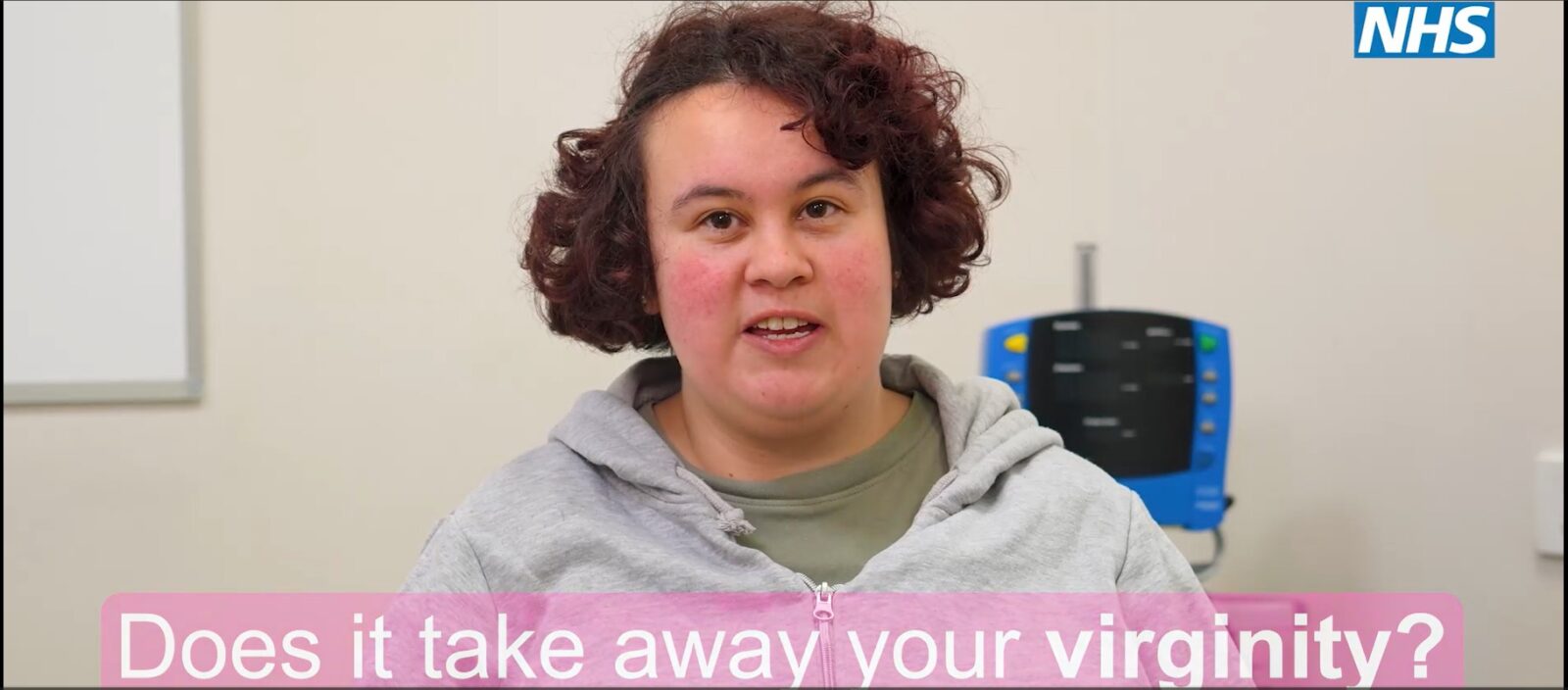
The videos address common questions and share women’s real-life experiences of the procedure
“They think I won’t understand.” “Does it take away your virginity?” “Do I have to take all my clothes off?”
These are just three of the comments made by women with learning disabilities in a recent video which aims to dispel myths about cervical screening for a campaign in the East Midlands.
Their words illustrate how anxiety about cervical screening (also known as smear tests), which is offered to all women aged 25–64, may be higher in those with learning disabilities.
Missing out
According to NHS figures, 31% of women with a learning disability who are eligible for the screening have them, compared to 73% of those without a learning disability.
This low uptake leaves people at risk of undetected cervical cancer.
This level is reflected across Leicester, Leicestershire and Rutland.
To minimise this health inequality, women with lived experience came together through the Learning Disability and Autism Collaborative (LDAC) to produce two short videos to help answer common questions.
The LDAC, led by Leicestershire Partnership NHS Trust, aims to improve health outcomes for those with learning disabilities and autistic people in Leicester, Leicestershire and Rutland.
It works alongside the integrated care board (an NHS body that plans local health services), University Hospitals of Leicester NHS Trust, the area’s councils, voluntary bodies and primary care services.
The first video, which is two and a half minutes long, helps people book and attend appointments. It features Dr Archana Anandaram, a local GP and a clinical lead for learning disabilities, alongside experts with experience in a question and answer format.
The GP answers queries on issues including if a male or female health professional does the test (“you can ask for a female member of staff”), if the procedure is painful (“it shouldn’t be painful, but it might be a little bit uncomfortable”) and how long it takes (“a few minutes”).
Anandaram explains: “Working with lived experience experts was a privilege – we collectively decided that we wanted the films to be relatable, sharing the real-life experiences of individuals who have gone through the process.”
The second video, which is four and a half minutes long, shares an experience of a typical appointment.
In the six months since the two films were launched in Learning Disability Week in June, they have been shared by GP surgeries and local health services. They are on a range of platforms, including Leicestershire Partnership NHS Trust’s YouTube channel.
In particular, the films highlight good practice through making reasonable adjustments to help everyone access to good healthcare. Adjustments are small changes, such as information made available in larger fonts, easy-read materials and longer appointment times.
Calli, an expert with experience who features in the videos, describes the adjustments she needs: “When I received the letter inviting me to attend my cervical screening, I went to the GP to get an easy-read leaflet to help me understand about the smear test and what to expect.
“The video highlights how important cervical screening is, especially as it can save your life. If I did not go to my cervical screening appointments, I would not have found out that I had the human papillomavirus.”
Human papillomavirus can raise the risk of developing cervical cancer, so Calli was invited for more tests to check if she needed further treatment. She does not need any and will be invited for another test later this year.
Mark Roberts, associate director at Leicestershire Partnership NHS Trust and LDAC lead, says increasing the uptake of cervical screening uptake by people with learning disabilities as “a priority we will continue to work on”.
The videos will remain online to ensure the importance of cervical screening remains at the forefront.
Survey-weary carers created a multimedia exhibition for a research project on caring and how it affects mental health. Katherine Runswick-Cole and Martina Smith report
Tired of Spinning Plates. Logo by Dan Goodley
Tired of Spinning Plates is a research project working with family carers to explore their experiences of caring and mental health.
We know little about their experiences; we wanted to find out more about their lives, and how caring affects their mental health, in positive and perhaps less positive ways.
The project began in October 2022 and ended in November 2024. We worked with family carers and people with learning disabilities, who were key to deciding how we did the research. Our plan had originally involved co-designing a survey to find out more about family carers’ mental health.
However, they told us they were “survey weary” and suggested we do something different – something people might enjoy.
For You I Would be Immortal (Becky Whinnerah)
I’m Fine (anonymous)
This is Fine (anonymous)
The Rest is in the Attic (anonymous)
Burden of Care (anonymous)
They suggested we create an online exhibition where they could share their experiences. Several family carers found it easier to say what they wanted to by writing poems. We also made short films with 13 family carers and three people with learning disabilities about their experiences of care and caring.
What did we find out? That love drives care, but this love is often exploited by health and social care services. There is little recognition or understanding of the lives of family carers, who are denied basic support, kindness and information.
Family carers say that caring for a person with a learning disability is not the problem. The problem is the fight for services and support, which takes place over decades, while they worry about the future.
One family member explained of the photograph she submitted: “The folders on this chair contain all the paperwork of the battles (and undertaking) with different organisations over many years to try to get the right support for my son. I have a filing cabinet, but these folders sit on this chair in my home office. I wish I could simply file all this away.”
Family carers say that the health and social care system is broken and lacks even basic kindness.
Carers are often unable to make an appointment with a GP and are not offered reasonable adjustments. They often do not want to take medication for depression because they do not see themselves as depressed but exhausted by continually fighting. They know that going for a walk or spending time with friends is good for mental health, but can’t do it because of a lack of support. They describe social services as “hostile”, “unhelpful” or as “totally absent” in their lives.
What do family carers want you to know?
They love the person they care for
Fighting for services and support causes mental distress
They often care for decades, even if their relative lives elsewhere, so their experiences are both the same as and different from those of some other groups of carers.
What do family carers want you to do?
Take a holistic approach: experiences of caring are always relevant to discussions about family carers’ mental and physical health
Be flexible: family carers need flexibility to access mental health services and support
Be kind: small acts of kindness really matter. A phone call and a “how are you?” matter more than you know.
One parent carer told us: “For someone like me, who feels that every day is a spin around the lip of a potential catastrophe curve, where any little wobble could push the gyroscope of my life off the edge, even the feeblest kindnesses are immensely valuable.”
Monica had not thought of herself as a carer for her twin brother. She then started an Instagram community so carers feel better understood and inspired to achieve career dreams
Monica: “I’m using my platform to be a face for ethnic minority carers”
I’ve been a sibling carer for my non-verbal autistic and epileptic twin brother my entire life. Yet I only labelled myself a “carer” at the age of 23, just two years ago.
I found out I was a carer in the midst of the pandemic, a time when, like many, I was riddled with fear over the health of vulnerable family members. My mum’s health suddenly declined, her treatment was delayed and we lost essential care for her and my brother.
As I live at home and have no other siblings, I supported my dad, filling in with the care while balancing this with my first full-time job, adjusting to working from home, my own hobbies and social life, all while my mum was shielding. Sadly, our mum passed in November 2020.
During the pandemic, people were experiencing that feeling of uncertainty for the first time. We’d been hit by a virus we knew little about; all of our lives changed and everything familiar stopped. But for me, it was multiplied and I felt angry.
Because of my brother’s needs, we deal with uncertainty every single day. I’ve never known a life different. My brother will never be self-sufficient; he can’t tell us if something is wrong and I don’t know when his next meltdown or seizure will be. Our routines revolve around him; sometimes, we need to leave a supermarket midway through shopping or leave a family gathering early.
It was difficult to see memes where people complained about not being able to do certain things and their lives being uncertain for this limited period of time.
As my brother was exempt from having to wear a mask, I was committed to doing everything I could to protect him and those around me.
Vaccination was taking time. Yet still, I was going to wait my turn, like everyone else, even if my age group was far down the list, because that’s what I thought I needed to do. The truth was I wasn’t like “everyone else”.
A relative encouraged me to enquire about getting a vaccine early. I thought, “Why would I be entitled to that?” My parents are my brother’s carers, not me. But I was told I could get one because I was caring. This changed everything. I was validated as a carer.
Our routines revolve around him; sometimes, we need to leave a supermarket midway through shopping or leave a family gathering early.
This validation is essential to understanding yourself. So many of us don’t recognise we’re carers and that’s problematic. Carers can come in many different forms and you can even be a carer from a distance.
I’m using my platform to be a face for ethnic minority carers and spread awareness of autism because, without talking, there is no awareness. Starting the Instagram community Carers with Dreams has not only given me a healthy outlet but also allowed me to adopt a positive perspective.
I created the community I needed, a place where I could connect with other carers, particularly those who looked like me, those who don’t know they’re carers and those with big career dreams.
When I talk about my brother’s autism and my caring responsibilities, people say they can’t imagine what it’s like or understand.
Even close relatives don’t know every aspect. But, whoever you are, to everyone reading this, you can do one simple thing to help us carers – listen and show empathy.
Monica, the founder of Carers with Dreams, writes using a pen name
Collection spans highs and lows of sibling life
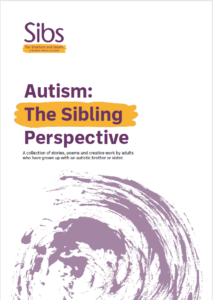
Autism: The Sibling Perspective from Sibs
Adult siblings tell us it is helpful to read others’ experiences; many have grown up feeling isolated and may not have met another adult sibling until they found our charity Sibs.
In Autism: the Sibling Perspective, published last October, 20 of these adults describe their different experiences through stories, poetry and art in a collection that spans the highs and lows of sibling life.
The publication is part of our Confident Caring programme, bringing together siblings who have an autistic brother or sister. Each piece reflects the individual, not the views of all siblings, nor those of the charity.
Our aim is to raise understanding about sibling life and improve whole family support for autistic people.
Autistic people connect better from a creative distance, explains Cian Binchy, who talks to Seán Kelly about a show he helped develop and his starring role as a self-important rock god and yoga guru
Shark, sharp:
If you’re a shark,
you can escape
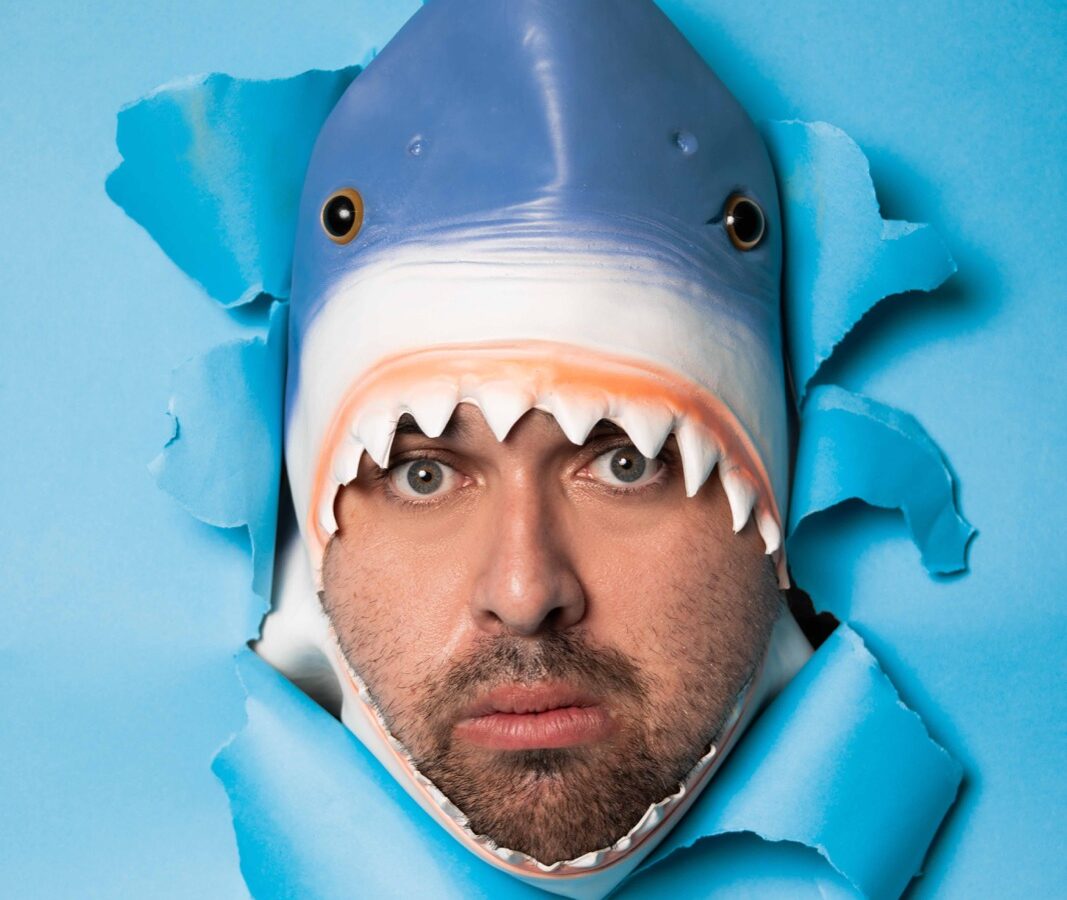
a lot of people but not yourself. Photo: Corinne Cumming/Stephen Allwright/Access All Areas
I believe that we connect better in fantasy or art than we do when we are just sitting talking to each other.”
Cian Binchy is explaining why, as an autistic man, he makes stage shows: “We connect when we don’t get too close, when we are not too intimate. We connect better when the curtain is up than when it is down.”
Binchy is keen to connect. He wants people to understand more about the autistic experience: “I would like to spread the awareness to people who don’t know about autism, and not just about people with my own kind of autism, but also those like my brother who has severe autism and is not verbal. It’s important that when we talk about people with autism, it’s not just those who are verbal.”
The 34-year-old Londoner is obviously a man on a mission but, if that leads you to think his new show will be an earnest and dull affair, think again.
The show, A Small Enclosed Room With Alfie Murphy, is a riot of ideas and entertainment, billed as a “darkly comic new play exploring masking, autism, mental health and fantasy” that leads the audience through Binchy’s imagination.
He explains that his character, Alfie Murphy, is a pompous “rock god”. He is also a yoga guru who is very spiritual and does not want to be put on a pedestal – “except that secretly he does”.
Alfie sounds like he could be an alter ego for Binchy but there are other forces in the show that he describes as “trying to stop the show and get me to be Cian Binchy”.
Binchy characterises these figures as sharks based on an image that came to his mind once in a similar situation: “The shark is a symbol of when you’re trapped in a corner and somebody is stopping your game.”
The show recognises that people try to avoid problems by ignoring them but Binchy says that if people don’t confront them, they will surely face the same issues again in a different situation.
“If you are a shark, you can escape other sharks, but you are still a shark and you can’t escape that. You can escape lots of people but the one person you can’t escape is yourself.”
Binchy developed the show with support from London-based Access All Areas (AAA), an arts charity that supports learning disabled and autistic artists in creating performance-based work. The show is a collaboration between AAA and The Lowry arts centre in Salford.
Binchy is an AAA associate, as well as the organisation’s digital content creator and presenter of its YouTube series, Access Not Denied, which identifies classic autism stereotypes in the media.
He has been involved in a number of other AAA shows over the past 10 years, most recently Imposter 22, which was on the main stage of London’s Royal Court (Community Living, winter 2024).
The shows have broken new ground not only in presenting the voices of people with learning disabilities and autism but also in their use of innovative and immersive approaches to theatre.
Artistic director Nick Llewellyn with Cian Binchy. Photo: Seán Kelly/www.seankellyphotos.com
Cian Binchy in rehearsals with Access All Areas; the charity offers a platform where creatives have agency and control. Photo: Corinne Cumming/Stephen Allwright/Access All Areas
Connecting from the stage. Photo: Tracey Gibbs
Binchy created the show in collaboration with writers Shaun Dunne and Leah Moore. “It was kind of challenging because we had different ideas but I am always up for a challenge and it worked in the end,” he says.
“They brought a lot of humour to it. They brought the rhythm. The dialogue is more like performance poetry. They also brought the idea of the ghostwriter which is a brilliant idea.”
I would love to play a baddie. I think I have that look about me, if I say so myself. Quite menacing
In the play, Alfie wants to tell his story but his own ghostwriter wants to tell it a different way, “with poetic licence”.
The parallels with people with learning disabilities and autism, who have so often had their own stories told for them, are painfully obvious.
Binchy collaborated with the other main performer in the show, Anna Constable, who is also autistic an associate artist at AAA. “She brought an emotional depth to the show. Well, I think I did too, but she goes that bit further.”
The first time I saw Binchy perform was a few years ago in an immersive, interactive show called Madhouse Re:Exit (Community Living, summer 2018) which explored themes of social care and institutionalisation.
He was dressed in an outsize pink baby’s romper suit to point to the infantilisation of learning-disabled adults. Luckily (unlike some in the audience), I managed to avoid changing his nappy.
First a friar
Binchy tells me that he started acting in school plays. At 11, his first major role was as Friar Tuck in Robin Hood.
He recalls: “I was a very fat kid and Friar Tuck is known for being fat. You’re not supposed to say the word fat about other people these days but, back in Robin Hood’s time, it was OK to say fat. Fat shaming wasn’t a thing back then.”
In 2007, Binchy performed rap and performance poetry at the Lyric Theatre in Hammersmith before discovering AAA and becoming, in 2014, one of the first students on the charity’s performance-making diploma course, which still runs today.
What other roles would Binchy love to perform? He answers without hesitation: “I would love to play a baddie. I think I have that look about me, if I say so myself. Quite menacing.”
And he cannot resist elaborating: “I’d love to play a baddie who has got a sad back story. So you understand why they are bad. But you don’t make excuses for them. Life is tough but it doesn’t mean that you can go around doing bad stuff.
“You do feel for them. But you feel bad for feeling for them because they are baddies. You shouldn’t. They are wicked. Life is bloody complicated.”
Nick Llewellyn, AAA artistic director, who has been sitting in with us for the interview, emphasises the importance of creating work with people who have lived experience.
He describes how too often drama involving people with learning disabilities and autism settle into two well-worn ruts.
The first he calls “What are we going to do with them?” featuring parents or carers “at their wit’s end” with someone who is “having meltdowns all the time”. The second is the dramas he labels “We can do it too”, where a group of people get together to do a musical or a play written by Shakespeare or someone else.
“There is no agency there, no creativity, no autonomy, no sense of creative voices that don’t have a platform or voice in society,” he says.
In contrast, AAA is pushing for a real platform for the voices of the excluded.
Llewellyn recognises that, despite the tough financial environment after austerity, there are signs of change, particularly in television.
“There is a real concerted effort now by broadcasters to get more disabled people on television,” he observes. AAA associate and actor Dayo Koleosho is starring in BBC soap EastEnders.
As for Binchy, his long-term ambition is to get his work out of the disabled world and into the mainstream although he adds: “I also want to do more to help my community.”
He says: “I am going to try to do some work similar to Access All Areas, you know, helping people into performance work. But also to keep speaking up for people who can’t speak up for themselves.”
Nurses discuss how care in hospitals can be improved and a scheme supports people to build connections at a mainstream leisure club in their neighbourhood, says Juliet Diener
Nurses give their views on improving acute care, and people start making friends at local clubs.
Kelleher E, Caples E, Wills T, Martin AM. Healthcare for people with intellectual disabilities: an exploration of intellectual disability service providers’ experiences of joint working with acute service providers when people with intellectual disabilities access healthcare in acute services. Journal of Learning Disability. 10 October 2024.
A high proportion of people with learning disabilities, have multiple health needs. The services they access include acute care in hospitals, which includes provision “concerned with promoting health, preventing illnesses and diagnosing and treating illness and disease”.
However, the researchers noted that people with an intellectual disability (the preferred term in Ireland, which this study concerns) could be dissatisfied with acute care. This has been attributed to the gaps in staff knowledge, awareness and understanding.
The study stressed that access to high-quality healthcare is a human right and that research had found better staff training was needed.
In this study, 10 nurses gave their views on how people with intellectual disabilities used care services. The aim was to assess gaps in joint-up working between acute care providers and other intellectual disability services.
Three prominent themes arose from the semi-structured interviews: communicating care; establishing a working relationship; and seeing the bigger picture.
The study highlighted the importance of joint working with an emphasis on the role of intellectual disability liaison nurses. The researchers recommended that every acute service should have someone in this position.
Shared protocols, policies and pathways were also crucial to better partnerships, they said.
Boland G, Potter AM, de Paor E, Guerin S. Social inclusion through making neighbourhood connections: experiences of older adults with intellectual disabilities of local volunteering and leisure, facilitated by local connectors. Journal of Learning Disability. 21 October 2024.
Adults with intellectual disabilities (this research took place in Ireland) can find it difficult to engage socially in their communities. Their social networks are often small, and may be limited to family, paid staff and other people with disabilities.
This study explores the social inclusion of six people who joined mainstream leisure clubs or became local volunteers.
It focuses on inclusion in “the neighbourhood”, defined as “active engagement with people and places that matter… in the immediate locality”.
This study followed the six people as they used local leisure facilities over four months.
Each participant was supported by a member of the leisure club or a “community connector” from a voluntary organisation.
It was intended that each adult would become involved in a club as close to their home as possible, without relying on family or paid staff to build relationships.
Interviews after the four-month period indicated the learning-disabled adults enjoyed meeting local residents and taking part in mainstream leisure activities.
Most attended once a week and succeeded in meeting new people, and found it valuable to take part in an experience near to where they lived.
A discussion with author Virginia Bovell examines autism, its rising prevalence, the implications of this for those with learning disabilities and whether a diagnosis is useful
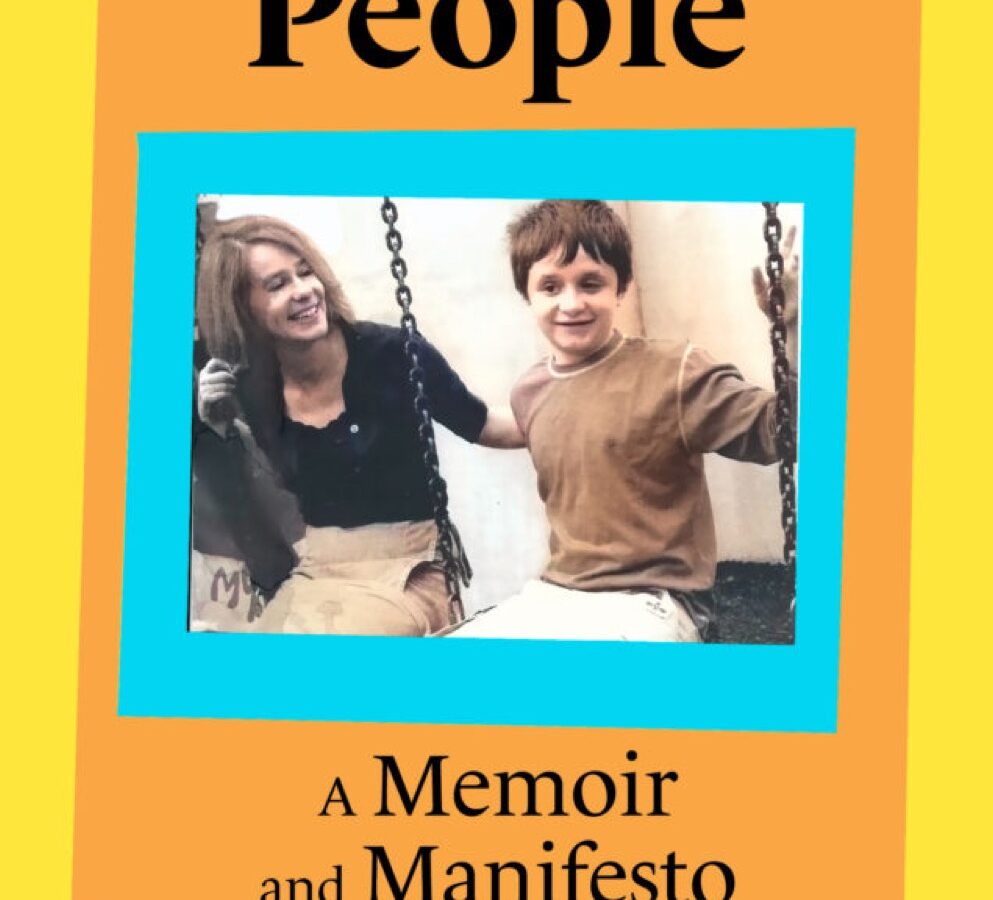
I recently read Virginia Bovell’s book, Danny’s People: a Memoir and Manifesto About Autism (Community Living, Autumn 2024), then talked to the author about the relationship between autism and learning disability.
Bovell is mother to Danny, who has a diagnosis of autism and severe learning disabilities, and is one of the founding parents of TreeHouse School and its umbrella charity Ambitious about Autism. She researches and speaks about autism and ethics, for which she received a doctorate in 2015.
Here, I share a little of our conversation.
Jan Walmsley: As a historian and an older person, I ask where people with autistic spectrum disorder (ASD) were in the past – people who struggled with social interaction but never had that label, like my brother-in-law who was diagnosed with bipolar disorder.
Virginia Bovell: Long before autism was recognised, people behaved in ways that might confer a diagnosis today; retrospective diagnosis has become almost commonplace, focusing on eccentric geniuses such as Einstein, Newton and Mozart as well as on so-called feral children. I’ve met contemporaries previously diagnosed with conditions
such as bipolar disorder who have been re-diagnosed as autistic.
JW: The statistics are interesting. The British Medical Association estimates that one in 100 children are diagnosed with ASD. The rate of new diagnoses are also interesting, like the well documented increase in childhood diagnosis and the relative rarity in diagnosis in people over 50. Does this indicate that its impact lessens with age or is there another reason?
VB: Improved awareness is leading to better early diagnosis, waiting lists notwithstanding. This means that the numbers of autistic children is rising regardless of prevalence in older adults. Professionals I encounter say they think there’s a real underlying increase in prevalence that a broadening of the diagnostic criteria over time cannot fully explain. My guess is that, as awareness grows, more people who would hitherto have been thought of as odd – or mentally ill – are now being diagnosed with autism. Also, many older neurodivergent people are now self-diagnosing but this is not reflected in the official statistics.
JW: What value does the label have for your son? His needs are specific and individual. For example, his intestinal problems, which you describe in the book, appear to be more significant than the label of autism for his quality of life. If every person who is labelled as autistic has different needs, might it work better to argue that everyone has specific needs and, if these are well met, people will benefit?
VB: His medical problems cause him to suffer in ways that autism and learning disability do not. But, even without his health problems, he would require a lot of support to thrive. A focus on an individual’s unique profile is necessary, but I believe Danny’s diagnostic labels are a useful starting point for needs assessment and support planning.
Professionals say they think there’s a real underlying increase in prevalence in children that a broadening of the diagnostic criteria cannot fully explain
JW: In the book, you discuss the danger that the interests of people like Danny who have profound and complex needs may be swamped by the rising tide of people diagnosed with autism or seeking an assessment. It appears the wait for assessments in children is growing, in part because of underfunding and also because of this rapid increase.
VB: Numbers grow, funding doesn’t keep up. Many autistic people are not eligible for any support unless in crisis, even though they can be more vulnerable and neglected than those who receive support on account of learning disability. Let us not generate competition between subgroups but instead look strategically at meeting so much need. The biggest improvement that could save money and boost quality of life would be a new training and career structure for the workforce: this would improve job satisfaction, staff retention and outcomes for everyone.
JW: Agreed – and this may be the subject for a future conversation.
Austerity was one of the most regressive economic strategies of any postwar government. Mary O’Hara examines its long-lasting effects on many people, especially those with disabilities
According to learning disability charity Mencap, by the end of 2013 the revision of all eligibility criteria for support was having a “devastating” effect on disabled, sick and older people.
A spokeswoman stressed: “When it comes to social care, it’s been a bit of a lottery so far. Local government is having budgets slashed and, if [a benefit] isn’t ringfenced, there are no guarantees. The changes to eligibility criteria are extremely significant.
“Our worries are that, for many people with mild or moderate learning difficulties, the support will no longer be there. This is about the fundamental things – being able to live with independence and dignity.”
According to Mencap, viewing any cut or reform in isolation led to a diminished understanding of the true consequences for those affected by multiple policies.
A worrying feature of the cuts to social care and benefits was that eliminating what might, on the face of it, seem like a non-essential care package could precipitate a complex chain reaction.
A charity spokeswoman told me: “One woman we know of [with a moderate learning disability] is an example. She is in her late 20s and was able to visit a day centre two days a week, which made a huge difference to her ability to live independently. It helped boost her confidence and she had contact with others.
“It doesn’t seem like much but, when the funding criteria was tightened [by her local council] and she couldn’t attend any more, she ended up getting lonely and depressed. She had to move back in with her parents and her mother had to give up her job to care for her.
“There are so many effects and the awful thing is that, unless someone is personally affected, they don’t really understand what these cuts mean for disabled people. It is a enormous problem and we are having to fight harder than ever as more [cuts] are to come.”
Anti-austerity protest in London, 2014: people not directly affected often do not realise how cuts hit disabled people. Photo: David B Young/Flickr CC BY 2.0 Deed
Shifting eligibility for care was having a significant impact but, by early 2013, a group of leading charities – Scope, Mencap, the National Autistic Society, Sense and Leonard Cheshire Disability – were pointing to a much wider issue. In a landmark report, The Other Care Crisis, they stressed that there was an urgent need for the government to reassess how disabled people’s needs would be met over the longer term.
The report found 40% of people with disabilities were not having basic social care needs met – such as help with washing, dressing or leaving the house – and that the £1.2 billion gap in social care for disabled people aged under 65 was a glaring indication of a system “on the brink of collapse”.
It was so dire, the charity said, that hundreds of thousands of people with disabilities and carers were left sick about how they would manage.
Clare Pelham, chief executive of Leonard Cheshire Disability, said: “This research reveals how many people are living in the care gap and it is a disgrace. No government and no right-thinking person should allow this to continue in their street, their town, their country.”
The task of repairing the UK in a post-austerity era was enormous, precisely because so much avoidable harm had been done over so long a period.
George Osborne and David Cameron could try to rewrite history but the fact remained that austerity had left the country woefully under-equipped to respond to additional, unforeseen challenges.
A new set of problems awaited the incoming government in 2024. Whatever the issues, though, after 14 years of devastating austerity, people needed hope. More of the same was out of the question.
How did an approach to assessing people’s ability to work become linked to hundreds of deaths? John Pring spent over a decade investigating bureaucratic violence against disabled people
On the other end of the line is Professor Sir Mansel Aylward, architect of the all work test, introduced in 1995 by the Department of Social Security (DSS) to assess whether disabled people were eligible for out-of-work disability benefits or, instead, were fit for work.
Now 80 years old, he is still working two days a week at Cardiff University. I hope our conversation will be the final piece in a grim puzzle that stretches across five decades.
I have just told him how academics concluded that an assessment process introduced in 2008 – built on the structure he devised in the early 1990s – was linked to nearly 600 suicides over just three years in the early 2010s.
“The figures you quote to me are, you know, I just don’t understand. Something’s gone wrong,” he says. He insists there were no such large-scale deaths when the all work test was introduced. “Why is it happening now?” he asks.
This is the complex and disturbing question that The Department seeks to answer. To do this, it examines the bureaucratic violence inflicted on disabled people who have relied on the benefits.
As my friend and collaborator Dr China Mills – who introduced me to the idea of slow bureaucratic violence – says, the consideration of time is crucial to understanding how this happened: how the everyday actions of bureaucrats, ministers and private sector executives combined to inflict awful violence on disabled people who rely on the welfare state.
But just as this violence has been slow, so has the process of uncovering its course. This book is the result of more than a decade of research and reporting and, most importantly, listening to disabled people and grieving relatives.
Troubling questions
I was not the first to draw links between the actions of the Department for Work and Pensions (DWP, the successor to the DSS) and its ministers, civil servants and private sector contractors and the deaths of disabled people who relied on the social security safety net. I have drawn heavily on other people’s work, particularly research carried out by the disabled people’s movement. Without that work, this book would have been impossible.
My own obsessive search for information about these deaths has filled in gaps and found answers to deeply troubling questions that began to emerge in the austerity years of the 2010 coalition government.
At first, I used the Freedom of Information Act and, more recently, have been trawling through the National Archives to find government memos and letters from the 1990s and early 2000s that help explain the shocking events I describe.
I also felt a need to tell the stories of those who died through the recollections of family members and – where possible – through their own words and the documents they left behind.
As a disabled person myself, with lifelong suicidal ideation and a recent autism diagnosis, I recognise my need for these innocent victims of government hostility to be remembered and for justice to be secured.
The everyday actions of bureaucrats, ministers and private sector executives combined to inflict awful violence on disabled people who rely on welfare
The deaths I describe are only a tiny fraction of those that could be linked to the actions of the DWP. Most of these deaths will remain hidden, particularly if those who died did not have family or friends to fight for justice in their names. I hope the disabled people I do write about can represent all those who lost their lives through this terrible, violent episode and those who will continue to do so.
I show how the DWP attempted to cover up and justify its actions, as it had to a lesser extent in the previous two decades, and angrily resisted appeals from disabled people and their allies to make the system safe.
Despite these efforts at cover-up and denial, evidence of negligence, dishonesty and hostility slowly emerged, through coroners’ reports, the department’s own secret reviews and the courage and determination of those left behind.
What is revealed, I hope, is the truth about the DWP and a clear and powerful demand for change and – finally – justice.
If you are affected by this story and need to talk, the Samaritans operates a free 24/7 helpline on 116 123. You can also email jo@samaritans.org or visit the samaritans.org website.
An morally intricate role is central to plot development, defying stereotypes of vulnerability, says Simon Jarrett
Stephie (played by Bethany Asher, in rehearsal) takes an active role in her life reacts to events with guile; with her adoptive uncle Denis (David Harewood). Photo: BBC/House Productions/Vishal Sharma
Sherwood
Series 2
BBC 1, 2024
James Graham is that most unusual of things – a leading British playwright who grew up working class. He writes with empathy and understanding about the working-class communities and people he portrays.
Sherwood series 1 (2022) depicted a former mining village in Nottinghamshire where the scars, resentments and shadows of the 1984 miners’ strike still fester and wreak havoc 40 years on.
Many miners in the area refused to join the strike led by Arthur Scargill’s National Union of Mineworkers and were picketed by miners from Yorkshire and elsewhere, including their own area. The ensuing lethal, decades-old hatreds, bitterness and enmities were the series theme.
In series two, we return to the same village to witness another consequence of the 1984 strike and the mine closures – the economic and social devastation that blighted these formerly tight-knit, purposeful communities.
Into the void created by the pit closures come drugs pushed by criminal gangs eager to snare a new generation of workless, disillusioned young people as both users and distributors.
It is a fast-moving series, the body count is high, the drama unrelenting and the shocks keep coming as two crime families
slug it out to the end. The police and local people are pulled in as the final threads holding this community together threaten to unravel.
And here we find Stephie Bottomley (Bethany Asher), a young woman with Down syndrome, who finds herself at the tragic heart of these events.
Readers yet to see the series may wish to jump to Subtle and Genuine, as the next section contains spoilers.
The plot (warning: spoilers)
Stephie and her older brother Ryan (Oliver Huntingdon) are being brought up by their good-hearted adoptive mother Pam (Sharlene Whyte) and Pam’s equally good-hearted brother Denis (David Harewood).
Ryan, devoted to his sister but on the wrong side of the tracks and mixed up in gangs and drugs, commits a senseless murder, for which he goes to jail.
From here, we see Stephie drawn into challenging, morally complex situations. Her adoptive parents are shot dead by relatives of the young man killed by Ryan, despite not being involved with the murder. She witnesses these killings.
At the end of the episode, we see a pitchfork go into the back of one of the killers as he prepares to leave the scene.
We later discover this was wielded by Stephie, who smiles sweetly at detectives comforting her – they are unaware she has just killed someone.
Stephie’s brother then arranges for his friends to “look after” her in the family home to prevent her being put into care while he serves his prison sentence.
The friends are from the drugs world and a form of cuckooing ensues as the house becomes a drugs production and distribution point. But it is not straightforward – Stephie is knowing and holds her own to some extent in the house.
She remains loyal to her brother, while aware of his shortcomings. The brother’s friends know her and are not simply exploitative.
Subtle and genuine
And this is what stands out – the subtlety and complexity of the role and character of Stephie Bottomley.
She is actively instrumental in the development of a number of plot areas, rather than a static character around whom things happen. Like just about everyone in the series, she is morally complicated, neither straightforwardly bad nor good.
James Graham shows his quality as a writer by not succumbing to stereotypes of sweetness and/or vulnerability in his portrayal of a character with Down syndrome.
And Asher captures brilliantly the mind of Stephie Bottomley, a young woman who reacts with power, guile and strength to the devastating events that engulf her.
An exhibition that tells the stories of British-born people who were murdered by the Nazis, bringing out their humanity, has attracted thousands of visitors. Simon Jarrett was involved in making it happen
Reading life stories at the display. Photo: Jon Archdeacon
The Finding Ivy exhibition tells the life stories of 13 British-born people murdered by the Nazi state in Germany and Austria between 1940 and 1941.
Their killings were part of the Aktion T4 programme, which murdered by gassing around 70,000 people who had physical or mental disabilities or some form of mental illness to “purify” the German race.
Some of these British-born victims were sons or daughters of German and Austrian immigrants who had moved to Britain in the early 20th century and later returned home. Others were from mixed Anglo-German or Anglo-Austrian marriages.
Ivy Angerer. Photo: Angerer family
Dr Helen Atherton from the University of Leeds, who has previously outlined the project, named after Ivy Angerer (Community Living, autumn 2019) led the research team, of which I was a part.
It is now a year since the European launch of this bilingual exhibition at Hartheim Memorial Centre in Austria, the site of one of six Nazi killing centres, on Holocaust Memorial Day in January 2024.
The response to the exhibition (I am co-curator) in the 12 months since has been overwhelming.
Through generous donations, we have three sets of display panels, which has enabled us to run two exhibitions simultaneously in the UK and a third in Europe.
The exhibition has been displayed, often with accompanying events, in London, Leeds, Beverley, Coventry and Birmingham as well as at the Holocaust Centre North in Huddersfield. Abroad, it is at Salzburg University in Austria. This year will see it tour Germany and many more UK venues.
Ivy as a baby. Photo: Angerer family
Ivy Angerer (including with her grandmother) was killed by the Nazis. Photo: Angerer family
Hartheim Schlos. Photo: Hartheim Memorial Centre
The public reaction has been enthusiastic – the exhibition in Leeds attracted 1,000 visitors – and press interest has been extensive.
Why is this? We think the life stories of the 13 people bring out their humanity and cause the public to empathise with them, making their fate all the more shocking.
They are no longer faceless, helpless victims.
Our display also describes how and why Aktion T4 came about, and draws lessons on attitudes to people with learning disabilities and others today – we hope it will have a lasting impact on public perceptions.
Issues affecting women with learning disabilities have often been neglected – and a book of life stories intended to remedy this turned out not quite as expected. Susanna Shapland reports
An academic how-to guide evolved into
a book of key messages the authors wanted others to think about
In 1992, Women First, a conference for and about women with learning disabilities, was held in Nottingham.
Academics Jan Walmsley and Michelle McCarthy were instrumental in its planning, seeing it as an opportunity to shine a spotlight on gender issues, a dimension that they felt was missing from policy and debates regarding people with learning disabilities.
In the wake of the conference’s success and keen to continue exploring the intersection between sex and learning disability, the pair developed a book proposal.
With this belief in the value of inclusive research, the book was conceived of as a participatory work; academics would edit and drive content, collaborating with women where appropriate, to create an edited volume of essays to inform policy. International in scope, it was to be principally by academics for academics.
What emerged was something quite different.
Inspired by researcher and policy adviser Gerry Zarb’s 1992 call for emancipatory rather than participatory research – where subjects do not merely contribute to research but drive every aspect of it – Walmsley and McCarthy involved learning-disabled women from the beginning.
Instead of being passive providers of their life stories, they were active contributors, attending and chairing meetings of the book’s working group, influencing the purpose, design and layout and editing each other’s chapters.
The aim was to “co-edit and co-author a book by and about women with learning difficulties with women with learning difficulties” so “the power of the academic gaze was at least tempered by sharing it with some people who were usually gazed upon”.
Learning-disabled women were therefore recruited, with Mabel Cooper, Gloria Ferris and Mary Coventry the core members.
In 1996, when Cooper began chairing the meetings, the book’s direction and intended audience began to evolve, with an increased emphasis on inclusion and accessibility.
The book was to be for everyone; people with learning disabilities needed to understand its content, whether they read it or had someone read it to them.
Different stories
Some stories were recounted with the aid of pictures, and diversity of tone was encouraged because “stories are told for different reasons, so this book could have different stories”.
At the same time, meetings and minutes were to follow the same principle, using pictures and simple language to ensure everyone understood them.
Issues such as self-esteem, sexual abuse and how non-disabled people and men are treated differently are tackled unflinchingly and honestly
Meetings could be acrimonious at times, the key flashpoints being the purpose and intended audience of the book. These lessened as the project progressed and the fruits of discussions became more tangible.
The learning-disabled women were empowered by being in control of the process of sharing their personal stories and by having the opportunity to discuss them with their peers.
By the same token, non-learning-disabled academics learnt practical lessons about inclusive research and the value of being a facilitator rather than an author.
As academic Dorothy Atkinson observed: “The process of writing the book has been as important as the product.”
In 2000, Good Times, Bad Times: Women with Learning Difficulties Telling their Stories, was published by BILD. Life stories are divided by theme, and it highlights the discrimination experienced by individuals who are both female and have a learning disability.
Issues such as sexual abuse, self-esteem and how men and non-disabled people are treated differently from learning-disabled women are tackled unflinchingly and honestly.
What had started out as an academic how-to book became a book of chapters with key messages – points each author wanted people to take away and think about. Contributors believed their stories, often deeply personal, could “change the hearts and minds of key people in their lives, and in the lives of other women”.
Further reading
Atkinson D, McCarthy M, Walmsley J, Cooper M, Rolph S, Aspis S, Barette P, Coventry M, Ferris G (eds). Good Times, Bad Times: Women with Learning Difficulties Telling Their Stories. Kidderminster: BILD; 2000
Welcome: the Learning Disability Friendly Practice scheme makes it easier for people to get in touch in the early stages of a health problem. Photo: Seán Kelly
It is not too early in the tenure of the new Labour government to question how it could help to improve the lives of people with learning disabilities.
Leaving aside the obvious, thorny issue of social care reform and funding – this isn’t looking good, given Keir Starmer’s admission in August that the autumn budget will be “painful” – one strategy is to involve people and their families in drawing up solutions.
One policy area in need of focus is health inequality; people with learning disabilities have an average life expectancy more than 20 years less than members of the general population.
Direct collaboration in this way offers the powers that be the greatest chance of finding out exactly where the gaps are – and how to respond.
Laws alone do not prevent discrimination or appalling failures in care, as Mary O’Hara reminds us. But specific learning disability legislation could help if it had teeth – enforceable policies – and if it were monitored by an expert panel with direct experience, as well as regulators.
The speakers were Laura Broughton, artist and social care consultant, Sheri King, a Corali Dance Company performer, Daniel Greenfield, a Lyceum Theatre usher and hospital volunteer, Gary Bourlet, the founder of Learning Disability England, and Fahmina Hoque, who gives advice as part of Hampshire Learning Disability Partnership.
Explaining what government action was necessary to enable more people with learning disabilities to lead successful lives – however they define this – Hoque said: “My wish list for the government is for them to continue improving social care plans, keep special needs schools open and find ways to improve schools.”
Black history made more accessible
The George Padmore Institute – an archive and research and information centre in London – has published easy-read documents making aspects of black history more accessible.
The project is a collaboration between the institute, the Open University (OU) and Generate Voices (a campaigning forum of people with learning disabilities).
Activist and OU researcher Paul Christian worked with his OU colleague Sue Ledger to create three easy-read documents.
As Christian explained in Community Living last year (Black history is brought to life), after he began researching and writing to support Black Lives Matter following the killing of George Floyd in 2020, he realised how few black history resources were accessible.
The easy-read information is available on the George Padmore Institute website.
During the pandemic, more DNACPR recommendations cited learning disability as a reason, despite NHS guidance stating that this should never be the case.
People First group celebrates 20th anniversary
Group tennis sessions where people can keep fit and socialise are just one of many initiatives run by People First Dorset (PFD), which is 20 years old this year.
The Dorchester-based charity is run by people with learning disabilities, with support from staff as needed.
The tennis get-togethers are among the activities run by PFD’s supported social network, the Friendship Club. The club holds regular events across Dorset from pub visits to quiz nights.
Simon Duffy, director of Citizen Network Research, described the club as “one of the best innovations in support for people with learning disabilities”.
“Where people come together, build on their own passions and interests and get stuck into community life, then we will see positive and sustainable solutions, fit for the 21st century,” he said.
In the year to March 2023, PFD ran 340 online and in-person events.
PFD also provides easy-read services and runs speaking up groups, encouraging people to develop speaking skills and discuss issues that concern them.
Mary O’Hara has won a journalism award for her Community Living columns. O’Hara, who joined as part of the 2023 relaunch, scooped first prize in the LA Press club’s Southern California Journalism Awards as the best columnist in the foreign correspondent category. Judges commended her “strong voice”.
Productive to pay carers
Giving paid leave to carers could boost productivity and quality of life, according to Carers UK. It said turning five days’ unpaid leave into paid time off would cost between £5.5 million and £32 million and achieve productivity gains of £8.2 billion a year.
Fewer carers coming here
Fewer people are coming from abroad to work in the NHS or social care. Home Office data shows a sharp drop in monthly applications for health and care visas – an 81% fall to 2,900 in April-July compared to the same period last year.
The University of Salford has awarded Jen Blackwell, DanceSyndrome cofounder, an honorary doctorate. Blackwell, who set up the inclusive dance charity in 2009, was named a doctor of arts “for her work inspiring both disabled and non-disabled people to dance”. She regularly leads workshops at the university.
All Update stories are by Saba Salman unless otherwise stated
What’s on our radar…
Expect pain for public spending plus the care regulator is failing. Saba Salman reports
The autumn budget is due at the end of October and prime minister Keir Starmer used his first big speech in August to warn it will be “painful”.
Campaigners expressed dismay at the prospect of “austerity mark two”, as chancellor Rachel Reeves planned tax raises, spending cuts and benefit changes to plug a £22 billion public finance gap.
The financial black hole was one reason for Reeves’ summer announcement of cancelling the cap on social care costs. The cap policy was created by the Conservative/Liberal Democrat coalition in 2014 but postponed by successive governments.
People who draw on care could again be left uncertain about when – and indeed whether – they can expect to see a reformed system
He added: “Otherwise, families and people who draw on care will again be left in uncertainty about when – and indeed whether – they can expect to see a genuinely reformed social care system.”
A damning interim report into regulator the Care Quality Commission revealed serious failings including low levels of inspections and inconsistent assessments.
Labour said it would boost the level of oversight of CQC. The full report, commissioned by the Conservative government and released after Labour was elected, is due to be published this autumn.
Following the UK riots, charities reacted swiftly to create easy-read resources on the topic. These included a video news special from Inclusion North and an edition of the United Response digital title Easy News. Among those producing the accessible information were Lewisham Speaking Up and Achieve Together.
On his podcast, Richard Keagan-Bull promises honest, warm and inspiring discussions on all manner of things. Saba Salman listens in
Podcast king Richard Keagan-Bull: “We want professional podcasters out there shaking
in their boots
– we want to be number one”. Photo: Irene Tuffrey-Wijne
When researcher Richard Keagan-Bull told colleagues at Kingston University, “I like talking to people”, little did he know that this casual comment would spark a successful podcast series.
Cuppa Tea with Richard was launched this year and is billed as “a man with a learning disability talking about things that matter”.
Hosted by Kingston University, the show promises “an honest, warm and inspiring conversation over a cup of tea”, and the dozen episodes so far deliver just that.
Recent guests include retired palliative care doctor Kathryn Mannix, NHS psychologist and bereaved sibling Emily Handley-Cole and activist, author and social care professor Sara Ryan.
Mannix recently told the show’s producers: “More podcasts need tea and Richard’s level of interesting questions.”
Presenter Keagan-Bull is supported by producer Irene Tuffrey-Wijne, a professor of intellectual disability and palliative care at Kingston. The editors are university colleagues Jonny Ding and Anastasiya Stravolemova.
Keagan-Bull, who also sits on the Community Living editorial advisory board, said that he enjoyed talking to people during a lunch break chat about an upcoming conference. The event featured people with learning disabilities as hosts and interviewers, and Tuffrey-Wijne commented that Keagan-Bull would make a good interviewer.
About a month after that initial conversation, the team recorded a short teaser and released the first episode back in May. That initial show has gained more than 250 listens on SoundCloud.
Keagan-Bull says: “I like to listen to people’s stories. We thought a podcast was a way to reach out, for more people to understand a little bit more about learning disability.
Tuffrey-Wijne adds: “Richard wants to talk about things that interest him, which is living with learning disability, as well as growing older and living well. So the podcast is about that and about being part of society.”
Photo: Irene Tuffrey-Wijne
Beyond set questions
Keagan-Bull’s skill, she says, is his “ability to have a set of questions, but then also to ask on, to deviate from it”.
“He really listens to the answers and picks up on some things that people say,” she notes. “That is such an interviewer skill.”
To support Keagan-Bull and to avoid any worries or potential trolling (from, for example, people demanding to be on the podcast), the team drafted some ground rules.
These include Ding and Tuffrey-Wijne taking responsibility for deciding on and approaching guests. Keagan-Bull also suggests people to interview and agrees or disagrees with his colleagues’ choices.
The team researches each guest and draft questions together, with the podcast created at the university’s recording studio.
Keagan-Bull says: “We do our homework on it – you don’t just dive in.”
The team has some tips on starting a podcast.
First, says Tuffrey-Wijne, editing is vital – a 40-minute conversation will be cut to 10 minutes: “That’s quite hard. Which content do you leave out?” Creating five or 10 minutes of really good audio will take days from inception to research to recording to editing.
Next, it is worth judging whether you have the right people and support to sustain an entire series.
Then, you need to consider how often you broadcast your show and whether you record episodes one at a time or in batches for release over, for example, a six-month period (the latter is the strategy for Cuppa Tea with Richard).
It is essential to create a “quality product”, says Tuffrey-Wijne.
As Keagan-Bull adds: “We want professional podcasters out there shaking in their boots – we want to be number one, so what we do has to be professional.”
How could a benefit worth little more than £80 a week end up being overpaid by £5,000 or more? And why is this getting worse? Charlie Callanan looks at the scandal around carer’s allowance
The Department for Work and Pensions’ technology is
being blamed for overpayments racking up long before carers are told. Photo: N Chadwick/geograph.or.guk/CC BY-SA 2.0
The problem of carer’s allowance being overpaid has again come to public attention.
Reports suggest that between 2019 and 2024 the number of carers who had been overpaid rose from 80,000 to nearly 135,000. The value of overpayments that the Department for Work and Pensions (DWP) is attempting to recover has increased from £150 million in 2019 to £251 million.
The predominant cause of overpayments of carer’s allowance – the only cash benefit exclusively for carers – appears to be difficulties around the reporting and updating of carers’ earnings from paid employment outside their informal carer role.
Community Living reported in January 2019 concerns about some carers being ordered to repay their carer’s allowance because of overpayments. It appears from the latest figures that the DWP is no closer to reducing these.
Government statistics show that in 2022-23, the majority of claimants who had been overpaid were told to pay back amounts of up to £5,000, although for some the overpayments total will be larger.
Carer’s allowance is not means tested, so general income and savings are not assessed. However, once earnings go over a threshold of £151 per week (after certain deductions), the allowance is removed completely.
Carer’s allowance is referred to as a cliff-edge benefit. Once earnings go over £151 per week, after certain deductions, it is removed completely
It is therefore often referred to as a cliff-edge benefit. This contrasts with how earnings are treated in universal credit, a means-tested benefit. Here the system is more responsive to changes in a claimant’s wages, taking increases and decreases into account, so awards can be adjusted accordingly.
This means people can take on more work knowing they will not necessarily lose all their universal credit. It is also helpful to those on zero-hours contracts.
The DWP’s data-matching technology notifies it of overpayments but it appears it often responds too slowly, so overpayments may build up before they are acknowledged and the claimant notified.
Compensation for lost earnings
Carer’s allowance is supposed to compensate carers who are limited in the hours they can work because of caring responsibilities.
However, the benefit is just £81.90 per week, lower than the weekly awards of employment and support allowance and jobseeker’s allowance of £90.50 per week. In Scotland, carer’s allowance claimants get an extra payment of £288.60 twice a year, the carer’s allowance supplement.
Those who claim carer’s allowance may also be able to get universal credit to top up their benefit and/or to help with housing costs. Carers with a disability may be entitled to employment and support allowance, with this being paid instead of the carer’s benefit.
The main qualifying conditions for carer’s allowance are that the carer must be:
Aged 16 or over
Looking after someone who gets a qualifying disability benefit: the daily living component of personal independence payment; the middle/higher rate of the care component of disability living allowance; or attendance allowance
Caring for at least 35 hours a week
Not earning over £151 a week after deductions for income tax, national insurance and half of their contributions towards an occupational or personal pension
Not in full-time education.
A Carer’s UK report, Carer’s Allowance and Overpayments,
has made recommendations on how to reduce the likelihood of overpayments, including:
Increase the earnings threshold to the value of 21 hours’ work a week on the national living wage
Introduce a taper to earnings similar to that for other benefits to avoid the cliff-edge effect
DWP staff to act much more quickly on information from carers and notify them quickly about potential overpayments
Write off substantial overpayments if carers could have been notified sooner of them.
Any carers claiming carer’s allowance in doubt about their earnings and how these affect their award should contact the DWP’s carer’s allowance unit and, if possible, confirm any changes of earnings or other circumstances to the unit in writing.
It can be difficult to enjoy your right to education if you can’t get to school in the first place. Phoebe Craig looks at a court case and an official complaint centred on the human rights aspects of this
Denying or failing to provide suitable transport can constitute discrimination if it results in a child with special needs or disabilities being unable to attend school regularly. Photo: DimiTalen/Wikimedia Commons/CC 1.0
Suitable school transport is often crucial for children who have additional needs – it’s key to enabling them to attend school regularly. Access to education can be severely restricted if they lack appropriate transport to and from school.
The Human Rights Act (HRA) 1998 provides a powerful legal tool to secure the necessary transport, particularly when councils have very restrictive policies. The act can be used to ensure the right to education is respected and protected.
Key articles in the act that are relevant here include:
Article 2 of protocol 1: right to education; this ensures that no one is denied the right to an effective education
Article 14: freedom from discrimination; this article guarantees that the rights set out in the HRA must be protected without discrimination.
The right to education, as set out in article 2, was discussed in a 2010 case against a local authority – A v Essex County Council.
The judge noted “that an authority with the responsibility for providing education, if it knows that a pupil is not receiving it and engages in a completely ineffectual attempt to provide it, is in breach of the provision”.
The Education Act 1996 requires local authorities to make suitable travel arrangements for eligible children, who include many with special educational needs and disabilities (SEND).
If an authority that knows that a pupil is not receiving education and engages in a completely ineffectual attempt to provide it, this is in breach
However, these provisions are not always good enough or properly implemented. When this happens, the HRA can be used to ensure that the right support is made available.
Article 14 states that the rights included in the HRA must be enjoyed without discrimination.
It is not a standalone right; it is a right not to be discriminated against when you are relying on your other rights in the HRA.
It is sometimes called a piggyback right so, when one of your other rights is at risk, you can also raise your right to non-discrimination if you think that is an issue (see Olivia’s story, below).
In relation to children with SEND, the freedom from discrimination means they should not be disadvantaged compared to their peers when accessing their right to education.
Denying or failing to provide suitable transport can constitute discrimination if it results in a child with SEND being unable to attend school regularly and on time, therefore holding back their progress at school. The principle is that children should not face barriers to education because of a lack of transport.
Enrolled but out of school
A recent high court case against Croydon Council showed how school transport is part of the right to education (B & Anor, R (On the Application Of) v NHS South West London ICB).
The court found that a local authority’s failure to provide suitable transport breached two children’s right to education under article 2 of protocol no 1.
The court stressed the importance of transport in ensuring that the children could access education and that the council must provide transport where needed.
It was found that Croydon had agreed to transport the children to school but was unable to provide a suitable transport solution and argued it was not its responsibility.
The children were not transported to school for 18 months and Croydon’s efforts to ensure they were provided with an education were completely ineffective.
Although the judge accepted that it was not just the fault of the local authority that the children were not attending school (their mother had additional needs and did not fill out paperwork effectively), “once it became aware that the children were not attending school, Croydon had a primary responsibility to ensure that they did so, or at the very least that they were able to do so”.
Croydon had refused to make any educational provision for the children because they were enrolled at a school already, while not taking the steps necessary to ensure that they could actually attend that school.
The judge decided this meant that they were denying the children their right to education under article 2 of protocol 1 by failing to provide transport to the school.
Olivia’s story
Olivia is eight years old, has a moderate learning disability, global development delay and uses a wheelchair.
She has an education health and care plan (EHCP) and, although there is a disagreement on where she will attend school next, she is enrolled in a specialist school that is five miles from her home.
Olivia and her family have recently moved into the area, so the EHCP is being reviewed as part of the handover during the change of responsible local authority. The new council agreed it would transport her to and from this school while it remained named in her EHCP.
Olivia requires an adapted vehicle and an escort. While the local authority provided the adapted vehicle, it did not have an appropriate escort available, and Olivia was only able to travel to school if her father took her.
Failing to provide suitable transport can constitute discrimination if it results in a disabled child being unable to attend school regularly and on time
This was not a feasible solution because of his work commitments, so Olivia had not been going to school.
The local authority argued that it had provided the transport so had fulfilled its duties, and therefore the issue was no longer their responsibility as this is what it said in its policy.
Olivia’s father challenged this, but the council kept referring to its policy and refusing to provide an escort.
In a formal complaint letter, Olivia’s father explained that, under the HRA’s right to education, the local authority must make arrangements to allow Olivia to attend school.
By knowing that she was unable to attend her school because of a lack of appropriate transport,
the council was unlawfully preventing her from accessing an effective education.
He also made it clear that this is only happening because of Olivia’s additional needs, so it was also denying Olivia her right to be free from discrimination under article 14.
This is because they were failing to treat Olivia appropriately as she needed different support to get to school, and this failure had the knock-on effect of depriving her of an education.
The local authority apologised and agreed to provide Olivia with escorted transport from the following week.
Human rights are the rights we are entitled to simply by virtue of being human, based on values such as fairness, respect, equality and dignity.
The Human Rights Act 1998 takes 16 of the fundamental human rights written into the European Convention on Human Rights and puts them into UK law.
This means they can be enforced in UK courts rather than in the European Court of Human Rights in Strasbourg.
These 16 rights are called articles, and cover matters such as the right to life and the right to education.
The government and people who work for public bodies, such as doctors, social workers, teachers
and judges, have a responsibility to respect, protect and fulfil all our human rights.
If they do not, the people affected can bring a legal case against them.