Far down the Covid list

The inquiry into the pandemic has highlighted how little priority the government afforded people with disabilities. Their voices need to be heard as this investigation continues, says Saba Salman

Orla McKenna

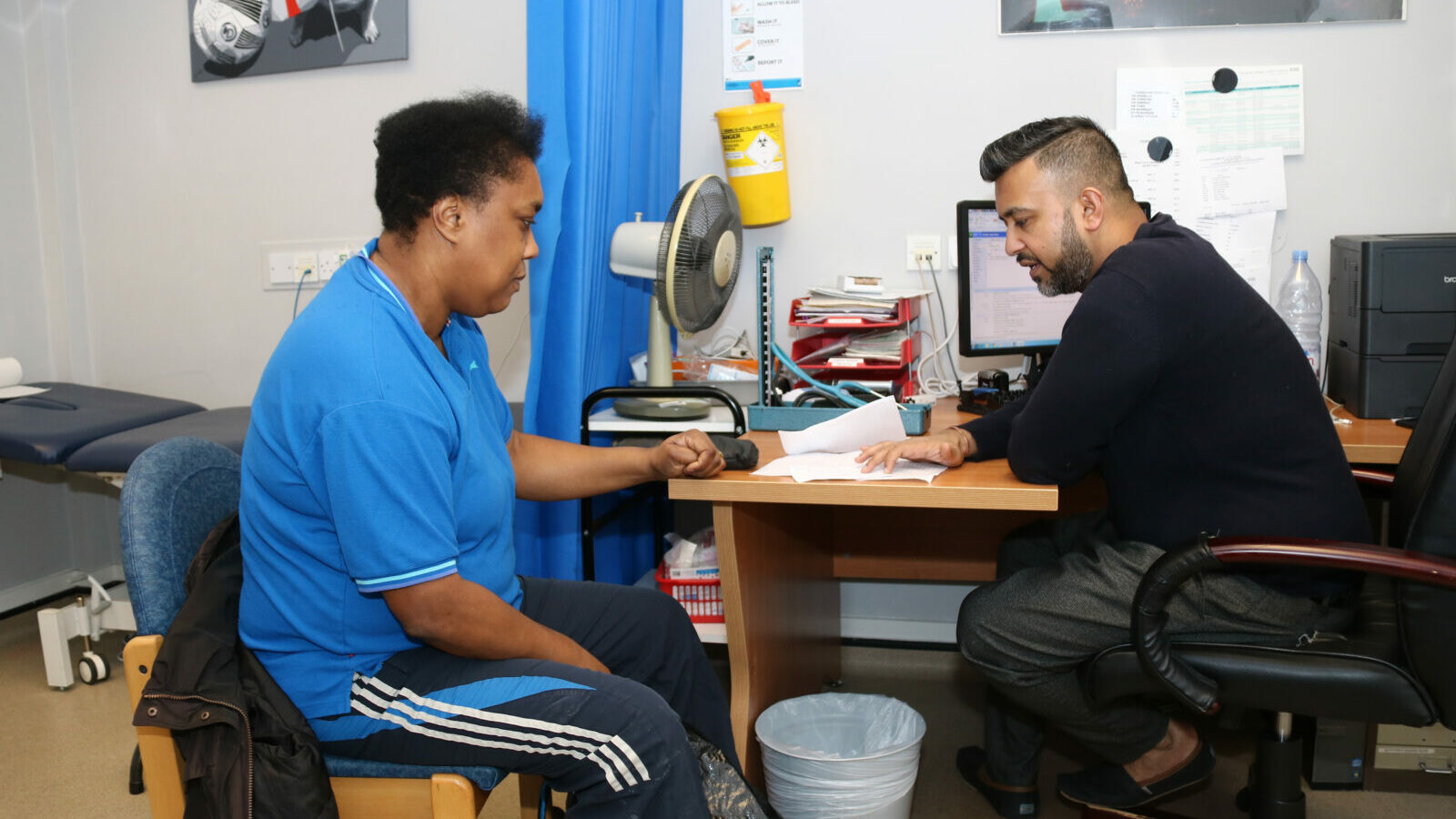
The public inquiry into the pandemic has underlined how the government treated disabled people as an afterthought.

Headlines about the UK Covid-19 Inquiry have focused on the toxic working culture and chaos in Boris Johnson’s government. While the inquiry will not cover the care sector until spring, recent testimonies have reflected the pandemic’s negative impact on disabled people.

Hugo Keith, the inquiry’s lead counsel, said: “Mortality rates were higher among people with disabilities, in particular those with a learning disability.”

He added that policymakers should have considered “structural discrimination”.

Higher mortality

Government figures showed that learning disabled people were six times more likely to die from the virus than the general population, and younger learning disabled people 30 times more likely to die.

Danny Friedman KC, on behalf of national disabled people’s organisations at the hearings, told the inquiry there was “no coherent plan” for disabled people at the start of the pandemic. The organisations – Disability Rights UK, Inclusion Scotland, Disability Wales and Disability Action Northern Ireland – criticised the government for overlooking disabled people.

Among the criticisms were:

  • The lack of a plan for disabled people throughout the first and second waves
  • A reliance on the voluntary sector to fill gaps in support but without mandating this nor funding its involvement
  • Disabled people not being included in the pandemic response, despite the higher risks to them
  • Limited financial provision for disabled people.

The inquiry follows research, as featured in Community Living (spring 2023), which noted the disproportionate impact on disabled people from black, Asian or minority ethnic backgrounds. The National Commission on Covid-19, Disablism and Systemic Racism found that systemic racism embedded in the government’s responses to the pandemic may have exacerbated outcomes.

Separately, the Coronavirus and People with Learning Disabilities study has exposed the devastating impact on this population. It showed that people with profound and multiple disabilities still face permanent disadvantage as a result of Covid.

It has not been confirmed when – or if – the inquiry will hear directly from people with learning disabilities or their families. In the absence of such testimonies, it is worthwhile acknowledging the recent pandemic stories event arising from the Coronavirus and People with Learning Disabilities Study.

Co-hosted by Learning Disability England, it involved people sharing their stories of living through the pandemic (see box, below). It is the sort of witness statement the inquiry needs.

Katherine Runswick-Cole, professor of eduction at Sheffield University, attended and later posted on social media: “I wish the inquiry would hear directly from people with learning disabilities… people [at the online event] gave such powerful testimonies, they want to be heard and said repeatedly, ‘this must never happen again’.”

If another pandemic happens, people with learning disabilities want – and deserve – far better support from the government.

Experiences from the time of Covid

The Covid pandemic had numerous effects on people with learning disabilities:

  • People in supported living or residential care worried about coronavirus spreading between them as they shared homes
  • The pandemic stopped people from doing things important to them, which was bad for their mental and physical health
  • Family members of people with profound and multiple learning disabilities felt abandoned
  • People felt frustrated and as if they had lost their independence
  • Support that was withdrawn has still not returned partly or at all
  • Some still feel angry about how the government acted during the pandemic

Teresa finds home

Choosing where to live is a basic human right. Teresa’s story is about how difficult this can be wherever you are, writes Franke James

It started with the question: “Where will Teresa live?”

We couldn’t agree on what was best for our disabled sister if she could no longer live in the family apartment in Toronto, Ontario, with our father.

In 2013, an Ontario government social worker declared Teresa “not capable” during a care assessment, and my sister lost her right to decide where she would live.

Wrong home

Teresa was put into a nursing home by two of her older siblings, acting as her guardians (apart from Teresa, none of my siblings support the telling of this story).

However, Teresa did not have any medical need to be in long-term care.

Within days, our father, my husband Bill and I helped her get discharged back into Dad’s apartment.

Teresa had a new capacity test done that determined she could decide where she lived and who would take care of her.

She moved in with us in December 2013. We relocated to Vancouver, British Columbia, in March 2014.

Bill and I helped Teresa to ask the care authorities for an apology for wrongful institution-alisation. Teresa said it had been wrong to put her in a nursing home.

On behalf of Teresa, the BC Civil Liberties Association wrote to the Ontario minister of health, saying: “We are gravely concerned that the government, through its actions, appears to condone the forced placement and mistreatment of developmentally disabled adults.”

After further publicity and campaigning, the health minister publicly apologised to Teresa in July 2016.

This story isn’t just about our family. It is about the difficulties that most people with disabilities face in exercising one of their most basic human rights: to choose where to live.

Freeing Teresa: a True Story About Fighting Ableism has taken 10 years to write.

What I didn’t know at the start was that Teresa’s experience was not unique – it’s happening around the world. I hope that by talking about it, change will happen.

And the tenth anniversary of freeing Teresa from the nursing home is a joyful and important reason to tell this story.

Freeing Teresa by Franke James with Teresa Heartchild and Billiam James is published by The James Gang

Franke James is an activist, author and artist

An extract from Freeing Teresa

When Teresa was born with Down syndrome in 1964, the doctors told my parents she was “severely handicapped” and would need lifelong care. They advised my parents to put her into an institution to get the care she needed.

Many parents would have taken the doctors’ word as gospel but they were already raising six kids. They ignored the experts and brought their baby home.

Teresa was one of the lucky ones. In 1960, four years before her birth, news stories revealing the awful truth about institutional life were beginning to leak out.

My mother and father were part of the wave of parent activists who rejected institutionalisation. No doubt they felt the sting of social disapproval, but they had an unshakeable commitment to fairness, an abundance of love and wills of steel.

In the 1970s, group homes were seen as a good solution. But, by the time Teresa was in her 20s, the idea had been shelved. Many people started to think that group homes were just mini-institutions and that it was healthier for people to stay with their families.

But what happens to people with disabilities as their caregiver parents age or die is a dilemma. Do they want to live with other family members? Can they live on their own with support? Will they move into a group home where they may lose their independence? Or will they have to move into a nursing home, usually for end-of-life care?

My siblings had the solution: put Teresa into a nursing home. Once she was in the system, she was there for good, because they couldn’t evict her from a nursing home.

This was shocking. Teresa was healthy and active. She was 49, not 79. She loved living in a comfortable apartment with my dad in the neighbourhood where we all grew up. Why should she give that up – and her freedom?

Teresa Heartchild with a copy of Freeing Teresa

When my older sister told me I had no power over the decision to put Teresa in a nursing home, that’s when I knew we needed to do something to stop them. That night we offered, in writing, to have Teresa move into our home.

But my siblings refused to consider our offer. Then they blocked me from speaking with the care agency. Just a few days later, they put Teresa into the nursing home without telling me or Dad. Teresa was shocked and didn’t understand what was happening.

Wrong and right places

The entrance to Aiker Place (not its real name) was like a motel carport, a low-ceilinged drive-through where families could conveniently stop to unload ageing relatives, wheelchairs and other baggage.

Here, Teresa was surrounded by people who were decades older than her, had serious medical problems and were near the end of their lives.

I spoke with the chief executive who, after pressing, agreed Teresa did not belong there. She was the only person there who was aged under 50 and had Down syndrome.

The day after we had rescued Teresa, I sent my siblings a letter offering peace. We explained – again – why having Teresa live with us would be ideal for so many reasons.

We have an extra bedroom, I wrote. We work at home and our schedules are flexible. She will be close to family members, and she will be in the area she grew up in.

We feel we can help Teresa grow and develop to her full potential and have helped her with her abilities; she has done an 8km fundraising walk for cancer research.

The ultimate goal would be for Teresa to live in a group home if that is what she wants and is in her best interests. But we are in no rush. We were – and still are – honoured to have Teresa live with us.

Back in a family home

It was the first of December 2013, a chilly night. Teresa and I stood in the doorway, watching as Bill helped Dad get in the cab.

As it pulled away from the curb, Dad lowered the window and waved goodbye. Teresa and I waved back as the car drove away and disappeared into the darkness.

We stepped back into the warmth of the house. “Let’s go upstairs,” I said, “and we’ll make sure you have everything you need.”

My son Trevor’s old room would suit Teresa beautifully. The fluffy white duvet on her bed looked cosy and inviting.

“I want to stay here with you, Franke.”

“Oh, that’s so nice.” And I gave her a hug.

She looked at me and said: “You’re my sister.”

“That’s right. We’re sisters.”

“And we’re together.”

‘There was a real hunger to learn and absorption in work’

Brewery veteran Becky Whinnerah and her husband John founded a collective to support employment with brewing experience, Saba Salman reports

Becky Whinnerah

Hours after hosting an inclusive brew day, a Berkshire microbrewery acted on advice from its disabled collaborators and ordered an accessible doorbell.

It is a modest step to offer wheelchair users a reachable entry buzzer, but Elusive Brewing’s swift action reflects how would-be beer makers from the fledgling Count Me In Collective (CMIC) are starting to shift perceptions. Since the doorbell was installed a few months ago, the brewery has added other accessible features, such as step-free entry.

Learning on tap

The inclusive brew days were part of CMIC’s plans to launch a community-based training brewery for autistic adults and people with learning disabilities who want jobs in the area’s brewery and pub trade.

Reading-based CMIC’s £25,000 crowdfunding appeal is raising cash for the equipment, with a training venue earmarked at a local pub, The Castle Tap.

The collective, a dozen disabled and non-disabled people including parent carers, was founded by Becky and John Whinnerah. The couple, who are pub and brewery trade veterans, have three children aged between 12 and 18 – one is autistic and another has complex needs.

CMIC is driven by the need to reduce employment inequality. Fewer than one in 20 of adults with learning disabilities in England are in paid work. Whinnerah hopes “to make a small dent in those statistics”.

She adds: “They should have the same right to work as anyone else. Thinking of my children’s futures, I’d like to imagine all sorts of fantastic opportunities but you hear horrible stories of people who end up with nothing to do as adults, just the carer taking them out to the supermarket.

“It’s so patronising and dehumanising – people should be able to go out and earn money.”

The collective approach is vital, given some CMIC members’ caring responsibilities. Whinnerah adds: “A lot of us are very tired, stretched and have a lot going on – but we’re all committed to making this happen. If I can’t pick up something, someone else steps up. We have to do this at the right pace for the collective.”

Covid delayed Whinnerah’s idea for a training brewery in 2019. Then, during discussions with Elusive Brewing, the company offered to trial a brew day.

Two such days were held with three trainees aged 18-24. Numbers were limited because of the brewery’s size and as CMIC wanted to meet individual needs (such as less noise). Two trainees were autistic and have learning disabilities and the third was autistic and used a wheelchair.

It’s down to prejudice that people end up stuck at home. What a sad waste, and what a complete joy it would be if people took part in their communities

Whinnerah says: “I was struck at how immediately engaged the trainees were – there was a real hunger to learn and complete absorption in what they were doing. The brewery staff had a good rapport with them, so they were able to share ideas. One simple one was having a reachable doorbell, which the brewery ordered that day.”

Whinnerah, an artist, designed the labels for CMIC’s two beers – Count Me In pale ale and dark beer Stand Up and Be Counted. Both are on sale at venues in Reading, in Elusive Brewing’s Taproom bar and shop and on its website.

Once its course is established, CMIC hopes that three trainees will be doing one brew day a week over up to three months or longer depending on the reasonable adjustments trainee brewers need.

It is hoped the brewing course will become accredited, with some trainees becoming its employees and others gaining experience and qualifications necessary for jobs in the brewing and hospitality sectors.
The aim is to harness people’s potential. As Whinnerah says: “It’s down to bias and prejudice that people end up being stuck at home. What a sad waste, and what a complete joy it would be to all of us if people took part in their communities.”

Jan Walmsley: why we need to revisit and reclaim the past

Putting experiences in a historical context can take away a feeling of failure and of being the only one to be treated in a certain way – and ensure wrongs aren’t repeated

Ebba Hreinsdóttir, her husband Jonni Gretarsson, Mabel Cooper (centre, back) and Gloria Ferris (front)

Everyone with memories to contribute is welcome at the Social History of Learning Disability Research Group, which I founded in 1994.

But only recently have I noticed the missing element of our work – the importance of sharing that history with the people whose lives are influenced by it.

It has been recognised since the 1960s that so-called marginalised groups – women, gay and lesbian people, people from black and minority ethnic groups – need to reclaim their past. It has taken decades longer to come to the realisation that people with learning disabilities need this too.

This is because of many obstacles: narrow curricula in special schools; mainstream schools unlikely to adapt their lessons for a minority of pupils; many people cannot read well enough to understand books and articles; and little encouragement for people even to own such a stigmatised label.

Yet when people have been helped to see their experiences in the light of recent historical events, it has been like switching on a light.

It all started with Mabel Cooper, a survivor of an institution who, with the help of my longtime colleague Dorothy Atkinson, recorded her life story, piecing together missing aspects from official records.

Cooper made an enormous contribution to bringing this hidden and often shameful history to light, through books, conferences, work in schools and her autobiographical film No Longer Shut Up (which is on YouTube).

What I missed at the time was how important it was to Cooper to know that this was how it was in “them days”. She gained comfort from knowing that she was not alone in being wronged.

Cooper was, indeed, not the only one. Ebba Hreinsdóttir, born in 1950 in Reykjavik, Iceland, was sterilised at the age of 14 at her family’s behest, without her knowledge or consent. At 18, after her mother’s death, she was placed in an institution. Aged 28, she was released. Other women were being sterilised as a condition of release. She asked why she wasn’t – and found out. She was very angry.

When people have been helped to see their experiences in the light of recent historical events, it has been like switching on a light

Slowly, working with her friend Gudrun Stefánsdóttir, who had been employed at the institution, Hreinsdóttir learnt that sterilising women with learning disabilities was legal in Iceland at the time.

It wasn’t right – she knew that – but she also knew her mother was simply doing what she was told. It was not Hreinsdóttir’s fault and nor was it her mother’s.

Sharing landmarks in history can have striking effects. When I explain that until 1970, many people with learning disabilities were excluded from school on the grounds that they were “ineducable”, it is a shock but also a comfort.

Why does it matter that young people with learning disabilities have an opportunity to learn about this recent, often shameful past?

Not many people know about this history, even those without learning disabilities. Finding out about it helps people talk about bullying, discrimination and poor experiences at school. Putting your experience in context can take away a sense of failure, of being the only one to be treated like that.

Also people need to hear the stories of heroes and role models such as Hreinsdóttir and Cooper. Without remembering the past, we are all too likely to repeat mistakes.

As Cooper said: “A lot of people, especially people like me, we always think if they did not have enough money to keep us outside they would say ‘Right you all have to go back into hospital’. It is important that they knock them down.

“It’s important that the books stay because that is a reminder of what happened.”

Wish you were here…?

England’s first major ‘idiot’ asylum attracted erudite visitors, whose glowing travelogue-style reports unwittingly served to push people out of mainstream society. Susanna Shapland reports

Royal Earlswood Hospital

Earlswood Asylum was England’s first large “idiot” asylum, and the world’s first institution purpose built for the care of such patients. Granted a royal charter by Queen Victoria, it was established in 1854 near Redhill in Surrey, easily reachable by train on the London-Brighton line.

Its prestige and accessibility meant that, throughout the 1850s and 1860s, Earlswood attracted a stream of erudite visitors: clergymen, journalists, lawyers and even Charles Dickens. They wrote travelogue-style accounts of their visits intended for publication as pamphlets or columns in newspapers and magazines.

The target audience was middle-class readers with an interest in Christian philanthropy and, ideally, money to back their beliefs and support the charity-funded asylum.

These travelogues helped to shape popular ideas of idiocy and, in turn, had an impact on public policy.

By writing up their encounters as travelogues, these (exclusively male) visitors portrayed themselves as brave explorers, venturing into unknown lands and reporting back on the inhabitants and their customs, declaring it safe for those who followed.

The argument for asylums was made so persuasively that the idea of leaving ‘idiots’ at liberty became widely regarded as both cruel and dangerous

Riding in on the railway – that great symbol of scientific progress – their journeys emphasised the separateness of the land of the asylum, the “land of idiocy”.

This land was itself an undiscovered territory. Previously, individuals with learning disabilities had lived within their communities. Now, for the first time, they were gathered together en masse.

Fears and expectations

A common trope of these travelogues was a description of the fear of what the adventurer might encounter – fears that were, perhaps, echoed by the reader.

Many wrote of presuming they would encounter filth, squalor and chaos. Instead, they were all were delighted to report, everything was orderly, coherent and productive.

Indeed, visitors described something of a Utopian society, where everyone had their place in the class hierarchy, and was happy and productive as a result.

The patients at Earlswood were described as a “family”, complete with eccentric individual members. Some were recurring characters in reports, such as the “historical cook” and the “excellent draughtsman” (skilled model-maker James Henry Pullen). Nonetheless, all were united by their “idiocy”.

Most importantly, visitors reported that all these family members were grateful, and that gratitude was directed at the heroes of the accounts – the asylum staff.

Chief among these was John Langdon Down, medical superintendent from 1855 to 1868 and best known for his description of Down syndrome.

He acted both as family patriarch and as the brave pioneer bringing “light” to the “darkness” of his wretched dependants. In this way, he reflected contemporary ideals of empire, with his Christian benevolence enlightening his colony of pliant, grateful natives.

By expressing their surprise and delight at the contented, orderly community they had discovered, these writers sought to humanise the idiots of Earlswood.

In so doing, however, they created a terrifying alternative: the unkempt, gibbering idiot who was not in the safety of the perfect, disciplined, Christian society of the asylum but at large in the community.

The argument for housing idiots in asylums was made so persuasively that the idea of leaving them at liberty became widely regarded as both cruel and dangerous.

By the end of the 1860s, very few asylum travelogues appeared – but they had unwittingly done their job. Idiots were seen as a class apart, one to be kept separate from society if at all possible.

Any thoughts of training people for a life outside were abandoned, as asylums became long-stay institutions. This marginalisation was brutally exacerbated by the rise in degeneration theory.

The perfect, happy family described by mid-19th-century travellers was lost forever – if it had ever existed at all.

Source: McDonagh P, Visiting Earlswood: the asylum travelogue and the shaping of “idiocy”. In: McDonagh P, Goodey CF, Stainton T, eds. Intellectual Disability: a Conceptual History. Manchester: Manchester University Press; 2018: 211-237

Ian Goldsworthy: amid all the clouds, the silver linings shine brightly

Having a profoundly disabled son has given me a different perspective on the world. Yet, while life can be tough, small treasures always light up life for this sometimes grumpy man

Ian Goldsworthy

If my wife has told me anything – and she’s told me many things – it’s that I can be a grumpy old so-and-so. That I’m a middle-aged guy who occasionally greets the world with an exasperated shrug rather than an open smile hardly makes me unique.

But I wonder if this half-empty outlook on life can be attributed to more than just a receding hairline and an expanding waistline.

Being Elliott’s dad for the past 18 years and coming to terms with just how much of his life is affected by his learning disabilities has given me a different perspective on the world.

After all, it would take a hard soul not to feel a little ground down by sleepless nights, endless paperwork and fathomless worry that accompanies a diagnosis of profound disability.

In the best light

And it’s with all that weight and stress in mind that I decided to set myself a challenge in this piece: to find the unbridled joy in Elliott’s life. And to celebrate it.

I’ve spent so many years filling in forms that require you to describe your life, family and child in the worst possible light that it is a challenge to flip that narrative on its head.

But one beautiful image comes to mind.

A kiss from my boy.

My big boy.

My 18-year-old hulk of a boy who still kisses his daddy like he was a toddler.

Every parent knows the joy of those early years, when your love for your child and their love for you is at its purest and most readily expressed.

Elliott still exists in that moment. He always will.

How many other dads get kisses from their kids once they are adults? Every time he gives me a kiss, I think how lucky I am.

Smiles, dad jokes and dance

And, from thinking of Elliott’s lips, I thought of his smile.

Elliott doesn’t know how to smile.

Or rather he does – he just doesn’t know how to fake a smile. It’s why photos of Elliott often
look a little off; he has no idea
how to pose for the camera. So, when he does smile, it is a genuinely unfettered expression of happiness.

He beams with delight on his own terms which makes every smile a moment to savour.

And then I think of his laugh.

Sure, Elliott’s lack of cognitive ability means that he will never laugh at one of my dad jokes
(my two other children would probably characterise this as a lucky escape) but, boy, can he laugh. We have no clue what he’s laughing at. But that doesn’t make it any less contagious.

Elliott doesn’t know how to smile –or rather how to fake a smile. So, when he does smile, it is a genuinely unfettered expression of happiness

Elliott’s laughs can come from nowhere and spread like waves across a room until everybody is in hysterics with nobody but Elliott having any idea why.

Many people can go for years without making one person laugh, let alone a whole room (again, my children would refer you to my dad jokes). What a gift Elliott’s laughter is.

And, from his laughter, I think of his dancing.

Elliott is not Gene Kelly. Nor Fred Astaire. He’d barely be able to pull off the dance moves of Bez from the Happy Mondays. In fact, he doesn’t dance to music at all.

But he does dance.

Elliott spends his life on tiptoes.

It gives him both a clumsy gait and a graceful elegance. Every step can sometimes seem like a movement to a dance that only he knows.

Great big movements. Huge jumps and giant swings of his arms. Great leaps and claps and sounds of happiness.

Every step of every day for Elliott is marched, bounced and danced to the beat of his own drum. And there is something uniquely joyful about that.

If these treasures seem small – they are. I’m not trying to pretend that the road of having a child with a significant learning disability isn’t a hard one. It is at times almost unbearably tough.

But, amid the clouds, it is important to remember that the silver linings are there. And that they shine in a way that no other parent can know.

Mounting a challenge

If you don’t agree with a decision about a welfare benefit, you have a right to get this re-examined. Charlie Callanan steers through routes, reviews and reconsiderations

April calendar with deadline highlighted

If someone is unhappy with a decision on their claim for a benefit, they have the right to challenge it. The routes for getting a decision changed apply to all the main benefits.

The first way is via a review, considered by the decision-making body, which will be the Department for Work and Pensions (DWP), HM Revenue and Customs or the local authority.

There are two types of review.

Claimants can apply for an “any grounds review” – called a “mandatory reconsideration” – after a decision has been made on an initial claim or to change a benefit award.

They should request this within one month of the decision or within 30 days for tax credits.

The claimant can request a mandatory reconsideration in writing or by telephone. Any telephone application should be followed up in writing.

Those claiming universal credit (UC) can also apply for a reconsideration via their online journal.

Reasons and evidence

When applying for a reconsideration, the claimant should explain what they disagree with, for example why they should have been awarded more points in their personal independence payments (PIP) assessment. They may also want to provide evidence such as a medical report.

After the relevant authority (such as the DWP) has reconsidered the decision, the claimant will be sent notification that their award will either change or stay the same.

The other type of revision is an “any time revision”.

An example of this is a supersession. Here, the DWP makes a new decision about a claim but any change in payment is not backdated to the previous decision date.

Claimants can ask for a supersession where they want an award to be reviewed, for example when circumstances change.

So, if they get PIP but their care or mobility needs have increased, they may ask for a review to try to get a higher rate.

Clients should get advice about applying for a supersession as the outcome could be a reduction in the amount awarded or the benefit ending.

There is a right to have a supersession decision reconsidered but few claimants get their decision changed at this stage.

However, following a reconsideration decision, claimants can apply for an appeal through HM Courts and Tribunals Service. The time limit for this is one month, although late appeals may be accepted in certain circumstances.

Their case will then be considered by an independent first-tier tribunal. This deals with disputes in areas of the law such as tax, asylum and health and social care.

The tribunal can consider the appeal based on the paperwork, such as the application form and additional evidence. Claimants can request an oral hearing where they attend an appeal and give spoken evidence to support their case.

Challenging decisions beyond the realms of the first-tier appeal can be a long, difficult and often technical process.

An appeal to the upper tribunal may be possible against a decision of a first-tier appeal tribunal, but only if that decision involved an error in law.

Going to court

Some decisions or actions by public authorities can be challenged only through legal processes. A high court judicial review may be possible, especially where there is a public interest in a welfare benefits case.

A recent judicial review involved a legal challenge by some disabled people after they had a significant reduction in their benefits when they had to transfer from their legacy benefits to UC.

The nature of any work and its duties may raise doubts over entitlement to disability benefits

Realistically, a judicial review can usually only be taken forward by a legally qualified practitioner. However, welfare campaigning charity the Child Poverty Action Group is able to advise professionals on where to start on this.

If a problem falls outside the remit of reviews and appeals, such as benefits maladministration, a separate complaint can be made to the relevant authority.

How I became a self-advocate

I was looking for advocacy support but learned I could do this myself, says Fahmina Hoque, who is now working to research and improve adult social services where she lives

Self-advocate Fahmina Hoque

I am 24, live in Hampshire and like going to Mencap in Basingstoke and the Friday Network, a group for people with learning disabilities that is linked to local charity Speakeasy Advocacy.

I live independently with my partner Mehdi, who I married in July. I feel complete by marrying my best friend. I moved to Basingstoke in 2022. I felt unsafe where I was living before and needed a new start, so I moved to be with Mehdi.

At home, I like playing board games and watching TV shows like Manifest and the Big Bang Theory, which are both entertaining and funny.

A few months ago, I went to Weymouth with Mehdi. I love the beach, the sand between my toes and the ice cream. It was very beautiful.

I contacted social services after moving because I was in search of an advocate. They said that I was not entitled to one and referred me to independent voice and rights charity VoiceAbility because I was interested in advocacy.

Beginning with a coffee

My self-advocacy story started a year ago after a conversation with Nicki Bishop, a team leader for VoiceAbility’s Speak Out groups (involvement services for people with learning disabilities and autism). I met her for a coffee. She was friendly and easy to talk to.

She explained about the Hampshire Learning Disability Partnership (HDLP), which meets four times a year and is made up of 10 self-advocates, three parent carer representatives, two local care providers and representatives from social care and the local NHS.

It also has working groups, including those that talk about adult social care and health and wellbeing. Nicki explained that most meetings were online but occasionally they met face to face.

Nicki said I would get expenses for getting involved. That felt like I was being rewarded and like I would be getting a job – in the past, I had only done volunteering.

I was interested but couldn’t decide what I wanted to do. I went to a meeting to see what it was like. I picked the adult social care working group because I was interested in that subject and thought that maybe I could help. Everyone was so welcoming and friendly.

I am finding out lots of good things, like how we get involved with adult social services, which provides advice and a contact line for queries. It can be difficult to get the right information; as a working group, we came up with questions around making services better, such as providing information in easy read format.

I go to two adult social care and health and wellbeing working group meetings a month and HDLP meetings four times a year.

Since becoming a self-advocate, I have grown in confidence. I have chaired an adult social care working group meeting. It made me feel I was in charge but also on the spot, like standing up in assembly at school.

I also attended Basingstoke and District Disability Forum’s disability awareness day, which was exciting because it was the launch of the HDLP website.

We also put together a survey to send to family carers and people who have learning disabilities with questions that have come from the working groups. Two questions ask how people feel about the support they get and how easy it is to get help with their health.

The survey is being shared online and in paper format. I want to go into the community and talk to people with learning disabilities about the survey and get answers.

Our plan is to visit day services and community groups. Then, together, we can tell the council what our needs are and how we want to make changes.

We need change and hope for actions. This is what we as a group of self-advocates want to achieve.

Living long, living well

Many older adults with learning disabilities are living with family carers and, without planning for later life, can all too easily get stuck in an rut, says Sara Ryan

Older man gardening

Recommendations for action and practical resources to support planning for people aged over 40 with learning disabilities and their family carers have been made, thanks to a recent research project.

I took part in the three-year Growing Older, Planning Ahead project, which involved collaboration between self-advocacy group My Life My Choice, Oxfordshire Family Support Network, the British Association of Social Workers and five universities including Manchester Metropolitan and the Open University.

The project was funded by the National Institute for Health and Care Research as part of a commissioned call relating to people with learning disabilities and “behaviours that challenge others”.

More people with learning disabilities are living to an older age and more than one in three of those aged 18-64 in England are living with their families. This can lead to them and their parents becoming mutually dependent, which can obstruct planning.

This should be viewed as a concern rather than an explanation for not thinking ahead; there is an implicit assumption that family carers should be supported to care for longer – which runs counter to policy rhetoric around autonomy, independence and control.

We had 26 people with learning disabilities and seven family carers involved as co-applicants on the funding proposal, advisory panel members, researchers and allies.

We found little attention was paid to the ageing of people with learning disabilities. This was unsurprising, given the project was designed with people with learning disabilities and family carers who had raised this area as a problem.

After the key transition period from childhood to adulthood, characterised by fear and disquiet about the future, people with learning disabilities become stuck in a rut of unchanging adulthood across the decades.

We found they were excluded from conventional parts of life such as work, relationships, children and retirement; there were no definitive markers of time passing.

An implicit assumption that family carers should be supported to care for longer runs counter to policy rhetoric around autonomy and control

Indeed, it may only be with the chronic ill health or death of a family carer that people’s ageing becomes visible to services. This means they are further denied the planning needed to age actively and continue to live at home in later life with good support.

Where and how people live

We found four main types of homes people live in as they grow older: with their parents or family with the use of day centres; independent supported living in a house by themselves or with a small group of people, with paid support staff; nursing and residential homes; and shared lives schemes (living with another family paid to support them).

There were some examples of excellent provision, with people supported by staff they sometimes recruited themselves, who they liked and who understood them well.

With the right support, organisation and environment, people can develop relationships, interests and aspirations, allowing them to lead fulfilling lives, even if they have experienced trauma.

The label ‘behaviours that challenge others’ can be used to justify poor service and support

Because of the variation we found within the research, we suggest that lives that are visibly growing are a measure of excellence – no matter the type of home.

We also found evidence of static or constrained lives, despite us having identified the provision as excellent in the earlier stage of the research. This suggests a disconnect between those who commission services and what happens on the ground.

Our research revealed examples of poor practice, such as being put to bed early and sitting in a day centre room with the television on loud in the corner.

There was sometimes little consideration around supporting people with meaningful activities and uneven support for people to have romantic and other social relationships. These absences point to a lack of support and aspiration and, apart from the residential nursing home and one supported living site, we observed little focus on growing older or end-of-life care planning.

Why did we find poor support when the services had been judged to be excellent?

There is a wider lack of aspiration around people’s lives, which allows staff to drift into doing little, particularly after the pandemic when new staff may think limited activities are the norm.

Different priorities

Commissioners, people and families may have different and competing priorities, and commissioners may lack knowledge about services on the ground.

The question of social work involvement was a further
issue; social workers were significantly absent as contributors to decision-making.

Ensuring staff matched the person’s needs with consistency over time was also raised as a challenge for providers and commissioners.

Paradoxically, family members sometimes accepted poor service and support because they did not want to disrupt a person’s life with a potential move.

Free resources from our project include a course for older family carers and for social workers, as well as conversation cards to help with decision making as people grow older.

What’s missing?

As for project conclusions, we identified so much that was lacking:

  • A lack of up-to-date and accessible information about what support is available to people and a lack of knowledge about support options and rights
  • A lack of social work support to help people move before problems associated with ageing begin
  • An associated lack of clarity around who is responsible for coordinating planning for people, which means family carers take this on and older people without family are not supported.

We also found stress and a sense of panic among family carers (part of the rationale for this project) and problematic use of the label “behaviours that challenge others”.

This label is problematic as it can be used to justify poor service and support. This is particularly pressing given the costs of managing “behaviours that challenge others” through bespoke training and programmes.

We need to shift attention from labelling people and behaviours and towards high-quality services and support and solutions that allow people to thrive throughout life.

Many of our recommendations (see panel, left) are simple and easy to implement – or should be implemented already.

The lack of consideration of people growing older leads to a lack of opportunities for people to lead fulfilling and meaningful lives. Active ageing is being denied to this group and this is unacceptable.

Sara Ryan is an activist, author and a professor of social care at Manchester Metropolitan University

Straightforward, practical suggestions to support ageing well

Our main project recommendation is for a new strategy for older people with learning disabilities and family carers. This is needed urgently.

This strategy could initiate a national conversation around older people with learning disabilities and develop guidance to ensure housing strategies and other age-related areas address their needs.

This must encompass: commissioning practices, including sharing best practice; better knowledge and understanding of these groups; more joined-up working between commissioners, local authorities and providers around good outcomes; professional input, with clearly delineated roles and responsibilities including of social workers, plus skills and training; good support to live and age well, with knowledge and understanding of ageing well; and excellent service design, including appropriate, sustainable, local and adaptable housing that enables people to age and die where they choose.

Further recommendations include:

  • Introducing peer learning and critical friends among providers and commissioners
  • Funding self-advocacy groups to support decision-making by people locally
  • Services and commissioners to actively listen to people and families
  • Flexibility, with “try before you buy” schemes so people are not stuck with ill-matched support
  • Matching of staff (values, interests and skills) to people, with employee recruitment based on being kind, encouraging and knowledgeable
  • Changing staff appraisal processes to become more celebratory, focusing on small things that make a difference
  • Ensuring a focus on healthy ageing, with regular GP health checks and related follow-up measures, plus recognition of health inequalities and the importance of nutrition and physical activity.

Mary O’Hara: poor pay and access to jobs should not be the norm

As in the UK, people with learning disabilities in the US are less likely to be in work now than they were 100 years ago. However, they may soon be entitled to the minimum wage

Waitress taking order outside

How is it possible that one worker is paid substantially more than another –despite both doing the same job?

The fact this question is still being asked in 2024 speaks volumes about where we are when it comes to employment and equal pay.

For decades, campaigners have advocated not only for access to good jobs and meaningful work for disabled people but also for fair, equal pay. If, as politicians so often say, work brings dignity and independence, shouldn’t that entail parity in access to jobs and wages?

Recent figures from the TUC suggest there is much more to be done. Non-disabled workers earn 14.6% more than those with disabilities. That’s a gap of £3,460 a year for someone on a 35-hour week. That’s a hell of a hit – if you’ve managed to find a job that is.

There is an additional level of inequity for learning disabled adults seeking employment. The Nuffield Trust reports that not only is the number of adults with a learning disability in work low, it’s been falling – from 6% in 2014-15 to 4.8% in 2021-22.

This situation flies in the face of what we know about the role work can play in people’s lives for financial stability and wellbeing.

Research published in 2023 by University of Cambridge history professor Lucy Delap sheds light on how employment historically compares with today. She concludes that employment rates of people with learning disabilities are 5-10 times lower than they were 100 years ago.

Delap unearthed evidence that the type of work they had was varied, and not within the narrow band of jobs their counterparts were expected to be in today.

She reports: “They were working in domestic service, all kinds of manufacturing, shops, coal mining, agriculture and local authority jobs.” She cautions that this was no “golden age”– people were exploited and, as today, frequently paid less than others – but this provides context for where we are today.

She says: “We need to have more bold ambition and stop being content with really marginal forms of inclusion.”

None of this is a uniquely British problem.

In the US, people with learning disabilities are less likely to be in work, more likely to live in poverty and, if in paid employment, it’s all too often part time or very low paid.

The US federal minimum wage has stood at $7.25 for more than a decade. In addition, the sub-minimum wage has been legal for decades, so adults with learning disabilities are often paid far below what anyone would deem reasonable or acceptable.

The type of employment was varied, and not within the narrow band of jobs their counterparts were expected to be in today

Kimberly Knackstedt, a senior fellow at the Century Foundation and the first director of disability policy for the Domestic Policy Council in the Biden administration, says that estimates vary but are always low (the average is roughly at $3.25 – about £2.63).

The vast majority of people being paid the sub-minimum wage (some 40,000-50,000 people) are in variations of sheltered workshops run by non-profits that fall under a legal exemption.

Low pay legalised

Section (14)c of the Fair Labor Standards Act 1938 has facilitated a sub-minimum wage under certain circumstances. Efforts to overturn it have hit roadblocks in Congress where getting anything progressive through is difficult.

Nevertheless, Knackstedt stresses, the tide for change is rising. Some states have abolished the sub-minimum wage while others are phasing it out. At federal level, Biden has shown a “personal commitment” to change, she adds.

Recent moves suggest momentum. Last March, the Department for Education announced a project to move disabled workers out of sub-minimum wage jobs. In September, faced with congressional intransigence, the Department of Labor said it would review the sub-minimum wage programme.

It’s heartening to see progress, wherever it takes place. The fact remains, however, that it is an indictment of our existing systems that poor pay and job inequity are problems at all.

Slow start to complex plot

The Royal Court stages its first play with neurodivergent actors

Housni Hassan in Imposter 22

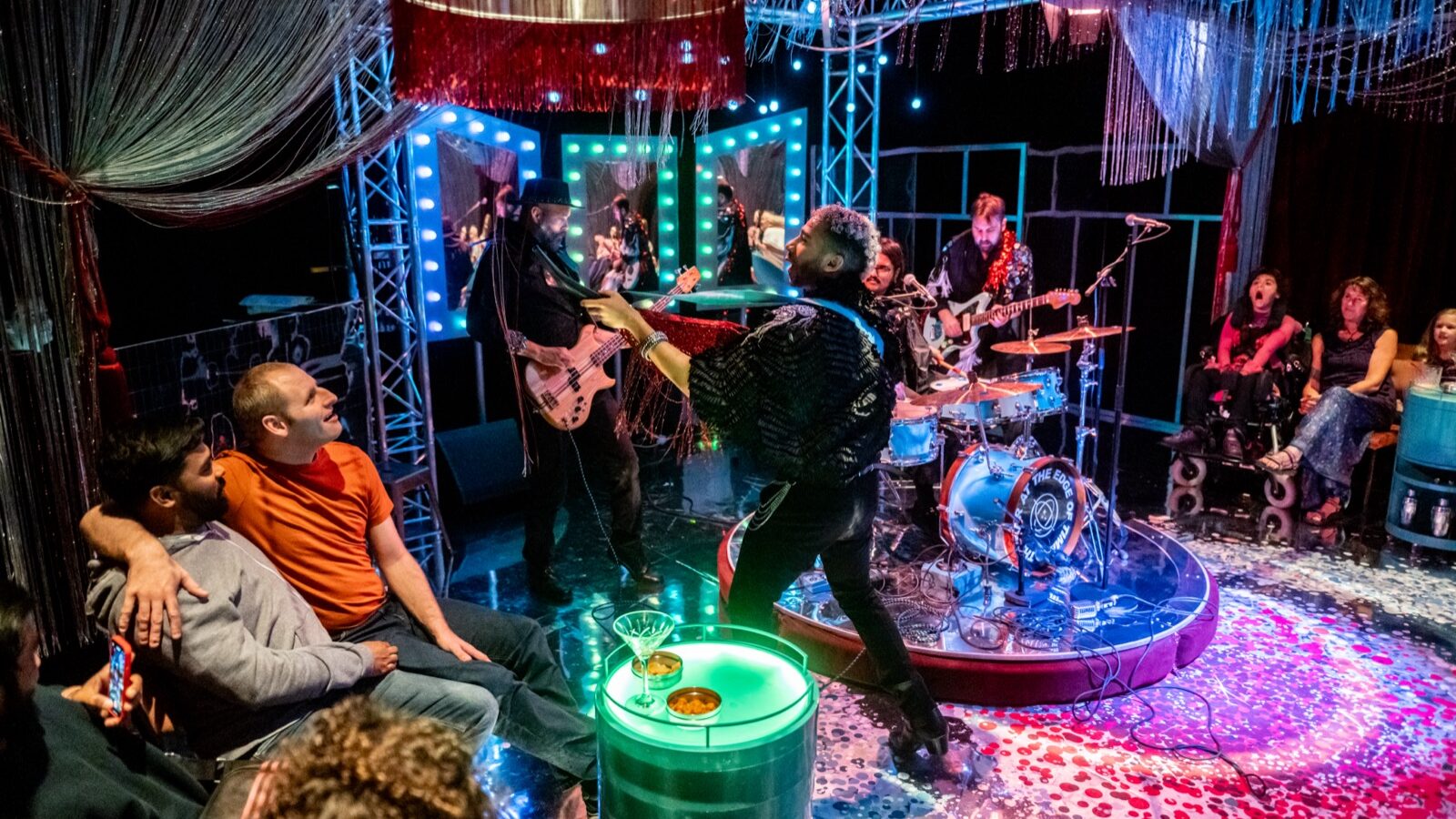
Imposter 22 is the first-ever play performed entirely by neurodivergent actors at London’s Royal Court Theatre.

The actors are from Access All Areas, which has a track record of making top-quality performance by learning disabled and autistic artists.

It should have been quite an evening. However, something didn’t quite work and it was a mixed bag.

Imposter 22
Access All Areas
Royal Court, London

The main problem was with the script, a murder mystery in which the performers both play parts and step out to comment on what is going on. The plot is complicated, and this makes it baffling at times.

Act one felt like drawn-out scene setting, in which not too much happened. Some audience members left at the interval – a shame, as act two felt much better, was faster paced and easier on the ear, and gave the actors a chance to hit their stride.

There are some stand-out moments. Housni Hassan (aka DJ) playing jolly Kev, superbly delivers a moving suicidal monologue in a voicemail to his mother: “I’m at the station, on the bridge. Sorry. I’ve been having those thoughts again… I want to have a job and a car and sex and I’m tired of spreading love and giving out hugs and lighting up the room with my smile.”

Moments like this gave a glimpse of how this play could have been.

Insipid character undermines bright teen comedy

A comedy’s wise character proves dull

Never Have I Ever poster

Never Have I Ever, a Netflix teen comedy first broadcast in 2020 and now in its fourth series, features high school student Devi Vishwakumar (Maitreyi Ramakrishnan), whose Indian parents emigrated to California.

Never Have I Ever, Series 1-2
Netflix

It is a classic teen comedy as clever Devi seeks her first boyfriend and is torn between two classmates. School swimming star Paxton Hall-Yoshida (Darren Barnet) looks fine but lacks, shall we say, intellectual application, while the aptly named Ben Gross (Jaren Lewison) is Devi’s intellectual equal but seems to lack charm and human warmth.

She sits at home like a wise oracle, helping others to find themselves. I’d love to see her get drunk at a party, send a dodgy text or cause chaos

Cue bucketloads of teenage angst, disastrous parties, social media misunderstandings, ill-fated alcohol experiments and concealed feelings.

Paxton has an adopted sister, Rebecca (Lily D Moore), who has Down syndrome. This, for me, is where a good, well-observed comedy series falls down.

Paxton reveres Rebecca and is fiercely protective of her. She in turn is deeply empathetic, and constantly tells Paxton what a fool he is to reject Devi, offering wise words on love and relationships.

But that is all she does.

She sits at home like a wise oracle, helping others to find themselves. I’d love to see her get drunk at a party, fall in a swimming pool, send a dodgy text or cause chaos. But she doesn’t – she just applies that superpower of hers and makes everyone else feel better about themselves.

Highs and lows in making a show

A sparkling documentary takes us from casting calls to a musical theatre performance

Casting call in action, scene from Into the Spotlight

On the film festival circuit and seeking a streaming deal, the Spotlight Musical Theater company certainly does not lack ambition.

Part of the Belong Disability Program at the Highland Park United Methodist Church in Dallas, Texas, it has been putting on musical theatre productions for 11 years.

Into the Spotlight
Spotlight Musical Theater, Texas
Director: Thaddeus D Matula

The actors and many workers have learning disabilities. The church boasts a shiny two-tier auditorium and stage for professional shows.

When the group began to plan its 11th annual performance for the 2021-22 season, they decided to create a documentary about the process from casting to the premiere.

The documentary is no shoestring affair; big-time director Thaddeus D Matula, famous for sports documentaries with broadcaster ESPN, is brought in.

The result is a classic rehearsal-to-opening night saga from the initial euphoria among the chosen stars to nerves, chaotic rehearsals, outbreaks of pessimism and, finally, the triumphant performance of the show, In Our Hearts, to a full house.

But there is more. Shortly before casting begins, star of previous shows Austin Davenport dies unexpectedly. His young widow Christi Hockel-Davenport, a leading performer, vows she will continue, despite her palpable grief.

Then, tragedy strikes again. Several months in, a much-loved member of the production team is in a fatal car accident. The company is stunned and consumed with grief. Director Lisa Arnold becomes shouty and short tempered, and it appears the whole thing might fall apart. The performers support her through this grief-riven phase.

Matula states the film’s guiding principle was “the individuals will speak for themselves and reveal to us their world”. And this they do.

A transgender autistic woman talks us though her journey as an actress and the difficult pathway to acceptance with her parents.

A talented young black musician faces the cancellation of his longed-for drum solo as a fellow performer can’t handle the noise – “why can’t he play a flute?” she pleads.

The two romantic stars develop off-stage feelings for each other.

Matula has skilfully woven all this together. But his real triumph is the ethos of his work. Amid the dramas, the tragedies and the ups and downs, the actors’ voices are clear and their vulnerabilities, resilience, talents, flaws and emotions are highlighted not by a voiceover or others but clearly and fluently by themselves. Great stuff.

Superhero aims for the silver screen

Hollywood gets a determined visitor

Tommy Jessop in Hollywood on a shoot

Something we have come to expect from Line of Duty actor Tommy Jessop is trailblazing.

And he does not disappoint in Tommy Jessop goes to Hollywood, a documentary made with his brother Will.

Tommy had the idea that there needs to be a movie superhero who has Down syndrome. So, naturally, he hops on a plane to go and argue his point in Hollywood.

Jessop’s imagined superhero is called Roger and his evil nemesis the unforgettably named Noel Scum.

The magical bit is that Roger’s superpower is the ability to change people’s minds. Which is exactly what a superhero with Down syndrome would do – by being a superhero with Down syndrome.

The Jessop brothers persuade handsome devil Kit Harington (Jon Snow in Game of Thrones) to read a fragment of script as Noel Scum with Tommy as Roger. Scum accuses Roger of being a mistake, who corrupts the rest of us with his extra chromosome.

“You’re wrong,” replies Roger, “you’ve never given us a chance,” as Scum starts to inject him with a “miracle cure” that will unravel his DNA. Perfect.

Various Hollywood figures make encouraging noises as the two brothers tout their idea. The latest news is that they are now back in England working on a full script.

There’s a lot of persuading ahead, but you can’t help feeling that, if anyone can do it, Tommy Jessop can. I for one can’t wait.

Tommy Jessop with co-star and film baddy Kit Harington

A model of community life and research on menopause focuses on women themselves

People discuss aspects of life in carers’ homes in the community, plus experiences of menopause can be different in women with learning disabilities, says Juliet Diener

Community Living

Research aims to fill the gaps in evidence on the shared lives scheme, and research on menopause collects evidence from women rather than carers and others around them.

A model of community life

Brookes N, Palmer S, Collins G, Callaghan L. Supporting people to live well: a multimethod study of shared lives (adult placement). British Journal of Learning Disabilities. 16 September 2023.

Learning disabled adults need more opportunities to make choices about where they live.

This paper refers to the 2015 action plan from the Local Government Association, the Association of Directors of Adult Social Services and NHS England, Building the Right Support. This noted a shift away from residential care towards commissioning “supported living arrangements within the community”.

The article focuses on the shared lives scheme and aims to fill gaps in evidence on supported living.

Shared lives involves paid, trained carers sharing their homes in the community with a learning disabled adult.

The study was guided by an advisory group involving users and carers and used both quantitative and qualitative methods.

Shared lives consistently performs well when assessed by regulator the Care Quality Commission. People expressed positive feelings at being part of a family and having their individual needs considered. The authors note the process of matching people is thoughtful.

The findings indicate that the model does support people to live well, with the social and community aspects of the scheme being the most positive experience.

Shared lives offers an alternative to residential care as well as greater choice to adults with learning disabilities.

Menopausal experiences

Langer-Shapland K, Minton S J, Richards N. “It should be more outspoken and not hushed away, not like put in a dark box”: an interpretative phenomenological analysis of experiences of menopause voiced by women with learning disabilities. British Journal of Learning Disabilities. 9 March 2023.

There is a lack of attention paid to the menopause and reproductive health of learning disabled women, according to the authors of this paper.

They add that sociodemographic variables and emotional intelligence are useful in predicting menopausal symptoms. As having a learning disability influences both, “menopause research with the general population may not be transferable”.

This is further impacted by learning disabled women experiencing discrimination due to not being “accepted as adults with sexual or reproductive identities”; the authors quote from a book by University of Kent professor Michelle McCarthy, Sexuality and Women with Learning Disabilities.

Timings of menopause may be different with certain women, such as those with Down syndrome, experiencing an early onset.

While menopausal symptoms may be similar across the female population, experiences may not be, hence the need for research specific to women with learning disabilities.

Semi-structured interviews were conducted with five learning disabled women who had experienced menopause.

There is discrimination due to not being seen as having sexual or reproductive identities

The authors wanted to bring in women’s voices as previous research had relied on the perspectives of carers, professionals or advocates.

While all participants opted to have a companion in the room, questions were directed to them. This inclusive approach also used accessible information, building a rapport before meeting and conducting interviews in the participants’ own homes.

The findings highlight the considerable problems in managing menopause and the importance of education for clinicians.

The authors identify the need for female carers and for clinicians to be active in starting conversations about menopause and its management, with a focus on social connections.

Dancing into work

Young adults within a dance community are being offered paid and volunteering opportunities through a community leadership programme, says Juliet Diener

Dancers on stage

Fewer than one in 20 adults with learning disabilities in England are in paid work, according to NHS figures. This, as Mencap says, is “impacting on their ability to be visible in society and reducing possibilities of independence”.

Our vision at icandance, a charity I founded in north London in 2006, has always been to empower disabled children and young people through dance and performance. Each week, our team of 40 part-time staff and volunteers supports around 300 individuals aged 4-25 years to dance.

Through funds from John Lyons Charity, icandance employs two learning disabled co-facilitators. They work part time at various community venues one to two days per week alongside an icandance staff member trained in dance movement psychotherapy, a skill that ensures we consider how a dancer feels before we think about what they do.
We recently began offering work experience and employment to the learning disabled young adults who are part of our dance community.

We provide our alumni and young people aged 19 and above with volunteering and paid opportunities above the national living wage through our three-year-old community leadership programme.

We have 13 young ambassadors who contribute on a voluntary basis, two paid co-facilitators and two alumni volunteers. We also offer work experience in the office once a month to four young adults.

As a trustee of the Imperial Society of Teachers of Dancing, I also hope to encourage my peers in the dance sector to become more inclusive employers. I want to share what we have learned so we can support others to take similar steps in their workplace.

We have learnt four key lessons so far.

Inclusive employment develops

In the two years before we got funding, we began by offering unpaid opportunities to up to 10 individuals, some of whom are now paid. Work has included co-leading workshops, speaking at local and online events as well as office-based work experience.

Perspectives must shift

Preparing learning disabled young adults for work roles has required a shift from catering for their needs, such as support to engage in dance, to working with their needs, such as supporting them to co-lead a dance session.

Planning for each individual involves finding opportunities to enable them to develop skills according to their role, whether as a co-facilitator or support worker or chairing our youth forum (this meets twice a year to share ideas on what the charity should be doing).

It took time to develop our inclusive methods and learn how to enable young adults to have a better experience of work. Adjustments include accessible training materials, amending working hours and allowing enough time in sessions for people to share ideas.

Circles of support are vital

Disabled team members need support to travel, so employment opportunities can depend on care agencies or family members.

Requirements such as arriving at work on time or completing an application are supported by those involved with a person’s care. Relationship building and ongoing collaboration are needed to create a circle of support.

Community settings in which we work are required to prepare and make adjustments according to the needs of all team members. For example, to lessen unnecessary anxiety, our co-facilitators arrive after the facilitator and are given the name in advance of the person who will greet them at the venue.

Include and adapt

Training materials, schedules for the day and note-taking have to be adapted. Inclusive practice means not excluding a disabled employee from doing what needs to be done but making adjustments.

At a recent team training day, we provided accessible training that included Makaton and ensured there were social aspects.

Providing inclusive employment opportunities offers greater visibility to learning disabled young people in our organisation.

More than this, it supports people to be more visible among our partners, such as the schools we work with across London, the charity Creative Youth UK and, ultimately, the wider community.

This article is based on an Imperial Society of Teachers of Dancing blog post

Guides to good maternity care

A project brought together parents with learning disabilities, researchers and health and care professionals to find out what good maternity care looks like. The Together Project now provides free guidance and training for student midwives. Helen Guest and Anna Cox report

Patient and clinician in a meeting

When it comes to pregnancy and childbirth, research tells us that women with learning disabilities experience poorer outcomes and are more likely to have their children removed from their care. People with learning disabilities are one of the least likely groups to report a positive experience of maternity care.

In England, the government’s 2016 National Maternity Review set out a vision for a maternity service that improves outcomes, stating “people with learning disabilities would benefit from the option of accessing information in easy-read format, and healthcare professionals taking time to ensure that they understand what is happening and the choices they can make”.

But, eight years on, reasonable adjustments do not seem commonplace, and midwives feel they are unsupported in delivering good care to people with learning disabilities.

From project to practice

Inspired by the stories of parents with learning disabilities and research, since 2019 the Together Project has aimed to find out what good maternity care looks like for women with learning disabilities – and how to support it.

The Together Project at the University of Surrey, led by the university’s Dr Anna Cox, has received funding from Health Education England and the south regional part of its Intellectual Disabilities programme and the National Institute for Health and Care Research, Applied Research Collaboration Kent, Surrey and Sussex and its Clinical Research Network Kent Surrey and Sussex.

Many people have been involved in the three phases of the Together Project including parents with learning disabilities, researchers and health and care professionals.

Scott Watkin, for example, is a self-advocate and parent with a learning disability and is a co-investigator on the Together Project; his passion for improvement has shaped the project and its outputs.

Co-production is key to improving services for people who might need additional support

The first two phases developed three resources to support the workforce to deliver good maternity care to parents with learning disabilities (see box).

The Together Toolkit and educational film have been developed for professionals who support people with learning disabilities; the maternity passport is intended to be completed with and held by mothers-to-be with learning disabilities. They can also be held by other women who would prefer an accessible, paper-based maternity care plan.

Training future midwives

The third phase of the Together Project involves co-production, co-delivery and evaluation of learning disability awareness training for midwifery students which was funded by Health Education England in 2023 and ends in March this year.

Co-production is key to improving services for people who might need adjustments or additional support.

Two charities, Active Prospects and the Elfrida Society, have co-produced and co-delivered the learning disability awareness training for student midwives.

A team of experts with lived experience of learning disabilities attended five co-production workshops at the University of Surrey between February and June 2023.

Self-advocate leader Watkin co-led the sessions, which included seven other people with learning disabilities. They attended the sessions with advocates or support workers.

They developed training that included what they wanted the future midwifery workforce to understand and to support the skills needed to deliver good maternity care to people with learning disabilities.

In June, the same team of people with learning disabilities who had co-produced the learning disability awareness education co-delivered the training to over 100 student midwives at the University of Surrey. This included the resources developed and refined in earlier phases of the Together Project.

Students and trainers with learning disabilities fed back on their experience. One trainer told us: “I feel so proud to be in this project”; another participant said: “I hope we get a chance to do this again.”

I now feel more confident in knowing how to start the conversation with someone with a learning disability and how to make reasonable adjustments

The project is a example of true co-production. Students were inspired by the training, with one telling us: “To see people with learning disabilities being given a voice in this project was really very wonderful.”

Others described feeling ready to deliver good maternity care to people with learning disabilities in the future: “I now feel more confident in knowing how to start the conversation with someone with a learning disability and how to make reasonable adjustments to suit people’s individual needs.”

One of the recommendations from the Together Project is that maternity-specific learning disability awareness training should be incorporated into undergraduate courses to prepare midwives to deliver good maternity care to this population from the start of their practice.

We hope other universities will use our resources within training for their student midwives.

Helen Guest is co-production programmes manager, Active Prospects; Anna Cox is senior lecturer in health and social care, University of Surrey, a.cox@surrey.ac.uk

Three free resouces to support mothers-to-be

The Together Project resources to support the delivery of good maternity care (described below) are free to download.

The Together Toolkit for professionals working in maternity services supports the delivery of good care for people with learning disabilities during pregnancy.

This encourages action and reflection, and includes tools to support identifying individual needs and preferences and making reasonable adjustments.

One element in the toolkit is an action checklist: “Things you can do to ensure good maternity care for parents with learning disabilities.”

Reasonable adjustments include scheduling appointments around parental needs and ensuring there is enough time to make full explanations so parents understand the information they are being given.

Maternity passports are completed with and held by mothers-to-be and include information needed by those who are supporting them (such as the GP, midwife, health visitor, family, friends and support staff).

The passport enables individuals to see who else is involved in the mother’s support circle and to understand what has or has not been discussed with her and whether she has been meaningfully prepared for parenthood.

As an example, one statement in the passport is: “I would like the professionals who support me to know the following information about me.”

The Together Project educational film in which experts (by profession or experience) highlight seven essential elements to recognising and supporting parents with learning disabilities. These include issues such as respectfully ascertaining a person’s needs and building trust.

Finding histories, creating stories

Hospital archive records and family memories of people who grew up in institutional care are being used to ensure we see the whole person and help them tell their own life stories, says Noel Fagan

Cranage Hall Hospital

The Life Stories project seeks to reveal the often hidden lives of those we support who have a learning disability.

The TV programme Who Do You Think You Are?, in which family histories of celebrities are explored, sparked the idea of doing something similar in regard to those we meet on a daily basis.

This is because we have little or no knowledge of what happened in their lives before we began supporting them.

The project has been running for the past year at our community interest company Future Directions, based in Oldham.

The first story we produced – we have created 20 so far – was a perfect example of this. We had supported a man in his mid-60s for many years but his file contained only two lines about his life before he came to us.

I lead the project in my role as community connector. Our aim is to produce the life stories of the 330 or so individuals we support, focusing initially on those with little or no expressive speech.

The time it takes to complete a story varies because a colleague and I both work on the project part time. For those with family members who can share stories, it can take several weeks to meet, share memories, unearth photographs and enable the person and their family member to approve a final draft.

In Mike Taylor’s case (box), it took about six weeks, going at the pace that suited him, his family and his friend.

‘The important people in my life provide happier memories to share’

I was admitted to the hospital as a toddler and left as a teenager, writes Mike Taylor.

You have to remember that, in those days, there would have been little or nothing in the way of community services and social attitudes to learning disability were highly negative. A lot of children of my age were admitted to long-stay institutions.

Mum and Dad visited every few weeks but were kept in the dark about my treatment there. They also feared that if they did complain, it would be taken out on me. Family visiting days were usually on a Sunday and were always very controlled by the staff.

Staff used to call me names. They would hit me. Staff were always around, standing behind me when I had visitors. The food was horrible but you had to eat it. My family got me out of there.
Friends and a home

These are terrible memories that I will never lose but the important people in my life have got some happier memories to share.

First, my lovely sister. Heather knows I am happy and that I love my support staff, although she says I can be a bit bossy!

After the hospital, I lived in residential care, then with family and then a flat and later a house with my lovely wife Maria.

Tom is my very good friend even though he supports a different football team. Tom comes to any events, parties and review meetings at my home. He’s there specifically because I ask for him to be, as is Maria.

So, what are the things I’m enjoying about my life these days?

Obviously, I love to spend time with my wife. I like to get out into the community, local parks, church social clubs, zoos and farms, and I love a bit of shopping! As a devoted football fan, I love spending time at the football ground and watching the game on TV.

As for things that I like chatting about, that includes my family, my favourite TV programmes including westerns and action movies. Also, 60s and 70s music, Frank Sinatra and reminiscing.

So let’s keep it going and keep on living life the way it should be. My way!

This is an edited extract of a story in the Life Stories project; Mike Taylor is a pseudonym

It is a two-pronged project. First, it involves uncovering the historical records, where possible, of those who were institutionalised, often when very young. Second, it engages with family members who are able to share many memories of their child’s or sibling’s early days.

One of the biggest difficulties relates to those who were placed in long-stay institutions, often in early childhood. So far, the earliest admission we have identified was a girl of only 21 months.

We had supported a man in his mid 60s for many years – but his file contained only two lines about his life before he came to us

Many but not all personal records from the institutions where people once lived have been retained. We have been fortunate to access the records department of Mersey Care NHS Foundation Trust.

Decades of records

I often spend several hours going through thousands of pages of records, sometimes spanning more than 40 years. I look to uncover unknown facts about the person’s experience in such settings and also find some shocking details.
For instance, the man I mentioned in his mid-60s is of Caribbean heritage and in, more than 40 years spent in institutions, his name was never spelt correctly.

Life was hard for parents and siblings too.

I have uncovered letters sent to parents on the admission of their very young son or daughter issuing them with a visiting card. The letters explain visiting was on Wednesdays and Saturdays and limited to two people, with any variation requiring written permission.

Twice with people we support who were in Cranage Hall Hospital in Cheshire, we were told that all personal records had been destroyed. I was advised, however, that some hospital records might be held at the Cheshire Archives and Local Studies service in Chester.

I was able to find records of the board of governors dating back to the 1950s; they seem to have spent more time discussing the price of pig feed for the hospital’s farm animals than over concerns that one single nurse was on duty for a ward of 30 adults.

However, it is important to note that we have also found examples of really good care and support.

We have discovered photographs of holidays, personalised cards made for people being discharged and even copies of certificates awarded for the completion of college courses while in hospital care. One person now has a copy of such a certificate hanging on their bedroom wall.

Where people still have family connections, the insights have been powerful, especially with siblings revealing facts about the early lives of those we support.

One man we support often exclaims “cat” for no apparent reason. His sisters explained that, as a young lad seeking to avoid being told off, he would often blame the family cat.

Now staff have a new insight they never had before. His family had so many stories to tell about their brother that they made a family video, recounting funny tales. He can watch this whenever he chooses.

As the project develops, we want to involve a wider staff group and share these life stories across the organisation and on our Facebook page. We also plan to run a workshop early this year for support staff who could write the life stories of those they support.

The value of seeing the whole person we support cannot be overstated, showing them the respect they deserve and caring for the person rather that the label.

Noel Fagan at laptop
Research and stories to reveal hidden lives. Photo: Seán Kelly, posed by model


Saba Salman: Uplifting stories show potential and are vital

People with a learning disability are often denied what others take for granted – being part of a community, being treated as an individual and choosing to do things they like

Josephine Euter

Bravo to Sheffield Mencap and Gateway and photographer Joe Horner who collaborated on a portrait exhibition reflecting people’s distinct personalities alongside their active roles in communities.

Uplifting projects that promote people’s rights and potential are vital. Similar aspiration, for example, fires the arts leadership work of London’s Access All Areas, and Sunnybank Trust’s enterprise to boost the consumer experience for people with learning disabilities in Surrey – while publicising their not inconsiderable spending power to businesses.

We need light amid the gloom, and not just because the autumn days are getting darker. The cost of living crisis continues – on top of existing cuts to services – amid fresh evidence from human rights experts that the UK government is undermining disabled people’s lives. And there are concerns about seasonal flu and a new Covid variant.

Reporting both barriers and opportunities has driven Community Living throughout its 35-year history. Ours is a forward-looking publication, upholding people’s ability and right to thrive where they live.

In the past year, this progressive zeal has also led us to redesign our magazine, launch a new website and publish our first newsletter. We have strengthened our team with dedicated digital and social media expertise and new contributors.

Reporting barriers and opportunities has always driven Community Living. Ours is a forward-looking magazine, upholding people’s ability and right to thrive where they live

Now, in our latest development, we will go fully digital from January – which means we will be able to publish a magazine in full colour and reach people quickly, wherever they are.

With this growth in mind, we’ve made all individual articles on our website free for anyone to read, and our newsletter is free too. The full digital magazine is accessible to subscribers and sponsors.

Fully embracing digital and social media allows us to shine a stronger light on learning disability, ensuring that the issues that drive us are brought to a wider audience.   

Saba Salman
Editor

In brief

Vaccinations start, plus oversights in official plans and film roles. Saba Salman reports

Two men in art workshop

Enduring scandal of ATU detention highlighted

Campaigners, activists and support providers have been shining a light on the scandal of assessment and treatment units (ATUs), in which 2,500 people are locked away.

A recent LDN London event, Spotlight On, focused on the abuse of autistic people and those with learning disabilities.

Chaired by Community Living writer Simon Jarrett, the speakers included activists and authors Alexis Quinn and Sara Ryan, journalist George Julian and researcher Amanda Topps.

The debate at the London Canal Museum highlighted how individuals are incarcerated far from home in ATUs, usually because there is no appropriate local support.

The 2015 government and NHS Transforming Care programme included a pledge to reduce numbers in ATUs by 50% by 2024, but targets have been missed. Five years ago, for example, there were 2,600 people in ATUs and, today, there are still 2,580.

LDN chief executive Gabby Machell said one action was essential: “Key to getting it right is to see and hear the person and their families.”


Celebrations to mark 40th anniversary

A year-long series of events are planned at Integrate – a long-time supporter of Community Living – to mark the charity’s 40th anniversary.

The organisation enables people aged 14 and in Lancashire and Greater Manchester to enjoy hobbies, find the right education or jobs and get decent housing.

In 1983, Integrate became the first body in the region to support adults to move from long-stay hospitals into their own homes.

The charity’s founding vision was of pioneering “a different way of supporting people”, with a belief that everyone has a right to be a valued in their community.

Events will be held from November. These will include good practice awards to highlight the successful support delivered by Integrate staff and will be organised in collaboration with the people they work with.


Prize for researcher columnist

Community Living columnist Shalim Ali has won the inaugural Alan Armstrong Memorial Prize.

Londoner Ali, a self-advocate, campaigner, researcher and DJ, received the accolade for the best presentation given by researchers with learning disabilities at an Open University conference.


News briefs

Get legal help any time

Social care legal agency CASCAIDr has launched a specialist advice and training service for care and support providers. CASCAIDr Trading spans private and public law rights, and offers advice on a retainer basis. It can advise on the law around care homes, supported living and using day services, as well as on local authority contractual issues.

King’s honour for dancer

DanceSyndrome founder Jen Blackwell was among those recognised in the first King’s birthday honours this summer. The Chorley-based dancer and charity founder won a British Empire Medal for services to disabled people. Blackwell, who has Down syndrome, set up DanceSyndrome with her mother, Sue, in 2009.

Family and friends portraits

WAVE for Change (We’re All Valued Equally) is holding a portrait exhibition to celebrate diverse families and friendships. The north London charity will display a range of images by photographer Kristina Varaksina at Alexandra Palace’s Creativity Pavilion over 16-22 October. Free tickets are available via the WAVE and Alexandra Palace websites.

Guide on making choices

An accessible book to help people ask the right questions about housing, money management and support among other issues is to be published early next year. Everyday Citizenship, by activists Wendy Perez, a self-advocate, and Simon Duffy, a writer, will be published by Red Press. It is an update of their Keys to Citizenship book, first published in 2006.

What’s on our radar

News of a fresh Covid variant and concerns over autumn flu led the UK Health Security Agency to bring forward vaccinations. Flu and Covid vaccinations were due to start from October but, to protect the “most vulnerable”, adults living in care homes and those most at risk were invited for jabs from early September.


The absence of proposals related to learning disabled adults in the government’s Disability Action Plan was “a glaring oversight”, support provider Hft said. Suggestions in the document include increasing awareness and use of assistive technology.


The government also came under fire from experts who criticised it for ignoring disabled people’s rights. The Equality and Human Rights Commission said ministers failed to follow United Nations recommendations.It was also criticised for pulling out of a subsequent United Nations hearing in Geneva, saying it would meet officials in March 2024 instead.


Huge opposition to the rail industry’s bid to close most ticket offices in England has led to the consultation on this being extended. There were 680,000 replies. Watchdogs Transport Focus and London Travelwatch have until the end of October to consider these replies
and make a formal response regarding the proposals.


Actor Tommy Jessop and his film-maker sibling Will sparked positive headlines as they tackled disability representation in BBC documentary Tommy Jessop Goes to Hollywood. Jessop, who has Down syndrome, has featured in shows such as Line of Duty but says actors like him are underrepresented and never play the hero.

Portraits of me

Individual, active characters were clearly captured in an upbeat exhibition in the centre of their home city. Saba Salman reports

Josephine Euter

People with a learning disability are an active, visible and vital part of their communities – and their individuality and personalities must be celebrated.

These messages were at the heart of a joyful exhibition of images held by charity Sheffield Mencap and Gateway. The photographs were taken by award-wining photographer Joe Horner.

Horner, a British Portrait Award and Portrait of Humanity winner, collaboratively planned the shoots to reflect the individuality of each subject in the This is Me exhibition.

Horner included locations, props – and often other people – according to what his subjects felt best created a visual snapshot of their lives.

Jonathan Raimondi, senior manager at Sheffield Mencap and Gateway, said: “Each portrait captures the personality and individuality of each person and encourages the viewer to see the person beyond the disability.”

Sheffield Mencap and Gateway is an independent charity supporting more than 700 children and adults with learning disabilities or autism and their families and carers.

Established in 1951 by parents of children with learning disabilities, it works with Royal Mencap but receives no funding from it.

The free exhibition was held in Orchard Square shopping centre during Learning Disability Week in June.

Some of the photographs can be seen on the Sheffield Mencap and Gateway website.

Power in the pounds

People with learning disabilities have considerable spending power. Dorothy Watson describes a project to help business target an untapped market and make buying less fraught for all

Grace Herman

The spending power of the 1.5 million people with learning disabilities in the UK is approximately £28 billion per year, based on figures from the charity Scope.

Yet a shocking 75% of disabled people and their families have walked away from a business because of a lack of accessibility or customer service, research by the charity found.

This has driven the Sunnybank Trust, which supports around 300 people with learning disabilities in north-east Surrey, to launch an enterprise to improve customer service experience and accessibility.

Understand Us, the Learning Disability Experts, is a co-production consultancy set up to help businesses reach a valuable and largely untapped market while making the consumer experience better for both those with a learning disability and everyone else.

The experts paid great care and attention to many details, and what they liked and didn’t like

We developed the idea alongside the people we support – because they are the real experts.

Our 10 consultants are paid on a project by project basis, at a rate higher than the minimum or living wage. They are supported by three staff members (who do not have learning disabilities) as needed.

When not actively working on paid-for projects, the consultants receive free training as part of Understand Us to develop their skills and confidence.

The only way change is possible is when people are connected and enabled to talk about matters that are important to them; solutions come from talking, listening and understanding.

Grace Herman, a learning disability expert from the Understand Us team, says: “We want to be listened to. We don’t want to be let down and have bad experiences as it can have a big impact on our emotional wellbeing.

“People rushing me and using long words can be a real problem and makes me feel overwhelmed. People can say the wrong things assuming you have a problem rather than a disability. Some people don’t take time to understand.”

The team have already made great strides since Understand Us was launched in March.

For example, the consultants were commissioned to deliver an accessibility audit for RHS Wisley Garden for a new visitor exhibition before it opened to the public.

An RHS Wisley spokesperson praised the “expertise, thoroughness and their friendly attitude” of the team towards their work: “The team of experts took great care and attention to focus on many details, including what they liked and didn’t like about the building, space and exhibition.

“Importantly, they told us what should be changed, taken away or included to make a positive experience that is both meaningful and enjoyable for people with learning disabilities.”

Herman says: “After our visit, we gave feedback and they made some changes that we suggested. They improved access to the lift and put volunteers at places where visitors can get information about the displays and games more easily.”

We are excited about the prospect of Understand Us changing the way we all do business for the better.

Often the solutions are making simple, manageable changes that will ensure a wider group of customers will get more from a business.

By working together, we can make changes that mean better experiences and better business.

We believe no one is better placed to identify the problems and offer solutions to improve this issue than those with firsthand experience of it.

Dorothy Watson is chief executive of the Sunnybank Trust

In the lead

A leadership skills programme for people with learning disabilities is going national, reports Adam Smith

Adam Smith at the Battersea Arts Centre

Access All Areas is a learning disabled and autistic theatre company that creates powerful work that challenges people’s perspectives.

The company, based in London, is passionate about learning disabled and autistic people having leadership roles.

Without such voices being involved in leadership decisions and discussions about what type of art should be made, there will continue to be a lack of genuine representation in the arts.

In 2020-22, the company’s Transforming Leadership programme trained nine new learning disabled and autistic cultural leaders.

I’m a freelance actor, musician, facilitator and composer and I was on that Transforming Leadership programme in 2020. I learned what my type of facilitation style is.

I grew in confidence and got to know other people and drama groups. I learnt how to become flexible with how I adapt in the room.

Now, Access All Areas has come together with seven disability arts organisations and venues in eight regions to take the programme across England.

This involves leadership training for 14 learning disabled and autistic creatives, focusing on directing skills, how to lead community arts programmes, governance and advocacy skills.

My role as an associate director is to co-direct projects with Access All Areas staff who do not have a learning disability.

Recently, I have been co-leading a new creative programme for local learning disabled and autistic people at Battersea Arts Centre. This involves a weekly creative workshop where people use drama to build resilience, improve wellbeing and manage difficult situations.

Seeing someone like me

There hasn’t been a creative programme like this in Battersea before so we’re very excited. It’s been especially meaningful to local people who struggled with isolation after the pandemic. I think it means something to them to see a peer – someone like me who shares some of their experiences – leading a workshop.

This is necessary as we have lived experience and can help contribute towards final decisions. We deserve to have our voices heard; we should be listened to and our talent should be shown to the world.

This programme is unique because it provides one-to-one creative support that guides us into work. You learn on the job and receive training on leadership styles.

People think learning disabled and autistic people are not suited to leadership roles due to difficulties we may have mentally or physically. The lack of awareness puts people off working with us. This programme is proving them wrong.

The biggest barriers to becoming leaders are dealing with our confidence and feeling others doubt us or think we cannot reach our full potential.

Adam Smith is an associate director of Access All Areas

Artistic chaos

There is beauty in creating art in a unorthodox way that opens up conversations, says Richard Phoenix

Drawn faces artwork

Do it yourself (DIY) culture gives people permission to do their own thing and in their own way.

With DIY culture, there is often a misconception that people are on their own. However, invisible structures support your ability to do things, such as physical space, resources, money and information.

With learning disability arts, those structures are more present. The job is to work to remove barriers to those structures so people can do it themselves.

My book details my experiences of Do Your Own Thing, a project run by learning disability arts body Heart n Soul.

In the arts, you often need to tell funders exactly what you’re going to do and how and what the outcome will be. This stems from a lack of trust and belief in art or creativity.

To think that creation is linear seems at odds with centuries of art and music making where no outcome was ever known. This inhibits possibility, innovation and change, and prevents people from contributing in a meaningful way.

I write about “beautiful chaos” in the book. One example arose at a recent Do Your Own Thing session.

At the end of each session, everyone shows, plays or talks about what they’ve been creating – songs, art, recordings, conversations, ideas, dances and DJ sets.

I often host it, trying to link it together and make sure people get to show what they want. There’s cheering, clapping, dancing, audience interaction and heckling. It can be chaotic holding that space and making sure it doesn’t over-run.

At one session, one of the young people decided they were going to host, introducing everyone, passing around the microphone and bringing an incredible energy.

It upped the chaotic nature of it – but what was beautiful was that when they joined about a year ago, they spent most of the first day hiding. Now here they were in front of and supporting everyone.

Supporting artists who have a learning disability has massively influenced my own practice. Previously, I’d bought into the narrative of the artist as a singular being, creating in isolation and being struck by inspiration. I also didn’t come across people talking about the enjoyment of making art.

So I changed how I painted. I looked for ways for the result to reflect the process, communicate the joy and euphoria of creating, be less precious, involve more people and find ways for my work to open up conversations about the things I was surrounded by and interested in.

Do Your Own Thing is published by Rough Trade Books

Richard Phoenix is an artist and musician