Scandal that led to hospital closures

A 1960s tabloid newspaper’s exposé of shocking abuse in a long-stay hospital played a significant role in the closure of institutions throughout the UK, explains Susanna Shapland.


Children at Ely Hospital: sedatives were used excessively to control behaviour, the inquiry found


In August 1967, a story broke in the News of the World. It concerned Ely Hospital in Cardiff, an NHS long-stay institution housing around 600 patients, some of whom had lived there for over 50 years, and most of whom were classed as “sub-normal” or “severely sub-normal”.

The source of the story was Michael Pantelides, a Cypriot-born nursing assistant who worked there. He painted a picture of a hospital where an absence of strong leadership and a corresponding policy of cover-up among senior staff had fostered an environment where certain members of staff regularly stole from patients and imposed their authority with physical violence including restraint and threatening, bullying behaviour.

Following these revelations and the accompanying public outrage, a government inquiry chaired by Geoffrey Howe QC (later to become a senior minister in Margaret Thatcher’s government) was established by the Welsh Hospital Board at the request of minister for health Kenneth Robinson.

Over the next two years, the committee gathered more than 1,000 pages of evidence from staff, patients and parents, made site visits and examined case notes, ward books and other documents from the hospital.

In March 1969, following a political tussle over publication that was settled only by prime minister Harold Wilson’s intervention, the inquiry’s report was published in full.


‘Rough’ nursing

The inquiry found that most of the alleged incidents of ill treatment reported in the News of the World article had indeed taken place.

Although it was frequently impossible to establish intent, the inquiry held that at the very least there was a “persistence of nursing methods which were old fashioned, untutored, rough and, on some occasions, lacking in sympathy”.

The widespread consumption by staff of food (particularly meat) that had been provided for the patients was also confirmed, and the case referred to the director of public prosecutions.

The inquiry’s investigations uncovered further abuses, including in the villa for boys. Parents complained that they had found their children dehydrated and filthy, bored and neglected with no stimulation or access to toys. The excessive use of sedatives to control any challenging behaviour was also reported.

Throughout the hospital, staff felt it was useless or even dangerous to complain about conditions or colleagues’ behaviour. Some had found themselves forced to leave while the perpetrators were left in post, free to continue their abusive practices unpunished.


Public outcry sparks change

Following the inquiry’s publication, there was further public outcry and significant changes were made. At Ely Hospital, these included increases in both staff (including the reinstatement of those who had complained and been dismissed) and funding, and the replacement and reorganisation of the hospital’s management committee.

Significantly, Howe had insisted that the inquiry had a wide brief, and should look beyond Ely to assess how learning-disabled patients were being treated in the NHS as a whole.

There was an acknowledgement that abusive behaviour had been allowed to flourish in some corners of Ely Hospital owing to its isolation from both the community and from other institutions, and that this had happened in part because of a lack of external overview.

As a result, Robinson’s successor Richard Crossman established the Hospital Advisory Service to regularly visit and report back on the condition of hospitals, particularly long-stay institutions such as Ely.

This was followed in 1971 by the Better Services for the Mentally Handicapped white paper, which recommended closing long-stay hospitals and housing patients in the community. This policy would result in the eventual closure of Ely Hospital in 1996.


People tell their stories

The inquiry’s report noted there had been attempts to interview many of the patients mentioned in the News of the World article, but, “because of the severe disabilities of most of them, little assistance was derived from this source”.

In 2014-2017, an oral history project both challenged this claim and sought to rectify the situation. The Hidden Now Heard project set about capturing stories, images and objects from the residents and staff of Wales’s six old long-stay hospitals, among them Ely. By doing so, they hoped to ensure that “history is told and not forgotten”.

Ely Hospital was the first major hospital scandal following the Second World War, but it was to be the first of many.

Further reading

Drakeford M. Why the Ely inquiry changed healthcare forever. Wales Online. 6 February 2012. https://tinyurl.com/n95c9tn4

Hunt P. Hidden Now Heard – Unearthing Stories. Learning Disability Wales. 8 August 2018. https://tinyurl.com/dfwkytjx

Hutchinson C. Ely Hospital (various articles). Wales Online. 2012-2015. https://tinyurl.com/5avtpsnw

Ely Hospital: Hidden Now Heard. https://www.peoplescollection.wales/collections/579951

Ely Hospital Remembered. Channel 4 News. March 2016. https://tinyurl.com/59v8d53j

Report of the Committee of Inquiry into Allegations of Ill-treatment of Patients and Other Irregularities at the Ely Hospital, Cardiff. CM 3975. 1969. https://tinyurl.com/4bcfh3wa

Simon Jarrett: Editor’s blog

Our editor Simon Jarrett draws out some highlights from our current issue and hopes that we have some cause for optimism as a New year dawns….

Better lives with choice and control

In our latest issue, to open the new year of 2022, we focus in two articles on building better lives for people than those for which at times they might seem predestined. Les Scaife’s remarkable story (READ MORE) of his son Brian’s life so far illustrates the extent to which some families will go to ensure that their children can go on to lead independent and fulfilled lives.

The family were determined from the start that Brian would not be separated out into specialist services but should be in a position to pursue his dreams, realise his talents and seize his opportunities. To do this they embarked on an odyssey that took them from Surrey to Cornwall and then to Lancashire to ensure that their son could attend mainstream school as a child and stay clear of day centres and residential homes as an adult.

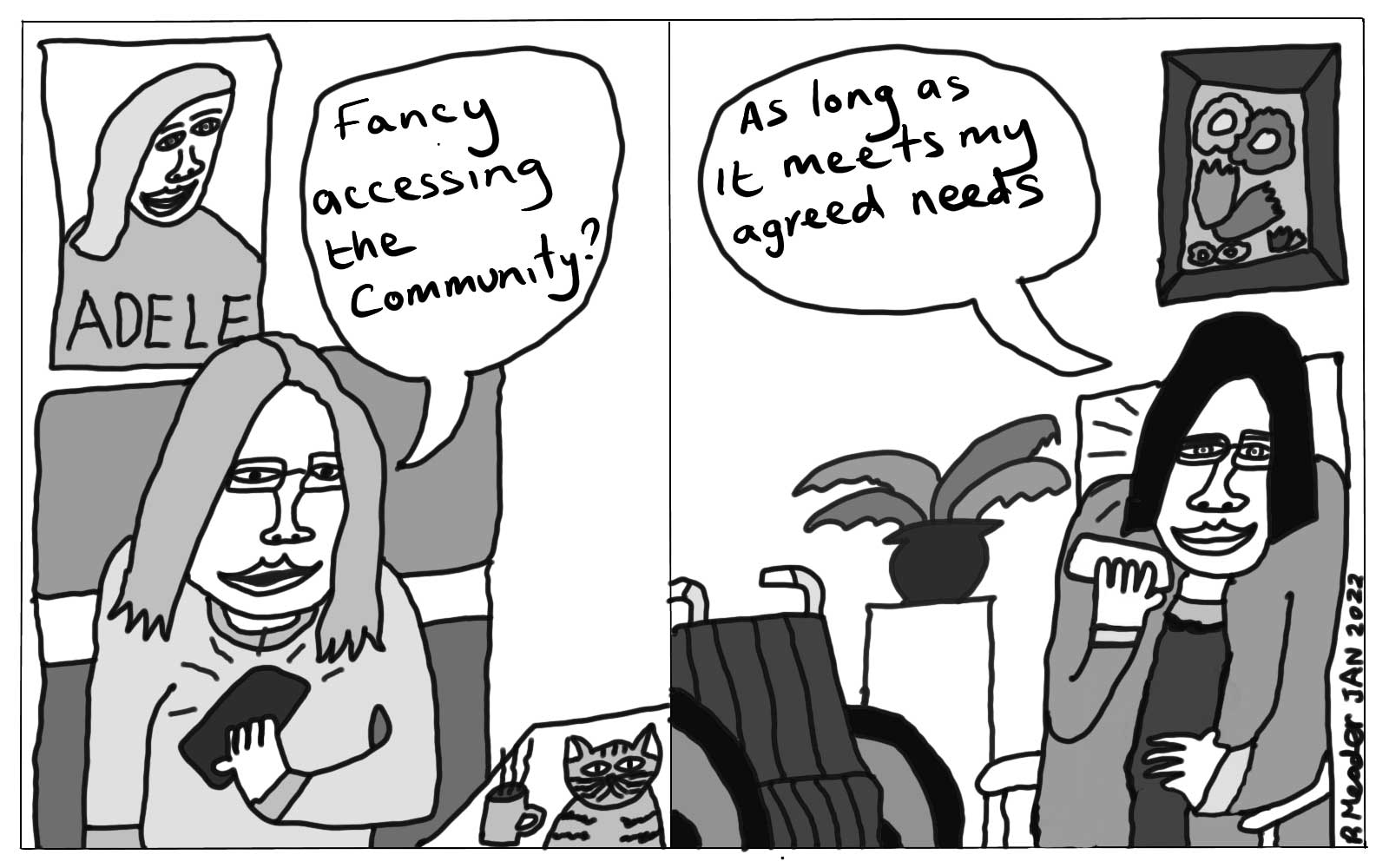
This also involved mastering the complexity of local authority funding methods so that Brian could benefit from direct payments and other types of personalised budget to live an independent life. Furthermore, Les Scaife campaigned and worked to ensure that other families could take advantage of the same opportunities. The results have been spectacular, and Brian has lived the life he has wanted to lead.

Of course not all families can regularly up sticks and move to different parts of the country to position themselves in the most favourable environment to achieve independence for their leaning disabled family member. Nor should they have to.

It is remarkable how often in stories like this local authorities, and in particular social services departments, can feel like the enemy, dampening expectations and aspirations, talking only about limitation, deficit, and reasons why things can’t happen. It is an indictment of the social care system that a family has to go to such great lengths, mentally and physically, to achieve independence and autonomy for one individual. There are such things as good local authorities and great social workers, but they can sometimes be hard to find.

Local authorities and social workers, and providers, must learn to be open to the unusual and to support that fits individuals, rather than individuals being pressured to fit into whatever support can be offered to them.

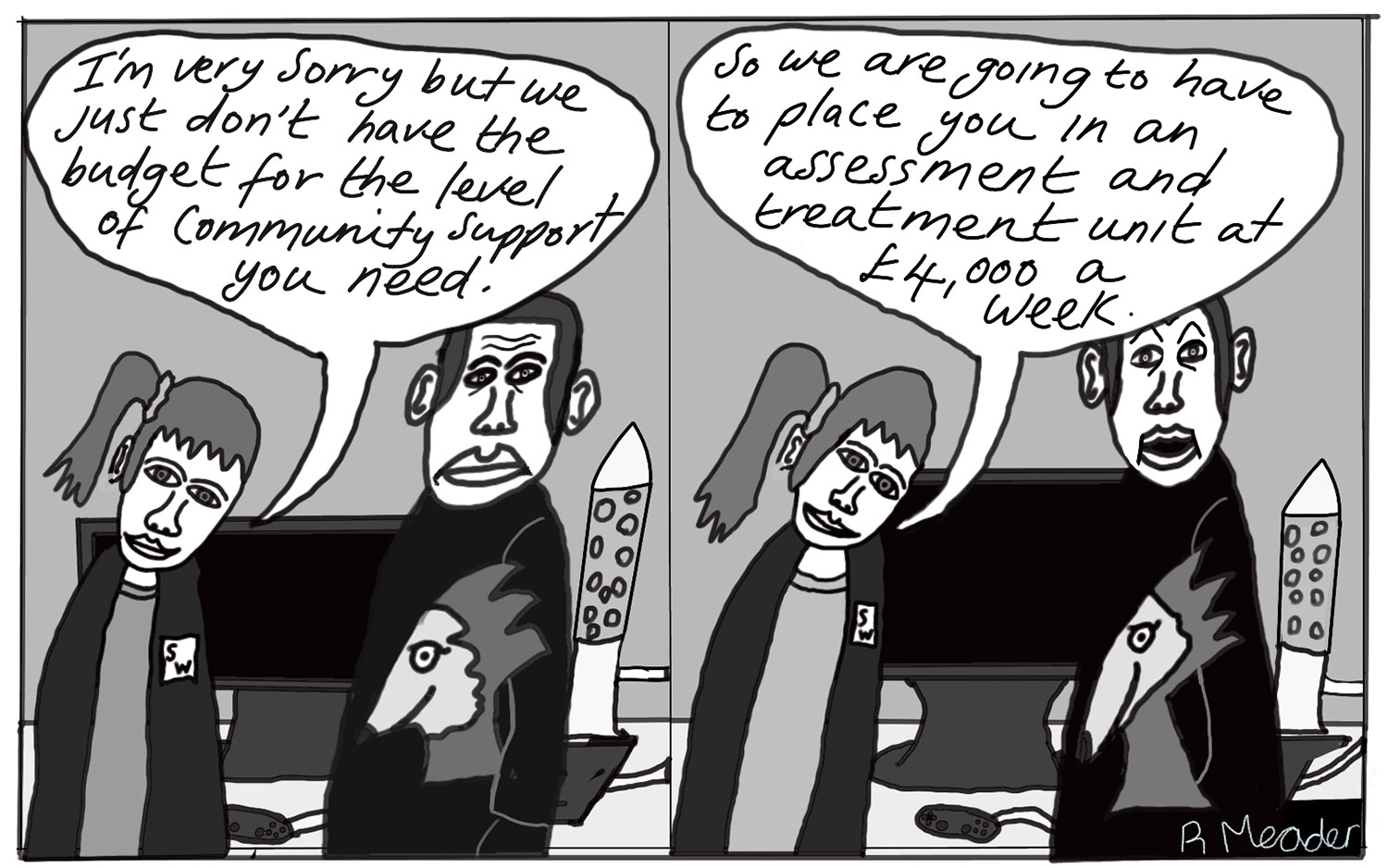
Our account by Amanda Topps (READ MORE)  of the ‘Small Supports’ initiative offers some hope that this sort of individualised service might start to break through, particularly in relation to individuals unjustly detained, seemingly without end, in Assessment and Treatment Units. This project, supported by NHS England and the Local Government Association, is based on the premise that small local organisations, which are not seeking to evolve into large organisations, and are deeply embedded in their communities, can meet the aspirations of individuals and ensure that they have choice and control in their lives.

How nice if services like this can become the norm, and families no longer have to uproot themselves to escape the dead hand of social care bureaucracy.


A Happy and Creative New Year

A new year begins, and we might all sense the faint stirring of something unfamiliar and almost forgotten in the deepest recesses of our thoughts. Do we remember a thing called optimism? We know how awful the last two years have been, but in these pages we hope you will find a few reasons to feel a bit better about life and where it might take us in 2022.

As well as initiatives like Small Support and the life affirming story of the Scaife family, we have the extraordinary creativity of our interviewee Bobby Latheron, author, songwriter and playwright (READ MORE). Jan Walmsley tells the story of the passion and ingenuity of self-advocacy groups who have risen to the challenge in the face of an enormous crisis (READ MORE). Alex Lewer recounts how an inclusive choir has come through the pandemic stronger and even better (READ MORE) and, last but not least, we have the lockdown-inspired poetry of Phillip Rackham and Sharon Russell (READ MORE). We hope all this gives you some cheer for the year ahead, whatever problems we might face.

A Happy New Year to all our readers, contributors and supporters, and thank you for sticking with us through challenging times.

Your Say – Jan 2022


Write to Community Living

Email: simonjarrett1@outlook.com
Facebook: @communityLivingMagazine
Twitter: @CommLivingMag

Letters may be edited


George: ready to cook in the CBeebies kitchen


Kids’ TV boxes clever with George
“When I was young, I was told I could be anything. And look, here I am, in the CBeebies house, ready to cook and sing.” – George Webster will smash those stereotypes!
Don’t Screen Us Out
@dontscreenusout, via Twitter

So delighted to see George’s appointment. A great step forward in neurodiversity in broadcasting for children and young people – vitally important. And, obviously, George is a force of nature and will undertake this pioneering work brilliantly
Paul Roberts
@PaulRobertsNHS, via Twitter

Fabulous. The lesson here to those with a learning disability is get yourself out there and show people what you CAN do!!
Jaz
@jaz00615 via Twitter

Well done George! You’re gonna change the world, you lovely boy. As a parent of a child living with Down syndrome, I know you’re going to inspire a generation.
Todd Bailey
@therealbailey, via Twitter

Harry Potter and the husband to be
I want to thank @jk_rowling for Harry Potter because without the story I would not know how to read. I have a learning disability and if not for this story, I would not have picked up a book. If not for this series and my knowledge of it, I would not have met my soon-to-be hubby.
Patricia Turner
@flutequeen1993, via Twitter

It’s official: health inequality persists
The latest National Institute for Health and Care Excellence report (https://tinyurl.com/y4ra58lf ) highlights the lack of progress. Data shows high levels of health inequality and limited positive change over time.
James O’Rourke
@StowJames

NHS chief’s ATU prevention priority
Tom Cahill @cahillT1 appointed as the national learning disability and autism director by NHS England. Pleased to hear one of Tom’s priorities is “to prevent people from being admitted to hospital”. Read our position statement on #CloseATUs here: bit.ly/3jFcGKo
People First (Self Advocacy)
@PFselfadvocacy, via Twitter


Minimising risks minimises life…
What if you needed a risk assessment for making a cup of tea, having a bath, having your partner spend the night with you? This is reality for many people living in care.

Campaign4Change
@C4Cgroup, via Twitter

…and ‘safe’ places are often harmful
Risk is part of life. No risk, no life. An example of this is people placed in institutions for their so-called safety and avoidance of risk. Of course we know that places like this are the most unsafe places anyone can find themselves.

Simon Goldsmith
@spmgoldsmith, via Twitter

Stuck at home
Many people with learning disabilities and autistic people rely on 1:1 support to leave their house. Imagine not being able to leave your home whenever YOU want to.
LDEngland
@LearningDisEng, via Twitter

No choice in holidays
We have all been struggling to go on our desired holidays during the pandemic. Did you know that many people living in care services don’t get to choose where they go on holidays due to the budget or staffing levels?
Learning Disability England
@LearningDisEng, via Twitter

Concern as nursing course closes
This week a university closed its learning disability course due to lack of applicants. Learning disability registered nurses
are probably one of the most needed safety-critical roles in health and social care. The all too numerous threads from inquests show how this tragedy unfolds in the real world.
Professor Alison Leary
@alisonleary1, via Twitter

Learning Disability Nursing is the same as any other branch of nursing… Don’t ever put your colleagues down for not being a “proper” nurse. Specialising in the care of people with learning disabilities, we are highly skilled.
Sue Bridges
@SueBprof1, via Twitter

‘I’ve done all I want’

Linda Doherty got on the path to independence at the Elfrida Society. She tells Seán Kelly about her 50 years with the charity and being a champion of her communities.

Linda Doherty

I am at the Elfrida Society to meet Linda Doherty. We are going to celebrate that she has been involved with and supported by Elfrida (as everyone calls it) for just over 50 years, since she was 20 years old.

I myself worked for the charity, which supports people with learning disabilities in Islington, for over 20 years, but that pales beside Linda’s five decades. She has brought a pile of photos to help us look back on the old days.

What first brought her to Elfrida? “It was learning to read and write with Carola,” she says. She is referring to the education unit, later called Learning for Life and Work. “But Carola can’t have been here 50 years ago?” I ask.

And so we are off reminiscing and looking at photos and she summoning up the names of lots of staff and students from the past.

“I love to see all the old faces again,” she says. “What made my day was when we had the old crowd here. The old days. We all used to get on with one another. Yes, that was the good days!”

After attending reading and writing classes Doherty remembers moving on to City and Islington College for further classes. Meanwhile, she joined the Culpeper Gardening Group, which was run by Community Gardens in association with Elfrida. Group members plant, water, weed, harvest, cook and eat their own vegetables.

Doherty has an old cutting from a local paper celebrating a huge bulb of garlic grown by the group, but there was no photo of the garlic bulb in the paper: “Unfortunately it had already become part of lunch.”

Doherty shows me some pictures from when she did voluntary work for another local organisation called Centre 404, where she supported a group of young people with learning disabilities. “I helped the little ones. I [did] the sandwiches and I was showing them how to use a cheese-grater,” she says.


Speaking up for access


Finding homes for supported living can be difficult. Lisa Brown is bringing property investors and care providers together to design and create accommodation to meet various needs.


Back at the Elfrida Society, she joined the Power and Control group, which campaigned for the voices of people  with learning disabilities to be heard, and for all kinds of services to be made more accessible.

She remembers the group going to University College Hospital to help give feedback on accessible information about epilepsy. “I have got epilepsy. Somewhere here” Đ she taps her head Đ “I’ve had it since I was 5.

“You’ve got to explain it to [the staff] when they [people with epilepsy] come in to the hospital. So they can understand it and they don’t get worked up with people and all that lark.”

She also remembers the Power and Control group giving feedback and advice to Transport for London: “We said we need things like clamps on the floor of buses so the wheelchairs don’t move about.”

In a more recent meeting with the police, she and other members told them to “crack down” on people using electric scooters on the pavement: “They are dangerous. It’s not fair if anyone has got a walker.” Doherty speaks from experience, as she has used a walker to get around for some years.

The Power and Control group used to make presentations to Islington Council’s Learning Disability Partnership Board. She was invited to become co-chair alongside Sean McLaughlin, Islington’s director of housing and social care at the time.

Meetings were held in a big committee room at the Town Hall and lots of people attended. Was she nervous? “No.”

She describes the experience as “all right” although she had to point out that staff always spoke first and said what they wanted, and she and the other members of the Power and Control group had to demand extra time to say what they wanted.

I spoke to McLaughlin recently, who now works for Homes for Haringey. “I guess it was through working with Linda at the partnership board that I realised how limited my previous expectations of co-production had been,” he says.

“I have no doubt she made the same impact on many other people so, altogether, a great many professionals will have improved their practice just by witnessing her in action. The victory for equality will be won by thousands of small contributions and I hope Linda is proud of hers.”


People’s champion


Finding homes for supported living can be difficult. Lisa Brown is bringing property investors and care providers together to design and create accommodation to meet various needs.


It was most likely her work as co-chair of the partnership board alongside her other voluntary work that led to Doherty being chosen as a “people’s champion”.

Doherty found out about from a letter she received in the post. She thought it was a mistake: “I said to Vince [support worker]:  ‘It doesn’t belong to me’. And he said I have put you in for it. For helping out.”

So she was presented with a certificate naming her a community hero and thanking her for helping “to make Islington a better place”.

She remains proud, but adds with a shrug: “I’ve got loads of certificates, but they are all indoors. I can’t find them. I have got so many.”

Doherty originally lived at home with her parents: “My mum was in a wheelchair and my dad used to lift her out of the wheelchair and all that.”

Having her own place clearly gave her more self-confidence and freedom. “I’ve done all what I want,” she says, smiling. Her brother Lennie, who is one year older than her, keeps in touch and rings her every night to make sure she is OK.

I liked Elfrida because we all
mucked in and talked. We had
great days, we did. Elfrida
helped me get my own flat
and to stand on my feet

This continues even though Doherty now lives with her partner Bob, who moved in with her a while back. She is pleased that Bob’s name is “on the rent” so everything is above board.


Home and holidays


Finding homes for supported living can be difficult. Lisa Brown is bringing property investors and care providers together to design and create accommodation to meet various needs.


We have a good chuckle at some of the photos Doherty has brought in. She shows me a great one of herself on holiday with a small group of friends. She is wearing a great pair of green hiking shorts.

“That was in Exeter with Jenny Barrett,” she says and I know she is referring to the person who used to lead Elfrida’s Homelink service for people living in their own homes.

With help from Elfrida advocacy staff, Doherty was able to get a solicitor who helped her to arrange to get her support from the Westminster Society. Some former Elfrida staff were working there, and she was very happy to get support from people she had known for many years.

Another photo has her laughing. It shows her with her old friend Tracy Sterling. In the photo, they are on an Elfrida day out to Chessington World of Adventures.

“I always remember that. Tracy had a go on one of the things and she won that Đ a huge stuffed monkey with a banana on its hand. It was bigger than her. And she said what can I call it? And I said well we have already got Vince so why don’t you just call it Vincent 2?”

She laughs and I can recall the innocent fun that they had when introducing Vince to a very large monkey called Vincent 2. Did he mind? “No, he didn’t mind at all. We had to take Vincent 2 home on the coach.”

A few years later, Tracy Sterling died. “It was really heart-breaking when she went,” says Doherty, but we both agree it is good to remember her with laughter.

During the pandemic, Doherty has kept in touch with people by phone, and although she attended meetings via her tablet, she is not a fan. “I am too old to think about all that kind of lark,” she says with a grin.


A good life


Finding homes for supported living can be difficult. Lisa Brown is bringing property investors and care providers together to design and create accommodation to meet various needs.


Looking back, Doherty says she has had a good life. She has been happy. Her proudest achievement is having her own flat, now shared with Bob.

Her happiest times, she says, were with her old friends at Elfrida. “I liked Elfrida because we all mucked in with people and talked with people. We had great days, we did. Elfrida helped me get my own flat and to stand on my feet about my money and everything.”

Doherty is still a member of the walking group and the gardening group. “I said to Dolly [Elfrida chief executive Dolly Galvis] if she wants any more help I’ll come and help. I’ll come and do the garden for her”. It’s a great offer. .

 Thanks to Deborah Kober and Dolly Galvis at the Elfrida Society for their assistance with this interview.

Sara Pickard: Welcome back to the new normal

At the prospect of live theatre, dances and travel – and making more of a difference – Sara Pickard dares to wonder if the worst is now behind us.


At the time of my last article, I was just about to start my new job as a disabled people’s employment champion with the Welsh Government.

How time has flown, and I am now six months into that role. Our work to increase employment opportunities for people with disabilities is going really well but, so far, meetings with my colleagues and businesses have all had to be online.

As you can see from the photo, I am working from my home workstation provided by the Welsh Government. I am really looking forward to having face-to- face meetings with everyone before too long as I am sure we can have an even bigger impact then.

Now that I am fully vaccinated and due to have a booster jab next month, I am feeling more confident about returning to a new normal life.

Wales has just eased most restrictions but we are still being cautious in the way we go about resuming the sort of activities that we saw as normal before the lockdowns came in.


In the lead role in Miss Brown to You, which toured the country for three months


Out and about again


Finding homes for supported living can be difficult. Lisa Brown is bringing property investors and care providers together to design and create accommodation to meet various needs.


I have been able to go swimming again at my local leisure club and have been meeting up with my boyfriend at open mic and karaoke nights, which we
really enjoy.

At first, it could only be “chair dancing” but now we can dance the night away properly. I can also now enjoy shopping in our busy Cardiff city centre although that felt very strange at first.

Socialising with friends who I have only seen online for over a year is really special and something I have looked forward to for so long. I am particularly looking forward to our weekly dance classes starting back soon, and we met up for a few drinks recently to get in the mood.

For over a year, all my meetings as a community councillor have had to be online but we have still managed to get our work done.

I have particularly enjoyed being a member of our climate change and wellbeing sub-group, which is leading some really important work. We are due to have our first face-to-face catch-up at a coffee morning in the next few weeks.

The vital importance of looking after our environment has been headline news in many parts of the world in recent times, and even our small local group can make a contribution. We have been getting young people in our community involved in events such as village litter picks and recycling schemes.

I have been involved with my drama group for many years now and, back in 2008 and 2009, was lucky enough to tour the UK professionally with Hijinx Theatre touring productions.

Playing the lead role of Emily Brown, a Second World War evacuee, in Miss Brown to You was my first experience of working alongside professional actors and I learnt so much. So many people dream of what it must be like to tour the country for three months in the back of a van with a group of
professional actors and a stage manager… I was lucky enough to do it twice.

Being involved in live theatre and the buzz you get from an audience is so special but it is also such a thrill to go to the theatre to see productions, especially musicals. I have missed this so much over the last 18 months but “the show must go on” and I am so looking forward to our next visit.

Our own drama group normally met weekly to rehearse for our annual show at the Wales Millennium Centre but this has been another casualty of the pandemic.

However, we have managed to meet weekly online to plan our next production and this has allowed us to keep in touch socially. Our first live rehearsal will be an extra special day to look forward to.

Over the past few years, we have enjoyed some wonderful family holidays, especially in Tenerife and Croatia. As we move closer to that sense of a new normal, to be able to return to those lovely sunny places that I have missed so much will be even more enjoyable than ever.

Let’s hope things keep improving and we can all enjoy living life as it used to be.

Advocacy research: ‘with not for’

A PhD researcher was determined that his research on advocacy would have people with learning disabilities at its heart. Manos Gratsias explains how he approached this.


My PhD project is called Not for Them or on Them: Exploring advocacy Outcomes With People With Learning Difficulties and was carried out with a group of people with learning disabilities who use advocacy.

The research looked at the outcomes and impact of advocacy from the point of view of those who use these services. Part of its originality lies in the fact it involved working with the people who use advocacy services instead of other stakeholders as is common in research practice.

Dorothy Atkinson (1999) described advocacy as “speaking up” for yourself or others but I believe it is rarely that simple. Advocacy is based on the fundamental principle that all people are citizens with the same rights and responsibilities and that there is a need to combat the exclusion and marginalisation experienced by members of our society through promoting access to human as well as legal rights (Gray and Jackson, 2002).

Advocacy has been largely overlooked by mainstream research, particularly from the point of view of those who use these service (Ridley et al, 2018).

The research study was carried out with self-advocates and advocacy partners with learning difficulties (the preferred term of the group, as opposed to learning disabilities), who had varied levels of advocacy experience.

The self-advocates were part of a well-established group that already had a number of high-level achievements at local, regional and national level. For instance, the self-advocacy group had achieved improvements in regional transport infrastructure as well as a number of successful placements to independent living for group members.


‘Going the right way: the self-advocates had achieved improvements in local transport’


To capture the essence of advocacy


Finding homes for supported living can be difficult. Lisa Brown is bringing property investors and care providers together to design and create accommodation to meet various needs.


The idea behind the research study was born and nurtured within the self-advocacy group meetings. Group members felt that exploring and capturing the essence of advocacy partnerships while learning in the process would be of great benefit.

The self-advocates were involved at all stages of the research process.

Training workshops were provided following the “challenging inequality” model developed by Warren and Boxall (2009). This recognises that groups of researchers with different levels of experience need support and training to carry out high-quality research.

The study adopted the principles of different methodologies rather than taking a purist approach. In particular, it used those of participatory research, an approach that facilitates the active involvement and contribution of those taking part (Northway et al, 2014).

Focus groups and narrative interviews with 13 people explored the outcomes and impact of advocacy.

The findings suggest that advocacy produces mainly two types of outcomes. There are end-point outcomes, which involve reaching (fully, partly or not at all) a practical target, such as a house move, agreed at the start. There are also process outcomes, such as learning and/or positive feelings, which are associated with the advocacy partnership’s journey.

The participants reported that both types of outcome were valued. They highlighted that process outcomes were important and valued even if the desired end-point outcome was not reached.

People using the service valued a number of different advocacy outcomes, with nine main themes identified. The main ones were “felt listened to”, “on my side” and “speak up”.

“Advocacy qualities” such as being independent, and “empowerment” to self-advocate were also identified. Other themes were “work together”, “feelings”, “impact for the person”, “learning”, “satisfaction” and “short- and long-term end-point outcomes”.

The project demonstrated that people with learning disabilities who have no research experience can be actively involved as co-producers and participants in academic research.

The study highlighted the great value as well as the need for and importance of involving those with a wealth of lived experiences in research and other exploration. Active involvement of such people promotes inclusion and can aid a greater in-depth understanding of a topic.

The study concluded with developing the advocacy partnership model, which described the advocacy partnership process or journey and looked at the utility of advocacy work. It argued that advocacy strives to empower people to speak up and self-advocate. However, the best outcomes from advocacy will be realised only when people self-advocate and their views and wishes are listened to and acted upon.

It asserted that, in our current times which are often hostile for people with disabilities, advocacy has an important role to play as an ally, continuing the struggle for a more equal, fair, just, inclusive and equitable society alongside advocacy partners and self-advocates.

Manos Gratsias is a PhD student at Northumbria University. His PhD project is nearing completion

Email: emmanouil.gratsias@northumbria.ac.uk

Twitter: @ManosGratsias

References

Atkinson D (1999) Advocacy: a Review. Brighton: Pavilion Publishing for the Joseph Rowntree Foundation

Gray B, Jackson R (2002) Introduction to advocacy and learning disability. In: Gray B, Jackson R (eds). Advocacy and Learning Disability. London: Jessica Kingsley Publishers

Northway R, Howarth J, Evans L (2014) Participatory research, people with intellectual disabilities and ethical approval: making reasonable adjustments to enable participation. Journal of Clinical Nursing; 24(3-4):573-581

Ridley J, Newbigging K, Street K (2018) Mental health advocacy outcomes from service user perspectives. Mental Health Review Journal; 23(4):280-292

Warren L, Boxall K (2009) Service users in and out of the academy: collusion in exclusion? Social Work Education. 28(3):281-297

The man who went to bed for a year

Psychotherapist David O’Driscoll recounts the case of a man whose life changed quite suddenly during his middle years, and asks why little attention has been paid to how reaching this life stage can affect people with learning disabilities.


Frank Smith (not his real name), a 55-year-old man with a mild learning disability, told me in his first psychotherapy session how he got up one day and decided he did not want to go to the day centre. “So I stayed in bed.”

At the time, he was in his middle 40s, and it seems that he stayed in his bed for about a year.

When discussing this with him, he was clear he was not physically ill, nor did he experience it as a depressive episode: “I was not down in the dumps.”

Smith told me that his days were spent listening to the radio in his bedroom. “I would put on my dressing gown and go downstairs for meals,” he said.

At the time, he was living alone with his mother, and it appeared that she was compliant with his decision to remain in bed and carried on with her life.

I was understandably curious about this episode. What was his underlying motivation? What did his mother and family think about this and how concerned were the support services about him?

I started to think: was this an example of a midlife crisis? And is it a useful concept?

Referral for psychotherapy to
the NHS service I work in is
often linked to transition,
either when entering
adulthood or in middle age


What is curious to me is that there is plenty of research on the other transitional periods in the lives of people with learning disability but not on the middle-age transition. This is despite widespread acknowledgement that this group can have fewer skills and resources to cope with significant life events.

British psychoanalyst Elliot Jacques introduced the concept of the midlife crisis (1965) as a unique transition phase with many internal and external struggles. It can be a time of life to reflect on missed opportunities, paths taken and paths not.

For Jacques, a crucial aspect is the capacity to be able to grieve for many of one’s youthful ideas and ambitions that are central in determining personal creativity in later life.

The critical factor above all else for Jacques was facing up to the fact that we will die. Midlife is hard to define precisely, in part because of social changes over the period. Today, most authors would put midlife in the 40-55 age range. Smith was in the age range.


An angry retreat


Finding homes for supported living can be difficult. Lisa Brown is bringing property investors and care providers together to design and create accommodation to meet various needs.


Smith was the youngest of four siblings, with two sisters and one brother, in a working-class family. He was diagnosed with a learning disability as a young child, went to a special school and then a local day centre. He never worked.

There was a lot of concern about Smith before his referral for psychotherapy. A number of professionals had noted that he went to bed for a sustained period and was struggling with living arrangements. This was one reason why Smith was referred for psychotherapy for “loss and bereavement” (O’Driscoll, 2017).

During our first few psychotherapy sessions, I started to build a picture of his year in bed. I felt that Smith’s behaviour was an angry retreat and his bedroom had become a safe place away from an unwelcoming, disappointing or dangerous world for him.

How had he got to an age (he was in his 40s) where he had hoped and thought he would have had more success than he had? He did not have a job or a wife or a house or a car, or any of the things his siblings had.

It was difficult for him to think about this as he was clearly focused on making up for it now, even though the reality of his situation was far from his fantasy.

We have moved a long way from asking if people with learning disabilities can benefit from psychotherapy. The literature has supported this for some time (Sinason, 1992).

This is important as people with learning disability are susceptible to the effects of loss, and four times more likely to have mental health issues than the general population. We also know about their vulnerability to abuse and bullying. The list could go on.

The scenario for a referral for psychotherapy to the NHS service I work in is often linked to the challenges of transition, either when entering adulthood or in middle age.

The psychotherapy service gets a number of referrals in these areas. Looking at those made to the psychotherapy service I work in from September 2017 to October 2018, I found the majority of patients were in this midlife, 40-59 age range (roughly around 55% of referrals).

A number of major life events can affect us in middle life.

Researchers do not see people
with intellectual disability and
their struggle (or otherwise)
with midlife as interesting, as
worthwhile research material

I think the key one for many people with learning disabilities is the death of parents. Smith could not remember the age of his father when he died, but it was clear that he was middle aged and died while his son was a teenager.

I was interested that he went to his father’s funeral, which was significant as many people with a learning disability are excluded and struggle with their reaction to grief as a result


Loss and ritual


Finding homes for supported living can be difficult. Lisa Brown is bringing property investors and care providers together to design and create accommodation to meet various needs.


We know that many people with disabilities have a lifelong history of loss, separation and abandonment. We also know that they are more likely to miss out on attending a funeral

or other rituals of significant figures from their life. A growing body of research on loss and learning disability emphasises people’s vulnerability at these times.

Smith went to the funerals of both his father and mother. It is clear that being part of collective family grieving can help with a person’s grief, and that the way in which early experiences in childhood are handled is central to later adult grief reactions.

In the sessions, I tried to discuss the experiences of the funerals and the grieving period afterwards with Smith but without much success.

I did sense urgency in the way he spoke about his life and I felt he was somewhat lost. Despite the loss of his mother, it was a struggle to help him to think about her. I think this was due to some conflicted feelings that losing her brought up for him.

I would argue that individuals with learning disabilities are particularly vulnerable around the midlife transition as they lack good experiences around loss.

Treatment ended after 10 months, and Smith missed several sessions. Despite this, I believe my interest in this concept of the issues around midlife helped me to help him.

He was able to start to plan for his future and think about his new life and became less focused on gaining lost ground on what he had missed out on.

He was more realistic, seemed less manic and was calmer. While he had a sexual relationship, which did not last, Smith was more accepting of his situation: “This may not happen, if so, so be it.” It was only through the experience of seeing Smith  that I started to consider this concept of midlife crisis with regards to people with learning disabilities.

I appear to be alone in this. In none of the texts is it mentioned as a challenging transition. Researchers do not see people with learning disability and their struggle (or otherwise) with midlife as interesting Đ as worthwhile research material.

There is a gap in research around the emotional life of people with learning disabilities at this stage of their lives. I wonder if it is too painful to think about.


Absent life milestones


Finding homes for supported living can be difficult. Lisa Brown is bringing property investors and care providers together to design and create accommodation to meet various needs.


Maybe it is something to do with the idea that many of the traditional markers of midlife, in terms of work, career or status, or empty nest syndrome, may not always apply to people with learning disabilities.

Or is it to do with the difficulties for researchers in thinking about trauma?

It is at this point when people with learning disabilities may have to face up to personal disappointments they might find difficult to articulate.

These can include not having a meaningful paid job, an intimate sexual relationship or children.

There can also be an ongoing sense that they are being still treated like a child, infantilised despite being 45 years old and feeling that maybe nothing will change and that, ultimately, time is running out.

There is also the death of their parents to negotiate; this can have extra significance as it may involve a transition from the family home into supported living.

All this happens against the backdrop of society’s ambivalence to them.

For these reasons, I think we need to explore further how midlife can be experienced as traumatic for people with a learning disability.

References

Jaques E (1965) Death and the mid-life crisis. International Journal of Psycho-Analysis; 46: 502-514

O’Driscoll D (2017) Grief. The price of love. Community Living; 30(3): 8

Sinason V (1992) s and  the Human Condition: New Approaches from the Tavistock. London: Free Association Books

Relationships are central to success when leaving a locked ward or transitioning as an adult

People in secure units can move on faster if they if they have positive interactions with staff, people with severe disability can express agency through those they know well and families share experiences. Simon Jarrett rounds up the latest research.

Good relationships and moving on

Fish R, Morgan H (2021) “Them two are around when I need their help”: the importance of good relationships in supporting people with learning disabilities to be “in a good space”. British Journal of Learning Disabilities; 49(3):293-302. https://doi.org/10.1111/bld.12410

This study arises from the seemingly insurmountable problem, despite repeated policy initiatives, of large numbers of people with learning disabilities remaining locked up in secure settings.

Noting that most people in such settings are both physically and emotionally distant from friends and family, the research focused on relationships with staff. These become central to people ‘s lives and are critical for a successful transition to making a home in the community.

The research involved reanalysing data from two earlier qualitative studies that had used field notes and interview transcripts with people with learning disabilities living in such settings and the staff who worked with them.

While the purpose of the original study was service improvement, this revisiting of the data explored relationships between staff and residents in depth, which emerged as a significant theme in both studies.

The study found the critical issue in staff-resident relationships was that when they were positive, they enabled the person to be “in a good space”, which was seen by all participants as crucial to being able to move on.

The analysis identified four main themes around positive relationships: their characteristics; barriers to them; how they can be encouraged; and how they support people to move on.

Characteristics of positive relationships included a comforting approach, friendliness, reassurance, having time for people, reciprocity, fairness, helpfulness and availability. All these have to be navigated and realised within professional boundaries. When achieved, distress, aggression and self-harm would reduce.

Barriers to such relationships included: negative staff perceptions of the ability of people with learning disabilities to manage social relationships; staff not understanding communication through body language and other signals; and the use of restrictive practices, containment and control.

The authors conclude that flattening the hierarchy between staff and residents is key when supporting people with learning disabilities to move on and that soft skills are critical in enabling them to transition back to their community.


Adult transition and severe disability

Jacobs P, Quayle E, Wilkinson H, MacMahon K (2021) Relationships matter! – Utilising ethics of care to understand transitions in the lives of adults with severe intellectual disabilities. British Journal of Learning Disabilities; 49(3):329-340. https://doi.org/10.1111/bld.12380

Noting that most research tends to focus on early transition experiences, such as those during school years, this study examines transitions in adulthood.

The authors look at transitions in the lives of people with severe and profound disabilities. They are often excluded from research, as studies generally focus on those with mild or moderate learning disabilities.

This study follows the transition journeys of six adults with severe intellectual disabilities, including transferring to adult services and moving out of the family home.

The research is based on observations, document reviews and interviews with families and professionals in Scotland.

Taking what they call an “ethics of care” perspective, the authors aimed to explore the extent to which each person had people in their lives able to listen to them and if, in turn, those close to them were listened to during times of transition.

While there was “a clear indication that the six adults were involved in the practical parts of transitions and that they were listened to by those in their immediate environment exploring the organisational parts of the process showed a different picture”.

Parents mostly described how their son or daughter could not be involved because they were unable to understand abstract concepts. However, at the same time, all parents saw their child as a person able to express their feelings and preferences, stressing that others needed to know them well to be able to properly listen to them.

Education, health and social care professionals, even those who knew people very well, reported they felt they had little power to influence what was decided within a social care system stretched to its limits and with little choice. Decisions were based on options available.

Additionally, the report suggests that professionals values and beliefs about normality influenced their judgments on what a good life should look like for people with severe intellectual disabilities in adult services. This seemed to be connected to them struggling at times to take into account the perspective of the person and what they knew about them through their daily interactions.

A solution to the labour shortage

A huge pool of wasted talent is eager to take up work while care companies see commodities, says Simon Jarrett, who has high praise for a refugee’s story told without words.


The news is full of dire warnings about labour shortages in many areas of the economy.

The shortages, we are told, will affect supply chains, the availability of goods, entertainment and hospitality and other areas of our lives where we have often assumed, complacently, that there will always be a magical supply of people to make sure our lives run smoothly.

What never figures in this debate is that there are more than a million people labelled as having learning disabilities in the UK among whom the employment rate – not the unemployment rate – is 6%.

Surveys consistently show that most of them are eager and willing to work, and are more than capable of doing so.

So we have critical labour shortages, and we have a large group of willing workers who are only prevented from working by social attitudes that designate them incapable of doing so. What a waste of talent and potential.


Not seen as a normal goal


Finding homes for supported living can be difficult. Lisa Brown is bringing property investors and care providers together to design and create accommodation to meet various needs.


Meanwhile, in the midst of labour shortages for which we need trained people ready to work, Enterprise Works in Swindon, a council-run social enterprise that produces timber products, is planning to make 12 people redundant.

Some of them have worked there for 20 years. There is considerable disquiet, which has reached the local press, over both the redundancy consultation and the support promised but apparently not provided to the staff at risk.

The underlying problem in situations like this – and Swindon is by no means alone – is that work is seen as way down the priority list for people with learning disabilities. The social care system generally shows little interest beyond meeting basic needs to enable people to stay alive.

Of course, much of this arises from pressures on social care budgets that allow only basic care needs to be met – but it also springs from a mindset that people with learning disabilities do not belong in the workplace.


Inhuman, deathless prose


Finding homes for supported living can be difficult. Lisa Brown is bringing property investors and care providers together to design and create accommodation to meet various needs.


I receive a press release that tells me a company has “agreed terms to go public and become part of an expanding plc”.

This will be acquired for £4m by a “diversified investment holding company” becoming their 26th group company as part of their “vertical” (whatever that might be). And so it ploughs on, in deathless, corporate prose, for several paragraphs.

If you have the perseverance and the will to read through to the end, you will find out that it is from a care company that provides services to people with learning disabilities, among others.

It’s a good job this was eventually mentioned because otherwise, for all I knew, I was reading about a company that makes widgets. This is how people become commodities and lose their humanity.


Refugees without words


Finding homes for supported living can be difficult. Lisa Brown is bringing property investors and care providers together to design and create accommodation to meet various needs.


We have all watched the disturbing and distressing scenes at Kabul Airport as many thousands of people have tried to flee the new Taliban rulers of Afghanistan.

In this darkness, a tiny glimmer of light is the brilliant response by Books Beyond Words who have produced the compelling A Refugee’s Story, which you can download from https://booksbeyondwords.co.uk/afghanistan.

This not only helps an often voiceless community to tell their story, but also will enable others to understand the stories of refugees who they meet. Highly recommended.


When the past speaks back

An archive of residents and staff discussing the closure of a longstanding ‘mental handicap’ hospital should cause us to reflect on trends in care provision now, writes Caroline Hill


Lockdown was an opportunity to revive a long-neglected oral archive from the late 1980s, and bring to light the first-hand testimony of an asylum’s former residents and staff.

It also seems very timely, as contributors to Community Living have been lamenting the regressive steps they have seen back towards institutional “care”. The lessons of the past should not be forgotten.

When the purpose of the Royal Western Counties Institution, Starcross Hospital, a former “idiot asylum” in Devon, started to be seriously questioned, it had existed for more than a century. Hundreds of people had lived out their lives there in a separate, regimented world.

What followed was the first closure of a large “mental handicap” hospital in favour of a range of new community care services.

Health authority manager David King asked for an oral archive to be created before the memories of Starcross Hospital faded. Staff and residents were interviewed and what they said was recorded and transcribed.

King went on to head the national Mental Health Task Force and wrote a book on how the transition to community care was achieved (King, 1991). He foresaw a day  – correctly, it now appears  – when the realities of institutions might be forgotten.

King, who later headed health services in New Zealand, has contributed a commentary to the now-published archive extracts.

He writes: “Institutions like Starcross Hospital harmed human life and must never be repeated.”

His is a voice that should resonate loudly. He questions how it took so long to end institutional care.

The idea to close the hospital had come from within not above, yet even those with a vision for better care and the determination to succeed were emotionally torn, as the archive reveals.

Speaking soon after the closure, nursing officer Viv McAvoy, who was heading a new local support service, recalled: “In some ways I felt quite sad and, again, I felt quite glad. The whole thing is a conflict of emotions and still is.”

The interview extracts also shine a light on the circumstances that led to people being admitted and then living out their lives at Starcross Hospital. In many cases, staff lived out their working lives there too  – even their own holidays were spent with the people in their care.

Nursing tutor Tom Bush said: “People said they would never close it  – it has been a wonderful place. But I think they were very much living with a dream an old idea old memories If you talk to the new staff coming in, the youngsters would say: ‘Oh, it’s too big, it’s so impersonal’.”

Reading what the interviewees said, it is possible to appreciate that staff did their best within the very limiting confines of an institution.

Updating the buildings drained resources while doing nothing to alter the fact that this was a life apart from the rest of society for those who lived there.

Meanwhile, by the 1980s, the majority of people with learning disabilities or special needs were living with their families or trying to fend for themselves.

What the contributors said about the pride staff took in their work, the institutionalisation of those who lived and worked there and the perceived inadequacies of the early efforts to move patients into the community all help to explain why the status quo endured for so long.


Caution over independence


Finding homes for supported living can be difficult. Lisa Brown is bringing property investors and care providers together to design and create accommodation to meet various needs.


There was also a deeply ingrained belief that the patients could not learn or adapt. Medical superintendent Dr David Prentice explained: “We were always bedevilled by this feeling of permanence that there was no way out for them ever standing on their own feet.”

However, staff discovered otherwise.

As King put it: “Although hospital care was supposed to be beneficial, release from hospital has been as good as a cure for so many who were thought to be beyond hope.”

The testimony in the interviews suggests that Starcross might not have been necessarily representative of large asylums in general and, perhaps, suffered from fewer of their most regrettable traits.

Nevertheless, it limited people’s lives. It was a big employer in the village of Starcross  – a village within a village you could say, but a place apart.

The philanthropy of the past had created the institution to provide a purpose in life but, in reality, “purpose” had dwindled to patients sitting on the boundary wall, looking out on a world denied them. They had no personal possessions, and no choice over the food put in front of them or the activities they could take part in.

For some, as the interviews reveal, institutional life had advantages: shielding them from an unkind or difficult world; a routine; friends close at hand; and even daily GP care.

But in many ways the ease of life was an illusion. There were plenty of downsides, not least being constantly in a crowd of people and having no sense of your own family in what was often a hothouse for antisocial behaviour.

Nursing officer Sheila Easby was at the heart of early attempts to move care into the community: “Originally, the groups that went into small hostels thought they were going into a different sort of institution but, at that time, it was better than the institution they came from.”


In praise of privacy


Finding homes for supported living can be difficult. Lisa Brown is bringing property investors and care providers together to design and create accommodation to meet various needs.


She recalled: “I remember one resident she added: ‘One of the nice things about being out, I can go to the bathroom and I can lock the door I haven’t been able to do that before’.”

This was echoed by McAvoy: “The two awful things about the institutions was the total lack of privacy and the lack of choice, particularly in terms of diet and when they actually ate.”

“They were environmentally handicapped  – by the environment around them,” recalled nursing sister Jean Waldron, who had taken the leap from running a crowded hospital ward to overseeing a new local unit providing support and respite care.

“Some of them had been in hospital care since they were in their early teens and they were in their 80s now and had never had a bedroom of their own. Unbelievable!

“When you are elderly, you usually have problems with your waterworks… they literally had to go about 50 yards to get to the nearest loo and, to me, that was absolutely atrocious.”

Institutionalisation had a lot to answer for. Psychologist Dr Chris Williams explained at the time: “Behaviour problems  – they are not constitutional problems of mentally handicapped people, they are situational problems. When they have to compete with 30 other people then you hit your head somewhere and you find out how that works and you do it again.”

Staff and some residents saw the hospital through the lens of familiarity and liked to recall the happy side of life there  – and that also helps to explain why the institution persisted for so long,

Having decided that closure was the best and only viable option, the challenge was to visualise what could be provided instead. The vision of that time is a useful measuring stick for what passes for community care now, decades later.

To have your own room, your own front door, the chance to choose and not be closed off from the world  – all these should be rights. Equally, support should be available to make these possible. Life in the community should not mean stress and uncertainty, loneliness and empty days.


The institution opened as the Western Counties Idiot Asylum in Starcross, Devon, in 1864 – the picture above is from 1876. In 1914, it became the Western Counties Institution, Starcross. In 1948, it was transferred to the NHS. It finally closed in 1986, in line with government policy on closing institutions and a move to care in the community.


The difference outside


Finding homes for supported living can be difficult. Lisa Brown is bringing property investors and care providers together to design and create accommodation to meet various needs.


The oral archive interviews reveal some key points that arose from the closure and the move to care in the community perceived by people involved at the time.

McAvoy pointed out: “The things that are better are the attitudes of the new staff, who have never probably set foot inside an institution. It’s lovely  – they do look upon people with disabilities as equals and they treat them like that naturally. That is absolutely superb.”

Easby said: “The local support units… so that you were still near your family … book yourself in and out,” but added: “One thing about community care,  you do need procedures and you need monitoring systems.”

Regarding respite, Waldron said: “Compared to. Starcross the unchanging routine there’s a tremendous difference. They go and sit and have coffee and chat to people, parents are in and out, a busy little unit.”

However, she warned: “You get some parents who will abuse the system and there are some who will only use it in a dire emergency… and I’ll say ‘It’s time he came in, I expect you need a break?’ If there isn’t short-term care for young people, the family aren’t going to cope.”

Perhaps Williams should have the last word: “I think it’s an important thing to realise that people didn’t ask to come back.

“It was said at a Starcross meeting, by a patient on the team: ‘Why can’t I live in a house like everybody else?’ And it’s when you try to answer that question It was Ken, who now lives in his own house in Plymouth.

“It exposes the bizarre fact that we were in the guise of treatment and hospital care. Looking back, we ask: How could we do those incredible things?”

Caroline Hill is a former NHS head of communications. She was asked to create the Starcross oral archive which is at  https://starcrosshistory.blogspot.com/


Read the stories from the Starcross archive


Finding homes for supported living can be difficult. Lisa Brown is bringing property investors and care providers together to design and create accommodation to meet various needs.


The doors of Starcross Hospital closed in 1986. Fast forward 34 years to a document box, opened in the first lockdown of the pandemic.

As I read through the contents, the voices of nearly 40 people, talking decades previously, come back to life – I could hear some of these voices in my head as I had recorded many of the interviews and listened to a number several times while typing up the original transcripts.

All had lived or worked at Starcross Hospital and had agreed to share their thoughts and memories at the time of its closure. The archive contains colourful memories stretching back to the 1930s of life in and around the imposing Victorian building and how the closure came about.

Residents and staff have at last been honoured in a compilation of interview highlights I have edited. Starcross Hospital: What the Voices Tell Us is freely available at: https://tinyurl.com/6tehvys6

Sound inventions

Young people created their own music – and instruments – to keep them engaged in activity and with other people, thanks to the Lifesize project, says Sam Dook


Lifesize, which I co-founded in 2019, aims to give marginalised people access to unique, contemporary arts for wellbeing. As well as community groups, we work with people with learning disabilities and special educational needs (SEN).

Not long after the company was set up, the pandemic came. We began to deliver interactive projects online and, thanks to an emergency Arts Council England grant, had time to develop and refine our approach.

Historic England funded a project where a group of young adults with learning disabilities from a day service used music to interpret a local area called the America Ground. On the Hastings seafront, it is where 18th century settlers claimed independence from the local government and sought to build a new community.

We worked with the same group to develop their musical and core skills in a project in which they composed original jingle music for a DJ on local station VDub Radio. This commission gave them a tangible, real-world outcome as well as a challenging musical experience and they embraced and excelled at it.

Building on these positive outcomes, we worked with Saxon Mount, a local SEN secondary school, to bring a remote musical experience into their classrooms.

With support from teaching staff, we realised a model of working that could be interactive and meaningful for the pupils despite restrictions on working in person.

I provided a variety of interactive musical items for our group work and saw the class through the lens of the camera operated by their teacher. It was very surreal to be leading a class of 13 year-8 SEN students through a process of music making from such a remote position but it was a thrilling and rewarding experience.


All together now: the sonic tree is played by several people at the same time.


Growing a sound garden


Finding homes for supported living can be difficult. Lisa Brown is bringing property investors and care providers together to design and create accommodation to meet various needs.


As restrictions began to ease, we could build on our achievements thanks to Hastings Opportunity Area, which funded a project to enable young people with SEN to re-engage with learning and develop relationships with peers and adults.

The toll of 18 months’ lockdown on these young people is hard to measure, and we wanted to take something fun and exciting into school to connect with them.

I devised the Sonic Garden as an exploration into sound through the use of unconventional sound-making items and the DIY instrument building culture that is part of my own musical background.

When I was a teenager, my friends and I had fun finding less ordinary ways to create sounds. It felt like exciting, unchartered territory for us young musicians. We would attach contact microphones to household items, and retune, modify and rewire our guitars into new configurations, finding new ways of making sounds.

The concept of the Sonic Garden was to shine a light on the sound-making possibilities of less ordinary sound sources. The aim was to make and use homemade instruments to create an accessible soundscape that was not so much dependent on ability to play an instrument as rooted in harnessing players ‘ curiosity to make an unusual sound piece.

Over 10 weeks, we embarked on a fascinating journey collecting sounds that would later be embedded into homemade sound-trigger surfaces we called sonic sound boards.

We built in lots of core skills work, with students cutting and preparing lengths of wood and other materials in design and technology lessons to make instruments.


The road trip zither


Finding homes for supported living can be difficult. Lisa Brown is bringing property investors and care providers together to design and create accommodation to meet various needs.


In 1998 aged 22 on a road trip with some musician friends in America, I had built a bass zither resembling a set of stairs, which I called the sonic stairway. Twenty-odd years later, it proved to be an inspiration.

As house band producer for Carousel (a learning-disability arts organisation in Brighton), I supported a group of young musicians in 2019 to design and build a multiplayer instrument called the sonic tree. A performance at an experimental music event was well received by the audience.

The sonic tree and sonic stairway found a home in the sonic garden. After a successful pilot at Saxon Mount, this will hopefully be making its way to other SEN schools and community groups.

Sam Dook is a musician and co-director of Lifesize

Website: lifesize.org.uk

Facebook: lifesizecic

Twitter: LifesizeCIC

Instagram: lifesizecic


The show is going on

Plenty has been happening on in the arts for people with learning disabilities. Tracey Harding watches some touching short films and looks forward to a festival.


Disabled Not Defeated. The Rock Band with Learning Disabilities – Delta 7 https://tinyurl.com/kdwzycwd

S.A.M.https://www.imdb.com/title/tt11425868/

Oska Bright Film Festival
Oska Biteshttps://oskabright.org/oskabites

There is no doubt that organisations and performers are facing significant threats to their careers and livelihoods after the pandemic.

Employment is precarious and insecure, according to UK Disability Arts Alliance’s report We Shall Not Be Removed, the first survey of its kind to look at the disability arts sector after the pandemic. It recommends additional targeted financial support to avoid further inequality for an already-disadvantaged group.

Nonetheless, some great work has been produced. Here are some you may have missed and some to look out for.


Short films explore punk, grief and desire


Finding homes for supported living can be difficult. Lisa Brown is bringing property investors and care providers together to design and create accommodation to meet various needs.


Disabled Not Defeated, a 20-minute film made in 2018 by Rosie Baldwin, received a BAFTA nomination this year.

The documentary began as a showcase for a seven-piece post-punk band learning disabilities who had formed after completing a music course run by Culture Shift, an organisation supporting creativity with different groups across Sussex.

Baldwin initially intended to highlight the energy, musical talents and personalities of the band but, two months into filming, their mentor and friend Tom Selway took his life, and the film grew into a bigger story around the processes of love, grief and the strength found in music and the support of friends.

Planned festival screenings were thwarted by the pandemic but the film has been seen online by 40,000 people across the world. The documentary is life affirming, uplifting and a testament to the power of friendship. A must watch.

A critically acclaimed short film from last year is S.A.M.. This 16-minute film from Lloyd Eyre-Morgan and Neil Ely tells the story of a budding love affair between two teenage boys, both called Sam, one of whom has Down syndrome.

Set in a Manchester playground, the film is rare in its on-screen representation of someone with a learning disability who is also navigating his sexuality.

One of the Sams is played by George Webster, a Mencap ambassador. He says: ŇThe film is important to me because it’s about being yourself, accepting yourself, and accepting others for who they are.Ó

Eyre-Morgan and Ely considered how to work inclusively both behind and in front of the camera. They hope S.A.M. will be developed into a full-length feature film.

S.A.M. was shown at film festivals last year but the pandemic paused distribution. It is not available online now, but is certainly one to look out for.

Webster is also to star in a new science fiction film BEBE AI, which has an intriguing storyline: a young couple who have Down syndrome battle to overcome prejudice to save and adopt a baby android. The film is crowdfunding so it can be completed.


Festival grows and grows


Finding homes for supported living can be difficult. Lisa Brown is bringing property investors and care providers together to design and create accommodation to meet various needs.


Oska Bright is the world’s leading festival for films made by or featuring people with learning disabilities. Founded in 2004, it has grown hugely and has become a renowned platform for creative, independent, learning disability-led film making. At the most recent festival in 2019, 99 films from 15 countries were shown.

The next festival in 2022 will be the first time it qualifies for the British Independent Film Awards (BIFA). This features creative independent film making and for Oska Bright to be included is testament to the quality of the films contributed by learning-disabled filmmakers in the UK and beyond.

For 2021 the festival has put together online content, Oska Bites, featuring some of the shorts from 2019. The last edition featured four films from around the world and heard from learning disabled people around the UK about their love of film. The move online also includes chats and Q&A sessions with filmmakers.

It included The Magic of Cinema by Linda Curtin, which features artists with learning disabilities who contributed art forms including painting, sculpture and performance. The 6-minute film is atmospheric and beautiful to watch. Also featured was Poti Pictures, from Tuscany, Italy, which uses stylised production techniques to create short films, video clips and documentaries inspired by social issues. The company’s Uonted! tells the story of Tiziano who desperately wants to see the Old West at an amusement park.

Oska Bright’s continuing success demonstrates the depth and quality of films put together by a dedicated and talented team of programmers. There will be more coverage of the festival in the next issue.


Landing a Spielberg role


Finding homes for supported living can be difficult. Lisa Brown is bringing property investors and care providers together to design and create accommodation to meet various needs.


Finally, Tommy Jessop, best known for his role in Line of Duty, has landed a part in a Stephen Spielberg series. Masters of the Air is a Second World War drama produced by Spielberg and Tom Hanks for Apple TV+.

Jessop featured in the previous two issues of Community Living and there is no doubt he is be a trailblazer and role model for people with learning disabilities.

Dancing through the pandemic

Dance company icandance has always involved people coming together to dance and perform. Its creative connections proved to be its strength over the past two years, says Juliet Diener.

Youth drama group on stage


Working with children and young people aged 4–25 years, icandance celebrates disabled children and young people’s abilities through dance and performance.

Established in September 2006 with the vision of making dance possible for all and registering as a charity in 2010, icandance takes a pioneering interdisciplinary approach, drawing on psychotherapy, dance and education techniques.

Our approach places disabled children and young people centre stage and challenges perceptions of disability through dance by offering our dancers the opportunity to explore their experience of being in the world through creative expression, skill development and nurturing relationships.

Embedded in the principles of dance movement psychotherapy, we focus on how a child or young person feels before we focus on what they do, and how this is then expressed through the body and, furthermore, experienced by those who witness and support the creative process.

Both the disabled dancer and their non-disabled dance partner are changed by what they create, and it is this creative shift that forms the foundation of our creative, therapeutic community.

Our specialised, person-centred approach supports how a disabled dancer moves, thinks and feels, as they express themselves creatively, enhancing their confidence as we shine a spotlight on their abilities.

We work with the body in the here and now, while noting the presence of experiences that shape the story being told through the dance created. This is formed relationally, as the dancer and team member/dance partner mutually create, connect and share.

Relationships are built through embodied therapeutic tools, which support the dancer emotionally to then be challenged physically and intellectually. This is then shared through performances and various community events.


Pandemic re-evaluation


Finding homes for supported living can be difficult. Lisa Brown is bringing property investors and care providers together to design and create accommodation to meet various needs.


At icandance, each August offers an opportunity to breathe, reflect and plan as we end one year to begin the next. As I review this past year, I consider lessons learnt from the pandemic.

Unpredictability has become commonplace, requiring all of us to adapt, shape and rethink day-to-day living choices.

Being adaptable, even at a moment’s notice, is familiar to any family living with a child or young adult with learning disabilities.

The ability to be flexible is central to responding inclusively to the needs of those with disabilities. The pandemic has forced me to re-evaluate what it means to offer an inclusive, creative community.

New ways of working and a redefinition of what is important have become an organisational and personal imperative as we have continued to strive to meet the needs of the icandance community during difficult circumstances.

While the pandemic forced us to revisit our way of working, the relationships we fostered throughout it were rooted in existing partnerships. It became evident that, because we had built and maintained nurturing relationships before the crisis unfolded, we could support families at a time when they were feeling most vulnerable and isolated.

Considering the needs of all members of society should never be a crisis response only. It should be part of day-to-day practice as everyone, regardless of need, is welcomed and valued as an equal member of society.


Connecting under Covid


Finding homes for supported living can be difficult. Lisa Brown is bringing property investors and care providers together to design and create accommodation to meet various needs.


When Covid hit the UK, our dancers and their families were hugely affected. All our work is enhanced through touch and at first it seemed unimaginable to translate our approach to an online version. However, not doing anything felt just as impossible.

Motivated to reassure our community that they were not forgotten, we began to build new ways of connecting. Teaching online and through recordings allowed us to embody being reflective practitioners who are comfortable with change.

Working online is not and cannot be the same as in person and should not be measured as such. It offered our community a new way of being together – and the results were fascinating.

Producing a dynamic cycle of planning, delivering, reflecting and reshaping allowed us to identify core areas of learning when offering inclusive online practice.

The year has offered unusual gifts as we find new ways of delivering our vision to the families who needed it more than ever. I have been inspired by the resilience of our community, the courage of our dancers and the commitment of the team.

As restrictions lessened, we evaluated what our community needed and how best to meet this. We started gently with socially distanced individual sessions, supported by family members and carers who could engage using touch. After months of not being together, reunions were jubilant and emotional.

I recall watching one of our young adult dancers, who has danced with us for many years, return to the space sharing a new dance, one I had never seen before. She shared moves that seemed to erupt from deep within as she danced her story of her loss, her joy and her return. It was a privilege to witness her movements, which felt renewed by her lived bodily experience.

As I watched, I was reminded of the words by Isadora Duncan, who is often referred to as the mother of dance: “If I could tell you what it meant, there would be no point in dancing it.”

Finding ways to be heard and seen is vital for people with learning disabilities and dance and performance make this possible. Though the individual sessions offered dancers a transition from online dancing to being in person, it was apparent they were all missing something – their peers.

Their online companions had consistently accompanied them each week as we navigated lockdown and dancing online. It was evident that everyone was eager to reacquaint themselves with each other in person.

By the summer term, we were able to return to face-to-face group sessions with the support of family members, carers and masked team members. Once again, the excitement was immense as dancers returned to the group sessions. More than dance, they needed each other and the dance allowed them to express this.

The awaited reunion was filled with leaps, turns and plenty of cheers as each dancer took centre stage, surrounded by peers to dance their inner story and be witnessed in it. The dance gave them a voice that could not be ignored.

However, the circumstances and the needs of some dancers meant we could not directly reach them regardless of our varied responses to the pandemic, and supporting their carers became our focus.


icandance nurtures creativity, learning and wellbeing through weekly dance sessions, performances, an inclusive youth dance company, inclusive peer social groups, individual dance movement psychotherapy, sibling days and parent therapy. It also participates in research, think tanks and training. https://icandance.org.uk/


Next steps


Finding homes for supported living can be difficult. Lisa Brown is bringing property investors and care providers together to design and create accommodation to meet various needs.


Our summer term is often synonymous with theatre preparations as we end each year with a fantastic celebration at Alexandra Palace Theatre.
July 2019 saw our last live show, our annual celebration at Alexandra Palace Theatre with over 70 dancers roared on by a joyful audience. Unfortunately, Covid-19 restrictions halted plans for the next two summer performances.

The need to gather as a community remained as the annual performance offers each dancer and their family a visible celebration of a dancer’s yearly journey.

Responding creatively, we offered an online celebration that allowed dancers to share their dancing story as well as to dance together. Friends and family from around the globe were able to participate and our community could meet and connect, albeit not in person.

We also offered face-to-face performances in small groups, so dancers were able to wear costumes and be cheered by family and peers while remembering they were part of a larger creative dancing community.

We hosted our first icandance graduation with dancers who have been with us from the charity’s very beginnings.

Once again, we are having to adapt as an organisation to the needs of our growing dancing population as we create opportunities for our alumni. This is not because the pandemic has required us to react but because our community needs us to respond and rethink what is needed and why. Working creatively allows us to do so and with a belief it is possible.

In summer 2022, we are planning to perform at the Alexandra Palace Theatre again, but know we might need to adapt to external problems that may arise and what our community needs at that time.

While dance is the visible product of our gathering, it is our creative connections and loyal commitment as a community that have given rhythm to our dancing story.

As we continue to navigate the difficulties of the pandemic, creative communities can lead the way in responding to the needs of all members of society. Creative opportunities such as dance can offer connection where differences arise and also nurture solutions to unexpected problems.

Juliet Diener is founder and chief executive of icandance and a dance movement psychotherapist

Brave New World: satire or blueprint?

Aldous Huxley’s disturbing novel included human ‘defectives’ specially created to do menial work. Was he attacking the idea or somewhat sympathetic to it? asks Susanna Shapland


Aldous Huxley’s satirical novel Brave New World was published in 1932. Its primary target was American culture, which he feared was in the ascendant, especially with what he saw as its impersonal production lines, unthinking consumption and homogeneous, low-brow culture that discouraged individualism and freedom of thought.

Consequently, the citizens of his Brave New World are not born but engineered in a laboratory, then conditioned to fulfil various predestined roles.
It was also Huxley’s riposte to the optimistic futuristic visions of authors such as HG Wells, particularly Wells’ novel Men Like Gods (1923), which featured a utopia consisting solely of eugenically engineered elites. Huxley thought this society impractical as there would be no one willing to do physical and dirty work.

The eugenically engineered society he devised includes an elite, designated alphas and betas; they are supported by a bedrock of engineered working classes: gammas, deltas and epsilons. These workers are created, scores at a time, from embryos treated to impede cognitive development by being deprived of oxygen or dosed with alcohol.

The epsilons are the most damaged, and perform the most repetitive and unpleasant jobs; but they, like the other castes, are kept happy and compliant through regular drug use, consumerism and frequent, no-consequence sex.

Brave New World was also born of Huxley’s deeply gloomy feelings about the state of society and the future of civilisation, something he shared with many of his contemporaries, including Wells.

When he wrote the book in 1931, Britain was reeling from the Wall Street Crash and the subsequent economic instability of the Great Depression, as well as what many saw as a failure of parliamentary democracy.

While Huxley found many aspects of his Brave New World ridiculous or horrific, he used writing as a way to work through ideas about how an improved society might function.

Brave New World considers how Communist-style planning and rigid control by a meritocracy to implement eugenic policies could thus achieve societal stability – and he explored these ideas in his non-fiction work. Like many others at the time, Huxley supported sterilising the “unfit” (Woiak, 2007).


Eugenics and fear for the future


Finding homes for supported living can be difficult. Lisa Brown is bringing property investors and care providers together to design and create accommodation to meet various needs.


upport for some form of eugenics was extremely common across the political spectrum in the interwar years, including among left-wing intellectuals and activists. Playwright George Bernard Shaw, birth-control pioneer Marie Stopes and architect of the welfare state William Beveridge were all vocal eugenicists.

The poor health of recruits in the Boer and First World Wars had provoked panic about the fitness of Britain’s population. This was understood within the framework of inheritance and genetics, with eugenic controls and breeding increasingly presented as the solution.

Alarm and despair at the idea that those of “poor genetic stock” were outbreeding their “superiors” gave rise to apocalyptic predictions for the future, not least that Britain would be overtaken and then taken over by other, more “vigorous” nations who had got their eugenic policies in order.

Much as the differing fictional visions of Huxley and Wells had shown, there was remarkably little agreement over the practical application of eugenics despite widespread faith in its efficacy. Eugenicists disagreed over how best to arrest the birth rate of “undesirables”, with ideas ranging from birth control to the “lethal chamber”.

Opinion coalesced around sterilisation of the unfit, voluntary to begin with but, it was hoped, leading to compulsory measures, as had been seen across America and Europe.

There was also confusion over who the unfit actually were – but all agreed they included the “mentally deficient”. This vague term had been enshrined in law, with people categorised as “idiots”, “imbeciles”, “feeble-minded” and “moral defectives” by the 1913 Mental Deficiency Act.

Backed by the increasingly influential Eugenics Society, Labour MP Major Archibald Church attempted to introduce a voluntary sterilisation bill targeting “mental defectives” into parliament in 1931.

His colleague Dr Hyacinth Morgan spoke against it, denouncing it as “anti-working class legislation” introduced from the “pinnacle of intellectual snobbery”, and an “anti-democratic, anti-Christian, unethical bill” (Hansard, 1931).

The bill was roundly defeated but the threat of voluntary sterilisation for mental defectives continued, officially endorsed by subsequent government and medical committees, and unofficially by influential figures such as Huxley and Wells.

However, no legislation was introduced. The extent of the Nazi atrocities committed in the name of eugenics ensured that, in Britain at least, it never was.

References and further reading

Brignell V (2010) The eugenics movement Britain wants to forget. New Statesman; 9 December. https://tinyurl.com/fwa9hy4v Freedland J (2012) Eugenics: the skeleton that rattles loudest in the left’s closet. The Guardian. 17 February. https://tinyurl.com/acjpjh89 Hansard. (1931) Sterilization. Vol 255, col 1252-1256, 21 July. https://tinyurl.com/aun7esna Huxley A (2014) Brave New World. Vintage. Huxley A (1958) Brave New World Revisited. Chatto and Windus. https://www.huxley.net/bnw-revisited Overy R (2010) The Morbid Age: Britain and the Crisis of Civilization 1919-1939. Penguin Woiak J (2007) Designing a brave new world: eugenics, politics, and fiction. Public History. 29(3):105-29 

Hope on challenging decisions

An inquiry by the Equality and Human Rights Commission into challenging social care decisions could have positive consequences, suggests Belinda Schwehr.


The Equality and Human Rights Commission is carrying out a research project with unpaid adult carers, adult social care users and their representatives on challenging adult social care decisions.

The commission operates independently of the government to encourage equality and diversity, eliminate unlawful discrimination and protect and promote human rights.

The inquiry team will use the commissions survey results and semi structured interviews to examine people’s experiences of challenging decisions.

The hope is that the conclusions and report will help to improve law, policy and practice and drive positive change.

The commission notes that the social care system is known to be under pressure and that Covid-19 has made many of the existing problems worse.

It knows that there have been numerous reports of reduced care packages and people’s needs not being met.

Decisions made under the Care Act should comply with equality and human rights regulations and with social care laws in England and Wales. But very often they do not.


Focus on challenging decisions


Finding homes for supported living can be difficult. Lisa Brown is bringing property investors and care providers together to design and create accommodation to meet various needs.


The commission wants to know about people’s experiences of challenging or attempting to challenge a range of decisions about their adult social care or support, including support for adult carers.

The scope is limited to assessment, eligibility, care planning and revisions. It intends to investigate whether

  • People are given enough information about their rights to care and support, and how they can challenge decisions.
  • People can access high-quality advocacy support to help them challenge decisions
  • Local councils and other bodies learn from challenges to decisions to improve future decision-making
  • There are effective systems in place to check that decisions are made well the first time round.

The qualitative research will be based on survey responses and interviews. Other evidence for the inquiry will be gathered from a range of sources, including local authorities, care workers, regulators, local and national government, advisory and advocacy services, and other experts.

The commission will make recommendations for change and improvement in policy, practice and legislation and its implementation, and all organisations must have regard to its recommendations.

Managerialism has run amok within councils and the notion of what it is to be a social work professional has been undermined


No remedies means no rights


Finding homes for supported living can be difficult. Lisa Brown is bringing property investors and care providers together to design and create accommodation to meet various needs.


The subject matter of this inquiry is something that CASCAIDr is passionate about.

We were founded in 2017 specifically because of lengthy professional frustration with the problem of how those who are relatively poor, dependent on the state for care and support, could ever feasibly be supported to challenge councils’ decisions, given the framework and the means test for legal aid and the state of publicly funded specialist advice provision in England.

CASCAIDr’s view – after operating for nearly four years – is that, without effective and accessible remedies, there are no real rights.

Professional judgment and discretion should of course be the basis for individual and person-centred decisions, but managerialism, in the face of austerity, has simply run amok within councils; the notion of what it is to be a social work professional has been undermined, as independence of mind has leached away and workloads have inexorably intensified.

The requisite conditions and content of a lawful decision are not well known. The margin of appreciation that public law offers, through its loose supervisory control and governance of statutory decision-making, leads to unfortunate wriggle room for decision-makers and support for the status quo – even when it’s obviously wrong.

People have only complaints systems and the Local Government and Social Care Ombudsman (LGSCO), judicial review and the court of protection open to them, the last two of which require a lot of money and legal acumen to make any headway.

We do not think the CASCAIDr model is sustainable in the long term, unless the culture in the sector is forced through a 180° turnaround so that the public sector ethic that legality and legal awareness are prerequisites for a proper Care Act decision is somehow revived.

We think we could be looking at the end of adult social care rights before too long


Learning from legal challenges


Finding homes for supported living can be difficult. Lisa Brown is bringing property investors and care providers together to design and create accommodation to meet various needs.


The commission thinks it vital that any insights from previous legal challenges are used to improve decision-making in future, and that there are effective systems and processes in place to maintain accountability, quality and consistency in decision making.

CASCAIDr sees little evidence that the current forms of challenge meet those aims, in practice.

Complaint’s systems have become dumping grounds that serve to relieve senior managers of applying case law for resolving issues about breaches of the Care Act.

Any new case law is quickly marginalised and forgotten even by the councils involved, let alone others.

The court of protection does not have the powers of the judicial review court, and therefore no principles of public law are being developed through the use of that court in cases related to deprivation of liberty safeguards.

And the ombudsman must be metaphorically tearing out its own hair as the percentage of adult social care complaints being upheld by the LGSCO, goes up and up each year – 68% at the last count.


knowing that care packages have been reduced, the Equality and Human Rights Commission is surveying carers, users and representatives on challenging social care decisions


No easy remedy


Finding homes for supported living can be difficult. Lisa Brown is bringing property investors and care providers together to design and create accommodation to meet various needs.


From CASCAIDr’s perspective, it is no coincidence that there is no easy access to a remedy for an unlawful decision in this controversial field of welfare provision.

A deliberate choice not to create a tribunal for the coming into force of the Care Act was made by the proponents of this legislation. It was even excluded from the Law Commission’s remit when tasked with scoping for this.

Even a very weak form of independent (review) that was hurriedly thrown together was never brought in, once the Dilnot cap provisions (a partnership model proposed by the Dilnot Commission in 2011, with a much more generous means test and a lifetime cap of between Ł25,000 and Ł50,000 on social care costs) were put on the shelf.

Unsurprisingly, there has been no further thinking about a tribunal.

People’s willingness to take what they are given in general and the lack of action on negligence in adult social work decision-making must be very welcome to both central and local government.

The effect of vulnerability and dependency makes for a low level of challenge overall. Low educational attainment levels, social media and other online information make it hard for people with no legal awareness to make judgments about what to read, believe and apply about their rights.

Basic leaflets on legal rights seem old fashioned these days. People do not think about adult social care until they have to, and this means that people in crisis are not often in a fit state to absorb information, even if they happen on something of quality.

CASCAIDr’s experience in training and teaching contexts is that you can take people to the water of legal literacy, but not make them drink it or think about it.


Awareness of grounds for challenge


Finding homes for supported living can be difficult. Lisa Brown is bringing property investors and care providers together to design and create accommodation to meet various needs.


Most interestingly in CASCAIDr’s view, the inquiry will consider evidence as to whether people are aware or made aware (and how) of the grounds upon which they can challenge decisions, and the routes through which they can do this.

The care and support guidance says nothing about judicial review or the grounds for it Đ so where would people go to find out about that, we wonder?

The legislation contains all sorts of due process requirements, but the guidance does not reference these, presumably intending to make the field appear to be one in which law does not matter much at all.

It refers to complaining in paragraph 10.86 but does not mention the monitoring officer or the administrative court or even the pilot SEND (special educational needs and disability) tribunal system, which has been made permanent.

It exhorts councils to signpost people to independent sources of advice where a person is dissatisfied with a decision but there is no duty so to do or any sanction for failing in this regard.

Even the advice and information duty itself is an obligation merely to establish and maintain a system, not to provide or arrange for it nor quality assure the content of any advice or information given.

It is difficult to tell what sort of cross-section of survey responses the commission will attract.

We support people fighting for their legal rights but we think that those most likely to respond could well be people who are still aggrieved at failing, regardless of whether the law was ever on their side.

We hope that the survey (which closed on 15 September) attracted respondents including young people, elderly people, minority ethnic users/carers, LGBT people, people with learning disabilities, autistic spectrum disorders, invisible disorders, sensory impairment and mental illness, as well as travellers, homeless people and those with a substance use problems or comorbidities.


Hopes for the inquiry


Finding homes for supported living can be difficult. Lisa Brown is bringing property investors and care providers together to design and create accommodation to meet various needs.


CASCAIDr hopes that the commission will recommend that:

  • Far greater attention must be paid during social work degrees to the legal framework – not just to its existence also but to how public law works in practice.
  • The ombudsman will explore with councils what their excuses are for repeatedly getting the law wrong.
  • Better central government funding for the ombudsman, which should be resourced so as to be able to work more quickly, thereby reducing the pressure on the administrative court as well as the need for formal legal advice.
  • The monitoring officer role in the 1989 Local Government and Housing Act is treated by the ombudsman as a role that is subject to the LGSCO’s criticism.
  • Care and support guidance is rewritten so the law that underpins it and the references are put back in, so people can see at once that the guidance is subject to the law, and not its master. That rewrite should specifically mention the monitoring officer and judicial review.
  • Care Act advocates need to have done a module in legal literacy before they are able to practice.

Building it right

Finding homes for supported living can be difficult. Lisa Brown is bringing property investors and care providers together to design and create accommodation to meet various needs.


After being an NHS nurse for over 20 years, I decided to try my hand at property investing. After developing a couple of heritage flats, I was asked by a specialist housing association to develop a bungalow for a young man with complex learning disabilities.

They had a bungalow lined up to purchase but the property investor who was going to buy it had had funding issues. I thought it sounded interesting and enthusiastically said (yes) without really understanding what I was embarking upon.

This young man had been known to the local authority for many years for all the wrong reasons – he had been inappropriately housed in various properties and his current landlord was evicting him for causing damage.

There was genuine concern about what would happen to him if a safe home could not be found. He was described as non-verbal and having complex and challenging behaviours, and his care team felt he was expressing his frustration at the situation regarding his property.


I bought a detached two-bedroom bungalow with an integrated garage, which was very tired and needed updating. The garage was converted into a carers’ suite and extensive renovations were carried out to make him a safe home.

It was a real challenge, but I loved problem solving to find solutions that would work for him – it felt like a great use of my nursing skills combined with my property knowledge and some common sense thrown in. We created a safe, bespoke home for the young man, where he is reported to be settled with reduced staff support needs. My intention is that this is his home for life.

However, as a property investor, I had many challenges with the house; I struggled with getting insurance and a mortgage, and the property was down valued as the surveyor felt I had (ruined) it and could not see the value I had added. I ended up leaving far more money in the property than I had intended, and felt a bit burned.


Interest grows


Finding homes for supported living can be difficult. Lisa Brown is bringing property investors and care providers together to design and create accommodation to meet various needs.


I bought a detached two-bedroom bungalow with an integrated garage, which was very tired and needed updating. The garage was converted into a carers’ suite and extensive renovations were carried out to make him a safe home.

It was a real challenge, but I loved problem solving to find solutions that would work for him – it felt like a great use of my nursing skills combined with my property knowledge and some common sense thrown in. We created a safe, bespoke home for the young man, where he is reported to be settled with reduced staff support needs. My intention is that this is his home for life.

However, as a property investor, I had many challenges with the house; I struggled with getting insurance and a mortgage, and the property was down valued as the surveyor felt I had (ruined) it and could not see the value I had added. I ended up leaving far more money in the property than I had intended, and felt a bit burned.


Buying to build bespoke


Finding homes for supported living can be difficult. Lisa Brown is bringing property investors and care providers together to design and create accommodation to meet various needs.


We are now moving into the next phase of the service, where investors are looking to buy property to meet the needs of supported living providers and tenants.

This means providers can list the kind of homes they need and is especially useful for those supporting people with more complex needs who may need a more bespoke property created to meet their needs, such as the bungalow I developed.

On the back of this, we ended up setting up and running courses for property investors to help them understand supported living better. We then realised that many supported living providers do not understand property so we are developing training for them too.

We see the Gateway as an intermediary between the two groups. Through training, we hope they will communicate better, with the goal of working together to create more high-quality homes for those who need them most.

Landlords did not know how to find providers looking for property. At the same time, providers were struggling to find landlords to work with


Barriers


Finding homes for supported living can be difficult. Lisa Brown is bringing property investors and care providers together to design and create accommodation to meet various needs.


There are still many hurdles, however.

Buy-to-let mortgages are difficult to get for landlords letting to supported living tenants, especially if there is 24-hour, on-site care; they cost more and are seen as higher risk. Likewise, insurance costs more and is harder to obtain. These barriers are frustrating and something we are hoping to change.

By demonstrating the collective, nationwide demand for so many properties, we are beginning to campaign to increase awareness of the need for them. We hope this will increase the availability of mortgages and lead to them being more competitively priced.

Supported living has been seen as a safe investment model for institutional lending for some time. However, the larger funds are generally only interested in the more lucrative deals – blocks of flats or larger properties.

There is a move away from shared accommodation and a growing need for individual homes for people with specific needs, especially with Transforming Care. This gap can be closed by private landlords who understand the long-term commitment needed.

Also, private landlords are generally more open to shorter leases, so providers are not forced into committing to 15- or 25-year leases just so they can get a property.

We have ambitious plans to make more property available for supported housing. Through this, we hope to give local authorities and providers more choice over leases – in both length and terms – which we hope will meet everyone’s needs better. It will also make landlords more aware of the need for property for supported living.

www.supportedlivinggateway.com

Lisa Brown is co-founder of Supported Living Gateway and host of the Supported Living Property Podcast


Advertisement - Confused about supported living and tenancy management?


Finding homes for supported living can be difficult. Lisa Brown is bringing property investors and care providers together to design and create accommodation to meet various needs.


Supported living differs significantly from residential care in many ways.

These include the legal implications of tenancy management, resident capacity and the complexities of managing a support service where the housing function is outside a social services contract.

Suzanne Gale has worked in the public sector for 30 years and has extensive experience of social housing and adult social care.

She offers a range of training and support, including courses for local authorities and provider organisations as well as for service users and their support networks.

Training can be tailored to meet your needs…

To find out more, visit www. beaufortnineltd.com or email beaufortnineltd@outlook.com


The cold comfort of safeguarding

Has the very practice of safeguarding, designed to protect people from harm and exploitation, become a form of abuse itself? Paul Williams explores a disturbing question.


The concept of safeguarding has gradually taken on greater significance in social care services in recent decades. It is underpinned by legislation on data protection and mental capacity, by concepts of professionalism and by modern ethical principles of privacy and autonomy.

All social care services are expected to implement procedures to protect people’s privacy, ensure their choices are respected and prevent physical, emotional, sexual or financial abuse. This includes instructions to staff on how to behave towards those they support.

Local authority safeguarding guidance policies include provisions such as: not disclosing any personal information about someone with whom you are working to any unauthorised person (including your own family and friends); not giving personal information about yourself or your mobile or home number to people you support; not taking them to unauthorised places (including your own home); and not giving them gifts.


Staff may also be required not to show any physical affection to a person. Offering to foster or provide an adult placement for someone you support may also not be allowed.

Policies such as these are being implemented by statutory, private and voluntary social care providers throughout the country, led by legislation, by safeguarding, commissioning and inspection procedures, and by professional standards and guidance. The rules are enforced through staff induction training, inspection and regular supervision.

Staff are told this approach constitutes professionalism, and that must preclude personal relationships of friendship and life sharing. It protects people from harm, exploitation and unfairness.

However, I believe the implementation of these concepts of safeguarding can in itself constitute a major form of abuse. In my view and experience, this fails to meet a desperate need of very many people with learning disabilities.


Few friends


Has the very practice of safeguarding, designed to protect people from harm and exploitation, become a form of abuse itself? Paul Williams explores a disturbing question.


In 2005, a survey of a large sample of people with learning disabilities in England (NHS, 2005) found that 75% had no friends without learning disabilities and, of those, nearly half had no friends at all. Nearly one in five (19%) of the sample had no contact with any family members.

American writer David Pitonyak has written powerfully about people’s great need for friendship throughout life, particularly in his paper Loneliness is the Only Real Disability (Pitonyak, 2005).

Safeguarding, as currently practised, far from tackling this, actually enforces loneliness, isolation, a lack of friendship and a lack of family experience on people receiving care services.

This was brought home to me recently when I was with a person with learning disabilities and a supporter from the home where she lives. I asked her if she had a friend and she replied with the name of another member of staff, whereupon the supporter said in a stern voice: (No they aren’t. They’re not allowed to be your friend.)

The instruction to staff not to share information about themselves, not to introduce people to their family and friends, not to take people home, not to give them your phone number, simply reinforces the inequality between staff and the people they support and denies any possibility of genuine friendship. It also denies people the experience of friendship and family life.

The instruction not to talk about the person to (unauthorised) people or take them to (unauthorised) places can mean a person remains invisible and their strengths and achievements go uncelebrated in their community. Not giving gifts can mean failing to properly and reciprocally celebrate birthdays and other festivals.

If staff were allowed to offer genuine friendship to those they support, all these things would become possible and, I believe, would be welcomed by the great majority of both staff and those supported.

Supporting people with learning disabilities is long-term work. Many staff work with the same individuals for many years Đ in some cases a lifetime. This offers many opportunities for close friendship.

I know of several instances where people without a family have been taken home by one of their supporters, for example at Christmas, over many years, to stay overnight and be part of family celebrations, but the supporters have been told it is now (unprofessional) and cannot happen. There is a great sense of loss on both sides.


Tyranny versus equality safeguarding


Has the very practice of safeguarding, designed to protect people from harm and exploitation, become a form of abuse itself? Paul Williams explores a disturbing question.


Before the advent of the tyranny and risk avoidance within current notions of safeguarding, evidence showed fostering equality and genuine friendship between staff and those they support is beneficial and greatly needed.

The British Institute of Learning Disabilities in 1989 published a study of relationships between social workers and people with learning disabilities. In many cases, there was true friendship and sharing to the great benefit of everyone.

It reported: (The social worker’s task was characterised by informality. It took place within long-term relationships. Many people had their social worker’s home address and telephone number. Many social workers described themselves as friends of the people with whom they worked. Some service users shared this view and came to see their social workers as their friends too) (Atkinson, 1989).

More than 40 years ago, Values Into Action held what were called participation workshops to foster equal relationships between staff and those they supported. A whole weekend event was structured around equal sharing. Rooms, facilities and activities were shared and, if you asked a question of a person, you were expected to answer it as it applied to yourself.

A concept of (life sharing) was prevalent in organisations such as L’Arche and Camphill, deriving from their positive founding philosophies (Williams and Evans, 2013).

This concept prevails where the pressure to (professionalise) can be resisted. As L’Arche (2021a) noted: (People with learning disabilities have much to teach us and contribute to the world. During the last 50 years, we have learnt that one of the best ways to enable this is by creating a culture of shared lives between people with and without learning disabilities.)

There is mutual benefit in such relationships: (I got to know the three guys quite well over the course of the year, and it changed my life in ways that I had never expected. I was constantly amazed at how much I was growing through these friendships.

(I had thought I was coming to this programme to do a good thing and help people but actually it was me who was being cared for. I learned that I can experience meaningful, mutual friendship with people who are different from myself) (L’Arche, 2021b).

A study of a Camphill community involving life-sharing between people with learning disabilities and the extended families of their supporters came to this conclusion: (Living in extended families in a long-term social relationship with co-workers/assistants enables both groups to become familiar with each other’s pattern of communication: an essential step if a person with a learning disability is to learn of the world and express choices about what they want to do in it.

(It also helps generate a sense of community in which they feel part of a readily available, supportive and dependable social structure.) (Randell and Cumella, 2009).


A hug, a family, a different approach


Has the very practice of safeguarding, designed to protect people from harm and exploitation, become a form of abuse itself? Paul Williams explores a disturbing question.


This is what I would like to see. On arrival to support a person, staff give them a hug. When they ask a person what they’ve been doing, they tell them what they’ve been doing too.

Staff who wish to are encouraged to introduce the person to their own family and friends and to take the person home to experience family life. Birthdays, marriages, births, festivals and funerals are celebrated on both sides, with equal exchange of cards, invitations and presents.

Each person supported is helped to keep a record, for example photographs and an address book with contact details, which includes not only their own friends and family but also staff who they are close to and their family and friends.

Staff and people they support are encouraged to be each other’s friends on social media. If they leave, staff are encouraged to keep in touch and be willing to continue friendship with the person they have supported, through visits, communications and in other ways.

If staff wish to consider fostering or an adult placement, who better to do this for than someone they already know well?

Only in this way can the devastating abuse of imposed loneliness, isolation and friendlessness be tackled seriously. I believe that experience of this is common among people with learning disabilities and they are particularly vulnerable to it and concerned about it.

I also believe that being a true friend to someone and sharing your life with them is a much stronger safeguard against more direct abuse than rules and so-called (professional standards) (Williams, 2019).

Unfortunately, this issue has been exacerbated further by the Covid restrictions. Now is the time to reconsider what we are doing.


References


Has the very practice of safeguarding, designed to protect people from harm and exploitation, become a form of abuse itself? Paul Williams explores a disturbing question.


Atkinson D (1989) Someone to Turn to: the Role of Front-line Staff. BILD Publications

L’Arche (2021a) What We Do. https://www.larche.org.uk/what-wedo

L’Arche (2021b) Meaningful and Mutual Relationships. https://tinyurl.com/rxamst5j

NHS (2005) Adults with Learning Difficulties in England. Health and Social Care InformationĘCentre

Pitonyak D (2005) Loneliness is the Only Real Disability. https://tinyurl.com/9evcywwy

Randell M, Cumella S (2009) People with an intellectual disability living in an intentional community. Journal of Intellectual Disability Research; 53(8):716-726.

Williams P (2019) See people as friends to curtail abuse. Community Living; 32(4):6

Williams P and Evans M (2013) Social Work with People with Learning Difficulties. Sage

From Accra and London with love

Hannah Otoo worked with hospital nurses to get her son Rex home quickly, reports Isabelle Garnett. She also set up a school for children with autism and learning disabilities in Ghana.


Having lived in the UK for more than 20 years, one summer Hannah Otoo and her young family went back to Ghana so her parents could meet their grandchildren.

Rex, her autistic son with a learning disability, was nine at the time. Having battled with the special educational needs and disabilities (SEND) system at home to get her son’s needs assessed and met, Hannah was shocked by the apparent lack of understanding and the paucity of specialist learning disability or autism education and support in her native land.

“I saw all that need, and I thought “oh my gosh!” It was the first time I realised that Africa didn’t have anything. My parents didn’t understand anything,” she says.

Hannah soon met other desperate parents of children with similar needs who were struggling. It was then that an extraordinary thought came to her: to turn a house they owned in Ghana into a school for autistic children.

She immediately set about converting the house and, when she came back to London, mentioned her ambition to the headteacher of her son’s specialist primary school – Paddock School in Wandsworth, London.


The headteacher’s reaction was equally extraordinary: “She was fantastic and so excited. They were moving accommodation, so they shipped all their old stuff, the sensory room, everything to Ghana.”

Hannah employed staff locally and arranged for teachers from London to come to Ghana to train them.

Reyo Paddock School Ghana first opened its doors in May 2011 (www.reyopaddock.com). Hannah would run the school for the next 10 years.

Back in London, as Rex transitioned to specialist secondary school, his behaviour became more challenging for teachers and family. Hannah, like many parents of children with SEND, was finding respite support impossible to get.

It became particularly difficult to keep Rex safe and happy during school holidays so, every summer, Hannah took him to Ghana so that he could benefit from the structure of Reyo Paddock and spend time with his Ghanaian family.

These were precious moments for him: “He loved the music, he loved the food, he loved the environment – and so he saw his culture.”

Back in the UK, Hannah began setting up a small charity, SEN Parenting (www.senparenting.org), to support families in similar situations. Her aim was to help schools and families to work together to create consistency between home and school approaches, with simple support systems at home.


Hospital after an ‘incident’


Finding homes for supported living can be difficult. Lisa Brown is bringing property investors and care providers together to design and create accommodation to meet various needs.


One year, just after she had returned to Ghana, Hannah received a call from Rex’s school. There had been an “incident” and they had taken him to the accident and emergency department, where he was sectioned. It was Rex’s 18th birthday.

“I left on Saturday and the next day Sunday that’s when they took him,” Hannah recalls.

“He spent one or two nights in the A&E, and they saw they couldn’t contain him there. And this is an autistic boy who needs to run.

“When he gets confused, he rips his clothes and destroys things – not in the sense that he wants to destroy things, but he can’t communicate as he is non-verbal. He is not able to express his frustration, so this is how he shows it.

“That’s when they used medication to suppress him.”

Hannah jumped on a plane back to London. When she arrived, Rex had been moved to a secure inpatient unit. Knowing what helped her son when he was feeling distressed, Hannah dashed home to pick up her crisis resources (sensory and visual supports), cooked his favourite meal and drove straight to the hospital.

When she got there, it was as if her son and his family had entered a different world.

She explains: “So many things come into play when you are 18. You have to look at capacity. The law changes. Child and adolescent mental health services cease at 18. There just wasn’t that transition for him… He entered into an adult zone and it was the weekend as well. Information was not being transferred.”

Thankfully, Hannah had brought the thick file she had kept with Rex’s reports and shared it with staff. They watched her putting in place the calming strategies that helped him – a combination of communication support, his favourite food, water, music, aromatherapy and other calming activities – and saw they were working.

Rex uses Makaton signs to communicate and was signing “toilet” but the ward nurses did not recognise this so were not responding. Hannah therefore found herself training the nurses in Rex’s most frequently used signs.

She also explained how running around and standing under a shower (15-20 times a day) would support his recovery.

“There was a good ward manager who allowed it, who wasn’t somebody who thought, ÔOh you don’t know much’ They listened and we worked together,” she says.

After a few days, with Hannah coming in to support him daily, the multidisciplinary team saw Rex improve dramatically.

By the end of the first week, the psychiatrist said Rex had stabilised, was responding well to medication and was ready for discharge. The hospital’s proactive ward manager escalated Rex’s case within the NHS and the London lead, Adanna Williams, became involved.

Williams listened to the family and respected their expert knowledge of their child and was, in Hannah’s words, “really instrumental in getting everyone to do what they were supposed to do”.

This meant that Rex was discharged from hospital in two weeks, rather than 5.6 years – the average length of stay, according to NHS Digital figures from 2020.


A new home


Finding homes for supported living can be difficult. Lisa Brown is bringing property investors and care providers together to design and create accommodation to meet various needs.


Four months after discharge into short-term provision in Kent, Rex had his first care, education and treatment review. His social worker suggested a care provider that she had worked successfully with in the past, Right Support Management (www.rightsupportmanagement.co.uk).

They identified a three-bedroom property 20 minutes from the family home that could accommodate Rex, his 2:1 support and an overnight carer. They provided the tenancy and the care team, carefully selecting staff with the right skills to work with Rex and collaborating with the family from the outset.

“We the parents were working with him throughout from day 1,” says Hannah. “We explained Rex’s childhood, his past, what he likes, what triggers him, how he communicates And they took it all in. We are fully part of the care team.”

The care provider worked with the family to adapt the house to meet Rex’s needs – latches on windows, wipeable flooring and boxing in potentially hazardous items.

They installed a sensory light system that he could control, and important areas and items were labelled with PECS symbols. Most importantly, the layout of the furniture accommodated Rex’s sensory and self-regulation needs.

“Every day, he needs to run round a lot just to release energy. He has a little soft area where he can bounce on his ball a space so he can run around a little garden We are planning to get him a swinging chair to give him sensory input.”

The provider listened and took on board Hannah’s expertise in her son as well as her professional knowledge. She taught Rex’s staff how to use calming strategies and cook his favourite meals.

Thanks to this partnership working, Rex’s transition to his new home went well. He is now an active member of his community.

His week is planned with activities he enjoys – visiting local shops to buy the African foods he loves, learning how to cook, trampolining, going to the park and restaurants and seeing friends he has known since childhood at Bible meetings.


Expertise benefits others


Finding homes for supported living can be difficult. Lisa Brown is bringing property investors and care providers together to design and create accommodation to meet various needs.


Determined to use her expertise and the knowledge gained throughout Rex’s journey, Hannah decided to help other families whose loved ones’ needs meant that they required bespoke programmes.

As if a foundation in Ghana and a UK charity were not enough, she has established SEND UK Solutions (www.senduksolutions.org). SEND UK Solutions and the family designed Rex’s bespoke adult learning programme to develop his numeracy and literacy, as well as skills for life in areas such as laundry and healthy eating. SEND UK Solutions works with Axcis Education (www.axcis.co.uk) to provide his personalised education programme.

She continues to run SEN Parenting, which runs workshops, informal meetings, wellbeing sessions and a WhatsApp group. More recently, she has been working on crisis prevention with NHS England and voluntary organisation A2ndVoice (www.a2ndvoice.com), running training for black and minority ethnic families with children and young people who are autistic and/or have a learning disability.

“Because of my experience in Ghana and cultural background, I know the main problems that affect stigmatisation, the family not accepting. They can look down on people with disabilities and feel they are not supposed to mix with them or they have to Ôgo back to the gods’. It’s that community thinking that it’s a curse so you have to have prayers or something,” she says.

“They [services] say it’s bad parenting skills and the barrier of communication as well In my experience, training can work for not only the mums and dads but also the wider family So, when they accept it and they understand, they know how to help them and then they respond.”

For Hannah and her family too, there has been progress: “It’s like a dream come true. He’s much more settled and smiley and much more able to engage and learn Although he has his needs, we’ve created the house to accommodate his sensory needs and his communication needs it’s bringing the best out of him.”

Although Rex’s needs have been described as complex, the key things he needs for a safe and happy life in the community are simple, as Hannah explains: “Living with people who understand him and want to make him happy, who will work hard to get the best out of him, interact with him and see him as a person. And family being part of his everyday life. Getting close to the family – that’s the number one.”

This is the second article in our series on a positive life after assessment and treatment


Safeguarding may be denying people warmth and friendship

We all know why safeguarding measures had to be introduced and why they are important for protecting people who are often targeted by abusers.


There is a long history – which has by no means ended – of people with learning disabilities being mistreated in hospitals, care homes, family homes and in their own homes and communities.

Given this history and this continuing problem, there is no argument against the idea that some form of protective measures are needed to lower the risks.


However, in a disturbing article (pages 12-13) Paul Williams asks if the pendulum has swung too far and whether the strictures of safeguarding policies have become in themselves a new form of abuse that deprives people of rights and basic human comforts, such as a sympathetic touch and friendliness from those they see every day.

Williams describes a litany of measures that create a cold, comfortless world in the daily interactions of people with learning disabilities with the staff who support them. These range from the prohibition of exchanges of gifts to bans on friendships when there is a professional care relationship, which include disclosing information (such as a staff member’s mobile phone number) and prohibiting visits to workers’ homes.

Physical affection in the form of hugs is not permitted, and staff are not allowed to provide an adult placement for or foster a person they work with.

This withdrawal of human warmth and normal personal interaction from such relationships is exacerbated by the fact that many people with learning disabilities have few or no relationships or friends apart from those who work with them. They are consigned to a reduced life where they interact only with those who are paid to support them, and those employed have to maintain a considerable professional distance at all times.

No one flourishes in a world where they are cut off from social and friendship groups and the warmth, connections and interest these bring. Indeed, as recent research shows (page 22-23), positive relationships are critical to success in life transitions, and enabling people to move on from settings such as assessment and treatment units.

It is hard to contemplate living in a world where the people you see every day are not allowed to touch you (nor you them), cannot form a friendship with you and cannot even share information with you about their own lives.

Protection is necessary, but it must not become inhuman and deprive people of a meaningful life – because that is what it was meant to stop happening in the first place.

Arts are integral to our existence

We have all had tough times over the past 18 months, and the human losses from the pandemic as well as the damage to people’s lives have been at times overwhelming.

As we move towards a post-pandemic yet still difficult time, we continue to showcase the amazing work people have done to keep going and get through to the other side.

This has been particularly evident in the arts. In our back section, Juliet Diener writes about the online work of the icandance company and their joyous return to dancing together in person. Sam Dook describes how a group of young adults quite literally made music by building instruments themselves. Tracey Harding pinpoints some amazing recent film work by learning disabled film-makers and actors.

Things we may have taken for granted are precious and also precarious Đ something we learned only when deprived of them. Dance, music, film and other arts are not pleasant add-ons but are integral to who we are as human beings.

That so many people with learning disabilities have shown such creativity and ingenuity in the toughest of tough times is a huge tribute to their resilience and ability.

Simon Jarrett
Editor

Being assessed for ability to work

Establishing limited capability for work is a complex but important part of claiming universal credit, and needs to be done promptly and correctly, writes Charlie Callanan.

New benefit claimants with a learning disability are now most likely to have to claim universal credit, a means-tested benefit, to maximise their income.

Universal credit claimants with a disability or illness that affects their ability to work should always ask for an assessment to determine if they have limited capability for work-related activity (LCWRA) and/or limited capability for work (LCW).

This is assessed via the work capability assessment (WCA). Claimants who are found through the WCA to have LCWRA will be paid extra money.

Being found to have (or not have) either LCW or LCWRA also determines whether there are responsibilities the claimant must fulfil while getting the benefit, and the nature of those responsibilities. These are outlined in a (claimant commitment).

Clients should follow the relevant steps early in their claim for universal credit to obtain their LCW/LCWRA status.

Prioritise a doctor’s note

In the initial universal credit application form, people can state whether they have a health condition or disability that affects their ability to work.

It is also crucial that the client obtains a medical certificate, called a fit note, from their doctor as soon as possible. This should state that their patient is not currently able to work.

This can then be uploaded to the claimant’s universal credit account. The claimant (or their support worker/adviser) should also place a note on their online universal credit journal (which all claimants have) to remind their job centre work coach that the WCA process should now be started.

The above is vital because the claimant cannot achieve their LCW/LCWRA status, and so potentially get extra money within their award, until the 14th week after they have submitted their fit note. (The previous 13 weeks is called the WCA assessment period.)

In addition, the claimant must keep providing fit notes that cover the assessment period until they get an outcome in their WCA.

During the assessment period, disabled people can be subject to work-related requirements, including having to seek work. The client should, however, ask their work coach to adjust their claimant commitment because of the limitations caused by their disability.

The work coach should initiate the WCA. The claimant will then be sent a form, the UC50 capability for work questionnaire, to complete. They must complete and return this, or they will be treated as being capable of work and will have to start the WCA process again to establish LCW/LCWRA status.

If the decision maker at the Department for Work and Pensions believes there is enough information in the UC50 and in other documents (e.g., medical evidence), they can make a decision on the claimant’s LCW/LCWRA.

However, it is more likely the person will be referred for a face-to-face assessment with an independent healthcare professional. Historically, this usually took place in person, but now can also be done over a video call or telephone.

Following this assessment, the healthcare professional will write a report about the clients abilities concerning the WCA activities. The DWP decision-maker will come to a conclusion based on this and other evidence. The decision and related financial implications will be one of the following:

The client has limited capability for work and for work-related activity. The claimant cannot work now and is not expected to prepare for work in the future. They will get the LCWRA element included in their award, worth Ł343.63 per month. This is backdated to the 14th week after they first provided a fit note.

The person has limited capability for work. The claimant cannot work now, but can prepare to work in the future, e.g. by writing a CV. If the client is claiming for the first time, they will not get the LCW element as it was abolished for new claimants in 2017.

The claimant is fit for work and has to carry on claiming universal credit as a jobseeker. They will get the standard allowance and, like other claimants, may be entitled to additional money e.g., for children, childcare and housing costs.

There is a right to ask for the decision to be reconsidered as well as to appeal against it. There is a very high success rate in appeals regarding the WCA, especially where the client is represented.

Moving from an older benefit

It is important to remember that the situation is different for clients who are claiming certain legacy benefits such as income-related employment support allowance who have to migrate to universal credit, for example because of a relevant change in circumstances.

If they have current LCW/LCWRA status from another benefit, this is retained in their universal credit award. They will continue to get their LCWRA or LCW element if applicable. Migration to the benefit should not trigger a fresh WCA.

Several aspects of universal credit make it a tricky benefit for clients to manage. Establishing limited capability for work is a very important part of the claim process, and clients and advisers need to be proactive in making sure this is done promptly and correctly.


‘Idiocy’ in early modern England

Is it true that so-called ‘idiots’ were abused and hidden away before the asylum came to their rescue? What sort of lives did they really lead? Susanna Shapland investigates

Much of what is commonly understood about the lives of people with learning disabilities in early modern England (circa 1500-1800) is skewed by preconceptions about that period. There is the romantic vision that confused and conflated those who were commonly referred to as “idiots” with “lunatics”.

Popularised in the 19th century by the poet William Wordsworth and others, this view focused on the idea of figures such as the village idiot and Tom o’Bedlam. Believed to be embraced by their pre-industrial societies, these characters were seen as being financially kept by their community while simultaneously having the freedom to exist exactly as they were, before they were confined in the asylum with the advent of mass institutionalisation.

More persistent is a contradictory view espoused by some historians today. Based on the general absence of idiots from the records kept by asylums and workhouses, and a perception of the early modern period as one of swirling pre-scientific superstition, this argument holds that idiots were hidden from view within their communities, chained, beaten and starved in cellars. They were then rescued by the asylum movement, thus escaping these privations while at the same time becoming visible in the historical record.

What is far more likely is that idiots were an accepted part of early modern society. They were usually (though not always) looked after in their parishes by their families, and were known to their neighbours and their communities.


Defining the ‘incurable’

Early modern societies actually had a strong and fairly consistent grasp of the difference between the idiot and the lunatic.

The difference was based on a 13th century legal understanding of idiocy that recognised it as a permanent condition. This was in contrast to lunacy, which could strike at any time, and could also recede, leaving the afflicted with moments of lucidity. There was scope for those whose memory and reasoning had been affected by injury or age to be included under the umbrella of idiocy, but the condition was generally considered to be present from birth.


Why no records?

This distinction is part of the reason why idiots are largely absent from institutional records in this period; “keepers” of institutions (as they were known) did not want to give room to the incurable.

The tests to determine idiocy were not rooted in superstition but in the practicalities of everyday life. Individuals were asked to show they had the necessary skills to thrive in their communities, through questions on general orientation (their name, location etc), farming knowledge and basic numeracy.

This distinction and definition were hugely important in administering legal decisions, and some of the clearest evidence that the idiot was an unremarkable part of their community is found in court records.

An “idiot” servant holding “Vaccine Pock hot from ye Cow” helps Edward Jenner with vaccination efforts, depicted by James Gillray in 1802


Part of the parish

Parochial records from this period show that not only were idiots present and known in their community but also they benefited from a welfare system that was highly localised and had the family firmly at its centre.

The immediate family was expected to care for their idiot relative, with the parish stepping in to provide relief if they were driven into poverty or if there were no family members alive or capable of looking after the individual in question. In the latter situation, the parish could pay for the idiot to lodge for a period of time with a “nurse” or keeper, usually in the same parish but occasionally nearby. The courts could enforce their judgment ifan appointed guardian  proved reluctant to provide the agreed care or support. This shows that, although parochial support was highly localised and could be somewhat rudimentary, there was a system in place to support idiots in their communities and this was an accepted part of parish life.

Showing there was an idiot in the family could be used to support applications for poor relief as it was unlikely that they could work and thus supplement the family’s income. However, there is evidence that some idiots were gainfully employed. Idiot servants can be found in cartoons and paintings from this period, and they also appeared in criminal courts, their employers and neighbours frequently interceding on their behalf in an effort to save them from the gallows for some minor theft. That is not to say the early modern period was a golden age of tolerance and acceptance for learning-disabled individuals or, indeed, one of exceptional welfare support but that the idiot was present in their local community.

They were not the extraordinary figures roaming free on the periphery of society nor the family secret locked out of sight in the cellar but, instead, they lived perfectly mundane lives among the rest of their parish.


Further reading

Andrews J. Identifying and providing for the mentally disabled in early modern London;

Rushton P. Idiocy, the family and the community in early modern north-east England; in: Digby A, Wright D, eds (1996).

From Idiocy to Mental Deficiency: Historical Perspectives on People with Learning Disabilities. London: Routledge

Jarrett S (2020) Myths of marginality. Idiocy in Britain in the long eighteenth century.

Frühneuzeit 31:1-14

Professionals need to see the humanity beyond the diagnosis, and personal insights illustrate this

Since her son Connor died in an assessment and treatment unit, Sara Ryan has written two books – the first about her family’s fight for justice, the second about how the right help might save others the agony so many families have endured. Simon Jarrett reflects on them

It must always begin with the fateful sunny day in Oxford in July 2013 when Sara Ryan received a call to tell her that her 18-year-old son Connor Sparrowhawk was on his way to hospital in an ambulance. She rushed over there only to be told when she arrived that nothing more could be done. He would not survive, having been found unconscious in the bath following an epileptic seizure. His death had occurred in an Oxford assessment and treatment unit to which he had been admitted four months earlier. In Ryan’s words: “Connor drowned in the bath while staff did a Tesco online food order eight feet away.”

The original idea had been that Connor would be admitted for a few weeks, to receive the assessment and treatment that the unit’s name implied it could offer through its team of specialist staff. On his first night, he was sectioned and restrained face down – nothing remotely similar had ever happened to him before. The nightmare worsened from then on, culminating in his death.

Connor out with his beloved dog: in her books, Sara Ryan reclaims her son as a human being

Connor was nicknamed “laughing boy” by his family and friends and Ryan’s first book, which recounts the harrowing story of the family’s three-year fight for justice, is called Justice for Laughing Boy. Part of her mission was evidently to reclaim her son as a human being so that he would not be some cold statistic – another person labelled with learning disability, autism and epilepsy, who died, as did many others, in the “care” of Southern Health NHS Foundation Trust. As she wrote: “I’ve long raged against the lack of recognition of the value and sometimes brilliance that Connor and so many others bring to society. The ‘learning disability goggles’ often worn by health and social care services erase anything other than the learning disability label.”

She succeeds brilliantly in evoking the son (one of five siblings) she loved so much and lost in such a devastating way – his attractive quirkiness, his insight, his love of buses and lorries and everything associated with them, his humour, his coolness and his contentedness when things were right.


Comic moments

Ryan is a gifted comic writer and has a terrific humorous style so, even in the midst of this appalling tale, there are sections about Connor, the things he said and did and other people’s reactions to him that can make you rock with laughter.

An account of a visit in a group of 20 to an underground cave, when Connor caused a mass panic and evacuation, calling down help from God and Johnny English to rescue them, is particularly memorable. This is all important because it presents an overwhelming riposte to the libel that too many professionals – psychiatrists, psychologists and social workers among them – perpetrate against people with learning disabilities when they see nothing more than a label in front of them.

Their failure to see the humanity beyond the diagnosis is criminal. Many professionals see the birth and ongoing existence of a person with a learning disability as a tragedy in the lives of their families. The tragedy is not the existence of people with learning disabilities but the blighted lives they often lead because of professional blindness to their human status, and unnecessary deaths in this group as a result of professional neglect, indifference and ignorance. A form of justice was achieved. An inquest found, despite the trust’s defence, that Connor’s death was caused by neglect brought about by serious systemic failings, and errors and omissions in care. A review of the trust found that 337 people with learning disabilities had died in its “care”. Overall, the organisation had failed to investigate more than 1,000 unexpected deaths. Investigations were carried out by the Care Quality Commission and the Health and Safety Executive.

Some time after the inquest and inquiries, chief executive Katrina Percy was moved from her role to a new post at the trust at the same salary. Shortly after, she was made redundant and received her full NHS redundancy entitlement. There could, of course, be no real justice. The injustice had occurred and was irreversible: Connor had lost his life. But the formidable campaigning of Ryan, her family and their army of supporters, the high-level news impact nationally and the impact of her outstanding book did achieve some just outcomes. The callous indifference, neglect and insouciance that characterised the whole wretched affair as well as the egregious response of the trust to Connor’s death were dragged out of the shadows and displayed in the full glare of public scrutiny for all to see.

There was, at last, some accountability. The need for action on such unnecessary deaths of people with learning disabilities became a priority that it was difficult for government or the NHS to ignore. In Justice for Laughing Boy, Ryan, when recounting Connor’s life and the struggles he and the family had in achieving even a decent level of support and services, noted that there had, at times, been “pockets of brilliance amidst the mediocrity”.

It was these that would provide the inspiration for her second book, published this year – Love, Learning Disabilities and Pockets of Brilliance. This is another firecracker of a production, but a very different book from the first. As Ryan writes: “This is a book that aims to celebrate and underline the humanity of people, and to share experiences of what good care and support can look like for families, learning disabled children and adults.”

Pockets of Brilliance tries to capture the outstanding features of organisations, initiatives and services that can make a critical difference at the various stages in the life of a person with a learning disability. The results that such good practice can achieve really are critical – they can make the difference between a good life well lived and a sad life of mediocrity (or, as Ryan knows only too well, worse).

The book is a chronological journey beginning with diagnosis and babyhood, through childhood, the teenage years, parenting, the transition to adulthood and, finally, growing older. This is not a textbook telling people how everything should be done but more of a repository of good ideas, imaginative thinking and creativity that will inspire others, hopefully, to think in a similarly open and flexible way, and to come up with new thinking in contrast to the tired old bureaucratic responses that characterise much professional thinking.

Connor Sparrowhawk, who died unnecessarily of neglect through system and care failures


Risk assessed out of a real life

Ryan highlights initiatives such as Supported Loving and Stay Up Late (from which came Gig Buddies) as examples of how people can be enabled to live full lives, rather than inhabit bleak worlds where they are risk assessed out of the warmth of human relationships and denied the simple pleasure of a night out by the constraints of being a “service user”. Her conversations with older carers who have spent their lives loving and caring for their disabled sons and daughters, often in the face of unhelpful interventions (or non-interventions), are deeply moving, sometimes hopeful and sometimes very sad.

There are examples throughout of professionals who have been different, listened and then used their expertise to make things better. What seems to unite them is a willingness to show some humility, to learn, to acknowledge and absorb the experience and expertise of family carers, and to apply all this in their professional practice. Sometimes a casual word of respect, empathy or kindness from a professional can stay with people for the rest of their lives.

Pockets of Brilliance is also full of Ryan’s insights from her own experience. One of her pieces of advice to professionals is simple: “Call parents by their names.” She refers to the practice of calling parents “mum” or “dad”, a casual, probably well-intentioned way of talking, which serves only to strip people even more of an identity already at risk of erasure because of their status as the beleaguered parent of a “problem child”. I am indebted to Ryan for pointing out something I should have worked out many years ago but never did – the tyranny of school transport. This does not just mean that someone has to be at home in the early afternoon to await the arrival of their child, but that “there is no asking another parent to pick up your child from school if you get held up in a meeting”; the camaraderie and mutual support that other parents can share at the school gates is simply not there.

Most of all, Ryan pleads that a disabled child or adult should not be seen as a tragedy and a blight on the lives of their parents and siblings. The lives of such families are often characterised by pragmatic adaptation, love and laughter – yes, laughter. Professionals need to understand and learn that. Any parent who has lost a child, and I am unfortunately included in that select group, will tell you that the temptation to retreat from life after such a loss can be overwhelming. You wish to do nothing more than lick your wounds, embrace your grief and put up the shutters against the world that has dealt you such a cruel blow.

It is a mark of Sara Ryan’s generosity, empathy and strength of spirit that she has chosen instead to give us these two superb books, which offer a message of hope and resilience in the face of devastating loss.

Sara Ryan’s two books are: Justice for Laughing Boy: Connor Sparrowhawk – a Death by Indifference , published by Jessica Kingsley, 2018; and Love, Learning Disabilities and Pockets of Brilliance: How Practitioners Can Make a Difference to the Lives of Children, Families and Adults, published by Jessica Kingsley, 2021

The prime suspect and care over a complex decision

A minor character becomes the main suspect and a prenatal dilemma is handled sensitively on mainstream TV, says Tracey Harding

Line of Duty
Series 6
BBC1

Unforgotten
Series 4
ITV


As the world eased back into some sense of normality, the return of familiar drama was reassuring and provided an interesting take on learning disability.

The nation held its breath for series 6 of Line of Duty on BBC1, and the first episodes saw a peripheral character, Terry Boyle, returning to take centre stage and grab more of the storyline. The character of Boyle is played by Tommy Jessop, who has Down syndrome and has previously been interviewed in Community Living about his role in a short film, Innocence (A killer role, autumn 2020). In the first series, Boyle was an acquaintance of a gang that cruelly exploited his learning difficulties and manipulated him to use his flat to hide a corpse in his freezer. In series 5, he was interviewed by the police for information and, in this series, becomes the prime suspect of the murder of a journalist. While the return of a character with learning disabilities was great to see, it was not without controversy. The first episode saw Superintendent Ted Hastings referring to Terry Boyle as the “local oddball”, and the BBC received more than 300 complaints about the use of the phrase.

However, the Down’s Syndrome Association said it was “fantastic” to see an actor with the condition in the show and felt this was the most important part of it. A spokesperson told the MailOnline: “The reality is that people who have Down’s syndrome sometimes do experience hurtful language and we all have a responsibility to speak up when we witness this.”

Writer Jed Mercurio insisted the term referred to a previous case the characters were discussing, when it was used to describe a suspect who was considered a loner and eccentric, and that the dialogue had no meaning or connotation that related to the character’s disability. While it was refreshing to see a character with a learning disability being given a continuing role through the series, the next step would be to cast an actor with learning disabilities in a mainstream role that is not written around their condition.

Jessop has been raising awareness of learning disabilities not just through his acting; he has backed the establishment of the All Party Parliamentary Group for Down Syndrome. The group was launched at its inaugural meeting in Westminster on 12 May and will be supported by the Down Syndrome Policy Group (www.dspg.uk). Advocacy and support groups will work with the cross-party group of MPs to raise issues affecting people with Down syndrome and their families and carers, as well as to promote equality and respect at all stages of life.

Jessop said: ”I want to see people with Down syndrome treated equally with others before and after they are born. “We are the only group of people in the UK where people try to end our lives before we are born – just because we have Down syndrome. This is not fair. It scars our lives and causes mental health problems.”


Unforgotten

Jessop’s words remind us of the storyline in ITV soap opera Emmerdale, which caused controversy in the way it handled the termination of a pregnancy following a diagnosis of Down syndrome, and the discussion that emanated from the handling of the script (How Emmerdale got it so very wrong, spring 2021).

In contrast, another TV series chose to portray a Down syndrome diagnosis in a more nuanced way, and also included a storyline of family life with a child with learning disabilities. In the fourth series of Unforgotten on ITV, one of the main suspects in an old murder case being reinvestigated was Dean Barton (Andy Nyman) who shines as a family man with a devoted wife and two sons. He is a tireless charity worker for his son Jack’s school. Jack (Rory Averdieck) has learning disabilities and, while Barton spends a lot of time with both sons, he finds the balance difficult and overcompensates with Jack.

In the same series, another suspect – DCI Ram Sidhu (Phaldut Sharma) – struggles with impropriety alleged against him and what he considers is institutionalised racism within the police force. He chooses a drunken stupor over discussing the blood test that will decide the future of his wife’s pregnancy after a routine scan shows the baby may have Down syndrome. She turns to him for support and advice, but Sidhu struggles with the discussion, his emotions and the pressure to do the right thing.

The way this was handled was in complete contrast to the recent Emmerdale storyline. The oscillating views of both parents as they absorbed the news of the diagnosis gave a far more rounded and intelligent exploration of the issue than Emmerdale managed.