From Twitter to Today

When Stephen Unwin tweeted a photo of himself and his son, he was stunned by the life-affirming responses and pithy messages of mock gloom – and found himself on Radio 4
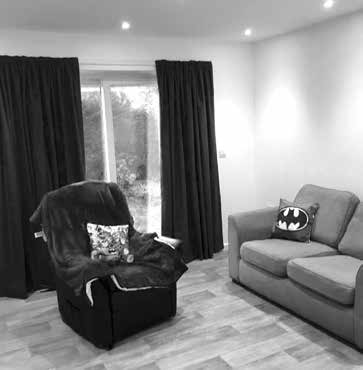
Twitter, as everyone who uses it knows, is a cesspit: a place to get shouted at by strangers and fight off anonymous trolls. So imagine my surprise when my jokey little tweet set off an enormous wave of love, pride and the very best in humanity.

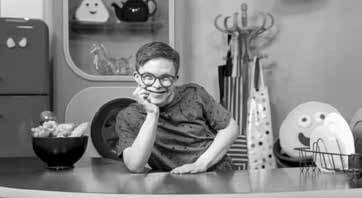
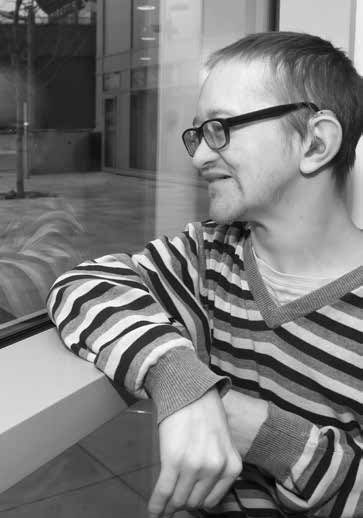
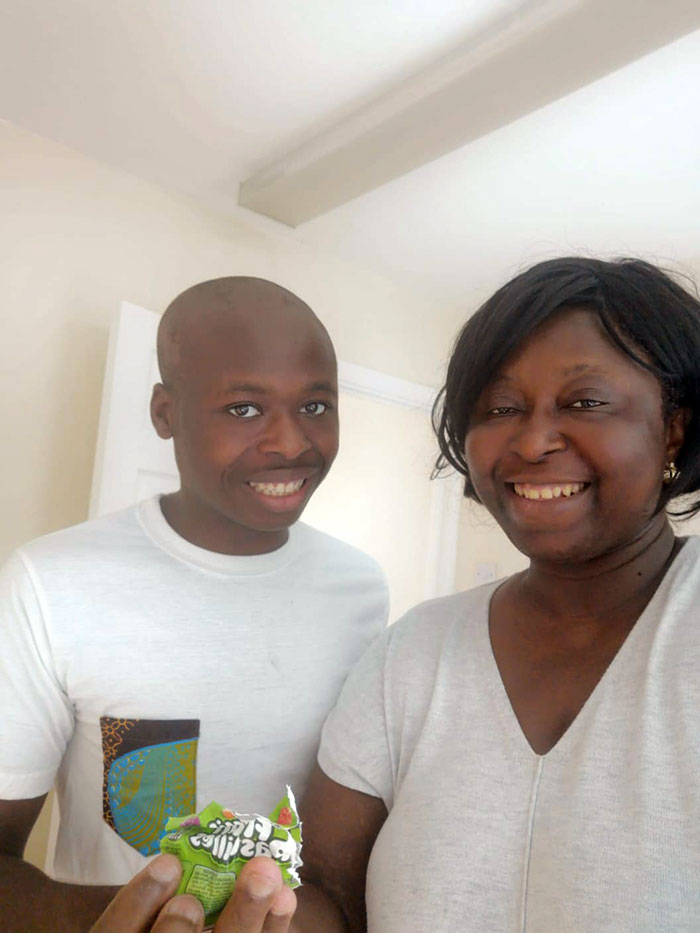
It was New Year’s Day. I was lying on the sofa with my 24-year-old son, Joey, and we were giggling at one of our routine jokes. I took a few selfies of us having a cuddle, was pleased with one of them and tweeted it out with the simple, ironic message: “So terrible being the dad of a learning-disabled young man.”

I thought nothing more of it until I returned to my phone and saw a steady stream of notifications: likes, comments and retweets.


Happy, ordinary things

I was especially struck by the hundreds of pictures pouring in of families with a learning-disabled relative doing happy, ordinary things – climbing mountains or walking on a beach, bouncing on trampolines and posing in Christmas pyjamas – all laughing, smiling and having infectious, glorious fun.

Each carried its own pithy little message of mock gloom: “Another day of misery”, “Awful sadness”, “Such dreadful hell” and so on. I replied to each one with mock sympathy: “Oh how awful”, “So grim”, “Thoughts and prayers”, and suchlike. For three frantic hours on Friday evening, I could hardly keep up. And, when I woke up on Saturday, it was still going strong. By Monday morning, I was on the Today programme on Radio 4 talking about what had happened and what I thought it meant. It was clear that Joey and I had struck a chord. Because families of learning-disabled children are so often made to feel that their situation is deeply tragic, my tweet, I believe, encouraged them to show that they don’t just love their child to the moon and back – their child has taught them more about life, love and laughter than outsiders might expect. And they wanted to express that publicly.

Joey, my second son, has severe learning disabilities and intractable (if medically managed) epilepsy. He has no speech and communicates with a limited vocabulary of simple Makaton signs, pointing fingers and a golden smile. He’s an endearing young man (I would say that, wouldn’t I?) who, for the most part, brings out the best in people. But he requires constant care to manage the simplest of tasks. His learning disabilities are not to be underestimated. When he was young, the suggestion was sometimes made that Joey must be a “sadness” to us. We constantly encountered tilted, concerned faces of – dare I say it? – somewhat manufactured sympathy, especially from people whose job it was to manage his future. In the process, we discovered that the only way to get him what he needed was to emphasise in the endless paperwork just how “bad” he was at everything – a failure and a danger to himself and others.

Parents revel in their children’s achievements, but those of us with learning-disabled children are forced to do the opposite – focus on the things they’re not good at and share, in crushing detail, our anxieties about their future. The struggle for Joey tore chunks out of us and such continuous negativity can be soul destroying.


Creative anarchy

What is forgotten is just how creative, enjoyable and splendidly anarchic sharing a life with a learning-disabled person can be. Joey has had a hugely positive impact on our family. I could not be prouder of the influence he has had on his elder brother, Laurie, and younger half-sister, Bea, who are much kinder, more intuitive and empathetic than I ever was in my youth. Clever as they are, they know that some things are more important than being brainy. Loving Joey is the easy bit. He’s no tragedy. It’s fighting for his future that hurts.

Parents of learning-disabled kids fight like Trojans to get our children what they deserve. But we’d gladly lay our weapons down if we could. We are driven by love –nothing else. There are challenges, frustrations and griefs to navigate. But raising a learning-disabled child really isn’t an unremitting tragedy. A particular mixture of pragmatic acceptance, raucous laughter and undying love rings through our houses.

This Twitter storm demonstrated that families don’t need “thoughts and prayers”. What we’re asking for is inclusion in all aspects of life and practical, high-quality and easily accessed support. Above all, we want society to embrace our kids as equals. As Joey’s then six-year-old sister once said to a friend alarmed by his lack of spoken language: “You don’t have to be scared of Joey. He’s just disabled.”

This life-affirming stream of beautiful photographs showed me that thousands of families with learning-disabled children are determined to bear witness to the unquenchable, overflowing love they feel for their children, however different, however ignored, however misunderstood. It’s just possible that the big-hearted and defiant response to my jokey little tweet suggests that things might change.

It’s a moment of hope.

The injustice around care charges

A discussion about controlling money was overtaken by anger over unfairness and opacity around care charges after a court case highlighted the discrimination at the heart of how charges are applied, say Tim Keilty and Katie Clarke

No idea how much they’ve got, not much control over what they spend it on but supported by people to make a budget plan. When you are not in control, anyone can assume that control and they do, writes Tim Keilty.

The original idea for this article was a discussion around the concept of money and control, exploring the everyday lack of control people with a learning disability experience on money matters and money as a quality of life issue. This covers issues from money in hand to care charges and the role of appointees and deputies. Then we were overtaken by events. A growing movement of people became angry, dismayed and galvanised by the injustice of care charges. A court ruling that Norfolk County Council was overcharging many people with disabilities for their care (Tackling unfair charging issues, summer 2021) starkly set out the discrimination at the heart of charging policy and galvanised people well beyond Norfolk.

Stories emerged of personal independence payments being immediately swallowed up by local authorities to pay for care and of financial assessments being carried out by councils without even speaking to the person. Some of this went on under the cloud of Covid. There were stories of people cancelling their support because they ended up having to pay for it all. People were pushed into genuine hardship and poverty by the state, local and national. These stories have had huge personal costs (see case study opposite).


Perfect storm

People really are caught in a perfect storm – support being cut, withdrawn or denied from the outset, benefits being frozen and, if you do get support, you pay higher charges for reduced services out of a smaller personal pot. It’s such a perfect storm that you would almost think it was designed that way. I feel like a fraud writing this. I fully intended to play a major coordinating part in a new campaign but, thankfully, there were already people much more committed and organised ready to do it.

For a couple of months, I’d been part of Zoom conversations with Sally Warren from Paradigm, Sue Deeley and Julie Smith from Getta Life, family carer Liz Wilson and Sue Livett of the Aldingbourne Trust. It felt as if these clandestine Zoom meetings were happening all over the country.

Sally Warren of Paradigm, joined by Katie Clarke, enlisted the help of In Control and Be Human and the first of a series of much bigger Zoom conversations ensued.


The kick-off conversation

Sally and I have known each other for many years. I had heard she too had been listening to stories from disabled people, writes Katie Clarke.

We decided we needed to get in touch with our friends at In Control as there was a real need to bring people together. We needed to join the many dots and show support to those who were individually campaigning and challenging. We had to connect with the disability-led organisations around the country who had already taken on these issues and who as parents we could learn from. We also had to learn from the giants on whose shoulders we stand, such as those in Inclusion London, Disabled People Against the Cuts and many more.

If you are on benefits and have enough in the bank but have to keep spending to stay under a threshold of savings so your payments aren’t cut, how does that happen and what does that say about life? Tim Keilty will examine this in a future issue


Don’t feel isolated – get involved

Any families or individuals in this situation – you are not on your own. Others are going through this and there are ways to keep in touch:

  • Facebook: Giselle Hoad has set up a group called Adult Social Care Warriors: https://tinyurl.com/4v3dc3h4
  • Fill in the Social Care Futures ‘Charges for social care and cuts to provision during the coronavirus pandemic?’ survey if you haven’t already: https://tinyurl.com/94r3y6ar
  • Follow the campaign on Twitter: https://twitter.com/JrMonitoring
  • Sign up to Inclusion London’s campaign, Scrap Social Care Charging: https://tinyurl.com/3dxsbscx and follow In Control (https://in-control.org.uk/) for updates.

There is a groundswell of local action – get organised, talk, collaborate, campaign. If you want to get updates via email, contact katie@bringingustogether.org.uk who will add you to the ever-growing list.


Katie Clarke is a parent of six children in their 20s. She has been working to make a difference, and listening to parents’ and disabled people’s stories for more than 25 years. She has set up many projects and organisations and continues to work at both grassroots and strategic levels; Tim Keilty works for New Prospects Association in the north east. He is a fellow of the Centre for Welfare Reform and a paid supporter representative for Learning Disability England

Further reading
Duffy S (2014) Counting the Cuts. Centre for Welfare Reform. https://tinyurl.com/a8zzaazy


Shameful cost hikes brought in under cloudy rules

We were facing the unknown during the first month in lockdown. Many of us had stopped having personal assistants coming into the home, writes Katie Clarke. We felt flooded with the amount of guidance coming out, and fear over the frailty score that affected many of us and put disabled people into the vulnerable category. We were swamped with news briefings and the daily death count.

We were facing the unknown during the first month in lockdown. Many of us had stopped having personal assistants coming into the home, writes Katie Clarke. We felt flooded with the amount of guidance coming out, and fear over the frailty score that affected many of us and put disabled people into the vulnerable category. We were swamped with news briefings and the daily death count.

We had little further contact with social services until 3 February this year when into my daughter’s email inbox came a harshly worded email from the adult social care charging team, saying she was due to pay an rise in charges from £15 a week to £68. A 400% increase. It was poor social care practice and showed few if any social care values.

I was appalled by what I felt was immoral, unfair and unethical so I posted on Facebook and received around 100 comments. I got a similar number on our Bringing Us Together Facebook group. I couldn’t believe this was happening around the country. Comments included:

“Our situation is different as residential care but he has all but £25/week of his universal credit taken from him by the local authority.”

“I just want to say that we all understand that adult social care is seriously undervalued and underfunded, we know LAs are struggling with their budgets, BUT it should not be down to the people that need the service to fund it! People have a fundamental human right to enjoy their possessions and that includes their money. They have already been assessed as needing those benefits/ funds and it shouldn’t be taken off them! Shame on you local authorities!”

“In essence, there is no transparency, rhyme or reason how each sum is calculated. It does appear that, sadly, the more support required, the more you pay. Are they blaming a human being for having a disability?”

“It seems when young people go onto PIP [personal independence payments] the LA are increasing charges one parent said by £79 per week.”

We heard stories of people giving up their care as they were unable to afford to feed themselves. The comments kept coming. This is a time for not being invisible, for us all to be supporting one another, sharing information which is power, sharing campaigns from areas and organisations via social media and for us to get the message out that we are stronger together. Enough is enough.

People we speak to in local authorities do not want to do this. They are faced with unprecedented cuts by central government – but they are playing along. Each council has its own cloudy rules, often wildly different from those of the one next door. Here’s a little story about how surreal it all is. Mary Smith (not her real name) is challenging her care charge and has collected evidence of her disability-related expenditure. She needs to use a particular brand of wipes and shower gel for her personal care.

A panel of senior managers in her local authority meet to discuss, among other things, her care charge challenge. They decide the wipes are a disability-related expenditure, but the shower gel isn’t.


At the front of the queue for once

When you just can’t wait for your vaccine, Richard Dawkins fails to explain his logic over disabled children and everyone gets a sporting chance, says Simon Jarrett

A neighbour of mine has an adult son with a severe learning disability, who was called for his vaccine recently. He was happy to go but one of the things he doesn’t do is wait or join queues. When he arrived at the vaccination centre, he bounded to the front of the queue, sleeve rolled up ready for his jab. The staff very quietly and calmly guided him straight to a vaccinator who jabbed him and he was out within minutes. No one in the queue objected. The neighbour, who is a volunteer at another vaccination centre, tells me they have all been given guidance on how to deal with situations like this. Wonderful.

Reasonable adaptations – not so hard once we all think about it a bit, eh?


The unreasonable man of reason

There is a marvellous clip circulating on social media of Irish radio presenter Brendan O’Connor taking apart scientist Richard Dawkins for his comments about Down syndrome.

In a notorious Twitter exchange, Dawkins had been asked by a woman about the ethical dilemma she would face if she found out her unborn child would have Down syndrome. Dawkins’ reply was: “Abort it and try again. It would be immoral to bring it into the world if you have the choice.” In the interview, O’Connor, who has a child with Down syndrome, calmly asks Dawkins, as a man who prides himself as a voice of reason and logic, for the scientific reasoning for his belief it is “immoral” to bring a disabled child into the world.

In the interview, O’Connor, who has a child with Down syndrome, calmly asks Dawkins, as a man who prides himself as a voice of reason and logic, for the scientific reasoning for his belief it is “immoral” to bring a disabled child into the world.

“I’m not having an emotional discussion with you here – I’m simply trying to have a logical discussion.” Priceless. Watch on Facebook at https://tinyurl.com/y74szc2b.


Confirming your beliefs

Once, during a medical check-up, I was involved in a comical sequence of events after thinking that the doctor had asked me to do a hearing test when in fact he had asked me to do a urine test.  It ended with me on the wrong side of a toilet door holding a specimen jar to my ear, thinking that the doctor wanted to test my hearing by shouting through the door while each ear was covered in turn by the jar. I recount this event only to make the point that what psychologists call confirmation bias is extremely powerful.

Once we form a belief about something, it becomes very hard for any amount of reason, logic or evidence to shift it. People like Dawkins, who present themselves as apostles of objective scientific evidence, are just as prone to it as anyone else. Dawkins has got it into his head that babies with Down syndrome bring suffering into the world and nothing will shift the great rationalist in his irrational belief.


Maul or fall?

I spend an afternoon in an online meeting with the sportswomen and men of International Mixed Ability Sports (see pages 16-17 for more about them). Most of the group have learning disabilities and their involvement in mixed ability sport (with no compromise over the rules) gives them a terrific sense of camaraderie, sustained by Zoom meetings during lockdown.

When we meet, a large rugby player introduces himself to me as “Paul the Maul”. “More like Paul the Fall,” heckles one of his fellow players. His return to the rugby field is imminent, so we will soon know whether he mauls or falls. Either way, I suspect he’ll have a great time.

Lockdown brings opportunities, vegetarians feel isolated and a major lifestyle influence is neglected

Pandemic restrictions have unexpected results on positive behavioural support, flexibility is the main plus of personal budgets, vegetarians are a minority within a minority and where people live is neglected in research. Simon Jarrett looks at some intriguing studies

A surprising pandemic effect

Murray GC, McKenzie K, Martin R, Murray A. The impact of COVID-19 restrictions in the United Kingdom on the positive behavioural support of people with an intellectual disability. British Journal of Learning Disabilities 49(2):138-144. https://onlinelibrary.wiley.com/doi/10.1111/bld.12379

It has been assumed that the Covid-19 pandemic and the restrictions associated with it would have a negative impact on positive behavioural support (PBS) for people with learning disabilities. However, an online survey of 58 staff who had recently completed a PBS programme revealed a rather different picture. Apart from the obvious restrictions on activities that lockdown imposed on the whole population, the interviewees reported that there had generally been a neutral and sometimes a positive effect on their support for people.

Many staff developed creative solutions for providing support. They were able to spend more good-quality time with individuals, and offered support and reassurance over the phone. They became more flexible in supporting people to become more settled and retain their quality of life, even if things had changed because of pandemic restrictions.

Respondents also felt that the person they were supporting had opportunities to make choices and learn new skills. Some felt they had thought and reflected differently on “behaviours”, leading to a better understanding of how changes affected people and how to support them to cope with changes in routine.


Drawbacks and benefits of personal budgets for carers

Turnpenny A, Rand S, Whelton B, Beadle Brown J, Babaian J (2021) Family carers managing personal budgets for adults with learning disabilities or autism. British Journal of Learning Disabilities 49(1):52-61.  https://onlinelibrary.wiley.com/doi/10.1111/bld.12348

While a rising number of people with learning disabilities are accessing personal budgets in the form of direct payments in England, these budgets are often managed by someone else, typically a parent. The authors interviewed 13 family carers who manage personal budgets about their experience of setting up and managing payments for their relative with a particular focus on issues around securing suitable support and the implications for their own wellbeing.

Interviewees reported positive outcomes for themselves, such as being able to stay in employment and achieving a better work-life balance and family life. They identified difficulties in managing the dual role of professional and family carer and found they needed resilience and determination to manage the complexities of the system. Motivations for establishing direct payments included more choice and control over the delivery of support, more flexibility than traditional services and better continuity and consistency of care. There were, however, constraints on both how budgets could be spent and what was available in local areas.

Overall, flexibility was cited as a big plus, because it allowed arrangements to be less formal and more responsive.


Minority vegetarians

Bates C (2021) “I heard about the way the animals are treated and slaughtered, and I don’t like it”– attitudes of vegetarians or vegans who have learning disabilities. British Journal of Learning Disabilities, 49(1):62-71.  https://onlinelibrary.wiley.com/doi/10.1111/bld.12343

Pig out: concern about animal welfare is the main reason why people with learning disabilities become vegetarian or vegan, but they feel inhibited about discussing this with others

This research is based on interviews with eight people with learning disabilities who are vegetarian or vegan. Their over-riding reason for not eating meat was concern over animal welfare. They cared passionately about the welfare of animals. They often found themselves in a minority among other people with learning disabilities and felt inhibited about advocating their lifestyle to others.

One interviewee felt people with learning disabilities were often patronised and not exposed to the same information as the rest of the population. Most were reluctant to push their views, citing discomfort with advocating animal rights to others. Health was also cited as a factor in people’s eating choices, with interviewees saying that they wished to avoid hazards they associated with meat eating such as weight gain and certain cancers.

The author concludes that, in their diet choices, people with learning disabilities are often seen as homogenous rather than having a multiplicity of viewpoints. Vegetarianism and veganism can offer people the chance to integrate into mainstream organisations where their views are shared but this will only happen if such organisations are inclusive.


It matters where you live

Wark S (2020) Does intellectual disability research consider the potential impact of geographic location? Journal of intellectual and Developmental Disability 43:3:363-369.  https://doi.org/10.3109/13668250.2017.1310826. Also in: Clegg J (ed) (2019) New Lenses on Intellectual Disabilities. Routledge

Studies often omit whether someone lives in an urban or a rural area or even in which country

This paper considers a point that seems obvious once highlighted but is often overlooked: the tendency of researchers not to consider geographical location as a factor in their findings. The paper makes its point well. Half of the research examined in this literature review did not give any information about geographical location of participants at all, sometimes not even identifying the country in which they lived.

Given the socioeconomic disadvantages within many rural areas and the large disparities in lifestyle and access to facilities between urban and rural settings, this is surely a major omission, the authors argue. Not taking geographical location into account in research can lead to important factors being disregarded. For example, people living in very isolated areas may have no alternatives to the services they use, staff may have little access to training, and public transport systems may be limited or nonexistent.

The absence of geographical information in many studies masks both a reliance on research carried out in built-up metropolitan areas and an assumption that most people live in such areas. The authors recommend protocols for the inclusion and consideration of geographical data in all research.


‘We lost both people we support and staff. We had to find scarce PPE and deal with ever-changing guidance’

Edel Harris became Mencap chief executive at the start of the pandemic. Amid dealing with this sudden turmoil, she organised a restructuring and a strategic plan, she tells Seán Kelly

Edel Harris, Mencap

Fancy a challenge? Try this for size: you start as Mencap’s new chief executive in early 2020, just two months before the UK’s first lockdown, and face all the difficulties of the pandemic in an organisation you are just getting to know. Not enough? Alright. Let’s throw in a complete management restructuring of the organisation and a new strategic plan in the first year.

“It’s been quite incredible,” she says.  “I am really, really, proud of Mencap when I look back over the last 12 months – first and foremost in terms of the personal support services that we have continued to provide all through the pandemic. “We have lost people we support and we have lost some colleagues to Covid. We had to source essential PPE when stocks were limited. We had to deal with ever-changing guidance in the first few months.”

Colleagues have had to make great sacrifices, she says, “but they have been creative and brought joy to the people that they support”. Mencap has clearly had a good public profile during the pandemic and Harris is proud of its campaigning and lobbying of the government. “For example, when the NICE [National Institute of Health and Care Excellence] clinical guidelines were produced and, in our view, conflated having support needs with clinical frailty, we were right on that one and got that changed,” she says. Harris feels Covid catapulted her into fast-tracking relationships with ministers and senior civil servants. “I have been really pleased at how accessible some ministers and senior people have been. I would say that the care minister and even the cabinet secretary for health and social care have needed us. And I don’t mean Mencap necessarily – I mean third sector organisations like us – almost as much as we have needed them”

I ask about her route to Mencap and Harris tells me her first job was a police officer; she spent 11 years with the Metropolitan Police. “Even then, I was much better suited to the social side of policing. I specialised in child protection and wasn’t quite so good at catching the bad guys,” she says with a smile. “I suppose I always had a leaning towards more social issues such as equality and poverty.” After her five-year-old son was diagnosed with fragile X syndrome and a learning disability, Harris gave up work for a while and moved to Scotland to be near to her husband’s family. During this time she studied for an Open University degree in health and social care and took a particular interest in the learning disability module.

Following that, Harris worked for the NHS in public health, before moving to Aberdeen Foyer, a homelessness charity, as deputy chief executive. In 2008, she became chief executive of Cornerstone Community Care, which offers support across Scotland to people with learning and/or physical disabilities, among others. Harris stayed at Cornerstone until late in 2019. On arriving at Mencap, she found “a very values-driven charity, focused on delivering the charity purpose, and concentrating always on people with a learning disability” However, she adds, there were “also some things, as you would expect, that I felt could be improved”.

In her first year, she implemented a new organisational structure based on five directorates. Harris says that rather than a traditional hierarchy, the new structure can be visualised as a wheel. I nod sagely (well, it sounds good to me…). Our Big Plan was developed with people with a learning disability and their families as well as organisational partners. Harris says that the plan focuses less on what Mencap will do and more on supporting people and communities to develop their own capabilities. Mencap’s overarching vision is for the UK to be “the best place to live in the world if you have a learning disability”. It has set four overarching priorities (see box). Harris adds that the plan is all about achieving that vision and being “a better partner, a better collaborator” That is interesting, I say, because sometimes Mencap has been seen as a little aloof, claiming to be “the voice of learning disability” while not always working with others.

Harris acknowledges she has heard such things, although “there have been wonderful partnerships in the past”. She adds that “there is a huge emphasis on partnership working, collaboration and supporting people and other organisations” in the new plan. Mencap has dropped the “voice of learning disability” strapline although it will take a while for it to be removed from everything, she says: “It is painted on the front of our office in London – and taking that down is obviously not a small job. But you won’t see us using it going forward.” I ask whether she considers Mencap to be a service provider that campaigns or a campaigning organisation that provides services. Her ready answer – that service provision and  campaigning both inform and strengthen the other – clearly shows she has been asked this before.

The plan describes service provision as one of Mencap’s five “levers”. The others are: campaigning and lobbying; information and advice; research; and community-led delivery, which concerns “supporting people to find solutions in their own communities”, she says. Without giving much away, Harris says that “the balance between those five levers might shift over time”

I wonder whether Mencap could do more to help people with profound and multiple learning disabilities, who are often excluded even within the learning disability world. Harris says: “We make every effort to involve people with a more profound learning disability in our activity but, if we find it challenging, then you can understand how society does. But you can’t say: ‘It’s difficult so we’re not going to do it’. “We have to use every skill, every talent, every communication method, every engagement tool that we have at our disposal to make sure people with more profound disabilities are heard and that they lead the lives that they want to lead. I don’t think we’ll stop trying in that regard.”


Court case on overnight wages

Mencap recently won a court case which means that employers do not have to pay the minimum wage to staff doing sleep-in cover and can pay a lower sleep-in rate. Did Mencap’s stance damage its relationship with its own staff? Harris tells me she understands the disappointment many staff felt at the court result. Although it won the case, Mencap pays staff providing sleep-ins (or, as Mencap prefers to say, “overnight support”) on minimum wage rates.

However, she admits to being relieved that Mencap does not now face a £15 million bill in back pay, adding: “Remember, this wasn’t money that we ever had in the first place.” Mencap is working with trade union Unison “to call for a proper workforce strategy that values people who do this most important work”. It is also calling on the Low Pay Commission to review pay for overnight support. For the future, Mencap remains committed to its improved rates of pay: “We are not going to go back to paying a flat rate for overnight support,” Harris says.


Death in Mencap’s care

I feel I have to raise the sad death of Danny Tozer, who passed away while in Mencap’s care. While an inquest in 2018 cleared Mencap of any responsibility for his death, the coroner said the quality of communication with Danny’s family was not satisfactory.

Mencap has continued to receive public criticism for the combative approach of its lawyers at the inquest and, apparently, for failing to make direct contact with Danny’s family. All this happened well before Harris was in post but I ask her what lessons she has learnt and whether she has been able to reach out to the Tozer family. She replies that of course lessons are learned “when an organisation and people who work within that organisation go through such a traumatic event”. But she is not willing to say much more: “I don’t think it is appropriate to speak to anyone about Danny and his life and his death or, indeed, talk to anyone about what contact I may or may not have had with Mr and Mrs Tozer because it is a very private family matter, and I would only do that with the family’s consent. “When we still hear people criticising us, all I will say is they don’t know what has or hasn’t happened since I have been in post.”

I am left with the feeling – which of course I cannot substantiate – that Harris may have been able to reach out to the family and make a better connection. On a happier note, I mention I recently interviewed Katie Price, whose son Harvey is now a Mencap ambassador  (page 14). “He’s a brilliant young man, isn’t he? And the recent documentary exposed learning disability in a positive way to a much wider audience. So yes, we are grateful to him coming on board.” After that, it is time for me to wish Harris a successful and more settled year, in which hopefully she can meet more of her colleagues face to face rather than just screen to screen.

Whatever happened to policy?

Policy doesn’t guarantee action but, without it, where are the reference points, the drive, the ambition? Jan Walmsley looks at 50 years of strategies for people with learning disability

It is half a century since the white paper Better Services for the Mentally Handicapped was published in 1971. It is timely to reflect on how policy has changed in that time. Many readers will know that Better Services (Cmnd 4683) was a response to the scandal of Ely Hospital in Cardiff, where a whistleblower revealed the widespread abuse there to the News of the World newspaper. Governments then could be shamed into action in ways that have the whiff of a bygone era. It is a modest-looking publication, A5 in size, and no illustrations other than statistical tables.

Its publication is remembered as the beginning of the end for long-stay hospitals as the preferred form of care for people with learning disabilities. It did not commit to their demise, but it did state that “mentally handicapped children and adults should not be segregated unnecessarily from other people of similar age, nor from the general life of the local community” (paragraph 40(ii)). Its main prescriptions were for accommodation to be provided in the community, for training centres to be set up and for local authorities, not the NHS, to be the lead agencies. Of course, these ideas are outmoded.

We now regard training centres as yet another way of segregating people, and the community units were mainly hostels housing 20 or more people. But it had some merits. It acknowledged “present services… are a far cry from our current ideals” (paragraph 193) and was a thorough attempt to document what was needed to fill the gaps in provision. Hence table 5 gave a comparison of what was being provided with what was required. For example, in 1969, there were 4,300 residential care places, and it was reckoned that 29,400 were needed. There was a timetable for meeting those needs and cost estimates – what we might now call targets.

Inevitably, the targets were missed but they did set in train a major expansion of local authority residential and daytime provision to the extent that, by the 1980s, almost every council had such facilities. And, gradually, the hospitals did begin to wind down.


Valuing People: a new dawn

Its successor white paper, Valuing People, came out in 2001 – it is now its 20th anniversary. In contrast to Better Services, this white paper was prompted not by scandal but (I’m guessing here) by a group of advocates successfully lobbying a new minister, John Hutton, to make his name by sponsoring a strategy for learning disability.

It felt at the time like a new dawn. It was the first policy to be co-produced with self-advocates and carers, had an easy-read version and could not look more different from Better Services: smiling people on the front cover, large print, its principles – rights, independence, choice, inclusion loudly trumpeted. And yet… although its principles stand out (you can’t miss them) its aims were far less prescriptive than those in its earlier counterpart. It is surprisingly devoid of statistics. There are few targets and those that are there seem vaguely
worded and hard to measure.

The most concrete commitment was to close NHS long-stay hospitals by 2004. In fact, that took until 2010, and some would say it has still not been fully achieved (see Impossible to improve, spring 2021). It introduced partnership boards, funded advocacy and self-advocacy – for a time. Perhaps its most lasting legacy, boosted by a revamp in 2009 with Valuing People Now, was the dismantling of the hostels and day centres set up by its predecessor in favour of community inclusion. Is it a measure of its failure that the proportion of people in paid work has fallen in the 21st century to a shameful 6%, despite employment being one of its main aspirations?


England’s policy vacuum

And what of policy now? Try googling “learning disability policy England” and what comes up is the NHS Learning Disability and Autism programme – a follow up to Transforming Care.

Given that one of the major commitments in 1971 was to place local authorities in the driving seat, it seems extraordinary that the only relic of learning disability policy since Valuing People lapsed resides in the NHS. Don’t get me wrong. The pandemic has shown how important it is to get healthcare right and there is a long way to go. But learning disability is not an illness, and people with learning disabilities need a lot more than healthcare to achieve good lives. In contrast, Wales has a five-year learning disability strategy running until 2024 with three priorities – health and wellbeing, employment and education (www.ldw.org.uk/about-us/strategic-plan). Scotland has The Keys to Life strategy,
launched in 2013, reviewed and revamped since (https://keystolife.info).

Now, I am old enough to know a policy does not guarantee change. But, without one, where are the reference points, the drive, the ambition? It is time to push the English government
to put this right – and commit to a learning disability policy fit for the mid 21st century.

A life in dance

Creative use of direct payments can give someone control to make their life an extraordinary one. Sue Blackwell recounts the dance journey of her daughter Jen

Jen Blackwell is a dancer on a mission. But her journey has been far from straightforward.

Jen, 39, happens to have Down syndrome. She is the founder, director and queen of the charity DanceSyndrome. At the age of 21, Jen threw down the challenge to her parents and society: “I live for dance. I have the right to a life of my choosing. My future lies in dance.” Dance courses through Jen’s veins, oozes from her pores, impacts every aspect of life. She is determined to share the fun, the joy, the happiness and the resultant wellbeing of mind, body and soul. And to travel the world with her dance. How to achieve?

Direct payments have been pivotal in achieving this dream. Personalisation has long been with us, with policy strategies aiming to put people at the centre of decisions about their lives. Jen has to be immersed in dance. Dance is fundamental to meeting her needs. Over the years, she has become more able to understand and express what is key to her wellbeing. This includes leadership, participation, dance she can choose to embrace – including up-tempo street as well as aesthetic contemporary and ballet – creating and performing choreography, and working alongside other dancers with and without learning disabilities.

Being listened to and believed in, having advocates fight her corner and exploring opportunities with appropriate support have all been part of the journey. Perhaps most importantly, her body language has been given a voice. This is personalisation. Positive, vibrant, thriving and living a life of her choosing – these words aren’t always associated with people with learning disabilities. Neither is feeling on top of the world nor being almost permanently wreathed in smiles. But this is Jen’s life where learning disability, dance, leadership and inclusion belong side by side every minute of every day. The busier Jen is, the happier, more fulfilled and more confident she is. She loves being in demand, in control of her life and living her dream. Jen is sought out as a performer and workshop leader, and contributes to conferences, training, university seminars and webinars.

Jen Blackwell: “The best thing of all is friendship. Before DanceSyndrome, I had never experienced people who value me for who I am”

She has won numerous awards. Most recently, she was made a judge for the Shaw Trust Disability Power 100, having been a winner in the previous three years. Thanks to reasonable adjustments, Jen has been totally engaged, feeling valued and respected and able to express her opinions, and also felt listened to. With her direct payments used flexibly and creatively, Jen’s assessed needs are met and she can choose which carers she works with. She has to dance at least twice a day. Jen needs dedicated, empathetic support in all areas of her life and real, meaningful interaction with others through dance. She needs a place she calls home where she is secure and her personality can shine through. As a housing association tenant, she holds the keys to her own front door. She is a valued member of her community, coming and going as her busy life demands. Her hobbies include playing her flute with her “flute monkey mate” (skilled, dedicated flute support), playing in two musical groups and karate.

Life is never without challenges; there will always be

Jen meets singer Alexandra Burke on the National Lottery TV show

bumps in the road. When nothing seems to make sense or when Jen is behaving out of character, the duty lies with Jen’s carers and friends to determine, understand and unravel the cause. Jen is the best teacher we will ever have. We have learnt the problem isn’t Jen’s learning disability – that’s just a part of her makeup. If Jen was denied the opportunity to live her life through dance, this story would not exist. She would be just another statistic sitting in a day centre or isolated at home, bored, obese, lacking identity or purpose and inevitably becoming a significant drain on the public purse. Statistics suggest her life would be 20 years shorter than the lives of her non-disabled peers.

With the support of her parents, Jen set up DanceSyndrome in 2009, which became an inclusive dance charity led by dancers with learning disabilities in 2013. It has enhanced the lives of countless people. I am incredulous at Jen’s life. I am so proud of her focus, thrilled her passion is benefiting others and delighted she now has the joy of meaningful friendship.

All on the same team

People with and without disabilities and others who face barriers to taking part in sports can play together under standard rules thanks to a global charity, says Kelly Heathcote

Mixed ability sports enables disabled players, along with others experiencing barriers to taking part, to be included as equal members in community sport clubs. International Mixed Ability Sports (IMAS) works with national and international partners across sports, education, advocacy and healthcare to promote social inclusion and break down prejudices, barriers and preconceptions

We carry out activities and projects for the benefit of the community. Our main beneficiaries are:
● Adults and children with learning and/ or physical disabilities and those on the autism spectrum
● Adults who have retired from or no longer participate in regular physical activities
● People facing a wide range of barriers to participation in sport
● Sporting groups who want to increase participation from disabled people
● Coaches, trainers, teachers and volunteer facilitators who are interested in promoting social inclusion
● Sports clubs seeking to become more inclusive and/or build their memberships.

The IMAS trainers who run our education sessions, co-write our presentations and coordinate our activities have all personally experienced barriers to taking part in sport. Many of our team members live with a learning disability and enjoy being able to share their journey with other people who face similar barriers or want to become a champion to drive change in grassroots sports to improve inclusion.

Tom Beattie could not play rugby with his brother until he joined the mixed ability club because disabled and non-disabled people are normally segregated in sports


The beginnings

The IMAS journey started with Anthony Brooke, who has cerebral palsy and learning difficulties, who was unhappy with the alternative rugby provision available to him. He was prevented from playing the full contact version of rugby he loved because of perceived risks. “They would not let me play, they thought I would get hurt,” he says. “Of course we get hurt – it’s part of the game.” Through an educational class, he was able to establish the Bumble Bees, England’s first mixed ability rugby team.

As the team gained more players with and without disabilities, the Bumble Bees’ managers realised that there was a demand for mixed ability sport and IMAS was set up and registered as a community interest company in 2014. IMAS began to build networks across the rugby world and attracted the attention of England Rugby. The formation of the Bumble Bees rugby team, combined with the passion of IMAS founders Martino Corazza and Mark Goodwin, created the ideal conditions for the world’s first International Mixed Ability Rugby Tournament, which was held in 2015 in Yorkshire.

The event was attended by more than 500 players with and without disabilities from 12 countries and was endorsed by the UK sports minister. Following the success of this tournament and the next one, held in 2017 in Vitoria-Gasteiz in Spain, a third event is planned to take place in 2022 in Cork in Ireland. We would love to tell you more but, as they say, what happens on a mixed ability rugby tour stays on a mixed ability rugby tour…

Team equality: the Bumble Bees playing against the Keighley Stags, a local non-disabled side – Mark “Gooders” Goodwin claims the ball in front of Ahsan Sakandar (yellow hat)

Same rules

Mixed ability sports follow the same rules and regulations as mainstream sports with no adaptations and only minor adjustments to take into account individual participant needs. Mixed ability is not a disability sports provision – it is open to everyone. It is an important offer for any club as having everyone play together promotes inclusion. It allows friends and family to play in the same team with no one segregated into a disability-specific team or graded into a Paralympic classification.

Our IMAS trainers have shared some of their views on IMAS and mixed ability sports:

“IMAS turns things upside down, showing how people can learn lessons from those with intellectual and physical disabilities.” Dr Mark Purvis

“It gives us a place to tell our stories and listen to others.” Rupert Spode

“It’s a place where our voices can be heard.” Mason Faulkner

“We are a group of experts by experience.” Rachel Barrett

“We get our message out through presentations and on the pitch.” Paul (the Maul) Whyat


More sports join in

There are now many mixed ability rugby teams across the UK and the world, and IMAS has expanded beyond rugby into other sports including boxing, cricket, swimming, rowing and football. We continue to look for new opportunities in new countries and sports to enable greater participation for everyone worldwide.

Helen Howes, a mixed ability swimming coach who has multiple sclerosis, is a great example of a champion for inclusion. She came along to one of our educational sessions, asked whether IMAS had any mixed ability swimming sessions and, when she found out there were none, set up sessions in her local pool. These were going from strength to strength before the pandemic hit. Howes has some great stories to tell of the progress her class has made, with one participant moving from having very little confidence and staying at the edge of the pool in the shallow end to now being able to swim a length. These amazing achievements are possible through mixed ability sports.

The pandemic has had a major impact on sports and physical activity across the UK, with lockdowns forcing many clubs to stop training, change their rules to limit contact and reduce the social interaction between players as much as possible. This has meant that, for the past 18 months, our community clubs have been hit hard and many may struggle to survive. IMAS wants to support these clubs to “build back fairer” and is working with clubs to provide mixed ability training, continued support and mixed ability accreditation. This should help them to reach out into their communities and increase their membership by looking beyond their usual area and extend their arms around people who have faced barriers to participation for any reason. These will include players with learning disabilities who, perhaps, have been shielding for a long time or are feeling concerned and scared about returning to life as we knew it.

While physical activity and social contact have been difficult to continue through some parts of the pandemic, our IMAS trainers have shared their stories of how lockdowns affected them and what they did to try to improve their situation. The videos can be found on our the IMAS YouTube channel at https://tinyurl.com/4kvzv77z

One of these stories highlights Tom Beattie, who was really struggling without his regular physical activity and social contact through rugby. He was introduced to mixed ability when he moved to Yorkshire and was delighted to be able to play rugby with his brother, which had never been possible in his previous clubs because his brother did not have a disability so was kept separated from him. Without his rugby, Beattie found both his mental and physical health were suffering so he had to find new ways to keep active. These included walking along the canal near his home, taking part in online exercise activities and continuing his classes with IMAS via the internet throughout multiple lockdowns.

Rupert Spode, another IMAS trainer, also found the multiple lockdowns hard and was pleased he was able to keep up to date with his friends at IMAS through class calls every Wednesday. He also took up photography and cooking to keep busy while he could not be active outside with his friends and team mates. He is said to cook up a fantastic sausage roll.

Katrina Dobson, one of the first female IMAS
trainers, keeps active during lockdown

Katrina Dobson, one of our first female IMAS trainers, found ways to cope during lockdown by following Joe Wicks’ daily workouts, going out on her own for walks and keeping in touch with friends and family by video calls.


Back and active

This summer, many clubs in the UK are planning to return to activity. At IMAS, we are passionate about a return that is inclusive and are encouraging clubs to build back fairer by looking at ways to incorporate mixed ability teams. Sport and physical activity provide a great number of physical and mental health benefits and IMAS strongly believes everyone should have the opportunity to be a full member of their local club.

Many of us at IMAS have found it hard when we have been unable to keep active, so we understand how important it is for anyone who wants to take part to be included. We are always open to working with like-minded partners to grow mixed ability sports and would love them and anyone interested in joining or helping to start a mixed ability team to get in touch via our website or social media channels.

The mixed ability manifesto involves: health and happiness; equal participation; inclusion and equality; rules and regulations; membership and belonging; and breaking down barriers. Read about it and sign it at www.mixedabilitysports.org/mixed-ability-manifesto.

Contact IMAS:
www.mixedabilitysports.org
Twitter: @IMAS_sport4all
Facebook: @MixedAbilitySports
Instagram: imas_sport4al

Kelly Heathcote is business development manager at IMAS

Katie Price: ‘I will show disability should be accepted in everything’

Katie Price is battling to bring learning disability issues to public attention, while tackling online trolls and helping her son run clothing lines and move to adulthood, says Seán Kelly

Katie Price with her son Harvey

Katie Price is, to put it mildly, a well known person in the UK – and is all too aware she gets that “Marmite” kind of reaction. Talking to me recently, she said: “Well, obviously, you either love me or hate me but, luckily, being in the public eye has ended up being a good thing because I am able to create these petitions. “And they are not just pathetic petitions – they are real hard-core petitions that are actually needed.”

Katie is talking about petitions to get parliament to discuss making social media companies ask for better ID information so they can identify people who troll others online. She has had more than her share of trolling but here we are talking about the treatment of her son Harvey who is autistic and has learning disabilities as well as vision impairment.

Harvey, now 18, has his own Instagram account where he loves to post new pictures. As Katie says: “Why shouldn’t he? Everyone is allowed to do that.” And he loves the positive feedback – but not all of it is positive. Because he is mixed race, some of the trolling is racist as well as mocking his disability. Katie tells me of some of the hate-filled, racist things that have been said about Harvey on social media. They are unrepeatable. “It sounds shocking when I say it,” she agrees, “but it should be just as shocking when it is written down.” Katie’s Track a Troll campaign aims to make social media companies ask for formal information that confirms users’ identities so those who post messages of hate can be traced. She points out that you have to confirm your identity when getting a mortgage, a car or even a mobile phone, so why not when posting online? “The reason I think they don’t put these things in place is because they like the controversy. You know if you put a video up there which is a bit ‘Oh my God’ then people do share it.” She does accept that sometimes people are just trying to be funny: “Yes, you can have a laugh, but there is a line where it is mocking someone.”

Katie is expecting to go to court in the case of a couple who tweeted a video in which the man is wearing make-up and pretending to be Harvey to mock his disability. The couple live in Scotland where, she says, the law is stronger. She hopes that court action will scare off some trolls: “If things aren’t being seen to be done, it’s just going to carry on.” But the usual punishment in England is simply a cancelled account and then, as Katie points out, trolls can simply open another one in a new name.

Katie’s first petition was for what she calls “Harvey’s Law” to outlaw trolling, which has led to the online safety bill. While she welcomes the bill, she is concerned the proposed law does not go far enough because it does not make it a requirement for people to prove their identity. What is the point of tougher punishment if you cannot actually track the trolls?

BBC documentary

Katie and her son were recently featured in a BBC documentary, which focused on Harvey becoming 18 years old and starting to go through transition in his education and support, including the hospital that supports him. Many viewers will have felt as my daughter and I did when we watched it; Harvey came over as charming and engaging and was a natural personality for TV. So it is great to hear from Katie that a second documentary is going to be made. “The BBC loved it so much,” she says. “They actually didn’t realise how well it would do. So we are going to do a part two with him doing the train announcements, getting ready for college, his first day at college, all of that. And also the ins and outs about the funding.  “And then, on the back of it, the BBC have offered Harvey and his friend Zac an 8-part series on trains and automobiles. There will be some gorgeous trains like the Bluebell Railway.” Great news for Harvey. But not so much apparently for his mother: “I am not interested in bloody trains. Me and Jeanette [Zac’s mum] will be sitting there having our tea and sandwiches saying ‘What are we bloody doing here on a train station?’ But, as long as they are happy, that’s what matters.”

The BBC documentary showed Harvey visiting a residential college that he might attend from September. Katie has still not made a final decision on which college he will go to. Harvey will stay at college full time and, naturally, Katie  as mixed feelings about that. “It’s like letting him go – but I am not letting him go. I am trying to let him go to be independent to learn better life skills. And anyone in my situation… you sort of feel guilty but you have to say to yourself, he’s going to go to college, enjoy himself and  have friends, like Junior [Harvey’s younger brother]. Let Harv do that as well.”

Harvey will probably stay at college during weekends too. “Say at the weekend, he’s got friends and they’ve got bowling or the cinema or something, he might want to do that with them and have fun with them instead of just coming back to me.”

Unlike other kids

Harvey does still have what Katie calls “his moments” when he gets upset and he can smash things such as his iPad or the TV. Katie says this is when she does treat him differently from her other children. “Telling him off is different. I don’t tell him off like when he does something bad. With the kids, you’ll be like: why have you broken that, why did you do that? That’s naughty, isn’t it? They understand what you’re saying whereas Harvey wouldn’t. “So I explain it differently like: Harvey, what’s wrong? What happened? Why did Harvey do that? Tell Mummy. To get it out of him. And then you have to say ‘But you mustn’t do that Harvey because, look, now it’s broken – it won’t work’. So you tell it different to make him realise, ‘Oh, I shouldn’t have done it’.”

More often though, Katie finds Harvey makes people smile and laugh. He has become well known. “When we go out, he gets so recognised and he just goes to people ‘Alright, babes?’ and, you know, he has no idea that he is known by everyone. It’s funny.” Katie says when they walk into Tesco, Harvey will announce in a loud voice “Welcome to Tesco’s, everyone!” “And I say ‘Oh, shut up Harv’,” she laughs.

Katie was deeply affected by her talk with Isabelle Garnett (a member of Community Living’s editorial board), which is shown in the BBC documentary. Garnett is the mother of Matthew, who was detained in an assessment and treatment unit (ATU). She told Katie that more than 2,000 people are still in ATUs, in most cases after being sectioned. This awakened Katie’s deepest fears: “I always think if Harvey was taken and put in a car, he’d kick off anyway. And if he was put in a cell without his iPad or anything, he would go nuts and he would look mental.

Katie is now in talks with the BBC about making a documentary about ATUs. “It’s definitely something I want to look into, to speak to people and how it affects them,” she says. “It’s not just the person in there – it affects the family. And the strain and stress of trying to get them out and people not believing them. It’s just awful.”

Clothing range

Katie has helped Harvey launch two clothing lines. She had seen some t-shirts from a company called Born Anxious. “It’s all to do with autism. They had a picture with headphones and, on the back, ‘I don’t like loud noise’ and all things like that. “And I thought that is so clever. I said: ‘Why don’t we collab and do a clothes design?’.”

Clothing designed by Harvey and modelled by Patrick (who has Asperger’s syndrome), son of Anna Kennedy OBE, whose autism campaign charity is at annakennedyonline.com

So Harvey designed his own logo, based on his name, which he owns. You can now buy t-shirts with Harvey’s initial all over them. Katie says that half the income goes to charity and half to Harvey. Another company, Up their, is producing a range of clothing based on Harvey’s Law and to challenge online trolling. It is great for Harvey. “Realistically, I don’t think he’d go and work in a shop or anything like that but this is an income for him, [he likes it] when he draws pictures and sees them printed on a t-shirt and stuff,” says Katie.

I tell her that I don’t know of anyone with learning disabilities who has had their own branded clothing line as a celebrity. It is historic. “Yeah,” she says. “It’s earning money for him and it’s exposure – but not bad exposure. “It’s uplifting for people to think if they’ve got kids who have got disabilities or anything: let them have Instagram, let them show their talents off. Or, even if they don’t want the exposure, don’t hide away. We’re all different anyway.”

Katie has also spoken to her publishers about Harvey doing a book and perhaps a calendar, and she feels sure he would be a success as a public speaker. Meanwhile, Mencap has made him their ambassador. Along with the TV documentaries and fashion work, this Harvey a busy guy – continuing the family tradition. “I will make Harvey a star,” Katie tells me, “and I will show that disability should be accepted in everything. “And to prove that just because you have a disability it doesn’t mean you can’t do anything – because you can. And Harvey is an example.”

Katie Price: Harvey and Me is available on BBC iPlayer at https://tinyurl.com/y5tsyv3n

Real life in a real home

Life can only be better after the despair of inpatient units. In the first of a series, Isabelle Garnett recounts how a young man, with the support of his mother, built a new life in his community

It is 10 years since human rights abuses at Winterbourne View were exposed in a BBC Panorama documentary, the NHS England Transforming Care Programme that committed to deliver homes not hospitals has been and gone and a second Panorama exposed further human rights abuses at Whorlton Hall in 2019. Has anything really changed?

For too many people still living in inpatient units and their families, the answer to this question is no. According to NHS data published in October 2020, more than 2,000 people with a learning disability and/or autism were still living in inpatient units, with the number of children and young people (under 18) doubling since March 2015. Over these years, Community Living has spoken with many families with firsthand experience of having loved ones with a learning disability in such inpatient units. They report that one of the most significant barriers to hospital discharge is that the right support has still not been created, and that commissioners often struggle to find solutions for people who need bespoke, person-centred care.

Not having the right housing and support from the outset too often results in predictable and preventable readmissions. However, families have told us that, when professionals listen to people and to their families, people can – and do – live safe and happy lives in the community.


Getting the right support

Normal life: Nicola and George go to the pub

One such parent is Nicola Bartzis, who explains how the right support was built for her son. George was admitted to mental health inpatient units twice, both times because of unmet needs and inadequate provision rather than mental illness. When he was discharged for the first time, he returned to his special school then moved to a residential setting run by the same provider. He had to share with three other young people who also had significant support needs.

It quickly became clear that the provision was not right for him. His behaviour became distressed and his epileptic seizures increased. More and more concerned for her son’s health and wellbeing, Nicola began to research if he could be supported in his own home and found herself jumping through hoop after hoop. She first had to apply to become George’s financial deputy so she could set up his tenancy. It then took several years to find and set up his home, going through social housing criteria and bidding processes, and fighting for him to `moved up the waiting list.

In the meantime, George’s situation and health continued to deteriorate. As his distress increased, he was subjected to increasing restrictive practices. “They restricted his environment. Everything he broke would just get taken away. It just became more and more restrictive,” says Nicola. “The doors became locked. At one point, he was in the downstairs toilet and that door was locked… [Staff] would be three locked doors away from George. So, if he had a seizure, they would be completely unaware. Things like that were happening on an almost daily basis.” Then, out of the blue, George was given notice to leave the care home before Nicola had been able to secure the right housing to meet his needs or find a new care provider. It became a race against time.

Thankfully, she was able to organise George’s tenancy in a two-bedroom housing association property, a new build that could be adapted to his needs from scratch and only three miles from the family house. The next hurdle was finding a suitable care provider. The social worker stepped in and reassured Nicola that the provider she had identified was very experienced and had been working in care for a long time.

However, it immediately became clear that they lacked the skills George so clearly needed. They were out of their depth and did not understand autism or how behaviour communicates unmet need.


Emergency admission

One day, shockingly, while Nicola and George were out on a trip, the care team just walked out. The regional manager turned up and insisted George needed to be sectioned. A mental health assessment was carried out and, when the ambulance that had been called was re-routed to another call, Nicola was left with no option other than to take him to hospital herself to avoid the police transporting him there.

This was a traumatic experience she will live with for the rest of her life: “It was just horrific to have to do that and to leave him there… with people he didn’t know in a setting I knew wasn’t right for him.” In the inpatient unit, it came to light that George’s extreme distress had been caused by a physical condition – gallstones – a known side-effect of the epilepsy medication he was taking.


A different approach

Holding up: George’s carer helps him wear his favourite old trousers

As George’s discharge from hospital was being planned, Nicola once again struggled to find a new provider that could support his needs and with the values she was looking for. Sugarman Healthcare was suggested by a helpful commissioner. Nicola found herself having to persuade the senior leadership in the organisation to go out on a limb. Initially, they were not keen, but the local house manager was willing to think out of the box and beyond the company’s usual care provision.

The challenge then became how to support George to recover from the restrictive practices to which he had been subjected in the inpatient units. The inpatient hospital’s multidisciplinary team were insisting that George’s community care should replicate their medical model approach. His responsible clinician insisted on 5:1 support: three staff inside and two in a car outside. Nicola challenged this: “What would these five people do during an incident? How would they help?” Undeterred, Nicola worked hard with the new care provider to persuade the hospital there was a better way. Speaking with them directly made a huge difference. Nicola could talk openly with the care manager about how different George was from how the clinical team described him. She explained how he was presenting in the hospital and why, including the traumatic impact of the restraint and seclusion.

The manager listened and George’s life is now very different. He is in his own home. He has 3:1 support and waking night support. Nicola explains how she and George’s provider work together. “It’s having that provider that will go that extra mile, that will listen to what I’m saying to them… The provider knows my values so they know who I would or wouldn’t accept,” she says. “But, generally, I don’t have a say in who they employ. And I think that’s probably right for me. It’s a bit of a balancing act. They are an organisation – they are responsible for the hiring and firing. And I want it to stay that way.”

Nicola explains how important getting the balance right is to George’s care being sustainable. She recognises her priority is George but that her provider needs to follow laws and regulations and satisfy the Care Quality Commission. “My focus is completely on George and his wellbeing,” she says. “That’s one of the reasons why I went for a provider, rather than direct payments and employing people myself directly. I don’t want to be part of managing that team because, if you are one step away from them, that means when things are going wrong, it’s a lot easier.”

George out with his carers: having a care team with the right values has been fundamental to the success of George’s care, says Nicola, who opted for a provider rather than direct payments

Nicola explains that having a care team with the right values has been fundamental to the success of George’s care. “Some of it can be taught, like awareness of what he might be thinking or something that’s more George specific. But it’s that basic level of seeing them as human beings and having that empathy, and wanting to them to have a good life. That’s something that you either have or you don’t have.” She explains how they have had life changing effects: “If you meet his needs, life is so much easier for him and for everybody supporting him… Let him do what he wants to do in his own home – because he has those rights as a citizen. And just support him to do what he wants to do.” Now he has the right support, George feels safe and happy. As Nicola says: “You can see it in his body language. He’s relaxed. He’s still got left-over trauma, which you have to deal with, but the staff are really understanding.”

For Nicola, the right support for George was encapsulated on a day trip with his care team: “There’s a support worker who’s been with him from day one – the only one who has been with him for the whole two and a half years. “George has got a favourite pair of trousers that he wants to wear all the time. They have been washed so many times the elastic’s gone… George was so desperate to wear these trousers. And the staff member just was holding his trousers up at the back. Those are the values that you can’t pay for. They just do it without thinking.

Now George is settled, Nicola has been able to go back to work. She is not spending all her time and energy fighting the system and this has enabled her to help others. She is not only a parent carer but also an advocate, a care treatment review expert by experience and a member of NHS England’s learning disability and autism taskforce’s independent oversight board. She sits on her local learning disability partnership board. Developing the right support for George has brought benefits for his care providers too. The manager who helped him have a home not a hospital is now head of complex care at Sugarman and George’s care has become the blueprint for care packages for people with similar needs.

Nicola’s final thought will resonate with many: “I feel incredibly lucky that George is just up the road from me… But this should be the norm. My life’s work has been getting George the right support in the right place. But it shouldn’t be. Because there are so many people who are in the system, are paid by the system, to do that work. “All these fat cats we see in the press are being paid so much money, but the people who do the real work are the parents.”


Supported living? Who knows?

Suzanne Gale suspects supported living is not what commissioners claim it to be, fears a ‘Covid blanket’ is covering up poor-quality, unmonitored services and falls in love with Lucinda’s marvellous Makaton lessons

It’s very unpopular within the learning disability commissioning sector to say anything bad about supported living. Commissioning strategies across the land inform us that local authorities no longer commission old-fashioned registered care for people with a learning disability. Supported living is the way forward, with everyone having their own tenancy and the illusory loads more money. But scratch the surface of this and you generally discover gaping holes in knowledge about tenancy law, registration, management agreements and tenant choice.

In many cases, people end up more vulnerable, with fewer housing rights and often with less control over their money than they had over their (albeit tiny) pocket money in the care home. I recently heard of a woman with reasonably high support needs who was living in a flat on her own without a tenancy, funded by the local authority, not paying rent and supported by staff in a nearby care home. The local authority had been paying for this arrangement for years, assuming but not checking that it was a supported living arrangement. She had had three reviews and not one of them had picked this up. When this was finally unearthed, no one knew what to do. The local authority, the provider and the family all assumed that this move to supported living had been a positive one but, actually, it put the person in a position of enormous vulnerability.


Hidden under the big Covid blanket

I worry about what we’re going to find when we lift what I’m starting to call the “Covid blanket”. Without doubt, the last year has been dreadful for everyone, with endless firefighting, working on depleted emotional and physical reserves, and wondering when things are ever going to get better.

Business as usual has become a wistful memory and many functions have been lost, most notably quality assurance. The absence of visitors, high sickness levels and general chaos have put internal and external checks of services on the back burner. Reviews have been completed remotely, area managers have had to give oversight online and the Care Quality Commission has visited only the services that were most likely to fail. Much has, no doubt, been covered up by the big Covid blanket and I’m dreading what we will find when it’s finally lifted.

Unconscious bias training is biased

I was recently unfortunate enough to sit through a three-hour training session on unconscious bias. For the umpteenth time, I saw people assume that a surgeon must be a man and not a woman, and that black people are assumed to be criminals rather than lawyers. In no way am I denying this is important but there was little if any discussion around the unconscious bias towards people with a learning disability. Why is it that this group, despite being recognised in equality law, continues to be ignored? It makes me wonder whether views are so ingrained that we have reached a stage where we’ll never recognise unconscious bias against these people exists.

Do many still expect so little of this group that the general view is that equality for people with a learning disability just means the right to be safe and survive, rather than to be put on an equal footing to thrive?


Solar power: Lucinda and mum Nikki point out the sun and teach the sign for it on YouTube

Loving Lucinda

I’m often embarrassed about how little Makaton I know. I once went to a Makaton evening class but it was taught very badly by a rather dull teacher and I gave up after a few weeks. I now have the joy of Lucinda and her family teaching me on their YouTube channel (https://tinyurl.com/3syvkacm).

I’d highly recommend seeking them out if you haven’t yet found them. Makaton with Lucinda is both educational and incredibly entertaining. Lucinda is, of course, leading the show. She’s definitely no one’s puppet and this is made particularly clear when she’s not in the mood, randomly wishes everyone a happy new year, followed by “See you soon” and wanders off. If you’re reading this, Lucinda, please don’t give up on your teaching career yet Makaton with Lucinda/YouTube – there’s still so much for me to learn.

Life in lockdown and beyond

Learning Disability England has been at the forefront of self-advocacy throughout lockdown. Self-advocates Ben McCay, Patricia Charlesworth, Richard Keagan-Bull, Chelsea Lovell and family carer Kate Chate discuss what they have learned, and what must change

Perhaps the single biggest change for us during Covid has been the move to online. At the beginning of the pandemic, everyone said they had never used Zoom or Teams, and several people did not own a smartphone, tablet or computer. The how-to, easy-read guides on technology that members created and Learning Disability England (LDE) shared during those early days proved to be very valuable. Despite initial worries, everyone has embraced this new digital world. As Pat Charlesworth commented: “I don’t know what I would have done without Zoom – I’d have gone mad.”

Self-advocacy and grassroots organisations quickly set up activities ranging from dance classes, quizzes and craft groups to meetings and support networks. One example was the Creating Connections project between SeeAbility and LDE. Others were My Life My Choice’s Phone Buddies and Computer Buddies and their online festival – Ben McCay oversaw much of that work. Everyone agreed that digital was now an important part of their lives and would continue after Covid (see box).


Vulnerable and ‘other’

The group talked about how the “vulnerable” description used about people with learning disabilities during the pandemic made them feel. Yes, lots of us had to shield,” said Chelsea Lovell. “But that doesn’t mean we weren’t contributing to our community. Why weren’t those stories being told?” Charlesworth added: “It’s as though the media and politicians were determined to see us as different. To portray us as more needy than everyone else. Everyone is vulnerable in some way. This determination to make us ‘other’ is very dangerous. It blocks inclusion.”

The group talked about the different ways they had contributed through the pandemic. This included organising groups such as a film club and art classes, a campaign to persuade local NHS managers to prioritise people with learning disabilities for vaccination, rolling out mental health training and advising on identifying local needs and reasonable adjustments around vaccination, including supporting people terrified of needles.


Accessible information in one place

Accessible information on the everchanging lockdown rules was vital and was not being produced by government. LDE self-advocates led the creation of many resources in partnership with Photo Symbols, Books Beyond Words (pictured is an image from a booklet on coronavirus vaccination), Mencap and others. Within the first few weeks of the pandemic, LDE had developed an open access Coronavirus Hub to share them.

This also included work by NWTDT Pathways and their Signalong sessions, and Lewisham People First’s weekly music sessions. As LDE has often observed, people who don’t use speech to communicate can be left out. We hope lessons have been learnt by government departments as, ultimately, they have a statutory duty to make sure information is accessible to everyone.


The right to stay alive

LDE joined voices with over 70 other disabled people’s organisations and allies early in the pandemic in an open letter supporting a statement about the rights of disabled people during Covid 19. Members were all concerned about media coverage and letters from GPs about do not attempt resuscitation (DNAR) notices. LDE ran a significant DNAR campaign and joined forces with Turning Point to develop a DNAR toolkit for people with learning disabilities and the people who support them.

The LDE representative body co-chairs said at the time: “Decisions on people’s treatment being made based on them having a learning disability are never OK – even one is too many. “We are pleased to hear there are examples of people and their supporters being positively involved but we want to see all lives valued and people not fearful of others writing them off.” LDE worked in partnership with the British Institute for Human Rights to run a number of workshops, which led to two BIHR reports.

We need action now to stop DNARs being used wrongly once and for all. That’s why we are working with the BIHR to do a human rights analysis of the experiences of people with learning disabilities, their families and paid supporters. A Learning Disabilities Mortality Review (LeDeR) report and policy, Learning from Lives and Deaths, was published in March 2021. The way forward includes ensuring changes are made to the system – outcomes have been set to reduce avoidable death and to include individuals and families – which is reassuring. It feels like a positive step in the right direction.


Links to the initiatives highlighted in this article are included in our online issue

Perils of mental health law reform

Taking people with learning disabilities out of mental health law under government plans could increase their risk of being detained and make it harder to resist, says Lucy Series

Removing people with learning disabilities and/or autism from mental health legislation has been a policy goal for organisations campaigning with and for these groups since at least the mid 20th century. This is now being proposed in a government white paper, Reforming the Mental Health Act 1983. There are, broadly speaking, two main reasons for campaign bodies to support the move.

First is a sense that, properly speaking, mental health legislation is not about this population; the “mental disorder” defined in section 1 of the Mental Health Act 1983 (MHA) refers to people with “mental illnesses” such as schizophrenia, bipolar and depression, not lifelong conditions such as learning disability and autism. It is therefore wrong to apply mental health legislation to people who are disabled and not experiencing mental health issues.

The second concern is that too many people with learning disabilities and/or autism are still incarcerated in inappropriate hospital “care” – assessment and treatment units (ATUs) such as Winterbourne View and Whorlton Hall.

Today, many of these people are detained under the MHA, so it is natural to assume that if people with learning disabilities and/or autism are removed from the scope of the MHA, they might be free to leave. On the first question – whether mental health legislation does or should apply – it is important to note that the legislation itself explicitly includes “disability of the mind” in its scope (section 1(2), MHA). The intent was clearly to include longer-term disabilities as well as intermittent conditions.

In addition, the Mental Capacity Act 2005 (MCA) frameworks for detention use exactly the same term and definition of “mental disorder” to define the populations who can lawfully be detained under the Deprivation of Liberty Safeguards (DoLS) and the Liberty Protection Safeguards (LPS). The belief that the MHA should not apply to people with long-term developmental disabilities (or, similarly, people with brain injury or dementia) is cultural, not legal.

I argue in a book I am writing that this has deep historical roots in how these different populations were parsed and treated in the late 19th and 20th century, with one group deemed curable and the other incurable but perhaps trainable. Arguably, removing some populations from the scope of the MHA because it is associated with stigma is simply reinforcing that stigma for others without addressing the core problem.

On the second assumption, I suspect many will argue that removing people with learning disabilities and autism from the scope of the MHA will mean they are less likely to be detained in hospital settings such as ATUs. While I absolutely support the intention here, I believe the opposite outcome might result. Odd as it might sound, removing people from the scope of the MHA will not actually prevent them from being detained in hospitals and ATUs, and might even make it easier to detain them where they or their families object. This is because – for complicated reasons that I will try my best to explain shortly – when you take people out of the scope of the MHA, they become “eligible” for detention under the MCA instead. The DoLS are a framework for detention within the MCA that apply in hospitals and care homes.


Inadequate new safeguards

Given the acknowledged inadequacy of these safeguards, next year the DoLS will be replaced by a new framework, the LPS. Unfortunately, the LPS are full of problems as well. So although people with learning disabilities and autism might no longer be detainable under the MHA, they could very well find themselves detained in the same places, and subject to similarly restrictive regimes and treatment (without consent) under the MCA instead. If they are detained under the MCA, they and their families will have fewer opportunities to object to or challenge their detention and treatment.

The interface between the MHA and the MCA is so horribly complicated that a senior judge described it as like putting your head in a washing machine and spin dryer. Another judge observed that people who find themselves entangled in this legal interface will have an incredibly hard time understanding and exercising their rights. To put it as simply as possible, the MCA is basically a legal overflow system for populations who have for various reasons been ousted from the MHA. This includes some people with learning disabilities (and autism, if this proposal is adopted), but it can also be true for other groups, for example, people with dementia or those with brain injuries. If a clinician deems it as being in a person’s best interests to be in hospital for whatever reason and if the person cannot consent to this, the MCA DoLS can be used to detain them.

Another example is that a person who has been detained under the MHA then discharged by a mental health tribunal because they do not meet the MHA’s criteria for detention cannot then be re-detained under the MHA. However, it seems they can then become eligible for detention under the MCA DoLS instead. So the same person could then be detained again in the same place, just under a different law. It seems perverse that you could set up a law precisely to discharge people from detention when they do not meet certain criteria, only for them to be detained again under a different law.

To summarise, the smaller you make the reach of the MHA – by raising risk thresholds, by removing people with learning disabilities and/or autism from its scope altogether – the more people will overflow into the MCA’s provisions for detention. For some people, this sounds acceptable. I have heard it argued that since it self-evidently would not be in a person’s best interests for them to be detained in hospital, the MCA will protect them against that possibility.


Best interests not the best option

The trouble is that the concept of best interests is inherently vague and subjective. I doubt there is a doctor in the country who would detain a person in hospital where they believed it was not in their ultimate best interests, albeit they might see it as the least bad option for that person from the available options.

Let’s take a hypothetical example to work this through. “Ella Brown” has autism and her care in the community is breaking down. She is considered by clinicians to pose a risk to herself as well as others and they want to bring her into hospital for assessment and treatment. At present, they could make an application for detention for assessment under section 2 of the MHA. She would not be eligible for detention under the MCA DoLS (or the LPS as presently drafted) because she is both within the scope of the MHA and she is objecting. However, if the white paper’s proposal to remove people with autism from the powers of detention of the MHA were adopted, then she would no longer be within the scope of the MHA; no application could be made under section 2 or, if it were made, it could not be granted.

So, even though Brown is objecting, she is now eligible for detention under the MCA – the DoLS at present and the LPS as of next year.

A home, not a hospital: under proposed changes to law, people detained and their families will have fewer opportunities to object to detention and treatment


Less scrutiny

Detention under the MCA potentially means that fewer independent professionals will be scrutinising admissions and the frequency of reviews. Whereas under the MHA a tribunal will automatically be convened for Brown after six months to review her detention, the odds of her having a court review of detention under the DoLS are 1% and projected (by the government) to fall to 0.5% under the LPS.

She would no longer be eligible for free aftercare. There would be no statutory discharge planning processes of the kind proposed in the MHA white paper. There are good reasons to believe she and her family might have a harder time preventing her admission or getting her out under the MCA than the MHA.


Question the loss of protection

So, my point is this – taking people with learning disabilities and autism out of the scope of the MHA will not stop them from being detained in ATUs unless we also fix the MCA. We could argue for an absolute prohibition on hospital detention for this population or a requirement for court approval for this. We could argue that the MCA should carry safeguards equivalent to those in the MHA. This would entail a major review of the LPS, which were passed by parliament only a couple of years ago. I doubt the government would want to revisit that turbulent exercise any time soon, but it is worth asking ourselves why someone should have less protection under the MCA for detention in the same kind of setting.

  •  Department of Health and Social Care (2021) Reforming the Mental Health Act. https://tinyurl.com/4wtx9sdd

Lucy Series is Wellcome senior research fellow and lecturer in law, School of Law and Politics, Cardiff University. Follow her blog

The Small Places at https://thesmallplaces. Seán Kelly wordpress.com/author/lucyseries/

Help to claim and manage money

People with learning disabilities often need to be supported over their benefit claims. Charlie Callanan looks at getting advice and how to act on someone’s behalf

Pile of pound coins

Looking after welfare benefits can put a huge stress on people. However, professionals who work with people with a learning disability can help clients manage their benefits in various ways. Common types of everyday help given by professionals will usually involve assisting people with processes such as making benefit claims or completing forms (eg the capability for work questionnaire). Where a claimant is mentally capable of doing these tasks, the responsibility for their benefits remains with them. However, many people who are less able to understand and manage their benefits will need some help to claim and maintain their benefit awards.

Advice workers and other professionals can telephone the Department for Work and Pensions (DWP), even without the client being present, to discuss issues or problems about a benefit claim. If an advice worker is able to provide enough personal information and details about the issue (eg the date of a recent DWP decision), the DWP should accept they have implicit consent from the client to discuss their case.

However, in universal credit, the enquiry helpline will not discuss anything with anyone other than the client about their claim unless they have given explicit consent to another person. The client can give this consent verbally or in writing in their universal credit journal. They must state what information they want to be disclosed, why it is needed and the details of the person and/or organisation who is assisting.


Appointees

If you become a DWP appointee, the issue of consent is not a problem. Anyone who holds an appointeeship is authorised to act on the claimant’s behalf regarding all of their DWP benefits. An appointee may be personally known to the claimant, such as a relative or friend, or may be a professional, for example an employee in the council’ social services department.

The appointee has all the rights and responsibilities the claimant would have so they should do certain things. They must inform DWP of any material changes to the client’s circumstances, for example about increases and decreases in their capital (eg savings), or any deterioration or improvements in their disability. The appointee should try to maximise the client’s income from any benefits to which they are entitled. This may involve getting a benefit check from a welfare rights adviser; it could be to check the correct level of means-tested benefit is being paid or that the level of disability benefit award, such as a personal independence payment (PIP), is still appropriate. If any letters or forms are sent to the appointee that require a response, such as a PIP review form, the appointee should act on these. The appointee should, of course, provide money for the client to live on and may have to pay bills on their behalf.

Some clients like to build a nest egg for future security. However, the appointee should make them aware that if they are of working age, their means-tested benefits may be reduced if their savings rise above £6,000 and, if savings go above £16,000, their means-tested benefits will be stopped. For a client of pension age, capital worth over £10,000 will affect their means-tested benefits.

The process to become an appointee involves completing form BF56, followed by the prospective appointee attending an interview with a DWP official and the disabled person.


Power of attorney

A power of attorney is an option that means you can manage both the welfare benefits and the broader financial affairs of a person with a learning disability. In England and Wales, this is called a lasting power of attorney (LPA) for property and financial affairs (similar powers are available in Scotland and Northern Ireland). The client can make an LPA only while they still have the mental capacity to make decisions.

However, an attorney can help them with benefits and other money matters even if they have mental capacity. An attorney can assist with matters of the client’s choosing, including managing welfare benefits and pensions, paying bills, arranging repairs to the client’s property and investing money. The attorney should keep accounts to show what monies have been spent or given to the client, and how much money is available in bank accounts and investments. This protects both the client and the attorney.

In cases where the client no longer has or has never had the capacity to manage their finances and does not have an LPA in place, an application to the court of protection for a financial deputy to be appointed can be made instead. As always, where the client’s position is complex or if they need more expert advice, the help of an experienced welfare rights adviser should be sought.

  • HM Government. Make, Register or End a Lasting Power of Attorney. https://www.gov.uk/power-of-attorney
  • HM Government. Become an Appointee for Someone Claiming Benefits. https://www.gov.uk/become-appointee-for someone-claiming-benefits
  • Mencap. Appointees, Deputies and Power of Attorneys. https://tinyurl.com/dzsbmwup

Your say

Pen and paper

Everyone needs to go out and have fun after lockdown – so make it happen

As lockdown restrictions ease, we’ve written to every local authority social care director to change inflexible support provision that leaves far too many adults with a learning disability unable to enjoy the things they want to do: https://tinyurl. com/939hfr52
Stay Up Late
@StayUpLateUK, via Twitter


Corporate comment puts institution into the community
Out and about as a chaplain finding myself quite cross. A young woman with learning disabilities is accompanied by a care worker wearing a t-shirt with a company logo. She’s “accessing the community” – care speak for being out. Way to institutionalise someone within the community.
Revd Jacqui T
@RevdJacquiT, via Twitter


Equality commission needs to put pressure on the government…
“The government will commit to providing each patient with a date for discharge or, where this is not appropriate, a clear explanation of why and a plan to move them closer towards being ready for discharge into the community”
(Department of Health and Social Care, November 2019).
@ehrc why do you still believe them?
Rightful Lives
@RightfulLives, via Twitter


… we need action not yet more reviews…
All people with learning disabilities seem to get is review after flippin’ review!
nb
@nb87120292, via Twitter


… and learning disabled people always seem the least important…
Always at the back of the queue. If this was any other “marginalised group ”there’d be riots – the way people with learning disabilities are treated in this country.
Mr Ben
@MadeinBedlam, via Twitter


… which lets the commission of the hook
And if it were any other marginalised group @EHRC would have done something by now
Julie Newcombe
@TwittleyJules, via Twitter


Ten years after Winterbourne View, here are six practical suggestions…
It’s 10 years since #Winterbourne. The Learning Disability Consortium has published six ways @WelshGovernment can ensure people with learning disabilities in residential accommodation are safe and protected from abuse: https://www.ldw.org.uk/is-there-a-winterbourne-in-wales/.
Learning Disability Wales
@LDWales, via Twitter


… but little has changed …
It’s been 10 years since #Panorama exposed the horrific torture of learning disabled people in Winterbourne View – 10 years in which so little has changed for thousands of disabled people subject to abuse in the care of and funded by the state. Ten lost years. Some disabled people have been incarcerated for longer than a decade. Ten years of broken political promises… Three and a half billion quid to lock up innocent people. Ten years of those in power saying “well it’s difficult”. The only possible conclusion to draw is that the state funding abuse and torture of certain types of disabled people is just not important enough to change. Somehow, society shrugs and is OK with this. Ten years is a long time… the world has changed so much for us all. But imagine how long that 10 years has beenfor those locked away in assessment and treatment units.
Bendy Girl
@BendyGirl, via Twitter


… and budgets and power are to blame
#Winterbourne10 – much more than 10 years. Over 3,000 people in inpatient units on any given day. As @BendyGirl says, it’s budgets and power. System tinkering, repeated fail. People collaboratives, not provider collaboratives, everywhere.
Chris Hatton
@chrishattoncedr, via Twitter


Parliamentary group will be a voice
I welcome the All Party Parliamentary Group for Down syndrome. We need a voice to speak up for ourselves and make sure we have equal chances in life. We are the only people in the UK where people try to end our lives before we are born just because we have Down syndrome.
Tommy Jessop
@tommyjessop, via Twitter

Simon Jarrett: Editor’s blog – July 2021

The power of personality and the need for flexibility

Our powerful interview with Katie Price (Katie Price ‘I will show disability should be accepted in everything’ ) about her fight on behalf of her son Harvey can teach us much. She has had to fight a battle against a perfect storm of different prejudices – disability, race, class and gender – to bring the issues which face Harvey and hundreds of thousands like him to public attention. Being the great fighter that she is, she has done an excellent job of this, with a high public social media profile, television documentaries, campaigns with Mencap and much other work beside. 

Some bemoaned the fact that it took a celebrity, in the form of the radio DJ Jo Whiley, highlighting the situation of her sister Frances, to persuade the vaccination committee to prioritise all people with learning disabilities. They might also ask, why should it take another celebrity, in the form of Katie Price, to bring attention to disablist trolling on social media and the problems of transition for young people with learning disabilities and autism? Why, they ask, do these matters only come to public attention when they are spoken about by celebrities? 


There are two answers to this question. Firstly, Both Katie Price and Jo Whiley are authoritative and credible voices, given their family experience, and give just as much of a voice to Harvey Price and Frances Whiley as to themselves. Further, neither asks for any special favours, they each campaign on behalf of all people with learning disabilities. Secondly, we do not have the luxury of turning down celebrity support, and why on earth should we? In an ideal world, the public would not have to be alerted to these issues by people they know only because of their public profile. However, as we all know, the world is not ideal, and people like Whiley and Price can reach, and influence, large numbers of people, who otherwise are not aware of the issues facing the learning-disabled community. They are a force for good, and their raising of the profile of people with learning disabilities is commendable. When Katie Price says ‘I will show disability should be accepted in everything’ – that is a slogan we can all get behind. 


We belong – don’t push us away 


Many of the problems facing people with learning disabilities in modern societies arise from an underlying public and political belief that they do not truly belong with ‘the rest of us’. This belief can create the impression that people seen as learning disabled somehow exist outside the normal rules, and that they live in a different world to everyone else, one of services and support where different rules apply. When things go wrong in this world it is a tragedy, and a matter of regret, but somehow just part of the wider tragedy of having a learning disability. In this way continuous scandals of abuse and neglect can occur over many years and while people find them upsetting or even horrifying, they can be seen as a regrettably inevitable consequence of the world people with learning disabilities are destined to live in. 


Two articles in this issue give the lie to such a viewpoint. Susanna Shapland’s account of the role which people with learning disabilities played in earlier societies, before the asylum and institution craze of the nineteenth century, (‘Idiocy’ in early modern England) shows that communities can be flexible and adapt to all their human members, however marked their differences. The same unconditional sense of inclusion shines out from Stephen Unwin’s wonderful account (From Twitter to Today)  of how his tweet of a photo showing the love between father and son went viral, prompting hundreds of families of people with learning disabilities to respond in similar vein. Our ancestors did it, families do it – we can all create inclusion if we set our minds to it. 


Our articles on mixed ability sport (All on the same team)and Dance Syndrome (A life in dance) demonstrate that organisations established with the sole purpose of inclusion, and which reject the false assumptions of exclusion, can bring about huge changes in people’s lives – and not just the lives of people with learning disabilities. Establishing organisations, communities and services that begin with the person, and build flexibly around them, can be enormously successful, as our feature on the work done by Nicola Bartzis to achieve a life outside Assessment and Treatment for her son George shows (Real life in a real home) 

A bit of flexibility to create belonging – is it too much to ask? 

Edge of the City

Simon Jarrett was very impressed by this short, atmospheric and moving novel.


Edge of the City


Author:


Fiona Firth


Publisher:


Chipmunka Publishing 2012


Price:


£12.00 (165pp)


ISBN:


978-1-84991-737-7


I was very impressed by this short, atmospheric and moving novel. It tells the story, sadly all too reminiscent of many real-life stories, of Jess, a young woman with a learning disability. In 1955 at the age of 17 Jess is left by her father at a long-stay mental handicap hospital in the north of England, after the death of her mother. The reason she has been left there is never explained to her, and she is not even told that her mother has died. For all she knows both her father and mother will come back to take her home again at some point. Of course, they never do.

Edge of the City (it takes its name from the ‘nowhere’ locations of most such hospitals, deliberately sited away from the heart of everyday life) tells the decades-long story of Jess’s life in the institution – her gradual assimilation into its ways, the slow loss of memory about her family, her building of friendships and status which she acquires by helping staff on the ‘low grade’ wards. Fiona Firth captures very well how the sheer weirdness of hospital life becomes normality for those who have to live it, and the mental strength of people like Jess who somehow carve out a life for themselves despite the repressive craziness of mass institutional life. The system might have lost its humanity, if it ever had any, a long time ago, but Jess never loses hers. In fact her human qualities grow and flourish whatever indignities and obstacles are thrown her way. This happens in spite of the ‘care’ she receives, not because of it.

Skilfully the novel recounts the parallel lives of Jess’s surviving family, her father and two brothers, as they get on with life without her. Without conveying any plot spoilers, this is a story of a gnawing, unexpressed guilt beneath a surface indifference. This was probably the experience of many from the era when doctors and social workers advised that the best thing for the family was to dispatch their learning disabled child (or sometimes adult) to an institution and forget they ever existed. People with learning disabilities were the principal victims of this terrible philosophy and suffered terribly, but they were not its only victims. Families suffered too, while trying to appear as if they were not, hiding what had become a terrible secret. Firth captures this brilliantly, particularly in the case of the father, Stan.

The narrative of Edge of the City takes us through a historic upheaval, as people who were once told that the hospital was the only place for them were then told that this was a mistake, and it was now time for them to return to the communities from which they had previously been banished. Firth portrays this period, as Jess moves into a new home, very astutely, with all its ambivalence and disruption. Just as Jess, through immense personal struggle, has managed to get her life under control, she is told it must all change again. The ending of the novel is a tribute to the sheer resilience of Jess, and the many real-life Jesses who kept faith with themselves in the face of everything that society could throw at them. To call such strong people vulnerable or weak is laughable.

I highly recommend this book, well written, fast paced and deeply evocative of life in the old hospitals. Individual memories of these places are starting to fade, but they must never be allowed to slip from historical memory. Edge of the City will help to keep that memory alive. It is also a humane story of resilience and human integrity, residing in those whose dignity and humanity society is only too ready to deny.


Peter the Wild Boy – A dramatic online performance of a true story

Award-winning company of storytellers present Peter the Wild Boy this May.

The Openstorytellers are an award winning company of storytellers with learning disabilities and autism based in Frome. They will be performing their much anticipated new show ‘Peter the Wild Boy’ online on Monday 24th May 2021. Peter the Wild Boy is the exciting culmination of a two year project, including research, development and rehearsal, funded by Arts Council England. The Openstorytellers have adapted to rehearsing and continuing their project online during the pandemic and now bring you the opportunity to tune in and watch the show from the comfort of your own home.

“We are a company of storytellers with learning disabilities who campaign to have our voices heard in society. We want to make our own decisions and challenge perceptions of what we can do. Our history and stories are hidden; we want our voices to be heard. We want to show people that even though we have special needs we are the same as those who don’t. We would like to invite you to watch our performance of Peter’s story.”

Peter the Wild Boy is a true story that is even more relevant today as we recover from the pandemic. The Openstorytellers are no strangers to the risks of a society that hasn’t yet learned to adapt. The story of Peter the Wild Boy is enhanced by the lived experiences of the tellers themselves.

This 18th Century man with learning disabilities forged an incredible journey: from the forests of Hamelin, Germany to the palaces of the Royal Court; from farmhand to prisoner; from feral child to respected elder.

Join us online this May, and discover for yourself – what stories live in the wild within?

Don’t miss out on this unique and thought provoking show that raises issues around the social and medical models of disability that are still highly pertinent today.

Tickets cost £10 and are available via  Eventbrite here: https://www.eventbrite.com/e/peter-the-wild-boy-tickets-145243129109

Please see the trailer for Peter the Wild Boy via YouTube here: https://www.youtube.com/watch?v=hZiu2zdqqQs

OpenStoryTellers is a community arts charity supporting people with learning disabilities and autism. They help people to find their voice and use it. Stories are what make us human, they help us make sense of the world, make friends and take part in society.

If you’d like to know more about OST or if you know someone who may be interested in joining our storytelling company please contact us at info@openstorytellers.org.uk / 01373 454099

Taking steps against bullying

Anti-Bullying Week celebrated unity and difference, kicking off with Odd Socks Day to get people involved in bringing in change, says Lynne Tooze

Anti-Bullying Week took place in November. Given it was held during lockdown, social media was more useful than ever.

Schools, organisations and individuals all contributed to the week. Events were held, toolkits were provided and films and photos were shown online. The sharing of experiences and information created a feeling of unity. That’s important. Unity combats division. At Respond, we have seen an increase in bullying, hate crimes and abuse against people with a learning disability. Being part of this week was important. If we are all responsible for child protection and safeguarding, then we are responsible when we see or hear bullying. The effects of bullying are enduring for both victims and those who witness it.

The Anti-Bullying Alliance (ABA) organises the week in the UK. Anti-Bullying Week begins with Odd Socks Day to celebrate what makes each of us unique, then aims to highlight bullying and why it we should unite to stop it. The idea behind the week is simple – to live the best life is to be free of anxiety and fear, and bullying produces those feelings, along with shame and desperation.

So what is bullying?

The ABA defines bullying as “the repetitive, intentional hurting of one person or group by another person or group, where the relationship involves an imbalance of power. It can happen face to face or online.”

Respond chief executive Noelle Blackman describes bullying as “not being taken seriously as a person, being left out, ignored and sidelined. These are all forms of bullying. People with learning disabilities may experience this most days of their lives.”

So, Odd Socks Day started the week and was fun. And fun things make people want to be involved. Here at Respond, we had a great time searching through socks to put on then photograph. One of the therapists at Respond really enjoyed feeling the difference, with wild and house cat themed socks combined with furry slippers (pictured).

We wanted to highlight that we are all different and individual. We wanted to embrace our individuality and be part of change. It is change that is important – not recriminations, but change. As ABA says: “We’re all a piece in the puzzle and, together, we’re united against bullying.”

Hate crime – don’t be a bystander

Hate crime affects the majority of people with a learning disability in the UK. Jennifer Carthy reports on efforts to stamp it out

It is hard to believe that up to 73% of people with a learning disability and/or autism will have experienced some form of hostility, prejudice or abuse at some point in their life (Dimensions, 2006). In the worst cases, some will experience serious verbal abuse, malicious communication, physical and/or sexual assault, financial abuse or emotional manipulation. These serious incidents are types of criminal behaviour that are punishable by law and constitute a hate crime.

Less serious negative behaviour towards a disabled person such as name calling, mocking and belittling is classed as a non-crime hate incident and, sadly, is a common experience for adults and children with a learning disability and/or autism. Disability hate crime is one of the most exploitative types of criminal activity and remains one of the most under reported.

Since 2007, a common definition of hate crime has been agreed and is used by the criminal justice agencies involved. This is “any criminal offence which is perceived, by the victim or any other person, to be motivated by hostility or prejudice towards someone based on a personal characteristic”, such as disability, sexual orientation, transgender identity, race and ethnicity, religion or beliefs (Home Office, 2019).

The shared definition has been a useful way of analysing a specific incident or crime and applying a hate crime “uplift”, which means that additional penalties or longer sentences are meted out by courts to those who are convicted of the offence. This shows how seriously the criminal justice system is taking hate crime. The definition has been adopted by all sorts of organisations operating in the public and voluntary sectors, and helps with the collaborative work carried out to tackle it.

Disability Equality NW, based in Lancashire, is a disabled people’s organisation working to challenge disability hate crime. A registered charity, it has been involved in developing hate crime strategies and services, campaigns and awareness training with and for disabled people, local authorities and the criminal justice system for the past 15 years.

Unscrupulous individuals target people with a learning disability and pretend to be a friend. Their intention is to exploit them for financial gain.

Chief executive Melanie Close says: “We are a rights-based organisation and the social model of disability underpins everything we do.

“Our starting point is that disabled people have the same rights to safety, freedom and justice as anyone else in society. We strive to remove the physical and attitudinal barriers that hinder and negatively affect disabled people. “Disability hate crime has no place in a so-called civilised society and we will do everything possible to address it – perpetrators be warned.


Support to report

The charity has had a dedicated disability hate crime service since 2014 and became one of the first accredited third-party reporting centres in Lancashire in 2016. Third-party reporting centres are a lifeline for disabled people who may be vulnerable to hostility and hate incidents. The centres are usually based in the community and are an accessible, trusted source of support for victims or potential victims.

They provide a welcome alternative to reporting hate crime to the police and are the first to provide support to victims. They are effective, as the police train all front-facing staff and volunteers to identify and report hate crime. As hate crime services manager, I see it as crucial that all our staff and volunteers are able to respond to victims of disability hate crime.

We have accessible information and support services and a wealth of experience in peer support. The majority of staff and all our volunteers are people with disabilities. It is powerful and healing for disabled people to be able to support each other through traumatic experiences. The project has dealt with more than 500 disability hate crimes and incidents, which have varied in frequency and severity. These can range from name-calling to serious physical assault, and from damaging personal property to serious financial exploitation.

The incidents occur on a spectrum of seriousness in the way they are dealt with by the police. Regardless of this, the impacts on the victims are devastating because they are being targeted for who they are – for a characteristic that they cannot nor should not want to change.


When ‘friends’ are foes

Adults with a learning disability who are living independently or with minimal support are particularly vulnerable to a phenomenon known as “mate crime” This is particularly nasty as it manifests as a complete betrayal of trust. Unscrupulous individuals target people with a learning disability in the community and pretend to be their friend. They can be neighbours, carers or family members and their intention is to exploit their victim for financial gain.

Of course, people with a learning disability want friends and relationships – why wouldn’t they? What begins with acts of kindness and camaraderie can quickly deteriorate. It may start with spending fun times together and socialising but it then moves on to getting the unsuspecting victim to give or loan small amounts of money and not paying this back, while trying to confuse the victim.

In the worst cases, criminals take over the homes of vulnerable people and use them for illegal purposes such as storing stolen goods or drug dealing. This is known as “cuckooing”. People with a learning disability have sometimes become too afraid to go home, and have become homeless or found begging on the streets.

While cuckooing is relatively rare, it does happen and people with a learning disability and/or autism are vulnerable even in their own neighbourhood or networks. This is even more so in times of extreme hardship and austerity when they are seen as easy targets.


Attitudes persist

The pandemic has also exposed some worrying attitudes; many disabled people are reporting humiliating experiences and misunderstanding around the mandatory use of face coverings and exemptions, particularly if an impairment is not immediately apparent.

It can sometimes feel like there is still such a long way to go but, by raising awareness, promoting zero tolerance of any form of hate and empowering disabled people, we are more than halfway there.

The campaigns and messages from Disability Equality are clear: please don’t be a bystander and, if it doesn’t look right,  if it doesn’t feel right, report it.

 http://disability-equality.org.uk/

Jennifer Carthy is hate crime services manager for Disability Equality NW

Refs
Dimensions (2006) Say No More Autism and Learning Disability Hate crime – #ImWithSam. https://tinyurl.com/ycdrvj68
Home Office (2019) Hate Crime England and Wales 2018-19. https://tinyurl.com/y2kzjorn

Course shows appetite for learning

A free university course for the learning disability workforce has highlighted the demand for alternatives to the vocational model of education, say Liz Tilley and Jan Walmsley

In 2019, the Open University launched a free online course, Exploring Learning Disabilities: Supporting Belonging, aimed at the learning disability workforce. A year later, around 50,000 people have visited the course page, 11,206 have enrolled and 3,513 students have received badges after completing the course and its quiz.

Given the size of the learning disability workforce in England – 660,000 – these are impressive figures. An evaluation was completed by 825 students. Although the course is advertised as being for people with a learning disability, and their relatives and friends as well as paid staff, the majority of those completing the evaluation were workers. Feedback was very positive. More than 95% reported that the course had helped them to understand how to support people with learning disabilities. Most found the content interesting, useful, engaging and important, and thought the course was the right length.

Comments collected in the evaluation indicate some students valued it highly:

“As a recently qualified health professional, I covered some aspects of learning disabilities within my university course. However, it did not cover the breadth of information and did not give me an understanding of people with learning disabilities’ lives as this course did. I think this course should be compulsory training for all healthcare professionals.”

“It’s one of the best courses I have done. Thank you to all involved.”

“I would highly recommend this course. As someone who relies on benefits, I’m very grateful to be able to access excellent quality materials for free, as I simply can’t afford to pay.”

“I absolutely loved it – it expanded my knowledge and I learnt more than I ever anticipated and it made me want to explore more. Thank you.”

Most people studying the course were staff who were doing it for professional development. Many said they would consider further study on learning disability with the Open University having completed this introductory course. More than 90% were intending to tell their employer that they had achieved the course completion badge, although there are indications that people were choosing to study the course rather being asked to do so by an employer. Only a small minority did the course at work, with most studying at home.

It also attracted people who are considering work in the sector – 14% of respondents put themselves in this group.

Students learn from people with different levels of impairment in a variety of life circumstances


Built on people’s stories

What distinguishes this course from vocationally oriented courses in the learning disability field?

We recall the breakthrough moment came at drawing-board stage when we consulted members of Central England People First about what should go into the course. At a day-long workshop, the strong message from these self-advocates was that it had to start with people’s stories. Simple advice – and it worked.

The format of the course relies heavily on videos. These feature a cast of characters, members of the Access All Areas learning disabled theatre company and the My Life My Choice self-advocacy body – Shaun, Dayo, Charlene, Terry and Cian. All have relatively mild learning disabilities and speak for themselves about having a learning disability, relationships, health, education and rights.

The course also features family members whose relatives cannot advocate for themselves: Clare and her daughter Elinor, and Phil who talks about his sister Bernie. The Open University team were kindly permitted to use extracts from Learn With Us, a video-led course to alert professionals to the perspectives of family carers. Therefore, the students encounter many individuals with different levels of impairment in a variety of life circumstances.

In putting the course together, we were able to draw on the expertise of Ian Davies, founder member of Central England People First and co-chair of the Social History of Learning Disability Research Group. He advised on the content and on accessibility. Endorsement from Learning Disability England, one of whose trustees had reviewed it with enthusiasm, was a welcome boost.

Of course, there are challenges. Although aimed at the four countries of the UK – as well as an international audience – policy divergences between the four nations make it difficult to achieve comprehensive coverage. Inevitably, because England’s population is larger and as the authors and contributors are based there, English legislation and assumptions prevail. Moreover, although the course is itself Covid proof as it is online, it does not cover the hugely important role of digital connectivity since the pandemic. If it were being designed today, thinking creatively about digital connectivity would feature much more prominently.

Using online communication in producing the course would also have allowed the voices of people in more distant parts of the UK to be heard. The popularity of this course suggests there is an appetite for learning in the sector that goes beyond directly vocational courses. Some creative thinking about using this free course might lead to new avenues for attracting and retaining people in this notoriously hard to staff sector.

l Exploring Learning Disabilities: Supporting Belonging is available via OpenLearn at: https://tinyurl.com/y6zsmnmd

Liz Tilley is senior lecturer in the Faculty of Health and Social Care at the Open University; Jan Walmsley is visiting professor in the history of learning disabilities at the Open University

A new role to encourage employers

Sara Pickard is looking forward to the future – she has been vaccinated and secured a job for the Welsh government to promote people with learning disabilities as employees

In my last article for Community Living, I was looking forward to returning to what I thought would be a normal life… but, as of now, this has not been the case. Everyone has faced the same disappointments and there have been so many tragic losses during this time.

As someone with Down syndrome and being part of a family who are shielding, we always follow the guidelines closely to keep ourselves safe. This meant that, like so many other families, we had a very different Christmas last year. However, we have just had our first vaccinations, which feels like we have made one important small step towards a life beyond the pandemic. I have missed so many face-to-face experiences over the past year, especially the opportunities I had to meet so many inspirational people from other countries in my role as a self-advocate council member for Inclusion International. I was fortunate enough to travel widely during my five-year term of office. This came to an end at the general assembly, which was due to be held in Dubai in November, which I was so looking forward to.

Unfortunately, this had to be held online but, as part of the live event, I was delighted to be told that I was to be made an honorary life member of Inclusion International. This was an unexpected honour and I am looking forward to contributing to and keeping in touch with the work of this fantastic global organisation in the future.

I have also missed my involvement in the work of Mencap Cymru as, together with many of my work colleagues, I have been furloughed since last March. We have kept in touch but that is not the same as having our usual banter in the office.


A champion for the country

While on furlough, I was made aware of an exciting opportunity to be part of a Welsh Government initiative to increase the number of disabled people in work in Wales. This is something I feel passionate about as I have benefited so much myself from being in paid employment.

The Welsh Government published its Action on Disability: the Right to Independent Living Framework and Action Plan in 2019, which supported the idea of appointing disability champions who would advocate for the employment of disabled people by increasing awareness of their talents and skills. These posts, which are to be one-year, fixed-term appointments, will be filled by people with disabilities who would work with business leaders of small and medium-sized businesses throughout Wales to illustrate the benefits of employing people with a disability and to make them aware of the support that is out there for both the employers and the people with disabilities.

Having found out about this, I was made aware I had an opportunity to take a career break from Mencap Cymru to take up this post if I was successful. I applied and, after quite a period of time, was delighted to hear that I was to be offered an online interview. After doing some research, I felt well prepared and thought the interview went well.

There was quite a gap again between the interview and finally hearing that I had been successful and was to be one of the six disabled people’s employment champions for Wales. There was still a lot to be done on pre-employment checks before I was able to take up this post as a civil servant for the first time.

Eventually, all this was completed and I took up my new role with the Welsh Government at the start of February. Now I can really start to make a difference to the hopes of people with a range of disabilities within our communities.

A magic moment in this whole process was when my contract finally arrived and I was able to sign it (see picture). I can look forward to this next brand-new chapter in my life. Despite all the doom and gloom around the pandemic at present, I feel that having a job like this will give me the opportunity to play a part in the recovery, which needs to take place to ensure those with disabilities are not left behind. People with a range of disabilities have gained so many new skills by working from home that, I am sure, can be put to good use in employment opportunities in the future.

As I write this article, I am just starting my new job and I am so looking forward to working as part of a team of disabled people’s employment champions within the Prosperous Futures Division of the Welsh Government.

Talking online closes the distance

Man with headphones on video call

While lockdown has kept people apart, being able to talk online has, paradoxically, brought many people and places nearer – and those with learning disabilities have been early adopters of the software, says Simon Duffy

These Covid times have been full of sadness and constraint; however, there have also been unexpected revelations and opportunities.

One of the things I have really enjoyed is seeing so many people with learning difficulties get to grips with Zoom and appear in webinars and online meetings. It seems to me that they are often the first people to understand how to use these platforms, bringing extra joy, laughter and challenge, and quickly understanding we need to share the space to give everyone attention.

One of the best of these events has been Action Mondays, a one-hour meeting at 5pm every Monday hosted by No Labels No Walls (https://nolabelsnowalls.net). At these meetings, contributors from across the world talk about everything from art and music to universal basic income and ecological sustainability. The audience is incredibly diverse and people with learning difficulties are not merely welcome – they often act as hosts. We also recently launched Citizen Network TV as a platform for people who want to create their own video content or live broadcasts. This project emerged out of the successful CitizenFest movement, which is creating a global network of festivals to celebrate diversity and equality.

Last year’s festival was totally digital and included many contributions by people with learning difficulties. We learned that not only could people produce engaging content but also, if we worked together, we could expand our audience by sharing our connections. One of the first Citizen Network TV broadcasts was by Stay Up Late Scotland, which hosts a live one-hour alternative music session every month. This includes amazing music and videos by people with learning difficulties. It is hosted by Keith Etherington from In Control Scotland and Michael McEwan, an independent journalist and broadcaster with learning difficulties from Glasgow.


So far becomes so near

Online meetings have been liberating for my own work in a number of other ways. Work that would have involved long journeys and many meetings has now been converted into online webinars and events that many more people can participate in and enjoy.

Through Citizen Network, we’ve shared learning from Greece, Lithuania, Italy and Finland with people from many other countries. Although we are under lockdown, we can still be connected with many different people and there is a power and joy in this. We are not alone and we have so much in common with others. I have also benefited from being able to do things I would not have otherwise been able to do. Often, I am invited to London to attend meetings with powerful people and organisations based there but I can rarely afford the time or money to travel from Sheffield.

But now a meeting in London is not a meeting in London – it’s online instead. Suddenly, I can meet people I know by name or reputation but who I would never normally get a chance to talk with. Not only have I been able to meet new people but also we have also been able to work together rapidly and efficiently. For instance, we have just launched the Movement for Neighbourhood Democracy, a network working to organise power in communities. All the meetings to set this network up were held online. Had we not been working digitally, I’m sure the whole process would have taken much longer.

In future, it will be much harder to justify inaccessible meetings, long journeys and everything having to be in London.


A long time coming

For my friends in the chronic illness community, the rise of online activity has been a bittersweet boon. They also wonder why something that has been possible for years is only now being used regularly.

As a post on Disability Wales says:
“Suddenly the world has woken up to the fact that studying, working and socialising from home via the internet is possible. “The technologies for remote access and participation are being harnessed in a wave of innovation and energy. Yet, pre Covid 19, when we asked for these things, they were too difficult; or we were being awkward.”

This reminds us that inclusion depends on a willingness to include. You still need to be invited to attend. Events still need to be open – neither private nor too costly. I am sure things will evolve. I am sure some people who invited me never expected me to turn up, and will now carefully avoid inviting me. (I am told I’m like Marmite, not to everyone’s taste.) And I’m sure some people will manage to engineer things so that people with learning difficulties or other disabilities cannot attend their future meetings.

I miss the hugs, the shared coffee or pint and opportunities to travel to interesting places. I am also sure we will want a lot more real-world contact.

Rosemary Trustam: a remarkable, driven advocate

As we went to press with the last issue, we received the sad news that our publisher Rose Trustam had died. Community Living founder and former editor Elinor Harbridge recalls the life of a renowned fighter for the rights of people with learning disabilities

Although I knew Rose had been suffering from lung cancer for several years, it was still a shock when I got the news she had died. She had been working as though nothing was wrong for so long that I had almost forgotten she was ill. I’m told she was even emailing about people with learning disabilities from her hospital bed the day before she died.


Groundbreaking beginnings

To understand Rose’s strong commitment to people with learning disabilities, we need to go back to the 1970s when a group of people in the north west set up a charity to give people coming out of long-stay hospitals their own homes in the community. At the time, there was no model for this initiative for adults – it was really groundbreaking.

The group included activists David and Althea Brandon. The charity was called Integrate and it strived to live up to its name by being truly committed to people being part of their community as equal citizens. Rose was its first appointment as chief executive. Althea says: “Rosemary was the outstanding candidate and she proved an inspired choice. I admired the way she combined boldness with a sensible approach.” Rose seized the opportunity this gave her to put into practice all the principles she had followed during her career as a social worker.

David and Rosemary were linked by not just the values they shared but also the challenges they took up. David, who died in 2001, was a fierce advocate on behalf of both people with learning disabilities and those with mental health problems. He was the first editor of Community Living when it was launched in 1987. Rose became its publisher in 2011 at a difficult time for the magazine. The role presented Rose with another opportunity to put her values and experience into practice.

Since I launched the magazine, it has gone through many ups and downs, surviving mainly due to the support of its loyal readers and charity sponsors. Elfrida purchased it in 2005 and it flourished for several years under the direction of Elfrida’s then chief executive, Seán Kelly. When Elfrida found it could no longer support the magazine, there was real concern about its future. But then Rose, who had joined the editorial board a few months earlier, came to its rescue, pulling together two charities, Integrate and Linkability, to join its existing sponsor Three Cs to form a charity dedicated to publishing the magazine, CL Initiatives. (They were later joined by Respond and the Westminster Society.) This was another example of Rose’s capacity to recognise a need and to take action to address it.

Elfrida continued to support the magazine both editorially and by providing premises for meetings (later provided by Respond in London). Under its current editor, Simon Jarrett, and a committed board of trustees, the magazine now looks forward to a stronger future.


Legacy

Sue Pemberton, who took over as chief executive of Integrate on Rose’s retirement, expresses warm appreciation of the influence she had on the organisation. “The values of Integrate are Rose’s legacy – from the beginning, her determination and beliefs that there could be, indeed there was, something better for people with learning disabilities than institutional living – their own homes in ordinary streets, their own front door, the key to their own home and the same life opportunities as other members of the community, playing active roles in their local neighbourhoods,” she says.

Jo Adshead, who has taken over as Community Living publisher while continuing in her role as chief executive of Linkability, spoke movingly about Rose at her funeral in January. “She captured the imaginations of so many of us, including me. She engaged us all from her networks and friendships, people who need support, professionals, parents and family members – all of us with different motivations, skills, knowledge and passions all for different reasons. Her enthusiasm was infectious.” Rose and I worked together more or less affably though we had our moments – notably when we disagreed about the use of the subjunctive. But I am sure Community Living would not have survived without her input. As well as all her vast knowledge, she invested both her time and her own money in it. Although the term “workaholic” truly did describe her, she was not all about work. She had many friends with whom she enjoyed visits to European cities, and she often travelled with a group of old school friends who met up every year.

Seán, who is a member of the magazine’s editorial board, says: “I think of her as confident, cheerful and deeply committed with an underlying optimism despite a necessary layer of cynicism about some of the less progressive actions of commissioners. “Rose was a wonderful, remarkable woman. Her impact on the world of learning disabilities was incalculable.” If she is enjoying an afterlife somewhere (hopefully with her beloved husband Bruce who died suddenly and tragically at the age of 49), I am sure she will be tapping away on her tablet from which she was inseparable.