Labour’s benefits crackdown will harm disabled people
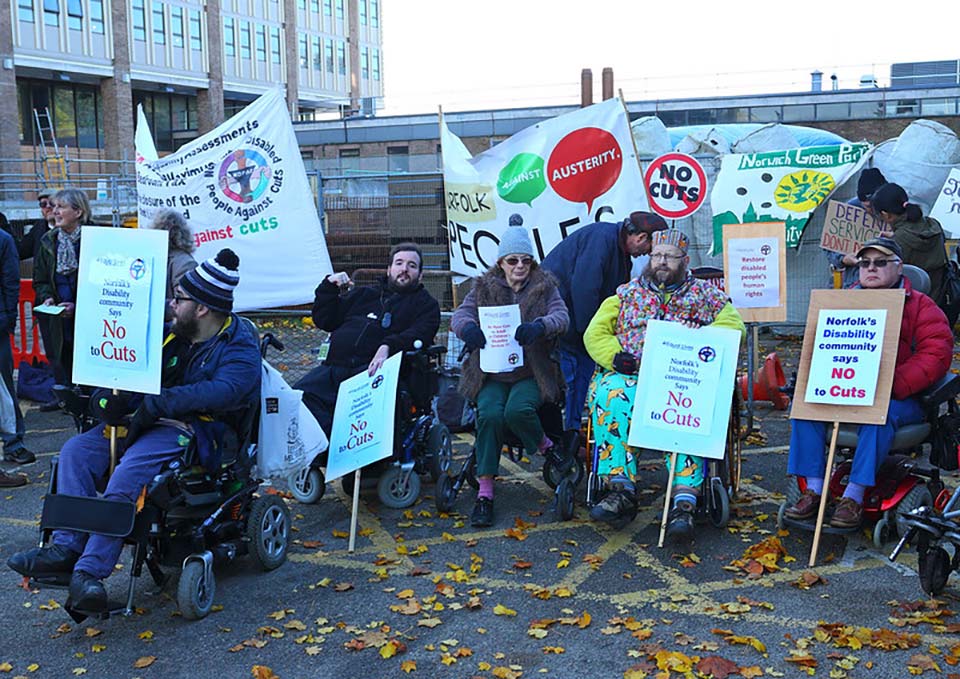
No to austerity: cuts disproportionately affect people with disabilities and those who support them – photo: Roger Blackwell/Flickr CC BY 2.0
“A change in the highest level of public office can signal fresh hope.” My words, shared here less than a year ago, have aged badly.
Instead of rights-based support, Labour plans a £5 billion benefits crackdown, using a stigmatising narrative against claimants as an unproductive drain on resources.
By 2029, tighter eligibility criteria for personal independence payment (PIP), for example, could mean over a million people lose £4,000–£6,000 a year. My sister Raana’s among the low-hanging fruit. She can walk but needs PIP to get about safely.
This targeting of benefit claimants isn’t new, as Mary O’Hara writes, but jars when promulgated by a Labour government. O’Hara warns that, as Trump rolls backs on US inclusion policies, the UK should not undermine disabled people’s lives.
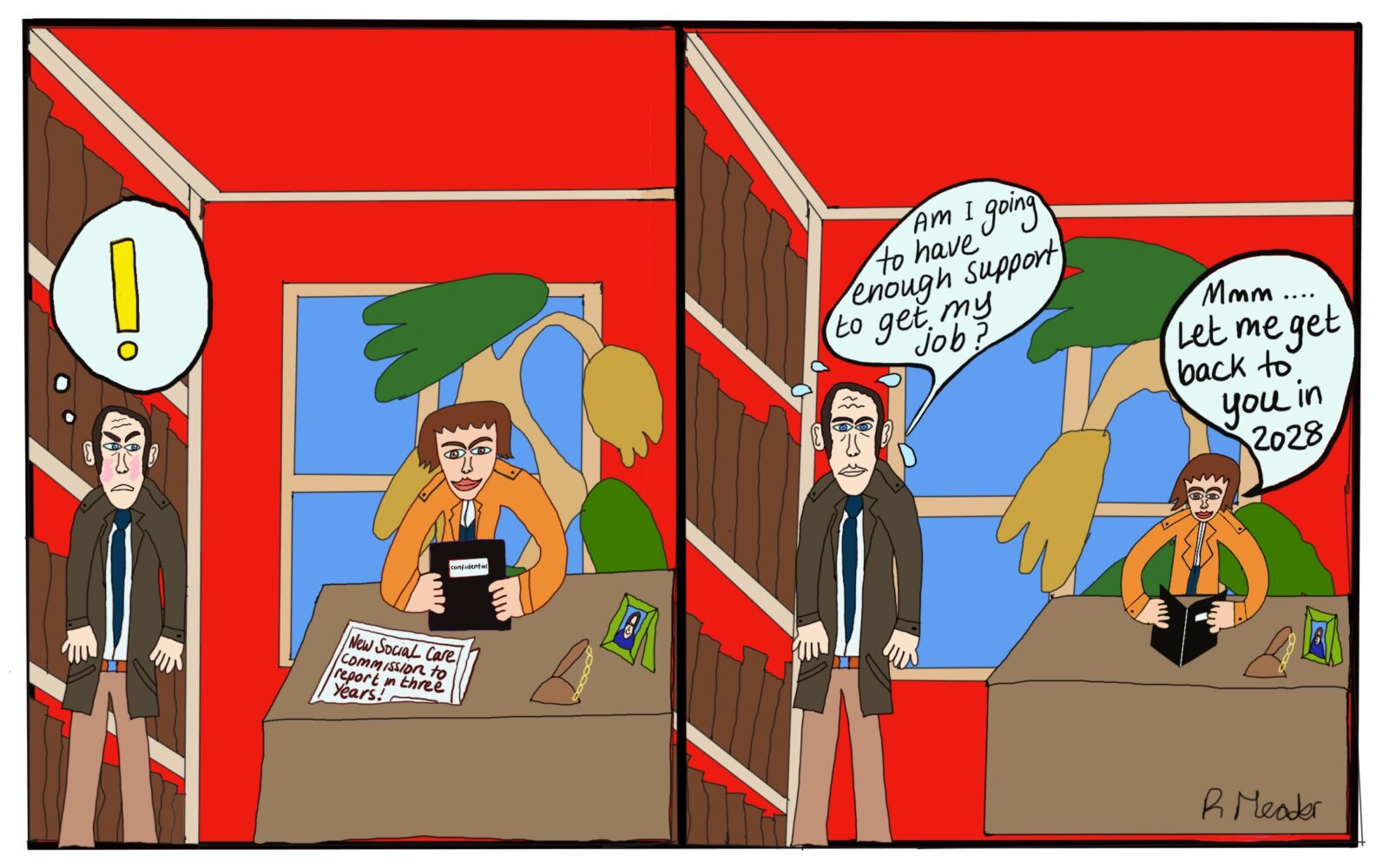
The support sector is already fragile. The Providers Unite coalition of care providers has protested, advocating for “survival”. Yet Baroness Louise Casey’s commission on adult social care reform will not start reporting until next year.
Social care, however, is a fundamental right, not a luxury.
Staying motivated
We must remain motivated by the hard-won progress made. Veteran campaigner Michael Edwards exemplifies this, telling Seán Kelly of his resolve “to make life better for other people”.
Instead of rights-based support, Labour plans a £5 billion benefits crackdown, using a stigmatisinag narrative against claimants as an unproductive drain on resources
Sam Carlisle’s piece shows how the needs of pupils and their whole families are recognised at a special school. The Elfrida Society, as Hannah Fearn reports, takes a rights-based approach to keeping parents and children together.
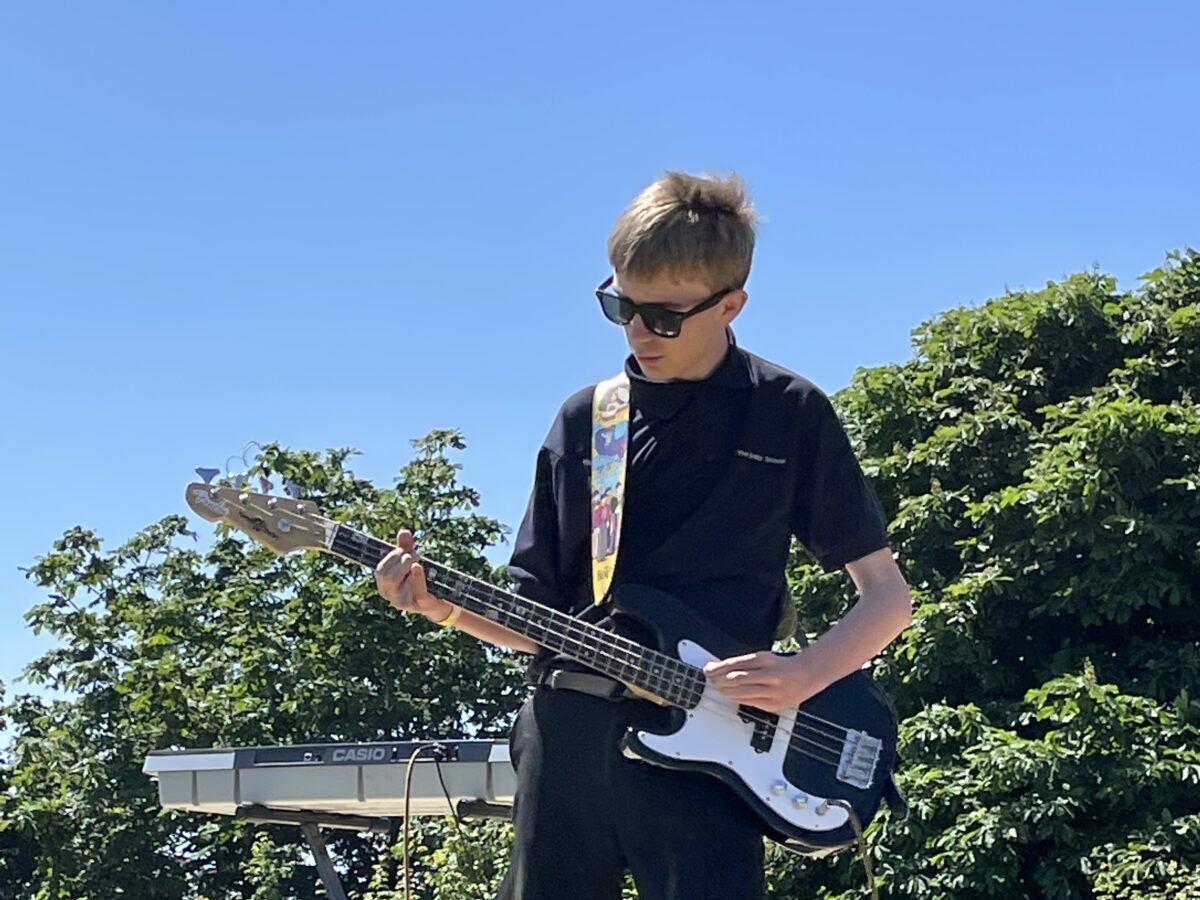
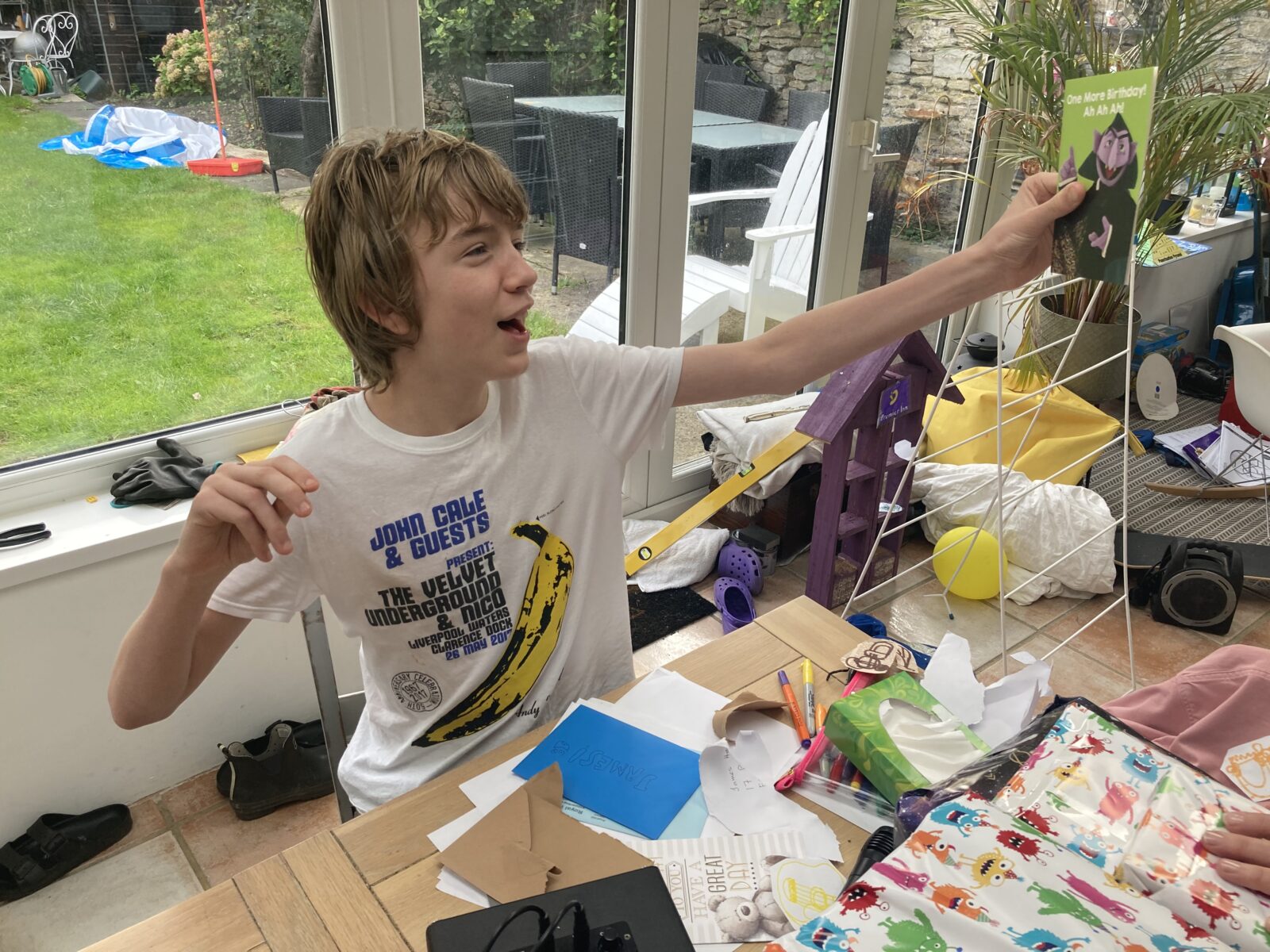
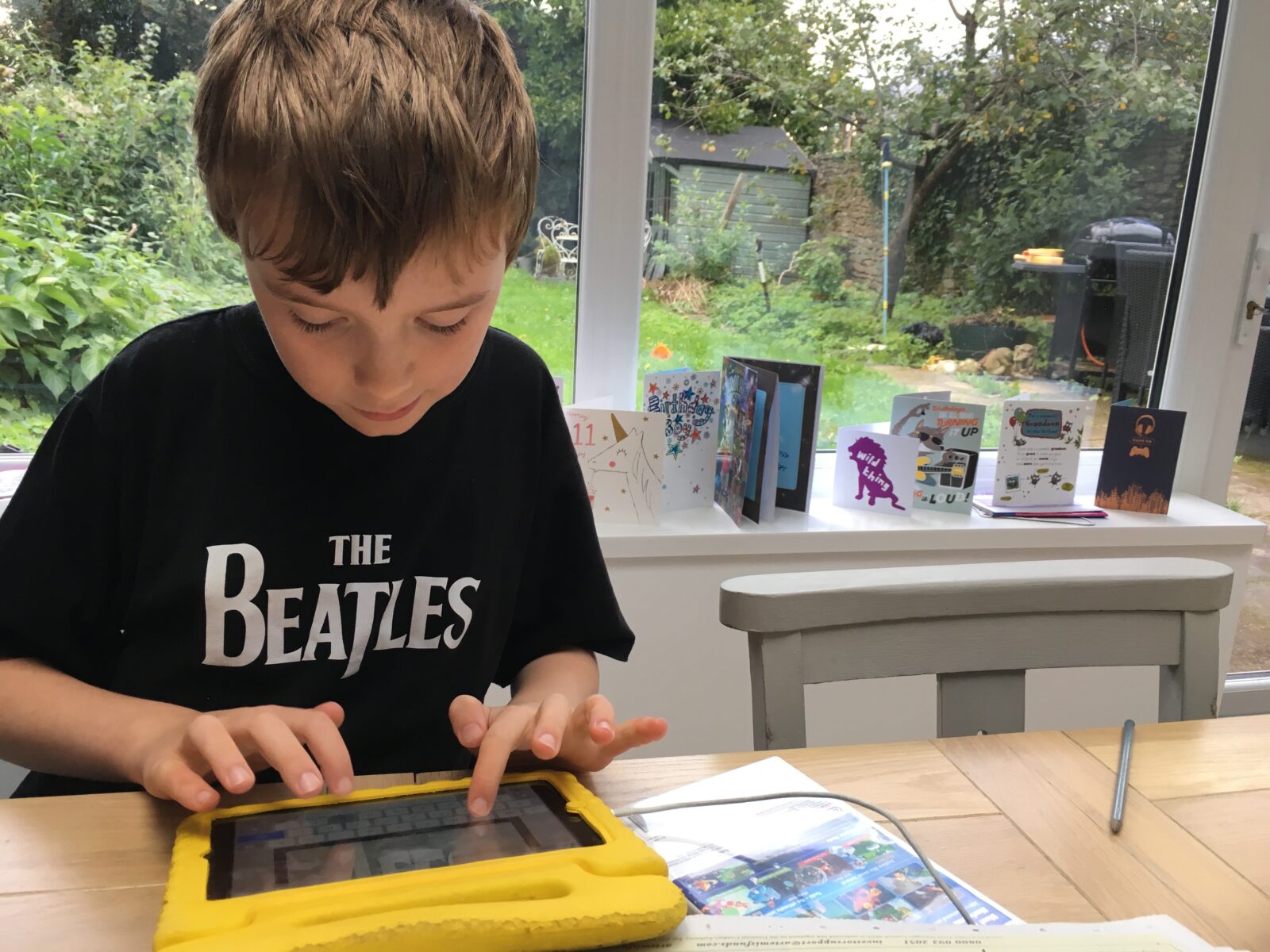
Such efforts highlight a belief in potential, also reflected in John Harris’s article, where he bewails that individuals such as his “complicated, creative, funny and fantastically human” son James are reduced to mere “deficits and impairments”.
His book Maybe I’m Amazed is both a paean to the connections between autism, learning disability and music and a defiant, empathetic protest against how society and institutions restrict life chances. The government could take a leaf out of it.
Benefit cuts are dreaded and social care remains a low priority
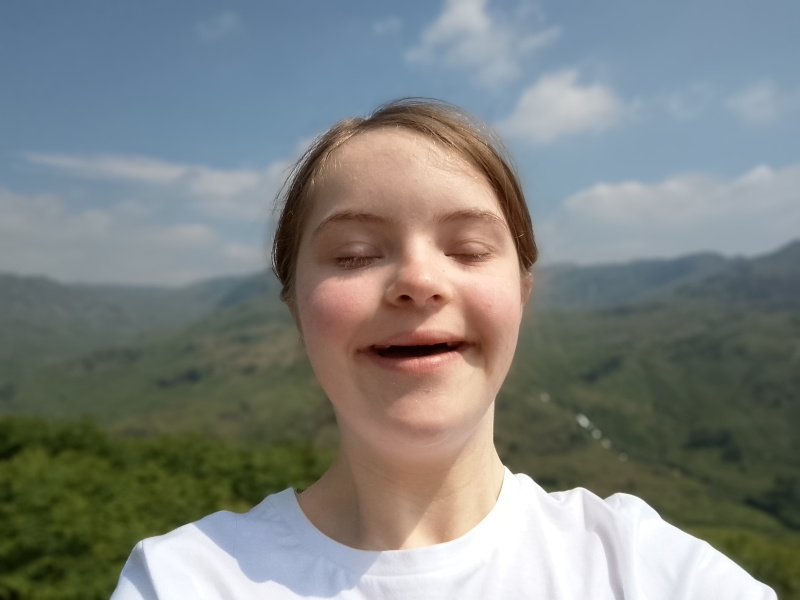
Lottie Lambert in a winning self-portrait in the Down’s Syndrome Association’s My Perspective photography competition
Thousands rally to call for sufficient funding
An estimated 3,000 people joined a rally in Westminster led by care providers, demanding government action on the critically underfunded sector.
Grassroots campaign Providers Unite is “a coalition uniting community care and support providers across the UK to advocate for our sector survival”.
Banner-carrying protesters at the event in February shared why “social care matters” and nearly 5,000 people signed a petition urging chancellor Rachel Reeves to review care funding.
The organisations involved collectively support more than 1.2 million individuals, employ a workforce of 1.59 million and deliver services valued at £68.1 billion.
Providers Unite argues that £8.4 billion is needed to meet future demand, improve access and cover full costs.
Learning disability charities Brandon Trust, Certitude, Choice Support, MacIntyre and United Response said social care was “a cornerstone of our communities”
Film shows progress since the Holocaust
A short film from Blue Apple Theatre is raising awareness of the plight of disabled people during the Holocaust, writes George Julian.
Released for January’s Holocaust Memorial Day, the film contrasts harrowing images of concentration camps with modern depictions of people with learning disabilities, showing the progress made. The Nazis sent almost 250,000 disabled people to their deaths.
Blue Apple is artist in residence at the University of Winchester and the three-minute film was created with support from film production students Hope Lines and Vasili Evangelou.
Richard Conlon, Blue Apple artistic director, said: “We live in much more enlightened times but we shouldn’t assume that will always be the case and we must remain vigilant.”
LDE’s Good Lives gets a refresh
Learning Disability England relaunched and refreshed its Good Lives project at its annual conference in Manchester.
Around 500 self-advocates, family carers, supporters, organisational leaders, researchers and policy experts attended the event in March.
Good Lives sets out what is needed for all with learning disabilities to live a good life.
Proud and tired: young climber wins photo prize
A young photographer has won an international competition with her self-portrait (featured at the top of this page).
Open to people who have Down syndrome from across the world, the competition aims to give then the chance to show how they see the world.
Lottie’s shot, Proud and Tired, took the prize in the child category.
She said she is inspired by bright colours and nature.
“This is me when I walked up a mountain called Helm Crag. It was lovely and nice because it was sunny and I was with my family,” she said.
“I have called my photo Proud and Tired because I was very proud of getting to near the top.
“It was very hard for me but I did it even though I was very tired at the end.”
The 2025 competition is now open to entries. The categories include: action; emotions; portrait; street; and light and shadow.
News briefs
Training brewing in the pub
The Count Me In Collective has won council approval to run its project from The Castle Tap pub in Reading. The microbrewery will train adults in brewing.
Autistic comic readers
The University of Cambridge University is exploring how autistic people read, create and enjoy comics, with the goal of making the industry more inclusive. The Collaboration for Comics and Autism is a response to how fan conventions, comic stores and online spaces can be unwelcoming environments for this group.
Deaths too early
University of Glasgow research on premature mortality, led by the Scottish Learning Disabilities Observatory, has found learning disabled adults aged over 25 years are dying an average 15 years younger than those in the rest of the population.
Cost-effective advocacy
A charity fund that helped 1,600 people get independent advocacy support has saved around £34.5 million in public funds over three years. Non-profit enterprise Social Finance calculated the cost benefits of the Henry Smith charity’s £2.6 million funding for 15 advocacy organisations.
Campus homes under threat
Guidance may undermine the survival of village or campus communities, according to Our Life Our Choice. The group is challenging 2020 guidance from the Care Quality Commission that notes the regulator will not register or favourably rate new campus or congregate settings.
All Update stories are by Saba Salman unless otherwise stated
What’s on our radar…
Benefit cuts are dreaded and social care remains a low priority. Saba Salman reports
Labour’s “biggest shake-up to the welfare system in a generation” was lambasted by both campaigners and backbench Labour MPs. “They are choosing to penalise some of the poorest people in our society,” said Scope. Others called the green paper immoral, harmful, lacking in empathy and “not Labour”.
Disabled claimants get an ‘unacceptably poor service’ with delays and poor communication disrupting claims and causing hardship
Campaigners ramped up efforts to highlight the precarious state of the care sector, criticising that Dame Louise Casey’s independent commission on social care will not report initial findings until next year.
A separate Public Accounts Committee report said that the Department for Work and Pensions gives disability benefits claimants “unacceptably poor service” with delays and poor communication disrupting claims and causing hardship. Charity Turn2Us stressed that delayed payments means people “struggle to afford basic essentials and care, their health deteriorates, and the stress can affect their ability to work”.
There was more bad news for social care as the House of Commons voted not to exempt social care providers from the rise in employers’ national insurance contributions. Analysis from the Voluntary Organisations Disability Group suggested the hike will lead to a £266 million shortfall among voluntary sector providers. The group reported that one in three disability charities is poised to hand back council contracts and a quarter are considering redundancies.
The government broke the law by presenting changes to benefit assessments as a way to support disabled people into work rather than primarily to cut costs. Charlie Callanan reports
Many of those assessed for ability to work would no longer meet certain criteria and could be almost £5,000 a year worse off. Photo: Savannah River Site/Flickr/CC BY 2.0
A judge has ruled that the Department for Work and Pensions (DWP) acted unlawfully by presenting proposed reforms of the work capability assessment (WCA) as a way to support disabled people into work – without admitting that budgetary concerns were a main reason for the proposals.
Disability rights campaigner Ellen Clifford took the case to the high court in December with legal assistance from charity the Public Law Project.
The proposals were formed by the previous government in 2023, but the current government planned to push ahead with the changes (“Ability to work in focus,” Community Living, spring 2024).
The WCA determines whether claimants are eligible for employment and support allowance, and which rate of the benefit they will get. For universal credit, it helps to decide what, if any, work-related conditions the claimant must meet to get their benefit and how much they will get.
Not open about effects
According to the judgment by Mr Justice Calver, during the eight-week consultation before announcing the plans in the autumn 2023 budget, the DWP failed to explain the real impact the changes to the assessment would have on disabled claimants.
This included that it could lead to many new or reassessed claimants who underwent the WCA not meeting the criteria for having limited capability for work-related activity. It was estimated that this would lead to 424,000 getting a lower rate of benefit, leaving many worse off by almost £5,000 per year.
The judge accepted the following points from Clifford about the consultation:
It did not explain properly that many disabled people could receive significantly less money as well as being required to meet new or additional conditions to get their benefit
It presented the changes as being about helping disabled people to get or improve their chances of obtaining paid employment. However, no evidence was given to explain how this aim would be met, while the motive to reduce spending on disability benefits was not mentioned
The consultation period before the announcement was too short given the significance of the proposals, and it did not give enough time for disabled people and their representative organisations to fully engage with the process.
The judge said: “In setting the consultation period, the defendant [the DWP] ought to have had more regard to the attributes of those people who would be affected by these proposals.
“These were proposals which, in particular, could potentially drive vulnerable people into poverty as well as adversely affecting disabled people and substantial-risk claimants who have mental health conditions and suicide ideation.”
Following the judgment, a spokesperson said that the government will address the shortcomings in the previous consultation and consult again on potential changes to the WCA.
Changes were presented as being about helping disabled people to get paid work but no evidence was given to explain how this aim would be met
Clifford said she was overjoyed that the court recognised it was important to consult disabled people properly on such reforms.
“This is a life-or-death issue,” she said. “One internal DWP estimate – which we only know about because of my legal challenge – indicates that 100,000 disabled people who are classed as highly vulnerable would be pushed
into absolute poverty by 2026-27 as a result of the types of cuts they proposed.
“We now urge the government to rethink these proposals and make the safety and wellbeing of disabled benefit claimants their priority, as well as commit to consulting us fairly and lawfully in the future.”
A man became ill as he was unable to call for help after his carer died – then poor care in hospital hastened his own death. And risks remain at the hospital, a coroner found. George Julian reports
Hull Royal Infirmary: failures included not carrying out examinations or monitoring David Lodge adequately. Photo: Paul Glazzard/Hull Royal Infirmary/geograph.org.uk/CC BY-SA 2.0
A recent inquest raised concerns about the treatment of a man who died from natural causes, contributed to by neglect.
The inquest at Hull coroner’s court, presided over by assistant coroner Edward Steele, finished in December.
What happened
On 12 January 2022, Keri Lodge went to visit her brother David and father Peter but neither answered when she knocked on the door and called through the letter box.
She got access to the house with the help of a locksmith, and discovered her father and brother on the floor. Her father had died up to four days earlier. Her brother was still alive, albeit very weak, and was taken by ambulance to Hull Royal Infirmary, where he was admitted at around 4.30pm. His sister went with him to the hospital.
Missed opportunities
The treatment provided at Hull Royal Infirmary was the focus of his inquest. David Lodge died in the early hours of the morning after his admission to hospital.
The coroner found the 40-year-old’s cause of death was pneumonia due to metabolic acidosis (when acid builds up in your body) and hypovolaemia (when your body does not have enough fluid in it) which was caused by dehydration as he had had nothing to drink while lying on the floor at home.
The coroner was told by an independent medical expert it was unlikely he would have survived to leave hospital because he was so poorly when he arrived. However, they said it was likely he would have lived days longer had he been moved to intensive care before midnight.
No lessons have been learned about ensuring adults and children who live at home with a sole carer have a way to get help in an emergency
The coroner found a number of missed opportunities by the hospital and found David Lodge’s death was contributed to by neglect.
The failings of hospital staff included:
Physical examinations not happening quickly or often enough
No chest examination
Fluid treatment insufficiently monitored
Not admitting him to the intensive care unit or considering this
Not monitoring him sufficiently after administering sedation.
The coroner said that, had the patient been admitted to intensive care, where there are continuous monitoring and more nursing staff, he would not have experienced a cardiac arrest.
The coroner felt there was still a risk that future deaths would occur at Hull Royal Infirmary unless action was taken, so he issued a prevention of future deaths report (“Reducing risks of further deaths,” winter 2025). This raised four matters of concern:
Pain not being accurately assessed in people who are unable to communicate with words. Lodge at no point was given pain relief, despite requests from the attending family member who was speaking on his behalf
Basic examinations, including chest examinations, not being carried out for learning disabled adults at risk of pneumonia in the emergency department
NEWS2 (National Early Warning Score) scores above 7 were not appropriately escalated for specialist advice. Clinical recommendations for recording observations (these can include heart rate and blood pressure) every 30 minutes were not being followed
Opportunities for learning from serious incidents were lost. No internal investigation or other form of serious incident investigation was undertaken.
Response still awaited
After the inquest, a spokesperson for Hull University Teaching Hospitals NHS Trust said: “We would like to extend our deepest condolences to the family of Mr Lodge.
“We always try to learn where processes could be improved and will be responding to the coroner in due course.”
Recipients of prevention of future deaths reports are legally required to respond within 56 days; Hull’s deadline was 17 February and the trust had not responded by at time this article was written in late March.
Limits of inquest
The coroner decides how broad an investigation they will conduct – the scope of an inquest. This coroner decided to look at the hospital treatment provided to David Lodge.
The coroner did not investigate support provided to father and son, for example by the local authority. He also did not investigate emergency planning.
The coroner did find that Lodge would have survived if he had been able to summon help shortly after his father died.
Who was David Lodge?
Lodge turned 40 the month before he died, in January 2022, and was the middle of three children. After his parents divorced, he continued to live with his father, Peter.
He enjoyed spending time with his mother, sister, brother and wider family members, lived at home in Hull for his entire life and was a much-loved member of his family.
Lodge had a learning disability and could not communicate verbally. He initially used Makaton at his mainstream primary school where his sister, Keri, says everyone went out of their way to learn to communicate with and include him. Later in life, he used an electronic communication aid.
He loved to go swimming and to the cinema if a film interested him and to shop for DVDs. An expert on children’s television, Lodge had an extensive collection of DVDs, which brought him great joy. He was very knowledgeable about children’s television programmes, enjoyed watching his DVDs and searching for episodes of his favourite programmes on YouTube on an iPad.
David was a person, first and foremost, but that was forgotten by those treating him
His eyesight deteriorated and he was registered blind in adulthood. He was later diagnosed with autism. In 2017, he had dental treatment under sedation that led to aspiration pneumonia and resulted in a lengthy stay in intensive care. After months on a ventilator, he lost the ability to stand or walk and became a wheelchair user.
David’s father, Peter, had a deep understanding of his communication and other needs. He provided him with a safe environment in which distress was minimised.
Keri took an active part in her brother’s life. They would spend Wednesdays together chatting, reading and playing games on the tablet while their father went out.
“I used to tell David that Wednesdays were my favourite day of the week,” she has said.
She would also regularly spend time with him at the weekend, so their father could go out and do shopping, and stay overnight if her father needed sleep.
She had concerns about what might happen in an emergency and recalls discussing this with a social worker at a multidisciplinary meeting.
She had the impression it was assumed her father would get help in an emergency, or she herself would realise something was wrong and arrange help; everyone knew her brother was not able to get to the phone.
‘Findings were shocking’
“David overcame a lifetime of challenges, not least the attitudes of professionals in health and social care who did not understand that, just because a person cannot speak words, it doesn’t mean they can’t think and feel,” Keri notes.
“David was the bravest brother, son and uncle, but what he endured in his final days is unimaginable.
“The inquest’s findings that the care provided to David was so substandard was shocking. David was a person, first and foremost, but that was forgotten by those treating him.
“While I am grateful that the inquest has resulted in four prevention of future deaths reports being issued to Hull Teaching Hospitals NHS Foundation Trust to address some of the ways in which Hull Royal Infirmary failed him once he got to hospital, no lessons have been learned about ensuring adults and children who live at home with a sole carer, such as an older parent, have a way to get help in an emergency.
“David deserved better, and we must make sure that nobody else goes through what he did in his last days. David is missed beyond measure.”
A local authority issued care proceedings that were unlawful and unnecessary – and required family members to leave the family home while these took place. This significantly breached a child’s human rights, writes Saba Salman
Northumberland County Council’s care service had no experience or expertise in deafblindness but did not seek input from multi-sensory impairment professionals. Photo: Russel Wills/geograph.org.uk/ CC BY SA 2.0
A court has found that a local authority breached the human rights of a disabled child when it unlawfully issued care proceedings.
TV Edwards solicitors secured an order at Newcastle County Court declaring that the rights of a significantly disabled child were breached by her local authority, Northumberland County Council.
The order related to article 8 of the European Convention on Human Rights, which concerns the right to private and family life.
The court also agreed a damages settlement of £50,000.
The council had unlawfully issued care proceedings and had required the child’s mother and siblings to leave the family home while these were ongoing.
No input was sought from multi-sensory impairment experts about care package changes
The court’s order also records that changes made to the child’s bespoke care and education package during the care proceedings had a negative impact on her, causing her significant distress.
TV Edwards associate solicitor Shaun Livingston acted for Ella Chapple, a child with complex disabilities and needs, including deafblindness, learning disabilities and WAGR syndrome (a rare genetic disorder).
Acting via Ella’s mother Elly Chapple, who was also her litigation friend, the law firm brought a claim against the local authority alleging that care proceedings, brought in April 2020, were unnecessary and disproportionate for a variety of reasons.
These included that:
Relevant professionals had agreed, at a meeting to discuss concerns only two weeks before care proceedings were issued, that there was no cause to even place Ella on a child protection plan (a step often taken as a less intrusive alternative to care proceedings), let alone issue care proceedings
Fresh allegations and concerns communicated to the council after that meeting were simply accepted and not properly investigated or scrutinised, despite the individual who made those allegations having attended the meeting and stating they had no concerns
Ella’s parents were sent a letter before care proceedings were issued, stating that, following the meeting, Northumberland had tried to work with them to improve matters but that this had not been successful. However, the council was unable to identify any work that had been attempted in the short space of time between the meeting and the decision to issue care proceedings.
Comment: too much intrusion into private life
It is hoped this important and novel case will have ramifications for parents with disabled children.
This group often experiences significant difficulties in obtaining support, then subsequent disproportionate and unnecessary intrusion into their family and private lives.
This trend was outlined in a major research report (see box) published in July 2021, and it is hoped that this case will help continue to highlight the issues raised.
It may also be of relevance to the Law Commission’s review and consultation on the legal framework governing social care for disabled children in England, which is intended to help children with disabilities access the support they need.
Inappropriate care changes
The claim also pleaded that changes made to Ella’s care and education package while care proceedings were ongoing from April 2020 to December 2020 were inappropriate and caused Ella significant distress.
Professionals had agreed two weeks previously there was no cause to even place Ella on a child protection plan let alone issue care proceedings
She is entitled to a bespoke, wraparound package of education and care as ordered by the SEND Tribunal in 2017. This comprises a waking day curriculum, delivered by a dedicated team of trained interveners, in a manner suited to Ella’s needs. This should include:
Ensuring that communication with Ella involves signing as well as verbal communication
Ensuring that Ella’s day is well structured and defined by routine, with Ella being given advance notice of any changes or one-off activities so that she is prepared and not unduly distressed by any such changes
A compassionate and reassuring approach when Ella is agitated or upset to minimise the risk of any episodes of self-harm and their impact if and when they occur.
While the care proceedings were ongoing, Northumberland County Council unilaterally arranged for its in-house care service to oversee and implement Ella’s education and care package. This had previously been managed by her mother via direct payments.
This care service dictated radically different approaches to Ella’s care, with no expert input sought from multi-sensory impairment professionals as to whether such changes would be appropriate for Ella’s needs.
The care service, which did not have any experience or expertise in deafblindness, made changes including:
Reducing or stopping Ella from going on regular drives in the car, something that had been proven to be a calming, self-regulating process for her
Ignoring Ella when she was agitated or upset until she stopped (resulting in Ella’s behaviour escalating and increased frequency and severity of self-harm)
Introducing changes to Ella’s schedule with little or no notice.
Agreement and redress
Following the serving of civil proceedings in May 2022, alleging that Ella’s human rights were breached, the parties were
able to reach agreement in September 2024.
This agreement set out that Ella’s human rights were indeed breached by the council inappropriately issuing care proceedings, and that the changes made to Ella’s care package – as well as Northumberland’s requirement that her mother and siblings leave the family home while care proceedings were ongoing – had a detrimental effect on Ella.
Ella’s solicitor Shaun Livingston said: “I am glad that we were able to secure some form of redress for Ella and her family – what happened to Ella should not have happened and, while this case cannot undo that, I am pleased that the local authority has at least recognised that things went wrong. We hope Ella’s case can help prevent repeat occurrences for other families.”
Ella was represented by Shaun Livingston, associate solicitor at of TV Edwards, and Steve Broach KC and Victoria-Butler Cole KC of 39 Essex Chambers. The information for this article was provided by TV Edwards
Rigid assessment system institutionalises blame on parents
A one size-fits-all approach to families creates an institutional culture of “parent blame”, a report from the University of Leeds and charity Cerebra in 2021 found.
The report, Institutionalising Parent Carer Blame, explored the experiences of disabled children and their families relating to how English local authority children’s services departments assessed
support needs.
The study found that social care departments took a default position regardless of whether a parent carer had sought help for a disabled child or there was evidence of neglect or abuse.
It stressed that this approach ignores the fact disabled children often have complex medical, educational and social support needs and face societal barriers; national and local social care services place blame within the family, ignoring these wider barriers.
The research, involving 143 social care departments in England, found a lack of training, experience and understanding of these issues.
Parent carers also reported that the process of seeking support was humiliating.
One issue highlighted in the research was that national guidance focuses on safeguarding children from parental neglect/abuse and fails to address the distinct assessment and support needs of disabled children where there is no evidence of this.
Policies to improve inclusion in the US have been scrapped at the stroke of a presidential pen. The UK could follow suit, with disabled people easy targets
President Trump Signs an Executive Order. Photo: The White House, (Flickr, Public Domain)
It has often been said that when America sneezes, Britain catches a cold. However, with a hair-raising flurry of anti-inclusive executive orders and actions spewing from the White House in Trump’s second term, it may be time for a rethink of the old adage.
The word unprecedented is frequently used in relation to Trump’s political manoeuvres but, even by his own standards, the attacks on diversity, equity and inclusion (DEI) since the beginning of the new term have been nothing short of stunning.
DEI has rapidly replaced woke as the bogeyman of the political right, with its actual meaning and intent being distorted into a convenient trope to further marginalise groups already historically left behind.
Blatant pushback
The new administration wasted no time, for example, in attempting to eradicate any mention of diversity, equity, inclusion and accessibility within the federal government. It was a clear and determined pushback against the gradual progress on inclusivity and fairness for minority groups, including disabled people.
The pushback was not subtle. One of the most egregious instances of scapegoating followed the fatal mid-air collision between a passenger jet and an army helicopter in Washington DC in January. Within hours, Trump made a baseless claim that DEI was to blame for the crash and, in particular, people with intellectual disabilities.
“The FAA’s [Federal Aviation Authority] push includes focus on hiring people with severe intellectual and psychiatric disabilities,” he declared at a press conference, adding that people who weren’t “mentally competent” should be fired.
Apart from the fact that zero evidence was presented that anyone with any kind of disability was associated with the tragic incident, the purpose was clear enough: blatantly denigrate and disparage to undermine policies whose purpose was to level the playing field a bit.
DEI policies, be they in private business or the public sector, exist to address discrimination and actively challenge prejudice. For people with learning and other disabilities, positive moves to address imbalances in the workplace and beyond using DEI initiatives have made a tangible difference in recent years. Active recruitment and the implementation of reasonable adjustments have increasingly been part and parcel of ensuring equity in employment.
As disability policy analyst Casey Doherty at the Center for American Progress put it, while DEI can act as a bridge to overcome obstacles to employment, when it comes to workers with learning disabilities, they are in work because “they are qualified to do their jobs”.
The speed with which the diversity dominoes have fallen has been breathtaking and shows how shallow these commitments were to begin with
Within the federal workforce, DEI has been proven to shift the dial in the right direction. For example, in 2022, although in part due to the embrace of remote work, 9.4% of that workforce had a disability – up from 8.9% in 2014. While things were far from perfect, the push for inclusion and diversity was broadly the goal. Until it wasn’t.
Firms fall in line
As soon as the new administration set its overt anti-inclusion tone, private organisations started shedding their commitments to more diverse workplaces. Major companies, from Google to retail outlet Target, rushed to fall into line.
The speed with which the diversity dominoes have fallen has been breathtaking. But, more than this, it has shown how fragile and shallow these commitments were to begin with. Hard-won progress, it turns out, can be undone with the flick of a presidential pen.
For anyone in the UK thinking it couldn’t happen here, think again.
America is not unique in its backlash against inclusion. For years, the discourse around disabled people and employment in Britain has been riddled with demeaning rhetoric and political pledges to crack down on those accessing benefits – including from the current Labour government.
With the Trump-friendly Reform Party surging in the polls, complacency in the UK is not an option.
The whole family – grandparents and siblings as well as parents – are being invited to get involved with a school, where they can also get support and advice, says Sam Carlisle
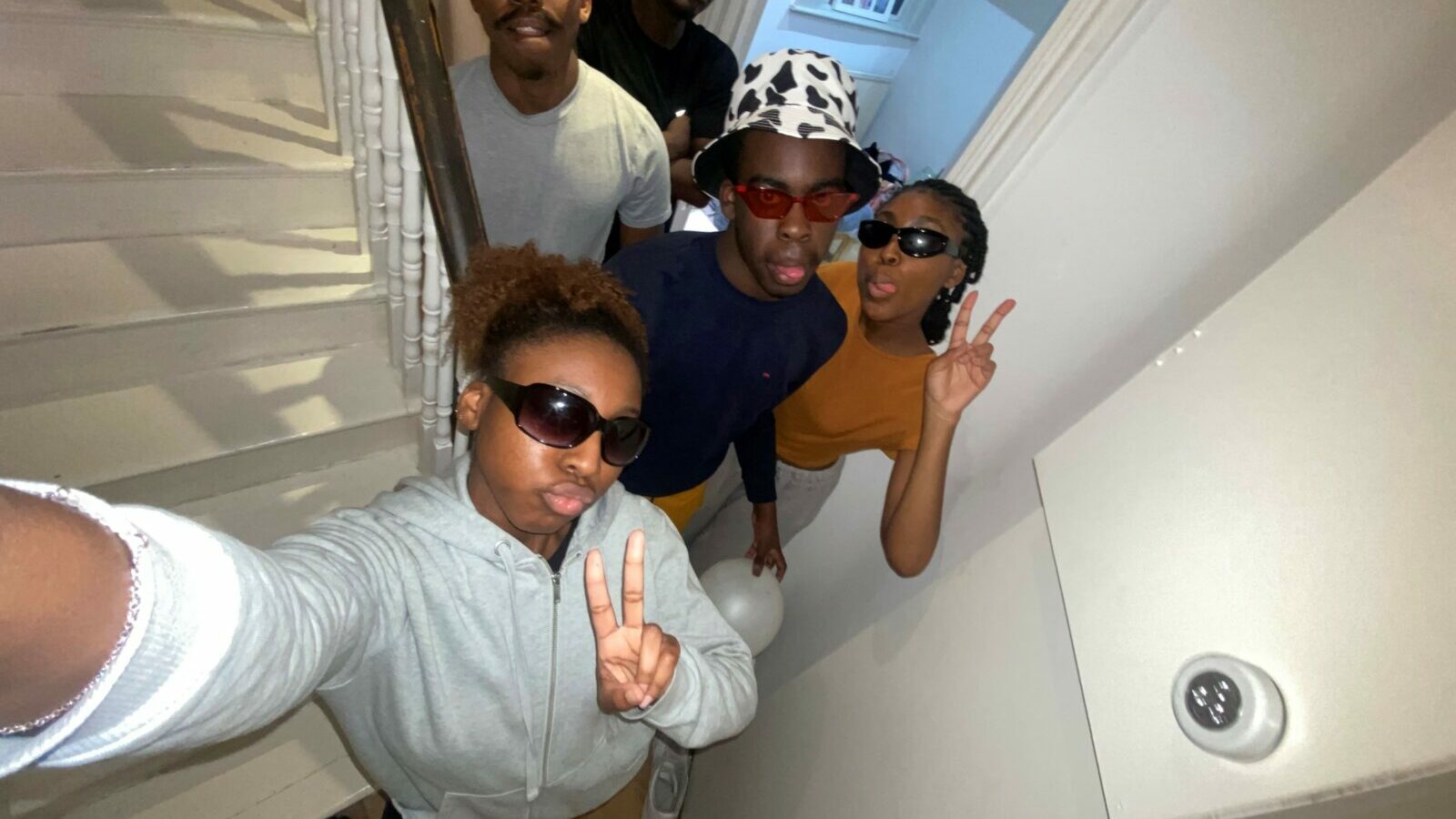
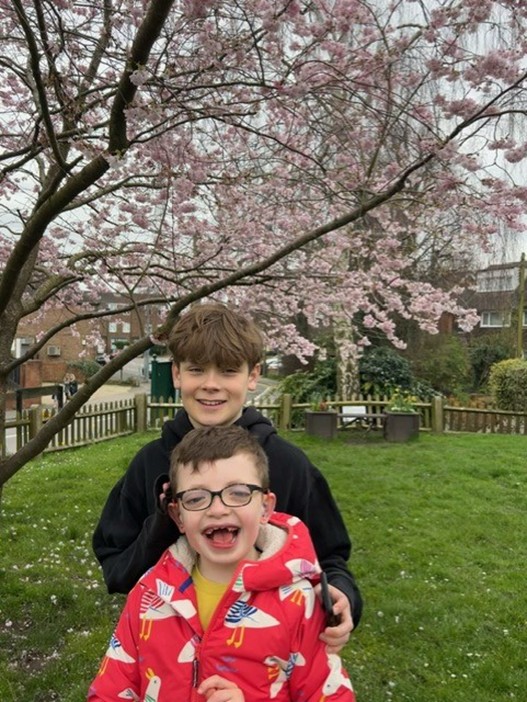
Willow Dene pupil Lucan (wearing hat) in a group selfie. Photo: Willow Dene School/families
As you enter Willow Dene School, you are met with the words “Seeing possibilities, realising dreams” emblazoned on the reception wall.
That motto means that, for staff at this south London academy, there are no limits to what its 317 disabled pupils, most of whom have learning disabilities, can achieve. The ethos involves working with families and, in two groundbreaking new programmes, involving pupils’ siblings and grandparents. These schemes are led by deputy head teacher Emma Bennett and assistant head Joshua Garrett-Smith.
Garrett-Smith says: “We prioritise collaboration because families know their children best. When young people come to us, families are sometimes not in a great place.
“A child might have had a rotten time in a mainstream school, or parents might have been through hell to secure a place here, or their child might have a tough medical diagnosis. We let families know we understand how hard it is and that we want to work with them.”
Bennett adds: “We see ourselves as advocates for families who have complex lives. We have three liaison staff who help parents with anything from assisting with housing needs, filling in disability living allowance forms or finding respite services. We work hard to include parents in a child’s learning.”
Toby and Joshua. Photo: Willow Dene School/families
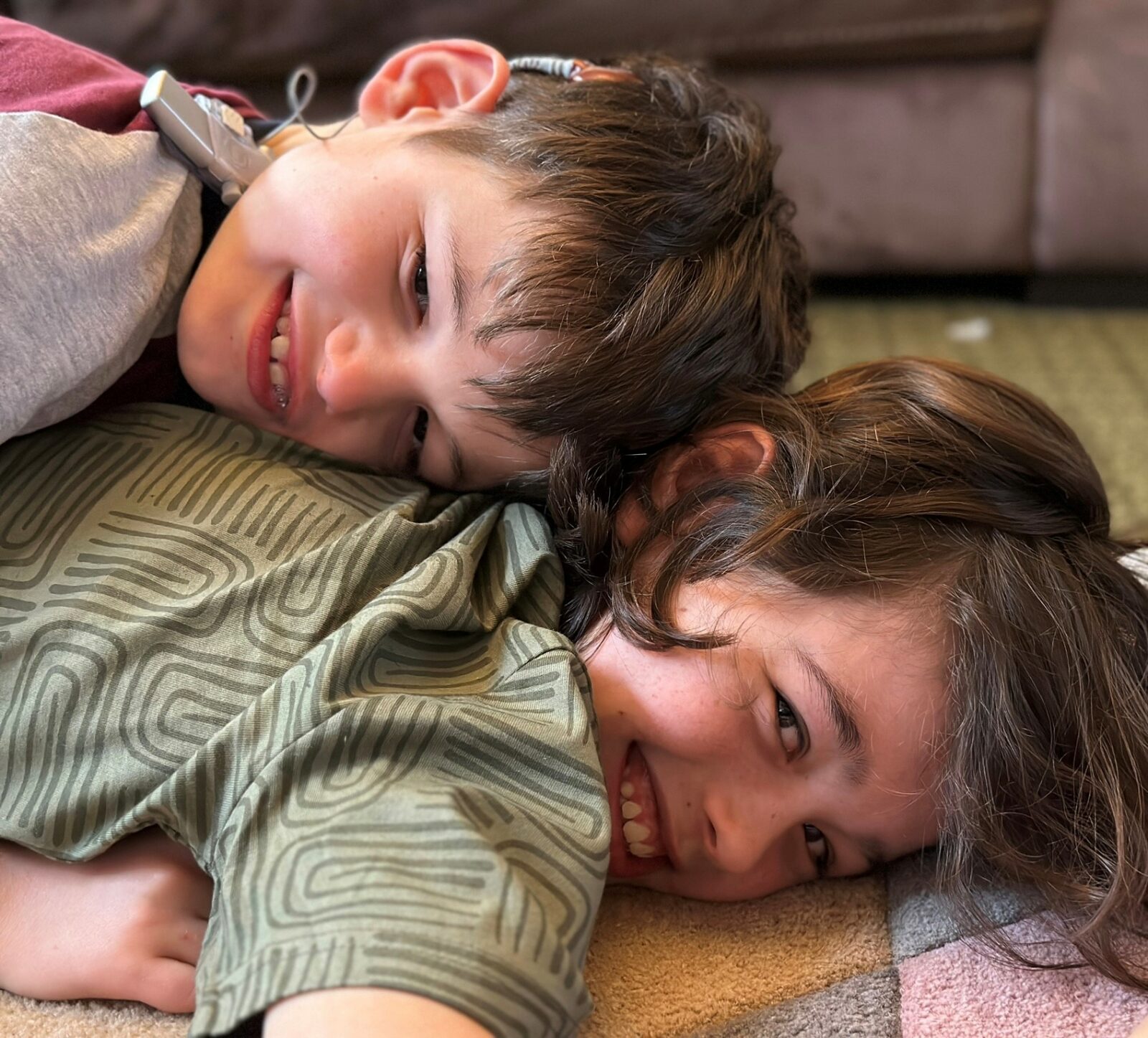
Thomas and his brother. Photo: Willow Dene School/families
That work has now extended to other family members. The idea was sparked when a parent told head teacher Rachel Harrison that her non-disabled child didn’t invite friends home because they were embarrassed about their sibling.
Bennett explains: “Rachel immediately realised siblings needed support as part of our whole-family approach. Brothers and sisters often take on caring roles but, because they are at different schools, have little connection with what their sibling is doing all day.”
In 2022, the school made building sibling relationships a core priority, with aims also to celebrate siblings’ relationships and encourage peer support.
Siblings were invited in and a sibling-selfie competition held to celebrate their bonds in any medium from poetry to video. This culminated in an exhibition and a prize sponsored by a local business. The sibling focus is now embedded in Willow Dene’s family work.
The grandparent programme began after the school noticed how many older people were pupils’ day-to-day carers, with either full-time responsibilities or stepping in when parents were at work.
Garrett-Smith says: “We weren’t sure how popular this would be but so many grandparents turned up to our first meeting we had to find loads of extra chairs.
“Going around the room, the grandparents’ emotions emerged, their love and pride in their grandchildren but also the challenges they face. There were tears.”
Bennett says: “Grandparents play a significant role in pupils’ lives so we can share common goals, strategies and successes.
“At that first meeting, grandparents expressed a need for help with communication and play. So we are now offering training in those. We explain what we do here and why, building on what they want to know.
“A lot of our pupils are bussed into school, which reduces school gate contact. We gave grandparents a tour of the school – it was fantastic to see one person who had been quiet in the meeting come alive when he walked into his grandson’s class.”
Willow Dene is keen that its model is taken up by other schools.
Bennett says: “The first thing to do is start that conversation, invite people in. Make sure programmes are written into a school’s development plan so there is real focus. Find ways of engaging the whole school.
“Use the Sibs’ charity’s website for ideas [on how to support siblings]. Also engage the community. Our siblings have a space on the school’s newsletter every week. Most of all, just get started – if it works for the wider family, it ultimately works for pupils.”
A doctor has written a toolkit – the first of its kind – to help clinicians in hospital emergency departments to understand and communicate with learning disabled people. Saba Salman reports
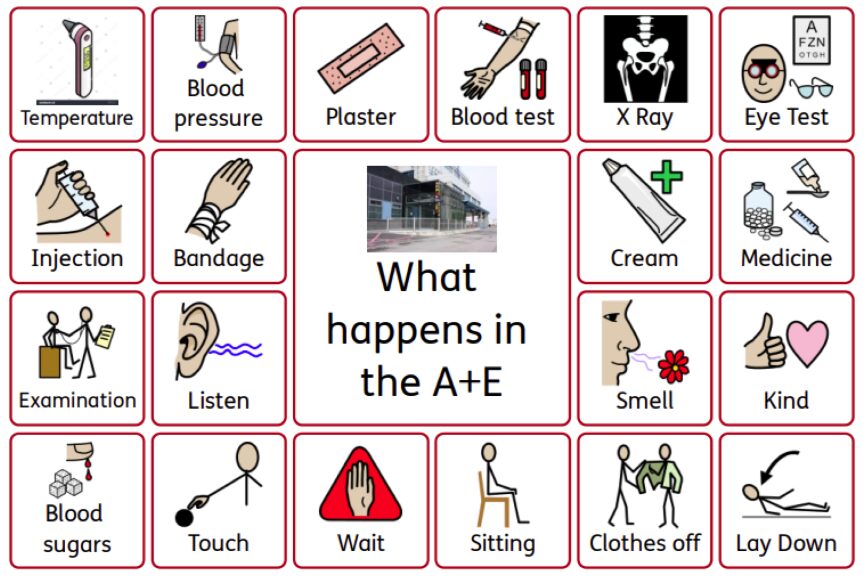
The toolkit provides materials with symbols to
help clinicians communicate
with patients. Image: RCEM
At the start of a recent emergency department shift, Dr Liz Herrieven overheard a colleague using plain, clear and jargon-free language to explain the use of a cannula to a patient.
Aware the patient had a learning disability, the doctor had also found a quiet area for the consultation, and ensured the patient’s carer was present for reassurance.
This approach was thanks to the Learning Disabilities Toolkit, written by Herrieven, a consultant in emergency medicine at Sheffield Children’s Hospital, and recently published by the Royal College of Emergency Medicine.
It is the first toolkit of its kind for emergency medicine, aiming to ease health inequalities by supporting doctors to treat learning disabled people more appropriately.
A toolkit exists for hospitals but there is none specifically for emergency departments.
No training for doctors
Herrieven, parent to a teenage daughter who has Down syndrome and is autistic, says: “Patients with a learning disability face huge barriers to healthcare resulting in significant health inequalities but, as doctors and nurses, we’re taught very little about how to improve care. There’s nothing in postgraduate training for emergency doctors about learning disability and very little in undergraduate training.”
In the toolkit’s introduction, Sara Ryan, professor of social care at Manchester Metropolitan University, describes its “potential to transform the emergency healthcare of people with learning disabilities”.
Specific difficulties for these patients include long waiting times, noise and the fact that admission is sudden, without time to prepare.
The toolkit offers downloadable resources, plus information on reasonable adjustments such as offering ear defenders to help with auditory sensory overload. Clinicians are encouraged to support verbal communication with visual aids such as symbols, and to regard family and carers as “a valuable source of information”.
The resource explains diagnostic overshadowing – when a clinician attributes symptoms to a condition the patient is known to have – and stresses how this is responsible for missed or delayed diagnoses in patients with a learning disability and those who are autistic.
It suggests quiet areas for those with sensory processing difficulties and sharing images of the department online, so people can familiarise themselves.
Herrieven, a member of the steering group for a network of doctors (the Down Syndrome Medical Interest Group) and a Down’s Syndrome Association health adviser, says her daughter’s life-threatening illnesses gave her insight into what it is like being a parent to a seriously ill child.
Amy spent her first few months in neonatal intensive care. She was later in high dependency and intensive care units with illnesses including severe chest infections, pneumonia and sepsis.
Herrieven says a specific resource is more critical for emergency medicine than other healthcare areas such as GP surgeries or outpatients.
This is because of the high volume of patients with a wide range of urgent problems, which doctors have to diagnose and treat as well as identify quickly those who are critically unwell.
“This is even more difficult if our patient has a learning disability, as there may be communication differences, we may need to take more time, there may be an increased risk of certain illnesses and our patient may need support tolerating or understanding procedures, for example.”
Herrieven believes raising awareness is vital to improving outcomes. She adds that, while awareness seems to be growing, especially since the 2022 launch of the Oliver McGowan Mandatory Training on Learning Disability and Autism – this is recommended by the government for health and social care staff – “there’s a huge amount still to do”.
She says of the toolkit: “I hope it can improve care for at least one person out there. On a bigger scale, if it can raise awareness of the issues among emergency department staff then we can start to hope for better care and outcomes for all patients with a learning disability.”
Self-advocate champion Michael Edwards is optimistic and determined, having seen a lot of change since barricading himself and others in a day centre. The My Life My Choice founder talks to Seán Kelly about his campaigning, research and advocacy work and what motivates him
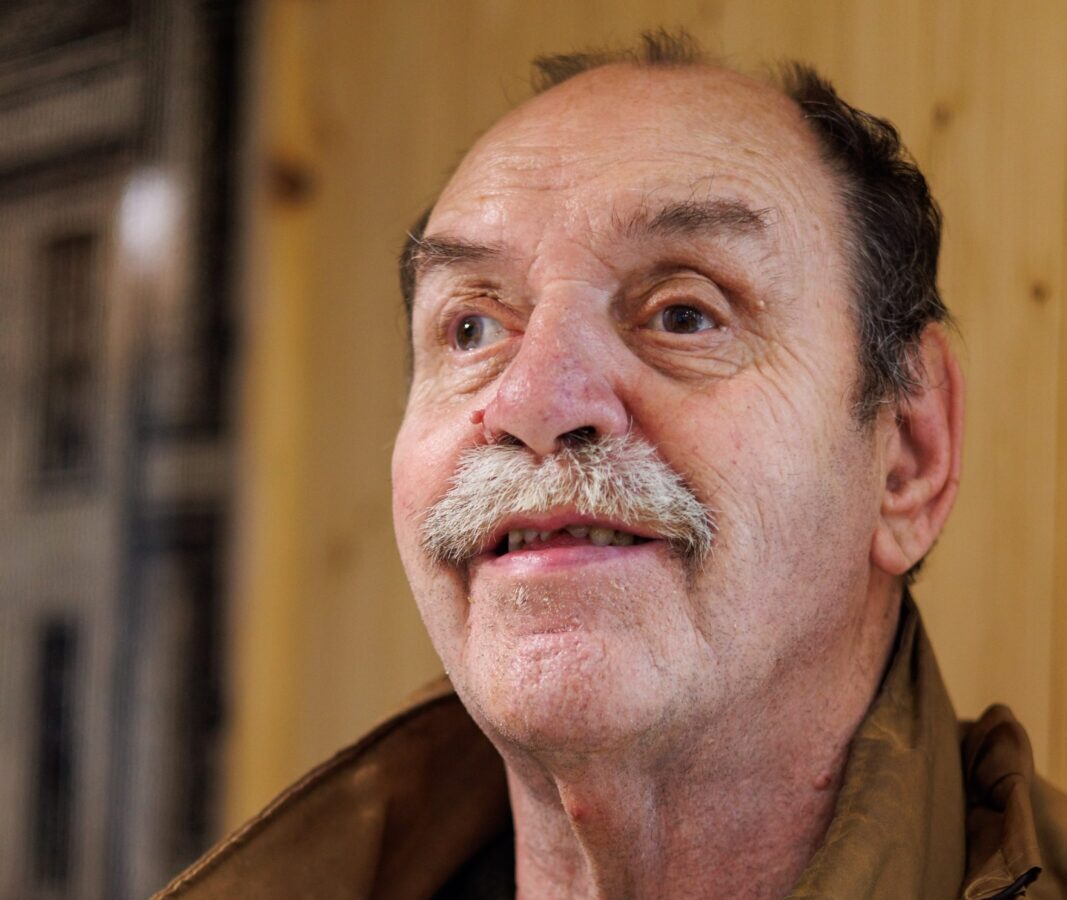
Michael Edwards MBE. Photo: Seán Kelly/www.seankellyphotos.com
“I took everybody into the dining room and put a table against the door so the staff couldn’t get in.”
Michael Edwards is describing a protest at the day centre he used to attend as a young man.
Edwards, veteran campaigner and founder and president of charity My Life My Choice (MLMC), had spent the morning sorting out small industrial components. He became angry at lunchtime when he and other attendees found staff mixing them all up again so everyone had something to do in the afternoon.
He is silent for a moment as he remembers. “We said: ‘We are going to stay here until you sort them out.’ ”
Did the staff eventually knuckle down and sort out the components themselves? “Yes they did,” he laughs, before adding: “They didn’t do that a second time.”
Edwards is partially sighted and has learning disabilities. The 72-year-old has largely negative memories of the day centre era and attitudes of staff at the time: “We were told what to do and when to do it by.
People in institutionswere not encouraged to speak up. If you did, they didn’t like it
“The trouble was people were living in institutions and they weren’t encouraged to speak up. Or, if you did speak up at the centre, they didn’t like it. Well, I thought, this is not right.”
Putting it right
However, he and his peers had an ally in a social services employee called Chris Lock.
“I got on with him. He took me to London a couple of times for various meetings. His attitude was: ‘Come on, we have got to do this.’ ”
Edwards attended conferences and heard about burgeoning self-advocacy groups in the 1980s and 1990s.
Frustrations led Edwards and three other day centre attendees to start a self-advocacy group: “I went up to People First in Nottingham and that’s when the idea came. Well, why can’t we do it?”
In 1998, they established self-advocacy charity MLMC.
Oxford-based MLMC now employs 10 full-time office staff and five paid consultants who have learning disabilities. It has about 860 members and 15 trustees, all of whom have learning disabilities and are supported to make decisions by paid helpers.
Crucially, Edwards says, the helpers are there to make sure trustees understand the decisions they have to take, not to suggest what they think are the best options, because, as Edwards says: “That would defeat the object.”
The charity offers a wide range of services and activities around Oxfordshire.
For example, more than 200 people attend its monthly self-advocacy groups and a similar number use the Gig Buddy project, where members are matched with a volunteer buddy with shared interests so they can go out together.
Just over 80 people are working with the Travel Buddy project, which offers support to build skills to travel independently.
MLMC also runs campaigns (see “Why experts by experience pulled out of care and treatment reviews,” autumn 2022) and is involved in research. This can involve co-researching or joining steering groups with academics from, for example, Manchester Metropolitan University, the Open University and the University of Oxford.
Other work includes its Computer Buddy scheme, which aims to get people access to devices and learn new skills, and a monthly night club, Stingray, exclusively for people with learning disabilities.
Michael Edwards met fellow MBE Duran Duran singer Simon Le Bon – who was aware of My Life My Choice. Photo: PA Group
Members are paid if they work for the organisation. MLMC has a jobs and money team that deals with personnel issues. “You have got to do it properly,” says Edwards, “or you end up in court.”
Funding has been tough. He recalls: “There was a point where we nearly closed because the funding got low but we managed to get round it. We tightened our belts. We had to get rid of somebody – not because we wanted to.”
MLMC is part funded by the National Lottery and charges for some of its consultancy services, such as reviewing services or creating easy-read documents.
Edwards is aware advocacy groups have been closing across the country because of financial difficulties. He recommends building local support by getting onto local or national radio. At one time, he adds, MLMC used to produce a local radio programme
He still has hopes of appearing on BBC radio shows such as In Touch and You and Yours.
Campaigning
MLMC was also deeply involved in the Justice for LB Campaign.
Connor Sparrowhawk, known as Laughing Boy (LB), had an epileptic seizure and died in the bath in 2013 while in an inpatient unit in Oxford run by Southern Health NHS Foundation Trust. His death was found to have been preventable and the trust admitted systemic failures.
People in social services are now a lot different. I think they are taught a bit of advocacy and how to help people rather than tell them what to do
Edwards recalls protesting in the street with other campaigners. He was also at the hearing and heard the NHS trust’s defence.
“What I didn’t like was sitting there all day listening to the waffling – oh, I didn’t like that.” Connor’s mother Sara Ryan has been patron of MLMC since 2018.
Does Edwards think things have improved for people with learning disabilities in the almost three decades since he started MLMC?
He is sure they have: “The people in social services are a lot different to what they were when I was young. I think they are taught a bit of advocacy and taught how to help people rather than tell them what to do.
“Where possible, they consult users. It is not always possible because some people just cannot communicate and they have to have their best interests at heart. Where people can’t choose for themselves, people do what they can to help them.
“Things are not perfect but we will get there. It might not be in my life time but we will get there.” Edwards’ determination and optimism are inspiring.
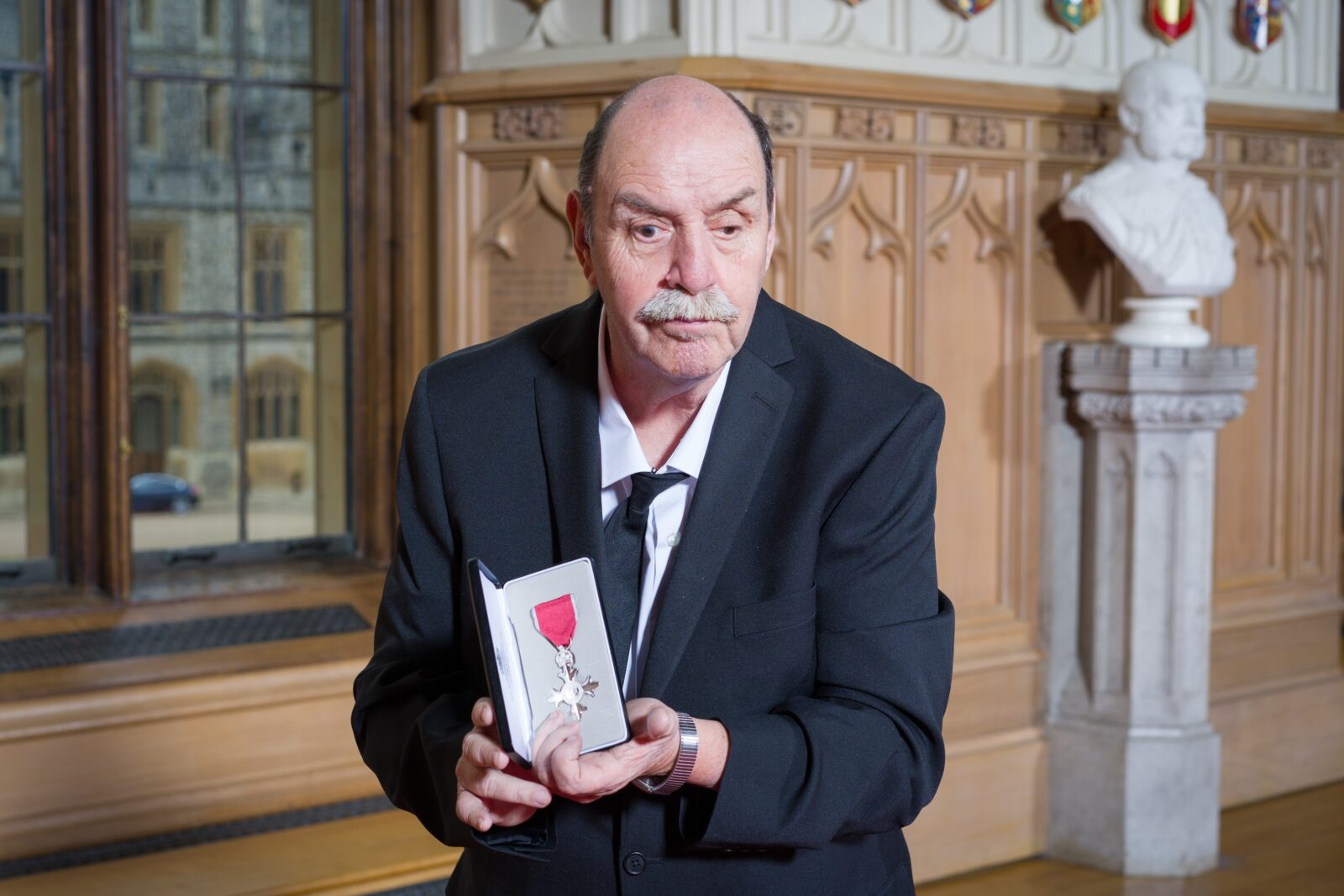
The campaigner was made an MBE last year in recognition of his services to the community.
He says he was very proud to get the award, both for himself and for the organisation, but it is not the most important thing: “I didn’t do this to get an MBE. I wanted to make life better for other people.”
When Prince William awarded him the medal, Edwards found himself alongside award recipients including Simon Le Bon, lead vocalist of Duran Duran. Edwards says the singer told him he had heard of MLMC.
Edwards turns to Sophie Bolton, MLMC’s communications officer, who is sitting in with us: “We must chase that up, Sophie!”
Bolton duly takes a note then asks Edwards what he is most proud about. His answer is simple: “Getting the charity to where we are now.”
Beware the big head
At the time of our interview, he was looking forward to a party to celebrate his MBE, laughing as he adds: “But I don’t want to blow my own trumpet too much or my head might expand. I wouldn’t be able to get out of the door.”
I went up to People First in Nottingham and that’s when the idea came. Well, why can’t we do it?
Finally, I ask if I can take a few pictures to go with this interview. Edwards agrees. It is a cold day and he is dressed for winter but, as our interview will be published in April, I suggest the editor would appreciate it if he removed a layer so the photograph looks more seasonal.
Edwards’ answer is unequivocal, direct and forthright – exactly as you would expect from a successful self-advocate: “No. Absolutely not. If they don’t like it, they don’t have to use it.” The coat, quite rightly, stays on.
Rachel Wallace checks on the quality of support services. She tells Saba Salman about offering constructive feedback and why it’s great to work
Rachel Wallace: with coordinator Derek Whitaker and fellow checker Douggie Catterall: quality checkers visit a different service each week. Photo: Certitude
The best thing about working, says Rachel Wallace, is “meeting people and asking them about their lives”.
The London-based quality checker also adds that she “just enjoys having a job”.
Wallace’s role at Certitude, a social care provider supporting people with learning disabilities, autistic people and those with mental health support needs, involves visiting and assessing the organisation’s services. The aim is to check the quality of support services from an expert by experience perspective.
The checking team was set up in 2022, with the first checkers – of whom Wallace was one – starting work in early 2023. The team has since grown to five checkers, supported by coordinator Derek Whitaker. The aim is for them to visit a different support service every week.
Wallace and her fellow quality checkers are part of Certitude’s 10-strong Treat Me Right! training and consultancy team. The wider work of this team – all of whom have lived experience – involves everything from public speaking to producing easy-read information and training on reasonable adjustments.
“People who already have support make great quality checkers because they’re on the inside noticing the everyday stuff,” explains Wallace.
“I think that the difference in what we’re doing is that our quality checkers are paid employees, rather than people with lived experience who are just asked to collaborate – it’s employment.”
The recruitment process was accessible from the start, with the job advertised through a video and information about the role provided in easy read.
Wallace says: “It said you can apply any way you want. Give us a ring, make a video, send us an email, just get in touch. The team made sure people had support with the application process in whatever way was needed. I could choose to do the interview in person, on the phone or in an online video.”
People with support are great quality checkers as they’re on the inside noticing everyday stuff
She was also told in advance that the job interview would include just one question: why do you want the role? She says: “I wanted to start working and earn some money. I wanted to work with Derek as well as get out and meet new people, see new places.”
Wallace says that as team members have firsthand experience of autism and/or learning disabilities, they can offer unique feedback on what support is like for people.
She adds: “Our aim is to support positive change. We visit with a positive attitude to offer feedback and suggestions where needed.”
For example, on a visit to a housing support service, quality checkers such as Wallace gather opinions from residents – “the primary purpose of our visit”.
“We take notes then reconvene a day or two later to discuss what we found and co-produce a report. That report goes back to the managers and to the quality team. We then follow up about three or four months later to see what’s changed.”
Wallace says the biggest problem is that “sometimes people talk to Derek rather than me, but we soon correct them”.
From Whitaker’s perspective as the quality checker coordinator, Wallace was ideal for the role: “She speaks her mind, which is something that’s important in this role. She’s sociable too.”
He says: “It’s great when you see changes based our team’s recommendations and the difference to how people feel.
“Sometimes the changes are big, like people going on holidays they’ve always wanted to go on. Often, it’s simple changes, like choosing to have more personal things in shared living spaces – the little things that help us all feel comfortable in our homes.”
Rachel Wallace was supported to collaborate on this article by Derek Whitaker as communication partner
A service is supporting parents to keep families together and children out of care. Hannah Fearn describes its work
Elfrida’s advocacy service works to understand exactly what parents need so they can engage in legal processes around their children, supporting them to represent themselves. Photo: Seán Kelly/www.seankellyphotos.com; photo posed by models
When Jade Tyler (not her real name) first met Kat Edwards, she was severely anxious.
She had already had one child taken from her and put into care, social services were seeking court proceedings over her second and she was overwhelmed by the constant questioning of authorities over her parenting.
Tyler was described by professionals as “difficult” and “challenging”, with a reputation for becoming aggressive. But the woman Edwards encountered was different.
“She was really anxious about her child being taken away so she wouldn’t really say too much, or she would be really guarded … that looked as if she was being uncooperative,” Edwards says.
“She’s very good at giving the impression she understands but, if she doesn’t, she gets angry. That upsets professionals because they think she’s aggressive.”
Simplifying complex law
Edwards is an advocate for learning disabled parents at the Elfrida Society. She builds a relationship with parents, guides them through the legal process, explains each step and interprets complex legal documents into formats they can understand. The aim is to help parents such as Tyler keep their children from going into care.
Some 40%-60% of parents with a learning disability have their children removed, according to the NIHR Policy Research Unit in Health and Social Care Workforce at King’s College London.
Elfrida’s specialist advocacy service for parents works to understand exactly what people need to fully engage in the legal process, from simplified written materials to translation services, assistance with legal paperwork or emotional support. Advocates don’t speak for parents but support them to represent themselves.
In Tyler’s case, she had a difficult childhood, including bereavement, and was raised abroad. She was being asked to negotiate complex family law and with English as her second language.
Within a few hours of working together, Edwards got to the root of her struggles: Tyler found it hard to keep up with the speed of questioning from social workers and others and was answering their questions out of sequence.
“She would respond to questions, but the response wouldn’t be what you would expect. If you took that answer as her response, it wouldn’t make sense, so social workers would say she couldn’t understand.
“I explained that she hadn’t caught up – she’s still processing it. She does understand everything but, if you ask her too quickly, she will take time to process it and you’ve moved onto something else.”
Edwards asked for time between questions, provided easy to read materials, rephrased issues Tyler struggled to understand and acted as a step-by-step guide.
Though the process took years, the supportive relationship helped Tyler to open up and, gradually, social workers saw a different parent – the one Edwards knew. “The difference is absolutely incredible. She’s so relaxed and laughing and joking.”
The result couldn’t have been happier: with support around her, Tyler is living with and parenting her child almost 10 years later.
Demand for Elfrida’s parenting advocacy service is soaring. The charity has three specialist advocates working with around 60 families at any time in London and the home counties.
The work is funded by local authorities, which pay for the service and refer clients directly to it. It has a high cost when council budgets are tight but the savings, both financial and psychological, are huge.
Elfrida is seeking funding to expand. It is oversubscribed and recruiting advocates is tough as the role requires specialist skills and experience of working closely with learning disabled people.
But the model could be replicated, and it is crucial for parents with learning disabilities to have fair representation in our legal system. Edwards says: “If they don’t have information they can’t challenge [in court] – they are just being told things by people and that’s not a fair process”.
Hannah Fearn is a freelance social affairs journalist
Being relentlessly reassessed for benefits is traumatic, with assessors seen as dismissive, patronising and holding all the power. The system needs more than tweaking – it is rotten to the core
Photo: Seán Kelly, seankellyphotos.com
Being repeatedly assessed and reassessed is a grim fact of life for tens of thousands of people with learning disabilities and their family members – for money to live and for support from services.
As austerity continues to bite harder and harsh words from politicians look unlikely to change any time soon, what do we know about how people with learning disabilities experience these kinds of assessments?
Research reveals grim reality
In a study, Liverpool-based researchers Bethan Ward, Ste Weatherhead and Beth Greenhill carried out in-depth interviews with eight people with learning disabilities who had been through welfare assessments for a personal independence payment (PIP), employment support allowance or both.
The study found that the experience was traumatic for everyone. People felt nervous and panicky in the assessments – they were not told what to expect and were worried about the catastrophic financial consequences of getting questions “wrong”.
Assessment letters were not accessible, and people felt humiliated by assessments that were about people having to prove all the things they couldn’t do, not about understanding their lives.
Assessors were seen as having all the power, and were dismissive, snobby or patronising.
Assessments also brought back to people other times when they had been judged and humiliated.
How did people get through this horrible process?
They really valued practical and emotional support from family and local services who were trusted to help them get through it.
Some people resisted within the assessment meeting itself, demanding respect from the assessor. Some also reminded themselves and the research interviewer of good things about their lives and good things about themselves as people that the assessment process couldn’t spoil.
The traumatic experiences of people with learning disabilities are similar to those of other people going through assessments, although with extra dimensions of discrimination.
These are also common experiences for family members of people with learning disabilities. Parents and siblings of adults with learning disabilities in the Tired of Spinning Plates research project (“How are you? Really?”, winter 2025) said that the biggest source of stress and distress was the hostility and gaslighting from professionals.
Wherever you look, whether it’s inquests, complaints or the work of the Stolen Lives and Rightful Lives campaigns, people and families live in fear of reprisals from the very professionals whose entire job is supposed to be providing support.
People and families live in fear of reprisals from the very professionals whose entire job is supposed to be about supporting people
And these assessments don’t stop coming. Here’s just one example: figures from the Department of Work and Pensions show that in the year from October 2023 to September 2024, almost 6,000 people with learning disabilities had their PIP reviewed when they were already entitled to it.
Finding against one in five
For 4% of people, their review resulted their PIP being decreased and, for 16%, their PIP was stopped altogether, most commonly because the assessment was cancelled because the paperwork wasn’t done right.
Another example: special educational needs (SEN) appeals (usually because an education, health and care plan was not awarded or was not satisfactory) increased by 55% in one year, up to 21,000 appeals in 2023-24. Where the SEN tribunal decided the appeal, 99% found in favour of the person bringing the case.
Something is deeply rotten here, and assessments have very clearly become – have always been? – a tool for rationing and humiliation. “Humane” tweaking will not do – more radical change is needed.
Acute liaison nurses are there to help learning disabled patients and teach other staff in the hospital. Jayne Leeson and Anne Marie Glasby describe the way this works and how the approach is to be extended and standardised across the country
Acute liaison nurses at the Royal Sussex County Hospital advocate for patients and ensure their needs are met. Photo: Ian Cunliffe/geograph.org.uk/CC BY-SA 2.0
Samir was a sociable young man. He had a profound and multiple learning disability, a variety of health conditions – some of which were rare and affected each other – and used very few words to communicate.
Samir (not his real name) had regular contact with the acute liaison nurses at the Royal Sussex Hospital in Brighton. Over many years, the nurses got to know Samir and made a point of including his support staff as experts with a wealth of knowledge about how to keep him well.
Samir’s acute liaison nurse advocated for his rights. At every admission, she checked that reasonable adjustments had been put in place for him.
She was aware of the difficulties Samir and his staff had in getting his health stable over an extended period of time. She successfully advocated many times for consultants to follow the care plan used at his home, which took into account of his many conditions that impacted on one another.
Going national
Acute liaison nurses play a vital role in reducing the health inequalities faced by people with learning disabilities.
Our organisation, Changing Our Lives, was commissioned by Health Education England, part of the NHS, to produce A Uniform Approach – the competency framework for acute liaison nurses. The framework is due to be launched in late spring.
The framework was commissioned owing to a lack of consistency in practice of acute liaison teams in different parts of the country. It is intended to provide local services with a more structured evidence base to inform the design, delivery and deployment of learning disability acute liaison nurses. This, in turn, will enhance the care provided for people with a learning disability.
In Samir’s case, a few years ago, he became very poorly and spent five weeks in hospital. Medical staff called a best interests meeting to discuss not admitting Samir to hospital again if he got ill, and only treating him at home.
Samir’s acute liaison nurse and his home care staff challenged this, arguing that this decision was led primarily by the fact that he had a profound and multiple learning disability.
After this decision was successfully challenged, Samir’s next visit to hospital was a few weeks later. The acute liaison nurse worked with his staff at home to create a plan where he received intravenous antibiotics in hospital for four days then was nursed at home on oral antibiotics. Subsequently, he had several successful admissions to hospital.
Samir passed away last year. With the support of the acute liaison team at the Royal Sussex and many best interests meetings, his staff team enabled him to come home at the beginning of August under the care of the hospice at home team at local charity Martlets.
Samir died peacefully and with dignity at home a month later.
In 2022, 42% of adults with a learning disability who died and received a review under this NHS programme died from an avoidable cause of death.
Lord Darzi’s independent investigation into the NHS last year echoes these findings, stating that people with a learning disability are twice as likely to die from preventable diseases and four times as likely to die from treatable causes such as cancer or respiratory illness than others.
His report drew attention to the dwindling numbers of learning disability nurses, highlighting that, since 2010-11, the number has declined by 44.1% on average across England.
Finding what works
Co-producing A Uniform Approach between 2022 and 2024 involved working with: 70 people with a learning disability, 30 of whom came from minority ethnic communities; 35 family carers, 11 of whom had a loved one with a profound and multiple learning disability; 45 provider staff; 55 learning disability nurses; and 30 professionals.
In the first year, we spent considerable time working with people with a learning disability and families around England asking them about their experiences in hospital, what worked well for them and what could have been better.
We particularly sought out individuals who were not regular contributors to self-advocacy groups
We particularly sought out individuals who were not regular contributors to self-advocacy groups and hospital expert by experience groups, including people from minority ethnic communities and families of a loved one with a profound and multiple learning disability.
We held workshops social care support staff, exploring what good acute liaison nursing looks like and the knowledge and skills needed to do the job well.
We worked with nurses in the role from around England, including paediatric and adult nurses and those who were newly qualified, exploring the scope of the role and key barriers and success factors.
In addition, our advisory group was made up of people with a learning disability, family carers, representatives from universities and senior learning disability nurses – and an independent journalist offered challenge and guidance throughout the development of the standards.
The framework is organised according to the four pillars of nursing practice: clinical skills; leadership; education; and research and governance. Each section includes quotations from people with a learning disability, family members, support staff and nurses illustrating why these issues matter.
It includes an overview of the skills, knowledge and behaviours that are crucial to being an effective learning disability acute liaison nurse, as well as the outcomes to which these all contribute.
A series of good practice examples throughout the framework illustrate the required knowledge, skills and behaviours in practice and show what it is possible to achieve when acute liaison nursing is delivered effectively.
The value base that underpins the acute liaison nurse role is rooted in seeing people first rather than a set of diagnoses and recognising the equal rights of people with a learning disability.
Jayne Leeson is chief executive and Anne Marie Glasby senior development officer at Changing Our Lives
Acute liaison nurse: making it all work during a stay in hospital
The acute liaison role is one of enabler, ensuring that other hospital staff are providing good care for people with a learning disability and acting as a co-ordinator and facilitator of this care.
They act as role models in all interactions with people with a learning disability and their families and support staff and, on occasions, deliver direct care when additional specialist input is required.
Most hospitals in England have an individual in the acute liaison role; some have a team.
Most of these practitioners are learning disability nurses, but they can be other health professionals such as speech and language therapists.
Some acute liaison teams support both those with a learning disability and autistic people who do not have a learning disability.
Although the role of the acute liaison nurse can vary across England, common areas of practice include:
Facilitation of reasonable adjustments to enhance the patient experience and ensure good health outcomes
Facilitation of communication between the patient and family and staff throughout the hospital
Support with mental capacity assessments
Working with hospital colleagues to embed equality into healthcare practice and culture
Advocating for patients’ rights and having up-to-date knowledge of common health conditions that affect a person with a learning disability; these can include epilepsy, heart disease, diabetes, gastrointestinal cancers, swallowing problems, respiratory problems, poor postural care, mental health difficulties, constipation and dysphagia.
Social care isn’t seen as a great career option but, if people knew the variety of what it covered, this would change. The government should start by raising awareness of this
“9pm is not a bedtime for an adult!” Photo: Shalim Ali
Social care has been in the news because the government has asked Baroness Louise Casey to lead an independent commission to sort out the problems in the system.
I have a lot of experience of social care. I get a few hours of help a week from a support worker, and I also work in the sector as a social care researcher and quality checker. This is someone with experience of support services who is paid to check on places such as residential care homes.
I wrote about my job in this magazine (“Like Everyone Else, We Want a Homely Place to Live,” spring 2023) after I did a project with King’s College London looking at what helps people with learning disabilities feel at home where they live.
Everyday structure
My support’s been cut in recent years. I used to get four hours a week – now I get three. My support worker helps me with replying to letters and emails, managing my finances and keeping on top of my work.
When I was in my late teens and struggling with my mental health, I had help from a social worker who helped me get support from an occupational therapist (OT) – someone who can help you get on with everyday things.
This helped me structure my day, kept me busy with activities such as going to day centres and made me feel more independent. I learned how to travel around London, how to cook and clean, go shopping and keep on top of my diary. I had two OTs and I remember them being kind and helpful.
What makes a good social care professional? Being open minded – not strict.
But 9pm is not a bedtime for an adult! We all need to get out and mix with people. Staring at four walls doesn’t help wellbeing or independence
If you work in social care and the person you’re supporting wants to be more independent, you should help them to achieve this goal. You should not stop them because you think it’s too risky or because you think policies and procedures stand in the way. You should be motivated by and enthusiastic about the aims of the person you support.
One thing I find frustrating is that disabled people are not usually supported to have proper social lives because support staff want you home by 9pm.
But 9pm is not a bedtime for an adult! We all need to get out and connect and mix with people because it’s good for self-esteem and confidence. Staying in staring at four walls doesn’t help either your wellbeing or your independence.
Social care needs proper funding because people don’t have enough support. Sometimes people might have an activity to get to but no transport to get there.
It’s worse if you live in a rural area and you don’t have the choices that we do in a city such as London. Social care organisations in rural areas either don’t have the money to put on events or they don’t think creatively.
Support providers could think outside the box. They could come up with ideas like coffee clubs in different locations around the area.
The wide world of social care
No one thinks of social care as a great career option, partly because the pay isn’t great.
Apart from funding, something else the government can do is help people understand what social care is. More people might want to work in it if they knew what it involved.
It is a term that covers so much – the elderly, learning disability, the transition from children’s services into adult social care. Most people also don’t think they will one day need social care themselves. I’d say to them: look in the mirror, one day it might be you who needs support.
I worry for people who don’t have the support network of family and friends that I do.
Although my support hours have been cut, I am grateful and fortunate to have colleagues, family and friends, and I’m confident about asking for help.
If social care could empower people to live independently and make their own choices, they could contribute to society.
Everyone can be heard and share their stories in the Peter and Friends books. The team want to hear about your life experiences – no matter your age – for the next one, says Steve Hardy
Different lives: the book will document the experiences of people with learning disabilities aged from their 20s to their 80s. Photo: Seán Kelly/www.seankellyphotos.com
The Peter and Friends series of books is a unique, inclusive approach to publishing the experiences of people with learning disabilities and their allies.
Along with myself, the digital project editors include Peter Cronin of Lewisham Speaking Up and Eddie Chaplin, professor of mental health in neurodevelopmental conditions at London South Bank University (LSBU).
The project was founded in April 2019 by self-advocate Peter Cronin in response to the pandemic as a platform where everybody, regardless of their status, can be heard.
We believe that everyone has experiences and a story to share. Most of all, we believe that people with learning disabilities, their families, carers, advocates, educators, the charity sector and heath/social care staff can be published in the same place.
True co-production between people with learning disabilities and their allies is the sharing of power.
The first free to download book, released in October 2019, is called Peter and Friends Talk About Covid.
The pandemic was new and no one was ready for how it changed our lives. Peter Cronin lives independently and was lonely, worried and anxious. He had sleepless nights and had nobody to talk to about Covid.
He developed a cough and thought he had the virus, but his Covid test was negative. After this, he thought: “How are other people with learning disabilities coping during Covid?”
We started to ask people for their pandemic stories. We used Twitter (now X), Facebook, LinkedIn, emails and advocacy networks. We were astonished at the response; we received stories from 12 countries across five continents.
Global reach
The book was launched at a virtual conference attended by over 300 people from all over the world with powerful contributions including from Liberal Democrat politician Sir Norman Lamb and experts by experience from Spain.
The second book, Peter and Friends Talk About Mental Health, was published in October 2020. The book concentrated on Europe, with stories by experience from experts by experience, families and carers and organisations.
It also contained easy read information about mental health conditions, how to stay mentally well and how to get help. But what we are really proud of is that it explained different innovative projects across Europe.
Our third book, Peter And Friends Talk About Their Experience Through Their Lifetime will be published late this year. We will be looking at the experiences of people with learning disabilities in their 20s up to their 80s.
Then we will compare similarities and differences in life experience. For example, younger people will never have experienced large, long-stay institutions but people who are in their 60s or older may have.
Part of the third book includes research. We aim to make a historical record of the past 80 years as experienced by people with a learning disability – in their own words. It will cover four to five people in every decade of life and we aim to publish the research in academic journals.
People can send us their stories that they have written themselves or with support. They can also send pictures as part of their story and family members of people that need support can be included, so we reach a wide range of people.
Everybody we interview we will have to give their consent under the policy of LSBU. The project is undergoing ethical scrutiny by LSBU; once it is approved, we will share more information, so people can decide if they want to participate.
We are really looking forward to this next stage of Peter and Friends and listening to everyone’s stories.
If you would like to be involved in this project, please email: steve.hardy@nhs.net
Music can be strongly linked to autism and learning disability, as John Harris found with his son. This should open up a whole new area of provision throughout life so people can develop their talent
James Harris playing guitar. Photo: John Harris
My son James was diagnosed with autism when he was three.
We received the news a few days after Christmas 2009, but it wasn’t much of a surprise: in the months beforehand, he had been repeatedly visited, observed and developmentally tested to the point that the whole family had started to reach its limit.
I had watched him being told to push coins into money boxes, pick up tiny beads and build towers of bricks, registering what was obviously a series of fails.
There had been strange and seemingly pointless questions: “Does your child eat very quickly? Can your child kick a ball that isn’t moving?”
Cold experts
And, even after he received his diagnosis, the dour, cold, sometimes bizarre tone of our encounters with experts and professionals continued.
When he was four, for example, we got yet another report from an NHS paediatrician that baldly laid out some of what James’s autism and learning disabilities meant: one of the more cheerful passages said that “James showed fleeting eye contact with me but it was of abnormal length and devoid of social meaning … James has poor reciprocal social interaction and poor speech which is certainly not fluent.”
That hurt but, by then, we had developed much thicker skins than I ever thought we would.
Fourteen years later, I have just completed a book about James’s life so far, and the world of fascination it has long since opened up.
Maybe I’m Amazed is the story of how all four of us – James, me, my partner Ginny and our daughter Rosa – eventually emerged from the black cloud that had been placed above us as we realised that he was every bit as complicated, creative, funny and fantastically human as anyone else.
And it explores what sits at the heart of so many of our shared experiences: the deep and overlooked connection between autism – and learning disabilities – and music.
When he was two, James taught himself how to use my iPod. He was already obsessively listening to songs by The Beatles, and memorising all the words and music. Later, he would develop similarly devoted interests in Kraftwerk, The Clash, Funkadelic, Amy Winehouse and many more bands and singers besides, and learn to play keyboard instruments, as well as the bass guitar.
We eventually discovered that, like many autistic people, he had what musicologists call absolute pitch: the ability to name musical notes as soon as he heard them and follow music as a matter of instinct, which is one part of an even bigger talent for hearing things in songs and pieces that most people would either ignore or miss. These things have been massively important to his experience of education.
Like so many parents, we had to fight to get the kind of intensive one-to-one support James needed in the mainstream. We live in Somerset, where there are still middle schools – and it was at that stage of his schooling that what professionals call “inclusion” really worked. Some of this was down to a welcoming, endlessly curious music teacher who ensured James played music in school productions – three times – and had the run of a room full of instruments.
The high point was the night the two of us (him on vocals and keyboards, me on guitar) played The Velvet Underground’s I’m Waiting For The Man at a midweek concert to a packed hall: the feeling we got was the precise opposite of the cold, limiting messages we’d been given when James was diagnosed.
He went from that school to an autism specialist setting, where his best experiences continued to involve music: regular music therapy sessions, lessons with a bass teacher and more performances.
Outside school, moreover, his interests and talents have been helped by the work of brilliant West Country-based charity Evolve Music, who put on SoundLab, a weekly youth club for learning disabled and neurodivergent young people where James plays, learns – and, in his own way, socialises.
There are two massive issues that all this flags up. One is to do with the decline of music in state schools, and the overlooked fact that this has hugely affected autistic and learning disabled children and young people.
As schools have been gripped by cuts and told to concentrate on English, maths, languages and science, music education has entered an ongoing state of crisis.
The absence of a music teacher would have made inclusion much harder and more complex
The statistics are eye-watering: between 2010 and 2023, the number of people training to be music teachers more than halved. In our case, the absence of a music teacher – Miss Parsons, and we’re still in touch – would have made inclusion for James immeasurably harder and more complicated.
The other issue is even bigger. Towards the end of Maybe I’m Amazed, there’s a chapter full of questions about autism, learning disabilities and adulthood.
Through James’s life so far, what has often kept us going is a sense of momentum: the feeling that with enough effort and belief, possibilities will unfold, and allow him to somehow reach his potential.
But part of the attitudes and prejudices that too many institutions enshrine is a strange belief that education has to end at some arbitrary deadline, and that autism in particular is something exclusively to do with childhood. The result, if you’re not careful, is a sudden sense of possibilities shrinking.
A lot of people reading this will know what this feels like: dispiriting occasions when you sit in some spartan meeting room, and have leaflets pressed on you about unpaid shifts in charity shops or garden centres.
I think I know what would suit James, but it sounds almost utopian: a kind of neurodivergent music school, with an abundance of technology and the chance to develop his talents for as long as he liked.
Only last week, I watched him spend a day creating meticulous PowerPoint presentations about the discographies of The Strokes, The Beastie Boys and Mott The Hoople, before he spent an hour teaching himself how to play The Beatles’ The Fool On The Hill on the acoustic guitar; next Friday, he will resume his sessions at SoundLab. But what can he do to further develop all that?
James is now 18: our fear is that, beyond our home, there will be no provision that taps into all these appetites and talents – a door will be slammed when he reaches his early 20s, and we will find ourselves in a make-do-and-mend reality of day centres and occasional trips out.
Surely, after all these years of increasing knowledge of autism and the complexities of human psychology, there ought to be a lot more than that, accessible to everyone who needs it.
In our case, what psychologists and educationalists now know about the profound links between neurodivergence and music ought to begin to open up a whole new area of provision, but I fear we will be waiting for an impossibly long time.
James Harris, photos: John Harris
Ambition not impairment
There is a vast amount of joy in the life we share with James, and how it changes and evolves.
It comes to us not just through music but also his other talents and interests, and how much they have blossomed: art, cycling and his amazing fondness for hillwalking, which has taken us on ambitious hiking trips around the country, and earned James two Duke of Edinburgh awards.
What all this vividly shows is there every time he picks up a guitar or makes his way up a mountain: the fact that our kids can’t be endlessly pathologised and problematised or reduced to deficits and impairments.
This is the lesson at the heart of Maybe I’m Amazed, and it needs to be absorbed into not just our systems of education and care, but the whole of society.
Is climate change a disability issue? An exhibition by Open Story Tellers, a Somerset-based collective of artists with learning disabilities, explored these, writes Saba Salman.
Jacob Dando. Photos: Open Story Tellers
Although climate change disproportionately impacts disabled people – being less able to safely evacuate in extreme weather, for example – this part of our population has “no visible input into discussions and solutions”, as campaigners such as Disability Rights UK have highlighted.
Ogden and the collective looked at locally grown fibres and how they can be used in fashion, producing wool pieces for the exhibition.
Ogden, who brought in handlooms, needle felting, embroidery tools and natural dye plants, said: “We talked about the story of the emperor’s new clothes and thought about how members could become influencers in their local community by making locally grown, biodegradable clothing.”
Presenting research in the form of a comic may seem unorthodox but it has proved to be an excellent way to display findings and send a message about who research is for, says Melissa Kirby
Each group member designed their own comic character. Image: Molly Pukes
The Purple Patch comic book is thought to be one of the first to be co-written by researchers with learning disabilities.
The comic is based on the work of the Purple Research Group, a team of seven researchers with learning disabilities whose vision is that all research should be inclusive and accessible.
The group was formed in 2020 as part of my PhD at the University of Leeds, which explored people’s experiences of arts-based learning at Purple Patch Arts. This Leeds-based charity provides inclusive creative learning opportunities for learning disabled and autistic adults.
We met on Zoom from August 2020 to July 2023 to conduct our research. We then needed an accessible way to share our findings, and the idea for a comic was born.
The comic, published last June with funding from the Society for Education, Music and Psychology Research, shares the group’s story of co-designing a participatory research project about experiences of arts-based learning.
Each group designed their own character, which was brought to life by artist Molly Pukes. The script includes direct quotes (such as about what is special about the arts) and artwork from the group.
The co-researchers and I had a conversation about making the comic and how it shares important messages about who can and should be a researcher.
The aims
Purple Research Group: We wanted to make it easier for people to access the information from our research and to learn about our ideas. The comic also shares our views on what a better world would be like. People with learning disabilities need to have their voices heard and the comic is a way for us to put our views across.
Melissa Kirby: It’s important for inclusive research to share findings in accessible ways. I had to write a thesis, but this wasn’t accessible to most people. A comic seemed like the ideal way to share research in an engaging, creative way.
The process
PRG: We wrote the script together on Zoom. We talked about our ideas and Melissa typed it up. We all have a character, and chose what we wanted them to look like. Each of our research themes is an “island” in the story, and we designed these based on our visions of a “perfect world”. Then our artist, Molly Pukes, brought it all to life.
MK: We shared early versions of the comic with Purple Patch participants and had great feedback, which we incorporated into the final version. A few people said they wanted to be researchers too, which was exactly what we had hoped the comic would achieve.
The message
PRG: We wanted to spread the word and make our research available to everyone. We want people to know that people with learning disabilities can be researchers, writers and creatives. We can be anything we want to be.
MK: The comic shows research is better when researchers, communities and organisations work together.
The benefits
PRG: Being able to do the comic was brilliant. It was teamwork! We have all learned new things – from not knowing what research was five years ago to creating our research comic. We also won an award from the University of Leeds for our research, which made us feel very proud.
MK: Our research will reach more people. How we share research sends a direct message about who it is for, and who can and should be a researcher. Our message is that anyone can be a researcher.
Melissa Kirby is a researcher at the University of Leeds. Purple Research Group members who collaborated on this article are John Bartle, Ella Schofield and Tracey Barrett
A pastoral idyll or post-industrial desolation? Simon Jarrett sees future worlds expressed through dance
Corali dancer Sheri King: the starkly different forms of dance in each show were a true test of ability. Photo: Jon C Archdeacon
Phantasia
Corali Dance Company
The Place, London
March 2025
What is the sound of a nightmare and what is the sound of a dream?
This was the question posed by London’s Corali Dance Company (of which I am outgoing chair) as it premiered its intriguing new performance, Phantasia, at The Place.
Phantasia consists of two dance pieces, each imagining a future world.
The first, Daisies, was a dreamy reverie which explored an idyllic, pastoral, back-to-nature vision of the future, a pleasant dream world where the peace is disturbed only by insect and bird sounds.
The second piece, Mannequins, was an altogether more disturbing imagining, a dark post-industrial world, where non-specific, mannequin-like figures, somewhere between human and robot, respond to the unsettling noises of the world they inhabit.
Corali describes itself as a leader in dance created by people with a learning disability, and Phantasia was suffused with two of its trademark approaches: a lead role for dancers in developing choreography and story lines; and collaborations with artists from both within and outside the dance world.
Jackie Ryan, a long-standing Corali performer, led the development of Mannequins. Speaking before the performance, she told me of her lifelong fascination with mannequins, often stopping to contemplate them in shop windows, intrigued by how they were dressed and positioned.
She feels that making these human-like figures come alive through dance carries important messages: “How mannequins can come alive is good for dancers with learning disabilities to try as something new and not worry about looking different.”
It’s a reminder, she adds that, as humans, however we may appear, we are all the same.
Multisensory vision to life
Phantasia is the Greek word for imagination, and collaborations with various artists allowed the production to bring deep imaginings to life on stage.
Visual artist Mark Beldan collaborated with the dancers on creating the set for Daisies. Musician Matt Webb, costume maker Jacob Elliott Roberts and photographer Jon C Archdeacon all worked with the dancers to create a multisensory vision of these new and fascinating worlds.
How mannequins can come alive is good for dancers with learning disabilities to try as something new and not worry about looking different
How dance relates to sound and sound relates to dance were explored. The mannequins came onto stage dragging chairs, but the discordant sound of chairs being dragged was made by balloons being rubbed. Bee noises were created by contraptions made of cardboard, pencils and rubbers being swung in the air on pieces of string.
It all added to the eerie strangeness of these dream worlds. It sounded familiar, we thought we knew what we were seeing and hearing – but then again it wasn’t all quite what we thought it was.
While the Daisies set was an explosion of colour, Mannequins took place against a desolate minimalist backdrop dominated by shadow and light, The same dancers performed in each piece, which made Phantasia a real test of their ability to bring starkly different forms of dance and performance to the stage in one night.
Two well-known non-disabled dancers, Patricia Langa and Sean Alexander Murray, performed with the Corali dancers, another facet of the dense web of collaborations that ran through this production.
The curtain-raiser for the evening was a performance of a work in progress by Kick Up, Corali’s dynamic youth dancers.
Sarah Archdeacon, Corali’s artistic director, told me this was an important event for Corali and for dancers with learning disabilities generally, as it was “our own evening, at an iconic, prestigious dance venue”.
It represented a culmination of years of collaboration and artistic development, with growing awareness of and respect for what these dancers bring to the stage.
It is planned that Phantasia will move to other venues.
Fancy a comedy challenge with devilish rules? Then a monthly podcast for ‘anyone who likes comedy who thinks a bit differently’ may be for you. Simon Jarrett tunes in
Jason Eade. Photo: Dave Lavis
Carousel is a lively and always interesting arts organisation in Brighton that supports learning disabled artists to flourish across all forms of creative expression.
The latest venture from Carousel is a monthly podcast project called Following Rules Apply. The show is in development stage and will go live this summer.
The young, neurodiverse production and presenting team consists of Jason, an up-and-coming podcast host, and Joel and Paggy, two budding comedians (who prefer to be known by first names). All three have a track record of performing publicly.
Joel picking up the gold prize for Carousel Radio in the Audio Production Awards. Photo: Dave Lavis
Paggy makes a podcast with Joel. Photo: Dave Lavis
Daft and tricky
The premise is that the host sets “daft and tricky made-up challenges”, which Joel and Paggy as well as invited guests then try to answer. But here’s the twist – they can only answer the questions according to the “fiendish rules” that have been set for it.
Here is an example, which emerged during podcast development: you are the manager of a band, and you have to assign one instrument only to each member of the band: what choices will you make? And the rule is: each band member is a different species of bird.
Joel and Paggy sailed through this one. Obviously, the lead guitarist is a bald eagle, the singer is a lyrebird, a penguin is on drums and the bass player (the one who no one pays any attention to) is a pigeon.
Unless it’s a funk band, Joel tells me, where apparently the bass player takes centre stage, in which case they should be a flamingo.
In an interview, Joel reveals that the idea for the podcast came from Jason, who has a long history of asking people silly questions. (I should reveal at this stage that Joel is a relative of mine but was asked to do the interview on merit rather than through nepotism or an urge for family self-promotion.)
Here’s another challenge: you have to send a message to everyone in the UK. The rule? It must be five words or less, and can be displayed only on a banner behind a bi-plane.
For me the best suggestion the team came up with was “be prepared”. I can’t imagine anything more likely to send the nation’s conspiracy theorists into a frenzy.
Part of the project has involved seeking advice from podcast professionals, and the three team members are developing radio skills such as audio editing, production and location recording.
Who is the target audience for the forthcoming podcast?
Joel says: “It’s anyone who likes comedy who thinks a bit differently.”
And what is it that makes these podcasts work? He has a simple answer for that: “We’re just really good at our jobs.”
Carousel says that its radio shows and podcasts reach listeners in more than 50 countries and are produced entirely by learning disabled or neurodiverse people. The organisation has won prizes at the Audio Production Awards and the Lovie Awards, which celebrate European internet excellence.
Speaking of his work with Carousel over recent years, Joel, who describes himself as autistic, says: “It feels like I was ignored before. Carousel first let me speak – and now they want me to speak.”
You’ll see why Carousel is so keen for Joel, Jason and Paggy to speak if you listen in to the Following Rules Apply podcasts later this year. They’re very funny and they’re very different – who’d want to miss them?
Franco Basaglia, who had been interned by the Fascist regime, thought asylums were like prison camps – as did Italy’s health minister. Susanna Shapland describes how they were shut down
Franco Basaglia and his team phased out restraints, reduced “treatment” and encouraged patients to find paid work and take part in hospital meetings
In Italy, a 1904 law stated that anyone deemed a danger to themselves or others, or whose behaviour might cause a public scandal, should be admitted to an asylum.
It applied to everyone considered “deviant” from social norms, including children and learning disabled people. Patients were referred by families, doctors or the police. They were segregated by sex, had their heads shaved and personal items removed and, effectively, prepared for indefinite incarceration.
“Treatment” was dominated by organic approaches: electro-convulsive therapy (ECT), as both treatment and punishment; lobotomy (psychosurgery); insulin therapy; and hydrotherapy (including baths of freezing water). Restraint was common, with patients tied to their beds overnight or to trees when outside, with frequent use of the straitjacket.
In 1965, health minister Luigi Mariotti described Italy’s psychiatric hospitals as akin to Nazi concentration camps or the lower circles of Dante’s Inferno.
The similarity between asylums and prison camps had also been noticed by psychiatrist Franco Basaglia. In 1944, Basaglia had been interned by the Fascist regime for his political activism. This experience impacted his career, in terms of both his radical ideas and in hampering his job prospects. So, in 1961, he found himself forced to take the only position open to him: director of Gorizia Asylum.
Basaglia was horrified by the insanitary and undignified living conditions and the punitive and inhumane “treatments”. He began to believe that the asylum system was morally bankrupt and “absurd”, a dumping ground for the poor and the deviant, existing to contain people rather than treat them.
Basaglia and his team made changes. Restraints were phased out and ECT massively reduced. Wards were opened up, fences taken down, often with the help of the patients themselves, who were encouraged to go out and find paid work. Patients were invited to attend and participate in hospital meetings, allowed to mix and given access to a hairdresser and bar.
In 1971, Basaglia was made the director of Trieste Asylum where he worked towards its closure. As well as reforms similar to those at Gorizia, co-operatives eased the transition from asylum to work alongside community housing, some of it in the institution itself.
Despite some fierce opposition, particularly from the press and judiciary, Basaglia attracted powerful political allies as well as students, activists and like-minded professionals from across Europe.
They worked with the patients (who became paid volunteers as they were discharged) to transform Trieste into an experimental space, host to exhibitions, plays, conferences and art projects.
Trieste asylum closed in 1979.
He believed the asylum system was morally bankrupt, a dumping ground for the poor and the deviant, existing to contain rather than treat people
In 1978, the Basaglia Law effectively abolished Italy’s asylum system, making it illegal to commit anyone to a psychiatric hospital. It gave provision for co-operatives to be established, aiming to return patients to society and work.
Its implementation was not smooth. It took nearly two decades to close all the asylums, with high-profile cases of ex-patients who went on to kill – partners, parents or themselves.
Families who had had their more problematic members institutionalised for decades struggled to welcome them back into their homes and lives. Many seriously ill people soon ended up in prison, and many learning disabled adults were left unsupported.
Nevertheless, most of the 100,000 former patients were reabsorbed into society. With people feeling moved by the widely circulated media issued by the movement and appalled by institutions that recalled the harsher, more unequal world of the Fascist regime, deinstitutionalisation had widespread support.
Today, there are no asylums in Italy; their grounds are used for museums, health centres and parks.
Further reading
Foot J. Franco Basaglia and the radical psychiatry movement in Italy, 1961-78. Critical and Radical Social Work. 2014;2(2):235-249
Foot J. The Man Who Closed the Asylums. London and New York: Verso; 2015
Sammy died in 2020 aged 13, after falling from a cliff in Kent; the coroner attributed his death to support failures by the local authorities.
The project is striking because not only is it a beautiful, fitting tribute to a much missed son and brother but also it encourages disabled people to aspire to work that others might not consider them capable of. Creating can shift perceptions.
The project is striking because it is a beautiful, fitting tribute and also it encourages disabled people to aspire to work that others might not consider them capable of
This brings to mind actor Cian Binchy’s thoughts on autistic people, creativity and connection, especially given stereotypes about them lacking emotion. Binchy, whose show will tour this year, says: “I believe that we connect better in fantasy or art than we do when we are just sitting talking to each other.”
Varied experience of carers
The potential of creating to carry a message is also at the heart of a multimedia exhibition for research on caring and mental health. Tired of Spinning Plates features poetry, photography, drawing, film, painting and writing – all mediums that help express carers’ diverse experiences.
In a separate project by Sibs (I chair the charity), a sibling carer, Monica, has contributed to a collection of stories, poetry and art that reflects life growing up with a disabled brother or sister. Autism: the Sibling Perspective was published with the aim of helping people understand sibling life and improve support for the whole family.
I’ll leave her last words: “When I talk about my brother’s autism and my caring responsibilities, people say they can’t imagine what it’s like or understand… you can do one simple thing to help us carers – listen and show empathy.”
Fears raised over assisted dying and funding backs work scheme. Saba Salman reports
Harry Cartmill making his recent Southbank Centre debut: his favourite music to dance to is from Indian films
Self-advocate who never feared speaking out
Catherine Carter: “Don’t be scared to take opportunities”. Photo: Thera Trust
Community Living was sad to learn of the death of self-advocate Catherine Carter, aged 51, in November.
Carter, service quality director for Thera North, part of Thera Trust, previously worked at Leeds-based charity Change.
In a statement, Thera Trust said: “You will be missed Catherine… the lessons you have taught us about inclusion will not be forgotten. You made a real difference to many people’s lives.”
Former colleagues Shaun Webster and Dominique Burley said: “Catherine was never afraid to say what was right and what needed to be done to improve the lives of others.
“She’s an inspiration, a friend, a mother and a sister. She will be forever missed and never forgotten.”
Carter won Mencap Activist of the Year 2018. She described her work in Community Living (spring 2024): “Sometimes in life, people need encouragement and support to have their voices heard and that is what my job is all about.”
Last respite holiday firm of its kind closes
The UK’s last remaining provider of holidays with 24-hour care for people with complex disabilities has been forced to close because of financial problems.
In a statement, 60-year-old charity Revitalise said it shut its two holiday centres, in Southport and Chigwell, in November.
It added: “It is with great sadness that Revitalise Respite Holidays must inform you that we are no longer a respite holiday provider.
“Despite every effort to ensure the survival of our respite holiday offering, the financial challenges we faced became insurmountable.
“It remains our lasting hope that policymakers take heed of the critical state of affairs in the social care sector and ensure that respite is properly funded.”
The decision was taken due to a combination of council funding cuts, falling donations and rising running costs.
The 17-year old from Birmingham has been dancing since he was a child, perfecting his routines by watching Bollywood dance scenes.
He honed his performance skills under charity Touretteshero’s young artists development programme and appeared at the Southbank Centre as part of Touretteshero’s Biscuit Land Cabaret.
The cabaret event was part of the annual Unlimited festival in September, which showcases performance, dance, comedy, music, poetry and visual art by disabled artists over five days.
Harry says of dancing: “It makes me really happy and excited. It’s the best thing ever.”
The teenager prefers fast music “with lots of drums” and his favourite music to dance to is from Indian films.
The dancer’s idol is Indian actor Hrithik Roshan and his favourite film is the 2001 Hindi family drama Kabhi Khushi Kabhi Gham.
News briefs
Moggy on the move
Members of People First Dorset have published a book in aid of the charity. Not Lost, by William Parmiter, Kerry Martin and Emily Burr (Community Living, autumn 2024), is the story of a cat who travels around Dorchester. The book, about joy and connection, is illustrated by Catherine Owen. It is available from raggyrat.co.uk and Waterstones.
Exploitation risk
Adults living with cognitive impairment are at risk of control and exploitation. A study by Nottingham Rights Lab at the University of Nottingham suggests financial abuse and “mate crime”(by someone posing as a friend) were the most common forms.
Big fundraiser for building
The Grace Eyre charity, founded in 1898, is aiming to raise £1 million to redevelop its Hove base. Formerly a church and a school, the property needs modernisation to create a sustainable, accessible building, including eight independent living flats. Works are due to start this year.
Blamed for wanting support
A report, Blamed Instead of Helped, published by the Autism and Parental Blame Project, by ADASS West Midlands, the University of Birmingham and parents of autistic children, has found that 86% of parents experience blame when asking for support for their child.
Five years of funds awarded
ActionSpace has won five years’ funding from the City Bridge Foundation. This will allow the arts charity, which marked its 40th anniversary last year, to grow its work with learning-disabled people aged 19-30 years.
All Update stories are by Saba Salman unless otherwise stated
What’s on our radar…
Fears raised over assisted dying and funding backs work scheme. Saba Salman reports
Debate over the assisted dying bill will continue after MPs passed legislation to allow some terminally ill adults expected to die within six months to seek help to end their lives. Disability campaigners warned against Labour MP Kim Leadbeater’s private members’ bill.
The government must focus on giving disabled people ‘dignified and equitable lives’ before any a change in the law
Disability Rights UK chief executive Kamran Mallick said the government must focus on giving disabled people “dignified and equitable lives” before any change in the law. The bill will now be scrutinised in various parliamentary stages.
The government’s employment white paper, Get Britain Working, had a mixed response. Mencap welcomed the £115 million funding for a new supported employment programme. But Scope stressed Labour’s decision to continue the Tories’ planned cuts to benefits will “leave disabled people financially worse off and further from work”.
There were no surprises in the Care Quality Commission’s annual State of Health and Care report. For the Voluntary Organisations Disability Group, it was “a picture of a system under intense and increasing pressure, in many areas failing to meet needs”.
Similarly bad news hit the special educational needs sector, with a National Audit Office report stating England’s SEND system is financially unsustainable and in urgent need of reform. There are now 576,000 children with education, health and care plans, a rise of 140% since 2015.
The government will publish its 10 Year Health Plan this year, following a public consultation. Change NHS, which invites people to share their views for shaping the NHS, ends in spring.