Evidence of inequality stacks up, as do suggestions for action, yet change on the ground is slow.
People with learning disabilities have long experienced brutal inequalities in healthcare, much of which has been horribly well documented over decades.
A study by the University of Manchester on appallingly late cancer diagnoses found symptoms were investigated less often, and patients had less treatment and a poorer prognosis.
So the evidence stacks up, the actions and pleas for improvement are clear, yet actual change is pitifully slow.
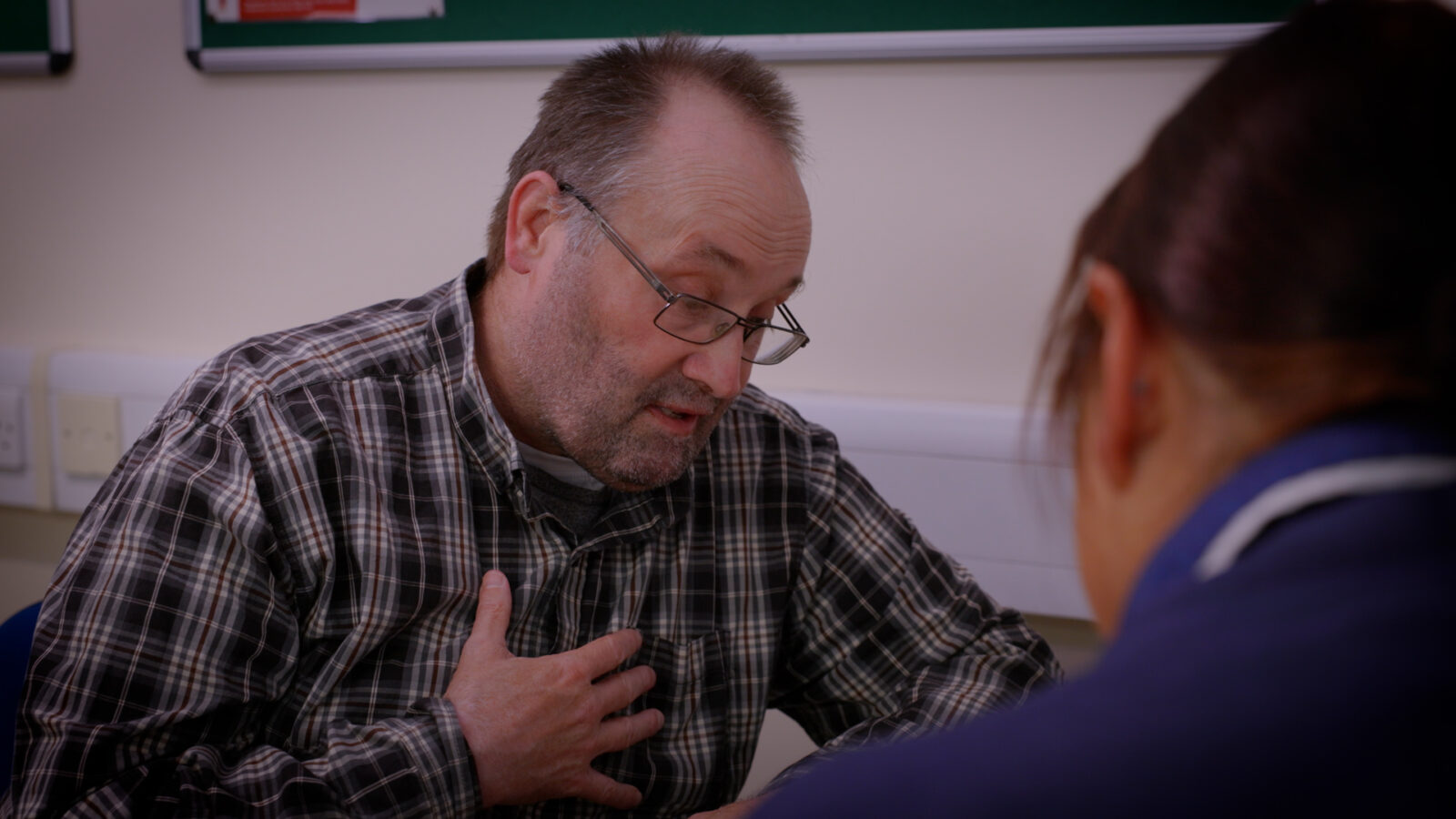
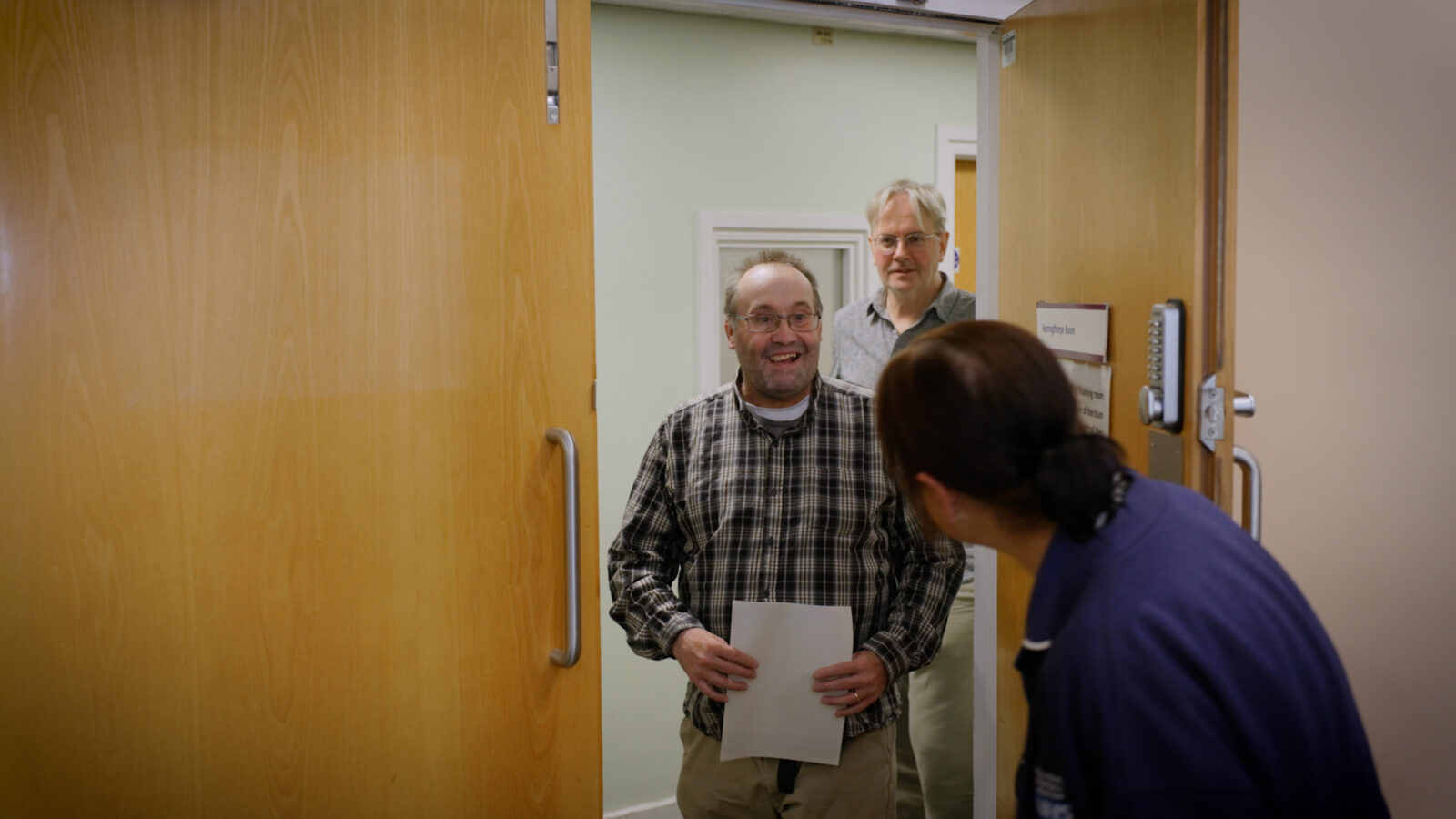
For this reason, we regularly highlight practices to counter unequal treatment, such as the video project on accessible healthcare from campaigner (and Community Living trustee) Shaun Webster. He was driven to work on the film project after he had a dreadful experience following his prostate cancer diagnosis. He is now well, and keen to encourage others to use hospital passports. These inform staff about a person’s needs, how they communicate and what medication they take.
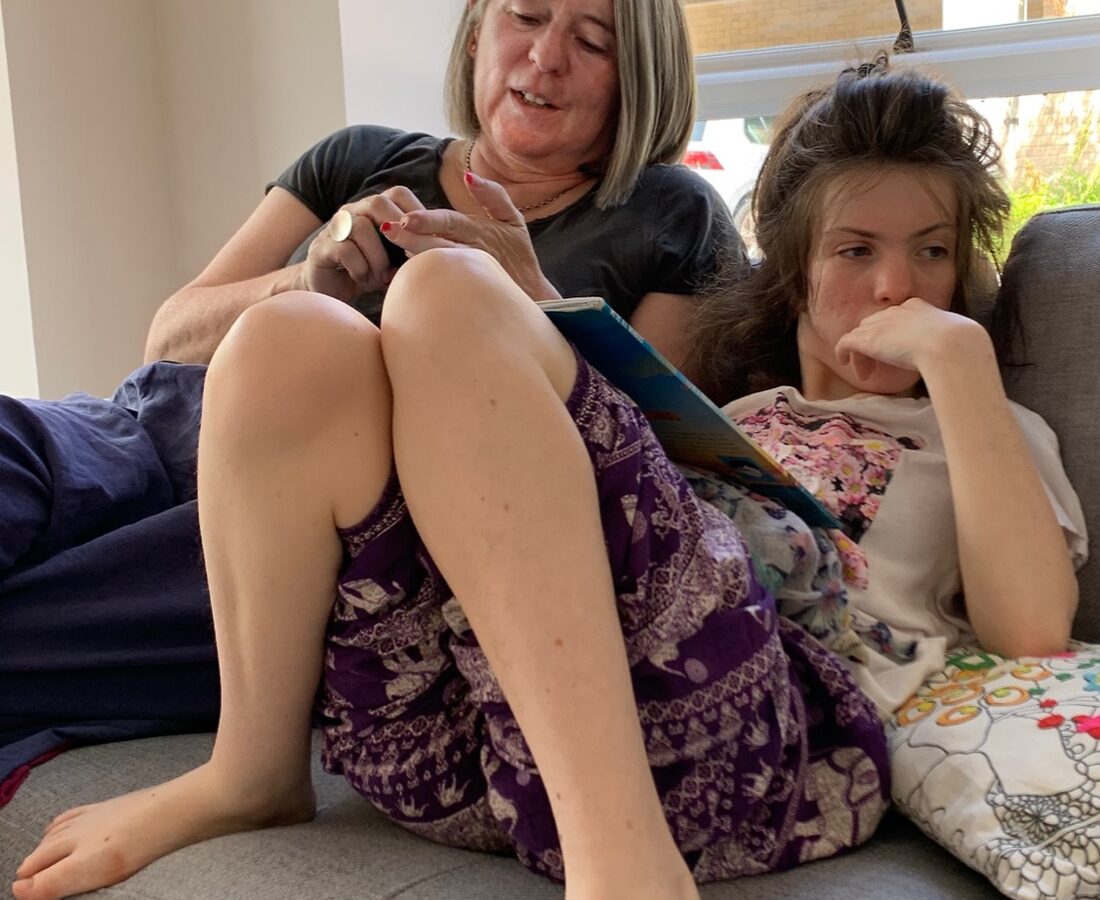
Carlisle writes about how health professionals addressed her daughter’s Elvi’s terror of hospitals so she could have a series of tests. The sense of relief is palpable as Carlisle describes how her faith in the NHS was restored, with “common sense prevailing”.
Healthcare professionals addressed her daughter’s terror of hospitals. The sense of relief is palpable as her faith in the NHS was restored, with ‘common sense prevailing’
This in stark contrast with the harrowing story of Louis Cartwright. The 17-year-old, as George Julian reports, went undiagnosed and untreated. One expert told the coroner that the young man would have lived had a blood test been done.
The coroner found the cause of death could not be ascertained and ruled he died from natural causes. The family said after his inquest: “We believe he was allowed to die due to indifference.”
People and families continue to be failed yet it should not be difficult when much of what makes a positive outcome depends on common sense – or at least treating people as fully human.
Michael Baron, influential campaigner and Community Living contributor who has died aged 96, will be remembered for his vital work fighting for the rights of autistic people
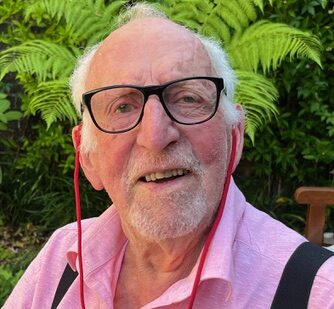
Michael Baron. Photo: Baron family
Obituary: Michael Baron
Michael Baron, influential campaigner and Community Living contributor who has died aged 96, will be remembered for his vital work fighting for the rights of autistic people, writes Saba Salman.
Community Living’s editorial team and trustees would like to pay tribute to Michael, a parent and founder of the organisation that went on to become the National Autistic Society (NAS).
In 1962, a group of parents began to argue for provision for their autistic children, who were often diagnosed with childhood schizophrenia, sent to institutions and had no right to schooling. The movement became the Society for Autistic Children and later the NAS.
Michael’s son Timothy was one of the first in the UK to be diagnosed as autistic and among the first pupils at the Sybil Elgar School.
The school, which opened in 1965, was the first dedicated to teaching autistic children. “They said our children were ineducable,” Michael, a solicitor, recalled. His focus was on educational and social support, rather than medical intervention.
As he said: “We knew if they had a future, it lay in education and special education and finding the right teachers to teach them too.”
In 1974, the group opened Somerset Court in the south west, the first residential community for people with autism.
Several years ago, when he was interviewed during World Autism Acceptance Week, Michael said his proudest achievement was “putting autism on the map, increasing public awareness, helping people” and challenging myths and stigma.
When I interviewed him for The Guardian some years ago, when he was in his 80s, he spoke about the need to focus on support for the first generation of children to be diagnosed as austistic – people like his son – as they moved into older age.
Ageing and autism
Ageing he said, involves not only the challenges of the condition – communication, social interaction or sensory issues – but also the social, physical and mental health difficulties often experienced in later life.
Michael remained committed to raising awareness about issues of support and inclusion and carried on pushing for change, fearing that older autistic or learning disabled people were “an invisible population”.
With the right support, he told me, “people can go on learning”. He told a story about Timothy who, in his mid-50s and attending music therapy sessions, suddenly went over to the piano and began playing. “He’d never done that before – he’s a 56-year-old man, but he’s still learning.”
For readers who want to know more about Michael, his life and his family, The Autism Puzzle is worth watching. This powerful documentary film, made by Michael’s daughter Saskia in 2002, features father and son. It includes material from the early days of the NAS, footage from the 1960s and 1970s as well as interviews with parents, researchers, psychologists, teachers and autistic adults.
The NAS paid tribute to Michael’s “tireless work” in the 1960s and 1970s “changed the lives of autistic people in this country forever.”
Michael Baron
1928-2025
News briefs
LDE gives evidence to Casey review into social care
Chief executive Sam Clark represented LDE’s groups (broadly, people with learning disabilities, families and care professionals) as only one person per organisation can attend.
Participants, including councils and support organisations, reviewed cases showing both service failures and high-quality support.
Clark shared priorities from LDE’s Good Lives rights-based framework, and called for stronger rights. The commission will publish its first report in March.
Cost of carers’ lost earnings
The financial consequences of keeping working-age unpaid carers out of the workforce has been highlighted by Carers Trust. While carers’ households lose income, the government misses out on tax payments worth up to £47.7 billion a year – equivalent to 1.7% of the UK’s GDP.
Hostile services
“Dysfunctional public services” can harm disabled children and their families, according to charity Cerebra. Its study, Systems Generated Trauma, which examines testimony from 1,200 parents, argues that health, care and education systems are hostile, combative and bureaucratic, which can cause severe distress.
Day centres under review
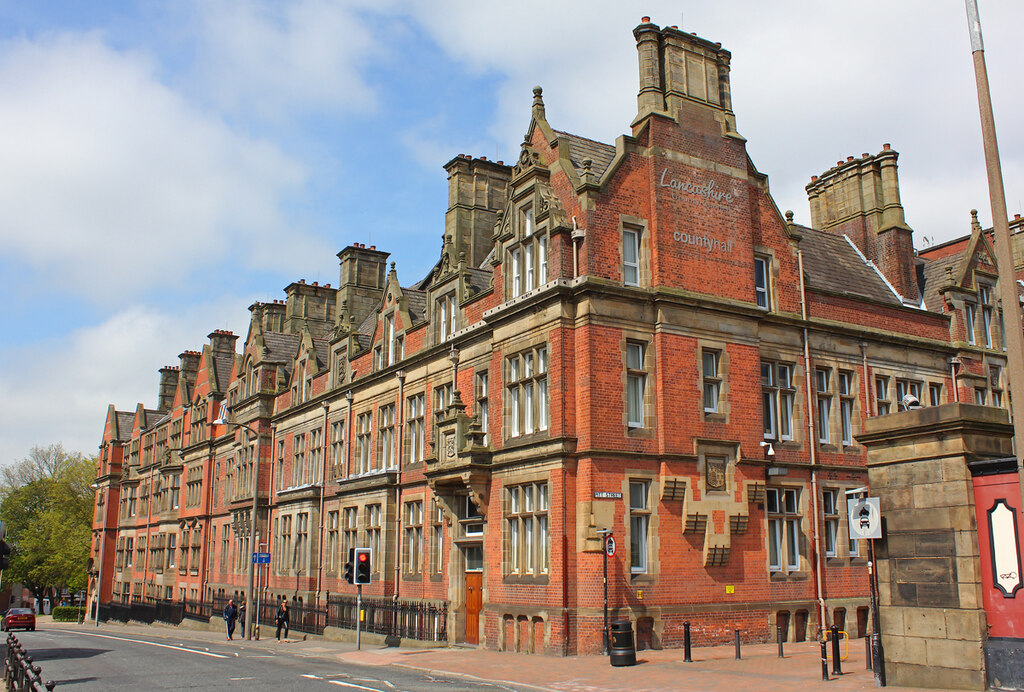
Lancashire County Council is under fire for consulting on closing five council-run care homes and five day centres for older and/or disabled people. The review seeks to cut adult social care spending by £50 million over the next two years. Lancashire says the process is a “strategic review” but families and campaigners fear the loss of community support is a fait accompli.
Fewer work visas issued
Work visas granted to overseas care staff have fallen by 81% in a year, according to the Home Office. Just 5,189 health and care worker visas were issued in the year to September 2025, down from 27,941. In April, Labour required employers to recruit international staff already in the UK before hiring from abroad. Ministers imposed a ban on overseas recruitment in July, hoping improved pay and rights would attract more UK staff.
All Update stories are by Saba Salman unless otherwise stated
What’s on our radar…
Mixed news on funding and the autism act is inept. Saba Salman reports
Families and campaigners who are awaiting the white paper on special educational needs and disabilities (SEND) cautiously welcomed the spending review announcement that the government would absorb the cost from 2028. Although this means cash-strapped local authorities will not need to fund SEND provision from then – councils are failing in these duties in many parts of the country – questions remain over the current SEND deficit which some estimates put at £6bn.
There was not much good news for adult social care in the budget, even though the latest figures from the Association of Directors of Adult Social Services show it faces a £600m overspend owing to demand exceeding supply. Although the 50p increase in the national living wage from £12.21 to £12.71 means care workers will get a 4.1% pay rise next April, experts warned the sector would struggle to raise the additional cash.
A House of Lords committee report, Time to Deliver: the Autism Act 2009 and the New Autism Strategy, concluded that the legislation has failed to bring meaningful change. The Ambitious about Autism charity, which contributed evidence, called for a new, well-funded autism strategy with statutory duties, clear accountability and input from autistic children, young people and families.
The government is consulting on statutory guidance for the Down Syndrome Act 2022, aimed at improving health, social care, education and housing support. The act has been criticised for ignoring the needs of others with learning disabilities or genetic conditions who experience similar issues. The consultation closes on 28 January 2026.
Although local authorities will not need to fund SEND provision from 2028, questions remain over the existing SEND deficit
People deemed to have lifelong, severe health conditions do not have to be reassessed for benefits. The criteria that define these are to be established in law in April. Charlie Callanan reports
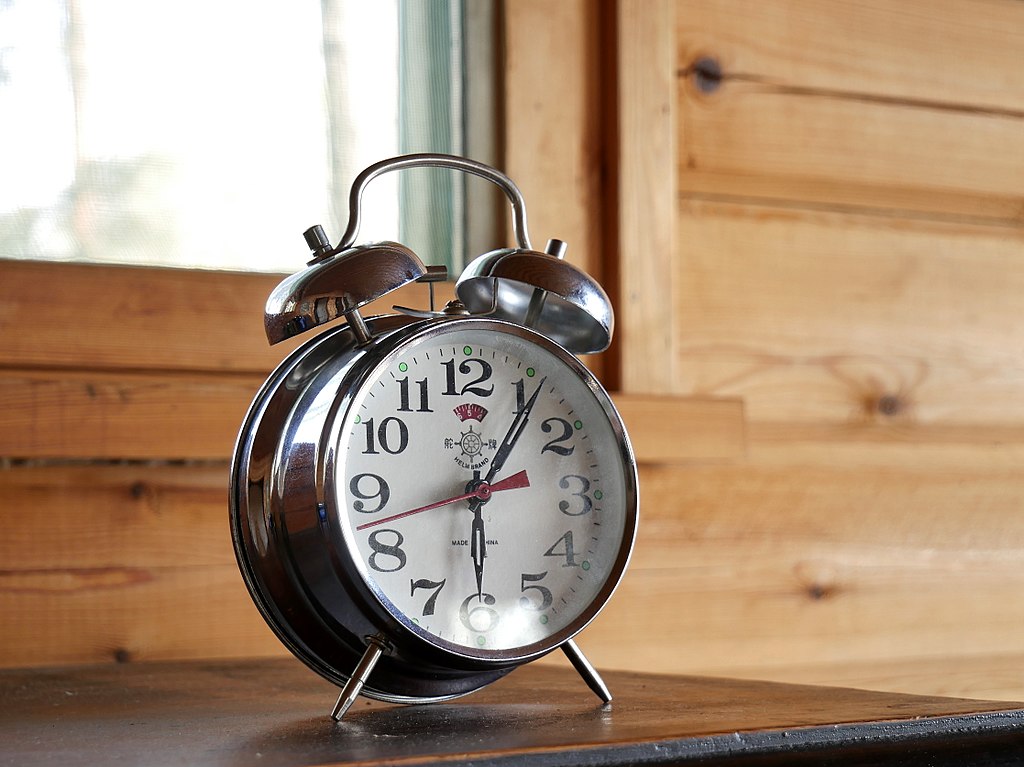
Tests for cognitive and intellectual function include being able to complete a simple task, such as setting an alarm clock. Photo: Santeri Viinamäki/Wikimedia Commons/CC BY SA 4.0
The severe conditions criteria (SCC) policy was introduced several years ago to help ensure that the most severely disabled people did not have to be reassessed for claiming for out-of-work benefits.
The rationale for the policy is that there is no value in repeatedly assessing claimants where the nature of their condition means they are very unlikely to be able to carry out work.
The SCC may apply in claims for employment and support allowance (ESA), and for universal credit where the claimant has limited capability for work-related activity (LCWRA).
When the policy was introduced, it was suggested that certain, specific, “lifelong” conditions were always likely to be determined as being “severe”.
These included motor neurone disease, severe and progressive forms of multiple sclerosis, Parkinson’s disease, dementias, chromosomal conditions, severe irreversible cardiorespiratory diseases and Huntington’s disease.
How to qualify
At present, guidance only covers how claimants should be assessed for SCC. However, in April, the SCC will be defined in law through changes introduced by the Universal Credit Act 2025.
The regulations in the act define an SCC claimant as:
Someone who has been assessed as having LCWRA if at least one of the LCWRA descriptors constantly applies to them because of a specific bodily disease or disablement, or a specific mental illness
They will have the disablement/illness for the rest of their life
This has been diagnosed by an appropriately qualified health care professional.
Two of the descriptors for mental, cognitive and intellectual function are particularly relevant to readers (there are also other mental descriptors, as well as physical descriptors):
Learning tasks: a claimant cannot learn how to complete a simple task, such as setting an alarm clock, owing to cognitive impairment or mental disorder
Initiating and completing personal action: a claimant cannot, because of impaired mental function, reliably initiate or complete at least two sequential personal actions.
Of course, what is likely to be crucial in assessing SCC status is the inclusion of the word “constantly”.
This means that a descriptor must apply to the claimant at all times or every time they undertake or attempt the activity.
In practical terms, the difference that SCC status will make for some is that they will not have to have their LCWRA status reassessed in ESA or universal credit claims, so are effectively left alone once the benefit is assessed and awarded.
It is yet to be seen whether claimants with a learning disability meet the strict severe condition criteria and therefore get the increase in benefits
The new act also confirms that a higher rate of the LCWRA component (the top-up that can be awarded with the basic rate of ESA or as an additional element in universal credit awards) will be paid to SCC claimants. This will be £423.27 per month.
This will be an exception for SCC claimants, along with people with existing claims made before April, and for people who meet the terminal illness criteria. Their benefit rates will increase at minimum in line with inflation.
Limited work rate cut
However, the changes brought in by the act also mean that, from April, any new claimant with a disability who meets the LCWRA criteria but who is not in one of the groups mentioned above will get a lower rate of the LCWRA element. This will be reduced by almost half of its current worth to £217.26 per month. This will be frozen until 2029-30.
It is yet to be seen whether claimants with a learning disability can meet the strict rules to achieve SCC status and therefore get the increased benefits this can bring.
Either way, the significant cut to the LCWRA component for new claimants overshadows the improvements being introduced for the likely relatively small number of SCC claimants.
A woman who had been the victim of a forced marriage is able to consent to sex and marry but will need support to ensure her decisions are not made under duress. Mark Smulian reports
The issue of whether W could consent to a sexual relationship was a legal rather than a clinical matter. Photo: Unsplash
A woman with learning disabilities has the capacity to engage in sex and to marry, the Court of Protection has ruled.
His Honour Judge (HHJ) Stuart Farquhar rejected arguments made by East Sussex County Council that the 32-year-old, referred to as W in the case, lacked capacity. However, he judged that she is vulnerable and will need support at appropriate times to effectively exercise that capacity.
The woman argued through her litigation friend the official solicitor (a litigation friend acts in legal proceedings on behalf of someone lacking mental capacity) that she had capacity but the local authority, East Sussex County Council, disputed this.
Abusive relationship
The court heard that, in 2016, the woman had met a Pakistan national in the UK on a student visa.
They married in November 2014, but this was found to be a forced marriage which was subsequently annulled, and the woman was the victim of abuse including rape.
Orders were then made by HHJ Thorp that the victim lacked the capacity to engage in sexual relations and to marry. The perpetrator of the rape was subsequently deported.
The woman, who lives in supported accommodation in East Sussex, consistently stated that she wanted to engage in sexual relations.
HHJ Farquhar said: “I would add that there have been several occasions in the documentation in which it has been stated that W is not allowed to have sex. This is clearly not the order that was made and should not be explained to W in such terms.”
A consultant in learning disability psychiatry who examined the woman, Dr Camden-Smith, stated in her report on the capacity to engage in sexual relationships: “It remains my opinion that W is able to understand and retain the relevant information. When supported to do so, and when not under duress, she is able to use the relevant information to make a decision and to communicate that decision.”
Dr Camden-Smith found the woman to able to make a decision, but “acting on that decision is significantly more challenging for her. Were she to be in a mutually respectful, safe relationship, it is my opinion that she would have capacity to make decisions about engaging in sexual relationships.
As with sexual relationships, it is my opinion that W is extraordinarily vulnerable to coercion, particularly in the context of a relationship
“However, if there is even minor perceived coercion, W is likely to acquiesce with what the other person wishes to happen.”
Dr Camden-Smith said a decision on whether W lacks capacity or is a vulnerable person requiring protection under the inherent jurisdiction “is a legal rather than the clinical matter. My opinion is that W has capacity in this domain but is a vulnerable adult.”
She said of W’s capacity to marry: “It is my opinion that W is able to understand, retain, use and weigh and communicate any decisions about marriage or civil partnership, and therefore has capacity in this domain.
“However, as with sexual relationships, it is my opinion that W is extraordinarily vulnerable to coercion, particularly in the context of a relationship.”
Capacity with support
HHJ Farquhar said: “In all of the circumstances, I accept and adopt the position set out by Dr Camden-Smith and supported by the official solicitor – W does have the capacity to engage in sexual relations but she is a vulnerable individual who will need support at appropriate times to be able to effectively exercise that capacity.
“The care and support plan is to be drawn up in such terms as to be able to provide that support.”
Turning to W’s capacity to marry, the judge said the evidence clearly supported a finding that W had progressed significantly since 2016 and her covert marriage: “There is a high degree of co-operation between W and those providing her with support and she is open with them to such a degree that she would be unlikely ever again to be in a similar situation.”
HHJ Farquhar concluded that W “does have the capacity to enter into marriage or a civil partnership”.
Community Living publishes this article with the kind permission of Local Government Lawyer
A family’s case has highlighted specific flaws in a council’s process for education, health and care plans – and it’s just one of numerous complaints made to the authority. Saba Salman reports
A council that received 1,200 complaints about its special educational needs and disabilities (SEND) support in a single year recently attracted fresh criticism from a government watchdog.
Lancashire County Council received the 1,200 complaints in the year to July 2024 and had separately been criticised for its SEND services by education inspector Ofsted last year.
Cost to clear backlog
In September last year, the council said it may have to double the amount of money it spends on special needs if it is to clear its backlog of SEND assessments.
Lancashire said it planned to spend an additional £5.3m on processing the 1,850 cases
(based on the most recent total from summer 2025), which had yet to be considered by educational psychologists.
In the most recent criticism, public service watchdog the Local Government Ombudsman has investigated a family’s case that highlighted specific flaws in the council’s process for education, health and care plans (EHCPs).
EHCPs provide the legal framework to ensure children do not fall between the cracks and receive the support they need (How to get a school support plan, autumn 2025).
According to 2025 Department for Education statistics, 638,700 children and young people have active EHCPs, up from 576,500 active plans in January 2024.
In Lancashire, a parent had complained to the LGO about how the council dealt with her daughter’s EHCP, stating it had:
Failed to decide whether to amend the EHCP before 2024
Failed to meet statutory timescales when it decided to amend the plan in 2024
Poor standards of communication and complaint handling.
Although the LGO said that complaints submitted for pre-2024 issues could not be investigated because they were out of time, it found the council at fault for missing statutory deadlines and for its communication and complaint handling from 2024 onwards.
The impact of this, said the LGO, was to cause the parent and child “significant distress, uncertainty, frustration and time and trouble”. The experience also “has impacted her health and taken away time that she should have spent caring”.
This caused significant injustice to the parent in the form of uncertainty and frustration
The mother had also said that her child’s school was deprived of some of the funding it needed to provide the education to which her daughter was entitled.
With reference to the communication and complaints handling, the ombudsman agreed the authority was at fault. This was because the parent had regularly contacted the council but its responses were delayed and it failed to resolve her concerns.
“This was fault which caused significant injustice to the parent in the form of uncertainty and frustration,” said the LGO. “To remedy the injustice, I recommend the council apologises and makes a symbolic payment to acknowledge the distress.”
The council agreed to apologise and paid the family £700 – £500 for the distress by failures to meet the statutory review timescales and its poor communication and £200 for the time and trouble caused by its poor complaint handling.
A verdict of natural causes was given because a coroner could not ascertain why a young man died after being unable to undergo medical tests and sent home from hospital. George Julian reports
Louis Cartwright was a big music fan and loved to sing and dance. Photo: Cartwright family
Who was Louis Cartwright?
Louis Cartwright was a 17-year-old school student from London. He lived at home with his mum Jackie, his dad Ian and his sister Eve and he stayed at his special school during the week.
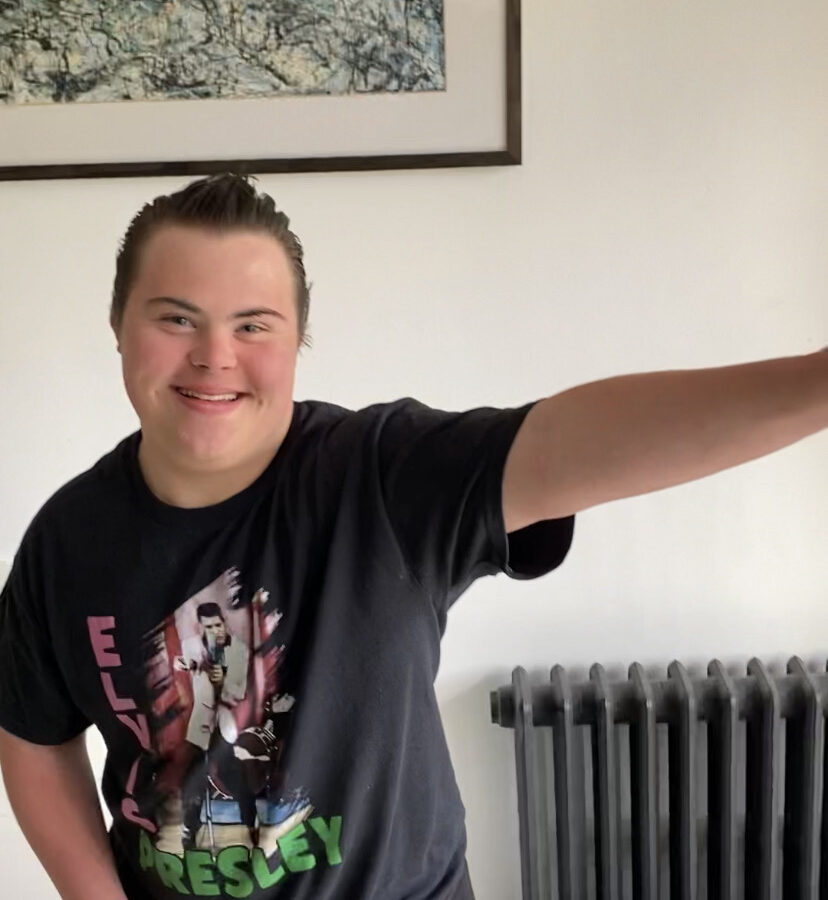
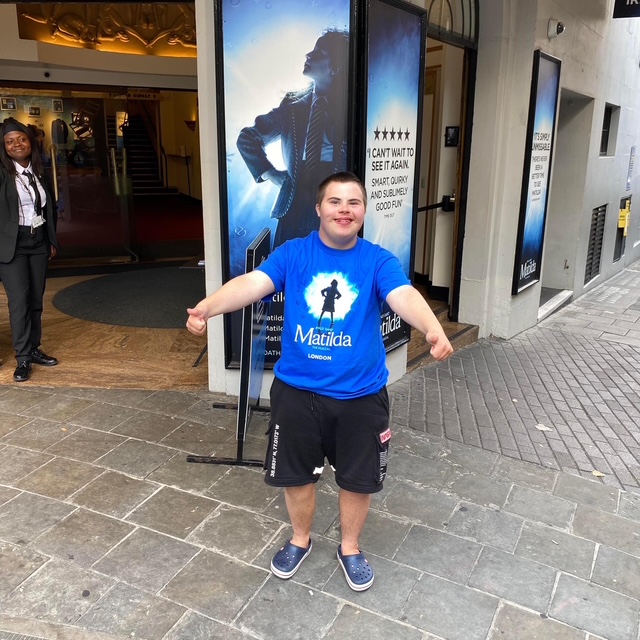
The teenager was a big music fan and loved to sing and dance. Dancing in the kitchen to his hero Elvis Presley was a favourite way to spend his time. He also adored the musical Matilda.
He was a natural peacekeeper. Love, calmness and friendship were important to him. He was never happier than when everyone else was happy and smiling.
The young Londoner had a great and full life. He was not materialistic but a fan of simple pleasures. He was partial to a toasted bagel or a slice of chocolate cake and was also a fan of a cooked breakfast in his local café although, when it came to a fry-up, he was not keen on tomatoes or mushrooms.
Change in health
Louis ready to see Matilda, his favourite musical. Photo: Cartwright family.
Louis had Down syndrome and was autistic. He had had surgery as a baby to repair a hole in his heart and made a full recovery.
Louis saw his cardiologist in June 2022 and was starting to transition from child to adult services. There was talk of him needing valve replacement surgery at some point but this was not required immediately.
In January 2023, Louis’ parents noticed he was looking pale. He wasn’t as interested in doing things as he normally was and was more tired. His mother made an appointment for him to see his GP on a Friday when he got home from school.
Then, in the middle of the week, the school asked his family to collect him as he was unwell. Jackie and Ian were worried about him and took him to A&E at the Princess Royal University Hospital in Bromley.
The department was very busy so they had to wait for five hours before being seen. Eventually, in the early hours of the morning, Louis let the doctor listen to his chest and take some measurements, but he did not want a blood test done.
The doctor said she knew her patient would not get a bed or trolley that evening so she agreed his parents would take him home and bring him back the next day for a blood test.
The next day, he was back to hospital to have a blood test. A doctor said he looked a little scared, but he did not look unwell. He did not take any formal observations.
The doctor tried to do a finger prick blood test, where blood is squeezed from the finger. It did not work. Jackie and Ian had asked if their son could be sedated to have blood taken but the doctor said this was not necessary.
He recommended dietary supplements and his parents talk to the GP to arrange for a blood test to be done in the community.
Louis’ parents took him home but he did not get any better. A blood test was arranged for nine days later, but the young man was too ill to attend that appointment.
A GP came out to at 7pm that evening. She told the court Louis was placid and silent, allowed her to examine him and there were no findings that made her concerned.
She did not consider he needed urgent hospital treatment or admission and she told Jackie that her son was clinically stable.
Louis Cartwright died at home in the early hours of the next morning.
Inquest
The court heard evidence from his parents and the doctors who treated him.
It also heard from an expert, Dr Maximillian Habibi. He said that, had blood tests been done when the patient first went to hospital, he would most likely have survived.
“Louis was not as unwell as he was later. However, I think on balance, those blood tests would have pointed the way to allow a diagnosis to be made, and it is my belief that diagnosis was a treatable one,” he said.
Louis was allowed to die due to his disability. It was due to his disability no blood test was taken, no diagnosis identified and no treatment offered
Habibi also told the court that he could have been sedated to have his blood taken; this is not usual practice but he had done it before.
The coroner at South London coroner’s court found that Louis Cartwright’s medical cause of death could not be ascertained. He decided that the death was from natural causes.
The coroner said, because he did not know what had caused Louis’ death, he could not find that anything contributed to it.
He thought attempts to obtain blood samples were “reasonable”, in terms of what was done and when. He also said he did not think blood tests would have provided a diagnosis, even if they had been taken.
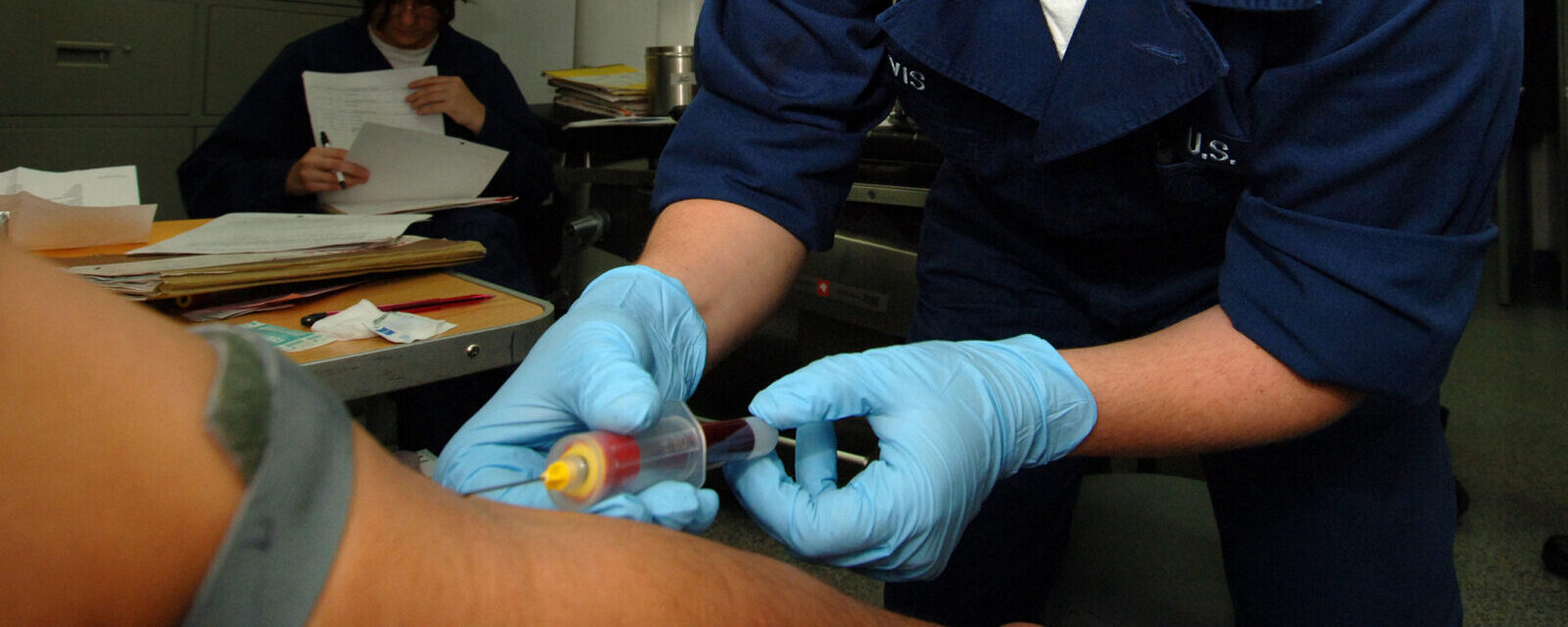
Government guidance on blood tests for people with learning disabilities was issued in 2017. Photo: US Navy/Wikimedia Commons
Attempts to test
Princess Royal University Hospital is part of King’s College Hospital NHS Foundation Trust.
“We would like to extend our condolences to Louis’ parents once again for the death of their son,” it said.
“While we were treating Louis, several attempts were made to obtain blood, so that tests could be carried out to try and ascertain the reason for him feeling unwell but, unfortunately, they were unsuccessful. Given his clinical presentation, which was clinically stable, sedation was deemed inappropriate at that time.
“The safety and dignity of patients with disabilities is of paramount importance, and we provide training to our staff to ensure appropriate care is provided.”
The family believed he was allowed to die: “Over the last two and a half years, three different causes of death were suggested for why Louis died. Ultimately the coroner said he could not ascertain the cause of Louis’ death. We can. We believe he was allowed to die due to indifference.
“Louis had Down syndrome so the medical staff could not ask him questions and would not listen to us, his parents.
“If he had been a 17-year-old boy who articulated he did not feel well, he would not have been sent home from hospital.
“We believe Louis was allowed to die due to his disability. It was due to his disability no blood test was taken, no diagnosis identified and no treatment offered.”
The parents had asked that he be sedated to give blood in hospital, but this did not happen.
It is not uncommon for people to find it difficult to give blood; they may be scared of needles or have had a bad experience.
Back in 2017, Public Health England issued guidance on blood tests for people with learning disabilities, which includes reasonable adjustments and case study examples.
If an adult is unable to give blood then a meeting to ensure decisions are taken in their best interests should be held and options for taking blood discussed.
Shaun Webster tells Saba Salman how a bad experience spurred a video on clarity in healthcare
Better conversation: communication was first so poor that Webster thought he had a kidney stone, not cancer. Photo: Gavin Renz
A collaborative, awareness-raising film project led by a campaigner with first-hand experience is helping spread the word about accessible healthcare.
Shaun Webster, who is also a Community Living trustee, has worked with accessible and easy read creative company IC Works and NHS England to produce a video about hospital passports, also called health and care passports.
These passports inform hospital staff about a person’s needs and preferences, and how they communicate. They explain reasonable adjustments that can help during appointments, outline what medication people take and list future hospital consultations.
The passport helped Webster after he was diagnosed with prostate cancer a couple of years ago – he is now well.
The video, The Health and Care Passport Supporting Shaun’s Cancer Journey, was shot and directed by film-maker Gavin Renz at Rotherham Hospital last summer and is available on NHS England’s YouTube channel:
Health inequalities experienced by people with learning disabilities mean that they die an average of 20 years earlier, often owing to preventable or treatable conditions.
Through the video, Webster also aims to encourage learning disabled people to seek help – he especially urges men to see a doctor if worried – and this goes hand in hand with making healthcare more accessible.
As Webster says of the project: “I did this because I do not want anyone to have the same issues I had. I feel comfortable using my lived experience to try to make a difference and I’m proud to be standing up for people like me.
“We need respect and inclusion. It is a human right. The passports are important because we need to be treated properly and to be listened to and be equal.”
The campaigner, who has written for Community Living about accessible healthcare (Make drug labels clear, summer 2023), had a traumatic experience.
His diagnosis was badly communicated, and he struggled to understand and keep up with his various appointments.
Webster recalls that the letter informing him about his diagnosis was not easy to understand so, when he was called to the appointment, he assumed it was about a kidney stone. “The communication was a joke,” he says.
As he explains in the video, he was very anxious and unsettled: “I had a scan. I thought it was about my kidney stone.
“I went for my appointment and I found out it was about me having cancer. I was in shock. I thought I’m going to break down to cry because the word cancer is scary.”
After that, he says, a hospital passport supported staff at Rotherham Hospital to make sure he got the right care and treatment.
One of Webster’s healthcare supporters, Suzanne Miles, specialist nurse practitioner for urology at Rotherham Hospital, appears in the film.
Webster adds: “She kept things on track. I was forgetting things because I had so much on my mind during that busy time.”
Compelling for carers
As Miles says in the video, one reasonable adjustment that worked well for Webster was some easy read booklets from Prostate Cancer UK because they cut out the medical jargon and break down information into diagrams.
IC Works director Ian Christie explains that a challenge in producing this short, accessible video about an easy read resource was ensuring the film was compelling and got the message but avoided making “getting a cancer diagnosis” sound scary.
He adds: “We also wanted to make the message compelling for carers but understandable enough for the core audience of people with a learning disability and autistic people. You want to keep it emotional while making it human and relatable.
“Making a film about an easy read resource is different from just telling someone’s story, so it was important that anyone taking part in the filming could take direction quickly, which Shaun was able to do. He was also very good at making a scary subject matter real, optimistic and honest.”
Elvi, Sam Carlisle‘s daughter, is terrified of hospitals. Thanks to a determined nurse who thought her physical health needed a check, she had numerous investigations under anaesthetic at one visit
Sam and Elvi at home: Elvi had missed tests for five years – physical health problems are now being treated. Photo: Sam Carlisle
My daughter Elvi, 24, has a fear of hospitals.
She knows when we’re anywhere near the London hospital where her consultant is based.
Last time I tried to take her, she tipped herself out of her wheelchair and she once upended equipment in the X-ray room at Great Ormond Street Hospital because she was terrified and there were no specialist learning disability nurses to support our appointment.
Elvi, who has a genetic disorder, a rare form of dwarfism and severe learning disabilities, has not had blood tests for five years because she needs at least four people to make them happen.
For years, I’ve been asking for Elvi to have NHS investigations under general anaesthetic to try to understand some of her unsettled behaviour, such as self-harm and biting carers in anger.
I wrote in Community Living recently (Tortuous transition to adult life, autumn 2025) about the brutal process of finding a home for Elvi. Now I want to shine a light on a more positive experience, this time relating to healthcare.
Last year, when Elvi was in her final year at a special needs college in Hampshire, she was referred to the learning disability team at the NHS child and adolescent mental health services (LD CAMHS).
We happened to get a brilliant nurse practitioner who took time to understand Elvi and prescribed anti-anxiety meds but also agreed something physical might be going on and pushed for investigations under general anaesthetic.
Together, we persuaded Elvi’s consultant in London that she should have her teeth, eyes, brain, hips, stomach and bloods looked at.
Over a few months, the consultant got together all the necessary colleagues who agreed to do this all in one day. I had a long chat with the anaesthetist team about how to manage Elvi’s sedation, and her dad sent pictures of her neck, profile and mouth, so we avoided a pre-op appointment.
We had a best interests meeting online the week before the appointment, which involved four consultants, the LD CAMHS nurse, the learning disability nurses at the hospital, Elvi’s supported living team and everyone who would be involved on the day.
The hospital staff told us they had never done anything like this before and that they will create an Elvi pathway for others with learning disabilities
We thrashed out: exactly how to get Elvi into the building; timings to make sure her stay was as short but as useful as possible; which ward she would be on; whether a play therapist would be helpful; and what legal documents, such as deprivation of liberty orders, would be required for which bits of her visit.
On the day, everyone swung into action. Elvi’s nurse practitioner drove from Hampshire to accompany us. A ward nurse met us at reception and took us straight up to a private room. There was a social story in the room explaining what was happening to Elvi, and drawing books to help distract her.
The anaesthetist talked us through exactly what would take place. Her consultant came too.
Elvi was taken to the MRI room where her dad held her hand as I held the mask over her face, reassuring her as she breathed in gas. Waiting outside to do their various tests was a queue of
doctors with their dental or ophthalmology equipment.
Five hours later, we were in the recovery room. Elvi was groggy and her hands were bandaged for her own protection and to prevent her from pulling out the cannulas in her arms. The nurses understood these would need to be removed quickly and did just that.
Back on the ward, they waited until she was fully awake, checked her over then let us go. This was all done in one single day.
We are waiting for the MRI results but the blood tests show Elvi is severely anaemic, so iron supplements have been ordered.
Before we left the hospital, staff told us they had never done anything like this before and that they will create an Elvi pathway for others with learning disabilities.
Something like this should have been set up in all hospitals years ago but at least it is in place now. While it is a last resort to sedate someone to do medical tests, my diminished faith in the NHS has been restored by Elvi’s nurse practitioner, her consultant and common sense prevailing.
Although specialist education in the US has won a reprieve for now, provision for disabled children remains under threat from government goals
It is impossible to overlook the mess that is special educational needs and disabilities provision (SEND) across the UK right now.
With massive local authority budget shortfalls and families and schools under pressure, the situation has, rightly, been described as everything from a “vicious downward spiral” by former children’s commissioner Anne Longfield to “the worst it’s ever been” by teachers.
Struggles to ensure adequate SEND support are not confined to Britain. However, in the US, alarm bells are ringing beyond funding and resource shortages.
Recent events are a cautionary tale for anyone concerned about the possible effects of the rise of right-wing agendas on disabled people and their rights.
Threats reach new level
As part of Donald Trump’s sweeping cuts to multiple federal departments’ staff and budgets, threats to adequate, sustainable support for disabled children were taken to an entirely new level.
In October, the administration laid off Department of Education (DOE) staff (many responsible for special education), threatening provision for 7.5 million children and young people. Trump later reversed the decision but, as I write, this is not guaranteed as a long term fix.
SEND provision in the US has long been under-resourced despite considerable progress over the years, in particular the 1975 Individuals with Disabilities Education Act (IDEA), which gave children and young people with disabilities a right to educational inclusion, such as programmes tailored to individual needs.
Advocacy organisations, families and carers repeatedly point out that underfunding and teacher shortages are issues in many places, while research documents the type and degree of problems.
A 2024 US Government Accountability Office report, for instance, laid out how a shortage of specialist teachers was harming disabled students. For those with learning disabilities, it said, staffing shortages often resulted in reduced access to vital intensive, individualised instruction.
While the DOE staff won a reprieve, long-standing issues with SEND are not being addressed.
The eventual dismantling of the DOE is a stated goal of Project 2025, the extreme right-wing blueprint for a second Trump term. The speed and scale with which many of its general objectives have been achieved is shocking. These include cuts to education.
Recent events are a cautionary tale for anyone concerned about the effects of the rise of right-wing agendas on disabled people and their rights
The mass culling of civil servants administering a budget of around $15 billion whose job it is to ensure states provide appropriate services for disabled children and young people was lambasted by educators and advocacy groups; it was seen by many as a cruel and wholesale abandonment of hard fought for educational inclusion.
The response from Jacqueline Rodriguez, chief executive of the National Center for Learning Disabilities, was typical: “There is no way [the government] can abide by the statutory requirements set out by congress in IDEA 50 years ago by laying off nearly all of the staff at the department that support our community.”
Illegal firings
Former Democratic Party presidential primary candidate and one-time special educational needs teacher Elizabeth Warren has been vocal about the culling of DOE staff.
Warren pointed out in an interview on news channel MSNBC that the firings were illegal, and condemned actions to remove vital oversight and law enforcement.
More than that, she reminded people of the importance of “access to opportunity” for youngsters. Undermining SEND, she said “is a form of cruelty that no leader of a nation anywhere should impose on the people he supposedly represents”.
The truly concerning thing is that what is unfolding in the US is not about budgets or tight resources, nor rising demand; it is a callous and unnecessary political choice to dismantle fundamental protections and support for millions of disabled children and their families.
In the UK, we do not have the luxury of thinking: “It could never happen here.”
The Bubble Club has gone from rebellious roots to a thriving, joyful celebration of nightlife over its 20-year existence. Iona Ascherson shows Saba Salman behind the decks
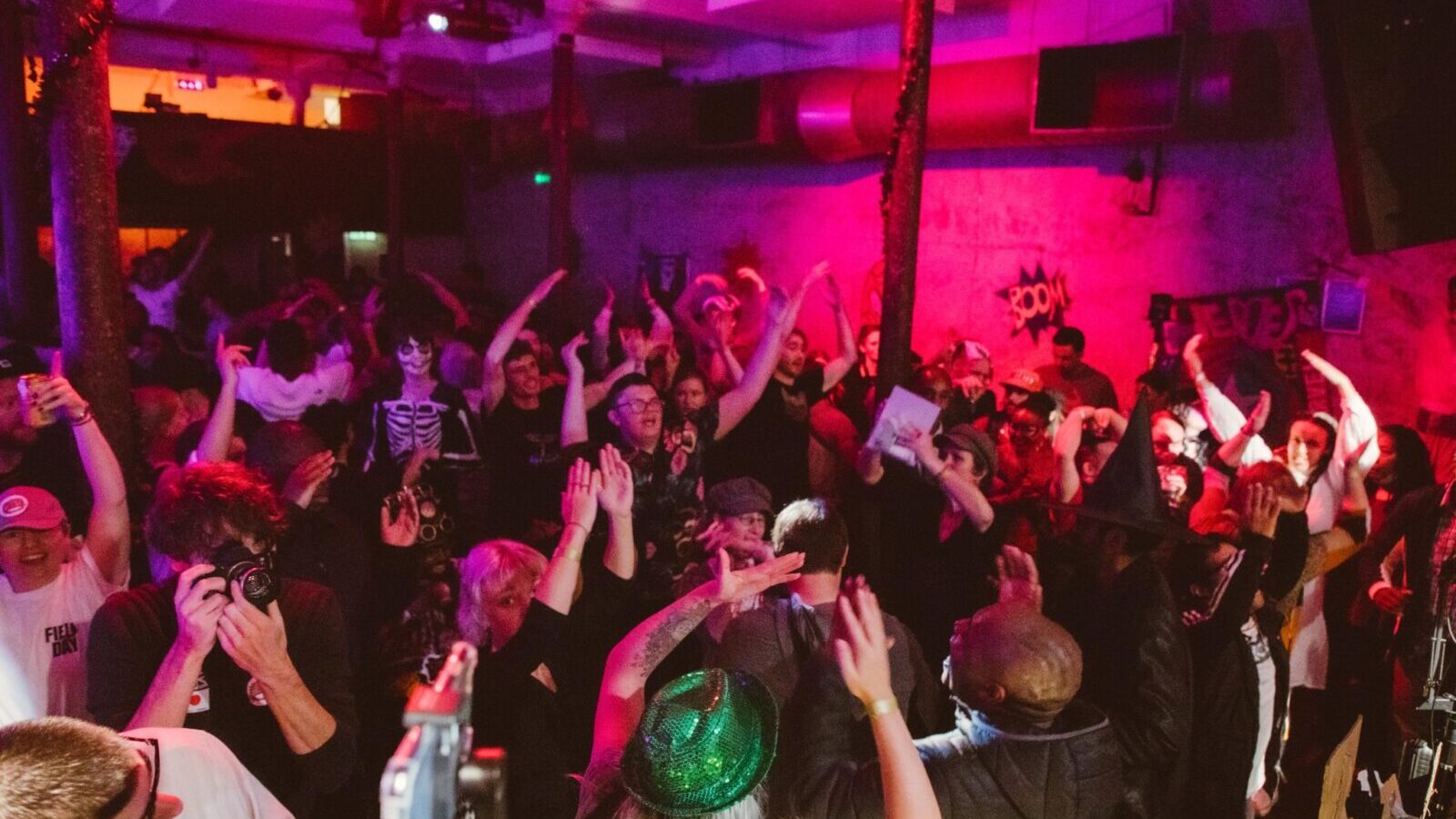
Heroes and Villains Halloween Special. Photo: Ben Sage Photography
Six times a year, the Bubble Club takes over 93 Feet East in east London’s Brick Lane.
“Bubble Club gave me a confidence to enhance my skills – I love attending and being part of events,” says DJ and Community Living columnist Shalim Ali.
The club has just celebrated its 20th birthday with a photo exhibition; managing director Iona Ascherson tells Saba Salman about its evolution.
Saba Salman: Congratulations on 20 years of Bubble Club. What’s the secret of its success?
Iona Ascherson: It speaks to the rareness of nightlife spaces where learning disabled adults feel safe, accepted and included, and the importance of that meeting space to stay connected to their friends who may not live nearby or engage in the same day groups.
SS: How has the club changed?
IA: It started with a rebellious spirit and now it feels more like a joyful celebration. I think there were
a few more cabaret-style performances in the past. Now, although we do have those moments, we like to keep the live performance room pumping with musical performances and we showcase more open mic style, multidisciplinary performance.
SS: What aspects are challenging?
IA: We’ve definitely had a hard couple of years in terms of funding; the competition for smaller grant pots is being felt across disability arts, coupled with personal support for disabled people under pressure. We really do see the worry and fear spilling over.
SS: What are the rewarding aspects?
IA: The excitement in the queue is something I love. When a trainee DJ performs their first paid set in front of a cheering crowd, beaming with pride, is another big one.
When a shy first-timer comes back a third or fourth time, and is spotted making friends without needing a volunteer wing-person, or when someone jumps on the open mic in to recite a poem, rap, sing or just chat to the crowd, they’re all massive heart overflow moments.
Around 21,600 people over 20 years have got a hand stamp. The age range is hugely varied – we have people from 18 years old to those in their 70s – although 25-45 years is where the majority fall.
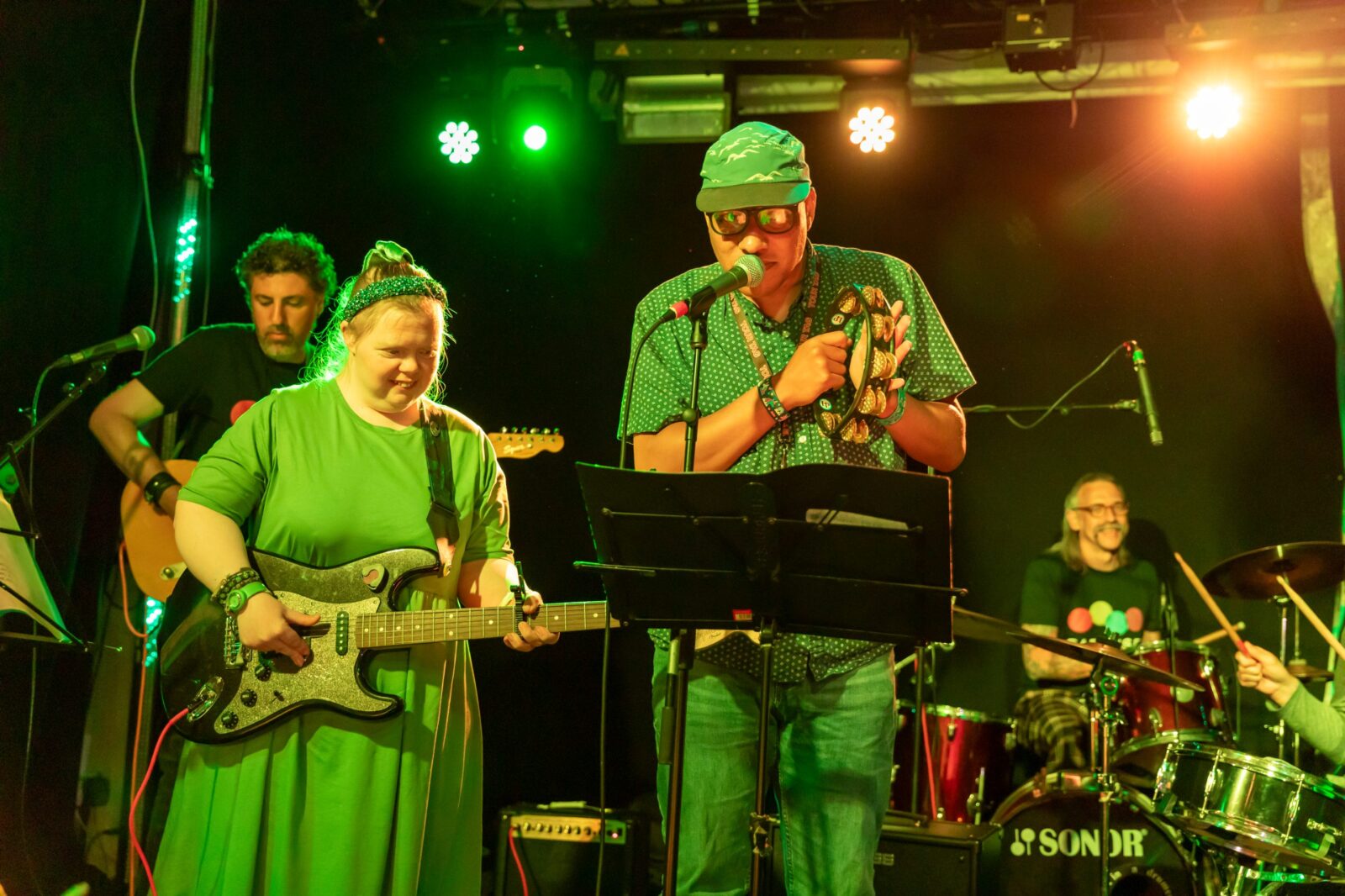
Jolene Wild and Taurean Tate-Bailey of Fuzz Bomb Flash Band play the Secret Garden Party. Photo: Ben Sage Photography
SS: What is the Bubble Club DJ Factory?
IA: We support learning disabled DJs to perform and get paid. We have volunteer DJs who go through the basics, helping build playlists and skills. We then create profiles and promote learning disabled DJs to bars if they wish to pursue paid work at mainstream venues.
SS: Tell us about your exhibition.
IA: We just marked our 20th birthday with a photography exhibition at Brady Arts and Community Centre in east London.
The event was intended to establish Bubble Club as a pillar of London’s counterculture history. Our story is rooted in disrupting the norm, challenging stereotypes and creating a safe but adult space for learning disabled and autistic people.
Nightclubs have this magical quality that brings oppressed communities together where they can feel normal and, in the majority, safe to be themselves.
We wanted to share the pride we feel in knowing this club night exists and thrives in our city, and to make sure Bubble Club goes down in the history books.
SS: What’s next for Bubble Club?
IA: We would love our own venue that could house the workshops, DJ project and clubs. We could do a wide range of events, continue to provide that grassroots stage and create more training and paid jobs for learning disabled adults around bartending, event and venue support.
Is having our own tent at Glastonbury too big an ask? Here’s to 20 more years.
‘Don’t get in the artist’s way,’ Seán Kelly is told when he meets Turner Prize winner Nnena Kalu – summing up ActionSpace’s approach to unlocking and promoting creative talent
Nnena Kalu in front of one of her pieces. Photo: Seán Kelly/www.seankellyphotos.com
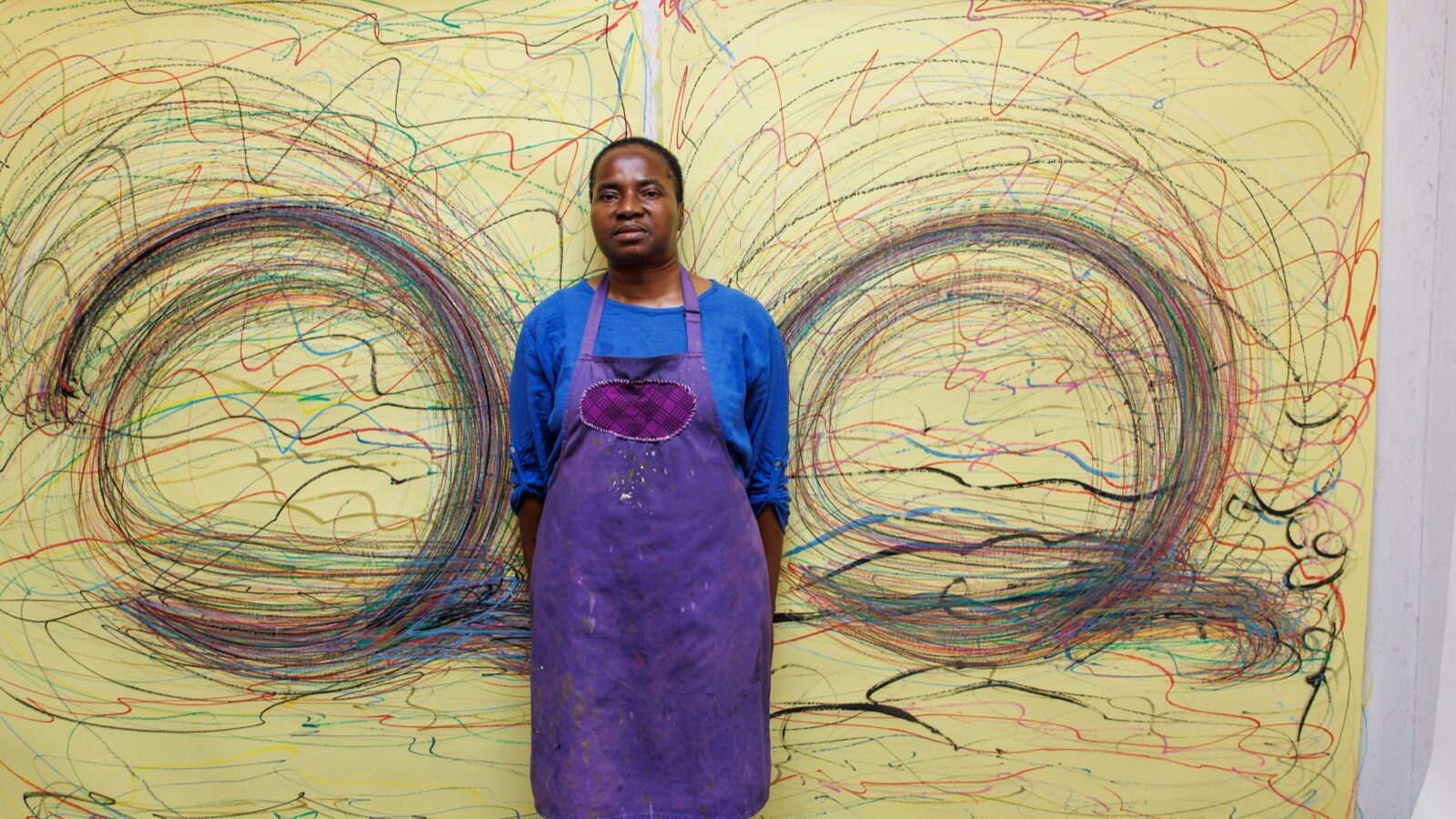
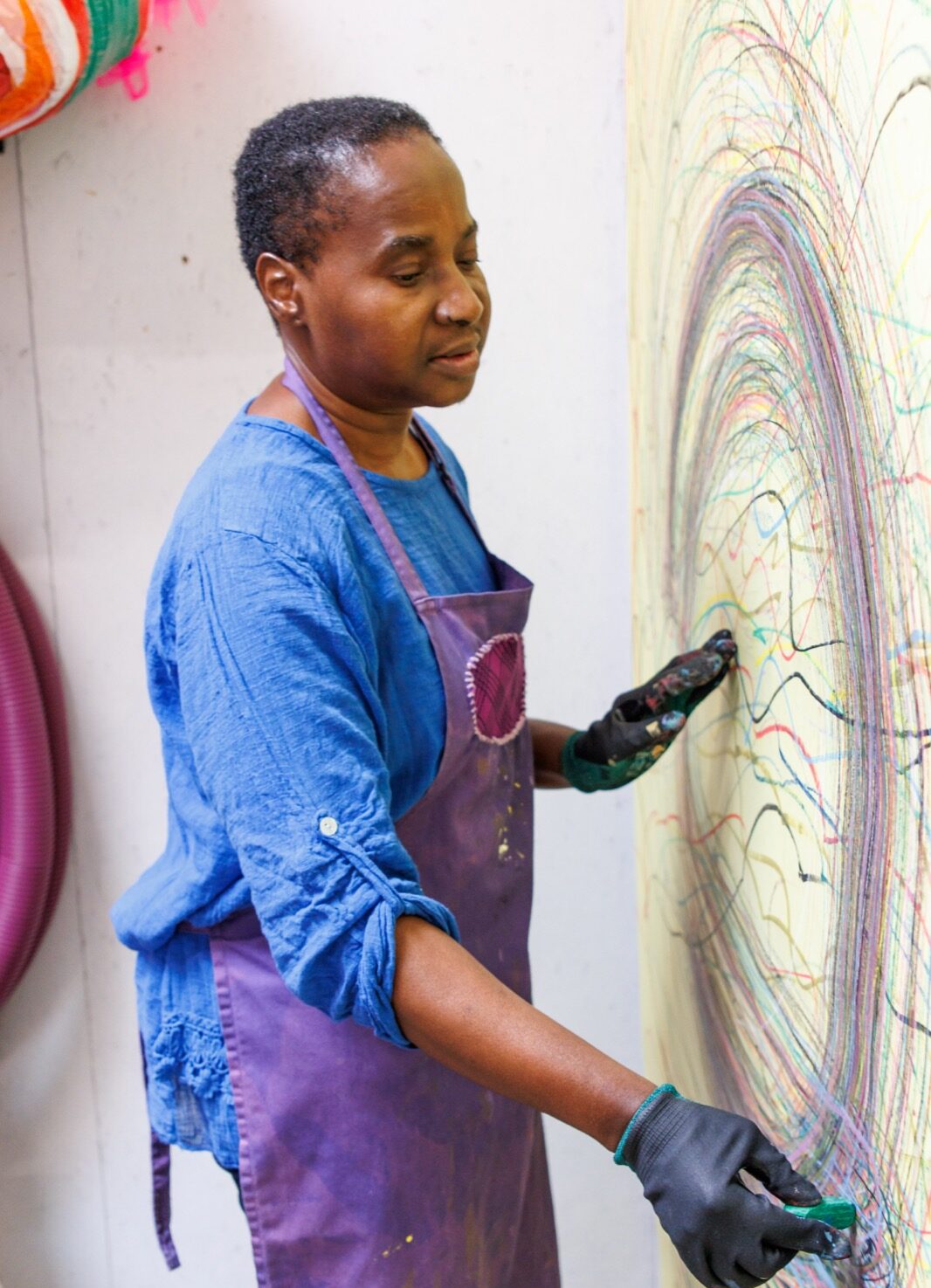
I am watching Nnena Kalu making one of her large double-drawing pieces.
Two large sheets of yellow paper are secured side by side to the wall. On the top of a trolley nearby is an open box with a large variety of paint sticks.
Kalu moves rhythmically in a tight circle between the three points. She makes a large circular mark with a carefully delineated tailpiece on the first sheet of paper then creates almost exactly the same mark on the second sheet before returning to the box of paint sticks to choose a new colour.
Kalu is an artist with learning disabilities and limited verbal communication who is supported by arts charity ActionSpace and represented by commercial contemporary art gallery Arcadia Missa.
Kalu has exhibited extensively for years and, in December, after this interview, she was named winner of the Turner Prize for contemporary art.
Artist at work
Nneno Kalu at work. Photo: Seán Kelly/www.seankellyphotos.com
Kalu is working in her own small professional studio, which is part of ActionSpace at Studio Voltaire in Clapham in south London. She seems very content and makes a gentle murmuring sound to herself as she circles round.
The marks on the two sheets layer and thicken until each displays a dark vortex that is a mirror image of the other. Kalu draws with purpose.
When I get in a bit closer to the second sheet to take some pictures of her working, I find that I am in danger of being bumped by the artist as she circles round again.
“Don’t get in the artist’s way, Seán,” laughs Charlotte Hollinshead, head of artist development at ActionSpace, who has worked with Kalu here for over 25 years.
ActionSpace’s mission is to “seek out and unlock talent” in artists with learning disabilities. Currently, 12 artist-facilitators support about 70 artists with learning disabilities. The charity also helps these artists forge links with the contemporary art world. Support is long term.
In addition, ActionSpace has reached hundreds of people with learning disabilities and others through workshops and residencies.
It has three professional studios: in Clapham, where they are based in Voltaire Studios, the Cockpit in Bloomsbury in central London, and the newest one, West London Studio, which is in Brent.
The Turner Prize exhibition, in Bradford until February 2026, is displaying Kalu’s large drawing pieces as well as her sculptures, which involve winding and wrapping objects in many different materials, including videotape.
Being nominated for the Turner prize in the first place was a powerful recognition of Kalu’s artistic merit – and undoubtedly a triumph for ActionSpace.
But being nominated is not enough, according to Hollinshead.
She says: “Nnena should win. Not just because her art is amazing but because we have watched her work so hard all these years.
“The work is great. The investment, the care, the ambition and passion are massive. It would also mean a huge amount to so many people. A win. The art world needs it.”
Art critic Adrian Searle of The Guardian agrees and wrote recently of Kalu’s drawings: “They are riotous and rhythmic, purposeful and compelling. There’s no fudging. Kalu deserves to win this year’s Turner Prize.”
After meeting Kalu, I find out more about ActionSpace from Sheryll Catto, its chief executive.
The organisation was founded in the 1960s. It was, says Catto, a “performance and participatory art co-operative”. It became a charity in 1984. From 2000, it developed a clear focus on the visual arts.
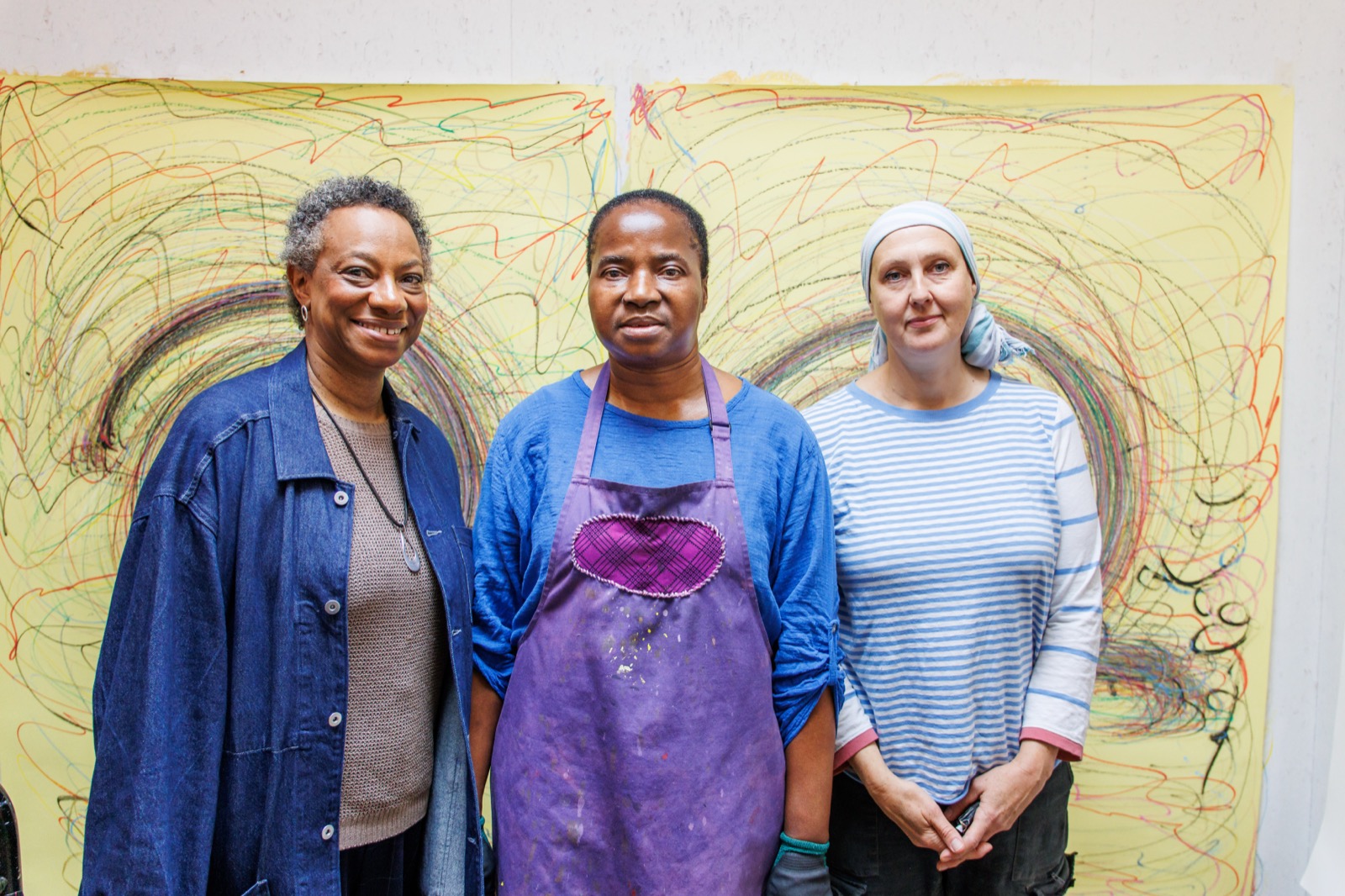
If people have a compulsion to make, it will go somewhere, says Sheryll Catto (left), with Nnena Kalu and Charlotte Hollinshead. Photo: Seán Kelly/www.seankellyphotos.com
Catto joined 18 years ago and, for most of that time, shared a co-director role with Barbara van Heel. When van Heel left two years ago, Catto was appointed sole chief executive and artistic director. There is also a business director.
Funding comes from a number of sources, significantly from the Arts Council.
Catto tells me that it is fundamental that all the work comes from the artists so, while ActionSpace supports them, it does not guide or collaborate with them in any way.
She is sick of people asking: “Is it really their work?” She tells me: “We have to push back now.
I say: ‘Sorry, I don’t understand that question.’”
Catto mentions, by way of example, ActionSpace artist Ian Wornast, who has just completed a large commission for Unilever.
“His work is so intricate and has so many intermingled patterns. And someone will say: ‘Well did you show him how to do it?’
“How could I possibly have told him how to do that? Have you looked at this work? Have you seen how intricate it is? How could you possibly tell someone how to do that?”
Partly in response to such attitudes, ActionSpace often holds live art-making events and workshops. Once people see the artists in action, purposefully making their art, they don’t question whether it is their own work or not.
As for what makes an ActionSpace artist, Catto says the creatives must be self-motivated. “We are always looking for people who have a compulsion to make. Once you have that, it will go somewhere. Wherever it goes, it will go somewhere.
“But we are not looking for everyone to be a Nnena. We are looking for them to develop their practice however they want. There is no house style.”
Taking down barriers
I ask about other artists who must inevitably miss out. Catto recognises “if you commit to these people, you can’t commit to those people” but ActionSpace also supports other studios and galleries who help artists.
She adds: “We really feel passionate about the benefit of taking part in art and culture. A lot of what we do is getting rid of the barriers so that people can take part either as creators or audiences.”
Back in the main studio, her work spread across a large table, artist Linda Bell is creating what appear to be giant mobiles with brightly coloured ribbons and other items tied on by hand and dangling from them.
“It’s not like people have given her stuff,” explains Hollinshead. “She will have come up with that. It’s not just how she has brought shapes together and materials but also her desire to move them.”
It is all interactive and, in contrast to Kalu’s practice, Bell’s work gets swung about, worn – all sorts of things happen to it. It’s much more immersive.
Hollinshead says: “I feel like we really have found her creative heart and we are able to let her just fly with it.
“The next stage is to get that work out there and for her not just to do workshops and live events, but for people to see the actual art works as beautiful objects in their own right. Everything moves. Watch out for her. Turner Prize, next person: Linda Bell.”
Young people are getting work and tailored study opportunities through supported internships. Saba Salman explains how these can lead to paid employment and pay for themselves – and describes how it’s all going swimmingly for a former intern
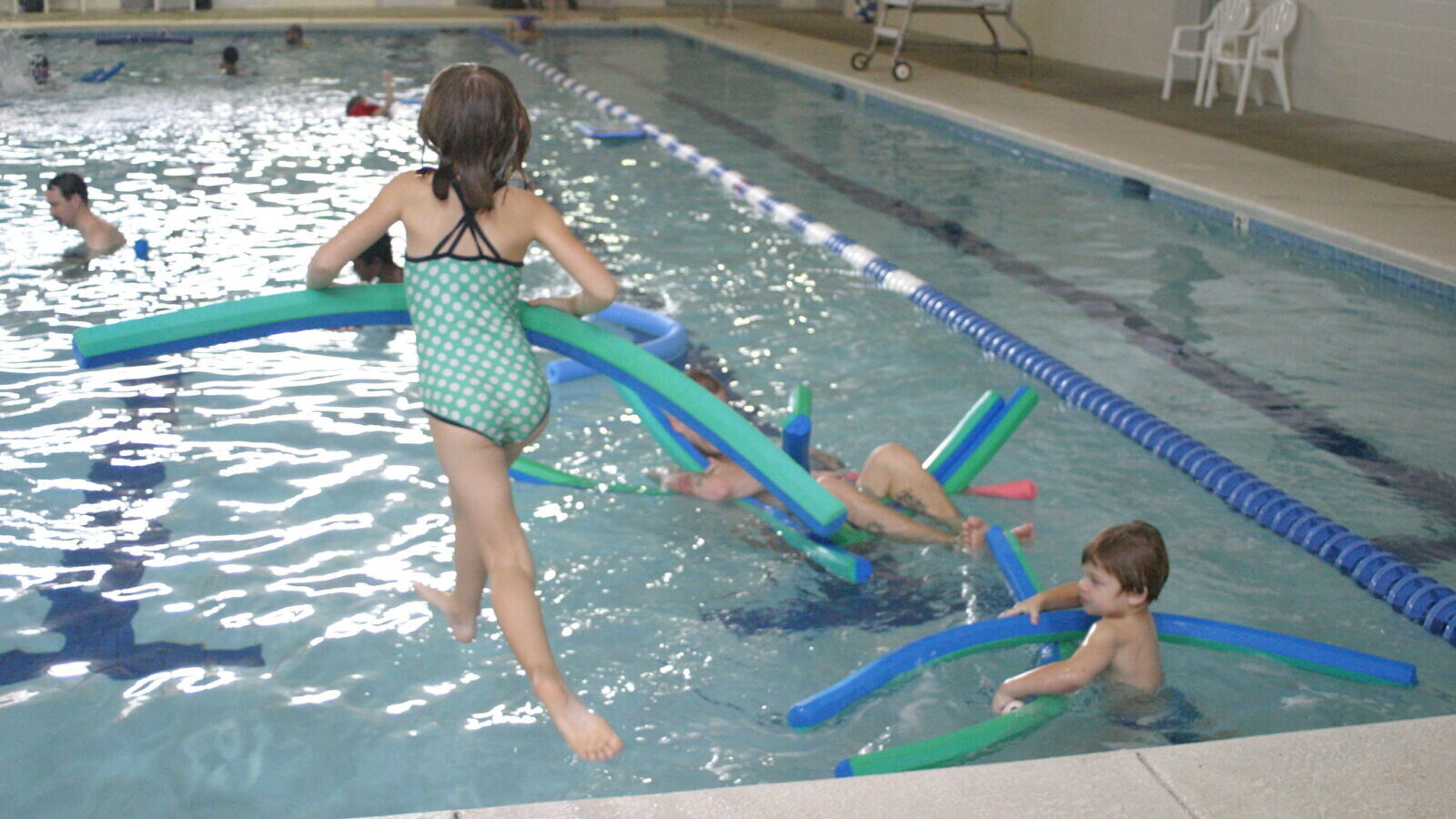
Not in at the deep end: Sophie, who wanted to work in swimming with children, was helped to navigate her workplace – a local pool. Photo: Carolyn Hack/Flickr/CC BY NC SA 2.0
As a new year begins, many people will consider that adage “new year, new career”. But for people with learning disabilities – just 5% of whom are in paid work, compared to 80% of their non-disabled peers – there is rarely a job to start with.
Supported internships are one way to prepare people who can and want to work for employment. They involve a placement of 6-12 months, with support from a job coach to learn and stay in the role. The internship also includes tailored study, for example, in English and maths.
According to a recent NDTi analysis into its internships scheme in rural Somerset – specifically the experiences of four young disabled people – the average social return on investment was £9.35. This means that for every £1 invested, £9.35 of social and economic value is generated.
The Somerset work is significant because the employment barriers faced by young people with special educational needs and disabilities are exacerbated by issues in rural areas such as access to employers and transport.
Sophie (not her real name) was one of the four young adults whose experiences are described in the Investing in Potential report.
Sophie had done a supported course at college, had never worked but had the ambition to secure a job with children and a role related to swimming.
Sophie’s college introduced her to the supported internship scheme. Through this, she took part in some work placements at a local leisure centre and then at a bigger sports centre.
Getting used to work
“At first, it was different,” Sophie told NDTi researchers about the daunting adjustment to work, “but I got used to it.”
Sophie’s job coach supported her with interview preparation, her CV and how to navigate the workplace. Her confidence grew and she started helping with swimming lessons and supporting young swimmers.
Friends, family and colleagues noticed her communication skills improved and she became more independent, walking to work and the shops on her own, for example.
Before the internships programme, Sophie did not have an income. She now works for two hours a week as a swimming assistant, earning £11.26 an hour.
She leads some one-to-one lessons and plans to complete her level 1 Swim England qualification – and more levels beyond that.
Aside from the income, Sophie is proud of contributing and is enjoying the social side of work.
“I’m better with new people now,” she proudly told NDTi researchers, reflecting the impact on people’s social lives and wellbeing alongside the immediate impact on income.
Saba Salman is a voluntary ambassador with the NDTi
Neither myself nor my son are ready for him to leave home. Rather than feeling excitement and hope, I worry about his future happiness and making the right choices for him
Photo: Dave Howes/Flickr/CC BY SA 2.0
At the school where I teach, we have a bird box webcam.
Every spring, my class of six-year-olds and I watch as a pair of blue tits lay their eggs, see them hatch then spend thankless weeks toiling to bring them a seemingly endless supply of caterpillars.
Then comes our annual highlight; watching as the chicks begin to leave. One by one, the fledglings hop up to the edge of the nest before stretching their wings and disappearing from view, accompanied by cheers from my class.
It occurred to me last year that we have no way of knowing what happens to those birds once they take flight.
How many soar, make it through their first night or start families of their own the next spring?
They vanish from sight, a different unknowable chapter of their lives starting while our view stays fixed on the now empty nest.
My own nest is rapidly emptying. Elliott is 20 and reaching the end of his time in a college for people with severe learning disabilities. His brother, Caleb, just 18, has his heart set on heading off to university.
By the end of 2026, both my boys will have started their next chapters, leaving me, my wife and their younger sister behind.
I can’t help but cast my mind back to those blue tits and how not all of them leave the nest equally.
Some hop up to the hole at the top of the bird box with confidence and a lack of fear.
They’ve seen their parents fly in and out for weeks, they have grown big and strong and can stretch their wings wide. They are ready to fly.
But others spend hours cautiously sidling up to that same hole before jumping away again
in fear. It can be a long process to get them to make that first, terrifying jump.
Greatest leap
More than once, I’ve watched the last, lonely bird spend hours circling the nest, trying to pluck up the courage to jump up to the precipice and take the greatest leap of faith.
It is a queasy feeling to see one leave the nest when they’re not ready for it.
And so it is with my boys. I can feel Caleb itching to get out into the world.
I look on him starting to write his own story with equal parts excitement and sadness – I’m going to miss the little guy. (He’ll always be the six-year-old that needed me to help with his Lego, even if he can buy me a pint now.)
The itch for independence is absent. He would stay at home forever if he could. We’re looking for Elliott to leave rather than him looking to fly
But Elliott leaving home is a completely different proposition.
Elliott is not ready to leave because he will never be ready to leave.
We’ve lived in the same house since he was two. He’s always had the same room.
It is all he has ever known and all he has ever sought to know. The itch for independence I see in his brother is absent. He would stay at home forever if he could.
And therein lies the fundamental truth of it; we’re looking for Elliott to leave rather than him looking to fly.
We’re the parent blue tit, gently pushing their weakest baby to the edge of the nest while their siblings have already soared into the great blue yonder.
There are no promises that Elliott is ready for it. No promises that we are, for that matter.
Elliott’s cognitive ability is about that of a three-year-old. You can count the number of three-year-olds who are ready to leave their parents’ side on the fingers of no hands.
So, rather than feelings of excitement and hope, Elliott leaving home fills my days with dread and worry.
I hope we’ll make a good choice for him. I hope we’ll find people who can look after him well. I hope he’ll be happy.
But we’ll never know that for sure and right now – unlike his brother – his nest feels awfully high and his wings awfully small.
In a peer-to-peer history project, people with learning disabilities describe systems that failed them as well as stories of belonging, independence and self-expression
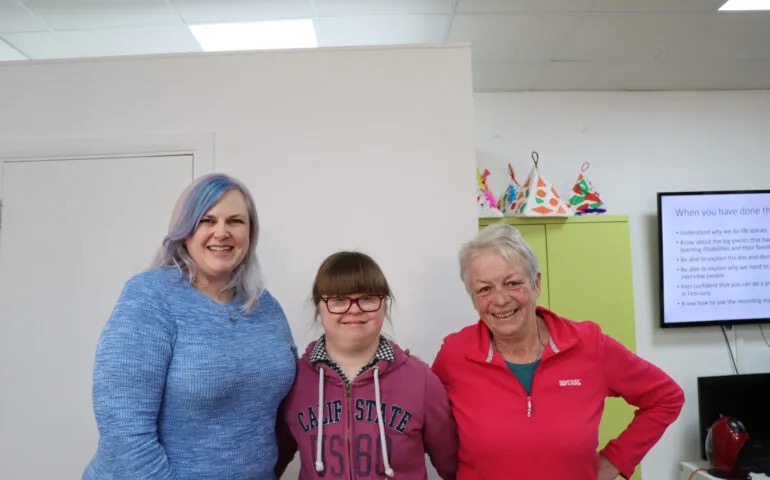
L-R: Charlotte Moore, Dorothy and Jan Walmsley. Photo: United Response
Believed to be the first peer-to-peer oral history project by people with learning disabilities, the two-year endeavour started in 2023, with the aim of preserving learning disability history. Stories will be archived in the British Library this year.
To date, 60 interviews (including by Dorothy), have been completed across England, from Cornwall to Cumbria. People with learning disabilities and/or autism were paid to carry them out.
The stories tell us much about people with learning disabilities living in England.
Bleak stories
Let’s start with bad news. Trauma was common. Many experienced fractured childhoods. Fostering, adoption, neglect and children’s homes formed the background to 30% of childhoods; 68% were bullied at school, some by teachers, and only occasionally was it addressed.
This may have been made worse when diagnosis came late in the day. Delays often left people misunderstood and unsupported.
Stable adult relationships were also elusive for people. Many expressed a wish for a life partner; very few had one. Even less common was parenthood and the circumstances were often traumatic.
One interviewee experienced severe abuse from her father when she was younger, leading to two pregnancies. Both children were taken from her shortly after birth. One was adopted without her consent and the other cared for by a relative. Another participant had her children removed but had reconnected with one.
It was a similarly bleak story regarding paid work. While some of the older men had had “proper” jobs, most people had had voluntary work or brief, unsatisfactory spells in paid employment.
Recovery and happiness
There was also good news. People displayed resilience – a power to recover from difficult, fractured childhood experiences, trauma and bullying to find happiness in life.
Most striking was the importance of interests and hobbies. Most (73%) interviewees highlighted one, from sport of all kinds, music, karaoke, arts and crafts, cooking, drama, fishing, DJing and churchgoing.
Hobbies give people opportunities to step away from the disability label, express themselves, make friends and win recognition through medals, certificates and recording songs. For some, hobbies were linked to mental health recovery, or gender and sexual identity.
Living independently (usually with support) was valued highly with a sense of pride. Good support workers were mentioned by many people as an important buttress to life. And routines, so they knew what to expect every day, gave some a sense of safety.
We tried to explore identity by asking about the disability label. This seemed to take some by surprise – typically older people. Yet, while it was not something they had been encouraged to think about, some had given it considerable thought.
One man said of his Williams syndrome: “I didn’t choose to have it, it chose me.” For one woman, her autism diagnosis aged 21 came as a relief and a turning point in self-acceptance.
Interviewers were encouraged to explore sexuality, another area where most had had little practice in talking or thinking. One man, however, proudly shared he was gay, and how happy his boyfriend made him. A transgender participant has her “best ever” girlfriend.
These interviews collectively show people with learning disabilities as resilient historians of their
own experiences. They describe systems that failed them but also communities that enable belonging and self-expression. Disability and identity are no longer only about limitation but increasingly about voice, creativity and influence.
Our Life Stories featured in our summer 2025 issue (Our history by ourselves) and is supported by the National Lottery Heritage Fund.
For more about the project and the touring exhibition in February, see the United Response website
This article was co-written with Maxine Spry, United Response grant manager and project team member
The creativity and observation skills of people with Down syndrome are clear in a global photography contest. Saba Salman looks through the lens
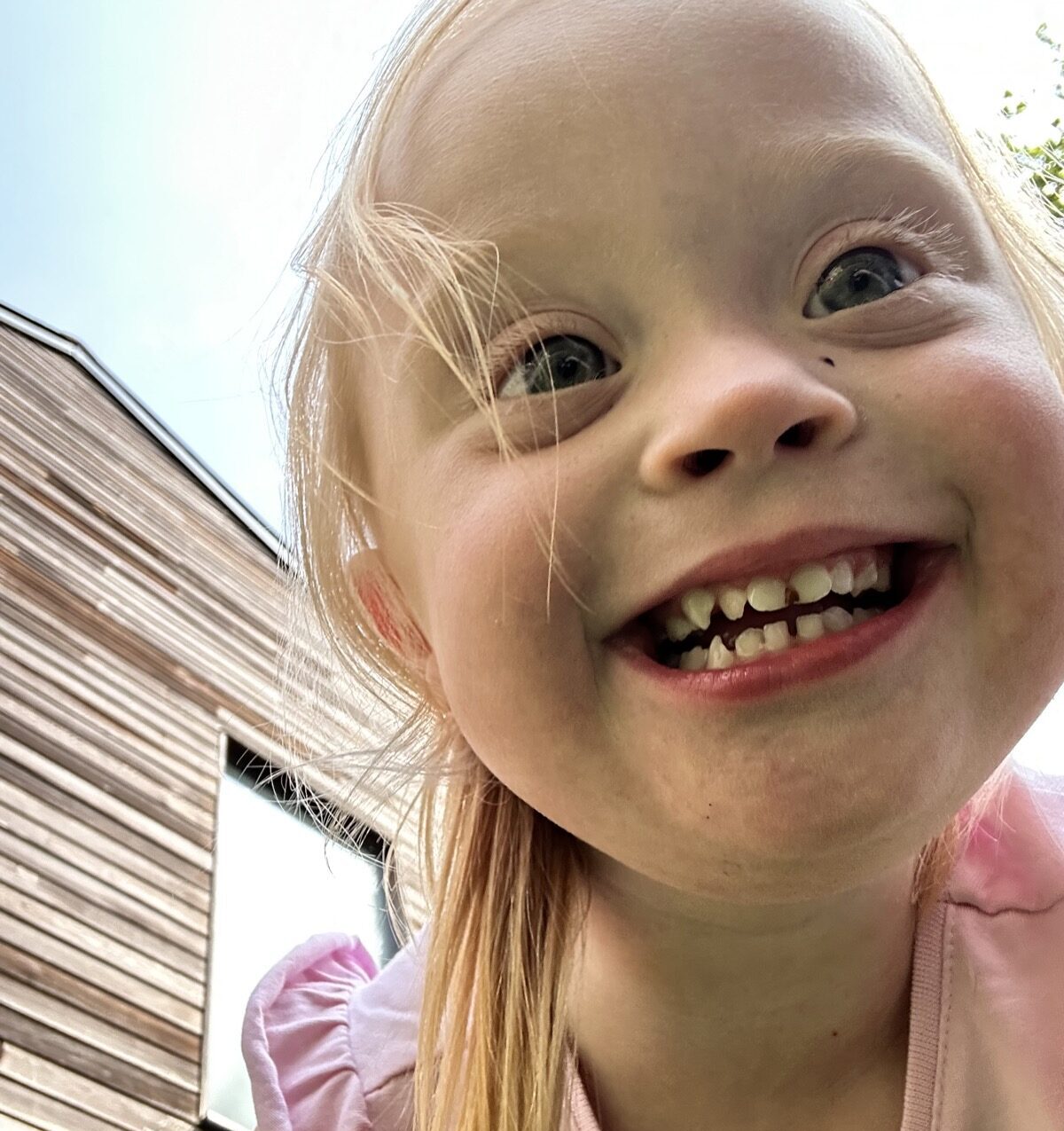
Photo: Beatrice Lawson
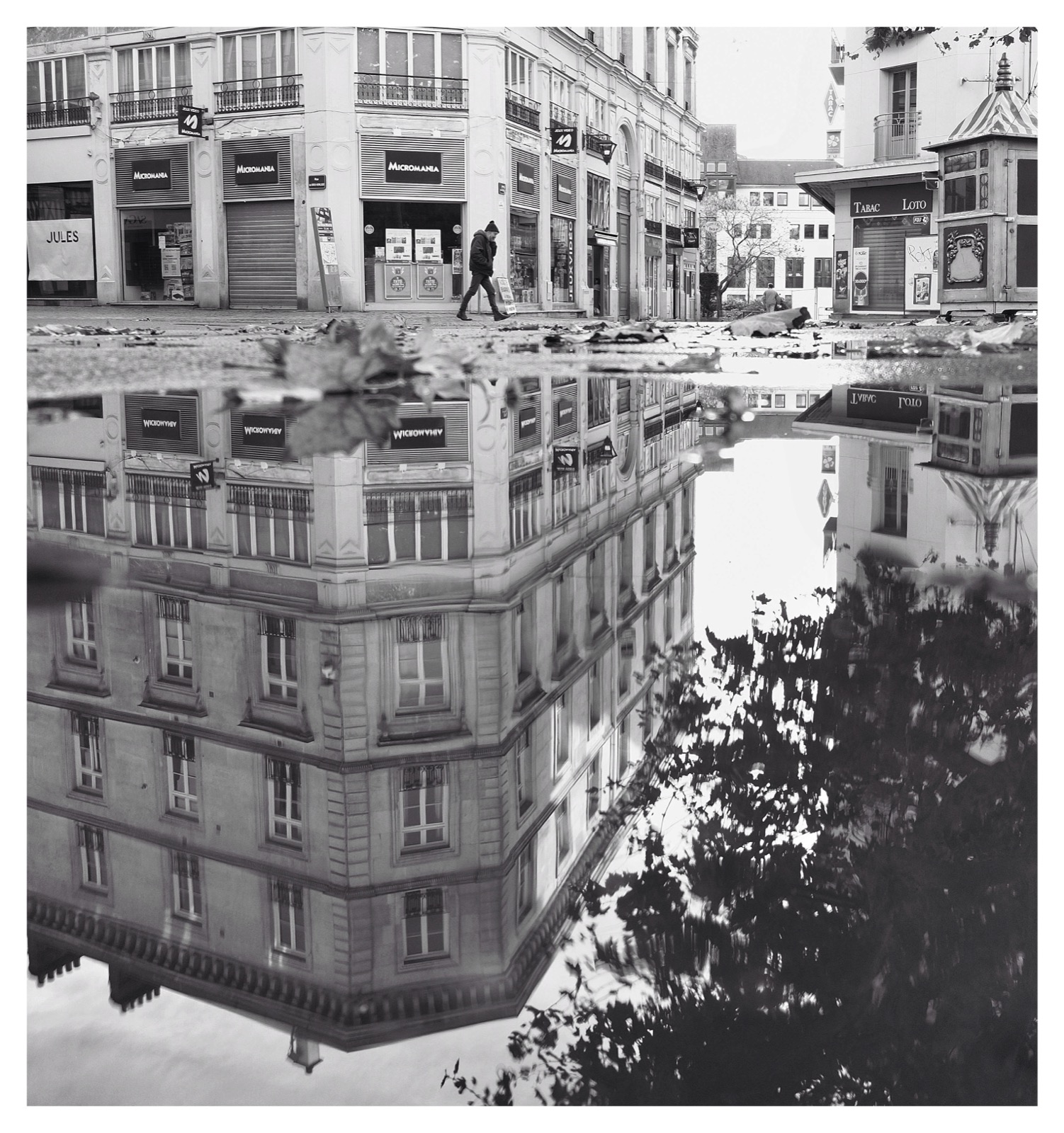
A selfie, a close-up of a ladybird on a sunflower and a reflection of a building in a puddle are among the winning shots in an annual international photography prize run by the Down’s Syndrome Association.
More than 250 photographers from around the world entered My Perspective, the competition for people who have Down syndrome.
The contest, in its 15th year, gives “a unique global insight into how children and adults who have Down’s syndrome see the world around them, and how they want the world to see them,” says the association
The 2025 contest included a new prize, the Langdon Down Award for UK entrants, named after John Langdon Down, the physician whose work led to the World Health Organization using his name to formally classify Down syndrome in 1965.
Photographer Rory Langdon-Down judged the newly created category named after his great-great grandfather.
He said: “My Perspective is the perfect name for this competition as the photographs shortlisted are a personal representation of each photographer across still life, portraiture, landscape, wildlife and street photography and I truly believe could not have been made by anyone else.”
The Stephen Thomas award honours the life of past My Perspective winner Stephen Thomas, a talented photographer who died in a boat accident with his father in 2015.
Each year, his mother Julie and brother Paul select their favourite photograph from among the overseas competitors.
2025 winners
Judges’ Choice Award (adult)
After the Rain, by Brieuc Devaud, France
Photo: Brieuc Devaud
He says: “Photography is an activity I shared with my father during the Covid lockdown. All the people I show my photos to like them, and that makes me happy”
Judges’ Choice Award (child)
Say Cheese, by Beatrice Lawson, UK
Photo: Beatrice Lawson
Four-year-old Bea loves capturing selfies, often giving the camera what her mum Lucy calls a “cheesy grin”. Her joyful, unselfconscious self-portrait made her the youngest ever winner
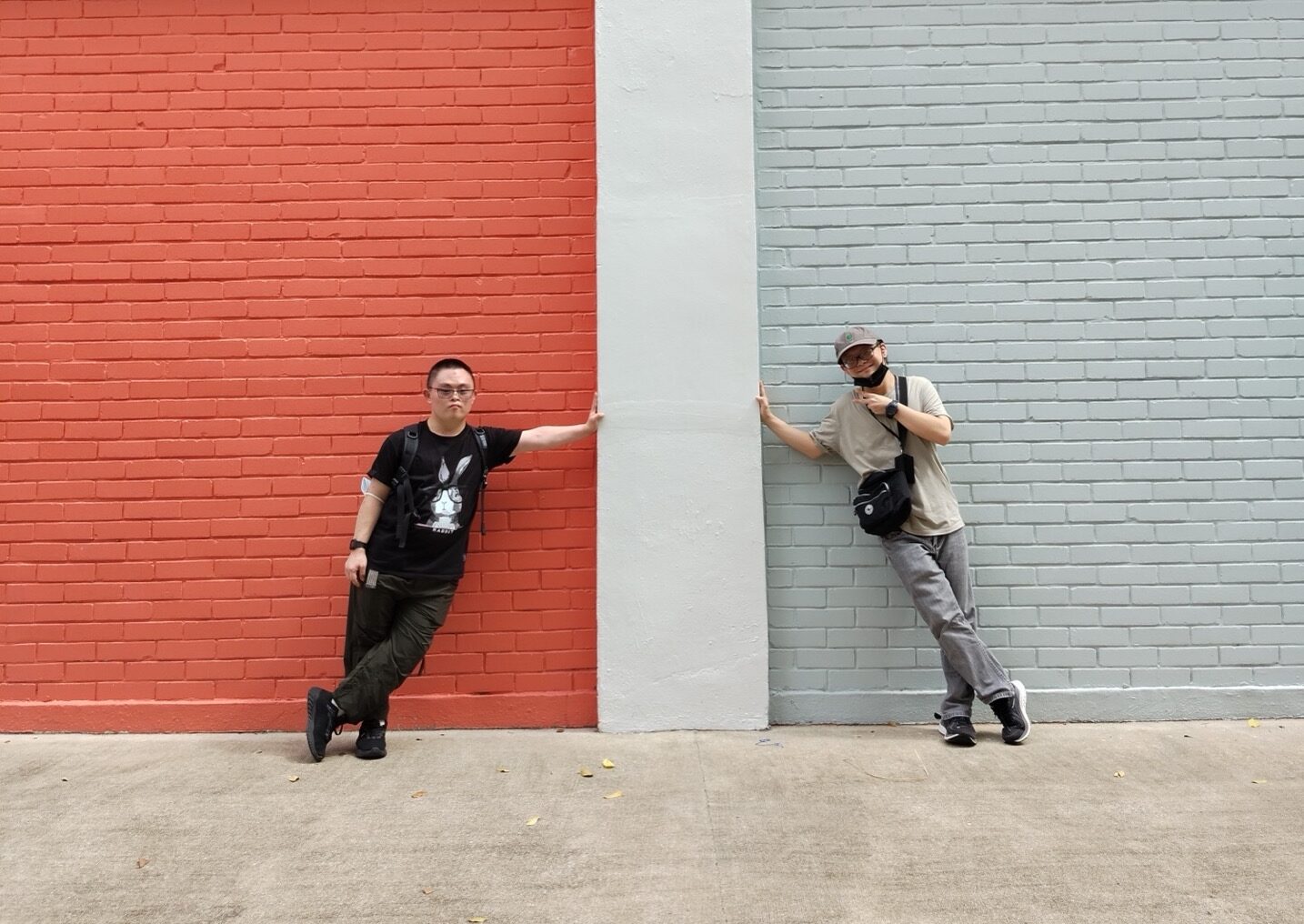
People’s Choice Award, chosen by members of the public (adult)
The Different Colours, by Enoch Tan, Singapore
Photo: Enoch Tan
Tan’s love of photography began when he found he could use phone images to make it easier to communicate with his parents and the wider world. The contrasting colours of the walls appealed to him and he asked friends to pose to add to the composition
People’s Choice Award, chosen by members of the public (child)
My Happy Mummy, by Mabel Hetherington, Northern Ireland
Photo: Mabel Hetherington
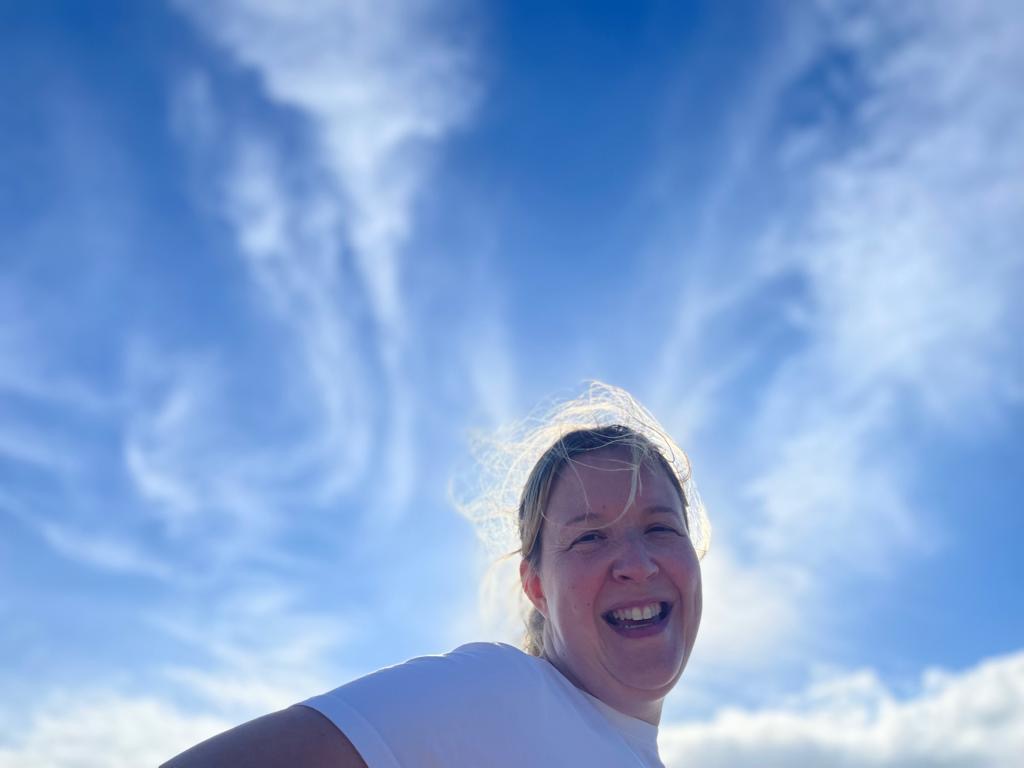
Eight-year-old Mabel captured her mum Elaine’s smiling, windswept face on a sunny day on Rossnowlagh beach because, she says, “the beach is our favourite happy place”
Langdon Down Award for UK entries
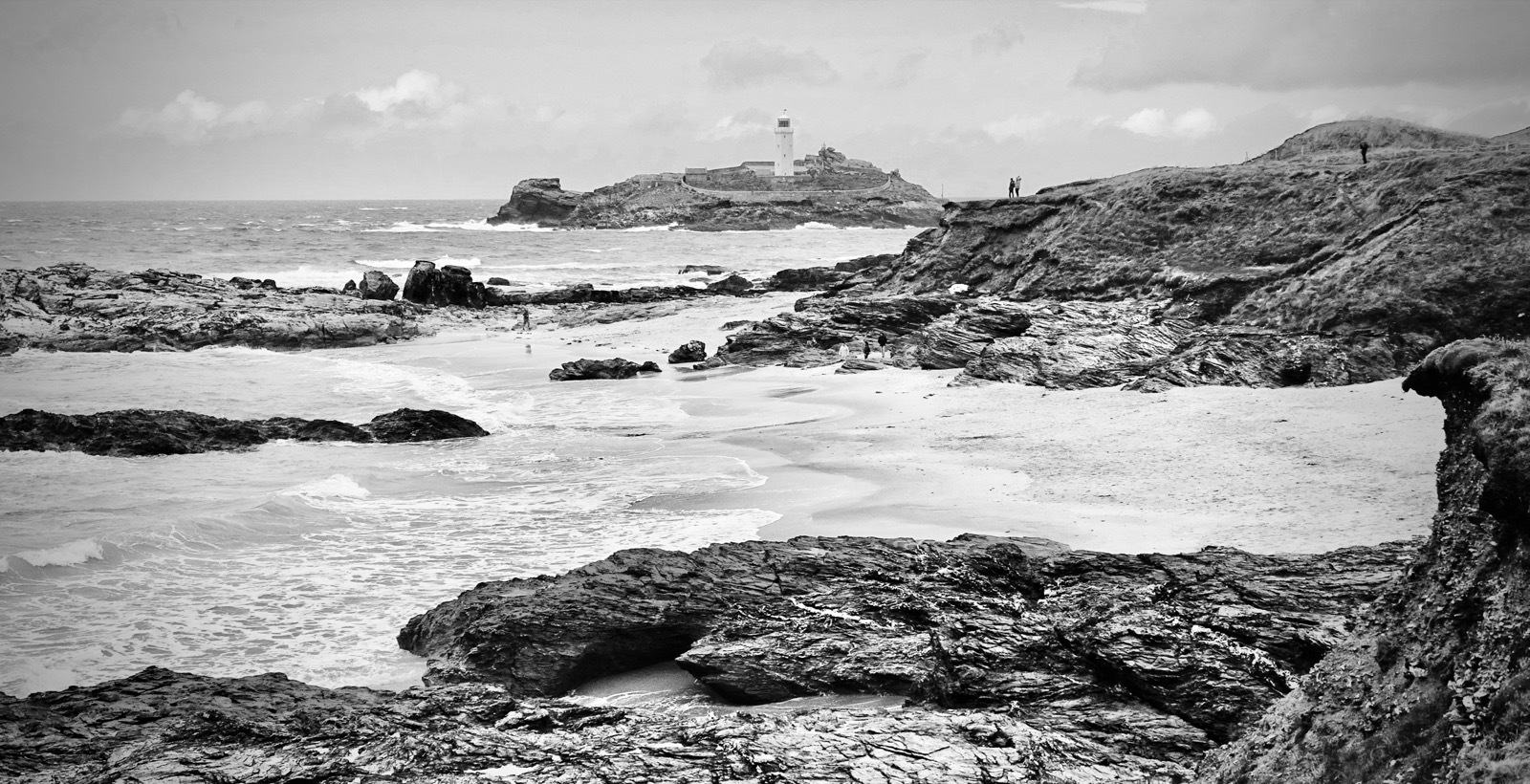
Godrevy Lighthouse, by Stephen Lucas from Wales
Photo: Stephen Lucas
Lucas’s Cornish seascape, taken while he was on holiday, reflects his love of nature and the sea, and his fascination with lighthouses
Stephen Thomas Award for international entries
Ladybird on a Sunflower, by Samuel Chapman, Australia
Photo: Samuel Chapman
Chapman was inspired to take the photo because he says yellow is a “happy colour” and thought the ladybird looked wonderful against the vivid yellow of the sunflower
The best bit about taking part in Our Life Stories oral history project is talking to people and asking lots of questions – and it’s helped my paid work as a quality checker, says Dorothy
Dorothy: gave a talk on travel training, which enables her to take the bus into town. Photo: United Response
The Our Life Stories project has been fantastic. It was great for me to have the chance to take part. I’ve never done anything like it before and really enjoyed the training. It gave me the chance to interview people and share my story.
The best bit is talking to people and asking lots of questions, as described opposite. I like to try to help by doing this. It has also helped me to be better at asking questions in my quality checker work. I have interviewed my friend Lisa and am looking forward to being interviewed myself soon. It will be amazing. I can’t wait to see the exhibition in London too.
I live in the East of England with my two brothers, Ian and John. I moved in in April 2016. Before living here, I lived with my mum and dad.
Moving into my home made me feel so happy. It made all my dreams come true because I wanted my independence. I have my own bedroom with my artwork on the walls and lots of photos of family and friends. Being here helps me to do my own things in my own time.
I love going on holidays and on day trips, and I even like doing all my house jobs
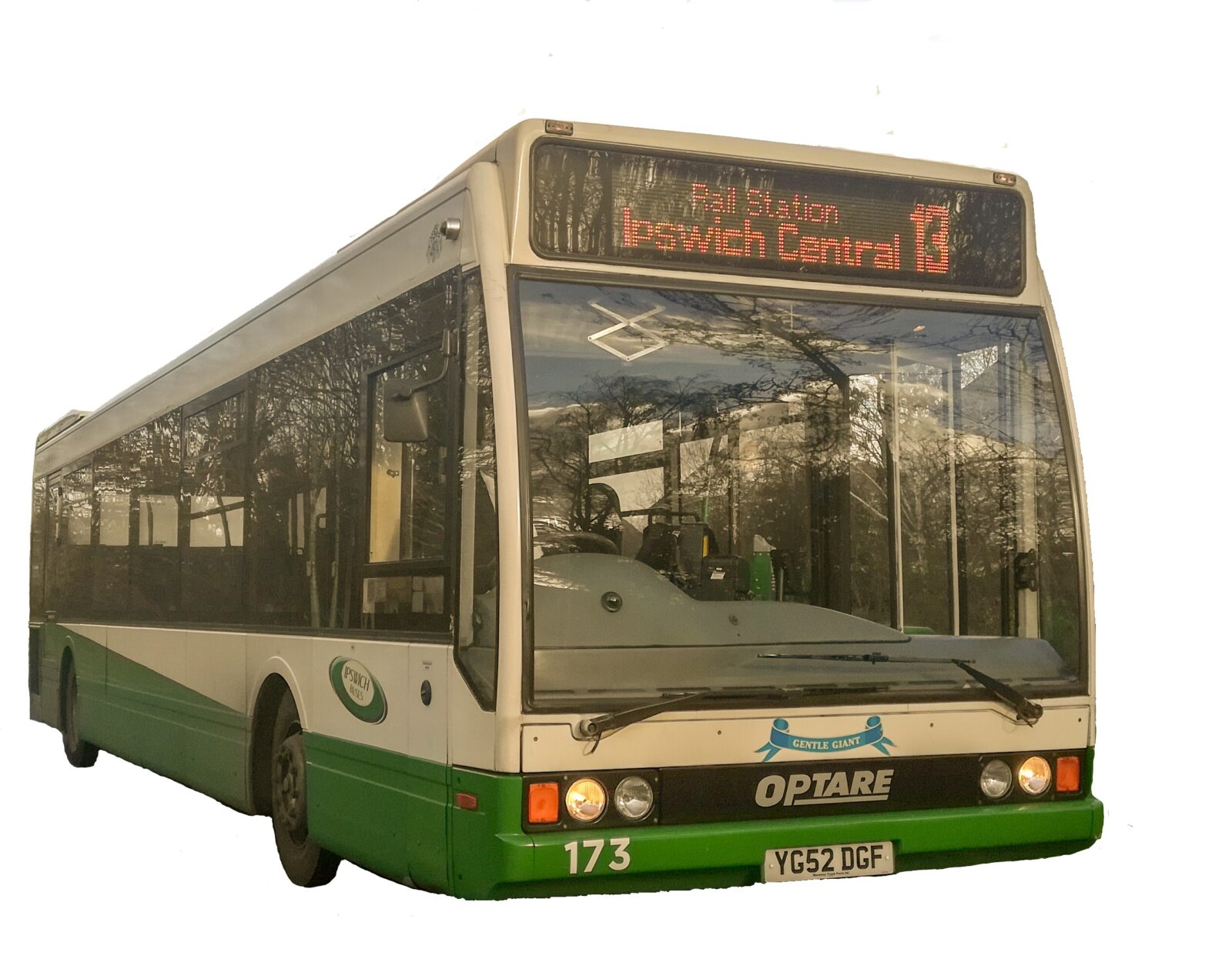
Because of United Response, I was able to complete travel training with Louise, who works at United Response, and I can now get the bus by myself.
I did an event in Ipswich where I talked on stage with Louise and Luke (my friend). We gave a presentation about travel training. I really like going to events like that to give talks; everyone there is great.
Photo: BusEnthusiastLuke/Wikimedia Commons/CC BY SA 4.0
Taking the bus I go into town, go to the shops and to day services on Tuesdays and Thursdays.
United Response staff help me with things like my medication, paying bills, internet banking, cooking, ironing and washing my hair.
I really enjoy doing lots of things with staff too. They support me with my hobbies such as going bowling, swimming or to the cinema.
I also enjoy going out to dinner, to the pub and being supported with clothes shopping in London. I have my one-to-one days with staff on Mondays or sometimes on Fridays too.
I love going on holidays and on day trips, and I even like doing all my house jobs. I love all my staff; they are all special to me in my life.
If I wasn’t living in my home, it would be difficult to do everything I currently do. I enjoy living with my brothers, I have family with me and also staff support. My friends Lisa, Jenna and Karen live in another supported living house on the same road as me. They are all my amazing best friends.
Being supported and living close by means we can visit each other a lot. I enjoy doing colouring with them and watching DVDs too.
Mum and Dad visit our house and my brothers and I see them for dinner at mum’s house every Wednesday. I like seeing my two dogs Lola and Deedee that live with Mum.
Being with United Response has given me valuable opportunities for paid work too. I work as a quality checker. I check on the quality of services being delivered by United Response in supported living and day services. I enjoy the work.
I like travelling on the train and going to visit different people to see how they are doing in their homes. Quality checkers are an important part of ensuring a high standard of services.
Handweaving has many strands, promoting creativity, wellbeing and independence, and is helping to return textile production to its local roots, says Jade Ogden
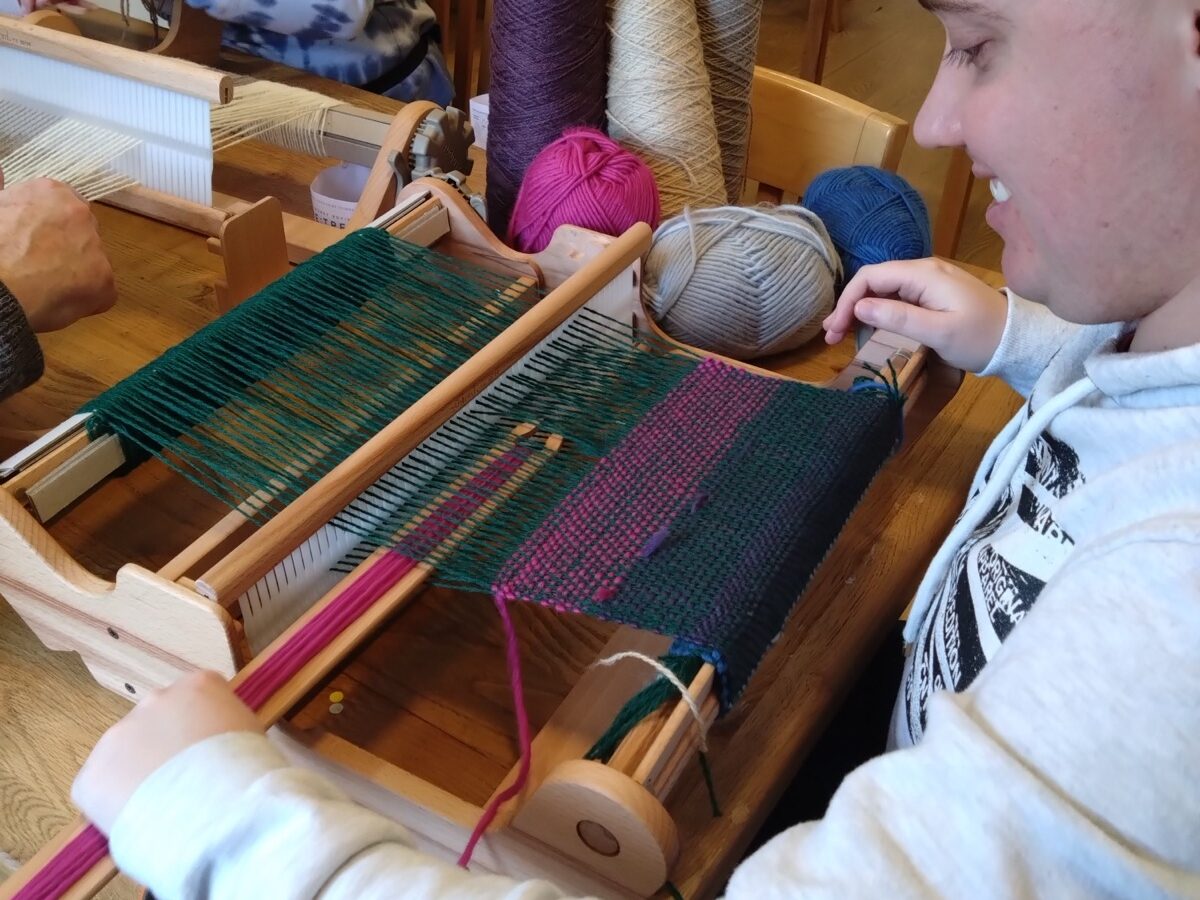
Weaving workshops: art and craft have huge potential for self-expression, especially for those who struggle to communicate. Photo: Jade Ogden
“I can get quite anxious, but being in a room with everyone weaving was very relaxing and therapeutic for me. I absolutely loved it.”
These are the words of one co-facilitator, who happens to have a learning disability, with whom I collaborated on an accessible weaving workshop in Somerset.
Having visited weaving studios in Scotland, Finland and Japan where learning disabled people have become masters of the craft, I have observed learning disabled weavers across continents who have become experts, creating their own beautiful work, completely unaided.
Since 2024, I have run 15 weaving workshops involving 16 people with learning disabilities. These were funded initially by a Willson grant then by the Elmgrant Trust, plus by charging a small fee to community workshop participants.
Four of my original participants went on to co-facilitate community weaving workshops with me as paid employment.
While the paid work impact so far has been on a small scale, the project has many benefits for learning disabled people, the community and our environment, so I am now looking at grants to develop it.
What happens at workshops
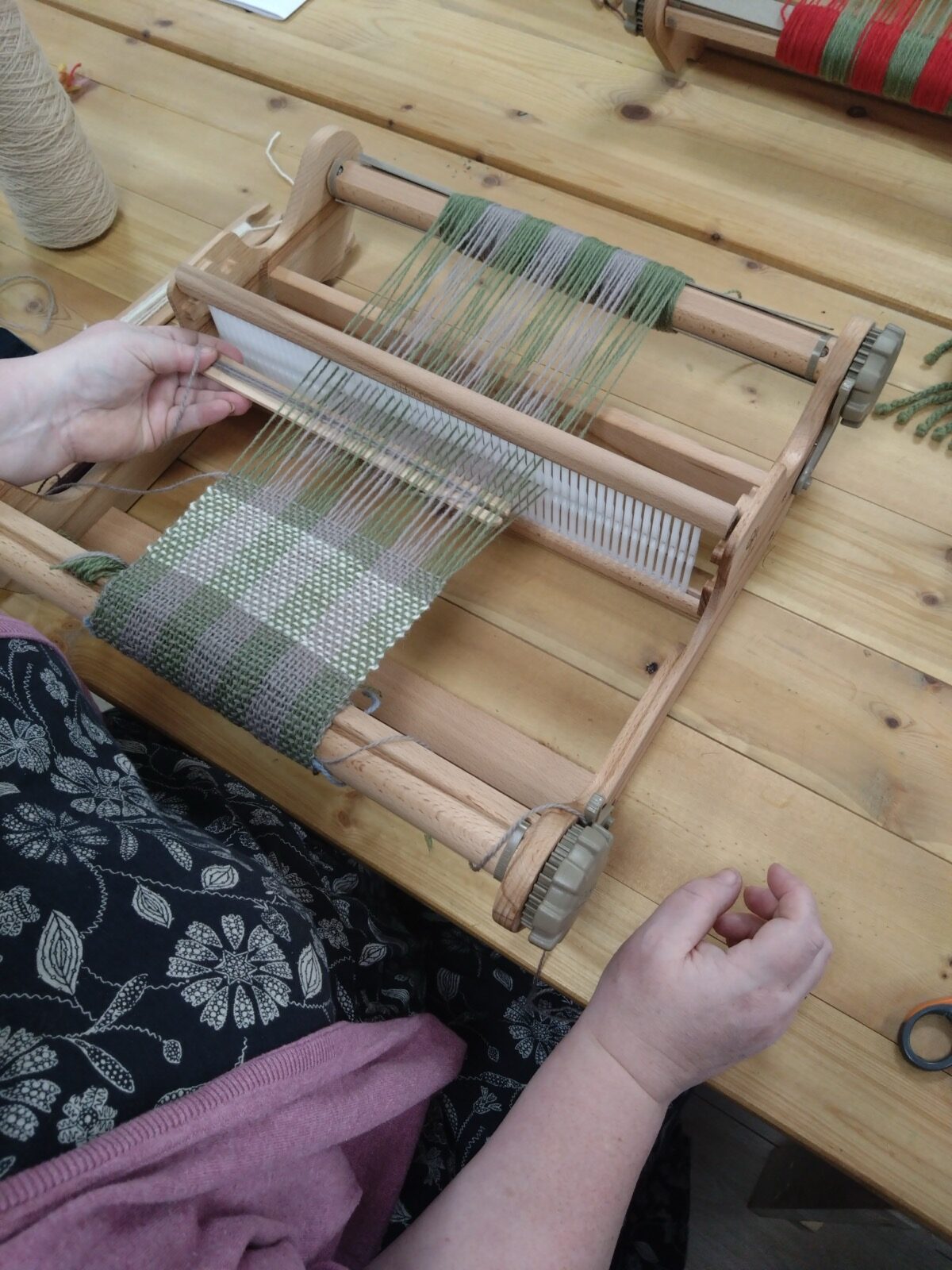
Each two-hour workshop involves up to six participants who learn how to weave on a rigid heddle loom (a small, rectangular portable wooden loom) using British wool.
I tend to demonstrate how to start using the loom, then the co-facilitator encourages people to choose the yarn colours that they would like to work with, showing them how to wind this onto their shuttle (the stick you hold to pass weft thread between the warp threads to weave your cloth).
While people are quietly getting on with their weaving, the co-facilitators help by winding wool onto cones for future workshops. At the end of the workshop, the co-facilitators help to untie the work from the looms.
As a member of the South West England Fibreshed, I am part of a global movement to bring clothing and textile growth and production back to local areas. So part of my work is to spark discussion about the impact of the textile industry and working with British wool among learning disabled people.
Art and craft have huge potential for self-expression for everyone in society and are especially transformative for those with communication difficulties.
Handweaving also offers opportunities for independence. I have seen people with profound and multiple learning disabilities gain huge satisfaction from working at the loom and creating cloth relatively independently, even though they may require a high level of support in other aspects of their lives.
Unwinding the work from the loom and revealing the finished piece of weaving elicits real joy.
Rigid heddle weaving. Photo: Jade Ogden
A challenging aspect is finding enough funding to support upskilling the co-facilitators and run the workshops, particularly as handweaving is a time-intensive craft. Additionally, potential participants often lack the support to get out to try something different.
The most rewarding aspect is being part of enabling people to be seen in positions where they can share knowledge and others can learn from them. This is fundamental to helping to change societal perceptions.
Creating work opportunities is so important; fewer than one in 20 adults with learning disabilities in England are in paid work. I would love to develop the project so more individuals could learn how to weave and co-facilitate workshops.
It would be great to engage with farmers who need an outlet for their sheep wool. I envisage an inclusive hub for wool craft, enabling a team of learning disabled people to become educators and creators of sustainable, regenerative textile products.
Policy and practice by social welfare institutions lead to parents of disabled children being routinely blamed rather than supported. An anthology by family members and those working with them examines these tensions, their effects and the potential for change
Blame the parents. It’s a common reaction to any failure in children’s behaviour or to their safety, yet so many issues – from education and economic to social care and mental health – arise from the failure of the state to provide adequate support to children and their families.
As parents, we know that “parenting and blame” are fellow travellers: we are accustomed to blame ourselves, and our children – for good measure – are wont to blame us too. This is part and parcel of family life and is not the focus of this work.
Blame by default
What has driven every contributor to this book is their deep concern for what happens when state institutions develop policies and foster practices that, by default, blame parents too.
This book challenges the incremental normalisation of behaviours of this kind. It seeks to identify how such practices have developed and to convey the devastating impact that they have on families.
In the context of this book, parent blame arises in situations where there is a failure by a public body to provide a level of support that a responsive state should provide for a child (and/or their family) and the default organisational response of the public body is to blame the child’s parents for this failure.
Parent blame is not a new phenomenon, but media references to “parent blame” appear to be increasing significantly – essentially as a term used by parents to describe their encounters with social welfare agencies.
The phenomenon occurs in relation to a spectrum of support failures by public bodies: in terms of failing to provide adequate social care support for disabled children; in terms of failing to provide appropriate education for children who are “not fine” in their school; in terms of the organisational responses of healthcare providers, where parents consider a diagnosis or treatment plan inappropriate; in situations where there is a failure to provide adequate measures to protect a child from abuse in public settings – and in many other contexts.
This edited collection brings together academics, practitioners and activists along with contributions from parents and young people who have experienced the trauma of being caught up in the process of blame. In addition, there are contributions from key researchers as well as practitioners/activists who have written on this issue.
All the chapters are either written by family members who have experienced the direct consequences of parent blame or by authors who work closely with such families and seek to ensure that their voices are heard in everything that they publish.
The book explores the nature and causes of parent blame and interrogates its prevalence, impact and potential pathways for reform.
Research suggests that in the last two decades, there has been a significant increase in conflict between families and social welfare institutions. These conflicts often involve practitioners directly blaming parents for their child’s difficulties – accusations that cause significant distress/trauma to families.
Harm disregarded
Many of the book’s contributions seek to analyse the reasons for this increasing conflict and to better understand why the resulting |harm experienced by families is, so often, disregarded.
This book is, therefore, of particular relevance to public policy debates concerning families: their support needs, their precarity and the increasing extent to which states are intervening in their private and family lives.
What do we call ‘them’? Labels applied to people are used to decide who gets what. What if the emphasis was on the individual, not what a label dictates they deserve? asks Bryony Shannon
Rewriting Social Care: Challenging and Changing Language and Practice for a Better, Brighter Future
Bryony Shannon
Jessica Kingsley Publishers, 2025
The search for the perfect “label” has spanned both decades and continents. There have been numerous surveys and much debate about the “preferred terms for labelling individuals”. “What do we call ‘them’?”
But we don’t need to add new labels; we need to remove them. And we can only do that by radically rewriting social care.
Like sorting offices and baggage-handling systems, we rely on labels – precisely because we operate a similar system of screening, sorting, prioritising and processing. We use labels to decide on eligibility, determine pathways and prescribe services.
Keeping a distance
We use labels to distance ourselves from the reality of people’s lives, to help us justify the way we “deal with” people like parcels and suitcases. And we use labels to blame, to shield us from the reality of our collective failures.
Too often, we apply labels because we’re too far removed – physically, emotionally, usually both – from people in the context of their families and their communities and their whole lives.
“Because that’s what we’re talking about. People. Relationships. Families. Normal stuff. Any other label distances and sets up a ‘different from the rest of us’ dynamic that is not useful” – a quote from parent advocate and campaigner Mark Neary from 10 years ago.
Who’s giving?
Our dominant approach to welfare is the “professional gift model”, where “the taxpayer gives money to the government, the government gives money to the professional who turns that money into services that are offered to the needy person as a gift – that is, something that cannot be defined, shaped or controlled by the individual”, to use the 2010 words of author and director of Citizen Network Simon Duffy. The “gift” of services. A “package” of care.
But what if we flip this narrative, drop the labels and focus instead on people’s gifts and potential? On seeing and valuing who people are and want to be. What people can do, could be, want to do next. And on giving our own gifts of time, compassion, dignity, respect, honesty, humility, humanity.
Applying a label is easy. Recognising and nurturing gifts and potential requires a whole different way of thinking and working, where conversations are led by people seeking support and based around what matters most to them. Where our role is listening – with no assumptions – and understanding, building trust, making connections, joining the dots. Where our aim is for people to flourish, not just survive. Where support is a springboard, not a safety net.
This moves us beyond focusing on basic physiological and safety needs – the bottom tiers of Maslow’s hierarchy (a motivational theory in psychology comprising a five-tier model of human needs) – to recognising, valuing and focusing on the importance of belonging, esteem and self-actualisation.
Applying a label is easy. Recognising and nurturing people’s gifts and potential requires a whole different way of thinking
It moves us from focusing only on what “professionals” give to starting with what people, families and communities have, and investing our time and resources in nurturing, developing and connecting what is present and abundant.
For example, in Stirling, an 87-year-old man with dementia was reading a book to a 93-year-old neighbour because she can’t see the words anymore. There’s no “service” that could replicate the relationship, connection and care created here. Everyone has something to give to their neighbour – an observation by community worker Hannah Ellis Gray in 2023.
Labels are for parcels. Jars. Suitcases. Not people.
Percussionist Simba Ngwarati had always loved music and songwriting. He now plays with an orchestra, which travels to perform in front of large crowds
Simba Ngwarati. Photo: City Lit
I have always loved music. Songwriting has been a passion for as long as I can remember but, for a while, I didn’t have a way to share it or perform with others.
I’ve now been part of the orchestra for almost five years – I play the xylophone.
The musical group for adults with learning disabilities is run in collaboration with the Royal Academy of Music (RAM).
It began in 2015 and was the idea of Michael Donlevy, the head of City Lit’s Centre for Learning Disabilities Education (and a Community Living trustee). More than 100 RAM and City Lit students have been involved.
From my very first session, I felt welcomed and inspired. Everyone is treated as a musician, encouraged to experiment, create and express ourselves through sound. Being part of this orchestra has helped me grow enormously as a musician.
We don’t just play existing pieces – we create our own original compositions, blending ideas and rhythms from everyone involved. Working alongside such talented artists has made me more confident, creative and skilled.
We are treated as professional musicians – people whose ideas and contributions matter. That sense of respect and encouragement fills me with pride.
What I enjoy most is the sense of community. Playing as part of a group gives me purpose, belonging and energy. When we perform together, it’s like we all share one heartbeat.
Our conductor, Alex Thomas, plays a big role in that. He teaches us what to play, but he also encourages us to listen to each other, take risks and enjoy the music. He brings out the best in us – individually and as a team.
The orchestra has changed my life in so many ways. It has opened doors I never imagined, from performing in front of large audiences to travelling and being part of something truly special. Playing together and sharing our music with others has been unforgettable, especially when we see people moved by what we do. The moments when the audience cheers or gives a standing ovation feel like a dream come true.
One of my favourite experiences was travelling to Birmingham last year for a big conference. It was my first time touring with the orchestra, and I was both nervous and excited. Performing there and feeling the audience respond to our music was unforgettable. It reminded me why I love what I do.
Simba Ngwarati: a highlight was receiving an award from solo percussionist Dame Evelyn Glennie. Photo: City Lit
Another unforgettable moment was performing with Dame Evelyn Glennie, the world’s first full-time solo percussionist and patron of our orchestra. We even played piano together, which was an incredible experience.
I’ve always admired her, not just for her talent but also for the way she proves anything is possible with dedication, passion and belief in yourself. Sharing the stage with her made me feel proud to be a musician.
Later, receiving an award from Dame Evelyn at the City Lit Awards 2024 was the highlight of my journey so far and a memory I’ll always treasure.
My dream is to one day perform with the Royal Academy Orchestra and to write and record songs with them. Because I already play alongside RAM students, it feels that goal isn’t too far away. Every performance brings me one step closer.
If someone wants to do what I’m doing but feels nervous or unsure, my advice is simple: don’t stay quiet. If you love music, find a space where you can express it. Our orchestra welcomes everyone – no matter your background or experience. All you need is enthusiasm and commitment.
Simba Ngwarati was supported by the City Lit to write this article
Creative arts organisation ActionSpace has produced a timely and much-needed series of short videos that aim to assist curators, critics and the general public in their encounters with art by people with learning disabilities.
In one sense, it is a pity such guidance is necessary, as art by people with learning disabilities should be viewed in the same way as art by anyone else.
But we all know that when those magic words “learning” and “disability” find their way into the museum captions, a fog descends that blurs perceptions and introduces a raft of assumptions that get between the viewer and the art.
The films were produced this year as a collaboration between the Stavanger Art Museum in Norway and ActionSpace. They were sparked by the gallery holding a solo exhibition of the work of ActionSpace artist Nnena Kalu (Artists in their own right, Winter 2026). Each film is short (around two and a half minutes), very digestible and to the point.
In Action Space’s words, they “highlight how… institutions and audiences can meaningfully engage with artists with learning disabilities”. They also provide “a rare behind the scenes look into the world of [these] artists”.
Each film is focused on a particular topic. These are:
The nature of a supported studio (based on ActionSpace’s Studio Voltaire space in London)
How art institutions can work with artists with learning disabilities
The importance of showing each artist’s process
What audiences should know
Misconceptions held by institutions.
Wrong ideas put right
The misconceptions are interesting. People often ask whether ActionSpace made the work rather than the artist.
Photo: Action Space
As well as being incredibly disrespectful and undermining, as the film states, it reveals a disturbing subtext – if something is really good, it couldn’t have been produced by a person with learning disabilities.
Not all questioning is so crass. Many critics feel they need to know about or understand disability to write about the work, which means it doesn’t get the coverage it should.
But there is no need for such knowledge – as is pointed out, some of the best writing is by artists and curators who simply have a sense and feeling for the art.
It is also stressed that work by learning disabled artists should not sit in a box called “learning disabled art”. It is contemporary art that sits to be judged alongside any other contemporary art. And don’t even think about calling it outsider art.
There is a lot of content in these films, such as how to support people in their practice, making a creative space that frees people to flourish, and the importance of public exhibition. There is also a constant need to challenge the insularity and exclusiveness of the art world.
The steps that institutions can take to open themselves up to learning disabled artists are really quite straightforward, and they will then be gratified to see how the public respond enthusiastically when given the chance to engage with the art simply as art.
The art will do the magic that art can do only if it is allowed to escape that learning disability box in which it is so often confined.
As a learning disabled artist is nominated for the Turner prize and others exhibit in prestigious institutions around the world, it is time to move on from the tired old cliches about nice-to-do art activity, “co-creation” and “collaboration”.
Great art is being produced by great artists. Let’s hope the art world and the public don’t miss out on this exciting sea change – these films will help them not to.
A Vogue magazine cover, a fur-draped drag artist, a young woman drinking cocktails, a shape-shifting sculptural garment and a silk print depicting the Ballet Russes dance company. What brings these together?
We encounter them all at Design and Disability. Each explores the role of people with learning disabilities in the world of design.
Their inclusion in the exhibition is unexpected and to be celebrated. It is fair to say that disability exhibitions purportedly covering all types of impairment often tend to neglect or even ignore learning disability and focus overwhelmingly on physical or sensory impairment.
Yet the curators display design ingenuity in environments to address physical or sensory impairment – then go far beyond.
They seek to leave behind the historic, narrow view of disability as a problem for design to solve
and instead bring out design as an element of disabled people’s “own valid culture and identity”.
Ntiense Eno-Amoquaye’s African-themed garment against Ballet Russes designs by Christian Ovonlen. Photo: V&A
In other words, it shows disabled people at the heart of design, interacting with it and making it rather than simply being its consumers. This opens up a space for an exploration of the role and impact of design in learning disability culture that is rarely seen.
As the curators note, disability is not homogeneous and every person’s experience is their own. To this end, the exhibition highlights the role of disabled individuals in design in the past, the present and even stretching into the future.
Our first encounter is with a photo of actor and model Ellie Goldstein from Gucci Beauty’s Unconventional Beauty campaign from 2020, which culminated in Goldstein being the first person with Down syndrome to appear on the cover of British Vogue in 2023.
It is hard to believe Goldstein was just 18 when she did the Italian campaign. She stares back at the camera with extraordinary confidence and, beneath the warm and attractive (and very genuine) smile, an inner defiance and steel shines through. “You’re not sure I should be a model? Well here I am.”
Goldstein’s recent appearance on Strictly Come Dancing as the first learning disabled contestant did not come from nowhere. She’s been crashing through barriers since she was in her mid-teens.
Another photographic portrait, of Davina Starr from Drag Syndrome, has a similar effect. What strikes the viewer is the self-confidence, the absolute sense of being one’s own person and not giving a damn about what anyone else thinks, gazing out from the furs, sequins, ornate blonde wig and enormous, gravity-defying eyelashes.
A young woman punches (then downs a margarita and plays Shakespeare). Photo: CoorDown
We see the slick, clever and widely watched Assume That I Can video by CoorDown, launched on World Down’s Syndrome Day 2024. A young woman challenges the assumptions that, because she has a learning disability, there is a whole raft of things she cannot do.
After we see her punch the lights out of someone in the boxing ring, down a margarita and, as she puts it, “read fucking Shakespeare” (“You assume I can’t swear, right?”), we are invited to think otherwise.
And it is gratifying to see prominently displayed, together, the work of two artists from Intoart. Ntiense Eno-Amoquaye’s gorgeous African-themed sculptural garment stands monumentally in front of two Ballet Russes designs on printed silk banners by Christian Ovonlen.
This is a spectacular moment in a spectacular exhibition that pays respect to the burgeoning presence of people with learning disabilities in the design world.
Ivan Alexeivich became unexpectedly in next in line to the throne but showed no interest in power – unlike his younger half-brother. Susanna Shapland looks at Russian family power struggles
Ivan and his half brother Peter (who became Peter the Great) were made joint tsars following the Moscow Uprising. Image: Hermitage Museum
Ivan Alexeivich was born in 1666 to Alexei, tsar of all Russia, and his then wife, Tsarina Maria Miloslavskaya. He was the youngest of the couple’s five sons and their 12th child; his mother died shortly after giving birth to the 13th.
Ivan was widely reported to have some form of learning disability, with accompanying physical problems.
The exact nature and cause of these is unclear, with some claiming he had a form of Down syndrome and others that he carried the long-term effects of a childhood illness.
This was not an issue while his brothers were alive and likely to accede to the throne before him, but two of his brothers died in infancy, and his eldest brother and heir apparent died suddenly aged just 15 years.
After the death of Tsar Alexei, Ivan suddenly found himself next in line to the throne after his brilliant but physically frail brother, Tsar Fyodor III.
Family rivalry
Before he died, Alexei had remarried. This union, with Natalya Naryshkina of the Naryshkin family, produced a son: the future Peter the Great.
Following her brother Fyodor III’s early death without heirs in 1682, Sofia was anxious to thwart the Naryshkin ambition that Peter be chosen as tsar instead of her surviving brother Ivan.
Ivan was older than Peter by some five years so first in line, but his disabilities cast doubt on his elevation.
Essentially, both boys stood at the heart of a power struggle taking place between the families of the two one-time tsarinas, the Miloslavskys and the Naryshkins.
Rumours swirled that both Fyodor and Ivan had been murdered by the Naryshkins to clear the way for Peter. Outraged, the Streltsy – an elite corps of musketeers – marched on the palace and demanded to see Ivan in what became known as the (extremely bloody) Moscow Uprising.
The resulting compromise was that Ivan and Peter would co-rule as joint tsars Ivan V and Peter I, thus placating both families. As both were minors, Sofia would act as regent until they came of age.
Despite Sofia’s best efforts to defend the status of Ivan as senior tsar, Peter was the dominant personality, bursting with ideas and energy. Ivan, meanwhile, was uninterested in wielding power and increasingly sidelined at court.
Although Peter reportedly exhibited various tics that belied his epilepsy, he was remarkably tall and perceived as strong and healthy.
In contrast, by the time Ivan was 17, he “babbled when he spoke”, was half blind and his eyes flickered and darted in a way that allegedly unsettled visitors so much that he was forced to wear a green taffeta blindfold in their presence.
An absence of heirs and his benign presence at court meant Ivan was no threat to the dynamic and ambitious Peter, which ensured his survival
Sofia’s best hope to secure her family’s legacy was for Ivan to produce an heir, so she arranged for him to marry. His tranquil and solid marriage to Praskovia Saltykova resulted in five daughters – although these were possibly via her lover.
The lack of sons meant Ivan and his family did not imperil Peter’s power. In fact, this absence of heirs alongside Ivan’s benign presence at court meant he personally was no threat to the dynamic and ambitious Peter, which ensured his survival.
Parties versus praying
While Peter was busy travelling around the country waging war and having riotous parties, Ivan stayed in Moscow, fasting and praying, and working through the court administration and rituals Peter could not stomach.
Sofia was eventually outmanoeuvred, and forced to see out her days in the isolated luxury of Novodevichy Convent.
Meanwhile, Ivan, described by foreign ambassadors as “senile, paralytic and almost blind”, contentedly performed his duties at court until 1696, when he died at the age of 29. He left three surviving daughters and his steadfast wife.
Peter immediately returned to Moscow to give his late half-brother and co-ruler a grand traditional funeral, his way now clear to becoming the autocratic first emperor of all Russia. n
Further reading
Montefiore S. The Romanovs 1613-1918. London: Weidenfeld & Nicolson; 2016