The UK and US are taking remarkably similar routes when it comes to undermining people’s rights
No access: a wheelchair user taken to hospital without their wheelchair is denied their independence. Photo: Dickelbers/Wikimedia Commons/CC BY SA 4.0; Seán Kelly/www.seankellyphotos.com
Mary O’Hara’s report reflects the determination of those campaigning on the frontline as both US and UK administrations move to cut benefits and access to vital support that were already under pressure.
O’Hara writes: “Despite the attacks on people’s rights and the unease and uncertainty in both countries, advocates were all determined to keep up the fight.”
More widely, although the plan’s aim to improve health by shifting care from hospital to the community is welcome, transformation will only happen if adult social care – which reduces pressure on health services – is properly funded.
Here lies an obvious point worth making, as underlined in Shubhanna Hussain’s words on the parent carer experience in the summer holidays. Hussain argues that, while campaigning must go hand in hand with optimism, aspiration alone is not enough: “Hope alone won’t give us the breaks we need. Real change takes time, funding and a system that listens.”
John O’Brien, who has died aged 79, was a hugely influential figure in the learning disability community, writes David Towell.
For 45 years, he had been visiting the UK. As reflected in a Community Living interview in 2017, he helped us figure out how best to build communities that work better for everybody.
Here, some of us who were lucky enough to be among the partners in this work consider this history and celebrate the great man’s continuing inspiration.
In 1980 when I was at think tank the King’s Fund, we launched the influential initiative An Ordinary Life to close institutions and ensure people with learning disabilities had the support they needed. I invited John here to help us learn from his experience.
Atlanta, Georgia is a long way away, but he travelled here frequently to work with change leaders across the country as we tried to make a reality of this philosophy in our communities. He became a very valued colleague and mentor to many of us.
John was a good storyteller but rarely gave lectures. Rather, a typical day involved people with different roles – disabled people, family members, other allies, paid supporters, service managers – coming together to share their ideas and experiences and engage is serious reflection on what might better help people improve their lives.
He had an amazing capacity for listening to these conversations and enabling us to build a fuller understanding of “what more is possible”.
John was a deep thinker who played a key role in developing new concepts and practices that should still be central to our efforts.
Drawing on Martin Luther King’s philosophy of “the beloved community”, John was always focused on welcoming diversity and building communities that work better for everybody.
Putting these values into use requires a framework for identifying positive outcomes in people’s lives. John outlined the five accomplishments: belonging; being respected; sharing ordinary places; choosing; and contributing.
He was also the leading pioneer of person-centred planning, an approach to designing opportunities and support that puts individuals, their aspirations and needs first. In 2001, the Valuing People white paper made this concept a foundation of national policy.
Central to An Ordinary Life is the opportunity to live like others in one’s own home with good support.
Advancing this agenda in the 1980s was greatly helped by widespread participation in another of John’s approaches – PASS workshops (Program Analysis of Service Systems).
PASS is a tool that uses the principle of normalisation (essentially, an everyday life for people with learning disabilities) to assess to what extent the conditions to live valued lives are in place.
John didn’t originate PASS but helped many to introduce it here, such as Nan Carle, a social care consultant and co-founder of charity Choice Support.
This kind of work showed clearly how then and now so many of services remain institutional – and what we should do about this.
In the 1990s, one significant innovation was the move away from group homes to what Paradigm managing director Sally Warren calls “support for living”. Influenced by John, Paradigm created the Reach Standards to ensure personal autonomy is at the heart of living in one’s own home.
Personal support, as John’s work showed, should not be seen as a set of tasks and transactions but a pattern of respectful relationships within which people get the right support at the right time.
Reflecting this approach, Paradigm’s Gr8 Support Movement raises the status of support workers and spreads understanding of what constitutes excellent practice.
John also helped Simon Duffy, a leader of global community Citizen Network, to bring many of these ideas together. This is apparent in the latter’s work to link self-directed support (taking responsibility for managing your support) with individualised funding and to reframe our goals in everyday citizenship.
All this is only a small part of the story. This giant of the disability rights movement has left us inspired to support a better today – and to build a better tomorrow.
John O’Brien showed us what can be achieved through empathy, thoughtfulness, perseverance and the honesty to learn from experience. Thank you, John.
John O’Brien 15 November 1946-27 June 2025
News briefs
Symbolic of SEND failure
Reflecting the overstretched national system, almost 100 children in the North East were failed by Stockton-on-Tees Council after it did not update their education, health and care plans. The Local Government and Social Care Ombudsman uncovered the issue after a mother complained her child had missed vital support and was out of school for months.
First inadequate rating
Blackpool Council became the first local authority to be rated inadequate on adult social care by the Care Quality Commission since it began assessing councils on this in 2023. The regulator found a culture of making decisions for people and deep-rooted care inequalities. Blackpool got the lowest score of 54 councils assessed so far – 34 out of 100, against an average of 65.6. One issue was that people with learning disabilities or autism waited the longest for Care Act assessments.
Dame Stephanie Shirley
Autism campaigner and technology pioneer Dame Stephanie “Steve” Shirley has died aged 91. Dame Stephanie’s late son Giles was autistic and she was an early member of the National Autistic Society. She supported autism-related work through her Shirley Foundation, founded Autism at Kingwood to support adults in Berkshire, Buckinghamshire and Oxfordshire, and helped established Prior’s Court, a specialist school in Berkshire.
All Update stories are by Saba Salman unless otherwise stated
What’s on our radar…
Fury over LeDeR, NHS plan lacks substance and Covid inquiry closes. Saba Salman reports
The long-overdue report into the deaths of learning disabled and autistic people in England was finally published – to a furious response from campaigners. The annual NHS-funded Learning from Lives and Deaths Report (LeDeR) investigates these deaths with the aim of preventing future fatalities. Critics complained that not only does this ‘annual’ report relate to 2023’s deaths but also it merely confirms existing information that people die around 20 years earlier, lacks scrutiny and presents data inconsistently.
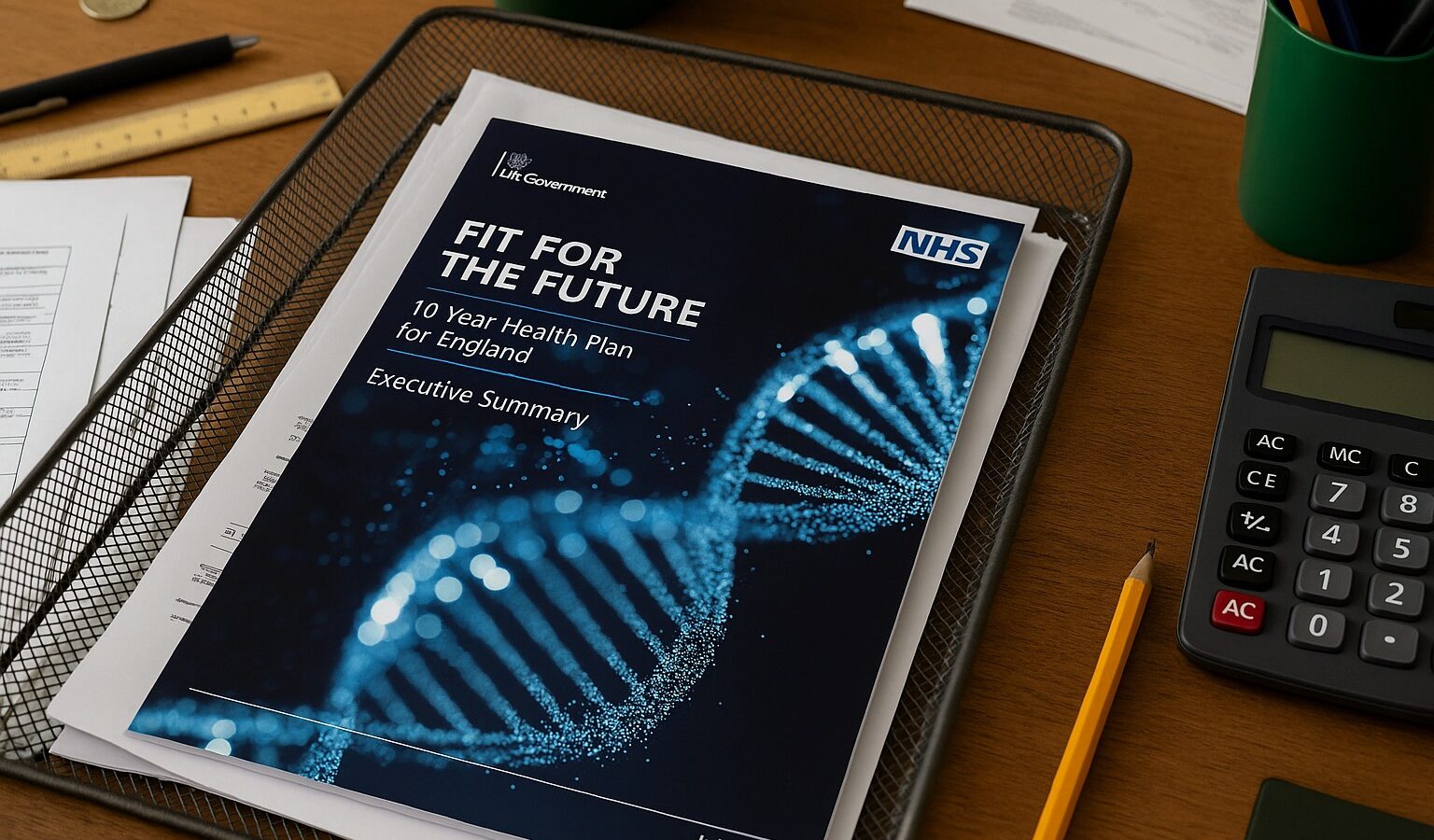
Meanwhile, the 10-year health plan for England, Fit for the Future, was launched to much fanfare but offered little detail relating to learning disabled people (Absence from health plan casts a worrying shadow, page 21). Health experts said while they welcomed plans to improve the nation’s health by shifting care from the hospital to the community, the lives of disabled people and their families would be improved only if adult social care and support were fully funded.
The 10-year health plan for England was lauched to much fanfare but offered little detail relating to learning disabled people
The Covid-19 Inquiry’s public hearing on the care sector came to a close with renewed criticism of the government’s handling of the adult social care system during the pandemic. Disability Rights UK, Disability Action Northern Ireland, Disability Wales and People’s Organisations, Disability Rights UK, Disability Action Northern Ireland, Disability Wales and Inclusion Scotland argued in a joint submission that harms were “terribly inevitable”. They blamed this on the care sector’s lack of planning, combined with long-standing political and economic choices where the lives of disabled people “are absolutely valued less”.
The government has backed down over plans to limit who gets personal independence payments, but changes to universal credit and its links to work remain. Charlie Callanan reports
Photo:lydia_shiningbrightly on Flickr licensed under CC BY 2.0.
In what was widely described as a major climbdown, the government has been forced to bin plans that would have slashed the numbers of people who could qualify for personal independence payment (PIP).
This summer, the government had to roll back on the major plank of its planned welfare reforms. This followed a rebellion by large swathes of Labour’s backbench MPs against major changes to the rules on entitlement to PIP.
Their votes to reject the bill as it stood meant that these could not proceed through parliament. The proposals would have meant hundreds of thousands of disabled people losing their award of PIP, the main benefit designed to assist them in managing the extra costs of having a disability.
The original plan meant that any disabled claimant, including those having awards reviewed, would have to score four or more points in at least one PIP daily living activity plus achieve more points in other activities to bring the total to at least eight to qualify for the daily living component.
That proposal was removed entirely during the parliamentary reading of the bill.
What will be different
Changes in the bill now involve only claims for universal credit (UC). These will come into force as the Universal Credit Act in April next year.
The new act will involve the following:
The UC standard allowance paid in both new and existing claims will be increased
The limited capability for work and work-related activity (LCWRA) element, which will be renamed the health element, will be frozen at £97 per week for most new qualifying claimants until 2029-30. However, the freeze will not apply to those already receiving the health element, people with a terminal illness or those meet the new severe conditions criteria (these criteria apply to specific conditions, such as dementia and severe acquired brain injury)
For new claims from April 2026, the rate of the LCWRA/health element will be cut heavily from £97 per week in 2024-25 to £50 per week in 2026-27
Most people receiving the health element of UC will be expected to sometimes take part in conversations about work and support. The Department for Work and Pensions may apply sanctions to people in this group, but it is not expected that they will be required to undertake work-related activity or seek or take up employment.
There had been a proposal to restrict eligibility to the UC health element to claimants aged over 22 years. This was removed but could be considered again in the future.
There will be a review of PIP assessment. This is to be led by the minister for social security and disability, Sir Stephen Timms, and be co-produced with disabled people, along with organisations that represent them, clinicians, experts, MPs and other stakeholders.
PIP criteria under review again
In a recent interview with the BBC, Timms said that the process will involve “a fairly small group of [around] 10 people”. How many of the group are people with lived experience of disability remains to be seen.
Issues the review will consider include using the PIP assessment as the single gateway to health-related and disability benefits as well as the assessment criteria, and whether these effectively capture the impact of long-term health conditions and disability in the modern world.
Carers will also be affected. To get carer’s allowance, as they must be looking after someone who gets a qualifying disability benefit
The review is planned to conclude by autumn 2026, and a public consultation will follow.
Given the grim future that some disabled people would have faced with cuts to their PIP entitlement, the removal of reform on points must be a positive thing.
However, disabled people and organisations that represent them will no doubt remain on the alert for any other future plans to cut their already meagre incomes.
Education, health and care plans are intended to ensure children receive the support they need but the system is complex and councils struggle with the cost – so reforms are on the horizon. Maria Shahid advises on securing a plan at school and anticipated changes
A special education teacher with a pupil: the number of children and young people with a plan rose by nearly 11% between 2024 and 2025. Photo: Wikimedia Commons/CC BY SA 2.5
Proposals to reform the special education needs and disabilities (SEND) system are due to be published this autumn.
Many parent carers fear support for their children could be reduced under plans set out in the government’s white paper.
According to Department for Education statistics for 2025, 638,700 children and young people have active education, health and care plans (EHCPs), an increase from 576,500 active plans in January 2024.
EHCPs provide the legal framework to ensure children do not fall between the cracks and receive the support they need at every stage of their lives.
For families of children with SEND, having the right support in place through EHCPs can be a lifeline, providing firm foundations for a positive adulthood.
The plans are tailored to individual requirements, following an assessment to understand a child’s needs.
A support strategy is put in place, with specific outcomes and measurable goals. This can range from having one-on-one teaching support at school to being offered a specialist school place.
The support is in education, health and social care and can start from birth up to the age of 25.
Yet, as Anne Longfield, former children’s commissioner for England, has written in Community Living (How education policy fails children, summer 2024), while the system is well intended in theory, in practice it is expensive, complex and sees children as a problem rather than needing help.
Council budgets are in deficit and it is well documented that they are struggling to manage the cost of SEND provision.
Securing a plan
The process of obtaining an EHCP starts with an assessment following a request from the school, the parent carer or the young person (if aged over 16 years).
Parent carers can ask for an assessment even if the school disagrees by applying directly to their local authority.
The council will decide whether to grant an EHCP based on the information gathered during the assessment. If it decides a plan is needed, it will issue a draft to the parent carer for review.
Parent carers can appeal to the SEND tribunal in several circumstances, and IPSEA, a charity and expert in SEND law, has detailed guides on how to prepare and what to expect in each situation.
If a local authority decides an assessment is not needed, parent carers have the right to appeal. The council needs to communicate a refusal to assess within six weeks of the request being made.
Local authorities lose 96% of SEND tribunal appeals. While this is good news for families, the process can be lengthy and stressful
An appeal is also possible if a local authority carries out an assessment but decides not to give a child with SEND an EHCP. The council has 16 weeks to inform a parent carer of this, starting with when the assessment is requested.
An appeal is also allowed if the council agrees with an EHCP but a parent carer disagrees with the contents of the draft plan. Local authorities must give them at least 15 days to respond and, after 20 weeks, issue a final EHCP. If a parent does not agree, they can appeal to the SEND tribunal.
Before appealing, families must consider mediation. This is a personal decision and is made following a discussion with an independent mediation adviser. A mediation certificate must be obtained to appeal to the tribunal.
Appeals increasing
The number of SEND tribunal appeals in England has been rising every year. In 2023-24, more than 21,000 appeals were registered, a 55% increase on the previous year.
Local authorities lose 96% of cases. While this is good news for families who pursue an appeal, the process can be lengthy and stressful.
Writing in specialist SEND publication Special Needs Jungle, one SEND parent, Matt Keer, notes that the only win is “the same right to an appropriate education that millions of families of children without SEND take for granted”.
Figures published by the Department for Education in the summer show demand for EHCPs has never been greater. The number of children and young people with an EHCP increased by nearly 11% between 2024 and 2025. The number of requests for EHCP assessments has risen by over 11% from 2023 to 2024.
If a child receives an EHCP, the school pays the first £6,000, with the local authority then being responsible for the remaining cost.
A failure by local authorities to comply with the law is saturating the system
The County Councils Network predicts that the cost of EHCPs to local authorities will reach £5 billion by March next year. Its chair, Tim Oliver, says the “system is in desperate need of reform”.
Major changes
With growing pressure from councils to write off a projected £5 billion deficit, the government said in June that it was planning to overhaul the SEND system. Its white paper, due in autumn, will set out the details.
Reforms are expected to end the process involving SEND tribunals. The proposed system could see all children going through a single, mainstream route, with families appealing levels of SEND support to school governors and then to the ombudsman.
Speaking to the BBC, education secretary Bridget Phillipson refused to rule out scrapping EHCPs, describing this as a “complex and sensitive area”.
Parent carers are understandably worried that this could leave children facing an uncertain future.
Speaking to Community Living, Eduardo Reyes, a parent whose late daughter Amy had complex needs, argues that while ministers say the system is broken, problems arise because “a failure to comply with the law by local authorities saturates the system”.
He adds: “Amy’s schools were both brilliant. Every child there had an EHCP… I couldn’t list a single thing about them that would fall into the category ‘broken’.”
An online petition asking “the government to commit to maintaining the existing law, so that vulnerable children with SEND can access education and achieve their potential” passed the 100,000 signatures mark and was discussed in the House of Commons in September. The government conceded that the system is “broken” but did not offer concrete assurances or any detail on the forthcoming white paper.
Maria Shahid is a freelance journalist
Case study: when an assessment is refused
Alicia’s daughter, Iris, aged seven, was diagnosed with ADHD, emotional dysregulation (trouble controlling emotions), slow processing and limited memory a year ago.
“Her educational psychologist told us that a mainstream school curriculum is not accessible to Iris, and recommended that we pursue an EHCP for her,” says Alicia.
“We submitted a request for an educational health and care needs assessment to the local authority in November 2024. They refused to carry out the assessment.”
The council argued that the school had not taken sufficient steps to support Iris. Alicia believed this was unlawful: a local authority is not allowed to introduce additional conditions before agreeing to assess a child but many do so.
“When the local authority refused to assess Iris, we chose not to go to mediation. Instead, we decided to appeal. We spent roughly £300 to appeal,” recalls Alicia.
“We submitted our appeal on 28 January 2025. On 24 March 2025, the council conceded and agreed to carry out an assessment for Iris.”
Iris has now been assessed and has an EHCP in place. The process was drawn out and stressful.
Alicia says: “Iris has struggled in school for the past three years. She remains approximately two and a half years behind her peers.”
Cautious optimism about the UK government has evaporated as people with disabilities bear the brunt of brutal cuts – like their counterparts across the Atlantic
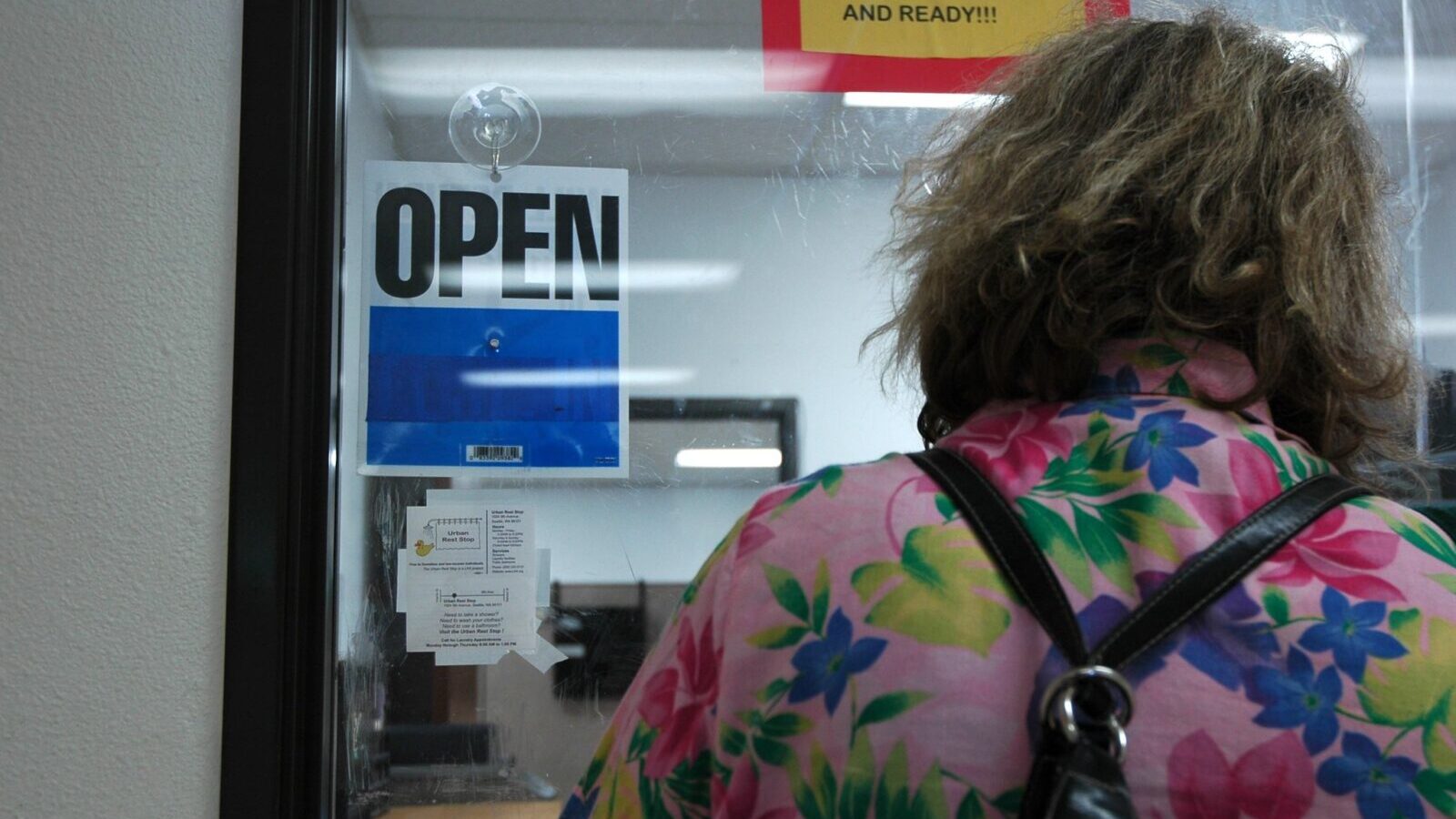
America: a woman visits the food stamps office. Photo: Wonderlane on Flickr licenced under CC BY 2.0
Last summer, when Labour formed a government after 14 years of Conservative austerity, disability campaigners were cautiously optimistic.
Echoing the mantra of New Labour in the 1990s, people could be forgiven for thinking, surely, “things can only get better”?
The Tories had, after all, done a number on the country’s social safety net and, in the process, had marginalised whole swathes of the population, including people with learning disabilities, who bore the brunt of massive cuts to services and support systems.
Hell-bent on a repeat
Fast forward to the current government’s recent one-year anniversary, and any cautious optimism has evaporated.
The personal independence payment debacle, which saw the biggest rebellion so far of backbench MPs and forced the government into a partial U-turn on disability benefit cuts, was clear evidence of the degree to which, rather than pledging to invest heavily in the social safety net and undo the Conservatives’ mess, Labour seemed hell-bent on repeating errors and entrenching inequalities.
Against this backdrop, Community Living spoke to people with learning disabilities, advocates, carers and professionals (Red austerity in the UK… and the US, pages 14-15).
The government, people said, was not only failing to foster inclusion and protect existing support – it was actively undermining them and causing fear and uncertainty in the process.
Viki Ainsworth, a parent advocate whose 28-year-old daughter has severe learning disabilities, said: “I was really hoping that the government might be a bit more inclusive and aware. But they don’t seem to have acknowledged our existence any more than any of the other governments.”
As Scott Watkin, head of engagement at SeeAbility, succinctly put it: “We want people with learning disabilities to have their voices heard.”
There was a remarkable crossover with people on the other side of the Atlantic, six months into the second Trump administration.
In July – Disability Pride Month no less – as part of the budget bill, the administration wheeled out huge cuts to services that constituted what some were calling an all-out war on disability.
These included to Medicaid, the primary federal social insurance programme that underpins a myriad of support for people with learning disabilities, including for many with complex needs.
With provision from equipment to community-based support and health interventions, as one parent advocate told us, it is a “lifeline” for families, especially where a variety of services are necessary.
Carole Rosen, a parent advocate from Illinois, pointed out that, even before the billions of dollars of cuts were proposed, it was “extremely challenging” to access support.
Taken alongside other cuts, such as those slated to reduce poverty-based federal benefits and the pruning of government agencies that focus on support for people with disabilities, the result is a devastating “tsunami”, Rosen said.
“We are seeing the waves roll out because of these cuts and, when the wave rolls back in, there’s going to be so much damage.”
July also saw President Trump sign a dystopian executive order, one that could give the authorities powers to scoop people off the streets for being homeless or who exhibit behaviour associated with some learning disabilities, and institutionalise them.
Keeping up the fight
As disability advocate Zoltan Boca put it: “The disappearance of an ever-expanding list of so-called undesirables is an urgent problem.”
These may be dark times but, despite the attacks on rights and the unease and uncertainty in both countries, advocates were all determined to keep up the fight.
Matthew O’Connell, a researcher based in Oregon whose work focuses on health inequalities, spoke for many when he said: “I think we can relieve each other’s uncertainty. We can say to each other: I will be here with you. They can’t take that decision from us.”
The left-wing government in the UK and its right-wing US counterpart both have people with disabilities in their sights. Mary O’Hara talks to advocates, family members and professionals
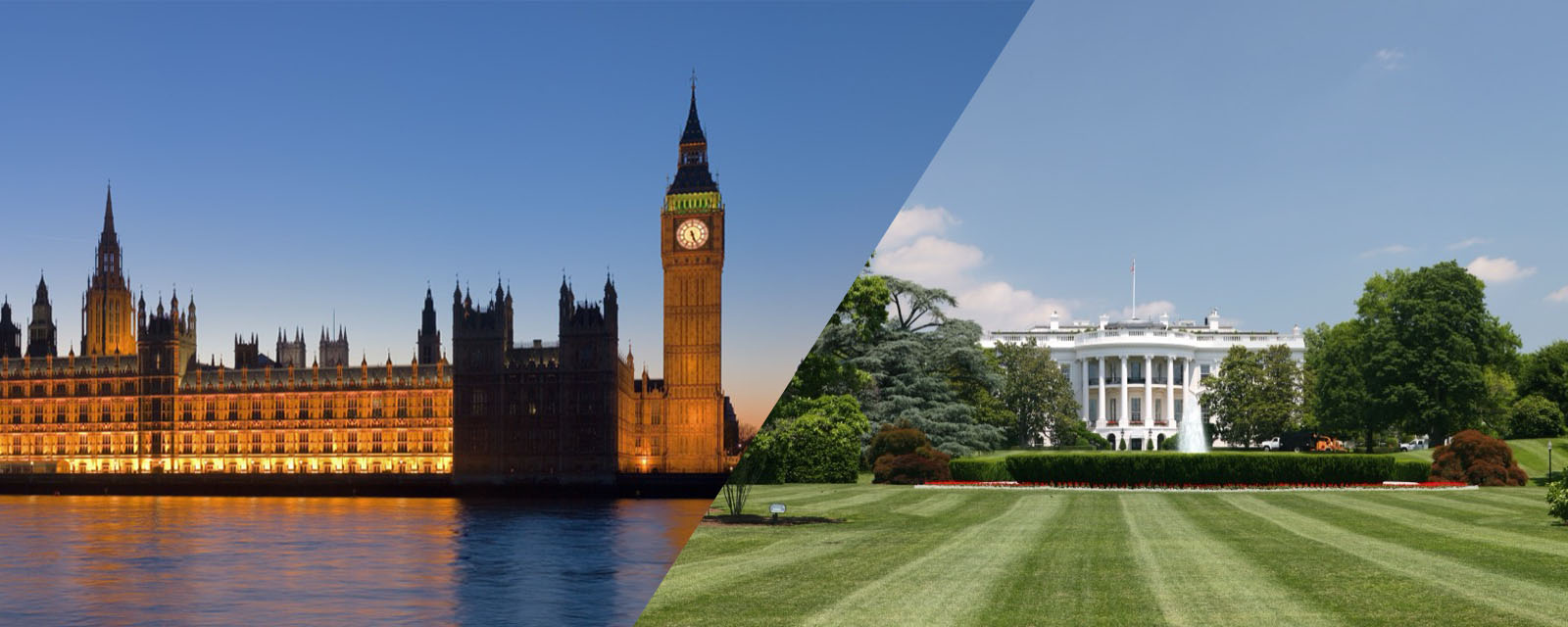
Photo: Diliff/Wikimedia Commons/CC BY-SA 2.5; Daniel Schwen/Wikimedia Commons/ CC BY SA 3.0
Scott Watkin
Head of engagement, SeeAbility
The government hasn’t included us and has done nothing but try to make cuts affecting learning disabled people without consultation.
We need social care that’s fit for purpose – now. We don’t want to be waiting until 2028 when the Casey review reports for the government to decide what it wants to do, because social care is broken now and needs fixing.
We want equity for all. We want people to have their voices heard.
Jim Blair
Independent consulting learning disability nurse and associate professor, Kingston University
I’m not disappointed by this government. I’m appalled. It’s shocking that they are doing so many things that are un-Labour.
Why would they target disability benefits to yield money? It’s extraordinarily hard to get personal independence payment in the first place. It’s not big money. They’ve got a huge majority and such an opportunity. The government could get this right. The lessons of the last 14 years are lost on this government. This is just red austerity.
Joanna Green*
Parent carer
I feel very confused about the government’s policies. There have been a lot of disturbing threats to welfare and education care and health plans, but I’m yet to understand what policies are in place and see the effect.
A concern for me personally is a very long wait for the courts to deal with our application for deputyship for my son. It’s taken nearly two years and I still haven’t heard anything.
In addition, the transition to adult services has felt like a cliff edge.
*name has been changed
Lauretta Ofulue
Specialist nurse in community paediatrics, expert by lived experience and parent carer
We need to ask ourselves: are we really placing a high value on the vulnerable members of our community? That’s where it all stems from. Sometimes, people with learning disabilities are dehumanised in the care that they receive.
The reality is that things are not going well on the ground. A lot of people are receiving a very low level of care. I wish we could imbibe a culture of auditing and monitoring regularly.
For the future, it’s about funding the nurses who look after people with learning disabilities and complex health needs.
Anna White
Sibling carer and advocate
Labour’s like every other government. They promise changes while campaigning to be in power and then, once they’re in power, back-pedal as fast as they can.
Every service designed for the care of people with learning disabilities and or autism should: one, have a person with lived experience; two, have a parent or sibling with a lived experience of care; and three, have a healthcare professional such as a learning disability nurse with first-hand experience. There also needs to be an overhaul of the appalling levels of care and abuse that still take place in institutions.
Viki Ainsworth
Parent advocate and expert by lived experience
Not a lot’s changed in the year Labour has been in. We were hoping for more, faster. Some acknowledgement around our world would have been nice.
We’ve been forgotten. We’re the easiest community to just let drop off the end of the food chain. For all the talk around inclusivity and community living, it doesn’t translate into the practical implementation of things.
We need a minister for learning disabilities. We need a paradigm shift. The message needs to be “let’s help the people who really need it”.
Casey Doherty
Policy analyst, Disability Justice Initiative, Center for American Progress
We wrote a report called The Trump Administration’s War on Disability. A line we use is: “History will show the first six months of the second Trump administration as an all-out war against disabled people.”
One of the most concerning recent actions is the executive order Ending Crime and Disorder on America’s Streets. That’s rung a huge alarm bell in the disability community. What’s going to happen is anyone deviating from some norm will be targeted.
Zoltan Boka
Disability advocate
The push for institutionalisation, the imprisonment and the disappearance of an ever-expanding list of so-called undesirables is an urgent problem. The grand vision seems to be to defund everything and throw the undesirables in camps.
Matthew O’Connell
Clinical social work associate and fellow, Oregon Health and Science University
I feel very fortunate to be in a professional role while also having a disability and take it upon myself to help others and use my lived experience in professional spaces.
What we’re really talking about is access to the community but also the contributions that people with intellectual and developmental disabilities make to that community.
We still see gaps in health outcomes. All these health disparities are still there because, in our society, the infrastructure isn’t there. The reality is that people’s lives depend on these programmes.
Carole Rosen
Advocate and expert by lived experience
When a fragile system supports people with disabilities, it’s even more fragile when you have a child with very high support needs.
The overarching issues are what’s going on with the budget and cuts to Medicaid. Medicaid’s a lifeline for people and for families like mine, just to tether my daughter to life in the community versus a congregant setting with the level of support she needs. What people don’t realise is that Medicaid pays for a lot of different services.
Jessica Huang
Student and disability advocate
I want young people to have support when they get older and to have people who consider them as humans rather than just a diagnosis.
I fear that if the administration makes all these cuts to Medicaid, the teams taking care of us are going to have less bandwidth and fewer resources to do what they do.
I’ve had to work for all my opportunities – and to think that cuts are going to happen when I’m supposed to go and make my mark on the world? It’s pretty scary – it feels like we’re going backwards.
Bridger Reed-Lewis
University disability adviser and trainer
Trump has been using his platform to cut everything. The biggest thing I’ve seen with the One Big Beautiful Bill is work requirements for Medicaid. I’m worried. The executive order really concerns me too. It says a lot about this administration and how backwards they are. They don’t care about us. It’s frustrating. It’s very disheartening. I’m also frightened,
I’ll be honest: if I got offered a job around disability that allowed me to be remote 100% at any time, if they didn’t care if I were in the US, I’d be out of here in a heartbeat.
Mitchel Baum
Co-chair, New Jersey Chapter, National Council on Severe Autism, and parent advocate
The biggest issue is change in the budget. We don’t know what it means yet. There are a lot of scary things on the horizon – what we hear from our members is that we don’t have a lot of firm answers yet.
For our community, our family members on a good day barely have their heads above water, so people hope it gets better but there’s also a lot of fear about what’s going to change. It’s incredibly destabilising.
We have members who are afraid, because of the executive order, that if they bring their adult child to the park and they have a meltdown, that child can get carted away. Are those fears grounded? I hope not.
Despite new laws to give parent carers a break, support for disabled children over the summer break remains painfully limited and mothers in particular have to step in, says Shubhanna Hussain
Not enough:
12 hours of extra support is nowhere near enough to cover a six-week holiday. Photo: Shubhanna Hussain
This summer, the Care Reform (Scotland) Act was passed, promising carers a legal right to respite care to give them a break. It’s a milestone for carers in Scotland, and should feel like progress.
But, for those of us living the reality of caring, the news felt distant and abstract.
Many of us have spent years campaigning for this change yet, when it finally came, carers like me across Scotland barely had time to notice because this summer we were too busy caring.
While many families were planning day trips and play schemes, parent carers were preparing for something very different: six and a half weeks of full-time care, with little to no statutory support.
Wraparound care for disabled children remains painfully limited across Scotland. The gap in provision isn’t just frustrating – it’s exhausting, isolating and deeply unfair. And so, like every summer, the burden of planning and providing care fell on families.
Once again, I was left to figure out how I was going to juggle work for six weeks alongside the full-time care for my 16-year-old son, who has a profound learning disability and a rare health condition that has left him with an impaired pancreas and dependent on insulin.
This summer, we were allocated just 12 extra hours of support at a playscheme for disabled children to stretch across the entire holiday. That support was welcome, but it was nowhere near enough. This was by no means the care provider’s fault – they do the best they can with limited resources.
So, like many other parent carers, I used three weeks of leave not to recharge but to just survive. I’m considered one of the lucky ones because not everyone has paid leave that they can take to cover the gap in care over the summer.
Under the Carer’s Leave Act 2023, staff with caring responsibilities are entitled to a legal minimum of five unpaid days off per year. In some workplaces, 10 days of paid carer’s leave is considered generous.
But, for those of us trying to bridge a care gap that stretches across entire school holidays, it barely scratches the surface.
The reality is that weeks of intensive care cannot be covered by a handful of days and carers are left to fill that gap, often at great personal cost.
And it is women, especially mothers, who bear the brunt of this. It is mums stepping back, stepping out or burning out just to make sure their children are cared for. This is not a coincidence but a deep-rooted structural issue.
This summer, I continued to work from home and tried to balance my son’s needs alongside Teams meetings and deadlines. Not because I had a choice but because the statutory support wasn’t there.
Caring doesn’t take a summer break. While others wind down, carers are managing complex routines, medical needs and the endless admin for coordinating support. The paperwork doesn’t stop just because school does.
And if you’re caring for a young person on the verge of entering adulthood, summer brings a whole new layer of stress. Guardianship applications, benefit transitions, mental capacity assessments. It’s a minefield of bureaucracy, all landing at the same time as the most intense period of hands-on care.
The system expects carers to keep going but offers little in the way of practical support to help us do so.
Hope versus reality
The Care Reform (Scotland) Act gives carers hope. But hope alone won’t give us the breaks we need. Real change takes time, funding and a system that listens.
If carers are to benefit from this new right, we must be part of the conversation – we know what good support looks like and we know what happens when it’s missing.
The risk of not including carers is not just a policy failure but also a lost opportunity to build something that is better and truly works for families like ours who are just about holding it together for now.
Shubhanna Hussain is a parent carer and partnership development officer at Coalition of Carers in Scotland. She writes in a personal capacity
Wrong decisions on care and medication were made because allowances were not made regarding Myles Scriven’s learning disability and autism. George Julian reports
Myles Scriven: his needs were apparent but were not met, the coroner ruled. Photo: Scriven family
Myles Scriven was just 31 when he died in April 2023.
An inquest held in Bradford in July found he died from natural causes contributed to by neglect after poor standards of care by GPs and by doctors at the Calderdale and Huddersfield NHS Trust.
Scriven lived at home with his mother Jane, stepfather Ashley and younger brother James. He was a devoted and much-loved son who always did his best to support his mum, who also has a learning disability. The brothers did everything together. The 31-year-old was autistic, and also had a learning disability and ADHD.
He had a great life, was a lifelong fan of Huddersfield Town Football Club and enjoyed discussing football. He was fond of his family, loved to treat them to meals
and buy small gifts, and enjoyed going on holiday with them, exploring new places. He gave the best hugs.
What happened
Scriven died from a pulmonary thromboembolism; this occurs when a blood clot forms and travels to the lungs and blocks the artery that carries blood from your heart. While serious, clots can be treated to stop people dying.
He first experienced a blood clot in August 2022. He went to hospital. Part of his treatment was to take an anticoagulant drug to prevent clots forming every day. He took his medication as prescribed.
In October 2022, Scriven had a cough and was breathless. He was seen in a vascular clinic and admitted to the hospital respiratory unit the following day. A scan showed a large blood clot was putting a strain on his heart.
A haematologist diagnosed that the medication was not working and needed changing. The respiratory consultant who was treating Scriven did not believe he was taking his medication regularly, and did not agree to change it. The young man was sent home without new medication.
He was discharged from hospital, and returned to have a scan of his heart carried out in November. The doctor who refused to change the medication said the scan results were not sent back to him. So there was no follow-up.
A discharge letter was sent by the hospital to the GP; one of the hospital consultants agreed with the coroner that this was “borderline useless” because it did not explain what had happened and information was inadequate or omitted.
In March 2023, Ashley contacted his GP surgery at 9am on a Thursday because his stepson
was breathless and had a cough. This information was passed to a GP at 2pm, but the family was not contacted.
The next day, Friday, Myles was phoned by a GP, who recorded in his notes that he “sounded OK on the phone”.
The following Monday, he was seen by a different GP because he was still feeling unwell. That GP said he examined the patient but his notes were incomplete. He made no diagnosis. He did not send him to hospital.
Less than a month, later an ambulance was called as Scriven was having trouble breathing. He collapsed and went into a cardiac arrest.
Although ambulance clinicians tried to restart his heart while they took him to hospital, he died in the accident and emergency department at Huddersfield Royal Infirmary on 16 April 2023.
The expert on learning disability and autism made a significant difference, enabling the court to understand what should have happened
Inquest
An inquest was opened nine months after the death. The final court hearings took place in May and June 2025, with assistant coroner Crispin Oliver delivering his conclusion in July.
This inquest was unusual because the coroner had three independent experts to give him advice. These were Professor Beverley Hunt, an expert on blood clots and bleeding, Dr Lynnette Hykin, an expert on GPs, and Dr Elizabeth Herrieven, an expert on learning disability and autism.
(Herrieven wrote for our spring issue this year on a toolkit to help emergency hospital staff to communicate with learning disabled people.)
Despite having reported from more than 30 inquests and seen more than 20 court–appointed experts give evidence over the past 10 years, I have never seen an expert in learning disability give evidence to the court before.
Calderdale and Huddersfield NHS Trust had safeguards in place in 2022 but these had “no impact whatsoever” in Myles Scriven’s case, the coroner found. Photo: Ian M/geograph.org.uk/CC BY SA 2.0
Expert input
The presence of an independent court expert on learning disability and autism made a significant difference, enabling the court to understand the impact on how Scriven was treated and what should have happened instead, from reasonable adjustments to accessible communication and the use of the Mental Capacity Act.
This was also the first inquest I have reported on where the coroner made a direct link between a lack of adjustments for someone’s learning disability and autism and their cause of death: “Contributing to the cause of his death was lack of adjustments for his autism and learning disabilities, resulting in incorrect decision-making as to his care and medication.”
The coroner found the hospital care provided in October 2022 was neglectful. Staff knew their patient had a learning disability and was autistic (in part because an uncle had phoned them while on holiday to let them know). They also knew his medication was not working.
The GP said he examined the patient but his notes were incomplete. He made no diagnosis
The coroner found the death was preventable: “Myles’s needs were clearly apparent to those who could meet them. They could and should have been met in order to prevent his death. They were not.”
The coroner also found the actions of the GPs in March contributed to the death: “The GPs clearly only had a superficial grasp of the regulatory requirements and realities to do with learning disabilities.”
He found their communications to be “unsafe and unreliable”. They used learning difficulties and learning disabilities interchangeably and seemed to be ignorant as to the distinction between them and made only “modest adjustments for Myles”.
The coroner added that they “clearly had very little grasp of what the Learning Disabilities Register was and how it worked”.
The coroner issued two prevention of future deaths reports.
One was issued to the Dalton Surgery about the matters mentioned above and also the GP practice failing to undertake any rigorous or detailed internal learning review after the death.
The second was issued to Calderdale and Huddersfield NHS Foundation Trust.
The coroner said the trust was aware of the issues that arose in Scriven’s care, but he had concerns about how changes were made in practice.
“Much of what is now in place was already in place in 2022 – not least key personnel who gave evidence at the inquest, but also VIP passports, training and all the underlying regulatory underpinning.
“But in Myles’s case it simply had no impact whatsoever… So, the question is – how it is proposed to ensure full compliance with best practice and by when?”
The family released a statement after the inquest.
They said: “Myles was systematically ignored and fundamentally failed by the very healthcare system designed to protect him.
“He was denied the most basic adjustments for his autism and learning disabilities, leading directly to catastrophic and incorrect decisions about his care and medication.
“The judgment makes it clear: no one saw Myles as an equal human being. The profound lack of insight shown by these institutions, both during his life and tragically, after his death, is simply unacceptable.”
Brendan Brown, chief executive of Calderdale and Huddersfield NHS Foundation Trust, said: “We accept the coroner’s findings in full, and will ensure these are used to build upon the changes made as a result of the trust’s internal review and the clinical lessons learned from Myles’ sad death.”
Actor and director Otto Baxter has won Bafta and Emmy awards. He talks to Seán Kelly about running things on set and his horror films past and future, including one inspired by his being adopted
Otto Baxter. Photo: Seán Kelly/www.seankellyphotos.com
The first time I met award-winning actor and film director Otto Baxter, he told me that I was a “very old Hoover”.
The comment was made in an upbeat, friendly tone after his first film’s London screening in 2023 – and it took me aback while also making me laugh.
To this day, I’m still not quite sure what Baxter meant – but he delivered his verdict so warmly and with such confidence, it was impossible to take his words as anything but a reflection of his off-the-wall sense of humour.
So, as I approach his Oxfordshire home to meet him a second time, I expect him to be just as engaging and offbeat.
Richard Curtis is also a yes. There is no shortage of big-name support for Baxter in the future
Baxter’s home certainly feels both welcoming and a whirl of activity as he and his three brothers all have support workers coming in and out throughout the day.
Baxter has Down syndrome as do his three brothers – all were adopted separately by Lucy, so are not blood relatives – and all live together in the family home.
Baxter won a 2024 Bafta Breakthrough award as an emerging creative talent. This was for his first film as a director, 2023’s The Puppet Asylum, made with backing from Sky TV. The film is a surreal reimagining of Baxter’s own life transposed to a horror movie set in Victorian times.
The film shows Baxter’s birth – of a blood-soaked monster-baby who is rejected by his parents and sent to a frightening asylum.
He is rescued and adopted by a woman (called Lucy) before going over to the dark side himself and becoming the movie’s baddie.
The movie’s official synopsis on the Bafta website is “an allegorical horror biopic set in Victorian London charting the life of a monster baby on the rocky path to escape incarceration and become his own master”.
The actor and director’s mother tells me that she learnt more about him from the film because his adoption involved “things he has never ever spoken about”. The film clearly provided a way for him to explore this.
When I watched it, at the screening where I first met Baxter, I thought it was a powerful reimagining of his life – taking his biographical details and presenting them in completely different era.
The Puppet Asylum was screened in selected cinemas and is still available on Sky.
It was shown as a double bill at the premiere along with a powerful documentary about its making, Otto Baxter: Not a Fucking Horror Story, directed by award-winning directors Peter Beard and Bruce Fletcher.
Baxter wrote The Puppet Asylum in collaboration with Beard and Fletcher, both of whom were instrumental in turning the creative’s ideas into reality.
Baxter tells me he loved directing the film and says the achievement he is most proud of is having his work shown in the Odeon’s flagship cinema in London’s Leicester Square.
He gives me an amusing mock impression of the directorial approach he used with the 70 people who were on set: “You, shut up! And you, get me a bacon sandwich.”
Joking apart, he clearly managed to get them all to work on bringing his vision vividly to life.
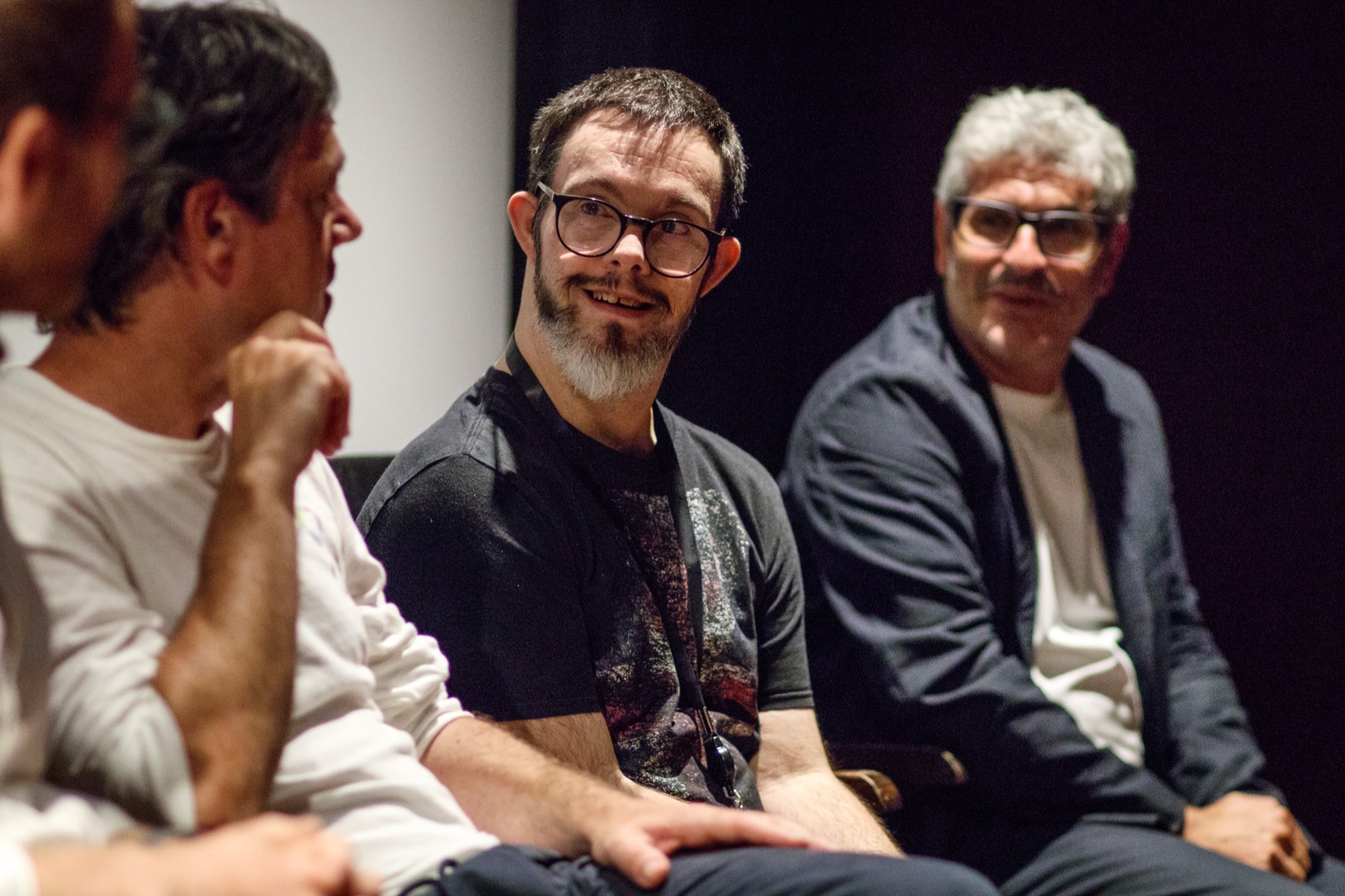
At a Q&A session after the premiere of Otto Baxter: Not a Fucking Horror Story
As for his Bafta Breakthrough award, 21 people in the UK were chosen for the 2024 award. They all receive career advice and support including on matters such as pensions and mental health. They also get the chance to pick a wish list of 10 potential mentors.
Have any of Baxter’s ideal mentors said yes yet? Baxter tells me that he has so far got agreement from David Tennant and James Corden. “From Dr Who and Gavin and Stacey,” he reminds me.
His mother later tells me she has also just heard that Richard Curtis is also a yes. No shortage of big-name support for Baxter in the future then.
Lucy Baxter also finds her son’s life can appear to exist in two places. In one, he is treated like anyone else, for example by family and friends and almost all the professionals he has met in the media industry. But then he is also sometimes mistreated or discriminated against.
Mother and son give me one surprising example – the village pantomime.
This, they tell me, is a typical local production with, for example, the owner of the village shop playing the wicked witch and the local brownie pack getting a spot where they can show off a dance routine.
So, there is something for everyone? Not quite. Baxter was always given the same kind of parts, over several years. “Non-speaking parts,” he adds.
One year, all he had to do was bring a wheelbarrow onstage. Another time he was given the job of making horse-shoe noises with coconut shells.
Most recently, at the village pantomime in December last year, Baxter was in a scene where the main characters are on their way to a castle and stop to ask a local man for directions. Baxter was
not even the local man; he just walked on with the local man who gave the main characters the directions.
Baxter’s mother calls this “just appallingly awful” and says it happens year after year, before giving way to exasperation: “I bet he was the only Bafta-winning, Emmy-winning short film awards, Cannes film festival-awarded person there.”
With mother Lucy Baxter: they discuss relationships and sex openly. Photo: Seán Kelly/www.seankellyphotos.com
The duo gave the pantomime producers Baxter’s showreel – a video of his work – but it made no difference.
Baxter is clear about how the discriminatory experience made him feel: “Not very nice.” He has decided not to take part in the shows again.
This is unlikely to dent his impressive CV. In recent years, for example, he has performed in Shakespeare plays such as The Taming of the Shrew and Romeo and Juliet (he was Romeo) and in Waiting For Godot in various London theatres.
A photo from the show is on the front cover of the 2022 book Samuel Beckett and Disability Performance by author and researcher Hannah Simpson.
If Baxter looks familiar, it is because he featured in the 2009 BBC documentary Otto: Love,
Lust and Las Vegas, when he first met directors Beard and Fletcher.
The coming-of-age film dealt in part with the young man’s wish to have sex for the first time or, as the BBC described it, “his search for love and adventure in a society which treats him like a child”.
In the past when Baxter has had a girlfriend with learning disabilities, his mother says the girl’s parents usually watch the couple intently and “he is lucky if he gets a snog”.
Baxter has had a few short relationships with women and, although these are rare, he has had sexual relationships; both mother and son discuss such issues with refreshing openness.
Back to movie talk and Baxter tells me he was recently invited for talks with a UK television network and is hoping for some good news about programmes he might develop for broadcast.
He is also working on another scary movie, called Satan Claus.
Baxter has performed in Shakespeare plays and in Waiting For Godot in various London theatres
He explains: “I like Christmas and I like horror movies.” He adds of his film idea: “You get a pretty scary Christmas!”
Baxter clearly relishes playing baddies. In closing, I ask him jokingly if he would ever consider playing the polar opposite, like a saintly vicar?
His reply is unequivocal. “No. An evil vicar. Villains for me. It’s much more interesting,” he grins, adding for good measure: “Heroes boo! Villains yay!”
A cookbook co-created by people with learning disabilities aims to showcase simple, nutritious, budget-friendly meals that build skills, confidence and independence, writes Saba Salman.
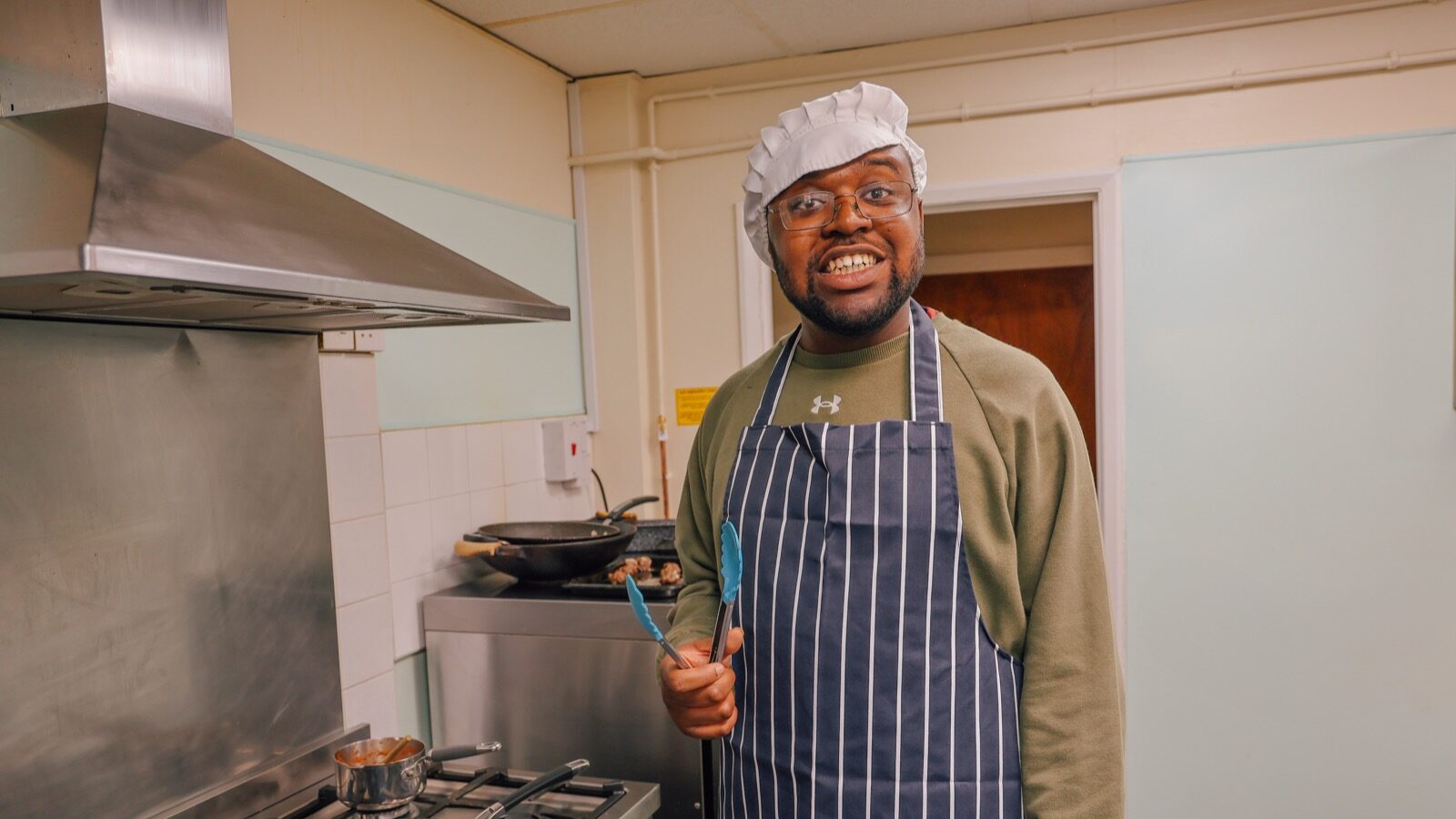
Nathan fries veggie sausages for his traybake. Photo: Sheffield Mencap/Joe Horner
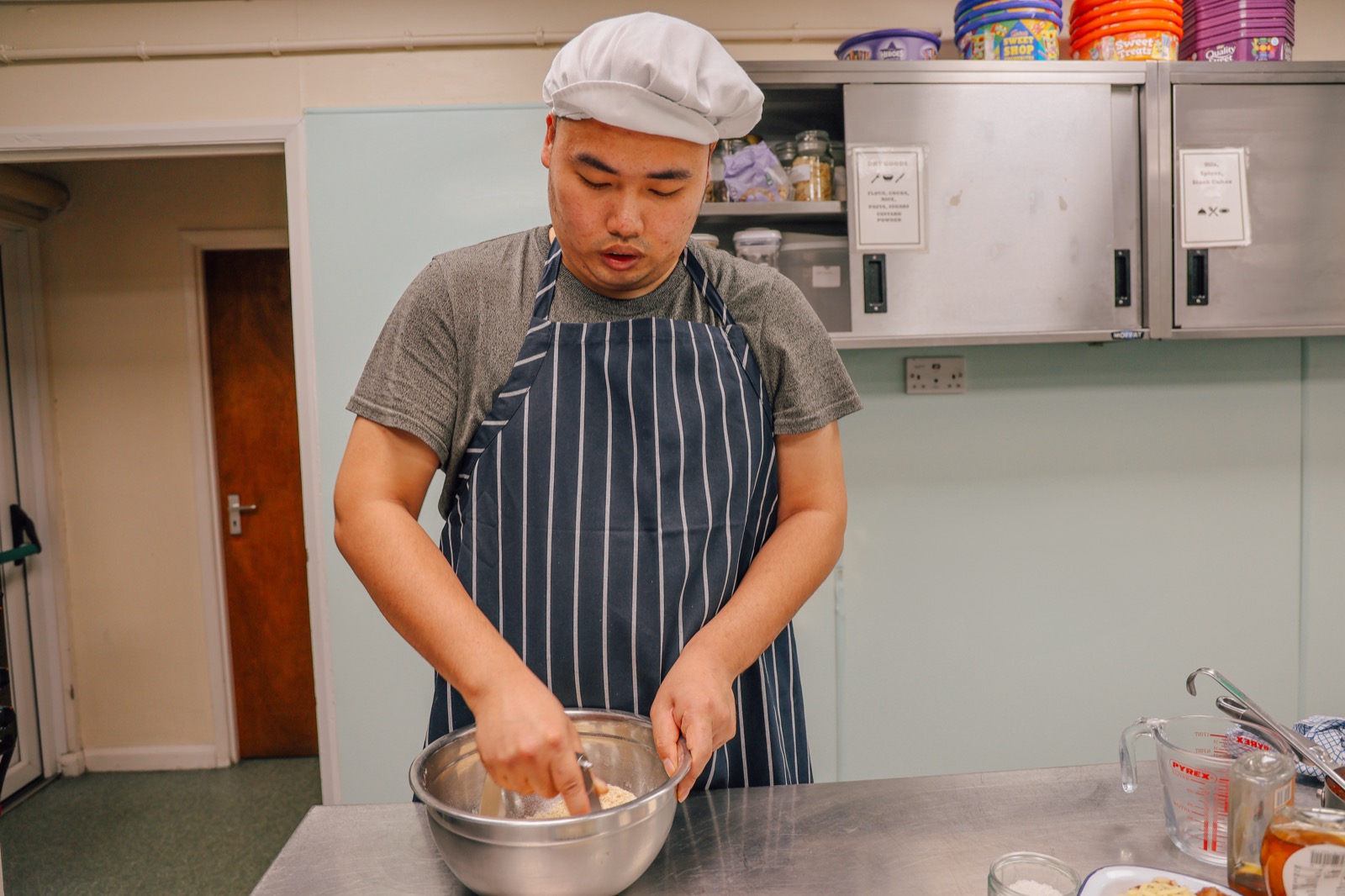
My Meals, published by Sheffield Mencap and Gateway, includes recipes chosen, tested and adapted by people with a learning disability.
The step-by-step instructions and design have also been co-produced by members of the charity.
My Meals is part of a wider Sheffield Mencap and Gateway’s campaign to improve the health of people with learning disabilities.
This group have poorer health outcomes than the general population and are also at a greater risk of obesity, with poverty contributing to this.
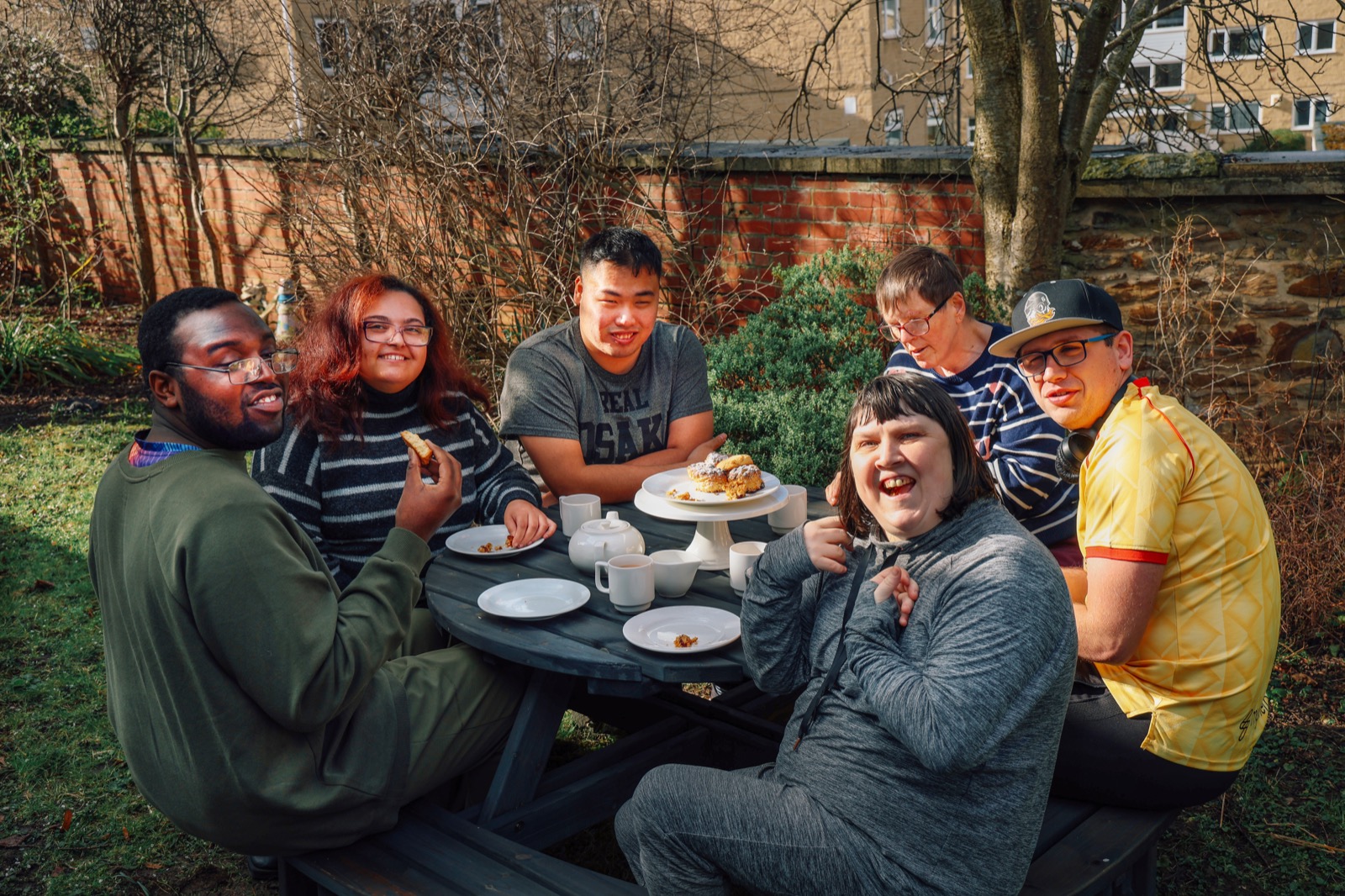
Enjoying the results of their cooking. Photo: Sheffield Mencap/Joe Horner
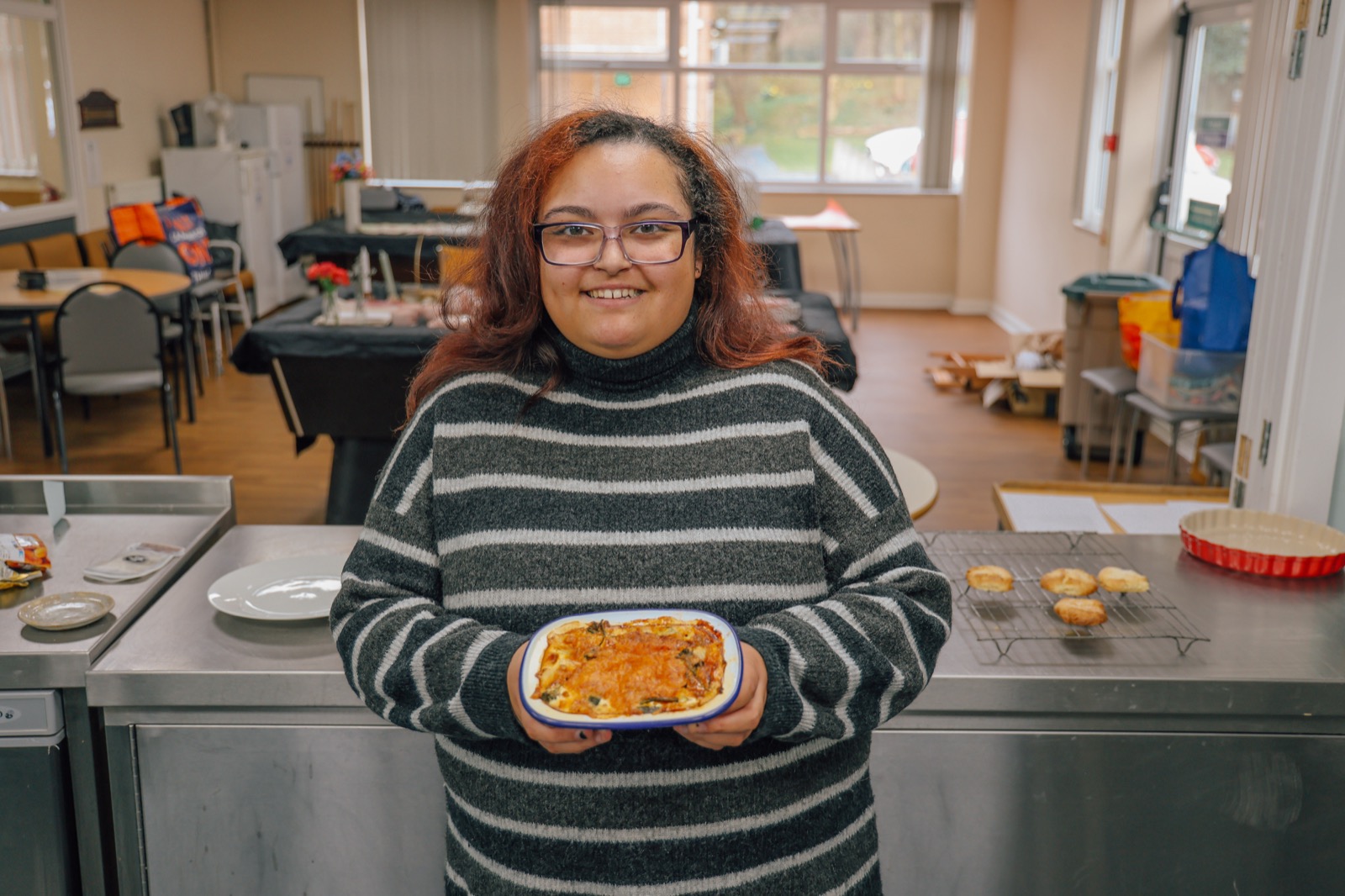
Fallon with her frittata. Photo: Sheffield Mencap/Joe Horner
Bing mixes flour and butter for an apple crumble. Sheffield Mencap/Joe Horner
Most trusts do not have a policy on getting patients to hospital if they want to take a wheelchair with them. Saba Salman looks at an overlooked area and Phil Hughes’ campaign
No access: a wheelchair user taken to hospital without their wheelchair is denied their independence. Photo: Dickelbers/Wikimedia Commons/CC BY SA 4.0; Seán Kelly/www.seankellyphotos.com
From neglect to a lack of communication, the health inequalities experienced by people with learning disabilities are well known – and mean that this group dies an average of 20 years earlier, often owing to preventable or treatable conditions writes Saba Salman.
But what gets less attention are the emergency healthcare barriers faced by learning disabled people who are also wheelchair users, such as campaigner Phil Hughes of Learning Disability England.
Despite duties under the Equality Act 2010, most NHS trusts, including ambulance trusts, do not have a formal policy relating to emergency transportation for patients who want to keep their wheelchairs with them.
A wheelchair user taken to hospital without their wheelchair is denied their independence. But, if they refuse to travel without it, they risk going without the emergency care they need.
Hughes, a self-advocate with Learning Disability England, works to raise awareness about the emergency healthcare experiences of wheelchair users.
He is also a member of Sunderland People First, part of its Stop People Dying Too Young campaign group and has helped raise awareness locally of dysphagia (difficulty in swallowing), of which he has experience.
The backdrop to Hughes’ campaigning work includes the government’s recently published 10-year plan for the NHS in England, which aims to shift care from hospitals to communities and place a greater focus on prevention.
While the plan acknowledges the health disparities experienced by learning disabled people, campaigners have criticised the lack of detail about tackling health inequality for this group.
For example, Tim Nicholls, assistant director of policy, research and strategy at the National Autistic Society, has raised concerns about the absence of a clear plan for issues impacting autistic people and on waiting times for autism assessments.
“We, and many autistic people and their families, are worried by this lack of clarity,” he says.
In addition, the Department of Health and Social Care has drawn criticism for delays in publishing its annual investigation into the deaths of every adult with a learning disability and/or autism – the Learning from Lives and Deaths Report (LeDeR).
The report on deaths in 2023 has only just been released and shows little change in the health inequalities experienced.
Ambulance policies under review following legal settlement
A recent legal case could encourage ambulance services to change how they transport wheelchair users in emergencies, writes Saba Salman.
Disability campaigner Esther Loukin brought a judicial review against North East Ambulance NHS Foundation Trust (NEAS), East of England Ambulance Service Trust (EEAST) and NHS England.
Loukin, represented by Sarah Steinhardt of Doughty Street Chambers and
Deighton Pierce Glynn Solicitors, challenged:
NEAS and EEAST’s failure to have a system or policy in place for the emergency transportation of wheelchair users with their wheelchairs
EEAST’s failure to make arrangements to transport her to hospital with her wheelchair during a medical emergency in November 2023
NHS England’s failure to give guidance to ambulance trusts in relation to the emergency transportation of wheelchair users with their wheelchairs.
Loukin’s evidence included an incident in November 2023 when EEAST did not take her wheelchair to hospital.
NEAS admitted it had no formal policy said it would develop one. EEAST said it would update its policies and provide new ambulances that can carry wheelchairs.
It also made a financial payment to Loukin; the case was settled in February this year.
NHS England is considering a wider review of national ambulance policies.
‘I don’t use ambulances any more. There just isn’t the equipment or flexibility for people like me’
The inability of ambulances to transport patients with their wheelchairs can lead to unsafe and delayed care, yet talks with healthcare providers about this seem fruitless, writes Phil Hughes
The ambulance crew wouldn’t let me take my wheelchair with me, and they insisted I lie down on the stretcher instead. I was vomiting and struggling to breathe.
Being unwell had already put me in a vulnerable position, but not having access to my wheelchair made me feel even more exposed and unsafe.
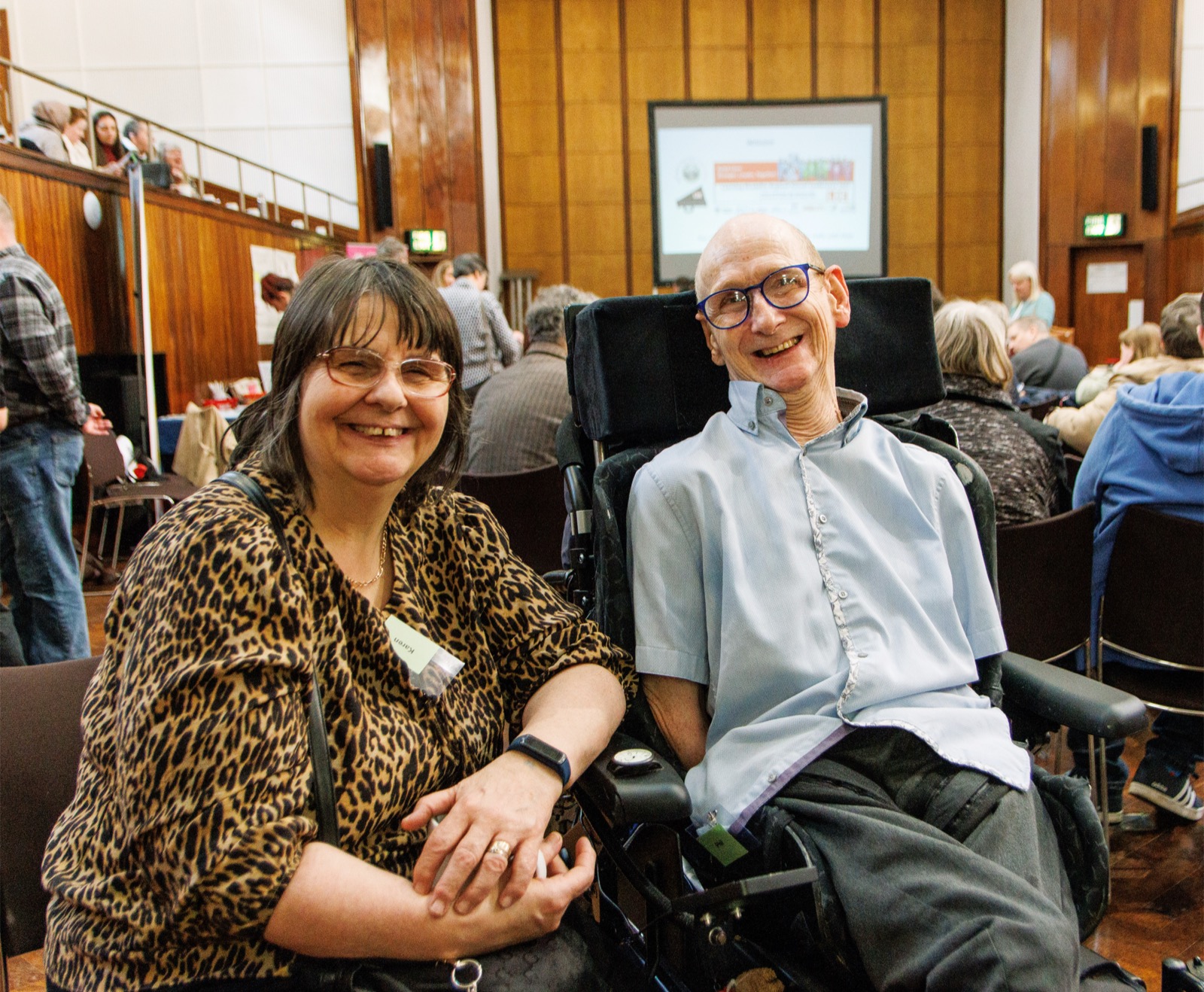
I don’t use ambulances any more. My sister, Karen, who supports me, tells them that I can’t be transported in a standard ambulance without my wheelchair.
Phil Hughes with sister Karen: they feel healthcare organisations can be dismissive.
Instead, they have to use different transport, such as the accessible ambulance vehicles people use to come home from hospital.
We usually need to go in when I’m vomiting, which makes it even more dangerous for me to lie down. It’s just not safe.
Angry and scared
These experiences made me feel very angry. Karen said she felt really scared. She told me, “I’m supposed to be there to protect him – and I couldn’t.”
Since then, we’ve been to a lot of meetings at healthcare organisations and raised this with people who work in the NHS and ambulance services. I’ve also brought it up at the local Learning from Lives and Deaths meetings.
But, to be honest, I feel I’m not getting anywhere with it. I keep asking questions, trying to get answers, but it’s frustrating.
We’ve got another meeting coming up this autumn, and we’ll see if anything changes then.
The responses we receive when we talk about ambulance transport and wheelchairs are basically that the current system works for the majority of people – and that we’re in the minority. That feels dismissive and as if our situation doesn’t matter.
The problem is the rules are too strict, and there aren’t enough ambulances that can safely take people in wheelchairs. It’s clear there just isn’t the right equipment or flexibility in the system for people like me.
Even though I don’t personally know lots of others in this situation, that shouldn’t matter.
We do know a mother who uses a wheelchair who wasn’t allowed to travel with her two-year-old daughter when her child was blue-lighted to hospital.
My sister Karen says: “Anyone who relies on their wheelchair for support will have faced this issue.
“One person we know doesn’t even call 999 because of it. The stretcher beds in ambulances just aren’t made for someone with complex needs.
“And when you’re really poorly, your wheelchair becomes even more essential.
“It’s also about how people communicate – once, they tried to take Philip off his chair without realising there was a groin strap. If they’d pulled too quickly, he would have ended up on the floor.”
NHS England should find a solution because it’s about safety – and lives. The ambulance is a first responder and should be equipped to help everyone.
At the very least, the service should have adapted vehicles that allow someone like me to stay in their wheelchair. If they can’t transport you properly, they’re more likely to treat you at home, which delays getting the care you really need.
It’s important for me to campaign on health inequality because I want to stay alive and have the same opportunities and rights as everyone else. I want to be valued equally, to live a full life and not be treated as less than other people.
People without disabilities should support the work to improve healthcare for those who have disabilities because we all live in the same world.
Without the support and understanding of others, our lives can be misunderstood and undervalued. Everyone has a role in making things better.
Phil Hughes is a self-advocate with Learning Disability England. He was supported by his sister Karen to contribute this article
A change in support worker can be overwhelming – for all involved, not just the person getting the support – so it’s important it’s done well. Here’s how it’s worked for me
Photo: Pexels
Recently, my support workers have changed. The transition to new support people went well for me, and I want to share my experiences and explain how this change happened – in case it helps others in a similar situation.
When I was in my 20s and in supported living, I got 20 hours a week of support. But, as I’ve become more independent over the last 10 years, my hours reduced.
About five years ago, I had 10 hours a week and today I have almost half that – but it’s working out OK. I’m fine with this, although I know some people really struggle when they have their support hours cut.
My very first regular support worker, Louise, helped with my letters and emails, keeping on top of my finances and shopping. We got on really well and she helped me move into my flat five years ago.
Louise was calm and I felt able to have a laugh with her – I felt she really engaged with me.
Her background was in health, so I also gave her insights from my work in health and social care.
One of my jobs is to help deliver the NHS’s Oliver McGowan Mandatory Training on Learning Disability and Autism; this is a government-recommended training scheme for health and social care staff in England.
The biggest things Louise helped with were issues such as complex bank stuff and also getting on top of my benefits applications. She gathered a lot of evidence for me and helped me get onto the right benefits.
Louise would often rotate with a guy called Ben. I got on with him too, but on a different level. We were both football fans and we both DJ too. We had some great conversations.
Although I’m clear that support workers aren’t my friends – I already have a good circle of friends – both Louise and Ben had a friendly approach. That made a difference. They respected me and I respected them.
What was important was that they also engaged with my family and knew how close I am to them and how they support me.
A few years ago, Louise and Ben moved on so I was allocated another worker, Jane, for a few hours a week. Luckily, we also had a great bond.
Recently, she moved on to a new job and, although I was a bit worried about the shift to the next person, I was pleased to meet Tom. We clicked and I was really interested in his background in art therapy, not something I know much about.
In his first week, Tom helped me with my finances and I felt I could be open with him about money matters I was worrying about. He dealt with these and so I felt a weight was lifted from my shoulders.
Support workers aren’t my friends – I already have friends – but their friendly approach made a difference. They respected me and I respected them
At the end of each week, we sit down together and look at what I’ve got on the following week, so we can figure out when I’ll need support, and what for.
The most important things for people being supported and the person or organisation doing the support are clear planning and communication.
Handover know-how
I told the manager of the organisation that supports me that I wanted advance notice about the handover to a new person.
The new support person also needs time to shadow the one who’s leaving. The process can be overwhelming – for all involved, not just the person getting the support – so it’s important it’s done well.
If family members can be and want to be involved, they should be able to meet the new person and take part in the transition.
The most important thing to look for in a support worker is if they are a clear communicator and give off what I call “good energy”.
It’s about having a good gut instinct for what a person’s like, their behaviour as well as if they have the skills and knowledge .
Next time I see Tom, he’s going to help plan my monthly schedule as I’ve taken on a couple of new projects recently, and I need to keep on top of them.
I’m busy with my job as a DJ with arts charity Heart n Soul, delivering the Oliver McGowan training and a university research study, so there’s a lot on. I’m quite excited to work with him. n
The process of finding an adult home for my daughter nearly broke me, says Sam Carlisle, with an obstructive care board, unscrupulous care home companies and being kept in the dark
Elvi makes music with a support worker during
her last week at college. Photo: Sam Carlisle
I’m not sure which point was the lowest in my daughter’s transition from special needs residential college to adult life.
Elvi, 23, has a genetic disorder, a rare form of dwarfism that means she is a wheelchair user and has severe learning disabilities.
Elvi, who needs round-the-clock care to keep safe. Photo: Sam Carlisle
We’d love to have her at home but she never sleeps and needs care 24/7. Her dad and I are divorced but both dreamed of finding a specialist service to provide a safe and nurturing home nearby.
Although I’m resilient and bear the scars of the special educational needs system, the tortuous process of finding an adult home for Elvi nearly broke me.
There’s a new language to learn – such as the difference between residential homes and supported living, where someone lives in their own rented or owned property with visiting support staff.
There are new teams to get to know. Farewell local authority education, hello continuing healthcare at our local NHS integrated care board (ICB).
And there is getting your head around the lack of rights that comes with an education, health and care plan (EHCP) ending.
We began looking for a place as soon as Elvi started at residential college in 2021. One of the lowest points was losing a lovely seaside bungalow, well run by a caring charity. We lost it because Elvi’s ICB caseworker, Hope, unilaterally decided Elvi no longer needed the one-to-one support outlined explicitly in her EHCP. But our daughter can’t keep herself safe.
Hope ploughed ahead with an application to her funding panel, without consulting us or asking the charity for estimated care costs. Without proper funding, the manager of the service was forced to withdraw the place.
This was July 2024, the end of what should have been her last college term.
Below are seven lessons learned from our experiences.
Amid all this, it really is vital to protect your mental health – it’ll take a severe bashing.
Lesson one: watch every ICB decision like a hawk
We had a college transition team, Maria and Sarah, who knew Elvi well and helped us search.
They warned it would not be easy. More young people were looking for homes amid fewer quality services.
We were shocked to realise the ICB process was akin to putting Elvi’s personal details on a sinister dating app and waiting for providers to bid.
Lesson two: be realistic about how locally you can find a place.
I asked our council what was available locally for young people like Elvi. I was told: “Nothing suitable for wheelchair users.”
Lesson three: do background checks on providers, and look at Care Quality Commission and Companies House information to see who owns them
Residences are being gobbled up by private equity firms – investors that offer to help ailing companies only to suck them dry of resources, maximising profits.
We were shocked to realise the process was akin to putting Elvi’s personal details on a sinister dating app and waiting for providers to bid
It didn’t bode well that the first place Hope suggested was under police investigation.
Lesson four: operators may be more interested in funding than people
Many operators were only after the funding that came with Elvi’s case. They weren’t interested in her safety or quality of life.
Maria and Sarah told one provider that Elvi’s behaviour had become challenging and asked how the manager would cope with that.
“We have our ways,” he answered.
“What do you mean?” Sarah asked. “We sedate them,” came the horrific reply.
Lesson five: it will take a lot longer than you imagine
EHCPs cease if a young person has less than 16 hours’ education a week. We were grateful Elvi’s college agreed to keep her on for an extra year on the understanding that the ICB would find her a home by July 2025.
Hope then said she was going on extended leave and we would get a replacement caseworker “in due course”.
This panicked me. No named person was responsible for Elvi’s case. In a bizarre online meeting, I asked Hope for her manager’s name. “You don’t need to know that,” I was told.
When pressed four times, she whispered “Chris”. No surname. She seemed scared to share this.
Chris took over Elvi’s case herself but, on our first call, announced that Elvi’s parents didn’t need to be in meetings and she would take it from here. I lost it.
The ICB had messed up a good placement, failed to understand Elvi’s needs, sent her private details out to any random person operating what passed for a residential home and Chris was running a department where staff were scared to give her – their manager’s – name. If she thought I could trust her to find a place without us, she was mistaken.
Chris tearfully apologised for how we’d been treated. She found a place 40 minutes away, run by charity SeeAbility that showed potential. Then she went on long-term sick leave. Another caseworker was allocated, Terri.
She lived two and a half hours away and had never met Elvi.
I looked at a SeeAbility flat and loved it. It was in a cluster of new woodland homes run by a caring, knowledgeable team. Now it was down to the ICB to secure a place.
We set a deadline of Easter to give Elvi time to understand her move and for her new team to shadow her college support staff.
Terri proved even less effective than Hope. Everyone fought to meet that deadline – except Terri, who had the urgency of someone enjoying a massage.
Every funding request was met with: “No, we won’t be paying for that.”
As the Easter deadline passed, I became increasingly anxious.
A major cause was obstruction on the part of the ICB.
SeeAbility needed evidence the flat was suited to Elvi’s physical needs. We asked Terri if she could commission an occupational therapist. “No, we won’t be paying for that.”
Home at last and gardening on the balcony with cousin Donni McGregor and support worker Caitlin. Photo: Sam Carlisle
Lesson six: ask your MP for help
I contacted mine and he immediately wrote to the ICB. Terri announced she had decided to commission an occupational therapist “to move the process on” – there was no mention of the
MP’s letter.
Because there would be restrictions on Elvi’s movements for her own safety, Terri had to apply for a court of protection deprivation of liberty order. What should have taken a couple of weeks took months.
Tick, tock, tick, tock. My pulse raced before our weekly catch-ups. What obstructive nonsense would the ICB come up with this time?
In an unusually proactive move, Terri offered to speak to Elvi’s consultant about an examination that needed doing.
She reported back that, as Elvi had never met the consultant in person, this would take a while. I interjected: “She has met the consultant – twice. I took her.”
If anything illustrates the gaslighting faced by families of disabled youngsters, it’s the next four words: “No, no, she hasn’t.”
She refused to believe me. It was only when I begged her to check Elvi’s medical records that she conceded she was wrong.
Lesson seven: people outside our world do care and know injustice when they see it
The occupational therapist stated that the flat’s bathroom should be replaced by a wet room because Elvi hated being hoisted.
Terri said, inevitably: “No, we won’t be paying for that.”
Disabled facilities grants are available to help towards the costs of making changes to your home – but the two-year wait meant it wouldn’t come in time.
The final low point came when I set up an emergency crowdfunder to pay for an £8,000 bathroom adaptation so we wouldn’t lose another place and Elvi could move in before the end of term. The response from family, friends and strangers was immediate.
After three years, despite the ICB’s best efforts, Elvi moved in two days before the end of her last week in education.
It’s early days, but the flat is beautiful and her team fantastic. Most importantly, Elvi seems happy.
History shows that, without specific, monitored initiatives, people with learning disabilities experience discrimination in healthcare – but they seem overlooked in the 10-year health plan
It has three parts. The easy read version describes them like this:
We will give you more healthcare in your neighbourhood and at home
We will use more technology to make it easier for you to see a doctor and get healthcare. Technology means things like apps, computers and the internet
We will help you stay as healthy as possible. Like making it easier for you to choose healthy food and do more exercise.
What are the prospects of this plan for helping people with learning disabilities to live longer and healthier lives?
There’s too much detail in the plan to go through in this column, but the first thing I would say is that people with learning disabilities are hardly covered at all.
Change for the worse
There is one mention of them in the main text of the 168-page document: “Individuals with learning disabilities die about 20 years earlier on average. Care from a neighbourhood team will improve their life outcomes through more holistic, ongoing support.”
Have people with learning disabilities always been absent from health service policy?
We do have a recent point of comparison – the NHS Long Term Plan published in 2019. This mentions people with a learning disabilities 47 times in the main text of its 134 pages, with a range of actions mentioned throughout.
Did this greater, specific focus have a positive impact? This sentence “On average, adults with a learning disability die 16 years earlier than the general population” suggests that, if anything, things have got worse for them between 2019 and 2025.
Institutional discrimination
Is it possible that a fully inclusive health service, where people with learning disabilities don’t have to be labelled to have their health needs met, will happen through the Fit for the Future plan?
We obviously don’t know yet, but history strongly suggests that, in the absence of specific and closely monitored initiatives, people with learning disabilities are routinely subjected to institutional discrimination at the hands of health services.
For example the Stop the Over Medication of People with learning disabilities Programme (STOMP), which aims reduce the over-prescription of antipsychotic medicines to people with learning disabilities, is starting to make an impact, with antipsychotic prescription rates falling.
However, rates of antidepressant prescriptions for people with learning disabilities, which are not covered by STOMP, have been consistently increased.
A target about making sure people with learning disabilities get annual health checks has been dropped from NHS priority and planning guidance
With this in mind, it is worrying that a national target about making sure that people with learning disabilities get annual health checks has been dropped from the NHS priorities and operational planning guidance for 2025-26.
Ironically, the only target left for people with learning disabilities is about the startlingly ineffective programme to reduce their number in inpatient units.
Also concerning is that information about the health of people with learning disabilities is becoming harder to find and use, with the publication of important reports documenting health inequalities (such as the Learning from Lives and Deaths [LeDeR] review) regularly delayed by months, the tools to interpret health datasets being temporarily unavailable for months with no
fix in sight, and comprehensive online information about children and adults with learning disabilities not having been updated since 2021 and scheduled to be
scrapped altogether.
With no comprehensive strategy for people with learning disabilities in England since 2009, it feels to me as if a fog of invisibility is coming down – a fog so thick that we won’t even know what is happening to them.
Sound artist Ruby Colley has worked with her brother Paul, who is non-verbal, to create an album and performance piece. She talks to Saba Salman about transcending the norms of communication
Ruby Colley and brother Paul. Photo: Rod Morris
A forthcoming album from sound artist Ruby Colley, developed alongside her non-speaking brother Paul, powerfully conveys the different ways in which people express themselves. Entitled Hello Halo, it is performed with vocal group Exaudi Ensemble.
The artist says Paul has “a diverse toolkit of communication methods” which includes sounds, movements, eye contact and gestures.
When composing, Colley “transcribes” these, using his live voice and recordings of him, to make a “vocal map” of his life and relationships.
Hello Halo premiered this year at King’s Place in London and at the Liverpool Philharmonic; the album will be released this year.
The title is inspired by a painting by the late Jonathan Westlake Cole and refers to Paul’s key word of communication – “hello”.
Colley has said, “to really understand Paul, one has to leave enough space and silence to truly observe the subtle forms of connection and communication he is projecting”.
Saba Salman: why were you driven to create Hello Halo?
Ruby Colley: This project that had been on my mind for quite some time. I have always been drawn to voice and choirs. Conjunctly, I have always heard Paul’s way of sound making and connecting as music.
As with all ideas I have, if they won’t leave me alone, that’s my cue to make it happen. So I started the process of finding the right ensemble to work with and funding.
SS: What are Paul’s methods of communication?
RC: These can be from subtle – eye movements, glances, slight hand gestures – to overt cues such as big smiles, rocking and shouting. He has words and sounds that are part of his toolkit, which can be reused in different contexts.
SS: Tell us more about how these work in the album.
RC: Different words – such as “whispered” and “spoken” – refer to how Paul expresses himself in everyday life, and this is reflected in the album. The variations on hello are all about context, how Paul says it and to whom. “Whispered” is a gentle invitation for connection and eye contact. It can also be a shyness. It is usually reserved for people he likes the most or a way to inspire quiet connection. “Spoken clearly” is when he’s confident and in a good mood: “I am here and feeling good!” “Shouted” is similar, but usually when he’s excited. It can be heard when Paul is out on a good walk in nature. “Loh,” is a lazy hello. “Helloooo…?” is genial and almost sung with upward inflection. This is reserved for the most beloved people, like our mum.
SS: How was Paul involved?
RC: Paul was consulted throughout. I spoke to him about the project, and made sure he consented and understood what was happening at each stage. This was a subtle and sometime complex process. He attended the rehearsals and the performances, which was joyous for him and those around him. He even joined in during some of the shows.
SS: What do you hope people might take from this project?
RC: It is my wish that families like ours – with non-speaking members – will see themselves in the work. Living with a person who doesn’t speak can feel profound but lonely. I wanted to connect not only to Paul through music and sound but also to those who experience the piece and for Paul to be seen, heard and understood. The piece is witness to what can be done with people who move through the world in a different way. There are so many assumptions about language and how it relates to our ideas of humanness. I know there is a whole world within Paul, and I wanted people to see it and hear it. It is supposed to transcend language and operate purely through connection. Inclusive practice is evolving and requires presence, curiosity and awareness. Without it, Hello Halo couldn’t exist.
People with learning disabilities are often treated as being fundamentally different from and worth less than others. This is wrong and can be challenged, writes Stephen Unwin
If we respond carefully to the phenomenon of learning disabilities, we can, I think, understand more about our lives and the world in which we live. Indeed, I suggest that people with learning disabilities provide us with powerful resources of hope.
These are evident in four interrelated areas.
The first is that they can help us rethink the status we grant to intelligence as the most desirable of all human qualities.
Instead, I suggest, we should ask whether clever people are in themselves an absolute good – whether the “brightest” are necessarily the “best” – and ensure that we subject intelligence
to a radically different use, above all to improve the quality of life of all, regardless of cognitive abilities.
Being clever isn’t everything
This has challenged me in the deepest part of my being, but I understand now that it was intelligence that ushered in the awful lie of eugenics and which, in a less terrible way, was used to justify the disproportionate rewards offered to those with supposed intellectual gifts.
I’ve learnt that “stupidity” isn’t the worst thing that can afflict a person, and that when we hear others being dismissed as “idiots”, “morons” and the rest, we should insist that people like my son Joey don’t do any harm to anyone. In other words, being clever isn’t everything.
The second challenge is to our emphasis on productivity as the prime indicator of human value.
Many of us are brought up to believe that there is nothing more important than what we achieve at school, at work, in the public sphere. Politicians readily criticise people who don’t want to work – as “workshy”, “shirkers” and so on – and the media teaches us to resent those who “fail to contribute their fair share”.
One of the things that people with learning disabilities demonstrate, however, is that some things are more important than productivity, and that the moment we judge people by what they achieve, what they make, what they do, we diminish those who find such things hard.
The third challenge lies in the priority we afford to spoken language. It has often been argued that the capacity for speech goes to the heart of what it is to be human.
At the age of 30, however, Joey has no spoken language and very limited literacy, yet manages to express his wishes, fears and desires in all sorts of other ways. He’s certainly a human.
And, as long as we assume that communication simply means speech, we will fail to understand not just people like him who are non-verbal but also the many other means we all use to communicate.
The last way that people with learning disabilities challenge our thinking is in the indefinable area of human happiness.
Friends sometimes ask whether Joey is happy and, while it’s difficult to know for certain, my instinct is that he is certainly better at being happy than the rest of his family or, indeed, most non-disabled people I know.
The moment we judge people by what they achieve, what they make, what they do, we diminish those who find such things hard
We can easily patronise people like my Joey for their ability to be made happy by the simplest of things but perhaps it’s wiser to be jealous.
And in a time when psychotherapists identify a new kind of despair stoked by a superabundance of material goods, Joey’s profound pleasure in willow trees, bunting, flowing water, long hair and the oldest of old jokes should make us pause. Do we know how to be happy and, if not, what can he teach us?
Stephen Unwin with his son Joey, who has learning disabilities, epilepsy and a great capacity for happiness – at the book’s launch. Photo: Saba Salman
Held at its home of the Open University in Milton Keynes, it has long championed inclusion in learning disability history. It is committed to co-chairing, co-production of research and the use of oral history to enable people to tell their own stories.
“The group’s purpose was to pioneer what we might call inclusive history,” wrote Jan Walmsley in the last issue. “What history there was in the early 1990s was from the perspective of psychiatry, special education or celebratory accounts of great men, organisations or institutions.”
This year’s conference marked the 30th anniversary of the group and, in its spirit of radical exploration, one question it sought to address was how history can break out of the academic straitjacket of the written and spoken word.
Is it possible to convey historical stories, and examine historical themes without using the spoken or written word? For people who lack literacy skills or who struggle to speak or express themselves verbally, this is an often-insuperable barrier to involvement in historical research.
The medium of dance – an area of the arts in which people with learning disabilities are increasingly flourishing – seemed an obvious route to think about history without words.
Three inclusive London dance companies – Magpie Dance, Corali and icandance – opened the conference with a keynote session, followed by an afternoon workshop in which delegates could try out telling historical stories through dance for themselves.
Influence on perception
As Juliet Diener, founder and chief executive of icandance, put it: “Dance offers the opportunity to create, explore and share our stories without words. These stories can portray time and historical moments both personal and social, influencing perceptions and understanding.”
A dancer and a representative from each company took part in a Q&A session for the opening keynote. Dancers spoke about their experiences performing in well-known venues – one had danced a solo at the Royal Opera House – and the enriching impact dance has had on their ability to express themselves.
Each company showed a clip of its work; in the case of Magpie, this was a production they had made about the role of men and women with learning disabilities in the First World War. The point was well and truly made.
The extremely well attended workshop that followed used collaborative processes, led by dancers from each company, to create a performance based on the themes of past, present and future.
As Sarah Archdeacon, artistic director of Corali, noted: “What became evident very quickly in the presentations from each of the companies was how dance can open up the emotions and feelings layered through social history.
What became evident very quickly was how dance can open up the emotions and feelings layered through social history
“Attendees were able to access complex subject matter and story in a fully embodied way and on a personal level.”
Archdeacon’s point about opening up emotions is a critical one. Creating communities of emotional connectedness was a key theme of the conference; the lack of them is often a significant barrier in the lives of people with learning disabilities.
And here in a room in Milton Keynes were people, many previously unknown to each other, who created, performed, felt and responded to the emotion of the past from which they had come, and the possibilities of the future to which they were heading.
A man was arrested after trying to kill himself and his learning-disabled son to reunite their family. Simon Jarrett watches a documentary on a difficult case that crosses legal and moral worlds
In 2024, police in Droitwich, Worcestershire, receive a 999 call from an 81-year-old man called Ivan Potter asking for an ambulance. His 80-year-old wife, Maureen, has died and both he and his son, Gavin, have taken an overdose.
Potter adds, who has learning and physical disabilities, adds: “I’ve got a cerebral palsy lad – we’ve taken overdoses. Sorry, but that’s how we are. We want to be with her.”
This unobtrusive, fly on the wall documentary follows a team of murder detectives as they seek to get to the bottom of this sad, difficult case.
Police at first suspect a murder suicide. However, it transpires that Maureen Potter had lung cancer and had a natural death. The focus of the investigation now becomes whether Ivan Potter committed attempted murder against his son. Both by now are recovering in hospital.
This becomes an extraordinarily complex investigation, centring on the son’s capacity to understand concepts such as death and suicide, and whether he could have consented to take actions that would lead to his own death.
As one detective succinctly puts it: “There are cases that sit in both the legal world and the moral world, and drawing the line between these is sometimes very difficult.”
In another sense, the case is quite simple. No one currently has a legal right to assist another person to die so, to administer drugs to help anyone to die, in any circumstances, is murder or attempted murder.
The police’s job is to identify whether this happened. It is the job of the courts to sort out the moral complexity of it all.
A clinical psychologist’s assessment states that while Gavin can consent to basic things such as where to go and what to eat and drink, concepts such as death and illness are too abstract for him to make any sort of informed decision.
Investigations reveal a close couple who loved their son. They had been in contact only sporadically with adult social services since 2012, when the son would have been 33.
Respite was once offered but, after one day, was not accepted further. In Ivan Potter’s words: “They took him out for one day and… he came home and his neck was all sunburnt. And I don’t think they liked him.”
She wanted us all to be together. I weren’t going to leave him on his own with nobody
A picture emerges of a family mistrustful of social services support but increasingly at
their wits’ end, and of a local authority regularly closing their case and withdrawing.
On his solicitor’s advice and, seemingly reluctantly, Ivan adopts a “no comment” approach in
police interviews.
However, bodycam footage from his time in hospital reveals him openly acknowledging what happened: “She wanted us all to be together. Didn’t want him to be left behind. I weren’t going to leave him on his own with nobody.”
The visibly distressed interviewing officer charges him with attempted murder. “I’ll take what’s coming to me,” is the reply.
In court, Ivan pleads guilty and receives a two-year suspended sentence which means, having spent six months in custody, he is released.
Whose decision?
The judge tells him: “You took the decision to kill yourself and your son. This was not your decision to take. You had no right to decide for him whether he should live or not.”
However, he takes into account that the accused was mentally unwell at the time, as a result of his wife’s death and the strain of caring for two people. The judge states that he was not motivated by malice but “misguided love”.
Ivan Potter is now living at home. His son, fully recovered, is in the care of social services. His father visits him under supervision.
No easy answers are given to this morally complex series of events, but the questions are beautifully laid out for consideration by this superb, understated piece of documentary film making.
If you are affected by this story and need to talk, the Samaritans operates a free 24/7 helpline on 116 123. You can also email jo@samaritans.org or visit its website.
Chris Papadopoulos hopes his inclusive encyclopaedia will spark discussion and action, and Hazel Lim looks at addressing the stigma around autism in the Chinese community
My journey into the world of autism and neurodiversity is both personal and professional, and I have dedicated much of my life to creating spaces where autistic and neurodivergent individuals can be their authentic selves and thrive.
My academic background is rooted in public health, with a focus on autism, mental health and health technology. As a university lecturer, researcher and commentator, I have sought to challenge stigma and advocate for inclusion.
Over the years, I have had the privilege of contributing to projects that aim to reduce stigma and improve support systems for autistic people and their families.
In 2014, after my eldest son was diagnosed as autistic, I created the London Autism Group on Facebook to connect with other parents and build a supportive community.
The response was incredible – it quickly became a lifeline for many families, including my own.
But, while the group provided vital support, I realised that meaningful, long-term impact required something more formal.
So, in 2017, I founded the London Autism Group Charity, which provides community, support, and education to autistic individuals and their families.
Through this work, I have met countless incredible people whose compassion and insights continue to inspire me.
I also co-created The Autism Podcast, a podcast dedicated to sharing diverse autistic experiences, tackling stigma and offering practical advice for navigating the world as an autistic or neurodivergent person.
It has been an extraordinary privilege to amplify the voices of others and engage in discussions that challenge societal norms and inspire change.
This book is one of the most meaningful projects I have ever worked on.
My aim is not only to inform but to touch hearts, inspire empathy and celebrate the richness of neurodivergent perspectives. I hope it serves as a valuable resource and sparks meaningful discussion and, most importantly, action that ripple beyond these pages.
The articles on this page are edited extracts from Voices of Neurodiversity
I have three children, and my journey into autism advocacy began when my eldest son was five years old. I noticed he interacted and responded differently from his peers, though I couldn’t quite pinpoint why.
I raised my concerns with his teachers, who suggested he might be neurodivergent and referred him for an assessment. However, with a waiting list of more than two years, we were left without a diagnosis or the support we desperately needed.
Determined to help my son, I began researching autism myself. But, when I turned to friends and family for support, I was met with silence. While they had heard of autism, they didn’t understand it or felt too uncomfortable to engage.
Feeling isolated, I knew I had to find my own way. In 2015, I gave up my career and moved my family from London to Wales to pursue an MSc in autism and related conditions at Swansea University.
My studies deepened my understanding of autism and revealed the unique challenges faced by the Chinese community regarding stigma and misunderstanding. I decided to act.
In 2016, I founded the Chinese Autism Support Group to support Chinese families navigating autism. Then, in 2019, I produced the first bilingual English and Chinese autism booklet in the UK.
This resource addressed the cultural barriers many families face and offered professionals insight into the challenges within our community.
In 2021, I founded Chinese Autism CIC to provide nationwide support and empower Chinese families with knowledge and guidance.
Two of the Queen’s cousins were locked up in an institution, away from regal and public eyes – then wrongly reported as dead. Susanna Shapland looks into how this could have happened
Earlswood Hospital, where the cousins were placed: staff said the royal family refused to meet to discuss care when it was closing. Photo: Roger W Haworth/Wikimedia Commons CC BY-SA 3.0
In 2020, the Netflix series The Crown included an episode called The Hereditary Principle. In it, a fictionalised Princess Margaret discovers she has two cousins installed at the Royal Earlswood Hospital, about whom she knew nothing. Earlswood was a long-stay asylum for people with learning disabilities.
When Margaret angrily confronts her mother, she is met with a vitriolic speech about how these cousins had to be hidden away to protect the “hereditary principle”, already under threat since the abdication crisis and not strong enough to withstand any hints of a “tainted” bloodline.
The reality is likely more pedestrian. The cousins in question were Nerissa and Katherine Bowes-Lyon, nieces of Queen Elizabeth the Queen Mother. They were born to her sister-in-law, Fenella, with an unnamed genetic disability which meant they never talked save for a “few babyish words”, and were reported to have a “mental age” of between three and six.
Five put away
Fenella’s sister Harriet had three daughters with a similar condition, and all five were sent to Earlswood on the same day in 1941, where they were reportedly diagnosed as “imbeciles”. Nerissa was 22 and Katherine just 15.
The reasons for their institutionalisation remain obscure. Eugenics was yet to be discredited, so the argument espoused by the fictional Queen Mother in The Crown could have played a part.
However, it may just have been that, having been widowed in 1930, Fenella was struggling to cope with four young daughters and resorted to Earlswood after consultation with her sister, believing this to be the best course of action – something many parents at that time would have done.
Fenella and Harriet continued to visit their daughters in Earlswood for as long as they were able.
What complicates their story is the fact that both Nerissa and Katherine were wrongly listed as dead by Burke’s Peerage (in 1940 and 1961 respectively). This information could only have come from a relative, and it helped form a narrative that the family – including the royal family as a whole – had placed them in Earlswood and treated them as if they were dead.
When The Sun broke the story in 1987 that Nerissa had in fact died in 1986 and Katherine was still alive, it was headlined “Queen’s cousin locked in madhouse”. Media coverage at the time referred to Katherine as “lunatic” or similar rather than learning disabled.
The public was shocked at the apparent callousness of the situation; many responded by sending Katherine flowers. This perception was not helped by reports that Nerissa’s funeral was unattended and her grave marked only by a plastic tag (her family later rectified this).
Worse still was that Buckingham Palace refused to comment on the revelations, saying that it was a matter for the Bowes-Lyon family.
Fenella’s descendants claimed she was very “vague” and terrible at filling in forms correctly or completely, resulting in the incorrect death dates in Burke’s. Others have argued it was a deliberate act to afford her daughters privacy.
The Queen Mother apparently found out her nieces’ whereabouts only in 1982. She then sent money to Earlswood, described variously as a small amount for sweets and toys or a large amount for Christmas and birthday presents.
Hospital records do not show any visits after Fenella’s death in 1966.
Staff claimed Nerissa and Katherine did not recognise any visitor other than their mother, becoming distressed by “strangers” visiting. They also asserted that they never received any presents or cards either and, of course, the records show no attempted visits.
When Earlswood was closing in 1996, the administrator claimed that neither the Queen nor the Queen Mother would meet to discuss Katherine’s care. She was eventually moved and died in 2014 aged 87.
The contrast between the Labour government’s plans and the essential support needed to live a good life – a demand which we highlight in this summer’s edition – couldn’t be more stark
The Houses of Parliament: Labour's welfare bill was passed by a majority of 75 in the Commons. Photo: Wikimedia Commons/CC0
We can all agree on the basics of a good life, so reads our editorial in the latest digital edition of Community Living, an edition that went to press just before the Commons debated the controversial welfare bill – proposing deep cuts to personal independence payments.
The government backed down at the last minute in the face of mass protest, including that from within its own ranks. The welfare bill (its official title is the Universal Credit and Personal Independence Payment Bill) went through in a watered-down version, passing with a majority of 75 – 335 votes to 260.
Labour has said that Pip changes won’t happen until after November next year, after a review by welfare minister Stephen Timms to be conducted with disability groups. So people currently claiming Pip and the health element of universal credit will still get their benefits.
But the cuts to Pip have merely been delayed rather than dropped. And the cut to universal credit for new claimants remains. And this is alongside the latest threats to support for children with special educational needs and disabilities
Our welfare writer Charlie Callanan unpicks the original plans for benefits while columnist Mary O’Hara contrasts the brutal cuts in the USA with what’s happening here in the UK – under a Labour government. How different it all felt a year ago when Labour was voted in.
Reporting and analysis of the plans continued across the news media as we went to press – as did the protests from campaigning charities. My Life My Choice said that by letting any form of the bill pass, the government will “continue to fail disabled people”. James Taylor, executive director at Scope, said the bill would still “strip thousands of pounds in support” from universal credit claimants in the future. Disability Rights UK said the bill is “unworkable and must be scrapped”.
In the latest edition of our digital quarterly, you can read about the impact of good support and about those who continue to fight for the rights of people with learning disabilities and their families – work that’s vital as the welfare bill passes through parliament.
We know what people need not only to survive, but thrive
Zoe behind the bar. Photo: Banbury Community Support Service
“What they really wanted was to have karaoke, have a dance, have a drink – they just wanted to have fun.”
Jen Farrell’s words on community and opportunity are a stark – welcome – contrast to those relating to the controversial welfare bill. Hannah Fearn met Farrell, manager of Banbury Community Support Service, to find out how the Cheers M’Dears pub fulfils a need to socialise.
The need for community and opportunity also drives Stay Up Late’s gig buddies. As Rohan Lowe explains, the buddies encourage music fans to attend events like festivals so “you get to see people with disabilities doing things they want to do”.
Stay Up Late’s gig buddies encourage music fans to attend events like festivals so ‘you get to see people with disabilities doing things they want to do’
Visibility, representation and inclusion, as Milburn champions at cultural and community events, are vital, especially as the support that helps people get out and about is under threat.
Advocate to thrive
Mary O’Hara reports on the similarities between the right-wing US government’s welfare changes and proposals from the more left-wing administration here in the UK.
This all makes the relaunch of Good Lives, a national vision for learning disability policy, timely. Learning Disability England’s vision, originally launched in 2022, sets out in clear terms what people need not just to survive but thrive.
Determination and ambition are desperately needed, given it’s more than 20 years since the release of the white paper on learning disability, Valuing People.
Community, creativity, connection and opportunity are what most people would consider the foundations of a good life – and those with learning disabilities and their families are no different.
At the Banbury local, it’s what Farrell hints at when she explains the ethos behind the pub project: “If we can give one message that is do not concentrate on what someone cannot do – advocate for what that person can do.”
We’re delighted to announce that the charitable board which publishes Community Living has appointed Rhidian Hughes, chief executive of Voluntary Organisations Disability Group (VODG), as chair of trustees.
Hughes, who will work alongside board members to support the editorial team and our strategic direction, has worked in a range of senior research, regulation and consultancy roles.
He worked in management consultancy in health and social care sectors and before that in regulation. Hughes early career included academic appointments, social policy research and he earned his doctorate at the University of York.




![Labour Party HQ: [Poster] The party of social justice. [News] Labour's shamless welfare cuts](https://communitylivingmagazine.com/wp-content/uploads/2025/10/Community_Living_Welfare_Cuts-2.jpg)