Simon Jarrett explores the ‘scientific’ world of the French writer Emile Zola (1840-1902) The Conquest of Plassans (La conquête de Plassans) Emile Zola, 1874 Abbe Mouret’s Transgression (La faute de l’abbé Mouret) Emile Zola, 1875.
Emile Zola was a French writer who, at the end of the 19th century, wrote a series of 20 novels tracing the lives of two families, the Rougons and the Macquarts. These books became known as the Rougon/Macquart cycle, the most famous of which is Germinal, (1885), a grim story of deeply impoverished and brutalised mining families in northern France.
Zola was acutely interested in the new theories of natural science, psychology and psychiatry in his time, in particular ‘degeneration’ theories about hereditary madness, alcoholism, disease and disability.
The Rougon family were ‘respectable’ and highly moral, the Macquarts disreputable, promiscuous and often alcoholic. Zola was interested in the consequences for the two families of coming together and producing (illegitimate) children, and how this would play out over the generations. He saw himself as a literary scientist, observing and tracking the influence of heredity, environment and events on the characters he had created and brought together.
Child of nature
The belief of that time was that degenerate families with poor morals and ‘nervous’ minds would produce immoral, diseased, or disabled children. In one of the early books, The Conquest of Plassans, Desirée, an ‘idiot’ teenage girl, is the first character we meet.
‘Desirée clapped her hands. She was 14 years old and big and strong for her age, but she laughed like a little girl of five. “Mother! Mother!” she cried, “Look at my doll.”’
Desirée is different – big and strong for her age, but acting younger, a child of nature whose friendships are not with other people, but with dolls, animals and birds. As her mother says,
“Poor child… she can’t even do any needlework…she is fond of animals and that is all she is capable of”.
The irony of the novel is that as Desirée grows older she becomes tall and plump and spends her time contentedly gardening and keeping chickens and animals, while her family become more and more troubled and unhappy. As the whole family, including Desirée’s mother, sinks into madness and depression they reach the point where they cannot bear the sound of her laughter. Desirée has no friends apart from dumb animals, but it is she who is happy.
Without human friends
In Abbe Mouret’s Transgression, Desirée has become a grown woman looking after the farm animals. Still without human friends, she understands and loves the animals better than anyone else, and is more skilled than others at looking after them:
“… she understood their language far better than that of mankind, and looked after them with motherly affection… she seemed to know their good or their evil character at a glance…she astounded those to whom one chicken was exactly like any other”.
The animals love her as much as she loves them, and become upset when she leaves them. Once again her robust cheerfulness provides a direct contrast to the nervous depression and moral transgressions of her family.
Zola’s ‘scientific’ method shows us several classic examples of late 19th century thinking about ‘idiocy’: the happy, innocent ‘idiot’; the degeneration of families through ‘poor breeding’; and the unnerving space occupied by the ‘idiot’ person in some 19th century minds, somewhere between the human and the animal.
A project by the Centre for Disability Research at Lancaster University aimed to find out how neighbourhoods and community participation are linked to the health of people with learning disabilities. Chris Hatton and colleagues report on their findings.
Summary Study title: Perceptions of neighbourhood quality, social and civic partnership and the self-rated health of British adults with intellectual disability: cross sectional study – http://www.biomedcentral.com/1471-2458/14/1252 Aims: To examine the relationship between the social connections and community participation of people with learning disabilities and their health. Methods: Secondary analysis from Understanding Society, a new longitudinal study focusing on the life experiences of UK citizens, focusing on the experiences of a sample of people aged 16-49 with learning disabilities. ————————————————————————Research has shown that people with learning disabilities die significantly earlier and have more health problems than the rest of the population. Emerson & Hatton, 2014 (1). This, combined with failings in health services and increased attention to the human rights of disabled people, has led regulatory bodies and governments to stress the importance of reducing the health inequalities experienced by people with learning disabilities. Department of Health, 2007; Parliamentary and Health Service Ombudsman and Local Government Ombudsman, 2009 (2).
Despite some research looking at poverty, hardship or adversity to account for the poorer health of people with learning disabilities, few studies have looked at the relationship between either neighbourhood quality or social networks and people’s health. This is odd because we know from general population studies that people with closer and more extensive social networks, and people who report feeling more connected to their local community and/or live in more supportive neighbourhoods tend to have better health. Murayama, Fujiwara and Kawachi, 2012 (3). There is also evidence that people with learning disabilities often have restricted social networks and live in less supportive neighbourhoods, e.g Amado et al, 2013 (4).
The literature on the social networks of people with learning disabilities has reported positive associations between better health and more contact with friends with learning disabilities, being in paid employment, and greater participation in community activities. Emerson & Hatton, 2008 (5).
The aims of this study were: to describe people’s experiences of neighbourhood quality, and their social and civic participation; to estimate the strength of the relationship between these experiences and self-rated health among British adults with and without learning disabilities; and to take account of any potential effects due to socio-economic disadvantage, perceived neighbourhood quality and civic participation.
Findings
After adjusting statistical results to take account of group differences in age, gender, having children and socio economic disadvantage, it was found that people with learning disabilities were less likely than non-disabled people to report living in positive neighbourhoods, and of feeling closely engaged in the life of their communities. Reasons they gave for not going out socially tended to relate to a health condition, illness, impairment or disability, or because they had nobody to go out with. More positive perceived neighbourhood characteristics and higher reported levels of social and civic participation (except for membership of community organisations) were associated with more positive self-rated health for both people with learning disabilities and the general population. For people with learning disabilities, more positive self-rated health was found to be associated with younger age, socio-economic advantage, being employed for 16 hours or more each week, and feeling safe outside in the dark. There was also a strong association between being able to access community services and self-rated health scores.
Despite its limitations, the study results indicate a number of important things:
(1) British adults with learning disabilities have less favourable perceptions of important neighbourhood characteristics and lower levels of social and civic participation than their non-disabled peers;
(2) favourable perceptions of important neighbourhood characteristics and higher levels of social and civic participation are associated with more positive self-rated health for adults with and without learning disabilities;
(3) for adults with learning disabilities this is particularly the case with regard to employment and social contact with friends. These findings support previous studies showing the potential importance of contact with friends and paid employment to their health.
Conclusions
In addition to socio-economic factors, this study concludes that social exclusion has a significant impact on the health of people with learning disabilities, especially those with less severe learning disabilities. People with learning disabilities living in neighbourhoods where they do not feel safe and/or they feel excluded, and where there are few opportunities for community participation, may suffer poorer health. References
1. Emerson E, Hatton C: Health Inequalities and People with Intellectual Disabilities. Cambridge: Cambridge University Press; 2014.
2. Parliamentary and Health Service Ombudsman and Local Government Ombudsman: Six lives: the provision of public services to people with learning disabilities. London: Parliamentary and Health Service Ombudsman and Local Government Ombudsman; 2009.
3. Murayama H, Fujiwara Y, Kawachi I: Social Capital and Health: A Review of Prospective Multilevel Studies. J Epidemiol 2012, 22:179–187.
4. Amado AN, Stancliffe RJ, McCarron M, McCallion P: Social Inclusion and Community Participation of Individuals with Intellectual/Developmental Disabilities. Intellect Development Disabilities 2013, 51:360-375.
5. Emerson E, Hatton C: Socioeconomic disadvantage, social participation and networks and the self-rated health of English men and women with mild and moderate intellectual disabilities: Cross sectional survey. Eur J Pub Health 2008, 18:31-37.
Further reading
Department of Health: Promoting Equality: Response from Department of Health to the Disability Rights Commission Report, “Equal Treatment: Closing the Gap”. London: Department of Health; 2007.
Key Messages
• Poorer health amongst adults with learning disabilities may in part be due to where they live and to lower levels of social and civic participation.
• Living in neighbourhoods that exclude people and offer little opportunity to engage in the life of their community, is linked to people with learning disabilities suffering poorer health.
• The study highlights the potential importance of contact with friends and paid employment to the health of adults with learning disabilities
At the Adult Services National Commissioning and Contracting Conference Rosemary Trustam was encouraged to hear about efforts to bring the best to bear on issues despite the looming financial crisis. ‘Never doubt that a small group of thoughtful committed citizens can change the world – INDEED it’s the only thing that ever has” (Margaret Mead)’ .
This was the message from Ray James President of the ADASS at the annual Adult Services National Commissioning and Contracting Conference and perhaps exemplifies such a group of thoughtful committed people – commissioners who genuinely want the best. In opening the conference Ray James urged remaining open to people receiving services and co-production with stakeholders. Relationships not structures were the answer. He said: “Providers are our friends – many bring a depth of knowledge and experience”. Later Martin Quinn CAT Consulting highlighted the EU procurement rules which permit ‘suppliers to be involved in design and terms’. This is a positive message to many good values-driven providers, frustrated by the lack of dialogue to use their expertise to influence commissioning.
Ray James acknowledged the very real sector pressures given the fall in resources, noting providers going out of business/withdrawing from unprofitable work. Quoting Martin Green, Care England, he said, “Without adequate funding to pay for the national living wage, the care sector is at serious risk of catastrophic collapse” He also highlighted quality pressures, with 41% of community-based adult social care, hospice and residential social care services inspected by CQC since last October judged inadequate or requiring improvement. (CQC Board Paper Sept 2015). Acknowledging the huge contribution of social care frontline staff, he made a plea for them to be ‘paid, trained and valued in a way that is consistent with the quality of service society rightly expects of them’. Given the growing difficulty in recruitment, highlighting some specific problems in affluent areas with more competition for jobs, he suggested more engagement of local politicians. He said banks and lenders are waiting for greater certainty about funding for the minimum wage.
Good commissioning he said needs a fair cost of care with market shaping and balance, a collaborative approach to quality and a strong sustainable, high quality, vibrant market that delivers choice & control, that meets individual improved outcomes and upholds individual rights, referring to the Commissioning for Better outcomes toolkit (1).
His vision is of an integrated service across health, social care and other public services, especially housing, with personalised services co-produced with and for local people, their families, carers and communities – underpinned by a focus on individual wellbeing. “More integration is the right thing to do but we’d be deluded if we think the very marginal savings from health and social care integration would answer the financial problems“, he said. The nine integrated personal budget pilots need to design pathways for individuals not “obsess about structural reform” as what makes the difference is relationships.
He suggested that elected members should become more interested in providers’ spend in the local economy – about sourcing local labour, apprentices and sustainability. Price concerns should shift to a more rounded look eg consider are providers helping to nurture the future workforce? As Director of Health, Housing and Adult Social Care at Enfield Council, one of the few authorities with a gold accreditation for Making Safeguarding Personal (MSP) he showed some evidence of progress. Safeguarding has a more integrated model with 50 local volunteer quality checkers providing feedback on services to a Dignity in Care panel; good relations between LAs, CQC, police, CCG, families, providers..; teams randomly sampling safeguarding cases; an independent chair who plays an active role; and commissioners who consider safeguarding issues.
He acknowledged the poor progress in getting people out of assessment and treatment centres under the Transforming Care initiative. However whilst there are barriers of funding and long run provision, he felt the single determinant of making it work is the hearts and minds of local commissioners .
He said the ADASS is trying to keep the door open with Government whilst continuing conversations about the funding crisis. He saw a growing pressure from more responsible journalists; providers representing their issues directly; CQC’s symposium with major providers; and the ADASS and DOH saying there must be a clear settlement for Local Authorities.
A workshop that particularly picked up on co-production and relationships was that presented by Anthony Sadler from Wakefield council and Sian Lockwood OBE Chief Executive of Community Catalysts. Wakefield council recognised that public and local services can’t deliver alone, and that services were not engaging with communities properly. Community Catalysts were asked to help them talk to communities differently and see how it could work. Building on Wakefield’s Connecting Communities programme focusing on decreasing hospital places and increasing community based services, and the three locality prevention/early intervention hubs, they set up a multi-agency cross sector strategic partnership chaired by the Director of Social Services with Public Health, the CCG, Economic Regeneration and Nova (3rd sector infrastructure group), a very positive group motivated for change and inclusion.
Community Catalysts started by researching what existed by talking and listening to local people, helped with local connections by the Wakefield community team. They looked to identify both key people and ‘anchor organisations’ – those neighbourhood key community run places that local people rely on eg community centres, as building on these makes better strategic sense.
They identified two very different local areas of Havercraft and Rye Hill, an area with a high level of deprivation with strong involved ward elected members and Knottingley which included a large estate funded by Big Lottery with £1m over ten years. In Knottingley, there was a lot of disconnected activity and waste as groups worked independently. Small grants were given out by the mining charity and others by businesses out of corporate responsibility, but this wasn’t coordinated. Local people were desperate to join it all up and there found some amazing people. By bringing people together, they could bring resources together, eg. the Community centre manager Holly and the Pastor found that Holly had money to train while the Pastor needed training for his volunteers.
People were fairly cynical at first feeling consulted to death with no obvious result so Community Catalysts spent time really listening and building confidence that action would follow. Some had previously felt patronised and that their abilities hadn’t been recognised. “People think as I have problems I haven’t anything to offer’’.
“When people not used to speaking out are heard by people not used to listening then real change is made”. John O’Brien
They learnt what worked and what didn’t eg a public health investment in a mental health community connector resulted in a good scoping exercise, but lack of involving community groups meant they were flooded with complex people beyond their capacity and skill. Positively, they learnt people cared and wanted to make a difference, about older people socially isolated; a need for kids to have somewhere to go and about those with mental health and disabilities.
There were great examples of people working together. When the Post Office closed, the Methodist church took over and fund-raised, knowing older people would struggle and had a food bake. Sure Start closed and a parents forum formed to replicate some of this and ran a community picnic which gave them a buzz and confidence. Havercraft Derby and Joan club used by 70 older people was often the only time they got out. The woman running it had sourced transport using a community bus, but when this grant was cut she personally paid for a taxi for people to get there. Because the Local Authority doesn’t know what is happening in the community, it isn’t aware of what a little money can do.
A community centre in Knottingley funded by Big Local had a dynamic manager keen to become a self sustaining business which could become an ‘anchor organisation’. A GP surgery had a practice manager trying to do outreach and run luncheon clubs, but the community felt negative about the surgery, so the Catalysts helped facilitate discussion. The strategic CCG links to the GPs helped this.
From their findings, the project plans to build community assets through such as developing the new relationships, identifying and supporting a network of community anchors and enabling stronger links between the community health and social care, as well stimulating enterprise and social entrepreneurs and linking adult social care into this.
Alex Crawford Deputy Head of Commissioning and Planning, UH Bristol NHS chairing had made sporting memories a theme throughout, and we heard from Tony Jameson-Allen of the Sporting Memories Foundation using a shared interest in sport to connect people in communities with dementia, depression or who are just lonely. This particularly helps men who if on their own or isolated through their illness, often don’t have networks. (www.sporting memoriesnetwork.com)
Other keynotes included Albert Heaney Director of Social Work for Wales and Steven Pleasant Chief Executive of Tameside MBC outlining the issues and challenges for Health and Social Care Integration in Wales and Greater Manchester and Colin Angel from UKHCA on “Sustaining the Market for home care” as well as a comprehensive range of workshops including Laing and Buisson’s work on the serious underfunding in residential care.
Whilst the looming financial crisis in care is not denied, it was encouraging to find such efforts to bring the best to bear on the issues and to hear the emphasis on relationships and working together.
Some of the presentations can be found at http://www.psconferences.co.uk/presentations/oct-2105/
Kate Snowden explains how the Independent Inquiry Team will approach its wide-ranging investigation into child sexual abuse
The Independent Inquiry into Child Sexual Abuse will investigate whether public bodies and other non-state institutions have taken seriously their duty of care to protect children from sexual abuse in England and Wales. It will identify institutional failings where they are found to exist. It will demand accountability for past institutional failings. It will support victims and survivors to share their experience of sexual abuse. And it will make practical recommendations to ensure that children are given the care and protection they need. The Inquiry is independent of the government. It is led by Hon. Lowell Goddard DNZM who is supported by a panel, a Victims and Survivors Consultative Panel, and other expert advisers.
The independent inquiry into child sex abuse was officially opened on the 9 July 2015 by Hon. Lowell Goddard DNZM. The inquiry aims to look at current and also non-recent incidents of child sex abuse. The term ‘non-recent’ is used rather than ‘historic’, to highlight that while the abuse may have ended, the impact of the abuse is still likely to be experienced to this day by the individuals and families affected by child sex abuse.
It is predicted that the inquiry will be completed by the end of 2020. There are to be yearly reports and an interim report in 2018 which will be available for everybody to read.
The inquiry will investigate a wide range of institutions including;
•local authorities
•the police
•the Crown Prosecution Service
•the Immigration Service
•the BBC
•the armed forces
•schools
•hospitals
•children’s homes
•churches, mosques and other religious organisations
•charities and voluntary organisations
The inquiry aims to identify where there have been institutional failings and accountability will be expected and sought. Importantly the inquiry will make practical recommendations to ensure that children are given the care and protection they need.
The Research Project: A thorough literature review is being carried out to bring together for the first time an analysis of all the published work addressing institutional failures in child protection. Led by an expert Academic Advisory Board, the research aims to better understand the scale of the problem and to identify recommendations for change.
The Truth Project: The experiences of the victims and survivors are central to the inquiry. The patterns of institutional failures can not be understood without hearing from those who suffered as a consequence of those failures.
As professionals working with people with learning disabilities we recognise that our clients may struggle to get heard and be visible. It is absolutely crucial that we all take this opportunity now to support our clients to be aware of this inquiry and to enable them to contribute and to finally experience being heard.
The recent Barnardo’s report “Unprotected, Overprotected” looks at young people with learning disabilities being at higher risk of sexual exploitation compared to their non-learning disabled peers (see page 7). So looking back in time we may well suspect that a higher number of children who were sexually abused in institutions had learning disabilities. The report highlights that society today still fails to recognise that young people with learning disabilities are at risk of child sexual exploitation. If our current society continues to struggle to recognise the vulnerabilities of young people with learning disabilities we can only imagine that historically this issue was even more ignored, invisible and unknown.
There continues to be a lack of focus in national policy for young people with learning disabilities, both at a strategic and operational level. Now is the time that we can support our clients to tell their stories and give them the opportunity to have an impact on future recommendations for organisations that care for children.
The inquiry wants to hear from anyone who was sexually abused as a child in an institutional setting like a care home, a school, or a religious, voluntary or state organisation. They also want to hear from anyone who reported their sexual abuse as a child to a person in authority where the report was either ignored or not properly acted on (see panel). The inquiry is required to pass on any information about child abuse to the police. However, they will not pass on the name or contact details without consent, except where it is necessary to protect a child at risk of continuing abuse.
A Victims and Survivors’ Consultative Panel (‘VSCP’) has been set up to advise the inquiry on its relationship with victims and survivors. They will also contribute to the sizeable work of the inquiry. Alongside the VSCP, the Inquiry has launched a Victims and Survivors’ Forum as a self-nominating network to discuss the work of the inquiry and to contribute its views on progress. The Forum will have open public meetings four times a year. If you would like to join the Forum or if you are working with a client who would like to join then support them to send an email marked ‘Victims and Survivors Forum’ to: contact@csa-inquiry.independent.gov.uk.
The Public Hearings Project: The inquiry will select case studies from a range of institutions that appear to illustrate a wider pattern of institutional failings. Evidence is likely to be taken from both representatives of the institutions under investigation and from victims and survivors of sexual abuse. Each hearing will last for around six weeks and the inquiry expects to hold up to 30 separate hearings. The evidence heard in the case studies will assist the inquiry in drawing conclusions about the patterns of child protection failings across a range of institutions. The first Public Hearings are likely to start in 2016.
A message for professionals: The inquiry wants to hear from professionals, including care home workers, social workers, NHS staff, teachers, local authority staff and police officers. If you currently work or used to work in an institution or situation where you were involved in the care of, or protection of children and have information to share, the inquiry needs to hear from you. Whistleblowers will be protected.
Hon. Lowell Goddard urges us all to “Take a proactive stance towards the inquiry – review your files, records and procedures voluntarily and take the initiative to self-report instances of institutional failure, rather than waiting for us to come and see you. Above all, review your current safeguarding policies to make sure they are consistent with best practice, and take whatever steps you can to provide a safer environment for children now.”
Do you have anything you want to say to the inquiry? Here’s what you should do
Call the helpline on 0800 917 1000
Email: share@csa-inquiry.independent.gov.uk
Write to the: Independent Inquiry into Child Sexual Abuse,
PO Box 72289, London, SW1P 9LF
You can also tell the inquiry what happened to you online on the website https://www.csa-inquiry.independent.gov.uk/
a) The inquiry will contact you if you want them to
Someone from the inquiry team will contact you within 15 days, before if it is urgent. They may ask you to tell them more about what happened to you. This can be done over the phone, or they will send you a guide about how to write it down, or arrange for you to talk to someone on your own.
b) Talk in private to a member of the inquiry
You can tell what happened to you to just one person. You can bring family, friends, or other support with you. A counsellor will be there for extra support if you would like it. What you say will be recorded and a summary will be written down. You will have the chance to check the summary and change or add anything. No one outside will be able to read what you have said. You will receive a phone call a week later to see how you are feeling. If you would like more help because of what happened to you then you can be referred to another service in your local area.
c) Your experience will help the people doing the inquiry
What you say will help the people doing the inquiry to write their reports and say what should be done to protect people like you in future. Your name will not be made public.
d) Give your advice
If you share what has happened to you with a member of the inquiry team you will have the chance to leave a short message. You could say what happened to you and how it affected you and others, or how you feel children could be better protected. Nobody’s name will be mentioned in these messages. The messages will be published with the yearly report for the nation to read.
Reference
Barnardo’s, (2015). Unprotected, overprotected: meeting the needs of young people with learning disabilities who experience, or are at risk of sexual exploitation. https://www.iicsa.org.uk/
Kate Snowden is a psychotherapist with the Young People’s Service and the Forensic Service at Respond
Katie Clarke found time in her busy life to talk to Seán Kelly
When Katie Clarke meets me she combines the trip with collecting the latest volunteer recruit and it soon becomes clear that multi-tasking is a necessary skill if she is going to fit all her tasks into the day.
That she has mastered the skill is evident from her busy life. Katie says her favourite job is being the mother of six children but she also holds down a portfolio of freelance and independent work, is an activist and campaigner as well as managing a team of support staff for one of her children. Her daughter Nadia was born with complex disabilities, including profound deafness, a fact that has shaped Katie’s life ever since. Now, 23 years later, she describes Nadia as her main inspiration – even her teacher. “Most of what I have done since I have had children is because of Nadia and seeing how she fits in”.
Asked to describe herself Katie says she is an activist-mother. But she adds with a smile, “a nice activist”. After more thought she settles for being “an activist for my own family and a campaigner for other families”.
Inequality
Nadia does not have learning disabilities but many of the children of families Katie works with do and she says many of the issues are the same. She first became aware of inequality when in her late teens she spent over a decade trekking round the world. “I learnt so many things – about life, about society, about inequality”. She returned and got married and after a first child gave birth to twins at 30 weeks. Nadia’s brother lived for only a week. “Obviously that was really traumatic. Nadia was seriously ill and we thought we were going to lose her. It was at that point I knew that nothing would ever be the same again”.
The next challenge was to find inclusive education for Nadia. “We lived in Northumberland and we were determined she should go to a mainstream school”. Katie went to an Inclusive Education conference, taking another baby with her, and discovered the social model of disability which she describes as a lightbulb moment.
“That was life-changing because I met amazing disabled people and I also started to meet parents at Parents for Inclusion. It was brilliant to meet people who were like-minded”.
The family moved to Halifax because of Calderdale’s commitment to inclusive education.
Nadia uses British Sign Language and so all the family sign, as do her personal assistants. Nadia also uses a Dynavox, an electronic communication aid that speaks. It was seeing the benefit of Nadia having a voice that led to Katie setting up a charity 15 years ago called “1Voice Communicating Together” with a speech & language therapist, Tamsin Carruthers. The charity supports families with young disabled people who use alternative communication aids and aims to help change attitudes and how services think. This small charity with no paid staff won the Guardian Charity Awards and Katie herself was made an honorary Fellow of the Royal College of Speech & Language Therapists.
Thanks to Katie’s contacts and 1Voice Nadia grew up with the message that it’s no big deal to have an impairment. Nadia is now a role model with 1Voice working with other young people with disabilities at family events, encouraging them to ‘think big’.
Katie set up the Calderdale Parent Forum, one of the first in the country, to give families a voice in the planning of services. She then joined the National Network of Parent Carer Forums as the Yorkshire and Humber Rep but her biggest love, as she put it, was just being with families, listening to them and sharing and giving each other information and mutual support and respect. She says, ”It is tough, really tough. The hardest job in the world is to be a good parent”.
Next, she worked for Contact-a-Family as a Parent-Associate and at the same time set up Visits Unlimited. Visits Unlimited provides training for staff in the tourism industry about making their services accessible and welcoming for disabled people. Katie tells me that people often come into a Visits Unlimited session looking scared. “But then they get into it because it’s fun and informative. It’s great to see people’s lightbulbs go on like mine did“.
Purpose
As a mother Katie tries to help keep Nadia happy and living with purpose. “The purpose bit is very important. To make that happen in a world that disables her, but also a world that is really changing with austerity, is incredibly difficult. The hours that my husband and I put in are unseen and unpaid. It’s our duty as parents but we save the local authority thousands of pounds”.
Despite this Katie says that parents are not treated well by local authorities. Parents who manage direct payments are unfairly scrutinised “to the penny – much more than organisations that provide care”. She knows families who are losing their support hours because the parents can’t provide outcome-based evidence on how the money is spent. “And they only get six hours a week”. she says.
Nadia has nine personal assistants. “We pay much more than we are supposed to pay on the direct payments. We juggle that by having a volunteer”, she explains. Nadia interviews prospective staff and as a result they have a ‘dream team’. Surely this means there are a large number of people to feed? “Yeah, I feed everybody who is in our house. I am not very good at cooking for two but give me ten and it’s no problem!”
Two years ago Katie began a new social enterprise called Bringing Us Together with Debs Aspland who lives in Kent. Bringing Us Together uses social media to tell families about what is happening such as campaigns. “We aim for positivity because our lives are tough, what with the cuts to social services and all the incredible stresses of family life”. Bringing Us Together is now running a course about building the resilience and emotional well-being of parents.
We discuss the sometimes unfair and negative view of parents from social services staff. Katie says that parents can sometimes be antagonistic. “They may have had a sleepless night with kids having an epileptic fit. Parents deserve a medal. We are not the enemy!” she says.
Nadia has had eight social workers in the last four years. She is hoping to go to College but needs an extra £7,000 to live there. She’s got a new EHC (Education, Health and Social Care) plan. Education have been great but social care haven’t been contributing. “They have told us “categorically” there is no more money for Nadia. How do you tell Nadia? She bursts into tears. Those words like ‘choice’ and ‘control’ may as well be fictitious, because the control is with social care budget holders”. Nevertheless Katie remains determined that Nadia will go to college. “We are in what I call negotiations”.
Dreams
“Nadia has been brought up to have those dreams. She knows that her brothers and sisters can go off and that there she would be, still living with mum and dad. Nadia knows how much we do to support her even if she tells me to “F. Off” sometimes on her Dynavox! Direct payments – great idea –but actually it’s bloody hard. And it just takes over your whole life”.
Somehow though Nadia herself provides the balance. “She doesn’t drain us, she uplifts us. I’ll come home now and Nadia will ask me where I have been, how’s it been and what you’re like. It’s uplifting. It’s interesting. I learn to be a better person. She tests me all the time and I’m not a good enough parent when it comes to Nadia. I have to learn a lot. I learn a lot more through Nadia than anybody else can teach me”.
How would she like to change the wider world? “I see myself as a seed-thrower. Not really digging them in but just flinging them out around the country. They are probably wild red poppies growing everywhere, a few sunflowers, and a bit of sun. No barriers, just fields of poppies. And poppies are equal you know, there’s no one that stands out differently, everybody is the same”.
Bringing Us Together has a new project called Justice Together which is being developed with the charity Respond. “The plan is for families to have circles offering skilled support – for example, a counsellor or help with their support plan, a psychologist’s assessment, an independent social worker to stop the whole family going into crisis”. The aim is to prevent further deaths like those of Connor Sparrowhawk (Justice for LB) and Thomas Rawnsley.
Katie’s powerful online blog called “Havoc in Halifax” about the family’s life and the challenges they face is open and often funny. Does the family mind? “No they are cool. And we’re a sort of public family anyway. When you have a team of nine people in your life as well as social workers coming in, you’re pretty open”.
Space
So what’s next? “There won’t be a next. This is it for the next five years. Then I would like to have space to read more books, do some long walks and go out for meals with some of the wonderful mums I have met across the country. I am a real ideas/project person. I love setting up projects but I can’t set up anything else. After Bringing Us Together and Justice Together. I have to stop now”.
Or maybe, I suggest, you could just throw a few seeds out and let somebody else cultivate them? Yes, perhaps, she laughs.
Bringing Us Together: http//justicetogether.org.uk Justice Together: http//justicetogether.org.uk Katie’s Blog “Havoc in Halifax” : https://katieclarke2014.wordpress.com
Could Olu’s story reveal the learning disability equivalent of racism in our services? asks Sarah Reilly
Olu, 47 years old, black, powerfully built and over 6 feet, is non-verbal, has a profound learning disability and is on the autistic spectrum. He came to England when he was very young becoming, by his 10th birthday, a ward of the London Borough of Islington when his parents returned to Nigeria.
Olu has lived in residential care outside London for approximately 20 years. His home consists of several bleak buildings surrounded by beautiful scenery, miles from a town or village. The unit has a multi-disciplinary clinical team, including a consultant psychiatrist, clinical psychologist, clinical nurse specialist, occupational therapist, and support team; all care, residential, social and medical, is supplied ‘in-house’ by the provider.
Olu was referred to The Elfrida Society by a social worker who was concerned about him being so far away and about the quality of his care. As Coordinator of the Circles of Protection (CoP) Project it was my role to visit and assess Olu to see if he was suitable for a befriender.
Docile and sleepy
In December 2014 I visited Olu and found him docile and sleepy with an open sore on his head that he kept picking. Afterwards I met the home manager and health liaison nurse but despite the coffee and sandwiches provided I did not feel welcome. Issues I raised were met with sugary reassurance. I was told that Olu did not need a communication passport as the staff knew what he needed; his bedroom was locked for his own benefit and he could indicate to staff when he wanted private space; he does not go out more than once a week as, due to his ‘behaviours’, he requires several staff to keep him safe.
Olu’s medication, I was informed, is regularly reviewed by the ‘in-house’ medical team and needs no changes. I left the meeting my mind boggled by pharmacological terminology. I managed to get the manager’s agreement that Olu’s bedroom would no longer be locked and he would be referred to the speech and language team for an assessment of his communication needs – but I was not reassured.
The isolation of this service and lack of independent involvement really worried me. Winterbourne View demonstrated that these are the exact conditions that can enable poor care and abuse to go undetected.
I referred Olu to a local independent advocacy service that could visit regularly and feedback to me and Islington Social Services. The OT produced ‘objects of reference’ suitable for Olu. The advocate told me that when they were presented to him Olu was only interested in the foam car keys – he pushed them into the OT’s hand and tried to pull her to the outside door. For me his communication was absolutely clear: ‘I want to go out’.
Over the years Olu had been prescribed a cocktail of psycho-tropic medications: anti-psychotics, a mood stabiliser, a sedative and anti-convulsing medication, taken at near or over the maximum recommended dose. With help from the Islington Learning Disability Team pharmacist I began pressurising the provider to answer questions about Olu’s medication. The answers were unsatisfactory and when the pharmacist requested Olu’s medical records from the ‘in-house’ GP, it became clear that once a drug had been prescribed it continued to be administered.
Finally, in April 2015, after three months of emails and phone calls, the psychiatrist reviewed Olu’s medical history. He recommended a systematic reduction of all psychotropic medications. At present the diazepam is gradually being eliminated; the SSRI will follow and, since he could find no epilepsy diagnosis, he recommended a neurology review.
It took another six months of work, a safeguarding alert and two visits from the Care Quality Commission for the neurologist to review Olu. After looking at the records, he conceded that although Olu had been given 3,000mgs daily of anti-convulsive medication since 1998, there was no record of any seizures. He recommended the slow reduction of the anti-convulsive medication.
Motivated
There have been other improvements: the residents go out more often as there are now 6 staff to 4 residents, rather than 4 to 4; according to Olu’s advocate the new staff are more motivated and organise genuine activities in the home; Olu is more alert, seen bouncing a ball across a room, and he has started using single words with staff; he has even been on holiday this year. The social services have decided that Olu should remain in this residential placement at present.
I referred above to Olu’s colour, size, and gender. Since coordinating the CoP Project and investigating service user’s medications, I have found that black service users, particularly men, have been over-medicated. Although this sample is small, we know that our mental health institutions and prisons contain a disproportionate number of black men and women. Could Olu’s story be revealing the learning disability equivalent of racism in our services?
Sarah Reilly is Coordinator of the Elfrida Society’s Circles of Protection Project. (Names and identifying features have been changed).
Four charities which owe their existence to Elfrida Rathbone will be celebrating her legacy and achievements in 2016. Rosemary Trustam reports
The recently released film, The Suffragettes, told the stories of some remarkable women but a quieter and in many ways more remarkable story is that of Elfrida Rathbone.
Far ahead of her time, she understood about inclusion and didn’t accept the ‘wisdom’ of the day incorporated into law that children with learning disabilities were ineducable.
Categorised
At this time the Mental Deficiency Act of 1913 categorised people with learning disabilities as idiots, imbeciles, feeble-minded and moral defectives, all believed to be incapable of learning to different degrees. This resulted in 50,000 children with communication and physical impairments and more than 500,000 adults being incarcerated in institutions in the first half of the 20th century.
Shockingly, it wasn’t until 1970 with the passing of the Education (Handicapped Children) Act that the law caught up and those previously deemed ineducable were taken out of health authority provision and became the responsibility of the education authorities.
Elfrida Rathbone and her cousin, Lilian Gregg, believed that children could learn and progress if given appropriate teaching. Lilian had adopted a child with learning disabilities whom she taught to read and write. She founded a special kindergarten for children deemed ‘ineducable’ and ‘mentally defective’ in Kings Cross. In 1916, Elfrida, at the age of 45, joined her cousin and began teaching there.
Sadly both Lilian and her child died in the influenza epidemic of 1918. However, Elfrida expanded the work and in 1919 established an Occupation Centre in Kings Cross for ‘ineducable’ children excluded from school, and recruited supporters to sit on the Care Committees of Islington’s Special Schools. She formed a Girls’ Club in 1923, followed by a Married Girls’ Class with a crèche, and in 1930 established a befriending scheme for children in institutions. She always upheld the right of children to be educated at school.
This amazing woman so ahead of her time was the inspiration for four local charities. The organisation she founded now exists as The Elfrida Society, located in Islington, London, supporting adults and young people with learning difficulties. Elfrida Rathbone grew out of one of the Elfrida Society’s projects and later two more charities – The Rathbone Society (Lambeth) and Generate (Tooting) were established, all primarily working with people with learning disabilities.
This year marks the centenary of the start of her remarkable work and the four charities are planning a celebratory year.
Archive
They hope to attract funding to build an archive through many creative mediums which will continue the record into the future. Led by people with learning disabilities, this work will also include some specific celebrations echoing Elfrida’s theme of inclusion, culminating in a celebratory event in the House of Lords hosted by Baroness Sheila Hollins who has herself done so much for people with learning disabilities.
The charities are setting up pages on their websites with a view to developing a joint website. Watch this space.
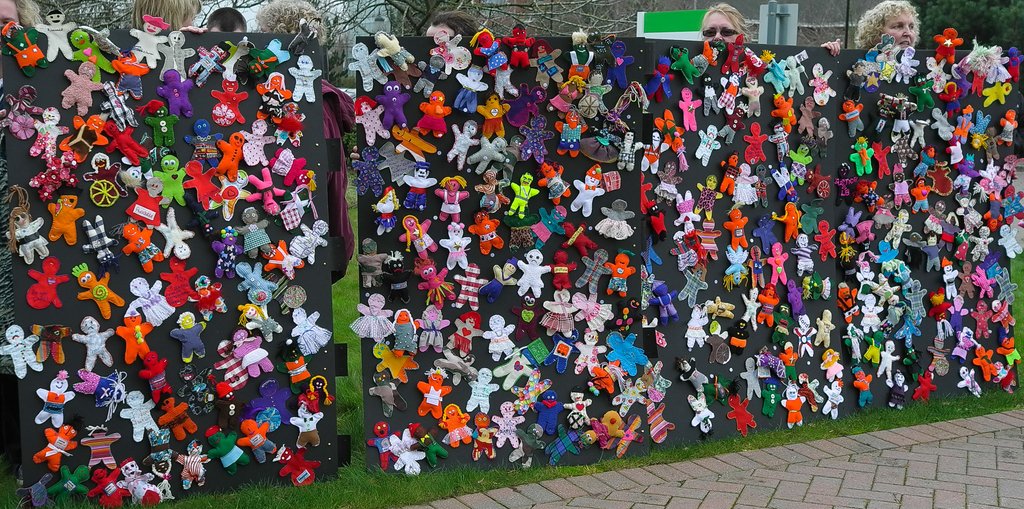
Following the publication of the Mazars Report Sara Ryan and George Julian on behalf of #JusticeforLB invite the Board and Governors of Southern Health to reflect on the hundreds of people with a learning disability who died in their ‘care’ and whose deaths were not investigated. They ask members to come to the meetings open to the public to show support and invite the Board members to view the pop-up display of #JusticeforLB Gingerbreads as a visual reminder of those patients who died in their care.
Southern Health are holding two extraordinary meetings – Tues 5th Jan 10-12am of Governors Tatchbury Mount, Calmore, Southampton SO40 2RZ ; 2nd the Board Conference Room, Sterne 7 at Tatchmore Mon 11th Jan. 8.30-9.30am at . A good presence of supporters would show concern. Members of the public can ask questions at both meetings – see link for more info’ Extraordinary Times
Chris Hatton’s blog on Mazar’s review showing shocking failures at Southern Health suggests this may be the tip of the iceberg. Today’s news is that hospitals in England have investigated just 209 out of 1,436 deaths of inpatients with learning disabilities since 2011 (Hospitals fail to investigate deaths) What does it take for the Government to act?
The long-delayed Mazars review is out today (see here Mazar’s Report). For those of you unfamiliar with the Mazars review, this is a review of all deaths of people with learning disabilities and people with mental health problems in Southern Health NHS Foundation Trust services over a four-year period, from April 2011 to March 2015. After meeting @sarasiobhan, one of David Nicholson’s last acts as CEO of NHS England was to commission this review, to find out how many people had died as Southern Health patients and (given Southern Health’s attempt to categorise LB’s death as due to ‘natural causes’ and therefore not requiring an inquest) how Southern Health had investigated (or not) and done something about (or not) their services in the light of these deaths.
The review has been conducted by Mazars, an international ‘audit, tax and advisory firm’ that on the face of it speaks the kind of corporate language I find impossible to understand (see http://www.mazars.co.uk/ ). Two things about this choice are interesting to me. The first is how far NHS England felt they had to go away from the usual networks of ‘experts’ (including ‘experts’ in supposed ‘independent reviews’) to have a hope of getting a truly independent report that would be less enmeshed in the interpersonal webs of people feeding off the freelance margins of the health service. The second thing is that, in my experience, people and organisations whose job isn’t specifically to ‘support’ people with learning disabilities often behave with far more decency, respect, and straightforward professionalism than supposed ‘specialist’ staff/services. It’s almost as if no-one’s told them that people with learning disabilities are only occasionally and provisionally citizens at all, and they perversely insist on treating people with learning disabilities as just, well, people.
In this blogpost I want to go through some of the findings of the Mazars review, focusing on people with learning disabilities within Southern Health (I’m sure others will focus on the equally shocking set of findings concerning people with mental health problems), and say what I think these findings mean. Up front, can I say that in the ‘modern way’ era of shiny corporate euphemising bullshit, this report reveals a state of affairs that is quite the equal of any institutional era inquiry in its deliberate disregard for human life. I will try and avoid rhetorical excess but I warn you; if you have a scintilla of decency then reading this report will rightly put you in a very bad place.
So, a bit of context about Southern Health NHS Trust. The Mazars review covers a four-year time period, from April 2011 to March 2015. In April 2011 Southern Health Foundation NHS Trust came into being, formed when the specialist (largely mental health and learning disability-focused) Hampshire Partnership NHS Foundation Trust took over NHS primary care services across Hampshire. A further acquisition, of a specialist learning disability trust covering Oxfordshire, Wiltshire and Buckinghamshire (the former Ridgeway Trust) took place in November 2012. The current CEO of Southern Health NHS Foundation Trust, Katrina Percy, started as Chief Executive (designate) for the Hampshire Partnership Trust in May 2007, and has remained Chief Executive until the time of writing this blogpost.
Two reasons for sharing this context: 1) despite Southern Health’s attempts to pin the blame on those pesky rogue staff in runaway Ridgeway, this review covers a substantial period of time before Ridgeway was ‘acquired’. 2) Southern Health has had the same CEO before, throughout and after the period of the review, who has surely been fundamental to shaping the culture and practices of the Trust. And if “The fact is, good leadership leads to better care”, as stated by none other than Katrina Percy (http://www.leadershipacademy.nhs.uk/blog/leadership-when-the-going-gets-tough/ ), then it is surely the corollary that worse care (as LB’s inquest so heartbreakingly demonstrated) is caused by bad leadership.
Expect the unexpected (death)
What did the Mazars review do? Page 7 of the report sets this out clearly. “It is not a clinical case review of each service user and we have therefore not tried to identify clinically avoidable deaths. It does seek to establish the extent of unexpected deaths in Mental Health and Learning Disability services provided by the Trust and to identify any themes, patterns or issues that may need further investigation based on a scope provided by NHS England.” As the Mazars review also says, many people do not die an unexpected death (although expected deaths can still be avoidable, see http://chrishatton.blogspot.co.uk/2015/12/death-star.html ), and reporting/recording/reviewing can be more difficult if a person has been using a specialist NHS service (in the case of Southern Health, this includes community-based support and social care as well as inpatient services) but their place of death is elsewhere, such as an acute hospital. This does not excuse a specialist Trust from its responsibility to make sure that:
• “There are thorough and challenging reviews undertaken when the death of a service user happens unexpectedly – regardless of the location of the death;
• These are not necessarily serious incident investigations but occur in a range of ways including clinically led mortality reviews;
• The learning from national reports is applied when making decisions about local investigations;
• There is an open, transparent and independent approach to investigations with the intention of securing all the evidence needed;
• Families and carers are involved where at all possible;
• Reviewers are trained and investigations are of a high standard;
• Lessons are shared widely between providers, commissioners and other agencies; and
• That organisations investigate incidents of unexpected deaths jointly where appropriate.”
While Southern Health have been fighting a rearguard action against the publication of the Mazars review on the grounds of methodology and briefing in ways that only seem to reveal a horrific misunderstanding of their role, it seems to me that: 1) the Mazars review team has done a painstaking job of picking through the chaos of the reporting systems used by Southern Health and has been appropriately cautious in its conclusions (which makes them all the more damning); 2) Southern Health wouldn’t know a rigorous, unspun methodology if it took the form of Jiminy Cricket and perched, whistling, on their collective shoulders.
What did they find? If you have the stomach for it, it’s really worth reading the report itself (weirdly, the Executive Summary is at the, er, front, which devotees of the Verita 2 report will know is not how it’s done), but here goes…
From April 2011 to March 2015, there were in total 337 deaths of people with learning disabilities who had been using Southern Health learning disability services – this includes 38 people with learning disabilities who were using Southern Health’s social care service, TQ21. That’s over 80 deaths of people with learning disabilities using Southern Health every year, including almost 10 people every year in TQ21 social care services. As well as this horrifying number of deaths, the average age of death of people with learning disabilities using Southern Health services was 56 years – a full 7 years younger than the already shockingly young average age of death reported in CIPOLD. Southern Health hadn’t looked at this, of course, or considered early mortality as an issue worthy of attention.
In addition to the total number of deaths recorded on the now notorious RiO system, Southern Health also recorded any ‘unexpected’ deaths on their Ulysses system (presumably medications are recorded on a Getafix system?). Over the four years, 157 of the 337 deaths (that’s 47%, not far off half of all deaths) were recorded in this system as ‘unexpected’. The Confidential Inquiry into Premature Deaths of People with Learning Disabilities (see CIPOLD final report page 34) defined an ‘unexpected death’ as a “death which was not anticipated as a significant possibility 24 hours before the death or where there was a similarly unexpected collapse leading to or predicating the events which led to death”; they found that 43% of deaths of people with learning disabilities were unexpected.
An unexpected death should be serious stuff, shouldn’t it? If a person using your service dies in a way you wouldn’t have predicted 24 hours before, you’d want to find out why and how, so you can tell the family honestly what happened and do everything you can to make sure it doesn’t happen to other people – wouldn’t you? Not within Southern Health, apparently. Their policy is to complete an Initial Management Assessment (IMA) within 24 hours, which does some preliminary scoping of the circumstances of every unexpected death and help determine whether further investigation is needed. Only 66 of the 157 unexpected deaths reported (42%) even got as far as getting one of these assessments done.
Even worse, the quality of these assessments was often shoddy, to put it mildly, with no clear rationale for why investigations shouldn’t go further, little evidence that directors paid attention to them, no evidence of involvement from family members, and no action plans attached to them. Despite the fact that over half of these IMAs concerned people who had apparently died in an acute hospital, joint investigations with the acute Trust were not carried out.
The Mazars team conducted a review of the content of these IMAs, revealing harrowing stories (similar to CIPOLD) which, if taken seriously, could have prevented further deaths of people with learning disabilities within Southern Health. Common issues emerging from IMAs concerned the identification and management of dysphagia and helping people to eat and drink safely, problems with PEG feeding, and not ensuring people got the hydration and nutrition they needed (my heart goes out to @justicefornico here). Other common issues were the (lack of) liaison with acute hospital learning disability liaison staff, and support workers in residential services being slow to recognise and do anything about signs of deteriorating health.
Surely a good proportion of unexpected deaths would require a Critical Incident Review, another level of internal Southern Health investigation and reporting using Root Cause Analysis (it’s all still internal at this stage, with no reporting to external databases required)? And then, if a death meets certain criteria, the trust has to report it within 48 hours to the national Strategic Executive Information System as a Serious Incident Requiring Investigation (SIRI), which while still conducted internally has to be reported to commissioners.
Let’s have a round of ‘Play Your Cards Very Wrong’ shall we? Of the 157 unexpected deaths of people with learning disabilities (or the 66 where they bothered to do an IMA), how many went forward for a Critical Incident Review or were reported as a Serious Incident Requiring Investigation? Lower, lower, no, still lower, LOWER. Two people’s deaths got as far as a Critical Incident Review and two people’s deaths were recorded as SIRIs. In total, 99% of unexpected deaths of people with learning disabilities were not recorded on a national system that would have brought them to the attention of commissioners or the CQC.
When commissioners did get the SIRI reports, they often complained of delays, had to return them because they were of such poor quality, or had to reopen investigations ‘closed’ by the Trust. Of course, commissioners also showed few signs of actively pressing for complete and better information on the deaths of people with learning disabilities, instead supinely accepting the information they were given without wanting to look too closely.
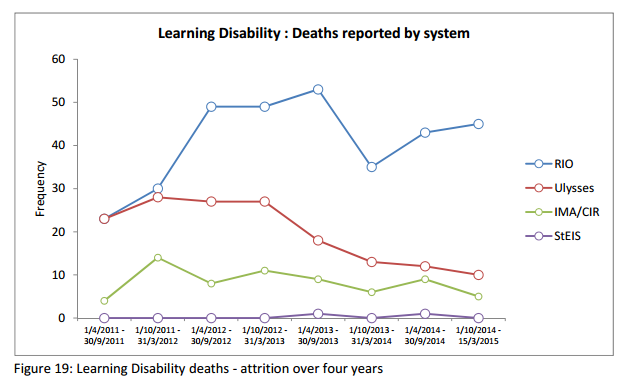
And as for Southern Health’s favourite phrase, learning lessons? What to make of Figure 19 from the Mazars review (I’ve copied this in below – RiO is the reporting of all deaths, Ulysses is the reporting of unexpected deaths, IMA/CIR is deaths where some form of investigation has occurred, and StEIS is deaths reported as SIRIs), showing that, for people with learning disabilities, “the Trust has steadily reported and investigated fewer deaths each year over the period of the review”? Surely a Trust with steady feedback from coroners about their terrible recording and investigation processes around deaths would be getting better at identifying unexpected deaths and investigating them properly? For people with learning disabilities, it would seem the opposite is happening – some form of anti-learning?
I’m bored, I’m the chairman of the board
As someone who has struggled with Southern Health Board papers from time to time, I can only admire the systematic trawl of the Mazars team through a swathe of Board papers. Again, their major conclusions are damning. Only the number of suicides was consistently reported to the Board over time (the rest was subject to ever-changing kaleidoscopic dashboardification), and only unexpected deaths resulting in SIRIs (already winnowed down severely as we’ve seen) rather than all unexpected deaths were reported to the Board.
The Board Assurance Framework makes no mention of unexpected or premature deaths, and the Board papers report constant reassurances from executive directors about the robustness of the SIRI investigation process without any supporting evidence. Again, despite multiple warnings from coroners documented by the Mazars team, there is little evidence that the Board even knew of these warnings, let alone did anything about them. [As an aside, one of the many occasions when a sentence drew an expletive from me was the fairly jaw-dropping fact that Southern Health had been involved in at least 375 mental health or learning disability inquests in the last 4 years – these coroners really need to get their heads together].
In the executive summary, the Mazars team are very clear in detailing the main findings and what follows from them. Rather than repeating it all (do read them – they’re unusually clear) here are a few quotes:
“The failure to bring about sustained improvement in the identification of unexpected death and in the quality and timeliness of reports into those deaths is a failure of leadership and of governance.”
“In our view there has been a lack of leadership, focus and sufficient time spent on reporting and investigating unexpected deaths of Mental Health and Learning Disability service users at all levels of the Trust including at the Trust Board. Due to a lack of strategic focus relating to mortality and to the relatively small numbers of deaths in comparison with total reported safety incidents this has resulted in deaths having little prominence at Board level. The systems in place provide no evidence that the Trust has fully reported or investigated unexpected deaths or taken remedial action where appropriate. This is also evidenced by the inconsistent and incomplete nature of the data supplied.”
“Despite the Board being informed on a number of occasions, including in representation from Coroners, that the quality of the SIRI reporting processes and standard of investigation was inadequate no effective action was taken to improve investigations during the review period.”
The heart of darkness
So, how can I try and sum up the Mazars review? Southern Health NHS Foundation Trust, under the consistent leadership of a single CEO (and a core group of Executive and Non-Executive Directors), put in place and maintained a system of recording, reporting and investigating deaths that: 1) had too many ‘filtering’ layers; 2) was unclear; 3) was implemented in a chaotic and incomplete way; and 4) was not scrutinised by the Board at all. The consequence of this ‘system’ was that a high number of deaths of people with learning disabilities, and a high number of unexpected deaths, translated into almost zero investigations that would involve any visibility to the Board, to commissioners, or to the CQC. Despite repeated complaints/warnings from coroners and others about this system, over the four years of the review fewer and fewer deaths were recorded as unexpected or subject to even the most scant level of investigation.
Four thoughts.
First, this is Mid Staffs type stuff, isn’t it? I don’t see how a Chief Executive and a Board with such a record can possibly continue in post.
Second, is Southern Health unusual, both in the rate of deaths of people with learning disabilities (remember CIPOLD also had many more deaths reported to them than they were predicting) and in their reporting practices? The ‘outlier’ argument beloved of Southern Health is irrelevant – if crap smells the same as other crap, it’s still crap. If NHS England really wanted to get to the bottom of this they would give the new national mortality review function run by the University of Bristol (see http://www.bristol.ac.uk/sps/leder/ ) much sharper teeth – mandatory not voluntary mortality reporting, and stricter standards and external scrutiny of the way mortality reviews are done (including how unexpected deaths are defined and reported).
Third, the written statement delivered by Jeremy Hunt for the Department of Health (see here http://www.parliament.uk/business/publications/written-questions-answers-statements/written-statement/Commons/2015-12-17/HCWS421/ ), the joint NHS Improvement (formerly partly Monitor)/NHS England/Care Quality Commission statement (‘leaked’ to me – so sue me), the statement from the commissioners (who they? See Commissioners response to the Mazar’s report) reveal a comprehensive failure on a scale that is insulting, really. This was an acid test of whether, for all the signed #changeday light bulbs, cascading workstreams, fine words about the 6Cs [add no, no, in, mis, no, and no to this list and you’re about there https://www.england.nhs.uk/wp-content/uploads/2012/12/6c-a5-leaflet.pdf ], and endless plans re-spun in the wake of nothing happening, these organisations were going to stand together with people with learning disabilities and families when the chips were down. A test which has been monumentally flunked:
• The delay and two fingers symbolism of the timing of the reports publication, and the written statements.
• The complete lack of recognition that accountability is required for what has happened at Southern Health and the lack even of a mention that what occurred might be, erm, bad (the CQC will do ANOTHER focused inspection – there have been many of Southern Health, which have been damning in what they’ve found in their services for people with learning disabilities – oh, and then they’ll chat to the invisible Monitor, where no doubt there will be agreement that ‘progress has been made’ and, er, that’s it).
• The sliding elision from Southern Health responsibility to airy questions of general culture – yes, absolutely this may be happening elsewhere, but what message does letting Southern Health off the comfy velvet hook of supposed monitoring send?
• Despite the repeated, repeated, repeated evidence from people who have actually engaged with Southern Health over the years of how they roll, a bland (and by now knowing) public acceptance that it was a small error of paperwork which they’re sorting out now it’s been brought to their attention. If I get pissed and assault someone, I’m sure the police will be very understanding the next morning when I explain that I’ve taken measures to mitigate my drunken violence by sobering up overnight in the police cell, so there’s no need to charge me with anything is there?
• The bland phrases that trip off the apparatchik’s tongue: “the report is critical”; “there is more to do”; “we agree with the spirit of this recommendation”. This is perfectly encapsulated in a video clip Jeremy Hunt has circulated on his twitter feed, where you can see/hear him saying “Whatever may or may not have gone wrong” (yes, really).
• The reassurance that the CCGs will hold Southern Health to account, despite the fact that they have repeatedly shown no will or capacity to do this so far.
In both responses, I can see the traces of the usual civil service innovo-whip-round. What are we already doing that we can dress up as a new initiative that’s responding to what’s happened? Writing a note to Medical Directors offering help? Pur-lease, as my daughter says. The national mortality review function already exists, and these statements say nothing about beefing up its powers in the light of what Mazars have reported (for services, participation is voluntary, for example). They say they will try and collect better information about services, which is something that is already part of the Transforming Care programme.
I know there are excellent people working in NHS England and the Department of Health who are highly committed to improving the lot of people with learning disabilities and their families (if you are reading this, I’m hoping you will know who you are) and they are good people trying to do good things in difficult circumstances who I respect greatly. But what does this say about the capacity of these organisations to really stand shoulder to shoulder with people with learning disabilities and families? After this, why should a whole bunch of people trust organisations that, when it comes down to it, can’t deliver? If they can’t address the implications of the Mazars report properly, how on earth are they going to ‘Transform Care’ with their ‘Big Plans’ and ‘Service Models’. Ask yourself, who is anxious and who is reassured tonight?
Finally, for me the Mazars review brings into the open what feels like a fundamental disregard for the lives of people with learning disabilities, even within organisations that are supposed to be supporting people. We can’t pussyfoot around any more with more guidance but only if you feel like it, more soft-soap persuading people to do the ‘right thing rather than the wrong thing’ (why are people doing the wrong thing still in their jobs?). We need to confront this head on, cut the crap and say the thing itself. At least we now know that we can’t rely on the Department of Health, NHS England or the accountability roundabout. More and more I think the only way to really cut through the miasma of quietude is to really, really, put people with learning disabilities and families in charge.
Six hours’ silence
Right at the start of the Mazars review report, the Acknowledgements section begins with this:
“This report presents a lot of numbers. The team recognise that each number represents a loved one and would like to give their condolences to the families of every person referred to in the following chapters.”
337 lives, all different, all irreplaceable. If we held a minute’s silence for each of the 337 people with learning disabilities who died, we would be silent for almost six hours (and this is just one NHS Trust). And once this period of silence is over (as we have seen, there is too much silence, too many whisperings behind closed doors) we must not, cannot, return to business as usual. Business as usual is killing people [and there’s the rhetorical excess…]
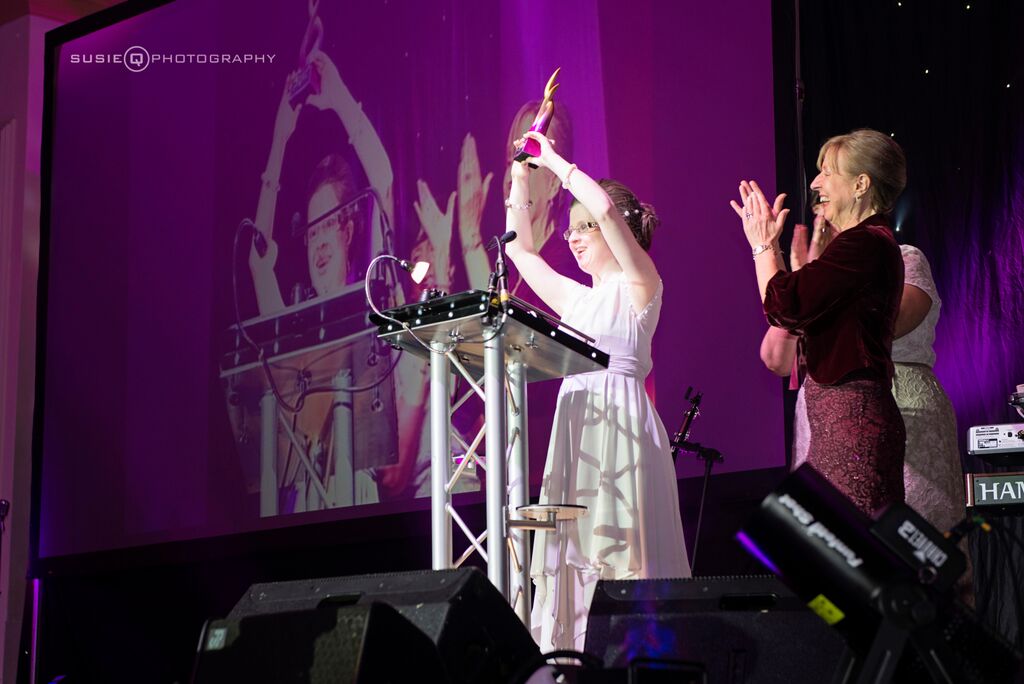
‘Table 14’ erupted as the winner of the EVA Nat-West sponsored ‘Inspirational Woman’ award was announced – and standing ovation came not only from them but notably also from several other tables. Jen Blackwell, a 33 year old woman with Downs syndrome had won this award in the face of competition from N/West business women across the region. It was amazing in itself that she had reached the finals in 2 categories but to win one of the premier awards has been a fantastic accolade to her talent and determination in becoming a dancer, company director and trustee of her charity Dancesyndrome which uniquely has trained dance leaders with learning disabilities to co-lead workshops, work on choreography and deliver performances at events – Public Health England have booked them following their performance at a local conference in Blackpool recently.
The EVA -Enterprise Vision Awards – attracts sponsors for some 16 awards billed as “The North-West’s Premier Ladies Awards” and the Winter Gardens Blackpool was the venue for the announcement of the winners with some 80 finalists and their guests and sponsors attending the Awards night and dinner.
Jen’s great poise and confidence in speaking as she accepted the award is a tribute to what happens to people if they can follow their dream in other aspects of their lives. She acknowledged the support she’s had from “those on Table 14” who included her support worker Naomi Bedford, Donna Harrison a co-dance leader, Sarah Kennedy who helped in the early days including being chairman of the company and Dawn Vickers MD and co-dancer Peter Pamphlett…. and thanked her parents Malcolm and Sue Blackwell without whose support this would never have been achieved.
The Chancellor believes getting rid of the work-related activity component will remove an alleged disincentive for people with disabilities to make efforts to move closer to the jobs market. But an expert on disability benefits at the University of Kent says that removing the component may have the opposite effect. Charlie Callanan reflects on how this could affect your clients.
Some people with learning disabilities not in employment will see a cut to their out-of-work benefit in the future. The Chancellor of the Exchequer announced in his budget statement on 8 July that the ‘work-related activity component’ currently payable as part of Employment and Support Allowance (ESA) will be removed from April 2017.
The Chancellor also stated that existing ESA claimants will be unaffected. However, while they may not be affected for now, the reforms include a provision to also remove the equivalent ‘limited capability for work element’ from Universal Credit. And as all claimants of income-related ESA will at some point be migrated to Universal Credit many existing claimants are eventually likely to be affected by this cut (Note: contributory ESA will remain separate from Universal Credit).
People with ‘limited capability for work’
The change means that people with disabilities who have ‘limited capability for work’ will receive the same level of benefit as unemployed jobseekers who are fully fit for work. The loss of the component equates under the 2015/16 rates to £29.05 per week. That may not sound like a huge amount of money, but as the basic rate of ESA is just £73.10 per week – the same as Jobseeker’s Allowance – it amounts to a 30% reduction to the benefit.
Claimants who get the work-related activity component are treated as having limited capability for work. While they do not have to take a job, they do have to take part in work-related activity, which can include attending interviews with a job centre personal adviser or taking part in ‘work programme’ activities to help the claimant move closer to the jobs market. People who fail to participate can be subject to sanctions.
People with more severe illnesses or disabilities assessed, or treated, as having limited capability for work-related activity are placed in the support group. They are paid the support component, worth £36.20 per week. This is not conditional as the recipient does not have to get involved in work-related activity.
The Chancellor has said he believes that getting rid of the work-related activity component will remove an alleged disincentive for people with disabilities to make efforts to move closer to the jobs market. However, Ben Baumberg, Senior Lecturer in Sociology and Social Policy at the University of Kent, who has a research interest in disability and the benefits system, believes that removing the component may have the opposite effect.
Ben Baumberg thinks the change will make claimants not want to try making any attempts to move back to work as this may increase the risk of their entitlement to ESA being called into question. They are likely to already be worried about having enough money to live on so may try to get into the support group to stabilise their position as a benefit claimant, on a higher rate of ESA. He also believes that data shows that decision-makers at Jobcentre Plus have been placing more people in the support group in recent years, partly because healthcare professionals who carry out the medical assessments have increasingly been citing the mental and/or physical health risks to the claimant (see below) if they were placed in the work-related activity group. So they, as well as GPs and hospital consultants, may be more likely to support their patients if there is a health risk to placing them in the work-related activity group, with a net result of more – not less – claimants being placed in the support group.
Advantages of being in the support group
There are some other advantages to being in the support group other than the additional, higher-rate component, and the absence of compulsion to engage with job centre staff. Entitlement to contributory ESA is time limited to one year for those in the work-related activity group, but claimants who remain in the support group can claim it indefinitely. And people in the support group who qualify for income-related ESA are automatically entitled to extra money in their benefit called the ‘enhanced disability premium’. That is worth £15.75 per week, or £22.60 for couples.
Support group qualifying criteria
To get into the support group the claimant has to have limited capability for work-related activity. There is a list of activities and descriptors relating to physical, and mental, cognitive and intellectual functions. If the claimant satisfies just one of these they will be placed in the support group. Or they can also be treated automatically as having limited capability for work-related activity in certain circumstances. This includes where the claimant is suffering from some specific disease or bodily or mental disablement, and consequently there would be a substantial risk to the mental or physical health of any person if they were found not to have a limited capability for work-related activity. For full details visit: disabilityrightsuk.org/work-capability-assessment
If your client is not in the support group, but meets one or more of the qualifying criteria to get into it, they may be able to ask the Jobcentre Plus decision-maker to move them into the support group. Bear in mind that they will have to justify the move, eg a deterioration in their illness or disability, and may need to supply medical evidence. But also, any review by the decision-maker potentially could result in a worse outcome for the claimant, for example being found fit for work.
Further information:
Risks to health of claimant found not to have limited capability for work-related activity: cpag.org.uk/content/making-exception
Ben Baumberg: rethinkingincapacity.
org/why-the-budgets-cut-to-esa-may-backfire/
Charlie Callanan is a welfare rights adviser with over 16 years experience in the charitable and statutory sectors.
Care Housing‘s relatively small size means it can respond to individual needs, including desired location, type of housing and special features. Rosemary Trustam looks at some of their successful projects.
With local authorities struggling to meet the expectations of people with learning disabilities to live in their own homes, one organisation is finding creative ways of solving the problem.
Care Housing is a registered housing provider in the process of applying for charitable status so it can provide more homes to its target group, mainly people with learning disabilities. It is located in the North West serving around 115 supported tenants. Its relatively small size means it can respond to individual needs, including desired location, type of housing and special features needed.
The organisation operates on the premise that suitability of living accommodation is key to an individual’s independence and well-being and should be part of the care assessment process to ensure it is appropriately met. Social landlords now also have a duty to safeguard vulnerable tenants and should co-operate with social care, health services and the criminal justice system.
Priority
Going that extra mile is often what’s needed to meet people’s needs and help them towards full and more independent lives. Care Housing sees working with tenants to meet their needs and wishes as a priority. Here are a few examples of how they have helped people get suitable homes:
Fred moved into a property with a view to others joining him but difficulties arose unrelated to him. The property was a high cost leased property so, with just a single tenant, it would have been more cost-effective to help him find alternative accommodation. Care Housing did not want to disrupt the tenant’s life as he was settled and happy in the house and the neighbourhood. It carried the high costs to find a solution to keep Fred in his home. The solution was to take on the additional costs permanently to support an appropriate plan for Fred and two others to share rather than the four it was designed for – more costly for Care Housing but the best solution for Fred.
Care Housing regularly comes across instances where the poor quality of a home means it is unsustainable and the tenants are unhappy. John and Mark had been living in a damp house with poor heating and a landlord who ignored the need for repairs. Both men had known each other since school and were keen to remain living together. They go to the gym and social clubs together and, despite each supporting opposite sides of Manchester’s football teams (John the blue and Mark the red side), they get on surprisingly well! Care Housing looked at dozens of houses in their local area before finding the right one, helped by their mothers and support providers. Following some refurbishment, the house provides a comfortable, damp-free home and has given them a renewed enthusiasm in their lives.
With its commitment to long-term homes for people Care Housing has also been prepared to invest beyond what a property resale might achieve, illustrated by one of its recent housing provisions. A specialist provider needed a property in the right location to meet the needs of two young men who presented high risks and challenges but needed to be supported together. The property therefore had to provide potentially two self-contained areas under one roof. A property was identified but required the roof replacing, extensive environmental works, as well as complete internal refurbishment to provide the self-contained areas and a separate staff area. The costs increased the purchase price from £84000 to £184000, well beyond its value, but it meant their needs were effectively met.
Peter, Daryl and Brian all knew each other and wanted to live together so this governed the choice of housing. Once the property was found, they developed it to suit the needs and requests of the men. The success of the move has been in no small part due to the meetings that took place between them, their families, their support team and Care Housing to plan and respond to their needs and wishes. So it has sizeable bedrooms, a large open plan living/dining room, and extensive gardens with fish ponds which they wanted. The property is located in a good local community and, since moving there, they have all become part of the community and have befriended neighbours and shopkeepers. They are all more independent, involved in community activities reflecting their preferences and interests, including voluntary work.
Cautious
Some local authority commissioners have had their fingers burnt dipping too far into housing matters and are becoming much more cautious, renegotiating their agreements with housing providers to try to avoid taking on unoccupied housing costs in future. We need housing providers like Care Housing and others prepared to work as part of the team, making person-centred assessments of needs, and where the team includes the person and, where appropriate, their families. We also need support and housing providers to help people be confident to move on from their accommodation as their preferences and relationships change.
Names have been changed
For further information on Care Housing contact Matthew Eddisford CEO on 0845 437 7367 – see http://www.careha.org.uk/
See comment, page 1, Providing tailored housing will save money in the long term
Almost all of us take photographs and sometimes we get lucky – we capture a moment, we frame it just right, the subject is interesting, the colours work, everything we capture comes together. For the professional photographer, this is no matter of luck. They combine artistic creativity, technical skill and empathy with their subject to produce photographic excellence. For an example of this, look no further than the remarkable Oliver Hellowell – his mother Wendy takes up the story.
Oliver Hellowell is a 19 year-old young man who wants to be a professional landscape and wildlife photographer. He also happens to have Down’s syndrome.
Unique style
At around 11 years old Oliver became fascinated by his stepdad Mike’s work as a photographer. He liked Mike’s big camera and wanted to be able to take pictures like him. With Mike’s love, patience, guidance and targeted tuition, delivered in small chunks at Oliver’s pace, Oliver was able to extend his knowledge and expertise and develop his own unique style.
Oliver now enjoys and utilises the world of photography as both a tool for him to record what he sees in the way he sees it, and also as something which brings him a strong sense of achievement and self esteem. He enjoys the ‘freedom’ that photography brings him.
Having Down’s syndrome means that much of his life is ‘supported’: he is followed, restricted and in some aspects ‘shackled’ far more than ordinary children and young people. But when he is taking photographs he can take pictures of whatever he wants, without anyone saying ‘don’t do that’ or ‘don’t go there’ or ‘let me do that for you’ or ‘no, that’s not right let me show you how’, and so on.
Oliver has complete power over his subject matter, the time he spends on it and if he is happy with his picture that is the most important thing.
His widely-followed face-book page and his exhibitions have brought him a real sense of achievement and pride, and he now often comes back after a bit of an ‘expedition’ with a set of images saying ‘my fans will really love these won’t they mum!’
‘Eye’ for a picture
Oliver’s success is down to the quality of his images and his ‘eye’ for a picture, but also to his ‘story’. He
loves fishing, bird-watching and being out in the countryside and is currently hoping to publish his first book by the end of the year – how exciting is that!
For more information about Oliver’s book and how you can purchase it:
Louise Hide is the author of ‘Gender and class in English asylums: 1890-1914’. She describes the personal journey that made her a historian of the forgotten people of the ‘back wards’.
In the late 1970s, I threw my belongings – contained in all of two black plastic sacks – into the back of my battered Hillman Imp and set off to begin training as a Registered Mental Nurse (RMN) in a large psychiatric hospital in East Anglia. I had chosen this particular institution because of its progressive reputation. I was excited at the prospect of grappling with the complex ideas of Michel Foucault and the anti-psychiatry movement in the classroom. It seemed right that staff did not normally have to wear uniforms. And I soon found myself in admission wards where staff were falling over themselves to offer every form of therapy imaginable: music, drama and group therapy where nurses were encouraged to be as open about their own anxieties and emotions as patients. There was a feeling of being part of something new.
Until, that is, you ventured onto the ‘back wards’, where the majority of patients had been resident for years, if not decades. Here, men and women lived together on wards that were very broadly segregated according to the degree of care they needed: geriatric wards contained people at different stages of dementia; in long-stay wards for ‘chronic cases’ people shuffled around, their world dulled by Largactil. Some people were clearly very ill, others had been written off as ‘mentally handicapped’. Many appeared to be little more than shockingly institutionalised.
Sixty years on
I met women in their eighties who had lived in the institution for some 60 years. Connie was admitted aged 16 – uneducated, unmarried and pregnant. Bertha, who had grown up on a farm, developed early-onset Parkinson’s and was sent to the asylum because they didn’t know what else to do with her. And Dulcie was admitted because she was blind – 50 years later, she was experiencing severe psychotic hallucinations. We’ll never know what part the institution played in her mental deterioration.
These women haunted me for decades. I did not complete my RMN but I did eventually embark on a PhD researching early 20th century asylums to find out, among other things, why the ‘Connies’ and ‘Berthas’ and ‘Dulcies’ of the world were sent to institutions in the first place. The 1913 Mental Deficiency Act was responsible for much of their misery, calling for the segregation of ‘mental defectives’ from society. For many, this meant sending or keeping people in institutions where, as I found in the late 1970s, they might languish for the rest of their lives.
My doctoral thesis forms the basis of a book that was published last year. Now, I am embarking on new research on the history of cultures of harm in ‘therapeutic’ spaces for people with learning difficulties and mental illnesses. This means looking at the ideologies behind the systems and practices in different institutions, from the massive Victorian asylums to smaller community establishments.
Understanding how behaviours change over time tells us a great deal about why systems of abuse continue today. Surely, when you read about the experiences of young men like Leslie Bonner, whose father wrote so movingly about his son’s experience in Winterbourne View in the April issue of Community Living (Volume 28, No. 3) this continues to be one of the most pressing issues of the day.
Gender and class in English asylums, 1890-1914. Louise Hide, Palgrave Macmillan 2014
Louise Hide is a social and cultural historian currently holding a two-year Birkbeck Wellcome Trust ISSF Fellowship at Birkbeck, University of London. She is a Founder and Director of the Birkbeck Trauma Project (www.bbk.ac.uk/trauma).
More information about Louise Hide can be found at: http://www.bbk.ac.uk/history/our-staff/post-doctoral-research-assistants/dr-louise-hide
Simon Jarrett on a controversial drama series from Paul Abbot
In Paul Abbot’s Channel 4 cop drama No Offence a serial killer is on the loose. He is targeting young women with Down’s syndrome and has already killed two. One of them turns out to have been a prostitute who was organising, and profiting from, a sex ring. Her boyfriend Mikey (Richard Beckett), whose services she had been selling, is interviewed by D C Dinah Kowalska (Elaine Cassidy), who asks him where he was on the day that his girlfriend was killed. “I was having sex.” Pause. “They made you do things you didn’t want to do?” “No, I’m really good at it.”
For some this series was several steps too far. A A Gill, the Sunday Times TV critic, summarised the plot. He then invited his readers: “Pick the carcass of inappropriate bones out of that. Oh, and one of them was a subnormal prostitute.” He found the whole thing “not believable… embarrassing”.
Rachel Cooke in the New Statesman, however, saw it as “genuinely taboo-busting, with a surplus of energy, wit and originality that embarrasses the hell out of some of the dross I’ve had to endure recently.”
Plenty of offence
What embarrassed and taxed the belief systems of A A Gill so effectively? Perhaps the idea that people with learning disabilities can be as flawed, and engaged in everyday life, as the rest of us. Paul Abbott made his name from the series Shameless, the saga of a roguish, benefit-claiming, dysfunctional, but strangely functional and loveable sink-estate family. They were not, apparently, unlike the family Abbot grew up in. He has never shrunk from saying the unsayable, looking at what no one wants to look at, and giving space on screen to those who are usually kept away from it.
No Offence is in the same vein. The title is of course ironic: the series gave offence left, right and centre, and with magnificent comic timing. Olivia, a young woman with Down’s syndrome (Joanna Finney), whose friend has been murdered, offers to be the decoy to trap the killer. The police are deeply concerned. “What if we’re not quick enough and he attacks you?” “If he does,” she replies, “I’ll twat him”, to admiring snorts of surprise and guffaws from the assembled police hit-squad. The characters with Down’s syndrome constantly subvert expectations, cheerfully embarrassing all who think they know them. Adam (Leon Harrap) goes into the pub with D C Spike Turner (Will Mellor) and snaps at the barmaid, “I’ll have what he’s having.” The D C hesitates uncomfortably, and orders two Cokes. Adam, affronted, stops him: “I want a pint.”
Admirable television
This was admirable television. It wasn’t just about Down’s syndrome; its beauty was that it incorporated the Down’s syndrome element comfortably and seamlessly into the accompanying plot threads. Richard Hayhow, the advisor to the programme on behalf of the actors with Down’s syndrome, praised the genuineness of the whole thing, which gave the actors an opportunity to show “something a little bit different about themselves, a bit more controversial, hard-hitting, on the edge.” He added, “This is part of a process in gradually changing people’s perceptions of what actors with Down’s syndrome can achieve.” He was particularly admiring of “the range and depth and diversity of characters presented” and the skill with which the actors responded to this challenge. The actors without Down’s syndrome also found it a challenge – but not how you might expect. Will Mellor marvelled at the comic timing of Leon Harrap: “The one thing you don’t do is to work with this man. Every scene we’ve done he’s stolen off me.”
Yes, this was challenging and shocking at times – it was also great television. No Offence represents a huge step forward for actors with Down’s syndrome. More power to Paul Abbot’s elbow, and long may he go on offending and upsetting A A Gill.
To see interviews with the actors with Down’s syndrome, and other cast members from No Offence, see http://www.channel4.com/programmes/no-offence/videos/all/acting-with-downs-syndrome
Simon Jarrett takes a peek into the very strange world of a largely forgotten thriller writer Harry Stephen Keeler
The riddle of the travelling skull, 1934
The case of the two-headed idiot, 1958 (and many more)
Harry Stephen Keeler (1890-1967) is now largely forgotten, his memory only maintained by a small group of die-hard fans. He was an extraordinary writer from Chicago who produced more than 50 books between 1924 and 1958. They are probably best described as thrillers, or murder mysteries, but that does not really tell the story.
Keeler specialised in utterly bizarre and implausible plots and often his endings, far from being neat solutions, were simply baffling. He would sometimes take a number of strange and unusual stories from newspapers, jumble them together and then make a plot from them. His characters’ names and personalities were as implausible as his plots, like the publisher Philodexter Maximum or the Chinese laundryman Ah Hell.
Jigsaw champion
In the strange landscape and bizarre fictional world created by Keeler, many ‘idiot’ types appeared. He was writing in the age of the eugenic scare period when many labelled as ‘morons’ were being rounded up and locked away in institutions, seen as a threat to public order and racial survival.
In The riddle of the travelling skull a character called Sandy McDougall appears. He is a ‘negro’ janitor, (the language reflects the time, 1934, when the book was written), who has been ‘officially proclaimed by two psychologists to be a moron’. Sandy McDougall’s employer would always hide him ‘in the basement for a few days whenever the usual moron-roundings-up took place.’ Yet Sandy McDougall was also a world jigsaw champion who had put together a 5,000 piece jigsaw eight hours faster than any other competitor. He uses that skill to help the main character put back together, in lightning time, some shredded papers that help to solve the mystery at the heart of the plot.
Idiots Valley
It is typical of Keeler that just when you think you are being presented with a stereotype, as in the case of Sandy MacDougall (or Ah Hell the Chinese laundryman) he makes them do or say things that completely subvert your opinions. In his later books there is a region called Idiots Valley, populated entirely by inbred ‘idiot’ people, most of them packing guns.
It is a brilliant satire on the eugenic fears about the degenerate idiot population that caused such hysteria in the USA for most of the 20th century. Idiots Valley is referred to in one of his last books, The case of the two-headed idiot, where the fate of two-headed ‘retarded’ Siamese twins who have been retired from a freak show becomes entwined with a plot involving Chinese laundries and Abraham Lincoln’s stovepipe hat.
Keeler is not to everyone’s taste. He shocks his readers deliberately, and mocks all the conventions of thriller writing. He is however also very funny and a skilled story teller. In his bizarre world there was also plenty of space, sympathy and appreciation for those who were not seen as ‘fit’ by the ‘normal’ world. That included ‘idiots’, whether they had two heads or one.
Simon Jarrett meets Henny Beaumont, author of a forthcoming graphic novel A Hole in the Heart, which charts the life so far of her third child Beth born in 2001 with Down’s syndrome.
Lying in her hospital bed having just given birth to her third child, the first inkling for Henny Beaumont that all might not be well was when the midwife asked her what her other children looked like and whether the newly-born Beth looked like any of them. Clearly concerned, the midwife called in a doctor. He was very busy, but took the time to reel off the checklist he had learned at medical school … slanted eyes, a flat head, poor muscle tone … “Your baby appears to have Down’s syndrome”, he had time to announce to her, before he dashed off to the next thing.
And so it began. Tests confirmed the diagnosis and, as far as Henny Beaumont was concerned, life was over – not for Beth, but for Henny and the rest of the family.
Shock
That was in 2001. Beth is now a thriving 14 year old, a younger brother has arrived in the family (to whom she is exceptionally close) and she is the star of Henny Beaumont’s graphic novel, A Hole in the Heart, which will be published in March 2016. Meeting Henny in an east London café, it is difficult to reconcile this cool, calm, humorous, insightful and hugely talented illustrator/ author with the weeping, crushed, defeated woman, lying helpless in bed, portrayed in the opening frames of the novel. The birth of a child with Down’s syndrome was a complete shock to her and her own reaction was even more of a shock. This child coming into the world had, she believed, condemned her to a life of misery. “Up until then, as a Guardian-reading liberal person, I saw myself as fine with disability. It’s just that it had nothing to do with me – it was not my world“. It was her world now – and it wasn’t a world she wanted to be in.
Brutal medical profession
The medical profession did not help. After the brutal delivery of the diagnosis in the hospital, along came the GP. Known to the family for many years, and appreciated as a good GP, she told them her assessment. “She will never read and she will never write”, she informed them, adding: “You will be comforted to know that your daughter is likely to die before you”. This, we should take a moment to reflect, was in 2001, not 1951.
The early days were very hard. Henny started to hate everyone who did not have a child with Down’s syndrome, imagining hostility from every stranger she encountered, even when it was not there. She and her husband had doom-laden conversations – the childhood of Beth’s siblings would be ruined, Beth would only be able to relate to people like herself, schooling would be a nightmare and, as for their own lives, well…
Meanwhile Beth began being Beth. Her brother and sister loved her and welcomed her into their lives. This new person stamped her personality on the family and revealed a cavernous gap between expectation and reality. She changed them for sure – but not in the ways Henny and her husband had expected.
All of this, the first 13 years of Beth’s life and the changing family that she created, is the theme of Henny Beaumont’s novel. The title refers to both the real hole in the heart that Beth was born with (now corrected) and the metaphorical hole that she first opened up but then filled in her family.
Growing medium
Henny, already an artist and portraitist, had become interested in the growing medium of the graphic novel through the organisation Laydeez do comics. This group challenged the British notion that ‘comic books’ were somehow a lesser, non-adult art form (they have always been taken far more seriously in Europe – especially in France and Belgium) and also challenged the traditional male domination of the field.
Inspired by the graphic novelists she encountered and read, she realised the potential of bringing illustration and text together. She could show many different processes taking place at the same time, in particular the disparity between thoughts and spoken words, between fantasy and reality. This occurs consistently in the book. As she and her husband fret that their other children will never be able to love Beth, the children cuddle her and argue over who gets to hold her next. As they worry over how she will never be able to relate to people who are not like her, she plays happily with her siblings.
Life-affirming
Who is the novel aimed at? She wanted to write something that challenged people’s ideas about disability, not by attacking them but through humour and by examining her own changing responses. Henny hopes, of course, that parents of children with disabilities will read it but thinks that it could be enjoyed by a broader parental audience. It is often humorous but has a message about the powerlessness that all parents can feel when coming up against the entrenched bureaucracies of education or health. The experience of mainstream primary school was not, in her words, ‘so great’.
The book also captures how our own frailties and hidden doubts affect our capacity to deal with these repositories of authority.
A Hole in the Heart examines themes of shock, misery and struggle. Yet, in the end, it is a wise, funny, life-affirming account of one child with a syndrome and a big personality overcoming everyone’s expectations of her and of the family that took her into their hearts.
Look out for Community Living’s review of A Hole in the Heart, due to be published by Myriad Editions in March 2016
For more information about Henny Beaumont see www.hennybeaumont.com
Catch Henny Beaumont talking about her work at the Hay Festival in May 2016
Members of Integrate’s New Focus project embarked on a 1,500 mile journey in two old bangers. Lee Kellett describes their adventure.
When, in 2009, I was interviewed by Doreen Singleton for a job with Integrate I never imagined that one of my favourite hobbies would be part of my work.
Doreen, who became my service manager, asked me about my hobbies, one of which was classic car restoration and all things mechanical. Doreen mentioned that it had been a dream of New Focus – an Integrate project – to take part in a European banger rally. I began a two month career as a project worker and, as tends to be the case, those two months turned into five years.
As on numerous occasions at our yearly activity meeting in 2014, we got on to the topic of participating in a banger rally. Our clients’ participation in events over the previous years had included walking the 80 miles of the Ribble Way, climbing the National Three Peaks, the Tough Mudder assault course and the Preston 10k. But it was not until last year that we finally decided that in 2015 we were going to go for it and in January we signed up for ‘Benidorm or Bust’.
Two bangers
The plan was to buy two bangers for less than £600 to take eight people through three countries on a 1,500-mile journey over three days.
In March I purchased two vehicles I hoped were up to the task. We managed to secure a garage where we could undertake the work needed to ensure the cars could make the journey.
And so it began. I put the idea to a group of service users and they were on board with the idea of dedicating their weekends to working on the cars and then taking part in the journey. Over the coming months we serviced the vehicles, changing the oils, all the filters and the cam belts. By this point the clients had also agreed on a theme taken from a popular TV series ‘’The Walking Dead’’, hence the cars were transformed into Zombie Response Vehicles.
On a rainy Wednesday morning in May we met in the office car park. The cars were packed with clothes, spares, CB radios and people. We left to cheers from the assembled staff and service users, feeling nervous but excited about the journey ahead. We took the short trip to the starting point in Blackpool. The car park was crammed with the 300 other competitors raring to go and a whirlwind 30 minutes later, we were off.
‘’Tssssssshhhh Zombie Response One – are you there?’’ the microphone crackled as we began the journey down the M6. We gave confirmation and stayed in radio contact with the other car and hundreds of other excited competitors using the same radio frequency. We pulled into Dover’s shipping terminal and saw the epic white cliffs which seemed to extend for ever. A two hour delay ensued before we could board the ship and set sail for Calais. After a choppy three hour journey we arrived in Calais at 1 am local time. A short journey on the wrong side of the road took us to our hotel for the night.
On Thursday we met as agreed at 8 am for breakfast and shortly after were on the road again heading for Poitiers. Travelling through France the temperatures rose and the landscape changed. Everyone was relaxed as we ate up the miles. Our Managing Director John Hutchinson had travelled to Poitiers to meet us for the evening and was excited to see us pull into Poitiers centre some eight hours later. That evening we all went out for tea and played pool in a local bar until the early hours.
Soaring temperatures
On Friday we met the other competitors and John at the morning race meet in a hotel car park. Despite yesterday’s soaring temperatures it was raining and after a bagel and several coffees we left for the longest of our daily journeys over the Pyrenees, dropping down into the Spanish city of Zaragoza. On the journey we passed what could only be described as some of the most beautiful views on the planet and the temperature really did rocket into the 30s.
After nearly twelve hours of driving, three police check points and six fuel stops the exhausted eight left the cars to check into the hotel. An hour later we all had a walk through Zaragoza and had a well earned Dominos pizza sitting outside on the city’s main strip. Arriving back at the hotel at around midnight we decided to make the most of tomorrow and start for Benidorm at 6 am the next day in order to arrive for breakfast.
It was now the last day of our drive and the cars were holding up well. At 6 am, true to our word, we left the underground hotel car park with our headlights lighting the way. Two minutes later we got stopped by the Spanish Police who breathalysed us and checked our papers. Then our journey for the finish line began.
As the sun came up in the distance and ‘The Stone Roses’ playing on the radio, we discussed all the things we had done over the previous days. This journey had been a mammoth undertaking but an exciting adventure. As we soaked up the miles we passed signs for Barcelona, then the sign for Benidorm appeared in the distance. As we approached everyone erupted into cheering. Soon we went through what was to be the 17th and last toll booth before we arriving at the seaside resort of Benidorm.
In awe
As we pulled into Benidorm we were in awe of the two bangers that had carried us there and discussed the sad fate that awaited them at noon when they were to be scrapped while we took the three hour flight back to the UK. We checked into our apartments and headed for dinner.
That night we went to the awards ceremony and from there into the bright lights of Benidorm’s clubbing district where we celebrated until 5 am. We had to be up for our 6.30 am airport transfer only 90 minutes later.
On the plane back we discussed our favourite moments and laughed at memories that will surely last a lifetime.
Intro: Seán Kelly talks to Richard Williams who believes that helping people with learning disabilities on Merseyside to have a full life is indeed a fabulous thing – despite the pressures on budgets.
It’s not often that you hear of a consultant returning to direct service provision but after five years with leading consultants Paradigm, that is just what Richard Williams did. It’s an unusual step, one I can’t help admiring.
Richard took on the role of CEO with Options for Supported Living working almost entirely with people with learning disabilities in Liverpool and the surrounding areas. That was nine years ago and since I was visiting Liverpool recently I arranged to meet up with him and find out how it is all going. We met up for a very nice lunch at Peter Kinsella’s Spanish restaurant ‘Lunya’ in the heart of Liverpool. Peter, of course, used to be the Commissioner in Liverpool and also led Paradigm so he can’t be disentangled from this story. Happily he joined us for a little while.
Stay local
We talk to a background of flamenco music. Richard tells me that Options is “a Merseyside organisation, wanting to stay local and be fabulous at what we do. For us that means supporting people”. Throughout our discussion he regularly uses words like ‘fabulous’ but in a down-to-earth unflashy way. It encourages a shared belief that being fabulous is a perfectly reasonable aim.
Options provides support for 180 people in Liverpool, the Wirral and across Cheshire. The organisation was set up 15 years ago by Peter Kinsella when he was the local commissioner. Options was one of four small organisations started with seed money of £150,000 “which was not very much even back then”, Peter recalls. Richard says that lots of organisations around seemed to be “sadly driven to be responsive to the system rather than to individuals and what they want in their lives”. Peter had said, OK, let’s create an organisation that genuinely listens to the people we support.
Options has grown significantly since then but still retains an emphasis on staying relatively small and local. Richard says that unlike other organisations driven by expansion “our driver is for people to live their lives to the full”.
So what’s the secret? “Everything comes down to having fabulous staff”, says Richard. Throughout the interview he speaks highly of the staff and it doesn’t seem to be just standard management-speak. “Fundamentally, we say to staff we can’t pay you loads but if you want to make a difference we can support your development to do that”. It provides some of the best trainers from around the world; for example, David Pitonyak has regularly come over from the USA to work with them for about ten years. “One of his headlines is Loneliness Is the True Disability. So we are passionate about people having love, in whatever form, in their lives, in terms of community, friendships and intimate relationships”, Richard tells me. He says this means staff are expected to have ‘big ears’. “There has to be that emphasis on genuinely listening to people but we also say we listen with our ears, our eyes and our hearts”.
One of the main ways for people who use Options’ services to have their voices heard is a group called Voices R Us which has been facilitated for the last ten years by Jill Goodwin. The group meets and says what’s working and what’s not working for them and what their hopes and aspirations are and that gets fed directly to the trustees and to Richard. Richard says the other way that people have a voice is “simply that everyone starts with a person-centred plan which says ‘this is what I want in my life’ and so that shapes how we do things, and that shapes their service. Essentially it’s bespoke support for 180 people. That can’t be dictated from the most senior position, that has to be driven by listening to the person”.
Consistent teams
The organisation backs this up with a commitment to providing consistent small staff teams who can get to know the individual they support really well. The aim is to use no agency staff at all. Options wants staff to feel that they belong to the organisation, says Richard. Their approach includes things he describes as ‘quirky’: “We have a Philosophy Night where we just get a group of maybe a dozen people together, have some food and something to drink and have conversations that just explore where we’re at, what we’re doing, what is working, what is not working, without any scripts, any agenda, without any minutes, or anything like that”. The meetings deliberately take a lateral approach; for example, a recent one began with Peter Kinsella speaking on what he had learnt about social care from running a restaurant!
Options has also invested significantly in Emotional Intelligence training. It is provided with coaching for all managers and for many of the staff. “It’s essentially a language for understanding relationships and ourselves… I think it has made us a more thoughtful organisation and a wiser organisation”. There are also leadership courses for potential leaders among the staff. “They include synchronised dance routines, radio broadcasts…” Richard laughs, “….all the creativity I guess you’d expect from my apprentice-ship with Paradigm”. But he does not believe that leadership can only come from people who are named leaders. An example is a recent event, the organisation’s Picnic in the Park, and Richard pays tribute to a support worker who led a bunch of others to organise the whole day and make all the lunches. “So in the little traditional bandstand we had music playing and in the deckchairs 150 people watching. It was fabulous”.
This emphasis on development and creativity all sounds great (and great fun) but I wonder how long it can be maintained in times of austerity? Richard says that Options has derived some benefit from gradual growth, receiving increased management income while the actual management costs have remained the same. But he knows that the pressure will increase. “Options will need to find a way to stay person-centred but also deliver outcomes for people within manageable finances”. An example he gives is a new block of flats where there will be four people with learning disabilities supported by Options and four other tenants without learning disabilities. People with learning disabilities will still have their own staff teams but will share the night cover. “It means people still have staff who know them well, and listen to them well, which is crucial to good support… but at the same time it provides some of the financial savings the system demands if we’re not going to move back to congregate living”.
Individual mini-tender
Has he had to do many tenders? I ask Richard. He says the approach is different in different areas. Liverpool has recently done a lot of re-tendering of provision. On the other hand in the Wirral they have set up a framework and done things on a more person-by-person basis. This means creating almost an individual mini-tender for each person but it also means many aspects of that can remain the same with only the elements relating to the individual needing to be freshly created each time. At the moment Richard says responding to tenders is not an over-whelming process. He seems to be in a better situation than some CEOs I know in London who say they have done little else apart from tenders over the last couple of years.
As well as supported living the organisation provides a fair amount of outreach support based around social inclusion, including supporting people into voluntary or paid employment, education, friendships, holidays, etc. I wonder if it is this area that is getting cut at the moment? But Richard says that actually there has been some growth in outreach. His rather depressing conclusion is that outreach services are sometimes used by councils to sustain people in the family home, as a form of respite for family carers, whereas ten years ago the individual might have moved into their own home and tenancy.
Richard believes strongly in partnerships: “I mean real partnership working between people with disabilities, their families, providers and commissioners and probably the community as a whole. The history of a lot of learning disability provision has been silo’ed and with how scarce resources are now I don’t think anybody can do anything in isolation. Genuine partnership is the next step”. This seems admirable but hard to achieve in a world of competitive tendering which can encourage lots of organisations to each hold on to their own little bits of good practice. Richard agrees that times have changed. He says, “Years ago you felt you had lots of friends who were sharing the road, sharing the struggles and the opportunities and the learning together. The difference now is that’s much harder and there seem to be fewer folk around”. Options is part of a small supportive group of organisations which meets regularly. “We just share where we are at…. which can include saying ‘Blimey, that was a tough week!’ ”
Richard himself has had a few tough weeks lately as he has faced recent reductions in income, despite winning tenders. He says straightforwardly that the last three months have been the hardest he has ever had. Although Options has made surpluses in recent years it is currently facing a £100K deficit and so on the day we met there was a letter going out to staff “This will reflect on the challenges and opportunities facing the organisation”, he says.
A full life
Richard accepts that maybe some of the team-building type events will happen less frequently but, he emphasises, the biggest factor in making a difference to people’s lives is great staff doing their work well. “So supporting and developing those staff is still the best way to use the limited money available to make the best difference to people’s lives”, he says. We agree that, whatever the financial situation in the world at large, there is still a job to do: people with learning disabilities still need and deserve a full life.
Richard has a persuasive way about him. Sitting and speaking with him he easily makes me feel that helping people with learning disabilities on Merseyside to have a full life is indeed a fabulous thing. He has that great quality that real leaders have of making you feel you want to join in. As we finish he tells me that the turning point which led him to leave consultancy and go back to direct work was when American consultant Lynne Segal one day turned to him and said, “You’re not a consultant, you’re a leader”.
The Elfrida Society’s Circles of Protection project uses volunteers to help people placed out of borough. Sarah Reilly describes how they helped Jack to enjoy a fuller life a long way from his home county.
Quote: We have to be concerned about the vulnerable people who have no family and do not receive this service. How safe are they from one review to the next?
Most inner London boroughs have insufficient accommodation locally so have little option but to place people beyond their borough with a statutory obligation to provide just one review a year. There are hundreds, if not thousands, of highly vulnerable people living out of borough whose care is monitored once a year.
Befriend and protect
Islington Council and Clinical Commissioning Group (CCG) continue to fund The Efrida Society’s Circles of Protection project (CoP), to support people with learning disabilities who live in care homes outside Islington. In this model vulnerable, isolated service users are assessed by the CoP Coordinator then paired with volunteers in their area. The role of the volunteers is two-fold: to befriend and protect.
This is Jack’s story. Jack is 89 and lived in Harperbury hospital until it closed when he became a ward of Islington Council and was placed in a care home in the North of England. Jack has learning disabilities and a diagnosis of Fragile X, he understands some language but doesn’t speak. Two years ago Jack had a stroke and is now in a wheelchair.
Jack was referred to the CoP project by his social worker who was concerned about his quality of life. The home manager seemed genuinely fond of Jack and Jack appeared comfortable with her. However, as the assessment progressed it became clear that apart from an occasional visit to the supermarket when the staff rota allowed, Jack had no life beyond the house, and now he is in a wheelchair he can longer move freely without staff support.
When the CoP Coordinator asked the home manager how Jack communicates his wishes the home manager looked blank. The Coordinator drew three faces on her note pad: happy, neutral, miserable, and asked Jack how he was feeling. He pointed straight to the miserable face.
Since that initial assessment Jack’s life has changed. Following the CoP Coordinator’s instruction the home manager created a Communication Passport with pictures of rooms in the house, food and drink, local areas, and mood faces. Jack has it with him all the time. The picture he points to most often is a mug of tea. He now attends monthly chair exercise classes, sharing the cost with several other residents who also benefit, and the home manager has arranged a taster day for Jack to try out the day centre. If he likes it he can afford to pay for a day every two weeks.
The CoP Coordinator has also been busy and has recruited two volunteer befrienders for Jack, one through the local volunteer service, the other through the church. One of the volunteers has a car and wants to take Jack out. At present checks and training are in progress and then, if all goes well, Jack’s life will expand further.
The CoP project is now in its third year and is growing in strength. It is a small project with limited capacity, and recruiting volunteers is neither quick nor easy. But the numbers of CoP befrienders are growing and those service users with befrienders now participate in their communities: playing tennis, going out for lunch, attending church services, having regular visitors to their homes. As a result their quality of life has improved and they are safer.
Medical neglect
In several cases neglect has been identified by the CoP Coordinator, particularly medical neglect and over-medication. Incident reports and safeguarding alerts have been raised and service users have been brought back into borough. But we have to be concerned about the vulnerable people who have no family and do not receive this service. How safe are they from one review to the next?
Sarah Reilly is the Elfrida Society’s Circles of Protection Coordinator
Belinda Schwehr outlines the new proposals to clarify the law around Deprivation of Liberty.
The new DoLS ‘replacement’ proposals herald an expansion of professional attention to people’s care plans. This can only be good, especially as they do not add to the burdens of the provider sector.
The proposals follow the Cheshire West ruling that most restrictive regimes for people lacking capacity should be regarded as triggering the safeguards, without providers of care having to struggle to distinguish between restriction and deprivation.
The proposals introduce a concept of Protective Care which, when its defining features arise, triggers safeguards to ensure that what is planned is proportionate and necessary.
The idea is to provide the extra layer of attention that the significance of detention, restriction or any impingement on a person’s intimate and personal life, their bodily integrity, and privacy, requires to comply with human rights law, without it generating a need for a double layer of care planning. The care plan – usually signed off by councils and Clinical Commissioning Groups (CCGs) but sometimes by privately funded providers – will be the authorisation for the regime.
But the regime will still only apply for incapacitated people. People with capacity needing care are expected to be able to look after their own interests, if they are overly restricted, within the labyrinthine twists of community care and capacity law!
The meaning of ‘restrictive care and treatment’ for the highest level of scrutiny would be determined by reference to the existence of any one of a list of features commonly regarded as impinging on a person’s choices.
Applying Cheshire West
The reason we will still need to focus on the meaning of deprivation of liberty is twofold. First, because the proposed regime for the acute hospital setting is only triggered by deprivation of liberty; and second, wherever the much simpler acid test, laid down since the Cheshire West case, is met there will have to be external medical evidence (by a Section 12 doctor or a psychologist, ‘some other medical expert including the person’s GP’) regarding unsoundness of mind or incapacity, as part of the authorisation process. That is what the European Convention of Human Rights (ECHR) article 5 requires (not a nurse or social worker as is provided for by the role of Responsible Clinician in the Mental Health Act).
There is no suggestion as to how this new role will be imposed on GPs or paid for, or the implications for the NHS of the time it will take.
Approved Mental Capacity
Professionals
Beyond merely ‘supportive care’ care plans, whether or not there is full on deprivation as part of the care plan, the signing off of a ‘restrictive’ plan would require the input of a new professional called an Approved Mental Capacity Professional (AMCP). These people will be working for councils or CCGs or independently, but they will operate like a Best Interests Assessor (BIA) is obliged to, with independent statutory tasks that are only for them and their own judgement.
“In some cases the AMCP might decide that the assessment should be carried out by the professional already working with the person. The AMCP might also act as a general source of advice for the assessor – to assist them to apply the principles of the Mental Capacity Act and share good practice. In other cases, the AMCP could take charge of the restrictive care and treatment assessment themselves and thereby ensure that an independent assessment takes place.”
The proposals suggest that it should be the AMCP who does that thinking as to whether care is restrictive or depriving of liberty, as the BIA does currently. That invidious duty will extend to domestic settings, whether the awareness of the situation has arisen through safeguarding concerns or ordinary care planning. There would still be debates between AMCPs, families and doctors as to whether what was going on was properly restrictive care amounting to deprivation of liberty or merely supportive care. AMCPs will have to be kept legally literate to discharge these responsibilities!
Where, currently, there would be an urgent authorisation issued by the provider to itself, the first recourse of the care provider should be to an AMCP who would be able to give temporary authority (or up to seven days and to extend this period once for a further seven days).
Conflicts over costs
The Law Commission fears that the role envisaged for AMCPs risks creating individuals with power to determine that commissioners will have to spend more money and it has tried to to draw a line between their imposing conditions on the regime provider, and recommending conditions for the care plan.
Concern is over sensitive because wherever there is a Section 25 Care Act plan for an eligible person, the care plan should match what was being commissioned. There is no legal conflict between what councils can do and what their staff can do; and if the role of an LA officer is to be combined with an independent statutory role under new legislation, LAs will just have to put up with their staff having more power over their decision making.
This is not new. It indicates that the people who have written the report don’t understand community care law, or have been influenced by senior management. Professional opinion as to what is appropriate, adequate, suitable or necessary has always been the determinant of whether the package is lawful. It is the reason social work is a profession and judges only require defensible decision-making from the sector’s professional staff!
The new scheme of protective care will apply to hospital, care home, supported living, shared lives and domestic accommodation. However, the nature of the safeguards will vary according to the particular setting.
The acute hospital regime
We know that the DoLS are treated as irrelevant in hospitals and in the medical sphere but the law is the law so we do still have to have something to meet the scrutiny and process aspects of article 5.4 of the ECHR.
What we are going to get is a doctor simply authorising DoL, for up to 28 days, with a signature. The signature carries with it the obligation to appoint responsible clinicians, advocates and representatives but I reckon they will never get to the point of being used, if the person is discharged quickly, or gets through their incapacitated crisis in A&E and goes home.
It will only be necessary to embark on this procedure if full deprivation of liberty is involved so anything short of a clear case of deprivation won’t attract the benefits of special professional attention, even if it is clearly restrictive. Hospital managers will determine whether something is deprivation of liberty or not and will need to be reminded of the acid test of whether the person is free to leave or not.
In a hospital Assessment and Treatment Unit, where a person is staying for a long time, it would be the duty of the responsible clinician to prepare a written care plan for the patient. This clinician would be expected to consult the patient, any carer, and any other person interested in the person’s care. Copies of the plan should be given to these people following the authorisation of a deprivation of liberty. Also, an advocate or an appropriate person, must be appointed for the patient, radically improving accountability for what goes on in such places.
Advocacy for this area of activity
Advocacy is to be streamlined and extended to anyone qualifying for even ‘supportive’ care planning and not merely restrictive care, regardless of whether they have relatives or friends to speak up for them or be consulted. It is not easy to grasp how this will be done. Advocacy by IMCA (Independent Mental Capacity Advocacy) turns on someone being unsupported by a person who could be consulted and being incapacitated on the issue in question; DoLS advocacy can be triggered regardless of whether you are befriended whereas Care Act advocacy turns on facing substantial difficulty without anyone to support you but is not relevant to a person having a self-funding non-Care Act journey.
The Commission thinks there are no advocacy provisions for Continuing Health Care (CHC). Since all CHC assessments should involve multi-disciplinary input and a joint working LA’s input would be assumed to be a Care Act assessment (even if no duty arises to meet needs), that is incorrect. The eligibility decision-making process for CHC should incorporate triggers to Care Act advocacy and the NHS thus avoids having to pay for that service!
Day care and own home settings
The proposals don’t cover day care – presumably because Section 4B of the MCA is still good enough for legitimateley detaining someone for their own good in an emergency.
Even though the case law says that a non-State funded private person who is making their own personal decision to deprive a person of their liberty at home, is not breaching human rights, they may be depriving them of their liberty or committing the civil law wrong of unlawful detention. They thus need to follow the MCA Code if restricting the person or going even further than that and a council aware of this must do its best to mitigate the situation to remain human rights compliant. The Commission’s proposals envisage the safeguards as applicable in domestic settings – although with the sensitive light touch important for parent carers.
Appeals
It is unclear as to what will become of the Tribunal recommendations now that the Dilnot provisions for an appeal system have been dropped. The proposals emerged before the deferral was announced and, even then, the comparison between appeals and DoL appeals to a Tribunal was not well explored. Now the issue is harder: an appeal can be made against the care plan contents for those deprived of their liberty but not for anyone else.
Consultation responders might like to shout very loudly that we need a social care tribunal system!
I broadly approve of the proposals but I think there is some disingenuousness and some serious error of legal thinking in the analysis of some of the harder areas; for instance, the hospital regime and the relationship between the MCA and public law decision making, both beyond the scope of this article.
For the Law Commission’s proposals see: http://www.communitycare.co.uk/2015/07/08/deprivation-liberty-summary-law-commissions-reform-proposals/
For changes to the MCA in relation to DoLs safeguards see: http://www.lawcom.gov.uk/project/mental-capacity-and-deprivation-of-liberty/#mental-capacity-and-deprivation-of-liberty-consultation
Further thoughts on the system can be found on Belinda’s new blog Schwehr on CARE at www.schwehroncare.co.uk.
People with learning disabilities are often deprived of the right to a sexual life, says Sue Sharples who runs courses in personal relationships and sexuality involving people as programme designers and co-presenters.
Becky, a self-advocate from Lancashire, describes the impact of her attendance on a recent sexuality and relationships training course as enabling her to take a ’big leap’ into a world of potentially pleasurable, rewarding intimate relationships. It was a world previously closed to her by intense fear, misconceptions and other people’s negative attitudes.
A small group of people with learning disability, including Becky, providers and commissioners, have been meeting for several months to discuss how services in Lancashire can be more responsive and sensitive to the sexuality and relationships needs of her peers.
As a representative of the Brothers of Charity, Voice for All Advocacy group, based in Chorley she has been instrumental in the development of a guide for staff entitled, ‘How best to support me with Friendship and Relationships’.(1) Yet, Becky has become increasingly frustrated by the lack of access to good information, advice and education about sexuality and sexual health.
Sparse commitment
The group shared difficult and, sadly, not uncommon stories of enforced sterilisation, sexual assault, impersonal provision of facts by way of explicit and alarming line drawings, alongside numerous examples of supporters unable or unwilling to answer queries of a sexual nature. They noted, that following local investment in staff sex and relationships training in the 1980s and 1990s, there had been sparse commitment to developing further skills in this area. In fact, other issues, including a focus on safeguarding and mental capacity, leading to the prioritisation of risk over rights had created a general reluctance amongst paid supporters to tackle what was seen as a ‘can of worms’. This reflects the picture described in the study ‘Talking about sex and relationships, 2010’ (2) describing young adults generally receiving inadequate education, resulting in confusion and distress about relationships and sex.
Driven steadfastly by self-advocates’ determination to ensure their right to a sexual life was upheld, the Lancashire Group started work on a strategy that would identify existing relevant services, analyse the gaps, engage relevant partners and raise awareness. A supportive approach was taken to provider involvement, holding a workshop that gave them relevant resources, such as a template to assist a review of agencies’ ‘Personal Relationships and Sexuality’ policies. The area that providers identified as requiring most attention was, however, training for staff and the people they support.
As a new and enthusiastic graduate of the FPA’s specialist learning disability and sexuality courses (3) I was keen to work with the group to develop training that met their specific requirements locally. It was Becky who was one of the main protagonists in getting this off the ground, encouraging us to take an action-focussed, collaborative approach, that would be accessible and enjoyable.
The resultant training programme, ‘Y be shy about sex and relationships’, had the major aim of assisting people to feel more comfortable about discussing sexual health, thereby overcoming some of the identified deterrents to learning and development. A key factor was to be fully inclusive, with people who have a learning disability being programme designers and co-presenters, following a training and induction period. Being mindful of the recommendation that ‘People with an intellectual disability have a rightful and essential place at the table as partners in planning and running sexuality and relationships programmes’(4). Equally, each course has involved paid and unpaid supporters, working alongside adults who use services.
Broke down barriers
John, a member of staff involved in the Brothers of Charity course, believes that there were significant benefits in learning together. “It broke down barriers,” he said. “We were walking a hard road together and realising that we all had the same needs and vulnerabilities. Staff realised they had a lot to learn and without proper knowledge they could not provide adequate support”. Stephen, one of the co-trainers, identified that people had developed a relationship of trust that offered wider opportunities for continued support and discussion outside the training room.
The six-week programme explores values and attitudes, different types of relationships, dating, understanding sexual and sensual needs, awareness of how our bodies work, including maintaining sexual health, appropriate/inappropriate behaviours, public/private places, staying safe, the legal framework and accessing advice and information. Flexibility has been a significant requirement, as each group has identified particular areas of interest or concern. In one session, extended discussion about same gender relationships led to a couple being open about their feelings for each other and with the help of additional information, staff being confident about supporting the relationship to flourish. Throughout, participants have said the delivery in a fun, relaxed and interactive environment is a key factor in reducing anxiety about the subject matter and encouraging personal development.
Humane option
The group is now campaigning for the training to be rolled out across the county, working in partnership with universal sexual health services. At a time when direct support resources are constrained and there is increasing emphasis on wellbeing and self -sufficiency, this is one way in which vulnerability to abuse can be reduced, physical and mental health maintained and mutual support encouraged in a cost effective manner. Vivien Cooper of the Challenging Behaviour Foundation has said that access to good information and advice can limit sexualised behaviours which may be considered challenging (5). A preventative approach, rather than reacting when things have gone wrong, including individuals coming to the attention of safeguarding or forensic services is surely a cheaper and more humane option.
There is still a recognised challenge to embed thinking about opportunities for sexual expression and intimate relationships into the design and delivery of support, despite the advances that have been made in social and health care planning. A manager who attended one of the training programmes, described it as the start of a wider systems change for his organisation which would test their capacity to truly respond to people’s aspirations and entail changes at policy, practice and strategic level.
Having recently attended the excellent national Luv2meetU conference in Bradford (Luv n Friends Matter 2 Us All, 14 July, 2015, organised by Hft) which focussed on dating, sexual health, friendship and inclusion, it seems clear that across the country, there is patchy access to training, information and advice for people with learning disabilities. However, a shared enthusiasm for addressing what can sometimes seem like the ‘last taboo’, was very apparent amongst the gathering. This gives hope that we are regaining some of the ground laid by Ann Craft and others in the 1980s, echoed in her suggestion that, “Policy guidelines, training and support are all required to enable staff to act positively, constructively and responsibly in response to the individual sexual needs of people with learning disabilities.” (6) Perhaps there needs to be a similar national steer and the banding together of individual and organisational champions, to ensure there is comprehensive access to the opportunities, in Lancashire and elsewhere, that helped Becky take the ‘big leap’, to a place where choice, opportunity and confidence in developing relationships prevail.
References
1.Voice for all, (2014) How best to support me with friendships and relationships, Brothers of Charity, Chorley, Lancashire.
Barnes, C and Garbutt, R (2010) Talking about sex and relationships: the views of young people with learning disabilities. University of Leeds, Centre for Disability Studies
3.FPA training courses. Liberating life choices: promoting the positive sexuality of people with learning disabilities; and Delivering sex and relationships work with people with learning disabilities: practical approaches.
Chapman, R., Ledger, S., Townson, L. Ed (2015) Sexuality and relationships in the lives of people with intellectual disabilities. London, Philadelphia. Jessica Kingsley
5.Salman,S (2012) What sex education is available for people with a learning disability? The Guardian article, 7 June 2015.
6.Craft, A (1994) Practice issues in sexuality and learning disability
New York, London. Routledge.
Sue Sharples is Director of Y Training, U-Night Group and VOXCIC. For futher information she can be contacted on sue@ytraining.co.uk or 07834695606
A joint research project developed by Mellow Parenting with input from Mencap and the Elfrida Society aimed to find out how vulnerable mothers could be helped to become good parents. Beth Tarleton explains.
Summary
Title: Evaluation of the Mellow Futures programme (part of the Parent Pioneers project). https://www.mencap.org.uk/parentpioneers
Aims: To investigate mothers’ views
of this newly adapted parenting programme.
Methods: Interviews with mothers with learning difficulties before and after taking part in the programme.
Background
Parents with learning difficulties can struggle to understand pregnancy and parenthood and often lack access to easy information or support networks which could help them increase their knowledge, skills and understanding.
A new programme called ‘Mellow Futures’ has been developed by Mellow Parenting (http://www.mellowparenting.org/index.php/zoo) in association with Mencap and the Elfrida Society to support new mothers. The overall project was known as ‘Parent Pioneers’.
Mellow Parenting programmes are relationship-based. They aim to improve the interactions between parent and child and have been developed for vulnerable families who may struggle to engage with support. Two Mellow parenting programmes were adapted to become part of the Mellow Futures programme: the Mellow Bumps programme which is a six week antenatal course and Mellow Babies a 14 week course which mothers attend with their babies.
Included in the Mellow Babies programme is a crèche for the babies for part of the day so that the mothers can think about their parenting and any problems they may have encountered. The mothers learn about topics such as bonding, babies’ social and emotional development, etc. Mothers, babies and facilitators have lunch together and take part in a parenting activity together, such as baby massage. The mothers with learning difficulties were also provided with a volunteer mentor who visited them each week during the programme to provide emotional support and help the mum with the ‘take home activity’ which reinforces the learning from the group session.
The programme was adapted for mothers with learning difficulties with support from Mencap and a ‘Parent Expert Group’, a group of parents with learning difficulties involved with the Elfrida Society in London. These parents provided advice about making the programme materials easier to understand, tested out adapted sessions and discussed how mentors should support parents.
This research review provides an overview of the mothers’ views of the first two pilot programmes. Mothers were interviewed before and after the programmes. Eighteen completed the programmes.
Findings
The majority of the mothers were involved with child protection as there were concerns about their current ability to care for their baby or their older children had already been removed from their care. A number of these mothers were initially resistant to attending the programmes saying they only attended because they were told they had to. However, all of the mothers engaged with and enjoyed the programmes. This was primarily due to the development of trusting relationships with the facilitators who provided a safe space for the mothers to discuss the issues in their lives.
One mother said: “I know everything’s confidential, so I can say what I want in here. Like I can’t say it to half the people, like I can’t even speak to my partner about stuff. And I’ll mention it here and I know that they can’t go and say, ‘Ah, she said this, and she’s done this, and this has happened to her’. I know they’ve got to keep it to themselves”.
The mothers also recognised that the facilitators shared their personal stories with them during the activities. This sharing by the facilitators created a feeling that they were all working together rather than professionals and group attendees.
The mothers also reported enjoying developing relationships with mothers in a similar situation to their own. They enjoyed ‘having a laugh’ and supported each other when they were down.
This mother summed up the connection between the parents: “I met a mom having a similar experience. This was very important for me because I feel she ‘truly’ understands”.
The majority also enjoyed their relationship with their mentor. That the mentor was not a professional was important to the mothers as they felt able to talk freely to them as they related to them mother to mother.
For this relationship to work, it was important that the mentor was a mother. A few of the mentors did not have their own children. The relationship between the mentor and mother needed to be natural, they needed to ‘click’. The relationship did not work if it was ‘forced’.
The mothers enjoyed the content of the programmes and said the material was easy to understand. It was presented in an accessible format and often used video or creative activities rather than being literacy-based. The mothers felt they learnt a great deal about caring for their baby and about themselves. This personal learning was sometimes upsetting for them but also beneficial and confidence building as they recognised their abilities and increased understanding of their baby.
One mother said: “I feel more confident. I can do more with my child than I could when I first had him”.
Key Messages
Mothers with learning difficulties are often isolated and may have little access to information and support about parenting.
The Mellow Futures is an adapted programme specifically developed for mothers with learning difficulties.It
appeared to provide the small number of mothers involved in the evaluation with a safe environment where they could reflect on their lives, develop new understandings about their baby and build relationships with other mothers.
The mothers also enjoyed the non-judgemental relationships with the Mellow Parenting facilitators and mentors who provided weekly in-home support.
Conclusions
The mums enjoyed the pilot programmes which provided them with parenting information, a safe space to think about their lives and connections with the facilitators and other mothers.
Comments included:
“It was a good laugh, I enjoyed it”
“I’m not sure what I’m gonna do with that day each week now. I didn’t want it to end”.
The Working Together with Parents network – wtpn.co.uk – is a free resource for professionals working with parents with learning difficulties.
The full evaluation report will be available later this year from Mencap (https://www.mencap.org.uk/parentpioneers).
Beth Tarleton is Senior Research Fellow at the Norah Fry Research Centre.
Rosemary Trustam recalls some holidays which didn’t always go to plan…
In a loud piercing voice Linda said “I’ve got a pair of shoes just like that”…
Given it was all the woman was wearing, it could have been a comedy call, but we were in the cinema watching an X film by popular demand. The B film of women wrestlers along with it had been of more interest to Jack who was definitely more taken with the fight moves than the women, and he’d spent most of the main film fumbling around his seat as he’d dropped something. What the rest of the cinema felt was going on might not have been so hard to guess!
However, these were some young adults with learning disabilities on holiday in Bournemouth pre-Mental Capacity Act days in the late ‘70s/early ‘80s. All definitely had capacity to decide and we could have answered any questions had they asked any.
Maximise opportunities
An advantage of residential homes at this time was that if people went away for up to two weeks they could retain their weekly fee. This led us to see how we could maximise their opportunities to go away.
Bournemouth held the three storey house of the parents of one of our team who had offered for free the opportunity of two weeks for a number of residents to go there on holiday while they were away. We’d borrowed a mini-bus and worked out that if two groups used it on consecutive weeks, one group could travel down on the minibus and have its use for the week and travel back on the train, whilst the second group reversed this. Clare and I were in the second group. We did no risk assessments as it was before the health and safety police took over. We knew people well and the hostel was arranged in three units which self-catered so people were well-versed in taking care of their home.
The first thing that happened was that when the train divided into two, we were in the wrong part so had to get off and go back on another train to continue our journey. Fortunately, everyone thought it hilarious that their ‘competent’ staff had messed up.
We arrived a bit later than intended so dumped our bags and went for a stroll along the front, which was not far away, to get our bearings. However, part-way along, we discovered we’d lost one of the residents, Fred, and despite reversing our steps there was no sign of him. None of the residents had the address of the house on them so we’d hardly arrived when we had to contact the police… However, some time later, Fred arrived back under his own steam. He’d wandered away and when he realised he’d lost us, started to go back in the general direction and had stopped someone who happened to be a teacher. Between them, they’d found the house.
For me, apart from making sure everyone had the address, my learning was not to underestimate people’s abilities to do sensible things and to appreciate that we had enabled people to do some problem-solving themselves.
The visit to the hospital was, of course, not for any of the residents – it was for me! I was so busy rushing round in the sunshine making sure everyone had sunscreen on, that I got badly burnt. I had to seek some treatment for swollen and burnt legs. Again, to the great amusement of everyone, Roger pushed me round the hospital in a wheelchair. Back at the house, having a number of residents coming in and plonking themselves on the bed each morning to watch the TV became a painful experience. The only TV that received a signal was in our room at the top of the house – and only when we balanced it on the Singer sewing machine lid stood on its end!
Cultural experience
Another of our wheezes was prompted by another staff member whose relative was the accommodation officer at a Northern university where student accommodation was in the town. To adults with learning disabilities whose experience was the leafy south, this was a notable cultural experience. The accommodation costs were low so all was managed within the usual residential fee. Apart from the interest in those strange Northern accents, the market was a treat with different choices and great bargains with northern prices much lower. The female impersonator at the nearest pub was an eye opener causing much mirth as they had not seen one before. The week’s stay was so successful that the groups chose to go the following year, even though the staff member had left.
The holiday that most sticks in my mind was the ten days in Spain on a package deal when two of us took a group of six to an all-inclusive hotel. For people with learning disabilities who usually self-catered and looked after their group accommodation, being catered for was a particular treat, as was the freedom of the lunchtime help-yourself buffet.
After people had learnt the routine, John and I could choose to leave them to it. John in particular, born and bred on pie and chips, was struggling with the Spanish diet until we discovered a nearby cafe which did beans on toast!
John and I had agreed to make it work, we’d pay our way, but in the end the budget covered our holiday costs, so we agreed to use our contribution to pay for some coach trips.
The group we’d taken included Damian with Prader Will syndrome, Peter who enjoyed a pint, Jack who had Down’s syndrome and some mobility difficulties, Jenny who was blind, Vera who had anxiety problems and Kath who had severe epilepsy but which behavioural methods had assisted to stabilise.
Our first coach trip went well for everyone except Damian who was either late back to the coach or early and either way moaned non-stop and loudly at every stop about others being late or loudly asserted his righteousness at being on time. John who was sitting with him got more and more strained and white as the trip progressed. At the end of the trip we spoke to Damian and said we weren’t prepared to pay for him to go on a trip to behave like this. This proved to be the best thing we could have done, as he was a very good swimmer and left to his own devices, he became charming to other guests and did lots of swimming.
The beauty of the hotel was the freedom it offered people. Memories that will stay with me forever included taking Peter and Jenny to a Catholic service on the Sunday at their request. As a non-Catholic I’m still not sure if it was Spanish or Latin. Another was our trip to Barcelona where we went into the department store which boasted the highest storeys. As I moved up the first escalator supporting Jenny to the top where the cafe was, Vera was at the bottom saying she couldn’t get on. I shouted back she’d have to wait for us to come back then – and she got on!! We still laugh about it as we remain in touch.
On the beach, despite the weather, Peter could not be persuaded to divest himself of his jacket and trousers with collar and tie while over his shoulder could be seen a topless bathing beauty – the most bizarre sight. However, he did learn cerveza local(es) to get his beer.
Popular demand
When thinking about holidays for next year, it’s good to consider a wider choice than the conventional – if anything there will be more opportunities. To be recommended is the Be Free festival organised by Sally Warren of Paradigm which has been postponed until September next year. I was privy to the joy expressed by a small group arriving back last year. They so enjoyed the freedom and range of experiences, meeting many other people from different parts of the country that they wanted to book straight back on. So by popular demand, it’s on again. Don’t leave it too late. Keep an eye on the website for details http://www.paradigm-uk.org/events-training/free-festival/ – its all-inclusive cost for a range of activities and full catering and board is well worth it.