As I read in Private Eye today (Fatal Failures) of another mother’s “five year battle” who’s also trying to uncover the truth about her young 20 yr old son Matthew’s death in 2012 from ligatures in an Essex NHS institution a week after being admitted, I wondered how many mothers like Sara Ryan would have been able to persist for so long in the face of all the blocks and barriers put in the way (see her latest blog “Imagining a Guilty plea” Imagining a guilty plea as she prepares for Monday’s court).
It’s scandalous that we have so much effort in our ‘human’ services put into covering up – and apparently little attention put into really learning the lessons and acknowledging mistakes. We have again ‘fabricated records’ and 15 minute observations missed or not carried out…. It’s apparently led to the police investigating 25 similar deaths over 17 years.. but will they manage to uncover the truths? Despite the refusal of the Trust to further investigate following the inquest recommendation, ,who are reported have decided it has had a sufficient “comprehensive airing”, other ligature deaths /attempts have happened since eg one in 2015.
Without such as Sara refusing to be bullied out at such a personal cost, I doubt anything much would change – so we all owe a real debt of gratitude to her fortitude in persisting… and I hope we will see the proper result on Monday… and see leaders of such organisations understand how they lead, train, supervise and motivate their staff makes a real critical difference. They cannot be irrelevant to any such tragedies that happen and need to recognise that the job of supporting people in distress with complicated needs is a complex one depending on a calibre of support and supervisory staff absolutely committed to the best for each person. They need to have so many qualities including a mix of real caring, intelligent listening and communication, and a real ‘getting alongside each person’ to understand them in their context (their life experiences and family and friends’ relationships), their culture and individual needs and preferences, with a values-base that values everyone and doesn’t limit people’s opportunities and possibilities.
We can hope the current CEO’s contact with Sara was a human attempt and certainly seems to show more humanity than previously encountered. We do seem to see too often a large organisation’s immediate instinct to deny everything and cover up wherever possible. Perhaps they are seduced by their distance from reality and experience of hearing what they want to hear by insisting on the ‘outcomes’ they prescribe, successfully intimidating their workforce to report what they want to hear. Driven by their wish to protect their “reputation” and their investors where they exist, it feels as if they have lost any connection with their purpose – supposed to be to help human beings. In fairness this is not helped by their direction from the insurance companies whose motivations are to minimise any damages they might have to pay out. We must hope that any findings result in massive damages payments so that insurance companies understand they need to learn better that what really protects them is best practice and practice that espouses and motivates values underpinning best practice throughout the organisation, that includes everyone and doesn’t exclude families so as to hide behind closed doors. Insurers need to weight their risk by understanding the real risks of the closed institution.
Thank you Sara – and we can only hope that Connor’s legacy will mean more attention from the highly paid Chief Executives and Boards to understanding what leadership and scrutiny mean to their services and implementing some critical changes to what feel like some sloppy, indifferent and unsafe services. #3000lives
Working with the Westminster Society means that every day will be different and you will be part of a team providing support to society’s most vulnerable people. You will have the privilege to be part of their joys, triumphs, failures, frustrations, sadness and laughter. However, most of all you will be there to provide the right support to make a life, a life worth living, with access to everything life has to offer, just like everyone else.
What we expect from you
Come and work with us if you share our values and passion for supporting people with learning disabilities, and their families, to live healthy, safe and happy lives.
We actively promote equal opportunities and hold the Investors in People Gold Award.
We are passionate about what we do and how we do it. We are fair, we expect to be challenged, we always aim to improve and we believe that we can. We do this by being creative, flexible and supportive but also by being energetic and enthusiastic.
We are interested in people who share our values and passion for enabling greater opportunities for people with learning disabilities and their families throughout their lives.
Elinor Harbridge warns us that far from giving us more control, Brexit may expose us to the untrammeled powers of government pushing through unscrutinised legal changes whilst risking further erosion of disabled people’s rights.
You thought the extent of Henry VIII’s misdeeds were disposing of five of his six wives, the destruction of the monasteries and rupturing the country’s relationship with the rest of Europe?
Think again. There still exist powers under provisions known as Henry VIII clauses, so named from the Statute of Proclamations 1539, which gave him power to legislate by proclamation (ie without full parliamentary oversight). The Government is planning to use these powers to change EU laws, reasoning that there is not enough time to get through all the ‘corrections’ to EU law needed for them to function properly after they are taken into UK law as part of the Great Repeal Act.
We need to be extremely vigilant during this process that any laws protecting disabled people are properly scrutinised and not lost in the avalanche of laws about to go through Parliament.
Disabled people have already suffered disproportionately from austerity. Readers will be all too familiar with the cuts introduced since 2010. They include the abolition of the Independent Living Fund; the change to mobility rules which disqualifies anyone who can walk up to 50 metres (it was 20); the ending of the ESA Work-Related Activity component resulting in a loss to a disabled person of £30 a week; the change from DLA to PIP resulting in many losing their benefits. The list goes on …
Add to these the swingeing cuts to local authorities which have brought some of them to the brink of bankruptcy and a stark vision of the future for disabled people is clear.
There is a real danger that Brexit will result in a dismantling of human rights safeguarded by the European Court of Human Rights as well as the withdrawal of much-needed financial support from European structural and investment funds.
How has the EU benefited disabled people?
The Disability Discrimination Act, introduced in the UK in 1995, did not protect companies with fewer than 20 employees – following an EU directive the UK had to adapt its legislation to cover small companies in 2004.
Sharon Coleman had to resign from her job because of her disabled son. In 2008 she brought a case to the European Court which ruled in her favour saying that the European employment equality directive meant that the prohibition of direct discrimination is not limited to disabled people. When we leave the EU we will no longer have the option of appealing to the European Court.
Thanks to the coordination of social security systems, UK citizens living in other EU countries can receive benefits, such as PIP.
In addition, the financial support for UK disabled people from European structural and investments funds could be in jeopardy. Voluntary organsiations representing disabled people are concerned that funding for disability programmes will be lost as the Government has not committed to continuing these after 2020. At risk will be employment services for disabled people which are funded until 2020 by the European Social Fund. To date there has been no discussion about what will happen after 2020.
We hear that the civil service is at breaking point trying to deal with the paperwork involved in making such a colossal change to our legislation. Under these circumstances, the danger that laws protecting disabled people could well slip through, subject only to the rules devised by an autocratic monarch.
Skills for Care have produced an interesting report on the Pa workforce which shows much lower sickness absence, turnover and higher pay than the independent sector – though LA pay is still the highest! The problem with generic stats are that they are only the starting point for questions, but the report gives us some pointers.
We know however that families supporting their family member with complex needs have to manage a large burden, not helped by the threat of seeing their family member moved to inappropriate services when we see what’s happened to too many in ATUs. The Bringing Us Together group’s survey found many parents in that plight wish they’d never asked for help. Mark Neary’s recent question “What happens to my son when I die?” epitomises the problem. There’s no support in the package to pay for brokerage or management… it all falls on the family member managing. This also means if you do have a lead member of the team to do some management, there’s no career progression here so they will probably have to move on. The strain is seen on the sharing by families on social media.
It’d be good to see some real drilling down of the statistics to see the differences between small support packages and those managing very complex needs – and whether there’s some good practice in LAs which commissions for the long-term for the person – not just to save costs by pushing the strain onto the families and undermining their health. http://www.skillsforcare.org.uk/Documents/NMDS-SC-and-intelligence/NMDS-SC/Analysis-pages/Individual-employers-and-personal-assistants-2017.pdf
Emma Bundleson,* who has experience working alongside NHS commissioners, was not surprised to see the Dispatches programme exposure of inappropriate placements in mental health services. She gives a disturbing insider view of how clinical commissioning decisions are sometimes made.
Quote 1
“Once someone with a learning disability falls into the world of mental health it often goes horribly wrong.”
Quote 2
“The CCGs are highly reliant on the Care Quality Commission to deal with any issues and do not consider quality monitoring to be their responsibility.”
The appalling findings in the Dispatches programme (Under Lock and Key, Channel 4, 2 March 2017) are sadly not a surprise to me. Placements in these big semi-secure/secure institutions continue to be made by Clinical Commissioning Groups (CCGs) despite it being widely acknowledged that, regardless of their health needs, anyone with learning disabilities must be supported with that need the primary focus.
Social care staff, families and specialists in learning disabilities all know that even those with the most challenging of needs benefit from having support in a smaller, local residential setting. With case management being provided by local teams we can ensure that family views are taken seriously, support can be sensibly monitored by independent GPs, help can be given from local nurses and there can be input from voluntary sector staff who work alongside the home to give a rounded service. Or, as I like to call it, offer someone a decent life.
Mental health model
In my experience, once someone with a learning disability falls into the world of mental health it often goes horribly wrong. The problem is that Clinical Commissioning Groups do that and only that – they commission. Many CCG Learning Disability commissioners have little or no knowledge of, or interest in, the actual person. The CCGs are highly reliant on the Care Quality Commission (CQC) to deal with any issues and do not consider quality monitoring their responsibility. They will rarely tolerate contact with families and typically use a mental health model to make placement decisions, as many have no experience of working with people with a learning disability. They use language such as ‘patient’ and ‘unit cost’ and there’s still an assumption in the CCGs that the more challenging the person, the more secure the accommodation needs to be. I have found that there appears to be little room for creativity in CCG commissioning, no incentive for good behaviour management to limit medication use and a very limited understanding of the complex nature of the support needs.
I haven’t found care staff in secure hospitals to be any better trained (or better paid) than those working in care homes or in supported living placements. Generally, good quality care staff at all levels who really understand how to work with people with learning disabilities, will opt to work in a home setting. In this environment, they can work freely with people to understand their individual behaviours and triggers and enjoy being part of the infrastructure that will help people grow and develop.
Although funding for social care is being cut from all sides, the strong links between commissioners and the social work teams continue. The teams may have different agenda but both will be aware of placement agreements, costs and any service issues. Social work teams are usually skilled at working with families and aware of the fact that, for those supporting people with learning disabilities, it’s been a lifetime of struggling, battling for everything and advocating for someone’s rights. CCGs must take a lead from skilled social care staff and be more willing to consider creative, community-based options if we are going to avoid such distressing mistakes in the future.
Noise and chaos
A CCG learning disability commissioner once asked me why I was so adamant that someone shouldn’t be moved from a bespoke residential placement to a cheaper option in a bigger, more secure service. I said: “Because there’s no way that they’ll cope with the noise and chaos of that service They’ll be sectioned and moved again within a week.” He shrugged and replied, “Oh well, at least that would get the cost out of my budget. I don’t pay once they’re
on a section.”
Is the Government trying to silence the voices of people with learning disabilities? It’s not so easy to silence the self advocates in the North West Regional Forum as Rosemary Trustam found at their annual conference in Blackpool.
No one could accuse the North West Self-Advocates of lying down in the face of cuts. The Government’s withdrawal of funding for the National Forum of People with Learning Disabilities – their direct line to government – has spurred them to action. With no alternative offered, the North West Regional Forum decided to start a campaigning arm and lobby their local and national politicians directly.
Full inclusion
Supported by Pathways Associates – a not-for-profit organisation committed to people’s full inclusion in community life – self advocacy groups across the region have representation in the North West Regional Forum and vote annually at their conference for national reps and regional task group members. They work in partnership too with the North West
Association of Directors of Adult Social Services on key issues. This annual conference in Blackpool is a tribute to their development across the years and is one of the few conferences that is truly owned by the people.
“There are 1,825 days to speak out but just one day to vote”, said Gary Hart from the parliamentary outreach team. Addressing the workings of government and how to influence things, he urged delegates to speak out. He spoke of successful campaigns, such as United Response’s on voting and the National Autistic Society’s leading to the Autism Act. As an example of individual action he told the story of how one Liverpool disabled voter could not get into the building to vote and so got the voting booth brought outside.
In the parliamentary workshops people were helped to think about their big issues using talking mats, verbal discussion supported by Total Communication’s Alison Matthews and Shahnaz Ashraf. Issues were raised by e-mailing and tweeting MPs and local politicians.
Joanne Kennedy, a delegate from Blackpool North, e-mailed her concerns about the planned benefits changes to reduce the ESA work-related activity group (WRAG) rate by £30 per week. This takes no account of the extra costs for disabled people of carrying out some activities as compared to other job seekers. She said disabled people are very worried about this. She also complained about the lack of proper information suggesting this will deter people from trying to develop towards work. Her MP’s disappointing reply reiterated the rhetoric of ‘work incentivisation’, saying that the money will be recycled into better support into work.
However, the letter did say:‘There will be no cash losers among those who are already in receipt of ESA which, with further safeguards, mean they will not lose the extra payment, even if they are reassessed after April and placed in the WRAG.’ Other reassurance was that if people try out work and fail they won’t lose out.
Delegates voted on the top three issues arising from workshops. These were social care funding, the NHS and cuts to self-advocacy funding. These will now form the focus of the campaigning group’s work. There was also table work facilitated for people to think about how they can make sure they have a voice which is heard. There were workshops led by self-advocates on hate crime projects, consent in relationships, speaking out and understanding emotions, as well as a comedy workshop and a dance workshop led by DanceSyndrome.
Sam Sly was an inspiring keynote speaker, talking about the Keys of Citizenship (see Keys that unlock the doors to true citizenship, Community Living, 28.3).
Diverse topics
Final workshops covered topics as diverse as annual health checks, preventable deaths, ‘using my rights’ (human and disability), tackling isolation, getting the best out of your health and social care assessment or review, and getting ‘somewhere we can call home’.
The last day also had the ‘bosses’ from the North West doing short keynote speeches, with Lancashire’s Director of Adult Services talking about their Shared Lives project.
The encouragement, the real engagement and contributions made showed in the confident voices at this conference – a lively and active event with a real buzz .
Can a council legally reduce a care package? Belinda Schwehr examines a case with significant implications for any person with a care plan.
Luke Davey is 39 years old, is quadriplegic and has cerebral palsy. He was assessed as needing 24-hour care in 2015, and had had a care package in place for twenty years. When another funding source was closed down, his local authority, Oxfordshire Council, sought to reduce his care support to 17.5 hours per day, which would leave him alone for six hours. Mr Davey mounted a legal challenge to this decision.
Mr Davey had an established care regime with carers, including family members, who had looked after him for years. He had been used to receiving funding of £1,651 which included a payment of £730 per week from the Independent Living Fund which closed down in June 2015.
Inevitably, when the Fund closed, a loss of wellbeing was going to be experienced whenever a local authority decided that it could not, and would not, continue to pay for everything that the individual had previously had the means to buy. Although Oxfordshire kept his package up at first, a much reduced overall budget for personal care in the sum of £950 per week was ultimately offered. The parties were more than £300 per week apart and hence the legal challenge.
The case has given some clarity on the following issues:
What must a local authority show that it considered from the statutory wellbeing features to comply with the wellbeing promotion duty? The judge said that it was each person’s particular individual circumstances.
Who is the decision-maker on what a person needs, after they have been found to be at least eligible? The answer was that it is the local authority.
To what extent are the service user’s personally desired outcomes a necessary or determining factor for care planning?
The judge said: ‘There is no warrant for a conclusion that [the] balance is weighted more in favour of the service user, than it would otherwise be under CA 2014, to the extent that the service user can have the final say on his own needs and personal budget or dislodge the principle that, under CA [Care Act] 2014, the decisions are ultimately to be taken by the local authority. The wishes of the disabled person may be a primary influence, but they do not amount to an overriding consideration.’
The case also went on to consider the extent to which a reduction in social activities on account of a reduced budget would invalidate a care plan’s legal validity: ‘It is possible that there might be less opportunity to go on day trips accompanied by his PAs (personal assistants). This very limited curtailment does not amount to a breach of Section 1 of the Act’.
When it came to the issue of how minutely (or not) a local authority needs to be able to justify its mathematics in relation to its stance that what it is offering will conceivably and defensibly meet need—in this case it was concluded not down to the exact penny – the judge was satisfied that the necessary evidence basis might in certain cases need only be based on the staff’s opinion, based on ‘experience’. There was no evidence that carers would leave, as the two main carers had withdrawn their resignations and the minimum wage of £7.20 ‘and the £40 night shift rate were compatible with rates many other DP service users were paying’.
Emotional well-being
Rights under article 19 of the UN Convention on the Rights of People with Disabilities (UNCRPD) are not going to be of any real use to a disabled person, where the domestic legal framework presents as more detailed in relation to domains of daily life and wellbeing—in particular, no specific ambiguity in the 2014 Care Act was identified by the judge, in respect of which Article 19 of the UNCRPD, might serve as an interpretive tool. (see box)
Of greater use to clients, however, was the comment that a person’s emotional and psychological health and wellbeing are factors which are so obviously material to a proper assessment or care plan that a failure to take them into account would constitute grounds to vitiate any relevant decision.
It’s the first real case on the 2014 Care Act – but not an indication that a massive change to a person’s lifestyle will always be a safe bet for a council.
It’s confirmation if any were needed that it is defensibility and rationality and engagement that a council can’t skimp on. The judge said: ‘The defendant did put a very substantial amount of effort in, over an extended period, to seek to assuage the concerns of the claimant and his mother.’
The funding (and thus the PA hours) had been sensibly tapered down over a period. An experienced social worker was brave enough to assert in this case that being alone for longer periods of each day would improve Mr Davey’s independence and confidence, and that changes in the claimant’s current care team would be positive for the claimant and his emotional wellbeing, enabling him to reduce dependence upon specific carers.
‘That was a social worker’s assessment which could not be regarded as Wednesbury unreasonable and was a matter for her professional judgment. The social workers had given detailed reasons for their professional judgment.’ And ‘…I am satisfied that Ms Lovelock and Ms Collins did genuinely believe both that developing the claimant’s independence was a need and that spending more time alone was a way in which to achieve this end.’
For legal framework commentators who embrace the notion that councils could be persuaded to use the power in s19 to deliver on a subjective view of the client’s needs, the following part of the judgment would appear to make such a stance highly improbable in hard financial times:
‘There is no duty to achieve the outcomes which the adult wishes to achieve; rather it is a duty to assess whether the provision of care and support could contribute to those outcomes. On the other hand if, in the course of a needs assessment, the local authority does not assess the matters specified in CA 2014, s 9(4) (including the impact on wellbeing matters set out in CA 2014, s 1(2)) then there is a breach of the statutory duty. There is, thus, a duty on the part of the local authority to assess these factors.’
The judgment indicates that ‘The result may impose change or even strictures upon the claimant which are unwelcome, but that does not of themselves mean that the process has been unlawful.’
A position on the part of a client, carer and advocate that it is essential there are no changes to a plan, although understandable in human terms, cannot be allowed to fetter the judgement and probing for an evidence base by review staff. It is always best for both sides to engage, but to ensure that words such as: ‘if problems do arise from the trialled changes, we will revisit the issue’ are added to the plan.
It’s not surprising that Mr Davey lost, on the facts of the case. His carers withdrew their resignations and he very honestly acknowledged that as long as he didn’t have to have more than two hours alone, he could stand more than one period a day of being alone, without suffering from depression or anxiety, and he refused counselling.
But I don’t think that the case sends any particular message out that this is an advice field that will just disappear; it took several years after the 1990 legislation before the Gloucestershire case kicked off the use of the judicial review remedy in 1995, use of which then expanded to several adults’ public law cases a month!
Article 19 of the UN Convention on the Rights of People with Disabilities (UNCRPD)
Parties to this Convention recognize the equal right of all persons with disabilities to live in the community, with choices equal to others, and shall take effective and appropriate measures to facilitate full enjoyment by persons with disabilities of this right and their full inclusion and participation in the community, including by ensuring that:
(a) Persons with disabilities have the opportunity to choose their place of residence and where and with whom they live on an equal basis with others and are not obliged to live in a particular living arrangement;
(b) Persons with disabilities have access to a range of in-home, residential and other community support services, including personal assistance necessary to support living and inclusion in the community, and to prevent isolation or segregation from the community;
(c) Community services and facilities for the general population are available on an equal basis to persons with disabilities and are responsive to their needs.
What this case means
A local authority must consider each person’s individual circumstances in deciding whether what they are doing complies with the wellbeing promotion duty set out in the 2014 Care Act.
A failure to take account of someone’s emotional and psychological health and wellbeing would be grounds for objecting to a decision.
A disabled person’s wishes MUST be taken into account but any decision about a care package will ultimately be made by the local authority.
Evidence about the cost of someone’s needs can be based on the views of staff with relevant experience.
The rights set out in Article 19 of the UN Convention do not offer a disabled person an alternative legal basis for a challenge to those specified in the 2014 Care Act.
Sally Phillips decided to write about the scandal of pregnant women being pressurised into tests for terminations solely because they might have a child with Down’s syndrome to share the information about what a joy it can be and what children can achieve in fact.
It exposes the ignorance in the Health Service too and if you’ve not seen the BBC documentary she did, you should.
In the face of a new test with no risks and which has resulted in Iceland there being no babies being born with Down’s Syndrome, Sally Phillips did this investigative documentary exposing the issues.
Community Living’s Summer issue just out shows just what talented and amazing adults with Downs syndrome have grown up to be – with stories of Jen, Sara, Kathleen and our interview of Fionn showing just what an amazing life he has with the most imaginative use of Direct Payments.
Fionn and his father will be in London on Tuesday 25 July 2017 7:00 – 9:00pm at Temple Lodge, 51 Queen Caroline Street, Hammersmith, W6 9QLon (free event) telling about his life, with music and film. (Still time to go if there are any places left – contact fionnathan.productions@gmail.com
Linkability is committed to providing the very best care or personal support required in order to meet the needs of people using its services it achieves this by making sure staff are well trained to the specific needs of the people concerned.
When someone comes to us requesting our help, we listen to the views of the person needing that help, the views of the people who know them well and views of the people who care for them most. Collectively we produce a ‘person centred’ plan for care and support.
Support Workers (entry level £7.50/hr – progression to £8.61/hr
subject to performance, qualifications, and experience – wake n watch £8.03/hr)
We are looking for a number of motivated people to join our enthusiastic team as a result of company expansion in the Chorley and South Ribble area, West Lancashire and Rochdale.
Integrate supports adults and young people of 14 years and over with learning disabilities and others in need, to lead the life they would choose for themselves and to live valued lives in the community of their choice.
This includes working with housing providers to help people with their own tenancy as this is a key step in building a life within the community. Finally we provide support into employment and meaningful day activities.
Integrate have a skilled and dedicated workforce who understand the opportunities, needs and barriers facing people with disabilities and we’ve over 30 years’ experience to draw on. Support is designed to meet individual needs, drawing on individual experience and individual aspirations building a plan specifically tailored to that individual. Therefore we want to employ the best people to support our service users with the right values, attitude, skills and experience. If you bring the right qualities then, for our part, we’ll provide focussed training which will bring the best out of those qualities.
Our current vacancies are shown below:
FULL TIME ROSTERING ASSISTANT **Closing Date 14th August**
Male & Female Support Workers – Deaf Service **Closing Date 14th August 2017**
*** Bank Staff *** 2016
More details – see http://www.integratepreston.org.uk/working-for-us.asp
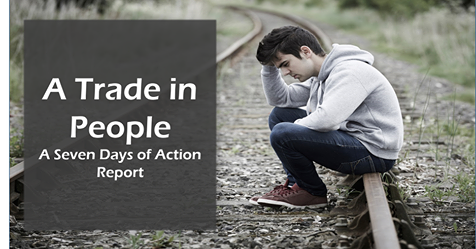
Chris Hatton & team from Lancaster University have produced a compelling report as part of the Seven Days of Action Campaign, raising awareness on the plight of disabled people held against their wishes in ATUs.
It highlights the shocking issue of how the government ignores the plight of some 2500 people incarcerated at an estimated cost of £477m.
52% of this provision is by independent ‘health’ providers profiting excessively for inappropriate provision & increasing their beds when government policy is supposed to be to reduce them https://medicalxpress.com/…/2017-06-people-disabilities-com…
We need to listen to Mark Neary’s interview. He talks about many of the fears of many parents and families who’ve struggled to get their family member a life using Direct Payments http://www.bbc.co.uk/programmes/p059bjrf
For all of us the loss of close family members is a great upheaval and loss, but if they have also been managing your care support and standing up for your rights under Care Act and Human Rights laws – in Stephen Neary’s case his dad had to fight for these through the courts too – then imagine how much worse this would be.
Not only have you lost your closest family member and are bereaved, but your whole security could be shaken, and it could even result in you losing your long-term support team and home. In Stephen’s case he lost his home and dad for a year because his dad needed a few days respite due to having severe flu’….
We know from other families on the 7DayAction group that too often asking for help can result in losing their child – too often to Assessment and Treatment Units miles away when they are not psychiatrically ill! This seems to be a ‘disposal’ of a nuisance problem – far from the bespoke solution needed to alleviate someone’s distress.
Unfortunately, there are not Noelle Blackmans* standing by everywhere to give the kind of emotional support which is needed or mobilise appropriate help, nor do we still have well-equipped and skilled community teams able to step in with support to buy the time needed to work out solutions.
We could hope such skilled and preventive services are being re-built with the Transformation plans following the Winterbourne View and other scandals – let alone the preventable deaths we’ve seen in units – such as Connor Sparrowhawk (#JusticeforLB) – but we’ve seen little evidence of this.
There are still some very skilled charity providers working with people in a close way with services listening hard to people and working with families BUT they can’t suddenly produce a bespoke service.
So what will happen if we don’t do something?
We know this kind of loss is likely to seriously upset and disturb an adult with learning disabilities and autism – this would be normal. Indeed it’s normal for all of us who’ll have different reactions though we do have the means to articulate our emotions and reach out to friends and others. However even then we won’t always deal well with such close losses.
Because the person will not have the same tools often, they will most probably express their upset in previously negative behaviours and so risk the application of the “challenging behaviour” label, rather than understanding this as reasonable and looking to find those people closest and most likely to be able to communicate and help.
We know statutory authorities have learned behaviours of helplessness and can too often reach out for institutional solutions which remove the “problem” from them. So without a serious plan, we risk an appalling escalation of changes that will inevitably ignore the actual problem and pile on damage – and without that relative, risk losing their whole life and the people left who know them and care..
What we need is for everyone’s Care Act assessment to have agreed contingency plans in case of temporary dislocations and a longer-term plan for when the person’s key relative managing their support can no longer do this.
How many plans have a management/full brokerage fee built into their package for this reason? Without this though, not only do we risk appalling chaos for the person but we risk actually escalating costs for the Authority – which at the moment might well pass from the Local authority to the NHS!! Perhaps if the NHS could see the advantages to their purse they might, but to date their local provision has been taking these away for other more immediate pressures.
It is well over-due that someone starts to address this issue which does not encourage LAs to plan well if they lose the costs…. all apart from the need for NHS re-investment in community specialist supports, instead of moving them into “units”.
Great initiative between Contact a Family and UCL launching a national clinical trial aiming to reduce behaviour that challenges in very young children with learning disabilities.
Preventive work should start really early and recognises the challenges for any parent who need skilled support. More help like this should help prevent the inevitable “disposals” we’re seeing in ATUs, the cost of which is scandalous, given the damage this does.
All ATUs seem to do is take people away from life when what’s needed is support in the community, not away from it*. Initiatives like this can help provide the evidence to government of where they should be investing. (Pity they didn’t look at the Sure Start projects to see how effective they were!)
When Lancashire woman Jen Blackwell, who has Down’s syndrome, found she was struggling to find opportunities to pursue her career ambitions of becoming a dance leader, she decided to take matters into her own hands, writes Simon Jarrett. She set up her own charity – DanceSyndrome.
Established as a community dance project in 2009, DanceSyndrome has received the backing of national funders, including Big Lottery and Spirit 2012, to deliver dance workshops, leadership training and performances across the North West of England – all led by people with disabilities. Now, with Arts Council funding to develop their ‘Orbit’ dance show, the group have been invited to perform at the Edinburgh Fringe Festival. In August Jen will lead her troupe on tour to the Festival.
The 35-year-old’s struggle to get to this point in her career highlights the challenges people with learning disabilities invariably still face when pursuing their dreams. The charity exists to challenge discrimination and prove that people should not be defined by their disability. Jen and her family found it exceptionally difficult to find opportunities for her to train and work in dance. They spent ten years knocking on doors and being rejected – so decided to take matters into their own hands, and DanceSyndrome was born.
Co-delivery
Central to the DanceSyndrome ethos – and success – has been the vision to use dance to create a level playing field for all, regardless of age or ability. The charity’s approach to co-delivery has transformed the wellbeing of individuals involved and opened the doors to creative, cultural and social opportunities previously closed to them.
Jen has been recognised for her radical work, most notably by being crowned Inspirational Woman of The Year at the Enterprise Vision Awards 2015. She said: “My dreams are coming true and I am looking forward to Edinburgh Fringe Festival. Dancing is my life.”
Her parents, Sue and Malcolm Blackwell, who have always supported their daughter to realise her dreams, are very proud of her achievements. According to Sue: “The opportunities for DanceSyndrome that are coming up are all very exciting. The dancers are truly ready for bigger stages. They all want to show people who they are and what they can do – saying, yes, we may have a disability, but we are dancers.”
Expanding
The charity is now expanding its dance leadership training to enable community groups, social care providers and support services to adopt the
If you would like to support DanceSyndrome on their journey to Edinburgh Fringe Festival go to www.dancesyndrome.co.uk/fundraising or text donate DANS10 £5 to 70070.
Seán Kelly interviews a remarkable father and son team from Ireland who created Fionnathan Productions to demonstrate how having Down’s syndrome is not an obstacle to living a rich and fulfilling life.
If you are keen to know what Imelda May loves about her life, or indeed to find out what Sir Kenneth Branagh loves about his, then you need to turn to the YouTube channel of Fionnathan Productions. Sir Kenneth and Imelda are just two of hundreds of people who have been asked about their lives by Fionn Crombie Angus, who has Down’s syndrome. The resulting films are sharp and engaging, perfect for modern viewers’ busy lives because they rarely last more than a minute or two.
Fionn and his father Jonathan Angus are the heart of Fionnathan Productions. Inbetween the crackling of the Skype link from their home in County Clare in Ireland to mine in London they tell me all about it.
Fionn tells me that the first film was made as a promotional video for a cyclist group called the Tour de Munster. The Tour involves 120 cyclists and raises significant amounts of money for Down Syndrome Ireland although many of the cyclists have no direct contact with any of the people they are raising money for. “We decided we would travel around and interview people with Down’s syndrome. We wanted to include people who wouldn’t be able to answer many questions.” Fionn came up with a nice simple question. “I asked: ‘What do you love about your life?’.” Jonathan had a background in film making so they decided to film the interviews.
Great lives
The cyclists loved the film, a charming portrait of people with Down’s syndrome leading great lives. Fionn tells me one person said they loved playing with their dog, another going surfing. Others loved cooking and baking, greyhound racing, driving their car and listening to music. The film showed each person answering Fionn’s question and then moved on to shots of the activities. The film was so popular it lead to them being featured first in the local and then the national press, followed by a surprise call from the Saturday Night Show, a popular programme on RTE [Irish TV]. The appearance was a success but one question drew a lot of attention – and some laughter. The host, Brendan O’Connor, asked, “Tell me Fionn, how does it feel to have Down’s syndrome?” Fionn replied, “How does it feel not to have Down’s syndrome Brendan?” The exchange sparked a lot of discussion in the following days but Jonathan now admits that Brendan O’Connor was in on the planning. “I threw that question to him beforehand. We just really wanted to make the point, to help people see that people with Down’s syndrome are just like everybody else.”
With a raised profile and 1,000 new Facebook followers the day after the show, they decided to continue with the interviews. Since then they have completed literally hundreds, available on YouTube (look for Fionnathan Presents: What Do You Love? from Fionnathan Productions). As well as Sir Kenneth and Imelda they have featured musicians like Bill Frisell, Lucinda Williams and Kristen Hersh as well as the actors Angela Lansbury and the Peaky Blinders star Cillian Murphy. Fionn’s interview with Cillian has had almost 60,000 views. They have also interviewed both the President of Ireland Michael Higgins and the Taoiseach Enda Kenny, as well as lots of ordinary people from all walks of life. Jonathan says that this question from Fionn really puts people ‘back on their heels’ and they have received some very ‘open-hearted responses’. Fionnathan Productions are now heavily in demand to produce films for many organisations. Their short, focused interviews seem to be a perfect medium for reaching people online.
Fionn’s support is organised via a personal budget. This is still very unusual in Ireland where only a handful of people have such an arrangement. Jonathan says, “I believe that Fionn was the very first person with intellectual disabilities to receive his own support budget.” Ireland’s Health Service Executive is considering it as a pilot project.
When Fionn was finishing secondary school, he and his father went to see what was on offer for his future support. Jonathan says the response they got from the various service directors was not good. “I said: ‘Fionn is interested in music and he’d like to study and extend his violin performance. Is that something he could hope to do with you?’ And they said, ‘No that’s not really something we do.’ Well, how about studying wildlife? They said, ‘We don’t really do that.’ Could he learn about film-making? They said: ‘Well that’s not really something we do but maybe we could fit a bit in as a workshop in a year or two.’ So we said, why don’t you just give us the money? And they laughed nervously and said, ‘That’s not really how it works.’ But we had done our homework and we told them we knew that their policy documents say they intend to do this and we’re here ready to help them!”
It took a year’s negotiations but in the end Fionn got his personal budget. He now sits on the government’s Personal Budget Task force which is planning to roll out personal budgets across the country.
To receive the payment they needed to set up a company. Friends and neighbours gathered round to form a committee. When they needed a name Fionn, who likes playing with words, joined his and his father’s names to make the name ‘Fionnathan Productions’. He says, “We also liked it because Fionnathan sounds a bit like ‘Fear Nothing’.”
The company has just three aims: to help Fionn have a great life, to help other people by sharing their story, and to change the world by removing barriers preventing people from having great lives.
Through an Irish government scheme for disabled employees Fionn’s work is now done as an employee of Fionnathan Productions and attracts a government subsidy. Jonathan says they are the first in Ireland to take advantage of this in tandem with a personal budget to create a person-centred job, and he hopes it will catch on.
One of Fionn’s early dreams was to be ‘the next David Attenborough’. Jonathan says he struggled with this wish. Surely no TV company would ever accept someone with Down’s syndrome presenting mainstream nature programmes? But, Jonathan says, “I just overcome that. What Fionn is saying is that he loves nature. He loves film making. He loves travelling. He loves connecting with people”. “And connecting with animals”, Fionn adds. And so they have recently been to East Africa, a dream of Fionn’s since he was small, and also to the Amazon. Soon after we speak they are off to America where Fionn plans to celebrate his 21st birthday in a Redwood forest.
Fionn has made wildlife presentations at primary schools around the country on such subjects as ‘The mammals of Ireland,’ ‘Dolphins and whales’ and ‘The white-tailed sea-eagle’ and is now recognised as a heritage expert by the Irish government. He and Jonathan also give guest lectures on personal budgets to students on social care and nursing courses.
Both Fionn and Jonathan are also artists. They have had several exhibitions, organised with ‘Heart and Sold’ which represents artists with Down’s syndrome. Fionn has sold a number of excellent portraits and also collaborated with other artists for an art exhibition called ‘Collaborations’. Fionn tells me ,“I worked in wood, in metal, in stone, in textiles and painting”. They hope to do more collaborative art works on their future travels and have also recently taken on the lease of an art studio which they intend to develop as a community project.
Confidence
“Most of the things we do are very small”, says Jonathan. “Just helping people to have a laugh is something we do frequently. And if people are having small laughs often enough, that can really make a difference. Fionn is so good for me, Seán. You have heard him say in this hour that he loves me – I hear that just about every hour of the day.” Fionn turns to him and says, “Well, I DO love you my dad, you are a very, very beautiful father.” Fionn says this with such confidence and honesty that it is impossible not to be moved by it. I tell them that many people share love but it is not often so visible.
There is one more story to tell. Among so many other things Fionn is also a musician. He plays the traditional Irish fiddle. Fionn’s fearlessness has inspired Jonathan to pick up the guitar and they sometimes busk together in Galway or Dublin, although recently Fionn has been heading out to play alone.
Recently Fionn and Jonathan received a letter from a woman who had just given birth to a girl with Down’s syndrome. Her partner was a musician who felt sad because he believed that his daughter would never be able to play music with him. But in Galway one day they found Fionn playing the fiddle. In her letter the mother thanked Fionn for showing them that ‘all things are possible’.
Their website states that “Fionnathan exists to have fun and change the world”. It looks to me like they are doing just that.
Our new columnist Sara Pickard finds that being taken seriously when you have a visible learning disability is no easy matter. Having Downs syndrome and being quite small in stature can mean that people are going to see me and can take pity and think, “Aww, isn’t she cute”. This is sometimes what I have heard being said. This is something that can make me feel smaller than I actually am, and I am actually 33 years old!
On this note, I was at an event with my work once before where a politician patted me on the head, while another got down on his knee to talk to me. As well as feeling quite honoured, and knowing that the individual’s intentions were good, it did make me feel slightly patronised.
I do believe that a lot of things like this are down to differences in generations and well intentioned and not to be nasty at all.
When I was working on an exhibition stand at a museum an elderly lady came up to ask my work colleague, who is quite a bit older than me, if she could give me a pound to buy an ice cream!! She was coming from a place of caring but for me this made me feel that I was being a bit patronised. We did take the opportunity to explain to her that I was at work and that I could answer for myself…. and that I didn’t really want an ice cream! We didn’t want to upset her but hopefully she will approach someone like me differently in future.
Colouring pencils
I have had a few other ‘interesting’ times, like being in France on a holiday with my parents, in an Italian restaurant. When we got to the restaurant, it was very busy and the waitress only saw a ‘little’ girl with a visible disability, who is quite small in height. She had gone to get our menus and also brought back a colouring pad with a pencil case of colouring pencils and put them in front of me! I was 25 at the time and had studied French for my GCSEs so I decided to use this to my advantage. “J’ai vingt-cinq ans,” I said to the waitress. She seemed so embarrassed and said that she was twenty-five as well and still liked to colour in herself. I think this took her slightly by surprise and even my parents were a bit shocked. The waitress thought she was doing the right thing … but got it wrong.
I want to be able to prove to others around me that, despite being someone who has a visible disability, who looks younger and smaller in height, I still live a very active life with a lot of friends. l Iike to do things like anyone else would, so I think that being treated equally, like everyone else, is really important.
Maybe the general public has a stereotypical image of people with a learning disability, especially if they have not had personal experiences themselves of spending time with someone with a learning disability. Even though we experience what can be embarrassing situations we can use them to help in educating the general public so that they respond differently in future. Seeing more people with learning disabilities featuring on TV or in films can also help.
I don’t let having Downs syndrome be a barrier stopping me doing what I want to do.
Just like my motto in life suggests, “Downs syndrome …
so what?”
Sara Pickard works for ‘Hidden Now Heard’ a Welsh oral history project, and for Inclusion International.
An alternative view of eligibility – will social care ever empower people with learning disabilities?
Austerity is disproprortionately affecting disabled people which has brought them into conflict with the authorities which make decisions about eligibility for care. In this article, Colin Slasberg and Peter Beresford call for a radical re-think of the idea of eligibility.
A fundamental principle for learning disabled people and the groups who support them is that they are the experts in their own lives. The rhetoric of government suggests it agrees – it has long said it wants to give service users ‘choice and control’ and to ‘empower’ them. But this is not how it feels for most. A small minority have what it takes and are allowed to escape the system and do feel empowered – but the great majority remain trapped in a system that declaims what their needs are and how their life should be.
We recently published a paper that seeks to throw light on this contradiction (1). The source of the problem is the economic fundamentals of social care. There is a fundamental disparity between the lived experience of the needs the person cannot meet themselves, and which require public funding, and the resources the council have to meet them. The fear is that the first is much greater than the second and, with that, comes a large funding gap.
What is certainly true is that the demand for resources to meet needs is unpredictable. Two people might have identical impairments, but their needs can be completely different. The attitudes and personal resources they bring, the attitudes and personal resources of those around them, the attitudes of the communities they live in, their physical living environment, their socio-economic status are all highly variable. The infinite ways these variables can interact make each person unique.
Councils have to spend within a budget. How can this conundrum be managed?
The solution has been the long-established concept of the eligibility policy. Councils create the categories of need they will meet. The assessment process locates people within these categories to determine the level of support they will get. Their assessment of need will match – more or less – the budget. This is because the eligibility criteria are set to ensure the flow of needs is affordable within budgets.
Fitting people within categorised needs in this way is incompatible with need being unique to the person. The impact is profound. ‘Need’ as lived experience is by-passed, as is the idea that the person (or someone who knows them intimately and is able to act on their behalf) is authentically expert in their own lives. The expertise switches starkly from the person to the practitioner. The practitioner knows how the council’s eligibility policy works. The service user is disempowered and alienated from how the council views them and the decisions it makes. Instead of being seen as an expert, they are cast into the role of applicants for resources. And, crucially, any funding gap is denied.
An alternative approach
Disabled people would naturally prefer a system whereby all their needs as identified through lived experience were funded. That would require councils to work with an open financial commitment from government. Although a change worth campaigning for, it is simply not on the horizon. Change is required now.
There is a way that requires change to the way resources are allocated can be achieved. The assessment is rooted in the person’s lived experience. The council then makes decisions about which needs it can afford to meet and which it cannot. The person’s expertise is not only respected but required. The practitioner does, however, have an important role in helping to both frame and develop their thinking. But, crucially, the council’s view of their needs is not being imposed. User participation is real, not just lip service. The approach can be called a person-centred resource allocation policy.
Central and local government convey the message that the law requires there to be an eligibility policy. This is not the case. The law allows eligibility policies but does not require it. The Care Act 2014 actually makes explicit the provisions required to support a person-centred approach. However, the Government’s guidance to the Care Act has ignored this opportunity and has instead encouraged the perpetuation of the eligibility approach.
Replacing ‘eligibility’ with a person-centred resource allocation policy would make the empowerment of all disabled people possible. But there are powerful forces that support the status quo. Eligibility based thinking is decades old and deeply etched in the psyche of those who work in the system. Also, eligibility policies conceal the true cost of care. This allows political and sector leaders to bury their heads in the sand in the belief the level of resource they provide is sufficient, however meagre it might be.
A growing awareness that allocating resources through eligibility policies creates needless dependency will provide some impetus for the system to change itself. It is doubtful it will be enough. Change is more likely to come if service users and those who support them agitate for it.
How people with learning disabilities are experiencing personalised social care – Researchers from York St John University highlight the importance of listening to the voices of people with learning disabilities when assessing how successful personalised social care is at meeting individuals’ support needs. Lorna Hamilton reports.
STUDY TITLE: PERSONALISED SOCIAL CARE AND LEARNING DISABILITIES
Aims: To explore the daily living experiences of people with mild/moderate learning disabilities in the context of personalised social care and widespread changes to eligibility criteria.
Methods: Twenty-six adults with mild or moderate learning disabilities and 13 representatives of voluntary-sector support organisations took part in seven focus groups in the north of England in 2014. Group discussions focused on people’s experiences of care and support needs assessments, housing, transport, finances, employment, education, health and socialising.
Social care has become more personalised in recent decades (1). People can be involved in identifying their own needs and can choose and buy their own care packages through personal budgets. Research indicates that some people with learning disabilities are more satisfied with their lifestyle when social care is personalised (2). However, many people find managing personal budgets stressful and would like more control over selecting personal assistants (PAs) (3). At the same time, fewer people with low to moderate support needs have been eligible to access statutory support services in many local authority areas over the last decade, and some have experienced reduced support (4).
We wanted to find out whether adults with mild or moderate learning disabilities were satisfied with the level of support they were receiving, and whether they felt in control of their care package. Few studies had looked at this from the viewpoint of people with learning disabilities.
Findings
Most people were accessing some kind of social care service, and many lived in supported living accommodation or with family members. People were often very satisfied with the level of independence they had but there were different ideas about what independence means. One young woman felt that she would be able to be more independent if she had support to help her get out of the house:
“There’s a lot of places I’d like to go and things I’d like to do and I don’t have anyone that I can go with, and I’d never go by myself”.
Having enough social support, whether through family, friends, support workers including PAs, can be the key to helping people achieve the level of independence they want. However, some people had lost contact with friends when specialist day services closed; others described experiences of loneliness and isolation during times when they were not accessing services. People talked about their experiences of managing personal budgets and employing PAs. One man said:
“It’s also difficult when you have got personal assistants sometimes … you feel as though you’re fitting in with their lives. They’ll ring up and say, ’Oh well, I can’t come at this time today, but I’ll be in at that time’, and then after a couple of hours you know you’re by yourself.”
Being an employer of PAs therefore did not always mean that people felt in control of their care package; this is highlighted by the experience of another person with visual impairment who said:
“It’s difficult y’know because I am the employer and I am trying to be a bit more assertive… Because if they’re coming into your house when you’re not there and then, like I got back at about just after three and she said ‘Oh well, I’ve done your tea, I’ve done the hours, I’m off now.’ And I was like, ‘But I’ve hardly seen you!’ and y’know I was a bit well shell-shocked actually.”
In general, people felt that having some training in employing PAs would help them to manage difficult situations like this, and to feel more confident in obtaining the quality of care they needed. Good relationships with PAs were key to good quality of care. A high turnover of care workers had a negative effect on maintaining meaningful relationships, as one person described:
“It’s OK if I know which one I have. Sometimes I click with someone, know which number to phone, then about a week after he says, ‘Oh, I’m leaving, it’ll be our last day the next day’.”
Such poor continuity can prevent people from developing trust and confidence in their PAs.
Conclusions
Many people embrace the principles and values of personalisation but people with weaker social support networks are less likely to achieve the levels of independence that they wish to. Managing personal budgets and taking on the role of employer of PAs can feel stressful without adequate support and training.
The individuals we spoke to were all accessing at least one voluntary-sector social group; many expressed concern for other people with learning disabilities who had stopped attending these groups. It is important that future studies capture the voices of the most isolated and vulnerable individuals in order to better understand what impact social care reforms have on their lives.
Key Messages
Many people aspire to greater independence in their lives, but independence has different meanings for different people.
Strong networks of social support help people live as independently as they wish to.
Closure of specialist services has meant some people with learning disabilities have lost contact with friends.
Managing PAs can be challenging for people with learning disabilities; training and support is needed to help people take on an employer role.
Relationships with PAs can be an important source of social support; however, a high turnover of PAs meant this was not always the case.
Further reading
Hamilton, L.G., Mesa, S., Hayward, E., Price, R., & Bright, G. (2017). ‘There’s a lot of places I’d like to go and things I’d like to do’: The daily living experiences of adults with mild to moderate intellectual disabilities during a time of personalised social care reform in the United Kingdom. Disability & Society, 32(3), 287-307.
References
Department of Health (2009). Valuing people now. A new three-year strategy for people with learning disabilities. London: HMSO.
Sims, D., & Gulyurtlu, S. (2014). A scoping review of personalisation in the UK: Approaches to social work and people with learning disabilities. Health and Social Care in the Community, 22(1), 13-21.
Abbott, D., & Marriot, D. (2013). Money, finance and the personalisation agenda for people with learning disabilities in the UK: Some emerging issues. British Journal of Learning Disabilities, 41 (2), 106-113.
Sully, A. & Bowen, R. (2012). Social care in crisis – The need for reform: The Learning Disability Coalition Annual Survey 2012. London: Learning Disability Coalition.
Lorna Hamilton is a Senior Lecturer in the School of Psychological and Social Sciences, York St John University.
Book review – The persistent stigma of epilepsy – David O’Driscoll enjoys a moving and tender account of both the history and the personal impact of epilepsy.
The Smell of Burning: the Story of Epilepsy
Colin Grant
Published by Vintage Publishing (2016)
ISBN: 9780224101820
The condition of epilepsy has been known since the beginning of time. The word epilepsy originates from Greek, meaning ‘a taking hold of’ and ‘a seizure’. The hallmark of this condition has been the unpredictable loss of control over one’s self. The causes of it are not known. The condition affects roughly one in a hundred people. As Colin Grant says, one way to understand it is to think that one person in the morning train carriage has it. In The Smell of Burning Grant sets out to explore what he has termed the ‘parallel lives’ of people with epilepsy. But it is more than a straightforward historical account of this condition. It is also part memoir, part family trauma and part medical exploration. There are moving personal testimonies from people living with the condition.
While there is uncertainty about the causes of the condition, one thing is certain – as a learning disability professional, epilepsy is something one will come across. Historically, people with epilepsy were often bracketed together with people with learning disabilities. For example, it was not until 1907 that there was a separation in institutionalised care in America. In general, the more severe the degree of the learning disability, the more likely it is that epilepsy will occur with greater severity. Current research shows it is 26 times more likely. Treatment it is not always effective, with up to one-third of anti-epileptic medications not working. It has always concerned me that I have come across several people with learning disabilities on this medication and yet the last time they had a fit was when they were a child.
There was widespread concern throughout history that people were susceptible to epilepsy by mere association with it. Both learning disabilties and epilepsy were aligned with stigma which persists today. Epilepsy became known as, ‘the falling sickness.’ There were many theological speculations about the role of the devil and possession, in the ‘disgraceful disease.’ To the ancients the epileptic was an object of horror and disgust and not a saint and prophet as has sometimes been contended. Epilepsy has been seen as a hopeless, progressive degeneration of the brain. The novelist Graham Greene seriously contemplated suicide when told of his diagnosis.
The most moving part of the book is Grant’s account of the personal story of his younger brother Christopher who died at the age of 39 from a heart attack.Grant relates the struggle he had to come to terms with his diagnosis, the family trauma it caused and various brushes with the medical authorities along the way. He decided not to take the medication.
This was a very moving and tender portrait of their relationship and how this condition affects not just the person with the condition. As a health professional, I found Grant’s account of his training to be a doctor and the resulting disillusionment very interesting. I think this book will be essential reading for all professionals working in this area. Grant has written a very clear, concise, readable book, although people with learning disabilities do not specifically feature. I learnt a lot from it. In a way it is a story of our incomplete understanding of this condition and on-going struggle.
Obituary – Alan Corbett – An amazing pioneer in disability psychotherapy – Noelle Blackman recalls the distinguished career of Alan Corbett who died late last year.
Dr Alan Corbett was a clinical psychotherapist, author, researcher, and teacher, but more than all of these amazing achievements he was a really lovely man and I am proud to have been able to call him my friend. He sadly died on 22 December 2016 after having been diagnosed with cancer a few years earlier.
In 1991, Alan joined Respond. Together with the founder Tamsin Cottis they went on to develop what may well be the first organisation exclusively providing psychoanalytical psychotherapy for men, women, and children with learning disabilities.
Tamsin and Alan worked closely with Valerie Sinason, then head of what was known as ‘The Mental Handicap Team’ at the Tavistock Clinic in London, to develop Respond into a nationally recognised and admired institution. Corbett and Cottis undertook some of the first psychotherapeutic work at Respond, and Sinason served as the first clinical supervisor. Collectively, they provided a strong foundation for the development of this important and pioneering body of work. Alan was always a passionate advocate for the rights of people with disabilities and this could be seen in all his work. It was this push for fairness that drove him to prove others wrong when they claimed that people with learning disabilities could not make use of psychotherapy.
Flourished
Respond really constituted the backbone of Alan’s distinguished career and the organisation flourished under his leadership. Corbett forged alliances with senior mental health professionals such as Anne Alvarez, Sheila Hollins and Earl Hopper, all of whom became key supervisors or supporters of the work. They facilitated Alan as he and Tamsin Cottis developed Respond into the important organisation that it has become today, managing referrals from health, education, probation and social services as well as guiding and teaching other psychotherapists to make their practice accessible. Respond gave his name to an award given to a member of staff who has gone the extra mile to do something which sets them apart as having been a good advocate on behalf of Respond over the year.
Alan was particularly pioneering in his development of the ‘forensic’ work at Respond, recognising that within many of the people with learning disabilities who abused others there was also often a victim – he knew that it was important to work with these people too. He became one of the principal theoreticians and practitioners in the field of ‘forensic disability psychotherapy’.
In 2003 Alan left Respond and went to live and work in Dublin where he became National Director of the Child at Risk in Ireland Foundation (CARI) He eventually came back to London several years later where he worked with Immigrant Counselling and Psychotherapy (ICAP), and the Clinic for Dissociative Studies as well as in private practice. Respond was lucky enough to have him back during this time as one of our clinical supervisors. Alan was a very active member of a great many networks and associations including amongst them the Institute of Psychotherapy and Disability (IPD).
Alan was well published: one of his first published works was a collaboration with colleagues at Respond entitled Witnessing Nurturing Protesting: Therapeutic Responses to Sexual Abuse of People with Learning Disabilities (still available from www.respond.org.uk). He completed his doctorate in 2012, and this led to his first solo book published in 2014 – Disabling Perversions: Forensic Psychotherapy with People with Intellectual Disabilities. This coincided with the time that he had his first diagnosis. There followed a difficult year with very challenging treatmen. He seemed eventually to recover well, continuing busily with his clinical work but sadly he became ill again early last year.
Footballers
He devoted his final months to writing and wrote some of his finest work, publishing the ground breaking and wonderful book – Psychotherapy with Male Survivors of Sexual Abuse: The Invisible Men very shortly before he died. He was interviewed on Woman’s Hour on Radio 4 after the launch of this book in the wake of the revelations from many young footballers that they had been sexually abused as young boys. It was an extraordinary interview, no one would have guessed how ill he was.
Movingly, the day after I had received the very sad news of Alan’s death, there was a letter read out on Woman’s Hour from a listener whose husband had heard Alan speaking. She described how this had given him the courage to tell her that he too had been abused as a boy and had never been able to tell anyone. His wife described how this had had a profoundly positive effect on them both and made sense of an invisible wall there had always been between them.
I miss Alan every day in my work as CEO of Respond. He was my go-to wise man to talk through the many challenges that this work throws at us.
Film & TV – Time for a new type of film hero? – Our new film and TV critic Tracey Harding discusses the side-lining of characters with learning disabilities from film and TV tales. She wants to see challenges to this status quo and what the success of the film My Feral Heart might mean for the future.
Much is written every day about the content of film and television but the inclusion of people with disabilities, and particularly learning disabilities, often passes without comment. It would be naïve to think that the reasons for this are because people with learning disabilities are so much part of the fabric of creative media that there is no need to highlight or champion their achievements.
In reality, we know that people with learning disabilities are woefully under represented, both in front of the camera and in creative programming.
Although inclusive arts projects operate across the country, it will come as no shock that funding issues and streamlined services have meant that many of the opportunities for access to the media are hard fought for across the board, and often people with learning disabilities are side-lined or excluded.
Everyday life
The ways in which people with learning disabilities are portrayed on screen and stage can have a profound effect on how they are viewed by society, and ensuring inclusive representation still appears to be a problem for film and television makers. Often, characters with learning disabilities are displayed as ‘suffering’ or vulnerable, with programmes focussing on the character’s disability, rather than on their personality or everyday life situations.
Research from Mencap in 2016, found that just 34 per cent of the public said they had seen someone with a learning disability in a TV drama or comedy, and 12 per cent said they had seen someone in a film in the past six months.
I hope in the future to look at a range of film and television programmes, both past and present, which feature actors with learning disabilities. There are examples of positive steps forward that show that programmers, writers and producers are thinking positively about inclusion. The BBC programme Call the Midwife has featured actor Sarah Gordy who has a learning disability, in an episode where she fell in love with a man with a physical disability and they had a child together.
In an interview in the Huffington Post in February Gordy commented on the lack of opportunities . “TV bosses should use characters with a learning disability, doing stuff that has nothing to do with disability, just being part of life. Sometimes a small part, like the guy behind the counter at your sandwich shop – that’s how we’ll make disability seen as part of society.”
Last year, the BBC aired a six-episode show called The A-Word portraying a family with a 5-year-old son diagnosed with autism. The programme proved so popular that a second series has been commissioned.
Children’s television appears to be making more advanced inroads, with programmes such as Mr Tumble using Makaton sign language, and The Dumping Ground, which has many actors with a range of learning disabilities.
A great example of positive, inclusive film making is a recent offering, My Feral Heart, which has been shown at film festivals and special screenings across the country to great critical acclaim (see the review in Community living vol. 30 No.3 p. 26). Steven Brandon, an actor with Down’s syndrome, plays a young man forced into a care home after his mother dies. His independence is ignored but he gradually opens up to a care worker and forges friendships with a worker in the home’s grounds and a ‘wild girl’ he meets in the nearby woods. Brandon’s performance was much praised and last month he took home the award for Best Actor at the annual National Film Awards. This is an amazing accolade, particularly taking into consideration the competition he was up against, which included Michael Fassbender, Daniel Radcliffe and Eddie Redmayne.
Challenges
Lynn Murray, spokesperson for the Don’t Screen Us Out campaign, said, “My Feral Heart illustrates how we all face challenges regardless of our background and genetic make-up. Its success as a film about ‘ability’ not ‘disability’ has meant that the international Down’s syndrome community, and especially Don’t Screen Us Out’s thousands of supporters, have connected passionately with the film.”
The film is showing at the Toronto Reel Abilities Film Festival although unfortunately, no further screenings are planned for the UK. The success of My Feral Heart shows it is possible to create accessible, popular entertainment with people with learning disabilities as central protagonists.
US Law – Only Texas could use a fictional character to judge mental capacity.
When the American Supreme Court ruled in 2004 that intellectually disabled people could no longer be subject to the death penalty, it seemed that a practice which carried a particularly toxic risk of monstrous injustice had finally been done away with. But once again the issue has raised its ugly head, this time over the definition of who qualifies as intellectually disabled. Bizarrely, in a Texas court room, the fictional character of Lennie in John Steinbeck’s 1937 novel Of Mice and Men has been used to judge mental capacity. Bryony A. Jarrett explains
If the court is throwing the book at you in Texas, fortunately it will no longer be John Steinbeck’s Of Mice and Men. First used in the 2004 court ruling in Ex parte Briseno to determine whether the defendant was intellectually disabled by comparing him to the character Lennie, the novel was brought up again in the 2012 case of Wilson v Texas. This trend was put to an end by the March 28th 2017 U.S. Supreme Court ruling of Moore v. Texas.
Not every court in the country was using the Steinbeck novel as a tool of measurement prior to this ruling. In 2004 the U.S. Supreme Court ruled in Atkins v. Virginia that intellectually disabled persons cannot be given the death penalty, as that would be considered “cruel and unusual punishment” as defined by the Eighth Amendment. However, they left it up to the states to determine intellectual disability, although they did stipulate that a finding of intellectual disability would require proof of three things:
‘subaverage intellectual functioning’, meaning low I.Q. scores;
a lack of fundamental social and practical skills;
and the presence of both conditions before age 18.
The court said I.Q. scores under ‘approximately 70’ typically indicated disability. (1)
In 2004 a Texas appeals court decided that a work of fiction was an adequate standard for measuring intellectual disability when they upheld the state’s right to execute an intellectually disabled man named Jose Garcia Briseno, using the reasoning that:
Most Texas citizens might agree that Steinbeck’s Lennie should, by virtue of his lack of reasoning ability and adaptive skills, be exempt. But, does a consensus of Texas citizens agree that all persons who might legitimately qualify for assistance under the social services definition of mental retardation be exempt from an otherwise constitutional penalty? (2)
Rejected
In 2012, when another intellectually disabled Texan Wilson was given the death penalty, his lawyers appealed to the US Supreme Court on the basis that Texas uses criteria to determine whether someone can be fairly classified as intellectually disabled that ‘lack any scientific foundation’ as they had used the 2004 Briseno case, invoking Of Mice and Men once again, in their sentencing of Mr Wilson. Unfortunately for Mr. Wilson, the Supreme Court rejected his appeal and he was executed in August 2012 (3).
That same fate was recently avoided by Bobby James Moore, when on March 28th the US Supreme Court determined that facts, not fiction, must be used to set the standards for intellectual disability in a court of law. Mr. Moore was convicted and sentenced to death in 1980 for killing an elderly store clerk during a botched robbery in Houston, Texas. His attorneys had challenged his death sentence in the Texas Court of Criminal Appeals (TCCA), claiming that under the 2002 Supreme Court ruling of Atkins v. Virginia he was exempt from execution due to being intellectually disabled. The TCCA rejected the challenge and it was their basis for rejection that the United States Supreme Court recently found wanting.
Instead of relying on the consensus of the current medical community, the TCCA based their decision once again on Briseno, not for the Steinbeck reference, but for the medical standards used to measure intellectual disability, standards that they said did not apply to Mr Moore. These standards were from a 1992 edition of a medical manual that at the time of Mr Moore’s trial was considered outdated and had been modernised with a more current edition.
Moore’s execution was avoided when the US Supreme Court deemed these standards to be unacceptable. Writing for the majority in the 5-to-3 decision, Justice Ruth Bader Ginsburg said Texas had failed to keep up with current medical consensus, relied too heavily on I.Q. scores and took account of factors rooted in stereotypes. Justice Ginsberg said: “Texas cannot satisfactorily explain why it applies current medical standards for diagnosing intellectual disability in other contexts, yet clings to superseded standards when an individual’s life is at stake.” (4)
In the era of ‘alternative facts’, a court ruling like this not only supports the scientific and medical communities but also the marginalised communities who have been at the mercy of stereotypes and fiction for too long.
Down’s syndrome – Kathleen speaks out on behalf of people with Down’s syndrome
A teenager with Down’s syndrome has addressed the United Nations in Geneva to call for more equality. Kathleen Humberstone spoke out against discrimination during the event marking World Down’s syndrome day on 21 March.
The theme of the 2017 campaign is #MyVoiceMyCommunity which aims to enable people with the condition to be treated equally in all aspects of life.
The 17-year-old travelled from her home in Surrey to Switzerland with her mum Denise and dad Andy to give the talk in front of hundreds of people.
Chromosomes
She began by saying: “Do you know why I am here? Because I have 47 chromosomes. That’s just crazy! Thank you Down’s syndrome!”
Kathleen made her speech at a time when we were hearing about a new test being introduced which allows women to find out more accurately if they’re expecting a Down’s baby. From 2018, the new test will be offered to all pregnant women who have been found through initial screening to have at least a 1 in 150 likelihood of having a Down’s baby.
Referring to the test Kathleen said: “I love everybody. I can’t help it! I hope everybody loves me. I have Down’s syndrome.
Is that so wrong? So, why all this testing? I love my life!”
“My parents didn’t know I had Down’s syndrome, they don’t care about Down’s syndrome. They love me. I have a younger brother, Andy, he is 13, and a younger sister, Jessica, she is 15. They don’t care I have Down’s syndrome. They love me.”
Mum Denise said: “I have mixed emotions. On the one hand I’m incredibly proud of Kathleen. But on the other I feel like I have to show off her every achievement just to remind society that her life is worth living. Whatever happened to unconditional love? When did society decide we should want and love a child only if it is as perfect as medical research allows?”
Before going to Geneva, Kathleen posed for Radical Beauty Project who challenge opinions in the fashion industry by using only models with Down’s syndrome.
“After college, I am planning to live independently. Just like everybody else. My dream is to be a fashion model and maybe, one day, I can do a catwalk in Paris, London, New York, Geneva, anywhere”, she said.


 As I read in Private Eye today (Fatal Failures) of another mother’s “five year battle” who’s also trying to uncover the truth about her young 20 yr old son Matthew’s death in 2012 from ligatures in an Essex NHS institution a week after being admitted, I wondered how many mothers like Sara Ryan would have been able to persist for so long in the face of all the blocks and barriers put in the way (see her latest blog “Imagining a Guilty plea” Imagining a guilty plea as she prepares for Monday’s court).