Simon Jarrett: No one should have to pass a test to qualify as a human being

Comment

Simon-Jarrett No one should have to pass a test to qualify as a human being

It is shameful that we have to argue that certain types of person actually do qualify as humans, as if there were some sort of reasonable dispute about it. However, that is where we find ourselves, as yet another shocking undercover television documentary – the Panorama programme on abuse and violence at the private Whorlton Hall hospital in County Durham – recently confirmed.

In this issue, two mothers write about how their shocking experiences, coupled with equally horrifying stories they heard from others, prompted them to start campaigns to demonstrate the humanity of people with learning disabilities and those with autism.
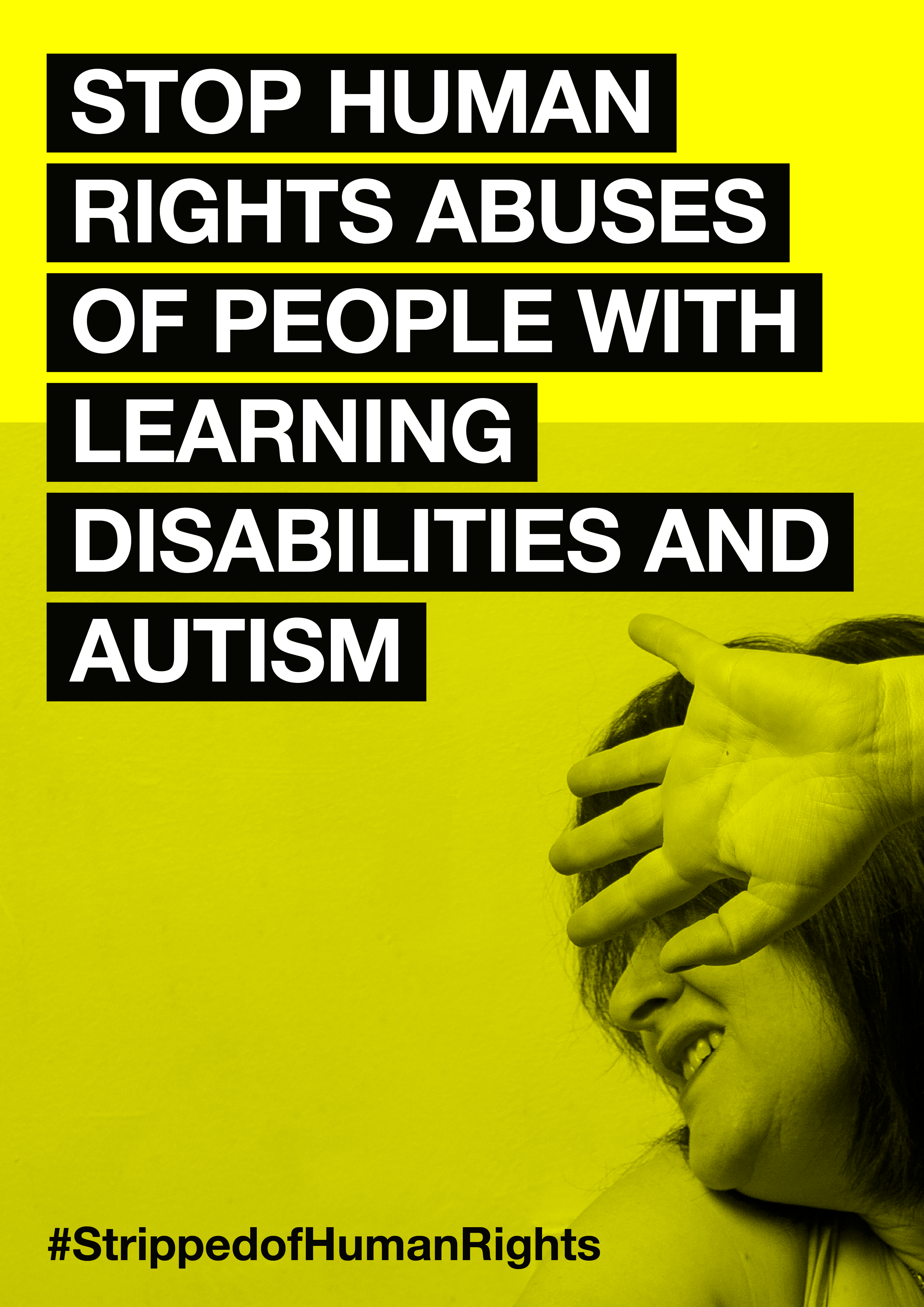
Isabelle Garnett’s #HumanToo movement makes a point that should not have to be made – that the more than 2,000 adults and young people with learning disabilities locked away in oppressive institutions are human, so ‘deserve’ the same human rights, respect and love as anyone else. Julie Newcombe’s work on Rightful Lives  makes a similarly stark point – people have the right to enjoy their lives, not to have them frittered away by the mind-boggling indifference and callousness of many of those who commit them, detain them, mistreat them and keep them needlessly locked away from the rest of society.

<<It is at that moment when a person’s humanity is denied that the violence, the abuse, the deprivation of rights and the indifference begin>>

As Tim Stainton makes clear in his elegant essay on inclusion and citizenship, we should not make people jump through a series of hoops before we decide to ‘allow’ them to be part of society. On what grounds do we insist that people should have a certain level of reason, or moral capacity, or verbal ability, or literacy, or anything else, before we allow then the same rights as everyone else? It is not just the certain types of human who pass these tests – members of the ‘lucky sperm club’ as sociologist Michael Young calls them – who should qualify for all the privileges that being human bestows. To be born human is enough, and it is the job of society to bend and shape itself to accommodate all its human members.

It is at that moment when a person’s humanity is denied that the violence, the abuse, the deprivation of rights and the indifference begin. We should not have to say it, but we must: people with learning disabilities are human too.

Skiing, singing, daring and determination

Our cover story is about Stephanie Crawshaw, who has profound and complex disabilities, uses a wheelchair and does not communicate verbally, who went skiing on the slopes of the Austrian mountains with her father Andy and a heroic support team. It is a story that would make the average health and safety officer or risk assessor want to lie down in a darkened room. But it happened, and it was brilliantly successful. This was because the family, support organisation Linkability and the ski instructors involved saw no limits, and viewed Stephanie as the daring and admirable human she is, who wants to take risks and feel freedom.

Elsewhere, the Include Choir  have made a witty and joyful song explaining, of all things, the Mental Capacity Act. Our interview is with the remarkable David Towell. Born two days after the end of the Second World War and one day after his profoundly disabled sister was taken into institutional care, Towell has spent his life working alongside people with learning disabilities, fighting and advocating for rights and opportunities for them. Stephanie, her family and support team, the Include Choir, David Towell, Isabelle Garnett, Julie Newcombe – these are just some of the good guys. There are many thousands more across this country and the rest of the world. If the fight seems tough at times, and things seem dark, we should remember that.

Simon Jarrett Editor

CASCAIDr walks for justice

CASCAIDr volunteers walked to raise funds for their valuable work to help people get justice in social care law and human rights.

If you want to see what they do check out their website – they take phone call and email enquiries which may help most people – giving information, advice, and legal framework expertise for free – for people who have a current public law problem concerning their access to health or social care rights. They may also help people with low cost advice services by the hour if appropriate.

The Charity owes its existence to Belinda Schwehr’s passion and drive to ensure people get their legal rights and Authorities are accountable for its correct application.Their walk is done BUT if you can help this valuable service you can still donate – every little helps –  Donate link here

HOMES NOT HOSPITALS – Early Day Motion

The week of protests prompted by London’s mother, Leo, led to protests across the country in various cities. There was also a meeting mid-week hosted by MP Helen Hayes which led to this early day motion sponsored by her and 5 other MPs with support from others. Lobby your MP to sign up.

The situation at Whorlton Hall should never have been allowed but these closed institutions together with insufficient scrutiny and powerless vulnerable people miles away from home, effectively disenfranchised and denied their human rights, inevitably invites untrained people who can easily abuse their position. We know that such Assessment and Treatment Units can’t ‘treat’ challenging behaviour whose causes will be rooted in their lives – not outside them.It makes them more anxious and powerless and is more likely to make people respond negatively. We also know that a major cause has been the withdrawal of local expert community services by Health and cuts by Local Authorities due to the level of squeeze and cuts.  In the ’80s onwards, resettlement from the long-stay hospitals was managed by front-loading funding to develop both communtiy services and the right support for people. The wasted lives and resources can’t be justified, but what does it take for any Government to understand no change will happen unless they commit the community resources as well as the funding for bespoke resettlement for individuals, who for the main part will have been more damaged by their experience in an ATU?

Decisive action is now needed urgently – and our MPs should be accountable for the continued lack. Let’s ensure that they both know what does work and support this early day  motion Homes not Hospitals motion

Hard lives under austerity

Austerity’s Victims: Living With a Learning Disability Under Cameron and May Neil Carpenter Available on Amazon. Print: £6.57 (cost price): www.amazon.co.uk/dp/ 1984977601; Kindle, 99p: www.amazon.co.uk/dp/B07D3PVC8G

Neil Carpenter recounts the lives of five men with learning disabilities living in Cornwall, each of whom he has supported as an advocate. We are taken, in meticulous detail, through the daily lives of Frank, Les, Thomas, Mark and Danny (not their real names), widely different personalities from a variety of family and social backgrounds, but united by the fact that they each have a learning disability or, in one case, an acquired brain injury.

The cumulative effect of these accounts is an almost unbearable litany of sadness and shocking deprivation. There is a sense of lives blighted, not so much by having a learning disability – although Les does say ‘I didn’t ask to be bloody born like this’ – but by the poverty that seems to come inevitably with disability.

As Carpenter repeatedly shows, swingeing cuts to benefits and allowances have disproportionately affected the most vulnerable people, who rely on the system to be able to live some sort of meaningful life. Add huge cuts to local authority funding, rising demand for social care, the loss of networks of support that rely on grant funding and a race to the bottom by providers aiming to win contracts, and you have a perfect storm creating deep poverty, isolation and unhappiness.

Showing how this works out in a personal way in the lives of those behind the statistics is the great achievement of Carpenter’s book. He is both a gifted writer (and no doubt a formidable advocate) and a meticulous researcher who analyses each person’s income and expenditure and shows they are all receiving way below the UK minimum income deemed necessary for an acceptable standard of living. Each is locked in an unequal and at times terrifying battle with the Department of Work & Pensions. The DWP and some politicians are the villains – not too strong a word for them – of this story. Their callous, systemic indifference to people’s lives is a stain on this nation’s moral integrity.

Review by Simon Jarrett

Psychotherapy and the lives within

Intellectual Disability and Psychotherapy: the Theories, Practice and Influence of Valerie Sinason Edited by Alan Corbett Routledge, 190pp, £29.99 Since Sigmund Freud’s ‘talking cure’ of psychoanalysis emerged, many schools of psychotherapy have followed, united in their commitment to bringing about change in people’s lives through some sort of verbal process that brings out inner feelings.

But for one group of people, those with limited or little verbal communication, who are sometimes seen by others as having no sort of inner life at all, the idea of psychotherapeutic intervention has always been seen as problematic. Psychotherapy and learning disability have never been comfortable partners.

This pleasing and accessible collection of short essays puts forward a strong counter argument. It is centred around the work of psychoanalyst and psychotherapist Valerie Sinason, who has long argued that people with learning disabilities can benefit from psychotherapeutic intervention.

The book includes chapters from three writers familiar to readers of Community Living Ð our contributors Noelle Blackman, David OÕDriscoll and Jan Walmsley Ð who each give considered praise for the role that Sinason has played, sometimes controversially, in highlighting the value of psychotherapy for learning disabled people.

The book is edited by the much-admired psychotherapist Alan Corbett, who sadly died before it was published. Sinason has contributed important ideas to thinking about learning disability. One of these is ‘secondary handicap’, where defence mechanisms used by a person mean their emotional difficulties are ascribed to their disability rather than their emotional state or life experiences.

She also coined the term ‘the disabled smile’, the creation of a false happy self, mainly to keep the outside world happy. Most controversially, she developed Wolf Wolfensberger’s idea of ‘death making’, the sometimes unconscious urge led by medical science to ‘eradicate’ learning disability, which leads to people with learning disabilities and those who produced them being seen as unwelcome and excluded from the human world.

Walmsley considers if this process is at play in the rejection and vilification of families by some service providers involved in episodes of abuse. All of this and much more are explained and discussed intelligently and clearly in this highly recommended book.

Review by Simon Jarrett

Coerced or willing?

Coerced or willing?

A person with Down’s syndrome is given a complex character in BBC hit thriller Line of Duty. Tracey Harding follows an intriguing plotline

Line of Duty (Series 5) BBC1, 2019 Creator: Jed Mercurio

There are a few television series which become almost national institutions, and Line of Duty (BBC1), first aired in 2012, must surely be one of them. Series 5 has finished, and a sixth has been promised.

Created by Jed Mecurio, the series follow DS Steve Arnott (Martin Compston) and DS Kate Fleming (Vicky McClure). Together, they work under the supervision of Superintendent Ted Hastings (Adrian Dunbar) to uncover corruption within the police force as part of a special unit, AC12.

As the five series progress, it is revealed that the force contains a network of corrupt police officers with links to an organised crime group, referred to as the OCG. While each series has had disparate story lines, a link runs through them all – the mystery of the identity of ‘H’, the code name for the overlord responsible for major corruption within the force.

The fifth series referred back to series 1 with the reappearance of a character with learning disabilities, Terry Boyle, played by Tommy Jessop. The OCG pays a visit to Terry’s house; in the first scene, they used to hang out here and take advantage of him.

When the group visit, they are looking for information from him with regard to Kingsgate Printing Services across the street, which is used by the OCG and was recently raided by AC-12. As they abuse him verbally and physically because of what they regard is his inability to recall information, Terry turns the tables and has the upper hand as he reveals that he has taken photos of the officers who entered the building. One of the group, Ryan, continues to abuse and taunt him, and viewers are shocked when it is revealed that the body of a woman the group had murdered is still in Terry’s freezer.

It was an interesting subplot, and good to see a character with learning disabilities being written with the same complexities as others. The viewer is left pondering whether Terry was coerced by the group, or whether he was involved willingly.

Jessop was the first actor with Down’s syndrome to star in a BBC prime-time drama – Coming Down the Mountain in 2007 – and is the founding member of award-winning integrated theatre company Blue Apple Theatre, where he was the first professional actor with Down’s syndrome to play Hamlet.

Capacity to sing a catchy tune

 Capacity to sing a catchy tune

A song that lingers long after you’ve heard it is being used to help people understand and remember the principles of the Mental Capacity Act, says Alix Lewer

We all know that feeling when a fragment of song gets stuck in your head, sometimes for days – an ‘earworm’. So, if you want someone to remember your message, a musical earworm can be a useful ally.

The Include Choir – a groundbreaking, inclusive communication choir – is using the humble earworm to help people understand and remember the principles of the 2005 Mental Capacity Act (MCA). Arguably, everybody should know and care about the MCA – a law designed to ‘promote and safeguard decision-making’ (Social Care Institute of Excellence, 2016).

Any one of us might, one day, struggle to understand a choice or tell people what we want as a result of brain injury or a medical condition. This is a daily reality for many people with learning disabilities or autism. Despite the importance of the MCA, people are often unaware of it or of their rights protected by law.

The Include Choir is raising awareness about the MCA in an unusual way – through song. It is an inclusive choir for people with and without speaking or understanding disabilities. They perform locally (they are based in Redhill in Surrey) and further afield, with a broad repertoire including songs written collectively by the choir.

The Battle Hymn of the MCA is one of the choir’s most popular songs. ‘Before we started singing about it, I actually had no idea the Mental Capacity Act even existed,’ says Michael, an Include Choir member who has an autistic spectrum disorder. The song is frequently requested by healthcare providers and advocacy groups, who are keen to reinforce the principles of the act among their staff.

The choir has been invited to perform the song at the National Mental Capacity Action Day event for three years running, and never fails to elicit an encore (pictured). ‘The Include Choir, in one witty song, conveys the principles of the act better than I have seen done in any professional training session,’ says Alex Ruck Keene, barrister and author of Mental Capacity Law and Policy.

Songs and signs The Include Choir is doing more than singing about the MCA, however. By using Makaton signs, objects of reference and other inclusive communication techniques when they sing, the choir is demonstrating the fundamental (but often overlooked) principle of the act – the right to be supported to make your own decisions. Around 90% of people with learning disabilities have communication difficulties (Royal College of Speech and Language Therapy, 2013) and require support through inclusive communication (i.e. recognising and using all forms of communication, not just spoken or written words).

For those conducting mental capacity assessments, relatively simple things, such as providing a quiet room and using pictorial information, simple words or gestures can significantly reduce stress and improve the understanding of people with (and those without) learning disabilities (RCSLT, 2016). The use of inclusive communication tools and techniques is a fundamental stipulation of the MCA. Sadly, the verdict that someone lacks capacity is often recorded without any evidence that communication support has been provided, even though failing to make ‘reasonable adjustments’ or take ‘all practicable steps’ is unlawful.

By learning the Battle Hymn, Include choir members have been empowered to learn about their rights under the MCA. At rehearsals, the director uses Talking Mats (Murphy et al, 2013), a communication symbols tool, and a range of visual supports to maximise understanding of this complex legal topic. It is not just choristers who reap the benefits – more than 90% of accompanying support staff also report they understand the MCA better.

The Include Choir is now developing a training pack and downloadable resources so the song can be shared. Nowhere is the adage ‘get it right for the most vulnerable person and you get it right for everyone’ more relevant than in mental capacity assessment. The use of inclusive communication tools is fundamental to the MCA and it is in everyone’s best interests that poor practice is stamped out and education about rights is a top priority. With a song, signs – and sometimes a giant pair of sunglasses as a prop – the Include Choir has found a new way to educate, with people with learning disabilities front and centre.

See the Include Choir in action at www.youtube.com/c/theincludechoir/

The Include Choir plans to develop more choirs elsewhere.To find out about the choir or inclusive communication, visit: www.include.org or email: info@include.org.To donate, go to https://wonderful.org/charity/theincludeproject

Alix Lewer is director of Include.org and founder of the Include Choir

References Murphy J, Cameron L, Boa S (2013) Talking Mats: a Resource to Enhance Communication. www.talkingmats.com/projects/publications/ Royal College of Speech and Language Therapy (2013) Five good communication standards. London: RCST

Royal College of Speech and Language Therapy (2016) Inclusive Communication and the Role of Speech and Language Therapy. A position paper. London: RCST

Social Care Institute of Excellence (2016) Mental Capacity Act 2005 at a Glance. www.scie.org.uk/mca/introduction/mental-capacity-act-2005-at-a-glance

Together for a strong, united voice

Together for a strong, united voice

Discussions ran from social care law to speed dating – and the ‘big bosses’ were held to account – at the North West Regional Forum’s first national self-advocacy convention, held alongside its annual advocacy conference. Sue Sharples and Amanda Topps report

You could feel the energy, passion and excitement in the room at the three-day North West Regional Forum’s 16th annual conference in Blackpool on a sunny February day.

This atmosphere was echoed by Mark Warren, director of community health and adult social care at Oldham, who commented on the ‘dedication, motivation and commitment’ of the self-advocates. This year was also the inaugural national self-advocacy convention led by Learning Disability England. Joining the 300 delegates were LDE co-founder Gary Bourlet and its chief executive officer Sam Clarke, who added a national voice alongside the north-west attendees.

Sean Dempsey of Self Advocacy in Salford was presented with the Derek Russell Outstanding Leader’s Award at the conference

This gathering, with advocacy as its main theme, was a reminder that the voices of people with a learning disability need to be at the forefront of debate at local, regional and national levels more than ever.

A member of People First Merseyside said: ‘We are trying to advance to new levels for people with learning disabilities and think outside the box for everyone with disabilities.’ Mark Ashton, from the Salford Listening to People self-advocacy group, talked about new ideas about network circles and ‘bud buses’, where people take a bus journey together so they can be confident when getting to places. Other workshops included the Social Care Green Paper, Sexual Self Advocacy, Health Matters, My Home My Way, Speed Dating and Makaton Sing and Sign.

Delegates enjoy after-work entertainment

The topical Brexit workshop was also very popular. An important workshop, hosted by Merseyside People First, covered Red Flags for Cancer Symptoms; illustrated with a video, this showed that people with learning disabilities were dying too young because cancer was not being diagnosed early enough.

Ray James, NHS England learning disability national director, gave the keynote speech on the NHS 10-year plan, which was followed by some pointed questioning on current health provision, alongside acknowledgement that the Learning Disabilities Mortality Review to review deaths of people with learning disabilities had not gone far enough.

The conference was complemented by a market place with organisations such as Meet-n-Match, a growing dating and friendship agency in the north-west that supports people to not only meet but also learn about keeping safe when dating. Change, Shared Lives Plus, GM Gold, the U-Night Group and Together All are Able were also present and shared information and ideas. ‘It is a time to share what we have been doing and celebrate everything thatÕs good but also to come together and reflect on what’s not great and what we can do to make things better for everybody in the north west and make a positive change,’ said Daniel Hall a self-advocate from Chorley Voice For All.

On the third day, the delegates are traditionally joined by what they call the ‘big bosses’ –  local authority and health commissioners who join the conference for an opportunity to hear how self-advocates want to transform care and support, and to develop local joint action plans for service development. The hot topics this year included better communication with self-advocates, more co-production, support for friends and relationships and innovative ways of people giving feedback to the commissioners about their services, especially when they are not working well.

The conference anthem this year, sung and signed in unison by those present – including the big bosses – was Rise by Jonas Blue, and included the words ‘they can’t hold us down any more’. Delegates certainly rose to the occasion, showing genuine recognition of political and economic barriers to change, while holding the bosses to account Apprentice-style by ranking their plans as either hired or fired.

Blackpool did not disappoint and, away from the hard work of the conference itself, there was a notable gala dinner, with DJ, magician, karaoke and a fun photobooth. Delegates also had a chance to give their views in a Big Brother booth, view the social history exhibition about Calderstones and Brockhall hospitals, watch a video about the latest developments at Calderstones’ cemetery, write on a graffiti wall and add to the 100 Years of Learning Disability Nursing celebratory artwork.

The event, organised by independent consultant Jason Rhodes and Pathways Associates, provided an excellent platform for self-advocates from across the UK to campaign together and speak up to make a difference in the lives of people with learning disabilities, potentially heralding the revival of a national self-advocacy movement. Delegates displayed tiger-like confidence, intensity and advocacy skills.

—————————————————————————————————————————————–

Key Issues

The three big issues identified by self-advocates at the conference:

  • Meaningful relationships
  • New funding cuts
  • Housing, including a fear of returning to institutions with proposed new-build flat schemes

—————————————————————————————————————————————–

Fear of being ‘sent away’

Fear of being ‘sent away’

The terror of institutionalisation still hangs over Maria Richardson, who recalls frightening times from childhood at school and at home that cast shadows over the future

In 1971, I was emptying a bin when a newspaper heading caught my eye. I was absolutely delighted. The white paper Better Services for the Mentally Handicapped had just been published.

The 22-year-old me really believed it would signal the end of institutionalisation of people with learning difficulties. It was a very special moment. I thought it meant that children like me would never again be threatened with being ‘sent away’.

My terror of institutionalisation began when my infants’ school teacher was sick. My class was taken by Mary, a teaching assistant for the ÒbabiesÓ. She had gooseberry-green eyes and dark brown hair, with a fringe and a ponytail. She wore a green uniform with a black belt. Mary wanted us to take turns to read out loud, but I couldn’t read. She announced that children who never learned to read would be sent away – we would be locked up in a big institution. I felt sick.

“You’re a mental defective. You’ll be locked up and not allowed to marry and have children”

My fears were soon compounded by my older brother (who was no more than eight years old). He wanted me to do his homework so he could go out to play. But I had no idea about algebra. He stated firmly: ‘You’re a mental defective. You’ll be locked up and not allowed to marry and have children.’

I believed both Mary and him. For the next few years, I expected to be sent to Harperbury (a long-stay hospital in Hertfordshire). My heart went out to the children at my school who ‘vanished’ – I was sure I knew where they had gone. I struggled to learn to read. It was stressful and most days I came home in tears. Eventually, I was referred to a psychologist. After giving me lots of tests, she announced to my parents: ‘There’s nothing about this child that an intelligent teacher can’t cure.’

I will never know if I was meant to hear this, but I suddenly felt a huge sense of relief – although I didn’t completely trust her. A few days later, I told my Nan that I was likely to fail an arithmetic test. ‘Don’t worry, darling,’ she said: ‘You’ll get married and have children.’ I felt reassured; she was one of the few adults I trusted.

Nightmares remain

Mary still features in my nightmares and I always think of her when I walk past the British Psychological Society head office. Since 1971, I have often had my hopes raised and dashed. Many initiatives for people with learning difficulties have sought to prevent their being institutionalised – only for little to change. Every debate about ‘bringing people back home’ reminds me of the optimism of that newspaper article and how people have been let down yet again.

Only today, as I write, Community Care magazine published an article headed: ‘Scheme to help learning disabled people move out of hospitals ‘floundering’, warn NHS leaders.’ But it’s not just about getting people out of hospitals. It’s also making sure they are not admitted unless they are ill. And, for me and many others, it is also about removing the terrifying threat of institutionalisation.

The name of the author has been changed at her request


What helps women leave secure wards?

What helps women leave secure wards?

Lessons from research about what supports women with learning disabilities moving on through and from the locked ward system are considered by Rebecca Fish and Hannah Morgan at the Centre for Disability Research at Lancaster University

Background

The purpose of secure services, also known as forensic inpatient services, is to provide assessment, treatment and care, with rehabilitation viewed as a key outcome. Research shows that people in secure units tend to stay there for a long time. This is because the process of relocation can be lengthy and complex, involving multidisciplinary risk assessments and collaboration between services.

Despite the ambitions of Transforming Care, NHS England reported in March 2019 that more than 2,200 people with learning disabilities remain in inpatient units. This study, which was undertaken in 2012, found that staff and service users felt it was important for women to move through and from inpatient settings and helped identify good practice principles for leaving secure units. This offers valuable insight for services in the wake of Transforming Care.

Findings

There were good examples of how women had been able to move on from which we can learn. For instance, when relationships with staff were positive, this was generally helpful for moving on as women trusted staff to make changes slowly. A good example concerned Jane (not her real name), who was under 24-hour observation when she first came to the unit. Working together to reduce the need for observations, staff built a good relationship with her, offering constant one-to-one support whenever Jane asked for it. One staff member said:

“Jane speaks to someone in the morning, and at night-time about how she’s feeling, whether she’s settled, does she think she’s well enough to be [unsupervised] or not? So she’s in control and it’s really helped.”

Another woman, Elaine, said she had made friends in the unit and this had helped her to move on. Previously, she had been in a flat on her own:

“Well I am moving on now because I’m living with someone now, living with Teresa, and I’m getting on all right with her all the time.”

Many staff said that establishing trusting relationships was important, especially when a woman might self-harm. Some said that incidents of self-harm and anger were not always setbacks but could be worked around by adjusting their responses. They relied on having knowledge about the woman’s past to inform care:

“Nicola achieved a hell of a lot in her time down there – she did really well. She had a few incidents. I think you should set the goals, and you might have an incident, but you’ve got to learn from that incident – and think you might have to do it differently the next time, and do it another way round. That’s what they did and she achieved a lot really.”

Barriers to moving on

In contrast, some staff said that having good relationships on the ward held some women back, as they did not want to leave. Other staff said that self-harm and showing anger also held women back from moving out of the ward. Incidents such as these were found to be included in daily reports while positive things were sometimes left out. Many of the women we spoke to knew what they needed to do to move on but had not considered their own aspirations, for example, as one woman said:

“Do whatever they say, don’t refuse to take our medications, do whatever we have to do, behave, don’t go against our treatment and care plans by refusing medication or refusing to eat. Don’t refuse work because that can delay you going – even if you refuse your work, that can delay you.”

Some women said they had to put up with aggressive behaviour from other service users to show that they were ready to move on, as this woman said:

“I got hit last week off [name]. And I just sat there and let her do it, I didn’t want to hit back and that’s why the staff said: ‘That’s good that you didn’t hit back.’ So that’s why they’re going to move me on.”

Others mentioned having to ‘prove’ they were ready by demonstrating progress:

Tanya: “[You move on] when you don’t do anything wrong. You have to be happy.”

Researcher: “What’s ‘wrong’? Not shouting?”

Tanya: “Not being quiet either.”

Researcher: “You’re not allowed to be quiet?”

Tanya: “You’re not allowed to be quiet because they’ll think you’re ‘on one’ [sulking or brooding].”

Conclusion

The study shows that women with learning disabilities can move on from secure wards with the right level of support. However, many of the decisions about how women move on had been made by staff and women felt they had to prove they were ‘ready’ in some way. We argue this is problematic because it encourages passivity and a lack of agency, including putting up with aggressive behaviour from other service users. We conclude that women should be asked what they want to achieve, and this should be central to any decision about moving on. The views expressed here are not necessarily those of the Economic and Social Research Council, which funded the research

Hannah Morgan is a senior lecturer and Rebecca Fish is a researcher at the Centre for Disability Research at Lancaster University


‘Moving on’ through the locked ward system for women with intellectual disabilities

Aims: To find out the experiences of women and staff on three wards of a secure unit for people with learning disabilities.

Methods The researcher spent 120 hours on three locked wards and interviewed 16 women with learning disabilities and 10 staff on these wards. Field notes and transcripts were then analysed to find references to moving on and we used these to consider how women with learning disabilities can move on from secure care

Read the report Fish R, Morgan H (2019) ‘Moving on’ through the locked ward system for women with intellectual disabilities. Journal of Applied Research in Intellectual Disabilities. Published 5 April. https://onlinelibrary.wiley.com/doi/full/10.1111/jar.12586.

Accessible summary: How do Women with Learning Disabilities ‘Move On’ Through Secure Units? http://wp.lancs.ac.uk/cedr/2019/04/26/moving-on/


A long fight for ordinary lives

David Towell has worked to promote inclusion education internationally ‘because, if we get that right, we’re more likely to get that sense of community and people being valued’ 

A long fight for ordinary lives

A radical publication led to campaigns to move people with learning disabilities out of institutions and into ‘ordinary houses in ordinary streets’. David Towell, one of the authors of An Ordinary Life, tells Sean Kelly about how a family member inspired his life’s work

David Towell starts his story with three critical days that have driven the story of his life for the following 74 years. On 8 May 1945, the Second World War ended. The following day, Towell’s older sister Pat, who was profoundly disabled, was sent away into care; that was what people did in those times. On 10 May, Towell was born.

We sit in his north London flat, where black and white photos of his parents and Pat are on display. Seeing the images every day makes sure he does not forget his sense of purpose. “Families never give up,” he says.

With his sister, he says “We had this deal – although she didn’t use words, so the deal was a bit one-sided – that I would do what I could to help her and, learning from her experience, others in her situation.” Characteristically perhaps, the chapter he wrote about their lives in Brian Rix’s book All About Us (Rix, 2006) is called ‘Brothers and sisters as change agents’.

Sadly, Pat died seven years ago now but he says: “I am still working for Pat really, and people like Pat. That’s what keeps me going.”

Postwar revolutionaries

One of the first children born after the war, Towell grew up in a rapidly changing world. His parents were socialists and deeply committed to making things better. Towell’s father was the leader of Feltham Council and very proud of developing 3,500 new homes for people who had previously lived in slums. (Many years later, Pat left institutional care to share an ordinary house only a couple of miles from Frank Towell Court, the block of flats commemorating their father’s contribution.)

“The new welfare state gave me every chance to make something of myself and be useful,” says Towell, who pauses before adding: “I am still trying to be useful.”

I first heard of Towell as one of the authors of An Ordinary Life (KingÕs Fund, 1980). Prompted by scandals in big institutions, it was the first of a series of papers and books in which he and his colleagues promoted the idea that people with learning disabilities could live as everyone else did. It was a shocking idea for many people at the time. It was also a call to revolution and, as a young support worker, I was profoundly influenced by the ideas in the publication.

Towell laughs several times as I tell him how fervent a young revolutionary I was with my colleagues in those days as we pushed for people to move into their own homes. With the certainty of youth, I had probably only read the title page but that in itself formed an clear demand for change.He agrees: “Every revolution needs a powerful slogan.”

This one began with journalist Ann Shearer, one of Towell’s coauthors. She wrote about people with learning disabilities living in ordinary houses in ordinary streets alongside mostly people who were not disabled, which was condensed into ‘an ordinary life’. It was a powerful vision expressed in plain language that was perhaps easier to grasp than conceptions such as ‘social role valorisation’ or ‘normalisation’.

In 1988, the King’s Fund published his book An Ordinary Life in Practice (Towell, 1988), “which claimed we were doing it,” he says wryly.

Of course, many people were doing it and, as Towell says, it had become a social movement. He accepts he had a leading role but points out that others did too: “I don’t think there were any superstars. It was a movement with many leaders – in fact hundreds as this movement developed.”

Towell acknowledges that some of the conditions of the time helped. The institutions already existed “so we knew what we didn’t want” and they used large amounts of resources that could be freed up to pay for alternatives. The NHS was nationalised and controlled all these resources, and the King’s Fund was well placed to act as a central agency coordinating a coalition of agencies pushing for change.

In 1991, he took a sabbatical to work in what was then Czechoslovakia with the Health Ministry on deinstitutionalisation and integration. He also began work in Canada, which is continuing, on inclusive education. Towell says schools are the starting point for inclusion “because, if we get that right, we’re more likely to get that sense of community and people being valued”.

Official recognition Some 20 years after An Ordinary Life was published, in 2001, the government published Valuing People. “Valuing People is really a summary of the ordinary life programme written in government-speak,” says Towell.

Towell left full-time employment in 2003. “I have a pension but I am not retired,” he says.

He set up the Centre for Inclusive Futures as an umbrella for his future work. One part of that continuing work has been to support two long-running peer learning groups (called learning sets) made up of chief executives of what he calls “vision-led provider organisations”. There are two groups, one of eight chief executives of larger organisations and another of eight chief executives of much smaller, more locally based organisations.

I first met Towell as a member of the latter group through my work at the Elfrida Society and found his ability to analyse a group discussion and draw out shared underlying threads to be deeply impressive. The first time it was “jaw dropping”, I tell him. His response is typically modest: “Well, I had a lot of practice.”

He is unequivocal that supporting providers is the best way to get the real change in the world that people with learning disabilities need. However, he recognises the push for change from both pressure groups like Learning Disability England, which he helped set up, and the powerful new networks of parents with children in assessment and treatment units. “But the other main source of continuity with the values and efforts at making things work are the vision-driven provider organisations. So, actually, I do think that the key resource to moving things is the leadership of these organisations and, by proxy, the great supporters that they employ.”

Going global

In recent years, TowellÕs work has increasingly been international. He worked with Inclusion International as they contributed to drafting the UN Convention on the Rights of Persons with Disabilities, which he describes as “ordinary life at the global level”. He accepts that not enough people in the UK pay attention to UN conventions but in many other places they are very important.

He has been working in Puebla in Mexico where the slogan is ‘Making Puebla better for everybody through including people with disabilities’. Soon after this interview, he was off on his 24th trip to Colombia as well as to Bolivia and Peru to work on advancing inclusive education. He has published seven papers in Spanish, despite not speaking the language (he is having lessons), but says facilitation skills are essentially the same, including “creating good spaces for reflection on current challenges, helping people be explicit about their values and then helping them to explore what they can do to advance them in their situation”. And always asking: “What more is possible?”

The phrase ‘What more is possible?’ is taken from a pamphlet by Towell’s old friend John O’Brien, whose book with Beth Mount, Pathfinders (O’Brien, 2015), is a recent touchstone for him. It describes in detail people working for social inclusion who are simultaneously making things better for the whole community.

The challenge now, he says, is to find out “what is the big agenda and how do we become part of it?” He believes climate change is the biggest challenge facing the world. To address it, he says “we all need to relate to each other differently” and that, in turn, necessitates developing more inclusive societies. He is working on a project about sustainability and inclusion for the Centre for Welfare Reform.

Reflecting back on An Ordinary Life, Towell says that for 20 years the focus was on closing the old institutions. “But we can see in hindsight that we didn’t stop new ones arising, especially in the private sector,” he says. Work to achieve equal citizenship will never be finished, he now believes. In closing, he draws from my own story, as one of the foot soldiers of deinstitutionalisation in the 1980s, and says that it shows that “we can change things from the bottom up when good people find both inspiration and a supportive network . We are not going to get much from the top down in the foreseeable future. But now we have more possibilities for connecting laterally.”

He wants a new social movement for the changes that are needed for people with learning disabilities in the 2020s, looking to the school pupils striking for action on climate change: “Once they have sorted that out, we need them.”

David Towell’s writing can be accessed at: www.centreforwelfarereform.org/search/18105/

Sean Kelly was chief executive of the Elfrida Society from 2001 to 2012 and is now a freelance writer and photographer

References

Department of Health (2001) Valuing People – a New Strategy for Learning Disability for the 21st Century. http://tinyurl.com/naeskq3

King’s Fund (1980) An Ordinary Life: Comprehensive Locally-based Residential Services for Mentally Handicapped People.London:

King’s Fund O’Brien J, Mount B (2015) Pathfinders. People with Developmental Disabilities & Their Allies Building Communities That Work Better for Everybody. Inclusion Press, Toronto

Rix B, ed (2006) All About Us! The Story of People with a Learning Disability and Mencap. London: Mencap

Towell D (1988) An Ordinary Life in Practice: Developing Comprehensive Community-based Services for People with Learning Disabilities. London: the King’s Fund


What about the workers?

What about the workers?

Working with people with learning disabilities is often low paid, undervalued and demanding. Why do people do it, and how can this type of employment be reformed? asks Jan Walmsley

“I wish my employer treated me as well as they expect me to treat my clients.” This comment, from a young woman working in a residential home, says a lot about what is wrong with the way we treat the learning disability workforce.

The workforce is the least regarded element of the puzzle about how to ensure a good life for people with learning disabilities. Yet it is probably the most important.

I recently spent time with five women who work with people other services have rejected. What made them stay in a such a low-paid, undervalued and difficult job? The answers were heart-warming. The pride when someone makes a tiny step forward – Frankie had that day managed breakfast at a cafe. “When we have a bad day, I’ll be able to remember that.” Another talked of going home every day with cuts and bruises, wondering if she could have done things differently to prevent yet another urinary infection, the cause of the person’s distress.

What else helped? First, knowing you can call on your mates when you need to. Next, positive management processes, including mentoring, supervision, praise when they had done well and noticing when things were not going so well. These were in place but, because of staffing shortages, not consistently practised. So the difficulties of recruitment and retention feed on themselves. It is no surprise that the first thing on the risk register of this and many similar organisations is recruitment, closely followed by retention.

A bit of history

We live with the legacy of the institutional era. The institutional workforce was technically a medical one. The medical superintendent, a psychiatrist, ruled. Nurses and auxiliaries did the hard work, and therapists would visit. Staff shortages dogged these institutions and, indeed, may have played as big a part in the decision to close them as nobler motives.

Outside institutions in the 1950s and 1960s, attempts were made to introduce training courses for people working in occupation centres (work-based centres that were precursors to day centres) and hostels, but most staff were unqualified.

In 1961, eminent academic Richard Titmuss observed prophetically: “We are drifting into a situation in which, by shifting the emphasis from the institutions to the community which in principle and with qualifications we all applaud – we are transferring care from trained staff to untrained staff or ill-equipped staff or no staff at all” (Welshman and Walmsley, 2006).

In 1979, Dame Peggy Jay, investigating nursing, advocated for a new profession – a hybrid of nursing and social work suitable for the new era. She was ignored. So we have rubbed along with an unqualified and poorly paid workforce.

Ambivalence over pay and conditions

It is easy to blame the government, and it would not be unjustified. However, there is also ambivalence within the sector about better pay and conditions. People supporting normalisation back in the 1980s regarded support workers as a route into community connections. Workers were encouraged to share family and friends, to help clients build relationships – you do not need a professional qualification for that.

Social model thinking is resolutely opposed to professionalisation and views it as preferable to employ a personal assistant with no care training baggage. Add to this the distaste for making money on the back of other people’s impairments and the low value traditionally assigned to women’s work of caring, and you have a situation ripe for underinvestment.

Inherent tensions are intensified by admirable initiatives like Stay Up Late. Who could argue that people with learning disabilities shouldn’t be able to go out and enjoy themselves, unconstrained by shift patterns? But, if you are the worker, how do you manage childcare, a social life or care for elderly relatives if you don’t know what time your shift ends?

Too much altruism: time for a rethink?

It is time to think again. We desperately need to attract and keep good people. There are great people in the sector but it relies too much on altruistic commitment and too little on good conditions of work, a half-decent salary and prospects for advancement.

We should look hard at social pedagogy – the basis of qualifications for people working in childcare and learning disability in several European countries. It makes sense to make learning part of the qualification for working in the sector we call learning disability.

It is going to take a while to get momentum to reform the learning disability workforce. In the meantime, we have an underpaid, stressed and undervalued workforce. We know that good support makes all the difference. So what can be done? Asking people endlessly to turn the other cheek and to give to others is asking a great deal, certainly more than I would be willing to do.

“It relies too much on altruistic commitment, and too little on good working conditions, salary and career prospects”

Two friends have started a social enterprise, Sustainable Source (www.sustainablesource.org.uk), which is dedicated to supporting workers. There is something important here, about giving people space and time out to replenish their reserves and understand what is happening. As a partial solution to a very pressing problem, it is worth a second look.

Jan Walmsley is an independent researcher

Reference

Mitchell D, Welshman J (2006) In the shadow of the Poor Law: workforce issues. In: Welshman J, Walmsley J, eds, Community Care in Perspective. London: MacMillan: 194


Sleep-in judgement – Supreme Court appeal hearing due February 2020

The Court of Appeal has found (13 July 2018) that it is only time spent awake and working during a sleep-in that counts as working time for National Minimum Wage purposes. https://www.anthonycollins.com/…/court-of-appeal-judgment-…/

STOP-PRESS Unison’s appeal with the Supreme Court has been allowed and it is expected that the argument over pay for sleep-in shifts will finally be settled in its appeal hearing scheduled for 12 and 13 February 2020.

It will now be legal for support staff to be paid a flat rate for sleep-ing away from home and the national minimum wage for any time if up in the night working.

People were not generally asking to be paid the hourly rate to sleep prior to this original judgement & it has had the effect of skewing pay and its holiday entitlements etc. Prior to austerity freezes by the Local Authorities, learning disability services generally recognised the complexity & responsibilities of working alone often in small community services with rates above the national minimum. However rates have been pushed down to the lowest minimal wage rate in too many agencies both by the austerity freeze and the vastly increased cost of sleep-ins (not paid fully by many if not most LAs)

Other consequences have been the undermining of more individualised housing dispersed in local communities which do lead to people becoming part of their local communities, using local shops and facilities. We have seen in the last few years therefore the burgeoning of block congregate housing so the costs can be shared. The problem is that this inevitably will separate people in these larger numbers from their communities and risk tomorrow’s institutions as it tempts commissioners and some providers into a collusive relationship of over-shared support. Risks will be people trapped in their flat/communal facilities or perhaps we’ll see mini-buses taking people out en masse? Worse will be the risks of too much hidden care and more scandals behind closed doors. We could hope that the sensible sleep-over judgement might help people to a  real community presence and inclusion.

However, support staff will risk losses of income without some appropriate pay enhancement. In the light of the recruitment crisis despite the better sleep-in rate, can we hope that agencies will now negotiate a better hourly rate so they can pay staff a better rate again and maybe some reversion to community services IN the community not set apart?

Worst would find support staff losing the sleep-over enhancement with no enhancement of their day rates. There’s talk of #Unison appealing to the Supreme Court but better would be them negotiating better pay rates for people for the work they do do… The flat rate should be a reasonable rate and if people are regularly disturbed every night then this surely should be a waking watch not sleep-in?

What MUST happen is a revision of the rates of pay to encourage people both to stay and to come into the sector…. so it is incumbent on providers and unions not to proceed without sorting out the pay issues first and ensuring that the funding is not drawn back but agreed to be put into pay rates.


The judgement was on the cases of Royal Mencap Society v Tomlinson-Blake and Shannon v Rampersad (t/a Clifton House residential Home). (https://www.anthonycollins.com/media/2828/mencap-v-tomlinson-blake.pdf)

Could Olu’s story show a way to check & change services?

Could Olu’s story reveal the learning disability equivalent of racism in our services? asks Sarah Reilly

Olu, 47 years old, black, powerfully built and over 6 feet, is non-verbal, has a profound learning disability and is on the autistic spectrum. He came to England when he was very young becoming, by his 10th birthday, a ward of the London Borough of Islington when his parents returned to Nigeria.

Olu has lived in residential care outside London for approximately 20 years. His home consists of several bleak buildings surrounded by beautiful scenery, miles from a town or village. The unit has a multi-disciplinary clinical team, including a consultant psychiatrist, clinical psychologist, clinical nurse specialist, occupational therapist, and support team; all care, residential, social and medical, is supplied ‘in-house’ by the provider.

Olu was referred to The Elfrida Society by a social worker who was concerned about him being so far away and about the quality of his care. As Coordinator of the Circles of Protection (CoP) Project it was my role to visit and assess Olu to see if he was suitable for a befriender.

Docile and sleepy
In December 2014 I visited Olu and found him docile and sleepy with an open sore on his head that he kept picking. Afterwards I met the home manager and health liaison nurse but despite the coffee and sandwiches provided I did not feel welcome. Issues I raised were met with sugary reassurance. I was told that Olu did not need a communication passport as the staff knew what he needed; his bedroom was locked for his own benefit and he could indicate to staff when he wanted private space; he does not go out more than once a week as, due to his ‘behaviours’, he requires several staff to keep him safe.

Olu’s medication, I was informed, is regularly reviewed by the ‘in-house’ medical team and needs no changes. I left the meeting my mind boggled by pharmacological terminology. I managed to get the manager’s agreement that Olu’s bedroom would no longer be locked and he would be referred to the speech and language team for an assessment of his communication needs – but I was not reassured.

The isolation of this service and lack of independent involvement really worried me. Winterbourne View demonstrated that these are the exact conditions that can enable poor care and abuse to go undetected.

I referred Olu to a local independent advocacy service that could visit regularly and feedback to me and Islington Social Services. The OT produced ‘objects of reference’ suitable for Olu. The advocate told me that when they were presented to him Olu was only interested in the foam car keys – he pushed them into the OT’s hand and tried to pull her to the outside door. For me his communication was absolutely clear: ‘I want to go out’.

Over the years Olu had been prescribed a cocktail of psycho-tropic medications: anti-psychotics, a mood stabiliser, a sedative and anti-convulsing medication, taken at near or over the maximum recommended dose. With help from the Islington Learning Disability Team pharmacist I began pressurising the provider to answer questions about Olu’s medication. The answers were unsatisfactory and when the pharmacist requested Olu’s medical records from the ‘in-house’ GP, it became clear that once a drug had been prescribed it continued to be administered.

Finally, in April 2015, after three months of emails and phone calls, the psychiatrist reviewed Olu’s medical history. He recommended a systematic reduction of all psychotropic medications. At present the diazepam is gradually being eliminated; the SSRI will follow and, since he could find no epilepsy diagnosis, he recommended a neurology review.

It took another six months of work, a safeguarding alert and two visits from the Care Quality Commission for the neurologist to review Olu. After looking at the records, he conceded that although Olu had been given 3,000mgs daily of anti-convulsive medication since 1998, there was no record of any seizures. He recommended the slow reduction of the anti-convulsive medication.

Motivated
There have been other improvements: the residents go out more often as there are now 6 staff to 4 residents, rather than 4 to 4; according to Olu’s advocate the new staff are more motivated and organise genuine activities in the home; Olu is more alert, seen bouncing a ball across a room, and he has started using single words with staff; he has even been on holiday this year. The social services have decided that Olu should remain in this residential placement at present.

I referred above to Olu’s colour, size, and gender. Since coordinating the CoP Project and investigating service user’s medications, I have found that black service users, particularly men, have been over-medicated. Although this sample is small, we know that our mental health institutions and prisons contain a disproportionate number of black men and women. Could Olu’s story be revealing the learning disability equivalent of racism in our services?

Sarah Reilly is Coordinator of the Elfrida Society’s Circles of Protection Project. (Names and identifying features have been changed). See also her article telling more about the scheme in 29.4 ‘Squaring the Circle for vulnerable people’

Setting out on the road to work

arts: book review

Setting out on the road to work

Two books in a series about employment, one looking at family contributions and one on deciding what job you would like to do, are reviewed by members of LDN Connect

A Family at Work Sheila Hollins, Annie Brine and Gary Butler illustrated by Mike Nicholson

Books Beyond Words, 65pp, £10.00 paperback, £4.95 ebook

Choosing My First Job Roger Banks, Barry Carpenter and Diviyha Ramalingham Illustrated by Lucy Bergonzi

Books Beyond Words, 70pp, £10.00 paperback, £4.95 ebook

Having been a little sceptical at first about A Family at Work, we sat down with the book and found it really useful.

This book explores a family who are all working, and tells us about the work and different jobs they all do. We learned from it that when you work together you work better and that support from friends and family is important to succeed at work.

The family work very hard and take great pride in their work, which makes them very happy. We really liked the story about mum who is in a wheelchair and works in the theatre – we thought this was very inspiring.

It is not only a book of pictures to aid people with learning disabilities but also a good reference for parents and teachers guiding them on how to support individuals with special needs.

Our view is that the stories presented in this book are easy to relate to personal situations and can definitely inspire us.

Each person interpreted this book differently, which we really liked.

Overall, this book is an excellent tool when working with young people, setting goals and developing understanding of how to gain interests and translate them to employment. We talked about it as a group but also had some members do this 1:1 which worked well.

Starting out

We then reviewed Choosing My First Job, another book in the same series. When reviewing this book, we found that it caused lots of interest among all of us, and we liked its format.

We also thought it would be a good tool when looking for a job, and could help somebody gain confidence to start looking for employment and new work opportunities though having a conversation.

It is a good source of information for anybody who is lacking confidence, especially people with disabilities, for whom finding employment or even starting to look for it comes with many challenges and barriers.

The book is made with pictures with no words. The pictures are in colour, which we liked a lot. It tells us different stories about young people who are about to make choices over what they would like to do in their future work.

We liked the story about the young man who did not like any choices given to him at school. His tutor took her time to learn about him and about his passion, and helped him to find his future dream job which made him happy.

For most of us, paid employment is an important aspect of having a meaningful life, but a lack of confidence is a real issue and this book makes it look easy. Its positive content promoted that confidence as we went through the story and thought about what this could mean for us. We talked about the fact that the stories would not take away all the challenges but using the story to talk about the issues positively was a good way to talk about our own futures.

We would recommend this book……

In our next issue, LDN Connect will review two more books in this series, A Good Day’s Work and Glory Wants a Job. LDN Connect: https://www.wspld.org.uk/find-support/ldn-connect/

Beyond Words: https://booksbeyondwords.co.uk/

LDN Connect is an activity group from the Westminster Society for People with Learning Disabilities

If you would like to support us, every small donation helps us continue our work. No donation too small. You can make this for no charge at Paypal Giving using a debit or credit card.  DONATION 

If you shop on line, why not join our supporters at easy fundraising. Costs you nothing but every purchase makes a small charitable donation to us.   https://www.easyfundraising.org.uk/causes/clinitiatives/

Remembrance dance

arts: dance

Remembrance dance

The contribution of people with learning disabilities during the First World War makes for a moving dance performance. Tracey  Harding meets the people behind it                                                                      

 Several dance companies across the country are proving that dance for people with learning disabilities can be inspiring and empowering.

One such group is Magpie Dance, a company of people with learning disabilities based in Bromley, Kent, who are performing modern contemporary dance to a consistently high standard.

The group aims to show that learning disability is not a barrier to achieving potential through dance, and participants gain opportunities to work with professional companies and have many chances to perform in public.

Magpie’s founder, Avril Hitman, worked for many years with different groups of people in social service centres, community venues and special schools. Looking to expand her work with people with learning disabilities, she received grant funding to progress Magpie’s work, and the company became a registered charity in 1997.

Magpie has moved from strength to strength with co-artistic directors Natasha Britton and Alison Ferrao, and now offers dance training to more than 300 children and adults with learning disabilities each year. They provide inclusive, professional training in the community to teachers and fitness instructors, and work with the NHS to provide inpatient training for people with dementia and learning disabilities.

War work

Last summer, I met general manager Laura Graham and dropped in on rehearsals with the adult choreographers group. Six adult dancers with learning disabilities were rehearsing with two choreographers under the tutelage of Ferrao. The group were rehearsing for a performance to commemorate the 100th anniversary of the First World War.

With a musician drumming alongside them, the group used slow motion to portray wading through mud and crawling through tunnels. The group was impressively focused and knowledgeable in contemporary dance technique, contributed ideas and were extremely supportive of each other.

In the past they have studied dance design and performed their own creations based on influential modern dance choreography, including the work of the great Pina Bausch. A previous performance was an interpretation of Anne Teresa de Keersmaeker’s Rosas danst Rosas, which took place in a local shopping centre, and incorporated the lifts and escalators.

Pari Naderi; Magpie dance: shopping centre

After rehearsals, dancers Megan and Hannah were enthusiastic and articulate about the opportunities and support that Magpie had offered them. They had enjoyed researching the First World War and they were looking forward to performing it.

In December, I attended the performance developed from the rehearsals I had seen in the summer. Hidden Impact involved the whole Magpie company, from juniors upwards, and was held at Langley Park Centre of Performing Arts.

The performance was based on the research of Dr Lee Humber of Ruskin College, Oxford, and self-advocacy group My Life, My Choice, who collaborated closely with Magpie to develop the production.

An exhibition of research, photographs and film was on display in the foyer, which reinforced the tragedy of the war. Some of the background material was based on the family lives of some of the dancers.

Hidden Impact was Magpie’s interpretation of the stories of people with learning disabilities and their contributions during the First World War, from those who were moved from asylums when these were requisitioned as war hospitals to those who fought on the frontline.

The research highlighted the valuable contributions that people with learning disabilities made to history which have never been acknowledged or recognised.

Dancers researched their own family histories, and some of these wartime experiences were woven into the performance. Accompanied by a live band, the dancers showed a series of vignettes, portraying life during wartime, each section – Victorian Street Games, Semaphore and Trenches – introduced by a voiceover narrator.  The performances were poignant and beautifully heartfelt; one solo piece performed by Jamie from the adult choreographers group explored the condition of shellshock.

Drawing movement ideas from Young Men by BalletBoyz and Dust by Akram Khan, the dancer reacted to the sounds and atmosphere of bombing and shooting in the trenches.

 The overall performance from all the dancers was extremely moving and incredibly powerful. The finale was performed to a song written by one of Magpie’s choreographers which saw the dancers holding up labels they had chosen for themselves rather than those that others have placed on them.

Magpie Dance is a shining example of how a combination of talent, dedication and opportunity can lead to dance work produced by people with learning disabilities of an extremely high standard that is wonderful to watch.

Like many other organisations, Magpie Dance finds funding is a continuous challenge – it receives grants from Arts Council England, Heritage Lottery and Lewisham Council among others. Given its continuously high standard of work and undoubted benefits to the social skills and mental health of participants, it is essential that Magpie is able to continue its work.

Find out more about Magpie Dance and watch the performance of Hidden Impact at www.magpiedance.org.uk

If you don’t subscribe but would like to support us, every small donation helps us continue our work. No donation too small. You can make this for no charge at Paypal Giving using a debit or credit card.  DONATION 

If you shop on line, why not join our supporters at easy fundraising. Costs you nothing but every purchase makes a small charitable donation to us. https://www.easyfundraising.org.uk/causes/clinitiatives/

Hitting the right notes

Natalie Bradford discusses her groundbreaking PhD study at the Royal College of Music into how music participation affects the wellbeing of adults with Down’s syndrome

What is wellbeing and why look into it?

In general terms, wellbeing can be understood as how a person feels about themselves, how they function socially and personally and how they evaluate their lives as a whole.

It is subjective and unique to each individual. This leads to the question of how wellbeing levels can be maintained and, when they are insufficient, improved.

Wellbeing has become a buzzword and there has been much interest in it in educational, workplace and healthcare environments.

Why music?

Why people respond to music in the way that they do is difficult to unravel. The exact purpose of music is undefined but we know it has been part of cultures around the world for more than 30,000 years.

 Most people enjoy music to a greater or lesser degree and it is easily accessible – there are few barriers to experiencing music in some form.

Research has suggested that all types of music-related activity have the potential to support wellbeing. This can be listening to and making music, including singing.

Music and learning disabilities

Although a growing pool of evidence shows music boosts the wellbeing of various groups, such as older people and those with mental health difficulties, there are still gaps in the literature. One such shortfall concerns the learning disabled community, who have typically been absent from wellbeing research.

Bridging the research gap

This project focuses on adults with Down’s syndrome. Again, this is a group of people noticeably missing from empirical research – even more so when looking specifically at adults with wellbeing and music combined.

Despite this, anecdotal evidence has long supported involvement in musical activities as being advantageous to people with Down’s syndrome.

Many historical papers reporting on Down’s syndrome mention an appreciation of or an ability in music.

However, in this context, musicality is irrelevant. The point here is the potential wellbeing benefits that music participation can offer, whatever the level of musical appreciation or ability.

This research is approached through three main studies:

Study 1: case study

This is an ethnographic case study of the Music Man Project (MMP). The four participants are all part of the MMP community and are based in Essex.

This study is exploring the impact of attending MMP on both those taking part and their families.

I followed the participants for 12 months, and spent many hours with the students and their families in a variety of musically related environments, including their taking part in the Music is Magic performance at the London Palladium in 2017.

The families were highly supportive and gave their time generously, which generated a unique understanding into what MMP and music participation means for individuals.

The case studies are being analysed and giving an insight into the world of MMP and the wellbeing benefits it can provide.

Study 2: music at Mencap

This study is exploring the prevalence of music participation as an activity for people with learning disabilities in Mencap groups around the UK.

It aims to establish the general view of this national organisation on the benefits of music on wellbeing on their members. More than 400 groups have been contacted, about half of which have responded so far.

Study 3: before and after

The final study is investigating the effect of a 10-week MMP programme on the wellbeing of adults with Down’s syndrome who have not regularly participated in music. Around 30 people took part.

A comparison of their wellbeing scores before, during and after the music sessions will give an indication of the impact music can have.

Again, these results are looking very encouraging in terms of improving wellbeing, particularly with reducing negative aspects such as anxiety and feeling unhappy.

A huge opportunity

We all know how good music makes us feel and the effects it can have on family and friends who have a learning disability.

I have a passion to share this as far as possible and academic research is one of the ways to deliver this message to a widespread audience.

Today, music is often regarded as insignificant and, as such, receives little attention in terms of funding or availability. This is missing a huge opportunity in supporting people with learning disabilities.

This research is another step along the way towards equality of opportunities for people with learning disabilities.

Natalie Bradford is the regional director and academic adviser for Music Man Project (UK) and is in her fourth year of PhD doctoral research at the Royal College of Music

If you don’t subscribe but would like to support us, every small donation helps us continue our work. No donation too small. You can make this for no charge at Paypal Giving using a debit or credit card.  DONATION 

If you shop on line, why not join our supporters at easy fundraising. Costs you nothing but every purchase makes a small charitable donation to us. https://www.easyfundraising.org.uk/causes/clinitiatives/

Self-advocate allies join in solidarity

conference report

Self-advocate allies join in solidarity

Community alliances, with people with learning disabilities in the vanguard, are the way to achieve understanding and empowerment. Rose Trustam sees self-advocacy take centre stage at Learning Disability England’s conference

It was a tribute to Learning Disability England (LDE) that most of the delegates and presenters at its conference were people with a learning disability and/autism, showing how it has reached out and belongs to them. Families were there too.

Providers supported the event through sponsorship and corporate membership but have truly moved back, giving the space for this national self-advocacy and campaigning group to grow in confidence.

This confidence was evident in the three women co-chairing the event – Jenny Carter, Vicky Buckingham and Lynn Jackson, as LDE chief executive Sam Clark took a back seat.

This is not to say that men were not in evidence. Among others, Gary Bourlet made a plea to organisations to support the self-advocacy movement, saying it was not necessarily about money but the need to step aside and give power to people.

The day’s message was that it is hard on your own so people need to come together.

Shaun Webster of Change launched the transgender work toolkit booklet (free to download from www.cmg.org.uk and www.changepeople.org). He was with Michael George, whose short reflection on human rights can be found on the Rightfullives website at www.rightfullives.net/Community-of-Perspectives.html.

In the Louder Voice project, LDE and providers Dimensions and Choice Support worked together to showcase Dimensions’ #ImWithSam campaign against hate crime against people with autism and learning disabilities (http://tinyurl.com/yypqqzxy).

Campaign adviser Mark Brookes and family consultant Liz Wilson from Dimensions spoke about this campaign and raising hate crime issues with the government.

The Louder Voices group was formed from a group of self-advocates, families and support staff on a six-day course provided by Dimensions.

Alongside learning about politics, rights, radio broadcasting and social media, group members got to know each other, which helped them appreciate each other’s various qualities and contributions (Anyone interested in Dimensions training should contact Alicia.wood@dimensions-uk.org.).

They talked about how they celebrated their voice and achievements with pride, aiming to get a louder voice across the country to link people up.

Tips included ‘learn by listening’ and ‘find one thing you’d change’ and putting people with lived experience up front. Support workers need to shift from assisting people to lead an ordinary life to helping them know their rights and getting out there to make things happen.

From the NHS, learning disability and autism network manager Katie Matthews and national learning disability director Ray James spoke of the health service’s 10-year plan priorities, promising follow-up work on Transforming Care, to work with Care Quality Commission on reducing restraint, seclusion and long-term segregation, the NHS commitment to homes not hospitals, and the seven day a week crisis service to reduce admissions. However, funding for all this was not mentioned.

Clark highlighted the importance of people with learning disabilities being heard and understood, and that genuine co-production and collaboration in service design can make a significant difference. LDE members want to ‘live our values and model the changes we want’, she said. Membership, which costs £12 a year, means being part of a movement that stands in solidarity as allies influencing, solving problems together and building networks to learn together.

Angela Catley from Community Catalysts and Nick Bishop, an expert by experience, talked about the So What, What Next? project. Funded by the Local Government Association (http://tinyurl.com/yb6o6fzr) this supports people with a learning disability or autism who have recently been discharged from hospital. They explored how people’s skills and passions can be used to find ways to contribute to their local communities.

Strength in everyone

Key lessons drawn from the conference were that everyone has strengths, a lot happens in the community and families and friends are very important.

Bad experiences of health and care services, including being called back repeatedly into hospital, create deep fears and make it hard for people to think of what might be possible. Good practice means starting early and the right support is vital, including a better balance between risks and opportunities as well as making longer-term plans, helping people to dream and making their ideas happen.

“Being moved four times made it hard to form trusting relationships. Each move meant starting all over again”

Bishop told of spending 16 years in hospital and being moved four times with only a few days’ notice, which made it hard to form trusting relationships. Each move meant starting all over again, feeling nervous and not knowing what to expect.

Nick Bishop, who spent 16 years in institutional care, talked about So What, What Next?, a project to support people leaving hospital

For his latest move, people worked with him in hospital over time and he then visited the house. He felt insecure and scared without the hospital rules but he told staff how he felt and agreed rules to help his transition. Institutionalisation doesn’t go away overnight.

If you don’t subscribe but would like to support us, every small donation helps us continue our work. No donation too small. You can make this for no charge at Paypal Giving using a debit or credit card.  DONATION 

If you shop on line, why not join our supporters at easy fundraising. Costs you nothing but every purchase makes a small charitable donation to us. https://www.easyfundraising.org.uk/causes/clinitiatives/


Toleration to belonging

inclusion

    Toleration to belonging

People with learning disabilities can feel they are strangers in their communities. Peter Harper reflects on a manifesto that puts belonging at the heart of living better lives

 The Belong campaign manifesto has a clear, simple vision – the end of institutionalisation.

The manifesto, launched a year ago by Beyond Words and Access All Areas, offers the voice of people with learning disabilities; they describe how they perceive a true sense of belonging in British society.

While the aim of ending institutionalisation is familiar, this should not diminish its relevance or underestimate its importance.

The Belong manifesto is a living document that reflects everyday and lifetime concerns. If offers a vision of a society and culture where people with learning disabilities are active in their communities and empowered to make choices that mean they can lead fulfilled, meaningful lives.

Self-worth flows through relationships with family, friends and beyond. The manifesto calls for reciprocal involvement in society for people with learning disabilities, including peer advocacy.

At the heart of community is a shared sense of belonging. A desire to belong appears to be a universal characteristic of the human condition, and arises from the social aspect of human nature.

In my 20 years spent working in community development, often alongside people with learning disabilities, I have observed the importance of wanting and needing to ‘belong’ from local people. A co-worker with learning disabilities recently gave a definition: ‘Community is the places I feel happy …. and safe.’

This sense of affinity or emotional attachment is often echoed in discussions in peer advocacy and other groups.

For people with learning disabilities, developing a sense of belonging in everyday life is undoubtedly a struggle. Communities may be welcoming but ‘moments of inclusion’ are often only the best people can hope for.

Belonging is a qualitative aspect of all relationships developed through everyday life. A sense of belonging involves social ties with family, friends, co-workers and acquaintances; it is reflected in interactions with strangers. A sense of belonging is empowered by social action. People need places that mean something to them, where they and their community can gather and feel affinity.

Belonging requires shared experiences, perspectives and expectations – the building blocks that lead to a shared sense of social purpose. With this, personalisation – people being in control of their own lives and receiving the support they need to live those lives – can be reinforced and communities developed. This will serve two ends: first, to allow people with learning disabilities to confidently declare ‘I belong’; and, second, for them to feel ‘we belong’.

Cultural and economic boundaries and barriers can prevent a sense of belonging. The aim of the Belong campaign is to increase community involvement, allowing everyone to take advantage of opportunities and use public provision in areas such as healthcare, education and employment.

However, people with learning disabilities are too often strangers in their own communities, and can be excluded and isolated. It is as if they are required to gatecrash their community and its social activities. Carving out opportunities may be difficult yet it can be done, and there are welcoming communities – as many peer-advocacy groups can testify.

When any person recognises they are unique, normal and supported, the process of becoming embedded and empowered in a community can start. In some places, this has begun, for example through peer-advocacy organisations, although there is only a patchwork of groups across the country.

If the Belong manifesto starts discussion on what it means to belong, the campaign will have been valuable. If there is one situation that people with learning disabilities should not need to gatecrash, it would be a conversation on belonging, embeddedness and empowerment.

Indeed, it should be the case that peer advocacy groups and individuals are the first to be invited to such a discussion. Shared experiences and growing expertise with peer group advocacy, community development and multi-sector working add invaluable yet often unrecognised skill sets to communities.

For this campaign to be successful, people need to feel empowered to lead. This leadership starts with powerful statements of ‘I’ and ‘we’ belong. It is also an opportunity for others to offer equally powerful statements of support. This support, in turn, must be nurtured and reflected by the general public.

In this way, an inclusive campaign creating awareness, encouraging engagement and making meaningful change can become a reality.

Belong campaign: https://booksbeyondwords.co.uk/belong-manifesto/?rq=belong

Pete Harper is a parent-carer who is researching social justice

Be active and healthy; Enjoy friends; Love ourselves; Ordinary things; New things; Give something nice

The Belong manifesto

The Belong manifesto is a call for more inclusive communities everywhere.

When the institutionalisation of people with learning disabilities has ended…

  • and there is enough money to spend on food and essentials,
  • and there are opportunities to make some choices in life
  • and people with learning disabilities feel good about themselves
  • and their friends
  • and there is an end to being bullied, assaulted and called names
  • and everyone can access healthcare, education and employment, on equal terms
  • We will all belong

If you would like to support us, every small donation helps us continue our work. No donation too small. You can make this for no charge at Paypal Giving using a debit or credit card.  DONATION 

If you shop on line, why not join our supporters at easy fundraising. Costs you nothing but every purchase makes a small charitable donation to us.   https://www.easyfundraising.org.uk/causes/clinitiatives/

Call for inclusion goes global

inclusion

Call for inclusion goes global

Sara Pickard reports on her travels to Kenya to train people in self-advocacy as part of an international campaign. This year, she is promoting the worldwide Calls to Action for Inclusion, starting with education for all

As part of my work, I represent Europe as the self-advocate council member for a worldwide organisation called Inclusion International.

One aspect of this involves developing a global self-advocacy programme called Empower Us, which aims to improve the lives of those with intellectual disabilities and their families around the world. To find out more about this programme, you can visit www.selfadvocacyportal.com.

Over the past year, Empower Us has provided training for self-advocates in several parts of the world including Togo, Nepal and, most recently, Kenya.

I was fortunate to be part of the training team, alongside Jennifer ‘Jayne’ Akinyi and Mark Mapemba (see photo) in Nairobi, which delivered training in October 2018 to 15 self-advocates from across East Africa.

It was very rewarding to see how well they developed their skills in order to deliver training themselves to others in the future.

As we were having to deliver the training through translators, using several languages, it was tricky at times, but to see how well the participants did by the end of the course was well worth it.

A major part of Inclusion International’s work over the past few years has been gathering together views from self-advocates from across the world about how they felt their lives could be improved.

Spelling it out at the Nairobi conference: the Calls to Action for Inclusion cover education, work, family support and more

These became our ‘big issues’, which were then developed into our six Calls to Action for Inclusion at our Global Self-Advocacy Summit in 2018 (see box). These demands have since been shared at our World Congress and now been adopted to guide our work around the world.

During 2019, we will be focusing on each of these Calls to Action for Inclusion for two months at a time, beginning with the demand for inclusive education to start the year.

To follow developments on our Calls to Action for Inclusion or to find out more about the work of Inclusion International, please visit our website at: http://inclusion-international.org.

Closer to home

As well as my work internationally, I am the project officer for a Mencap Cymru project, funded by Children in Need and based in Cardiff, called Play Our Way.

We recruit and train young people with and without learning disabilities to take part in new mainstream activities that they would otherwise never encounter.

So far we have introduced our ambassadors to indoor climbing, trampolining, table tennis, go-karting and white water rafting, horse riding, surfing, sailing and sea kayaking, including some residential weekends in exciting places.

As well as being the project officer, I have to do all the activities with our ambassadors…. which can be a bit scary … but which I love doing!!!

Training with Jayne Akinyi and Mark Mapemba of Empower Us in Nairobi, Kenya

  Calls to Action for Inclusion

Education

We demand that all boys and girls with an intellectual disability go to school and are included in the same classroom as other children

Valued equally

We demand to be valued equally and for the discrimination we face to end

Families

We demand that families are supported, included and valued

Jobs

We demand real jobs in the community with real pay and the support we need to be successful

Institutions

We demand that all institutions are closed and that no new institutional type settings are built again

Community

We demand to be included and part of our communities

If you don’t subscribe but would like to support us, every small donation helps us continue our work. No donation too small. You can make this for no charge at Paypal Giving using a debit or credit card.  DONATION 

If you shop on line, why not join our supporters at easy fundraising. Costs you nothing but every purchase makes a small charitable donation to us. https://www.easyfundraising.org.uk/causes/clinitiatives/

Paved with good intentions

policy in practice

Paved with good intentions

A raft of recent laws and regulations to protect people have turned out to be harmful to those with learning disabilities, isolating them from friends and communities, creating restrictions and incurring vast expense in community care, says Paul Williams

There are many ways in which laws can disadvantage people with learning disabilities.

I will start with a relatively minor example. In the past, some people with learning disabilities were able to pass the driving test (Duffen, 2003). Then, in 1996, a theory test was introduced, which made driving an intellectual as well as a practical activity, largely preventing anyone with learning disabilities from gaining this life-enhancing ability.

The Mental Capacity Act (2005) was based on the principle that people should be assumed to have capacity to make choices and decisions unless there was clear evidence to the contrary.

In practice, the capacity of a much greater number of people has been questioned in far more contexts than previously. Almost any important decision faced by a person with learning disabilities is met with a demand for a capacity assessment.

Capacity judgments are supposed to be specific to particular decisions but in, practice are often blanket conclusions, especially when finance is involved. For example, a decision that someone lacks capacity to manage their day-to-day expenses should not lead to an assumption they cannot understand the process of making a will, but it usually does.

Disproportionate limits

The Deprivation of Liberty Safeguards, (DoLS) (update on pages 8 and 9) originated from a 1990s legal case about a person detained in an institution against the wishes of his long-term carers.

The outcome was that such deprivation of liberty was only permissible with full documentation of the reasons and access to review.

This was a sensible conclusion but subsequent legal cases extended the definition of ‘deprivation of liberty’ to include practically any restriction on a person, however necessary. As a result, in 2016-17, there were 217,000 applications for DoLS assessments, at least 10% of them – more than 21,000 – in learning disability services (NHS Digital, 2017). Every local authority now has a team of at least six people who solely carry out DoLS assessments, incurring vast expense and diverting social workers from proper social work.

Introducing criminal record checks for staff working closely with children or vulnerable adults was sensible. But, as with DoLS, they were quickly extended to a vast, expensive level.

“One in four adults – 11 million people –  is subject to a police check. This has led to a large reduction in volunteering”

One in four adults – 11 million people – is now subject to a police check in their role. There are four million new checks every year, involving huge manpower and great expense. The requirement for a police check has led to a large reduction in volunteering, for example a 35% drop in parents and others offering to help in primary schools (Daily Telegraph, 2013).

Data control disruption

The Data Protection Act has led to a sharp decrease in sharing information that previously would have been shared with a person’s friends.

In one case, a care service decided it was not allowed to tell non-family members about a change of address, resulting in the person losing contact with a close friend of many years.

In another case, no one was told about a deterioration in health and the eventual death of a person with no family, despite them having many friends and contacts who could have been a comfort.

When data protection law is combined with the Mental Capacity Act, it can result in a paid advocate, who does not know the person, being brought in to help with decisions instead of close friends and carers who know the person well.

Following the Care Standards Act (2000), stringent minimum standards for buildings were introduced, which made it nearly impossible to accommodate people with learning disabilities in normal housing. This is no longer the case and the emphasis has shifted to record keeping.

The Care Quality Commission, which is charged with overseeing standards arising from the act, is hugely expensive to run and has a record of failing to identify bad practice (as at Winterbourne View) while giving excessive attention to services acknowledged to be good.

The recent debacle over sleep-in payments threatened to bankrupt a number of care providers, including voluntary organisations for people with learning disabilities. In this case, a judge ruled that a person who slept in so they could provide support during the night if needed was at work, so must be paid the minimum wage, backdated for six years. The ruling has been overturned, but a further appeal is pending (Mencap, 2018).

All these examples of how laws are applied show how people with learning disabilities can be harmed when this creates damaging restrictions, disrupts relationships, makes community care extremely expensive and diverts vast armies of people to non-caring tasks such as assessment and inspection.

Paul Williams is a retired lecturer who worked with people with learning disabilities for more than 40 years

Sarah Duffen (2003) How I learned to drive. Down Syndrome News and Update; 3: 23

NHS Digital (2017) Mental Capacity Act Deprivation of Liberty Safeguards 2016/17.

Paton G (2013) Parents treated like felons by schools CRB checks. Daily Telegraph; 24 February

Mencap (2018) #Stopsleepincrisis.www.mencap.org.uk/advice-and-support/stopsleepincrisis

If you don’t subscribe but would like to support us, every small donation helps us continue our work. No donation too small. You can make this for no charge at Paypal Giving using a debit or credit card.  DONATION 

If you shop on line, why not join our supporters at easy fundraising. Costs you nothing but every purchase makes a small charitable donation to us. https://www.easyfundraising.org.uk/causes/clinitiatives/


Diary: deciding a valuable life

week in the life

Diary: deciding a valuable life Simon Jarrett

I recently watched a clip of actress Sarah Gordy accepting an honorary degree at the University of Nottingham. Gordy (Downton Abbey, Call the Midwife) has Down’s syndrome – she has appeared in this magazine.

In her speech, she spoke about the many people who wrote her off when she was born – she would not be able to walk or talk and so on. She then reeled off a list of achievements in TV, theatre and dance, and mentioned a speech she gave at the United Nations. If she had listened to the doubters, she said, she would never have done any of these things.

I saw this shortly after reading Should the Baby Live? The Problem of Handicapped Infants by Peter Singer, a philosopher of ethics.

Singer argues, using two case studies, that ‘severely handicapped infants’ should have their prospects considered by expert panels in consultation with their parents. If the panel predicts the child will live a life of pain and suffering, then he or she should be subject to legalised euthanasia.

Both of the children in his real-life case studies had Down’s syndrome, like Gordy.

I suspect she has given a little more to the world she was born into than Peter Singer ever has – how strange that he feels that people like him should have the right to curtail her life.

Food for thought

Visiting relatives in Alresford in Hampshire, I came across something intriguing. By the river Arle, a young woman called Amy, who has complex learning disabilities, has set up a duck feeding station with her father. For a small deposit into an honesty box, you can buy a bag of duck food. Every day, Amy and her father replenish the stocks and collect the takings.

It struck me how much goes into this – a dedicated family, daily food preparation, buying materials and making daily trips.

The result is a young woman making a valued contribution to her community (including the ducks – special feed is more nutritious and less harmful than bread). It costs the state not a penny.

Commissioners take note – small investments into ideas like this change lives and can keep assessment and treatment centres empty.

Grumpy and happy

One of the people who rounds up and restacks the trolleys at our supermarket is a man with a learning disability.

As well as being good at what he does, he is very grumpy. Over the years, I have smiled at him, only to be greeted with a scowl or utter indifference.

Recently, I asked myself why I smile at him – I don’t smile at the other trolley stackers. I was forced to admit I probably do it so that I can signal to him I am ‘OK’ with people with learning disabilities.

He doesn’t give a damn what I think. I’ve stopped smiling at him and I think we’re both a tiny bit happier as a result.

Theatre of dreams

On a visit to the former Normansfield Hospital in London, I saw the magnificent 19th-century theatre built by John Langdon Down so ‘inmates’ could perform and watch as if they were at a real theatre.

This was a humane idea – but all I could think about were the efforts made to keep people with learning disabilities separate from the society the rest of us inhabit.

Simon Jarrett is the editor of Community Living

If you don’t subscribe but would like to support us, every small donation helps us continue our work. No donation too small. You can make this for no charge at Paypal Giving using a debit or credit card.  DONATION 

If you shop on line, why not join our supporters at easy fundraising. Costs you nothing but every purchase makes a small charitable donation to us. https://www.easyfundraising.org.uk/causes/clinitiatives/


A balancing act: interactions between personal assistants and employers research

The personal assistant role can be complex and conflicting. Joseph Webb was part of a team that observed relationships between supporters and those who employ them

A balancing act: interactions between personal assistants and employers

Key messages

Interaction and communication are at the heart of the relationship between personal assistant (PA) and employer

Supporters must balance the supporting, guiding and empowering aspects of their role, which can be difficult

PAs must judge when to use opportunities for learning for their employer and do this respectfully

A relationship takes two to make it work properly; successful support is in the hands of both the PA and the employer with learning disabilities

“Choice and control” have been highlighted as important in learning disability services where people’s lives have traditionally been dominated by protection (Stainton and Boyce, 2004).

Choice, control and independence in ordinary aspects of life such as deciding which way to walk home, what to have for dinner and when to go to bed were the focus of our study.

It is precisely these kinds of decisions that give people a feeling of control over their lives. For some people with learning disabilities, daily choices and decisions can become shared and must be navigated through everyday conversations with help and support from a personal assistant (PA).

This study explored how people communicate to gain an understanding of whether and how choice and control play out in real life.

Findings

PAs have to wear many hats as well as supporter (friend, employee, teacher and adviser), which can make balancing the competing roles difficult.

Although the person with learning disabilities may decide something (with or without the PA’s support), it can be up to the supporter to help make it happen. We found that this could involve anything from helping their employer to buy groceries to cooking with them or returning unwanted goods to a shop.

The PA also must balance these choices with other considerations such as: are the groceries within the person’s budget range? Will there be time to make the meal the person wants to make? Will the shop accept the returned goods? How should these be packaged up for return? This could pose dilemmas for PAs who may be unsure of how or whether to bring these things up with their employer.

In interviews, participants often discussed the extent to which the PA role included teaching or instructing the employer to manage everyday activities. We frequently heard PAs asking a question they already knew the answer to. This could risk undermining the employer and casting them as perpetual learners. Nonetheless, these are potential learning experiences, which can be important in building the employer’s competence.

Navigating these situations, moment by moment, can be tricky; the PA has to balance respecting their employer’s choices and decisions with weaving in opportunities to help them learn about things they may not yet be fully able to do. Supporters have to both judge when to use opportunities for learning and do this respectfully.

PAs can find themselves in situations where it is difficult to satisfy all demands of the job. For example, an employer may ask their PA to use their time on a functional task, such as dismantling a chair. However, if time constraints are combined with a difficult task, a PA can find themselves in an awkward position, unable to interact in conversations not related to the task.

Equally, other pressures inherent to the role (such as getting activities done by a certain time and completing tasks before a shift ends) can infringe on interactions in the moment. This can have the unintended consequence of the employer not being attended to or feeling ignored despite the PA’s best efforts.

The supporters in our project were all highly skilled, and the employers were active in seeking out opportunities to talk about decisions. This meant we were able to learn from good practice. For instance, a PA in a pottery workshop was asking a person with learning disabilities to choose what she would like to make on the pottery wheel, and helped by limiting the choice to something ‘round’. When several options had been rejected, she did not force the issue but recognised that the choice could be made later, and said: ‘OK, we’ll go and look at the shapes and see if inspiration strikes you.’

We were interested in when the person with learning disabilities sought out opportunities to reflect on their past decisions or plan the future. Sometimes PAs did drop everything to listen and support their employer.

Playing with words: people with learning disabilities and their personal assistants

Aims: This was part of a research programme led by Professor Val Williams at the University of Bristol, which seeks to identify and shift disabling practices and recognise and learn from those that support people with disabilities. The study looked at how people with learning disabilities and their personal assistants interacted, and worked with co-researchers with learning disabilities to produce training materials.

Methods Interactions between nine people with learning disabilities and eight personal assistants (PAs) or supporters in everyday situations were videotaped.

A method called ‘conversation analysis’ was used to look closely at these interactions. The authors also recorded initial interviews and discussed these with participants to help see what could be changed

Read the report Dowling S, Williams V, Webb J, Gall M (2018) Playing with Words: People with Learning Disabilities and their Personal Assistants. www.bristol.ac.uk/sps/gettingthingschanged/about-the-project/playing/

Conclusions

Interaction and communication are at the heart of the PA-employer relationship. Being a PA means balancing competing objectives, and supporting choice but also finding moments to guide or suggest. This has the potential to undermine the employer but can be done through ways that respect choice while keeping opportunities to learn in the frame.


Experts: Misfits actors Dan Bryan, Michael Johnstone, Greg Tibbets and Paul Prangley

The pressures of the role can mean everyday interaction is difficult when fulfilling a wider objective or task, potentially limiting opportunities for talk that the employer initiates.

We wanted to draw on the insights of people with learning disabilities themselves and were fortunate in working with the Misfits (https://misfitstheatre.com), a theatre group run by people with learning disabilities, who looked at our data and drew on their expertise by experience.

They have produced a fantastic communication training film based on the research that uses their ideas, acting expertise and experience.

The Misfits say successful support is not just in the hands of the PA; people with learning disabilities themselves can take responsibility to ensure the relationship is a good match.

A Good Match, a film with the Misfits theatre company, can be watched at: http://tinyurl.com/y68rnqx7

Stainton T, Boyce S (2004) ‘I have got my life back’: users’ experience of direct payments. Disability & Society; 19: 443-454

 Dr Joseph Webb is research associate in qualitative out-of-hours primary care, Centre for Academic Primary Care, University of Bristol

If you don’t subscribe but would like to support us, every small donation helps us continue our work. No donation too small. You can make this for no charge at Paypal Giving using a debit or credit card.  DONATION 

If you shop on line, why not join our supporters at easy fundraising. Costs you nothing but every purchase makes a small charitable donation to us. https://www.easyfundraising.org.uk/causes/clinitiatives/

Electronic Creations

arts: making music

Electronic Creations

Synthesize Me! celebrates the work of electronic music pioneers Daphne Oram and Delia Derbyshire.

Sam Dook describes how Carousel House Band drew on this to devise original music

The Carousel House Band is an integrated band of learning disabled musicians and music facilitators. The Synthesize Me! project has seen them create music using digital technology using a range of software.

They have recorded new music, performed live and delivered two workshops in a local school for people with special educational needs.

Band members are myself (guitar), Oliver Tatum (drums), Elliott Duffield (saxophone), Laura McGowan (keyboards), Bethan Ap-Evans (keyboards) and Claire Matthews (saxophone).

The project focused on two female pioneers in electronic music. Delia Derbyshire (1937-2001) was a musician and composer who was born in Coventry. She worked in the BBC Radiophonic Workshop in London and is best known for her early electronic recording of the Doctor Who theme tune in 1963. Daphne Oram (1925-2003) was one of the first British composers to produce electronic sound. As a co-founder of the BBC Radiophonic Workshop, she was a central figure in the evolution of electronic music. Besides being a musical innovator, Oram was the first woman to set up and direct an electronic music studio and the first woman to design and construct an electronic musical instrument.

The inspiration for the project title comes from another exceptional electronic musician, The Space Lady, aka Susan Dietrich Schneider, who wrote a classic song called Synthesize Me.

The starting point for the project was a discussion about how technology has advanced since Oram and Derbyshire’s day. This involved looking at one of Derbyshire’s key techniques – creating sound samples from objects using a reel-to-reel tape machine and microphone, which she would then manipulate by speeding up or slowing down the tape playback speed.

We used Ableton software, which can simulate these effects, and I devised a game to get us started. Each band member worked with a sheet of A4 paper to explore its sound possibilities – scrunching, ripping, shaking etc. It was amazing to see how many sounds we could create. The sounds were recorded into the software and I was able to quickly demonstrate sound manipulations such as pitch shifting.

We also experimented using a cooking pot lid, bottles and other household objects, which made interesting sounds. In other sessions, we made ‘field recordings’ of found sounds on trips around Brighton.

Bethan Ap-Evans improvises a bottle horn 

Using Ableton software and a variety of tools to trigger our home-made sounds meant band members were effectively playing self-designed instruments.

Drummer Oliver Tatum has been creating original sounding rhythms by playing an electronic drum kit that triggers sounds created from household items and field recordings.

We have also made good use of an Alesis SamplePad, which can achieve similar results to Ableton software but is portable.

The beauty of the more modern midi instruments like the SamplePad is that they often have dynamic capabilities so the harder you play them, the louder the sound clip that is triggered becomes. This makes for a genuinely tactile experience for the musician and means sounds created have depth like those made using a traditional instrument such as a guitar or drum kit.

Using apps

Music apps have been around for a while; they transform a tablet or even a mobile phone into a musical instrument. Touch screen technology means a tablet can be turned into a digital instrument that is accessible for people with limited motor skills. Some apps make use of the tablet’s camera so the instrument can be controlled by gestures in the air.

One of Oram’s great achievements was her exploration of the relationship between mark making and sound. Oramics was a drawn sound technique she invented in the 1950s. Many modern apps combine drawing marks on an iPad to generate or complement sound creation, but not all are user friendly for people with learning disabilities.

We have been using music apps and our learning disabled artists have been reviewing them. You can read about apps in our comprehensive teacher’s guide on the Resources page of the Carousel website.

Feedback from students who have been introduced to apps through the Synthesize Me! project has been very positive. One said about the Musyc app: ‘I think its great fun to use, so many sounds that you can hear and so many different shapes as well you can use.’ Others have said of the Bloom app: ‘It’s a good app to use. I like to look at the colours. It makes me feel happy’, ‘The mood of this app is kind of dreamy. When you press it, little circles with colours come out and it makes different rhythms, so it’s really nice’ and ‘It sounds like a rainbow!’

We also had fun with the Stylophone, a miniature keyboard first produced by Dubreq in the 1960s. The original Stylophone was famously used by David Bowie on the recording of classic song Space Oddity. It is a compact instrument operated by touching a metal-tipped stylus on a keyboard metal strip. It is very intuitive and makes a small but satisfyingly unique range of sounds. We used three varieties of Stylophone and band members found them very easy to play. Gliding the stylus sideways to make a glissando effect was particularly popular.

A professional view

Lara Rix-Martin, musician and owner of Brighton record label Objects Limited, came to several sessions to offer a critical eye.

Rix-Martin started her label as a platform for women and non-binary artists working in electronic music, who are under-represented in the industry.

She gave this feedback: ‘The sessions with the house band allow each of the artists to show their flair and tastes in learning and music making. The apps allow the artists to independently explore the themes of the session.’

’As part of an eclectic group, each artist adds something interesting to the music project. I believe the way the sessions are built shows clear progress and learning for all the artists. The sessions are set up for success, for whatever level of involvement each artist is ready to participate in.’

Inventing music in colour

Software programmer Sam Halligan has created a sound patch that enables people to use Figurenotes, an accessible colour notation system.

Using a sequence of colours and shapes, Figurenotes demystifies musical notation and is particularly useful when working with musicians of mixed abilities.

It is exciting to be road testing these software patches at a developmental stage. It makes for a very fun and accessible musical activity, leading to rapid development of composition ideas. The colour coding went down really well with our musicians.

 All together now (l-r): Sam Dook, Oliver Tatum, Elliott Duffield, Laura McGowan, Bethan Ap-Evans, Claire Matthews

On show

The Carousel House Band performed to an enthusiastic audience at The Rock House hosted by the Green Door Store in Brighton. Using their newly honed skills operating a variety of digital musical instruments, they performed the Dr Who theme tune and an original composition devised as part of the Synthesize Me! project.

The Rock House is a monthly music gig for learning disabled musicians and is always a very lively night. You can find out more on the Carousel website.

We also ran two workshops at St John’s School and College for children and young people with learning disabilities. Our keyboard player Bethan Ap-Evans said: ‘I’m excited – I can show the students how to play the instruments well.’

The students created their own samples from unlikely sound sources such as household items. These were manipulated and used to create of original music through a mix of technologies, including a theremin, an electronic instrument that can be controlled without physical contact from the performer.

The head of music at St John’s said: ‘The level of engagement and feedback from learners was excellent and the end result was of a very high quality. In addition to the workshops, we were given a thorough guide to all apps used and some guidance on how to use them best. The whole experience was inspiring not just to our learners but also to myself as a teacher and we are left with some exciting ideas of how to use music technology in our college.’

To find out more about this project or other work by Carousel, visit www.carousel.org.uk, email enquiries@carousel.org.uk or call 01273 234 734

Carousel would like to thank the Ambache Charitable Trust, Youth Music and Arts Council England for funding this work

Paul Mansfield, Sam Dook, Gareth Evans, David Parker

Sam Dook is producer and guitarist for the Carousel House Band and a member of The Go! Team band

If you don’t subscribe but would like to support us, every small donation helps us continue our work. No donation too small. You can make this for no charge at Paypal Giving using a debit or credit card.  DONATION 

If you shop on line, why not join our supporters at easy fundraising. Costs you nothing but every purchase makes a small charitable donation to us. https://www.easyfundraising.org.uk/causes/clinitiatives/