Rights to resistance

Sara Ryan finds a compulsion to tell people what happened to her son is alleviated by a display that captures the kickass brilliance of disability activism

A close-up of #JusticeforLB quilt

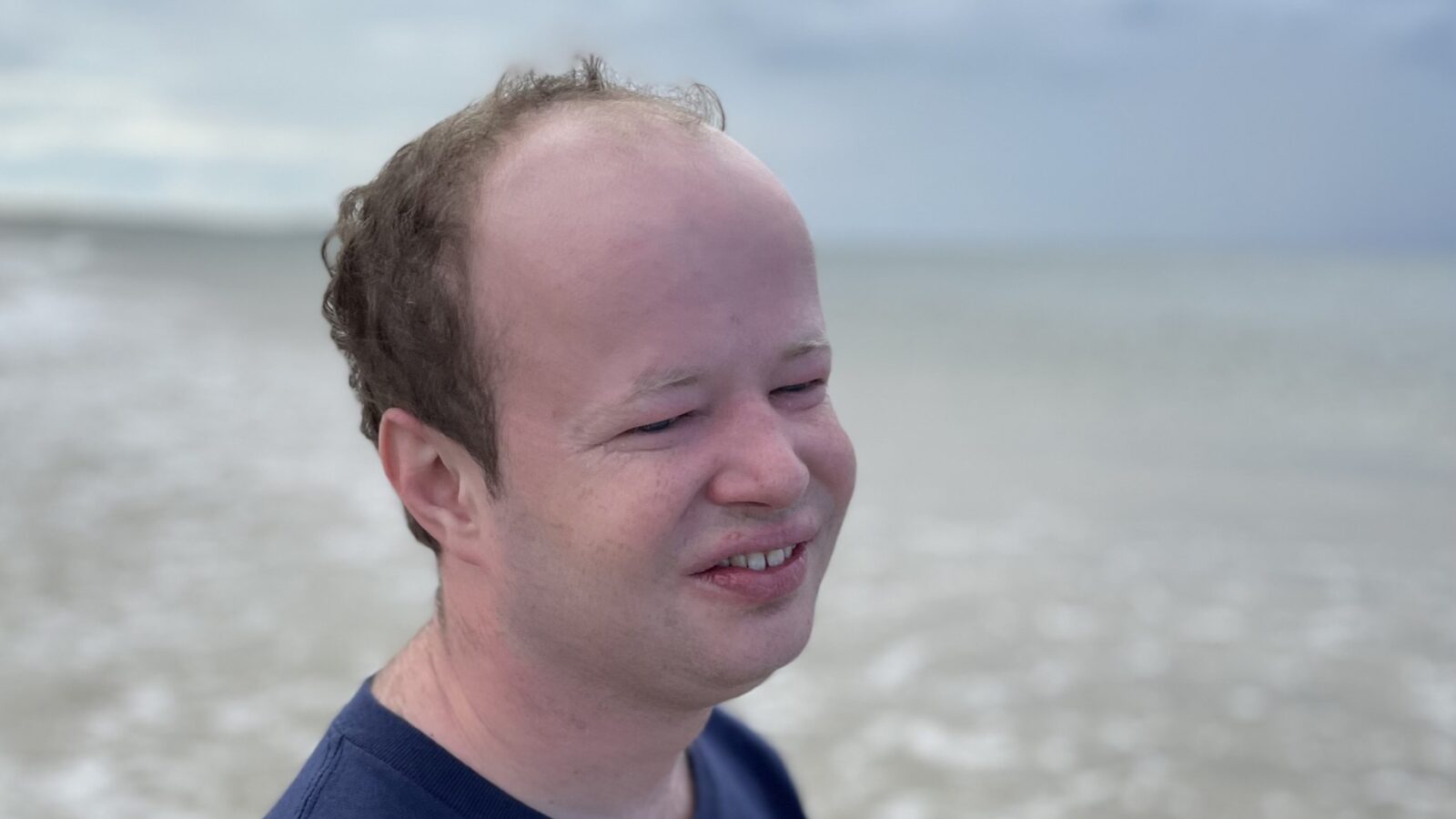
For months after my son, Connor (known as Laughing Boy or LB) died in 2013, I had an overwhelming urge to tell people what had happened. Strangers.

In my head, I’d scream the details at people, on the London underground, on the bus, in the supermarket. Occasionally, I did tell (without screaming) and learned this telling was upsetting, uncomfortable, discounted. People were unable to respond.

Connor, who loved painting and drawing, was 18 when he drowned in the bath in a short-term assessment and treatment unit in Oxford. An independent review found his death was preventable.

Supporters of the subsequent #JusticeforLB campaign to improve care for people with learning disabilities made art, including the #JusticeforLB quilt.

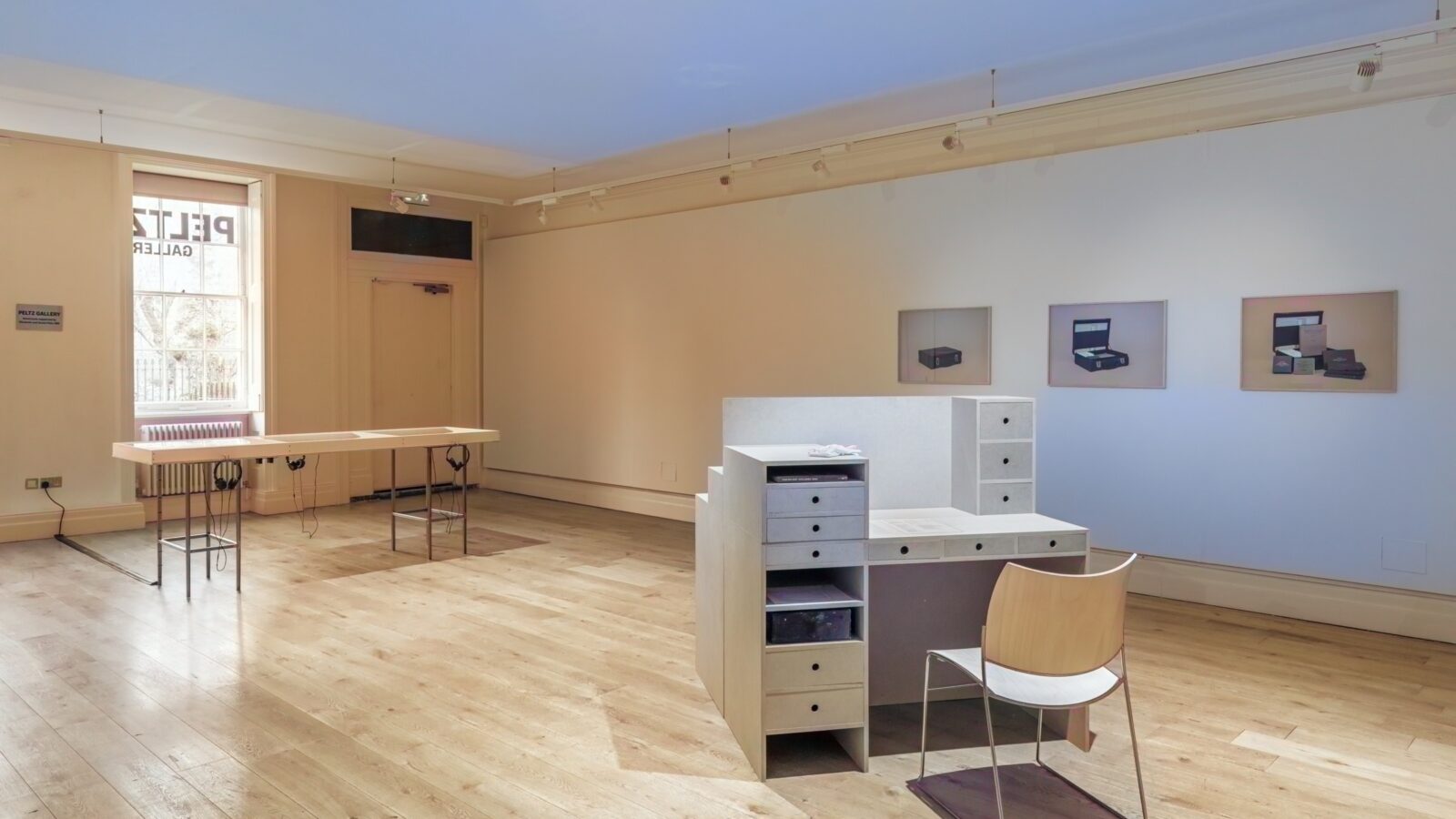
Visiting the Nothing About Us Without Us exhibition at the People’s History Museum, Manchester, which includes the quilt, I’m reminded of those first few months after Connor died.


This free, landmark exhibition explores the history of the fight for disabled people’s rights and runs until 23 October.

I photograph people who stop and view the joyousness, colour, and artistry of the quilt. I think about saying, about telling.

Then I recognise the compulsion is erased by a wider exhibition that captures the power, irreverence, anger, irony, humour, beauty, community, history and kickass brilliance of the activism and labour of a disparate group of people.

Exhibits include Mat Fraser’s prosthetic arms, photos from the early days of the disability rights movement in the UK, original artwork such as the harrowing and deeply powerful Dirge of the Brickmen by Colin Hambrook, and one of the red plastic balls thrown at Tory conference delegates in Manchester by Disabled People Against Cuts in 2015.

Sound artist Gemma Nash explores the symbolism of cassette tapes used to record personal independence payment interviews – claimants were not allowed to record these digitally until 2020 so had to use cassettes. A personal favourite is the map of Great Britain made from the parts of two NHS wheelchairs by Tony Heaton.

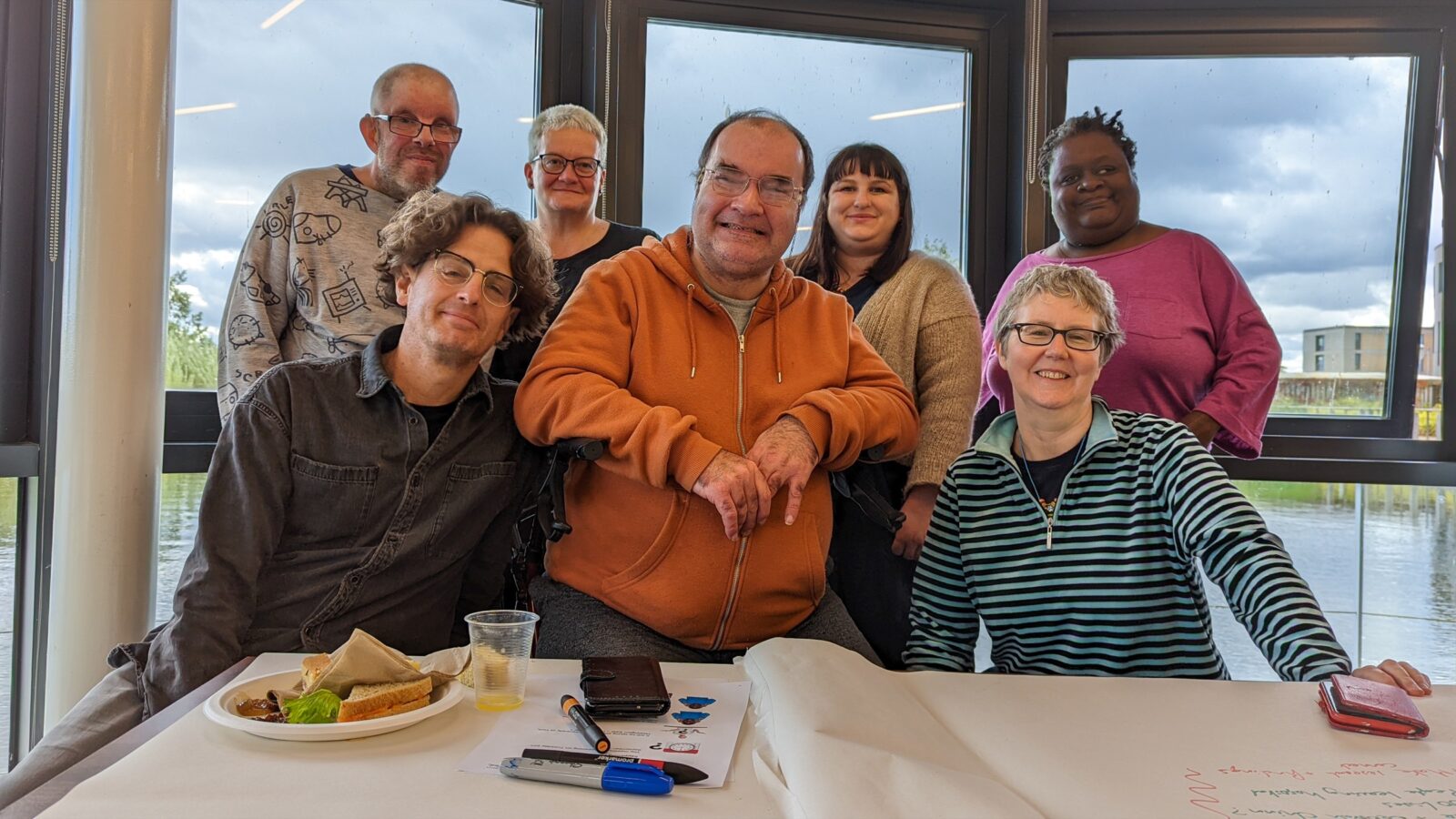
Thank you to community curators Anis Akhtar, Ruth Malkin, Hannah Ross and Alison Wilde. The artwork reveals unexpected possibilities and a powerful message in relation to disability: we are everywhere.

Sara Ryan is an activist, author and a professor of social care at Manchester Metropolitan University.

Photography by Sara Ryan.

Finding our rhythm

Musicians with learning disabilities write original works and perform in a percussion orchestra alongside Royal Academy of Music students. Alex Thomas describes a creative collaboration

City Lit Percussion Orchestra - man beating drum

Although Simba Ngwarati has been involved in digital music making for some time, he has only recently started to play instruments and compose music for live events.

Since joining the Percussion Orchestra at the City Lit adult education college in London two years ago, he has been working with musicians from the Royal Academy of Music (RAM) to compose pieces.

He says: “It is a big opportunity for me to see what I can achieve with orchestral musicians.”

In the orchestra, 10 City Lit students with learning disabilities play alongside nine RAM musicians. They aim to create and perform original compositions to a high standard and break down societal assumptions.

It is a unique collaboration, described by England’s chief social worker Lyn Romeo as “the future of learning disabilities”.

The project, launched in 2015, was the idea of Michael Donlevy, the head of City Lit’s Centre for Learning Disabilities Education. A total of 100 RAM and City Lit students have been involved since.

Prospective students enrol for three terms and this culminates in 45-minute concerts at the end of the year at the City Lit and the RAM.

People are interviewed in person and can enrol irrespective of musical background – they only have to commit to doing their best for the group. They range from highly accomplished individuals to those who are relatively new to music.

Students attend weekly classes all day on Wednesdays to compose material and develop listening and playing skills, as well as practise the pieces they’re writing together.

The orchestra includes a vast array of instruments including Javanese bonang, floor toms and cymbals, xylophone, melodica, piano, keyboards and hand percussion as well as, occasionally, electronics.

It has performed at venues including the Open University and the British Museum, as well as at the Skills for Care Accolades awards and the Westminster Society (now called LDN) festival.

Almost all the City Lit students return year after year. RAM students participate for at least a term, often longer, and several have returned to volunteer or as artists in residence.

As RAM harpist Sunshine Lo says: “This has been one of the most memorable projects I’ve ever done. It’s my first time working with adults with learning disabilities, and I have learnt so much.”

Julian West, director of Open Academy, RAM’s community and participation department, says: “The project offers academy students a context wherein they can apply their musicianship creatively, deploying their skills for the mutual benefit of the group, rather than as performers on a concert platform or as instrumental teachers.

“Through collaborating with percussion orchestra members, students develop personally, artistically and professionally.”

The Percussion Orchestra will be performing at the John Lyons Theatre at City Lit and at the Royal Academy of Music later this year.

Alex Thomas is a composer, tutor at City Lit and leader of the Percussion Orchestra.

Access to the hearing world

Deaf people with learning disabilities can be part of their community with the right support, says Sam Harrison

Peter Fulton and Charlotte Smith have a cuppa

Deaf awareness is slowly improving, with the likes of Rose Ayling-Ellis and her amazing Strictly Come Dancing win. But there is a long way to go for people with a learning disability who cannot hear.

The word Deaf, with a capital D, typically means someone with profound hearing loss who tends to communicate using British Sign Language (BSL) rather than lip reading or the written word and who identifies as culturally Deaf. The word deaf, with a small d, usually refers to someone with profound hearing loss.

Integrate, a learning disability support provider in Lancashire, has a service that specifically supports people who are profoundly Deaf. A specialist staff team within our supported living service helps people to live in their own homes and be part of the community.

The service started at the end of 2010 supporting just one person and today we work with 18 people. Since our launch, we have supported 28 people in total.

There is relatively little awareness about this dual support need because it involves a relatively small group of people. According to the Foundation for People with Learning Disabilities, an estimated 40% of adults with a learning disability experience moderate to severe hearing loss.

In terms of what we provide, it is much like the support we give any person; we work towards the goal of helping someone be treated as an individual and live an ordinary life.

The biggest difference is in supporting someone to have access to the hearing world. We do not necessarily interpret for someone in all situations.

At medical appointments or social worker visits, for example, individuals have the right to a qualified interpreter. We make sure they are aware of these rights and support them with tasks like booking interpreters.

The challenges faced by people we support include trouble in arranging healthcare appointments. Many GP surgeries take all their bookings over the phone, which is not accessible.

NHS information can often be complicated and full of jargon, which is not of much use if you struggle to read and rely on BSL.

Another barrier is the cinema. Try finding subtitled showings and you tend to be restricted to one or two a week. Wanting to see a film has to be planned like a military operation, not the kind of spontaneous activity most people take for granted.

As for going to a museum or theatre, there might be BSL events once or twice a year. I recently supported someone to see the Lion King in Manchester, It was an amazing production but there was only one interpreted show in a run of three months.

There is an additional communication barrier when supporting a person who is Deaf and has a learning disability. Making phone calls on someone’s behalf is difficult. I have lost count of the number of times I have been asked to put someone on the phone – even though I have explained the issues.

This can be degrading to the person; trying to demand they come on the phone to “make a noise” does not feel appropriate.

People who are completely deaf have often been forced to wear hearing aids and follow an oral pathway at school, which was of little benefit to them. This affects them as an adult because they did not have opportunities to learn sign language when younger, and it is much harder to learn at a later age.

Deaf people with learning disabilities often have not had the opportunity to learn BSL at a young age so their language skills can be limited. Some schools have tried to go down an oral route, while others teach different sign systems, such as Paget-Gorman. This can make it really hard for people to express themselves as an adult, even when communicating with a native BSL user.

The most challenging aspects of this work are around communication and having to deal with a lack of awareness. The most rewarding is just seeing people not in an institution but out in the community living happy lives.

Staff will often send me pictures of themselves out with those we support doing things. Seeing beaming smiles on people at a pub lunch, playing crazy golf or just putting petrol in their car always reminds me why I do this job.

As for what more can be done to improve support, funding is vital. Recruitment is difficult in social care as it is and this specialist service requires another skill – BSL – which reduces our candidate pool.

Local authority and other public services must be more accessible. I’m part of the Lancashire BSL Forum which is working with the county council on making services more accessible. It’s a small step but it’s a start.

An easy way for staff to be able to communicate on an individual’s behalf would be helpful. I am asked if I have power of attorney but this is not relevant as the person has capacity but is unable to communicate using a particular method of communication.

Something we are looking to do as a provider this year is work on a BSL sign bank that is accessible to all but focuses on words that are important in health and social care.

A standard BSL course is not going to teach something like “incontinence pad” but personal care is an area where people need dignified support; this requires the ability to communicate effectively.

Teaching BSL in schools would also have a great impact as it would just help make the community that little less isolated. We all know how much a minute of idle chit-chat at a bus stop with a warm smile can make someone’s day.

Sam Harrison is Deaf service team leader at Integrate.

Vision needed on eye health

People with learning disabilities are likely to have sight problems, and optical services need to adapt to meet their needs, says Simon Berry

Simon Berry optician with patient William Dean

I knew my patient had arrived before he came into my clinic because his cries reverberated down the corridor.

The seven-year-old, who is autistic and non-verbal (communicates without words), was referred to me at Sunderland Eye Infirmary by his paediatrician because he found it difficult to have an eye test at a high street optometrist.

I went to meet him; his mother was distressed, other patients were avoiding eye contact and moving away, and the boy himself was hysterical.

I could not give up and use a lack of cooperation as an excuse – nor could I subject an unwilling patient to a barrage of tests.

This incident last year (which had a happier ending) reflects the balance practitioners must strike when treating patients with a learning disability.

We need a solution because we rely on sight to interpret the world – and eye examinations are even more important if you have difficulties with communication or with processing visual information.

I am also aware of these issues as a parent because my 16-year-old son Max is autistic and has global developmental delay.

The SeeAbility charity estimates that six in 10 people with learning disabilities need to wear glasses.

In 2013, the government published a report into the premature deaths of patients with a learning disability. Of 247 cases reviewed, 50% involved patients with visual problems.

We must adapt clinical pathways to help people engage with eye tests. Reasonable adjustments mean making allowances for individual needs, such as splitting a test over several appointments.

At my independent practice, we book acclimatisation visits and offer sensory toys, and we installed a bubble wall – a sensory water feature – in the testing room to help relax patients. However, what works for one patient might not suit another.

Clinicians must be flexible. I’ve worked in the NHS for over 25 years; we all tend to be guilty of institutional arrogance, believing the way we were taught to do something is the only way.

We need to be more creative. How we test vision and the use of music and distraction techniques, for example, can help us to get the information we need.

Overlooked

Another problem is that eye care for this patient group is not properly identified or funded.

Having a learning disability does not entitle you to an NHS-funded eye examination. If you are on your GP’s learning disability register, GPs will ask during your annual health check about eye health issues.

Eye tests are recommended yearly and some working-age adults with learning disabilities may be eligible for free tests but they are not a right.

In 2017, I was involved in improving the optometric service at a Durham school in a pilot for NHS England’s special school eye care programme.

This service has now been commissioned nationally, but the scope of it is under review by the government.

Back to my young patient who was too distressed to be tested in the clinic. We had a chat as he walked back to the car so he could start getting to know me.

Eye examinations are even more important if you have difficulties with communication or processing visual information.

I managed a bit of a basic test while he was more relaxed in his car seat – partly because he did not think he was being examined. He was set to see me again in the following month.

If you have a learning disability, you are more likely to have eye problems, more likely to need glasses, less likely to be able to access traditional clinical pathways and less likely to be able to engage in certain treatments.

Even if you have a great relationship with your optician or ophthalmologist, it is likely that part of your care is reliant on good will.

Eye care for patients with a learning disability deserves much more.

Simon Berry is an optometrist.

Opera tells a brutal tale

Least Like The Other – Royal Opera House, London – Review by Simon Jarrett

Woman seated at table, man in white coat and mask behind

Rosemary Kennedy was the third child of Joe and Rose Kennedy, and elder sister to John F Kennedy, the US president assassinated in 1963.

When she was born in 1918, the obstetrician was running late. The nurse, not allowed to deliver a baby without a doctor present, forced the baby’s head to stay in the birth canal for two hours until the doctor arrived, which is believed to have starved Rosemary of oxygen. Thereafter, she had what appeared to be a mild learning disability, seizures and “mood swings”.

Joe Kennedy was ambassador to the UK in 1938-40, and 20-year-old Rosemary was presented as a debutante to the King and Queen.

In 1941, Kennedy senior, without telling his wife, decided a lobotomy, performed by the notorious James W Watts and Walter Freeman, would calm Rosemary mood swings and prevent violent outbursts.

After this operation, Rosemary lost the power of speech, could no longer walk, and became incontinent. She was institutionalised for the rest of her life.

All this was brought surprisingly and absolutely thrillingly to the stage as an opera in Least Like The Other at the Linbury Theatre at London’s Royal Opera House in January.

Just one singer performs – the soprano Amy Ní Fhearraigh, who plays Rosemary. On a sparse, superbly lit black and white multimedia stage set, a bewildered and constantly experimented upon Rosemary sings her commentary on the cruel events around her.

Three actors voice extracts from official reports, memoirs and documents relating to her life. These all flash up on screens, along with archive film of Rosemary.

It is superbly done. We encounter a catalogue of villains from the appalling cycle of medical violence and hatred unleashed on the learning-disabled community in the 20th century – including psychiatrists Martin W Barr and Henry H Goddard as well as the lobotomists.

And yet there it is on stage, a thing of beauty, with Rosemary at the centre, finally getting her say about her sad life. Well done Irish National Opera – may you sing this story in many other places.

Influence through dance

People with disabilities bring unique perceptions about performance, the body and expressive movement to the dance floor, says Simon Jarrett.

George Webster on Strictly Come Dancing

For people with disabilities, there are two main ways in which inclusive dance can happen.

They might perform with or alongside non-disabled dancers. We saw this with George Webster on BBC’s Strictly Come Dancing Christmas Special and with deaf actor Rose Ayling-Ellis before that. In the professional dance world, wheelchair user Joe Powell-Main recently performed with the Royal Ballet.

Alternatively, dancers with disabilities might form their own platform to develop and showcase their talent. Groups such as Amici and Candoco have been showing the outstanding talents of dancers with physical disabilities for decades. And Corali Dance Company, which I chair, supports dance created by artists with a learning disability.

A debate arises from this – should disability dance develop independently, or should it be integrated in the mainstream dance world?

I believe these two are not mutually exclusive and, indeed, dancers can cross between them.

George Webster showed a large TV audience that dancers with learning disabilities can be hugely talented. This can be important in changing public attitudes and stimulating interest in the work and performance of other disabled dancers.

Corali and other companies, such as Icandance, Dance Syndrome and Magpie, similarly alter public perceptions about learning disability and spark new thinking and possibilities in the dance world.

When people with disabilities become involved, they bring unique perceptions about performance, the body and expressive movement to the dance floor.

The dance world has to adapt itself to accommodate them, and this very adaptation enhances what dance can offer.

I was overjoyed to see Webster perform in such a setting, and hope that it will raise public consciousness about the amazing possibilities of inclusive dance, in all its forms.

A Strictly night of showbiz pizzazz creates history

Simon Jarrett – 6th April 2023

Strictly Come Dancing Christmas Special – BBC One

George Webster, glittering in a salmon-pink, sequin-lapelled suit, descended from the heavens on a giant golden star then shimmied into his Charleston routine with professional dance partner Amy Dowden.

It could mean only one thing – the Strictly Come Dancing Christmas Day Special. In this very Strictly way, Webster, who is a CBeebies presenter, became the first person with a learning disability – he has Down syndrome – to appear on the show.

Not that this appeared to bother Webster, who wowed the audience and the judges with a mesmerising, entertaining, energetic and (to my eyes) faultless routine. He ended by doing the splits as fireworks erupted around him, to gasps from the audience.

Whoever paired the charming and charismatic Webster with the ultra-likeable Dowden (who has battled throughout her dancing career with acute Crohn’s disease) was a genius – they were a dance-floor marriage made in heaven.

Webster is clearly a Strictly fan, and knew the lingo: “I – loved – every – second – of – it,” he gasped shortly after the dance, as Claudia Winkelman asked how he felt.

The judges are always kinder on the Christmas show, even waspish pantomime villain Craig Revel Horwood. But they raved genuinely about Webster.
“Full of energy and showbiz pizzazz,” proclaimed Revel, “like a party popper going off.”

Anton Du Beke gushed about his timing and musicality, while Motsi Mabuse anointed him “a showmaster”. Head judge Shirley Ballas praised him for “giving 150% of your soul”.

It was all a bit of fun, but George Webster danced his way into a bit of history on Christmas Day 2022.

Trauma into art

Images to express experiences of trauma have been created by Henny Beaumont following themed webinars

Creating a safe space for people with Learning Disabilities and Autistic people - artwork

As artist in residence with the British Institute of Learning Disabilities and psychotherapy charity Respond UK, I created a set of images to highlight the trauma experienced by people with learning disabilities and autism.

I was drawn to this work on both a professional and personal level. As an artist, I’m interested in how art can effect change. And, as mother to Beth, who has Down syndrome, I have experience of my daughter’s trauma.

During a series of webinars over several months last year, each exploring a different theme such as education, law or social care, I took notes, made sketches and digested the complex issues that arose.

Those who took part included professionals and people with lived experience. I created an image to accompany each webinar.

“Trauma is a wound or series of wounds,” says Respond chief executive Noelle Blackman. “All humans respond to it but some may need help to recognise their expressions of pain from professionals, family or friends.”

I am acutely aware of how difficult it is to get people to recognise and value my daughter. People don’t tend to see her for the wonderful, lovely, funny, serious person she is – they see her disability. It’s hard for people to see the isolation that comes from having a learning disability, with a lack of personal independence, a lack of friends and a lack of real paid jobs.

Showing separation

The image Education (above right) is from my book Hole in the Heart, which is about bringing up Beth.

It’s a while since I felt the sense of isolation and insecurity this picture illustrates. Back then, taking her to school felt like gatecrashing a party in the wrong outfit where everyone knew each other and desperately hoping someone would talk to me.

One webinar participant, a man with a learning disability, said: “Listen to people. Think about what they want and where they have come from.

“Respect the person and what they have been through. Support them to recover in their way. I came through it and I don’t want anyone else to go through it.”

Henry Beaumont is an artist.

Power in common cause

Family and self-advocacy groups can conflict but working together can have a great impact and defeat attempts at divide and rule, says Virginia Bovell

Virginia Bovell with the Family Carers Action Group

The relationship between family-led groups and self-advocacy organisations is not always a happy one.

While self-advocates can feel that family members dominate the agenda, some parents fear self-advocates will leave their learning-disabled relatives ignored or misrepresented.

For example, it is argued that people with profound and multiple learning disabilities in particular will always need others to advocate on their behalf. I relate to this; my son Danny has very complex needs.

However, I also fear that if we perpetuate a sense of mistrust between self-advocates and family members, it makes us vulnerable to attempts to divide and rule, which will undermine our collective interests.

This certainly seemed to be the case in Islington. In 2018, a vocal group of residents claimed that a proposed housing development, supported by self-advocates, was not designed in the best interests of learning disabled people and that the parents of people with these disabilities were wrong to support it.

The group arguing against the scheme publicised this view in a series of letters in the local press (the project was to be adjacent to the main objectors’ homes – a fact omitted from their letters).

The attempt to drive a wedge between families and people with learning disabilities failed.

Why? Because we all wanted and campaigned for the same thing – more bespoke supported housing in Islington, at a time when far too many people had no choice but to live outside the borough, away from the community where they belonged.

We were united in preparing a petition, briefing the local press and attending the planning committee meeting at which permission for the building was finally granted.

The reason we could spring into action so quickly was that we already had a 20-year history of working alongside one another through the borough’s Learning Disability Partnership Board.

The board is co-chaired by members of the Power and Control Group. This group, supported by the Elfrida Society, involves people with learning disabilities who represent the interests of their peers in the borough.

Parents and siblings, meanwhile, have a separate but equivalent group, the Family Carers Action Group (supported by the Centre 404 charity). We have a core group of 10, with others attending depending on the meeting topic.

This year, two members of the Power and Control Group have started to attend the main quarterly meetings of our family carers’ group as carers in their own right.

Having recently become chair of the family group, I can say that this joined-up local work is personally rewarding thanks to the people I am meeting and working alongside.

It feels more impactful and far less isolating than my involvement as a parent representative in national groups back in the early 2000s. It has also reinforced my belief that self-advocacy and family advocacy can be successfully joined up.

Same concerns

So far, we have all raised similar questions with the council officers invited to talk to us about a range of topics from housing to community activities and respite provision. We share the same concerns about the constraints on local authority spending and the problems in recruiting enough support workers.

We are also developing joint working in new areas, and recently worked together on an accessibility check at a GP practice.

I learned a lot by visiting with Nikki Carter from the Power and Control Group, who said: “It was good to do the visit with you and understand your perspective as a parent.”

For me, visiting with Carter meant that the exercise was authentic rather than tokenistic, as well as more informative.

I have no illusions about the challenges we face. Nonetheless, at a time of cuts and local authority restructuring, our combined groups will still be here after council officers or councillors have changed.

In the aftermath of the pandemic and the social care crisis, we need to be united now more than ever.

Virginia Bovell is chair of the Family Carers Action Group

Rare combination in legal comedy

Extraordinary Attorney Woo – Netflix – Review by Mariana Koudela

Park Eun-bin in ‘Extraordinary Attorney Woo’

Extraordinary Attorney Woo, a comedy-legal drama set in Seoul, hit our screens last summer and soon became Netflix’s sixth most popular non-English show of all time.

In the show, the newest addition to the world-class Hanbada Law Firm is Woo Young-woo, a promising attorney who is also a young woman on the autistic spectrum. This is rare combination given most portrayals of autism tend to be of young men and boys.

We follow Young-woo as she navigates a world that often struggles in its capacity to deal with neurodivergent behaviour.

The show approaches difficult topics sensitively, but never shies away from them, ranging from the agency a learning disabled woman has over her love life to the discrimination and stereotypes Young-woo has to deal with because of her autism.

Not preachy or pitiful

It addresses these in a way that feels neither preachy nor pitiful. Along with her friends and colleagues, we learn to wrestle with our own assumptions of autism and neurodiversity throughout the 16 episodes.

In one episode, the firm is asked to handle the defence of a young man, also on the autistic spectrum but with severe learning disabilities.

We are confronted with how society often understands autism as belonging to a binary of two extremes rather than a spectrum.

Young-woo’s boss assigns her to the case, assuming she would know how best to deal with the defendant simply because she has autism. But, with characteristic forthrightness, she never lets him off easily.

The show undeniably gives into several tropes, especially that of the genius autistic individual. And, at times, the stereotypes it exaggerates for comedic effect are taken too far.

Nonetheless, Park Eun-bin’s portrayal of Young-woo is subtle and nuanced. We grow to love and empathise with this complex character, as we watch her fall in love, make friends and become increasingly confident.

A second season is due in 2024.

In brief

A round-up of the latest news and research

Still from 'An Irish Goodbye'

First Oscar award for actor with Down syndrome

Actor James Martin, pictured, has become the first person with Down syndrome to win an Oscar following the success of black comedy An Irish Goodbye, writes Simon Jarrett.

The movie, reviewed in Community Living last year, won an Academy Award for best live action short film in March, having already picked up a similar accolade at the Baftas in February.

Shortly after collecting his Oscar, Irish actor James Martin said: “It doesn’t matter if you have Down syndrome, as long as you’re doing what you do. I do what I can to be funny.”

This beautiful and often hilarious film stars Seamus O’Hara and Martin as brothers who are dealing with the aftermath of their mother’s death on their farm in Northern Ireland.

The brothers live far apart and have very different lifestyles – and the film makes it obvious that they are not happy about being forced to spend time with
each other.

Martin previously starred in ITV series Marcella and BBC series Ups and Downs.


Relationship and sex needs unrecognised

Autistic adults’ mental health is at risk because of a failure to recognise their sex and relationship needs, research has shown.

The Acknowledging Autistic Adults’ Intimate Lives in Health and Social Care Policy report is based on an analysis of English national policy and guidance.

Researchers explored how the intimate lives of this population are represented and prioritised within these documents.

For example, the government’s five-year autism strategy, which aims to improve people’s lives by 2026, does not include such issues.

Autistic people face more social barriers to and experience greater social anxiety around intimate relationships, according to Monique Huysamen, Manchester Metropolitan University senior research associate.


Invisible art trail to go on show

Artist Henny Beaumont has collaborated with Kate Revere of social enterprise Revere the Residence on a forthcoming inclusive art trail, Invisible People.

Artwork by people with learning disabilities will be displayed in the windows of independent shops and cafes in Stoke Newington, Hackney, from 10-18 June.


Right to leave for carers

The Carer’s Leave Bill, currently under scrutiny in the House of Lords, could mean employees who are also carers get a week’s unpaid leave.

If it is passed, working people with care duties would have the right to a week’s annual leave to deal with planned caring commitments.

Around five million people in the UK balance caring responsibilities with paid work.


Barriers to leaving hospital

A lack of psychological support and a culture of being “set up to fail” are among the problems for people with learning disabilities and/or autism trying to leave long-stay hospitals.

A report, Why are we Stuck in Hospital?, by rights-based organisation Changing Our Lives and the University of Birmingham, gives the views of 27 people in three hospitals in England, including family members, hospital staff, commissioners, social workers, advocates and care providers.


Eating disorder service

A specialist service for autistic young people with eating disorders has been set up.

The Buckinghamshire, Oxfordshire and Berkshire PEACE (Pathway for Eating disorders and Autism developed from Clinical Experience) service is led by Oxford Health NHS Foundation Trust.


Harm of Covid caring

People who became carers during Covid-19 experienced a sharp decline in mental health, according to a study of almost 4,700 people by Lancaster University researchers.

Until now, little research has looked specifically at the mental health effects on those providing informal care.


What’s on our radar

Social care experts have been reacting with disbelief to plans in the spring budget that aim to boost the general labour market but ignore the support sector. Charity United Response was among those criticising the oversight as “a missed opportunity”.

Social care “is still on its knees with no extra funding”, agreed charity Leonard Cheshire Disability. It also welcomed the fact the energy price guarantee remains at the same level but pointed out that many disabled people used more energy, for example to charge support equipment.

The government’s failure to recognise the financial needs of disabled people was underlined by research from charity Sense, which found that more than half of them were in debt and more than three-quarters were worse off than in January.

The health and disability white paper promised a welcome end to the punitive work capability assessment. However, it received a lukewarm response, with Scope stating that one “out of touch test” must not be replaced with another.


BBC research revealed that half of state-funded schools in England for children with special educational needs and disabilities (SEND) are full.

Meanwhile, the Department for Education’s long-awaited plan to improve the postcode lottery SEND system was criticised by parents and campaign groups for not going far enough.

The BBC also reported that more than 60,000 adults with disabilities and long-term conditions in England were chased for debts by councils last year after failing to pay for their social care support at home.

Mary O’Hara: Introducing lessons from America

This new column will look at where the UK and the US experience similar issues and consider how their different approaches might improve lives and opportunities

Statue of Liberty

In the early days of austerity in the UK in 2013, when the country was on the brink of realising the destructive nature of the policies being introduced, I interviewed a young woman in Wales.

We spoke about the impact cuts were likely to have on her family. A young person with Down syndrome, she was worried about accessing services as money was being systematically drained from them. Her story held up a mirror to the complex, widespread and avoidable nature of the difficulties ahead.

Towards the end of the interview, she told me quietly: “I worry about what will happen.”

Those words have stayed with me. They summed up so much of what everyone I spoke to had told me as I researched my first book, Austerity Bites.

During that period of interviewing and research, it became increasingly clear that some groups, including people with learning disabilities, were being actively marginalised and made vulnerable by the state.

It is vital that, wherever and whenever possible, our collective voices are raised – not only to highlight where injustices are taking place but also to seek answers to a clear and urgent question: how do we fix them?

So, when I was approached to write a column for Community Living where I could explore how various dimensions of policy and culture shape the lives of people for the worse – and the better – I jumped at the opportunity.

For the past eight years, I’ve had a proverbial foot in two places, travelling between and writing about the UK and the US.

My last book, The Shame Game, for example, highlighted the blaming and shaming of people in poverty on both sides of the pond. They included those with disabilities, who were more likely to live on the breadline because the very systems that should shield them from penury exacerbated it.

Dual perspective

The things I’m learning from this dual perspective are what I hope to bring to this column. The aim will be to focus on issues common to both countries that can, for example, create barriers where there should be opportunities or result in indignities where there should be dignity and agency.

The column will look at where the two countries experience similar problems as well as consider what lessons might be taken on board to improve lives and life chances.

The cultures, systems and language may differ – in the US, the term intellectual disabilities is more commonly used – but, when it comes to people’s fundamental rights and to equality with other groups, there are shared hurdles and common goals.

What is happening in the US that is pushing for progressive change which will better support people in work, employment, education, healthcare and communities, or in sport or other activities?

What developments can be observed across different learning disabilities? Where does the country fall down on policy? And what, if anything, might the UK take away from this?

Next issue: making progress on poor pay

Right now in the UK, people are worried about how they will make ends meet and how the shredding of the social safety net will further impact already-strained resources.

This is especially the case for those who require support and assistance.

Against a backdrop where disabled workers are being paid, on average, £3,731 (17.2%) a year less than those without disabilities and the British welfare system is one of the least generous in Europe, I find myself reminded of that statement from a decade ago: “I worry about what will happen.”

For this reason, in my next column, I will explore the issue of wages and employment. In the US, the persistence of a below minimum wage for people with learning disabilities has been a source of ongoing concern and controversy; on both sides of the Atlantic, wider disparities in pay are deep rooted.

However, they are not inevitable, and we will take a closer look at how progress on pay is being made in the US and ask what we can we learn from it.

Shalim Ali: Like everyone else, we want a homely place to live

People want a comfortable, cosy home – yet many services don’t think twice about putting someone with learning disabilities in something more like a hostel with the most basic of furniture

Woman holding photo at home


Today I live independently but, when I moved into supported living in 2016, the first thing I did was buy my own desk.

This made me feel the place was more homely. I chose the desk myself. It was stylish and I knew I could work comfortably at it.

It was more expensive than some desks on the high street, and some staff disagreed with my decision to buy it. But I was treating myself. It was my choice.

People think that we should buy something cheap, something that they would not have in their own home. So it is OK for you to live in a fancy house with furniture you like, but you don’t think twice about putting people with learning disabilities in a hostel-type setting?

Some people still think that supported living is like a residential institution. But no one wants to live in that kind of place. You want to live in your own home where you feel comfortable and safe.

We have designed a checklist that includes things that help people feel at home.

Sometimes, when you go into a service, some of the layout is very old fashioned. The chairs are hospital ones, the bedding is not modern. Living in a hospital setting changes your body language and mindset.

I think support staff also do not want to come into a hospital setting but into a comfortable house.

We need to change how staff think about where we live, and we need to help people in supported living personalise their space.

This is why I took on a role as a co-researcher with the Feeling at Home project by King’s College London, which runs till the end of the year. It is finding out from people with learning disabilities who live in group homes what helps them feel at home and what gets in the way of this.

They might have family photos up, invite people over or feel at home because staff make sure they ask what they prefer to have in their space and who they want to see.

As part of the project, we have designed a checklist that includes things that help people feel at home. We have also designed a toolkit for staff to help people make changes to where they live and personalise their homes.

We added a one-page profile which you can fill in when you move to a new place so the people you live with know more about you.

Personalising your room could be part of your care plan.

It is not right to put people of different ages in the same place.

I wanted to do this work to build my confidence, skills and knowledge and see how to support people to personalise their homes.

I like meeting the research team to pick their brains and I am learning from them. This is the first research I have done so it is a learning curve.

I never had anything like this when I moved into supported living but I know it would have been beneficial.

I hope this work will help people build their confidence and be more independent, and change the status of people who feel they do not have a choice.

Passions reflected in a room

As part of my research for Feeling At Home, the project led by King’s College London, I went to visit a man in his 30s who lives in shared supported living in London.

His bedroom was homely. You could tell he had thought about what he wanted because his passions and interests were reflected in his room. It was like going to a friend’s house to hang out. It didn’t feel like going to “a service” or “a facility”.

He had his record decks out because he likes DJing and had music posters up. His bedding was very cool. He was telling me about his music and I could see that staff knew about his hobbies and interests. Maybe they had talked to his parents too and involved them.

Everyone should have this opportunity to create their own space. It is part of being human.

Chris Hatton: The foundations on which to build a real home

Having a good life requires having a place you feel is truly home. While research has found three common themes underpinning this, what fulfils these can change over time.

What makes a house a home? How might this change through your life? Several research projects are asking people with learning disabilities these questions.

While the emerging picture won’t be a surprise, it adds up to a profound challenge to the business as usual approach of many housing, commissioning and provider organisations.

The Flourishing Lives project at Manchester Metropolitan University has been asking deep questions about what makes a good life for people. Three things come out as crucial: feeling you belong; having the confidence to live the life you want; and thinking ahead to shape your future. Home is the foundation of all of these.

Do you want to live alone? With your partner? With friends you get on with?

Who you live with strongly matters to people’s sense of belonging in their home, and can make home a haven and a joy, according to work by many projects, including 200 LivesFeeling at Home, and Growing Older – Planning Ahead, all of which are funded by the National Institute for Health Research.

But for many housed in groups, living with others they don’t get on with can make home a place of stress, isolation and unhappiness.

Truly making your home your own is also vital – decorating, furniture, pictures, having places for your stuff. Even when sharing with others, people value having spaces in the house or garden that are theirs beyond their bedroom.

People consistently say that where they live really matters to a sense of belonging. Are the neighbours nice? Does the area feel safe and familiar? Is it easy to get to the shops, meet up with friends, get a bus, get to your job, or see your family?

Close to others – for good or ill

People in residential care were more insulated from their neighbourhoods, the 200 Lives project found. For those in supported living, there was a “thinner skin” between people and their local neighbourhoods, for good or ill, depending on where these residents were living.

All the research projects found that having or lacking a sense of belonging at home could bolster or crush confidence. Support from family, shared lives carers or support workers matters as well as that from partners and friends.

Home can be a place where people really know you while not assuming you only want to do the same things forever.

Home can be a place where you can be spontaneous while making sure the chores are (more or less) done. Home can be the place you love to come to after work, where you entertain and where you get ready for a night out.

However, for many people, their home was a place where routines ruled and life was pretty empty.

Finally, people talked about the importance of thinking ahead. Many were stuck in a perpetual present – once someone had been placed, that was it, with no thought that a person might change over time.

Truly making your home your own is vital. Even when sharing, people value having spaces in a house or garden beyond their bedroom that are theirs.

While people wanted to feel a sense of security, many also wanted to think about moving house in the future if things changed.

Many had little real choice in where they lived and who they lived with and, for many, their house moves were reactive (in response to having a bad time elsewhere) rather than proactive.

Planning for a house move or for moving out of the family home felt needlessly complicated, and required consistent support over long periods of time, which is rarely present.

All these things are vital to people wanting to move out of inpatient units into their own home.

While moving can be complicated, careful planning with people to find a place they want to live, while building confidence and a sense of belonging and a future, are still fundamental.

People with learning disabilities are giving consistent messages about what makes a house a home, and how a good home makes for a good life, with great ideas for how to make this happen.

An inclusive workplace

The fundamentals of inclusion are still not being addressed, despite all the advice and equipment available. Alice Hewson looks at why this is the case and what employers should do

Woman at desk explaining something to man

When you book a table at a restaurant, do you ask for a chair? Of course not – you expect it to be there.

It’s the same principle with workplace inclusion. You do not suddenly build a lift when a wheelchair user applies for a job; you already have that lift.

I have ADHD and dyspraxia and, when I was younger, I assumed that, to be included, I had to ask to be accommodated in some way.

People like me are taught to believe that our brains are not built to fit in; we ask for extra time in exams and we have annual reviews to assess our needs. The “you don’t fit” and “we can only accommodate you if there’s enough time/money/resources” rhetoric is damaging.

We need to think more deeply about workplace inclusion. For this reason, I recently wrote a guide, Creating the Dialogue for Neurodivergence Inclusive Workplaces. It is aimed at employers, managers and employees, so they can begin conversations about this.

Neurodiversity is a term coined by Australian social scientist Judy Singer to describe natural variations in how people think and process information; we are all cognitively diverse.

Neurodivergent refers to people with less typical neurotypes such as those with ADHD, dyslexia, autism, dyscalculia, dyspraxia and dysgraphia.

While I do not have a learning disability and can talk only through my experiences of ADHD and dyspraxia, I hope elements in my guide will be of interest to the learning disability community.

Although I call it a guide, one size does not fit all when it comes to neurodivergent inclusion. The resource, which is available on my blog A Little More Understanding, is more of a trial and error template based on my experiences.

If you google “neurodiversity in the workplace”, you will find well-meaning articles. But these are often written by organisations rather than by people with lived experience, and cover matters such as adjusting the environment to meet sensory needs, for example allowing people to wear headphones or offering quiet spaces.

My previous employer, for example, offered me assistive software (which I rarely used) and a timer. A timer will not help my time management, because my executive function (mental processes that include memory, planning and focus) means I forget it exists in the first place.

So the fundamentals of inclusion are not being addressed, despite all the practical support and equipment available. Reasonable adjustments are important, but the conversation should not end there. And it shouldn’t just be us starting the conversation.

Looking deeper into inclusion is about getting to the heart of the values, ethos, practices and culture to understand if the workplace is a psychologically safe place to be.

Understand the workplace

To me, feeling psychologically safe means being able to be honest and open, not feeling judged and being listened to. It means actions resulting from my suggestions are put into practice and managers ask what I need or do not need, rather than assuming they know. I want to feel my contributions, experiences and ideas are valued.

To return to the restaurant analogy, employers should make neurodivergent staff feel they have a place at the table, without having to ask for anything that hasn’t already been considered.

Tips to attract and retain neurodivergent staff

  • Use an application and interview process where bias is removed
  • Embed systemic inclusion and neurodivergent-accessible practices into workplace culture
  • Ask people about their preferred communication methods
  • Listen and keep communication open, honest and supportive
  • Keep discussions and reflections positive

This article is based on Creating the Dialogue for Neurodivergence Inclusive Workplaces – Alice Hewson is a journalist and youth worker.

Payments for caring

Carer’s allowance can not only provide money but also entitle carers to other benefits and credit them with national insurance contributions, explains Charlie Callanan

Carers Allowance claim form

There are as many as 10.6 million unpaid carers in the UK, according to Carers UK. It is therefore vital that they claim any welfare benefits to which they are entitled.

Inexplicably, the welfare benefits system seems ungenerous to carers. Carer’s allowance pays below the basic rate of other benefits such as jobseeker’s allowance.

For carers in paid employment, there are restrictions on their entitlement to carer’s allowance, which means many are unable to claim any financial support.

And, while people with disabilities are getting an extra cost-of-living payment, carers are not recognised as being in need of extra help.

Carer’s allowance is the only benefit awarded exclusively for caring responsibilities. It is worth £76.75 per week from April this year.

Although the qualifying rules are the same across the UK, claimants in Scotland receive a bi-annual supplement of £245.70,

To qualify for carer’s allowance, a carer must:

  • Be aged 16 or over
  • Spend 35 hours or more a week caring for a person who is entitled to the personal independence payment daily living component, or attendance allowance, or disability living allowance (receiving the middle or highest rate care component)
  • Not be in full-time education (21 hours a week or more)
  • If in paid employment, earn no more than £132 per week (after income tax, national insurance, taxable expenses and half of any contribution towards a personal or occupational pension).

Carer’s allowance is not means tested. Therefore, any income from sources other than the claimant’s or their partner’s earnings and capital do not affect entitlement.

It is taxable. So, if a claimant gets carer’s allowance and other sources of taxable income that takes them above the tax-free personal allowance threshold, they will have to pay some income tax.

It counts as income for means-tested benefits but brings exemption from the benefit cap.

Carer’s allowance counts as income for means-tested benefits. However, it brings exemption from the benefit cap.

Receiving this benefit means the carer is automatically credited with class one national insurance contributions.

Claiming carer’s allowance can entitle a person to other benefits or increase the amount paid.

Within legacy means-tested benefits – those before universal credit (UC), such as income-related employment and support allowance – a carer can get the carer premium. Also, a carer addition is available within pension credit. These are included if the claimant or their partner gets carer’s allowance or has an underlying entitlement to it.

The overlapping benefit rule means a person cannot normally get two income-replacement benefits paid simultaneously, such as the state pension and carer’s allowance if they qualify for both. However, they retain an underlying entitlement to carer’s allowance, so may still get a carer premium.

An important warning is that a carer’s claim for carer’s allowance could lead to the person they look after losing some benefit.

This is because someone entitled to a severe disability premium in their legacy means-tested benefits cannot get it if a person gets carer’s allowance for looking after them. However, if the carer has only underlying entitlement to the benefit so it is not paid, this will not affect the disabled person’s entitlement to this premium.

Within UC, there is a carer’s element; the claimant (or one partner in a joint claim) needs to be entitled to carer’s allowance.

If a carer who is claiming UC has a disability, they may qualify for either the limited capability for work (LCW) element of UC or the limited capability for work-related activity (LCWRA) element.

However they cannot get the carer element at the same time; if they are entitled to one of these higher-paying elements, they will get that instead.

In a couple’s UC claim, it is possible for one partner to meet the conditions for the carer element while the other partner may meet the criteria for the LCW/LCWRA element.

Capacity, crime and liberty

A high-risk sex offender with complex needs argued he should not be deprived of liberty to protect others as he understood his risks and their consequences, report Belinda Schwehr and Emman Kaur

Chainlink fence

In a recent court of protection case, a judge ruled that a man with a history of sexual offending would no longer be managed by being deprived of his liberty.

Deprivation of liberty – a loss of freedom and being under constant supervision or control – is sometimes required to meet needs. It must be authorised under the Mental Capacity Act 2005.

The man challenged this authorisation on the grounds that he had capacity and also that, even if he did not, the best interests requirement was not met.
The court upheld his first argument, agreeing that he did have capacity to decide on his care and support. This meant he could no longer be deprived of his liberty.

The case (DY v A City Council and A NHS Trust) balanced the man’s desire for greater autonomy and independence with the public’s perception of a need for oversight and protection.

Mrs Justice Judd explored the issue of whether DY, a man in his 20s who had autism and complex needs and was living in a care home, had the capacity to make decisions about his care and support arrangements.

The judge said he was no different from many people who have capacity and ‘can make unwise decisions and act on impulse’.

The background to the case is that DY had demonstrated problems from a young age, including sexualised behaviour and self-harming, which worsened in his mid-teens. In 2016, he was sectioned under the Mental Health Act.

In 2017, DY pleaded guilty to two offences of sexual assault in relation to a girl aged under 13 years and received a 26-month youth rehabilitation order. He had been assessed as a category one (high risk) offender.

His diagnoses include autistic spectrum disorder, generalised anxiety disorder and paedophilia.

He was under a deprivation of liberty safeguards (DoLS) authorisation in the care home (DoLs are safeguards designed to ensure people are looked after in a way that does not inappropriately restrict their freedom).

A sexual harm prevention order (SHPO) prohibited him from having contact with children under 16, save what was not reasonably avoidable. Whenever DY was out in the community, he was accompanied by male staff and was checked four times a night due to his sexualised behaviour and self-harm risk.

DY argued that the purpose of this DoLS authorisation and the underlying care plan was public protection so it could not be allowed. However, the judge concluded that the primary purpose of the care plan was to prevent harm to DY himself so it was not unlawful on that account.

Mrs Justice Judd also cited a previous case (Birmingham City Council v SR; Lancashire County Council v JTA [2019]), where the court had heard it was a false dichotomy to conclude that the concept of the protection of the person with impaired capacity could not also include protecting him or her from the consequences of harming members of the public.

If he lacked capacity, therefore, the care plan and DoLS would have been lawful.

Aware and fit to stand trial

The judge went on to agree with DY’s incapacity challenge, basing her analysis on the “clear, cogent and firm” evidence of the expert, consultant psychiatrist Christopher Ince.

Ince’s position was that DY did have an understanding of his offending, his victim profile and consequences of offending. There was no suggestion, said Ince, that DY would be unfit to plead in a criminal trial.

A significant risk to the public and a person from reoffending cannot be the determining factor in the question of capacity.

He concluded that DY’s understanding was relatively sophisticated, consistent with his cognitive functioning, and that it was not mere repetition.

The respondents to DY’s challenge – the city council and the NHS – asserted that DY was not capable of using or weighing information as part of the process of making a decision.

Evidence suggested he was inclined to say things that he thought the person in front of him wanted to hear, for example stating he knew he needed support. He would then say he had learned ways to cope over the years and wanted to live without restriction, but would follow this up by remarking he knew it was the staff who kept him safe.

DY said with the DoLS removed “it would mean I am able to meet people in the community… make friends… maybe have a relationship with a woman… my ultimate goal is to live my life peacefully… I don’t know about making relationships… I’ve never made any friends in the community for the last 10 years… wouldn’t know how to do it… I’m a bit rusty… obviously you’ll meet them and taken them to a restaurant, maybe have a drink or a meal… discuss hobbies and interests”.

DY stated: “I know I am high risk but there has to be a point where things change… constantly having staff coming out with you… I know how to be civil with people in the community… I know if I broke the SHPO I’d go to prison…one-way ticket to prison… I know I’d have to register my address if I moved house… I’d be terrified about going to prison… people with my convictions in prison, they get killed or severely beaten up.”

The judge appreciated that there was a high risk of DY acting impulsively and reoffending if given the opportunity. However, she agreed with Ince that this risk was a matter for the criminal justice system, not something to be addressed through a deprivation of liberty authorisation.

She said that DY was no different from many people who have capacity and “can make unwise decisions and act on impulse”.

The judge added: “The truth is that most sexual offenders and risky adults have capacity and, like DY, are not to be managed by a deprivation of liberty.”

The DoLS was terminated. However, DY had to remain in the care home and be offered support to make wise decisions, without compulsion, before the expiration of the SPHO later this year.

He will remain on the sex offenders’ register.

Comment: test for capacity regarding wrongdoing is set low

This case tackled the thorny issue of whether deprivation of liberty can be used to protect members of the public and how this is intertwined with an individual’s best interests.

On the one hand, the judge accepted DY could potentially make unwise decisions and act on impulse.

This could result in him committing sexual offences and self-harming. On the other, she accepted that he was an individual with capacity.

This case makes it clear the test for capacity regarding wrongdoing and its consequences is set low.

The criminal justice system is responsible for outcomes for offenders, including those with only a basic understanding of right and wrong.

The significant risk to the public and the person from reoffending – because of him acting impulsively without supervision under a Deprivation of Liberty Safeguards (DoLS) authorisation – cannot be the determining factor in the question of capacity.

The forthcoming Liberty Protection Safeguards (LPS), introduced in the Mental Capacity (Amendment) Act 2019, will replace the DoLS.

These have been designed to put the rights and wishes of those affected at the centre of all decision-making on deprivation of liberty.

Since the LPS cannot be used where the primary purpose is to protect others from the risk of harm from a individual, they can only be used to achieve public protection when this is incidental – as happened in the case here.

However, as with DoLS, the LPS will allow for examination of unforeseen and unconsidered effects on the individual concerned arising from his or her actions towards others.

Emman Kaur is a volunteer writer at CASCAIDr

Cases: DY v A City Council & Anor [2022] EWCOP 51.
Birmingham City Council v SR; Lancashire County Council v JTA [2019] EWCOP 28.

Life stories contribute to a sense of identity, and mental health needs should be acknowledged

People can take an active role in support plans and influence policy through their life stories, and a study gives insights into meeting mental health needs. Juliet Diener reviews some recent research

Leaf with sunlight through
Life stories give “nuanced understandings” in a socio-historical context and mental health training is seriously lacking, research has shown.

Stories of our lives

Ledger A, McCormack N, Walmsley J, Tilley E, Davies I. “Everyone has a story to tell”: a review of life stories in learning disability research and practice. British Journal of Learning Disabilities. 9 July 2021.

The role of life stories in practice and research is reviewed within this paper. It begins with the first known recorded life story, which was shared by Nigel Hunt in 1967.

In research, life stories offer “nuanced understandings of  the lives of people with learning disabilities in their socio-historical context”.

Reflecting on what life stories offer as a method of discovery, the authors surmised that “life stories give voice to people with a learning disability” especially given they have often felt silenced because parents, carers or practitioners have spoken on their behalf.

The authors noted through their review of literature spanning numerous decades that life stories offer a redress to this past imbalance. Autobiographical accounts allow the lived experience of the individual to be captured, which transcends stereotypes and prompts social change.

The paper offers a variety of methods for capturing life stories, which would be helpful to any reader wanting to incorporate this into their professional and personal practice, while also highlighting barriers that may be encountered.

Importantly, the article offers evidence on how life stories can offer a means for learning-disabled people to play an active role in designing their support plan, as well as having a wider impact of how personalised stories can effect policy changes.

The authors evidence “that life stories can be valuable for people, contributing to a stronger sense of identity, a way of being known beyond the label, and the building and sustaining of relationships”. Hence, they offer a valuable tool that would be suitable, with some adaptations, for most settings.

Ignorance about mental health

Ee J, Biza Stenfert Kroese B, Rose J. A systematic review of the knowledge, attitudes and perceptions of health and social care professionals towards people with learning disabilities and mental health problems. British Journal of Learning Disabilities. 25 June 2021.

Research on the attitudes and perceptions of health and social care professionals towards people with learning disabilities and mental health issues is limited.

Therefore, this study aimed “to understand how health and social care professionals perceive people with learning disabilities and mental health problems, their knowledge and competency in providing services or interacting with them, and the impact of their attitudes on service delivery and training needs”.

The search strategy focused on quantitative studies presented since 2006 following the adoption of United Nations’ Convention on the Rights of Persons with Disabilities.

It focused on professionals such as medical staff, nurses, therapists, psychologists and social workers, and covered a range of nationalities from Israel, Singapore, Australia and the UK, to name a few.

There is a considerable lack of knowledge and training in meeting mental health needs.

Following intensive analysis and review of how attitudes and perceptions may impact the quality of services provided to learning disabled people, the results indicated a considerable lack of knowledge and training in meeting their mental health needs.

Findings of this review suggest that knowledge and competence can be “improved through exposure and contact with people with learning disabilities in addition to specialist learning disability training”.

This paper offers many informed insights that would support any practitioner or organisation in catering appropriately for the mental health needs of learning-disabled people.

Speaking up for 50 years

From its first conference, through powerful campaigns and meeting resistance and rivalry along the way, self-advocacy grew into an established global movement, reports Susanna Shapland

Gary Bourlet

In 1972, the Campaign for Mentally Handicapped People – which became Values Into Action – sponsored a conference. It was the first event of its type for people with learning disabilities.

Held in Wallingford, this was a “speaking up” event, where delegates from all over the country were encouraged to speak out about their experiences and what they wanted in life.

Although there had been individual self-advocates within the learning-disabled community before 1972, this marked the start of group self-advocacy in England. Most of these groups were established within services, inspired by those in the US.

The aim of these early meetings was simply to be inclusive, encouraging participation from people with learning disabilities as well as staff and carers in the hope that sharing experiences would foster greater understanding and equality.

The 1980s saw self-advocacy groups emerge from services to become increasingly independent. Organisations such as the London Participation Forum or committees based in day centres, while significant, had been hamstrung by built-in power imbalances that saw decisions made by staff, parents and carers.

This began to change in 1984. The first International Self-Advocacy Conference, organised by the People First movement in North America, was held in Tacoma, Washington.

A delegation of self-advocacy activists from England attended, one of whom was Gary Bourlet, who is now membership and engagement lead at Learning Disability England.

On his return, he co-founded England’s inaugural People First group: People First London and Thames.

Bourlet followed this up with a letter campaign to adult training centres and a programme of talks up and down the country, encouraging others to found similar groups.

Activists also visited long-stay hospitals to inform patients about self-advocacy and the key issue of deinstitutionalisation.

By 1988, England’s self-advocacy movement was so significant that London was chosen as the location of the second International Self-Advocacy Conference.

Never did I think: I can go from having no choices to speaking at an international conference and running my own company. But I did.

Activists continued their evangelising work into the 1990s. However, they suffered from a lack of funding and pushback from social services and day centre staff, who started to see them as troublemakers.

There were also rivalries and disputes between groups, which, significantly, thwarted plans to set up a national People First body.

Nevertheless, the People First movement continued to expand into different regions and interest groups, with 1993 seeing successful Women First and Black People First conferences.

In 1996, Ian Davies and Karen Spencer became the first people with learning disabilities to give a presentation at the International Association for Scientific Study of Intellectual Disabilities.

Davies captured the power of self-advocacy when he mused: “Never did I think: I can go from having no choices and being forced to attend a day centre to speaking at an international conference, running my own company and forcing organisations to make things better for people like me. But I did.”

The significance of self-advocacy was recognised in the 2001 Valuing People white paper. Written after consultation with People First and others in this burgeoning community, it was issued in easy- read format and promised funding.

It also established the National Forum for People with Learning Disabilities. England was split into nine regions, each with its own forum that reported back to the national forum on local concerns.

The forum had a number of flaws – significantly, users found the structure difficult to navigate. Nonetheless, it provided a means for people with learning disabilities to have a say in policies directly affecting their lives.

It was also involved in campaigns as well as the No Secrets review to protect vulnerable adults in care, and published valuable guides to self-advocacy.

The government withdrew the forum’s funding in 2017, but self-advocacy and the need to speak up remain as important as ever.

Brighton and Hove Speak Out. 50 Years of Speaking Up. 2022. https://www.youtube.com/watch?v=PHqR0KES5bs

Walmsley J, Davies I, Garratt D. 50 years of speaking up in England – towards an important history. British Journal of Learning Disability. 2020;50:208-219

A day in the life

Christian Raphael, who has complex needs, likes music and going to the pub. Seán Kelly spends some time with a man from an often invisible group.

Christian Raphael

We are in the pub and Christian Raphael visibly relaxes. He looks at me, a smile curling round his lips. Christian’s mother Vicki says the Cambridge local is one of her son’s favourite places and it is clear that is true.

Raphael is a 36-year-old man who loves music and often dresses in bright colours. He has an undeniable air of cool.

He also has complex learning disabilities and is non-verbal. His significant health issues include life-threatening seizures, and he was hospitalised with Covid last summer. We need to manage the risk of coming to the pub so we arrive at 4pm and plan to leave when other people arrive.

People with complex needs are a less visible community so I am spending time with Raphael to get a glimpse into what an ordinary day might be like for individuals – and their families – in this overlooked population.

On the day we meet, Raphael listens to music, sits with his dog, goes into the garden, has lunch and a slice of cake and posts a letter. All of this takes place with his two personal assistants, Ana Fernandes and Tom Maddox, who are needed in part because of Raphael’s seizures, which require immediate oxygen.

Covid led to Raphael and his mother curtailing their lives. They stopped going shopping. Raphael could no longer go for his afternoon walk. On his walks before Covid, he would be engulfed by a mob of friendly students on their way home after college. But no more.


During the worst of the pandemic, Raphael’s family reduced the staff team of eight to the three safest (based on contacts). The family could not get free tests or furlough payments so paid for these themselves.

Vicki and her son had to fight for Covid vaccinations, even though Christian had to be intubated when he had flu before the pandemic.

Mystifyingly, his GP decided that he was not eligible. He was vaccinated only after his mother contacted a consultant who knew Christian, and the consultant wrote to the GP.

Even so, in May 2022, Vicki spent an hour arguing for Christian’s jab at the vaccination centre. Three days later, he tested positive and Vicki is convinced he caught it during while waiting at the centre: “It was the only place we had been.”

For three months, he was desperately ill in hospital with Covid and nearly intubated on several occasions. Vicki says “it was a near miss”. This experience explains the cautious return to his routine, such as the pub visits.

All his life, Raphael has been going to the Cambridge Folk Festival but that did not run during the pandemic. The family is involved with the festival and set up a scheme several years ago to sponsor new musicians and singers.

Both Raphael and his mother make a choice from a shortlist of newcomers, with the winner of the Christian Raphael prize receiving a cash award and professional advice.

Mother and son go backstage to meet artistes, who often keep in touch afterwards. Vicki says it gives her son an extra network.


During the pandemic, the family built a small covered stage in the garden. When rules allowed, there were performances and mini festivals; they feel lucky to have the resources to do this.

What would help improve the lives of people like Christian, says Vicki, is stronger governmental policy. She remembers Valuing People, the 2001 white paper that promised a new strategy for learning disability. Leadership training courses for disabled adults and parents of disabled children are needed, she adds.

“If I could magic one thing up now it would be to have more family leadership courses again, like Partners in Policymaking [a national scheme that started in America]. This would be influential and give a network for families. So you could get the moral lead from people with lived experience.”

Back at the pub, Christian is enjoying a Coke. Maddox launches into a David Attenborough voiceover, joking: “And here is Christian in his natural habitat.” We all grin. Times are tough but this has been a good day.

All photos: Seán Kelly


A rich portrait of a remarkable family

In this fascinating memoir, Sarah Ziegel writes lovingly and honestly about bringing up four autistic and learning disabled sons over a period spanning more than two decades. Review by Virginia Bovell.


Marching to a Different Beat – A family’s journey with autism takes us on a journey from babyhood, early childhood and education to their current lives as young adults, and paints detailed and rich portraits of four very different young men.

Despite all the challenges, they have emerged fully intact – endearing, talented, admirable and capable, in ways that coexist with, rather than camouflage, their disabilities.

For people who think they already know about autism and learning disability in the abstract, this book will tell you about autism and learning disability in real life.

It is refreshingly devoid of sensationalism. We learn about the details of painstaking teaching and learning, through to the wider world’s range of responses to autism and learning disability. Ziegel gives us accounts of near despair to tales of fun and adventure.

The book demonstrates why so many parents of disabled children feel continually embattled in their struggle to achieve the right kind of support. It also makes it clear that whatever difficulties families may face within the home, the bigger problem facing them is the struggle against the world outside – the unhelpful strangers, schools, local professionals, officials, and even acquaintances and (former) friends.


But Ziegel also demonstrates how, when the right support is forthcoming from the more positive members of these groups, it can be positive and life-changing.

Ziegel does not shy away from areas of controversy. For example, if you think you already know what ABA therapy is (Applied Behaviour Analysis), or how autism should be viewed, this book may well surprise you.

This book teaches the reader that snapshots at any one stage of a person’s life do not tell the whole truth, even if they accurately describe a passing phase. In describing early grief at what seemed to be a regression in her children, Ziegel also enjoins us to celebrate them with her and take these wonderful boys to our hearts.

Similarly, in telling of her indignation and despair at the inflexibility of some public services, we also appreciate the relief and gratitude she feels when the right opportunities, and the right people, come along.

Her book also offers an important reminder about how differently autistic people may feel about their own condition. We learn that despite their similar upbringing, one of her sons is far more troubled by being autistic than are his brothers. This offers an important message about the limitations of generalisations, and the danger of being black-and-white in our views about autism and disability more broadly.

But aside from these wider debates, the central feeling I came away with was one of affection, connection and admiration for this remarkable family. I am very grateful to have been invited into their lives through this book, and glad that their journey can now be shared among a wider readership.

Marching to a Different Beat – A family’s journey with autism by Sarah Ziegel is published by Lapis Print  


The best of friends

It is wonderful to see how open and entertaining Natty and Olly are with each other, says Hayley Goleniowska.

The best of friends


Hayley Goleniowska – January 6th 2023

It is wonderful to see how open and entertaining Natty and Olly are with each other, says Hayley Goleniowska.


Photo: Hayley Goleniowska


My daughter Natty, who is almost 16, met Olly about six years ago. Olly is a dashingly handsome young man a couple of years her senior.

He’s witty, amusing, caring and shares her love of acting out Mamma Mia and taking silly selfies. He tells her she’s beautiful, and loves her just the way she is.

And, just like Natty, Olly has Down syndrome.

They met when Olly’s mother, actor Sally Phillips, was creating her award-winning documentary A World Without Downs.

I have watched their friendship unfold with envy, for Natty and Olly bring an honesty to the relationship table that the rest of us would do well to adopt.

After meeting Natty for the first time, Olly drew a beautiful picture of the house he hoped they would one day call home together; he labelled it No 3 by the Sea.

No hiding his feelings until a socially acceptable period of time had passed or playing cool mind games – he just told her what he felt.

Natty is in Cornwall and Olly in London. They speak about once a week, usually via video. We meet several times a year.

Nowadays, their phone calls start with an exchange of “I love and I miss you” – phrases that most of us squeeze in just before hanging up at the tail end of our conversations.


Olly carries Natty if her legs are tired, provides a shoulder for her to rest on and is super protective of his smaller friend.

The duo adore making each other giggle with funny stories or reciting lists of the daftest words they know.

They love getting dressed up in their own flamboyant way, and there is never a hint of embarrassment if Natty chooses a tiara or Olly an umbrella hat. On one video call, Olly wore Elvis-style sideburns and Natty was dressed up to the nines, inspired by Strictly Come Dancing.

Both are incredible gift givers too, picking out fun badges, temporary tattoos, lovely cards or pieces of jewellery they know the other will love.

Olly is the longest-standing and closest friend Natty has and around whom she has a certain ease. Somehow, when you have a learning disability, those special friendships are even rarer and more precious.

This article is based on an extract from Hayley Goleniowska’s Downs Side Up blog.


Easier with a light touch

Review of personal independence payments are likely to become simpler and quicker this year, which could be good news for those with profound learning disabilities, says Charlie Callanan.

Claire Coutinho MP

Claire Coutinho MP said the aim was minimise the contact needed while checking for any change – Photo: David Woolfall


Almost all awards of personal independence payments (PIP) are subject to review.

However, the review process is due to get simpler and quicker for working-age people with permanent disabilities or long-term health conditions that are unlikely to change.

This light-touch process is already in place for claimants who have reached state pension age. The government is reviewing how it is done; it is expected that, under the light touch, people will not be expected to have a face-to-face assessment and confirmation of an ongoing award will be paper based.

It is likely that those with profound learning disabilities will be among those to benefit.


The government has said that light-touch reviews will be for claimants with very stable needs that are unlikely to change or high-level needs that will stay the same or get worse. This is likely to involve people with severe or progressive conditions requiring high levels of support.

Secretary of state for work and pensions Claire Coutinho said: “Our aim is to have the minimum necessary contact with the claimant to check whether anything has changed, adjust the award if needed, and ensure we hold up-to-date information.”

The process should be formalised this year; this is partly because people who were given 10-year awards of PIP (the maximum length) after it was introduced in 2013 will be due to have their benefit reviewed. Many of them are likely to be suitable cases for a light-touch review.

Clients who are not subject to the light-touch regime will continue to have to undergo the more complete review of their PIP.

How reviews works

A review usually starts 6-12 months before a benefit award is due to expire. However, a client may be contacted about a random review at any time, even if their award is for a fixed period.

The process normally involves completing the PIP AR1 form, “Award review – how your disability affects you”.

The form includes questions around each PIP activity and concerns what has changed regarding a person’s health or disability and the help or assistance they require with the activity.


It is recommended that claimants should not just write “no change” in replies. It is safer to explain what has changed (for better or worse) since their previous application or, if nothing is different, to repeat the difficulties that led to the award being granted.

If the client has a copy of their previous PIP award letter that gives the points they were awarded for each activity, this can make it easier to complete the form.

The client may have to attend an assessment with an independent health professional, as is common for a new PIP application.

The fact that the claimant has had an award of PIP before does not guarantee an award following a review. However, a claimant has a right to a review and to appeal against a decision.

In Scotland, there is a similar review process for PIP claimants and those getting the adult disability payment.

Light-touch reviews will be for those with very stable needs that are unlikely to change or high-level needs that will stay the same or get worse

Terminal illness rule

Another change means terminally ill people are more likely to get a guaranteed disability benefit earlier in their illness.

This change to fast-track disability benefit claims is expected to be effective from April.

It means that when the death of a claimant can reasonably be expected within 12 months (rather than the current six months), they will get the benefit straight away, without needing an assessment. Instead, their GP or hospital consultant can confirm the prognosis.

The claimant will be guaranteed an award of PIP daily living component at the enhanced rate, or the disability living allowance care component at the highest rate, or the higher rate of attendance allowance. Entitlement to the mobility component of PIP and DLA will be determined separately.

There are some differences in how the rules are applied in Scotland.


Mary O’Hara: Cuts are a choice, not a necessity

On top of rising costs of living, austerity measures are being mooted, while the social safety net frays away. The government should fix the problems once and for all, says journalist Mary O’Hara.

Group outside protesting at cuts

When it comes to the impact of the rising cost of living, Joe Powell does not mince his words: “Any time there’s going to be a crisis, people with learning disabilities will be among the first to be affected.”

Powell, the chief executive of charity All Wales People First and a self-advocate, highlights the negative effects that years of austerity have inflicted on people with learning disabilities in the UK.

Now, with unprecedented hikes in energy, food and other bills and billions of pounds of further cuts to public spending being mooted, he worries the UK has entered “uncharted territory”, which could put even more pressure on people, their families and the system supposed to support them.


No to austerity: cuts disproportionately affect people with disabilities and those who support them – photo: Roger Blackwell/Flickr CC BY 2.0


More cuts are the opposite of what is needed, Powell argues. The social safety net is now so threadbare it is not a net at all and, if we are not careful, the mistakes of the past are about to be repeated.

Back in 2010, the warning signs were clear. The public was told in no uncertain terms to expect years of devastating cuts under the guise of economic necessity in the wake of the global financial crisis. What followed was a wave of austerity.

As documented in my 2014 book Austerity Bites, this constituted an avoidable set of devastating policies and actions that disproportionately affected people with learning disabilities and those who support them by radically eroding the safety net.

Local government budgets, social care and community services were slashed year after year.

The cuts were coupled with harsh and impenetrable changes to the benefits system, including sanctions that repeatedly denied people and their families financial and other support to which they were entitled.

Over the past decade, research has shown the degree to which the fallout of austerity has landed on the shoulders of people with learning disabilities and on the carers and services that provide support.


Loss of care and consequences

For example, a paper published in 2021 by Professor Rachel Forrester-Jones and colleagues at the University of Kent explored its impact in England.

Interviews with 150 people with learning disabilities showed that 42 per cent of them had lost care because of austerity policies.

“Social activities and opportunities that represent some level of independence and achievement for individuals were also squeezed due to reduced care,” the authors wrote.

Stress and anxiety rose because of worries around being reassessed for benefit eligibility. Three-quarters of the sample (74.8%) were scored as having “clinically significant anxiety”.

In earlier research in 2018, this time looking at international studies, Forrester-Jones concluded that, while austerity’s effects were financial, they affected wellbeing hugely.

Carers were at the sharp end, too: “Cuts in disability services have adversely affected the wellbeing of both people with learning disabilities and their informal carers.”

Now, as the current economic crisis unfolds, Forrester Jones cautions that, if steps are not taken, things could become much worse.

“I don’t think it will be long before we have people with learning disabilities homeless if adequate support isn’t guaranteed going forward,” she says.

So what should we do?

For a start, we need to heed the lessons of the past 12 years. The government’s rationale that cuts are, once again, an economic necessity mirrors the justifications wheeled out back in 2010 by the Conservative-Liberal Democrat coalition and portends that, again, the axe is likely to fall disproportionally on vital services.

As 2023 begins, the UK finds itself at the epicentre of yet another financial earthquake. Inflation has soared, as have household bills. In November, the Bank of England warned Britain was on the cusp of the longest recession since the 1930s. Unemployment is set to soar.

However, the framing of this calamity as a cost-of-living crisis suggests an evenly distributed, unavoidable experience and that we are all in it together.

Just like with austerity, this is a fallacy. Again, the wealthy are shielded while the least well off, including people with learning disabilities, stand to be in the line of fire for any further cuts. The reality is that any rise in the cost of essentials or cuts to public spending hit those on lower incomes.

On top of this, the anticipated recessionary job losses will cause people to lose work and, with it, independence.

There are growing concerns, too, regarding social care. Residential care – a sector already pummelled by years of austerity and the pandemic – faces a fresh set of threats including from soaring utility bills and staff shortages, both of which are adding to the pressures inherited from years of inadequate funding.

Framing this calamity as a cost-of-living crisis suggests an evenly distributed, unavoidable experience. As with austerity, this is a fallacy


Care workers in poverty

Meanwhile, care workers are grappling with living in poverty as the cost of living is set to accelerate.

A recent Health Foundation study found that more than one in four UK residential care workers were living in poverty.

“Nearly one in 10 experienced food insecurity,” it reported.

People with learning disabilities should be a top priority, not an all-too-easily ignored section of society. Additional support – not less – should be put forward by ministers as a matter of urgency so people are protected and not left to bear the brunt.

The simple fact is that we cannot afford to repeat the mistakes of austerity with a 2.0 version.

The country may – as many have speculated – be in a state of permacrisis but, even if that is the case, governments have a choice over how they react to crises.

In some ways, the government has acknowledged the need to assist people, for example with the one-off £400 fuel discount and an additional £150 cost-of-living payment to six million disabled people in recognition of (some) of the additional energy costs people with disabilities tend to face. However, this is a sticking plaster – it doesn’t fix systemic problems.


Joe Powell fears the UK has entered “uncharted territory” – photo:  All Wales Poeple First/Natasha Hirst


It is incumbent on everyone, especially those of us working in the media, to highlight what is at stake if more cuts are in the pipeline.

It is now three years since my last book, The Shame Game, was published. In it, I outlined the dangers of political rhetoric that demonised or “othered” some groups to justify harsh economic policies that make people poorer and increase marginalisation.

The dignity and wellbeing of people with learning disabilities should not be sacrificed at the altar of harmful policies that could – with political will – be avoided.

We have already seen government messaging deployed to shore up proposed policies to tackle the latest economic storm.

An example is prime minister Rishi Sunak’s November declaration that we cannot expect the government to “fix everyone’s problems”.

But, if a government is not there to fix problems, what is it for?

We need to be clear that cuts to vital services are not a necessity. Astronomical energy bills are not unfixable. Governments can choose to invest in services and to tax energy companies’ excess profits.

With the crisis rapidly worsening, many charities are offering advice and guidance for people with learning disabilities and their carers. While this is a good thing, it should not have to be like this.

It is not too late to prevent the worst from happening and to put policies and funding in place to support people with learning disabilities and those with caring responsibilities.

The UK needs a “social revolution” Powell suggests, one that prioritises people with learning disabilities instead of continually cutting support and exacerbating marginalisation. Ministers would do well to listen to Joe Powell.

Mary O’Hara is an award-winning writer, editor, author and producer


Saba Salman: A better you – and calls for a better society

New year is when we think of new beginnings and fresh challenges, so we reflect both in Community Living as 2023 starts

5 a side football match

New columnist and parent campaigner Ian Goldsworthy writes with brutal honesty about why society should be more understanding of people with profound disabilities.

Writer Mary O’Hara is another new contributor, and offers a blistering take on why the government cannot ignore the rising costs of living for the learning disability community.

Mindful of the traditional focus on fitness and jobs as another year begins, we explore how physical activity can be inclusive and how supported internships can help people stay in work.

Valentine’s Day is on the horizon so, with thoughts turning to love, we feature a project to help staff enable people to develop intimate relationships. And blogger Hayley Goleniowska gives us a warm glimpse into the friendship (and fun) between her daughter Natty and her friend Olly.

We highlight how black British people are under‐represented in learning disability history with actor and campaigner Paul Christian. With a similar focus on invisible groups, Seán Kelly discovers how much Christian Raphael, who has complex needs, is getting out after Covid.

For many people, their ‘home’ is an institution in all but name. What do we really mean when we describe the need for people to live in an ‘ordinary home’?

Out and about

The pandemic undermined community connections, but Lucy Series explores a problem that exists before you even set foot outside your front door. For many, their “home” is an institution in all but name. She asks what we really mean when we describe the need for people to live in an “ordinary home”.

One answer might lie in words from creative arts charity Garvald. Anyone, it states, “will blossom if they feel valued and part of a community where they are recognised for who they are and not diminished by labels”.

Perhaps care providers who limit residents’ lives could consider this as a new year’s resolution.