
Twenty-five years ago, Professor O Conor Ward, biographer of John Langdon Down, the man credited with the “discovery” of what is now known as Down syndrome, made an intriguing discovery himself.
Beneath a desk in an office at Normansfield Hospital in London, one of Down’s former hospitals, was a box containing glass slides of 200 photographs, all taken in the 1860s.
These were forgotten photos of patients at the Earlswood Idiot Asylum, as it was known, in Redhill, Surrey. Excitingly, there was evidence that the photographs were taken by Down himself.
Conor Ward immediately called to Julian Pooley, archivist at the Surrey History Centre. Pooley, recognising the potential historical significance of the find, beetled over to Normansfield to rescue the box.
He had to be fast – Normansfield was being demolished and, within a matter of days, the slides could have been lost forever.
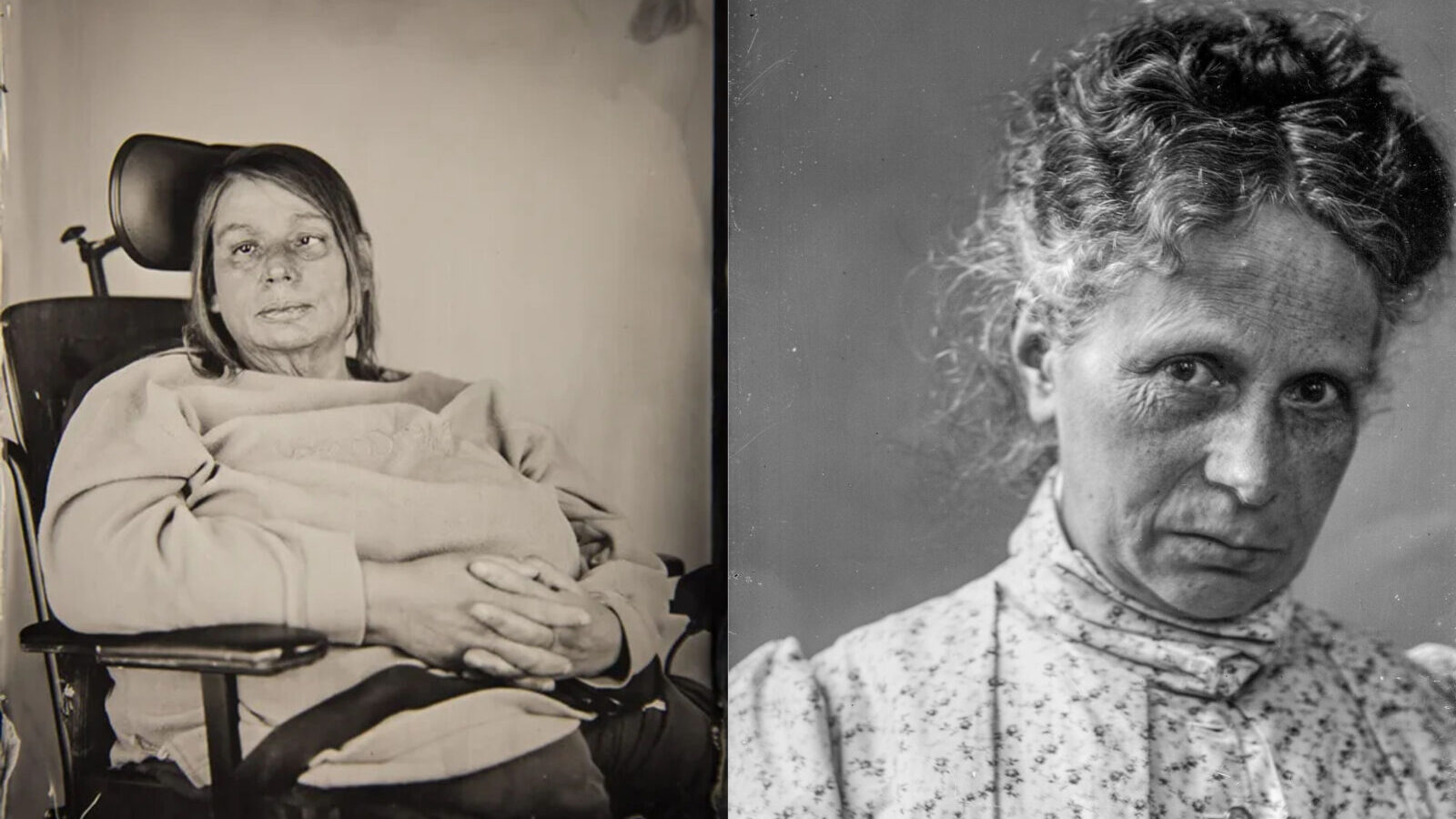
This Indiana Jones-type rescue yielded astonishing results: almost 200 slides of superb clarity, in which people with learning disabilities from more than 160 years ago posed for portraits.
Most of them were finely dressed, sometimes holding an object significant to them, many looking confidently at they sat or stood, waiting patiently while the long exposure time needed for Victorian photography elapsed. Each was named so traceable through Earlswood records.
Surrey History Centre has digitised all the slides to a stunning level of clarity, and attached a name to each.
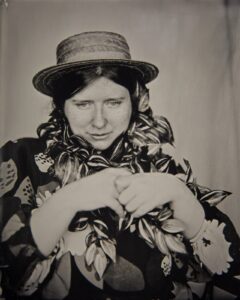
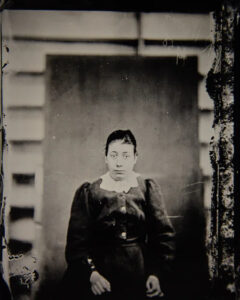
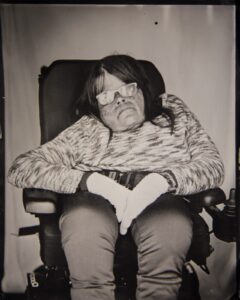
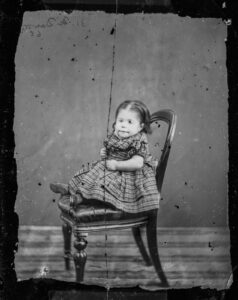
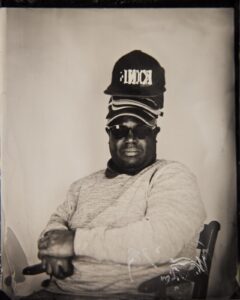
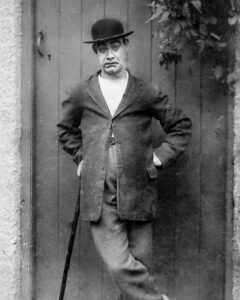
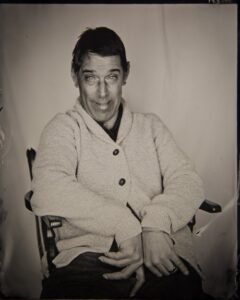
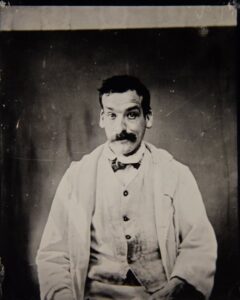
And so it was that I found myself spending a day at the centre to witness the groundbreaking work of the Us and Them Project inspired by and engaging with these and other asylum photographs from the period.
The project is led by Freewheelers Theatre, a Surrey-based company of creatives with disabilities.
The Freewheelers actors teamed up with the Surrey History Centre, King’s College London historians, media company On The Record and photographer Emma Brown to recreate the images produced by Down from a modern, very personal perspective.
Freewheelers members chose a portrait with which they might feel some sort of affinity or connection, and posed to recreate the image using the same photographic techniques.
Brown is an expert in the Victorian tintype technique, as used by Down, which creates a photographic image on a thin sheet of coated glass or metal.
I watched as each person, having chosen their pair from the collection, got themselves into character, prepared their props and clothing then sat for the eight-second exposure this form of photography requires.
Any movement blurs the photography, so stillness is important, something which Brown says brings a contrast to our current hectic methods. After each photo has been taken, we watch the complex process of development. Slowly, fascinatingly, the image starts to appear. The whole process takes about 10–15 minutes.
The beauty of this technique is that the sitter is intimately involved in image creation, from choice of clothing, props, pose and expression through to witnessing the emergence of the photograph itself.
It feels that the bonds between present-day sitters and their chosen counterparts from 165 years ago are close – the relationships have both depth and emotion.
I’d like to hope the Earlswood sitters were also able to watch in the same way as their image magically emerged.
It is clear, by their immersion in the process, that the Freewheelers group feel an empathy and affinity with these Earlswood residents that evaporates the time difference of a century and a half between them.
Us and Them, which was displayed recently at King’s College London’s Curiosity Cabinet, perceptively raises powerful issues about representation, disability, inclusion and self-perception.
This original project is producing stunning, challenging and provoking images. This is history as it should be told.