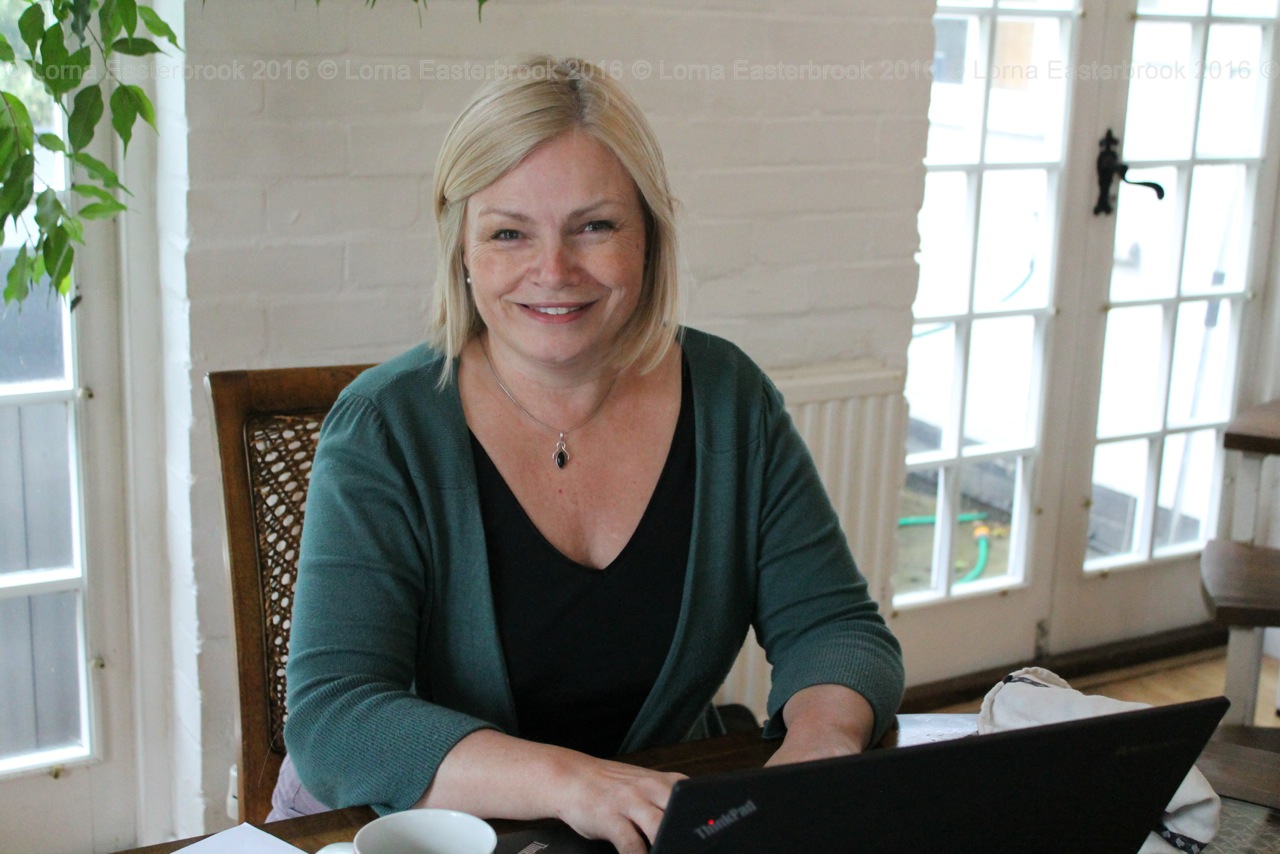
‘The world to come’ – the work of Ntiense Eno Amooquaye

Simon Jarrett attended the launch of a new book by a striking new poet and artist whose work challenges and pulsates with energy

It is hard to pin down the work of Ntiense Eno Amooquaye. She is an artist, an illustrator, a poet, a performer and a commentator. Yet all of this does not quite describe the unique fusion that she achieves when she creates her work. As the title of her first published work – Artist Audio Recorder – suggests, she cannot be pinned down easily.

Mesmerising

Her book was launched in November 2014 at the end of an exhibition at the prestigious Saison Poetry Library at London’s Royal Festival Hall. It features illustrated poems and photographs of her working process, which become part of her finished work. Much of her poetry and art draws on the sights and sounds of her home city of London, and presents a mesmerising vision of a pulsating city, life emanating from its bricks, its signs and its people. A Tube station is infused with the words:

Zone is the underground

And the world to come

Passion, text and writing

The poems are not illustrated in the sense that she writes a poem and then illustrates it – the poetry and the illustration are fused together as one piece, inseparable. It is a remarkable format. As Chris McCabe, the poetry librarian at the Saison Library has written:  ‘There are few artists that can create genuinely beautiful work that also embodies , and foregrounds, their working processes… we are fortunate that there are some artists who bring us into their world of creation and allow us to see how they arrived at their end point. Ntiense Eno Amooquaye is one of those artists.’

Recorder

The author has come through the ranks of Intoart, who work with and develop talented artists who have learning disabilities. Supported by an Arts Council grant she spent a year researching in the Saison Library, following words that intrigued her into the canon of work that is held there, drawing inspiration from poets who had gone before her to create her own body of work. Part of her approach was to make an actual physical link, creating hand-painted bookmarks which were placed in the original work and invited readers who came across them to respond to what she had done. Her originality is remarkable and the key to it is in her unique take on that word ‘recorder’ that appears in her title. This is how she defines herself. As  Chris McCabe says:  ‘Ntiense Eno Amooquaye is the recorder, making connections between what is seen and read, and documenting them in stages across various media. If London ever ceased to be, the people of the future could access the archive of this artist to gain a sense of what life in the metropolis was like in 2014.’


Her poetry is about life, contact, connections. The actions of the everyday make a connected world, in which humans are powered by each other’s warmth and energy:  noisy, messy and very much alive:

Curled hair to

Straighten and perm

Lights to switch on

And off when it is

Dark

Approaching of

Somebody who wants

To get close to you

A tremendous debut from a poet/artist from whom we will hear much more.

Ntiense Eno Amooquaye’s book, Artist Audio Recorder can be ordered via the Intoart website:  http://www.intoart.org.uk/studio/weblogs/Exhibitions/blog.html

Painted words, written images

Author and illustrator Daniel Lehan reviews the intriguing and idiosyncrantic work of a remarkable artist and poet with a distinct creative process


Ntiense Eno Amooquaye – Artist Audio Recorder


Published by INTOART 2014


ISBN 9780948835537


Artist Audio Recorder contains not only the work of this remarkable artist, but also photographs documenting the making of her work created for her 2014 exhibition Hera Master Come Down at The Saison Poetry Library in London’s Royal Festival Hall. This exhibition featured her picture poems, Riso prints, and a series of bookmarks made in response to eight specific poetry books at the library.


Beautiful


So we see each one of the beautiful bookmarks – hand painted words and images in a range of warm greys, blacks and whites – facing the actual poem that inspired the bookmark. We see initial responses to each poem on the pages of her notebook, we see a series of stills from the film Artist Audio Recorder of the artist writing her notes into their final form, and we see the photographs that Ntiense took of shop signage and signs around Clapham, which she later used as source material for the bookmarks. These reveal a rich and privileged insight into her distinct creative process.


When the exhibition ended, copies of each bookmark were inserted inside 40 poetry books and placed on the shelves to be found by users of the library. On the reverse of each bookmark was an email address – an opportunity for the finder to contact the artist with their comments and reaction to finding such a treasure.


Ntiense is a member of Intoart, an artist-led visual arts organization based in London working with adults and young people with learning disabilities. As part of this, Intoart supports each artist member to fully document and archive their artwork in splendid archival boxes. This aspect of Intoart’s work was recently celebrated at Tate Britain with an event during which each artist presented examples of their work, carefully taking each artwork from their box for all to see. And so in her book, we have pages showing us Ntiense’s archival boxes, photographed to reveal their contents.


Poetic influences


People often draw similarities between her work and the work of William Blake, specifically his illuminated books – the most well-known being Songs of Innocence, and Songs of Experience.


For me her works recall those of Kenneth Patchen (1911-1972), a sadly neglected American poet and novelist. I particularly enjoy this comparison with a more contemporary writer (he never considered himself to be a visual artist). He was, as far as I am aware, the first poet to recite his poetry accompanied by jazz musicians. His biographer wrote that he “developed in his fabulous fables, love poems, and picture poems a deep yet modern mythology that conveys a sense of compassionate wonder amidst the world’s violence”. He hugely influenced the poets of the Beat Generation. He also, and significantly, suffered for most of his life from a crippling spinal injury aggravated by a series of unsuccessful and botched operations, which resulted in him being bedridden. From there he continued work, producing an extraordinary number of painted books and painted poems, and it this work that is akin to Ntiense’s.


Words and images


Several months ago I told Ntiense about the work of Kenneth Patchen. When she looked at his work, she said it was ~


Really bold 

Contrast and colours

New and fascinating

Human beings as monsters

Seeing him and me on two sides of each other makes the different types of ideas transparent


Patchen and Ntiense each create an idiosyncratic world where words and images carefully intertwine – are married together – on the same page, with a beguiling level of skill and care. Achieving this is no mean feat. Far easier to fail with either word or image dominating the other – rather than creating a fine balance between the two.


After looking at Nitense’s work I have a feeling that not only has she painted words, but that the images she paints have somehow been written.


Daniel Lehan

www.daniel-lehan.com

http://thekitchenwindowgallery.blogspot.co.uk

http://2015todayi.blogspot.co.uk

http://eachdayadrawing.blogspot.ca


How ignorance about the Mental Capacity Act can land councils in trouble

Cambridgeshire County Council was found guilty of maladministration causing injustice by the Local Government Ombudsman, a salutary lesson for managers who do not keep up with the law and put pressure on their staff to operate on a ‘business as usual’ basis. Belinda Schwehr explains.

In a complaint involving the Local Government Ombudsman (LGO), rather than the courts, Cambridgeshire County Council was found to have failed to act in accordance with the Mental Capacity Act, not conducting adequate mental capacity assessments, or properly considering best interests. In addition, the Council did not fulfil its obligations under the Choice of Accommodation Directions.


Mr N was an elderly man, with dementia, and wandering a great deal, to the consternation of the local police.


Officer A had visited Mr and Mrs N at home with his manager, a senior social worker, on a given date. The Council’s notes said the purpose of the visit was to “explore the relationship between (Mr and Mrs N) and assess safety issues”. The Council’s notes said that Mrs N “seemed to accept that she cannot (on her own) look after (Mr N) in an appropriate way and that they will both benefit from a period of respite”. Mrs N said she would want her husband placed in a home close by due to ‘transport issues’.


Best interests

There was no reference on that first assessment or the case notes from that visit, to Mr N lacking capacity or to any best interests decision.


A couple of days later, Officer A telephoned Mrs N to say he had provisionally booked respite at a care home 14 miles away (Sandpiper House). Mrs N said that she did not want to travel that far. She said she wanted her son, Mr P, to be part of the decision making process and asked Officer A to telephone her again later that day.


When Officer A telephoned again as agreed, the notes said that Mrs N ‘flatly refused’ to agree with the respite placement. The notes say Officer A ‘assured’ Mrs N he would try to place Mr N closer to the marital home when a vacancy became available.

Officer A telephoned Mr P, the son, on the evening of 19 June 2013 to “enlist his support in persuading his mother to accept respite for her husband”. Two days later, the manager of Sandpiper House visited Mr N at home to carry out an assessment. Officer B records a telephone call from that manager, who had concluded that Mrs N “did not wish her husband to go there for respite”.


Top ups

Mrs N had reportedly told the manager there was a vacancy at Primrose Lodge, only 100m away from their home, and that she would have preferred her husband to go there. Officer B recorded in the notes that Mrs N was aware Primrose Lodge did not accept the Council’s fees and that “a top-up could not be made for respite, even if (Mrs N) agreed to pay it, which would be unlikely”.


As the ombudsman recorded, this information was simply wrong; top-ups can be made for respite placements. The Council acknowledged this in its response to the enquiries. The Council also acknowledged and apologised for not consulting the family about their ability to pay a top up at this stage.


As far as the ombudsman was concerned, clearly a placement at Primrose Lodge would have been less restrictive, as it was close to the marital home, in Mr N’s local area. It appeared to the LGO that the Council gave no consideration to this option, once it became clear the home did not accept the Council’s benchmark. This was despite the Council viewing the situation with Mr N as ‘urgent’. Furthermore, no action was taken in respect of another home four miles away.


In my view, any LA that thought that this was what was needed, for the management of the situation, in terms of overall suitability, taking the emotional and psychological wellbeing of the person and the enhancement of that from visiting, already owes a duty to pay the full cost, and this is what has been missed by even the Ombudsman.


The manager of the care home had noted “no capacity to make decisions”. The manager had selected options that stated that Mr N appeared to lack capacity; but no two stage mental capacity assessment had been completed; and no best interest care plan had been formulated.


Responsibility

Officer B said the ultimate responsibility for entry to the care home lay with the GP. The ombudsman, however, said this:

– the Council had ‘provisionally booked’ a place for Mr N at Sandpiper House

– Officer A tried to ‘enlist’ Mr and Mrs N’s son’s support for the move

– the Council approached Sandpiper House and arranged for the manager to carry out an assessment, and

– the Council approached the GP about Mr N going to the home.


In these circumstances, it was clear that the Council was responsible for arranging the placement.


A few days later, the daughter said she was going to remove Mr N from Sandpiper House. Officer B recorded that she told Mrs O “she was free to do this if she assured me that she was going to remain at her parent’s house and that she would ensure that she provided 24 hour care and supervision to her father”.


This smacks of gross professional incompetence but it would not have simply been one member of staff who decided to lay this particular burden on the wife, we are sure.


Mr N’s brother had asked to take Mr N out with him and Mrs N “but the home manager informed them that this would not be possible and should they try to remove him, they were requested to call the police”.


This is the kind of intimidation of the unaware, through veiled and unconscionable threats, that got Surrey into trouble 4 years ago, with a man in a care home….


Focus on record keeping

The MCA Record in use in this case required the person completing it to record:

• when and where the ‘supportive meeting’ took place and how long it lasted

• in detail how the person was supported to understand the nature of the decision

• the options that could be offered

• the likely consequences of those options, and

• where possible, the person’s own words or response.


The completed record addressed only the first of these requirements. The Council maintained that the visits constituted informal mental capacity assessments and ‘best interests’ decisions, despite no record of any issues or concerns at that visit. The Council also maintained that the decision record completed two weeks later was sufficient to discharge its duties under the Act.


The ombudsman disagreed. The Code says “Anyone who believes that a person lacks capacity should be able to prove their case”; that “Professionals, who are qualified in their particular field, are normally expected to undertake a fuller assessment, reflecting their higher degree of knowledge and experience”; and “An assessment of a person’s capacity to consent or agree to the provision of services will be part of the care planning processes for health and social care need, and should be recorded in the relevant documentation”.


The Code also says that “Any staff involved in the care of a person who lacks capacity should make sure a record is kept of the process of working out the best interests of that person for each relevant decision, setting out:

• how the decision about the person’s best interests was reached

• what the reasons for reaching the decision were

• who was consulted to help work out best interests, and

• what particular factors were taken into account.


Good practice

Finally, the Code outlines that “It is also good practice for healthcare and social care staff to record at the end of the process why they think a specific decision is in the person’s best interests. This is particularly important if healthcare and social care staff go against the views of somebody who has been consulted while working out the person’s best interests.


The LGO recommended that the Council should:

• Apologise to Mrs N who had had to struggle to ensure that her husband was accommodated in a respite home near enough to their home for her to travel to see him. That apology should accept responsibility for the faults, and acknowledge the impact these had on Mrs N. It should also include an assurance that the same faults will not happen again, and explain what steps have been taken to ensure this.

• Set a timetable for refresher training for social care staff on mental capacity assessments, best interest decisions, deprivation of liberty and the role of the Court of Protection and how to advise the public on their rights.

• Pay Mrs N £750 in recognition of the distress caused by the failings identified and the time and trouble she has expended in making her complaint.


As we enter into the final stage of workforce development for the Care Act, sagas like this only serve to prove that the development of the law may make little difference to staff if they have workloads that make them too busy to keep up to date with legal issues, or too weak to stand up to managerial pressures, and attempting to operate on a ‘business as usual’ basis.


Box

What could have been done

differently?

• If the Council had told Mrs N about the place at another home four miles away, she would have had the option of agreeing to this and therefore saved herself significant expense and inconvenience in travelling 14 miles on two buses each day to Sandpiper House.


• If the Council had told Mrs N and her children Mr N could move to Primrose Lodge (100m away) if they could pay a top up, they would have had the option to make such arrangements. They did finally agree to pay a top up at another home, Carlton Court.


• A formal best interests meeting with appropriate attendees may have provided an opportunity to consider all the relevant information and helped to reach a decision more acceptable to all parties. Mr N may have suffered the injustice of being unlawfully deprived of his liberty, as no consideration was given to this.


• The Council did not give Mrs N any information about how to formally challenge the decisions of the Council. This might have helped resolve matters earlier. The Council did not consider referring the case to the Court of Protection.


Belinda Schwehr

Care and Health Law

Keys that unlock the doors to citizenship

 Ten years after the launch of Keys to Citizenship by the Campaign for Welfare Reform many people with learning disabilities are still living lives far removed from the principles set out in this ground-breaking guide. Sam Sly reports on a new project group formed to get people thinking about how we can revitalise the Keys to bring about real change for people.

This year will see the launch of ‘Keys – Citizenship for All’ project, very apt as it is also the year of the general election and with it, let’s hope, a positive change for the citizens with learning disabilities and their families we work alongside. We, the project group, are extending an invitation to anyone (families, people with learning disabilities, supporters, advocates) or any group (self, advocates, providers, community and statutory groups and commissioners) that would like to help us think about how Keys can help them form a platform for improving lives for people with learning disabilities in society.

As a young social worker, many years ago, it was Wolfensberger’s Social Role Valorisation (SRV) (1983) that helped me make sense of what was happening for people with learning disabilities, and what those working side-by-side with people should be doing to enhance, maintain and defend the valued social roles vital to helping people be accepted and belong in society. It was a ‘lightbulb’ moment for me! Having a set of beliefs and, more importantly, a framework to work in seemed beneficial when faced with what often felt like an impenetrable, entrenched world of congregation, segregation, isolation, de-individualisation, exclusion and wasted lives. That was in the early 90s – how much has changed today?

In 2007, while working as part of the Change Team in Cornwall helping to transform lives after the scandalous treatment of people with learning disabilities by Cornwall Partnership Trust and other public services, I was introduced to Dr Simon Duffy’s Keys to Citizenship (2003). This was the nationally acclaimed model published as a guide to getting good support for people with learning disabilities. To me it was a natural progression from SRV but with principles that were clearer and not so beset with the language barriers that put some people off. Keys became my second ‘lightbulb’ moment! In subsequent years the Keys were taken on by many working alongside people with learning disabilities helping to improve their lives and develop true citizenship.

What is citizenship?

When I am training support workers and managers the first question I ask is, what is citizenship? Often it is not something they have thought very deeply about, just taking it for granted. If you have no disability or traits that others perceive as different then citizenship is a ‘given’. However, the importance of citizenship is often little understood or appreciated. Citizenship is about how we can all be equal and different. We should all be equal as citizens and equal members of our community. As citizens we should be welcomed into the community for who we are; with all our gifts and differences. Citizenship is how we reconcile equality and difference through community.

For those people in society with perceived differences like learning disabilities, citizenship just does not happen. I believe citizenship and the acceptance it brings is possibly the Key to truly belonging, being valued and getting the good things in life. With this belief it seems nonsensical not to be shaping services around the Keys to helping people with learning disabilities achieve full citizenship.

Citizenship carries with it both rights and responsibilities.  The rights include the right to political participation, the right to be heard and to free speech. It also involves the right to work, live a life that makes sense to you and the right to respect and dignity. With rights also come responsibilities, including following the laws, respecting others, contributing and being productive. People with learning disabilities are often not made aware that they have responsibilities in the communities they live in. Not only are the rights of people with learning disabilities ignored but also their responsibilities.

Sadly, more than ten years since the Keys were published, we still have not seen a transformation. People with learning disabilities still lack a strong voice and are still not able to expect the same life chances as others. They are still housed together, lack the opportunities to work or to be self-sufficient and have few opportunities to form loving, caring relationships. Many are still unable to make positive contributions to the communities they live in. All this cumulates in wasted lives and, in some instances, the worst possible outcome of death, despite the millions poured into services and the thousands whose job it is to help people have these opportunities. Enough is enough – it’s time for change!

In 2014, Dr Simon Duffy, Wendy Perez, Cornwall People First, Gary Kent from New Key and myself came together as a project group to refresh and refocus Keys – Citizenship for All and update the model to reflect current thinking and to form a platform for transformation.

What are the Keys?

We believe there are seven key areas forming the platform for citizenship and a good life for people. Any service purporting to be supporting people with learning disabilities should be able to say and show they are accomplishing these Keys:

  1. Freedom – control over your life and the ability to speak up (or have help to speak up) to be heard and to be legally visible in society.
  2. Purpose – having goals, hopes and dreams, a structure for your life and a plan to achieve this.
  3. Money – to have money for what you need to live a good life and real control over how that money is spent.
  4. Home – a place that belongs to you, where you have control over everything that happens there. A place that can be the base for your life and where you feel safe.
  5. Help – good quality help that enhances your gifts, talents and skills and ensures you have positive social standing, freedoms, rights and responsibilities in society.
  6. Life – opportunities to play an active part in your community including working, having fun, being with other valued people and contributing through your gifts and talents. People are more powerful when they work together.
  7. Love – that you are able to experience a full range of loving relationships and through these experiences contribute to a more loving society where differences are revered and respected.


Key 4 illustrates how important these Keys are: Home – and how home has become distorted and misused for people with learning disabilities by ’serviceland’ leading to unhappy and sometimes dangerous lives.

‘Home is where the heart is’ – how true that old saying is. Think about how important your home is to you. My home roots me in my community and is where I can easily get to my work. It gives me status and is a financial asset. My home helps promote my citizenship. At home I can be myself and express myself through how I paint and furnish it. I feel at ease and I’ve brought up my family there. I am comfortable and settled and I can do all this in privacy. Most importantly, I feel safe because the people I live with are people I have chosen because I love them, so I am not scared of violence and abuse. Should we not aspire to make this true for all the people we work with?

Unfortunately, home for many people is often something quite different. We even talk about home differently – you and I live at home, people with learning disabilities live in a home. There is often no ownership, no belonging and it is somewhere people are put, often together with people they did not choose, grouped together because they have similar devalued traits. To top it all, if they do anything other people don’t like at home, they can be removed. Why is it so different for people with learning disabilities? There are a raft of reasons but I believe that what is good enough for me is good enough for a person with learning disabilities and Keys helps us understand what it is that we should be doing, not what ‘serviceland’ is currently doing.

Keys have been successfully used nationally by Experts by Experience Organisations, like Bournemouth People First and Cornwall People First, to form the basis of quality checking and training businesses where people with learning disabilities are paid. I also used Keys to develop ‘Hands Off It’s My Home’ a quality checking self-assessment toolkit which many providers have used nationally to ensure the services they provide give people good lives.

We want to do more and are excited about what Keys might do for people with learning disabilities and their families in the future. So far, we have interest from Gloucester Voices, Bournemouth People First, Skills for People and New Prospects and international interest from Ben Drew of Open Future Learning in America and Kate Fulton in Australia.

If you have ideas, questions or would like to become involved in this exciting project please contact me, the project manager, Sam Sly sam.sly@enoughisenough.org.uk 07900 424144.


Wolfensberger, W. (1983). Social role valorization: A proposed new term for the principle of normalisation. Mental Retardation, 21(6), 234-239

Duffy, S. (2003). Keys to Citizenship: a guide to getting good support for people with learning disabilities, The Centre for Welfare Reform.

Rosemary Trustam reports on the Housing & Support Alliance conference November 2014 – No Going Back

‘Seven decades later people still languish in the corners of our community exiled in our own land, still not free with lives crippled by the manacles of segregation’ Gary Bourlet


Suzie Fothergill (co-chair of Skills for Care) opening the conference with Gary Bourlet (People First England founder and co-chair) was one of those “forgotten people” in Prudoe hospital. Her poem introducing the book No Going Back  – Forgotten Voices from Prudoe Hospital says all too clearly the pain experienced, as do her and others’ stories in the book.

“Institutions stink

They make you want to puke

Doctors think they’re it

And they’ll read you like a book”


“I was kicked around and used,

Insulted and abused;

They messed with my mind right from the start,

Treated me like a dirty tart”


but ends with her “second life” as a parent,  “So now I’ll tell you”


“I’ve got a voice

I’ve got a right to make a choice

I’m not a toy for you to abuse

I’m a woman of spirit and now I’ll refuse…

To take that abuse any more”


Suzie said we all have challenging behaviour but people get lost put behind barred windows. In contributing to the book, she said at first some people were frightened to talk about it, but by getting together and relaxing , ‘we were able to get it off our chests and into our book’. Lessons must be learnt ‘to teach our children that we’re all the same’ – it’s just ‘some don’t walk or hear the same’, but everyone needs a life and to be involved.


Gary’s powerful campaigning speech set the tenor for the conference. The ‘No Going Back’ theme highlighted the frail progress made since Prudoe and other long-stay hospitals closed, given the shocking revelations across the recent past such as Winterbourne View and Connor Sparrowhawk’s death. Housing and Support Alliance (H&SA) have committed to this theme, representing Providers on the new Learning Disability Alliance (LDA) which launched the following day in Manchester – a strong alliance of people with learning disabilities, families, and providers ,hosted by the Campaign for a Fair Society (England).

Gary  reminded us how recently our welfare state was formed, despite the then crippling post-war debt. It was ‘a beacon of hope in a state battered and bruised by the ravages by war’, but it still took another 25 yrs before disabled people took the ‘long road to freedom’. However, ‘seven decades later people still languish in the corners of our community exiled in our own land, still not free, with  lives crippled by the manacles of segregation’, he said.


He said disabled people would never be satisfied as long as their rights are under threat and they remember….the ‘torture in Winterbourne View carried out  by those paid to care; the unspeakable horrors perpetrated on people by services; Connor Sparrowhawk, left alone to drown in the bath in an NHS hospital; Stephen Neary ripped away from his life and the family he loved’.


People are people first  with hopes and dreams, who can all learn, grow and play together, he said, but people with learning disabilities  needed to get the right to be free, to have their differences and talents embraced and to have the dreams others have. His demands were for equal access to transport, leisure, places  and for ‘our children’ not to be segregated, and denied appropriate opportunities. ‘Only when all adults  see a world of ability not disability, with the right to have basic needs met, will we start to believe’.

He spoke of a new power emerging in the disability community which included people outside it. ‘As we travel, we will travel together – led by those with disabilities and supported by those who are paid to provide’.’ It’s about choices, and the voices of disabled people, made with families, supporters and carers but always with disabled people at the heart of their lives.’

Judith North (Orenda consultancy)  and Katherine Simmons, a mum, whilst supporting ‘no going back‘, wondered whether we are now seeing  “modern day institutions” in the community. Katherine reminded delegates of Irving Goffman’s definition of the total institution  as a place where people spend all their time sleeping, working, playing; tightly scheduled, with rules enforced by a group of officials from whose judgement there’s no escape, surrounded by narrow stereotypes and where plans belong to staff, not the person. ..

Kyle had been a typically fit, healthy, intelligent and active twelve year old boy who suffered a massive brain haemorrhage in 2009. Defying the odds, he survived, but had lost everything that we take for granted like walking, talking, eating etc. Without any rehabilitation facility for children under 16 anywhere in Wales, the nearest in England being 160 miles away, until she met Judith in 2011, Katherine walked the ‘corridors of “he may not..” ‘.

Kyle now lives with mum, goes to school supported by 2 staff with a 24 hours service. However, despite their best efforts, it’s not made things better. 25 organisations are involved who’ve all had ‘a little piece of our lives’…. with a ‘massive lack of coordination’ between them. What’s worked has been the incredible circle of support, the loyal, handpicked support, 3000 followers on their social network, a lead therapist and help in a way which actually helps. Not working is the bureaucracy, communication, relationships, reporting and fighting, being taken over by ‘the crushing weight’ of organisational systems and procedures (‘used to excuse errors or omissions’) and a service design ‘that noone reads’. The constant surveillance over the family’s lives and lifestyles, creates a strain and stress undermining wellbeing and eroding  identity.

A few years ago, they started Kyle’s goal to fund-raise for the legal costs that got the support he needed.  They are now fund-raising for a local facility – a hub – and for a service with the skills/service support needed. It has no state support, but they have a design for a building which young people want to be in, but designed for its purpose.

So for Katherine, ‘modern day institutions’ are services which encompass their whole life and are inescapable. What Kyle’s journey teaches is that what’s needed for Kyle and those who love and care about him, is to be part of an holistic, person centred and positive endeavour to maximise his potential. Who wouldn’t want that for their child? http://www.kylesgoal.org.uk/


Out there in the services, Tom Noon (Chief Executive Cordis Bright) presented the worrying picture, as he looked ahead. He felt that as the cuts bite ‘you won’t be able to rely on the state’ unless you have very complex needs. He saw housing is the single biggest obstacle, along with the inconsistency of what you can expect from Local Authorities with very different funding positions and ways to manage the cuts, and differently committed to moving people out of residential care and newer service models. His six big challenges to rights and greater independence were money, commissioning behaviours, the workforce, the population and fragmentation.

He suggested that people will need to decide what they’ll  compromise and  what they’ll campaign for.  He suggested compromises might be around security of tenure, density of population, pay levels for people providing support, levels of support, families’  financial contributions and acceptable levels of risk, whilst campaigns might concentrate on getting social housing, the living wage and the rights of people with learning disability.


Andrea Pope North (joint chair ADASS learning disability network)  said ‘We know what works – the answers are really very simple. Getting there has proven really really hard’. She wanted to see honesty and sharing of ideas about how to break down the barriers and a real engagement of all key stake-holders in solutions and decisions. She said it’s not an adult only issue – it’s all ages, and artificial age barriers need removing. Community-based services underpinned by Positive Behaviour Management skills and integrated joined up care do work, and individual success stories should be shared. The money MUST follow the person she believed across health and social care in a timely and safe way. Assessment and treatment beds must reduce, with effective crisis support where people live. Workforce issues must be addressed alongside using the rights-based approach coming out of Sir Stephen Bubb’s work.


The energy to ensure people get supported in their communities with real rights came from all directions on the day. There were workshops from providers showing how innovation is happening and ideas being generated, as well as dramatic reminders of individuals’ more negative experiences.


Change’s conference “Our voices our choices our freedom”, whose report from people with learning disabilities has shaped and informed the government report, was highlighted as one of the most exciting developments this last year by Neil Crowther (Independent equality and human rights consultant) on the Panel. He talked of the opportunity for people with learning disabilities to pay more active parts – peer to peer and self advocacy, but also on employing people with learning disabilities to deliver services. Shaun Webster (Change trainer/consultant) “When I take my power, my co-worker is free to take theirs” Neil reminded delegates that whilst there has been European concern about Bulgaria for example where people have been isolated, deprived of their liberty, and had inhuman and degrading treatment, this has been found far from unusual in the UK. Andrea Pope North (ADASS) saw councils driven by Central Government cuts, running out of “magic tricks” but still with the ‘energy and heart’ to look for ideas about how to make services work for local people. There was no lack of challenge from the delegates to the Panel. One parent/carer had been through “11 months of hell” ending up an emotional wreck from the tussles, and accused some on the panel and politicians of ‘living in a dream world’;. Other issues included the need for professionals to learn how to co-work; closing services without “opening up the world” to include people; the need to generate relationships and networks – the big killer being loneliness and isolation; the incompetent work capability system & high cost of some in prison; and why don’t we see adults with learning disabilities working in UK schools.


 (see http://www.housingandsupport.org.uk/hsa-annual-conference-2014 for reports)

What’s happening to our services?


NDTi called this conference, What’s going on? Rosemary Trustam heard expressions of anxiety about the trend towards bigger providers but also some inspiring stories.


This conference reminded us that, against a backcloth of cuts versus human rights, we have to fight to stop the continued use of Assessment and Treatment Units and help people have local community supports. We also heard about how some individuals whose behaviours have been challenging have had their lives turned round.


Bill Love, NDTi’s Head of Development Support and Training, wondered if the range of provision is really increasing or is it more of the same? With a lot of bigger providers taking over, is this a good trend and are we developing really local provision?


He questioned whether the actual costs are known, if commissioners know how to develop markets. He said Somerset County Council is working with Community Catalysts who work with families, individuals and others in very local areas. A recent worry is that residential care is being seen as cheaper. With older people with learning disabilities more likely to be moved into residential care and nursing homes, what are we doing to support them to be in the community as they age? Two evaluations of large residential homes in Ireland and Scotland, where a big investment had been made in people’s rights, showed it is not simply a case of community versus residential care.


The story of Rishard and his mother showed how fragile are people’s life chances. In Rishard’s case, as so often, his family’s perseverance was crucial. His behaviour deteriorated when he moved from primary to secondary school. Rishard has Down’s syndrome and as he became more aware of differences he rebelled against his treatment. He wanted to be the same as his brothers.


Violence and tears

Rishard’s story could well have been one about a placement in an Assessment and Treatment Unit. His behaviour became increasingly difficult with violence and tears, causing Mum to suffer both mental and physical illnesses. Service solutions offered psychology and counselling which never got to the root of the problem. Rishard said the best thing the counsellor taught him was to tie his shoelaces! The family was isolated with Rishard staying mainly in his room as, if they dared to get him out, he could be aggressive. They suffered three years of hell, not knowing who to turn to for help.


What changed?  Almost by accident Grapevine got involved when Mum’s sister saw an item in the paper. From the start, Rachel and Naomi spoke a different very person-centred language. They looked for clues in what Rishard said, interpreting what he meant. Two clues were his wish to be like his brothers and for a part on Eastenders. They took him round local drama groups and found one he liked with mainstream peers, the EGO performance company in Coventry. He now has a role in the next production, has got involved in youth projects and made lots of friends. EGO created a circle of support from what he’d told them and what they could do. His first job was working in the cafe at EGO and later a friend who ran a bar gave him a job.


Then a friend of Mum’s saw an advert for scholarships to the Central School of Speech and Drama in London and Rishard got a place (he’d been turned down by local colleges in Coventry). Mum organised a network of friends in London to help him get to the college and he has now auditioned successfully for a part in a TV series.


What made the difference for Rishard was that the people listened to him carefully and believed in him. They had the right values and training and supported the process of choice and control without taking over.


Lack of connections

Clare Wightman from Grapevine said the problem for people is often their lack of connections, not necessarily their disability. The solution to people’s loneliness isn’t about staff. She quoted Rob Cutler speaking at TASH (The Association for Persons with Severe Handicaps, Washington) in 2003. “I have support staff who don’t keep people company but do keep me lonely”. Services need to think about places where they can go with a friend or to make a friend – in neighbourhoods, education, sports, arts, faith, employment, volunteering. It’s skilled work requiring dedication. People don’t make the most of the opportunities. An example was supported housing tenants who never went to the residents association meetings. People lack strong positive connections with people without learning disabilities, such as with neighbours who see things that could keep them safe.


In his opening address, Rob Grieg, NDTi’s CEO, said that the basic rights and freedoms to which we are all entitled should be our starting point. Without them, at best people don’t get a fair chance and, at worse, they get abused. With cuts eroding rights, inclusion is disappearing; there is less support to get employment, housing rights are being denied and health professionals are not being trained. We have to ensure that Norman Lamb’s promised rights-based Green Paper is effective and check the UN report due out shortly to see how the Government is doing on disabled people’s rights. We have to keep vigilant on people’s rights.


Outrage

George Julian, free lance consultant, described how her outrage had inspired her to join the 107 days campaign. She was joined by Mark Nearey, whose son was unlawfully taken from him when he had flu’, and by barrister Steve Broach who offered to help them make into law their wish to make it a right to be entitled to live in your own home. From this has come the proposed Disabled People (Community Inclusion) Bill 2015 (LBBill). She and Dr Sarah Ryan urged people to consider checking out the Bill and to sign up to support it if they agree https://lbbill.wordpress.com/


Paul’s father told a contrasting story of his son’s journey from a 52-place residential school where he became unhappy at changes, his behaviour deteriorated and he was head butting walls, windows and doors. This led to a cocktail of drugs effectively putting him to sleep in the day but his behaviour was still unpredictable. Things changed when he was moved to a six-person home run by Dimensions where he had his own space and positive controls. After a very detailed assessment, and a difficult six months, things improved markedly. Over the year, his drugs were reduced to one, he lost excess weight, and is now active and eating healthier food. He looks and feels better. He takes part in the community, goes sailing, horse-riding, out in his mobility car, and can engage at home and be on his own. Part of the solution was having the right support workers who were relatively laid back but able to set the right boundaries. Also important was the right environment and controls; for example, motion sensors picking up his movements if he’s upset or unwell, a bath water control which cuts the water off if it might overflow, locks that open if there’s a power cut.  Apart from his improved life, although the direct support costs haven’t changed, the indirect costs, like psychology, doctors and drugs, are markedly less.


We heard from Fiona French about how her life changed when Certitude helped her design her own package which helped her move to where her friends are, develop a good social life and reduced her support from seven days a week to two sessions on two days.


Rob Grieg pointed to evidence that anyone can be supported to have a job. The Government saves £3,500-£7,000 when someone gets a job as people have fewer benefits, pay tax and need less or no social care, making a saving of £5 for every £1 spent. Too much money is being spent on job preparation with no evidence that it works while there is evidence that supported employment, on which only a third is spent, does work. He suggested the only way to change this is to get senior people signed up to SE, ensure providers know what they are doing and ensure the results are tracked.


Step-change

A step-change in maturity and trust is needed, questioning the current commissioning model, said Chris Hatton, researcher at Lancaster University. If people had a guaranteed personal budget for ten years, they would be able to plan longer-term and for contingencies. He advocated a ‘Ninja Task Force’ led by people with learning disabilities and families who would have control of the money, taking some off local commissioners, and with the money transferred from hospitals fund good local personalised supports. Local commissioners would only get funding if they showed they could be trusted.


People felt there was a big divide between children’s and adult services. Children’s services too often focus on the family rather than the child when they need to do both. Children’s and family services are not ambitious enough and there is less emphasis on enablement. They are not grounded in local communities and do not search out local networks. Chris suggested ‘a grown-up conversation’ should be had a lot earlier with children, moving beyond the family early on.


Full conference presentations at: http://www.centrevents.co.uk/ndti2015.html


A travesty of community care

From the July 1988 edition of Community Living


Edna Wallace describes the plight of a family that has fallen victim to the tug of war between health and local authorities.


Imagine, if you can, a young couple without any family history of mental or physical disorder, having three children with profound physical and mental handicaps.


The degree of handicap is gross without any known diagnosis, and the condition does not manifest itself during the first six months of life, so the couple start off believing they will have a normal child. Nor does the condition restrict itself to one gender; there are two girls and a boy. Debbie is now 23, Susan is 21; John is 19 years old.


In 1972, John was four and attending the day-care facility at the large ‘sub-normality’ hospital where I worked. All three children were without speech, incontinent and showed little response to the loving care given by the bewildered parents whose own life expectations had been shattered and who were beginning to accept that more than love and home care would be needed as their children’s individual needs were identified.


Both girls were placed by the local education authority in Rudolph Steiner boarding schools a considerable distance from home and each other. This meant miles of driving for the parents to visit the girls and bring them home for weekends and holidays.


I was involved in the subsequent fight to get the same quality of individual education for John, the worst affected by multiple handicap.


Boundary changes taking place at the time between Oxfordshire, Buckinghamshire and Berkshire meant complications and a consequent struggle over financial responsibility for these three children. Letters flowed between authorities, though the parents were rarely included in discussions. The children spent a lot of time at home until Berkshire Social Services and Health Authority took on board a holistic approach to the family, bringing relief for a time.


When the family had to move to another area, negotiations regarding responsibility for care, education and training had to be resumed. Both girls were finally placed in a private and voluntary home whee their individual needs could be met. DHSS funding, topped up by local social services, was agreed. The girls settled happily.


For John the story has become more complex. His condition is the worst, and he had to leave Steiner school after an operation for dislocated hips. He was thereafter permanently confined to a wheelchair. More recently, he has had surgery to remove the head of femurs in both legs because of muscle spasm.


Aged 16 years, John became resident in a Barnardo’s special school, well over an hour’s journey from his sisters. However, it proved a milestone in the care and support given to John and his family. The parents have visited frequently and co-operated with the school to help John feel secure and stable again. With regular home care throughout all school breaks and during recuperation from illness, and with the girls coming home to see John, the family has kept together and all three children show recognition and affection for each other.


In 1986, it was agreed that it would be in John’s best interests to remain at Barnardo’s school until alternative living accommodation was available. It was felt this might be in a small community unit planned by the local health authority. The unit was scheduled to open in September 1967 and John was due to leave school that July. When the scheduled opening was postponed until September 1988, the school was willing to keep John at Barnardo’s. It was assumed that social services would be responsible for fees, now that John had passed school leaving age, and that the health authority would take responsibility when John moved to their service.


During the three months’ school holiday, John was at home with his parents and there was no indication that there would be any change in the arrangements. With the full approval of the school principal, John looked forward to returning to an environment where he was happy and where his care, treatment and education would continue.


Forty eight hours before the parents were to return John to school, a letter came from the social services. Without any consultation with either the parents or Barnardo’s, came the command “Do not return John to school; there will be a place for him in a large mental handicap hospital, until the health service community unit is ready”.  An unsolicited rider was added to the effect that this was “in John’s best interests”.


It was, in fact, in the best interests of the social services department and their publicised ‘cuts’. It also indicated their failure to offer enlightened support to this tragic family or to know anything about John’s real needs. They even suggested that, as an alternative, John could live permanently at home.


The health authority refuse to take financial responsibility until John transfer to their service, either by admission to a mental handicap hospital or to a community unit, the opening of which is now not expected until 1989. Social services argue that they were not previously responsible for John, nor did they expect to be responsible for his care in view of his specialist needs.


In the event, Barnardo’s did accept John back in September 1987, hoping the relevant authorities would sort out their responsibilities and pay the fees. So far this has not happened and the fees remain unpaid. The parents refuse to accept that it is “in John’s best interests” to be admitted to hospital after all their years of struggle to attain for all three children a quality of life which is their right.


The private home where both daughters have settled have said John could join them at a cost (after DHSS allowances) which will be lower than that to the health authority of a place in the new community unit. The fees also compare favourably with what any social servicers department could provide. Placement in this home, possibly through joint-funding by both authorities, would mean all three children would be together, and likely to remain together. There would be one journey for parents and increase contact for Debbie, Susan and John/


After nearly 25 years of chronic stress, sorrow and anguish, should these parents not be allowed some peace of mind? All parents who have a child with learning difficulties worry about ‘what will happen when they are no longer able to cope’. These parents have admirably fulfilled their obligations to their children and to society and it is time society offered a belated chance to reconstruct their lives.


It seems ironic that the mother, who has already been offered an opportunity to return to qualified nursing, cannot make this contribution at such a time of shortage. What a travesty of the policy of care in the community if those who are responsible cannot look humanely and compassionately at this family’s story.


Edna Wallace has worked as a psychiatric social worker in adult psychiatry, research and training. She now co-ordinates a social work input to community mental handicap teams and is a lecturer and writer on the subject.


Residential Care or Supported Living?

The new government is said to have signalled the end to austerity and there is now an opportunity for the opposition to resist some of the worst effects of this policy on vulnerable people.

Unfortunately, it is unlikely any policies will be related specifically to learning disabilities. The last seven years have seen an alarming fading of government focus on learning disabilities and the funding to support them, along with the services, infrastructure and policy initiatives necessary to enable them to live independent and meaningful lives.

We raised major issues during the recent election campaign that we feel are vital to the future of people with learning disabilities in this country. First, why are they, even though already among the groups most affected by poverty in the UK, inordinately bearing the brunt of spending cuts? This process must be reversed. Second, action must be taken over the scandalous 6% employment rate of people with learning disabilities. This is a shocking waste of human potential. Third, we are seeing a move away from people with learning disabilities living in their own tenancies in their communities and a growth in large-scale institution-like ‘housing units’ (as our columnist Robin Jackson writes on page 10). This is a depressing step back into the past which is taking people out of the communities they have fought so hard to be a part of. Finally, there are still over 2,000 people with learning disabilities locked up in hugely expensive ‘assessment and treatment’ units, often far from home and family, where abuse and ill treatment are rife, as happened at Winterbourne View. Our article on page 7, written from inside the world of NHS commissioning, shows the callous way in which some of these dreadful commissioning decisions are made.

We endorse the call by Simon Duffy on page 9 to get political In the face of these threats and government indifference. People with learning disabilities, their families, activists, and those who work in the field, have an obligation to return to grass roots action, to bring the issues facing people with learning disabilities back into public focus. There is no better place to begin than the Seven Days of Action campaign (https://www.sevendaysofaction.net) and we urge readers to join and support this campaign against the scandalous incarceration of people in bleak institutions far from home. Our forthcoming issues will focus on the other challenges that people with learning disabilities face, on multiple fronts, and we will discuss action to address them. As Simon Duffy puts it, “It’s time to stop feeling sorry for ourselves.” The time to be quiet and hope for the best is over.

The Care Act – will ambiguous wording lead to more judicial reviews?

The Care Act Regulations and Guidance have now been finalised. Belinda Schwehr has been scrutinising the small print.

Two significant areas are affected by the changes – eligibility for care and direct payments.


Eligibility criteria

Ability with regard to the activity of ‘cleaning and maintenance of one’s home’ has been re-worded to ‘maintaining a habitable home environment’.


I think this connotes a far greater degree of insanitariness before a council would consider a person’s inability to do routine cleaning as something that has a significant impact on their well-being. They could even think this means no cleaning and shopping need ever be funded as adult social care.


That would be dangerously ignorant as the regulations contain an extended definition of what it means to be unable to do something. Being unable can still be established if someone is being assisted to do the task in question – and,   importantly, prompting is specifically included in the guidance as a form of relevant assistance.


The guidance, which must be acted under, is arguably more inclusive than the regulations about how these questions should be regarded.


For instance, under managing and maintaining nutrition, it states: “Local authorities should consider whether the adult has access to food and drink to maintain nutrition, and that the adult is able to prepare and consume the food and drink.”


Although the assessment should be carer-neutral, and look at whether the person is able to manage accessing food and drink in person (or able, but only with assistance), the wording here may make councils look at the factual situation in the person’s household, at whether the client does have access to food and drink – for instance, because a carer is getting the shopping in.


This is probably unavoidable without proper training but at least it means that shopping must therefore be done for people who do not have anyone to do it for them and who can’t get out or use the internet to get it delivered. It’s not rationally possible to assert that the impact would be insignificant for them.


Also, on the question of maintaining a habitable home enviroment, the guidance says: “Local authorities should consider whether the condition of the adult’s home is sufficiently clean and maintained to be safe” – NOT, please note, the adult’s ability to keep it that way, him or herself!


It goes on to say: “A habitable home is safe and has essential amenities. An adult may require support to sustain their occupancy of the home and to maintain amenities, such as water, electricity and gas.”


I think this is there to ensure that housing-related support remains a social care service in the national criteria for people in the supported living and extra care sector where grant funding for contracts with housing providers has been stopped.


Two or more outcomes?

Bizarrely, to be eligible, one has to manifest inability in ‘two or more’ of the ‘outcomes’ on the list of activities in the regulations, with no obvious indications as to what a council should do with a person who presents with just one, but highly significant, area of inability….


Practitioners apparently struggle to think of a person with only one area of difficulty but not two. It is also thought that no practitioner would walk away from someone they think needs to be found eligible and will thus find a second area of need with a significant impact on well-being, once the two are put together.


But the regulations would not have been worded this way if it was not thought that such a person could exist but what to do about it is not described. I believe the only options are to find the person ineligible but give them a preventive or reduced service or to fudge the matter and find two areas of need which, when combined, would have significant impact.


Direct payments

The government’s position on councils needing to budget for ‘sufficiency’ – and people’s ‘reasonable preferences’ – has been left in but I think the guidance related to it has become more controversial and susceptible to judicial review.


‘Andrew’, the case cited in the final guidance, still gets about 35% more cash for a better outcome, from a direct payment provider, than it used to cost the council to purchase his care from another agency. He is much better off in the new service because he now gets continuity – the same carer, every time.


Councils will be anxious about the inherent cost. Of course, carer continuity is a preference, and in some cases (autism, for instance) it may well be a need. But constant changes of staff in social care mean it’s impossible to ensure continuity. Consequently, if carer continuity is a need in a particular case, the council would have to pay for it but if it is a ‘more than reasonable’ preference, it could be funded by the person, not the council.


That would mean limiting the direct payment, which most would find acceptable, to the real cost to the council, as long as there was transparency and recognition that a contract for an individual might cost more than for the council buying in bulk.


Unfortunately, the guidance implies that a direct payment could be denied altogether, and not just limited, on grounds of a bald test of it costing ‘more’ on a direct payment basis, compared with a council commissioned arrangement meeting the same needs and outcomes. This is a different situation altogether to Andrew’s but still not one which anyone working in direct payments since the early 2000s would think of as legal. Since then, the government has consistently emphasised that direct payments are a right, and not a discretion, if basic conditions are met.

The finalised guidance says this:

“In all cases, appropriateness is for local authorities to determine, although it is expected that in general, direct payments are an appropriate way to meet most care and support needs…..However, there may be cases where a direct payment is not appropriate to meet needs. The Regulations set out that direct payments cannot be made to people subject to a court order for a drug or alcohol treatment programme or similar schemes (schedule 1 of the Regulations).”


I don’t believe anyone reading this would grasp from the tone that mere cost-ineffectiveness is a reason for finding that a direct payment is not “an appropriate way to meet need” – the wording of one of the four conditions that has to be met to trigger a duty to provide a direct payment.


The old regulations said, in relation to the virtual right to a direct payment:

“(2) The conditions referred to in paragraph (1) are that the responsible authority are satisfied —

(a) that the person’s need for the relevant service can be met by securing the provision of it by means of a direct payment;”


At that time, apart from situations where direct payments were prohibited, and the few where a person’s status made them discretionary, the guidance said: “…Otherwise, direct payments must be made to all other individuals who are eligible to receive them and who want them.”


The new regulation is now worded:

“Condition 4 is that the local authority is satisfied that making direct payments to the adult or nominated person is an appropriate way to meet the needs in question.”


But, regarding cost, the guidance says this:

“(11.26) However, a request for needs to be met via a direct payment does not mean that there is no limit on the amount attributed to the personal budget. There may be cases where it is more appropriate to meet needs via directly-provided care and support, rather than by making a direct payment. For example, this may be where there is no local market for a particular kind of care and support that the person wishes to use the direct payment for, except for services provided by the local authority. It may also be the case where the costs of an alternate provider arranged via a direct payment would be more than the local authority would be able to arrange the same support for, whilst achieving the same outcomes for the individual.”


This covert change from a virtual right, to a much broader discretion based on bald cost comparison, is noteworthy in a system where parliamentary scrutiny is supposed to be a check on the power of the executive.


Paying relatives in the same

household for meeting needs

A more positive development is that the DH has finally accepted that it is not correct to include in guidance that it is only ‘in exceptional circumstances’ that a spouse or close relative living in the same household should be allowed to be paid for providing care to a direct payment recipient.


That discretion has long existed but has only been exercised rarely in light of the reference to exceptionality. The removal of the discouraging words leaves only the regulations in place, which is that it can be done whenever the local authority considers it is necessary to do so.


The same reference to ‘necessity’ applies to a new discretion to allow a person to pay their close relative to administer the direct payment, and even monitor how it is used. In this case, it is logical that the council would fund that payment, on top of the person’s assessed needs.


There is, however, no enforceable duty on a council to provide that sort of support or choice or control in relation to encouraging take-up of direct payments. But it can be done and well-being may be cited to galvanise a council into doing it.


However, it is my guess that most councils will provide free access to in-house or grant-funded organisations for direct payment support, payroll services or brokers to assist people on direct payments or holders in lieu, and hence not find it necessary to fund additional payments to people’s relatives for organising the package.


Belinda Schwehr

Care and Health Law

The core role of people with learning disabilities in our history

The core role of people with learning disabilities in our history

English Heritage is one of the few organisations to represent the contribution of people with learning disabilities in our history. Rosie Sherrington, social inclusion and diversity advisor, explains.


Access improvements made by organisations often focus on physical disability, neglecting the needs of people with learning or emotional disabilities. At English Heritage, this is not the case. Many sites offer basic language audio tours and some Easy Read guides. All sites have Easy Read feedback forms and customer-facing staff are trained annually on learning disability awareness. Exhibitions at sites are designed to appeal to a range of audience needs, with both simple and more complex information available to visitors.


History web resource

In December 2012 English Heritage published a ground-breaking new web resource called Disability in Time and Place which explored the history of disabled people and the buildings they have lived, loved, learnt, been locked up in, worked and socialised in over a period of a thousand years, from the medieval period to the present day. The project aimed to present a social model of disability and to ensure that disabled people are represented in our understanding of the past.


A great deal of the material found was about the historic places associated with people with learning disabilities, from the ‘fools’ of Henry VIII at Hampton Court Palace to Peter the Wild Boy in the court of George I.


We can now see that learning disabled people are a core part of England’s heritage, appearing everywhere throughout our past, including in the highest levels of society. The project was launched at the Graeae Theatre in London by a troupe of learning disabled actors called the Misfits to much applause.


This web resource was well received and the disability arts charity Accentuate are planning a major community engagement project with local disabled people at selected sites from the resource. They have received first-round Heritage Lottery funding to do this and will be working with learning disability groups to ensure that this history is further explored. As a result of this project some buildings have been listed because they are important in telling the history of disabled people.


English Heritage works with a variety of disability charities and organisations and also has an advisory group which advises on all matters to do with learning disability. This has learning disabled members, including representation from People First. The organisation tries to involve people with learning disabilities in all aspects of its work, including volunteering.


Improving sites

We are keen to improve our sites and need to know what our visitors with learning disabilities want to help them get more out of their visit so please ask what is available when you come. If what you need isn’t there, let us know – the more demand there is, the better. And if you know of a building that is important in the history of learning disabled people, please tell us about it.


English Heritage looks after over 400 historic places across England including Stonehenge, Whitby Abbey and Dover Castle on behalf of the government for the whole nation. Improving access to these sites has been a major area of work over the last 20 years. Though entry to many sites is free, others charge and people want better value. Visitors expect to be entertained and informed to meet their needs, interests and level of understanding. This applies specially to disabled people who have a right by law under the Equality Act to expect a service as good as that provided to non-disabled people. English Heritage now offer wheelchair loan, level access, induction loops, large print guides and BSL tours at many of their sites. There is an access guide which covers in detail what is available at each historic site, allowing visitors to plan their day out knowing what support they can receive.


The Disability in Time and Place web resource is at: http://www.english-heritage.org.uk/discover/people-and-places/disability-history/


For more information about how to suggest buildings for listing see: http://www.english-heritage.org.uk/caring/listing/listed-buildings/how-do-buildings-become-listed/

How can we promote well-being?

How can we promote well-being?

UK Health and Learning Disabilities Network’s October Event.

Rosemary Trustam attended this conference dedicated to Connor Sparrowhawk whose death in health service care was preventable.


Radical change is needed in the way authorities connect with people. Simon Banks, Chief Officer NHS Halton Clinical Commissioning Group (CCG), who chaired the event, made clear his strong commitment to inclusion, engagement and joint working.


His words were echoed by Dave Sweeney, the Director of Transformation in NHS Halton CCG and Halton Borough Council who are  pioneering pooling resources of £42 million. Halton prioritises mental health and mental resilience in young people.


Halton wants its young people to have real life chances. Dave Sweeney’s radio show on health bravely invites the public in. Most of their use of the government’s mental health money goes on well-being and social enterprise projects like SPARC (Supporting People Achieving Real Choice). Seventeen wellbeing practices use social prescribing and offer different options. They want education and public health to collaborate and provide increased health checks.People could be prevented from slipping through the net if there were a single point of access.


We were reminded of the shock finding by the Confidential Inquiry into the Premature Deaths of People with Learning Disabilities (CIPOLD) that women with learning disabilities died 20 years earlier and men 13 years earlier than the general population – and the gap is not closing.


Unresponsive GPs

Chris Hatton,  Co-Director of Improving Health and Lives –  Learning Disabilities Observatory (IHaL) said the reasons included early symptoms not being identified and treated and the unresponsiveness of GPs and health services resulting in significant delays(1).


A study by Dr Irene Tuffrey-Wijne in 2013 on the safety of people with learning disabilities in hospital found similar issues:

• learning disability was not identified;

• staff did not understand the changes needed or the requirements of the Mental Capacity Act;

• communications were inconsistent;

• action was not taken because lines of responsibility and accountability were unclear;

•hospitals were unwilling to pay for support from carers who knew the person.


The study did find some good practice examples but too often these were not shared, even internally.


It strongly recommended that learning disability liaison nurses, at a sufficiently senior management level to change practices, should be appointed.


Under the Health Services’ Disability Equality duty barriers to access should be anticipated and removed and policies, procedures, staff training adjusted, including GP appointments. The invitation letter of the National Bowel Cancer screening is complicated – an easy read one can be requested but why not have one initially? On an NHS helpline 111 call, the responder spoke fast, was confusing and used hard words. Telephone and text messages sent by hospitals were good but one sent by the GP had jargon.


Chris Hatton plans to look at the evidence for the Care Quality Commission (CQC) by hospitals on the audit of care for someone with learning disabilities; other CQC questions include whether they have any current patient with learning disabilities, what reasonable adjustments they make, and if they have a specialist learning disabilities nurse. All trusts self-rating as compliant was not credible.


Public health education and support would prevent more deaths through physical exercise and healthier eating, but public health needs to understand how to get messages to people who are often ‘invisible’. Only a small proportion are known to adult services and are too often set apart from communities which is a serious risk to health.


Connor Sparrowhawk, for example had lots of labels and epilepsy but was offered little by adult services after schooling and certainly nothing he wanted. His distress and challenging behaviour led to a segregated placement where a highly intensively staffed unit ignored mum’s warnings about seizures and he died in the bath unobserved. Segregation in education is increasing from 23.1 per cent in 2008/9 to 27.8 per cent in 2012/13, boding ill for inclusion and visibility.


Hostile community

Francesca Hardwick lived for 18 years with her mum Fiona Pilkington in the community but continuous abuse by youths was ignored by the police rendering her effectively absent from her community who were hostile or not interested. In despair, her mother killed both herself and Francesca.


As criteria tighten in health and social care, more and more people are leading socially isolated lives, resulting in poor health resilience. Public Health 2013 estimated there were 1,068,000 adults and children in England with learning disabilities. They are more likely to be poor, bullied, abused, excluded and isolated and, as an adult, unemployed (only 7 per cent are employed), with poor health care. Public health needs to be pro-active in an enabling environment for healthy lives.


Reasonable adjustments

What is needed are reasonable adjustments in health and public health services, health checks and screening, making healthy options easier. There needs to be more work, better housing, hate crime to be tackled and healthcare to be more accessible; for example, by making adjustments for reading problems.


NHS England’s Sheffield project is looking at the slimming world to see how advice and guidance can include people with learning disabilities. Could materials be adapted so they can attend the same sessions? The biggest barriers to weight management are that services don’t support it.

www.ihal.org.uk@ihal.talk


Martin Cattermole, personal health budgets advisor NHS England, talked about NHS personal budgets pilots and the different uses they made of resources. For example, young people with complex needs aren’t stuck in inappropriate long-stay hospitals.


Peter was diagnosed at two years old with autism and at four years with complex diabetes needing four-hourly blood tests. By the age of 19, his behaviour had become very challenging  – he stopped eating and drinking or allowing injections. The transitions team developed a care plan with Peter choosing his own personal assistants. They worked with his family and people who knew him well during transition to devise a plan built round his interests and how he wanted to be supported, including at college.


Nottingham Adult Social Care co-ordinated education, social care and health so Peter’s family only had to deal with one person. Plans were signed off by a competent professional; different roles, supported by accredited training, included managing risks. The number of people coming into the family home was kept to a minimum which improved mum’s quality of life.


The old Peter re-emerged showing that organising things differently with well-trained people made the difference.


“The most valuable but under-used resource in health and social care today are the people who use our services”. This quotation by  Dr Lucien Engelen (Director REshape Center for Innovation at Radboud University Medical Center) was used by Mick O’Gorman of SPARC to introduce his talk.


SPARC supports 270 members with moderate learning disabilities to develop their latent skills to help each other. Not on official registers, out of range of the welfare state, they are the silent majority who turn up in prisons or the health sevice. Many have been bullied and not had the chance to learn skills, such as how to get a GP, avoid type 2 diabetes, get a health check. Diabetes costs £600 million a year,  obesity £4 billion. Some 25 per cent of offenders in prison have IQs of less than 70 and each prison place costs £40,000 a year.


SPARC’s Real Comics project (see Inspiring Projects and Innovative Practice, Community Living, 26, 4) developed by and with young people is a new approach to health literacy for people with limited reading skills and communication needs.


One thousand copies of SPARC’s comic story on health checks, distributed to people on GP registers via their surgeries, has started to bump up the numbers. With Halton CCG’s help, it has moved from print to digital with six comics and films now developed. Most public information is written but the average reading age of SPARC members is 9-11 and 8 milllion people are functionally illiterate, unable to read or fill out a form. The animated comic in digital format reduces costs and increases access as it can be downloaded onto smart phones which can voice-read.


Non-patronising

The people themselves capture and portray issues in non-patronising easy-to-read ways. One film showed how a lack of response to Wayne’s symptoms led to him being in hospital with diabetes, whilst Donna was shown being taken through the different stages of a health check. Another showed the problems of isolation with the risks of drinking, getting into the wrong company, lack of physical activity and with heightened anxiety ending up using emergency services. Hospital passports could be added as an information system and shared.


Multi-Me provides secure platforms for on-line networks, like facebook, where people can control access and record important things about their lives, its director Charlie Levinson explained. People can use its range of tools and media to tailor their person-centred plan as well as facilitate circles of support, while belonging to several networks.


The QR code system reads bar codes to play a specific video on multiple devices and can stream videos onto a phone. Will Britten, Director of Inclusive Media Solutions, described how the video goes through the process of making toast step by step and can also explain the contents of a leaflet, using handsigns, audio and video.


Trials with people with dementia showed it was easy to learn, just like scanning a bar code in a shop, taking people straight to the video required. By showing people how to do things it helped their independence.


What do we mean by  ‘well-being’?

Feeling good, having influence and control, a sense of meaning, belonging and connecting with people and places and being able to manage a problem and change are well-being factors promoting improved recovery from illness, fewer limitations in daily living, higher educational attainment, greater productivity,

wages, better relationships, more social engagement.


(1) http://www.sgul.ac.uk/media/latest-news/patients-with-learning-disabilities-become-2018invisible2019-in-hospitals-says-study


Authorities need to consider how to make better use of community resources

Authorities need to consider how to make better use of community resources

Rosemary Trustam reports on the 22nd National Adults Commissioning and Contracting Conference 2014.


Investment in a Neighbourhood Network Scheme (NNS) could be seen as ‘off message’ in an era of personalisation, said Mick Ward, Head of Adult Commissioning for Leeds City Council. Instead of direct payments, they top-sliced their adult social care budget to give £2 million to a third party for the NNS’s core costs. They also gave them a five year contract (with optional three year extension) from 2010, recognising the need for a longer-term investment. By March 2014, their investment in the 37 neighbourhood networks, each run by and for local older people, was supporting more than 21,900 older people with 1,900 local volunteers.


Monitoring outcomes

By monitoring outcomes they prevented 1,450 older people from going into hospital and supported 617 people discharged from hospital in the last year. As part of their monitoring an individual story is cited every month. One was of a 61-year old woman with a history of mental health problems who had been to A&E seven times and admitted twice. She was found wandering in her nightdress and services didn’t identify the problem until a volunteer visitor went to make her a cuppa and saw three cases of Red Bull – she’d been drinking 12 a day.


With less money, Leeds is trying to focus on what should be spent for the greatest impact. For example, they’re looking at the role of their sports and leisure centres in services for people with learning disabilities and older people.


A major aim is to tackle loneliness and isolation. This, said Mick, is a bigger killer than smoking 15 cigarettes a day. Research by the Joseph Rowntree Trust found a significant adverse impact on communities which directly influences care and health.


Community brokerage

To combat the problem, Leeds recently added a further £300,000 to the contract value to expand opportunities for community brokerage, day opportunities, social prescribing and innovative ideas. They know their people and where they are, so using all their sources of information, ‘street champions’ go door-knocking. Their community brokerage uses a community connecting model finding local links and building from individuals. Examples include an ex-parks worker who was a whittler whose group finds tree branches and whittles walking sticks which they give to a day centre; a Harehills woman whose poetry group reads in their language; a pub landlord who spots older men on their own, chats to them to learn about them and then links people up.


They have a small sparks fund offering grants of a few hundred pounds but  70 per cent of the people don’t use them and end users don’t know they are part of a project. Examples which have used the funds included a workers’ cooperative delivering home care in the Asian community; an Asian cookery group; and a handy man service.


Leeds’ community development has volunteering at its heart. Everyone  gains, whether through access to the community training programme or through time banks, peer support or the discovery of skills in the people who are helped as well as the helpers; for example, the ex-farm labourer developing dementia who discovered he could paint from going to art appreciation in an art gallery.


Specific initiatives

Their initiatives have also brought in resources from the Big Lottery Fulfilling Lives fund to spread ideas across the city. Leeds is a member of the WHO Global age-friendly cities network and is developing specific initiatives with business; for example, their 12 top retailers are looking at making loos more accessible and creating dementia friendly retail environments; the parks department is reviewing their strategy; arts and cultural commissioning is being geared to help social participation; for example, the Northern Ballet has ballet classes for people with dementia and Yorkshire Dance line dancing and the Yorkshire Playhouse is putting on its first dementia-friendly performance in November. At the end of October they held an older people’s conference exploring the contribution of older workers for employers.

There’s been some small funding to stimulate ideas that change lives; among many examples, instead of providing care to individuals, someone set up a cookery course to include some of them; they paid someone to teach a group of people with learning disabilities how to set up a band.


Unintended consequence

Leeds‘ work challenges our ideas of personalisation with its limiting notion of carefully measured individual entitlements to ensure delivery is made only to that person. The move away from ‘block contracts’ to personalisation is seen as promoting creativity and more tailored services to the individual. However, it has perhaps had the unintended consequence of separating people’s support and limiting the creativity that can come  from sharing solutions. For example, in the face of tightening resources and the need to save money, we’ve seen some local authorities invest in review teams whose raison d’etre appears to have been to cut individual packages. Leeds is showing that savings might have been generated by better regular reviews and investment in communities and innovation.


Now we are beginning to see service user or provider generated ideas of pooling personal budget resources to share support for social occasions (and to stay up late!) or to fund a shared session or group activity. Local authorities need to consider whether their notion of the use of ordinary community facilities and activities by people funded by their personal budget might need a more strategic approach. Couldn’t they make better use of limited resources and review the balance of their individual and population commissioning?


A full report of this conference is available on our website: www.cl-initiatives.co.uk

The Future of Commissioning – 22nd National Adults Commissioning and Contracting Conference 2014

Rosemary Trustam reports on the 22nd National Adults Commissioning and Contracting Conference 2014. (See also her report: Authorities need to consider how to make better use of community resources in this issue of Community Living).

This is a care system which seeks through prevention to keep people as independent as possible with good advice and information, preventative approaches such as reablement and enablement before personal budgets provide as much choice and control as possible for service users and carers. There is a strong momentum for joining up commissioning, and where appropriate, provision with health and other services such as housing” (Wendy Fabbro)

Radical change is needed, Wendy Fabbro, commissioning lead for the Association of Directors of Adult Services (DASS) said. It is shocking that Britain is currently the poor relation among 11 leading Western countries spending only 4 per cent of its GDP on social care.

She did not underestimate the serious additional challenges commissioners face. By March 2014, £2.68bn savings had been lost from council budgets (20 per cent) and while most had been achieved by ‘efficiency savings’ there had been considerable pain involved, with providers changed and squeezed on prices, care packages reviewed and services out-sourced. Although 86 per cent of councils say quality for service users had not been affected, with 32 per cent further cuts in local government funding over the next four years, adult social care will be badly hit.

Currently, £13 billion of the £39 billion spent on local government is spent on adult social care and the new Care Act has a projected £1.9m funding gap, as well as an additional duty to fund supporting self-funders. A survey of councils found many expected services to be of lower quality, with fewer people accessing them, personal budgets to be smaller, and councils to get into financial difficulties and face more legal challenges. In addition, the supply of family carers is estimated to grow by only 13 per cent (compared to an estimated 55 per cent growth in need), while research by Southampton University found a considerable amount of unmet need.

The task for commissioners seems on the face of it impossible. A senior commissioner commented that he had not come into this work to cut budgets beyond what is possible to support and protect vulnerable people.

The Barker report* recommends that England moves to a single ring-fenced budget for health and social care run by a single commissioner. Different sources of funding should be drawn into a single budget, including some disability benefits and funds such as the winter fuel allowance, and NHS charges and exemptions and wealth and property taxation to be reviewed. Single commissioning and a single funding stream would substantially reduce the ‘transaction costs’ of all the separate assessment and funding streams. The proposal that services should be free by 2025 would also reduce all the financial assessment and collection costs. It proposes a holistic assessment of need ending the distinction between health and social care need with critical health and social care needs to be free from the start with a gradual extension of those qualifying so by 2025 those in moderate needs would be included. The costs by then are estimated to be between 11 and 12 per cent of GDP for both health and social care, comparable with what other countries currently spend on health alone.

The £3.8bn Better Care Fund will kick-start the change. This fund aims to move the balance of care to promote more independence from and integration of services. The Health and Wellbeing Boards have to agree the plans and Section 75 of NHS Act allows for NHS and local authorities to take each other’s functions and pool budgets, with 3.5 per cent of the funding contingent on reducing emergency admissions. In addition, the commissioner role of market shaping will be an essential part of the plan and should build on and incentivise informal care. It will be critical for commissioners to have a full understanding of the financial underpinning of services they commission to protect people from market failures. This may need the use of consultants.

This vision for the future is challenging and demands a major change in the balance of services to create a real partnership with communities (such as we see in the Leeds Neighbourhood networks). Marrying the different service cultures also presents a challenge. The alternative of no change in the face of shrinking resources is not to be contemplated and the role and skills of commissioners will be critical.

Changes in procurement law will present further problems. Leonie Cowen, (Leonie Cowen and Associates) said the changes may fetter some of the discretion commissioners have. Currently, for both health and social care the full rigour of Public Contracts Regulations don’t apply (Part B exemptions). For example, they can develop partnerships with social enterprises, their own or others, without having to go to open competition. This has led to many local authorities setting up social enterprises but in future anything above £5-600,000 would be curtailed. They have also been free to contract as they wish – for example, for longer than four years – BUT by Spring 2015 this freedom might be lost; current proposals stop any distinction between Parts A and B and will affect social care contracts above €750,000 (circa £610,000), though the UK has the discretion for a ‘light touch’.

Two directives passed by the European Parliament in January 2014, due to be implemented within two years, still have no full detail. The government could introduce some reserved contracts for social enterprises and have a negotiated competitive tender. The statutory exclusion for local authority controlled companies would control the extent to which it can trade outside the ‘local authority family’. Leonie Cowen suggested that too often councils aren’t business-like enough to survive, so that this model might only work as a pathway to independence; for example, towards becoming a charity or social enterprise after three or four years. There are also other relevant laws, including the Localism Act, which gives communities the right to challenge, and the Care Act 2014, which introduces a responsibility on commissioners to ensure contracts help well-being and social value, not just value for money (VFM). She referred to the recent Abbeyfield – Newcastle City case where, even though other providers had caved in to an imposed cut rate, Abbeyfield took legal action and won – the judgment was that the price set should have had some legitimate mechanism. This case also showed that the local authority’s dominant position meant it was not a proper market. Hence, if local commissioners don’t know what the market can manage, they need to start the consultation early and ensure they evaluate and road test.

Karen NewBiggin of the Health Services Management Centre at Birmingham University, brought ‘hot off the press’ the signed-off draft standards for commissioning, commissioned by and co-produced between Local Government Association (LGA), Association of Directors of Adult Social Services (ADASS) and Think Local Act Personal (TLAP), still to be consulted on from late autumn. They found scant evidence of the impact of commissioning and, apart from the financial pressures, some of the difficulties included:
• co-production was an aspiration but challenging;
• integrated commissioning is struggling with different approaches, systems and cultures;
• there were tensions between personalisation and population-focused commissioning; and
• the was a need for more intelligent use of information and data.

The purpose of the standards she suggested are to emphasise continuous improvement, to strengthen and innovate to get better outcomes for all.

The standards developed were that good commissioning should be:
o Well led by local authorities, demonstrating a whole system approach and using evidence about what works.
o Person-centred so it focuses on what people say matters most to them, promotes health and well-being for all and delivers social value.
o Inclusive – ie. co-produced with people and their communities promoting positive engagement with providers and equality.
o ensuring a good quality sustainable and diverse market, providing value for money and developing the commissioning and provider workforce.

Andrea Sutcliffe, Chief Inspector of the Care Quality Commission, outlined their new approach to services inspection which is asking five key questions: is the service safe, effective, caring, responsive and well-led? More rigorous inspections mean putting people at the heart of all they do. Increasingly, therefore, their inspection teams include ‘experts by experience’ who are family carers and service users. She said the plan is to eventually have them on all inspections.

Andrea was at the recent summit meeting when the service user representatives from Change presented their proposals to the Minister. Asked when we would see change in the commissioning of assessment and treatment centres she said that Simon Stephens, head of the NHS, had clearly been affected by people’s stories of their experiences. In the past week she’d heard him speak about this twice on conference platforms.

Although from April 2015 they will have a statutory duty to ensure the financial viability of services and provide early warning of market failure, they will not have a right to refuse to register services that meet the registration requirements. Leadership is a key issue in services, as it is in commissioning standards. It is up to commissioners, she said, to ensure the appropriate services and models are in place. They can’t hold commissioners to account for inappropriate practices, such as sending people miles away and not developing appropriate local infrastructure but Andrea feels that NHS England has started to take the issue more seriously.


Full conference downloads @ http://www.psconferences.co.uk/
http://www.ncctc.co.uk/presentations/october-2014/

*A New Settlement for Health and Social Care – the final report of the Independent commission on the Future of Health and Social Care in England chaired by Dame Kate Barker CBE – http://www.kingsfund.org.uk/publications/new-settlement-health-and-social-care)


What does the Care Act say?
• Must ensure that the wellbeing of patients and carers, and that outcomes enable people to stay independent as long as possible
• Must facilitate markets to continuously improve quality, innovative services including fostering a competent workforce
• Must comply with Equality Act 2010
• Must develop markets for care and support
• Must step in to ensure continuity of care if a provider fails
• Must encourage a variety of providers and services
• Must ensure sufficiency of provision
• Must facilitate information and advice to support choice
• Must have regard to co produced guidance on integration


Bringing Josh Home


Bringing Josh home

Josh’s parents have won a longstanding battle to get their son housed nearer to home. But the failure of council staff to involve them in planning his move has delayed the process and added to their distress. Sadly, this has meant that Josh was not home for Christmas. Noelle Blackman recounts their story.

In August 2012 when Josh Wills was just 12 years old he was moved 260 miles from his home in Cornwall to a specialist children and young people’s unit in Birmingham.

His mum and dad, Phill and Sarah, have no complaint about the quality of care Josh is receiving in Birmingham. Their argument is that he should be treated far closer to home, where they could visit him on a more frequent, ideally daily, basis and where he would not have to suffer the repeated stress and anxiety every weekend when his parents reluctantly have to leave the unit at the end of their all too brief visits. He has spent his 13th and 14th birthday away from home and has never met his baby half-sister.

Ordeal

The family’s ordeal began when Josh was admitted to the Royal Cornwall Hospital, after his condition took a turn for the worse and he began to self-harm with increasing frequency.

“He had been a happy boy who loved life. He had always had an issue with hurting himself but it was something we coped with,” said Phill. “But then it became extreme. I did my best but he became a risk to himself. He would hit himself or bang his head. He’d bite his lip until a chunk of it came away. It was horrible to see.”

After three months at the Royal Cornwall it was decided to transfer Josh to the nearest specialist unit. But with no facilities in Cornwall it turned out the ‘nearest’ meant over a four hour drive to the Midlands.

“It’s absolutely ridiculous that he had to go so far away to be looked after,” says Phill. “Leaving Truro he knew he wasn’t going home when the ambulance turned right instead of left. He knew it wasn’t the usual route and he was very upset.”

What had initially been expected to be a 12-week stay at the unit in Birmingham turned into six months and has now been over two years, forcing Josh’s parents to take turns to make the long journey every Friday night and back again on Sunday evenings. This huge commitment has been kept up simply because there is nowhere else with the trained staff and facilities to be able to care for Josh closer to home.

Sarah and Phill describe their son’s decline from happy-go-lucky youngster to a deeply traumatised teenager prone to bouts of terrible self-harm as heartbreaking, a decline the family blame in part on the stress of being away from home for so long. The distressing effects of his self-harm is all too evident from the dark bruising on the side of his face from where he repeatedly bangs his head to the swollen lip from repeatedly biting himself. The self-harm is so severe that it is life threatening. Last year Josh bit his tongue so badly that a third of it had to be removed.

Early this summer when the government failed to meet its own deadline of 1 June to move the 3,000-plus people with learning disabilities stuck in institutions to homes suitable for their needs, Phill found himself feeling so angry that he decided to campaign for improvements to the facilities offered, not just to his own son but to others.He launched a petition on change.org to campaign on behalf of the estimated 185 children and young people in similar situations to Josh. Soon the petition began to attract thousands of signatures and (at the time of writing) has been signed by 241,351 people.

Phill spoke at an All Party Parliamentary Group meeting at the House of Commons in early July and made a direct plea to Norman Lamb. Shortly after the Minister met Sarah and Phill and the commissioners and heads of services from their local area in Cornwall to try to move the situation forward. I attended this meeting with them as an advocate.

Since then the momentum has gathered and in August Phill was thrilled to be able to let all Josh’s supporters know that “… at last Cornwall have agreed to a local provider which means that Josh will be coming home to Cornwall! We’ve seen the house, which is just a short drive away from both Sarah, myself and our families. Josh will finally get to meet his little sister and once again play with his other siblings. I can’t wait for that moment”.

He continues: “The new providers and carers will travel every week to Birmingham to get to know Josh, with the help of his present team and us. Transition will take time to make sure everything is right for Josh. Our big hope is that he will be home in Cornwall for Christmas.

Gratitude

“Our gratitude to each and every one of you who signed the petition is hard to put into words. Please know that every signature was instrumental in the process to #BringJoshHome.

Now we can start to look forward to settling Josh in his new home, being able to tuck him in and kiss him goodnight.”

Unfortunately, things have moved far more slowly than the family had hoped. When I spoke to them recently they said that although things are finally moving in the right direction they feel the process is taking far too long and they have often felt frustrated at the lack of forward thinking and inability to make things simpler.

Infuriating

At times they found the local county council infuriating with their rules and processes. They did not feel properly consulted and were often excluded from meetings and decisions. One instance Sarah cites is how, instead of involving her and Phill right at the start of planning the home that Josh will live in when he comes back to Cornwall, plans were drawn up without them. For example, when a risk assessment for the house was carried out by an occupational therapist (OT), it was very thorough, (an 80 page document was produced); however, because it was not done in partnership with the parents, certain elements that were unrealistic for Josh were excluded. A suggestion to section off the upstairs of the house would drive Josh to distraction because he would become desperate to get up there. To her credit the OT did retrospectively listen to the family and issues they addressed were changed but it would have been quicker to have worked in partnership with the family from the start.

As Sarah says : “If there had been forward thinking, communication and getting the right people in the room, we would have just cut a corner and saved time.”

It has also taken a very long time for the council to finally sign a contract with the new provider. Sarah and Phill kept pressing for this as it meant the provider could not begin to recruit staff and train them up but no-one could give them an explanation for the delay. I have since heard that the contract has finally been signed.

Phill and Sarah feel that the focus of this process has been far more on money rather than on Josh. Sarah states: “We often get the feeling that some members of the council have, over time, lost their compassion, open mindedness or willingness to change and make things right”. She added: “The system just wants to fit a child into their box rather than look at that child’s individual needs and money and cuts play a huge part in the failings of care”.

Respect

Because the process has taken so long, they are aware that the stress of not having Josh near them may sometimes make them oversensitive. They have just wished to be a part of the process, to be treated with respect.

Phill and Sarah now accept that Josh won’t be home for yet another Christmas which makes them incredibly sad. We are all hoping that he will be home very early in the New Year.

I wish the family and Josh good luck with continuing to move things on and look forward to being able to bring you good news about his move home very soon.

Noelle Blackman is CEO of Respond and a Community Living advisor.


Linkability Know how to Party

Living life to the full

Linkability knows how to party. Its 25th anniversary bash was a joyous occasion for everyone – service users, carers, staff, sponsors, even an editor, couldn’t resist joining in the fun. Elinor Harbridge was lucky enough to be invited.


Linkability’s 25th anniversary was an opportunity for the charity to show how it fulfils its slogan ‘Live Life to the Full’. And it certainly did. As soon as the music started, everyone was on the floor, enthusiastically following the dance moves ably demonstrated by Peter Pamphlettt and Jen Blackwell of DanceSyndrome. DanceSyndrome is  a group of trained dancers, both with and without learning disabilities, based in Chorley, Lancashire.


It was an evening when everyone felt appreciated. Linkability’s chairman, Paul Jonas, thanked all who had helped them reach this anniversary. “In the current climate, it takes good leadership,” he said, “and Dave Naden has given us this leadership. It was his vision that has led us to this anniversary”.


Many prizes were presented, including some to people with learning disabilities for their help in interviewing prospective staff and with quality assurance. The occasion also marked a new staff award scheme, funded by interdependent companies with nominations and winners coming from all stakeholders involved in Linkability. Best practice awards were given to Kathleen Backledge (gold) and Darren Wright (silver). The new-comer awards went to Michael Hodkinson (gold) and Sarah Leary (silver). The leadership award was presented to Amanda Thompson (runner-up Samantha  Croniken). Highly commended awards were received by Martin Ormerod and Carole Porter for their exceptional back-office contributions.


This was a truly inclusive event much enjoyed by every one of the 220 guests.


The roots of success

Linkability was founded in 1989 inspired by a group of families supported by local professionals. It opened its first house in May 1990 to support four people with learning disabilities and complex health and care needs. Then 12 staff were employed (of whom three remain today). It now cares for 64 individuals across Chorley and South Ribble/Heywood, Middleton and Richdale and employs 167 people.


Inclusive dance sessions

DanceSyndrome offer dance workshops for people with and without learning disabilities in the North West.


Its trained dancers, also with and without learning disabilities, work alongside each other. You can choose Everybody Dance, a fun accessible and inclusive dance fitness session, the Interaction Zone or Timeout, a dance and movement session for people referred by their GP to build confidence.


For more information contact Laura tel. 07411082599, email:info@dancesydrome.co.uk

Meeting the support needs of people from minority ethnic groups

Female researcher

Meeting the support needs of people from minority ethnic groups

Research by a group from Birmingham University has shown the importance of understanding what is relevant to people with learning disabilities from minority and ethnic groups. The report’s authors were Michael Larkin, Gemma Unwin, Biza Stenfert Kroese and John Rose.


Study: Access to Social Care Learning Disabilities

Project

Aims:

This study identified aspects of services important to people with learning disabilities and developed resources including short films and sets of activities (Tools for Talking, www.ToolsforTalking.co.uk) to be used by service users and service providers.


Methods:

Thirty two adults with learning disabilities from different minority ethnic groups in the West Midlands were interviewed about their understanding of ‘support’, their level of involvement with and experiences of services, their views of the support they needed, and the support they received, and the ways in which this met their goals and priorities. Interviews were sensitive to the cultural context of people’s relationship with services using a ‘Culturegram’, or talking tool, developed to help participants talk about the cultural aspects of their identities in their everyday lives.


Background

Research in the UK indicates that people with learning disabilities from minority ethnic groups do not access the support services they are entitled to and tend to be less satisfied with services. Past research with families (particularly South Asian British families) shows families can be frustrated and angered by the experience of having to ‘fight’ to access services, and that many are disappointed by some of the services they receive. Few studies have collected data from adults with learning disabilities themselves. This does not, however, negate the importance of providing better support to families (Roy et al., 2010).


Key Findings

Many social care services are not only acceptable but are also greatly appreciated. Service users were mainly content with services but did not make this appraisal in the context of having to ‘fight’ for them (as their families might have done). Instead, they were very grateful for what they received and, for the most part, were keen not to be overly critical of services. Some had lost support, due to cuts to services, and this could be distressing.


Relationships with paid carers and support workers can be a very important and meaningful part of a person’s interpersonal life. When asked about services, participants talked about their relationship to their support workers, most describing positive connections with their current support workers. Some also expressed distress at changes in their continuity of care, due to service cuts. When they did talk about organisations this was in relation to previous support.


Good support means having a good relationship with the support workers. The competence and reliability of the worker were the key components of a ‘good service’. Continuity of care was important because it is about the maintenance of positive relationships as well as access to activities.


‘Independence’ means different things to different people (in different contexts). For some, independence was a long-term goal and there was a clear pathway to it. Independence could mean ‘living independently’ with little or no support from services, or it could be more abstract, such as ‘being able to do what you want, when you want.’ For others it was a process representing an aspect of personal development. Increased independence was to be achieved through learning specific skills, such as travelling without support, budgeting or managing the home. Services were perceived as playing a key role in this.


The term ‘minority ethnic group’ is complex and not well-captured by demographic categories or cultural stereotypes. Participants understood their cultural identities in complex ways. Some held ‘mono-culturally consistent’ positions on issues such as religion, diet, relationships and family; others drew upon multi-cultural frameworks. They had very few complaints about the cultural appropriateness of the services they received – this was not the critical issue for deciding whether a service was good. They were generally keen to emphasise that staff tried to treat all service users fairly and with respect.


Key Messages

• The term ‘minority ethnic group’ conceals complex identities, commitments, interests and needs, which are not well-captured by demographic categories or cultural stereotypes.

• ‘Independence’ means different things to different people (in different personal, family and cultural contexts).

• When support is good, positive relationships are a key part. Relationships with paid carers and support workers can be a very important and meaningful aspect of a person’s interpersonal life.

• Many of the services which are available are not only acceptable  but also greatly-appreciated by people with learning disabilities from minority ethnic groups.


Conclusion

This study provides important insights into the ways that individuals with learning disabilities view their cultural identity, relationships, support, and independence. The practical resources produced can inform service provision, by emphasising the importance of sensitive planning regarding any changes to services (including changes to support workers, day services, reductions in support), the importance of mutual understanding and good communication in relation to personal and cultural needs, and the importance of continuity of care and a relational perspective on service development. It should be remembered that the study was undertaken during a time of severe cuts in services and this may have set a context in which service users were keen to communicate the message that their services were greatly valued.


References and further reading

Azmi, S., Hatton, C., Emerson, E., & Caine, A. (1997). Listening to adolescents and adults with intellectual disabilities from South Asian communities. Journal of Applied Research in Intellectual Disabilities, 10 (3), 250-263.


Bonell, S., Underwood, L., Radhakrishnan, V., & McCarthy, J. (2012). Experiences of mental health services by people with intellectual disabilities from different ethnic groups: A Delphi consultation. Journal of Intellectual Disability Research, 56 (9), 902-909.


Pestana, C. (2011). A qualitative exploration of the life experiences of adults diagnosed with mild learning disabilities from minority ethnic communities. Tizard Learning Disability Review, 16: 5, 6-13.


Roy, A., Buffin, J., Li, O.M. & Virgo, L. (2010). Is information enough? Exploring the information priorities of families of people with a learning disability from Pakistani communities. London: Mencap.


Disclaimer: This study was funded by the NIHR School for Social Care Research (the views expressed are those of the authors and not necessarily those of the NIHR SSCR, NIHR, Department of Health or the NHS).

A vision of the future that’s within our grasp

A vision of the future that’s within our grasp

Over 27 years ago, David Brandon, the first editor of Community Living, outlined his vision of services and the end of segregation of people in hospitals, ‘special schools’, hostels and adult training centres. David died in 2001 but his spirit lives on in this magazine. Tragically, it seems we are still battling with the same problems. His first editorial, written in April 1987, reproduced here is the first in a series looking back over the years that have seen so many changes – not all for the better.


This is the most important time ever in the history of mental handicap services. For several decades those services have been based on the four sacred pillars of segregated services – the mental handicap hospital, the ‘special school’, the hostel and the adult training centre. New ideas on accommodation and training were hard to find.


Eight years ago, the much maligned Jay Report on training ushered in a new era of opportunity for both staff and consumers. At the time, it proposed radical ideas about service delivery which made most of us gulp. It turned us away from the old institutionalised ideas towards a vision of ordinary living. Such has been the dramatic rate of change, nowadays Jay would be considered almost old-fashioned.


A dramatic influence

Most influential of all in the last five years have been Professor Wolf Wolfensberger’s ideas about ‘normalisation’. This widely misunderstood and abused term has had a dramatic influence on thinking about services and has spawned a movement whose consequences will be seen far outside mental handicap services. ‘Normalisation’ is a lousy term to describe the movement. Its central ideas lie in increasing the perceived value of the consumers and reducing their negative differences from ordinary valued people. Those ideas have formed a foundation for visionary documents like the ‘All Wales Mental Handicap Strategy’ and the North West of England’s ‘Model District Service’.


Geographicallly, since Jay, the changes have been uneven. Certain parts of Britain have been backwoodsmen. Northern Ireland has dragged its feet. Grampian even built a new mental handicap hospital which houses more handicapped children than the whole of the North West of England.


Other parts have surged forwards. The North Western Region has begun the translation of its visionary document from the drawing board into real services. Not without difficulty. Bolton and Manchester health districts and social services departments protest that the regional monies, based on average regional costs, are entirely insufficient to provide effective quality services. They want more than £16,000 per person rather than £12,000.


Nevertheless, the quarrels are within the family. They are about important bits and pieces in the dream, not the dream itself. People’s enthusiasm about that vision of ‘community care’ which replaces huge hospitals with ordinary housing and intensive support is virtually undiminished. Few young qualified nurses want to work in the hospitals. They see their future in the community.


Re-thinking our services

As the population of the old hospitals runs down, attention rightly turns to ‘community facilities’. A large part of this magazine is devoted to rethinking our ATC (Adult Training Centre) and hostel services. How do we re-cast old institutions in new forms to meet the increasing demands of our consumers, well into the next century?


The starting point must be in listening to our consumers. For too long they have remained unheard. To be labelled handicapped has meant to be robbed of your dreams. In our booklet ‘Beginning to Listen’, we showed that mentally handicapped people have similar ambitions to ourselves. They want their own accommodation with the necessary support and paid work. ”I want a flat like my mum’s”. ”I want to live with my boyfriend”. “I want a real job and a real wage”.


In our listening to consumers, we will hear five themes over and over again. A demand for more equal relationships. “I don’t want to be talked down to like a child. I am an adult“. People desperately want to move away from the parent/child relationships which have been such a feature of the last 20 years. We will hear a demand for more choices. “I don’t want to go to the ATC but there’s nothing else. I want proper training and to be paid for the work I do”. We have given people improved services – moved out of the spartan church halls into purpose built training centres – now our consumers want to move out of those.


The demand for more individuality and privacy. “I want my own flat. I want sex with my girlfriend”. Increased mixing. I don’t want to mix all the time with handicapped people. I want to mix with ordinary people”. They want to use the facilities the rest of us use – the colleges, the evening classes, the community centres…. and lastly, and perhaps most importantly, increased participation. That means the end of professional colonialism – “I know what’s best for you” attitudes which have been so much a part of training to be a professional in the past. Ultimately, that must mean more and more management of projects by handicapped people themselves.


We are privileged to be part of an important revolution. It is making more and more people want to work in our services. We are exciting people with our vision and flexibility. We will excite them a great deal more if we turn the rhetoric into reality.


Rare combination

Parts of the revolution will be threatening. It will mean us working in quite different ways. The relationships will have to be closer, more sharing, less hierarchical. There are some merits in social distance, in professional detachment. But really effective services are based on a rare combination of love and wisdom.


We are convinced that these changes will enrich our services. Normalisation is becoming the ‘common sense’ of our time. It seems obvious now that people with mental handicap ought to live in ordinary houses with intensive support. It is the institutionalists who have now to defend their case. It was very far from obvious ten years ago. That is the measure of how far we have come. But there is a long way to travel to make our services effective. This magazine hopes to be a friend along the way.


References

All Wales Strategy for the Development of Services for Mentally Handicapped People (1983) Welsh Office.

Brandon, D. and Ridley, J. Beginning to Listen. Campaign for People with a Mental Handicap.

Model District Service. (1982) North Western Regional Health Authority.

Sexuality and Relationships

Sexuality and Relationships

“A textbook of choice on this subject for many years to come”


Review by Andrew Holman

Sexuality and Relationships in the lives of people with intellectual disabilities

Standing in my shoes

Editors Rohhss Chapman, Sue Ledger and Louise Townson with

Daniel Docherty

ISBN 978-1-84905-250-4

Price £25


With 23 chapters and a healthy appendix, this is a tome and a half. What a labour of love it must have been to collect all these stories and people’s views from home and abroad. The editors have gone to a lot of trouble to include contributions from people with learning disabilities.


Although the first chapters are disconcertingIy devoted to international subjects, to which I will refer later, the book works well as a reference aid as you can dip into the subjects you want to find out more about.


What quickly becomes clear is that Chapman et al are not giving us any easy answers. Laws and policies come and go, each having their place in time. The chapters carefully remind us of those previous times, putting them into context and helpfully giving us the good and bad sides.


For instance, they document the introduction of modern policies and procedures in services that should have enabled and supported people’s rights to a relationship but which, when enacted, actually have had a more restrictive effect!


The stories and experiences, thoughts and memories of people who use services, as well as the staff who worked in them, have been well researched giving us a useful and readable historical perspective. It confirmed my view  that the current need to safeguard can easily gain a greater precedence over rights to a relationship. It’s far easier to just restrict people than enable them without taking account of the emotional damage they suffer.


The editors repeatedly highlight the issue of protection and safety versus rights to a sex life and how difficult it is to enshrine both in any law. It’s clear that capacity gets in the way of people’s understanding of what to ‘allow’, as well as adding a necessary tool to enable prosecution when needed.


As one would expect from these authors, the issues of equality and diversity are included. It’s good to be reminded of the discrimination people still face, whether because of ethnicity or the extra difficulties some have when addressing transgender or gay rights. It is a pity they didn’t include any information about forced marriage or female genital mutilation, but then you can only work with the stories you have and I can see how difficult it is getting this kind of evidence.


And finally to the international chapters. I shall be returning to read these properly after this publication deadline as there is a wealth of information in them. What is clear is that we are not the only country who see people with learning disabilities as either asexual or sexually prolific and therefore liable to be abusers! That is such an odd paradox when the reality is that people with learning disabilities are no different from and want nothing more that the rest of the population. But it fits our needs as parents, carers, professionals and policy makers. People’s stories from around the world also remind us of the role religion has to play in this, from influencing laws and policy to restrictions in sex education.


It is depressing that we are talking about the same issues people raised as important in the 70s and 80s. It is sad the work over those decades needs to be constantly reinvented on small scales that make a difference for some but leave so many untouched.


The chapters all start with conversation pieces from the editors. These insights make incredibly useful reading. Add to that a book that is very well referenced and you have a volume that will be the textbook of choice on this subject for many years to come.

Opening up the democratic process

Opening up the democratic process

The key to enabling people with learning difficulties to vote is having access to easily understood information. Diane Lightfoot, Director of Communications and Fundraising at United Response, says that the charity’s Every Vote Counts campaign aims to get as many as possible of the1.5 million adults with learning disabilities in the UK to get this information.

A lack of accessible information has been identified as a major barrier preventing people with learning disabilities from taking part in the democratic process. Several organisations working with people with learning disabilities are running targeted campaigns in a bid to increase the number of people with learning disabilities who use their vote in the 2015 general election.

The key to improving the number of people with learning disabilities voting is ensuring that accessible information, about how politics affects their lives, how politics works and how to get involved, is shared as widely as possible.

Our Every Vote Counts resources have been created from experience gained in the 2010 general election, which saw one in three people supported by United Response cast their vote. The set of three Every Vote Counts easy read resources and our new website (www.everyvotecounts.org.uk) are designed as tools to encourage conversations, either on a one-to-one basis or in a group setting, about the impact politics has on our everyday lives.

Real need for accessible information

We carried out research around the 2010 general election which identified a real need to provide easy to understand information about politics, not just in the run-up to elections, but all the time. That was why we launched Easy News, our award winning news magazine that has been reporting on significant news events, human interest stories and complex political debates – and making them accessible – since January 2013. In the first year of publication of Easy News the number of readers with a learning disability who felt that politics was relevant to their lives rocketed from 31 to 78 per cent.

Supporting the supporters

As more and more people with learning disabilities increase their interest in the democratic process, it is vital that, as part of the Every Vote Counts campaign, we support the supporters.

Our fourth Every Vote Counts booklet is designed to answer supporters’ questions and concerns. It explains what mental capacity means in relation to voting, how to avoid bias and influence and how to advocate within a supportive role. The basic rule when it comes to mental capacity is simple – people with learning disabilities have the same right to vote as everyone else. Like all other voters, however, they must be registered to vote and this can now be done online at: www.gov.uk/register-to-vote.

Our aim, and that of many others, is to see the largest turnout ever of people with learning disabilities at the election. There are a number of excellent campaigns to help with this. People First England and Inclusion North have helpfully compiled all the main campaigns and various voting resources in a download called “Everything you need to know about voting” (https://www.scribd.com/doc/232250224/Everything-You-Need-to-Know-About-Voting).

Alongside our own campaign, the download covers a variety of others, including Dimensions’s Love Your Vote, being run in partnership with the Parliamentary Outreach Service (http://www.dimensions-uk.org/get-involved/love-your-vote-get-involved/).

Mencap’s campaign Hear My Voice (https://www.mencap.org.uk/hearmyvoice) allows anyone to create a soundbite online about what is important to them and aim it at their MP.  The charity is also delivering workshops about the process of voting, including opportunities to meet MPs.

With just months to go to the 2015 General Election, autumn conferences proved key platforms for all the political parties to lay out their election agendas, with the Conservatives, Labour and Liberal Democrats covering similar themes.

All three agreed that the NHS will be a primary focus, with the Conservatives describing themselves as ‘NHS Champions’ who will not cut the health budget. Meanwhile, Labour said they were ‘Protectors of the NHS’ and would add a further £2.5 billion to the health budget. Meanwhile, the Liberal Democrats announced plans to add £1 billion to the health budget year-on-year by removing tax breaks from the wealthy.

Income generation

As always, income generation formed a key part of the plans, with the Conservatives promising to raise the lower threshold and reduce the higher threshold for income tax once the deficit had been repaid in 2020.  Labour pledges to introduce a mansion tax on properties over £2 million, as well as reinstating its promise to reintroduce a 50p rate of income tax for earnings over £150,000. The Liberal Democrats promised a range of taxes that were similar in combination to both the Conservatives and Labour.

The question of how to fund the welfare system saw different approaches from each party. The Conservatives announced they would make further cuts of around £25 billion to public spending to fully eliminate the deficit. They said this will mean a benefit ‘freeze’, saving about £3 billion in addition to £100 billion of cuts they have already made. Labour acknowledged that welfare spending would remain tight, but promised to abolish the bedroom tax and ban zero hours contracts. Nick Clegg and the Liberal Democrats also acknowledged that spending on welfare would need to be controlled but said they would only accept Conservatives’ plans to freeze working-age benefits if high earners were also taxed more.

Find out more

You can find more about the autumn conferences in the latest issue of Easy News (http://www.unitedresponse.org.uk/easy-news).

As we all spread the word about voting by using accessible information, the next hurdle will be to ensure that politicians and their parties talk in a way that people with learning disabilities can understand by making their manifestos accessible. United Response officially launched the Every Vote Counts campaign at the House of Commons at a reception hosted by Dame Ann Begg in November. The aim was to encourage politicians from all parties to make their information accessible.

When it’s OK to be in work and on benefits

The Minister for Welfare Reform, Lord Freud, made an infamous comment in October 2014 about the wages paid to working people with disabilities. This included an unwelcome suggestion that disabled workers might be paid at a rate below the minimum wage.

Lord Freud’s comment that disabled workers might be paid below the minimum wage sparked a heated debate. He also suggested that people with disabilities should be supported financially if they are in paid employment but on a low income. Many of our clients are already in the position of being in low-paid work and receiving earnings either at, or close to, the minimum wage.


However, there are benefits available for your clients to supplement low earnings, or help with certain costs such as rent, as explained below.


If a client is working, whether full-time or part-time, they may be able to get certain means-tested benefits or tax credits if they are on a low income. Some non-means-tested benefits can be paid regardless of whether the claimant is in work or not. The benefits they can get always depend on the individual circumstances of the claimant or their partner.


Working Tax Credit

Working Tax Credit (WTC) is income-based and is the main state benefit for people who are working ‘full-time’. Your client can get WTC if they (or a partner, where applicable) are working enough hours per week and their income is low enough.


A client with a learning disability can get WTC if they:

• work at least 16 hours a week and

• their income is low enough and

• they either currently get or used to get a qualifying benefit (see below) because of their disability and

• their disability ‘puts them at a disadvantage in getting a job’.


The qualifying benefits include, among others, Disability Living Allowance or Personal Independence Payment where paid currently, or Employment and Support Allowance when paid at any time in the previous 26 weeks before the WTC claim.


People in employment without a disability, including people with children, may also qualify for WTC.


Your client may be entitled to other income-based help. Clients who are responsible for rent and council tax may be entitled to Housing Benefit and Council Tax Reduction. These can be awarded whether the claimant is working full or part time. Whether or not these benefits are paid, and what amount is awarded, will depend on the circumstances of your client or their partner, including the level of their income, and any capital they have, such as savings.


Universal Credit will eventually replace tax credits and all the main means-tested benefits paid to people of working age. The calculation for Universal Credit means that the benefit will be ‘tapered’, or reduced, as earnings rise more gradually than happens under the existing system of mean-tested benefits.


Your client can claim Personal Independence Payment (PIP), or retain their Disability Living Allowance if they already get that benefit. (NB. DLA will eventually be phased out for existing claimants of working age and replaced by PIP for claimants who qualify for it). These benefits, to help with the extra costs of having a disability, can be paid regardless of whether they do any work or have any earnings or other income. Note, however, that if the nature of the work that a disabled claimant is carrying out in the course of their job causes doubt about their entitlement to PIP or DLA, or the level of award of PIP or DLA, then their benefit could be reviewed.


Carer’s Allowance

If your client is caring for someone who gets PIP daily living component or DLA care component (middle/highest rate) or Attendance Allowance they may be entitled to claim Carer’s Allowance. The carer can be in paid work but cannot be earning more than £104 per week after deductions, eg. national insurance.


Clients who are not working, and are claiming Employment and Support Allowance due to ‘limited capability for work’, may do any number of hours of voluntary work. They can also do ‘permitted work’. They can earn up to £20 a week for an unlimited period for any number of hours. Or your client can earn up to £104.00 after tax and national insurance deductions if the work is for less than 16 hours a week. They can normally do this work for 52 weeks. Or they can do ‘supported permitted work’ indefinitely and earn up to £104.00. This work means they are supervised by someone employed by a public or local authority, a community interest organisation or voluntary organisation which provides or finds work for people with disabilities.


This information provides only a summary of the main benefits available. If you have a client who is thinking of moving into work, whether part or full-time, they should get a full welfare benefit check from an experienced benefits adviser.


Further information on all of the benefits mentioned here:

disabilityrightsuk.org/how-we-can-help/benefits-information/factsheets


Charlie Callanan is a welfare rights adviser with over 15 years experience in the charitable and statutory sectors.

There but for the Grace…

There but for the Grace…

Simon Jarrett welcomes Emma Henderson’s painful and unblinking take on life in a ‘mental handicap’ hospital


Title: Grace Williams says it loud

By Emma Henderson

Publisher Hodder and Stoughton, 2011 (325 pages)


It is now 35 years since the resettlement programmes from the old asylums, the long-stay hospitals that housed tens of thousands of ‘mentally handicapped’ people, reached their height. The life, the events and the secrets of those institutions are now a memory in the minds of those who lived, worked or visited there. Soon they will remain only as recorded memory, archives and the product of people’s imaginations.


Emma Henderson’s novel about the life of Grace Williams, a ‘defective spastic’ dispatched to a mental handicap hospital in Hertfordshire in the 1950s, is therefore a welcome addition to the small library of imaginative literature that describes the experience of people with learning disabilities in these institutions. Along with Alan Mayer’s Tasting the Wind and David Cook’s Walter and Winter Doves it stands as a testament to these often forgotten, or unacknowledged, lives.


Struggles

Henderson’s tale is inspired by the experiences of her older sister Clare, who lived for many years in a long-stay hospital and who died in 1997. Grace was born in 1947 with a body that was difficult to control. She also struggled to speak. Things worsened when she contracted polio aged six.


When Grace was 11, her parents could not cope with her and her three siblings, and finally gave in. She was taken to the strange, parallel world of the asylum. Despite her apparent inability to communicate, Grace had an active, observant and sensitive mind.


On day one she met the debonair and charismatic Daniel, part-French, an armless epileptic or ‘fitter’ with a rakish antique-dealing, Gitane-smoking father. Daniel understood her, straight away. She grew to womanhood in the asylum, her life a mix of rich thrills and fulfilment in her relationship with Daniel and mind-bogglingly casual and unfeeling sexual and physical abuse at the hands of staff and, at times, other patients.


Grace left the hospital aged 40, resettled to a residential home in the London suburbs, where she learned the fate of Daniel, from whom she was separated by his sudden and unexplained disappearance 20 years earlier.


Crazed logic

Henderson is particularly strong in capturing the contrast between the monotone, unfeeling inhumanity of the asylum and the colour-rich, warm, evocative memories Grace holds of her childhood years with her family. These memories fight a losing battle to stay with her as the asylum world becomes her world.


When she leaves this odd universe that has enfolded her for 30 years, the colour and warmth flood back into her life. She wonders at the vibrancy of the local market and gazes at the possessions and photographs she is finally able to keep in the newly-acquired privacy of her own bedroom.


The sheer bizarreness and crazed logic of the hospital world are artfully captured. Henderson does not flinch from acknowledging that the asylum has been Grace’s life and that in it she finds episodes of happiness as well as misery and cruelty.


This novel is a striking addition to the shared cultural memory of the asylum period.

How isolation from communities fosters abuse

The London Borough of Islington has commissioned the Elfrida Society to trial a new service – known as Circles of Protection – with the aim of pairing vulnerable people placed out of borough with local volunteers. Sarah Reilly explains how it works.

Quote: As long as we place vulnerable individuals out of borough we need to safeguard them. What price do we place on their safety? What price do we place on the human rights of our most vulnerable members of society?


The exposure of Winterbourne View showed the potential for the abuse of people with profound and multiple learning disabilities and mental health needs who are isolated from communities.


People placed in residential homes outside the borough with statutory responsibility are particularly vulnerable as they often have complex needs and may be challenging to work with. They frequently have no family involvement and are placed in rural areas where no one, other than the staff, regularly goes into the service.


We now recognise that the isolation of these services fosters the environment that enables abuse.


‘Eyes, ears and voice’

In response, the London borough of Islington commissioned the Elfrida Society to trial a new service. Tony Bamforth, CEO of The Elfrida Society, worked with Islington’s Joint Commissioning Team to develop a Circles of Protection pilot. The aim was to address the isolation of vulnerable people with learning disabilities, by pairing service users with local volunteers who would regularly visit them in their home. The intention was two-fold: to safeguard the service user against abuse, by being their ‘eyes, ears and voice’, and to enhance the quality of the service user’s life by offering a relationship that is prompted by interest and concern, not defined by a paid role.


The work appeared straightforward but the reality was challenging: finding volunteers from a distance is not easy; neither is locating people who have the time as well as the humanity to make a relationship with a person with no language and complex needs. Also, for a number of reasons, not all the individuals referred are suitable for a volunteer.


However, now in its second year the Circles of Protection service has evolved a model that works. The Circles of Protection Coordinator visits the service users referred to assess their needs and suitability; local links are developed and volunteers recruited, DBS checks and safeguarding training is carried out and volunteers are supported in their role; additionally the Coordinator works locally, in Islington, addressing concerns.


There are three modes of delivery:


• simple matching of a volunteer with a service user;

• supported matching which requires additional input from the Coordinator;

• direct contact maintained by the Coordinator with local professional involvement to monitor concerns and report back.


Effective delivery requires strong links with Islington’s Learning Disability Team.


All the individuals under the ‘circle of protection’ have benefitted. One service user was deemed unsafe in her placement and swiftly returned to Islington. A safeguarding alert has been raised regarding another and Islington’s Brokerage Team is urgently looking for another residential home. Levels of neglect have been uncovered, particularly around health: health reviews have identified undiagnosed health issues that are now being managed.


Medication reviews have shown that dangerously high levels of medication have been prescribed and there has been over use of PRN medication to sedate individuals, rather than manage distress. Neglect is, after all, another form of abuse.


Positive benefits

The project is already having positive benefits: a woman who loves to draw now has her own desk and chair in her bedroom; she could not ask for this, but her advocate did. One man proudly wears a suit to church every Sunday, accompanied by his befriender, and has become an appreciated member of a community. A woman who used to be afraid to go out now plays tennis with her befriender once a week and then goes out for lunch; when her befriender arrives she runs to put her shoes on.


These are all people with restricted lives whose needs and feelings are easily ignored.


The Circle of Protection service developed by The Elfrida Society is a bespoke service that is time intensive and genuinely person-centred. As long as we place vulnerable individuals out of borough we need to safeguard them. What price do we place on their safety? What price do we place on the human rights of our most vulnerable members of society?


Sarah Reilly is the Elfrida Society’s Circles of Protection Coordinator.

“If things were different in the past, they can be different in the future”

“If things were different in the past,

they can be different in the future”

Chris Goodey is the author of A history of intelligence and ‘intellectual disability’, which challenges many of the assumptions made about learning disability today through an examination of its history. He explains why he wrote it.


I got involved in learning disability when our daughter was born. We were ordered by professionals to “grieve for the child we hadn’t had”, but our backgrounds prevented us.


Having been whisked from a working-class family (my Dad left school aged eleven and had trouble writing) via grammar school and an ancient university, I and my wife had both been in a position to see how the ruling class of the 1950s regarded whole swathes of the population virtually as an inferior biological species. Hence the idea of ‘ntellectual’ disability wasn’t so strange for us.


We got involved in the inclusive education campaign. I did action research with families and later on person-centred planning. The strongest booster you can give to someone fighting for inclusion is always: remember –you’re not mad, they are. Families are supposedly insane (‘unrealistic’) to expect their children to be in ordinary schools or workplaces but this is in fact a projection on to families of the segregated system’s own insanity and bullying.


Meanwhile, I got interested in history. Rather than focusing on actual people, I wanted to know about the ideas surrounding them and to go back as early as possible. We know about the Victorian long-stay hospitals – what about before that? The further back we go, the more the answer is: there were no ‘people with learning disabilities’. We find words like ‘fool’ and ‘idiot’ but they bore little resemblance to people who get labelled today. The whole society was different – you didn’t need an IQ of 40 to help with the harvest.


Across history, in-groups exhibit an “inclusion phobia” about out-groups. One symptom of this disorder is that you simply invent categories of people as your possible sources of contamination – they are only pretending to be human. Today’s favourite in-group quality is ‘intelligence’ (whatever that is); hence we now have ‘intellectually disabled’ people.


Inclusion phobia

The targeted out-groups a millennium ago were different. The permanent feature, the connecting link, is inclusion phobia. My historical researches have helped me understand what goes on inside the heads of those administrators, psychologists and head teachers and their mad anger when confronted with someone wanting to be included.


If things were different in the past, they can be different in the future. Introducing person-centred planning into social services and education signals the start of a massive historical change. By placing individuals’ aspirations at the centre of the process, it promises to end 150 years of their very identity being determined by administrators and experts.


On the other hand, the Equalities and Human Rights Commission recently pronounced (a) that it unequivocally endorses the inclusion provisions in the UN Charter on the Rights of Disabled Persons, but also (b) that it is “neither possible nor appropriate” for children with “very severe” learning difficulties to attend ordinary school. This blatant self-contradiction, on which it has refused to back down or even engage, suggests only one possible conclusion: that some children aren’t human.


There’s a long way to go yet.


A history of intelligence and ‘intellectual disability’: the shaping of psychology in early modern Europe by C. F. Goodey, Ashgate, 2011


For information on developments in this field of history from Chris Goodey and others see: http://www.history

oflearningdisability.com/


The watched ones

The watched ones

What it’s like to suffer from epilepsy by Tammy Khan


Epilepsy is a kind of thing very hard to explain

There are many different types

And a lot of different names

First it’s called a seizure but it’s also called a fit

Then there are convulsions or just an epileptic fit.


Not many people know about this

Or haven’t ever seen or heard of it

So there’s panic all round

You can only have been in it for a few seconds

But you’re in an ambulance all the same

Because someone who is frightened

Has dialed 999 – again and again.


You get doctors to try and help you

By medication – taking tablets or medicines

But there are so many different types

That it gets changed again and again.


Now the A attack is the worst

And can be very very bad

It can last for hours

So then it’s called a status attack.


Only a doctor can give the attention that’s needed

The person uses so much energy

They could lose oxygen to their brain

They may be put on a drip

Then hopefully go into a very deep sleep.


The B attack is very similar from the start of the A

But if you are given some medication in time

Will only last a few more minutes.

But because it’s similar to an A

You’re only given it if it’s lasted five minutes.

Times may vary as all people are different

No one is the same.


People suffering from epilepsy cannot drink or drive

They may not be able to go where there’s flashing lights

Or to a cinema or places where there is loud noise.

This puts them in a position where there’s not much they can do.


Now going back to the start of this

To try and help explain

There are sex different kinds of fit

And are alphabetically named.


A – You call a Major and can last a very long time

B – Is quite the same but doesn’t last as long

C – Is called an absence and sometimes you sit on the ground

D – Is called a drop attack where you just fall onto the ground and are up wtihin seconds, not knowing if you are hurt

E – Is one that doesn’t happen often but may be walking while still asleep

F – Is a very mild attack but can be different every time. You don’t always fall in these. It may look as if you are daydreaming but can hear but not respond. Or if they are making a drink or something to eat they may spill or carry on pouring hot water and sadly burn and hurt their hand or another part of their body if not being watched.


All that’s written in this section sadly goes to all as they should be watched all the time. This can make the person angry because being watched when you are 23 makes them feel like a child inside.