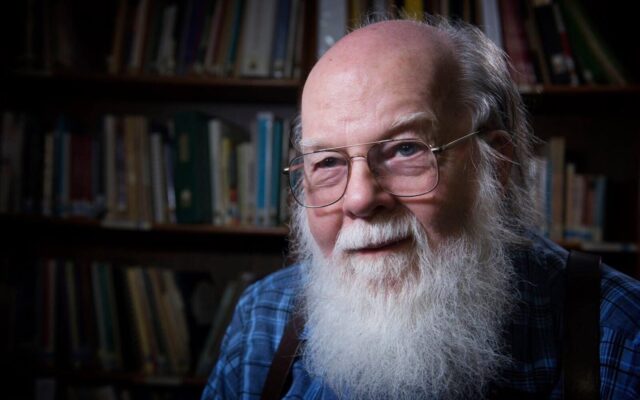


Obituary: Michael Baron
Michael Baron, influential campaigner and Community Living contributor who has died aged 96, will be remembered for his vital work fighting for the rights of autistic people, writes Saba Salman.
Community Living’s editorial team and trustees would like to pay tribute to Michael, a parent and founder of the organisation that went on to become the National Autistic Society (NAS).
In 1962, a group of parents began to argue for provision for their autistic children, who were often diagnosed with childhood schizophrenia, sent to institutions and had no right to schooling. The movement became the Society for Autistic Children and later the NAS.
Michael’s son Timothy was one of the first in the UK to be diagnosed as autistic and among the first pupils at the Sybil Elgar School.
The school, which opened in 1965, was the first dedicated to teaching autistic children. “They said our children were ineducable,” Michael, a solicitor, recalled. His focus was on educational and social support, rather than medical intervention.
As he said: “We knew if they had a future, it lay in education and special education and finding the right teachers to teach them too.”
In 1974, the group opened Somerset Court in the south west, the first residential community for people with autism.
Several years ago, when he was interviewed during World Autism Acceptance Week, Michael said his proudest achievement was “putting autism on the map, increasing public awareness, helping people” and challenging myths and stigma.
When I interviewed him for The Guardian some years ago, when he was in his 80s, he spoke about the need to focus on support for the first generation of children to be diagnosed as austistic – people like his son – as they moved into older age.
Ageing and autism
Ageing he said, involves not only the challenges of the condition – communication, social interaction or sensory issues – but also the social, physical and mental health difficulties often experienced in later life.
Michael remained committed to raising awareness about issues of support and inclusion and carried on pushing for change, fearing that older autistic or learning disabled people were “an invisible population”.
With the right support, he told me, “people can go on learning”. He told a story about Timothy who, in his mid-50s and attending music therapy sessions, suddenly went over to the piano and began playing. “He’d never done that before – he’s a 56-year-old man, but he’s still learning.”
For readers who want to know more about Michael, his life and his family, The Autism Puzzle is worth watching. This powerful documentary film, made by Michael’s daughter Saskia in 2002, features father and son. It includes material from the early days of the NAS, footage from the 1960s and 1970s as well as interviews with parents, researchers, psychologists, teachers and autistic adults.
The NAS paid tribute to Michael’s “tireless work” in the 1960s and 1970s “changed the lives of autistic people in this country forever.”
Michael Baron
1928-2025
News briefs
LDE gives evidence to Casey review into social care
Learning Disability England (LDE) has taken part in two evidence sessions with the Casey commission, the adult social care review led by Baroness Louise Casey.
Chief executive Sam Clark represented LDE’s groups (broadly, people with learning disabilities, families and care professionals) as only one person per organisation can attend.
Participants, including councils and support organisations, reviewed cases showing both service failures and high-quality support.
Clark shared priorities from LDE’s Good Lives rights-based framework, and called for stronger rights. The commission will publish its first report in March.
Cost of carers’ lost earnings
The financial consequences of keeping working-age unpaid carers out of the workforce has been highlighted by Carers Trust. While carers’ households lose income, the government misses out on tax payments worth up to £47.7 billion a year – equivalent to 1.7% of the UK’s GDP.
Hostile services
“Dysfunctional public services” can harm disabled children and their families, according to charity Cerebra. Its study, Systems Generated Trauma, which examines testimony from 1,200 parents, argues that health, care and education systems are hostile, combative and bureaucratic, which can cause severe distress.
Day centres under review
Lancashire County Council is under fire for consulting on closing five council-run care homes and five day centres for older and/or disabled people. The review seeks to cut adult social care spending by £50 million over the next two years. Lancashire says the process is a “strategic review” but families and campaigners fear the loss of community support is a fait accompli.
Fewer work visas issued
Work visas granted to overseas care staff have fallen by 81% in a year, according to the Home Office. Just 5,189 health and care worker visas were issued in the year to September 2025, down from 27,941. In April, Labour required employers to recruit international staff already in the UK before hiring from abroad. Ministers imposed a ban on overseas recruitment in July, hoping improved pay and rights would attract more UK staff.
All Update stories are by Saba Salman unless otherwise stated
What’s on our radar…
Mixed news on funding and the autism act is inept. Saba Salman reports
Families and campaigners who are awaiting the white paper on special educational needs and disabilities (SEND) cautiously welcomed the spending review announcement that the government would absorb the cost from 2028. Although this means cash-strapped local authorities will not need to fund SEND provision from then – councils are failing in these duties in many parts of the country – questions remain over the current SEND deficit which some estimates put at £6bn.
- There was not much good news for adult social care in the budget, even though the latest figures from the Association of Directors of Adult Social Services show it faces a £600m overspend owing to demand exceeding supply. Although the 50p increase in the national living wage from £12.21 to £12.71 means care workers will get a 4.1% pay rise next April, experts warned the sector would struggle to raise the additional cash.
- A House of Lords committee report, Time to Deliver: the Autism Act 2009 and the New Autism Strategy, concluded that the legislation has failed to bring meaningful change. The Ambitious about Autism charity, which contributed evidence, called for a new, well-funded autism strategy with statutory duties, clear accountability and input from autistic children, young people and families.
- The government is consulting on statutory guidance for the Down Syndrome Act 2022, aimed at improving health, social care, education and housing support. The act has been criticised for ignoring the needs of others with learning disabilities or genetic conditions who experience similar issues. The consultation closes on 28 January 2026.
Although local authorities will not need to fund SEND provision from 2028, questions remain over the existing SEND deficit