
I’m not sure which point was the lowest in my daughter’s transition from special needs residential college to adult life.
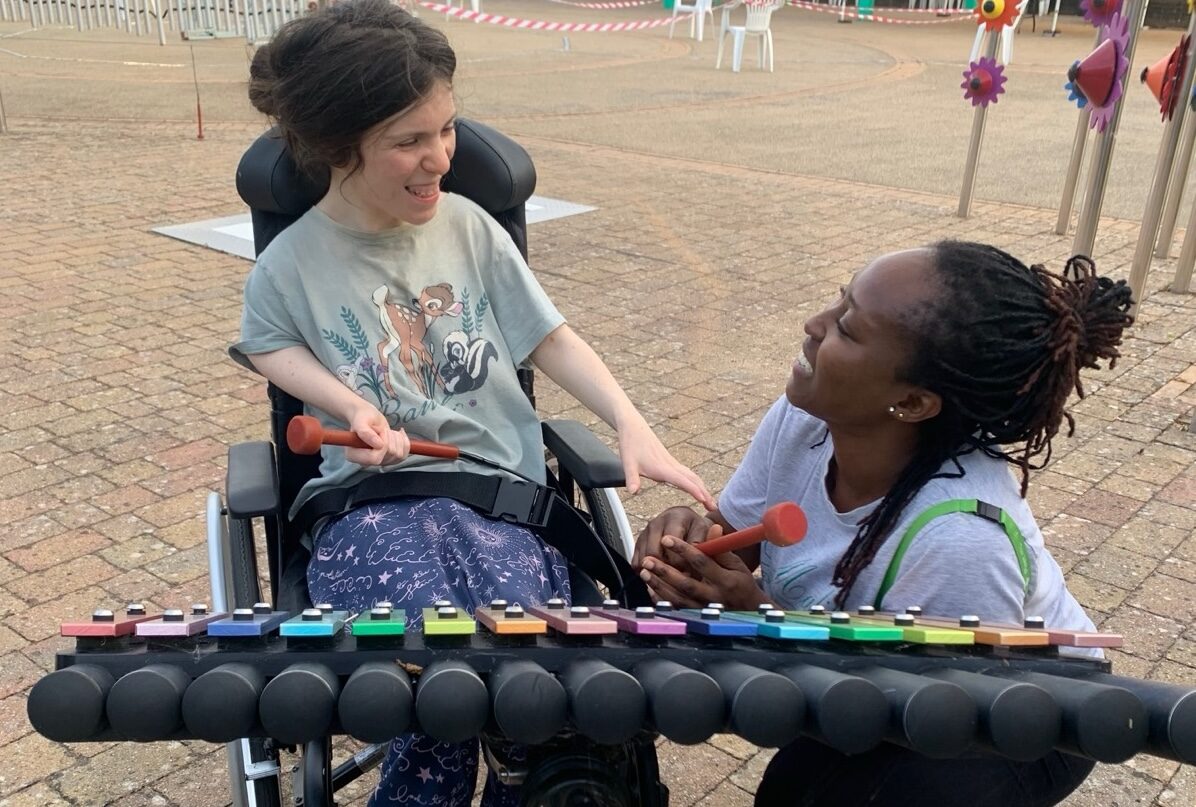
Elvi, 23, has a genetic disorder, a rare form of dwarfism that means she is a wheelchair user and has severe learning disabilities.
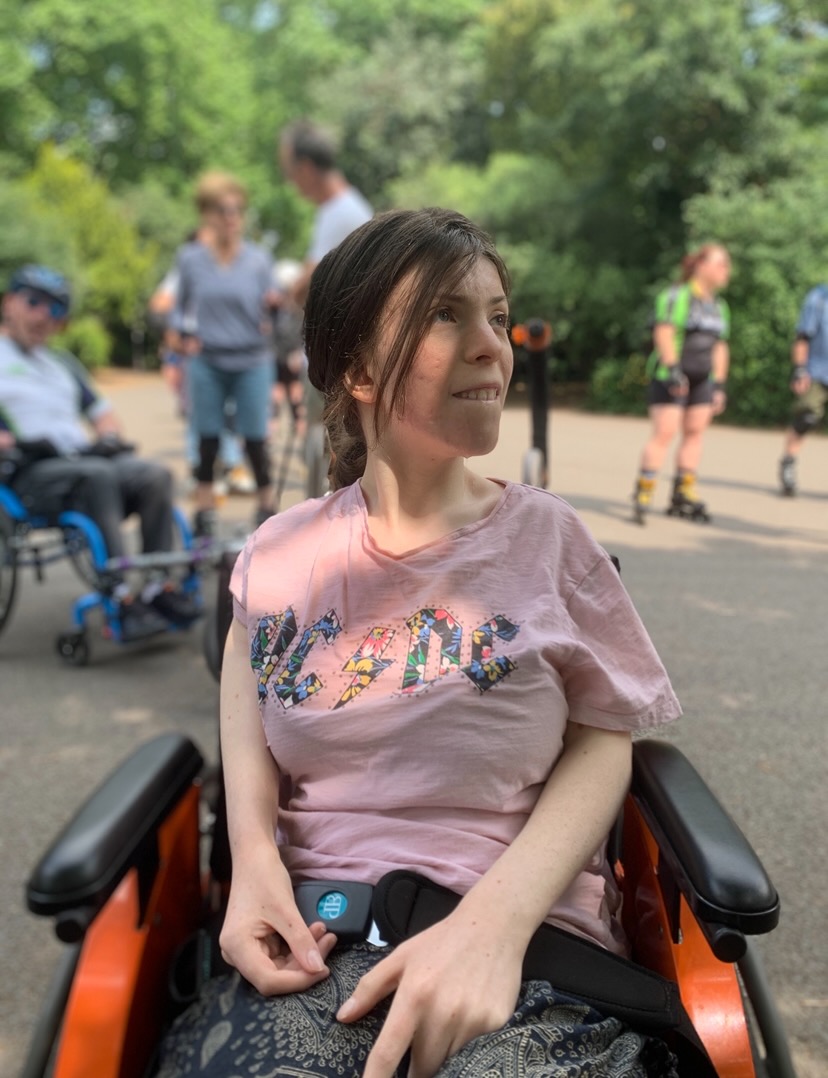
We’d love to have her at home but she never sleeps and needs care 24/7. Her dad and I are divorced but both dreamed of finding a specialist service to provide a safe and nurturing home nearby.
Although I’m resilient and bear the scars of the special educational needs system, the tortuous process of finding an adult home for Elvi nearly broke me.
There’s a new language to learn – such as the difference between residential homes and supported living, where someone lives in their own rented or owned property with visiting support staff.
There are new teams to get to know. Farewell local authority education, hello continuing healthcare at our local NHS integrated care board (ICB).
And there is getting your head around the lack of rights that comes with an education, health and care plan (EHCP) ending.
We began looking for a place as soon as Elvi started at residential college in 2021. One of the lowest points was losing a lovely seaside bungalow, well run by a caring charity. We lost it because Elvi’s ICB caseworker, Hope, unilaterally decided Elvi no longer needed the one-to-one support outlined explicitly in her EHCP. But our daughter can’t keep herself safe.
Hope ploughed ahead with an application to her funding panel, without consulting us or asking the charity for estimated care costs. Without proper funding, the manager of the service was forced to withdraw the place.
This was July 2024, the end of what should have been her last college term.
Below are seven lessons learned from our experiences.
Amid all this, it really is vital to protect your mental health – it’ll take a severe bashing.
Lesson one: watch every ICB decision like a hawk
We had a college transition team, Maria and Sarah, who knew Elvi well and helped us search.
They warned it would not be easy. More young people were looking for homes amid fewer quality services.
We were shocked to realise the ICB process was akin to putting Elvi’s personal details on a sinister dating app and waiting for providers to bid.
Lesson two: be realistic about how locally you can find a place.
I asked our council what was available locally for young people like Elvi. I was told: “Nothing suitable for wheelchair users.”
Lesson three: do background checks on providers, and look at Care Quality Commission and Companies House information to see who owns them
Residences are being gobbled up by private equity firms – investors that offer to help ailing companies only to suck them dry of resources, maximising profits.
We were shocked to realise the process was akin to putting Elvi’s personal details on a sinister dating app and waiting for providers to bid
It didn’t bode well that the first place Hope suggested was under police investigation.
Lesson four: operators may be more interested in funding than people
Many operators were only after the funding that came with Elvi’s case. They weren’t interested in her safety or quality of life.
Maria and Sarah told one provider that Elvi’s behaviour had become challenging and asked how the manager would cope with that.
“We have our ways,” he answered.
“What do you mean?” Sarah asked. “We sedate them,” came the horrific reply.
Lesson five: it will take a lot longer than you imagine
EHCPs cease if a young person has less than 16 hours’ education a week. We were grateful Elvi’s college agreed to keep her on for an extra year on the understanding that the ICB would find her a home by July 2025.
Hope then said she was going on extended leave and we would get a replacement caseworker “in due course”.
This panicked me. No named person was responsible for Elvi’s case. In a bizarre online meeting, I asked Hope for her manager’s name. “You don’t need to know that,” I was told.
When pressed four times, she whispered “Chris”. No surname. She seemed scared to share this.
Chris took over Elvi’s case herself but, on our first call, announced that Elvi’s parents didn’t need to be in meetings and she would take it from here. I lost it.
The ICB had messed up a good placement, failed to understand Elvi’s needs, sent her private details out to any random person operating what passed for a residential home and Chris was running a department where staff were scared to give her – their manager’s – name. If she thought I could trust her to find a place without us, she was mistaken.
Chris tearfully apologised for how we’d been treated. She found a place 40 minutes away, run by charity SeeAbility that showed potential. Then she went on long-term sick leave. Another caseworker was allocated, Terri.
She lived two and a half hours away and had never met Elvi.
I looked at a SeeAbility flat and loved it. It was in a cluster of new woodland homes run by a caring, knowledgeable team. Now it was down to the ICB to secure a place.
We set a deadline of Easter to give Elvi time to understand her move and for her new team to shadow her college support staff.
Terri proved even less effective than Hope. Everyone fought to meet that deadline – except Terri, who had the urgency of someone enjoying a massage.
Every funding request was met with: “No, we won’t be paying for that.”
As the Easter deadline passed, I became increasingly anxious.
A major cause was obstruction on the part of the ICB.
SeeAbility needed evidence the flat was suited to Elvi’s physical needs. We asked Terri if she could commission an occupational therapist. “No, we won’t be paying for that.”
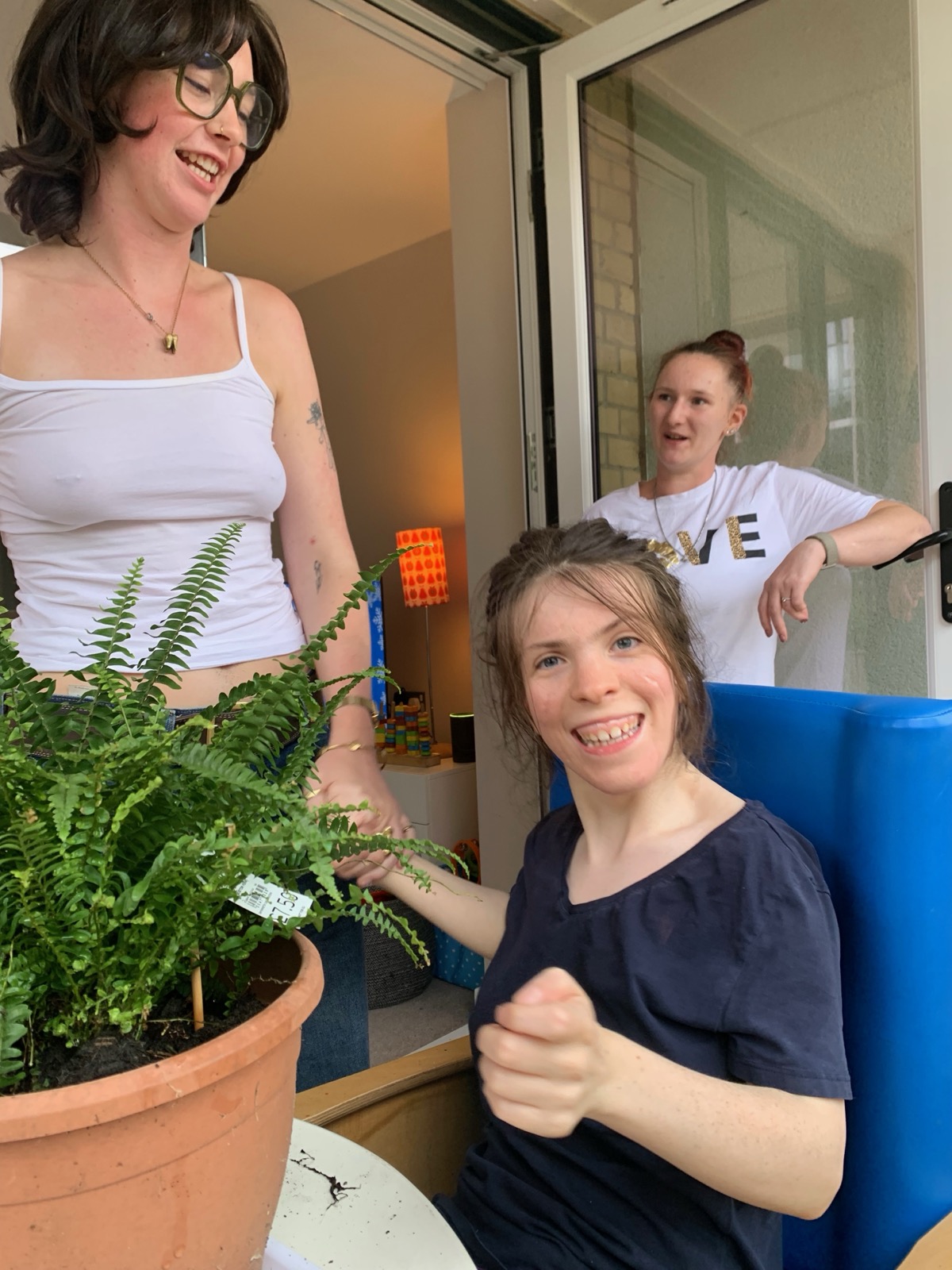
worker Caitlin. Photo: Sam Carlisle
Lesson six: ask your MP for help
I contacted mine and he immediately wrote to the ICB. Terri announced she had decided to commission an occupational therapist “to move the process on” – there was no mention of the
MP’s letter.
Because there would be restrictions on Elvi’s movements for her own safety, Terri had to apply for a court of protection deprivation of liberty order. What should have taken a couple of weeks took months.
Tick, tock, tick, tock. My pulse raced before our weekly catch-ups. What obstructive nonsense would the ICB come up with this time?
In an unusually proactive move, Terri offered to speak to Elvi’s consultant about an examination that needed doing.
She reported back that, as Elvi had never met the consultant in person, this would take a while. I interjected: “She has met the consultant – twice. I took her.”
If anything illustrates the gaslighting faced by families of disabled youngsters, it’s the next four words: “No, no, she hasn’t.”
She refused to believe me. It was only when I begged her to check Elvi’s medical records that she conceded she was wrong.
Lesson seven: people outside our world do care and know injustice when they see it
The occupational therapist stated that the flat’s bathroom should be replaced by a wet room because Elvi hated being hoisted.
Terri said, inevitably: “No, we won’t be paying for that.”
Disabled facilities grants are available to help towards the costs of making changes to your home – but the two-year wait meant it wouldn’t come in time.
The final low point came when I set up an emergency crowdfunder to pay for an £8,000 bathroom adaptation so we wouldn’t lose another place and Elvi could move in before the end of term. The response from family, friends and strangers was immediate.
After three years, despite the ICB’s best efforts, Elvi moved in two days before the end of her last week in education.
It’s early days, but the flat is beautiful and her team fantastic. Most importantly, Elvi seems happy.
Staff names have been changed