
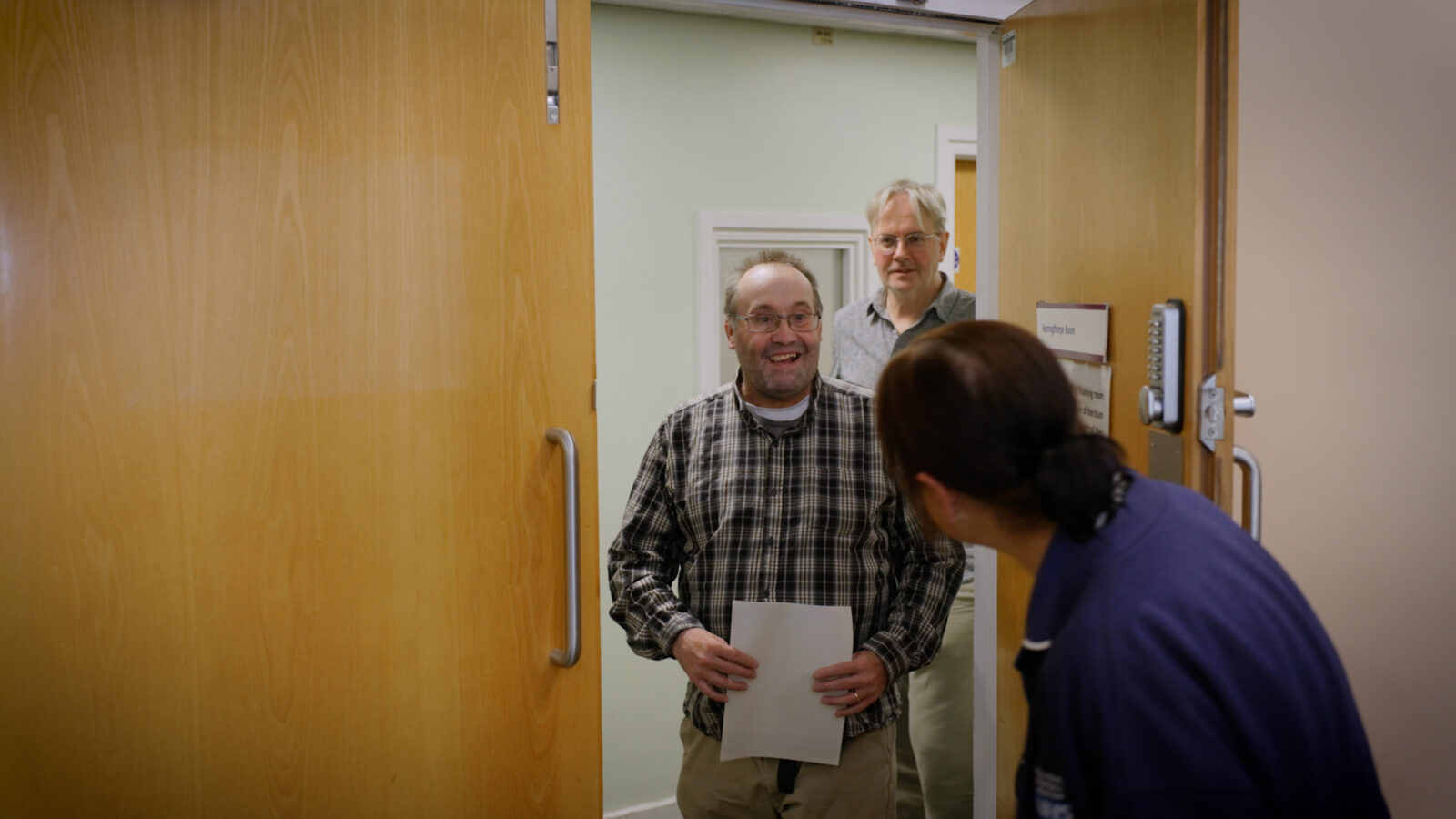
A collaborative, awareness-raising film project led by a campaigner with first-hand experience is helping spread the word about accessible healthcare.
Shaun Webster, who is also a Community Living trustee, has worked with accessible and easy read creative company IC Works and NHS England to produce a video about hospital passports, also called health and care passports.
These passports inform hospital staff about a person’s needs and preferences, and how they communicate. They explain reasonable adjustments that can help during appointments, outline what medication people take and list future hospital consultations.
The passport helped Webster after he was diagnosed with prostate cancer a couple of years ago – he is now well.
The video, The Health and Care Passport Supporting Shaun’s Cancer Journey, was shot and directed by film-maker Gavin Renz at Rotherham Hospital last summer and is available on NHS England’s YouTube channel:
Health inequalities experienced by people with learning disabilities mean that they die an average of 20 years earlier, often owing to preventable or treatable conditions.
Through the video, Webster also aims to encourage learning disabled people to seek help – he especially urges men to see a doctor if worried – and this goes hand in hand with making healthcare more accessible.
As Webster says of the project: “I did this because I do not want anyone to have the same issues I had. I feel comfortable using my lived experience to try to make a difference and I’m proud to be standing up for people like me.
“We need respect and inclusion. It is a human right. The passports are important because we need to be treated properly and to be listened to and be equal.”
The campaigner, who has written for Community Living about accessible healthcare (Make drug labels clear, summer 2023), had a traumatic experience.
His diagnosis was badly communicated, and he struggled to understand and keep up with his various appointments.
Webster recalls that the letter informing him about his diagnosis was not easy to understand so, when he was called to the appointment, he assumed it was about a kidney stone. “The communication was a joke,” he says.
As he explains in the video, he was very anxious and unsettled: “I had a scan. I thought it was about my kidney stone.
“I went for my appointment and I found out it was about me having cancer. I was in shock. I thought I’m going to break down to cry because the word cancer is scary.”
After that, he says, a hospital passport supported staff at Rotherham Hospital to make sure he got the right care and treatment.
One of Webster’s healthcare supporters, Suzanne Miles, specialist nurse practitioner for urology at Rotherham Hospital, appears in the film.
Webster adds: “She kept things on track. I was forgetting things because I had so much on my mind during that busy time.”
Compelling for carers
As Miles says in the video, one reasonable adjustment that worked well for Webster was some easy read booklets from Prostate Cancer UK because they cut out the medical jargon and break down information into diagrams.
IC Works director Ian Christie explains that a challenge in producing this short, accessible video about an easy read resource was ensuring the film was compelling and got the message but avoided making “getting a cancer diagnosis” sound scary.
He adds: “We also wanted to make the message compelling for carers but understandable enough for the core audience of people with a learning disability and autistic people. You want to keep it emotional while making it human and relatable.
“Making a film about an easy read resource is different from just telling someone’s story, so it was important that anyone taking part in the filming could take direction quickly, which Shaun was able to do. He was also very good at making a scary subject matter real, optimistic and honest.”