
A Vogue magazine cover, a fur-draped drag artist, a young woman drinking cocktails, a shape-shifting sculptural garment and a silk print depicting the Ballet Russes dance company. What brings these together?
We encounter them all at Design and Disability. Each explores the role of people with learning disabilities in the world of design.
Their inclusion in the exhibition is unexpected and to be celebrated. It is fair to say that disability exhibitions purportedly covering all types of impairment often tend to neglect or even ignore learning disability and focus overwhelmingly on physical or sensory impairment.
Yet the curators display design ingenuity in environments to address physical or sensory impairment – then go far beyond.
They seek to leave behind the historic, narrow view of disability as a problem for design to solve
and instead bring out design as an element of disabled people’s “own valid culture and identity”.
In other words, it shows disabled people at the heart of design, interacting with it and making it rather than simply being its consumers. This opens up a space for an exploration of the role and impact of design in learning disability culture that is rarely seen.
As the curators note, disability is not homogeneous and every person’s experience is their own. To this end, the exhibition highlights the role of disabled individuals in design in the past, the present and even stretching into the future.
Our first encounter is with a photo of actor and model Ellie Goldstein from Gucci Beauty’s Unconventional Beauty campaign from 2020, which culminated in Goldstein being the first person with Down syndrome to appear on the cover of British Vogue in 2023.
It is hard to believe Goldstein was just 18 when she did the Italian campaign. She stares back at the camera with extraordinary confidence and, beneath the warm and attractive (and very genuine) smile, an inner defiance and steel shines through. “You’re not sure I should be a model? Well here I am.”
Goldstein’s recent appearance on Strictly Come Dancing as the first learning disabled contestant did not come from nowhere. She’s been crashing through barriers since she was in her mid-teens.
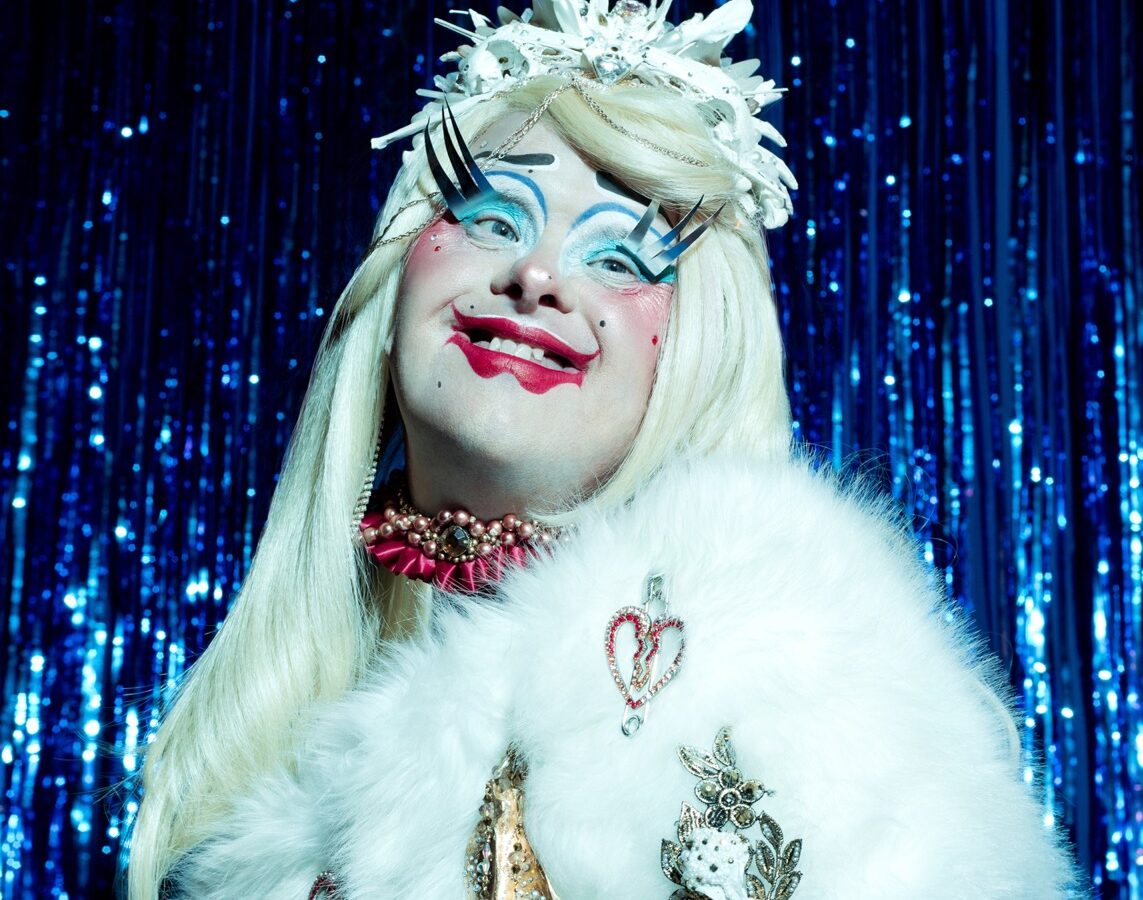
Another photographic portrait, of Davina Starr from Drag Syndrome, has a similar effect. What strikes the viewer is the self-confidence, the absolute sense of being one’s own person and not giving a damn about what anyone else thinks, gazing out from the furs, sequins, ornate blonde wig and enormous, gravity-defying eyelashes.
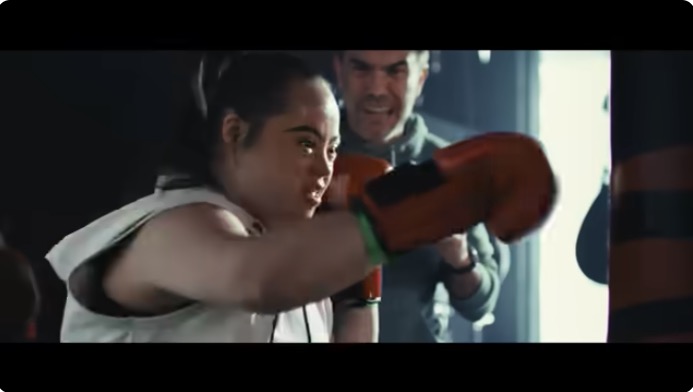
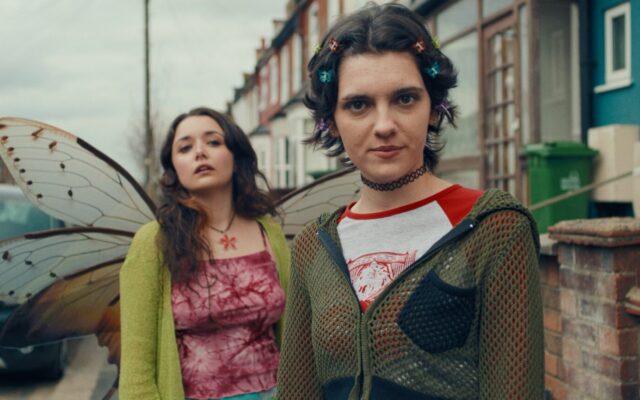
We see the slick, clever and widely watched Assume That I Can video by CoorDown, launched on World Down’s Syndrome Day 2024. A young woman challenges the assumptions that, because she has a learning disability, there is a whole raft of things she cannot do.
After we see her punch the lights out of someone in the boxing ring, down a margarita and, as she puts it, “read fucking Shakespeare” (“You assume I can’t swear, right?”), we are invited to think otherwise.
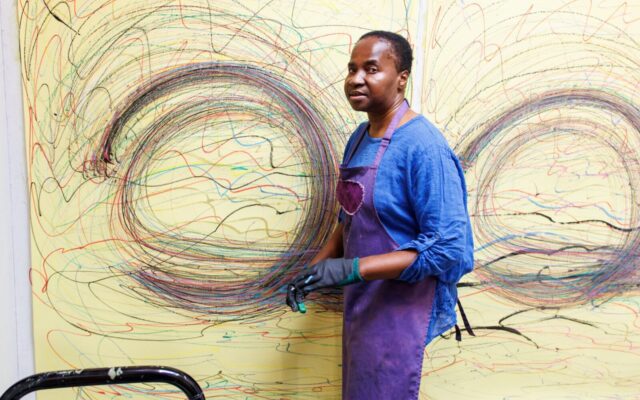
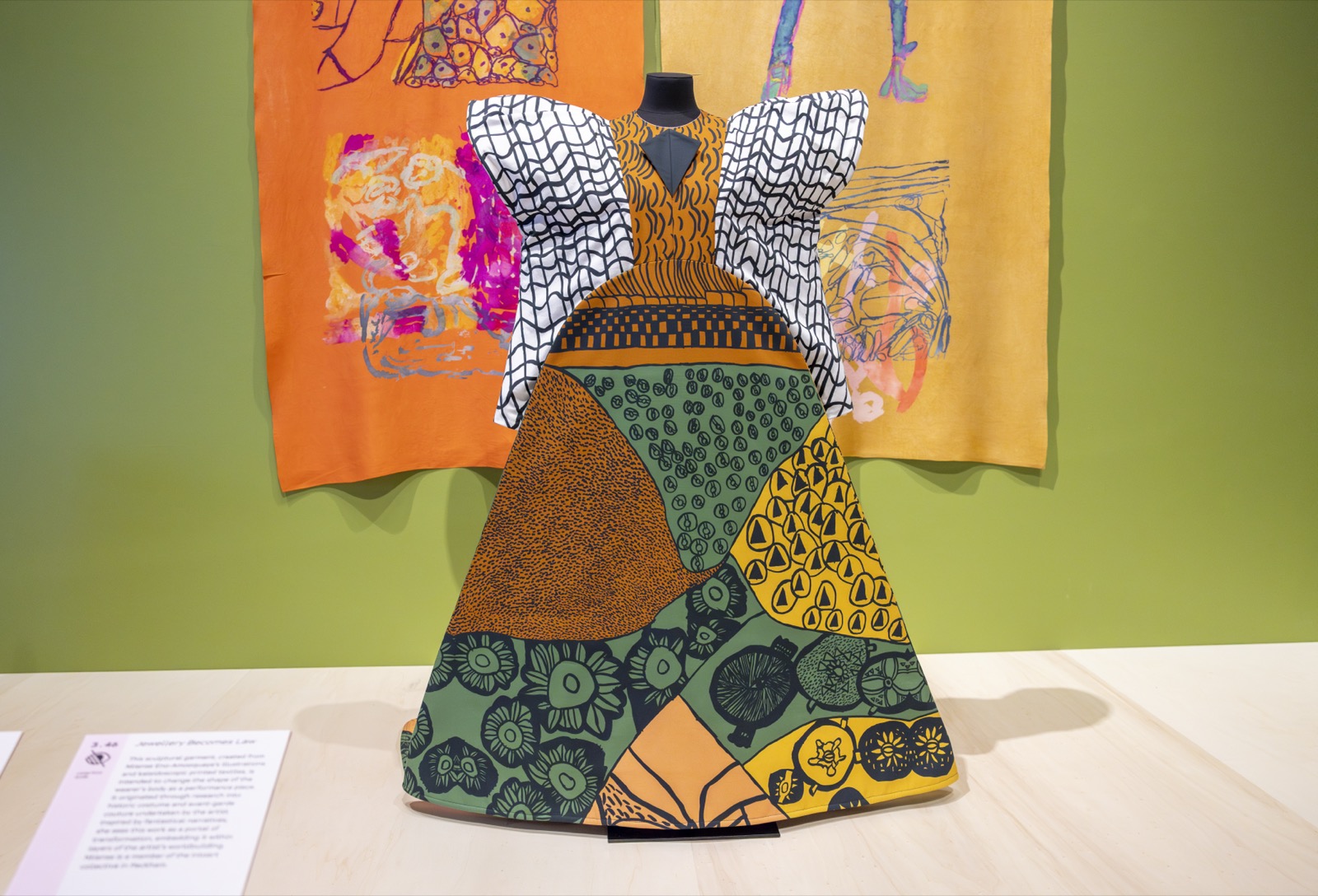
And it is gratifying to see prominently displayed, together, the work of two artists from Intoart. Ntiense Eno-Amoquaye’s gorgeous African-themed sculptural garment stands monumentally in front of two Ballet Russes designs on printed silk banners by Christian Ovonlen.
This is a spectacular moment in a spectacular exhibition that pays respect to the burgeoning presence of people with learning disabilities in the design world.