
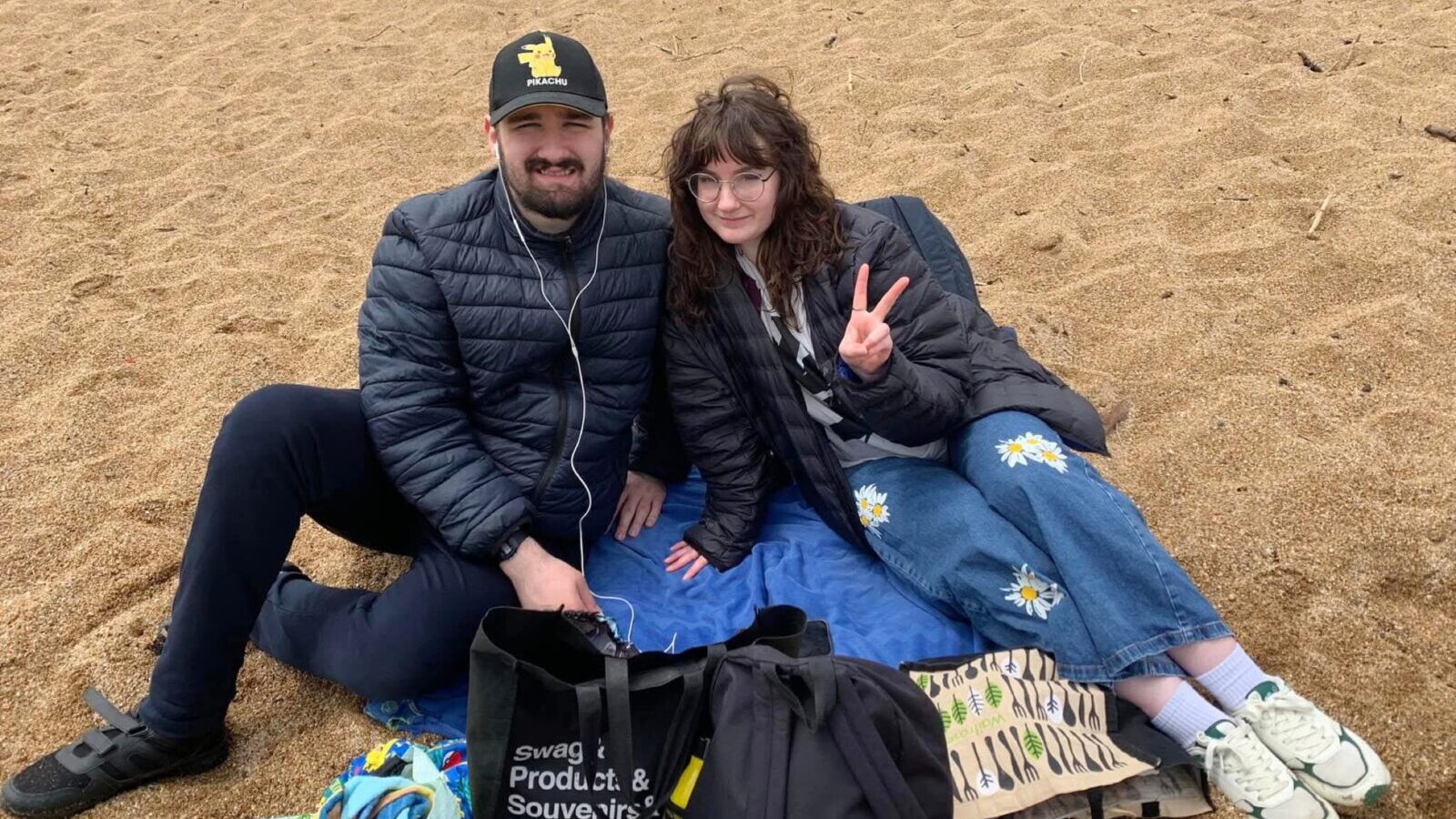
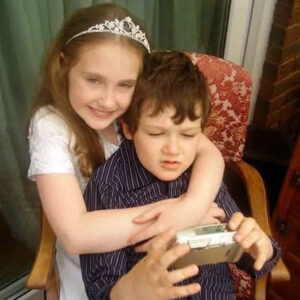
I am two years older than my brother John and, perhaps for that reason, I have always been very protective of him.
No matter his age, I would have protected him because I have always been aware that John’s autism means he will always need additional care. That is not me trying to undermine his abilities; it is me being realistic about the level of support he needs.
The average family might have their ups and downs with issues such as arguments or money struggles, but most people will never be able to understand what it is like to live in a perpetual state of unpredictability, not knowing when your severely autistic brother will next have a meltdown – one that can end in tears, smashed plates or screaming.
Most families will never understand how much of a privilege it is to be able to go out for a birthday dinner and have their whole family present the entire time.
Many families will also never understand the anxiety before having people over to your home when you’re worrying if it might set off your brother and cause him to become agitated.
Most people will never understand what it’s like to bring a new friend or partner round to your house and introduce them to your brother, hoping that they will be kind or understanding enough to not make nasty comments.
All this said, John has learnt valuable life skills through his amazing carers who support him a couple of days each week. He has many of his own hobbies. He loves Pokemon, dancing, singing and watching YouTube. He is bubbly and kind and, while he can’t have complex conversations, he has learnt more how to express his emotions the older he’s become.
Anyone who is a sibling of someone severely autistic or who has other additional needs will know it forces you to grow up prematurely.
Grown up early
People always said to me as a child that I acted and spoke more maturely than my age. I’ve often been labelled as the “mum” of friend groups or the responsible one. I don’t think this is a coincidence. A lot of this must comes from the fact that I had to be responsible and think of others before myself for as long as I can remember.
People should know that when they choose to be unkind to those who are severely autistic, such as using the “r” slur or making fun of how autistic people talk, stim or behave, they’re offending not just the person but also their families.
Because, for every severely autistic person, there is a family who loves and cares for them, who knows their true personality – the personality they only really share behind closed doors.
My family has a closeness that goes beyond love. That shared experience and that ability to smile and laugh after days that have been tumultuous, traumatic or emotionally exhausting take a huge amount of strength – a strength that goes unseen by most people. We don’t have to pretend around each other. We don’t have to put on an act that we’re always doing fine, that we’re not finding things difficult.
Being my brother’s older sister has taught me resilience and a great deal of empathy. There are times, especially at school, where I was shocked at how unkind people could be. Even now, as an adult, I often see how, in groups, people can talk down about others or judge them so easily. In groups or online, people seem to think it is OK and that their words carry no real consequences.
Perhaps I haven’t had a conventional upbringing and might never have my whole family present for a family meal together, but I would not trade it. I would not have anyone else as my brother.
Eve Attwood works in communications and writes creatively