
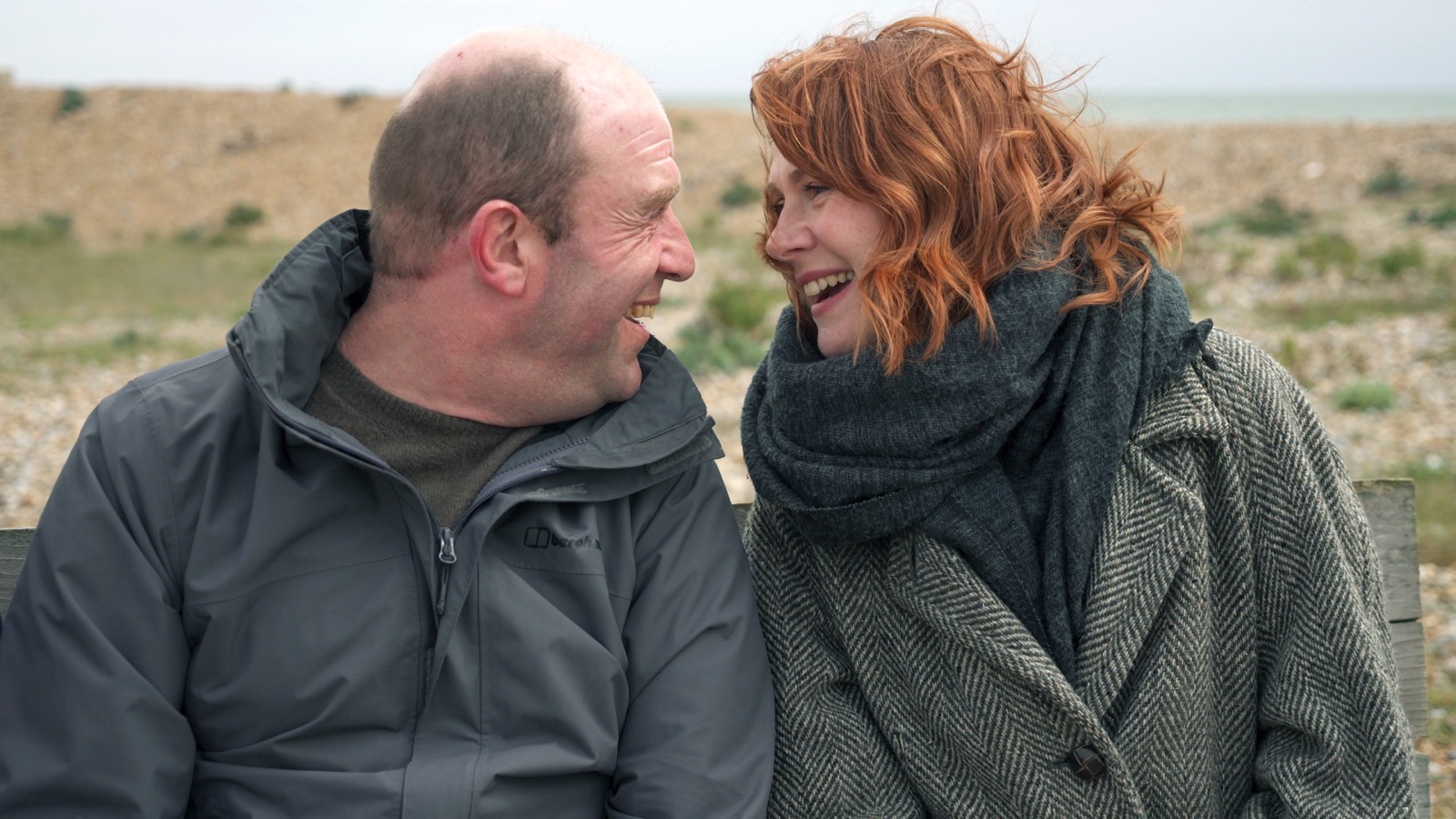
A forthcoming album from sound artist Ruby Colley, developed alongside her non-speaking brother Paul, powerfully conveys the different ways in which people express themselves. Entitled Hello Halo, it is performed with vocal group Exaudi Ensemble.
The artist says Paul has “a diverse toolkit of communication methods” which includes sounds, movements, eye contact and gestures.
When composing, Colley “transcribes” these, using his live voice and recordings of him, to make a “vocal map” of his life and relationships.
Hello Halo premiered this year at King’s Place in London and at the Liverpool Philharmonic; the album will be released this year.
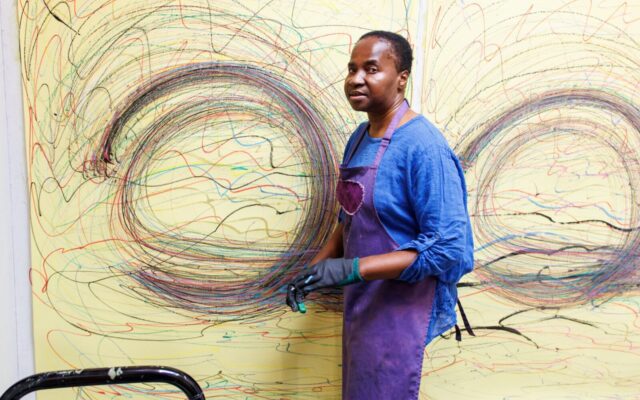
The title is inspired by a painting by the late Jonathan Westlake Cole and refers to Paul’s key word of communication – “hello”.
Colley has said, “to really understand Paul, one has to leave enough space and silence to truly observe the subtle forms of connection and communication he is projecting”.
Saba Salman: why were you driven to create Hello Halo?
Ruby Colley: This project that had been on my mind for quite some time. I have always been drawn to voice and choirs. Conjunctly, I have always heard Paul’s way of sound making and connecting as music.
As with all ideas I have, if they won’t leave me alone, that’s my cue to make it happen. So I started the process of finding the right ensemble to work with and funding.
SS: What are Paul’s methods of communication?
RC: These can be from subtle – eye movements, glances, slight hand gestures – to overt cues such as big smiles, rocking and shouting. He has words and sounds that are part of his toolkit, which can be reused in different contexts.
SS: Tell us more about how these work in the album.
RC: Different words – such as “whispered” and “spoken” – refer to how Paul expresses himself in everyday life, and this is reflected in the album. The variations on hello are all about context, how Paul says it and to whom. “Whispered” is a gentle invitation for connection and eye contact. It can also be a shyness. It is usually reserved for people he likes the most or a way to inspire quiet connection. “Spoken clearly” is when he’s confident and in a good mood: “I am here and feeling good!” “Shouted” is similar, but usually when he’s excited. It can be heard when Paul is out on a good walk in nature. “Loh,” is a lazy hello. “Helloooo…?” is genial and almost sung with upward inflection. This is reserved for the most beloved people, like our mum.
SS: How was Paul involved?
RC: Paul was consulted throughout. I spoke to him about the project, and made sure he consented and understood what was happening at each stage. This was a subtle and sometime complex process. He attended the rehearsals and the performances, which was joyous for him and those around him. He even joined in during some of the shows.
SS: What do you hope people might take from this project?
RC: It is my wish that families like ours – with non-speaking members – will see themselves in the work. Living with a person who doesn’t speak can feel profound but lonely. I wanted to connect not only to Paul through music and sound but also to those who experience the piece and for Paul to be seen, heard and understood. The piece is witness to what can be done with people who move through the world in a different way. There are so many assumptions about language and how it relates to our ideas of humanness. I know there is a whole world within Paul, and I wanted people to see it and hear it. It is supposed to transcend language and operate purely through connection. Inclusive practice is evolving and requires presence, curiosity and awareness. Without it, Hello Halo couldn’t exist.