
The mental health of autistic young people is rarely something that young people – autistic or not – are encouraged to understand in mainstream schools.
The Autistic and OK programme from charity Ambitious About Autism seeks to change that. The national mental health programme, launched in 2024, has recently been extended for a further three years.
To date, the resource has been downloaded by 1,000 secondary schools, with Ambitious About Autism estimating that it has potentially reached more than 20,000 autistic young people.
Designed to empower autistic young people, the free educational toolkit aims to help this group improve their mental health and develop a greater understanding of themselves. It also aims to educate their peers.
One in three absent
According to Ambitious About Autism’s research, more than one in three autistic pupils have missed a month or more of school since the start of the academic year in September, with the biggest cause for non-attendance being mental health issues (accounting for one-third of absences). Four out of five autistic young people experience mental health problems, says the charity.
Now, with summer exam season on the horizon – a pressurising environment – the extension of this programme could help more autistic young people take control of their mental health.
The toolkit was designed with the help of a group of autistic youth advisers from the Ambitious Youth Network, an online space for autistic young people.
The resource covers issues such as depression, anxiety and obsessive compulsive disorder as well as bullying, equipping autistic young people with tools and techniques that work best for them to manage their mental health and wellbeing.
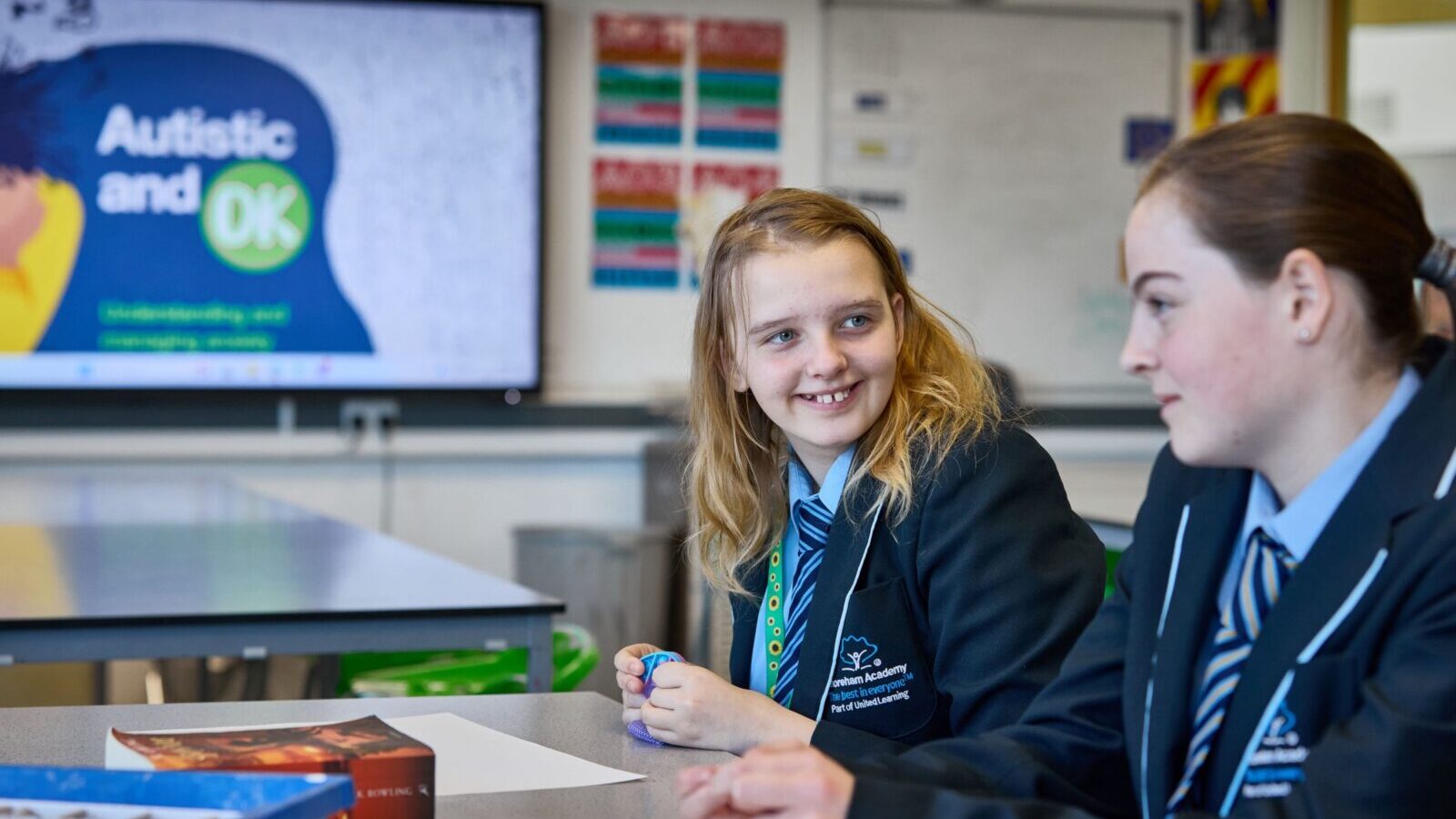
The downloadable resources for schools consists of four peer-led sessions. A key feature is that autistic pupils in years 10-13 can act as peer facilitators, delivering the pre-prepared sessions to their younger autistic peers.
Easy-to-follow session plans, slides and handouts tailored to each topic are provided, and the opportunity to be a peer facilitator allows autistic pupils to build leadership and communication skills.
The sessions are meant to become safe spaces where autistic young people can share their experiences, connect with their peers and feel less isolated in their school community.
Daisy (she prefers not to share her surname) is a peer facilitator in year 10, who has used the resource with other young people.
She says: “I think the group has formed some friendships and certainly gained a better understanding of each other.
“They have mentioned many times how nice it has been to be with others who struggle with the same thing, and the importance of knowing people in the school understand autism and experience similar things.”
The toolkit includes a teacher’s guide with instructions on how to deliver the programme. It is designed to be flexible: it can be completed in a single term in weekly sessions or spread out over a longer period throughout the academic year.
Whole school
An assembly session is also included, designed to help the wider school community learn about autism and how to support autistic students while promoting understanding and acceptance.
The extension of Autistic and OK over the next three years, supported by Zurich UK and the Z Zurich Foundation, will see resources added to the programme, again all designed in collaboration with autistic youth advisers.
One aim is to target specific UK regions where take-up has been lower than hoped. There will also be a greater focus on improving school-wide understanding. The new features will take a whole-school approach to autism inclusion, with information for all school staff and pupils, senior leadership, governors and parents.
As Helena Rodgers, Autistic and OK programme manager, says: “To create a truly inclusive school environment in which autistic pupils can learn, thrive and achieve, programmes like this must reach beyond targeted interventions for autistic pupils alone.”
Autistic and OK is available to download from the Ambitious About Autism website
April O’Neill is a writer and a winner of The Guardian Foundation’s 2025 Emerging Voices Awards (19-25 age category)