
Last summer, when Labour formed a government after 14 years of Conservative austerity, disability campaigners were cautiously optimistic.
Echoing the mantra of New Labour in the 1990s, people could be forgiven for thinking, surely, “things can only get better”?
The Tories had, after all, done a number on the country’s social safety net and, in the process, had marginalised whole swathes of the population, including people with learning disabilities, who bore the brunt of massive cuts to services and support systems.
Hell-bent on a repeat
Fast forward to the current government’s recent one-year anniversary, and any cautious optimism has evaporated.
The personal independence payment debacle, which saw the biggest rebellion so far of backbench MPs and forced the government into a partial U-turn on disability benefit cuts, was clear evidence of the degree to which, rather than pledging to invest heavily in the social safety net and undo the Conservatives’ mess, Labour seemed hell-bent on repeating errors and entrenching inequalities.
Against this backdrop, Community Living spoke to people with learning disabilities, advocates, carers and professionals (Red austerity in the UK… and the US, pages 14-15).
The government, people said, was not only failing to foster inclusion and protect existing support – it was actively undermining them and causing fear and uncertainty in the process.
Viki Ainsworth, a parent advocate whose 28-year-old daughter has severe learning disabilities, said: “I was really hoping that the government might be a bit more inclusive and aware. But they don’t seem to have acknowledged our existence any more than any of the other governments.”
As Scott Watkin, head of engagement at SeeAbility, succinctly put it: “We want people with learning disabilities to have their voices heard.”
There was a remarkable crossover with people on the other side of the Atlantic, six months into the second Trump administration.
In July – Disability Pride Month no less – as part of the budget bill, the administration wheeled out huge cuts to services that constituted what some were calling an all-out war on disability.
These included to Medicaid, the primary federal social insurance programme that underpins a myriad of support for people with learning disabilities, including for many with complex needs.
With provision from equipment to community-based support and health interventions, as one parent advocate told us, it is a “lifeline” for families, especially where a variety of services are necessary.
Carole Rosen, a parent advocate from Illinois, pointed out that, even before the billions of dollars of cuts were proposed, it was “extremely challenging” to access support.
Taken alongside other cuts, such as those slated to reduce poverty-based federal benefits and the pruning of government agencies that focus on support for people with disabilities, the result is a devastating “tsunami”, Rosen said.
“We are seeing the waves roll out because of these cuts and, when the wave rolls back in, there’s going to be so much damage.”
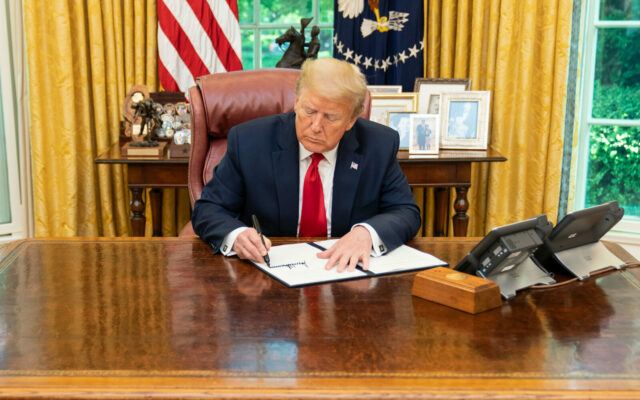
July also saw President Trump sign a dystopian executive order, one that could give the authorities powers to scoop people off the streets for being homeless or who exhibit behaviour associated with some learning disabilities, and institutionalise them.
Keeping up the fight
As disability advocate Zoltan Boca put it: “The disappearance of an ever-expanding list of so-called undesirables is an urgent problem.”
These may be dark times but, despite the attacks on rights and the unease and uncertainty in both countries, advocates were all determined to keep up the fight.
Matthew O’Connell, a researcher based in Oregon whose work focuses on health inequalities, spoke for many when he said: “I think we can relieve each other’s uncertainty. We can say to each other: I will be here with you. They can’t take that decision from us.”