
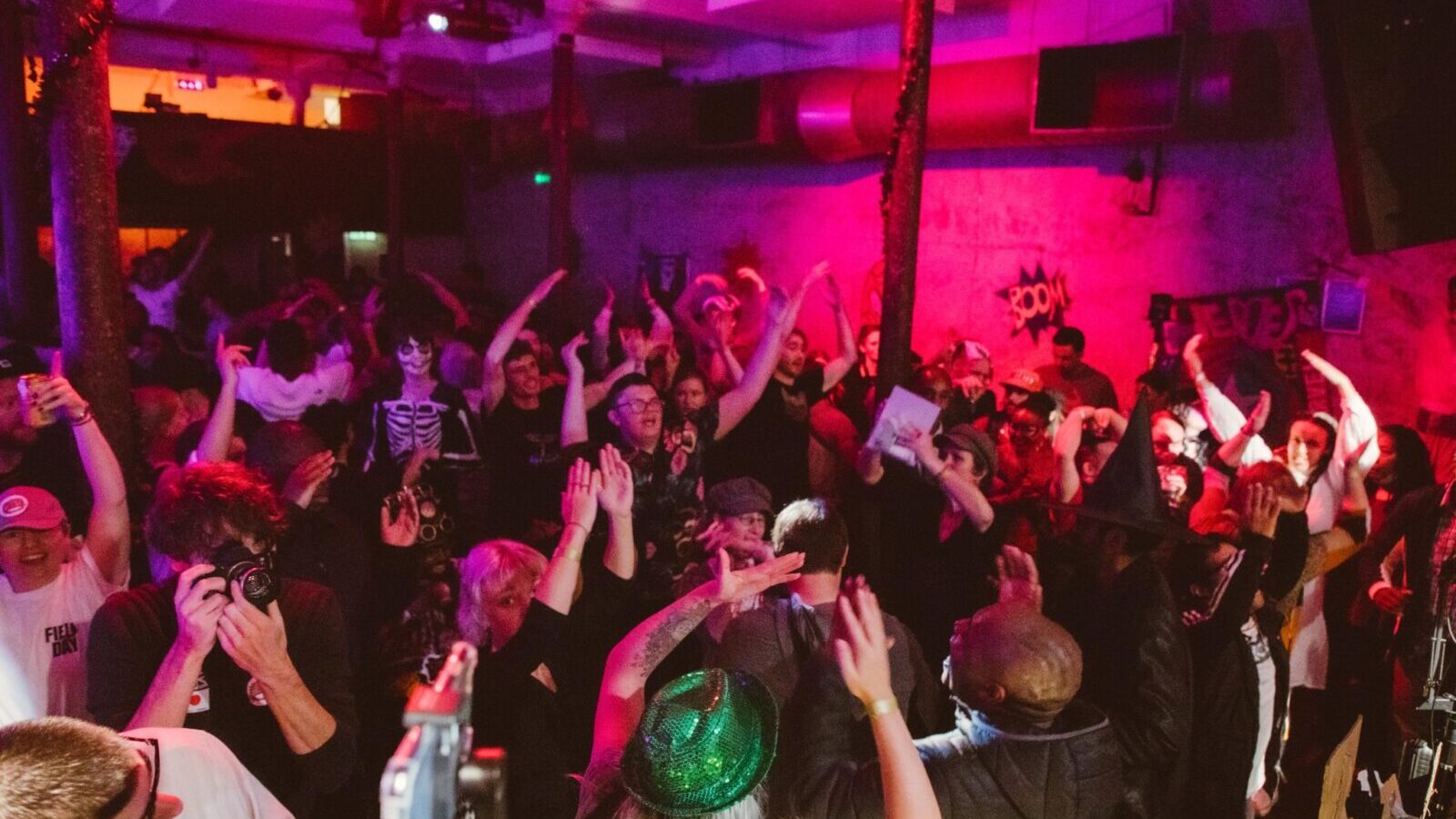
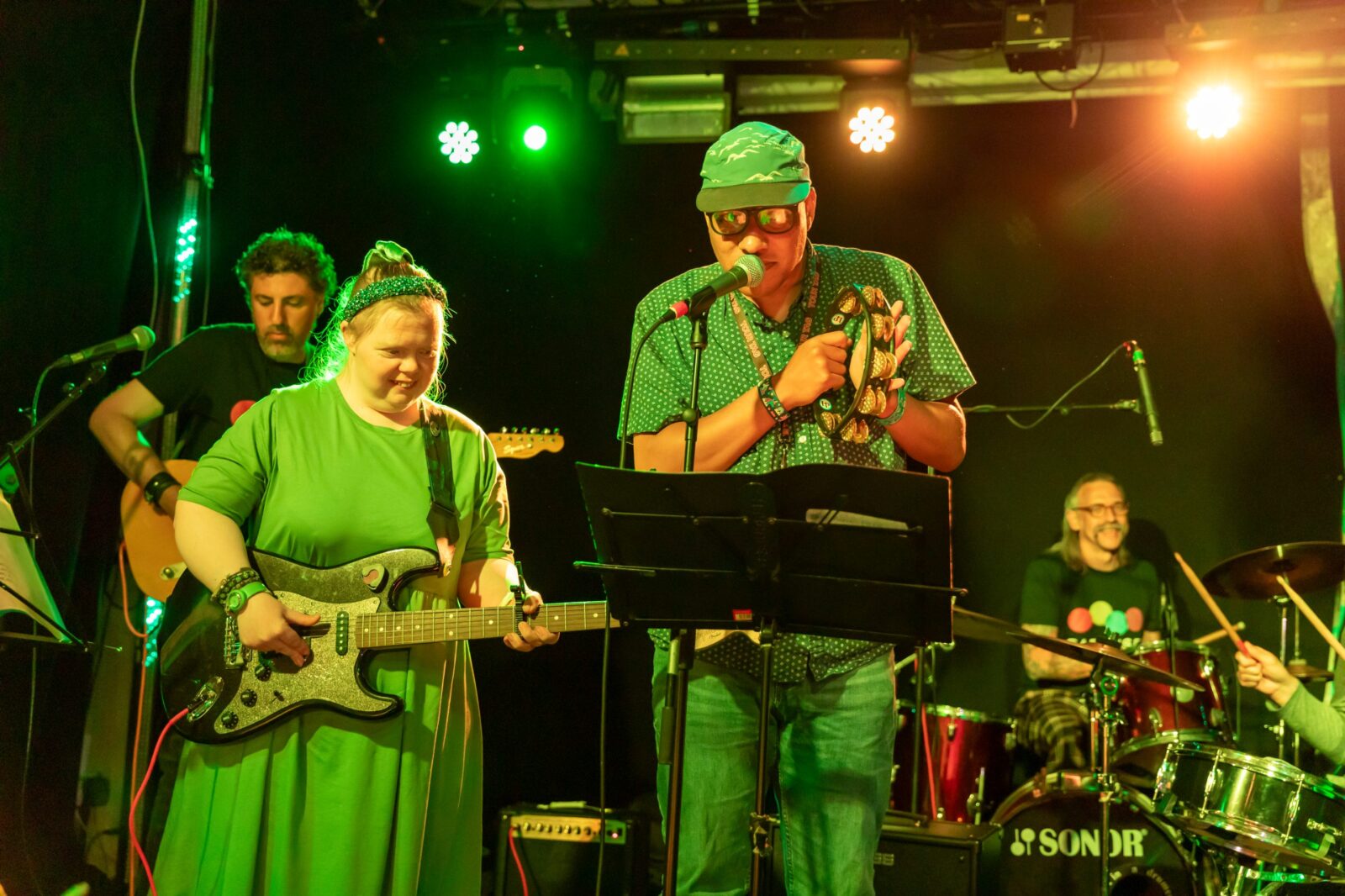
Six times a year, the Bubble Club takes over 93 Feet East in east London’s Brick Lane.
“Bubble Club gave me a confidence to enhance my skills – I love attending and being part of events,” says DJ and Community Living columnist Shalim Ali.
The club has just celebrated its 20th birthday with a photo exhibition; managing director Iona Ascherson tells Saba Salman about its evolution.
Saba Salman: Congratulations on 20 years of Bubble Club. What’s the secret of its success?
Iona Ascherson: It speaks to the rareness of nightlife spaces where learning disabled adults feel safe, accepted and included, and the importance of that meeting space to stay connected to their friends who may not live nearby or engage in the same day groups.
SS: How has the club changed?
IA: It started with a rebellious spirit and now it feels more like a joyful celebration. I think there were
a few more cabaret-style performances in the past. Now, although we do have those moments, we like to keep the live performance room pumping with musical performances and we showcase more open mic style, multidisciplinary performance.
SS: What aspects are challenging?
IA: We’ve definitely had a hard couple of years in terms of funding; the competition for smaller grant pots is being felt across disability arts, coupled with personal support for disabled people under pressure. We really do see the worry and fear spilling over.
SS: What are the rewarding aspects?
IA: The excitement in the queue is something I love. When a trainee DJ performs their first paid set in front of a cheering crowd, beaming with pride, is another big one.
When a shy first-timer comes back a third or fourth time, and is spotted making friends without needing a volunteer wing-person, or when someone jumps on the open mic in to recite a poem, rap, sing or just chat to the crowd, they’re all massive heart overflow moments.
Around 21,600 people over 20 years have got a hand stamp. The age range is hugely varied – we have people from 18 years old to those in their 70s – although 25-45 years is where the majority fall.
SS: What is the Bubble Club DJ Factory?
IA: We support learning disabled DJs to perform and get paid. We have volunteer DJs who go through the basics, helping build playlists and skills. We then create profiles and promote learning disabled DJs to bars if they wish to pursue paid work at mainstream venues.
SS: Tell us about your exhibition.
IA: We just marked our 20th birthday with a photography exhibition at Brady Arts and Community Centre in east London.
The event was intended to establish Bubble Club as a pillar of London’s counterculture history. Our story is rooted in disrupting the norm, challenging stereotypes and creating a safe but adult space for learning disabled and autistic people.
Nightclubs have this magical quality that brings oppressed communities together where they can feel normal and, in the majority, safe to be themselves.
We wanted to share the pride we feel in knowing this club night exists and thrives in our city, and to make sure Bubble Club goes down in the history books.
SS: What’s next for Bubble Club?
IA: We would love our own venue that could house the workshops, DJ project and clubs. We could do a wide range of events, continue to provide that grassroots stage and create more training and paid jobs for learning disabled adults around bartending, event and venue support.
Is having our own tent at Glastonbury too big an ask? Here’s to 20 more years.
Bubble Club’s next night is on Wednesday 11 February. All dates are on its website