

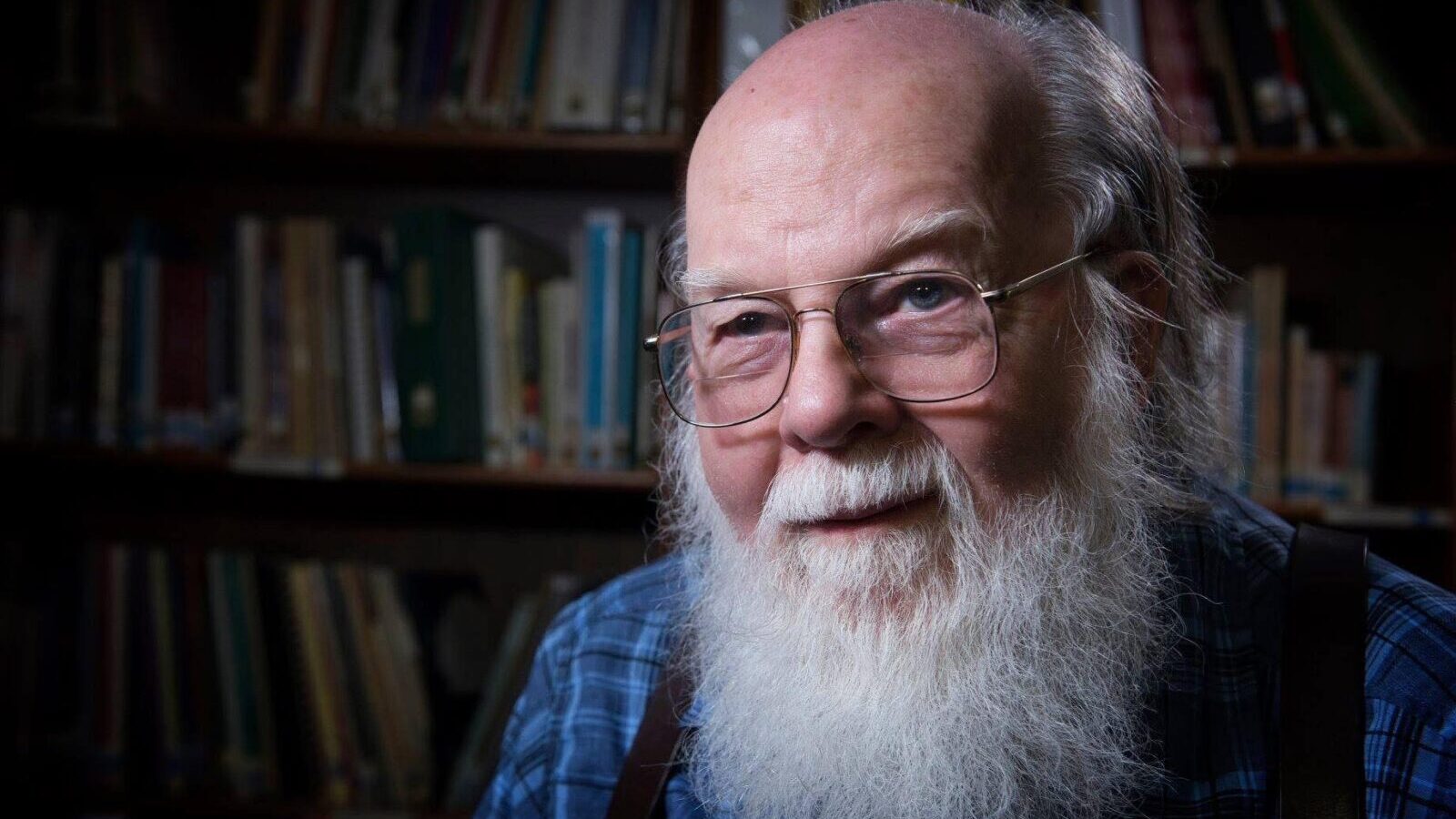
Obituary: John O’Brien
John O’Brien, who has died aged 79, was a hugely influential figure in the learning disability community, writes David Towell.
For 45 years, he had been visiting the UK. As reflected in a Community Living interview in 2017, he helped us figure out how best to build communities that work better for everybody.
Here, some of us who were lucky enough to be among the partners in this work consider this history and celebrate the great man’s continuing inspiration.
In 1980 when I was at think tank the King’s Fund, we launched the influential initiative An Ordinary Life to close institutions and ensure people with learning disabilities had the support they needed. I invited John here to help us learn from his experience.
Atlanta, Georgia is a long way away, but he travelled here frequently to work with change leaders across the country as we tried to make a reality of this philosophy in our communities. He became a very valued colleague and mentor to many of us.
John was a good storyteller but rarely gave lectures. Rather, a typical day involved people with different roles – disabled people, family members, other allies, paid supporters, service managers – coming together to share their ideas and experiences and engage is serious reflection on what might better help people improve their lives.
He had an amazing capacity for listening to these conversations and enabling us to build a fuller understanding of “what more is possible”.
John was a deep thinker who played a key role in developing new concepts and practices that should still be central to our efforts.
Drawing on Martin Luther King’s philosophy of “the beloved community”, John was always focused on welcoming diversity and building communities that work better for everybody.
Putting these values into use requires a framework for identifying positive outcomes in people’s lives. John outlined the five accomplishments: belonging; being respected; sharing ordinary places; choosing; and contributing.
He was also the leading pioneer of person-centred planning, an approach to designing opportunities and support that puts individuals, their aspirations and needs first. In 2001, the Valuing People white paper made this concept a foundation of national policy.
Central to An Ordinary Life is the opportunity to live like others in one’s own home with good support.
Advancing this agenda in the 1980s was greatly helped by widespread participation in another of John’s approaches – PASS workshops (Program Analysis of Service Systems).
PASS is a tool that uses the principle of normalisation (essentially, an everyday life for people with learning disabilities) to assess to what extent the conditions to live valued lives are in place.
John didn’t originate PASS but helped many to introduce it here, such as Nan Carle, a social care consultant and co-founder of charity Choice Support.
This kind of work showed clearly how then and now so many of services remain institutional – and what we should do about this.
In the 1990s, one significant innovation was the move away from group homes to what Paradigm managing director Sally Warren calls “support for living”. Influenced by John, Paradigm created the Reach Standards to ensure personal autonomy is at the heart of living in one’s own home.
Personal support, as John’s work showed, should not be seen as a set of tasks and transactions but a pattern of respectful relationships within which people get the right support at the right time.
Reflecting this approach, Paradigm’s Gr8 Support Movement raises the status of support workers and spreads understanding of what constitutes excellent practice.
John also helped Simon Duffy, a leader of global community Citizen Network, to bring many of these ideas together. This is apparent in the latter’s work to link self-directed support (taking responsibility for managing your support) with individualised funding and to reframe our goals in everyday citizenship.
All this is only a small part of the story. This giant of the disability rights movement has left us inspired to support a better today – and to build a better tomorrow.
John O’Brien showed us what can be achieved through empathy, thoughtfulness, perseverance and the honesty to learn from experience. Thank you, John.
John O’Brien
15 November 1946-27 June 2025
News briefs
Symbolic of SEND failure
Reflecting the overstretched national system, almost 100 children in the North East were failed by Stockton-on-Tees Council after it did not update their education, health and care plans. The Local Government and Social Care Ombudsman uncovered the issue after a mother complained her child had missed vital support and was out of school for months.
First inadequate rating
Blackpool Council became the first local authority to be rated inadequate on adult social care by the Care Quality Commission since it began assessing councils on this in 2023. The regulator found a culture of making decisions for people and deep-rooted care inequalities. Blackpool got the lowest score of 54 councils assessed so far – 34 out of 100, against an average of 65.6. One issue was that people with learning disabilities or autism waited the longest for Care Act assessments.
Dame Stephanie Shirley
Autism campaigner and technology pioneer Dame Stephanie “Steve” Shirley has died aged 91. Dame Stephanie’s late son Giles was autistic and she was an early member of the National Autistic Society. She supported autism-related work through her Shirley Foundation, founded Autism at Kingwood to support adults in Berkshire, Buckinghamshire and Oxfordshire, and helped established Prior’s Court, a specialist school in Berkshire.
Care staff vacancies fall
The shortfall in adult social care staff has dropped to 7%. Skills for Care reported 111,000 posts needed filling in 2024-25, a 12.4% lower figure than in the previous year, despite fewer international recruits.
All Update stories are by Saba Salman unless otherwise stated
What’s on our radar…
Fury over LeDeR, NHS plan lacks substance and Covid inquiry closes. Saba Salman reports
The long-overdue report into the deaths of learning disabled and autistic people in England was finally published – to a furious response from campaigners. The annual NHS-funded Learning from Lives and Deaths Report (LeDeR) investigates these deaths with the aim of preventing future fatalities. Critics complained that not only does this ‘annual’ report relate to 2023’s deaths but also it merely confirms existing information that people die around 20 years earlier, lacks scrutiny and presents data inconsistently.
Meanwhile, the 10-year health plan for England, Fit for the Future, was launched to much fanfare but offered little detail relating to learning disabled people (Absence from health plan casts a worrying shadow, page 21). Health experts said while they welcomed plans to improve the nation’s health by shifting care from the hospital to the community, the lives of disabled people and their families would be improved only if adult social care and support were fully funded.
The 10-year health plan for England was lauched to much fanfare but offered little detail relating to learning disabled people
The Covid-19 Inquiry’s public hearing on the care sector came to a close with renewed criticism of the government’s handling of the adult social care system during the pandemic. Disability Rights UK, Disability Action Northern Ireland, Disability Wales and People’s Organisations, Disability Rights UK, Disability Action Northern Ireland, Disability Wales and Inclusion Scotland argued in a joint submission that harms were “terribly inevitable”. They blamed this on the care sector’s lack of planning, combined with long-standing political and economic choices where the lives of disabled people “are absolutely valued less”.